My last post on environmental toxins was inspired from an email I got from Professor Julian Cribb in Australia. Upon closer inspection of his email I see that the attachments have much more interesting information that deserves our attention. I hope my readers will forgive me for having missed this valuable material, but I just came back from the decadence of Sin City on my weekend trip and I’m a little tired.
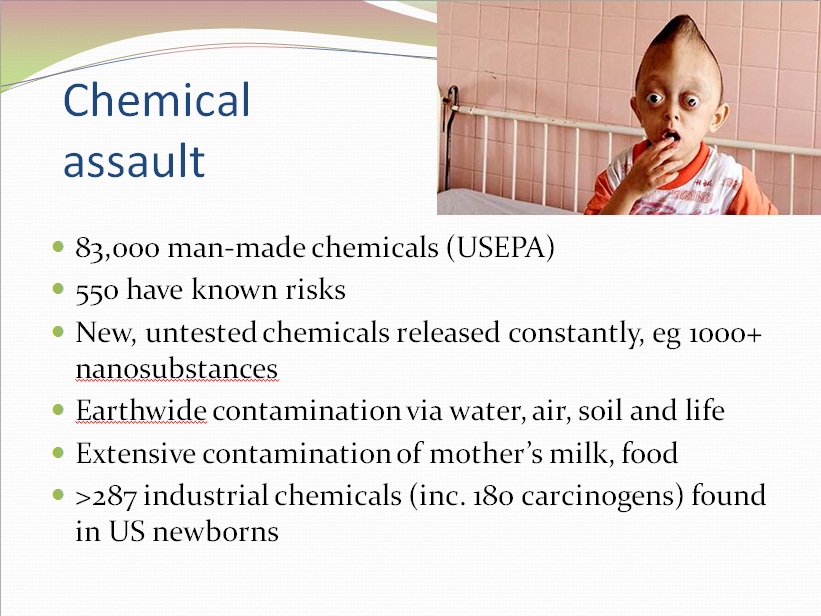
I hope the good Professor doesn’t mind my posting the attachments at my site. The first concerns environmental toxins and is an extended and more informative version of the brief article that Professor Cribb published in the Canberra Times.
The second attachment is an argument for the renaming of the human species (Homo Sapien) to something more appropriate in order to properly reflect our dysfunctional and self-destructive nature. I believe we’re too full of self-conceit and self-delusion to ever seriously entertain the idea, but it is a good argument to make in light of our impending extinction and the ongoing destruction of the Earth’s habitability for most other organisms. This global apocalypse is being brought to you by the world-wrecking hands of ‘industrial capitalist carbon man’.
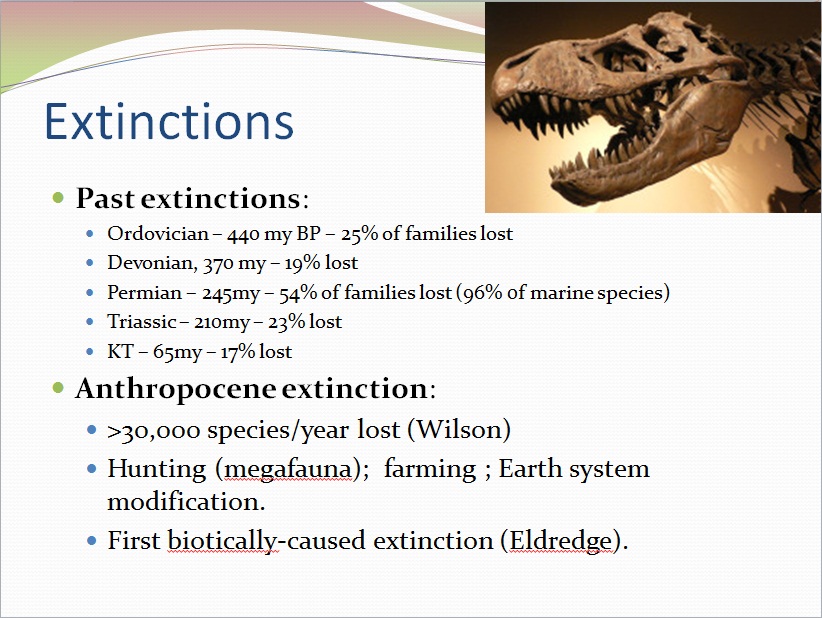
Lastly, he sent me an interesting slide show which appears to be the basis for a TV documentary that the Professor is hoping to create in order to explore these unfolding crises leading to mankind’s self-inflicted extinction, an avoidable tragedy if Homo Sapiens lived up to their name of ‘wise man’ – a misnomer if there ever was one.
I look forward to watching this documentary. Luckily, Professor Cribb is trying to get this project done in Australia and not the Banana Republic of America where it would be sacrilege to think that money is an illusion or that all problems cannot be solved by printing more of it.
In my last post I juxtaposed the absurdity of the President speaking about the moral imperative of gun control, all the while the deadly effects of climate change have steadily mounted, promising to wipe modern civilization off the face of the Earth by the end of this century. Similarly, another insidious and seemingly invisible danger lurks all around us, constituting a much greater threat than firearms or numerous other dangers that society sees fit to launch high-profile campaigns against. Professor Paul P. Elrich has warned of man-made environmental toxins and their long-term effects:
We don’t know nearly enough about most of them [man-made chemicals] or how they might affect our health in the long-term, especially mixed together. There may be surprises ahead that we won’t like,’ said Professor Ehrlich… According to Professor Ehrlich, global toxification ranks with climate disruption and acute biodiversity loss as one of the world’s most serious environmental problems.
The Earth is a closed system and within that system 30 >400 million tonnes of man-made chemicals are produced annually by the chemical industry whose size is expected to triple by 2050. According to a study by Onstot and others, everyone alive today carries traces of 700 chemicals which have become ubiquitous in the environment and whose effects are poorly understood. Industrial capitalism’s dehumanizing fetish for technology along with its overriding concern for protecting profits has unleashed a growing flood of toxic pollutants into the biosphere.
Between 1930 and 2000 global production of man-made chemicals increased from 1 million to 400 million tonnes annually. – link
This toxic soup has been created in just the last 100 years and has embedded its poisonous fingerprints into the biological make-up of all living things on the planet. An article sent to me by Professor Julian Cribb provides some shocking numbers that describe the extent of industrial civilization’s toxic accumulation in the environment:
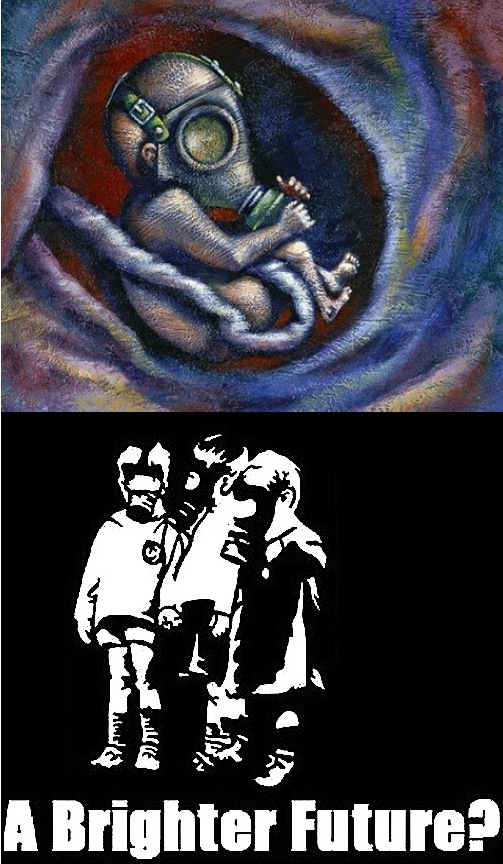
…The US Centres for Disease Control and Prevention, in a regular survey, finds certain industrial ”chemicals of concern” in the blood of 90 per cent to 100 per cent of the American population. The Environmental Working Group, a US non-government organisation, in independent tests reported the finding of 414 industrial toxins in 186 people ranging in age from newborns to grandparents. In a further disturbing piece of research it found 212 substances, including dioxins, flame retardants and known carcinogens, in the blood of newborn babies, who had been contaminated while in the womb. Tests from China to America to Europe have discovered industrial toxins in the breast milk of nursing mothers.
Groundbreaking Australian research has found even when dead and buried, people release their toxins back into groundwater and the environment, giving them back to future generations…
Just as the fossil fuel industry funds groups to confuse the public on climate science, so too does the chemical manufacturing industry hide behind the mantle of manufactured scientific uncertainty. What good is a system that hides the truth and circumvents government regulation, endangering and killing people so as to protect the agenda of profit-seeking corporations? Any social good touted by industry is negated or severely diminished from the environmental degradation and the damage to public health/safety of these unregulated chemicals. Increased cancer rates/deaths, multi-generational birth defects, and a collapsing environment unfit for human or animal habitation is not “progress” or “advancement”. As Chris Hedges would say, it’s the myth of human progress. Rachel Carson, author of Silent Spring, wrote about capitalism’s inability to self-regulate in the interests of public safety:
When a scientific society acknowledges a trade organization as a ‘sustaining associate,’ whose voice do we hear when that society speaks—that of science or that of industry? This is an era of specialists, each of whom sees his own problem and is unaware of or intolerant of the larger frame into which it fits. It is also an era dominated by industry, in which the right to make a dollar at whatever cost is seldom challenged. When the public protests, confronted with some obvious evidence of damaging results of pesticide applications, it is fed little tranquilizing pills of half truth…
…The major chemical companies are pouring money into universities to support research on insecticides. This creates attractive fellowships for graduate students and attractive staff positions. Biological-control studies, on the other hand, are never so endowed – for the simple reason that they do not promise anyone the fortunes that are made in the chemical industry. This explains the otherwise mystifying fact that certain outstanding entomologists are among the leading advocates of chemical control. Inquiry into the background of some of these men reveals their entire research program is supported by the chemical industry. Can we ever expect them to bite the hand that feeds them?…
At the rate we are fouling the Earth, trying to cover up our mess is becoming increasingly difficult:
As I mentioned in my previous post, Capitalism, Population Growth, & Climate Change, I’m reading a book on the present and future effects of anthropogenic global warming to the American Southwest as well as the entire world.
The Southwest drought of the early 2000’s, accompanied by the massive bark beetle infestation, killed over 2.6 million acres of mostly piñon(pinyon) pine. Pinyon pines are an interesting tree, living for up to 800 years and producing a tasty edible nut considered to be a “super food”. Studies by Craig D. Allen (U.S. Geological Survey) tell us that climate change is making droughts, historically normal occurrences in the Southwest, a killer for that region’s trees which usually can withstand such events, but not under the prolonged higher temperatures that human-induced global warming brings. These sustained higher temperatures have been identified as the “critical factor in provoking widespread tree mortality.” With a 4°C increase in temp and all other factors remaining the same, a five fold increase in pinyon tree death has been estimated by recent studies. The problem with that estimate though is that all other factors will most certainly change: less snowfall will diminish the benefits of the albedo effect, more retained heat from the sun and altered rainfall patterns will dry out the soil and increase erosion, and elevated levels of dust in the air will also factor into this vicious feedback loop to shrink mountain snowpack and increase evaporation. Fires and insect infestation will be seasonal events of ever-increasing intensity. And the demise of desert cities like Phoenix, dependent on a shrinking Colorado River, will inevitably follow.
…The team developed a Forest Drought-Stress Index that combines the amount of winter precipitation, late summer and fall temperatures, and late summer and fall precipitation into one number.
“The new ‘Forest Drought-Stress Index’ that Williams devised from seasonal precipitation and temperature-related variables matches the records of changing forest conditions in the Southwest remarkably well,” said co-author Thomas W. Swetnam, director of the UA Laboratory of Tree-Ring Research.
“Among all climate variables affecting trees and forests that have ever been studied, this new drought index has the strongest correlation with combined tree growth, tree death from drought and insects and area burned by forest fires that I have ever seen.”…
…“Atmospheric evaporative demand is primarily driven by temperature. When air is warmer, it can hold more water vapor, thus increasing the pace at which soil and plants dry out. The air literally sucks the moisture out of the soil and plants.”…
…These trends, the researchers noted, are already occurring in the Southwest, where temperatures generally have been increasing for the past century and are expected to continue to do so because of accumulating greenhouse gases in the atmosphere… – lnk
Here’s what the benchmark drought of 2001-2002, a harbinger of future hi-temp droughts in the Southwest, did to pinyon trees:
From my post ‘Climate Tipping Points: The Global Die-Off of Forests‘, we know that forests all over the planet are dying and that mass die-offs of these areas are only a matter of time. The arid regions of the world like the U.S. Southwest are the most sensitive biomes on the planet and will be the first areas to exhibit catastrophic die-off from climate change.
This excerpt from the book I’m reading should scare the hell out of you (he’s talking about the 2001-2002 U.S. Southwest drought):
Does ‘industrial-capitalist carbon man’ give a fuck about trees? Certainly not if they get in the way of profit and ‘development’.
A picture says a thousand words, and the following art summarizes the path of industrial capitalism. The artist is Markus Vesper and it’s called “Two-Faced World”. The portal door leading from paradise and into an environmental wasteland has tears flowing from its sad eyes, while the portal door that sits in the ravaged world of industrial capitalism has a dollar sign between its demonic eyes. I would say we made a very bad trade. Unfortunately, the doorway allowing for any escape from this self-imposed eco-apocalypse appears by all observable evidence to be firmly shut.
And I like this next one called “Transience”. Converting nature to dollars is represented by an hourglass where a dying and collapsing environment, which is fast running out of time, ends in the extinction of man (human skulls piling up at the bottom of the hourglass).
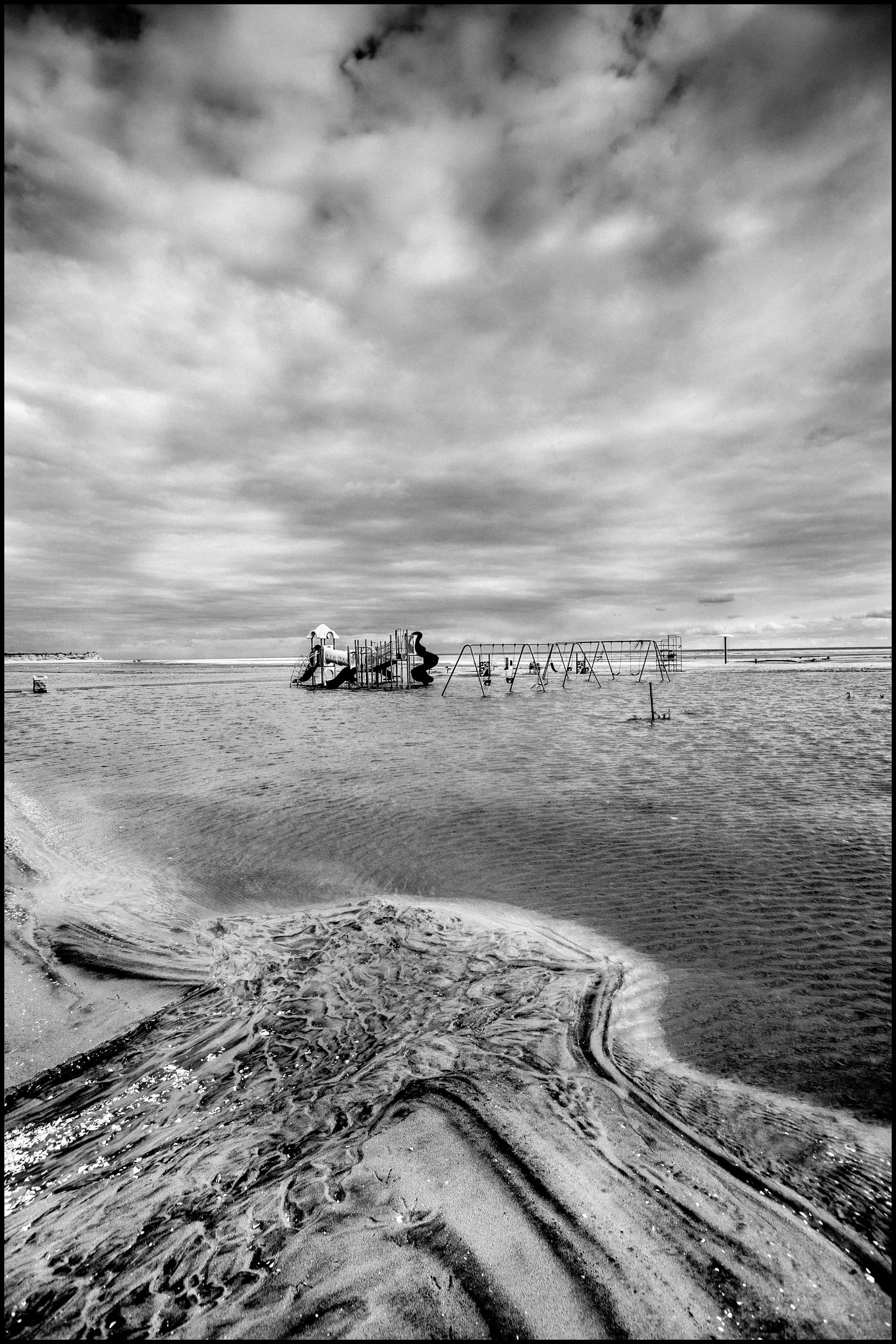
A playground taken back by the ocean during Hurricane Sandy in Breezy Point, New York.
It has been said that the Achilles heel of modern civilization is the electric grid.
…When the Oak Ridge energy gurus looked at modern American life, they saw an unexpected weak spot in our civilization, an Achilles heel that is so ordinary we largely take it for granted. Dr. Ben McConnell, a retired Oak Ridge lab scientist, now a research scientist at the University of Tennessee, where he studies transformers and switchgear, was a participant in the Achilles Heel project. He told a Federal Energy Regulatory Commission (FERC) technical conference last May that the U.S. electric transmission and distribution grid offers a clear path to destruction of our way of life. When the Oak Ridge boffins looked at the U.S., McConnell said, they found that grid collapse “came out to be the most serious problem that would have to be considered in the shortest time frame.”
Outside of the electricity industry, few fully understand the centrality of the grid to life in America today. The most graphic realizations occur when the grid goes down. It’s not just a matter of light and comfort in our homes. Without electricity, citizens may have no access to potable water, sewage treatment, safe food, fuel supplies, traffic control, or health care…
Hurricane Sandy was just the latest natural disaster to reveal how vulnerable the energy infrastructure of a so-called modern city is to the wrath of nature. With weather becoming more extreme and destructive due to the chaos of climate change, we’ll see more sections of the country being ripped out of their cocoons of modernity. To see more intense photos from Zoriah of Hurricane Sandy’s destruction, go here and here and here.
The Earth’s population of efficient Human termites continues to devour the planet out of house and home. Similar to the oil industry racing to the Arctic to suck out any newly revealed deposits of fossil fuels, we have mining companies racing to exploit a dying Amazon forest. Just like the vanishing ice sheets and glaciers of the Arctic and Antarctic, the trees of the Amazon are succumbing to a warming planet:
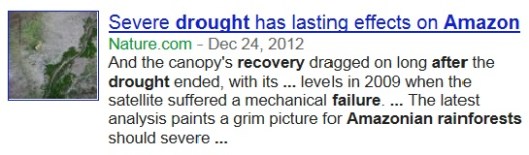
A study published today in the Proceedings of the National Academy of Sciences1 sheds light on the long-term effects of drought on the Amazon rainforest — giving clues about how the rainforest might be affected by global warming in the future. The researchers report that the severe drought that hit the rainforest in 2005 had lasting effects on the forest canopy, such that it remained damaged at least four years later…
…The latest analysis paints a grim picture for Amazonian rainforests should severe droughts become more frequent. Most Amazonian droughts are driven by warmer surface waters in the eastern Pacific Ocean, but the severe droughts of 2005 and 2010 seem to have been influenced by warmer sea-surface temperatures in the North Atlantic Ocean.
It could change the drought outlook in the next report from the Intergovernmental Panel on Climate Change, due in 2014…
After reading that, a wise caretaker of the Earth would step back and contemplate serious conservation efforts for preserving this critical environmental feature of the planet. Many have called the Amazon rainforest the “Lungs of the Earth”‘, a “jewel of the Earth”, the ”world’s largest pharmacy”, and a “biodiversity hotspot”. Those phrases sound like they refer to something that is highly regarded and vital. But in the world of industrial capitalism, the response is to do this:
…All together, mining companies will spend some $24 billion between 2012 and 2016 to boost production of iron ore, bauxite and other metals found in the Amazon basin, according to Brazil’s mining association, Ibram. Already, Brazil is attracting a fifth of all mining investment globally, and for many the Amazon represents the country’s greatest untapped potential.
“The Amazon will be our California,” said Fernando Coura, Ibram’s president.
The push by miners into the Amazon fits with Brazil’s broader strategy to tap the rain forest’s natural resources to drive economic growth. Brazil is building hydroelectric dams on Amazon rivers, improving roads between far-flung Amazon towns and connecting them to the national power grid. Legal changes and government-backed lending will help pave the way for more Amazon mines…
And so the unending destruction of the planet steamrolls onward in the name of “developement” and “progress”. The conversion of the real world into profitable commodities leaves in its wake a toxic and barren wasteland. For those whose eyes have been opened to such ecocide, how much more can you take before you simply become numb to it, zombified to the death and destruction inherent in our socio-economic system of industrial capitalism.
Gold Mining in the Amazon:
…One cannot disdain all other living beings, grind mountains to extract minerals, build roads without a thought for habitat fragmentation, design gardens to please only human aesthetics, or harvest monocultures that serve solely human needs, and expect one’s world to continue for long. There is room for humans at Earth’s banquet, but only those who have lived in place long enough to have learned the contours of their terrain, the language of their plant and animal neighbors and, more than anything, the needs of non humans… –Biodiversity and Sustainability Are Closely Linked to Language and Culture
In 2012, I have published 163 blog posts with a few notable contributions by Darbikrash and Kramerfaust. All 163 posts are hyperlinked and listed in chronological order below. The top 10 most-viewed posts for 2012 were:
To recap 2012, I would say it was the year of catastrophic environmental changes with both poles melting, Frankenstorms and global wierding, and severe droughts. We’re following in the steps of most other civilizations through environmental overshoot and destruction of our land-base by industrialization. Climate change is not something humans will be able to adapt to since we have already set into motion a cascade of feedback loops which will raise the global temperature to levels unheard of in the history of mankind. Amazingly, a large percentage of the population still does not believe that climate change is caused by man’s industrial activities over the last couple centuries or that it’s of any consequence. Mass media propaganda has served the interests of the elite well, but to the detriment of us all.
2012 also saw the further rise of the Security and Surveillance State which has strengthened and consolidated the power of corporate rule in America. Grass-roots movements can be preemptively disbanded and discredited through covert intelligence operations that make use of America’s hi-tech monitoring system integrating all electronic communications.
The corporate state knows that the steady deterioration of the economy and the increasingly savage effects of climate change will create widespread social instability. It knows that rage will mount as the elites squander diminishing resources while the poor, as well as the working and middle classes, are driven into destitution. It wants to have the legal measures to keep us cowed, afraid and under control. It does not, I suspect, trust the police to maintain order. And this is why, contravening two centuries of domestic law, it has seized for itself the authority to place the military on city streets and citizens in military detention centers, where they cannot find redress in the courts. The shredding of our liberties is being done in the name of national security and the fight against terrorism. But the NDAA is not about protecting us. It is about protecting the state from us. That is why no one in the executive or legislative branch is going to restore our rights. The new version of the NDAA, like the old ones, provides our masters with the legal shackles to make our resistance impossible. And that is their intention.
Amongst all the drama of the fiscal cliff, the story that should have gotten front page space this week is that the Antarctic is melting much faster than previously thought. In my post ‘Burning the Candle at Both Ends‘, the recent finding that the Antarctic was indeed losing ice came as a revelation to many and dispelled the popular belief amongst the global warming ‘denialist’ crowd that the South Pole ice sheet was increasing. The situation has now gotten more dire:
What are the ramification of this? We’ve released another ticking methane time bomb and opened up one more pandora’s box of known and unknown feedback loops:
…Half the West Antarctic ice sheet and a quarter of the East Antarctic sheet lie on pre-glacial sedimentary basins containing around 21,000bn tonnes of carbon, said the scientists, writing in the journal Nature.
British co-author Prof Jemma Wadham, from the University of Bristol, said: “This is an immense amount of organic carbon, more than 10 times the size of carbon stocks in northern permafrost regions.
“Our laboratory experiments tell us that these sub-ice environments are also biologically active, meaning that this organic carbon is probably being metabolised into carbon dioxide and methane gas by microbes.”
The amount of frozen and free methane gas beneath the ice sheets could amount to 4bn tonnes, the researchers estimate…
And what will happen to coastal communities? If one were to perform a linear projection of sea level rise from recent records, then you would get the following results:
…Currently, sea level is rising at the rate of 3 mm each year. Given 1″ = 25 mm, this means by the end of the century a rise of 87 (yrs) x 3 mm / yr. = 261 mm or (261 mm/ 25 mm/in) = 10.44 inches – enough to wash away roughly one third of S. Florida and most of the sea level areas of the Atlantic coast…
…IPCC (2007) suggested a most likely sea level rise of a few tens of centimeters by 2100. Several subsequent papers suggest that sea level rise of ~1 meter is likely by 2100. However, those studies, one way or another, include linearity assumptions, so 1 meter can certainly not be taken as an upper limit on sea level rise…
…Hansen (2005) argues that, if business-as-usual increase of greenhouse gases continue throughout this century, the climate forcing will be so large that non-linear ice sheet disintegration should be expected and multi- meter sea level rise not only possible but likely. Hansen (2007) suggests that the position reflected in IPCC documents may be influenced by a “scientific reticence”…
…Perceived authority in the case of ice sheets stems from ice sheet models used to simulate paleoclimate sea level change. However, paleoclimate ice sheet changes were initiated by weak climate forcings changing slowly over thousands of years, not by a forcing as large or rapid as human-made forcing this century. Moreover, in a paper submitted for publication (Hansen et al., 2013) we present evidence that even paleoclimate data do not support the degree of lethargy and hysteresis that exists in such ice sheet models…
…The increasing Greenland mass loss in Fig. 1 can be fit just as well by exponentially increasing annual mass loss, a behavior that Hansen (2005, 2007) argues could occur because of multiple amplifying feedbacks as an ice sheet begins to disintegrate. A 10-year doubling time would lead to 1 meter sea level rise by 2067 and 5 meters by 2090. The dates are 2045 and 2057 for 5-year doubling time and 2055 and 2071 for a 7-year doubling time.
However, exponential ice loss, if it occurs, would encounter negative (diminishing) feedbacks. Our simulations (Hansen and Sato, 2012) suggest that a strong negative feedback kicks in when sea level rise reaches meter-scale, as the ice-melt has a large cooling and freshening effect on the regional ocean. Such a slowdown in the rate of sea level rise would be little consolation to humanity, however, as the high latitude cooling would increase latitudinal temperature gradients, thus driving powerful cyclonic storms (Hansen, 2009), and coastlines would be continually moving landward for centuries.
West Antarctic ice is probably more vulnerable to rapid disintegration than Greenland ice, because the West Antarctic ice sheet rests mainly on bedrock below sea level (Hughes, 1972). The principal mechanism for mass loss from West Antarctica is warming of the ocean, melting of West Antarctic ice shelves, and thus increased flux from the ice sheet to the ocean.
The several analysis methods compared by Shepherd et al. (2012) concur that the West Antarctic ice sheet mass imbalance has grown since 2005 from an annual mass loss of 0-100 Gt ice to a recent annual mass loss of 100-200 Gt ice (Fig. 4 of Shepherd et al.)…
There are roughly seven billion humans on Earth at this time, all of whom have a death sentence hanging over their head via anthropomorphic climate change. Perhaps this partly explains the recent popularity of zombies and the ‘walking dead’ in our culture. Forthright thoughts on this subject from a scientist commenting at the Arctic Sea Ice Blog:
The first signs have appeared of what will be a mass culling of the human population by way of famine in the decades to come:
…According to the Food and Agriculture Organisation in Rome, global wheat production is expected to fall 5.2% in 2012 and yields from many other crops grown to feed animals could be 10% down on last year.
“Populations are growing but production is not keeping up with consumption. Prices for wheat have already risen 25% in 2012, maize 13% and dairy prices rose 7% just last month. Food reserves, held to provide a buffer against rising prices, are at a critical low level. It means that food supplies are tight across the board and there is very little room for unexpected events,” said Abdolreza Abbassian, a senior economist with the FAO…
My youngest son, who is eight years old, shocked me last week with a certain question. I don’t talk about the subject matter of this blog to him for obvious reasons. He asked me whether in the future the world would become a sort of technological paradise or a destroyed planet. I couldn’t answer his question. I didn’t even want to try.
In my previous ‘arms industry’ posts (Guns, God, and Greenback$ as well as Guns ‘R U.S.), I alluded to the revolving door between the arms industry and the government and the corruption of politics by the money involved therein. In one of the most interesting interviews of 2012 aired today on DemocracyNow, arms industry analyst Andrew Feinstein, author of “The Shadow World: Inside the Global Arms Trade” and a former African National Congress member of Parliament in South Africa, sheds more light and insight on this very subject:
ANDREW FEINSTEIN: …The global arms trade is a $1.74 trillion-a-year business. That’s $250 for every person on the planet. And the profit motive behind the global arms trade is absolutely crucial. This is a business that is about big, big money. The trade contributes around 40 percent of all corruption in all global trade. So its impact on countries, on governments, on ordinary individuals in terms of the economic opportunity costs are absolutely massive.
Now, you will find that many spokespeople for the trade would try to distinguish between the legal or formal trade, on the one hand, and the illegal or illicit trade, on the other. I argue in the book that this distinction is a fallacy, that the boundaries are in fact extremely fuzzy and that the licit and the illicit are very closely intertwined, in addition to which the industry is largely protected because of its very close links to governments, to intelligence agencies, obviously to the military, and to lawmakers. So it is very seldom—even with the inadequate regulations that exist globally around the trade in weapons, it is very, very seldom that people who break those regulations are actually brought to book…
…Now, the situation that pertains at a global or international level has very many similarities with the domestic situation, particularly in the U.S., because let’s—let’s bear in mind while discussing this that the U.S. buys and sells almost as much weaponry as the rest of the world combined. So what happens in the U.S. is going to have enormous impact on the rest of the world. And what happens domestically, in terms of the ownership of weaponry within the U.S., really does, as I say, reflect the global trade in arms, in that we see it’s a $3.5 billion-a-year industry. And here we’re talking about smaller weaponry—about handguns, about assault rifles, semi-automatic weapons, the sorts that are used in the tragedy at Sandy Hook and all of the others that we’ve seen over the years throughout the U.S.
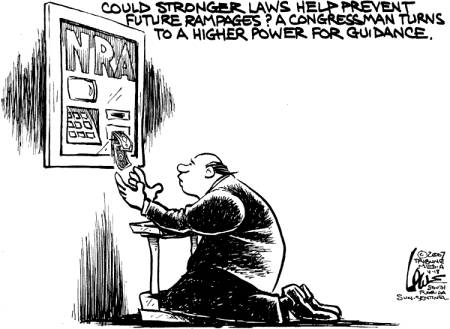
But the NRA, the gun sellers, the gun users seem to be afforded an extraordinary level of protection by government, by law enforcement authorities, just as happens on the global level. And part of this is because of the revolving door of people between, for instance, the NRA and government. Recent figures suggest that 15 of 28 officials in the NRA came from—sorry, lobbyists in the NRA came from important positions within government dealing with some of these same issues, so that the sorts of decisions being made by government are being informed disproportionately by those who want guns to be unregulated, by those who are making massive profits out the suffering of the victims of gun crime…
…let me make another point that I think is absolutely crucial about this and to understand where the NRA is coming from and, unfortunately, where the global trade in arms comes from, as well. And that is the linkages between politics and the gun lobby, and particularly, in terms of those linkages, money. One of the reasons that I focus on the global trade in arms in my work is because I saw, both in the context of South Africa, but also at a global level, the way in which money has come to pollute our politics. And the relationship between defense contractors on an international level and political parties and individual politicians are deep and profound. At a domestic level, the relationships between the NRA and specific elected representatives, not only in terms of money contributed, but also in terms of support given, are, again, profound. And unless we are able to break these linkages between money and politics that so pollute the way we are governed around the world, we will not be able to deal with some of the most intractable problems that face us as human beings —problems of the weaponization of the world, problems of climate change…
…I have not seen anywhere else in the world a gun lobby that has the same level of influence on its own government as the NRA does in the United States. My own assessment of what happened in July with the arms trade treaty is that the NRA, through the words of Mr. LaPierre and others, made clear to the Obama administration that it would make the president’s re-election a lot more difficult if he supported an international arms trade treaty. And I think it’s in that way that the NRA had such direct influence on the U.S. decision to effectively scupper negotiations for what in my opinion wouldn’t have been a strong-enough arms trade treaty, but would have been far better than any form of regulation that we have at the moment. So, yes, I think this is something of a unique situation, where a gun lobby has the extent of influence that it has in the United States of America…
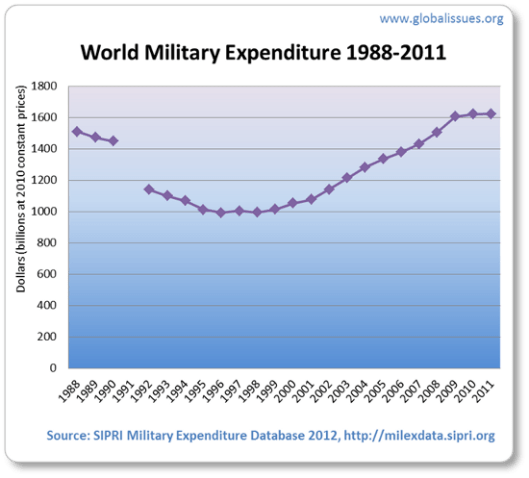
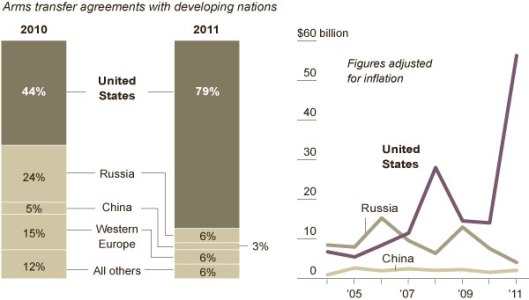
What I find most disturbing is that in an age of resource constraints and austerity measures aimed at the lower class, global sales from the arms industry are booming and that growth is coming primarily from the United States of America (aka ‘Guns ‘R U.S.’):
As was stated by Feinstein, the world-wide anti-corruption body, Transparency International, reports that the arms industry is one of the most corrupt business sectors, accounting for 40-50% of corruption in global trade.
Corruption plays a significant role in influencing arms procurement. But despite repeated scandals, this situation has been largely ignored by governments, NGOs and academics.” ~ Laurence Cockroft, Chairman of Transparency International’s UK chapter.
‘Commissions’ are the euphemism for bribes which are paid by manufacturers to governments and average at least 10% of contracts that run in the tens of $billions per year. Some reasons for the rampant corruption in the arms industry:
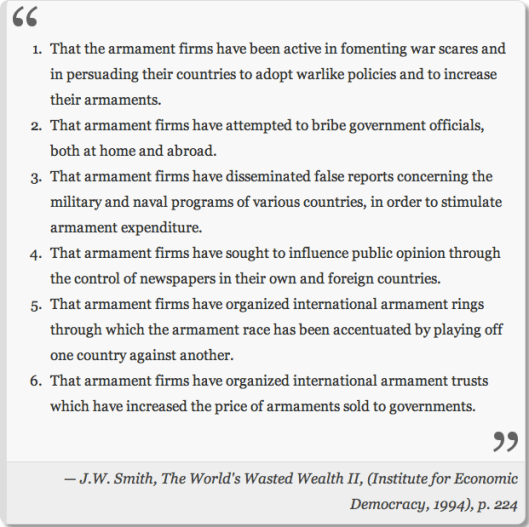
The merchants of death have only grown more powerful in recent times, and their horrific impacts to the well-being of humanity are as true today as they were after World War I when the League of Nations listed six primary criticisms of global arms dealers, as quoted by J.W. Smith:
Stung by the horrors of World War I, world leaders realized that arms merchants had a hand in creating both the climate of fear and the resulting disaster itself.
Americans need to understand that the NRA is very much a part of this global arms trade. If one follows the money, the reasons why the NRA is adamantly opposed to any sort of regulation on guns becomes painfully apparent. While the US domestic arms industry conveniently wraps itself and its profit motive behind the patriotic fervor of the Second Amendment and the colonial ghosts of Founding Fathers, the horrors of the Sandy Hook massacre are blamed on everything under the sun except for that which hides in plain sight — an unregulated, out-of-control global and domestic arms industry.
…we encounter another fact about our planetary life: the fragility of the balances through which the natural world that we know survives. In the field of climate, the sun’s radiations, the earth’s emissions, the universal influence of the oceans, and the impact of the ice are unquestionably vast and beyond any direct influence on the part of man. But the balance between incoming and outgoing radiation, the interplay of forces which preserves the average global level of temperature appear to be so even, so precise, that only the slightest shift in the energy balance could disrupt the whole system. It takes only the smallest movement at its fulcrum to swing a seesaw out of the horizontal. It may require only a very small percentage of change in the planet’s balance of energy to modify average temperatures by 2C. Downward, this is another ice age; upward, a return to an ice-free age. In either case, the effects are global and catastrophic.
~ Barbara Ward and Rene Dubos (Only One Earth: The Care and Maintenance of a Small Planet)
In my two posts about climate tipping points, I spoke of the Amazon forest and boreal forests as specific tipping points, but we can lump the planet’s entire collection of wood, forest and jungle ecosystems into one global system that will be decimated in the current human-generated climate armageddon. Man will realize he is just a temporary visitor of planet Earth, soon to be evicted by the cruel and unforgiving laws of nature. The following factors, now well underway, will obliterate the Earth’s tree ecosystems in the coming decades: massive pest outbreaks like that of the bark beetle into new regions whose climate zones have been altered, hotter and more severe droughts, the spread of invasive weedy plants which act as fuel for bigger and more devastating wildfires, and the spread of tree-killing diseases.
There are four recent articles in the news which describe how we are fast converting the world’s woods, forests, and jungles from massive carbon sinks into massive carbon emitters, ultimately to treeless wastelands:
These studies sound a warning bell that we can expect to see forest diebacks become more widespread, more frequent and more severe — and that no forests are immune,” Engelbrecht continued. “The ramifications of this scenario are diverse and, in many respects, dire: forest mortality will be accompanied by changes in species composition, changes in ecosystem function and losses of services and biodiversity.
Professor Frank Fenner’s prediction will invariably come to pass. And the intuition of the unwashed masses is correct – we are living in End Times:
But no ‘believers’ will be saved from this eco-apocalypse and no God will appear. The only thing visited upon mankind will be his own self-annihilation brought on by ignorance, hubris, and greed.











 The merchants of death have only grown more powerful in recent times, and their horrific impacts to the well-being of humanity are as true today as they were after World War I when the League of Nations listed six primary criticisms of global arms dealers, as quoted by J.W. Smith:
 From a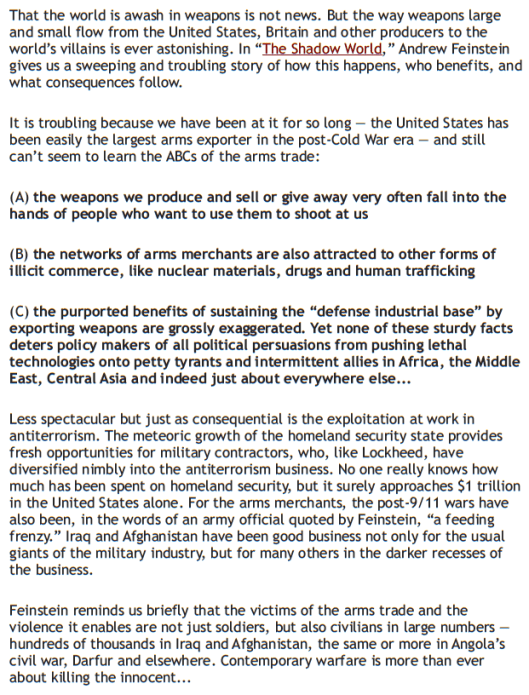




 Collapse of Industrial Civilization