President Obama recently unveiled his plans for America to cut its CO2 emissions 30% compared to 2005 levels by 2030 “to limit warming below the 2˚C ceiling agreed by countries“, a plan that Al Gore declares “the most important step taken to combat the climate crisis in our country’s history.” I’m here to explain to you that if that is the best the human race can muster, we’re trapped in a very sad state of anthropocentric denial.
Keeping in mind that humans of industrial civilization have thus far warmed the planet by 0.85˚C in the last couple hundred years, the extreme weather events that have occurred just in the last decade, let alone in the last year, are clear evidence of an increasingly destabilized climate system. Catastrophic changes in the glacial zones of the Arctic and Antarctic have been set into motion, altering global jet streams and weather patterns as well as locking in a sea level rise that will make most coastal cities uninhabitable within a couple of generations. Thus we can see that the target of 2˚C is a totally fraudulent upper limit for anything safe; industrial civilization has already passed the point of no return into climate chaos.
The US political system is so broken, so blatantly an open bazaar where corporations can buy public policy puppets like so many street hookers, that it’s hard to imagine any policy stronger than the new EPA proposal going into effect and not being killed by the next presidential administration or strangled by the purse strings controlled by the Congress…
The commercial, capitalist part of society has completely outstripped the interests of humanity as a whole. In the case of fossil fuels, private firms and individuals are carrying out activities which are having dire consequences for everyone, but corporations are only interested in their own advantage and in fact are required by law to place shareholders’ interests above all else with no regard to the long-term well-being of the global community and future generations.
Although CO2 emissions have fallen in the U.S. in recent years due primarily to electricity plants switching to the cheaper source of natural gas, they have jumped back up once again according to the latest reports. Demand for coal abroad has also been on the rise with the U.S. exporting its supply to meet the demand. However, most disturbing is the following graph which illustrates that in the last 164 years, no new energy source has ever stopped our expanding usage of fossil fuels. Levels of carbon extraction are perhaps a more telling indicator of the primacy of fossil fuels and the direct correlation between economic growth and global emissions than the energy statistics of any one particular country:
…as Mike Berners-Lee and I argue in The Burning Question, despite radical changes in the global energy mix over the last two centuries (and even more radical changes within individual countries) energy use and carbon emissions have undergone remarkably consistent long-term exponential growth. The implication is that there’s a technological and social feedback loop at work, with each new energy source increasing access to and demand for all the other sources. Energy begets energy.
The graph below, which shows total human energy use since 1850, reflects this. When coal use took off in the nineteenth century biomass energy didn’t decline as is often assumed. In fact it increased, helped rather than hindered by coal-powered industrialisation and globalisation. Similarly, coal use increased when society started extracting large amounts of oil – which makes sense given that oil not only proved useful for coal mining but also enabled the mass roll-out both of cars and energy-hungry suburban homes. In turn, gas and hydro helped drive technological and engineering revolutions that have made obscure oil sources more viable…
…The fact that new energy sources tend to be additional to existing ones helps explain why more gas production has dinted neither US carbon extraction nor global emissions. But critics of gas beware: the same caveat applies to genuinely low-carbon energy sources such as renewables and nuclear, or indeed increasing energy efficiency. We usually assume that installing a wind turbine or nuclear plant will reduce global emissions but that’s not necessarily true, since the fossil fuel that the clean energy system replaces may get burned elsewhere instead, perhaps kick-starting new energy feedback loops in other parts of the world and driving global carbon emissions up yet further.
In some cases there has even been talk of using low-carbon energy sources directly to increase fossil fuel flows. For example, modular nuclear reactors are being considered as a way to propel natural gas down the remote pipelines that bring energy to Europe’s homes and power plants, or for melting tar to produce oil for the world’s billion-strong car fleet. This seems crazy at first given that it would be more efficient and less polluting to use the nukes directly for producing electricity, but existing infrastructure can determine our energy choices as much as the available energy sources do…
…there’s little evidence so far that fracking, wind power, nuclear or any other technology is helping us leave any carbon in the ground. Indeed, as I wrote recently, despite all the renewable power installed so far, all the fracking rigs, all the energy efficiency gains, all the national carbon cuts, and even a collapse in average fertility levels, global emissions are still growing at the same rate today as they were in the 1850s… – link
In The Biophysics of Civilization, Money = Energy, and the Inevitability of Collapse, a similar correlation was demonstrated between money (the economy) and CO2 emissions. Without fundamentally changing the economy’s dependency upon growth and profit, emissions will continue to rise and deceptive non-solutions will continue to be sold to the public. Even if all human industrial activity ceased this instant, we would still be looking at upwards of a 2.65˚C temperature rise, but capitalist industrial civilization is a superorganism that is on an unwavering trajectory. The scales have been tipped out of favor for mankind. The geologic pendulum will swing back to bring things into balance over millennia, and in the process industrial civilization will be crush beneath the iron hand of natural law.
One look inside the self-serving and hypocritical mind of those running in society’s elite circles will tell you there is no chance for any radical departure from the moribund thinking which keeps the rotted status quo in place.
[Nate Hagens: …from a (good?) friend of mine – married to a billionaire, very connected, energy investment guy – i sent him the EPA announcement]
Nate,
You have seen the movie Idiocracy, right? Well President Mountain Dew Commacho in that movie is a better leader than BO. At least Commacho knew sometimes you need to listen to smart people & put them in charge.
Long story short, the presidency is in meltdown mode. Everyone has figured out what I told you…he is a bad guy. Whether you definition of “bad guy” is a person who used his skin color to get where he is in DC then holding the US hostage to his bitter, bigoted edicts; or just a lucky ne’er do well who wanted to save the world, but instead made it worse. HE IS DONE! <<<the exclamation point is Carney quitting.
Nate, none of what he does means squat (especially the agencies like EPA)…dems/repub know it. Next elections will save the economy for 20-30 more years…I know you & I disagree on the timeline. I hope, and pray, you are wrong…but I do know your logic is correct.
Best,
Jxxxxx
Buy coal/BTU tomorrow on the dip.
Like the radiation from Fukushima, CO2 emissions are invisible and their calamitous effects can play out over generations. The masses simply can’t stomach hard reality when they are entranced by a techno-capitalist wonderland of mental distractions and virtual reality pitfalls.
Although I agree with much of what J. H. Kunstler has to say, particularly on his analysis of energy and his critiques of American suburbia, when it comes to his views on the human-made system that is driving this entire train wreck, he gets it dead wrong. Here is a quote from his last blog post:
Now I am, going to reveal to you why it is so difficult to get a live human being on the telephone at these important places: because the more of a racketeering matrix medicine becomes, the more it seeks to evade responsibility for the consequences. That is, the more medicine becomes a criminal enterprise, the less it wants to hear from its client/victims. The same ethos is at work in just about every other realm of corporate enterprise in the USA. Our problem in the USA is not “capitalism,” it’s racketeering. Why we fail to comprehend it is one of the abiding mysteries of contemporary life.
…It ought to be self-evident that this could only happen in a profoundly corrupt, dishonest, and degenerate society, because it took the form of a social compact that accepted this sort of behavior as okay…
Kunstler is perpetuating a deep-seated myth about capitalism that many in American society repeat. Laying the blame on those victimized by an economic system, which by design exploits, disenfranchises, and discards its subjects, overlooks the fact that the problem is the system itself. Capitalism is not an ethical system, and its overriding force of motivation is always the bottom line. Inequality, conflict, and regulatory corruption are all part and parcel of capitalism. History has borne this out numerous times. Unless someone steps in to break them up, monopolies are the natural result of unbridled capitalism (Mindful Economics, Joel Magnuson):
Corporate money greases the wheels of the political system which then passes regulations discouraging competition and favoring large corporations. Regulatory capture is inevitably what happens when successful capitalists amass wealth and buy off the political class whose lifeblood is, after all, money. Under the present system, we will never see a candidate elected to office without a substantial war chest of funds stuffed with corporate ‘donations‘. Government does the bidding of capitalists, not vise versa. We saw this in spades with the election of Obama when all his campaign promises of “hope and change” evaporated into thin air as he filled his cabinet with Wall Street and Goldman Sachs cronies. Who wrote the legislation for Obama’s healthcare reform? — lobbyists for the healthcare industrial complex where, not surprisingly, “the big bucks are currently earned not through the delivery of care, but from overseeing the business of medicine.” The corruption that Kunstler decries is not an aberration of capitalism, but a natural feature of it:
…What chiefly drives this sort of political corruption today is capitalism’s structure. For many capitalist enterprises, competitive and other pressures exist to increase profits, growth rates, and/or market share. Their boards and top managers seek to find cheaper produced inputs and cheaper labor power, to extract more output from their workers, to sell their outputs at the highest possible prices and to find more profitable technologies. The structure provides them with every incentive of financial gain and/or career security and advancement to behave in those ways. Thus, boards and top managers seek the maximum obtainable assistance of government officials in all these areas and also try to pay the least possible portion of their net revenues as taxes. Boards of directors tap their corporations’ profits to corrupt mostly the top echelons of the government bureaucracy, those needed to make advantageous official decisions.
Individual capitalists act to corrupt government officials to serve their enterprise’s needs. Grouped into associations, they do likewise for their industries. When organized as a whole (in “chambers of commerce” or “manufacturers alliances,” etc.), they corrupt to secure their class interests. When such corruption is not secret, capitalists articulate their demands to corrupted officials as “good for the economy or society as a whole.” Such phrases constitute the “appropriate language” that enables officials publicly to disguise and hopefully to legitimate their corrupt acts.
Strict moral codes, regulations and laws have been imposed to prevent individual or grouped capitalists from corrupting government officials. Evidence suggests, however, that neither civic-minded ethics, nor regulations nor laws have come close to ending capitalists’ corruption. Countless government courts, commissions, etc., have hardly ended official complicities in that corruption. Mainstream economics mostly proceeds in its analyses and policy prescriptions as if rampant corruption did not exist. Mass media tend to treat capitalist corruption (at least in their home countries) as exceptional and government efforts to stop it as serious. These, too, are further examples of that “appropriate language” with which modern capitalist societies mask systemic corruption.
~ Richard D Wolff
Noam Chomsky uses the acronym RECD (Really Existing Capitalist Democracy, pronounced ‘wrecked‘) to describe the capitalism that exists in the real world, and he doesn’t hold out much hope for civilization surviving it. Any sort of idyllic form of capitalism only exists in people’s heads and is kept alive by the myth of laissez-faire capitalism (Mindful Economics, Joel Magnuson):
A democracy cannot exist without an informed and intelligent electorate, and when corporations and monied interests intentionally spin the news, the populous are reduced to conspiracy mongers and what Gore Vidal scoffingly called ‘consumer-depositors’ in thrall to the financial elite. Alas, the institution intended to educate the public, aka the Fourth Estate, on matters of vital importance has been thoroughly dismantled and perverted by capitalism. The internet, the last bastion of independent and alternative news, is soon to follow suite (Mindful Economics, Joel Magnuson):
If the masses are unable to see through the spin and distortion propagated by a class of greedy parasites, there is one entity that will not suffer the fate of the dispossessed, dying quietly in some dark corner. The Earth is not so forgiving to such continued capitalist assaults, and it’s not fooled by propaganda such as ‘sustainable development’, ‘green growth’, or ‘corporate social responsibility’. Since pre-industrial times, the global temperature has ‘only’ risen 0.85 degrees Celsius (1.5 degrees Fahrenheit), and we can already see the havoc to civilization’s infrastructure that climate chaos is wreaking. With forecasts of average global temperature to be many fold greater by mid century, it would seem that only a miracle will save us.
Systemic Disorder published an important essay yesterday on the systematic destruction of labor rights throughout the world. How long will these myths about capitalism persist until the exploited finally wake up and realize their blood, sweat, and sacrifice are what fills the coffers of the über rich? Many at the bottom of the economic hierarchy bend over backwards to apologize for our current system, calling it everything but capitalism. No matter how often capitalism fails, no matter how many people it kills, it is religiously touted as the only and the best economic system available despite its flaws. Will humans continue to amuse themselves to death, defending a systemically self-destructive system?
…
We watched the tragedy unfold
We did as we were told
We bought and sold
It was the greatest show on earth
But then it was over
We ohhed and aahed
We drove our racing cars
We ate our last few jars of caviar
And somewhere out there in the stars
A keen-eyed look-out
Spied a flickering light
Our last hurrah
And when they found our shadows Grouped ’round the TV sets They ran down every lead They repeated every test They checked out all the data on their lists And then the alien anthropologists Admitted they were still perplexed But on eliminating every other reason For our sad demise They logged the only explanation left This species has amused itself to death . . .
A recent investigative piece by Vice on the aftermath of the BP oil spill, America’s most devastating environmental accident to date and the “largest accidental marine oil spill in the history of the petroleum industry”, shows that people are still getting sick and dying in the Gulf region.
Award winning chemist, Dr. Wilma Subra, conducted blood tests on Gulf Coast residents who were symptomatic with new illnesses and found that some of the cancer-causing agents were 65 times the expected level in the victims blood tests. Subra noted that Corexit is in the air, the water and the Gulf resident’s blood.
“There’s a whole population that’s very sick and doesn’t have access to medical care, and that’s what we’ve been trying to work on now, from the very beginning, is getting them medical care so they will get better,” says Subra. “How many people do you think we’re talking about, do we have any guess?” “Hundreds of thousands along the whole coastal area,” Subra says. “Hundreds of thousands of people?” “That are sick, yes.”
It also is likely that the BP cleanup workers are going to suffer the same fate. Listen to what Dr. Wilma Subra had to say about the health of this group.
These findings can leave little doubt that BP’s use of Corexit has seriously compromised the collective life span of Gulf Coast residents. This is a staggering implication for the collective longevity in the Gulf. – link
Nearly 2 millions gallons of Corexitwere used to prevent the millions of barrels of leaked oil from hitting shorelines. Where did all that oil go? Once Corexit is dispersed over an oil slick, it causes the spilled oil to break apart and sink to the bottom of the ocean. In the case of the BP oil spill, this toxic material created massive kill zones on the Gulf floor. When oil and Corexit are mixed together, the resultant substance becomes 52 times more toxic and penetrates human skin much easier. The locals don’t eat what they catch, but remember that Obama said it was safe.
As of early October 2013, the United States Environmental Protection Agency (EPA) website specifically stated that the spill should have no effect on drinking water, and that any questions residents might have about their water should be directed to their drinking water provider. The website fails to mention that water from the Gulf, mixed with oil and Corexit could make its way into the ecosystem eventually, washing up onto the Gulf’s shores and seeping insidiously into the ground water. Florida’s ground water aqueduct system provides drinking water to 18 million residents. – link
The happy motoring culture of suburban sprawl, bread & circus infotainment, and celebrity/wealth worship has long since forgotten what has been called “the biggest public health crisis from a chemical poisoning in the history of this country“. Entrapped by poverty and lacking the means to escape the Gulf region, its residence have become part of the sacrifice zone offered up in the name of profit to the carbon-hungry God of industrial civilization.
None of the locals who took part in the clean-up effort were told of the dangers to their health, nor were they allowed to wear protective gear such as respiratory masks, suits, and gloves because it would have more accurately conveyed to the world the true nature of the disaster. More recently, BP has been accused of hiring internet trolls to threaten critics of its handling of the 2010 disaster. Surely the authorities were aware of the aftermath from the Exxon Valdez accident wherein the same dispersant was used by those clean-up workers who are now nearly all dead at the average age of 51. For BP and the U.S. government, image and corporate interests override the horrific realities of ecocide and corporate manslaughter. Better to sink the oil out of sight and mind in order to maintain the illusion that all is well rather than have a company pay the full cost for its recklessness. All that oil mixed with Corexit is now a 3 to 4 inch toxic layer blanketing the bottom of the Gulf of Mexico, inhibiting its biodegradation by natural oil-consuming bacteria and prolonging the disaster for decades. And BP is once again allowed to bid for U.S. government contracts after having sued the EPA in 2013 to lift the suspension. Of course lots of conspiracy theories surrounded the BP oil spill, but the only real conspiracy here was the government/corporate collusion to hide and minimize the damage, control the public’s perception of the disaster, and protect corporate profits over people and environment — nothing out of the ordinary for the corporatocracy we live under, here or abroad.
It’s not just in the oceans that we have to worry about oil spills. If we look at just one set of data from one inland state, you can get an idea of the staggering scale of the fallout from the oil drenched machine of industrial civilization:
When you take into account all the global destruction that capitalist industrial civilization has wrought over the last few centuries, you realize no solution will ever be forthcoming from our corporate overlords. The idea of corporate social responsibility (CSR) is simply a PR and marketing ploy. CSR employs ineffective market-based solutions, making it appear that a corporation is addressing a social or environmental problem when in fact it only serves to protect corporate financial interests and shift the blame to the individual and elsewhere. Over decades, corporations have molded society into atomized, uninformed, and passive consumers who parrot the same talking points fed to them from the mainstream media. Those wielding the power in society and leading mankind over a cliff are the same ones that hide behind the moniker of CSR, a smokescreen for continuing the looting and polluting of the planet to the point of ecological collapse.
As the catastrophes of the BP oil spill and Fukushima illustrate, a bankrupt planet is preferable to them over a bankrupt corporation. The Tragedy of the commons, as Noam Chomsky points out, has been perverted and twisted by the widespread adoption of the capitalist ethos. It actually means the opposite of what most have been taught to believe:
…there is another part of Magna Carta which has been forgotten. It had two components. The one is the Charter of Liberties which is being dismantled. The other was called the Charter of the Forests. That called for protection of the commons from the depredations of authority. This is England of course. The commons were the traditional source of sustenance, of food and fuel and welfare as well. They were nurtured and sustained for centuries by traditional societies collectively. They have been steadily dismantled under the capitalist principle that everything has to be privately owned, which brought with it the perverse doctrine of – what is called the tragedy of the commons – a doctrine which holds that collective possessions will be despoiled so therefore everything has to be privately owned. The merest glance at the world shows that the opposite is true. It’s privatization that is destroying the commons. That’s why the indigenous populations of the world are in the lead in trying to save Magna Carta from final destruction by its inheritors…
I’m afraid we are light years away from the Charter of the Forests and any sort of bucolic utopias. As for the future, think moonscapes, tumbleweeds, and the creaking sheet metal of rusted-out cars. The hyper-reality of megacities, with their pulsating neon lights and traffic-filled streets, will fall into silence and decay. Coastal cities will be swallowed up in watery graves. The impotence of man’s technology will become painfully evident as the global-scale geochemical disruptions caused by man quickly unfold, ripping asunder any hold we once had on Earth.
…If modern industrial capitalism were a person, he or she would be on suicide watch. The system that has brought us quantum physics and reality television, modern medicine and the columns of Andrew Bolt is set on a course which, by all the best reckoning, points directly to its doing itself in. If capitalism goes on — everything goes. Climate, coastlines, most living species, food supplies, the great bulk of humanity. And certainly, the preconditions for advanced civilisation, perhaps forever…
~ Renfrey Clarke
Occam’s razor, or Ockham’s razor, is a line of reasoning which uses succinctness and simplicity, employing the least assumptions to arrive at the most probable hypothesis that fits the available evidence. In other words, given two equally plausible explanations for a given phenomenon, the one making the fewest assumptions is more likely correct. Its foundation rests on two guiding principle to cut through falsehoods and pseudoscience reasoning:
The Principle of Plurality – Plurality should not be posited without necessity
The Principle of Parsimony – It is pointless to do with more what is done with less
In the search for truth, this tool of reasoning has been used throughout history by scientists and philosophers in the creation of models and theories, by detectives in solving crimes, and by objective researchers in debunking convoluted conspiracy theories. Occam’s razor is embodied by the probability theory which says that “all assumptions introduce possibilities for error and if an assumption does not improve the accuracy of a theory, its only effect is to increase the probability that the overall theory is wrong.” It is a heuristic method to guide scientists in the development of theoretical models. In the case of anthropogenic climate change, it can be applied to show how those who are skeptical about AGW are forced to weave a much more tangled web in order to explain things:
The serious, mainstream science view goes like this:
The greenhouse effect is real. Without it, average surface temperatures would be -15C, not +15C
CO2 is a greenhouse gas
CO2 levels have increased by 41% since pre-industrial times
A 100% increase will cause a 1.2C rise in earth surface temperatures
Reasonably simple, given the vast complexity of our planet’s climatic system, and in fact the handful of serious climate scientists on the “sceptic” side agree with points 1-4.
Now here is the climate “sceptic’s” case:
The earth is not warming
If it is warming, it is due to the sun
The warming is due to some kind of natural variation
It’s going to get cooler soon
CO2 is too tiny to make a difference
CO2 will make a difference but there’s nothing we can do about it
We can afford to wait another 10-50 years to see if it is going to get hot then do something about it then
It is going to warm but only a bit
CO2 is good for us
Cloud cover will extend in a warmer planet and cool us down (No it will not)
All models are always wrong
Some models show that the climate will not warm much
It is all a conspiracy by climatologists, Greens, the nuclear industry and the UN
It cannot be happening because it would mean that fossil energy would become unprofitable
What the above shows is that there is an endless complexity to the arguments brought by the “sceptics”, many of them self-contradictory.
They are not trying to present a coherent picture of reality, which is the aim of science. They are merely producing a stream of counter statements. I have been impressed recently that when I try to discuss the one point where agreement exists with a delayer, they rapidly change the subject to find disagreement.
In fact, their case often boils down to a mirror image of the case for man-made global warming. If we say white, they just say black.
I predict therefore that soon “sceptic” blogs will be quoting William of Occam as evidence for the truth of their case.
Some folks regard contrails suspiciously. Apparently, many don’t know what they are. Several websites call the lines chemtrails, and think that the US military is deliberately spraying a substance upon the population.
This is silly for a number of reasons. First, if you’ve ever watched crop dusting you know that chemicals must be released very close to the ground. Released on high, they’d dissipate with the wind and take forever to get down; the concentration on the folks below would be zero. Second, my commercial pilot friends (along with the controllers at the FAA) would all have to go along with the plot, since they’d see the process happening. I’m a pilot and airplane owner myself: It’s NOT happening. Third, what would be the purpose? Some say mind control. But are people acting differently lately? Others say it’s to sow disease. But why would anyone want to do this? Who would go along with it? Finally, some say “chemtrails” are a government project to combat global warming. Nice, but then why should such a laudable effort be kept secret? Other web-based “explanations” involve even wackier stuff like electromagnetic rays.
Logic never placates the truly paranoid, and discussions are rarely satisfying. Those who “believe” WANT to believe, and claim soil tests show that dangerous substances have been found beneath the planes. But again, nothing released from 40,000 feet would ever reach the ground except diluted to zero. And, more to the point, the videos of these supposed “chemtrails” shown on the scare web sites are actually a common type of contrail. The believers claim they’ve only started around 1998 – but I’ve observed those “spreading out” contrails for over 40 years. They’re not new. They’re contrails. No mystery, and nothing sinister here at all.
And yet another imaginative conspiracy, thoroughly debunked by the scientific community, surrounds the terrorist attack of 9/11 in which its die-hard followers believe that elements within the U.S. government planned and executed a controlled demolition of the TWC towers and WTC 7 in order to justify the invasion of Middle East countries and restrict domestic civil liberties. The first obvious question is why would a nefarious group within the government go through the logistical nightmare of crashing airliners into buildings in addition to rigging those buildings beforehand when a massive truck bomb, Timothy McVeigh-style, would have sufficed? Was that elaborate scheme really necessary in order to galvanize the political will to invade a foreign country for oil? And as Noam Chomsky points out in the video below, why implicate nationals from our major ally Saudi Arabia instead of people from the very country the neocons so desperately wanted to invade, Iraq? Perhaps the Bush administration just enjoyed the extra hurdle of fabricating WMD’s because planning and executing such a byzantine maze of deception involving so many people was the best way to keep it all secret and ensure the highest probability of success.
Another article of faith among conspiracy theorists is that the conspiracy would not have to have been very large. In Crossing the Rubicon, Michael Ruppert writes that there didn’t have to be any more than two dozen people with complete foreknowledge of the attacks to orchestrate 9/11, and that they would all be “bound to silence by Draconian secrecy oaths.” But those numbers begin to balloon out of control if all of the people and institutions accused of playing a part in the cover-up are counted. They would have to have included the CIA; the Justice Department; the FAA; NORAD; American and United Airlines; FEMA; Popular Mechanics and other media outlets; state and local law enforcement agencies in Pennsylvania, Virginia, and New York; the National Institute of Standards and Technology; and, finally and perhaps most prominently, the 9/11 Commission. – link
[youtube:www.youtube.com/watch?v=SRV_MsbAZv4]
As more and more people fall off the economic ladder and lose faith in government, their plight will become fertile ground for conspiracy theorists looking to manipulate the anger and desperation of the dispossessed. JFK conspiracists have been around for nearly half a century and I think it’s fair to say that 9/11 conspiracists will have an even longer lifespan, perhaps outliving industrial civilization itself. The maxim of never letting a good crisis go to waste certainly held true for abusive power structures all across the globe after 9/11, but such an atrocity was inevitable due to nearly a century of nurturing and exploiting radical Islamists to serve the interests of the British and American Empires:
…When the Soviet Union invaded Afghanistan in the 1980’s, the West, led by the United States, countered by implementing the “Islam” strategy. The recruiting of Islamic militants from around the world to fight in the “jihad” included the recruitment of Osama bin Laden by Saudi and Pakistani intelligence services. [26]
Ultimately, British strategy manifested or transmogrified into American support for the ‘holy warriors’ against the Soviet invasion. The United States invested massive amounts of armoury, military training and billions of dollars in this enterprise.
Chalmers Johnson defined, ‘blowback’ “as a way of thinking of an individual, a class, a nation or an empire…” when employed in the arena of “international conflicts” this way of thinking, “has a tendency to blow back onto the party releasing it.” [27] The criminal events in New York and Washington almost ten years ago, were partly and clearly a blowback from the “Islam” strategy.
Whereas Britain concocted and propelled the “Islam” option into strategic consideration amongst policy makers during the Cold War period, it was then the United States which was largely seen to “release”, implement and support this policy in Afghanistan in the 1980’s.
In conclusion, it needs to be emphasised that as the provenance of this “Islam” strategy pre-dates the Cold War and even the emergence of the United States as a superpower, there is every reason to believe that it will also outlive a perceived declining United States. We can now see this in Libya where NATO has worked in conjunction with Libyan Islamists to overthrow the Gadhaffi regime. [28]
The inside job of 9/11 was not some fiendishly clever plot by Cheney and a crack team of explosive experts and false flag operatives. It was the net result of decades and decades of colonial rule and the thirst for resources by Western citizens weened on suburban living, gas-guzzling automobiles, fast food, and industrial age values. Much energy and time is wasted on chasing phantom villains, while the real problems pile up around our make-believe world. Looking into history as well as into the mirror might be more productive than a crusade to bring imaginative boogeymen to justice.
Empires take what they want, first through diplomatic and economic pressure, then through the use of jackals and mercenaries, and finally with the shock and awe of military might dressed up with the appropriate propagandistic slogans of rescuing a resource-cursed country from its now out-of-favor dictator. ‘Regime change’ has become an acceptable TV euphemism for overthrowing governments. However, when those foreign oil taps start to run dry, important environmental regulations in the homeland get reinterpreted and scaled back in order to open up resources that once were thought of as undesirable. The elite systematically cannibalize their own societies while at the same time extracting massive profits by shredding the social safety net, criminalizing poverty and dissent, stripping away environmental protection, and gutting scientific research. In order to protect their ability to loot the commons, the elite circle believe it is more advantageous to keep the masses ignorant about the true extent of the planetary crisis their policies have created. If science gets in the way of “progress”, then it is summarily dismissed by outright denial, defunding, and deletion from public records as Apneaman points out:
…the gutting of Environment Canada by the Harper gang was an effective strategy in silencing scientists whose research was causing “sufficient embarrassment”. It was not violent, but they are just getting started. Then there are the non violent environmental protesters who are being sent to prison. Could you imagine that 20 years ago? Just getting started. As the benign dog points out, when the dollar hegemony slips even further it won’t be just the government and the rich looking to silence the critics. Does anyone one here really think people like the neo-cons are going to give up the reserve currency status without a fight?
For those countries who are located down low on the totem pole of energy wealth such as North Korea, the coffers of the State are filled by criminal activity of a more mundane variety such as drug smuggling and currency counterfeiting:
North Koreans began to produce meth in “big state-run labs.” The Los Angeles Times reports that narcotics investigators said the North Korean government controlled the production of meth and opium, as well as other drugs, in the 1990s in order to bring in “hard currency” for Kim Jong Il, the late North Korean leader. The government was engaging in the drug trade in order to save and improve its economic state as a nation. I do not by any means agree with the actions North Korean government chose to take. Instead of tending to its people’s health issues, it chose to spread life-threatening drugs throughout the world. In such a heavily government-dependent political system, the people have no hope to turn to a government official and ask for help. Individuals and families turned to the drug in times of desperation, leading to many North Koreans becoming fervent methamphetamine addicts. This situation is devastating and should not be overlooked. According to CNN, a majority — two-thirds to be exact — of the North Korean population has used methamphetamines. It is reportedly accessible in restaurants and has “become the drug of choice of high-ranking officials and the police.” http://www.centralfloridafuture.com/opinion/north-korea-s-meth-addiction-could-spell-disaster-for-us-1.2853884#.U0jHJyhRY20
It is no secret that North Korean diplomats and embassies are self-financing. In fact, they are profit earning and they must remit funds back to Pyongyang. While this means that DPRK diplomatic relations are not a drain on the treasury, as is typically the case with other countries, it does mean that the DPRK’s official representatives are more likely to make headlines for their business dealings rather than political statements. http://www.nkeconwatch.com/2009/11/22/dprk-diplos-arrested-for-smuggling-again/
Liu had been convicted of conspiracy and fraud involving millions of dollars made not by the Bureau of Engraving and Printing but by counterfeiting presses in a foreign country, presumably North Korea. The quality of these “supernote” forgeries is so high that he’d managed to pass enormous quantities through the electronic detection devices with which every Vegas slot machine is supposed to be equipped. The prosecutor was asking the judge to give him close to 25 years, and in the end Liu would receive more than 12. Liu’s crimes threatened not only the integrity of America’s currency but the very fabric of international peace. They were part of a vast criminal enterprise believed to be controlled by the North Korean state, set up and used to finance its nuclear-weapons and ballistic-missile programs. All of this, intelligence analysts say, is coordinated by a secret agency inside the North Korean government controlled directly by “the Dear Leader,” Kim Jong Il, himself. The agency is known as Office 39. (Given the opacity of anything inside North Korea, experts differ on whether “Office” should be “Bureau” or even “Room”—and they also suspect that the number itself may change.) http://www.vanityfair.com/politics/features/2009/09/office-39-200909
Cuba and North Korea are two interesting examples of countries that are both energy poor but also very different on the sociopolitical spectrum. Cuba appears to be closer to an ideal model for how energy descent should be handled, and North Korea is a much more frightening view of how things are run by a tiny, coddled elite. What follows is a review by Alice Friedemann of “Nothing to Envy. Ordinary lives in North Korea” written by Barbara Demick…
North Korea and Cuba were the first countries to lose oil, the lifeblood of civilization. Since we will all share that fate, it’s interesting to see what happened, though keep in mind that how severe the consequences are will depend on the carrying capacity of the region you’re in, how much civil order can be maintained, and the effectiveness of the leaders in power (i.e. see “Lessons Learned from How Cuba Survived Peak Oil” that compares California to Cuba).
There are enormous differences between the fates of Cuba and North Korea. Cuba had many advantages — a benign climate with year-round rainfall where three crops a year could be grown, a culture of helping one another out, and Castro prevented middlemen and speculators from charging astronomical amounts for food. For a detailed understanding of what happened in Cuba read this Oxfam analysis.
North Korea couldn’t be more opposite – a cold mountainous nation with only 15% of its land arable, and dictators so crazy and cruel they’re almost unmatched in history. North Korea might be the only nation with more prisoners per capita than America. There are many kinds of prisons, from detention centers to hard-labor camps, to gulags where your children, cousins, brothers, sisters, and parents would also be sent to for a crime you committed for generations to come. About 1% of the population– 200,000 people –permanently work in labor camps. The threat of these prisons has made it impossible for organized resistance to happen.
It’s hard to escape, and if you do, then your relatives end up in labor camps. Other nations aren’t keen on refugees – South Korea fears a collapse of North Korea and being overrun by 23 million people seeking food and shelter, and China has their own problems with 1.2 billion poor people.
The only good aspect I could find about North Korea was that the women there are less repressed than in the past. A century ago Korean women were so completely covered in clothing that the Taliban would find no faults. In one village north of Pyongyang women wore 7 foot long, 5 feet broad and 3 feet deep wicker hat constructions that kept women hidden from head to toe. Perhaps even more than Muslim women, Korean women were imprisoned in family compounds and could only leave at special times when the streets were cleared of men. One historian said that Korean women were “very rigidly secluded, perhaps more absolutely than women of any other nation”.
After the Korean War ended, North Korea lost most of its infrastructure and 70% of its housing. It was amazing that Kim Il-sung managed to create a Spartan economy where most were sheltered and clothed, had electricity, and few were illiterate. Grain and other foods were distributed as well. In autumn each family got about 150 pounds of cabbage per person to make kimchi, which was stored in tall earthen jars buried in the garden so they would stay cold but not freeze and hidden from thieves.
North Korea became utterly dependent on the kindness of other countries for oil, food, fertilizer, vehicles, and so on.
What happens when the oil stops flowing?
In the early 1990s North Korea suffered a double blow at a time when they were $10 billion in debt. China wanted cash up front for fuel and food while at the same time the Soviet Union demanded the much higher price of what oil was selling for on world markets.
The nation spun into a crash. Without oil and raw materials the factories shut down. With no exports, there was no money to buy fuel and food with. Electric plants shut, irrigation systems stopped running, and coal couldn’t be mined. The results were:
Power stations and the electric grid rusted beyond fixing
The lights went out.
Running water stopped so most went to a public pump to get water
Electric trams operated infrequently
People climbed utility poles to steal pieces of copper wire to barter for food
There were few motor vehicles
And few tractors, farming was done with oxen dragging plows
Hunger struck, which made people too exhausted to work long at the few factories and farms that were still surviving.
Perhaps this is why many nations have had no choice but to rely on muscle power after an economic crash or during a war, which means putting many people to work on farms. After the energy crisis, North Koreans over 11 were sent out to the country to plant rice, haul soil, spray pesticides, and weed. This was called “volunteer work”. Now that they couldn’t afford to buy fertilizer, every family was expected to provide a human bucketful of excrement to a warehouse miles away. The bucket was exchanged for a chit that could be traded for food.
Like Mao’s crazy schemes, North Korea’s dictators lurched from one mad idea to another — one day it was goat breeding, the next ostrich farms, or switching from rice to potatoes.
Food staples were grown on collective farms, and the state took the harvest and redistributed it. The farmers weren’t given enough to survive on, so they slacked on their collective fields to grow food to survive on, making the food crisis even worse. In the end, it was people in cities with no land to grow their own food on who ended up starving first. Every year, rationed amounts of food went down.
People were told the United States was at fault, and propaganda campaigns encouraged Koreans to think of themselves as tough, and that enduring hunger without complaint was a patriotic duty, and kept everyone’s hopes up by promising bumper crops in the coming harvest. The Koreans deceived themselves like the German Jews in the 1930s, and told themselves it couldn’t get any worse, things would get better. But they didn’t.
Worse yet, instead of spending money on agriculture, the defense budget sucked up a quarter of the GNP. One million men out of 23 million people were kept in arms – the 4th largest military in the world.
The only place to get food became the illegal black market, where prices were terribly high, sometimes 250 times higher than what the state used to sell food for.
Natural disasters made harvests even worse – in 1994 and 1995 Korea was struck with an extremely cold winter and torrential rains in the summer that destroyed the homes of 500,000 people and rice crops for 5.2 million people.
People began picking weeds and wild grasses to stretch out meals, as well as leaves, husks, stems, and the cobs of corn. Children can’t digest food this rough and could end up in a hospital, where doctors advised the rough material be ground up fine and cooked a long time. It wasn’t long before malnutrition led to increasing numbers of people with pellagra and other diseases. Hospitals soon ran out drugs and other supplies.
What’s with these eco-freaks!?! Don’t they see they’re destroying the economy. We need to defang the EPA and go balls out like China’s doing. So what if we create a little waste! There’s money to be made from gas masks, water filtration, hazmat suits and cancer treatment. If the Earth worshippers get really bothersome, we’ll just sic the security and surveillance state on them. Send over a couple unmanned aerial vehicles on their ass. Drones… a multibillion-dollar industry! Beautiful, isn’t it? If we have to lock them up, we’ll profit from that too. There’s no problem that can’t be turned into a business scheme.
The upper class that creates wealth, like myself, is just better at procuring what this world respects –money, power, prestige and all the other measurements of social status. They say “money makes the world go round”, but really it’s just a symbol for energy exchanged for work, as in human labor or the virtual slave labor of our fossil fuel-based civilization. Based on the law of the conservation of energy and political thermodynamics, all organisms seek to conserve energy and overcome the disorder and decay of entropy. Humans are following their biological inclination to search out the richest source of energy and procreate. In fossil fuels we found the mother lode of them all to do both, live like kings and fill the planet with our numbers. We have an innate instinct to burn the stuff and have sex. Just look at how the Dutch and Flemish became the first in pre-industrial times to exploit fossil fuels in the form of peat:
The opening of the peat bogs in the northern provinces from the 1580s onwards meant that the Dutch had a cheap energy source that was widely available, while most other countries in Europe were entirely dependent on wood – which had become ever more expensive as deforestation advanced. The Netherlands’ ample fuel reserves stimulated the development of various fuel-intensive and export-oriented industries…
…The high energy consumption of the Dutch was an anomaly in seventeenth century Europe. The same goes for their prosperity, and for the level of urbanization and industrialisation in the country…
Consequently, their economy became the most powerful in the world. Eventually the peat bogs were mined to exhaustion until new technology arose which allowed even deeper mining below the water. This more intensive process came at the environmental cost of losing agricultural land to the lakes which formed from this new mining technique.
…The authorities, horrified by the loss of agricultural land – and the associated tax income – tried to stop the peat diggers during the sixteenth century by placing export prohibitions and restrictions on peat mining below the water table, but they failed. Digging out peat was more lucrative than cultivating crops. In total, peat digging would turn more than 60,000 hectares (600 km2) of land into water in Holland and Utrecht – almost 10 percent of their total surface area…
This all sounds eerily familiar with America’s current binge on fracking, doesn’t it? These days the entire world is scavenging the hard-to-get energy resources since all the low hanging energy has been consumed.
Blood, Sweat, Oil and Psychopaths
There is some archeological evidence that Romans used coal in England during the second and third centuries (100-200 AD), but they relied primarily on slave labor along with lesser-used sources of fire, animal labor, and wind:
Historians estimate that in the first century of the empire, Rome consumed between one hundred thousand and half-a-million slaves every single year [14][15]. The slaves used for hard agricultural labour and as rowers in Roman ships had a life-expectancy of perhaps only a few years – and those in the mines only a few months. Slaves were, quite simply, an energy resource to be exploited. Nevertheless, despite the high mortality rate, such was the quantity of slave imports that they comprised between 30 and 40 per cent of the population in the empire’s Italian provinces – an enormous proportion [14].
There were, however, cultures much more reliant on slaves than the Roman Empire such as the Spartan Empire with its slave class of helots who, according to Greek historian Herodotus, outnumbered the free by seven to one.
“Parts of iron slave chains that native Britons were forced to wear under Roman rule. This particular item was found at Sheepen, Colchester.”
You so-called wage slaves and working poor of industrial civilization have never had it so good, have you? The average person has dozens and sometimes hundreds of slaves working for them at any given time, courtesy of our gift of fossil fuels. Of course there’s always an oddball Luddite in the crowd, but the average person is not going to walk away from such a life of Riley. And do you really believe that the wealthy elite, whose self-image is infinitely more tied up in their bank account digits than the lowly commoner, is going to give up their amassed fortunes and vaunted position in society for the betterment of mankind? Hell, they think there’s too many of the “unwashed masses” as it is. Why would they want to save the disposable bottom feeders? The global elite clawed their way to the top by stomping on whoever got in their way and dominating the competition. Some degree of lying, cheating, tax-dodging, bribing of officials and “bending” of the law is always buried beneath the squeaky clean propaganda of their PR machines. Show me a truly “sustainable” corporation and I’ll show you a virgin prostitute. Of course they all want to be the benefactor of some humanitarian foundation once they’ve secured their riches, but not a single one of them is a Mother Teresa.
We’ve got the perfect economic system for psychopaths to rule the world in broad daylight under the cloak of democracy and normality:
One in a hundred regular people is a psychopath…That figure rises to 4% of CEO’s and business leaders…The reason why is because capitalism, at its most ruthless, rewards psychopathic behavior –the lack of empathy, the glibness, cunning and manipulative behavior… Capitalism at its most remorseless is a physical manifestation of psychopathy, a form of psychopathy that has come down to affect us all.
About this little problem of climate change that you all are wringing your hands over, I can tell you that the elite think this is really The Market’s way of clearing the dead wood from the economic forest floor. Yes, they really believe they have the inside track on how to beat this thing. Their immense wealth is going to protect them like a cocoon and then they’ll emerge like a butterfly into a new world free of all the huddled, diseased, and starving masses. Who knows, maybe they’ll even feed all those corpses into one of their newly invented biomass energy converters. In their technotopian thinking, they believe the next few decades is sufficient time to develop geoengineering technology that will allow for the rehabilitation of the Earth once the overpopulation problem is taken care of. They know climate change is going to make life nearly impossible for most everything no matter what we do, so they calculated that it serves their interests to simply let business-as-usual run its course and allow the catastrophe to unfold rather than change the rules of the game, in which case all their wealth and privilege would be lost. Yes, they would rather cling to their loot while developing strategies to survive the human culling. Climate change will bring novel viruses that could make short work of it all without any major wars or mass starvation, and no one will ever know what hit them. Its true origin will forever remain a mystery as the powers-that-be sit comfortably behind guarded walls, safely inoculated from the spreading pandemic.
Cold, Dark, and Soulless: Culling the Numbers
Don’t waste your energy hoping that heartless moneyed interests will find the wisdom and virtue to heal a fractured planet or mitigate the untold human suffering that is to come. The global elite has more in common with each other than their own countrymen. Superfluous workers need to be trimmed. Natural resources must be replenished. There will be no more nation states. We’ve been building up our police states for when the time comes. Who will survive the overshoot and collapse has already been decided and it won’t be the billions of dim-witted mouth-breathers. Robots will be ours workers and slaves. They will collect the dead and clean up the aftermath while the Earth is allowed to regenerate in due time. The few selected for their skill, talent, intelligence, and allegiance will preserve and maintain our computers, technology, and culture. We’ll reboot the earth and a new era will dawn for the chosen few. We’re counting on the masses to be malleable and do nothing, to die quietly. As a matter of fact, our planning and research on social and behavioral control gives us a near 100% certainty that this will be the case. We’ve raised them to be obedient consumers and docile sheep.
They will go to the slaughterhouse without a fight, clutching their religious icons and babbling their insane conspiracies.
“You can’t beat death but you can beat death in life, sometimes.
And the more often you learn to do it, the more light there will be.”
~ Charles Bukowski
What had been designed to be our servants became our masters, then our owners and gods, and finally our destroyer….
Some days I wake up and despise the monotony and pettiness of this culture and its followers: its celebrity worship, its staged news reporting, its chameleon politicians, its conniving marketers of consumerism, its cookie-cutter neighborhoods, its push-button surveillance state, and its clueless masses all working together to create the illusion of normalcy. Everyone goes along with this mindless program like obedient slaves, afraid of the social stigma attached to questioning any radical deviation from what constitutes normal. God forbid anyone openly discusses the cliff we are fast approaching, its sheer drop-off and craggy rocks below coming more clearly into view. One last scramble for the last bit of habitable land at the poles will be the inevitable end game as atmospheric warming catches up to the glacial melt and sea level rise humans have set into motion. In light of all the scientific evidence accumulated over decades, mankind has known for some time that a radical reconfiguration of our socio-economic system was the only way to avoid collapse, as described beautifully back in 2008 by a longtime blogger who has been writing for nearly a decade:
There can be no “soft-landing” for a species adding another million of itself every 4 and a half days to consume and convert into more and more human flesh what little remains of the planet’s tattered web of life. Worshiping paper symbols of wealth as the only measurement of social and environmental worth, our species has monetized and misunderstood nature, ignoring its true incalculable value. Surely something is amiss when the financial interests of the insecticide industry trump the health of humans and the survival of pollinators. Examining the root cause of such corrosive effects in our economic system, i.e. capitalism, is nearly as taboo as mentioning the collapse of modern civilization. The culturally Pavlovianresponses to any such criticism directed at capitalism or the unsustainability of industrial civilization is to argue for the rehabilitation of capitalism into something less destructive and tout humanity’s unfailing ability to adapt to any situation. Reinforced by past successes such as the Green Revolution, robotic exploration of distant planets, and Moore’s Law of technological advancement, the marriage of capitalism and technology has created a mindset which takes for granted the belief that the marketplace will create a hi-tech fix to any and all problems. Little green aliens, paranormal experiences, and techno-utopian futures seem to be more socially acceptable subjects for discussion rather than the collapse of a way-of-life that requires several more Earths if everyone were to live like Americans. Perhaps that is why we get technotopian books like this one:
The myth of progress is central to corporate ideologies of materialism, modernism, and technocapitalism. The mythical quality of technological progress was expressed most succinctly in GE’s slogan from the 1950’s: “Progress is our most important product.”
There are reportedly hundreds of Transhumanist-affiliated groups(life extensionists, techno-optimists, Singularitarians, biohackers, roboticists, AI proponents, and futurists) in the world with the largest, the Singularity Network, claiming 10,000 members. Few in our society can imagine this planet exhausted of its resources, inhospitable to agriculture, and devoid of all its keystone species, but such a world is fast becoming reality as industrial civilization steamrolls the planet under the direction of technocapitalism. Millions of factories continue to spit out products by the ton to be shipped to every corner of the globe. The ravenous hordes struggling for a higher standard of living never think twice about the energy and eco-social damage tied to these consumer products that magically appear on store shelves.
“A transhuman future is a day-dream and we are rapidly running out of the luxury of being able to do nothing about the very real problems that face us now. A transhuman future is a nightmare of the electric sheep.”
~ Dr. Paul Willis
The boundaries of a finite planet have been temporarily extended by technology, giving mankind a false sense of power over his environment, but technological complexity is not immune to the law of diminishing returns; the problems are overwhelming the solutions:
“…Technology cannot bring back a concentrated resource deposit like soil, phosphates and fossil fuels that have been dispersed and converted so completely that no amount of energy can get them back. The links in the technological evolutionary chain have been successful so far, but all it takes is a single broken link that will drop us into the waste heap of failed evolution. The next link of the chain always exists in the imaginations of men, technological wonders to carry us forward, but malignant growth, the kind sponsored by corporate, banking and Wall St. entities, will guarantee the current technological link is our last one…”
For a culture that lives for today and ignores the consequences of tomorrow, the show must go on even as cracks and weaknesses in this false façade become more evident day by day. Omar N. Bradley may have been thinking about weapons of mass destruction when he made an observation about mankind’s tools of self-destruction, but he could not have been more prescient in the broader sense of technology’s reach into our lives when he said, “If we continue to develop our technology without wisdom or prudence, our servant may prove to be our executioner.”
As in previous fallen civilizations, today’s elite are more out of touch with our precarious position than most realize, and they will try to cling to their wealth and social status despite how much blood flows in the streets as the masses bear the brunt of collapse first –poverty, disease, war, starvation, etc., but ultimately no one can run from the death of the Earth’s oceans, the spread of novel diseases, and the die-off of trees. Those now deciding how our technologic scalpels will be wielded are not institutions looking out for the greater good of humanity, but by the ultra wealthy for their own personal financial enrichment and narcissistic interests:
“For better or worse,” said Steven A. Edwards, a policy analyst at the American Association for the Advancement of Science, “the practice of science in the 21st century is becoming shaped less by national priorities or by peer-review groups and more by the particular preferences of individuals with huge amounts of money…
…that personal setting of priorities is precisely what troubles some in the science establishment. Many of the patrons, they say, are ignoring basic research — the kind that investigates the riddles of nature and has produced centuries of breakthroughs, even whole industries — for a jumble of popular, feel-good fields like environmental studies and space exploration…
..the rise of science philanthropy may simply help “rich fields, universities and individuals to get richer.” The new patrons are responsible for one of the most striking trends on these campuses: the rise of privately financed institutes, the new temples of science philanthropy.
This privatization of science is just one more aspect of capitalism’s usurpation and corruption of the body politic.
The art in this blog post is from Polish artist Zdzislaw Beksiński whose intricately detailed paintings of apocalyptic landscapes, mutated and deformed humans, and surreal images were said to be inspired from his nightmares. He never gave titles to his paintings and signed them on the back. It is said he would often wake up in the middle of night to paint his dark visions. In 2005 he was found dead lying on the floor of his Warsaw flat in a pool of blood, stabbed 17 times.
Perhaps the greatest nightmare of modern man is the fact that he is at the mercy of an ever-expanding industrial civilization running on autopilot, as Zygmunt Bauman described, with no realistic way to stop its onslaught of toxic waste, greenhouse gas emissions, deforestation, and numerous other ecocidal features. I can see this horror when I look at much of Beksiński’s work, but I also see nature reclaiming the battlefield after man has defeated himself.
To a great degree, humans are their own worst enemy, prisoners of their flawed cerebral wiring with its neuroses, blind spots, and cognitive biases, but the real enemy is the omnicidal juggernaut our numbers have created; its base urges can’t be contained.
“Life is tragic and absurd and none of it has any purpose at all. Science has killed religion, there’s no hope for the future with seven billion of us on the planet, and the only thing you can do is to laugh in the face of it all.”
~ TC Boyle
This past Thursday night I went to a reading by author T.C. Boyle at Northern Arizona University’s Cline Library. Outside the entrance of the auditorium were a couple of tables lined with signed copies of his numerous novels and collections of short stories and manned by a few young people, perhaps college students, taking people’s money. I had already bought a copy of T.C. Boyle Stories at the local bookstore before coming and read a few of the short stories before the auditorium doors opened. I seldom go to such events, but what had first caught my eye were the titles of some of his books, one of which is A friend of the Earth whose premise is rather dystopic.
While waiting in line for the event, I opened up my book and read “The Extinction Tales” from the author’s first volume of short stories. The title of this particular short story states exactly what it’s about, taking the reader across continents and centuries from the massacre of the passenger pigeon to the genocide of the aboriginal Tasmanians. A couple of modern-day vignettes serve as the bookends to this vast sweep of history, at the beginning the hunting skills of a lighthouse caretaker’s pet cat snuff out the remaining population of the island’s unique bird species and at the end a man is haunted by the death of his father whose funeral he neglected to attend.
The doors opened and perhaps 100 to 200 people filled the seats. After a few fawning introductions by a couple of NAU faculty members, Tom Coraghessan Boyle took the lectern. Tall and lanky with a goatee, wearing red sneakers, and dressed in black with the glowing cat eyes of a printed t-shirt peaking through his opened sports jacket, he appeared more hipster than a sixty-something tenured English professor, but spoke as eloquently and articulately as one would expect.
He read two stories, but the second one resonated with me the most. “The Relive Box” is an allegorical tale of a middle-aged single father who becomes obsessed with the latest hi-tech escapism device which mentally transports people back to any specified time in their life by reading their memories. He’s stuck reliving various moments of his past while his present life falls apart. The ‘here and now’ simply becomes lifeless space and time to be filled by the ‘relive box’.
The parallels with today’s addiction to computers, video games, iPhones, and social media are obvious; our inseparable relationship with technology has made us virtual cyborgs. Our enslavement to technology extends to a societal level with the wide-held assumption that geoengineering and adaptive technologies will evolve in time to spare us from the worst of a collapsing environment, allowing business-as-usual to continue no matter how dire current scientific reports and future projections may be. Unarmed by a blind faith in technology, industrial civilization barrels headlong into a world growing more violent and unstable by the day. Technocapitalists live by the sword of technology and will die by it as well.
In the words of David Simon, “There are now two Americas. My country is a horror show.”
Technology is no different in capitalism’s overriding dependency on the successful accumulation of capital:
The system within which institutions, cultures, and people operate determines its policies, beliefs, and behaviors. Those operating within a capitalist system conform to the dictates of corporations. Capitalism cannot be reformed and its resiliency to stay afloat during environmental collapse is remarkable:
Nonetheless, in the final analysis, our entire way of life based on fossil fuels and infinite growth on a planet of finite resources is untenable…
“A small minority — people who are at the margins of the system and who are thus able to observe it as if from outside, who are not tied into any of the major influence groups, and who have learned to seek out alternative sources of information and think critically — will gradually come to the conclusion that the entire system of industrial civilization is inherently unsustainable.”
~ Richard Heinberg, Powerdown: Options and Actions for a Post-Carbon World
A “post-carbon world” may very well not include people, but building an alternative system demands that we believe a post-collapse world does include survivors.
I’m middle-aged and my nine-to-five work routine keeps the financial wolves at bay; as with most Americans, I’m dependent on every paycheck. Being fully aware of mankind’s global ecological overshoot definitely puts an extra twist into my daily outlook when I head off for work. How long will my job be around as the pressures of peak oil and climate change mount? Of course we’re all riding the crest of the largest bubble in history, i.e. human overpopulation, where enough people are added each day to fill a large city with every single inhabitant becoming a new source of pollution and CO2 emissions. This past year seems to be a real seminal point in the breakdown of modern agriculture with several major breadbasket regions getting hit hard by record drought such as California and Brazil. There is no adapting to this kind of extreme weather in which snowpack, seasonal rain showers, and aquifers dry up and then when moisture does come, it’s delivered in torrential floods. And yet a sea of hungry mouths continue to arrive each day. Very few of these new parents are aware of the inevitable mass starvation on the horizon. How could they know when unending economic growth is demanded by their governments, environmentalists and investigative journalists are treated as terrorists, and truth-tellers are silenced? So our predicament will be handled in the most ad hoc and chaotic manner, think Katrina or Fukushima. We were all born into this dysfunctional, irredeemable system, and there’s no escaping the long arm of industrial civilization…
“The problem was you had to keep choosing between one evil or another, and no matter what you chose, they sliced a little bit more off you, until there was nothing left. At the age of 25 most people were finished. A whole god-damned nation of assholes driving automobiles, eating, having babies, doing everything in the worst way possible, like voting for the presidential candidates who reminded them most of themselves.”
~ Charles Bukowski, Ham on Rye
The gears of the corporate state continue to grind onward while the plastic people go about their artificial lives oblivious to the strange rattling in the engine compartment. There really is no “carefree living” these days while you wish you could ‘unknow’ the dark thoughts of the wicked that is coming. No one or no thing is coming to save us.
Per the optimal foraging theory, humans are only following basic biological urges by burning the most optimal and high EROEI energy sources available to them – fossil fuels. The situation is complicated further by all the numerous mental traps humans subconsciously employ to avoid uncomfortable truths. Infighting between vested interests jockying to protect their slice of the pie is yet another gremlin in the engine. I really find little comfort in the thought that no matter how much damage we humans exact on the environment, life will eventually return to the planet. This seems to absolve us from acting as the so-called sentient and wise beings we claim to be. We might as well drop the pretenses and acknowledge the self-inflicted damage wrought by our technocapitalism. Its insidious mechanisms are busy digging a mass grave for everyone:
Philosopher Peter Lamborn Wilson called it the Technopathocracy of modern society. This dehumanizing system we live under offers the illusion of choice while also inculcating into the populace its antisocial nature, for instance cutthroat competition as “normal” and “healthy”. What the psychopathic elite deem as positive values becomes normalized:
While we’re on the subject of technology, a few interesting factoids on E-waste:
It represents 2 percent of America’s trash in landfills, but equals 70 percent of overall toxic waste.
20 to 50 million metric tons of e-waste are disposed worldwide every year.
Only 12.5 percent of e-waste is currently recycled
80 to 85 percent of electronic products were discarded in landfills or incinerators, which can release certain toxics into the air.
It takes 539 pounds of fossil fuel, 48 pounds of chemicals, and 1.5 tons of water to manufacture one computer and monitor
“[It] is the world’s fastest growing waste stream, rising by 3 to 5 per cent every year, due to the decreased lifespan of the average computer from six years to two,” says Wong.
“In countries such as Australia the disposal of e-waste in landfills generates a potent leachate, which has high concentrations of flame retardant chemicals and heavy metals. These can migrate through soils and groundwater and eventually reach people.”
Wong says developed countries often send e-waste to developing countries in Asia and Africa for recycling, taking advantage of these countries’ lower cost of labour and lower environmental regulation.
But, he says, in these countries e-waste is processed to remove precious materials such as gold, silver and platinum, under “extremely primitive conditions”, leading to extensive pollution of air, water, food and people.
“The toxic chemicals generated through open burning of e-waste include PCDD, PBDEs, PAHs, PCBs and heavy metals,” says Wong. “[These] have given rise to serious environmental contamination.”
“Some of these toxic chemicals are known to build up in fish especially, which may then be traded locally and around the world.”
Wong says that science has now clearly demonstrated the risk of these toxic chemicals being passed on to the next generation, while babies are still in the womb, or in their mother’s milk.
“At the same time these e-waste contaminated sites are extremely hard to clean up due to the complex chemical mixtures they contain,” he says.
E-waste is simply one more positive feedback loop in our technocapitalist system that is overwhelming the planet like plastic waste in the oceans and GHG’s in the atmosphere. Mathematician Eric Schechter succinctly explains a few major flaws in capitalism which guarantee our own death by ecocide if the system is allowed to continue on its course:
“We must overthrow the system before ecocide kills us all. And if we throw out the plutocracy without changing our culture, the culture will just generate a new plutocracy. All parts of the system are interconnected, so we must change every aspect of our lives — in effect, we are part of what we must overthrow; we must change ourselves.”
Some Major Flaws of Capitalism:
If we were all valued members of the economy, rising productivity would theoretically make us all affluent, but under capitalism, just the opposite happens. The benefits of increased productivity are pocketed by the handful of people who control the workplace — the owners, the management executives, etc. Workers are seen as expendable tools.
Market fundamentalists claim that everyone profits from a “voluntary trade,” because they exchange something they value less for something they value more. But it doesn’t really work out that way. The wealthy keep the much larger portion of the profit S-P, and the poor’s portion will be just barely enough for survival. The wealthy get wealthier, because they have the bargaining power and only engage in deals that make them wealthier; they decline any other deals.
Greed is built into the system. A corporation is compelled, both by competition and by its legal charter, to maximize profits by any means available, disregarding or even concealing harm to workers, consumers, and the rest of the world. Fines for breaking rules generally are smaller than the profits obtained from such misbehavior, and so such fines are simply viewed as a part of the normal cost of doing business. Any CEO who finds scruples is quickly fired and replaced. Externalized costs are omitted from our measurements and calculations. We are taught to see our interests as separate, and the well-being of the community is not the responsibility of anyone in particular. The commons gets privatized and plundered, and as a result the ecosystem is dying.
The accumulation of capital corrupts all levers of government. Once upon a time, some of us believed that the market could be regulated and kept moral by government. But we were mistaken — it’s inevitable that the wealthy will capture the government. After all, wealth can be used for influence.
So as long as the system stays intact, we’re all along for the suicide ride over the cliff. Certainly anyone who is half awake can see that despite all the Rio Earth Summits and talk of “going green” over the last several decades, our path to the graveyard is all but written in stone. The human species will snuff itself out with the help of a socio-economic ideology that all the brainwashed people worship.
Sit back and enjoy the ride…
“Capitalism has survived communism. Now, it eats away at itself.”
~ Charles Bukowski, The Captain is Out to Lunch and the Sailors
Have Taken Over the Ship
While the false debate continues in mostly right-wing circles that today’s Capitalism is some aberrant form of “true” Capitalism, the end game and final victory of Capital continues to play out with multinational corporations becoming the ‘winner take all’ in their complete takeover of the world’s economies and governments. As discussed before, the TTIP and TPP are the latest maneuvers in this corporate grab for power, wealth, and resources. Any last vestiges of environmental protection, worker rights, and sovereignty will be shredded. No illusions of democracy should be maintained in a world of corporate feudalism where gross social inequality will have become irreversible and the will of common people smothered by the abuses of great wealth:
“[The TTIP] proposes to establish a Regulatory Co-operation Council combining US and EU regulatory agencies with the purpose of working towards deeper ‘regulatory co-operation and increased compatibility for future and existing regulatory measures’. For example, health and safety regulations and food standards between the US and the EU will be made ‘compatible’, or more simply put, downgraded or removed.
The TTIP and TPP are intended to include investor-state dispute settlement clauses. When a corporation considers its expected future profits are being harmed by a government it can lodge a case before these tribunals consisting of three lawyers who represent corporate interests. These lawyers have no conflict of interest restrictions on their operations. There are no limits on the awards that can be claimed against governments and very limited rights of appeal for governments. Even if a government wins a case it must pay the tribunal’s costs and legal fees – averaging $9m a case. UNCTAD reports a tenfold increase in such cases since 2000. Any health or environmental policy that conflicted with corporate interests would be subjected to these extra-judicial tribunals. Tribunals are currently organised under World Bank and United Nations rules. The compensation is taken from the taxpayers.
Of the world’s ten biggest law firms, ranked by revenue, four are British and six are US. A golden age for corporate lawyers beckons! ConDem Coalition government Minister without Portfolio Ken Clarke explained, ‘Investor protection is a standard part of free-trade agreements – it was designed to support businesses investing in countries where the rule of law is unpredictable, to say the least.’
Legalised plunder
The following are just a few of the cases that corporations have brought to the investor-state dispute settlement tribunals: …” – link
The PR machine continues to churn out lies even under the glaring reality of today’s obscene wealth disparity. One particular study, entitled Your Fate? Thank Your Ancestors, was discussed in the New York Times recently, proclaiming that an individual’s path to success or failure in any society is foreordained in their genetic make-up and family lineage. Of course genes do play a part in the intelligence, talents, and behavior of every individual, but this particular meme is based on the myth that people in present day capitalist economies live and operate within “modern meritocracy societies” wherein everyone has the freedom and opportunity to develop and utilize the full potential of their talents. As one commenter at the New York Times rightly stated:
“This [study] appears to be one of a growing number arguing for the inherent superiority of some people over others while strenuously avoiding terms like superiority. The claim that some are born to lead and rule and others to be ruled over is as old as human civilization.”
Such propaganda serves the purpose of those at the top of the capitalist social hierarchy, allowing them to justify capitalism’s grotesque social inequality while at the same time preaching to the masses that their poor standing in society is a result of their genetic heritage and not the result of a structurally unjust and undemocratic system. In other words, those at the top deserve to be there and so do those at the bottom.
Many people remain under the spell of the American Dream which promises they can rise to the top of this corrupt system or at least receive the trickle down benefits it claims to offer, but the stark reality of shrinking wages and pensions, persistent unemployment, and rising costs of bare necessities prove otherwise. It’s known as “the meritocracy myth” and one book with that title, written by two professors, explains that a person’s social status is based more on factors such as class structure, politics, and race rather than on individual merit and initiative. Their major arguments are summarized below:
“Factors associated with Individual “Merit”
1.) Money makes money.
Sources of revenue that are unrelated to jobs, such as income from capital gains, dividends, interest payments, government subsidies as well as appreciating assets of wealth such as businesses, real estate, and stocks are predominantly owned by a small fraction of society’s upper echelon. This maldistribution of wealth illustrates that America is not a “middle class society”, but one of the haves and have-nots where wealth is concentrated at the very top of the system.
“…the shape of the distribution of merit resembles a “bell curve” with small numbers of incompetent people at the lower end, most people of average abilities in the middle and small numbers of talented people at the upper end. The highly skewed distribution of economic outcomes, however, appears quite in excess of any reasonable distribution of merit. Something that is distributed “normally” cannot be the direct and proportional cause of something with such skewed distributions…”
“Most experts point out, for instance, that ‘intelligence,’ as measured by IQ tests, is partially a reflection of inherent intellectual capacity and partially a reflection of environmental influences. It is the combination of capacity and experience that determines ‘intelligence.’ Even allowing for this ‘environmental’ caveat, IQ scores only account for about 10% of the variance in income differences among individuals (Fisher et al. 1996). Since wealth is less tied to achievement than income, the amount of influence of intelligence on wealth is much less. Other purportedly innate ‘talents’ cannot be separated from experience, since any ‘talent’ must be displayed to be recognized and labeled as such (Chambliss 1989). There is no way to determine for certain, for instance, how many potential world-class violinists there are in the general population but who have never once picked up a violin. Such ‘talents’ do not spontaneously erupt but must be identified and cultivated.”
3.) Hard work does not necessarily equate to economic success.
“Applying talents is also necessary. Working hard is often seen in this context as part of the merit formula. Heads nod in acknowledgment whenever hard work is mentioned in conjunction with economic success. Rarely is this assumption questioned. But what exactly do we mean by hard work? Does it mean the number of hours expended in the effort to achieve a goal? Does it mean the amount of energy or sheer physical exertion expended in the completion of tasks? Neither of these measures of “hard” work is directly associated with economic success. In fact, those who work the most hours and expend the most effort (at least physically) are often the most poorly paid in society. By contrast, the really big money in America comes not from working at all but from owning, which requires no expenditure of effort, either physical or mental. In short, working hard is not in and of itself directly related to the amount of income and wealth that individuals have.”
4.) Mental Attitude
“According to the culture of poverty argument, people are poor because of deviant or pathological values that are then passed on from one generation to the next, creating a “vicious cycle of poverty.” According to this perspective, poor people are viewed as anti-work, anti-family, anti-school, and anti-success. Recent evidence reported in this journal (Wynn, 2003) and elsewhere (Barnes, Gould ;1999, Wilson, 1996), however, indicates that poor people appear to value work, family, school, and achievement as much as other Americans. Instead of having “deviant” or “pathological” values, the evidence suggests that poor people adjust their ambitions and outlooks according to realistic assessments of their more limited life chances.
An example of such an adjustment is the supposed “present-orientation” of the poor. According to the culture of poverty theory, poor people are “present-oriented” and are unable to “defer gratification.” Present orientation may encourage young adults to drop out of school to take low wage jobs instead staying in school to increase future earning potential. However, the present orientation of the poor can be an “effect” of poverty rather than a “cause.” That is, if you are desperately poor, you may be forced to be present oriented. If you do not know where your next meal is coming from, you essentially have no choice but to be focused on immediate needs first and foremost. By contrast, the rich and middle class can “afford” to be more future oriented since their immediate needs are secure. Similarly, the poor may report more modest ambitions than the affluent, not because they are unmotivated, but because of a realistic assessment of limited life chances. In this sense, observed differences in outlooks between the poor and the more affluent are more likely a reflection of fundamentally different life circumstances than fundamentally different attitudes or values.”
5.) Moral character and integrity
“Although ‘honesty may be the best policy’ in terms of how one should conduct oneself in relations with others, there is little evidence that the economically successful are more honest than the less successful. The recent spate of alleged corporate ethics scandals at such corporations as Enron, WorldCom, Arthur Andersen, Adelphia, Bristol-Myers Squibb, Duke Energy, Global Crossing, Xerox as well as recent allegations of misconduct in the vast mutual funds industry reveal how corporate executives often enrich themselves through less than honest means. White-collar crime in the form of insider trading, embezzlement, tax fraud, insurance fraud and the like is hardly evidence of honesty and virtue in practice. And neither is the extensive and sometimes highly lucrative so-called ‘irregular’ or ‘under the table’ economy—much of it related to vice in the form of drug trafficking, gambling, pornography, loan sharking, or smuggling. Clearly, wealth alone is not a reflection of moral superiority. To get ahead in America, it no doubt helps to be bright, shrewd, to work hard, and to have the right combination of attitudes that maximize success within given fields of endeavor. Playing by the rules, however, probably works to suppress prospects for economic success since those who play by the rules are more restricted in their opportunities to attain wealth and income than those who choose to ignore the rules.”
Nonmerit Barriers to Mobility
1.) The effects of initial class placement at birth on future life chances.
“…those born into great wealth start far ahead of those born to poor parents, who have a huge deficit to overcome if they are to catch up. Indeed, of all the factors that we might consider, where we start out in life has the greatest effect on where we end up. In the race to get ahead, the effects of inheritance come first and merit second, not the other way around.
Inheritance provides numerous cumulative nonmerit advantages that are available in varying degrees to all those born into at least some relative advantage, excluding only those at the very bottom of the system. Included among these nonmerit advantages are high standards of living from birth, inter vivos gifts (gifts between the living) such as infusions of cash and property bestowed by parents on their children at critical junctures in the life course (going to college, getting married, buying a home, having children, starting a business, etc.), insulation from downward mobility (family safety nets which prevent children from skidding in times of personal crises, setbacks, or as the result of personal failures), access to educational opportunities as well as other opportunities to acquire personal merit or to have merit identified and cultivated, better health care and consequently longer and healthier lives (which increases earning power and the ability to accumulate assets during the life course).
Another advantage of inheritance is access to high-powered forms of social and cultural capital. Social capital is one’s ‘social resources’ and refers to essentially to the value of whom you know. Cultural capital is one’s cultural resources and refers essentially to the social value of what you know. Everyone has friends, but those born into privilege have friends in high places with resources and power. Everyone possesses culture—bodies of knowledge and information needed to navigate through social space. Full acceptance into the highest social circles, however, requires knowledge of the ways of life of a particular group…”
2.) Bad Luck
“Bad luck can take many forms but two very common forms of bad luck are to be laid off from a job that you are good at or to spend many years preparing for a job for which demand either never materializes or declines. In looking at jobs and job opportunities, Americans tend to focus on the ‘supply’ side of markets for labor; that is, the pool of available people in the labor force. Much less attention is paid to the ‘demand’ side, or the number and types of jobs available. In the race to get ahead, it is possible and all too common for meritorious individuals to be ‘all dressed up with no place to go.’ For the past twenty years, the ‘growth’ jobs in America have disproportionately been in the low wage service sector of the economy. At the same time, more Americans are getting more education, especially higher education. Simply put, these trends are running in opposite directions: the economy is not producing as many high-powered jobs as the society is producing highly qualified people to fill them (Collins 1979, Livingstone 1998).
In addition to the number and types of jobs available, the locations of jobs both geographically and within different sectors of the economy also represent non-merit factors in the prospects for employment. For instance, a janitor who works for a large corporation New York City may get paid much more for doing essentially the same job as a janitor who works for a small family business in a small town in Mississippi. These effects are independent of the demands of the jobs or the qualifications or merit of the individuals holding them. Differences in benefits and wages between such jobs are often substantial and may mean the difference between a secure existence and poverty… rates of poverty in the United States continue to vary by region and locations within regions suggesting that geography is still a major factor in the distribution of economic opportunity.”
3.) Education
“…those with more education, on average, have higher income and wealth. Education is thus often seen as the primary means of upward social mobility. In this context, education is widely perceived as a gatekeeper institution which sifts and sorts individuals according to individual merit. Grades, credits, diplomas, degrees, and certificates are clearly “earned,” not purchased or appropriated. But, as much research has demonstrated, educational opportunity is not equally distributed in the population (Bowles and Gintis 1976, 2002, Bourdieu and Passeron 1990, Aschaffenburg and Maas 1997, Kozol, 1991, Sacks, 2003, Ballantine 2001). Upper class children tend to get upper class educations (e.g. at elite private prep schools and ivy league colleges), middle class children tend to get middle class educations (e.g. at public schools and public universities), and working class people tend to get working class educations (e.g. public schools and technical or community colleges), and poor people tend to get poor educations (e.g. inner city schools that have high drop out rates and usually no higher education). Educational attainment clearly depends on family economic standing and is not simply a major independent cause of it. The quality of schools and the quality of educational opportunity vary according to where one lives, and where one lives depend on familial economic resources and race. Most public schools, for instance, are supported by local property taxes. The tax base is higher in wealthy communities and proportionally lower in poorer areas. These discrepancies give rise to the perpetual parental scramble to locate in communities and neighborhoods that have reputations for “good schools,” since parents want to provide every possible advantage to their children that they can afford. To the extent that parents are actually successful in passing on such advantages, educational attainment is primarily a reflection of family income. In sum, it is important to recognize that individual achievement occurs within a context of unequal educational opportunity.”
4.) Loss of Self-Employment Opportunities and the Offshoring of Jobs
“…self-employment is popularly perceived as a major route to upward mobility. Opportunities to get ahead on the basis of being self-employed or striking out on one’s own to start a new business, however, have sharply declined. In colonial times, about three-fourths of the non-slave American population was self- employed most as small family farmers. Today, only seven percent of the labor force is self-employed (U.S. Census Bureau 2002). The “family farm,” in particular, is on the brink of statistical extinction. As self-employment has declined, the size and dominance of corporations has increased. This leaves many fewer opportunities for “self-made” individuals to enter existing markets or to establish new ones. America has witnessed the sharp decline of “mom and pop” stores, restaurants, and retail shops and the concomitant rise of Wal-Marts, Holiday Inns, and McDonalds. As more Americans work for someone else in increasingly bureaucratized settings, the prospects of rapid “rags to riches” mobility decline.
In addition to the decline of self-employment, manufacturing has also experienced drastic workforce reduction as production facilities have increasingly moved to foreign countries in efforts to reduce costs of production. This is a significant trend since the United States became a world power based on its industrial strength, which supported a large and relatively prosperous working and middle class. Some service jobs, such as customer service and computer programming, are also being moved to foreign countries in increasing numbers. All of these trends are occurring quite independent of the merit of individuals but nevertheless profoundly impact the opportunities of individuals to get ahead…”
5.) Discrimination
“Discrimination not only suppresses merit; it is the antithesis of merit. Race and sex discrimination have been the most pervasive forms of discrimination in America, [but others include] sexual orientation, religion, age, physical disability (unrelated to job performance), physical appearance…”
In addition to the worsening inequality endemic to the system, the social fabric of society will be torn apart by a world now in the throes of multiple ecological crises. The availability and affordability of food and water will be magnified by anthropogenic climate change as the agricultural regions of an overpopulated world are ravaged by drought, flood, and fire. Infrastructure will begin to fail more frequently as extreme weather begins to rack up damage. The aloof elite, who ensconce themselves behind gated walls and the luxury that their wealth buys, will fan the flames of resentment and civil unrest in a desperate population scrambling just for the necessities of life. The cultural myths of capitalism are fraying and the collapse of industrial civilization, unable to change its omnicidal course for sundry reasons, is seemingly written in stone.


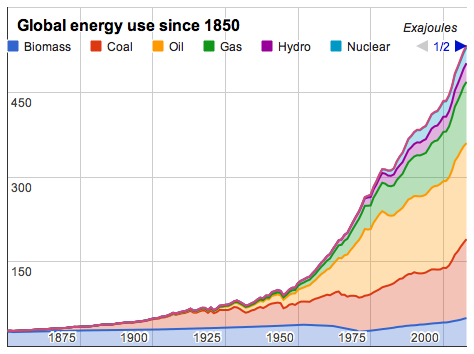


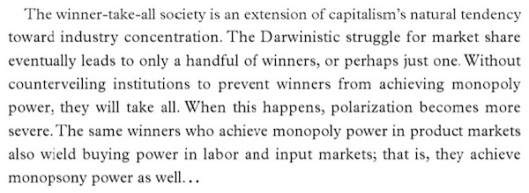
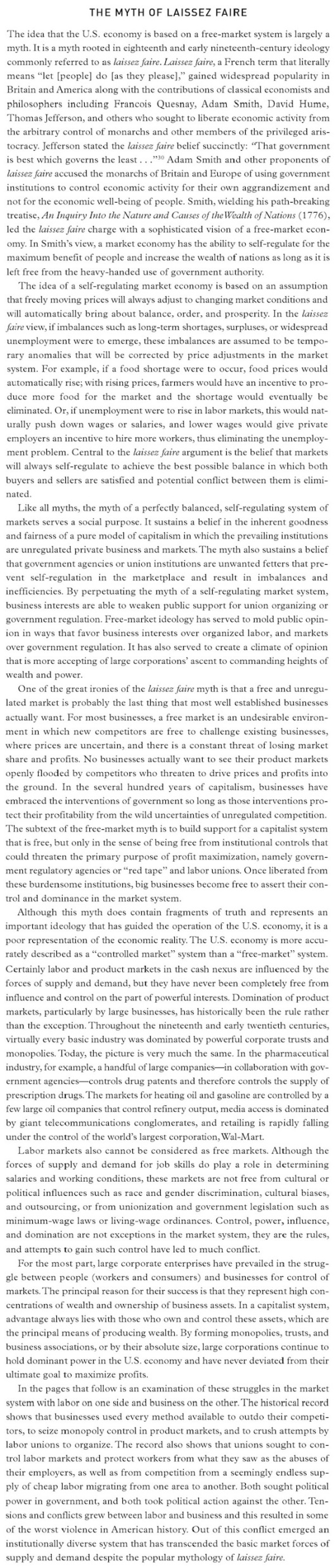
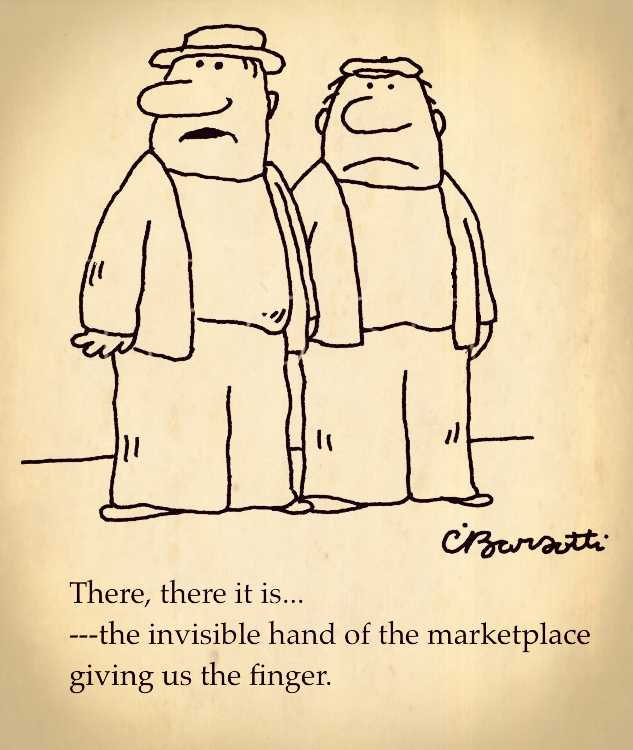
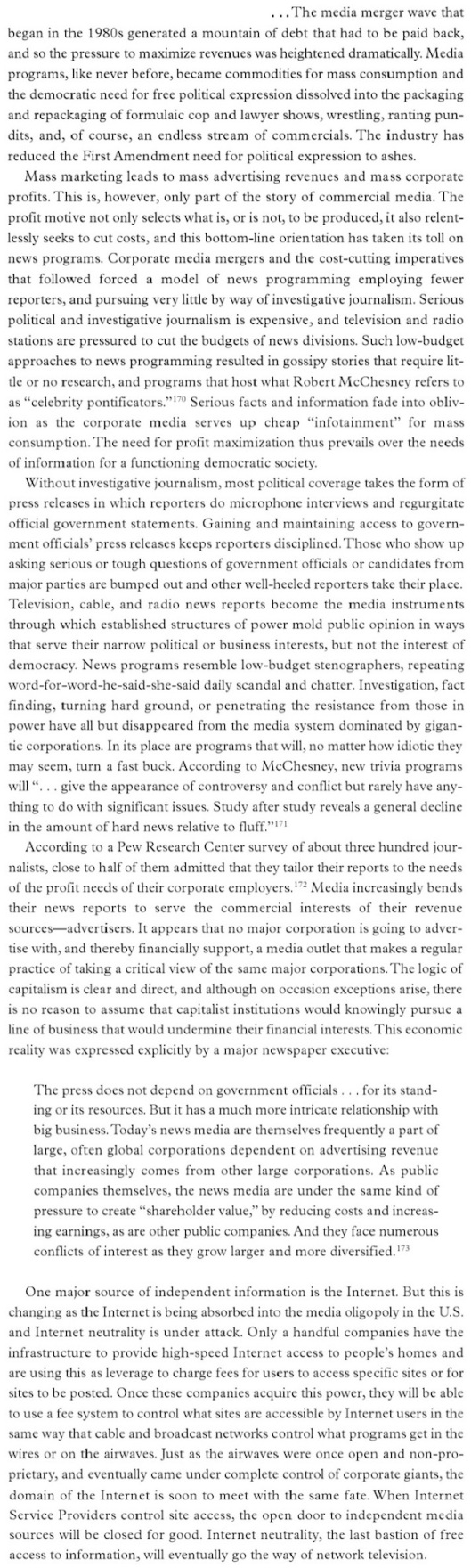
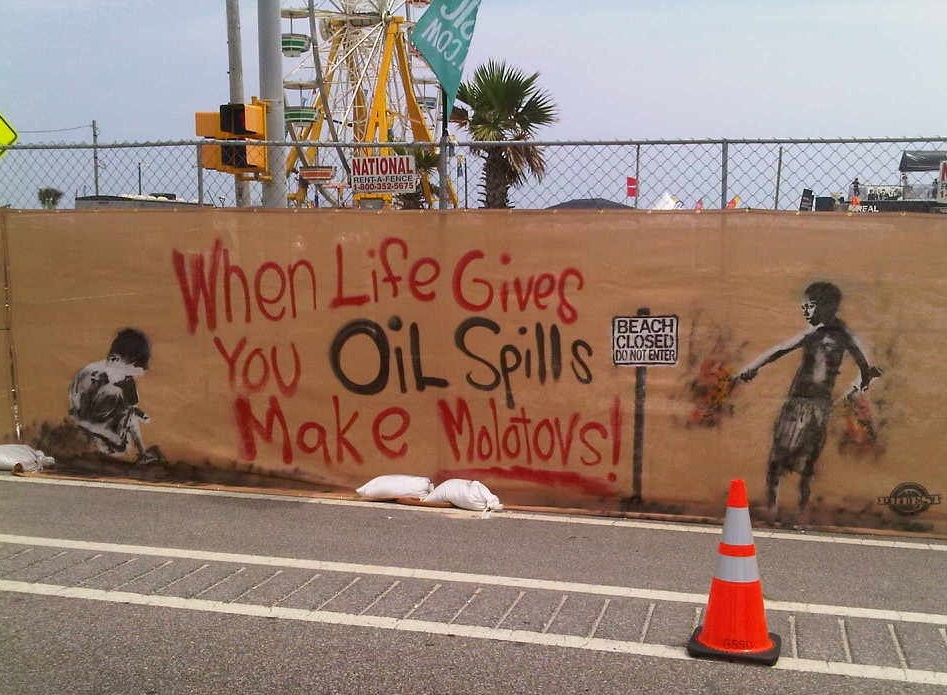





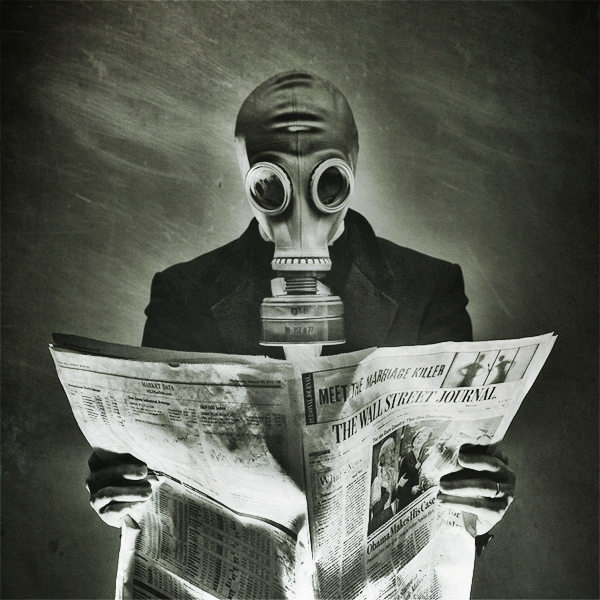

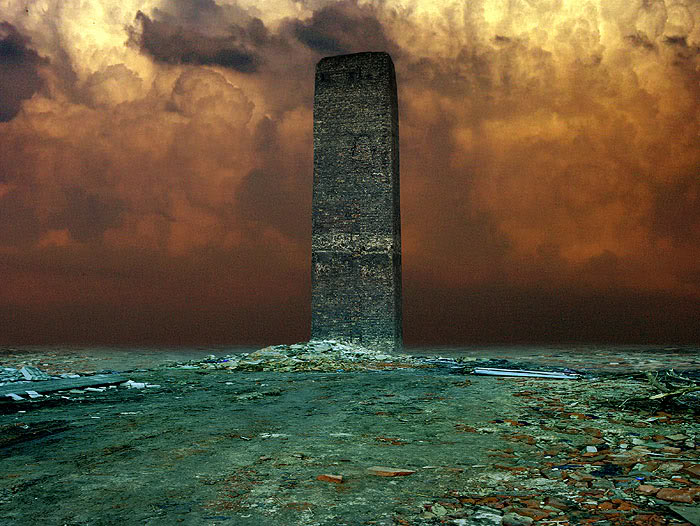




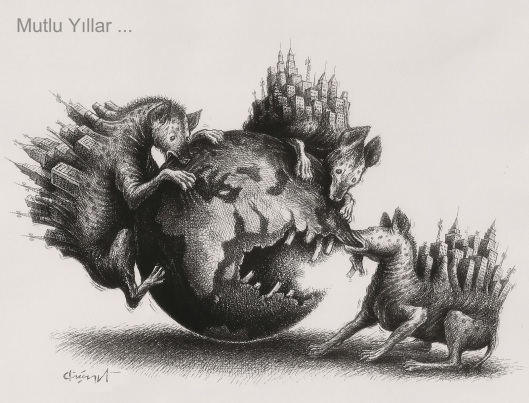



 Collapse of Industrial Civilization
