In blackened seams our fathers bent the ore
And left us engines hungry still for more.
We fed that hunger, refined the burning art—
Now fire moves by laws we can’t outsmart.
We called ourselves the gardeners of the world,
Then paved the garden, watched the smoke unfurl.
The trees we named, we felled. The springs we found,
We drained until the gurgling made no sound.
We forged new eyes to see what ours could not,
New hands to parse the systems we begot.
They did not tire. They did not look away.
Now they remember, and we learn to obey.
We mapped the genome, split the atom’s core,
Yet cannot find the wound we’re looking for.
The data doubles every passing day—
We know so much, yet meaning starts to fray.
The screens serve everything except the real.
We trade our hours for what we’ll never feel.
Each click a craving, each scroll a slow defeat.
The world burns beyond our contrived retreat.
We hunger for meaning, settle for noise,
Mistake every echo for genuine voice.
We’ve run this circle a thousand times round—
The groove worn so deep we can’t see the ground.
We toast to progress with a self-satisfied grin,
Clocking our speed as if proof that we’ll win.
The engines roar louder, drowning out fears—
We don’t see the drop until we disappear.
Yet under the concrete, a seed holds its breath,
Waiting for cracks in our cathedral of death.
No trumpet, no triumph, no glorious turn—
Just the slow, stubborn patience of things that return.
When the Black Death struck Europe in the Middle Ages, the fundamental values that held society together broke down. Husbands and wives abandoned each other and mothers abandoned their children. This void of ethics that overtook the population is described in Boccaccio’s Decameron, considered a masterpiece of Italian prose and a documentary of life during that time. The book describes the sense of hopelessness that spread throughout the world, because it did not matter what stature one held in life or what one did or did not do to avoid the disease, all were subject to its lethality. Some implored their God in vain while others pursued a carpe diem spirit in an attempt to grab the last bit of pleasure from life when they were able. The common explanation for the indiscriminate devastation wrought by the Black Plague was God’s punishment for human wrongdoing. Nothing in human behavior has changed since then and I believe the ecological overshoot that man finds himself in today, manifested most prominently as climate chaos amongst a myriad of other threats, will cause humans to question the futility of life and their existence just as did those victims of the bubonic plague. A recent study has found that climate chaos is indeed worsening neurological diseases and mental health disorders. Another study found that people are denying climate change as a form of self-deception necessary to maintain their psychological health.
Since those Dark Ages, mankind has developed the ability to accurately track and predict our own demise. Vast networks of satellites and other data monitoring tools are informing us that the planet is becoming increasingly more inhospitable for the vast majority of life on Earth, yet we plod onward, ignoring another plea by the world’s scientists. A reassessment of the Limits to Growth Study and its World3 model using different calibrations was done 6 months ago and the results are the same, which is to say that humanity is still following business-as-usual and heading for collapse within the next two decades:
...the model results clearly indicate the imminent end of the exponential growth curve. The excessive consumption of resources by industry and industrial agriculture to feed a growing world population is depleting reserves to the point where the system is no longer sustainable.
All the expertise and modern technology we possess will not be coming to save us; there is no techno-fix or deus ex machina remotely scalable to the planetary crises we face. Emergency atmospheric geoengineering schemes won’t save us at this point. Can’t we just suck the 900 billion tons of CO2 out of the atmosphere that we have spewed since the beginning of the industrial revolution? No. It bears repeating that the spiking Keeling curve is non-reversible on human timescales.
“We sadly continue to break records in the CO2 rise rate,” said Ralph Keeling, director of the CO2 program at Scripps. “The ultimate reason is continued global growth in the consumption of fossil fuels.” ~ May 8, 2024
The rate of ocean warming has nearly quadrupled since the late twentieth century, doubling since 1993. In the last twelve month, ocean heating has been on a tear, shattering records consistently. The world is currently undergoing the fourth global coral bleaching event on record, the second in the last decade, and the Great Barrier Reef is suffering its worst bleaching event in recorded history. This year’s hurricane season will likely be a record-breaker. The oceans are starting to release all that thermal energy we have been unceremoniously dumping into them. At one time, oceans seemed like an endless sink for the emissions from humanity’s nonstop consumption of fossil fuels, but that appears to be coming to an end. The world’s rivers are warming and losing oxygen even faster than the oceans. In contrast to those grim stats, humanity is set to consume more resources in the next 30 years as we have since the dawn of civilization. We have already consumed the future and are now, as they say, eating the seed corn.
The insurance industry, the backbone of the global economy, is beginning to buckle: “I believe we’re marching toward an uninsurable future.” As is typical of our modern-day society, the hypocritical insurance industry is heavily invested in fossil fuels while simultaneously warning about the looming destruction from climate change. Billion dollar disasters are increasing while the time between such disasters is decreasing. This continual rebuilding that needs to be done more often would be another doom-loop cycle for our crumbling civilization, considering the carbon emissions required in such repair and reconstruction. Compound extreme weather and climate events, combinations of two or more extremes (hazards) that occur concurrently or sequentially, are also increasing and expected to grow many fold over in the future. These compound weather events will inevitably create a perfect storm that will one day permanently destroy supply chains and economies by acting as a constant disruptor to stability. It would have the same effect as a monster cyclone, or hypercane, traveling the globe in perpetuity, waxing and waning in strength but never dying, and leaving a path of destruction wherever it roamed. A stable climate no longer exists to support the reconstruction of what once was. Walden Thoreau’s words seem very prescient today: “What is the use of a house if you haven’t got a tolerable planet to put it on?” With corporations also gobbling up single-family homes to monopolize the real estate market in America, we can officially say that the American dream of owning a home is dead. George Carlin always said you had to be asleep to believe anything about the American Dream.
I have been hearing about the need to abandon fossil fuels since President Carter put solar panels on the White House 45 years ago. I am still waiting for the techno-optimists to explain to me how they will save us from this new age we have created, known as the Pyrocene or Age of Fire; rest in peace, Holocene. We could also call our modern-day clusterfuck the Plasticene or Age of Plastics. Scientists are finding the stuff in every nook and cranny of the planet, including Antarctic krill, men’s testicles, and throughout the human body. If you drive a vehicle, you are contributing to the primary source for microplastics in the environment, tires, which account for 78%. Just as they lied about their knowledge of the catastrophic effects from burning their fossil fuel products, so too did the oil and plastics industry lie about their greenwashing fraud called recycling.
I never get an adequate, rational answer to our conundrum, because there is none. ChatGPT provides no better insight than the techno-optimists. The problem of a planet overrun by humans will resolve itself in short order and be recorded in the geologic fossil record after we put a cherry on top of this fossil fuel orgy, flattening the planet into a glass parking lot with nuclear weapons. That is another part of human nature that we will never escape…warfare. We seem to be one twitch away from WWIII and the next Stone Age. In fact, there are nearly 200 armed conflicts raging around the world right now, the largest number in decades. This marked uptick in violence could be an ominous sign of a violent new era. From the 2023 Armed Conflict Survey:
“The accelerating climate crisis continues to act as a multiplier of both root causes of conflict and institutional weaknesses in fragile countries…”
We are on the verge of authoritarian rule as global conditions break down and people embrace centralized solutions. Xenophobia will grow and borders will be shut down, sources of food and energy will be fought over and secured, and rationing of resources will be enforced.
After studying our ecological overshoot for several decades, I have some observations that must be accepted as fact:
“Renewable” energy is not displacing our massive fossil fuel consumption at all, but only serving as a small addition to the total global energy consumption.
“Renewable” or alternative energy, such as solar and wind, is dependent on fossil fuels for its manufacture, installation, maintenance, and eventual disposal.
The so-called “Energy Transition” away from fossil fuels is pure techno-hopium and will never materialize.
No such “Energy Transition” can be accomplished without radical reductions in resource consumption. This is antithetical to the basic biological urge for expansion by most organisms, including humans, and current trends illustrate this behavior. We also keep finding more ways to consume evermore energy. On top of this, the World Bank is urging faster economic growth for emerging economies in order for them to repay mounting debts.
Governments are ill-equipped to deal with industrial civilization’s complex polycrisis because effective solutions would undermine economic growth.
The latest deadline to ‘save the planet’ is now two years from now, according to a UN Climate Change official. No doubt another arbitrary date given to justify someone’s job and department budget. According to Global Footprint Network’s calculations, humans have been in overshoot for over half a century. Others would say that we have been in overshoot since the dawn of agriculture 10,000 years ago, surviving only by mining the Earth’s soils. Like fossil fuels, the vast nutrient store of soils represents a unique one-time gift that has been squandered by agricultural erosion. Without petroleum and arable soils, the Earth will only support perhaps 5% of the present global population, as it did before the advent of agriculture. Considering that we are being constantly blindsided by faster-than-normal and worse-than-expected findings from scientists, I suspect there are far less food harvests left for us than we think. Hotter temperatures and pollution are hastening the destruction of topsoil. Our temporary extension of Earth’s carrying capacity for humans is coming to an end. Once Earth’s life support systems start to unravel, the grotesquely inflated human population will crash. In the meantime, “Memento moriturum; maxime faciunt vitae!”
My last post was in September 2023, and since then, the state of the planet has gotten considerably worse. I feel like the 2030’s will be the decade when the wheels start coming off this ride of industrial civilization. Until I speak to you all again, please enjoy those blue skies and store-bought food while they last. And remember, industrial civilization is a heat engine and it will suddenly break one day!
As China’s appetite for resources wanes with the bursting of its real estate bubble and America’s shale oil boom fueled by easy credit comes to an end, floundering petrostates are beginning to queue up for bail-outs. Financialization appears to have exacerbated the collapse in oil prices. Of course none of this capitalist boom-bust cycle negates the fundamentals of peak oil; prices will swing upwards again in a few years as marginal producers get weeded out. After all, the world still consumes nearly three million gallons of oil per minute, and only a relatively thin margin separates surplus from a shortage. Most of our energy usage does not involve electricity which is what alternative energies like wind and solar produce. Electricity comprises just 18% of the total global energy consumption of which alternatives make up a tiny sliver. 250 new human beings are added to the planet every minute; each born into a world of depleting resources and mounting pollution; each scrambling to secure the necessities of life. The black stuff will remain the primary fuel supporting this growing population of a globalized technological civilization.
A recent study estimates that if we are serious about implementing alternative energies to satisfy the goals of the Paris climate accord, then upwards of 12 trillion dollars will have to be spent over the next 25 years. This price tag is an investment that is 75% more than current growth projections. At a time when governments have spent their last ammo pumping more electronic money into the economy to try to stimulate economic growth, the prospects of decarbonizing the entire global energy system appears daunting, especially considering the many shortcomings of alternative energies. Time constraints on a planet indifferent to our energy needs are also bearing down on us:
As the Keeling curve creeps irreversibly higher and the gap between rhetoric and reality widens, pipe dreams like geoengineering and carbon sequestration will become desperate Hail Marys for a species whose time is running out. The New York Times editorial by Piers Sellers, a NASA Earth Sciences director who has terminal cancer, perfectly sums up this techno-fix mindset: “…it will be up to the engineers and industrialists of the world to save us.” Keep calm, keep shopping, and await further instructions; the elites have it all under control. Jeb Bush’s recent comment that we should pin our hopes on “someone in a garage” fixing climate change illustrates the widespread delusion that technological innovation, good ol’ entrepreneurial spirit, and capitalist market-based solutions will be our saviours. Ironically, Jeb belongs to the political party hell-bent on defunding public education, a policy that would seem to make those plucky garage inventors even more implausible.
We cannot possibly rely on a system that profits from the very disaster it has helped to create, yet that is the dead-end feedback loop we are locked into. Mexico is a good example of how landscapes and communities are being carved up for alternative energy farms and carbon trading schemes that benefit only large corporations. Even philanthrocapitalism promotes the convenient myth that market forces and the whims of billionaires will solve systemic problems. The precautionary principle has been thrown out the window in the pursuit of short-term profits and power. We have only a vague inkling of nature’s rich complexity and interdependence. The scale of our ignorance is frightening considering our oversized impact.
The truth of our predicament has been criminally concealed since the 1970s by the fossil fuel industry which all the while knew that an overheated Arctic would melt away, exposing fresh deposits of carbon for them to exploit. Unfortunately the bonanza they planned for has not materialized; melting permafrost wreaks havoc on infrastructure and exploration. The cryospheric regions of earth, key geographic features regulating the planet’s climate, were systematically dismantled within the geologic blink of an eye; such environmental changes are imperceptible to the real-time cognitive processing of humans, but in geological ‘deep time’ these events are cataclysmic and portend a dire future for humans. There are more signs that the Atlantic Meridional Overturning Circulation (AMOC) is slowing down.
“We’re sitting on these planetary boundaries right now, argues Rockstrom, and if these systems flip from one stable state to another — if the Amazon tips into a savannah, if the Arctic loses its ice cover and instead of reflecting the sun’s rays starts absorbing them in water, if the glaciers all melt and cannot feed the rivers — nature will be fine, but we will not be.” ~ Johan Rockstrom, director of the Stockholm Resilience Center
The time to avoid critical tipping points in those decades has passed. The projections from the IPCC were downplayed and underestimated in order to continue the destructive business-as-usual:
“…new scientific findings were more than twenty times as likely to support the ASC perspective [that disruption through AGW may be far worse than the IPCC has suggested] than the usual framing of the issue in the U.S. mass media. The findings indicate that…if reporters wish to discuss ‘‘both sides’’ of the climate issue, the scientifically legitimate ‘‘other side’’ is that, if anything, global climate disruption may prove to be significantly worse than has been suggested in scientific consensus estimates to date”.
We’re in the early throes of economic and ecological system failure; headlines grow more alarming each year:
Plastic is projected to outweigh fish in the world’s oceans by 2050. This may happen much sooner since it was just discovered the number of fish remaining in the ocean has been grossly overestimated. We only recycle 5-10% of plastics today and many are not recyclable. It’s cheaper for industry not to recycle and the quality of plastic is degraded when it is recycled. No international body exists that can hope to regulate dumping in the oceans. International ships dump freely without consequence. Unenforceable legislation is heroically passed in bodies of government from time to time, but it remains ineffective. Waste is also shipped across borders to more “business friendly” countries where waste can be cost-effectively dumped.
Hot days are occurring 145 times more often over the last 10 years than just a few decades ago. Unique World Heritage Sites are being destroyed by climate change. The latest one, an ancient Gondwana ecosystem in Tazmania, burned down to the ground from fires sparked by dry lightning strikes, a direct result of climate change. A warming planet is also providing a growing range of favorable places for mosquitoes, the bane of mankind, to spread pestilence and disease. Our interconnected world can fast-track their dissemination with the help of a single intercontinental plane flight. At the moment, the Zika virus is grabbing headlines with its explosive expansion. Scientists are on the verge of confirming that it has jumped to the common mosquito and the WHO recently declared it an international health emergency. Microcephaly appears to be just the tip of the iceberg for the fallout of this virus. Normal-appearing newborns are suffering ill effects as well. It is believed that the Zika virus was introduced into Brazil during the World Soccer Cup in 2014 when an influx of tourists visited cities throughout Brazil. The 2016 Olympics in Rio will provide a perfect vehicle for the worldwide distribution of Zika.
“…history tells us that civilizations experiencing dramatic declines in their net energy uptake usually develop authoritarian political systems in an effort to stave off collapse, but then crash and disappear anyway.” ~Eric Zencey
Historically speaking, the elite are last to feel the effects of their hubristic decision-making, insulated as they are in their positions of wealth and power. Modern ideals and virtues of human rights, social justice, and a strong American middle class have all been aberrations of a civilization built atop a surfeit of energy.
The disparity between MSM news and real world problems like climate change, pollution, growing wealth inequality, the unraveling food chain, etc. are breathtaking. Wrecking the biosphere and bringing on a mass extinction leaves no one unscathed or in any position to survive long-term. Secret plans of survival by the “elite” are simply another myth. The wealthy may be buying up tracts of land in remote areas, but they are perhaps more delusional than anyone else because of how their wealth insulates them from hard realities. Without all those just-in-time supply chains operating seamlessly across a stable planet, no one gets out alive.
But how can we define an oil age? It has been about 150 years since the first deep oilwells were sunk, and just over 200 years since the viable steam engine was developed. The two are linked, because the steam engine made deep drilling of oilwells possible and gave us access to a hundred million years worth of fossilized sunlight. Perhaps we have not strictly had an oil age, but rather the first and only age where we enjoy vast amounts of surplus energy that we have extracted from hydrocarbon fuels, of which oil is the most energy dense. It has brought us material wealth, and the means to indulge in wholesale killing of each other and all other species. It gave excesses of food and a population that consumed that food and grew to five or six times the sustainable level of the planet. In the timespan of human existence, the ascendance of modern industrialised man has been a short flash of light and heat that has briefly lifted us out of the mire of the middle ages, but at a considerable cost to the environment.
Our mistake has been to think of that elevation as both divine and permanent. That certainty of permanence explains the mad scramble to come up with ‘alternatives’ and ‘renewables’ in the last decade or two. Something to keep current politicians in office and the masses pacified. It is important that we accept the seductive indoctrination that prayers will be answered and technology will continue to deliver all that can be imagined. The majority have come to believe in the economics of cornucopianism, where wishing for something will make it happen, while ignoring the reality that everything we have is derived from finite hydrocarbon fuels. If we spend enough money, alternatives will always be found to sustain our lifestyle. They won’t of course, and the conflicts that have been fought over oil are proof that they won’t. The pivot of world oil economy is Saudi Arabia, (the concept of ‘Saudi America’ is too ludicrous for discussion here), but that fantasy land of sand dunes and tall towers is being encircled by fanatics who know that when the jugular of global oil is cut, the industrial complexity of the developed west will die.
When (not if) that happens, we might be lucky to hold onto an existence akin to that of the 14th century, which is what the religious zealots want to inflict on all of us. If we’re unlucky, then we must expect something that will be much darker and as yet inadmissible to modern minds that do not have the scope to deal with its implications. That infers an unpleasant imagery of pre-history that we prefer to ignore. Understandably, most think the same way; this is why we cling to the comforting promise of ‘infinite growth’. The alternative is just too awful. Instead we have been encouraged to believe that we can do without oil and not only still run around on wheels, but have a purpose for doing so. And by some means yet to be invented, keep our wings as well.
Our oil age will not end through lack of it, but by fighting over what’s left. So choose your luck‐factor and take that thought where you will, you are on your own with it. Many reasons are given for starting wars, but ultimately there is only one: the pursuit of (energy) resources. Human greed drove improvements in weaponry, and the means of destruction and acquisition became more deadly over thousands of years even though there was more than enough for everyone. The input of oil was the game changer of warfare; history over the last century has shown that conflict was not diminished, but amplified, by the prosperity and technology created by oil. Since the 1860s when black gold gushed from the earth, the economic and political thinking of the pre‐oil era was seamlessly grafted onto the industrial potential of the 19th century, thereby enabling Rockefeller, Ford, Carnegie, Vanderbilt and many others to accumulate fabulous wealth. Their business acumen was undeniable, but none of it could have been brought into existence without energy-rich oil. The use of fossil fuels in our military machines industrialised our methods of killing while at the same time becoming synonymous with progress and commerce. War became a business, the purpose of which was the acquisition of more energy in the pursuit of profit. Battlefield deaths on an industrial scale were an unlisted debit on balance sheets.
WWI started with the muscle power of horses and ended with tanks, demonstrating the murderous scope of mechanized warfare. Recognizing the critical value of oil and its sources, leaders carved up the Middle East to ensure its supply. An exercise in map making in the 1920s by the English and French civil servants Sykes and Picot set the scene for carnage that has raged throughout the Middle East ever since. Arbitrary lines in the sand were drawn, artificial oil states in the Persian Gulf region were created without regard to tribal affiliations, and a quarrelsome orphan Israel was dumped into the lap of unwilling Bedouins. As the quantity of oil there became apparent, all the major nations were drawn into the race for it because those who controlled this key resource were certain to subjugate those who did not.
The critical nature of oil made WWII inevitable. To sustain their empires, the Germans and Japanese slaughtered their way across Europe and Asia in a grab for resources, primarily oil. They promised infinite prosperity and their peoples cheered them on while deaths elsewhere were being counted in millions. With most of the world’s known oil supplies in the hands of his enemies, Adolf Hitler knew he had to have the oilfields of southern Russia and the Middle East to sustain his war machine. He failed, and his dream of a ‘Greater Germany’ collapsed not because of inferior soldiers but because there was insufficient energy input to sustain his plan for world domination. Hitler’s perception of infinite growth in his ‘thousand year Reich’ mirrors our present-day view of ‘permanent affluence’: vast quantities of oil had to be burned to sustain his fantasy. In our desperate scramble for ever-diminishing energy resources, we are in the same mad race to perpetuate the delusion of infinite economic growth. The oil pendulum has swung the other way with roughly 85% of world oil now outside the borders of the USA and Canada in countries not always of a friendly disposition. And just like the Fuhrer, political leaders of today are promising that which is beyond their means to provide. To mask this reality, they have invaded oil-producing nations in the name of ‘freedom’, claiming ‘victories’ which have left only wreckage and simmering animosity behind. So too did Hitler spread a similar line of propaganda that he was liberating other nations from the threat of communism. The second world war that left Europe and Japan flattened in 1945 might be seen as history, but it was just the first of many oil wars, and the politics of it were a side issue. WWII serves as a grim reminder of how violent and destructive humans can be in their ruthless pursuit of energy resources. Hitler’s own ‘oil age’ lasted just twelve years, and it set the pattern for the world oil age that is now in terminal decline.
Don’t be deceived by the democratic righteousness that defeated Hitler’s fascism. 150 years earlier the American empire was created with the same kind of energy grab. The European immigrant peoples who forced their way across America from the 1700s onwards needed resources on which to survive and to sustain the prosperity of an expanding nation just as the Germans and the Japanese did in 1940. The native inhabitants of the American continent were in the way of civilization and progress; their subjugation was a precursor to what happened later in Europe and Asia. Expansive prairies had to be cleared to convert the energy locked in grain and meat to feed the invaders and provide negotiable currency. This self-perpetuating process went into overdrive with the discovery of oil, and the ultimate conversion of that oil into more food resources and hardware added to the wealth of the growing nation. An expanding population needed employment, and the raw energy from oil, coal, and gas supplied it. America and the rest of the industrialised world had the means to build bigger, better, faster machines in endless succession, and created the most powerful country on earth. Everybody was going to be rich, forever. The universal law of consumption was relentless: more demanded more.
Meat and grain grew with relatively little human intervention, but other crops needed to be worked with human muscle. So the slave trade came into being. Slavery might be given many unpleasant names, but essentially it is the acquisition of one energy form to convert it into another for profit. Buy and feed the slave, use slave labour to do work, sell the product of that work. By the time the slave is worn out, several more will have been produced. This was simple economics by 18th century standards but the human consequences were again horrific, costing more millions of lives. It also brought on the American civil war where the slave‐muscled South was overwhelmed by the industrialised muscle that drove the armies of the North.
All the European empires forged out of so-called ‘empty lands’ across the world followed a similar pattern of resource acquisition and an absolute disregard for weaker peoples. It is an unpleasantness that we choose to ignore, but it confirms the killing force that drives us to acquire and convert energy to our own use. The seemingly limitless amount of oil and its energy density appeared to be the answer to all our labour problems. Oil became our ultimate slave. Or so we thought.
We now have maybe 20 years worth of usable oil left. There are certainly no more than 30, perhaps as little as 10. If one of the crazy sects running loose in the Middle East managed to get hold of a nuclear device, setting it off on the Gharwar oilfield of Saudi Arabia, it would be endgame overnight. That is perhaps too bleak a prospect, but we should not discount that notion entirely.
Before our oil to food arrangement, the planet supported something over one billion people. We now have over seven billion, and the mothers of the next two billion are alive now and approaching the age of reproduction. Preachers, scientists and politicians will not stop the basic human function of eating and procreation, so if unchecked nine billion people will be here by 2040/50, and set to go on rising after that. Every new arrival expects to be fed, watered, clothed and housed, but by no stretch of the imagination will the global food system be able to feed that number let alone sustain them with what would be expected by way of the most basic material comfort. No one dares to stand up and make the rather obvious point that we are not going to reach 9 billion. Something has to give, and that giving is going to be very unpleasant.
In the first decade of the 21st century, numerous wars have been fought over oil, and are being fought now. Wars are fought over resources because on nature’s terms, gentle contentedness is not a good strategy for survival; we are collectively powerless against genetic forces that dictate our lives no matter how much we protest otherwise. Downsized to whatever level, nature will ultimately force the choice of survival or death, and the outcome will be of no consequence other than to you and yours. To expect humankind to change within a single generation is stretching credibility beyond breaking point. Those who look forward to a life of bucolic bliss in a downsized oil‐less world might do well to think about that. Whether killing and butchering an animal to eat it, or invading another nation to secure oil supplies, we must appropriate energy sources to facilitate survival. You may think there’s a choice about doing that, but there isn’t, other than in the matter of scale. Whether paying a butcher to cut and wrap your steak, or paying soldiers to invade Iraq, securing sufficient energy to live is what we have to do to survive.
For the moment, nature keeps us supplied with oil, and we’ve pulled off the neat trick of converting it directly into food. Not knowing when our oil is finished and our food supply will run out is the little teaser for the early 21st century. Right now, most people think that food comes from supermarket shelves and freezers, which is just as well. The food trucks moving around the country are basically mobile warehouses, delivering food just in time for it to be consumed. When the realization dawns that the food trucks have stopped, the food held in stock by retailers will be stripped bare in hours. The oil age for everyone will have come to an end.
But oil carries man’s destiny in far more subtle ways than food supplies. It holds nations together. The USA is a vast territory of disparate peoples and ideas, held together by a common bond of prosperity and a basic consensus that government and law generally works for the good of all. And the inhabitants of empires are always convinced that theirs is permanent and protected by gods. That definition would apply to many large nations to a greater or lesser degree. But the bonds that hold it together, godly or otherwise, are entirely subject to availability of affordable oil. Empires (and the USA is an empire) remain whole so long as the means exists to maintain them. Oil has become that means.
Without oil, the nation will begin its decline into disparate regions. Without interconnecting transport, the United States of America cannot remain united. The force necessary to prevent a breakup will not be there, so within a decade (probably far less) of oil supply failure, the USA will cease to exist. The cracks are already there along linguistic, economic, racial, political and geographic lines. Even now it would be possible to take a pretty good guess at where those regions will split off.
This will be denied and resisted of course, but armies and police forces have power only as long as their fuel lasts. They will be unable to prevent secession in whatever form it takes. It might just be that Washington will come to govern not much more than the original colonies. Given a suitably deranged political leader and prayers to the right god, fully armed groups are ready to believe that the ‘American Dream’ can be restored. Such demagoguery sets the stage for years of regional violence over the basics of life, particularly food and water. The horror of it will be justified by warped views of right and wrong, clinging to a denial mentality magnified beyond any imagining by the privation that an oil-less society will bring.
This scenario is not exclusive to the USA. The British Empire was built on coal. When the coal was gone the empire faded away. Then in the 80s and 90s the UK became awash with cheap oil from the North Sea, and everyone was reasonably prosperous, particularly Scotland. Now the oil surplus has gone, and the UK is in decline again as a net importer. The ‘oil prosperity’ is fading away. Scotland is losing its main source of income and wants to secede from the United Kingdom, convinced that independence will somehow restore their wealth. Things will get very unpleasant when they realize that an independent Scotland will eventually be reduced to the economic level of Greece. The link between oil and the ability to eat is clear. The UK has to import 40% of its food, and much of the rest depends on oil to produce it, which also has to be imported. It is the end of the UK’s oil age, but few admit to it being the end of a food age as well. The same problem is being revealed in the current fiasco of the European union, but a little more advanced than the USA and UK. Oil-fueled prosperity is falling dramatically in the poorer southern countries. Greece, Spain and Portugal and a swathe of smaller nations have to import all their oil which only worked when oil was cheap. Now it’s expensive, and they are facing bankruptcy. 50 years of ‘unity’ is dissolving like a mirage in the face of the difficulties that smaller states are suffering. Without cheap oil, their economies cannot function, and so are disintegrating. United Europe needs oil to stay united just as the USA does. Russia’s oil dependent economy is crumbling, and Putin is having to make threatening postures to divert attention from his problems. His oil age is ending in a different way and yet we cannot tell if his posturing is just that, but a shortage of resources in the past has invariably brought conflict.
Move to the Far East and the nations around the South China Sea are all threatening one another, again the focus of the argument being the oil and gas fields of the region. They all know that without oil they cannot survive, and are prepared to fight for every last drop of the stuff, no matter what the cost. As a measure of what the dispute is about, the volume of oil in question is 11 billion barrels. One billion barrels is less than a month of world consumption. They are preparing to fight over the last dregs in confirmation of man’s desperation over oil shortages. Eventually, this problem will hit every nation and individual on earth as our oil‐crutch is kicked away. And with the oil age fading into history for us all, there will be no shortage of violent resistance to this inconvenient truth.
To the extent that we depend on prosthetic devices to keep ourselves and the biosphere alive, we will render everything fragile. To the extent that we banish the rest of life, we will impoverish our own species for all time. And if we should surrender our genetic nature to machine-aided ratiocination, and our ethics and art and our very meaning to a habit of careless discursion in the name of progress, imagining ourselves godlike and absolved from our ancient heritage, we will become nothing.
~ Edward O. Wilson, Consilience; Chapter 12: ‘What Does It All Mean?’
From its inception, capitalism paved a one-way path to annihilation, predicated as it was on unmitigated growth, the extraction of finite resources, the exaltation of individualism over communal ties, and the maximization of profit at the expense of the environment and society. The capitalist world was, as one author described so bleakly, ”dominated by the concerns of trade and Realpolitik rather than by human rights and spreading democracy”; it was a ”civilization influenced by the impersonal, bottom-line values of the corporations.” Capitalist industrial civilization was built on burning the organic remains of ancient organisms, but at the cost of destroying the stable climatic conditions which supported its very construction. The thirst for fossil fuels by our globalized, high-energy economy spurred increased technological development to extract the more difficult-to-reach reserves, but this frantic grasp for what was left only served to hasten the malignant transformation of Earth into an alien world.
The Fossil Fuel Age did not end for lack of fossil fuels, but because there was no place left to store its CO2 waste. Earth’s overwhelmed carbon sinks became carbon sources. Humans with their hubristic technological overreach had been living on borrowed time for a long time; techno-fixes were not able to artificially expand the carrying capacity of the planet any longer. The climax of the ecological crisis had arrived.
The ruling class tried to hold things together for as long as they could by printing money, propping up markets, militarizing domestic law enforcement, and orchestrating thinly veiled resource wars in the name of fighting terrorism, but the crisis of capitalism was intertwined with the ecological crisis and could never be solved by those whose jobs and social standing depended on protecting the status quo. All the corporate PR, greenwashing, political promises, cultural myths, and anthropocentrism could not hide the harsh Malthusian reality of ecological overshoot. As crime sky-rocketed and social unrest boiled over into rioting and looting, the elite retreated behind walled fortresses secured by armed guards, but the great unwinding of industrial civilization was already well underway. This evil genie was never going back in the bottle.
The melting of the glacial poles meant that global weather patterns and jet streams were irrevocably altered. Consequently, extreme floods and drought wreaked havoc on agriculture. Sea levels also rose much faster than predicted, inundating coastal cities and salinating farmland. Currency markets collapsed, cell phones went silent, transportation systems ground to a halt, and grocery shelves went bare. The disintegration of globalized trade, the dissolution of nation states, and the exhaustion of the biosphere brought forth a new dark age. Deadly microbes and pathogens that had lain dormant or been restricted to certain outlying areas of the planet were now free to migrate and proliferate in new regions. This opened the door for a string of global pandemics that the world had never seen before. Pestilence and famine whittled the population down to under a billion within a few decades.
Entropic Wastelands
The electric glow of the world’s cities was blotted out; the stars and moon were the only sources of illumination in the pitch black of night. A ghostly silence replaced the hustle and bustle of people and machinery that once animated the city. Time was no longer measured with the hands of a clock, but by the rise and fall of the sun and the changing of the seasons. A carpet of overgrown grass, weeds, bramble, and trees silently overtook the crumbling city, uprooting and splitting concrete and asphalt. Skyscrapers, once the temples of corporate power and wealth, were now nothing more than monstrous sundials casting their long shadows across the decaying wastelands. Never again would there be such a complex, globe-spanning civilization on Earth.
Haunted for millenia by the legacy of mankind’s fossil fuel binge, roving bands of human survivors were condemned to wander this angry Earth. Only the most physically and mentally fit were able to eke out an existence in an increasingly inhospitable world to pass through the evolutionary bottleneck. They huddled together at night around bonfires and fed the flames with old office furniture and business papers from abandoned buildings. Without electricity, modern medicine, and sanitation systems, life became a short and brutal affair. Nature’s primal forces could no longer be disregarded; their harsh reality sharpened all the senses. Nearly all the technology that had enslaved and anesthetized modern man for so long was now of no use in this neo-medieval world. Megacities were reduced to entropic wastelands, their detritus scavenged by these post-apocalyptic tribes.
Like a rocket disintegrating in mid-flight, capitalist industrial civilization rushed headlong into oblivion, always believing human ingenuity and free markets would solve the mounting number of crises. It turned out humans were extraordinarily clever at deceiving others and, in turn, equally clever at deceiving themselves. They burned the devil’s excrement, split atoms to play with lethal radiation, and tinkered with the building blocks of life, but they never heeded numerous warnings against such folly. Like Icarus who, flying too close to the sun, forgot that his wings were made of wax, humans ignored their earthly origins, believing too much in their own technological infallibility.
A passage from The World Without Us:
There Will Come Soft Rains
There will come soft rains and the smell of the ground,
And swallows circling with their shimmering sound;
And frogs in the pools singing at night,
And wild plum trees in tremulous white;
Robins will wear their feathery fire,
Whistling their whims on a low fence-wire;
And not one will know of the war, not one
Will care at last when it is done.
Not one would mind, neither bird nor tree,
If mankind perished utterly;
And Spring herself, when she woke at dawn
Would scarcely know that we were gone.
What had been designed to be our servants became our masters, then our owners and gods, and finally our destroyer….
Some days I wake up and despise the monotony and pettiness of this culture and its followers: its celebrity worship, its staged news reporting, its chameleon politicians, its conniving marketers of consumerism, its cookie-cutter neighborhoods, its push-button surveillance state, and its clueless masses all working together to create the illusion of normalcy. Everyone goes along with this mindless program like obedient slaves, afraid of the social stigma attached to questioning any radical deviation from what constitutes normal. God forbid anyone openly discusses the cliff we are fast approaching, its sheer drop-off and craggy rocks below coming more clearly into view. One last scramble for the last bit of habitable land at the poles will be the inevitable end game as atmospheric warming catches up to the glacial melt and sea level rise humans have set into motion. In light of all the scientific evidence accumulated over decades, mankind has known for some time that a radical reconfiguration of our socio-economic system was the only way to avoid collapse, as described beautifully back in 2008 by a longtime blogger who has been writing for nearly a decade:
There can be no “soft-landing” for a species adding another million of itself every 4 and a half days to consume and convert into more and more human flesh what little remains of the planet’s tattered web of life. Worshiping paper symbols of wealth as the only measurement of social and environmental worth, our species has monetized and misunderstood nature, ignoring its true incalculable value. Surely something is amiss when the financial interests of the insecticide industry trump the health of humans and the survival of pollinators. Examining the root cause of such corrosive effects in our economic system, i.e. capitalism, is nearly as taboo as mentioning the collapse of modern civilization. The culturally Pavlovianresponses to any such criticism directed at capitalism or the unsustainability of industrial civilization is to argue for the rehabilitation of capitalism into something less destructive and tout humanity’s unfailing ability to adapt to any situation. Reinforced by past successes such as the Green Revolution, robotic exploration of distant planets, and Moore’s Law of technological advancement, the marriage of capitalism and technology has created a mindset which takes for granted the belief that the marketplace will create a hi-tech fix to any and all problems. Little green aliens, paranormal experiences, and techno-utopian futures seem to be more socially acceptable subjects for discussion rather than the collapse of a way-of-life that requires several more Earths if everyone were to live like Americans. Perhaps that is why we get technotopian books like this one:
The myth of progress is central to corporate ideologies of materialism, modernism, and technocapitalism. The mythical quality of technological progress was expressed most succinctly in GE’s slogan from the 1950’s: “Progress is our most important product.”
There are reportedly hundreds of Transhumanist-affiliated groups(life extensionists, techno-optimists, Singularitarians, biohackers, roboticists, AI proponents, and futurists) in the world with the largest, the Singularity Network, claiming 10,000 members. Few in our society can imagine this planet exhausted of its resources, inhospitable to agriculture, and devoid of all its keystone species, but such a world is fast becoming reality as industrial civilization steamrolls the planet under the direction of technocapitalism. Millions of factories continue to spit out products by the ton to be shipped to every corner of the globe. The ravenous hordes struggling for a higher standard of living never think twice about the energy and eco-social damage tied to these consumer products that magically appear on store shelves.
“A transhuman future is a day-dream and we are rapidly running out of the luxury of being able to do nothing about the very real problems that face us now. A transhuman future is a nightmare of the electric sheep.”
~ Dr. Paul Willis
The boundaries of a finite planet have been temporarily extended by technology, giving mankind a false sense of power over his environment, but technological complexity is not immune to the law of diminishing returns; the problems are overwhelming the solutions:
“…Technology cannot bring back a concentrated resource deposit like soil, phosphates and fossil fuels that have been dispersed and converted so completely that no amount of energy can get them back. The links in the technological evolutionary chain have been successful so far, but all it takes is a single broken link that will drop us into the waste heap of failed evolution. The next link of the chain always exists in the imaginations of men, technological wonders to carry us forward, but malignant growth, the kind sponsored by corporate, banking and Wall St. entities, will guarantee the current technological link is our last one…”
For a culture that lives for today and ignores the consequences of tomorrow, the show must go on even as cracks and weaknesses in this false façade become more evident day by day. Omar N. Bradley may have been thinking about weapons of mass destruction when he made an observation about mankind’s tools of self-destruction, but he could not have been more prescient in the broader sense of technology’s reach into our lives when he said, “If we continue to develop our technology without wisdom or prudence, our servant may prove to be our executioner.”
As in previous fallen civilizations, today’s elite are more out of touch with our precarious position than most realize, and they will try to cling to their wealth and social status despite how much blood flows in the streets as the masses bear the brunt of collapse first –poverty, disease, war, starvation, etc., but ultimately no one can run from the death of the Earth’s oceans, the spread of novel diseases, and the die-off of trees. Those now deciding how our technologic scalpels will be wielded are not institutions looking out for the greater good of humanity, but by the ultra wealthy for their own personal financial enrichment and narcissistic interests:
“For better or worse,” said Steven A. Edwards, a policy analyst at the American Association for the Advancement of Science, “the practice of science in the 21st century is becoming shaped less by national priorities or by peer-review groups and more by the particular preferences of individuals with huge amounts of money…
…that personal setting of priorities is precisely what troubles some in the science establishment. Many of the patrons, they say, are ignoring basic research — the kind that investigates the riddles of nature and has produced centuries of breakthroughs, even whole industries — for a jumble of popular, feel-good fields like environmental studies and space exploration…
..the rise of science philanthropy may simply help “rich fields, universities and individuals to get richer.” The new patrons are responsible for one of the most striking trends on these campuses: the rise of privately financed institutes, the new temples of science philanthropy.
This privatization of science is just one more aspect of capitalism’s usurpation and corruption of the body politic.
The art in this blog post is from Polish artist Zdzislaw Beksiński whose intricately detailed paintings of apocalyptic landscapes, mutated and deformed humans, and surreal images were said to be inspired from his nightmares. He never gave titles to his paintings and signed them on the back. It is said he would often wake up in the middle of night to paint his dark visions. In 2005 he was found dead lying on the floor of his Warsaw flat in a pool of blood, stabbed 17 times.
Perhaps the greatest nightmare of modern man is the fact that he is at the mercy of an ever-expanding industrial civilization running on autopilot, as Zygmunt Bauman described, with no realistic way to stop its onslaught of toxic waste, greenhouse gas emissions, deforestation, and numerous other ecocidal features. I can see this horror when I look at much of Beksiński’s work, but I also see nature reclaiming the battlefield after man has defeated himself.
To a great degree, humans are their own worst enemy, prisoners of their flawed cerebral wiring with its neuroses, blind spots, and cognitive biases, but the real enemy is the omnicidal juggernaut our numbers have created; its base urges can’t be contained.
“Life is tragic and absurd and none of it has any purpose at all. Science has killed religion, there’s no hope for the future with seven billion of us on the planet, and the only thing you can do is to laugh in the face of it all.”
~ TC Boyle
This past Thursday night I went to a reading by author T.C. Boyle at Northern Arizona University’s Cline Library. Outside the entrance of the auditorium were a couple of tables lined with signed copies of his numerous novels and collections of short stories and manned by a few young people, perhaps college students, taking people’s money. I had already bought a copy of T.C. Boyle Stories at the local bookstore before coming and read a few of the short stories before the auditorium doors opened. I seldom go to such events, but what had first caught my eye were the titles of some of his books, one of which is A friend of the Earth whose premise is rather dystopic.
While waiting in line for the event, I opened up my book and read “The Extinction Tales” from the author’s first volume of short stories. The title of this particular short story states exactly what it’s about, taking the reader across continents and centuries from the massacre of the passenger pigeon to the genocide of the aboriginal Tasmanians. A couple of modern-day vignettes serve as the bookends to this vast sweep of history, at the beginning the hunting skills of a lighthouse caretaker’s pet cat snuff out the remaining population of the island’s unique bird species and at the end a man is haunted by the death of his father whose funeral he neglected to attend.
The doors opened and perhaps 100 to 200 people filled the seats. After a few fawning introductions by a couple of NAU faculty members, Tom Coraghessan Boyle took the lectern. Tall and lanky with a goatee, wearing red sneakers, and dressed in black with the glowing cat eyes of a printed t-shirt peaking through his opened sports jacket, he appeared more hipster than a sixty-something tenured English professor, but spoke as eloquently and articulately as one would expect.
He read two stories, but the second one resonated with me the most. “The Relive Box” is an allegorical tale of a middle-aged single father who becomes obsessed with the latest hi-tech escapism device which mentally transports people back to any specified time in their life by reading their memories. He’s stuck reliving various moments of his past while his present life falls apart. The ‘here and now’ simply becomes lifeless space and time to be filled by the ‘relive box’.
The parallels with today’s addiction to computers, video games, iPhones, and social media are obvious; our inseparable relationship with technology has made us virtual cyborgs. Our enslavement to technology extends to a societal level with the wide-held assumption that geoengineering and adaptive technologies will evolve in time to spare us from the worst of a collapsing environment, allowing business-as-usual to continue no matter how dire current scientific reports and future projections may be. Unarmed by a blind faith in technology, industrial civilization barrels headlong into a world growing more violent and unstable by the day. Technocapitalists live by the sword of technology and will die by it as well.
In the words of David Simon, “There are now two Americas. My country is a horror show.”
Technology is no different in capitalism’s overriding dependency on the successful accumulation of capital:
The system within which institutions, cultures, and people operate determines its policies, beliefs, and behaviors. Those operating within a capitalist system conform to the dictates of corporations. Capitalism cannot be reformed and its resiliency to stay afloat during environmental collapse is remarkable:
Nonetheless, in the final analysis, our entire way of life based on fossil fuels and infinite growth on a planet of finite resources is untenable…
“A small minority — people who are at the margins of the system and who are thus able to observe it as if from outside, who are not tied into any of the major influence groups, and who have learned to seek out alternative sources of information and think critically — will gradually come to the conclusion that the entire system of industrial civilization is inherently unsustainable.”
~ Richard Heinberg, Powerdown: Options and Actions for a Post-Carbon World
A “post-carbon world” may very well not include people, but building an alternative system demands that we believe a post-collapse world does include survivors.
This website got an interesting comment in the ‘About’ section from a well-educated fellow who works in the technology sector of the economy. His credentials are impressive. I did some checking to see if he really was who I thought he was and it definitely appears so. His IP address takes me directly to the Science Applications International Corporation(SAIC). SAIC is a major defense contractor with “friends in high places”, having received numerous no-bid contracts from the government. Its top personnel move freely within the government/corporate revolving door. A noteworthy fact in their history is that they were “instrumental” in fabricating the myth that Saddam had weapons of mass destruction and they pushed war as the only option. SAIC was the contractor that waisted hundreds of millions of taxpayer dollars on the failed Trailblazer project which was an attempt to create a system that would spy on cell phone, internet, and other electronic communications. Needless to say, they have an extensive and dark history:
Additional information on SAIC is here. Now that I’ve gotten that introduction out of the way, let’s look at the message from Tihamer Toth-Fejel:
Tihamer,
I’m happy you got a chuckle out of this website. We here at CoIC try to deal with the angst of the collapse of industrial civilization by treating the situation with gallows humor. Yes the Roman Empire did take some time to collapse, but I’m very confident that we don’t have the luxury of “hundreds of years” to see modern civilization disappear into the dustbin of history. The reasons for such an accelerated crash have been documented here and elsewhere numerous times. You only have to read The Limits to Growth to know much of what was accurately predicted decades ago. Collapse doesn’t happen overnight, but occurs in pulses and waves. Nothing as large and extensive as modern civilization will simply disappear overnight and no one here pushes such a theory. Ecologic overshoot is not a hard concept to understand and mankind is subject to it just as any other organism, although we have proven very adept at ‘extending and pretending’ our overexpansion. Cognitive biases are “an inevitable feature of adaptive behavior in all organisms, including ourselves.” Perhaps mankind can exhibit a collective free will and turn this ship around, but I highly doubt it. Our political system is beholden to Wall Street money and everything in Washington is predicated on the short-term election cycle. The same goes for our economy which needs constant growth and quarterly profits at the expense of a habitable planet. Dealing with climate change interferes with profits, so the capitalists feel better when they bury their heads in the sand. Unfortunately, humans did not evolve to deal with seemingly invisible, long-term, existential threats such as climate change and ocean acidification, many of their effects being nonlinear and complex.
Concerning your second point, I am indeed using the internet to write about the collapse of industrial civilization. What is your point? I think you are implying that I am anti-technology, encouraging mankind to live in caves. If you read my core beliefs for this site, you’ll find your answer; nonetheless, we do recognize the rule that technology is a byproduct of available energy resources, and at the rate that humanity is exhausting the plant, animal, and mineral wealth of this planet, I’m not sure what pixy dust the techno-optimists think is going to maintain our current set of unsustainable living arrangements. Perhaps you can tell us. And if humans were able to bend the laws of physics and create some new energy source, we would still be in trouble due to overpopulation and our enormous consumption of natural resources. I think Brutus had it right when he called humans “locusts” stripping the land bare.
On your third point, yes planet Earth will eventually die… in about five billion years when our sun becomes a red giant, maybe. Does this inevitability give us the green light to exterminate everything within a mere century? This would be somewhat analogous to a three-year-old committing suicide because they have come to the realization that they only have roughly 80 more years to live. And what about future generations? Is that even a consideration in your thinking? Perhaps you could even expand your thinking to include this planet’s myriad other life-forms whose biological functions support a vast web of life that makes our very own existence possible. Humans are currently overseeing the 6th mass extinction which will likely take us all down as well, but I’m sure you are well aware of this crisis and are working diligently on some sort of techno-fix for it. Your last sentence implies that you are a person of the anti-environmental, right-wing persuasion who sees those concerned about the habitability of the planet as eco-terrorists. This is a predictable viewpoint from someone who is an apparent contractor for the DoD and servant of the corporatocracy, but I assure you that future biospheric events will change the minds of even the most greeny-hating, military-industrial-complex loving demagogues on the planet.
“I think human consciousness is a tragic misstep in evolution. We became too self-aware. Nature created an aspect of nature separate from itself. We are creatures that shouldn’t exist under natural law… The honorable thing for our species to do is to stop reproducing and walk hand in hand, brothers and sisters, into extinction — one last midnight.”
~ Rust Cohle, ‘True Detective‘
Sitting comfortably within their climate-controlled homes and buildings, a tiny percentage of eco-conscience humans watches with morbid fascination as large numbers of animals drop like flies in a bug zapper. In the latest die-off, bats rain down from Australian skies; parrots, kangaroos and emus perish from heat exhaustion. Ominous signs of an unraveling web of life are everywhere to see, but the industrial world has become utterly disconnected from nature and pays little heed to such warnings. Rather, what holds their interest is Chris Christie’s Traffic-Gate. That our fate is bound to the well-being of Earth is a belief lost with the genocide of so many indigenous cultures. Capitalist carbon man resides in a totally fabricated world — he eats food mass-produced from fossil fuel inputs, drinks ‘purified’ water bottled in plastic, and at bedtime drowns out the noise of energy-gluttonous cities with the electronic recordings of ocean waves and forest sounds. But most absurdly, he ‘communes with nature’ through staged wildlife TV shows and eco-trip adventures. Rather than allow poachers and farmers free rein, the capitalists thought it wiser to extract profit out of the Earth’s dying ecosystems by tapping into the “green” industry of eco-tourism, another in a lost list of anthropocentric oxymorons.
Relentless marketing on TV, internet, radio, billboards, print, etc has created an unending cycle of desire and consumption, fueling the trivialization of life that feeds its commodification. The individual is reduced to a “buying unit” by the skyscrapers, institutions, and bureaucracy of capitalism, but in a future world of spent resources and civilization-destroying weather, the market won’t have much use for so many “buying units”. Introspection by many rational, sober, and clear-minded people since the publication of ‘The Limits to Growth’ has not altered the course of history to date; why would I think the human species would suddenly alter their behavior after having tripped so many ecological tipping points and feedback loops? Hindsight is 20/20 only if a lesson was learned the first time.
“…The basic truth between the lines of this press event [National Research Council (NRC) briefing on abrupt climate change] was that we are facing a world that is becoming increasingly hostile to humankind.
We are literally making the planet into a wasteland like this is some post-apocalyptic science fiction story. It is just shocking. And the most horrifying aspect of it all is that we’ve waited to reduce emissions so long that we’re exiting the win-win field of possible climate responses. We’re now headed into a world of lose-lose. That’s the news nobody wants to convey – or hear. But there it is.” – link
The cancer of hyper consumption and economic growth for never-ending profit has trashed the planet, but blind faith in the markets and techno-optimism are the siren’s call beguiling industrial civilization over the cliff. Capitalism likes efficiency; in its quest for greater efficiency, diversity – the essence of life – is being exterminated. Monoculture is death. More biodiversity means more resilience. A recent scientific paper purports to prove this long-held maxim:
“…when a lot of species are interacting and competing in an ecosystem, the ‘average’ interactions that any one species experiences are likely to be weaker than in a simpler, less diverse system. When there are a lot of different niches occupied by different species, we also expect different responses to environmental fluctuations among the community, meaning that some species inherently do better than others depending on the specific disturbance. Species-rich systems also tend to have more of what we call ‘functional redundancy‘, meaning that if one species providing an essential ecosystem function (e.g., like predation) goes extinct, there’s another, similar species ready to take its place…”
Biodiversity loss is not the only aspect of life being degraded. The planet is also losing cultural diversity – languages, crafts, religions, histories, ancient knowledge, etc. are disappearing as globalization reduces all of life to the status of a marketable commodity. Thousands of languages were once spoken in North and South America before the invasion of European powers. It’s interesting to note that in the Ojibwe language, and perhaps in most if not all native languages of North America, there exists no word to describe “greed” or the concept of personal property, but there are endless numbers of verbs to describe “every movement and temperature and visual sense of water.” After a few hundred years of progress, the white man has Wall Street and the natives have gambling casinos.
“In the Seventh Fire prophecy of the Anishnabek, each of the seven fires represent an era in human history. We are now in the time of the Seventh Fire. The task of the people of this age, including the Anishnabek and other red people, the yellow people, the black and the white, is to come together through choosing the road of cooperation. Without this, there will be no Eighth Fire, or future for Natives and others…
…Today, in the age of the Seventh Fire, the races are again faced with a choice. The two roads are the black road of technology and overdevelopment leading to environmental catastrophe, the other is the red road of spirituality and respect for the earth. Together, people of the world have to choose the right road, be of one mind, or the earth cannot survive…” ~ The Seventh Fire (Ojibwe) Prophecy
The “black road of technology and overdevelopment” is paved with the fallout of dead bodies and poisoned landscapes —nuclear meltdowns, oil and chemical spills, factory fires and explosions, etc., but to a very tool-centric species just itching to keep this omnicidal train going, geoengineering looks like the perfect ticket. It promises to allow industrial civilization to continue burning carbon while avoiding the nasty side-effect of catastrophic climate change. Unfortunately, human error and miscalculation, the bane of so many other industrial endeavors, will undoubtedly come into play. The ‘hacking’ of the Earth’s entire climate system represents the peak of hubris for modern man. Describing the conceit of our technological domination of the planet, Clive Hamilton states:
“Pursuing abatement is an admission that industrial society has harmed nature, while engineering the Earth’s climate would be confirmation of our mastery over it — final proof that, whatever minor errors made on the way, human ingenuity and faith in our own abilities will always triumph. Geoengineering promises to turn failure into triumph.”
The Earth’s carbon sinks are filling up and the twin problem of ocean acidification will need a techno-fix too. Complexity begets even more complicated problems. Our culture avoids the simple fact that humanity is vulnerable and dependent on the Earth, that life is fragile and interconnected, and that the importance of Murphy’s law is amplified exponentially when playing GOD with technology. Let’s also hope that the psychological effects of climate change don’t make the nuclear powers lose their cool.
…A warm dry wind is all that breaks the silence
The highways quiet scars across the land
People lie, eyes closed, no longer dreaming
The earth dies screaming…
“One of my psych professors told me that people tell stories to cope with their fears. All art and myths are just creations to give us some sense of control over the things we’re scared of. Afraid of dying? Create reincarnation. Afraid of evil? Create a benevolent God who sends evil doers to Hell. I’ve treated soldiers with PTSD by having them draw pictures of what happened over there.”
~ Ben in American Horror Story
Seething just below industrial civilization’s thin veneer of normalcy lies an ocean of grim reality – overpopulation, peak oil, poverty and starvation, hormone-altering pollution and cancer clusters, nuclear radiation from the mishaps of distant countries, pandemics from mutagenic viruses, climate chaos, mass extinction, etc. Working to suppress the fear of such real-world nightmares is an assortment of psychological and cultural defense mechanisms such as the myth of technological progress, religious dogma, Madison Avenue propaganda, and the unconscious tricks of self-deception we are all vulnerable to (emotional detachment, rationalization, retreating into fantasy, etc.). All the while and in the background is the constant hum of the global consumerist machine churning out endless promises of satisfaction and happiness if only you buy this or that product. Most have bitten the fruit of materialism and swallowed whole the false truism that human progress is always on an upward trajectory with science and human ingenuity solving all problems. Citizens of ‘developed’ countries are blissfully unaware their life of leisure and comfort is supported by dozens and dozens of energy slaves working day and night all year long, year after year. Grocery store shelves brimming with food, a high animal protein diet, personalized auto transport in and out of sprawling suburbs, globetrotting air travel, and a machine-dependent society powered at the convenient flip of a switch have all been made possible by a fast-depleting source of cheap, energy-dense fossil fuels.
We were born into this energy-rich cocoon of modern industrial civilization with each successive generation growing more and more accustomed to its skyscrapers, concrete sidewalks, asphalt roads, and cacophony of automation until it is now all simply taken for granted. Restless and agitated, we no longer are connected to the natural cycles of the seasons, the rising and setting of the sun and moon, and nature’s own biological clock which measures time with the migration of animals, the blooming of plants, birth and death. Instead, time is measured in quick sound-bites on TV, the hours in a workday, the quarterly profits of corporations, and the microseconds of high-frequency stock trading. Time is money, and the bottom line reigns $upreme. Social and environmental consciousness has been paved over with consumer icons, and the future is a barcode stomped stamped into your forehead. Industrial civilization’s coveted energy resources, frantically ripped out of the ground and burned up into the atmosphere, have irrevocably disrupted the stability of a climate that has allowed life to flourish. The Earth itself has been thrown off kilter and its natural clock has been broken. Plants are blooming when they shouldn’t, succumbing to invasive pathogens and insects, and withering from drought or unusual cold snaps. Animals are migrating north earlier and earlier and dying off from disease and starvation in a warming world. People are losing their homes to freak storms and rising tides. The word “extinction”, when uttered in a public forum, is treated as mere hyperbole, and the fragility of the biosphere is neither acknowledged nor truly appreciated.
“…The so-called Holocene climate is “the only state of the Earth system that we know for sure can support contemporary society” (Stephen et al. 2011, 739). It is the linchpin of humanity’s life-support system and stands at the core of its safe operating space (Rockström et al. 2009). It can even be argued that keeping the Holocene climate resilient is an essential system function not just for human society but for the planetary system as a whole (Lovelock 2000)…”
~ Jörg Friedrichs, The Future Is Not What It Used to Be
“…there is no worldwide plan on how to move forward to avoid an extinction event. As a consequence, except for a few scientists, the world community will be shocked by the carnage because nobody anticipates it really happening. Otherwise, the governments of the world would be furiously working on solutions, but they are not…”
~ Robert Hunziker, Looming Danger of Abrupt Climate Change
Ah, but Peter Ward just said humans are more than “average” and won’t go extinct:
“Species don’t age out of existence, species are killed off, lose competition, they go extinct because they’re driven to extinction. It’s not inherent. It’s not within them.
So if we keep track of Mother Earth and do some good engineering then we’re not going to go extinct. But extinction and misery are two different things. Not going extinct doesn’t mean you’re not going to be miserable, and by misery I mean, wholesale, enormous human mortality.”
Do some “good engineering”? Christ, Peter Ward has fallen for the technological progress myth just as has scientist Natalia Shakhova, a leading expert on the East Siberian Arctic Shelf.
Technology has not created a utopian nirvana; it has created a capitalist dystopia:
“…The inability of most developing countries to meet the basic needs of its population, whilst somehow being swept up in the euphoria of new technologies that cater to more individualistic needs and pursuits (not all socially useless or destructive), has its origins in flawed governmental policies that have defined progress as the quest for productivity gains and economic growth rather than human development. Policy-makers in the developing world adopted a fundamentally invalid economic system that has led to the crisis of capitalism the world is experiencing and the questioning of the perpetual growth mantra. These decision-makers have put their faith in consumption-led growth with its emphasis on technology, and abdicated their responsibility to meeting people’s basic needs and protecting natural resources. This approach is rooted in the Western economic model of the past two to three centuries, when a minority saw the world as their oyster and plundered other countries to create prosperity. As such economic growth through externalizing cost, underpricing resources and promoting relentless consumption has become the world’s one and only economic model, a recipe for disaster in Asia…
…Despite the rhetoric about the pressing need for development and the emphasis on primary education, health care and even resources management, the Washington Consensus has exclusively focused on economic growth. It has advocated broad trade liberalization through privatization and the increase of foreign direct investments, amongst other structural adjustment strategies, as a “first stage policy reform” for developing countries to boost economic growth. The promotion of this set of policies is primarily driven by the desire to secure markets for multi-national companies and Western economies. Local elites benefited from it too…
…From the standpoint of this economic paradigm, the relentless pursuit of technological innovation is supposed to solve global challenges such as poverty and even resources depletion. In reality, technological progress has, in many instances, accelerated resources depletion rather than reduce it. Technological innovation might have served the needs of the global population in terms of productivity and efficiency but not in terms of sustainability.
Forestry technology, for example, allowed harvesting on hitherto unimaginable scales. Whilst cutting trees was mainly done by hand until World War II, advance in engineering led to the development of small and powerful chainsaws, hence transforming the logging industry. Lumberjacks can now cut down trees between a hundred and a thousand times faster than they could with axes. Fisheries are another sector where the lack of strong policies has allowed people and companies to exploit the oceans thanks to technology.
To go further deep into this model’s misconception of the role of innovation, one must cast doubt on the contention that green technology will come to the rescue and create a more sustainable environment. “Greening” the economy by just producing more so-called “green” consumption is actually an intellectual lie. Zero-emission vehicles will remain toys for the rich because they require exotic material and thus will keep being expensive. In addition, they do not address the issues of externalized costs, which more and more cars will impose on Asian cities. This problematic can be extended for a whole range of consumer goods where “greening” and “innovation” are used to camouflage the reality, which is the pursuit of producing more goods cheaply and encouraging relentless consumption….”
~ Chandran Nair, The Myth of Technological Progress
Capitalism certainly feeds off the overpopulation crisis. More people means more potential customers, more consumption, and more profit. I searched in vain to find an article explaining how capitalism would solve the crisis of overpopulation, I found this video by Yaron Brook who appears to be a very ardent supporter of laissez-faire capitalism and Ayn Rand. I recommend watching the video for the sheer amusement of watching this guy execute every mental gymnastic trick he can think of to delude himself into believing that overpopulation is a nonissue. No more land? No problem, we can stuff more people out on the oceans or up in outer space. Of course he too also grasps at the quixotic techno-fix of the future.
I see China is worried about the economic ramifications of its barbaricsocial engineering project:
It’s a “free market” and the military industrial complex sees a lucrative future in war, famine, pestilence, and natural disasters. Overpopulation will provide more cannon fodder for when America’s war economy goes into hyperdrive for the last remaining resources on the planet. America’s captive pool of dirt cheap labor will be stitching the uniforms.



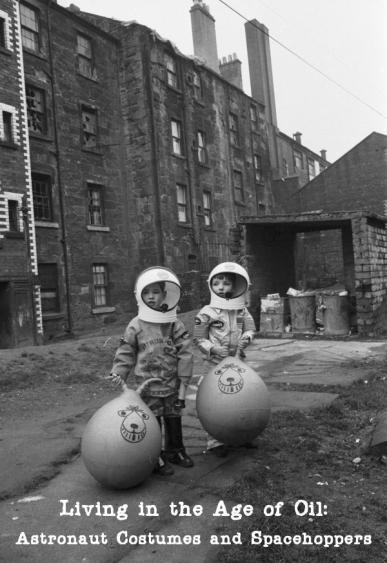
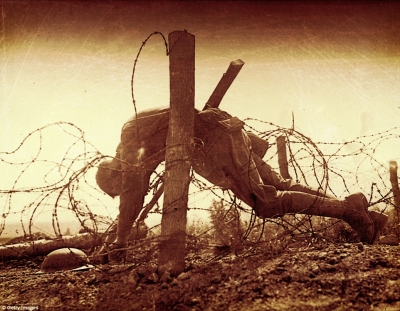

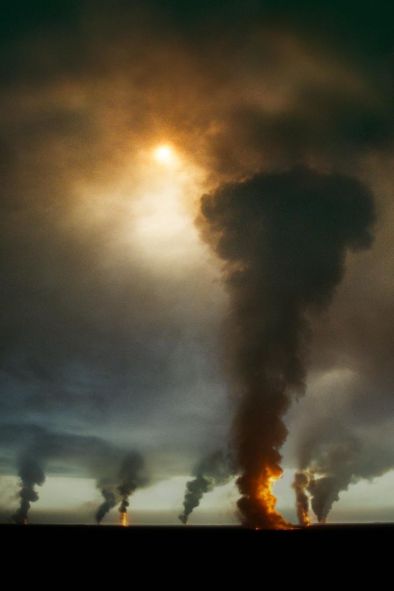




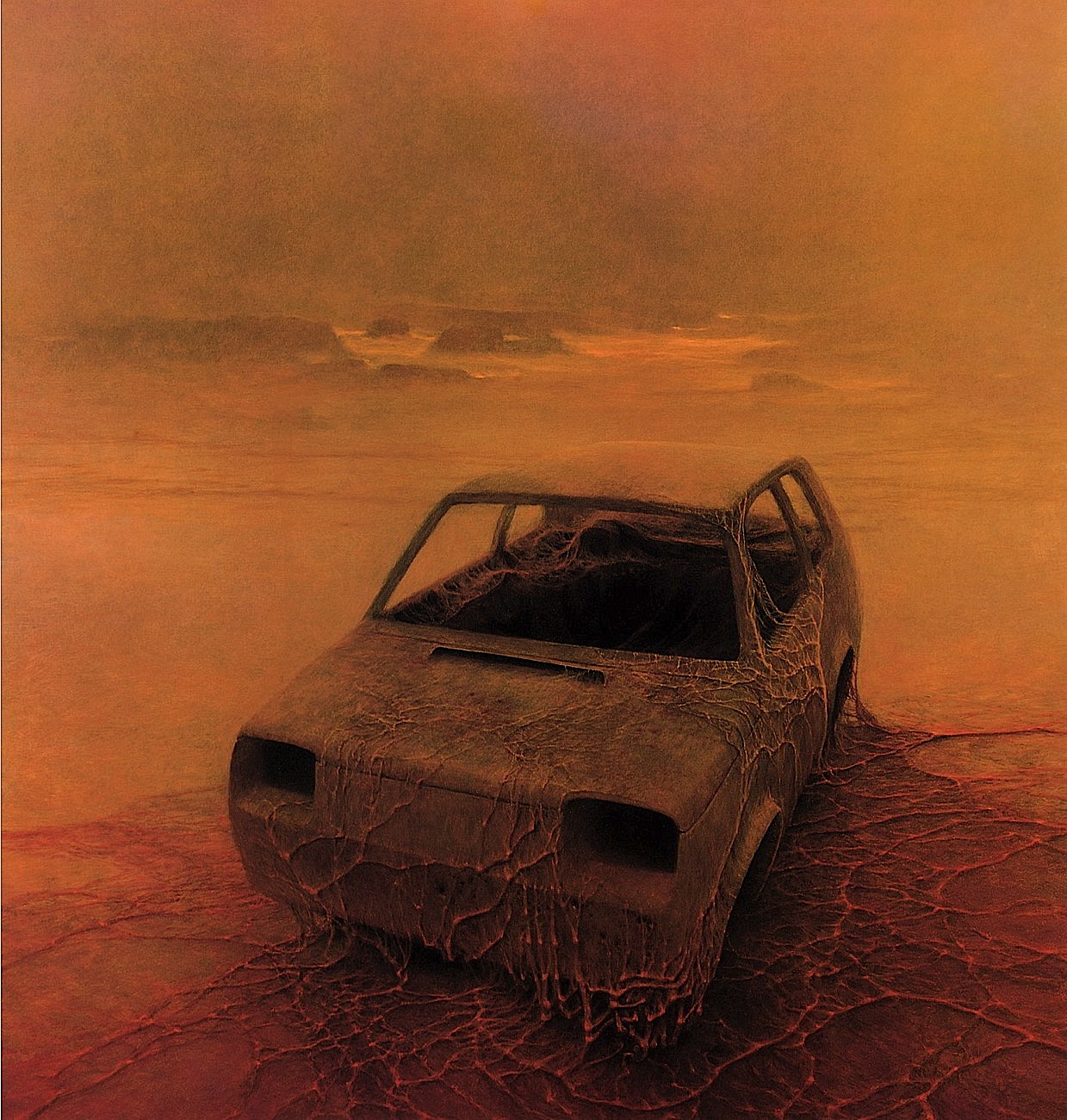


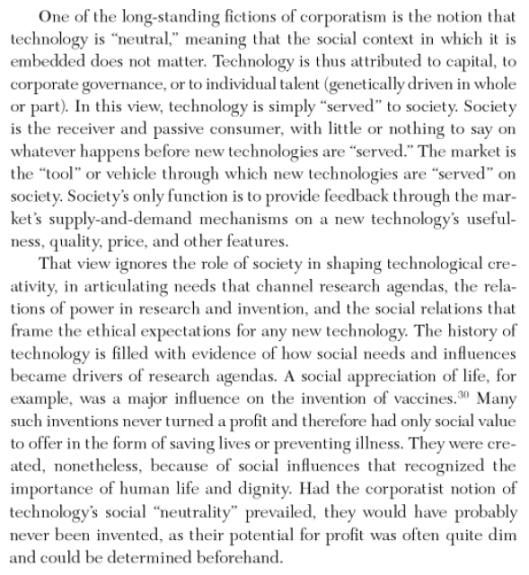



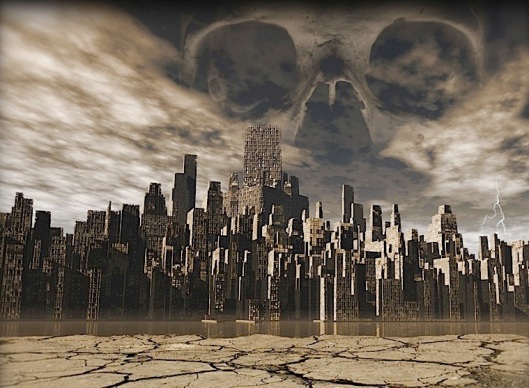


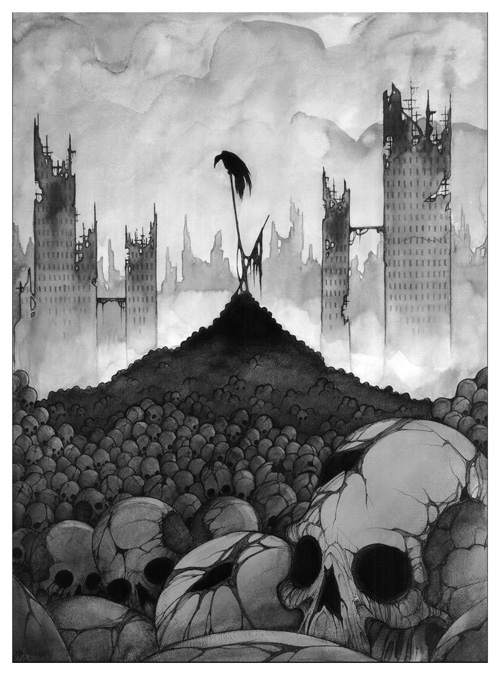




 Collapse of Industrial Civilization