This website got an interesting comment in the ‘About’ section from a well-educated fellow who works in the technology sector of the economy. His credentials are impressive. I did some checking to see if he really was who I thought he was and it definitely appears so. His IP address takes me directly to the Science Applications International Corporation(SAIC). SAIC is a major defense contractor with “friends in high places”, having received numerous no-bid contracts from the government. Its top personnel move freely within the government/corporate revolving door. A noteworthy fact in their history is that they were “instrumental” in fabricating the myth that Saddam had weapons of mass destruction and they pushed war as the only option. SAIC was the contractor that waisted hundreds of millions of taxpayer dollars on the failed Trailblazer project which was an attempt to create a system that would spy on cell phone, internet, and other electronic communications. Needless to say, they have an extensive and dark history:
Additional information on SAIC is here. Now that I’ve gotten that introduction out of the way, let’s look at the message from Tihamer Toth-Fejel:
Tihamer,
I’m happy you got a chuckle out of this website. We here at CoIC try to deal with the angst of the collapse of industrial civilization by treating the situation with gallows humor. Yes the Roman Empire did take some time to collapse, but I’m very confident that we don’t have the luxury of “hundreds of years” to see modern civilization disappear into the dustbin of history. The reasons for such an accelerated crash have been documented here and elsewhere numerous times. You only have to read The Limits to Growth to know much of what was accurately predicted decades ago. Collapse doesn’t happen overnight, but occurs in pulses and waves. Nothing as large and extensive as modern civilization will simply disappear overnight and no one here pushes such a theory. Ecologic overshoot is not a hard concept to understand and mankind is subject to it just as any other organism, although we have proven very adept at ‘extending and pretending’ our overexpansion. Cognitive biases are “an inevitable feature of adaptive behavior in all organisms, including ourselves.” Perhaps mankind can exhibit a collective free will and turn this ship around, but I highly doubt it. Our political system is beholden to Wall Street money and everything in Washington is predicated on the short-term election cycle. The same goes for our economy which needs constant growth and quarterly profits at the expense of a habitable planet. Dealing with climate change interferes with profits, so the capitalists feel better when they bury their heads in the sand. Unfortunately, humans did not evolve to deal with seemingly invisible, long-term, existential threats such as climate change and ocean acidification, many of their effects being nonlinear and complex.
Concerning your second point, I am indeed using the internet to write about the collapse of industrial civilization. What is your point? I think you are implying that I am anti-technology, encouraging mankind to live in caves. If you read my core beliefs for this site, you’ll find your answer; nonetheless, we do recognize the rule that technology is a byproduct of available energy resources, and at the rate that humanity is exhausting the plant, animal, and mineral wealth of this planet, I’m not sure what pixy dust the techno-optimists think is going to maintain our current set of unsustainable living arrangements. Perhaps you can tell us. And if humans were able to bend the laws of physics and create some new energy source, we would still be in trouble due to overpopulation and our enormous consumption of natural resources. I think Brutus had it right when he called humans “locusts” stripping the land bare.
On your third point, yes planet Earth will eventually die… in about five billion years when our sun becomes a red giant, maybe. Does this inevitability give us the green light to exterminate everything within a mere century? This would be somewhat analogous to a three-year-old committing suicide because they have come to the realization that they only have roughly 80 more years to live. And what about future generations? Is that even a consideration in your thinking? Perhaps you could even expand your thinking to include this planet’s myriad other life-forms whose biological functions support a vast web of life that makes our very own existence possible. Humans are currently overseeing the 6th mass extinction which will likely take us all down as well, but I’m sure you are well aware of this crisis and are working diligently on some sort of techno-fix for it. Your last sentence implies that you are a person of the anti-environmental, right-wing persuasion who sees those concerned about the habitability of the planet as eco-terrorists. This is a predictable viewpoint from someone who is an apparent contractor for the DoD and servant of the corporatocracy, but I assure you that future biospheric events will change the minds of even the most greeny-hating, military-industrial-complex loving demagogues on the planet.
While the false debate continues in mostly right-wing circles that today’s Capitalism is some aberrant form of “true” Capitalism, the end game and final victory of Capital continues to play out with multinational corporations becoming the ‘winner take all’ in their complete takeover of the world’s economies and governments. As discussed before, the TTIP and TPP are the latest maneuvers in this corporate grab for power, wealth, and resources. Any last vestiges of environmental protection, worker rights, and sovereignty will be shredded. No illusions of democracy should be maintained in a world of corporate feudalism where gross social inequality will have become irreversible and the will of common people smothered by the abuses of great wealth:
“[The TTIP] proposes to establish a Regulatory Co-operation Council combining US and EU regulatory agencies with the purpose of working towards deeper ‘regulatory co-operation and increased compatibility for future and existing regulatory measures’. For example, health and safety regulations and food standards between the US and the EU will be made ‘compatible’, or more simply put, downgraded or removed.
The TTIP and TPP are intended to include investor-state dispute settlement clauses. When a corporation considers its expected future profits are being harmed by a government it can lodge a case before these tribunals consisting of three lawyers who represent corporate interests. These lawyers have no conflict of interest restrictions on their operations. There are no limits on the awards that can be claimed against governments and very limited rights of appeal for governments. Even if a government wins a case it must pay the tribunal’s costs and legal fees – averaging $9m a case. UNCTAD reports a tenfold increase in such cases since 2000. Any health or environmental policy that conflicted with corporate interests would be subjected to these extra-judicial tribunals. Tribunals are currently organised under World Bank and United Nations rules. The compensation is taken from the taxpayers.
Of the world’s ten biggest law firms, ranked by revenue, four are British and six are US. A golden age for corporate lawyers beckons! ConDem Coalition government Minister without Portfolio Ken Clarke explained, ‘Investor protection is a standard part of free-trade agreements – it was designed to support businesses investing in countries where the rule of law is unpredictable, to say the least.’
Legalised plunder
The following are just a few of the cases that corporations have brought to the investor-state dispute settlement tribunals: …” – link
The PR machine continues to churn out lies even under the glaring reality of today’s obscene wealth disparity. One particular study, entitled Your Fate? Thank Your Ancestors, was discussed in the New York Times recently, proclaiming that an individual’s path to success or failure in any society is foreordained in their genetic make-up and family lineage. Of course genes do play a part in the intelligence, talents, and behavior of every individual, but this particular meme is based on the myth that people in present day capitalist economies live and operate within “modern meritocracy societies” wherein everyone has the freedom and opportunity to develop and utilize the full potential of their talents. As one commenter at the New York Times rightly stated:
“This [study] appears to be one of a growing number arguing for the inherent superiority of some people over others while strenuously avoiding terms like superiority. The claim that some are born to lead and rule and others to be ruled over is as old as human civilization.”
Such propaganda serves the purpose of those at the top of the capitalist social hierarchy, allowing them to justify capitalism’s grotesque social inequality while at the same time preaching to the masses that their poor standing in society is a result of their genetic heritage and not the result of a structurally unjust and undemocratic system. In other words, those at the top deserve to be there and so do those at the bottom.
Many people remain under the spell of the American Dream which promises they can rise to the top of this corrupt system or at least receive the trickle down benefits it claims to offer, but the stark reality of shrinking wages and pensions, persistent unemployment, and rising costs of bare necessities prove otherwise. It’s known as “the meritocracy myth” and one book with that title, written by two professors, explains that a person’s social status is based more on factors such as class structure, politics, and race rather than on individual merit and initiative. Their major arguments are summarized below:
“Factors associated with Individual “Merit”
1.) Money makes money.
Sources of revenue that are unrelated to jobs, such as income from capital gains, dividends, interest payments, government subsidies as well as appreciating assets of wealth such as businesses, real estate, and stocks are predominantly owned by a small fraction of society’s upper echelon. This maldistribution of wealth illustrates that America is not a “middle class society”, but one of the haves and have-nots where wealth is concentrated at the very top of the system.
“…the shape of the distribution of merit resembles a “bell curve” with small numbers of incompetent people at the lower end, most people of average abilities in the middle and small numbers of talented people at the upper end. The highly skewed distribution of economic outcomes, however, appears quite in excess of any reasonable distribution of merit. Something that is distributed “normally” cannot be the direct and proportional cause of something with such skewed distributions…”
“Most experts point out, for instance, that ‘intelligence,’ as measured by IQ tests, is partially a reflection of inherent intellectual capacity and partially a reflection of environmental influences. It is the combination of capacity and experience that determines ‘intelligence.’ Even allowing for this ‘environmental’ caveat, IQ scores only account for about 10% of the variance in income differences among individuals (Fisher et al. 1996). Since wealth is less tied to achievement than income, the amount of influence of intelligence on wealth is much less. Other purportedly innate ‘talents’ cannot be separated from experience, since any ‘talent’ must be displayed to be recognized and labeled as such (Chambliss 1989). There is no way to determine for certain, for instance, how many potential world-class violinists there are in the general population but who have never once picked up a violin. Such ‘talents’ do not spontaneously erupt but must be identified and cultivated.”
3.) Hard work does not necessarily equate to economic success.
“Applying talents is also necessary. Working hard is often seen in this context as part of the merit formula. Heads nod in acknowledgment whenever hard work is mentioned in conjunction with economic success. Rarely is this assumption questioned. But what exactly do we mean by hard work? Does it mean the number of hours expended in the effort to achieve a goal? Does it mean the amount of energy or sheer physical exertion expended in the completion of tasks? Neither of these measures of “hard” work is directly associated with economic success. In fact, those who work the most hours and expend the most effort (at least physically) are often the most poorly paid in society. By contrast, the really big money in America comes not from working at all but from owning, which requires no expenditure of effort, either physical or mental. In short, working hard is not in and of itself directly related to the amount of income and wealth that individuals have.”
4.) Mental Attitude
“According to the culture of poverty argument, people are poor because of deviant or pathological values that are then passed on from one generation to the next, creating a “vicious cycle of poverty.” According to this perspective, poor people are viewed as anti-work, anti-family, anti-school, and anti-success. Recent evidence reported in this journal (Wynn, 2003) and elsewhere (Barnes, Gould ;1999, Wilson, 1996), however, indicates that poor people appear to value work, family, school, and achievement as much as other Americans. Instead of having “deviant” or “pathological” values, the evidence suggests that poor people adjust their ambitions and outlooks according to realistic assessments of their more limited life chances.
An example of such an adjustment is the supposed “present-orientation” of the poor. According to the culture of poverty theory, poor people are “present-oriented” and are unable to “defer gratification.” Present orientation may encourage young adults to drop out of school to take low wage jobs instead staying in school to increase future earning potential. However, the present orientation of the poor can be an “effect” of poverty rather than a “cause.” That is, if you are desperately poor, you may be forced to be present oriented. If you do not know where your next meal is coming from, you essentially have no choice but to be focused on immediate needs first and foremost. By contrast, the rich and middle class can “afford” to be more future oriented since their immediate needs are secure. Similarly, the poor may report more modest ambitions than the affluent, not because they are unmotivated, but because of a realistic assessment of limited life chances. In this sense, observed differences in outlooks between the poor and the more affluent are more likely a reflection of fundamentally different life circumstances than fundamentally different attitudes or values.”
5.) Moral character and integrity
“Although ‘honesty may be the best policy’ in terms of how one should conduct oneself in relations with others, there is little evidence that the economically successful are more honest than the less successful. The recent spate of alleged corporate ethics scandals at such corporations as Enron, WorldCom, Arthur Andersen, Adelphia, Bristol-Myers Squibb, Duke Energy, Global Crossing, Xerox as well as recent allegations of misconduct in the vast mutual funds industry reveal how corporate executives often enrich themselves through less than honest means. White-collar crime in the form of insider trading, embezzlement, tax fraud, insurance fraud and the like is hardly evidence of honesty and virtue in practice. And neither is the extensive and sometimes highly lucrative so-called ‘irregular’ or ‘under the table’ economy—much of it related to vice in the form of drug trafficking, gambling, pornography, loan sharking, or smuggling. Clearly, wealth alone is not a reflection of moral superiority. To get ahead in America, it no doubt helps to be bright, shrewd, to work hard, and to have the right combination of attitudes that maximize success within given fields of endeavor. Playing by the rules, however, probably works to suppress prospects for economic success since those who play by the rules are more restricted in their opportunities to attain wealth and income than those who choose to ignore the rules.”
Nonmerit Barriers to Mobility
1.) The effects of initial class placement at birth on future life chances.
“…those born into great wealth start far ahead of those born to poor parents, who have a huge deficit to overcome if they are to catch up. Indeed, of all the factors that we might consider, where we start out in life has the greatest effect on where we end up. In the race to get ahead, the effects of inheritance come first and merit second, not the other way around.
Inheritance provides numerous cumulative nonmerit advantages that are available in varying degrees to all those born into at least some relative advantage, excluding only those at the very bottom of the system. Included among these nonmerit advantages are high standards of living from birth, inter vivos gifts (gifts between the living) such as infusions of cash and property bestowed by parents on their children at critical junctures in the life course (going to college, getting married, buying a home, having children, starting a business, etc.), insulation from downward mobility (family safety nets which prevent children from skidding in times of personal crises, setbacks, or as the result of personal failures), access to educational opportunities as well as other opportunities to acquire personal merit or to have merit identified and cultivated, better health care and consequently longer and healthier lives (which increases earning power and the ability to accumulate assets during the life course).
Another advantage of inheritance is access to high-powered forms of social and cultural capital. Social capital is one’s ‘social resources’ and refers to essentially to the value of whom you know. Cultural capital is one’s cultural resources and refers essentially to the social value of what you know. Everyone has friends, but those born into privilege have friends in high places with resources and power. Everyone possesses culture—bodies of knowledge and information needed to navigate through social space. Full acceptance into the highest social circles, however, requires knowledge of the ways of life of a particular group…”
2.) Bad Luck
“Bad luck can take many forms but two very common forms of bad luck are to be laid off from a job that you are good at or to spend many years preparing for a job for which demand either never materializes or declines. In looking at jobs and job opportunities, Americans tend to focus on the ‘supply’ side of markets for labor; that is, the pool of available people in the labor force. Much less attention is paid to the ‘demand’ side, or the number and types of jobs available. In the race to get ahead, it is possible and all too common for meritorious individuals to be ‘all dressed up with no place to go.’ For the past twenty years, the ‘growth’ jobs in America have disproportionately been in the low wage service sector of the economy. At the same time, more Americans are getting more education, especially higher education. Simply put, these trends are running in opposite directions: the economy is not producing as many high-powered jobs as the society is producing highly qualified people to fill them (Collins 1979, Livingstone 1998).
In addition to the number and types of jobs available, the locations of jobs both geographically and within different sectors of the economy also represent non-merit factors in the prospects for employment. For instance, a janitor who works for a large corporation New York City may get paid much more for doing essentially the same job as a janitor who works for a small family business in a small town in Mississippi. These effects are independent of the demands of the jobs or the qualifications or merit of the individuals holding them. Differences in benefits and wages between such jobs are often substantial and may mean the difference between a secure existence and poverty… rates of poverty in the United States continue to vary by region and locations within regions suggesting that geography is still a major factor in the distribution of economic opportunity.”
3.) Education
“…those with more education, on average, have higher income and wealth. Education is thus often seen as the primary means of upward social mobility. In this context, education is widely perceived as a gatekeeper institution which sifts and sorts individuals according to individual merit. Grades, credits, diplomas, degrees, and certificates are clearly “earned,” not purchased or appropriated. But, as much research has demonstrated, educational opportunity is not equally distributed in the population (Bowles and Gintis 1976, 2002, Bourdieu and Passeron 1990, Aschaffenburg and Maas 1997, Kozol, 1991, Sacks, 2003, Ballantine 2001). Upper class children tend to get upper class educations (e.g. at elite private prep schools and ivy league colleges), middle class children tend to get middle class educations (e.g. at public schools and public universities), and working class people tend to get working class educations (e.g. public schools and technical or community colleges), and poor people tend to get poor educations (e.g. inner city schools that have high drop out rates and usually no higher education). Educational attainment clearly depends on family economic standing and is not simply a major independent cause of it. The quality of schools and the quality of educational opportunity vary according to where one lives, and where one lives depend on familial economic resources and race. Most public schools, for instance, are supported by local property taxes. The tax base is higher in wealthy communities and proportionally lower in poorer areas. These discrepancies give rise to the perpetual parental scramble to locate in communities and neighborhoods that have reputations for “good schools,” since parents want to provide every possible advantage to their children that they can afford. To the extent that parents are actually successful in passing on such advantages, educational attainment is primarily a reflection of family income. In sum, it is important to recognize that individual achievement occurs within a context of unequal educational opportunity.”
4.) Loss of Self-Employment Opportunities and the Offshoring of Jobs
“…self-employment is popularly perceived as a major route to upward mobility. Opportunities to get ahead on the basis of being self-employed or striking out on one’s own to start a new business, however, have sharply declined. In colonial times, about three-fourths of the non-slave American population was self- employed most as small family farmers. Today, only seven percent of the labor force is self-employed (U.S. Census Bureau 2002). The “family farm,” in particular, is on the brink of statistical extinction. As self-employment has declined, the size and dominance of corporations has increased. This leaves many fewer opportunities for “self-made” individuals to enter existing markets or to establish new ones. America has witnessed the sharp decline of “mom and pop” stores, restaurants, and retail shops and the concomitant rise of Wal-Marts, Holiday Inns, and McDonalds. As more Americans work for someone else in increasingly bureaucratized settings, the prospects of rapid “rags to riches” mobility decline.
In addition to the decline of self-employment, manufacturing has also experienced drastic workforce reduction as production facilities have increasingly moved to foreign countries in efforts to reduce costs of production. This is a significant trend since the United States became a world power based on its industrial strength, which supported a large and relatively prosperous working and middle class. Some service jobs, such as customer service and computer programming, are also being moved to foreign countries in increasing numbers. All of these trends are occurring quite independent of the merit of individuals but nevertheless profoundly impact the opportunities of individuals to get ahead…”
5.) Discrimination
“Discrimination not only suppresses merit; it is the antithesis of merit. Race and sex discrimination have been the most pervasive forms of discrimination in America, [but others include] sexual orientation, religion, age, physical disability (unrelated to job performance), physical appearance…”
In addition to the worsening inequality endemic to the system, the social fabric of society will be torn apart by a world now in the throes of multiple ecological crises. The availability and affordability of food and water will be magnified by anthropogenic climate change as the agricultural regions of an overpopulated world are ravaged by drought, flood, and fire. Infrastructure will begin to fail more frequently as extreme weather begins to rack up damage. The aloof elite, who ensconce themselves behind gated walls and the luxury that their wealth buys, will fan the flames of resentment and civil unrest in a desperate population scrambling just for the necessities of life. The cultural myths of capitalism are fraying and the collapse of industrial civilization, unable to change its omnicidal course for sundry reasons, is seemingly written in stone.
A DJ on the radio mentioned the flooding in England the other day and exclaimed, “The climate is going crazy!”. The shallowness of the conversation and its failure to dig any deeper as to the reasons why the climate is “going crazy” is mirrored in the mainstream media and our society. Real journalism is simply another casualty of our rotting consciousness. Like a leper, those who cannot see or feel are oblivious to their own self-inflicted wounds. The flywheel of industrial civilization continues to spin out of control, taking out chunks of ecological bricks making up a once diverse and vibrant living planet. In some parts of the world, epic drought is desiccating cropland and exposing the cracked surface of lake beds, while on the other side of the globe unceasing rain is causing deluges of biblical proportion. Still other regions are experiencing freak snow and ice storms. The damage is done, but humans will continue to scour the earth for resources to maintain a house whose foundation now rests on the shifting sands of a destabilized biosphere.
If you thought shale gas was a nightmare, you ain’t seen nothing yet. A subterranean world of previously ignored reserves is about to be opened up. These are the vast coal deposits that have proved unreachable by conventional mining, along with gas deposits around them. To the horror of anyone concerned about climate change, modern miners want to set fire to these deep coal seams and capture the gases this creates for industry and power generation.
– Fire in the hole: After fracking comes coal
Weather patterns once held in place by an ice-locked Arctic are unraveling at an unsettling pace, yet industrial man can’t seem to pull himself away from his carbon burning orgy long enough to see that the monkey wrench inside Earth’s intricate and homeostatic climate system is himself. Never in the history of Earth has a single species become a geologic force for mass planet-wide extinction. The worshippers of the “free market” proclaim solutions to climate change will be forthcoming in the form of technology, yet all environmental laws and regulations are simply window dressing around the resource consuming pit of capitalism. Technology cannot replenish depleted resources or restore the relative ecological equilibrium that existed prior to the industrial revolution. Natural law is nonnegotiable and those who transgress it, repeatedly ignoring clear and present warning signs, are doomed to suffer the unforgiving consequences. Modern man will leave behind a toxic and radioactive wasteland for eons.
The corporate state is impotent in the face of the environmental meltdown since its only real purpose appears to be an enabler and enforcer to the plunder of the commons and the concentration of wealth into the most ruthless and greedy hands. There is no escaping this system that is locked into a path of self-destruction except through death, as Kevin Moore describes on this blog:
“…in general terms the purpose of government is:
a) to facilitate the looting-and-polluting of local regions and the planet as a whole in order that a small minority can acquire material wealth and enjoy themselves.
b) to facilitate the transfer of wealth from those lower in the hierarchical system to those near the top.
c) to keep the general populace uninformed and compliant.
d) to provide sufficient ‘trickle down’ for the misinformed and deluded masses to think they are not being exploited.
e) [more recently] to promote the agendas of transnational corporations, which are focused on complete control of populations and resources and maximization of short-term profits.
The purpose of environmental laws is:
1. to facilitate the looting-and-polluting of local regions and the planet as a whole but to limit the impact of severe pollution in specific cases where that pollution would be detrimental to other planet-destroying money-making activities..
2. to provide the pretence that governments care about the welfare of the general populace.
3. to provide looters and polluters with official mandates for looting and polluting, i.e. an environmental impact process having been gone through and ‘no significant impacts identified’, the activity of the looter-and-polluter is given the stamp of approval.
Under such a system it become inevitable that all politicians are, or quickly become, bought-and-paid-for professional liars and that all senior environment officers become lackeys to the system and therefore enemies of the people.
The entire political-economic system of western nations is geared to making everything that matters worse, so everything that matters gets worse.”
These are the unvarnished and stark rules of the game for those who care to know the truth. Becoming fully aware is a hope-destroying and soul-wrenching realization, but the truth is never measured by its popularity and very few ever face and accept it. The welfare and safety of the public and future generations will continue to be sacrificed at the altar of stock markets and mass consumerism. As commenter James says:
“…Murdering extant humans NOW to gain wealth is accepted government policy and in some cases personal policy…”
Nowhere is this more true than in the one country that comprises 5% of the world’s population, but consumes 25% of its resources; others are furiously trying to catch up.
So as the industrial world whistles past the graveyard on its civilization-ending trajectory, we watch the signposts of doom whiz by us each day and wonder what is the point of getting up every morning to participate in this omnicidal culture. With virtually the entire planet having been plotted, demarcated, sold off for exploitation and surveillance by drone, I’m afraid no one is getting out of this trap alive so you might as well learn to respond to current news events with a certain black and morbid humor. We are the pathologists of capitalist industrial civilization, dissecting its potholed road to collapse just as a coroner would conduct the postmortem examination of a morbidly obese person who gorged themself on twinkies and high fructose soft drinks.
Many have used the phrase “the climate is moving to a new normal” or “moving to a new paradigm”. Such phrases give a false sense of security, as if the damage has stopped and the Earth’s systems can now recalibrate to a new settled state, but human forcing of the biosphere by way of GHG emissions continues unabated and in fact has now tripped multiple climate tipping points. There is no “new paradigm”, but an ongoing cascading collapse of all known stability and equilibrium.
When you go into your mindless 9-to-5 job and your micromanaging boss harasses you for petty little things, you’ll think about how meaningless it all is in an age where governments will crumble, billions will starve to death, and the earth will soon become just another lifeless rock floating through space.
“…Run for the hills, pick up your feet and let’s go. We did our jobs, pick up speed now lets move. The trees can’t grow without the sun in their eyes. And we can’t live if we’re too afraid to die….”
“When the well’s dry, we know the worth of water.”
~ Benjamin Franklin
From Luke’s Journal:
Date: January 2064
I’ve just returned from a salvaging expedition into the heart of what was known as Los Angeles, a vast megalopolis once teeming with millions of people and home to Hollywood movies and TV, hallucinogens for the masses. It is now known as celluloid cemetery. The air was still this evening and off in the distance I could hear the desperate screams of those who had been exiled from our underground colonies.
I’ve got all the public libraries mapped out on my tracking device so that I can hit them up for rare books not archived on our historical databases. Paper books never died because a lot of data has been lost over the years due to grid failure, floods, fires, and arson. A very well-preserved collection of writings by Benjamin Franklin, a true renaissance man of his time, caught my eye as I rummaged through piles of books strewn knee-deep across the floor. Inside the dusty tome I saw the brief essay ‘Observations Concerning the Increase of Mankind‘and read it on the spot. Franklin says, “But not withstanding this (population) increase, so vast is the Territory of North America, that it will require many ages to settle it fully…” A mere 215 years after those words were published, America officially went into overshoot. Thomas Malthus is said to have credited Franklin for discovering the ‘rule of population growth’ which states that when agriculture increases in arithmetic progression(2, 3, 4, …), the population grows in geometric progression(2, 4, 6, …), eventually outpacing the means to feed everyone. Neither Malthus nor Franklin foresaw the discovery of fossil fuels, which fueled the population explosion, or its horrific side-effect of climate change which would act as a catalyst forthe spread of virulent diseases and pathogens such as the African Flu Pandemic of 2029, otherwise known as The First Great Culling. Two-thirds of the global population were wiped out. Subsequent pandemics of varying origins and lethality picked away at the remaining 2.5 billion, leaving a few hundred million survivors scattered across the globe. The construction of vast subterranean cities began several decades ago once the world knew that industrial civilization would never be able to survive runaway climate change above ground. Today no one is allowed to have more than two children. Population is strictly monitored by the technocracy which severely punishes those who break this law; no one wants to be banished to the outside where life is short and brutal.
Franklin must truly have been rolling in his grave at the end result of his expansionist dreams for America: a pockmarked landscape of fracking wells, oil spills, and toxic waste dumps; a corrupt government of corporate sock-puppets; a military that had become a malevolent industrial complex seeking war for profit and destroying fledgling democracies wherever they appeared; an agricultural system of factory farms and frankenfood; a self-proclaimed “free press” of corporate mouthpieces and shills; and a population of citizens that had been reduced to mindless consumers incapable of critical thought. And I think he would be utterly distraught to find that his name had been reduced to a popular idiom by the dumbed-down masses — “it’s all about the Benjamins.“ Knowing what a grotesque monstrosity this country would become, he surely would not have declared America’s cause to be ‘the cause of all mankind’ — wasteful consumerism, monopoly capitalism, and the tyranny of the corporate state. When he was studying dinosaur bones in northern Kentucky back in the mid 1700’s, I’m sure it never crossed his mind that the human species would soon suffer the same fate, becoming the next hapless victim to sink into a tar pit of its own making. Franklin would have said, “It’s inconceivable such a technologically advanced society as this would not look at the scientific evidence and take action at once to preserve life and liberty.” But after witnessing what an irredeemable abomination his Republic had become, he would most likely say, “My God, the only recourse remaining is to clear the entire system with near-term-extinction.”
Walking with the tortured spirit of Benjamin Franklin along the Beach of Doom where anoxic ocean waves wash plastic debris and dead jellyfish ashore, I explain to him that the seeds of our destruction were planted long ago with the expansionist mindset of the first European settlers. The Indians and buffalo were systematically wiped out, all the virgin forests were chopped down and converted to lumber, and the rest of America was laid wide open for exploitation by the construction of a transcontinental railroad. Technology and the power of fossil fuels only intensified the process; this country never looked back, expanding to foreign shores for control of evermore resources and spreading the same logic and belief system of capitalism throughout every inch of the Earth until there was no place further to go. The system started to cannibalize itself after hitting peak oil, turning inward to burn dirtier, more marginal energy resources and starving the masses whose share of the economic pie kept shrinking while a tiny few gorged themselves on ill-gotten wealth and delusions of grandeur. In its final days, this con game measured everything only with a monetary scale. If there was no profit to be earned, then real solutions to the grave threat of anthropogenic climate change, like “powering down”, were summarily discounted. America and the world had ideologically boxed itself into a death trap called capitalism. No one realized or refused to realize that all the perceived gains in infrastructure, technology, social institutions, and other complexities of industrial civilization would soon fade into oblivion at the hands of an uncaring climate radically and thoughtlessly altered by mankind’s activities. In the end, it was all phantom wealth stolen from nature and built off her back by burning trillions of tons of carbon into the atmosphere. The system’s only available avenue was to rush headlong into the dark void of misery, death, and extinction while spinning quixotic tales of “sustainable growth”, “renewable energy”, and geoengineering fixes. Cooperation on a planetary scale to lower greenhouse gases could never be accomplished under a capitalist system, nor would the arms race amongst nations which requires a constant investment of highly dense energy to develop technologically superior weaponry. After knowing for decades that it was far too late to escape the carnage of climate chaos, those in positions of power felt compelled to ignore the facts and keep the gas pedal pressed to the floor, leading all of humanity over the cliff.
“He cannot complain of a hard sentence, who is made master of his own fate.”
~ Johann Friedrich von Schiller
“Hey, my name’s Luke. The year is 2060 and I live in what was once called America. As you can see, the ‘developed world’ never was able to kick its fossil fuel habit. They just kept turning to dirtier sources and more extreme processes to burn the stuff, like the liquefaction and gasification of coal. The entire planet became a sacrifice zone for the sake of keeping mega cities lit up and the machinery humming, but ultimately it was death by a thousand cuts. Entropy was the victor. GHG’s continued to rise, warm the planet, and wreak havoc on the biosphere. Cancer and industrial disease spread to every corner of the globe. Weather patterns were drastically altered until the world’s food production was forced to move indoors. Large-scale cloning of animals became common practice in order to feed the several hundred million surviving people. War, drought, floods, fresh water scarcity, and a rash of pandemics crashed the world’s population from a high of 8 billion. The agricultural bread baskets of the world became wastelands of dust and weeds. International cooperation failed and the world’s existing powers scrambled for the last remaining resources. There are none who buy into the propaganda of a “better world” any longer because the stark evidence of what we have done to the planet cannot possibly be hidden from view. There is no utopian sanctuary for anyone to escape to, no matter how many gold coins one has managed hoard. Despite this realization and even after all the geoengineering mishaps, people still cling to the belief of salvation through technology. Everyone lives in fortified bunkers to escape the hot, drying winds that sometimes carry poisonous and toxic clouds. When we do venture out, gas masks are always worn as well as long clothing to protect from the thinning ozone layer. Industrial smoke stacks still belch plumes into the air to keep the underground cities running.”
“When above ground, I’ll spend hours walking through the wreckage of industrial civilization, the skeletons of its skyscrapers blotting out the sun like the mythical Redwood trees once did along the west coast. The occasional sound of a steel beam crashing to the ground or a glass window shattering breaks the ghostly silence. These deserted cities are infested with rats the size of small dogs, and the ray of my flashlight is reflected in their staring eyes. The endless and self-defeating rat race of humans has now been replaced by the scurrying, scavenging, and fighting of real rats. I find it amazing that my ancestors spent their entire lives living and working inside these little office cubicles. That was a time when Earth was still green and you could hear the birds chirping and singing outside your window. I’ve got a digital recording of various holographic scenes depicting bygone days of nature that I project inside the confines of my subterranean home, but I’d give my right arm to experience the real thing. To think that people were once surrounded by nature all the time amazes me. Its true value had never really been calculated. Rather, money seems to have been what people were most preoccupied with back then. On one of my excursions I came across a dwelling whose crumbling walls were packed with stacks of moldy paper money. Whoever lived there must have worked an entire lifetime to eke out a savings of that size, stuffing it into every wall cavity like it was insulation. Many thought humans would go extinct long before money would ever cease to exist. I guess they were wrong.”
“They say the people of this country went mad, obsessed with money as it overtook their every thought, decision, and activity. One of America’s forefathers once said, ‘He that is of the opinion money will do everything may well be suspected of doing everything for money.‘ All things were framed within the context of money. Environmental damage was discussed in terms of financial setbacks to the economy. Political leaders made decisions based, first and foremost, on the financial interests of those powerful few who put them in office. Choices on matters involving the well-being of humanity were made solely in the interests of corporations and stockholders. Even as the overwhelming evidence mounted that mankind’s place on earth was becoming evermore tenuous, the money worshippers continued to find ways to profit from calamity and mayhem. Preserving the Earth simply was not profitable, so they let it die. The Arctic melted, so they raided its open waters. The land became parched, so they invested in water rights. CO2 levels skyrocketed, so they put their money into carbon credits. Our continued existence became a crap shoot in the marketplace. The vultures of capitalism were able to profit from the collapse; thusly, such nightmarish and dystopian scenarios as botched geoengineering schemes, a Venus syndrome on earth, and ultimately human extinction were allowed to become sober realities….”
‘No matter what we call it, poison is still poison, death is still death, and industrial civilization is still causing the greatest mass extinction in the history of the planet.’
~ Derrick Jensen
The . . . metamessage of our time is that the commodity form is natural and inescapable. Our lives can only be well lived (or lived at all) through the purchase of particular commodities. Thus our major existential interest consists of maneuvering for eligibility to buy such commodities in the market. Further, we have been taught that it is right and just—ordained by history, human nature, and God—that the means of life in all its forms be available only as commodities. . . . Americans live in an overcommodified world, with needs that are generated in the interests of the market and that can be met only through the market.
~ Stephen Fjellman, Vinyl Leaves:Walt Disney World and America
From the Amazonian tribe driven off its land by fossil fuel companies to the wage-enslaved city dweller dependent on mass-produced food and other commodities, no place on Earth has escaped the planet-wide reach of capitalist industrial civilization’s profit-extracting mechanisms. The oligarch’s of industry and banking shape public thought through an all-pervasive mass media monopoly, control legislation and regulation by pulling political purse-strings and commanding an army of lobbyists, sew death and mayhem with the global arms trade, sacrifice the next generation in resource wars, decimate ecosystems for short-term gain, manipulate and devalue currencies, create economic bubbles, and sell this entire vile process back to the masses as “progress” and “development” with measurements of inflated stock prices and skewed GDP figures. The untold human and environmental costs are now bursting at the seams with societal disintegration, epidemic mental illness, wide-scale resource depletion, industrial pollution and contamination, and the on-going collapse of the Earth’s biosphere.
If you’re wondering why there can never seem to be any significant action taken on climate change, don’t look for honest answers from those whose livelihood is tied to capitalism. If the true costs of the global industrial economy were calculated in terms of environmental damage, the ill-health effects on workers and the public, as well as the fraying of the Earth’s web of life, industries would find the costs too great to bear. The honest truth is that this ecocidal economic system would have to be dismantled for there to be any hope of humanity preserving a living planet and averting extinction.
“…big-time corporate capitalism is an omnicidal momentum. I mean, it just has one thing in mind, and it will destroy or weaken or co-opt anything in its way that is civic, that is democratic….corporations have been very clever A) in distracting people, especially young generation, with entertainment, with professional sports, turning them into spectators. Now you’ve got, you know, 24/7 entertainment. There’s no end to it. And they’ve also been very good in making people internalize a sense of powerlessness.” ~ Ralph Nader
Perhaps the three biggest crises facing civilization are unrestrained financialization of commerce and society, climate change, and peak oil (or peak net energy). Let’s take a quick look at how America is handling each of these crises:
Employing paid shills for the financial industry is now simply standard operating procedure in the U.$.A.:
…Consumer advocates and independent analysts do their best to weigh in as well, but they are outgunned. Meanwhile, consulting firms dedicated to playing matchmaker between corporations and hired experts have flourished in the new regulatory environment. Director Charles Ferguson, whose film Inside Job highlighted the role of sponsored professors in supporting the deregulatory policies that led to the financial meltdown in 2008, says the business of economic consulting firms that work to “source” academics for expert testimony and regulatory filings “has been going on for quite a while, and it’s now quite a large industry.”…
Of course anthropogenic climate change, the existential threat of modern times, would seem to be a catastrophe deserving of mankind’s attention, would it not? Well, as you can see, the capitalist only views it as a public relations war:
An extensive study into the financial networks that support groups denying the science behind climate change and opposing political action has found a vast, secretive web of think tanks and industry associations, bankrolled by conservative billionaires.
“I call it the climate-change counter movement,” study author Robert Brulle, who published his results in the journal Climatic Change, told the Guardian. “It is not just a couple of rogue individuals doing this. This is a large-scale political effort.”
His work, which is focused on the United States, shows how a network of 91 think tanks and industry groups are primarily responsible for conservative opposition to climate policy. Almost 80 percent of these groups are registered as charitable organisations for tax purposes, and collectively received more than seven billion dollars between 2003 and 2010.
How about peak oil? Again, the energy industry has its PR machine in full swing touting America’s imminent energy independence along with many other myths, but commenter James of this blog cuts to the chase:
Now, which ponzi is most despicable, a religious or financial one? Both are based upon deceit and both serve primarily the enrichment of the scheme officialdom. One promises a payoff in eternal life while the other promises financial success. One examines your credit score while the other applies tick marks in you behavioral ledger of good and evil. Both systems of fleecing are based upon human fear and herd mentality. Society shuns the heretic of either ponzi and damnation awaits those that do not participate fully. Ponzis collapse when increasing numbers of fools, resources and energy can no longer be sucked into their cancerous growth schemes. The religious structures will be more enduring as they can always find plenty of poor dolts to give their last penny to gain a chance at the big after-life payoff. The financial schemers, faced now with meeting the absolutely unbelievable limits of growth will have to leave all those little nest eggs of promises, unhatched. The key is to convince the ponzi participants that the U.S. is the new Saudi Arabia, that fracking oil and natural gas is the future and we can get enough oil from shale to last a million years. “Just relax folks, you’re all gonna get your money back”. Not. What a miraculous world we live in.
As you can see, America is handling all three crises like a sleazy car salesman unloading a lot full of lemons.
And if anyone was spooked by the Snowden revelations of government spying, the implications of corporate espionage on social-change organizations that threaten to impede unfettered access to profits is truly terrifying.
Although I’m not a particularly religious person, all evidence does point to a civilization which has completely succumbed to the worship of Mammon:
…The fruits of such idolatry are clear: the injustice and unemployment and waste of human talents; the corruption of our political leadership and their collusion with immoral financial practices; the depredation and degradation of our natural environments and the exhaustion of our natural resources; the inevitable wars and other crises that arise from the systematic fostering of base human appetites and the refusal to compromise our ways of life, and pursue a more equitable sharing of the gifts bequeathed to us…
I would not blame anyone for wanting to seek comfort in a bottle or some other form of self-medication, but perhaps doing something more dramatic to escape this nightmarish reality of a thoroughly corrupted, money-worshipping society is in the cards. When your back is against the wall and you’ve lost faith in everything, then revolution is the antidote for the “pseudo-realities” that plague us.
“Because today we live in a society in which spurious realities are manufactured by the media, by governments, by big corporations, by religious groups, political groups… So I ask, in my writing, What is real? Because unceasingly we are bombarded with pseudo-realities manufactured by very sophisticated people using very sophisticated electronic mechanisms. I do not distrust their motives; I distrust their power. They have a lot of it. And it is an astonishing power: that of creating whole universes, universes of the mind. I ought to know. I do the same thing.” ~ Philip K. Dick
The specter of death, near-term extinction, haunts us as we silently endure the evil and decay all around us, going along just to get along in the belly of the American empire. One day pent-up anger and hunger will burst forth, pushing us into the streets. Blood and emotions will flow freely. Inept and crooked governments will fall. We’ll have nothing left to lose.
As media spin and political rhetoric of the corporatocracy diverge further and further from reality, modern society appears more and more to have been lifted from the pages of dystopian fiction. While the majority of the population succumbs to a serial-bubble economy, a disintegrating social safety net, and extreme weather, The elite are wasting scarce resources in an effort to hold together the cracking and buckling foundation of our sprawling industrial civilization. It’s in the short-term interest of the elite to construct a police state that will protect the gamed system they have created for themselves even though we know such short-sightedness sets us all up for a more spectacular fall. Capitalism has enslaved the world to the lifelong pursuit of little bits of paper and metal in order to buy the mass-produced products and food that have become essential to the survival of billions of people. Money and the illusion of material wealth are now perceived as more important than preserving the habitability of the planet. We live in a pathological dystopia of money worship.
Punch-drunk on fossil fuels, humans have been more destructive than a bull in a china shop; the true cost of fossil fuels continues to be externalized and downplayed as ever more ecological debt racks up, revealing itself in an increasingly destabilized biosphere and collapsing web of life. Sadly, the ‘climate emergency‘ has become yet another excuse for the elite to accelerate their looting by treating CO2 emissions as one more capitalist market tool — tax/trading policies as well as the costly and impractical capture and storage of carbon. In the end, any such market schemes will fail due primarily to the harsh consequences of human ecological overshoot and the complexity trap modern civilization has created for itself.
“…Societies struggling with the dilemmas of complexity are vulnerable from two directions. First, systems that are too tightly coupled or too efficient are fragile; they lack resilience. Thus they risk being toppled by a cascade of failure. That is how region-wide electrical outages propagate. The failure of one sector brings down another and another until the grid itself fails, and once down it takes a heroic effort to get it up and running again.
Second, they are exposed to simultaneous failure. When formerly separate problems coalesce into a problematique, a nexus of interlocking problems, the society does not face one or two discrete challenges, as in simpler times, but instead a swarm of simultaneous challenges that can overwhelm its capacity to respond, thereby provoking a general collapse.
Take climate change as a current example. To address this overall problem will require us to surmount a host of challenges in many different sectors (e.g., agriculture, forestry, public health, energy production, infrastructure and so on) not only in one country or economy but in every country—to varying degrees…”
In the geological blink of an eye — 20, 40, 60, or 80 years from now, ghostly ruins will be all that remains of the most technologically advanced civilization that once spanned the globe. I don’t believe there will appear any sort of Hail Mary invention to solve the gauntlet of problems facing mankind — peak fossil fuels, climate change, ocean acidification, keystone species extinction, water scarcity, peak antibiotics, chemical pollution, nuclear proliferation, overpopulation, capitalism, and the complexity trap. Just a few weeks ago, a drill was conducted between Canada, the U.S., and Mexico in order to simulate a large-scale electric grid failure:
“…The vulnerability of our power grid due to solar flares or electromagnetic pulse (EMP) is getting new attention. Our system of interconnected power generation, transmission facilities, and distribution facilities are more vulnerable to cyber attacks than ever before. It would cost $3.6 trillion to fix everything, and would not be completed until 2020.
Smart grid systems make the power grid more accessible to cyber hackers so the upgrade can increase the risk. Electric car charging stations are essentially an accessible computer that cyber hackers can access the power grid. Right now, America has relatively few electric car charging stations, but we will be seeing a significant increase in government and privately funded vehicle charging station projects…
…It is estimated that a long-term failure of the power grid would likely be so catastrophic to society that casualties would be in excess of 60% of the population, according to the Chairman of the EMP Commission. With the grid vulnerable to solar flares, cyber attacks, EMP’s and weather related events it is important that we have supplies in stock to reduce the waiting time for overseas shipments and manufacturing delays. Currently we lack the inventory.
When, not if, the power grid fails, not only will the citizens of the U.S.A. be at risk of interrupted supplies of water, fresh food, fuel and the shut down of communications, but our very own military will suffer the same affects. Civil unrest would inevitably overwhelm the police department’s ability to respond…”
“A massive and “serious” cyber attack on the U.S. homeland is coming, and a natural disaster, the likes of which the nation has never seen is also likely and on its way.”
…”Energy officials worry a lot these days about the stability of the massive patchwork of wires, substations and algorithms that keeps electricity flowing. They rattle off several scenarios that could lead to a collapse of the power grid — a well-executed cyberattack, a freak storm, sabotage.
But as states, led by California, race to bring more wind, solar and geothermal power online, those and other forms of alternative energy have become a new source of anxiety. The problem is that renewable energy adds unprecedented levels of stress to a grid designed for the previous century.
Green energy is the least predictable kind. Nobody can say for certain when the wind will blow or the sun will shine. A field of solar panels might be cranking out huge amounts of energy one minute and a tiny amount the next if a thick cloud arrives. In many cases, renewable resources exist where transmission lines don’t.
“The grid was not built for renewables,” said Trieu Mai, senior analyst at the National Renewable Energy Laboratory.
The frailty imperils lofty goals for greenhouse gas reductions. Concerned state and federal officials are spending billions of dollars in ratepayer and taxpayer money in an effort to hasten the technological breakthroughs needed for the grid to keep up with the demands of clean energy”…
The electric grid truly is the Achilles heel of industrial civilization:
…”Outside of the electricity industry, few fully understand the centrality of the grid to life in America today. The most graphic realizations occur when the grid goes down. It’s not just a matter of light and comfort in our homes. Without electricity, citizens may have no access to potable water, sewage treatment, safe food, fuel supplies, traffic control, or health care…
…Not only is the electrical grid central to modern life, but the grid also has multiple vulnerabilities that make keeping it safe a very difficult task. Weather outages are common, although some, such as an ice storm, can do enormous damage. A January 1998 ice storm destroyed much of Hydro-Québec’s massive 765-kV transmission system, blacking out more than 3 million Canadians, causing 30 fatalities, and leaving many customers in the dark for weeks. Tropical storms, such as 2005’s Hurricane Katrina, can also cause long-term and widespread destruction.
Human error can also take down the grid in a hurry, as was the case with the massive August 2003 blackout that turned off power for 55 million people in the Northeast, Midwest, and Canada…
…The 2003 blackout also highlighted another chilling aspect of grid failure: the propensity of the system to suffer from a cascading failure. Because of the grid’s interconnectedness, grid failures can spread quickly, concatenating across the system. This same effect occurred during the 1965 blackout that slammed most of the eastern U.S., an event that began with a simple hardware failure in Canada.”…
…”Unfortunately, the world’s nuclear power plants, as they are currently designed, are critically dependent upon maintaining connection to a functioning electrical grid, for all but relatively short periods of electrical blackouts, in order to keep their reactor cores continuously cooled so as to avoid catastrophic reactor core meltdowns and fires in storage ponds for spent fuel rods….
What do extended grid blackouts have to do with potential nuclear catastrophes? Nuclear power plants are designed to disconnect automatically from the grid in the event of a local power failure or major grid anomaly; once disconnected, they begin the process of shutting down the reactor’s core. In the event of the loss of coolant flow to an active nuclear reactor’s core, the reactor will start to melt down and fail catastrophically within a matter of a few hours, at most. In an extreme GMD [geomagnetic disturbance], nearly every reactor in the world could be affected…
If an extreme GMD were to cause widespread grid collapse (which it most certainly will), in as little as one or two hours after each nuclear reactor facility’s backup generators either fail to start, or run out of fuel, the reactor cores will start to melt down. After a few days without electricity to run the cooling system pumps, the water bath covering the spent fuel rods stored in “spent-fuel ponds” will boil away, allowing the stored fuel rods to melt down and burn [2]. Since the Nuclear Regulatory Commission (NRC) currently mandates that only one week’s supply of backup generator fuel needs to be stored at each reactor site, it is likely that, after we witness the spectacular nighttime celestial light show from the next extreme GMD, we will have about one week in which to prepare ourselves for Armageddon.”…
The Energy Skeptic reports that Russia is on a crusade to spread these ticking time bombs all around the world.
Once in a while in that vast nothingness of the internet I’ll happen across a blog from someone who has something of substance to say. I have also learned that Dmitry Orlov is likely discontinuing any more ‘collapsitarian’ blog posts. Probably not a good subject to dwell on when you have an infant son. In ‘Dmitry flicks it in‘, Harry Willis reminds us that America has been the epicenter of capitalism, always for sale to the highest bidder and now home to a new growth industry – Doomsaying:
[Excerpt]
“…David Halberstam’s book The Fifties was, I think, very enlightening in this regard. We are the home of the chain hotel (Holiday Inn), the chain restaurant (McDonald’s and all its followers), the Big Box stores (Wal-Mart, CostCo), the mega-hardware store (Home Depot, Lowe’s), the strip mall, the suburban housing tract, and most importantly, the concept that corporate power should be concentrated in huge holding companies that own very diverse and large businesses. On this latter point, whether Americans realize it or not, every meal they eat out, every processed food they buy at the market, every sundry (detergent, household necessities) they purchase wherever, every drug and almost everything else they routinely buy is sold to them by about 10 huge holding companies. And all communications are essentially owned by 6 large corporations, so everything you ingest with your ears and eyes is also owned by a corporate cartel.
These huge companies are multinational in character, with much of their business (and payroll) located overseas. They are nominally American, but the sinking mass of the American middle and lower classes here are more or less of marginal relevance to them, and only to the extent that Americans form part of their customer base. The American booboisie needs to be manipulated because the U.S.A. is still nominally a democracy, de jure, although de facto it is what Sheldon Wolin calls an “inverted totalitarian state,” one where the government is owned by Big Business. We are not going to “vote” our way out of this situation, as Russell Brand, among numerous others (including Dmitry Orlov, most definitely) seems to get.
America is a corporate headquarters and tax haven which executes its business plans by means of a huge standing army, which does not often just stand around. We got this way because (a) power always tends to concentrate in fewer and fewer hands, even in a liberal democracy, since as money aggregates it can get rid of legal impediments such as high taxation and anti-trust laws, and (b) because America was the most innovative and naturally-blessed (our peerless real estate) nation on Earth. We also benefitted mightily from intellectual immigration to this country, made possible by the double-digit IQs in charge of Nazi Germany.
I don’t think the United States is going to collapse in the sense that the Collapsarian community talks and writes about. For one thing, the emphasis is too much on Peak Oil. I’ve written before that I think Peak Oil represents a kind of deus ex machina for anti-American wish fulfillment. Some sensitive souls, such as James Kunstler, Dmitry Orlov and many others, are so appalled by the grisly ugliness of the American crapscape, with its chain everything and grotesque proliferation of hideous suburban grids, that they long for some way to predict confidently that it must fall of its own weight. That’s where Peak Oil comes in: you posit that an economy runs on cheap energy, especially petroleum in the American economy, and this gives you a means of assuring everyone that it will all be over soon and an anodyne vision of Norman Rockwell’s neighborhoods will materialize peacefully out of the formless void.
No, I don’t think so. The lower 90% of the American populace has no way to go but down, until it reaches a rough parity with the hard-working masses in Asia who, after all, have many of the same employers as the Americans. The American multi-nationals are indifferent to the fate of their so-called “countrymen,” indifferent to the environment (mountain top removal, fracking, pesticide and fertilizer flushes into the Gulf and oceans, plastic waste, soil erosion, CO2 emissions) and essentially react only when conditions become so dire that the American “platform” is threatened. We’re inflating bubbles again through money printing to retard this natural contraction, and when the bubbles pop (again), we’ll have nother “crisis” which will in fact simply be another step-phase down after the gooey soap is cleaned up. I think that’s how we’ll get there, in a ratchet fashion. We will even adapt to oil high prices, as in fact Americans have done since the 2008 financial crisis began. Americans drive 3% fewer miles now per year than they did 5 years ago, despite increases in population and the “recovery.” Gasoline usage is way down, as people shift to fuel-efficient cars and just leave the car keys on the table in the hallway. Or by the oil can fire under the bridge.
The dramatic immiseration of the American people (thanks, Rob Urie) since 2008 has made catastrophe prediction and doomsaying one of America’s chief growth industries, and many, many writers and speakers have gotten in on the act. But it’s not especially lucrative. Owning one of the Big Corporations is better for that, so the doomsayers drop out and flick it in. It’s always nice to go over to Mom’s house.”
Economic and cultural coercion are readily apparent in our society. And if those don’t work, the corporate state also has policies of overt force – military and law enforcement. You could call this arrangement an ‘open air prison’ or the more apt phrase for America would be ‘inverted totalitarianism’ in which the prisoners aren’t fully aware of their own shackles, transfixed as they are by mass media manipulation, the consumer culture, and the trappings of our high-energy way of life. Is there any wonder that a post apocalyptic scenario holds a certain amount of perverse romanticism for those yearning to escape capitalist modernity?
I haven’t kept up much on Fukushima because I find it too horrifying to contemplate; one quick look into this subject is enough to ruin your day. In a future of cascading failure, conceivably hundreds of nuclear meltdowns are in danger of being set off. The last breath of human life on Earth could be extinguished from such a toxic brew of radioactive isotopes. Thirty-one months after the nuclear catastrophe called Fukushima, this festering wound persists with hundreds of tons of radioactive water uncontrollably leaking into the Pacific each day and thousands of exposed fuel rods threatening to make Japan uninhabitable. In light of this ongoing manmade fiasco, I find it morbidly humorous that Japan has been chosen to host the 2020 Summer Olympics. It’s like planning a house party while the roof is ablaze and a sinkhole is opening up under the home’s foundation. But this seems to be par for the course for a species that has come to rely on technology as its steadfast savior. Only as this century draws to a close and the polar regions are seen as the last refuge for a depopulated planet will humans have finally realized that their precious technology served to extend human overshoot only for a brief time… and at the expense of making the inevitable crash that much worse.
There is no better way in determining the worth of a society than the kind of future it leaves for its children and future generations. As Mahatma Gandhi said, “You can judge a society by how they treat their weakest members.” Are not the unborn generations of our descendants the most helpless of all, voiceless and invisible to those making the reckless choices of today? By this measure, modern capitalist industrial civilization, notwithstanding its technological marvels and humanitarian achievements, would have to rank quite low when we look at the silent, lifeless wasteland that our present way of life is creating. The specter of climate change has replaced the Cold War psychic burden of a nuclear winter. The children of the Atomic Age had the naive “duck and cover” plan to escape that monster, but what plan do the kids have today for the horror of runaway climate change? As the Energy Skeptic recently discussed, climate change has destroyed many civilizations in the past and our globalized one will undoubtedly be no different. A doomsday date of 2047 was recently set for the cities of today’s world:
Hiroshima and Nagasaki suffered the barbarity of nuclear bombs, but these decimated cities were rebuilt. Climate Change will in time make all cities uninhabitable through flood, drought, scorching heat, fire, sea level rise, and continent-sized Frankentorms. There will be no rebuilding of such uninsurable cities. They’ll be left to wither away like the deindustrialzed and bankrupted city of Detroit. The lights will go out and stay out permanently in these ghost towns and ghost cities ravaged by an unstable biosphere. Climate refugees will strain the resources of countries and cause social unrest which may lead to more wars in the future. The response of our leaders at the helm of modern civilization is to build levees and dikes, geoengineer the planet, and bioengineer the food supply. None of these are adequate responses in the long run and only eat up finite resources that could go towards building a whole new way of life that is not under the dictate of Wall Street and disaster capitalism. Such solutions, however, are pipe dreams in a world so thoroughly controlled by the concentrated wealth of multinational corporations which are today’s feudal lords, their armed henchmen in the police state, and the insidious manipulation of public sentiment and behavior by corporate media and the security and surveillance state. I took it as ‘divine retribution’ when I read that the NSA has had a rash of electrical problems at its yet-to-be-completed data collection spy center.
So if the kids are feeling unmotivated and adrift in such a world, can they be blamed for wanting to drop out? Attention-deficit disorder and the epidemic of other behavioral problems that afflict the youth of today along with society’s knee-jerk response of medicating the misfits may just be another sign that things are far from alright in the world. Judging from the craziness of the people running the show, I’d say that capitalist industrial civilization has become one big insane asylum with the governments around the world acting as Nurse Ratched of “One Flew Over the Cuckoo’s Nest”. Everyone must acquiesce to the rules of the corporate state:
1. Keep the masses distracted via internationalised sport, celebrity gossip and ‘news’ about mating success of caged animals and dogs that can ride surfboards.
2. Keep creating money out of thin air, lending it as zero interest to members of the club, and charging everyone else significant interest. Dilute the purchasing power of money on a continuous basis and call that process inflation.
3. Manipulate or fabricate economic data to create the illusion that everything is just fine.
4. Ensure that official planning (at least that which is public) ignores everything that will actually determine the future.
5. Conduct wars or covert operation as necessary to maintain the flow of resources from poor nations to rich nations.
6. Ensure wealth continues to be transferred from the less wealthy to the ultra-wealthy.”
~ Kevin Moore
“The best thing we can do is go on with our daily routine.” ~ Nurse Ratched
If you are a person who gets their news solely from mainstream media and forms a worldview from that information, then this website would perhaps strike you as radical, off-base, and conspiratorial. But what if nearly everything you listen to and read has been filtered through the monied interests of the most powerful entities on the planet? And what if those entities quite literally control the government by way of a revolving door, campaign contributions, and lobbyists who unduly influence the crafting of legislation in favor of big business while ignoring the needs of the common citizenry? What if you are merely a pawn in the machinations of such a system — a consumer for the all-important world market and a disposable human resource in its labor pool? What if the wealth created by such an economy is amassing at the very tip of this pyramid scheme while leaving those below to fend for themselves in a world depleted of its resources and poisoned by industrial waste. Would such a grim reality be considered a conspiracy theory? In other words, would the previously described outcome of such a socio-economic system necessarily have to be the plan of a secret cabal of powerful people? If corporations must compete to survive and are legally bound to look after the financial interests of their shareholders, then protecting and growing profits must in the end override all other concerns — environmental and social. The gross wealth disparity, environmental destruction, and political disenfranchisement created by capitalism is not the byproduct of a conspiracy; it’s simply the end-result of a system operating as intended. Concentration of wealth, a characteristic result of capitalism, inevitably leads to a near total corruption of journalism and democracy. Of course the corporate elite may collude to price-fix, bribe regulators or heads of state, and cover up environmental damage and dangers to public health, amongst many other devious activities, but it is invariably done in the interest of gaining dominance in the market place and protecting profits. Capitalism and democracy are not compatible. In fact, life on Earth is ultimately not compatible with capitalism.
“…Although conspiracy theories have been around for centuries, some gained in popularity during the 1960s and 70s as ‘post-modern disillusionment’ set in and people began to question the very notion of ‘progress’. Modernity had not lived up to expectations. Living under the constant threat of nuclear annihilation, environmental degradation, poverty and the inability of science or politics to address such concerns, people began moving towards ‘new age’ beliefs and concepts or embracing unconventional theories that seemed to explain humanity’s plight.
This all occurred against a backdrop of (failed) proposals to collectively address worldwide problems that went beyond the capacity of individual nation states acting alone. The UN had been set up along with various other international institutions in order to address global issues but also to cement US global hegemony…”
“…The advocates of populist conspiracy theories seek to explain everything in terms of secret societies and codes, Zionism, ‘communism’ or the hand of ‘Rothschild’. Of course, families like the Rothschilds and Rockefellers and groups like Bilderberg exist and do hold great power. That much is not in dispute. However, the nature of the dynamics of power is. Groups or think tanks like Bilderberg, Brookings Institute, Trilateral Commission, Chatham House, Council on Foreign Relations, RAND Corporation and so on are where capitalism’s state-corporate hegemons, including the rich families mentioned above, meet to discuss, devise policies and manage capitalism.
Radical critiques of society have often focused on the underlying logic and processes of capital accumulation and capitalist economic crises as well as capitalism’s inherent contradictions. An analysis of the historical antecedents of modernity according to scholarly analysis has also been prevalent. Today, it is popular to assert that the members of some shadowy group have been in charge all this time – the Illuminati, often used as a metaphor for ‘the Jews’.
The rise of such explanations are understandable in a complex world, where the ordinary person feels utterly powerless, confused and craves easy answers. Little surprise then that events and crises are said to be the work of some sinister ‘Illuminati’, an explanation which tends to steer clear of any genuine analysis of capitalism.
In the West, jobs are being outsourced, wages are falling and unemployment rising. As the market becomes saturated with goods and demand is unable to mop up supply, firms go bust. There is a shift towards powerful monopoly capitalism, while citizens and workers experience increasing powerlessness and immiseration. And to seek out new profits, imperialist ventures abroad become the norm. State-corporate monopoly capitalism and imperialist intent are not part of a ‘New World Order’ but are part of a world in which the few benefit at the expense of the many and that has been in the making ever since Britain became the first industrial nation and capitalism emerged.
But what we now have isn’t free market capitalism, some might say. The notion of the free market has always been a myth. It’s always been controlled and manipulated. It’s never been ‘free’. And we are now witnessing advanced capitalism in all its gore.
Capitalism has inherent contradictions. All was never intended to be fine. Remember the slogan to end poverty by 2020 (or whatever the date was)? Capitalism thrives on poverty. It’s integral to the system. That’s why it is rampant in the West and much more so in the cheap labour economies of the ‘developing world’. The increasing concentration of power, ownership and wealth and the rising impoverishment of the masses is one of capitalism’s greatest contradictions. It’s not some kind of conspiracy to keep the masses in poverty or in fear of falling into it. It’s built in to capitalism.
But many do not refer Marx, Engels, Lenin or Trotsky to gain an understanding of the processes of dialectic materialism and capitalism. They and their theories are regarded as being part of the Zionist conspiracy. If socialism and communism are the creation of Zionism, which supposedly exerts so much control over the US and Britain, strange then that the secret services of both the US and Britain spent so much time and energy on infiltrating, deradicalising and subverting the left (3).
While the late Antony C Sutton (sometimes regarded as the father of modern conspiracy theories) provides food for thought in his writings and research (4), conspiracy theories tend to provide limited insight into the dynamics of power and oppression in the 21st century.
However imperfect the work of people like Robert Brenner (5) and Barrington Moore (6) may have been, their research was based on broad comparative sociological analysis of the cultural, historical, agrarian and economic factors that led to the rise of capitalism, fascism and communism in various societies. In the absence of this, however, prominent proponents of conspiracy theories in the US and Britain make crude assumptions about such phenomena comprising part of an Illuminati plot, which play on the prejudices and fears of ordinary people, who in turn latch on to the explanation offered as a proxy for the underlying causes of their powerlessness and frustrations.
Why bother having an informed understanding of the dynamics of the modern world based on rigorous research? Much easier to watch a few YouTube clips about some secret, manipulative elite or even amphibians from outer space with an agenda to control the world.
Many conspiracy theorists have indeed actually been quite informative on how the banking system works and how bankers conspire to control policies by keeping governments in permanent debt. They have also highlighted glaring flaws in official accounts of 9/11. They have rightly pinpointed what the mainstream misses out of its narratives and have raised issues that many on the left had tended to ignore or gave scant attention to. But such useful insights then become wrapped up in theories that too often appear to be based on flights of fancy.
There is no doubting that people can and do conspire to shape events. Not everything can be explained by structures where individual motive is eradicated. For example, corporations conspire to produce price cartels, media barons conspire to dominate and state-corporate interests embark on military jaunts to control markets and resources. And yes, bankers conspire to restrict credit for various reasons. But this has to be placed within the wider context of Empire and capitalism.
In capitalism, the compulsion to compete, dominate and pursue profit casts long shadows over virtually every social and cultural institution, from government and politics to education, law, agriculture and entertainment.
Conspiracy theorists and their followers may well appreciate aspects of this, but merely speculate about the intentions of and actions of groups of people without addressing how capitalism shapes any of it…”
How many commercials and advertisements are bombarded at the average person every waking day of their life. It’s in the thousands – everything from TV commercials to billboards to junk mail to radio adverts. Don’t you think this would have some sort of effect on a person’s psychological well-being? Is it any wonder that the one country in which conspiracy theories thrive most also happens to be the epicenter of unbridled capitalism? British author Roger Cohen said, “Captive minds… resort to conspiracy theory because it is the ultimate refuge of the disempowered.” In an environment where everyone is expected to sell themselves everyday in order to eat and ‘the truth’ is manufactured so as to protect the vested interests of those who bring you the ‘news’, desperate souls grasp at any explanation for why the system is so dysfunctional, corrupt, and unfair. According to Dr Patrick Leman, a psychologist at the Royal Holloway University of London, the weak and marginalized of society gravitate towards conspiracy theories because they have no voice in society:
…People are also more likely to believe in conspiracy theories if they feel powerless in the face of large social authorities or institutions, and not part of the mainstream of society.
This is supported by the observation in the USA that beliefs in conspiracy theories tend to be stronger amongst members of ethnic minority groups.
Sociologists suggest that these minority groups feel politically disenfranchised or discriminated against and this gives rise to higher levels of belief in conspiracy theories…
Cognitive bias also encourages the acceptance of conspiracy theories. One such behavior is the human tendency to seek patterns from random information. Conspiracy theorists are said to be notorious for this proclivity and it goes by several different names such as apophenia or patternicity. Other cognitive biases include confirmation bias, subjective validation, and true-believer syndrome.
Development of hi-tech communication technology coupled with the rapid expansion of the World Wide Web and social networking has fueled the growth of conspiracy theories around the world. With little money, the rantings of anyone can be voiced to the world. Below is a picture of a twenty-dollar bill folded in such a way as to resemble the twin towers on 9-11. It quickly spread across the internet and was picked up by Glenn Beck, a monger of conspiracy theories, and featured on his blog:
“What are the odds that a simple geometric folding of the $20 bill would accidentally contain a representation of both terror attacks?”
“The radical analysis sees such things as ecological crises, military interventions, the national security state, homelessness, poverty, an inequitable tax system, and undemocratic social institutions such as the corporate owned media, etc… It sees these things not as the aberrant outcome of a basically rational system, but as rational outcomes of a system whose central goal is the accumulation of wealth and power for a privileged class…” ~ Michael Parenti






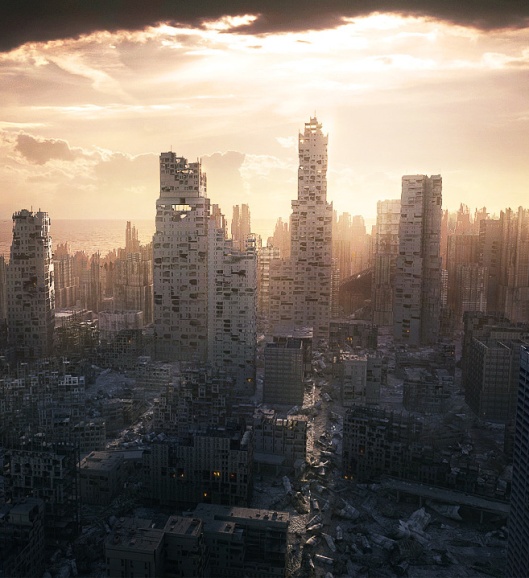

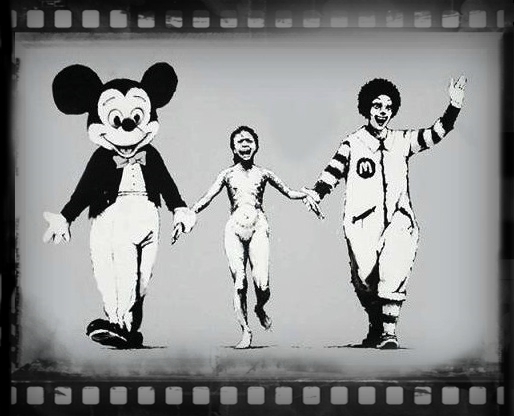





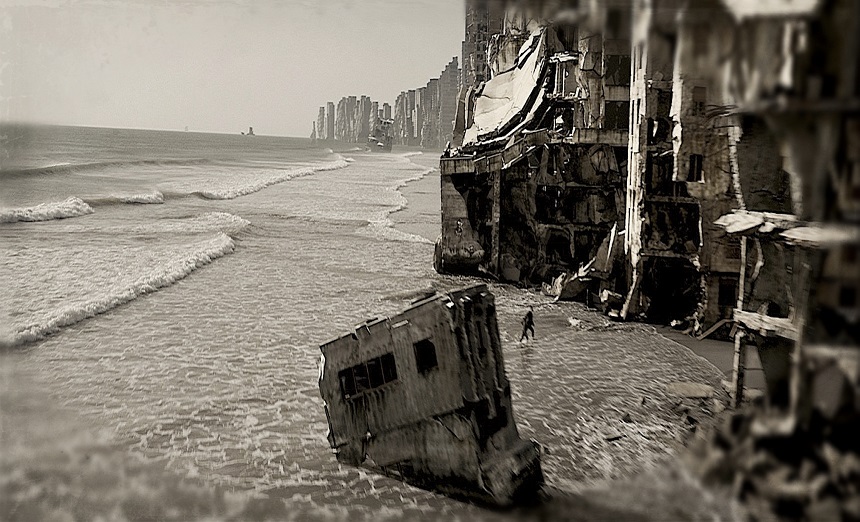


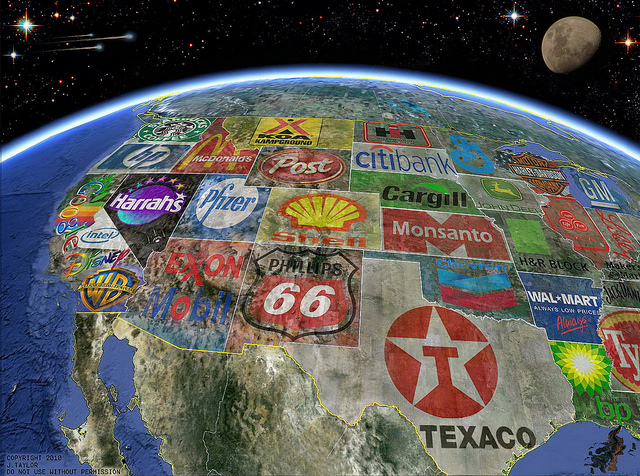

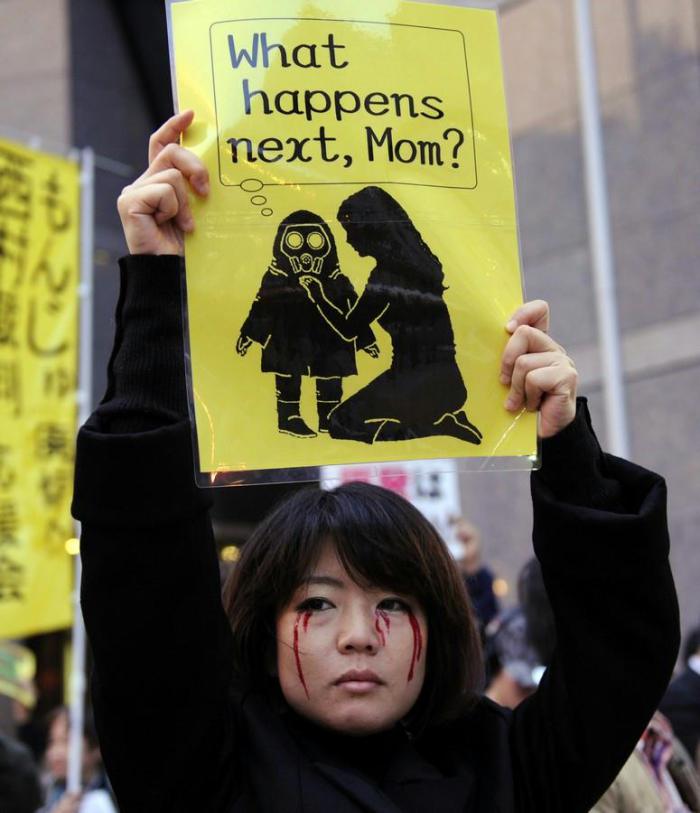

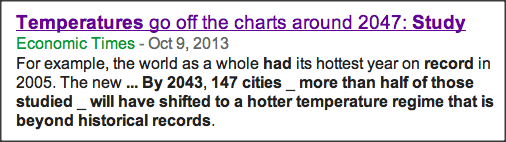
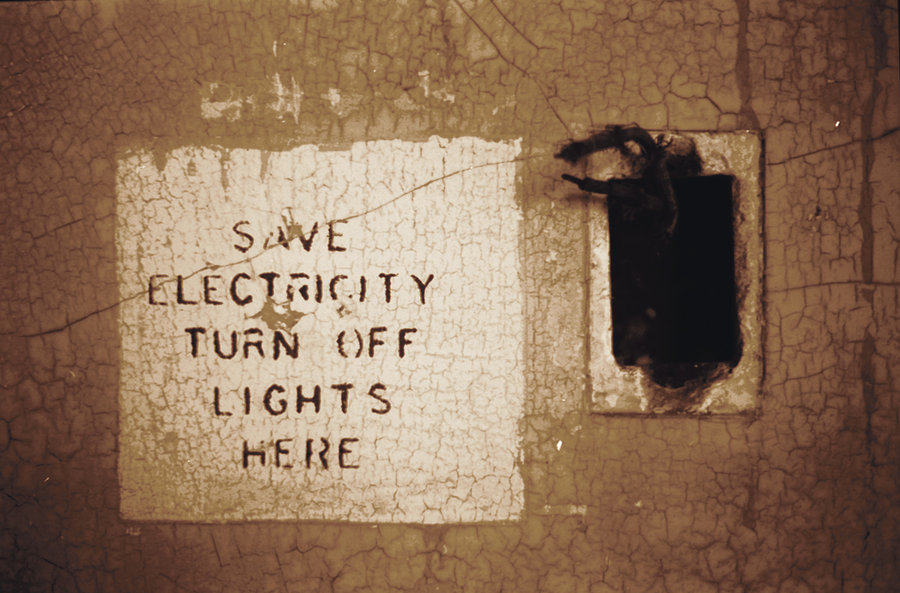


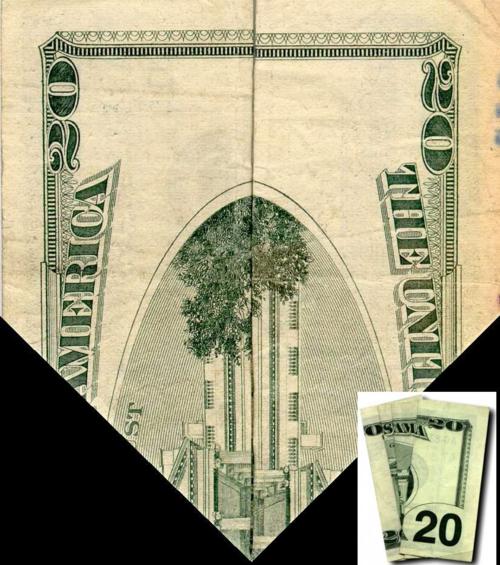
 Collapse of Industrial Civilization