Tomorrow is Thanksgiving, a holiday created from romanticized myths about grand and cordial feasts between pilgrims and the indigenous people whose lives, land, and culture would soon be exterminated from coast to coast. Truth be told, Thanksgiving sprang from the imaginative mind of Sarah Josepha Hale, an author and editor who campaigned for nearly two decades to make it a national holiday before winning over President Lincoln who made it official in 1863. Some historians believe Lincoln used the creation of Thanksgiving as propaganda during the Civil War to paint Northerners as the true founders of the nation whose cause in the war was virtuous and just. In her writings, Hale also pushed the delusional belief that the “United States government was founded without bloodshed.”
Today the holiday has become fully merged into the capitalist superstructure as a time to binge on turkey, mashed potatoes, stuffing, cranberry sauce and puddings just before camping outside consumerist temples for the true day of worship… Black Friday. Riots and mob violence are generally tolerated on Black Friday since it is the key event kicking off the holiday shopping season and driving up corporate profits. Protests and riots for social justice and equality are seen as threats to the capitalist status quo and are systematically undermined, quelled, and co-opted. As I explained in a previous post, the events in Ferguson dominating the headlines are rooted in our socio-economic system.
A few recent thoughts on Twitter about Ferguson and the state of the “civilized” world…
We could go into great detail about each of the above comments, supporting them with a multitude of facts and references, but I think they speak for themselves and summarize quite well the disintegrating social fabric in America and across the world. Compounding the problem of our sociopathic and sclerotic economic system are the environmental crises of climate change, ocean acidification, resource depletion, and overpopulation, none of which can be successfully dealt with unless we address the system that underlies them all, i.e. capitalism and its energy-intensive way of life. The facts tell us it’s much too late to do anything to save ourselves, but this hopeless mindset only serves to empower those at the top who continue to profit from this corrupt and self-destructive system. It’s past time to step outside our comfort zone and do something to try and save a piece of the web of life fast disappearing before our eyes.
The following poem by William S. Burroughs resonates with what has gone horribly wrong in America and perhaps what has always been wrong.
Another election cycle passes and the American people responded with the lowest voter turnout since WWII. The staged events of today’s political rallies will soon be composed solely of people paid off with corporate bribes to wave flags and chant slogans. As ever more corporate money floods into the faux democratic process, participation by the average citizenry has plummeted. Americans are now more disillusioned with the charade of “American democracy” than at any time in history:
Confidence in Congress as an institution is at 7%, the lowest measurement in history and lower than any other institution tested, including organized labor, banks and big business. Views of the honesty and ethics of members of Congress are at 8% on average, one percentage point above lobbyists, but one point below car salesmen… – link
We are also undoubtedly becoming more callous and insensitive to our fellow-man when a 90-year-old gentleman is arrested for feeding the homeless from a church kitchen. In fact, we’ve lost all our humanity and exchanged it for the almighty dollar. Neoliberal capitalism has permeated very aspect of social and civic life, creating a new epitaph for the demise of such a mean-spirited culture —‘death by dollars’.
You Are What You Eat
I just became aware of Dr. Suzanne de la Monte’s studies on the food industry’s use of sugar in all its products in order to fabricate a consumer “bliss point” for maximizing sales. Capitalist industrial civilization has bred a morbidly obese creature conditioned to overeat processed food spiked with sugar, fat, and salt. A high-fructose diet has undoubtedly turned the cognitive skills of many into mush. John Oliver recently used a clip from her work in his takedown of the sugar industry:
“De la Monte has done her research by feeding healthy rats the equivalent of a North American diet, complete with all the sugars and fat. All her rats ended up demented.” – from the documentary The Secrets of Sugar
The IPCC stated back in 2007 that emissions would have to peak in 2015 to avoid a rise of 2°C, but since that is not going to happen, they are putting their hopes in technology that could pull CO2 out of the atmosphere while conceding that such techniques are “uncertain” and “limited”. Mankind’s grave is already deep enough, yet we keep digging. Just as China’s coal consumption has registered a drop for the first time this century, India has announced it will pick up the slack by planning to double its coal production to meet the country’s soaring energy demand. Poland has rejected the IPCC target of zero emissions by 2100. In the U.S., new data has revealed that climate change has become the most politically divisive issue in the U.S.
According to energy expert Nate Hagens, modern-day carbon man’s metabolic energy consumption makes each of us a 30-ton primate. It appears the Pavlovian conditioning of modern man to energy dense fossil fuels and capitalist wealth have irrevocably hacked and rewired his brain’s reward system. The autopsy results for the age of the Anthropocene will read: “fossil fuel overdose” and “suicide by CO2”.
…In 2012 study, researchers in Singapore found that greenhouse gas emissions from hydropower reservoirs globally are likely greater than previously estimated, warning that “rapid hydropower development and increasing carbon emissions from hydroelectric reservoirs to the atmosphere should not be downplayed.”
Those researchers suggest all large reservoirs globally could emit up to 104 teragrams of methane annually. By comparison, NASA estimates that global methane emissions associated with burning fossil fuels totals between 80 and 120 teragrams annually…
The WWF(World Wildlife Fund) released its biennial ‘Living Planet Report’ which some on Twitter are calling the ‘Dead Planet Report’. The silence of mass extinction draws ever nearer…
The report writers, based on data kept by the Zoological Society of London, studied 10,380 populations of 3,038 species of amphibians, birds, fish, mammals and reptiles from 1970 to 2010. Over these four decades, the average decline of these vertebrate species was 52 per cent – all in less than two human generations.
Amongst freshwater species the population decline was a staggering 76 per cent, owing to habitat loss, land fragmentation, pollution and invasive species.
In the same period terrestrial species declined by 39 per cent through unsustainable land use and increased poaching, often spurred on by wildlife crime syndicates.
Marine species declined also by 39 per cent, to include large migratory seabirds, many shark species and also sea turtles.
A major contributory factor to marine loss of life was through by catching (accidentally catching, in certain fish net sizes, species which were of no market value and then casting these dead fish overboard), illegal fishing and overfishing of the same fishing grounds.
Currently we need a 50 per cent bigger Earth to allow the regeneration of the natural resources we consume…
…By 2050, we will have an extra 2.4 billion people in our world, with urban populations increasing from 3.6 billion in 2011 to 6.3 billion. In 1970, there were only two megacities (over 10 million people) – New York and Tokyo; in 2014 there are 28 such cities – 16 in Asia, three each in Europe and Africa, four in Latin America and two in North America, all totalling 12 per cent of the world’s urban population.
The United Nations (UN) predicts that in 2025, there will be 37 megacities with eight new ones in Asia. Also in the pipeline are meta-cities – conurbations of over 20 million people – through the amalgamation of megacities…
…The report interestingly mentions that the diversity of human languages in our world is strongly correlated to areas of high plant diversity. Some linguists have predicted that 90 per cent of the world’s languages will expire by the end of this century…
Here is an interesting graph created by Paul Chefurka which shows that the combined biomass of humans with their farm animals exceeds the natural carrying capacity of the earth sevenfold:
In the graphic, the “wild animal” biomass doesn’t include insects, bacteria, or marine organisms.
I used three data sources to develop the chart: a paper by world-respected ecological scientist Vaclav Smil, called “Harvesting the Biosphere”, linked below; world population estimates from the Wikipedia articleof the same name; and the UN’s Medium Fertility variant for the human population in 2050 (9.6 billion).
The definition I used for Global Carrying Capacity is, “The biomass the planet can support without the assistance of human technology or fossil fuels.” The impact of human activity has gradually eroded the Earth’s carrying capacity over time, which is why I show the red dotted line sloping down to the right. The degree of erosion is very hard to estimate. My guess is that we may have lost around 25% by this point, some of which would of course be naturally regenerated over time in the absence of human activity. Any biomass above that dotted line has to be supported by human technology and energy supplies (which at this point are mostly from fossil fuels).
The conclusion is that we have been living in the midst of an accelerating Global Mass Extinction Event for over 100 years already. Unfortunately we’ve been too fixated on human issues like economics and politics to even notice, let alone realize what it means. Those who did realize the significance, both to wildlife and the human species, have been powerless to act in the face of economics and politics.
Paul gives the following further explanation for the graph:
The definition one uses for “carrying capacity” is so loose as to make it quite arbitrary. Here’s the definition I used: “The global carrying capacity is the total biomass of the organisms under consideration that the planet can support without the assistance of technology or fossil fuels.”
Accordingly, I estimated the carrying capacity in this case as being about the same as the world’s wild animal biomass in 10,000 BCE, with the assumption that the unassisted carrying capacity of the world would have been fully utilized at that point. I estimated the wild animal biomass in 10,000 BCE as being somewhat less than the combined wild and domestic animal biomass in 1900, per Smil. I made it lower in order to account for the technological intensification of farming already well under way by that time.
The slope of the carrying capacity line is arbitrary, because it’s impossible to determine how much we have actually eroded the world’s unassisted carrying capacity. We just know that we have. I chose the slope to correspond to my belief that we’ve eroded it by about 25% at this point. The actual slope is therefore somewhat editorial.
The Dalai Lama says, “Affection, a sense of community and a sense of concern for others are not some kind of luxury. They’re about the survival of humanity,” but the socio-economic system that rules the world is characterized by hyper-individualism and self-interest devoid of moral constraints. A system that enshrines greed and mocks equity and the public good will never be able to find a solution to the tragedy of privatizing the commons.
All lights are about to go out. No more electricity. All forms of transportation are about to stop, and the planet Earth will soon have a crust of skulls and bones and dead machinery. And nobody can do a thing about it. It’s too late in the game. Don’t spoil the party, but here’s the truth: We have squandered our planet’s resources, including air and water, as though there were no tomorrow, so now there isn’t going to be one.
~ Kurt Vonnegut
Citizens of the First World live in ignorance of their country’s violent imperialistic history. As Joe Bageant said, “Americans are cultivated like mushrooms from birth to death, kept in the dark and fed horseshit.” Nonetheless, the average pleb in America should realize by now that they too will be treated no different from those in the Third World exploited by empire. As illustrated by a recent study, U.S. citizens are mere cardboard cutouts in a façade of democracy with essentially no voice in their government’s actions. The wealthy elite call the shots, determining crucial government policy and the law of the land. When all the propaganda and myths are swept aside, America is revealed to be nothing more than a heartless oligarchy; you and I are simply marketing statistics and consumers, pawns and cogs within capitalist industrial civilization.
Empires weave their own self-serving and grandiose history while the vanquished are left to struggle for survival in the wreckage. A case in point is America’s current immigration crisis and its superficial analysis by the mainstream media which serves only to stoke racial fears amongst the ignorant masses while ignoring uncomfortable and disturbing root causes. The harsh reality is that America has a long history of carrying out covert and overt operations as well as instituting economic policies designed to exploit South and Central America, not to mention much of the rest of the world. One recent example was the 2009 coup of populist left-wing Honduran president Manuel Zelaya by elite military forces trained at the School of the Americas in Fort Benning, Georgia. Consider the following timeline of American intervention in Latin America since the 1950’s:
‘Free Trade’ for Corporations and Misery for Local Populations
Now consider the trade deals of NAFTA, CAFTA, and other “free trade” globalization schemes which have flooded our southern neighbors with cheap, subsidized produce from U.S. Big AG, decimating small farms and pushing millions off their land and into extreme destitution:
As part of neoliberal restructuring, Mexico would have to re-orientate its economy to the export rather than the domestic market. Mexico was already heavily dependent on trade with the US, but post-1982, Mexico’s dependency has become almost akin to that of a colony. US agricultural products – most notably corn – subsidised by American taxpayers now flooded the Mexican market, undercutting small domestic producers. For Mexican farmers the consequences have been ruinous and have devastated domestic production, a process which continues under the recent government of the National Action Party (PAN)…
…From the implementation of NAFTA in 1994 to 2000, 2 million farmers abandoned their lands. Fewer Mexicans now have access to health care and education than prior to 1980 as public spending has been cut as a result of ‘reforms’. By 2005 50 percent of the population had fallen below the poverty line, pushing some 3.3 million children under the age of 14 into work. Following the government’s agreement to exchange investment rights and trade barriers for loans and financial aid, Mexicans saw huge changes in their circumstances, such that by 1988 the cost of living had risen by 90 percent, while per capita income had fallen by some 50 percent. With the abandonment of social programmes, which alleviated at least some of the worst hardships, many communities in Mexico, with little or almost no help from the state, have had to fend for themselves…
…Much farming has since been replaced by agribusiness and large-scale meat farms, mostly foreign-owned. In recent years, widespread unemployment and the inability of farmers to gain an income from the land have meant that rural towns are being emptied of their inhabitants, leading to a tremendous population drain to the cities and the United States…Impoverished Mexican workers – employed primarily because they are cheaper to exploit than their US and Canadian counterparts – work to produce commodities which have no tangible benefit for their own society…
…The improved leverage of US power over Mexico’s economy is not solely an issue of having a workforce so ‘flexible’ that much of it is forced into sweatshop labour. The maquiladora belt functions effectively as an economic colony, with the local Mexican police, paid for by the Mexican taxpayer, providing the ‘security’ necessary for factories to operate unhindered by nuisance unions and human rights activists.
One of Mexico’s chief exports, then, is labour. Just as profits and goods leave the country, significant amounts of labour time are not reflected in the Mexican economy. Corporations benefit enormously from this win-win situation resulting in the continuing breakdown of society, a state of affairs reminiscent of a colonial economy, albeit without foreign control of what in any case is a pliant government. As a result, Mexican workers in the maquiladoras, notes Delgado-Wise, are little more than ‘manpower for foreign capital’.
While many of the poor seek work in factories owned by foreign companies or quit the countryside for work in the expanding metropolises, others cross into the US. If significant swathes of the arable land of northern Mexico are emptying, this is a trend connected intimately with free trade… – link
Militarizing the ‘Drug War’ and Arming Fascist Governments
So after destroying the means of survival for so many in Latin America, the poor and destitute turn to whatever means necessary in order to stay alive — crime, gangs, and the drug trade. The U.S. has reacted to this lawlessness by militarizing the “war on drugs”, providing even more weaponry and support to fascist governments who can then brutally squash any grassroots social movements which challenge the neoliberal capitalist order. It’s a vicious feedback loop in which the U.S. is forced to combat the very social disintegration of Latin America that U.S. economic policy has created. Thus, a fourth factor in America’s immigration crisis is the neocon militarization of the drug war and support of fascist governments aligned with U.S. corporate interests:
Narcotrafficking, like neoliberal capitalism, it seems, thrives in areas of severe poverty and unemployment where the civilian population is economically and politically disempowered and where state authorities are not powerful or willing enough to prevent the violent conflicts that narcotrafficking has produced. Additionally, for those who now have few opportunities in the traditional and legal sectors of the economy, narcotrafficking proves to be the only lucrative alternative…
…Civil society found itself vulnerable, impoverished and unable to rebuild the damaged and broken social services and infrastructure demolished by structural adjustment and neoliberal policy. Furthermore, the power and influence of the state have weakened in the last two and a half decades to the extent that in some areas drug traffickers operate quite freely and are immune to prosecution…
…With the authorities weakened, the line between the state and the narcotics industry is becoming increasingly blurred. A United Nations report estimated that between 50 and 60 percent of Mexican municipal government offices have been ‘captured or feudalised’ and coopted by narcotrafficking organisations. Mexican intelligence estimates that 62 percent of the Mexican police are presently under the control of the narco trade. According to rank and effectiveness, members of the police forces can receive anywhere between 5 to 70 thousand pesos monthly from cartels, a dramatic net increase on their state salaries. Of the 2.9 million arms given to the Mexican police forces, 57 percent are used in illicit activities.
Human Rights Watch reports that the military, in its purported struggle against the narcos, commits serious abuses against the civilian population, exposing its role rather as an institution of internal colonisation than one protecting society from violence. The same Mexican soldiers – potentially a force which could combat trafficking – are now deserting on a mass scale. Poor working conditions and pay led 217,000 Mexican soldiers to desert between 1993 and 2009. Among them, many leave the army to join the cartels and take their arms with them. One of the most powerful factions, the mercenary army, Los Zetas, was formed by deserters from an elite anti-drug squad of the Mexican army, taking with them their arms and training. Their sophisticated and professional tactics were developed, ironically, from training in the US by the DEA, the FBI and the US military in the war on drugs…
…Historian Miguel Tinker Salas has noted that in the case of Plan Colombia, military spending was intended to crush the strength of rural insurgents and guerrillas to offset the possibility of a popular rebellion, particularly as Colombia had among the worst levels of inequality in Latin America. In Mexico, maintaining a status quo which sees unprecedented levels of inequality and widespread poverty – exacerbated since the 1980s – is likely to involve the increasing use of force in order to quash the threat to the established order posed by social movements and popular revolt, all the more real as Mexico inches closer to collapse. Increasing attacks on organisers and activists of the anti-capitalist Zapatista initiative, La otra campaña, in Chiapas and the prolonged assault on inhabitants of Oaxaca in 2006 remind us that the state will always use military might to repress challenges to its authority and to the socio-economic order. US training of the Mexican military should be viewed in this light, bearing in mind that imperialism has two arms in Latin America – one military, the other economic.
Increasing poverty levels hardly seem to be a top priority for the leaders of the NAFTA signatories. For it is a state of affairs which benefits elites who have no interest in seeing ordinary Mexicans rise from poverty. Vast gaps between rich and poor may seem inexplicably cruel to outside observers, but within is a logic of which NAFTA was a clear expression. Rendering the population more desperate, reducing services and public spending, aggravating society’s vulnerability, rewards the powerful with greater political and economic dominance…– link
Climate Change and the Coffee Rust Fungus
A fourth factor not discussed much is how climate change is wreaking havoc on the major South American crop of coffee which many rely upon for their livelihood and is the second most traded commodity in the world after oil. Coffee rust, known as “roya” in Spanish, first appeared in the region in the 1970s when climate change began to cause higher temperatures and excess rainfall favorable to the moisture-loving fungus. It has since mutated and spread throughout the region. Resistant coffee hybrids that scientists have created can’t keep up with the fast mutating rust fungus which seems to be growing stronger as climate change accelerates. For the past two years, the rust fungus called Hemileia vastatrix has destroyed 30% or more of the coffee harvest in Central America where coffee production employes one-third or more of the population in Guatemala, Honduras and Nicaragua :
All the coffee-producing countries of Central America have seen drops in production of 30% or more in each of the past two years. Some, such as Guatemala, report rising cases of chronic malnutrition in coffee workers’ children. Last week Oxfam cited coffee among other crops in a report that warned climate change was putting back the global fight against hunger “by decades”.
Nicaragua’s problem is particularly acute. Along with neighbouring Honduras, and Burma, it is already one of the three countries most affected by climate change, according to the 2013 Global Climate Risk Index. Nearly a third of its working population, about 750,000 people, depend on coffee directly or indirectly for a living. Coffee provides 20% of GDP. The Nicaraguan government is deeply worried: it has predicted that, because of falling rainfall and rising temperatures, by 2050 80% of its current coffee growing areas will no longer be usable.
This will mean disaster…
Warmer temperatures are also threatening a genetically diverse type of coffee called Arabica which is considered essential to the industry and comprises 70% of global coffee production. According to a recent study, by 2080 global warming will make two-thirds of today’s farms too hot to grow Arabica.
The three countries making up the largest percentage of child migrants that have been flooding the U.S. in recent times are Guatemala, Honduras, and El Salvador. These three countries also happen to be closely allied with the U.S. and its neo-liberal economic model. Nicaragua is an exception to its neighbors. Despite suffering similar losses to its coffee crop from rust fingus, Nicaraguan farmers did not fare as badly because they were supported by the programs of their socialist government, an anathema to America’s ruling oligarchs and neoliberal politicians:
In sharp contrast, Nicaragua, an equally poor country that receives far less U.S. aid because of our government’s hostility toward the Sandinistas, sends far fewer children across the U.S. border. Why? Since coming back into power in 2006, the Sandinistas have enacted strong programs designed to allow the poor to become self-sufficient.
The Immigration Issue: Red Meat for the American Masses
The only way to actually fix the immigration crisis is to address the root causes I have identified above. The response to date from the U.S. government has been to request billions in detention center and deportation funds, launch a PR campaign in the media of Central American countries to dissuade illegal immigration, and increase spending in law enforcement aid through CARSI (Central America Regional Security Initiative). Meanwhile, right-wing politicians fan the flames of racism and xenophobia with calls for militarizing the border to stop the hoards of swarthy barbarians at America’s doorstep. In reality, the current deteriorating social conditions in Central and South America are a direct result of the American corporatocracy and its rapacious economic system as well as anthropogenic climate disruption. The child migrants flooding across America’s border are, to a great degree, victims of U.S. foreign policy and climate change.
For a glimpse into the life of someone who is actually doing the dangerous and solitary work of true investigative reporting, exposing the dark underbelly of Western imperialism and global capitalism, please read the recent blog post of Andre Vltchek and support his work.
Chomsky and Vltchek help us to realize that an array of powerful forces are using their wealth and influence to prevent us from seeing. We are allowed to see only as much as the gatekeepers of the public mind want us to see, and yet we are not relieved from using our capacities for sight. Reading Chomsky and Vltchek removes the scales from our eyes, at least temporarily, as they have managed to elude these gatekeepers, but at considerable risk, with a display of moral courage, civic responsibility, and extraordinary intellectual energy. I learn a lesson in civics from their vigilance: as citizens of constitutional democracies we retain the freedom, and hence possess a heavy responsibility to see for ourselves what is being done in our name…
It is late at night and you cannot sleep. Ebrie Lagoon is right behind the window of your hotel, but it is hardly visible at this hour. You are in Abidjan, Côte d’Ivoire, West Africa.
You are here because you were informed that the President of Ukraine, Petro Poroshenko, also known at ‘Chocolate King’, has been getting his cocoa from the fields of this country. You are also convinced by several of your sources, based all over the world, that his confectionary empire,Roshen, is receiving its basic product from some of the most terrible plantations in Côte d’Ivoire that are still using child labor. You decided to come here, to investigate…
A History of Cover-Ups and Ineptitude Leads to Catastrophe
One of the most costly, self-inflicted wounds engineered by techno-capitalist man is the never-ending Fukushima nuclear disaster. The groundwork for epic failure at the Fukushima Daiichi nuclear power plant began in the 1960’s when TEPCO bulldozed 25 meters off of a 35-meter-high hill in order to facilitate the delivery and set up of the plant’s large equipment, which was delivered by boat, as well as to provide easier and cheaper access to seawater used as a coolant pumped through the reactors. TEPCO then dug even further downward another 14 feet to construct the basement where emergency diesel generators would be installed. Decades later a tsunami would easily flood this area, knocking out the emergency electrical back-up generator and making nuclear meltdown a certainty.
In the early 1970’s, several memos circulated within the U.S. Atomic Energy Commission (AEC) expressing concern over design flaws of the Mark I nuclear reactors made by General Electric, the same type installed at the Fukushima No. 1 nuclear plant. Recommendations were made to stop licensing reactors with these faulty designs and the top safety official at the AEC, Jospeh Hendrie, agreed with them but rejected their implementation on the grounds that it could do irreparable damage to the nuclear industry:
“..the acceptance of pressure suppression containment concepts by all elements in the nuclear field, including Regulatory and the ACRS, is firmly embedded in the conventional wisdom. Reversal of this beloved policy, particularly at this time, could well be the end of nuclear power. It would throw into question the continued operation of licensed plants, would make unlicensable the G.E. and Westinghouse ice condensor plants now in review, and would generally create more turmoil than I can stand thinking about.”
The last line of defense in preventing the ionizing alpha, beta and gamma radiation and radioisotopes inside melting fuel rods from spewing out into the environment is the containment vessel. The poor design of the now ruptured Mark 1 containment vessel in Fukushima is most certainly contributing to the ongoing disaster there. The U.S. apparently has 23 reactors just like the ones that melted down in Fukushima as well as the risky storage of spent fuel rods next to the reactor building itself.
When the Tōhokutsunami struck at Fukushima, reports describe chaos and incompetency as workers had to bring protective gear and manuals from distant buildings as well as borrow equipment from contractors. The failure of the Japanese government and TEPCO to imagine such a catastrophic event and guard against it is highlighted by the fact that this exact scenario was predicted in a Japanese magna comic book.
Years went by with only a few lone voices questioning the safety of the Fukushima nuclear plant such as former engineer Toshio Kimura who worked there:
I asked my boss back in the late ’90s what would happen if a tsunami hit the Fukushima reactors. I said, “Surely a meltdown will happen.” He said, “Kimura, you are right,” but it was made clear that the issue of a big tsunami was taboo. A few years later I quit the company because of its culture of cover-ups…
…When officials from the nuclear safety agency or the ministry came to the plant for inspections, they were entertained with drinks the night before. Then they would inspect the plant and give it a hundred per cent pass mark. Then on the way home the inspectors were given beer and snacks and taxi vouchers.
Tokyo has been able to essentially buy the support, or at least the silent acquiescence, of communities by showering them with generous subsidies, payouts and jobs. In 2009 alone, Tokyo gave $1.15 billion for public works projects to communities that have electric plants, according to the Ministry of Economy, Trade and Industry. Experts say the majority of that money goes to communities near nuclear plants.
And that is just the tip of the iceberg, experts say, as the communities also receive a host of subsidies, property and income tax revenues, compensation to individuals and even “anonymous” donations to local treasuries that are widely believed to come from plant operators.
Unquestionably, the aid has enriched rural communities that were rapidly losing jobs and people to the cities. With no substantial reserves of oil or coal, Japan relies on nuclear power for the energy needed to drive its economic machine. But critics contend that the largess has also made communities dependent on central government spending — and thus unwilling to rock the boat by pushing for robust safety measures.
In a process that critics have likened to drug addiction, the flow of easy money and higher-paying jobs quickly replaces the communities’ original economic basis, usually farming or fishing.
The mainstream media has long been part of the press-club system, which funnels information from official Japan to the public. Critics say the system locks the country’s most influential journalists into a symbiotic relationship with their sources, and discourages them from investigation or independent lines of analysis…
…Japan’s power-supply industry, collectively, is Japan’s biggest advertiser, spending ¥88 billion (more than $1 billion) a year, according to the Nikkei Advertising Research Institute. Tepco’s ¥24.4 billion alone is roughly half what a global firm as large as Toyota spends in a year.
Members of the Liberal Democratic Party, which has ruled Japan since 1955 except for a year in the 1990s and for a three-year period ending in 2012, have been rewarded for their pro-nuclear stance with campaign donations from the ten giant electrical utilities that control around 96 percent of the nation’s power supply.
The largest of these, the Tokyo Electric Power Company or Tepco, formally ended its direct corporate donations in 1974. But it systematically encouraged “voluntary” donations by company executives and managers to a fund-raising entity created by the ruling party, according to a 2011 investigation by Asahi. At least 448 Tepco executives donated roughly $777,000 in total to the entity between 1995 and 2009, according to documents obtained by Asahi and shared with the Center.
Roughly 60 percent of Tepco’s executives participated, a rate similar to that at other utilities. Together, they funded $2.5 million of the party’s expenses, based on today’s exchange rates. A Tepco spokesman told Asahi that the donations were “based on the judgment of the individual and the company is not involved. We do not encourage such donations.”
Tepco’s influence has also been enhanced by its enthusiastic participation in revolving door-employment practices similar to those involving bureaucrats and companies in Washington, D.C.
A METI report in 2011, prepared at the insistence of nuclear opponents in Japan’s tiny Communist Party, said for example that between 1960 and 2011, Tepco hired 68 high-level government officials. From 1980 to late 2011, the report said, four former top-level bureaucrats from METI’s own Agency for Natural Resources and Energy became vice presidents at other electric utilities. The practice is known here by the amusing term, amakudari, for appointees who “descended from heaven.”
Tepco officials also regularly move into key regulatory positions, part of a migration known as ama-agari, or “ascent to heaven” that has involved dozens of top utility officials. More than 100 such utility executives between 2001 and 2011 were able to keep drawing an industry paycheck while also working part-time for the government, a practice that is legal here, according to a former member of the Japanese Diet Lower House Economy and Industry Committee, who spoke on background. An official working in the Nuclear Regulation Authority’s research division, in an interview, said on condition of anonymity that the ama-agari system is “like having cops and thieves working in the same police station.”
Perhaps the most significant instance of ama-agari was the Liberal Democratic Party’s appointment in 1998 of Tokio Kano, a longtime Tepco executive, as chairman of the parliamentary committee that oversees METI and as the parliamentary secretary of science and technology. Both are posts crucial to the nuclear energy industry, and Kano used them to advance legislation enabling plutonium-based fuel to be burned in some standard reactors — not just breeders. He also pushed through a law requiring that all spent nuclear fuel be sent to Rokkasho or similar Japanese plants.
Corporate Fascism in Japan
Embarrassed by the constant revelations of regulatory and governmental capture by industry, the Japanese government recently passed a state secrets law meant to intimidate and jail those who cast a prying eye into Japan’s corrupt corporatocracy. After the Japanese government restarted its idled nuclear plants last year, those antagonistic towards the nuclear industry were secretly put on a watch list. The ominous experiences of independent investigative reporter Mako Oshidori with Japan’s nuclear industrial complex are reminiscent of the movie Silkwood. She discovered that she was on the government’s watch list and has now noticed an individual closely tracking her every move:
…The list included people with power in the opposition parties, such as the former prime minister Naoto Kan and the politician Ishiro Ozawa, and I was told that my name, Mako Oshidori, was listed alongside these names. A researcher who was given the list and told not to approach anybody on it was friendly with me and told me the list included my name. Soon after that a mysterious man began to follow me. This man appeared to be a member of Public Security Intelligence Agency in the Cabinet Office, which investigates various things. One of my hobbies is taking a candid shot, and I will show you the successful candid shot of this man.
Just as you see here, there was a time period when someone would always be near me, trying to eavesdrop on my conversation with people. As I am a professional entertainer, whoever I am talking to would ask me if the person was my manager. I would say that the person must be one of my groupies, as I have never met the person. Sometimes I would go to Fukushima Prefecture to interview different mothers. We would have meals together and talk somewhere, and when the mothers are leaving the premise to go home, an agent from the Public Security Intelligence Agency would take a photo of each mother and make a note of the license plate number of each car. Afraid of having their photos taken or the license plate numbers recorded, some Fukushima mothers would refused to be interviewed, or they would even refuse to have their stories published. An ex-agent who is knowledgeable about the work of the Public Security Intelligence Agency said that when you are visibly followed, that was meant to intimidate you. If there was one person visible, then there would be ten more. I think that is analogous to cockroaches. So, when you do a little serious investigation about the nuclear accident, you are under various pressure and it makes it more difficult to interview people. There are actually other journalists from major newspapers and television stations, other than me, who have done a lot of investigation about the nuclear accident, but the information doesn’t readily come out. That’s because the pressure is placed on them not to release the information. What I am going to tell you now might surprise you, but the Japanese people are just as surprised when I tell them the same information as it’s something they have never heard of, read in the newspaper, or seen on TV…
Despite the great tragedies with nuclear weaponry and technology that Japan has experienced with Hiroshima and Nagasaki and now Fukushima, these instruments of mayhem and death are ironically becoming a key centerpiece in the Japanese economy with the current right-wing government banking on it as an export cash cow:
Exports of nuclear components and technology, as well as conventional arms, are potentially key elements of “Abenomics” and much is riding on the outcome. In 2013, Abe concluded Japan’s first nuclear reactor export agreement with Turkey for $22 billion and others are pending with Saudi Arabia and the United Arab Emirates, while the prime minister has also lobbied governments in Central Europe, Vietnam and Indonesia. This is a remarkable turnaround from 2011 when the prospects for post-Fukushima Japan relying on nuclear energy, let alone exporting it, looked unlikely.
The seeds for Japan’s nuclear hara-kiri were planted back in the early 1950’s when the American government hatched a propaganda campaign of developing an “atoms for peace” mission in Japan to foster pro-nuclear sentiment and help rebuild their economy using such technology.
The Center for Public Integrity reports that Japan is leading the charge for a new nuclear industry of plutonium-based nuclear fuel with grave implications for spreading this technology and material all over the world. By October of this year, Japan will have finished a $22-billion plutonium factory in Rokkasho which will be able to produce enough plutonium per year to make 2,600 bombs. It appears Japan is lurching towards militarism in an age of end-stage capitalism:
The US-Japan Security Treaty of 1960 stipulates that an attack on Japan will be regarded as an attack on the United States. Prime Minister Abe is seeking to transform Japan’s constitution to permit engagement of the Japanese armed forces in aggressive wars. But it is difficult to imagine a resurgent military posture by Japan without tacit encouragement from Washington.
The highest stage of monopoly capitalism is fascism. The 2008 global economic crisis of capitalism, still unresolved, is forcing ill-advised and counterproductive “austerity measures” on decaying capitalist societies throughout Europe and in Japan, where Prime Minister Abe is restructuring the economy into the very pro-market system which is producing riots throughout Western Europe, as living standards deteriorate drastically, and the income inequality gap becomes an abyss.
A Nuclear Bomb Explosion Versus A Nuclear Meltdown
Some ask why Hiroshima and Nagasaki were rebuilt and repopulated so soon after a nuclear bomb blast, yet Fukushima and Chernobyl remain unsafe to inhabit into the indefinite future. The answer lies in the vast difference of irradiating potential between a nuclear bomb and a nuclear reactor.
Nuclear bombs are designed to cause maximum concussive damage within the shortest amount of time by creating as much energy as possible from a runaway nuclear fission reaction. Nuclear reactors on the other hand are designed to create a low-level of energy from a very controlled and sustained nuclear fission reaction. The radioactive isotopes from the fission product mixture of a nuclear bomb are relatively short-lived (<50 years) whereas those from the meltdown of a nuclear reactor are long-lived and must be stored away safely for tens of thousands of years (essentially forever). Approximate half-lives of some of the isotopes in the spent nuclear fuel are:
The nuclear bombs used in World War II were detonated roughly 2,000 feet above ground and their radioisotopes were carried by the wind and dispersed over a very large area. The nuclear bomb called “Little Boy” used over Hiroshima contained only 140 pounds of fissionable material (Uranium-235) and “Fat Man” used over Nagasaki contained just 14 pounds of Plutonium-239. These are minute amounts of radioisotopes when compared to the 180 tons of nuclear fuel at Chernobyl and the staggering 1,600 tons at Fukushima. Explosions and meltdowns at nuclear reactors occur at ground level, creating more radioactive isotopes due to neutron activation with the soils while spreading their radiation across the planet, year after year after year. Today the background radiation in Hiroshima and Nagasaki is said to be the same as the global average anywhere on Earth. Ground zero at Chernobyl and Fukushima won’t be habitable for 20,000 years or longer. Nuclear bombs kill hundreds of thousands of people instantly while a nuclear reactor meltdown kills people over years, decades, and generations.
“I must say our tank assembly was slipshod work.” ~ TEPCO worker
The “experts” estimate that it will take 40 years to clean up the Fukushima mess. That would put us at the year 2054, a date that many estimate humans may well be extinct or nearly extinct. By then, ocean acidification will have doubled and the global average temperature will have risen by at least 4 to 6.5°C. The world’s oceans will have swelled 2 feet higher. I’m glad to know that the “experts” are taking into account our radically changing planet:
Nuclear plants were originally given a license to operate for 40 years, and in the late 1990s, the NRC began accepting applications to extend those licenses for an additional 20 years. While it’s not clear how many current plants will still be operating in 2100, most facilities store their nuclear waste on-site, where it can continue to emit radiation for thousands of years. There is currently no long-term national storage site for spent nuclear fuel in the U.S., as Congress cut the funding to build such a facility at Nevada’s Yucca Mountain in 2011. While there are no near-term plans to remove nuclear waste from the coastal plants threatened by rising seas, “the expectation is that [waste] won’t remain on-site,” said NRC Senior Public Affairs Officer Roger Hannah.
Despite the increased risk of flooding due to rising sea levels, some plant operators have not factored this into their long-term plans. In 2010, when Florida Power and Light Company applied for a license to build two additional reactors at the Turkey Point Nuclear Generating Station in Homestead, Florida, the NRC asked the plant’s owners to explain “how potential sea-level rise due to potential future climate change is accounted for” in their plans, NRC documents show. The company declined to discuss climate change in its analysis, and used a projection that assumed a constant sea level rise of just 1 foot per century, which is 5.6 feet lower than NOAA’s worst-case projection for 2100.
The risks to the ocean, in particular, are unprecedented because there is good reason to believe that melted fuel residing in, or below, the reactor basements is in direct contact with an underground river running through the site (Nagata, 2013).
A German study modelling the effects of an uncontained core meltdown suggests the Pacific Ocean is imperiled. The “German Risk Study, Phase B” found that a core meltdown accident could result in complete failures of all structural containment, causing melted fuel to exit the reactor foundation within five days (cited in Bayer, Tromm, & Al-Omari 1989). Moreover, the study found that even in the event of an intact building foundation, passing groundwater would be in direct contact with fuel, causing leaching of fission products. Strontium leaches slower than cesium. A follow-up German study, “Dispersion of Radionuclides and Radiation Exposure after Leaching by Groundwater of a Solidified Core-Concrete Melt,” predicted that strontium contamination levels would rise exponentially years after a full melt-through located adjacent to a river (Bayer, Tromm, & Al-Omari, 1989).
The study predicted concentrations of Strontium-90 in river water would spike relatively suddenly, but maintain extraordinarily high levels of contamination for years. Strontium bio-accumulates in the human body, including the brain, and is a known genotoxin. The study’s experimental conditions are roughly similar to Daiichi’s site conditions and strontium levels have been spiking there since the summer of 2013. TEPCO just reported that strontium levels in reactor basement water ranged from 40 million to 500 million becquerels per liter (“TEPCO to Improve,” 2014).
David Cay Johnston is, as he states, not a socialist, but a capitalist who believes in fair and competitive markets and integrity. My blog concentrates quite a bit on environmental issues and David only passingly mentions the deregulation and rolling back of environmental laws in the interview below, but he has been writing about inequality since the 1960’s and does a great job of describing the “governmental capture” by multinational corporations. An overwhelming proportion of environmental destruction is being caused by these mammoth corporations that are literally a state within a state, so it’s important to make the connection between inequality/political disenfranchisement and the destruction of the environment driven by a “business aristocracy” which has usurped the institutions of society. There can be no social, environmental, and climate justice if there is no government to serve the people. Of particular interest is the interview with Steve Coll and the power that ExxonMobile wields. Three notable examples of government acting as an insurance agency for corporations while leaving a mess for the common people to deal with are the BP oil spill, TEPCO’s Fukushima disaster, and the mortgage crisis created by the Too-Big-To-Fail Banks.
Government rules and policies have been put in place to create the huge wealth gap in America:
– political economy, an amplifying feedback loop where wealth begets access to the rules in politics which begets changes in the rules which reinforce wealth.
– 45 years ago the media was staffed by blue-collar intellectuals. TV news media is now filled with people from wealthy households whose life experience tells them that things are just fine in the world. We’re not hearing about those exploiting the system for their benefit. Very little coverage of poverty as well. The U.S. has the highest % of children who go to bed hungry of any modern country.
– The most important period of determining your lifetime health and well-being is from conception to the first 6 months of life. Little to nonexistent programs and support for mothers and newborn babies in America. Just as the U.S. is neglecting its infrastructure by not maintaining and investing in it, we are also stealing from the future by not nurturing and providing proper care for small children. There will be a price and it will be very high.
– U.S. has been living under Reaganism since 1981 in which we worship money and our measure of the country is money. The purposes of our country were written down for us in the preamble of the Constitution: justice, the general Welfare, common defense, domestic tranquility, liberties. Nothing in the preamble talks about getting rich. That’s a byproduct of these other things, but we have gotten a distorted view of what’s happening and now have 33 years of evidence that Reaganism has made the rich richer at the expense of the 90%. We are mining the 90% to benefit the super-rich rather than creating an economy that benefits everyone.
– The number one driver of this crooked system is campaign finance. There are over 100,000 people in this country whose job it is to mine the public treasury or the rules for their benefit. This corrupt system has to be changed.
– The way we think about this country and its society needs to change. The founders actually wrote a great deal about their concerns over inequality. John Adams, the second President, wrote that his fear was that a business aristocracy would arise to destroy the country, making workers mere wage earners instead of craftsmen owning their own tools. These wage earners, not being truly independent, would be manipulated into voting for policies that would benefit the business aristocracy and we would lose both our liberties and democracy. Adam Smith, in The Theory of Moral Sentiments, talks about inequality being corrosive to the very fabric of society and says that “the greatest corruption of our moral sentiments is the tendency to almost worship the rich and to hold in bad regard people who are poor.” Our politicians reflect this even though many of them will tell you at any moment how religious they are. They obviously have not studied their religious text because if they did they would know that, in the case of the Christians for example, you were required to “give all that thou hast to the poor.”
– Reaganism has led to an enormous concentration of wealth amongst a small minority who cannot possibly consume that wealth and instead are investing it in financial instruments to extract more wealth rather than investing it in the economy. We don’t have to burn more fossil fuels to grow the economy; there are other ways to do that.
– We pay big corporations to not pay their taxes. The way this happens is that corporations are limited in the amount of money they can hold in the U.S., so the corporations get around this by offshoring their money in foreign bank accounts and then turn around and buy U.S. treasuries. The interest they earn from these treasuries will eventually exceed the value of the tax on that money, when and if these corporations decide to bring the money back into the U.S.. This scheme has literally become a profit center for the corporations.
– When this country was founded, there had been only seven corporations in the old british colonial United States at the time of the Declaration of Independence. Six of them were what today we would either call a charity or a utility. The Boston Water Works is a good example; it was the very first one and was essentially a utility. One corporation created in the colony of New Haven was set up solely to make profit. It was such a scandal they had to shut it down within a year and it took ten years to clean up the mess. The founders disliked and distrusted corporations, but they believed in collective bargaining because in 1792, Congress passed the first significant labor law and subsidy law based on a study conducted by Thomas Jefferson. It was to revive and protect the cod fishing industry ravaged by the British Navy. The class of fisherman known as “sharesmen” were able to negotiate with the wealthy ship owners in order to share in the profits. Those ships who participated in sharing their profits with the fishermen were given the subsidy and those who did not were exempt from the subsidy.
– Violent, explosive rise in executive pay which diverts CEOs from the welfare of the company. All large pools of capital that are owned collectively (charitable endowments, pension funds, etc) are systematically being predated. The assets of utility companies are being worn down and stripped.
– We now have a government that does not go after people who are engaged in criminal frauds because they are considered so powerful that if they were prosecuted it would “damage the economy”. The government has become an insurance agency for the rich and powerful and the common people pay the premiums.
– We have gotten the results that Mr. Reagan said, if you listen to him carefully in 1980, that we would get which is that those people who are wealth holders would realize the income from that wealth, and they have. The actual tax rates of the people at the very top are 60% lower than what they paid in the 1980’s, but at the same time by getting rid of unions, by having these “free trade deals” which are really deals to drive down the cost of labor, we have driven down the wages and salaries of the vast majority of Americans as well as the environmental conditions (laws to protect the environment). A whole mechanism has been put in place that favors profit over labor and when you look at the data you can see it. The returns to labor in the Fed reserve data show a marked decline and returns to capital have been rising and since 2009 it has skyrocketed. Because labor returns have gone down, there is not enough aggregate demand in the economy for people to buy goods and services. The next thought would be that capitalists would change because people have to be able to buy their goods and services. No, if you are a global capitalist it does not matter. As long as there are no riots in the streets, you can sell your goods in other countries. We have lots of corporations now that are bigger than governments. Steve Coll’s book on ExxonMobile basically describes a private foreign service and a private military:
The scope of the market has become larger than the domain of the sovereignty of nation-states.
– The ultimate solution is very simple: the 90% of Americans who are worse off, who are back to the income level of 1966, can vote in a new government and start with the state legislatures because they are the ones that set the boundaries for the congressional districts but it will take many decades to get to a better path. The fundamental question about this division between the super-rich and everyone else is, “Are we going to revise the rules?” Right now you are seeing the rise of oligarchical thinking such as Tom Perkins saying the number of votes you should have should be based on the amount of money you have. The founders explicitly rejected that kind of thinking.
– This idea that if you make a lot of money, you should pay more in taxes is the most conservative idea in western civilization if your standard is something that’s been tested through time and works which is the classic meaning of conservative. Progressive taxation was invented 2,500 years ago in Athens when they invented democracy. The people of the city-state of Athens concluded that the only way one could become wealthy is by following the rules and laws set down to protect everyone. The infrastructure of Athens, its military, and government services that were provided to benefit everyone meant that those who did become wealthy were expected to bear a greater burden for those costs of society to ensure that Athens would endure. Society made their fortunes possible. This idea has been embraced by every classic worldly philosopher.
– The game doesn’t just comfortably and stably go on if people don’t become active and we keep driving towards deeper and deeper hollowing out and inequality. Isn’t there a dark scenario here also? Yes, we’re giving up on democracy and our descendents will read history books that begin with these words: “The United States of America was… ” It became a failed experiment where cynicism is used to mock anyone who is idealistic, a foolish romantic…
– We have governmental capture. We literally have a federal government that responds to the political donor class, which is a narrow group of very wealthy people, in how it taxes, how it doesn’t regulate, how it doesn’t enforce laws, how it makes trade agreements with other countries, and that imbalance should worry us a great deal. What did Plutarch tell us 2,000 years ago? “An imbalance between rich and poor is the most frequent and fatal ailment of all republics.”
Although I agree with much of what J. H. Kunstler has to say, particularly on his analysis of energy and his critiques of American suburbia, when it comes to his views on the human-made system that is driving this entire train wreck, he gets it dead wrong. Here is a quote from his last blog post:
Now I am, going to reveal to you why it is so difficult to get a live human being on the telephone at these important places: because the more of a racketeering matrix medicine becomes, the more it seeks to evade responsibility for the consequences. That is, the more medicine becomes a criminal enterprise, the less it wants to hear from its client/victims. The same ethos is at work in just about every other realm of corporate enterprise in the USA. Our problem in the USA is not “capitalism,” it’s racketeering. Why we fail to comprehend it is one of the abiding mysteries of contemporary life.
…It ought to be self-evident that this could only happen in a profoundly corrupt, dishonest, and degenerate society, because it took the form of a social compact that accepted this sort of behavior as okay…
Kunstler is perpetuating a deep-seated myth about capitalism that many in American society repeat. Laying the blame on those victimized by an economic system, which by design exploits, disenfranchises, and discards its subjects, overlooks the fact that the problem is the system itself. Capitalism is not an ethical system, and its overriding force of motivation is always the bottom line. Inequality, conflict, and regulatory corruption are all part and parcel of capitalism. History has borne this out numerous times. Unless someone steps in to break them up, monopolies are the natural result of unbridled capitalism (Mindful Economics, Joel Magnuson):
Corporate money greases the wheels of the political system which then passes regulations discouraging competition and favoring large corporations. Regulatory capture is inevitably what happens when successful capitalists amass wealth and buy off the political class whose lifeblood is, after all, money. Under the present system, we will never see a candidate elected to office without a substantial war chest of funds stuffed with corporate ‘donations‘. Government does the bidding of capitalists, not vise versa. We saw this in spades with the election of Obama when all his campaign promises of “hope and change” evaporated into thin air as he filled his cabinet with Wall Street and Goldman Sachs cronies. Who wrote the legislation for Obama’s healthcare reform? — lobbyists for the healthcare industrial complex where, not surprisingly, “the big bucks are currently earned not through the delivery of care, but from overseeing the business of medicine.” The corruption that Kunstler decries is not an aberration of capitalism, but a natural feature of it:
…What chiefly drives this sort of political corruption today is capitalism’s structure. For many capitalist enterprises, competitive and other pressures exist to increase profits, growth rates, and/or market share. Their boards and top managers seek to find cheaper produced inputs and cheaper labor power, to extract more output from their workers, to sell their outputs at the highest possible prices and to find more profitable technologies. The structure provides them with every incentive of financial gain and/or career security and advancement to behave in those ways. Thus, boards and top managers seek the maximum obtainable assistance of government officials in all these areas and also try to pay the least possible portion of their net revenues as taxes. Boards of directors tap their corporations’ profits to corrupt mostly the top echelons of the government bureaucracy, those needed to make advantageous official decisions.
Individual capitalists act to corrupt government officials to serve their enterprise’s needs. Grouped into associations, they do likewise for their industries. When organized as a whole (in “chambers of commerce” or “manufacturers alliances,” etc.), they corrupt to secure their class interests. When such corruption is not secret, capitalists articulate their demands to corrupted officials as “good for the economy or society as a whole.” Such phrases constitute the “appropriate language” that enables officials publicly to disguise and hopefully to legitimate their corrupt acts.
Strict moral codes, regulations and laws have been imposed to prevent individual or grouped capitalists from corrupting government officials. Evidence suggests, however, that neither civic-minded ethics, nor regulations nor laws have come close to ending capitalists’ corruption. Countless government courts, commissions, etc., have hardly ended official complicities in that corruption. Mainstream economics mostly proceeds in its analyses and policy prescriptions as if rampant corruption did not exist. Mass media tend to treat capitalist corruption (at least in their home countries) as exceptional and government efforts to stop it as serious. These, too, are further examples of that “appropriate language” with which modern capitalist societies mask systemic corruption.
~ Richard D Wolff
Noam Chomsky uses the acronym RECD (Really Existing Capitalist Democracy, pronounced ‘wrecked‘) to describe the capitalism that exists in the real world, and he doesn’t hold out much hope for civilization surviving it. Any sort of idyllic form of capitalism only exists in people’s heads and is kept alive by the myth of laissez-faire capitalism (Mindful Economics, Joel Magnuson):
A democracy cannot exist without an informed and intelligent electorate, and when corporations and monied interests intentionally spin the news, the populous are reduced to conspiracy mongers and what Gore Vidal scoffingly called ‘consumer-depositors’ in thrall to the financial elite. Alas, the institution intended to educate the public, aka the Fourth Estate, on matters of vital importance has been thoroughly dismantled and perverted by capitalism. The internet, the last bastion of independent and alternative news, is soon to follow suite (Mindful Economics, Joel Magnuson):
If the masses are unable to see through the spin and distortion propagated by a class of greedy parasites, there is one entity that will not suffer the fate of the dispossessed, dying quietly in some dark corner. The Earth is not so forgiving to such continued capitalist assaults, and it’s not fooled by propaganda such as ‘sustainable development’, ‘green growth’, or ‘corporate social responsibility’. Since pre-industrial times, the global temperature has ‘only’ risen 0.85 degrees Celsius (1.5 degrees Fahrenheit), and we can already see the havoc to civilization’s infrastructure that climate chaos is wreaking. With forecasts of average global temperature to be many fold greater by mid century, it would seem that only a miracle will save us.
Systemic Disorder published an important essay yesterday on the systematic destruction of labor rights throughout the world. How long will these myths about capitalism persist until the exploited finally wake up and realize their blood, sweat, and sacrifice are what fills the coffers of the über rich? Many at the bottom of the economic hierarchy bend over backwards to apologize for our current system, calling it everything but capitalism. No matter how often capitalism fails, no matter how many people it kills, it is religiously touted as the only and the best economic system available despite its flaws. Will humans continue to amuse themselves to death, defending a systemically self-destructive system?
…
We watched the tragedy unfold
We did as we were told
We bought and sold
It was the greatest show on earth
But then it was over
We ohhed and aahed
We drove our racing cars
We ate our last few jars of caviar
And somewhere out there in the stars
A keen-eyed look-out
Spied a flickering light
Our last hurrah
And when they found our shadows Grouped ’round the TV sets They ran down every lead They repeated every test They checked out all the data on their lists And then the alien anthropologists Admitted they were still perplexed But on eliminating every other reason For our sad demise They logged the only explanation left This species has amused itself to death . . .
Occam’s razor, or Ockham’s razor, is a line of reasoning which uses succinctness and simplicity, employing the least assumptions to arrive at the most probable hypothesis that fits the available evidence. In other words, given two equally plausible explanations for a given phenomenon, the one making the fewest assumptions is more likely correct. Its foundation rests on two guiding principle to cut through falsehoods and pseudoscience reasoning:
The Principle of Plurality – Plurality should not be posited without necessity
The Principle of Parsimony – It is pointless to do with more what is done with less
In the search for truth, this tool of reasoning has been used throughout history by scientists and philosophers in the creation of models and theories, by detectives in solving crimes, and by objective researchers in debunking convoluted conspiracy theories. Occam’s razor is embodied by the probability theory which says that “all assumptions introduce possibilities for error and if an assumption does not improve the accuracy of a theory, its only effect is to increase the probability that the overall theory is wrong.” It is a heuristic method to guide scientists in the development of theoretical models. In the case of anthropogenic climate change, it can be applied to show how those who are skeptical about AGW are forced to weave a much more tangled web in order to explain things:
The serious, mainstream science view goes like this:
The greenhouse effect is real. Without it, average surface temperatures would be -15C, not +15C
CO2 is a greenhouse gas
CO2 levels have increased by 41% since pre-industrial times
A 100% increase will cause a 1.2C rise in earth surface temperatures
Reasonably simple, given the vast complexity of our planet’s climatic system, and in fact the handful of serious climate scientists on the “sceptic” side agree with points 1-4.
Now here is the climate “sceptic’s” case:
The earth is not warming
If it is warming, it is due to the sun
The warming is due to some kind of natural variation
It’s going to get cooler soon
CO2 is too tiny to make a difference
CO2 will make a difference but there’s nothing we can do about it
We can afford to wait another 10-50 years to see if it is going to get hot then do something about it then
It is going to warm but only a bit
CO2 is good for us
Cloud cover will extend in a warmer planet and cool us down (No it will not)
All models are always wrong
Some models show that the climate will not warm much
It is all a conspiracy by climatologists, Greens, the nuclear industry and the UN
It cannot be happening because it would mean that fossil energy would become unprofitable
What the above shows is that there is an endless complexity to the arguments brought by the “sceptics”, many of them self-contradictory.
They are not trying to present a coherent picture of reality, which is the aim of science. They are merely producing a stream of counter statements. I have been impressed recently that when I try to discuss the one point where agreement exists with a delayer, they rapidly change the subject to find disagreement.
In fact, their case often boils down to a mirror image of the case for man-made global warming. If we say white, they just say black.
I predict therefore that soon “sceptic” blogs will be quoting William of Occam as evidence for the truth of their case.
Some folks regard contrails suspiciously. Apparently, many don’t know what they are. Several websites call the lines chemtrails, and think that the US military is deliberately spraying a substance upon the population.
This is silly for a number of reasons. First, if you’ve ever watched crop dusting you know that chemicals must be released very close to the ground. Released on high, they’d dissipate with the wind and take forever to get down; the concentration on the folks below would be zero. Second, my commercial pilot friends (along with the controllers at the FAA) would all have to go along with the plot, since they’d see the process happening. I’m a pilot and airplane owner myself: It’s NOT happening. Third, what would be the purpose? Some say mind control. But are people acting differently lately? Others say it’s to sow disease. But why would anyone want to do this? Who would go along with it? Finally, some say “chemtrails” are a government project to combat global warming. Nice, but then why should such a laudable effort be kept secret? Other web-based “explanations” involve even wackier stuff like electromagnetic rays.
Logic never placates the truly paranoid, and discussions are rarely satisfying. Those who “believe” WANT to believe, and claim soil tests show that dangerous substances have been found beneath the planes. But again, nothing released from 40,000 feet would ever reach the ground except diluted to zero. And, more to the point, the videos of these supposed “chemtrails” shown on the scare web sites are actually a common type of contrail. The believers claim they’ve only started around 1998 – but I’ve observed those “spreading out” contrails for over 40 years. They’re not new. They’re contrails. No mystery, and nothing sinister here at all.
And yet another imaginative conspiracy, thoroughly debunked by the scientific community, surrounds the terrorist attack of 9/11 in which its die-hard followers believe that elements within the U.S. government planned and executed a controlled demolition of the TWC towers and WTC 7 in order to justify the invasion of Middle East countries and restrict domestic civil liberties. The first obvious question is why would a nefarious group within the government go through the logistical nightmare of crashing airliners into buildings in addition to rigging those buildings beforehand when a massive truck bomb, Timothy McVeigh-style, would have sufficed? Was that elaborate scheme really necessary in order to galvanize the political will to invade a foreign country for oil? And as Noam Chomsky points out in the video below, why implicate nationals from our major ally Saudi Arabia instead of people from the very country the neocons so desperately wanted to invade, Iraq? Perhaps the Bush administration just enjoyed the extra hurdle of fabricating WMD’s because planning and executing such a byzantine maze of deception involving so many people was the best way to keep it all secret and ensure the highest probability of success.
Another article of faith among conspiracy theorists is that the conspiracy would not have to have been very large. In Crossing the Rubicon, Michael Ruppert writes that there didn’t have to be any more than two dozen people with complete foreknowledge of the attacks to orchestrate 9/11, and that they would all be “bound to silence by Draconian secrecy oaths.” But those numbers begin to balloon out of control if all of the people and institutions accused of playing a part in the cover-up are counted. They would have to have included the CIA; the Justice Department; the FAA; NORAD; American and United Airlines; FEMA; Popular Mechanics and other media outlets; state and local law enforcement agencies in Pennsylvania, Virginia, and New York; the National Institute of Standards and Technology; and, finally and perhaps most prominently, the 9/11 Commission. – link
[youtube:www.youtube.com/watch?v=SRV_MsbAZv4]
As more and more people fall off the economic ladder and lose faith in government, their plight will become fertile ground for conspiracy theorists looking to manipulate the anger and desperation of the dispossessed. JFK conspiracists have been around for nearly half a century and I think it’s fair to say that 9/11 conspiracists will have an even longer lifespan, perhaps outliving industrial civilization itself. The maxim of never letting a good crisis go to waste certainly held true for abusive power structures all across the globe after 9/11, but such an atrocity was inevitable due to nearly a century of nurturing and exploiting radical Islamists to serve the interests of the British and American Empires:
…When the Soviet Union invaded Afghanistan in the 1980’s, the West, led by the United States, countered by implementing the “Islam” strategy. The recruiting of Islamic militants from around the world to fight in the “jihad” included the recruitment of Osama bin Laden by Saudi and Pakistani intelligence services. [26]
Ultimately, British strategy manifested or transmogrified into American support for the ‘holy warriors’ against the Soviet invasion. The United States invested massive amounts of armoury, military training and billions of dollars in this enterprise.
Chalmers Johnson defined, ‘blowback’ “as a way of thinking of an individual, a class, a nation or an empire…” when employed in the arena of “international conflicts” this way of thinking, “has a tendency to blow back onto the party releasing it.” [27] The criminal events in New York and Washington almost ten years ago, were partly and clearly a blowback from the “Islam” strategy.
Whereas Britain concocted and propelled the “Islam” option into strategic consideration amongst policy makers during the Cold War period, it was then the United States which was largely seen to “release”, implement and support this policy in Afghanistan in the 1980’s.
In conclusion, it needs to be emphasised that as the provenance of this “Islam” strategy pre-dates the Cold War and even the emergence of the United States as a superpower, there is every reason to believe that it will also outlive a perceived declining United States. We can now see this in Libya where NATO has worked in conjunction with Libyan Islamists to overthrow the Gadhaffi regime. [28]
The inside job of 9/11 was not some fiendishly clever plot by Cheney and a crack team of explosive experts and false flag operatives. It was the net result of decades and decades of colonial rule and the thirst for resources by Western citizens weened on suburban living, gas-guzzling automobiles, fast food, and industrial age values. Much energy and time is wasted on chasing phantom villains, while the real problems pile up around our make-believe world. Looking into history as well as into the mirror might be more productive than a crusade to bring imaginative boogeymen to justice.
“Life is tragic and absurd and none of it has any purpose at all. Science has killed religion, there’s no hope for the future with seven billion of us on the planet, and the only thing you can do is to laugh in the face of it all.”
~ TC Boyle
This past Thursday night I went to a reading by author T.C. Boyle at Northern Arizona University’s Cline Library. Outside the entrance of the auditorium were a couple of tables lined with signed copies of his numerous novels and collections of short stories and manned by a few young people, perhaps college students, taking people’s money. I had already bought a copy of T.C. Boyle Stories at the local bookstore before coming and read a few of the short stories before the auditorium doors opened. I seldom go to such events, but what had first caught my eye were the titles of some of his books, one of which is A friend of the Earth whose premise is rather dystopic.
While waiting in line for the event, I opened up my book and read “The Extinction Tales” from the author’s first volume of short stories. The title of this particular short story states exactly what it’s about, taking the reader across continents and centuries from the massacre of the passenger pigeon to the genocide of the aboriginal Tasmanians. A couple of modern-day vignettes serve as the bookends to this vast sweep of history, at the beginning the hunting skills of a lighthouse caretaker’s pet cat snuff out the remaining population of the island’s unique bird species and at the end a man is haunted by the death of his father whose funeral he neglected to attend.
The doors opened and perhaps 100 to 200 people filled the seats. After a few fawning introductions by a couple of NAU faculty members, Tom Coraghessan Boyle took the lectern. Tall and lanky with a goatee, wearing red sneakers, and dressed in black with the glowing cat eyes of a printed t-shirt peaking through his opened sports jacket, he appeared more hipster than a sixty-something tenured English professor, but spoke as eloquently and articulately as one would expect.
He read two stories, but the second one resonated with me the most. “The Relive Box” is an allegorical tale of a middle-aged single father who becomes obsessed with the latest hi-tech escapism device which mentally transports people back to any specified time in their life by reading their memories. He’s stuck reliving various moments of his past while his present life falls apart. The ‘here and now’ simply becomes lifeless space and time to be filled by the ‘relive box’.
The parallels with today’s addiction to computers, video games, iPhones, and social media are obvious; our inseparable relationship with technology has made us virtual cyborgs. Our enslavement to technology extends to a societal level with the wide-held assumption that geoengineering and adaptive technologies will evolve in time to spare us from the worst of a collapsing environment, allowing business-as-usual to continue no matter how dire current scientific reports and future projections may be. Unarmed by a blind faith in technology, industrial civilization barrels headlong into a world growing more violent and unstable by the day. Technocapitalists live by the sword of technology and will die by it as well.
In the words of David Simon, “There are now two Americas. My country is a horror show.”
Technology is no different in capitalism’s overriding dependency on the successful accumulation of capital:
The system within which institutions, cultures, and people operate determines its policies, beliefs, and behaviors. Those operating within a capitalist system conform to the dictates of corporations. Capitalism cannot be reformed and its resiliency to stay afloat during environmental collapse is remarkable:
Nonetheless, in the final analysis, our entire way of life based on fossil fuels and infinite growth on a planet of finite resources is untenable…
“A small minority — people who are at the margins of the system and who are thus able to observe it as if from outside, who are not tied into any of the major influence groups, and who have learned to seek out alternative sources of information and think critically — will gradually come to the conclusion that the entire system of industrial civilization is inherently unsustainable.”
~ Richard Heinberg, Powerdown: Options and Actions for a Post-Carbon World
A “post-carbon world” may very well not include people, but building an alternative system demands that we believe a post-collapse world does include survivors.
I’m middle-aged and my nine-to-five work routine keeps the financial wolves at bay; as with most Americans, I’m dependent on every paycheck. Being fully aware of mankind’s global ecological overshoot definitely puts an extra twist into my daily outlook when I head off for work. How long will my job be around as the pressures of peak oil and climate change mount? Of course we’re all riding the crest of the largest bubble in history, i.e. human overpopulation, where enough people are added each day to fill a large city with every single inhabitant becoming a new source of pollution and CO2 emissions. This past year seems to be a real seminal point in the breakdown of modern agriculture with several major breadbasket regions getting hit hard by record drought such as California and Brazil. There is no adapting to this kind of extreme weather in which snowpack, seasonal rain showers, and aquifers dry up and then when moisture does come, it’s delivered in torrential floods. And yet a sea of hungry mouths continue to arrive each day. Very few of these new parents are aware of the inevitable mass starvation on the horizon. How could they know when unending economic growth is demanded by their governments, environmentalists and investigative journalists are treated as terrorists, and truth-tellers are silenced? So our predicament will be handled in the most ad hoc and chaotic manner, think Katrina or Fukushima. We were all born into this dysfunctional, irredeemable system, and there’s no escaping the long arm of industrial civilization…
“The problem was you had to keep choosing between one evil or another, and no matter what you chose, they sliced a little bit more off you, until there was nothing left. At the age of 25 most people were finished. A whole god-damned nation of assholes driving automobiles, eating, having babies, doing everything in the worst way possible, like voting for the presidential candidates who reminded them most of themselves.”
~ Charles Bukowski, Ham on Rye
The gears of the corporate state continue to grind onward while the plastic people go about their artificial lives oblivious to the strange rattling in the engine compartment. There really is no “carefree living” these days while you wish you could ‘unknow’ the dark thoughts of the wicked that is coming. No one or no thing is coming to save us.
Per the optimal foraging theory, humans are only following basic biological urges by burning the most optimal and high EROEI energy sources available to them – fossil fuels. The situation is complicated further by all the numerous mental traps humans subconsciously employ to avoid uncomfortable truths. Infighting between vested interests jockying to protect their slice of the pie is yet another gremlin in the engine. I really find little comfort in the thought that no matter how much damage we humans exact on the environment, life will eventually return to the planet. This seems to absolve us from acting as the so-called sentient and wise beings we claim to be. We might as well drop the pretenses and acknowledge the self-inflicted damage wrought by our technocapitalism. Its insidious mechanisms are busy digging a mass grave for everyone:
Philosopher Peter Lamborn Wilson called it the Technopathocracy of modern society. This dehumanizing system we live under offers the illusion of choice while also inculcating into the populace its antisocial nature, for instance cutthroat competition as “normal” and “healthy”. What the psychopathic elite deem as positive values becomes normalized:
While we’re on the subject of technology, a few interesting factoids on E-waste:
It represents 2 percent of America’s trash in landfills, but equals 70 percent of overall toxic waste.
20 to 50 million metric tons of e-waste are disposed worldwide every year.
Only 12.5 percent of e-waste is currently recycled
80 to 85 percent of electronic products were discarded in landfills or incinerators, which can release certain toxics into the air.
It takes 539 pounds of fossil fuel, 48 pounds of chemicals, and 1.5 tons of water to manufacture one computer and monitor
“[It] is the world’s fastest growing waste stream, rising by 3 to 5 per cent every year, due to the decreased lifespan of the average computer from six years to two,” says Wong.
“In countries such as Australia the disposal of e-waste in landfills generates a potent leachate, which has high concentrations of flame retardant chemicals and heavy metals. These can migrate through soils and groundwater and eventually reach people.”
Wong says developed countries often send e-waste to developing countries in Asia and Africa for recycling, taking advantage of these countries’ lower cost of labour and lower environmental regulation.
But, he says, in these countries e-waste is processed to remove precious materials such as gold, silver and platinum, under “extremely primitive conditions”, leading to extensive pollution of air, water, food and people.
“The toxic chemicals generated through open burning of e-waste include PCDD, PBDEs, PAHs, PCBs and heavy metals,” says Wong. “[These] have given rise to serious environmental contamination.”
“Some of these toxic chemicals are known to build up in fish especially, which may then be traded locally and around the world.”
Wong says that science has now clearly demonstrated the risk of these toxic chemicals being passed on to the next generation, while babies are still in the womb, or in their mother’s milk.
“At the same time these e-waste contaminated sites are extremely hard to clean up due to the complex chemical mixtures they contain,” he says.
E-waste is simply one more positive feedback loop in our technocapitalist system that is overwhelming the planet like plastic waste in the oceans and GHG’s in the atmosphere. Mathematician Eric Schechter succinctly explains a few major flaws in capitalism which guarantee our own death by ecocide if the system is allowed to continue on its course:
“We must overthrow the system before ecocide kills us all. And if we throw out the plutocracy without changing our culture, the culture will just generate a new plutocracy. All parts of the system are interconnected, so we must change every aspect of our lives — in effect, we are part of what we must overthrow; we must change ourselves.”
Some Major Flaws of Capitalism:
If we were all valued members of the economy, rising productivity would theoretically make us all affluent, but under capitalism, just the opposite happens. The benefits of increased productivity are pocketed by the handful of people who control the workplace — the owners, the management executives, etc. Workers are seen as expendable tools.
Market fundamentalists claim that everyone profits from a “voluntary trade,” because they exchange something they value less for something they value more. But it doesn’t really work out that way. The wealthy keep the much larger portion of the profit S-P, and the poor’s portion will be just barely enough for survival. The wealthy get wealthier, because they have the bargaining power and only engage in deals that make them wealthier; they decline any other deals.
Greed is built into the system. A corporation is compelled, both by competition and by its legal charter, to maximize profits by any means available, disregarding or even concealing harm to workers, consumers, and the rest of the world. Fines for breaking rules generally are smaller than the profits obtained from such misbehavior, and so such fines are simply viewed as a part of the normal cost of doing business. Any CEO who finds scruples is quickly fired and replaced. Externalized costs are omitted from our measurements and calculations. We are taught to see our interests as separate, and the well-being of the community is not the responsibility of anyone in particular. The commons gets privatized and plundered, and as a result the ecosystem is dying.
The accumulation of capital corrupts all levers of government. Once upon a time, some of us believed that the market could be regulated and kept moral by government. But we were mistaken — it’s inevitable that the wealthy will capture the government. After all, wealth can be used for influence.
So as long as the system stays intact, we’re all along for the suicide ride over the cliff. Certainly anyone who is half awake can see that despite all the Rio Earth Summits and talk of “going green” over the last several decades, our path to the graveyard is all but written in stone. The human species will snuff itself out with the help of a socio-economic ideology that all the brainwashed people worship.
Sit back and enjoy the ride…
“Capitalism has survived communism. Now, it eats away at itself.”
~ Charles Bukowski, The Captain is Out to Lunch and the Sailors
Have Taken Over the Ship

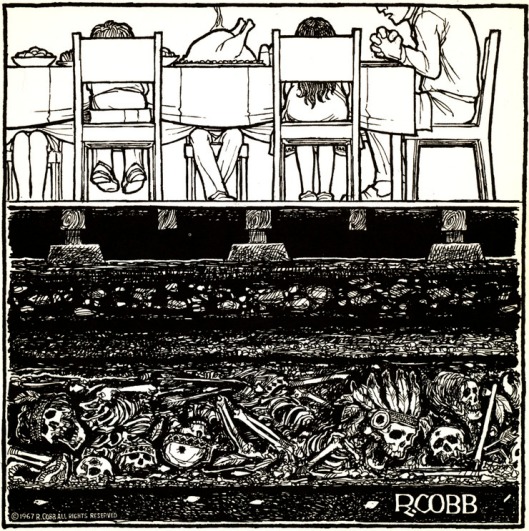 Tomorrow is Thanksgiving, a holiday created from romanticized myths about grand and cordial feasts between pilgrims and the indigenous people whose lives, land, and culture would soon be exterminated from coast to coast. Truth be told, Thanksgiving sprang from the imaginative mind of Sarah Josepha Hale, an author and editor who campaigned for nearly two decades to make it a national holiday before winning over President Lincoln who made it official in 1863. Some historians believe Lincoln used the creation of Thanksgiving as propaganda during the Civil War to paint Northerners as the true founders of the nation whose cause in the war was virtuous and just. In her writings, Hale also pushed the delusional belief that the “United States government was founded without bloodshed.”
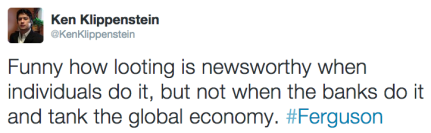
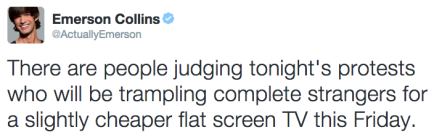

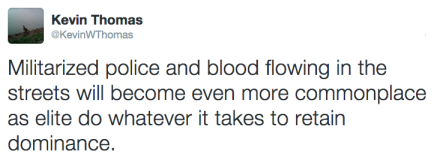



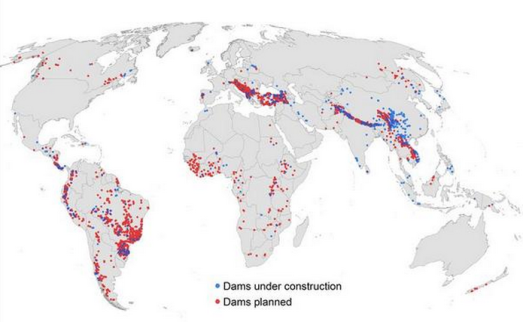
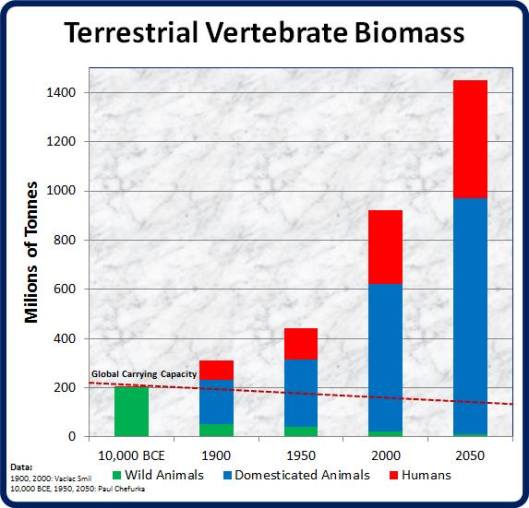


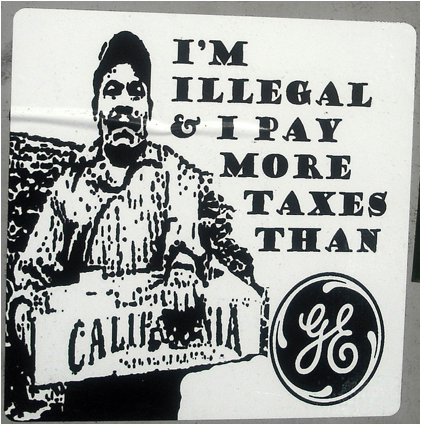

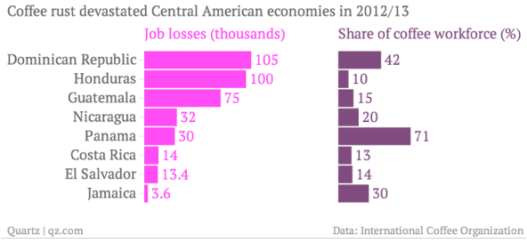


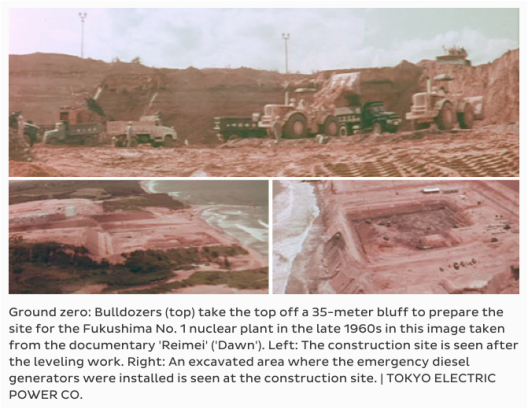

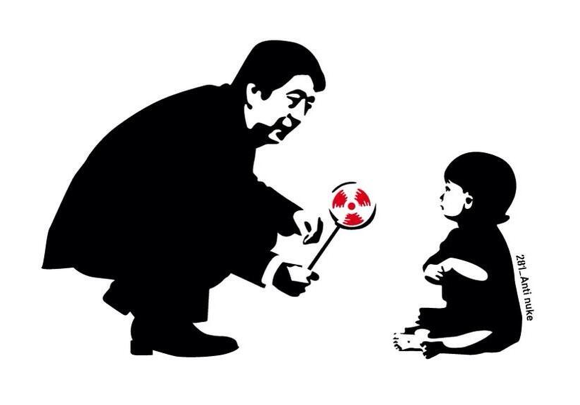

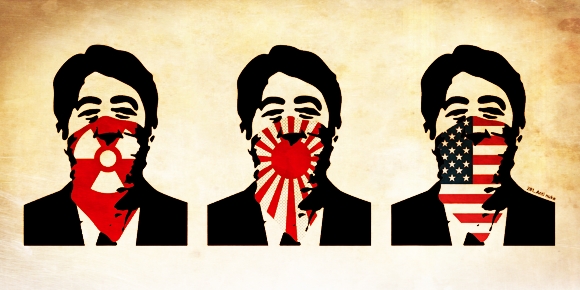
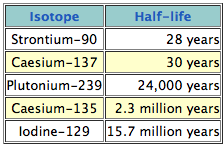


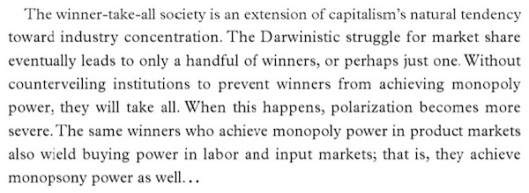
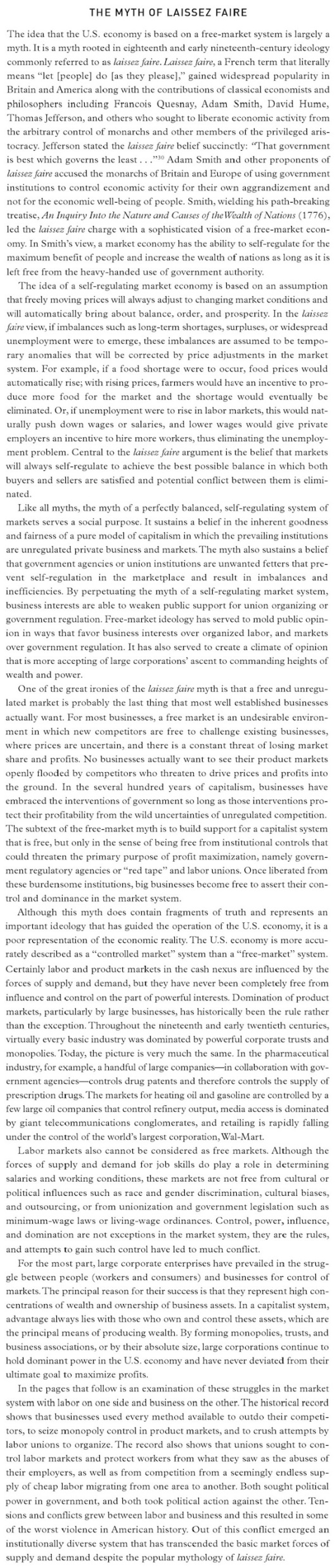
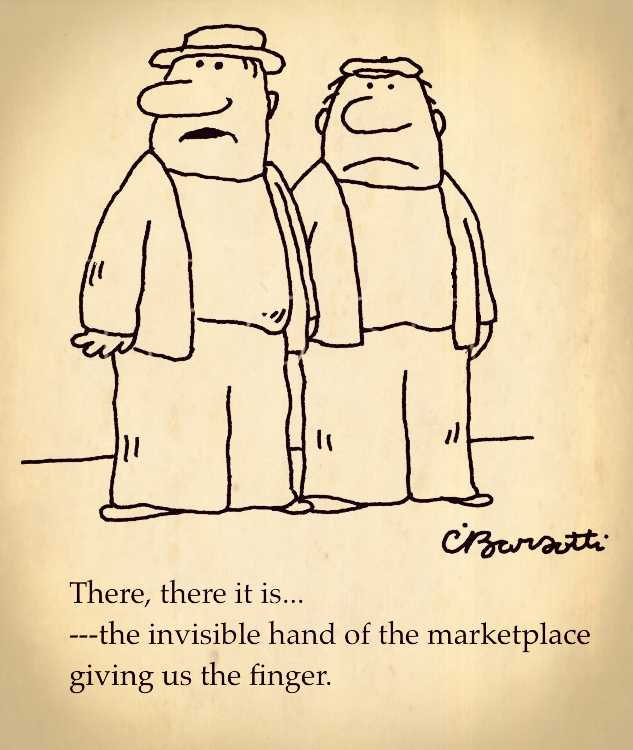
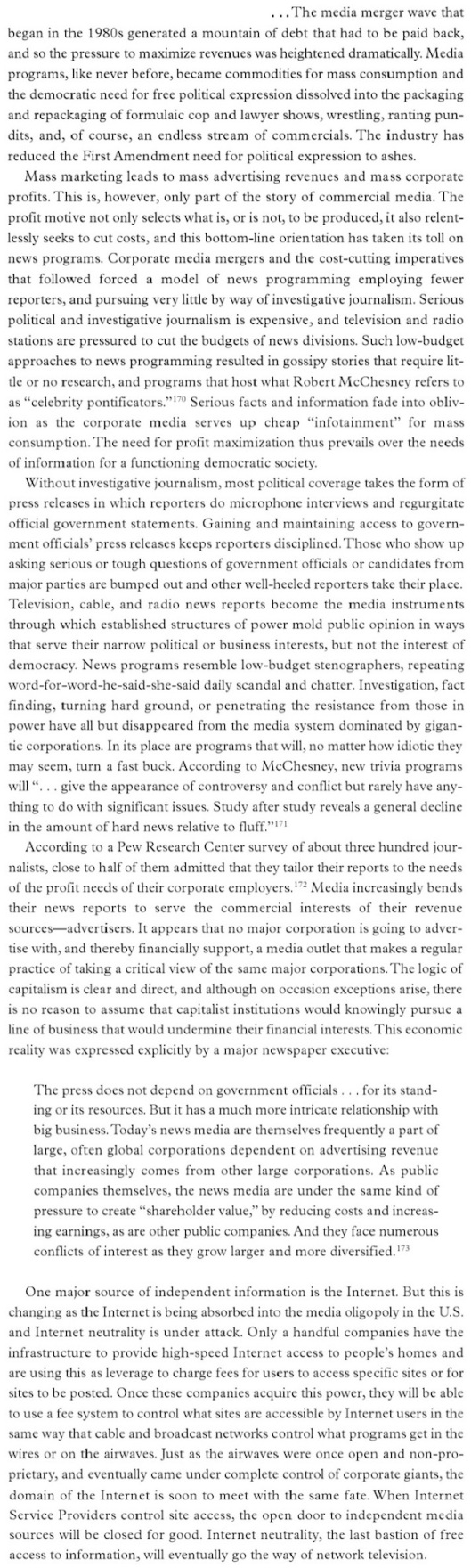





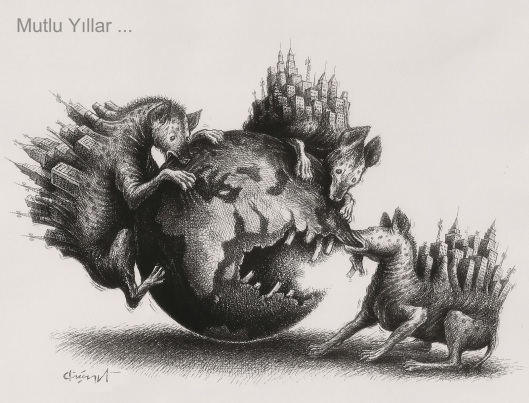


 Collapse of Industrial Civilization
