They were called ‘consumers’. Their every behavior became just another stream of data to be tracked, recorded, quantified, and analyzed by corporations for their vast, profit-seeking conveyor belt of production, distribution and marketing to a sea of mouths. The machine was global and its hungry tentacles wrapped the Earth. Wherever it turned its covetous eyes, the Earth shook and its creatures large and small fled for cover. Government and corporate rule were fully enmeshed and the birth of a worldwide surveillance state was born. All mass communication systems were controlled and grassroot uprisings within the Empire’s homeland could be cut off at the knees before they ever gained traction. Protection of the homeland from terrorism was the initial excuse by which the fascist state expanded its power. Knowledge is power; foreign countries and governments could be manipulated from a distance. Privacy was a quaint relic of a bygone era. With the awareness that Big Brother was watching, few voiced their true opinions. The charade of democracy played on as the consumers retreated into their fabricated world of digital screens and commercialization.
“[Citizens became] one-dimensional idiots; consuming pointlessly, obsessing about lifestyle, gawping at celebrities, gazing blankly at moronic TV game shows, forever grasping towards the next, vacuous, artificial ‘want’ created by Global Gobble Corporation.” ~ Philip Mirowski
The captains of industry were happy with their scheme of manipulating markets, printing fiat money, continuously uprooting industry to cheaper labor pools abroad, keeping well oiled the wheels of the military industrial complex by waging war-for-profit wherever possible, and ravaging the Earth for every last bit of ancient carbon and minerals. Vast sums of money were spent on public relations and greenwashing in order to ensure the unwashed masses would stay ignorant and subservient to the looting and destruction of society and the environment. The elite were quickly turning the Earth into a death trap for all living things, and few noticed or cared. As long as cheap, mass produced, nutrient-poor food was on tap to fill the stomachs of the teeming masses, revolt and bloodshed were averted. The elite, however, could see the writing on the wall. Plans were drawn up to use force when the inevitable time arose that fuel, food, and water became scarce. The heavy stick of Empire so often used to smash swarthy radicals abroad would, in due time, be turned inward on the homeland.
“The Will To Extermination is the very core of the Dark Side. It has been ignored at humanity’s own peril.” ~ Patrice Ayme
“Our technological abilities have made us tremendously successful animals, but also tremendously dangerous ones, glorified apes with nuclear capabilities. We tend to overexploit or destroy our resources, drastically modify or pollute our environments, overpopulate the planet, and wage war on our fellow inhabitants, all of which threaten our long-term viability as a species. Is self-induced extinction the ultimate fate of intelligent, tool-using organisms like ourselves? Are we smart, but not smart enough?”
~ Kathy D. Schick and Nicholas Toth
“This is what I recently learned from my friend, Professor Bill Rees:
During individual development, repeated sensory experiences and cultural norms literally shape the human brain’s synaptic circuitry in patterns that reflect and embed those experiences. Patterned thinking acquires a physical presence in the brain.
Subsequently, people seek out compatible experiences and, “when faced with information that does not agree with their [preformed] internal structures, they deny, discredit, reinterpret or forget that information.” (Brain and Culture, Bruce E. Wexler, The MIT Press, 2006).
Most people are genuinely unable to face the truth. Based on this premise, most if not all human civilizations have been built.
“The masses have never thirsted after truth. They turn aside from evidence that is not to their taste, preferring to deify error…” (Gustave le Bon, 1896).
~ Tadeusz (Tad) Patzek
In spite of their own economic and scientific data overwhelmingly pointing towards a very bleak future, the experts in their various chosen fields appear to be happy-faced optimists about the world our descendants will inherit. So says columnist Charlie Smith:
He concludes his essay with the following remarks:
“…I confess that I’m troubled by all the optimism I encounter from leading thinkers on inequality, climate change, overpopulation, and oil depletion.
Adding up all the variables, I’ve concluded that more global food shortages and increased famine are inevitable. Despite this, our premier plans to build a new bridge to Delta that will result in the loss of some of Canada’s finest farmland.
Having a cheery disposition may make someone sound more pleasant in radio and television interviews.
It might even enhance a person’s likelihood of obtaining book contracts, becoming a media or entertainment executive, or getting elected to high public office.
But it has a way of sugar-coating problems, diminishing the sense of urgency that we should all be feeling about these crises.”
The apocalypse has been commodified as a Hollywood thriller to be viewed in the comfort of a movie theater or living room sofa. Faith in technology, normalcy bias, sunken costs, and the mass propaganda of vested interests are just a few of the human blinders preventing any change from the status quo. To say that there is no future for the human species would be to admit that we are all living in a fictitious construct whose time is quickly running out. Who openly discusses such things in their place of work? I would wager to say that the answer is zero. In his essay ‘The Convergence of Crisis‘, Simon Hasleton writes:
“…There is, also, a sense in which denial should be seen as a psychological defense operating on the personal level. AGW presents an immense challenge to our lives: to our health and safety and the survival of our grandchildren, and their grandchildren. How will we handle it, when the water fails or the crops fail and the food reserves are empty as the population passes the nine million mark? When when Amsterdam or Kolkata are inundated? When (as in Texas) temperature pushes into the high 30s, for weeks on end? This is the future AGW promises. And there doesn’t seem to be anything we can do about it, so we blank it out, or prefer the trivia of the tabloids, or retreat into a blinkered concentration on the immediacy of everyday concerns….”
There is no escaping the capitalist system which now encompasses the entire world. Who is stopping the Brazilians from clearing the Amazon just as America and Europe slashed and burned their own virgin forests to make way for cities, highways, railroads, farms, etc.? Who is stopping China from burning through the world’s remaining fossil fuel? This is how industrial civilization defines “progress”. Our next step is to try to control the climate through seeding the atmosphere and other geoengineering experiments. Aside from nuclear weapons and their evil counterpart, nuclear energy, I can’t imagine a more dangerous and hubristic scheme. Charlie Smith has an article on that subject as well, entitled ‘Eric Schlosser raises alarm in Vancouver about nuclear weapons and nuclear power‘:
“…Schlosser also told the audience that his research into nuclear weapons has strengthened his opposition to nuclear energy. He cited the research of Charles Perrow, who examined the partial meltdown of the Three Mile Island nuclear-power plant in 1979.
This helped Schlosser understand how a seemingly minor event—a dropped socket in a missile silo in Damascus, Arkansas in 1980—nearly caused an explosion that could have killed millions of people.
“These are complex technological systems,” Schlosser said. “Again and again, we find ourselves inadequate to manage them.“
His biggest concern is that the waste from nuclear reactors remains deadly for tens of thousands of years. He said that it’s “highly irresponsible for us to be creating poisons that future generations might suffer from“.
There has never been a central storage facility created in the United States, which means that the waste remains at the nuclear-reactor sites.
“And these reactor sites were never designed to store nuclear waste in the way it’s being stored,” he said. “They are huge targets, potential targets, for terrorists. But they are also at enormous risk in a natural disaster, in earthquakes, things like that. And a lot of these nuclear reactors are near large urban areas…”
He didn’t mention that all nuclear plants are built on the shores of lakes, rivers, and oceans in order to satisfy their cooling water needs. Not such a great idea in a future that includes the ravages of climate chaos – sea level rise, shrinking and flooding rivers, and violent storms. Sea level rise will also increase the damage from earthquakes as this 2014 study for the city of Berkley, CA mentions:
“…Like regions across the globe, the San Francisco Bay Area is experiencing and will continue to increasingly experience the impacts of the changing climate. By 2100, average temperatures in the San Francisco Bay Area will increase up to 11° F. In 2100, Berkeley will have 6-10 additional heat waves each year, which will disproportionately impact the elderly, children under five, and the low-income community members.
Climate change will also cause additional extreme rainfall events, which will lead to more flooding. San Francisco Bay sea-levels will rise up to 55” by 2100, impacting infrastructure and community members in west Berkeley. Climate change impacts will also exacerbate the natural hazards of concern outlined in this plan. Rising sea levels will increase Berkeley’s exposure to earthquake liquefaction, tsunami inundation, and flooding. Increases in precipitation and severe storms will make flooding more frequent, and will increase the landslide risk in the hills. California’s water security will be reduced, and drought will become a more persistent issue….”
How does San Francisco adapt to an 11°F increase in average temperature? It doesn’t. It will be a ghost city by then; the human population will have crashed and be well on its way to the black void of extinction. The city officials of Berkley have not figured that out yet since climate change is a newly added threat to their plans:
“…Climate change is a newly-introduced hazard of concern for the 2014 plan. The climate change section describes the anticipated impacts to Berkeley from climate change. It also outlines how climate change exacerbates other hazards identified in this plan. The City discusses potential impacts from sea-level rise on Berkeley’s western coast, and maps areas in Berkeley that are vulnerable in 55-inch sea-level rise…”
Modern industrial civilization with its exploding human population is protected from the laws of nature only for as long as resources are plentiful and the climate remains stable. Technology cannot be created and supported without inexpensive and highly concentrated energy. Technology is simply a byproduct of human ingenuity and energy expenditure. For over four billion years everything on Earth has evolved and adapted, most recently under the benevolence of the Holocene climate. The current climate catastrophe is a manmade disruption that is several orders of magnitude greater than the average rate of change over the last 300 millenia.
The primary problem with most ‘news’ today is that its filtered through corporate gatekeepers. Another problem with the ‘news’ is that its fragmented and does not connect all the dots to give a person the full picture. As Neil Postman said, “The whole problem with news on television comes down to this: all the words uttered in an hour of news coverage could be printed on a page of a newspaper. And the world cannot be understood in one page.” So let’s connect some dots, courtesy of Robert Callaghan:
By 2025, humans will impact 50% of earth’s biosphere. This will cause a planetary ecological state shift leading to a mass extinction event that is unstoppable and irreversible once started. http://www.ecoshock.info/2012/06/planet-shift-no-return.html
Only 1% of methane needs to be released to cause total disaster. Peter Wadhams interview.
Natalia Shakhova interview: Do you believe scientists who spent 30 years in the arctic, or do you believe scientists who spent 30 years at their computer?
And the latest on the methane monster:
Extinction is a taboo word – bad for busine$$ and a real downer for everyone involved. Best to keep to the cultural storyline that such horrible things only happen on the silver screen with the aid of expensive CGI effects.
To orient oneself in life, a person chooses from among myriad narratives, typically assembling a hodgepodge worldview out of diverse parts. According to Oswald Spengler, cultural artifacts (e.g., the arts, humanities, and sciences) arise “needing the guidance of inspiration and … developing under great conventions of form.” The very same can be said of our origin and orientation stories, ancient or contemporary. Narratives intertwine and need not necessarily be discrete, mutually exclusive, or competing, even though that’s what’s often implied by time-worn tensions underlying science vs. religion, sometimes understood more philosophically as logos vs. mythos. Indeed, they cohere despite conflicts of logic and their being ahistorical. The power of subscription and consensus overcomes all objections.
If a master narrative exists, it ought to be simply reality obtained, though that is probably visible to only a small percentage of people able to apprehend the world clearly. For the rest, scales not yet having fallen from the eyes, the considerable benefit of hindsight can help clarify the view, but only if one has sufficient nerve to behold it honestly. Instead, our dominant inspirational narratives promulgate a wide variety of incompletely fulfilled hopes and desires. Few such promises bear much resemblance to reality, those of economists, politicians, and clerics demonstrating the most striking discontinuities from the actuality experienced by ordinary folks. A Chris Hedges article at TruthDig.com called “The Folly of Empire” discusses this departure from reality in his characteristically erudite style (apologies for the long nested quote):
… absurd promises of hope and glory are endlessly served up by the entertainment industry, the political and economic elite, the class of courtiers who pose as journalists, self-help gurus like Oprah and religious belief systems that assure followers that God will always protect them. It is collective self-delusion, a retreat into magical thinking. “The American citizen thus lives in a world where fantasy is more real than reality, where the image has more dignity than the original,” Daniel J. Boorstin wrote in his book The Image: A Guide to Pseudo-Events in America. “We hardly dare face our bewilderment, because our ambiguous experience is so pleasantly iridescent, and the solace of belief in contrived reality is so thoroughly real. We have become eager accessories in the great hoaxes of the age. These are the hoaxes we play on ourselves.”
I don’t usually lump into the mix entertainers, sports figures, gurus hawking self-help books and programs, or media pundits offering half-baked analyses because only idiots expect truth from them, but perhaps I should include them considering their stranglehold on the public’s wasted attention. Most of today’s media-driven narratives rely on conventions, gestures, and rhetoric that are notoriously predigested and therefore immediately swallowed by the guffawing crowd, disinviting additional analysis or careful consideration. This bears a curious family resemblance with intellectual conditions that sparked the Reformation. Further, because such mediated (or should I say medieval?) content is composed largely of fiction, pageantry,and untethered conjecture, no time is needed for the narrative to actualize. Hope functions in the present tense and requires no closure.
Perhaps the quintessential inspirational narrative was trotted out by the Obama campaign back in 2008, which relied on promises (empty, we later found out) to fulfill everyone’s desire for a better life, calling on hope and change to achieve those promises. Another religious hope narrative promises to enhance one’s afterlife, earned in earthly realms through achievements in social justice and the judgment of posterity. Both adopt time-honored conventions and are part of what is described in Morris Berman’s book Wandering God as the ascent tradition. Significant among those conventions is orientation along a vertical axis as seen, for instance, in easy acceptance of the legitimacy of hierarchy (and therefore egregious power, wealth, and class stratification and imbalance) and a longing for transfiguration, transcendence, and communion with god (or the gods) above.
Looking back across history, evidence of “progress” and growth is legion. However, most of those achievements are demographic, material, and technological, each having their unique and unintended blowback. What’s notably lacking as we sally forth into the 21st century is the ability to transcend our own base nature, which is characterized by corruption, violence, stupidity, short-term gratification, and inability to achieve the utopian dreams that populate the minds of many despots. So that same history is marked by downturns and setbacks. One might even say that the overall upward trend of history is pockmarked by periodic scars. Still, nothing just yet has stalled the hubris of history rising (unless domestic peak oil in the 1970s and global peak oil a few years back prove to have been among the first of a series of turning points). And judging from blog traffic and commentary, the steady stream of negative assessments in scientific literature, and news reports telling of weather and ecological calamities with increasing frequency and severity, awareness is beginning to dawn on even the most congenital optimists (plus some fools and the average ignoramus) that what goes up must eventually come down. Since history has gone vertical, hard limits must eventually assert themselves.
The plethora of charts, tables, graphs, and infographics that evidence not just rising trends but verticality is frankly astonishing. Sometimes a gradually ascending slope is observable within a short timeframe, such as receding glacial ice documented in Chasing Ice. Other times it takes long traces of historical, evolutionary, or even geological time to observe. Even short timeframes often conceal effects that lie handily beyond normal perception, but we luckily have scientists trained to recognize short- and long-term trends. Too bad they’re uniformly ignored and/or pilloried by a public spoon fed the blandishments of corporate marketing and political propaganda. Typically, ascending curves (whether geometric, logarithmic, or exponential) don’t appear to be walls (limits) when viewed from the far left or from within a narrow time band, meaning microscopically close. Zoom out or to the right, however, and the trend pointed into the stratosphere is readily apparent, such as in the following video (animation) of CO2 concentrations in the atmosphere:
Similar x-y coordinate graphs showing, for instance, energy use per capita and human population growth demonstrate the same trajectory but at much briefer durations. Trendlines are mathematical abstractions, like fiat currency being printed into existence. At some point, gravity takes hold and drags everything back to earth (reality), though that eventuality can be forestalled for a surprisingly long time. The return trip down various vertical trends is approaching ever more quickly as lift skyward fizzles like an Icarus nightmare. Or in the case of atmospheric carbon, we can’t stop the rising trend we unwittingly initiated from blowing through the roof and rendering the earth uninhabitable.
It’s often said there is no such thing as an atheist in a foxhole. Presented with the likelihood or certainty of battlefield death, holdouts succumb and cash the eternal-life insurance card of a last-minute profession of faith. Same as death-bed conversions. Thousands of years of philosophy and religion might prepare us to face our inevitable demise if we bothered to learn anything worthwhile besides how to make money, and yet in all our frailty, many of us cannot accept that our final departure is merely a fact of life, not a gateway or journey to somewhere else. (Um, opinions vary on this, obviously.) The final departure of Homo sapiens sapiens is even harder to contemplate.
So what foxhole moment awaits us? Here’s one: the Intergovernmental Panel on Climate Change (IPCC) released in late September 2013 a publication by Working Group I of the Fifth Assessment Report, which presents the underlying physical science behind climate change (used to be called global warming). The IPCC website states that “The Fifth Assessment Report (AR5) is being released in four parts between September 2013 and November 2014. It will be the most comprehensive assessment of scientific knowledge on climate change since 2007 when Fourth Assessment Report (AR4) was released.” Preparation of these reports has been ongoing for decades already, and the difficulty of their assemblage assures that they’re already out of date at the time they’re released. Being the work of governments, AR5 is also reputed to be remarkably conservative in its conclusions, as contrasted with prophesying near-term human extinction (NTE or NTHE) as those of us unconstrained by geopolitics have begun to do (mostly taking our cues from Guy McPherson of Nature Bats Last). That’s not a gambit for attention, BTW. It’s about a soul-destroying a realization as there is, and no one comes to admit it easily.
The likelihood of anyone plunging into the 2216 pages of this first of four parts of AR5 is, well, dismal. One could easily level the accusation that the IPCC is burying its findings behind pages and pages (and pages) of prefatory material; acknowledgements; missing or incomplete figures, tables, and citations (to be inserted when?); technical and executive summaries; glossaries; references; and dry obfuscation. That’s not really the case, though; the data and discussion are abundant and available for anyone capable of deciphering it. Technical and scientific analysis and discussion is exactly what Working Group I delivers in these chapters:
Introduction
Observations: Atmosphere and Surface
Observations: Ocean
Observations: Cryosphere
Information from Paleoclimate Archives
Carbon and Other Biogeochemical Cycles
Clouds and Aerosols
Anthropogenic and Natural Radiative Forcing
Evaluation of Climate Models
Detection and Attribution of Climate Change: from Global to Regional
Near-term Climate Change: Projections and Predictability
Long-term Climate Change: Projections, Commitments and Irreversibility
Sea Level Change
Climate Phenomena and their Relevance for Future Regional Climate Change
I downloaded the report and sought something succinct to quote, such as an answer to the question “Just how fucked are we, anyway?” but the technical summaries proceed with this sort of dry, useless, blank, uninformative text:
The primary purpose of this Technical Summary is to provide the link between the complete assessment of the multiple lines of independent evidence presented in the 14 chapters of the main report and the highly condensed summary prepared as the WGI Summary for Policymakers. The Technical Summary thus serves as a starting point for those readers who seek the full information on more specific topics covered by this assessment. This purpose is facilitated by including pointers to the chapters and sections where the full assessment can be found. Policy-relevant topics, which cut across many chapters and involve many interlinked processes in the climate system, are presented here as Thematic Focus Elements, allowing rapid access of this information.
The WGI Summary for Policymakers is not contained within the larger report but both can be found at this link. It’s unclear how much of the report was used in preparation of this story at National Geographic, but the story provides five takeaways from WGI:
On the extreme weather front, the report concludes it is “very likely” that cold days and nights have decreased, while warm days and nights have increased, since 1950 …
The oceans have warmed with “virtual certainty,” the report concludes, at a rate of about 0.2 degrees Fahrenheit (0.11 Celsius) per decade since 1970 in the upper 246 feet (75 meters) of surface water …
What about those polar bears? Sea ice (as well as glaciers and ice sheets) has declined overall since 1970 …
Sea level rise has happened, and will happen in the future, as a result of global warming, the report finds …
More than half of the global warming observed since 1950 has a human cause, largely from the greenhouse gas effects of gases such as carbon dioxide emitted from burning fossil fuels ….
The ellipses indicate brief discussion behind each takeaway. The conclusions are hedged, of course, relying on observations of what’s happened so far and omitting extrapolation of trends that go vertical. Even the three levels of confidence communicate not certainty of our fate (exact details TBD) but hope that projections are subject to change or we can do something to reverse things or at least forestall the worst. Like IPCC, National Geographic is yet to have its foxhole moment even though the evidence is staring them ghoulishly in the face. If one is at all engaged in this subject, I suppose it makes sense to stay hunched in the hole chain-smoking cigarettes and making do with what meager rations and sleep are available. My sneaking suspicion is that the go order will come quickly enough to catch lots of shivering, quivering, wavering souls before they get to their last eternal hope. In the meantime, the fat lady is singing, the coal-mine canary has expired, pigs are flying, and hell has frozen over. We’re vertical against the wall, facing the firing squad, and what’s left to do, though no one knows just quite when, is to get horizontal.
An achieved goal of capitalist industrial civilization was the systematic reduction of nature to a simple component of the economy. Landscapes of rivers, lakes, forests, and meadows were replaced by the concrete, steel, and asphalt of cityscapes. The build-up of toxic wastes and byproducts of industrial civilization were seen merely as external problems to be solved via engineering and technology. In the grand narrative of material progress, industrial man put himself at the center of the universe, the lead actor and hero who would always survive and triumph. He saw no problem with the complete subjugation of the wilderness, taking more from the land than was given back, and reducing biodiversity to a shell of its former self in the name of economic growth. The dominant mindset was summed up thusly…
“…nature is a malignant force with useful aspects that must be harnessed, and useless, harmful ones that must be shorn of their power. They spend their energy adapting nature to their purposes, instead of themselves to her demands. They destroy pests of crops and men, they build dykes and great dams to avert floods, and they level hills in one spot and pile them up in another. Their premise is that nature will destroy them unless they prevent it…” ~ Clyde Kluckhohn
In the collective consciousness of industrial civilization, man was exempt from falling victim to the 6th mass extinction. The future narrative of people in the modern age never included:
…that they would be among the last humans to walk the Earth.
…that their children would not live long enough to grow old.
…that all cultural, artistic, and scientific achievements of the human species would soon be forgotten in time, no longer practiced and appreciated.
Cocooned away from the elements as they were, few city dwellers noticed the creeping deterioration of the planet’s biosphere. Their artificial world, filled with the digital screens of computers, televisions, electronic billboards, and sundry other micro-computer devices, kept the public preoccupied with a constant stream of infotainment, celebrity gossip, sports, and political spectacles. The popular line of thought was that the natural world was too resilient to collapse from man’s activities; periodic efforts of environmental remediation would be all that was needed to keep business-as-usual afloat. Generational amnesia cast a false sense of security over the unwashed masses. Rivers and streams, once teeming with fish and aquatic life, were now laden with toxins, heavy metals, and plastics. Moose and bison no longer roamed the fragmented wilderness; the remaining few were set aside for bioengineering experiments in a last-ditch effort to save them. The whole web of life with all its keystone species from microbes and insects to large terrestrial and aquatic mammals was unravelling. Pests, viruses, and pathogens ran rampant in the new disorder of the planet. Scientists talked of tipping points, but no one really knew when such red lines in biospheric stability would be crossed or if they had already been breached. Like a runaway freight train, industrial civilization had indeed passed many tipping points long ago. Few thought there would be such an abrupt downward spiral, seemingly without warning. The first law of thermodynamics was being realized on a system-wide scale.
Modern man was thought to have been infinitely adaptive and clever, but the linear-thinking that dominated the culture was riddled with too many blind-spots to prevent its inevitable downfall. As long as the same economic system and mode of living persisted, no amount of new technology would solve the root problems. Since the mid 1970’s, the industrialized world had been living beyond the total carrying capacity of the Earth for decades and even created a day to recognize the transgression which would arrive a few days earlier each year. Various reports of imminent catastrophe were published, but to no avail. Everyone had their mental crutch to fool themselves into believing that the day of reckoning would never come. Some, like the fanatical zealots of religion, rejoiced that the end was upon us while others were paralyzed with fear and despair. The all-pervasive mainstream cult of money worship, consumption, and economic growth gave rise to other doomsday cults who heralded the end of time.
Mother nature took no prisoners; there was no escaping her ironclad laws. Mass starvation, war, and pestilence rapidly whittled the human population down to small pockets of survivors, but then even those few post-apocalyptic tribes soon declined and disappeared until the day arrived that only one human walked the Earth. One lone human survivor out of the billions that once were.
He survived the pandemic that wiped out roughly three-quarters of the global population. He survived the nuclear meltdown and craziness of the food wars and nuclear terrorism. And thus far he survived climate chaos by constantly moving. MRE’s were mass-produced for the general public and stored in most cities when the agricultural system started to show signs of imminent collapse. Even after all these years, the last human still found these warehouses of preserved food to be an invaluable source of sustenance, supplementing his diet with the occasional cockroach, rat, or wild pig.
How did the last man on Earth spend his time when not scavenging for food, water, and other essentials? He was on a search to find other humans of course. How could he have known that he was the sole survivor? Without electricity, there no longer existed any sort of global communication system. The one solar-powered/hand crank shortwave radio he had in his backpack had yet to pick up any signals, but he would religiously take it out every night to scan the frequencies for an hour or two. To break the deathly silence of the world, he would occasionally play the assorted music files that were on his wind-up mp3 player. He especially loved their sound inside the expansive corridors of old libraries he visited during his trek across the continent. With his life always in jeopardy, he found that a good book was the best form of escapism; compromising his health and safety with mind/mood-altering drugs was not an option in a world devoid of hospitals and medicine. And sex? Well, you’ll have to use your imagination for that. He certainly did. Such solitude, a prison cell of solitary confinement spanning the entire planet, would have driven most to madness and suicide, but he handled the loneliness day by day and with stoicism.
In his early years, he experienced a taste of working at a 9-5 job, driving a car and flying on jumbo jets, but he didn’t miss any of it really. He had been one of those who had read extensively about the unsustainability of the global economy and about the nature of ecological overshoot and collapse, and he had prepared for it. He held no illusions of a new civilization being reborn out of the ashes of capitalist industrial civilization. Capitalism, he knew, held too tight of a grip on modern man, and the psychological barriers of the masses prevented them from seeing the end of everything concerning the human experience …forever. As the weeks, months, and years passed by and he grew older, he began to reconcile with the idea that he was very likely the last person left alive. No need to leave any more messages on roof tops, in vacant parking lots, or over the empty airwaves. No one was listening. No one was coming. There really was no prospect of growing old gracefully in this new reality. He had yet to find some small pocket of unpolluted land that did not register on his Geiger counter. So he made a pact with himself and the pistol he carried that when his health and strength no longer allowed him to eke out an existence, he would not be alive when the wild dogs came for him.
Over at Nature Bats Last, my favourite virtual park bench to watch the virtual pigeons, the talk is of hospice. Life is a terminal disease.
I suppose there’s not a lot of difference between hospice and death row.
Degrees of freedom. How big is your prison cell ?
What’s the company like ? Do you get any choice ? What about the visitors ? Are they friends, priests, nurses, jailers, torturers ?
I have to say, for a man of my disposition, my own cell, here, is perfection.
Long ago and far away, in another lifetime, I did a course in kitchen design.
I found it fascinating and enjoyed it very much. Efficient use of work space. Sink. Work top. Storage. Things you use most often, nearest.
Later, I discovered Permaculture. Much the same idea, really, but working with the natural physical environment.
Design your prison cell. Oh, but you cannot, because you have no freedom to choose, because it’s not yours, you don’t own it… Ha !
That’s a problem isn’t it. Property and ownership. On a crowded island, a crowded continent, a crowded planet.
“The first person who, having enclosed a plot of land, took it into his head to say this is mine and found people simple enough to believe him was the true founder of civil society. What crimes, wars, murders, what miseries and horrors would the human race have been spared, had some one pulled up the stakes or filled in the ditch and cried out to his fellow men: “Do not listen to this imposter. You are lost if you forget that the fruits of the earth belong to all and the earth to no one!”
~ Jean-Jacques Rousseau, The Social Contract and The Discourses
Freedom to choose. Property. These barriers that we collide with when we desire to design our lives, the space between birth and death.
Used to be, long ago, you could just walk off into the desert, or into the forest, or into the mountains, and get away from it all, and find a place where you could settle yourself down and be undisturbed. But that’s not so easy anymore, at least, not where I live, and then what do you eat ?
When I was 20 I had a vision, with my wife, to find a ruin, some abandoned old farm in the mountains, where I could set up some home and make an anarchist commune. I found a couple with two kids, beatniks, about 15 years older; they were right into the idea. We had a good try but it didn’t work out.
We learned some of the reasons why it is hard to succeed.
Took me a lot of trying and a lot of failing to get what I got. The perfect prison cell.
People think I’m crazy. They are right. Depends what you mean by ‘crazy’, of course. You have to be crazy. You see, most people try things, twice or ten times, and fail, and give up, and say it’s impossible. But some things aren’t like that. You have to try 999 times and fail every time. And then the 1000th time, you make it. And only a crazy person discovers that, because everybody who wasn’t crazy gave up long ago.
But, you see, it really might be impossible. What if you have to try all your life to find that it was impossible ??
That’s circus people. They have to be crazy. Special sort of ambition to do something really peculiar. I knew some once. Not a proper circus, a really silly circus. All they had was a lama, and a sheep and a goat. And the guy could walk along a tightrope. A low one, about six foot off the ground. But if you can do it, doesn’t really matter about the height. It’s about the falling off.
So they were determined to have a circus for a livelihood. With one fucking lama that they decorated. And a sheep and a goat that they trained to go around in circles in a tent. And the guy walked along the tightrope. And twenty people would pay and wonder why these crazy people were doing this.
Point is, they were designing their own lives. They were AMAZING. You just wanted to help them because they were crazy. The crazy was contagious. In a good way. Two girls were identical twins, impossible to tell which was which; that was crazy in itself.
So, you find a place. Like designing a kitchen, the sleeping place is the centre. Or maybe, if you’re into Bodhidharma, your meditation place. Then comes the things you use and need most often, nearest. Then, like a spider in the middle of its web, you need strands that connect out into the world.
People are very different. Depends upon what your personality is like, what your desires are, what you require to be satisfied. Design the structure around you; design yourself to fit the structure. Build in the right habits, the rituals, the efficient and effective functioning. Remember, its death row. Nobody gets out alive. What’s worth caring about, what’s not ? Music !
I have a field which I’ve left for the grass to grow long. This is so it can be a refuge for the linnets. They are just small brownish song birds. They are somewhat endangered but not dramatically so; average little birds, so to speak, nothing spectacular or flamboyant, not the ‘most’ anything; finch family, thought to originate some time in the Middle Miocene, 10 to 20 million years ago. From what I gather, skeletons of these small song birds are rarely well-preserved in the fossil record, so it’s a patchy picture and much is guesswork.
The linnets are some of the company I have here, in my cell on death row.
In 1963, someone called Robert F. Stroud died. He had spent 54 years in solitary confinement in a prison cell. It states on the cover of the book he wrote that no man in the history of the world spent more time alone. I don’t know if his record has been broken since then. America seems so perverse and sadistic these days, it wouldn’t surprise me.
Anyway, Stroud spent his time researching bird diseases and became one of the world’s greatest bird pathologists. See. You’ve got to be crazy. He couldn’t design his cell at all. It was not his property. He had no freedom. But he could design himself. He wrote this incredible book Stroud’s Digest on the Diseases of Birds. Made a life for himself. Didn’t let the fuckers destroy him.
I think most people have got more options, bigger cells.
If you look at the previous mass extinction events, a few species made it through. My thinking is, try to save something for as long as possible.
Could be the linnets, this time. Who knows ? Nobody else seems to care.
But it’s just my version of the crazy circus…
Birds are much smarter than most people realise or appreciate:
“Birds appear to offer, in their behavior, neurophysiology, and neuroanatomy a striking case of parallel evolution of consciousness. Evidence of near human-like levels of consciousness has been most dramatically observed in African grey parrots. Mammalian and avian emotional networks and cognitive microcircuitries appear to be far more homologous than previously thought. Moreover, certain species of birds have been found to exhibit neural sleep patterns similar to those of mammals, including REM sleep and, as was demonstrated in zebra finches, neurophysiological patterns, previously thought to require a mammalian neocortex. Magpies in particular have been shown to exhibit striking similarities to humans, great apes, dolphins, and elephants in studies of mirror self-recognition.” http://fcmconference.org/img/CambridgeDeclarationOnConsciousness.pdf
So, as far as I am concerned, on any sane scale of values, those circus people and the linnets are worth more than all the wankers on Wall Street and in the City of London put together. Because when it really comes down to it, freedom has, as Stroud discovered, to do with what’s inside you, not what’s outside.
Be realistic. Demand the impossible. Insist that you get it.
I haven’t kept up much on Fukushima because I find it too horrifying to contemplate; one quick look into this subject is enough to ruin your day. In a future of cascading failure, conceivably hundreds of nuclear meltdowns are in danger of being set off. The last breath of human life on Earth could be extinguished from such a toxic brew of radioactive isotopes. Thirty-one months after the nuclear catastrophe called Fukushima, this festering wound persists with hundreds of tons of radioactive water uncontrollably leaking into the Pacific each day and thousands of exposed fuel rods threatening to make Japan uninhabitable. In light of this ongoing manmade fiasco, I find it morbidly humorous that Japan has been chosen to host the 2020 Summer Olympics. It’s like planning a house party while the roof is ablaze and a sinkhole is opening up under the home’s foundation. But this seems to be par for the course for a species that has come to rely on technology as its steadfast savior. Only as this century draws to a close and the polar regions are seen as the last refuge for a depopulated planet will humans have finally realized that their precious technology served to extend human overshoot only for a brief time… and at the expense of making the inevitable crash that much worse.
There is no better way in determining the worth of a society than the kind of future it leaves for its children and future generations. As Mahatma Gandhi said, “You can judge a society by how they treat their weakest members.” Are not the unborn generations of our descendants the most helpless of all, voiceless and invisible to those making the reckless choices of today? By this measure, modern capitalist industrial civilization, notwithstanding its technological marvels and humanitarian achievements, would have to rank quite low when we look at the silent, lifeless wasteland that our present way of life is creating. The specter of climate change has replaced the Cold War psychic burden of a nuclear winter. The children of the Atomic Age had the naive “duck and cover” plan to escape that monster, but what plan do the kids have today for the horror of runaway climate change? As the Energy Skeptic recently discussed, climate change has destroyed many civilizations in the past and our globalized one will undoubtedly be no different. A doomsday date of 2047 was recently set for the cities of today’s world:
Hiroshima and Nagasaki suffered the barbarity of nuclear bombs, but these decimated cities were rebuilt. Climate Change will in time make all cities uninhabitable through flood, drought, scorching heat, fire, sea level rise, and continent-sized Frankentorms. There will be no rebuilding of such uninsurable cities. They’ll be left to wither away like the deindustrialzed and bankrupted city of Detroit. The lights will go out and stay out permanently in these ghost towns and ghost cities ravaged by an unstable biosphere. Climate refugees will strain the resources of countries and cause social unrest which may lead to more wars in the future. The response of our leaders at the helm of modern civilization is to build levees and dikes, geoengineer the planet, and bioengineer the food supply. None of these are adequate responses in the long run and only eat up finite resources that could go towards building a whole new way of life that is not under the dictate of Wall Street and disaster capitalism. Such solutions, however, are pipe dreams in a world so thoroughly controlled by the concentrated wealth of multinational corporations which are today’s feudal lords, their armed henchmen in the police state, and the insidious manipulation of public sentiment and behavior by corporate media and the security and surveillance state. I took it as ‘divine retribution’ when I read that the NSA has had a rash of electrical problems at its yet-to-be-completed data collection spy center.
So if the kids are feeling unmotivated and adrift in such a world, can they be blamed for wanting to drop out? Attention-deficit disorder and the epidemic of other behavioral problems that afflict the youth of today along with society’s knee-jerk response of medicating the misfits may just be another sign that things are far from alright in the world. Judging from the craziness of the people running the show, I’d say that capitalist industrial civilization has become one big insane asylum with the governments around the world acting as Nurse Ratched of “One Flew Over the Cuckoo’s Nest”. Everyone must acquiesce to the rules of the corporate state:
1. Keep the masses distracted via internationalised sport, celebrity gossip and ‘news’ about mating success of caged animals and dogs that can ride surfboards.
2. Keep creating money out of thin air, lending it as zero interest to members of the club, and charging everyone else significant interest. Dilute the purchasing power of money on a continuous basis and call that process inflation.
3. Manipulate or fabricate economic data to create the illusion that everything is just fine.
4. Ensure that official planning (at least that which is public) ignores everything that will actually determine the future.
5. Conduct wars or covert operation as necessary to maintain the flow of resources from poor nations to rich nations.
6. Ensure wealth continues to be transferred from the less wealthy to the ultra-wealthy.”
~ Kevin Moore
“The best thing we can do is go on with our daily routine.” ~ Nurse Ratched
If you are a person who gets their news solely from mainstream media and forms a worldview from that information, then this website would perhaps strike you as radical, off-base, and conspiratorial. But what if nearly everything you listen to and read has been filtered through the monied interests of the most powerful entities on the planet? And what if those entities quite literally control the government by way of a revolving door, campaign contributions, and lobbyists who unduly influence the crafting of legislation in favor of big business while ignoring the needs of the common citizenry? What if you are merely a pawn in the machinations of such a system — a consumer for the all-important world market and a disposable human resource in its labor pool? What if the wealth created by such an economy is amassing at the very tip of this pyramid scheme while leaving those below to fend for themselves in a world depleted of its resources and poisoned by industrial waste. Would such a grim reality be considered a conspiracy theory? In other words, would the previously described outcome of such a socio-economic system necessarily have to be the plan of a secret cabal of powerful people? If corporations must compete to survive and are legally bound to look after the financial interests of their shareholders, then protecting and growing profits must in the end override all other concerns — environmental and social. The gross wealth disparity, environmental destruction, and political disenfranchisement created by capitalism is not the byproduct of a conspiracy; it’s simply the end-result of a system operating as intended. Concentration of wealth, a characteristic result of capitalism, inevitably leads to a near total corruption of journalism and democracy. Of course the corporate elite may collude to price-fix, bribe regulators or heads of state, and cover up environmental damage and dangers to public health, amongst many other devious activities, but it is invariably done in the interest of gaining dominance in the market place and protecting profits. Capitalism and democracy are not compatible. In fact, life on Earth is ultimately not compatible with capitalism.
“…Although conspiracy theories have been around for centuries, some gained in popularity during the 1960s and 70s as ‘post-modern disillusionment’ set in and people began to question the very notion of ‘progress’. Modernity had not lived up to expectations. Living under the constant threat of nuclear annihilation, environmental degradation, poverty and the inability of science or politics to address such concerns, people began moving towards ‘new age’ beliefs and concepts or embracing unconventional theories that seemed to explain humanity’s plight.
This all occurred against a backdrop of (failed) proposals to collectively address worldwide problems that went beyond the capacity of individual nation states acting alone. The UN had been set up along with various other international institutions in order to address global issues but also to cement US global hegemony…”
“…The advocates of populist conspiracy theories seek to explain everything in terms of secret societies and codes, Zionism, ‘communism’ or the hand of ‘Rothschild’. Of course, families like the Rothschilds and Rockefellers and groups like Bilderberg exist and do hold great power. That much is not in dispute. However, the nature of the dynamics of power is. Groups or think tanks like Bilderberg, Brookings Institute, Trilateral Commission, Chatham House, Council on Foreign Relations, RAND Corporation and so on are where capitalism’s state-corporate hegemons, including the rich families mentioned above, meet to discuss, devise policies and manage capitalism.
Radical critiques of society have often focused on the underlying logic and processes of capital accumulation and capitalist economic crises as well as capitalism’s inherent contradictions. An analysis of the historical antecedents of modernity according to scholarly analysis has also been prevalent. Today, it is popular to assert that the members of some shadowy group have been in charge all this time – the Illuminati, often used as a metaphor for ‘the Jews’.
The rise of such explanations are understandable in a complex world, where the ordinary person feels utterly powerless, confused and craves easy answers. Little surprise then that events and crises are said to be the work of some sinister ‘Illuminati’, an explanation which tends to steer clear of any genuine analysis of capitalism.
In the West, jobs are being outsourced, wages are falling and unemployment rising. As the market becomes saturated with goods and demand is unable to mop up supply, firms go bust. There is a shift towards powerful monopoly capitalism, while citizens and workers experience increasing powerlessness and immiseration. And to seek out new profits, imperialist ventures abroad become the norm. State-corporate monopoly capitalism and imperialist intent are not part of a ‘New World Order’ but are part of a world in which the few benefit at the expense of the many and that has been in the making ever since Britain became the first industrial nation and capitalism emerged.
But what we now have isn’t free market capitalism, some might say. The notion of the free market has always been a myth. It’s always been controlled and manipulated. It’s never been ‘free’. And we are now witnessing advanced capitalism in all its gore.
Capitalism has inherent contradictions. All was never intended to be fine. Remember the slogan to end poverty by 2020 (or whatever the date was)? Capitalism thrives on poverty. It’s integral to the system. That’s why it is rampant in the West and much more so in the cheap labour economies of the ‘developing world’. The increasing concentration of power, ownership and wealth and the rising impoverishment of the masses is one of capitalism’s greatest contradictions. It’s not some kind of conspiracy to keep the masses in poverty or in fear of falling into it. It’s built in to capitalism.
But many do not refer Marx, Engels, Lenin or Trotsky to gain an understanding of the processes of dialectic materialism and capitalism. They and their theories are regarded as being part of the Zionist conspiracy. If socialism and communism are the creation of Zionism, which supposedly exerts so much control over the US and Britain, strange then that the secret services of both the US and Britain spent so much time and energy on infiltrating, deradicalising and subverting the left (3).
While the late Antony C Sutton (sometimes regarded as the father of modern conspiracy theories) provides food for thought in his writings and research (4), conspiracy theories tend to provide limited insight into the dynamics of power and oppression in the 21st century.
However imperfect the work of people like Robert Brenner (5) and Barrington Moore (6) may have been, their research was based on broad comparative sociological analysis of the cultural, historical, agrarian and economic factors that led to the rise of capitalism, fascism and communism in various societies. In the absence of this, however, prominent proponents of conspiracy theories in the US and Britain make crude assumptions about such phenomena comprising part of an Illuminati plot, which play on the prejudices and fears of ordinary people, who in turn latch on to the explanation offered as a proxy for the underlying causes of their powerlessness and frustrations.
Why bother having an informed understanding of the dynamics of the modern world based on rigorous research? Much easier to watch a few YouTube clips about some secret, manipulative elite or even amphibians from outer space with an agenda to control the world.
Many conspiracy theorists have indeed actually been quite informative on how the banking system works and how bankers conspire to control policies by keeping governments in permanent debt. They have also highlighted glaring flaws in official accounts of 9/11. They have rightly pinpointed what the mainstream misses out of its narratives and have raised issues that many on the left had tended to ignore or gave scant attention to. But such useful insights then become wrapped up in theories that too often appear to be based on flights of fancy.
There is no doubting that people can and do conspire to shape events. Not everything can be explained by structures where individual motive is eradicated. For example, corporations conspire to produce price cartels, media barons conspire to dominate and state-corporate interests embark on military jaunts to control markets and resources. And yes, bankers conspire to restrict credit for various reasons. But this has to be placed within the wider context of Empire and capitalism.
In capitalism, the compulsion to compete, dominate and pursue profit casts long shadows over virtually every social and cultural institution, from government and politics to education, law, agriculture and entertainment.
Conspiracy theorists and their followers may well appreciate aspects of this, but merely speculate about the intentions of and actions of groups of people without addressing how capitalism shapes any of it…”
How many commercials and advertisements are bombarded at the average person every waking day of their life. It’s in the thousands – everything from TV commercials to billboards to junk mail to radio adverts. Don’t you think this would have some sort of effect on a person’s psychological well-being? Is it any wonder that the one country in which conspiracy theories thrive most also happens to be the epicenter of unbridled capitalism? British author Roger Cohen said, “Captive minds… resort to conspiracy theory because it is the ultimate refuge of the disempowered.” In an environment where everyone is expected to sell themselves everyday in order to eat and ‘the truth’ is manufactured so as to protect the vested interests of those who bring you the ‘news’, desperate souls grasp at any explanation for why the system is so dysfunctional, corrupt, and unfair. According to Dr Patrick Leman, a psychologist at the Royal Holloway University of London, the weak and marginalized of society gravitate towards conspiracy theories because they have no voice in society:
…People are also more likely to believe in conspiracy theories if they feel powerless in the face of large social authorities or institutions, and not part of the mainstream of society.
This is supported by the observation in the USA that beliefs in conspiracy theories tend to be stronger amongst members of ethnic minority groups.
Sociologists suggest that these minority groups feel politically disenfranchised or discriminated against and this gives rise to higher levels of belief in conspiracy theories…
Cognitive bias also encourages the acceptance of conspiracy theories. One such behavior is the human tendency to seek patterns from random information. Conspiracy theorists are said to be notorious for this proclivity and it goes by several different names such as apophenia or patternicity. Other cognitive biases include confirmation bias, subjective validation, and true-believer syndrome.
Development of hi-tech communication technology coupled with the rapid expansion of the World Wide Web and social networking has fueled the growth of conspiracy theories around the world. With little money, the rantings of anyone can be voiced to the world. Below is a picture of a twenty-dollar bill folded in such a way as to resemble the twin towers on 9-11. It quickly spread across the internet and was picked up by Glenn Beck, a monger of conspiracy theories, and featured on his blog:
“What are the odds that a simple geometric folding of the $20 bill would accidentally contain a representation of both terror attacks?”
“The radical analysis sees such things as ecological crises, military interventions, the national security state, homelessness, poverty, an inequitable tax system, and undemocratic social institutions such as the corporate owned media, etc… It sees these things not as the aberrant outcome of a basically rational system, but as rational outcomes of a system whose central goal is the accumulation of wealth and power for a privileged class…” ~ Michael Parenti
It’s been a while since I’ve posted one of these. I plan on doing an essay on conspiracy theories and the dangers they impose when large numbers of people subscribe to them. I decided on this idea the other day after trying to have a discussion with a coworker about the state of the world. I quickly discovered that his head was filled with UFO’s, lizard illuminati, climate change denialism, chip implants for all under Obamacare, and a one-world totalitarian government. The only place in his fantastical worldview I could find any connection with reality was in the idea that governments are becoming more authoritarian. Perhaps this is where so many conspiracy theories spring forth. With only the interests of a small elite being served and nearly everyone else disenfranchised from the institutions of government, people are desperate to find meaning in such an exploitative and fraudulent system that they grasp at any story, no matter how outlandish and otherworldly it may be. And with a faux democratic government fictitiously “serving the people” and becoming increasingly dictatorial as the economy craters, the wealth gap continues to skyrocket, the environment melts down, peak net energy bites, and climate change worsens, such conspiracy theories will only continue to supplant the real world in the minds of the unwashed masses.
The Future: Delusional Hope vs. Stark Reality
Cassandra’s Revenge?
The Corporate State (aka the military–industrial–congressional complex) : It’s own worst enemy…
The scientists and health officials had been saying for years that the world was due for another pandemic, but none were prepared for the one that hit the world in 2029 and lasted for two years. A warming planet had been doing strange things to the life cycle and spread of viruses and pathogens while industrial civilization had slowly been losing ground with the efficacy of its antibiotics and drugs. And it didn’t help that in a capitalist world, Big Pharma was more interested in the large pay-off of a drug like viagra than in the investment and development of the next generation of antibiotics. Rampant overuse and abuse of such medicines in the medical and agricultural fields had allowed pathogens to mutate and overcome man’s pharmaceutical weapons, jumping from the animal population to the human world.
With the unraveling of the industrial world already well underway at the time due to peak oil, massive unemployment, and bankrupt governments, conspiracy theories ran rampant about the source of this deadly pandemic that at its height would kill tens of millions per day. Once the total numbers were tallied, nearly two-thirds of the global human population were found to have been wiped out. Some thought it was a genetically engineered disease released by a rogue government scientist, or perhaps a germ weapon research project gone awry, while others thought it was a State sponsored terrorist act. Few accepted the fact that this plague was simply the disastrous outcome of our blind faith in technology as well as Nature’s inevitable push-back from centuries of human assault and incursion. Ironically, it was not specifically peak oil or climate change or financial ruin that quickly brought down the globalized hi-tech world, but the microbial world unseen by the naked eye. The meek had indeed inherited the Earth. With 5 billion people dead and the economy in disarray, greenhouse gases plummeted, but too little too late to stop all the positive climatic feedback loops that had long since been set into motion. Of course nearly all of the global elite managed to cocoon themselves from the general population, avoiding the lethal airborne virus. Mother Nature had finally pulled an ace out of her sleeve for which there was no available antidote. The initial symptoms of the virus were flu-like, but quickly lead to bleeding from every orifice and a rapid filling of the lungs with fluid, suffocating its victims. Young and old were affected equally. Hospitals, overwhelmed by the number of victims, became more like morgues. Centers were set up to incinerate the mountains of bodies piling up throughout the cities.
The African Flu Pandemic of 2029, which is believed to have originated in the war-torn jungles of the Congo, became better known as “The First Great Culling”. Proper sanitation and medical services never fully returned in any country, and a large migration of survivors away from cities ensued in subsequent years. This was really the watershed moment in modern times where myths of eternal progress, the superiority of mega-cities, and the triumph of man over nature were shattered. The desperate extraction of the most dirty and dangerous sources of fossil fuel came to an abrupt end. Regional differences and conflicts temporarily disappeared while teetering governments, too traumatized to think about anything other than their own internal problems, administered triage to their surviving population. Industrial civilization had suffered a major heart attack. This mass die-off was only the first wave of catastrophes that would befall the world. Weapons of mass destruction would soon be used again as the Earth’s remnant human population fought to gain control of the remaining habitable areas in the polar regions.
Rhetoric about ‘civil society’ and ‘global cooperation’ were quaint ideas of a bygone era, now horribly out-of-date in these post-apocalyptic days of struggling to eke out an existence in inhospitable, resource-depleted places. The global elite simply became more cutthroat in the face of this brutal reality. Technology came to be used more and more as a tool of control and oppression over the lower class who were more than willing to be slaves if it meant a full stomach and a place to sleep in one of the underground sanctuaries built to escape climate chaos. Vast geoengineering projects became mankind’s primary endeavor as he vainly attempted to restore what he had so thoughtlessly and methodically destroyed.
Because we have created our own processed environment of roads, cars, industry, buildings, malls, homes; because we live in a world designed by capitalism, a world of incessant advertising, sales and the desperate, frantic pursuit of material things; we rarely, if ever, experience an intimate connection with the natural world we are hoping to save.
“A man is like a novel: until the very last page you don’t know how it will end. Otherwise it wouldn’t be worth reading.” ~ Yevgeny Zamyatin, We.
——————————–
Everything is going to go.
The End.
Let’s look back, where it started.
The Beginning…
The Sumerians, formerly hunters and gatherers, began settling in villages in the fertile valley of the Tigris and Euphrates rivers in the period from 8000 to 7500 B.C.
According to the theory of Denise Schmandt-Besserat, this is how writing began:
Archaeological studies of the period show evidence of grain cultivation in fields surrounding villages, the construction of communal silos for storing grain, and a rapid increase in population. In such a setting, individual farmers needed a reliable way to keep track of their goods, especially the amount of grain stored in shared facilities.
It seems they did it by maintaining stocks of baked-clay tokens—one token for each item, different shapes for different types of items. A marble-sized clay sphere stood for a bushel of grain, a cylinder for an animal, an egg-shaped token for a jar of oil. There were as many tokens, or counters, of a certain shape as there were of that item in the farmer’s store.
Thus, tokens could be lined up in front of accountants, who doubtless organized them according to types of goods and transactions. They could even be arranged in visual patterns to make estimation and counting easier.
This simple system of data storage persisted practically unchanged for almost 4,000 years, spreading over a large geographic area. Eventually, the growth of villages into cities and the increasing complexity of human activities, especially in southern Mesopotamia, forced a shift to a more versatile means of record keeping. This shift was marked by the appearance of elaborate tokens alongside the well-established system of simple counters. Though similar in size, material, and color and fabricated in much the same way as their plainer cousins, the new tokens bore surface markings and showed a greater variety of shapes.
The elaborate tokens were apparently used for manufactured products—the output of Sumerian workshops. Incised cones and rhomboids probably represented loaves of bread and vessels of beer. Disks and parabolic tokens marked with lines signified different types of fibers, cloths, and finished garments. Incised cylinders and rectangles stood for ropes and mats. Other tokens seem to have represented luxury goods, including perfumes and various kinds of metalwork.
The advent of complex tokens coincided with the emergence of powerful central governments and the construction of monuments and great temples, beginning around 3350 B.C. Art from that period shows the rise of a governing elite and the pooling of community resources for celebrating large festivals. The token system, extended to cover goods and services, played a key role in managing massive building projects and orchestrating large public events.
Temple excavations reveal that the Sumerians often kept sets of tokens in clay globes, or envelopes. Temple clerks marked the envelopes by pressing tokens into the soft clay before sealing and baking them, making visible the number and shape of tokens enclosed. Excavated specimens show circular imprints left by spheres and wedge-shaped imprints left by cones.
Once sealed in their clay cocoons, the tokens were hidden from view. It didn’t take long for busy bureaucrats to realize that once the clay envelopes were marked, it was no longer necessary to keep the tokens. In fact, the marks by themselves, impressed on a clay tablet, were sufficient.
Complex tokens couldn’t be stored in clay envelopes as conveniently as simple counters because they often left indecipherable impressions. Instead, perforations allowed such tokens to be strung together, with special clay tags apparently identifying the accounts. In this case, the shortcut that the bureaucrats discovered was to inscribe the incised pattern found on the surface of a complex token directly onto a clay tablet. For example, they could replace an incised ovoid token with a neatly drawn oval with a slash across it.
The result was a practical, convenient data storage system. A small set of clay tablets with neatly aligned signs was much easier to handle than an equivalent collection of loose tokens, and using a stylus for marking clay tablets was a lot faster than making an impression of every token.
Around 3100 B.C., someone had the bright idea that instead of representing, say, 33 jars of oil by repeating the symbol for one jar 33 times, it would be simpler to precede the symbol for a jar of oil by numerals—special signs expressing numbers. Moreover, the same signs could be used to represent the same quantity of any item.
The signs chosen for this new role were the symbols for the two basic measures of grain. The impressed wedge (cone) came to stand for 1 and the impressed circle (sphere) for 10.
In this way, the token system evolved into a kind of shorthand in which signs representing standard measures of grain, impressed on a clay tablet, came to represent not grain or any other specific commodity, but the concept of pure quantity. It was a revolution in both accounting and human communication. For the first time, there was a reckoning system applicable to any and every item under the sun.
Thus, “writing resulted not only from new bureaucratic demands but from the invention of abstract counting,” argued Schmandt-Besserat in How Writing Came About. “The most important evidence uncovered is that counting was not, as formerly assumed, subservient to writing; on the contrary, writing emerged from counting.”
Clay tokens became obsolete by 3000 B.C., replaced by pictographic tablets that could represent not only “how many” but also “what, where, when, and how.” With the introduction of a new type of stylus, pictographic writing developed into cuneiform notation. The resulting record-keeping system proved so efficient and convenient that it was used in the Near East for the next 3,000 years.
“The tokens were mundane counters dealing with foods and other basic commodities of everyday life, but they played a major role in the societies that adopted them,” concluded Schmandt-Besserat. “They were used to manage goods, and they affected the economy; they were an instrument of power, and they created new social patterns; they were employed for data manipulation, and they changed a mode of thought.
So once there was writing, there could be written stories, and one of the earliest we have is the glorious Epic of Gilgamesh. My favourite part is where Enkidu – who I see as representing the wild hunter gatherers and pastoralists who remain connected to wildlife and nature – is tempted by a prostitute to go to the bright neon lights of the city – the ‘lure of civilisation’ so to speak – the streets paved with gold, sex and drugs and rock & roll, something which must have happened to uncountable numbers of people over the millennia and which continues to this day as rural folk move into urban life in search of money and the buzz of ‘modern life’…
So then we have all of the world’s literature, one of the wonders of our species, the legacy of millions of minds and imaginations.
What would we be without that?
Fast forward several thousand years, of stories and cities and risings and vanishings of entire civilisations, to circa 1920 when we get a clear glimpse of something that joins the first city states of Sumeria to our own time today, using writing and the newly invented format of the dystopian novel.
‘’In a country constructed of glass, under complete surveillance…’’
Here we can already see the outlines of the NSA and Edward Snowden, as we look back past 9/11, past the Stazi, through 1984 and Brave New World, through the flames of the burning Reichstag the Sonderkommando arranging the corpses into neat piles to make smoke signals warning the coming generations – “Die now or, in four months time, you will know what makes time so precious.”
Nobody paid attention to Zamyatin; nobody paid attention to the smoke signals.
Enkidu always falls for temptation because he does not know any better, until it is too late…
The streets are never paved with gold, only blood, bones, tears and torment.
In a country constructed of glass, under complete surveillance and devoid of individuality, D-503 discovers he has a soul and is now in danger.
First there were a few hundred on the internet who discussed this and what to do.
It has grown to a few thousands, and now it grows faster and faster and soon, I suppose, millions.
And nobody knows what to do.
I was one of the first to face this matter head on without flinching.
This is the most amazing time in all of human history.
We have evolved since about a million or 2 million years or a couple of hundred thousand years depending upon how you define a human being exactly. And then we made the first cities about 6000 years ago and agriculture and civilisation and technology and writing and now we reach our peak, and destroy everything and become extinct and cause a mass extinction event of most of life on Earth.
That’s how I see it.
And just for a brief moment, we have all these things, computers, etc, and access to all this information. And we peer out into the Universe and try to understand why we are here and what’s going on…
And then we all vanish.
Every day I review this picture because every day people are questioning, and I am trying to reply.
Most people are unable to comprehend that this civilisation will collapse, with billions of people condemned to die prematurely, because it is too horrible to face. But it is absolutely inevitable, only a question of when, and exactly how it takes place.
It might be any time in the next 100 years which seems long and vague for humans, but is an instant in geological time, a millisecond, a nanosecond.
And then I think, going by previous mass extinction events, it takes about 10 million years for life to recover. But whatever it is, it will be nothing like us.
So the problem is, how does one live when one has this knowledge?
This terrible, TERRIBLE knowledge. Hahahaha, enough to make a strong man weep. Seriously. It is such a difficult matter each person has to solve for themselves and, if they have children, their predicament is made much worse.
But I think, live in the moment, striving to be as happy as you are able to be, because each moment is very precious and never returns.
And now, I think we come to write our last stories as our era draws to a close.
The Epic of Human Demise…
Everything is going to go.
So, if I did have children, anyone under thirty, say.
What could I possibly advise? This is very hard because I don’t want the responsibility and I don’t know what will happen, but I get a lot of emails from people who feel bad, and I feel obliged to reply and I feel obliged to say SOMETHING, and I can’t be dishonest or evasive…
So….
You don’t need much of anything.
Cut possessions and consumption to essentials.
Stay fit and healthy, physically, emotionally, mentally, spiritually.
Get a network of others who share same views. Be loyal and supportive.
Everyone is monitored, so develop in-group language, opaque to outsiders.
Share what needs to be shared, need to know, otherwise keep stuff to yourself, especially stuff that matters. One good person you can trust is the most valuable asset you can have, the more the better.
Most people can’t keep secrets. The more they want to, the more they feel compelled to tell someone.
Regard all MSM info with suspicion, as propaganda; nowadays it’s often downright lies.
Distribute important and interesting information as widely as possible.
Don’t be naive. Don’t be anybody’s fool; be your own best friend who you can trust.
It’s going to get much, much worse, so expect that you’ll be shocked. Don’t get knocked off-balance; roll with the punches, bounce back.
Learn stuff all the time, something new every day. There’s a technique to this, make it fun. Go over what you learned yesterday. Get a sense of pride and accomplishment.
Build self-esteem. Learn about ecology, nature, wildlife, the land, the past, what happened. Learn critical thinking. Don’t let anything slide by unnoticed…
Permaculture is good to learn, so is Tai Chi, Qi Gong, Aikido, even basic gardening, cooking, food preservation. One of the saddest thing with so many old people, like me, haha, who have skills – I have knowledge of hand tools used in woodwork and chairmaking with a direct line going back to their invention in Egypt 6000 years ago – is that all this is lost as we die off with no young people who are interested to hand it on to. It’s not just one generation’s knowledge. It’s taken centuries to learn this stuff… Nobody wants to know. Sigh.
Know your enemy.
Who are they?
Well, as far as I am concerned, they are these people. Not necessarily the individual names with the faces and addresses attached, but the whole idea that is acceptable and alright to behave in this way. The whole idea that it is acceptable and alright to live and conduct yourself and your affairs in this way:
We look back a couple of hundred years at the way certain people were behaving and we are shocked and disgusted, and yet we have the same kinds of people behaving in the same kinds of ways, in fact even WORSE, if you check out the actual damage they do.
These people are insane. They have always been with us, since the first cities of Sumeria, these accumulators of wealth and power, whose lust for money is never sated.
But what good will it do them when they inhabit a dead planet? Because that is what is happening and they are to blame, their greed, ignorance and stupidity is the direct cause of this oncoming catastrophe. Everything has to be turned into money, and what good will money be, when Earth is like Mars? Because that’s what is happening….
You’re going to have to mix with the enemy, to survive, but you don’t have to become them, or support them, or fraternise with them. Just disguise yourself and shapeshift your way through to get whatever you need. Ostracise anyone who is supporting The Machine.
Some people think that what matters is people and social reform and justice and that sort of thing. I’m not against those things, just that I don’t think they matter anymore, at least not to me personally. I think the only thing that matters is saving the other species for as long as possible and stopping the killing Machine as much as possible. Pretty much the Deep Green Resistance agenda.
But if you disagree, who cares? I don’t have time to debate and argue over crap. I’d rather see some action, someone fighting to save some fucking butterflies or something, than complaining about the bankers. Sooner or later, all those bankers, anyone who even looks like a banker, are going to be ripped limb from limb by hordes of enraged starving folk with machetes. They’ll deserve it. But that’s not my agenda.
It’s time to get apocalyptic, or get out-of-the-way.
I mean, we all know everything is going to shit. We all know that’s extremely depressing. We all know it makes you feel suicidal. Okay. That bits done. Sorted. Leave it behind.
Like an old jacket you used to wear. Familiar but worn out.
If you’re into suicide, do it. There’s too many of us. Otherwise, get a grip. Don’t go the way that they are currently on NBL, of endless ‘counselling’, because IMHO that’s another disaster. It’s for the people who enjoy self-indulgence and self-pity and the people who exploit them by selling their books. The only person who can sort yourself out is you, and you do it! Right here, right now.
The way I see it, the Roman Catholics had Confession, which was a means for their power pyramid to gather intelligence, much like the NSA and GCHQ are doing now.
People could ‘sin’ and then be absolved and go away and ‘sin’ again, and that became an habitual lifestyle. Remember, the Inquisition was the equivalent of the CIA and lasted for 400 years.
Then Freud and Jung came along and Heaven and Hell were replaced by The Unconscious. Instead of Confession, people lay on the couch and talked about their childhood and their dreams. Same deal really. The equivalent of the Inquisition was perhaps Bedlam, the lunatic asylum.
Basically, all the pyramid power structures that are not fighting to SAVE the biosphere – are there any that are ?? – are the enemy. That doesn’t leave many powerful allies.
It does leave billions of ordinary, rather powerless people who know they don’t like what’s happening. If I was Che Guevara, I’d say it was a perfect time for revolution. The only problem is that a social reform doesn’t fix an ecological crisis caused by exceeding the carrying capacity.
These people are plain evil. They have done nothing good for anybody ever, in their entire history. How does humanity rid itself of such a monstrosity that has caused death suffering and misery for millions and millions of innocent people ?
The problem is power. If the greatest power is corrupt and evil, then who or what will hold it to account for its actions? How can it be removed? How do you prevent it being replaced by something even worse? Only the mass of the people can do this, and they have to understand the problem. Usually they don’t, or they are betrayed by leaders. Any leader who cannot be corrupted will be assassinated.
And now we have the New Age, and all kinds of therapies and therapists and counsellors who’ll take your cash for a book and dvd and a private consultation if you can afford it. It’s just a new priesthood for a new religion, and NTE is a whole new business opportunity for a whole new industry to arise, and some people will spend the whole of the rest of their lives ‘coming to terms with’ whatever it is…
Well, I am a warrior, and that’s not my way of dealing with this. If you get damaged and hurt, you heal yourself as well and effectively and efficiently as you can. I know, because I’ve been through a lot of stuff and been battered all to hell. Be as kind and gentle to yourself as you can possibly be. But there’s no need to rely on someone who doesn’t know any better than you do. How can they, if they have not been through what you have been through, and are doing what they do to make money? There’s a danger in that.
People who are addicted to booze or video games or who are obese or who expect to be told what to do, whole sectors of society – well, what will happen to them? Zombie food?
The old, the children and babies, the pregnant mothers, the weak and disabled, people who rely upon medication for survival, the gentle and tender-hearted ones – what happens?
We know what happens, because it has happened before. We can look back at history and see what happened when societies collapsed. It’s not a new thing. Inform yourself.
Next comes next. We’re going to die anyway. So how are we going to live while we are alive? That’s the bit that matters.
I think Enkidu has to get out of the rotting poisonous city, escape, get back to what he was… find himself again… his soul, his power, his way of being.
Forgive the male tense. There must be a female version of Enkidu, but I have failed to find one. Suggestions in the comments, perhaps.
“It is said there are flowers that bloom only once in a hundred years. Why should there not be some that bloom once in a thousand, in ten thousand years? Perhaps we never know about them simply because this “once in a thousand years” has come today.”
~ Yevgeny Zamyatin.





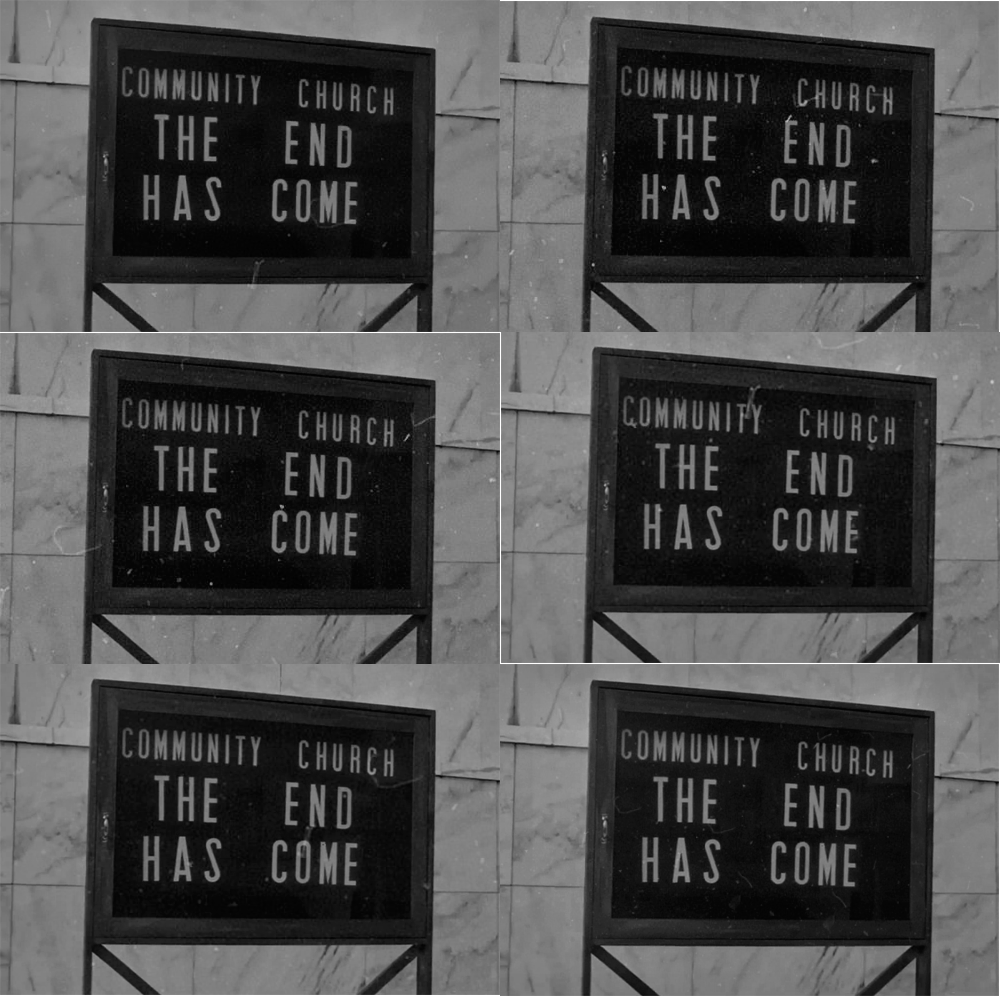


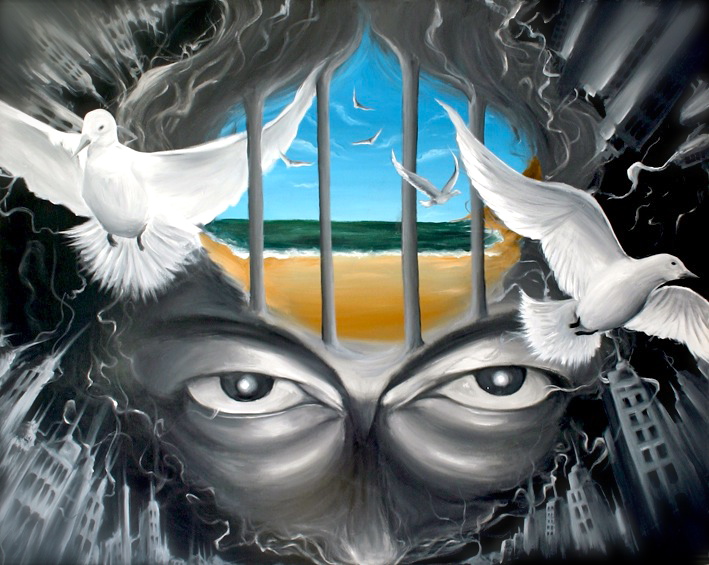
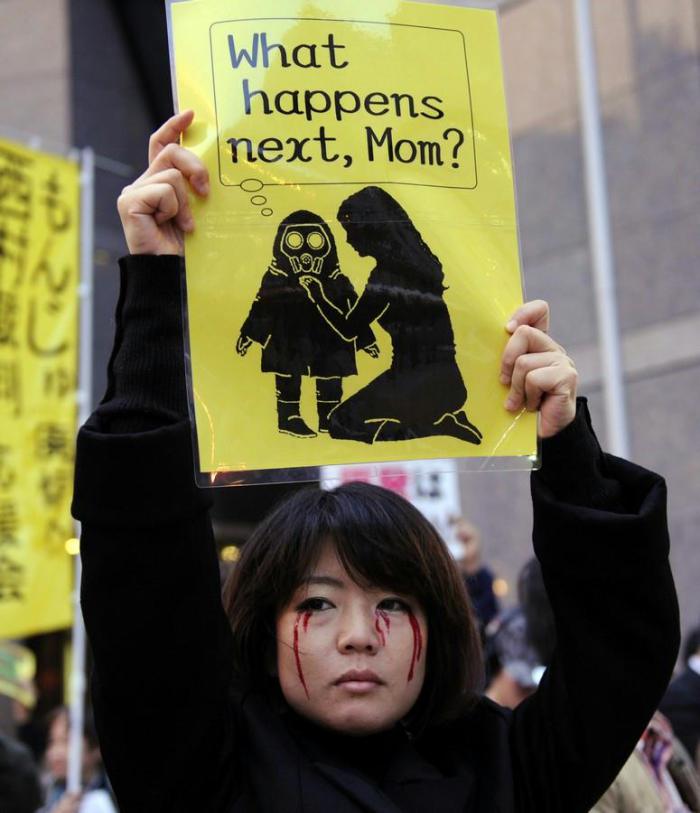

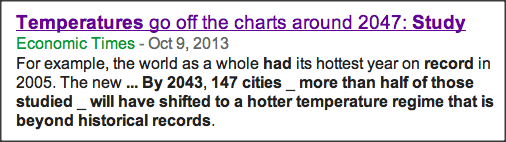
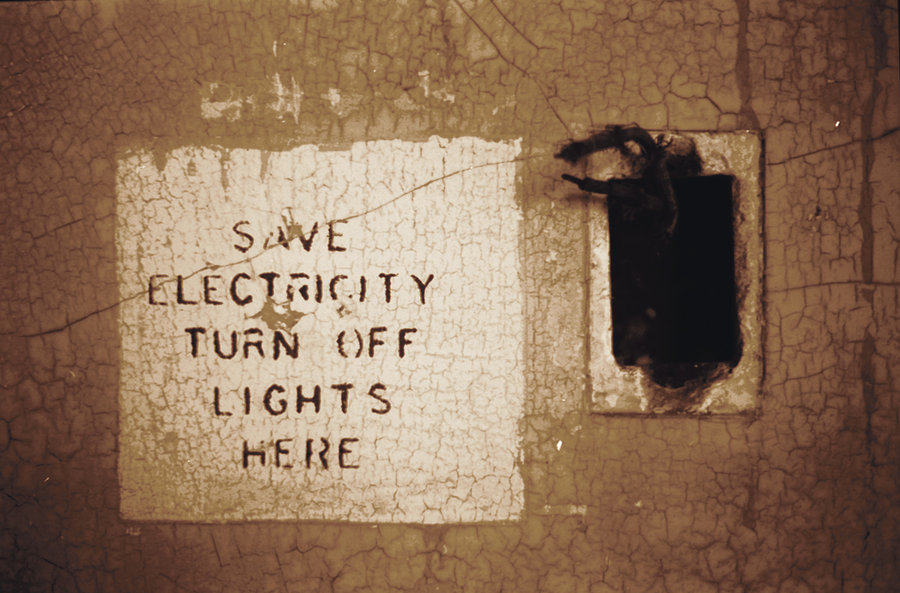


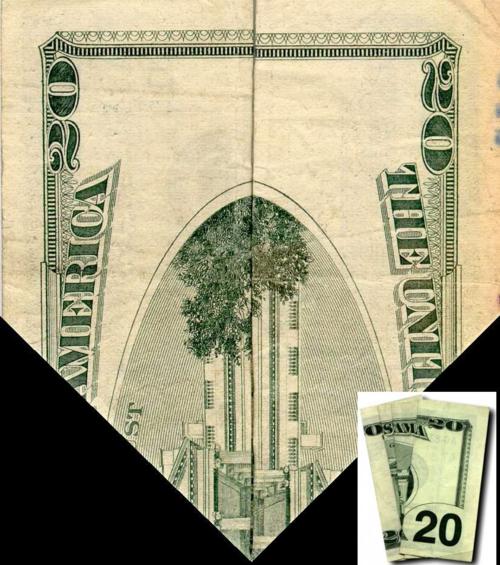



 Collapse of Industrial Civilization