“One of my psych professors told me that people tell stories to cope with their fears. All art and myths are just creations to give us some sense of control over the things we’re scared of. Afraid of dying? Create reincarnation. Afraid of evil? Create a benevolent God who sends evil doers to Hell. I’ve treated soldiers with PTSD by having them draw pictures of what happened over there.”
~ Ben in American Horror Story
Seething just below industrial civilization’s thin veneer of normalcy lies an ocean of grim reality – overpopulation, peak oil, poverty and starvation, hormone-altering pollution and cancer clusters, nuclear radiation from the mishaps of distant countries, pandemics from mutagenic viruses, climate chaos, mass extinction, etc. Working to suppress the fear of such real-world nightmares is an assortment of psychological and cultural defense mechanisms such as the myth of technological progress, religious dogma, Madison Avenue propaganda, and the unconscious tricks of self-deception we are all vulnerable to (emotional detachment, rationalization, retreating into fantasy, etc.). All the while and in the background is the constant hum of the global consumerist machine churning out endless promises of satisfaction and happiness if only you buy this or that product. Most have bitten the fruit of materialism and swallowed whole the false truism that human progress is always on an upward trajectory with science and human ingenuity solving all problems. Citizens of ‘developed’ countries are blissfully unaware their life of leisure and comfort is supported by dozens and dozens of energy slaves working day and night all year long, year after year. Grocery store shelves brimming with food, a high animal protein diet, personalized auto transport in and out of sprawling suburbs, globetrotting air travel, and a machine-dependent society powered at the convenient flip of a switch have all been made possible by a fast-depleting source of cheap, energy-dense fossil fuels.
We were born into this energy-rich cocoon of modern industrial civilization with each successive generation growing more and more accustomed to its skyscrapers, concrete sidewalks, asphalt roads, and cacophony of automation until it is now all simply taken for granted. Restless and agitated, we no longer are connected to the natural cycles of the seasons, the rising and setting of the sun and moon, and nature’s own biological clock which measures time with the migration of animals, the blooming of plants, birth and death. Instead, time is measured in quick sound-bites on TV, the hours in a workday, the quarterly profits of corporations, and the microseconds of high-frequency stock trading. Time is money, and the bottom line reigns $upreme. Social and environmental consciousness has been paved over with consumer icons, and the future is a barcode stomped stamped into your forehead. Industrial civilization’s coveted energy resources, frantically ripped out of the ground and burned up into the atmosphere, have irrevocably disrupted the stability of a climate that has allowed life to flourish. The Earth itself has been thrown off kilter and its natural clock has been broken. Plants are blooming when they shouldn’t, succumbing to invasive pathogens and insects, and withering from drought or unusual cold snaps. Animals are migrating north earlier and earlier and dying off from disease and starvation in a warming world. People are losing their homes to freak storms and rising tides. The word “extinction”, when uttered in a public forum, is treated as mere hyperbole, and the fragility of the biosphere is neither acknowledged nor truly appreciated.
“…The so-called Holocene climate is “the only state of the Earth system that we know for sure can support contemporary society” (Stephen et al. 2011, 739). It is the linchpin of humanity’s life-support system and stands at the core of its safe operating space (Rockström et al. 2009). It can even be argued that keeping the Holocene climate resilient is an essential system function not just for human society but for the planetary system as a whole (Lovelock 2000)…”
~ Jörg Friedrichs, The Future Is Not What It Used to Be
“…there is no worldwide plan on how to move forward to avoid an extinction event. As a consequence, except for a few scientists, the world community will be shocked by the carnage because nobody anticipates it really happening. Otherwise, the governments of the world would be furiously working on solutions, but they are not…”
~ Robert Hunziker, Looming Danger of Abrupt Climate Change
Ah, but Peter Ward just said humans are more than “average” and won’t go extinct:
“Species don’t age out of existence, species are killed off, lose competition, they go extinct because they’re driven to extinction. It’s not inherent. It’s not within them.
So if we keep track of Mother Earth and do some good engineering then we’re not going to go extinct. But extinction and misery are two different things. Not going extinct doesn’t mean you’re not going to be miserable, and by misery I mean, wholesale, enormous human mortality.”
Do some “good engineering”? Christ, Peter Ward has fallen for the technological progress myth just as has scientist Natalia Shakhova, a leading expert on the East Siberian Arctic Shelf.
Technology has not created a utopian nirvana; it has created a capitalist dystopia:
“…The inability of most developing countries to meet the basic needs of its population, whilst somehow being swept up in the euphoria of new technologies that cater to more individualistic needs and pursuits (not all socially useless or destructive), has its origins in flawed governmental policies that have defined progress as the quest for productivity gains and economic growth rather than human development. Policy-makers in the developing world adopted a fundamentally invalid economic system that has led to the crisis of capitalism the world is experiencing and the questioning of the perpetual growth mantra. These decision-makers have put their faith in consumption-led growth with its emphasis on technology, and abdicated their responsibility to meeting people’s basic needs and protecting natural resources. This approach is rooted in the Western economic model of the past two to three centuries, when a minority saw the world as their oyster and plundered other countries to create prosperity. As such economic growth through externalizing cost, underpricing resources and promoting relentless consumption has become the world’s one and only economic model, a recipe for disaster in Asia…
…Despite the rhetoric about the pressing need for development and the emphasis on primary education, health care and even resources management, the Washington Consensus has exclusively focused on economic growth. It has advocated broad trade liberalization through privatization and the increase of foreign direct investments, amongst other structural adjustment strategies, as a “first stage policy reform” for developing countries to boost economic growth. The promotion of this set of policies is primarily driven by the desire to secure markets for multi-national companies and Western economies. Local elites benefited from it too…
…From the standpoint of this economic paradigm, the relentless pursuit of technological innovation is supposed to solve global challenges such as poverty and even resources depletion. In reality, technological progress has, in many instances, accelerated resources depletion rather than reduce it. Technological innovation might have served the needs of the global population in terms of productivity and efficiency but not in terms of sustainability.
Forestry technology, for example, allowed harvesting on hitherto unimaginable scales. Whilst cutting trees was mainly done by hand until World War II, advance in engineering led to the development of small and powerful chainsaws, hence transforming the logging industry. Lumberjacks can now cut down trees between a hundred and a thousand times faster than they could with axes. Fisheries are another sector where the lack of strong policies has allowed people and companies to exploit the oceans thanks to technology.
To go further deep into this model’s misconception of the role of innovation, one must cast doubt on the contention that green technology will come to the rescue and create a more sustainable environment. “Greening” the economy by just producing more so-called “green” consumption is actually an intellectual lie. Zero-emission vehicles will remain toys for the rich because they require exotic material and thus will keep being expensive. In addition, they do not address the issues of externalized costs, which more and more cars will impose on Asian cities. This problematic can be extended for a whole range of consumer goods where “greening” and “innovation” are used to camouflage the reality, which is the pursuit of producing more goods cheaply and encouraging relentless consumption….”
~ Chandran Nair, The Myth of Technological Progress
Capitalism certainly feeds off the overpopulation crisis. More people means more potential customers, more consumption, and more profit. I searched in vain to find an article explaining how capitalism would solve the crisis of overpopulation, I found this video by Yaron Brook who appears to be a very ardent supporter of laissez-faire capitalism and Ayn Rand. I recommend watching the video for the sheer amusement of watching this guy execute every mental gymnastic trick he can think of to delude himself into believing that overpopulation is a nonissue. No more land? No problem, we can stuff more people out on the oceans or up in outer space. Of course he too also grasps at the quixotic techno-fix of the future.
I see China is worried about the economic ramifications of its barbaricsocial engineering project:
It’s a “free market” and the military industrial complex sees a lucrative future in war, famine, pestilence, and natural disasters. Overpopulation will provide more cannon fodder for when America’s war economy goes into hyperdrive for the last remaining resources on the planet. America’s captive pool of dirt cheap labor will be stitching the uniforms.
You almost have to feel sorry for the conservatives, tea partiers, and the whole menagerie of free market evangelists these days. Even a casual perusal of AM talk radio, along with the buffoonery and gas baggery of the hard right news shows, one can see evidence of collapsing narratives at every turn.
Our disintegrating social conditions demand a plausible explanation from the right, and any such explanation, ideologically, must be sure to exonerate capitalism and the free market system.
This is becoming increasingly hard to do, as the shrill and contradictory defenses put forth become less satisfying every time the story is told. The story evolves, the audience reactions carefully polled, and the messaging refined to try and adapt to a low information audience growing more skeptical by the minute. There are many versions of the same story, depending on who tells it and more importantly who is paying for it, but for this discussion we are interested in the narrative brought forth by the evangelical right, and their socially conservative stable mates, or in general, the fire and brimstone crowd accounting for something near half of the American population.
The operating theory of this cohort centers for the most part on morality, or lack thereof, as principal cause for our society’s collapse.
Rush Limbaugh provides a pathetic but typical example of this type of addled logic:
The reason all of these stats on income inequality don’t work anymore is because the baseline for the statistical start is the fifties. Now, what was happening in the fifties? Well, in the fifties we had this thing called a nuclear family. There was a mother, a woman. There was a father, a man. They had babies by engaging in coitus. Leave It To Beaver, Ozzie and Harriet — hell, even the Beach Boys, for crying out loud! They were seemingly clean and pure as the wind driven snow.
Anyway, then after the coitus in the bedroom, then little Beaver was born and then Wally, and there were 2.8 of the kids and little picket fence and (if the dad got a vice presidency), there were two cars in the garage, and mom — the female. I’ve gotta make that distinction. The mother was a woman, the wife of a man. She stays home, raises the kid, fixes breakfast, sends ’em off to school, talks to the PTA. There was all that. There was one breadwinner, and there was an economic boom going on at the same time, following World War II.
Incomes in America rose dramatically. Then something happened. The left didn’t like that arrangement. That was just bad. They didn’t fit in. They didn’t like the idea of coitus in the bedroom. They didn’t like coitus with someone the opposite sex, necessarily. They didn’t even like coitus as a means of producing a kid. In fact, most times they didn’t even like the kid. They wanted to have the abortion. So what happened was that the nuclear family became under assault by “progressive” forces of modernization.
So today, you can’t compare family income today to what it was in the fifties when the boom time ’cause the family’s not the same. You’ve got single women, single-parent families, fewer nuclear families. Incomes have been divided. It doesn’t work.
Who knew?
The root of American ethics and morality stems in part from its heavily Protestant and Calvinistic theological underpinnings, which we might well reduce to the “Puritan” ethic. There are several key components of this behavior, tracing back to the late 17th century:
1. Personal sacrifice fulfilled by austere living conditions.
2. Self-sufficiency and disdain of charity for one’s self.
3. Obsessive work ethic fueled by the notion that idleness is evil.
Of course there are others, but we can use these generalizations to continue. In addition we should mention that Calvinism utilizes the principle of predestination, or predetermination, a fundamental departure from modern evangelical Christianity.
The rollup of these centuries old dogmatic beliefs is a programing bias towards moral explanations for when things go wrong, and strong lifestyle choices that dictate high moral standards when times are normal, in order to stave off any potential (future) fall from grace. The modern evangelical right has conflated this DNA to represent a distorted view of Christianity leaning heavily on Capitalism-which has fascist underpinnings in its ultimate embodiment.
In the Flat Fields
A gut pull drag on me Into the chasm gaping we Mirrors multy reflecting this Between spunk stained sheet And odorous whim Calmer eye- flick- shudder- within Assist me to walk away in sin Where is the string that Theseus laid Find me out this labyrinth place
I do get bored, I get bored In the flat field I get bored, I do get bored In the flat field
What is often lost in our current infatuation with Enlightenment thinking is the degree to which the Pre-Enlightenment Church managed commerce, financing, and general market forces. In fact, the Church maintained an iron hand on issues such as usury, which was condemned and not distinguished from the “normal” practice of charging interest until the late 19th century.
In the age of Church hegemony, which lasted for centuries, it was considered immoral, and grossly so, to profit in any way through trade, charging interest, or commerce which resulted in a profit without actually performing any work. specifically, any rent seeking activity was forbidden.
Things that are considered commonplace today, such as raising prices for items needed in a disaster, (supply and demand) were thoroughly rejected by the Church and considered inconceivable during that time. Thomas Aquinas brought forth these concepts in the theory of Just Price in his Summa Theologica circa 1274 AD. Although this was clearly a Pre-Capitalist economy, much learning was put towards strict management of commerce dating back to the money changers being expelled from the temple in Biblical times- a theme oft repeated through the Dark Ages and well beyond.
For centuries, civilizations knew full well the dangers of markets and unconstrained commerce, and there is more than a passing connection between this realization and theology, present in virtually all religions throughout time.
This reality has been brought to the fore with the recent, and controversial, exhortation Evengelii Gaudiumfrom the Roman Catholic Pope. Pundits have been zeroing in on the more provocative aspects after his release of the document last month. I’ve read all 244 pages of it and I’m here to tell you that he has pretty well burned down the Christian right’s moralistic narrative along with a good bit of the more mainstream conservative cohort.
For those who have dismissed previous Papal exhortations (as well as any other messaging, written or otherwise delivered) as irrelevant and hypocritical drivel, and I count myself on this list, the recent missive is a shocker. Let’s take a look as some selected passages:
We can no longer trust in the unseen forces and the invisible hand of the market. Growth in justice requires more than economic growth, while presupposing such growth: it requires decisions, programmers, mechanisms and processes specifically geared to a better distribution of income, the creation of sources of employment and an integral promotion of the poor which goes beyond a simple welfare mentality. I am far from proposing an irresponsible populism, but the economy can no longer turn to remedies that are a new poison, such as attempting to increase profits by reducing the work force and thereby adding to the ranks of the excluded.
…
The need to resolve the structural causes of poverty cannot be delayed, not only for the pragmatic reason of its urgency for the good order of society, but because society needs to be cured of a sickness which is weakening and frustrating it, and which can only lead to new crises. Welfare projects, which meet certain urgent needs, should be considered merely temporary responses. As long as the problems of the poor are not radically resolved by rejecting the absolute autonomy of markets and financial speculation and by attacking the structural causes of inequality,[173]no solution will be found for the world’s problems or, for that matter, to any problems. Inequality is the root of social ills.
Now this passage in particular stands out, and is a recurring theme throughout the document. Inequality is the root of all social ills. Not moral misbehavior. Rush Limbaugh is positively foaming at the mouth with this conclusion. You see, the story as told has to exonerate Capitalism, so the explanatory focus is redirected to not just suggest, but to demand that the moral lapses of the populace are the sole causality of a world gone bad.
After all, the world was given to us with abundance, work hard, maintain high moral standards, and its abundance will never run out. No limits to resources, no environmental disasters, no exploitation, nothing but paradise, unless of course you take a bite of that apple.
Let’s go on:
Sometimes we prove hard of heart and mind; we are forgetful, distracted and carried away by the limitless possibilities for consumption and distraction offered by contemporary society. This leads to a kind of alienation at every level, for “a society becomes alienated when its forms of social organization, production and consumption make it more difficult to offer the gift of self and to establish solidarity between people.
Karl is that you?
Genuine forms of popular religiosity are incarnate, since they are born of the incarnation of Christian faith in popular culture. For this reason they entail a personal relationship, not with vague spiritual energies or powers, but with God, with Christ, with Mary, with the saints. These devotions are fleshy, they have a face. They are capable of fostering relationships and not just enabling escapism. In other parts of our society, we see the growing attraction to various forms of a “spirituality of well-being” divorced from any community life, or to a “theology of prosperity” detached from responsibility for our brothers and sisters, or to depersonalized experiences which are nothing more than a form of self-centredness.
This would seem to be a dig at modern “strip mall religiosity” as it is now de rigueur to have non denominational churches in strip malls, repurposed industrial buildings, etc, all which have superficial distorted messaging, often pronouncing how wealth is your divine right.
Today’s economic mechanisms promote inordinate consumption, yet it is evident that unbridled consumerism combined with inequality proves doubly damaging to the social fabric. Inequality eventually engenders a violence which recourse to arms cannot and never will be able to resolve. It serves only to offer false hopes to those clamouring for heightened security, even though nowadays we know that weapons and violence, rather than providing solutions, create new and more serious conflicts. Some simply content themselves with blaming the poor and the poorer countries themselves for their troubles; indulging in unwarranted generalizations, they claim that the solution is an “education” that would tranquilize them, making them tame and harmless. All this becomes even more exasperating for the marginalized in the light of the widespread and deeply rooted corruption found in many countries – in their governments, businesses and institutions – whatever the political ideology of their leaders.
…
Today in many places we hear a call for greater security. But until exclusion and inequality in society and between peoples are reversed, it will be impossible to eliminate violence. The poor and the poorer peoples are accused of violence, yet without equal opportunities the different forms of aggression and conflict will find a fertile terrain for growth and eventually explode. When a society – whether local, national or global – is willing to leave a part of itself on the fringes, no political programmes or resources spent on law enforcement or surveillance systems can indefinitely guarantee tranquility. This is not the case simply because inequality provokes a violent reaction from those excluded from the system, but because the socioeconomic system is unjust at its root. Just as goodness tends to spread, the toleration of evil, which is injustice, tends to expand its baneful influence and quietly to undermine any political and social system, no matter how solid it may appear. If every action has its consequences, an evil embedded in the structures of a society has a constant potential for disintegration and death. It is evil crystallized in unjust social structures, which cannot be the basis of hope for a better future. We are far from the so-called “end of history”, since the conditions for a sustainable and peaceful development have not yet been adequately articulated and realized.
So now we get to the money shot:
While the earnings of a minority are growing exponentially, so too is the gap separating the majority from the prosperity enjoyed by those happy few. This imbalance is the result of ideologies which defend the absolute autonomy of the marketplace and financial speculation. Consequently, they reject the right of states, charged with vigilance for the common good, to exercise any form of control. A new tyranny is thus born, invisible and often virtual, which unilaterally and relentlessly imposes its own laws and rules. Debt and the accumulation of interest also make it difficult for countries to realize the potential of their own economies and keep citizens from enjoying their real purchasing power. To all this we can add widespread corruption and self-serving tax evasion, which have taken on worldwide dimensions. The thirst for power and possessions knows no limits. In this system, which tends to devour everything which stands in the way of increased profits, whatever is fragile, like the environment, is defenseless before the interests of a deified market, which become the only rule.
And
One cause of this situation is found in our relationship with money, since we calmly accept its dominion over ourselves and our societies. The current financial crisis can make us overlook the fact that it originated in a profound human crisis: the denial of the primacy of the human person! We have created new idols. The worship of the ancient golden calf (cf. Ex32:1-35) has returned in a new and ruthless guise in the idolatry of money and the dictatorship of an impersonal economy lacking a truly human purpose. The worldwide crisis affecting finance and the economy lays bare their imbalances and, above all, their lack of real concern for human beings; man is reduced to one of his needs alone: consumption.
…
In this context, some people continue to defend trickle-down theories which assume that economic growth, encouraged by a free market, will inevitably succeed in bringing about greater justice and inclusiveness in the world. This opinion, which has never been confirmed by the facts, expresses a crude and naïve trust in the goodness of those wielding economic power and in the socialized workings of the prevailing economic system. Meanwhile, the excluded are still waiting. To sustain a lifestyle which excludes others, or to sustain enthusiasm for that selfish ideal, a globalization of indifference has developed. Almost without being aware of it, we end up being incapable of feeling compassion at the outcry of the poor, weeping for other people’s pain, and feeling a need to help them, as though all this were someone else’s responsibility and not our own. The culture of prosperity deadens us; we are thrilled if the market offers us something new to purchase. In the meantime all those lives stunted for lack of opportunity seem a mere spectacle; they fail to move us.
Just as the commandment “Thou shalt not kill” sets a clear limit in order to safeguard the value of human life, today we also have to say “thou shalt not” to an economy of exclusion and inequality. Such an economy kills. How can it be that it is not a news item when an elderly homeless person dies of exposure, but it is news when the stock market loses two points? This is a case of exclusion. Can we continue to stand by when food is thrown away while people are starving? This is a case of inequality. Today everything comes under the laws of competition and the survival of the fittest, where the powerful feed upon the powerless. As a consequence, masses of people find themselves excluded and marginalized: without work, without possibilities, without any means of escape.
Human beings are themselves considered consumer goods to be used and then discarded. We have created a “throw away” culture which is now spreading. It is no longer simply about exploitation and oppression, but something new. Exclusion ultimately has to do with what it means to be a part of the society in which we live; those excluded are no longer society’s underside or its fringes or its disenfranchised – they are no longer even a part of it. The excluded are not the “exploited” but the outcast, the “leftovers.
So this goes on in a similar vein, and this position does not bode well for the conservative narrative. We see capitalism explicitly blamed for inequality, and in turn inequality for societies ills, a disturbing cause and effect that is disruptive to the American status quo. Coming from a supposedly impartial and world recognized voice of moralistic guidance, this is particularly damning.
We have to ask given the (millennial) history of precisely just this set of teachings, where the hell have these people been for the last 400 years? Mired in child molestation cases, and other aspects of immeasurable hypocrisy, that’s where. Typically dispensing irrelevant teachings to a disinterested world, met with a yawn and the clink of coins in the Sunday collections basket, the cafeteria Catholics and faithful parishioners buy their penance on the free market of theology, shopping for workable edicts and morals they can live with, and leaving aside things that might prove troublesome.
And the Church, let’s not (yet) get all misty eyed that the new Pope has found his voice, that the Holy See can finally see after 400 years of Post Enlightenment blindness, because if we learned anything in the Dark Ages we learned the Church was an authoritarian, totalitarian institution, honed to perfection after centuries of practice, misappropriating Christianic themes in furtherance of its own power and hegemony. Restricting knowledge, capturing books, and distorting, twisting and interpreting discovery with a certain malleability of facts, and containing science to maintain its omnipotence.
It is worth noting that at its core, the Church operates as a corporatist entity, with significant focus on profits itself, poisoned if you will, by the very same sickness it chastises. So we might well leave the discussion here, hopeful that the new Papal vision will at least upset some belief systems, and file this under the category of good ideas for the wrong reasons, and move on to other superficial topics. Except that we have 2000 years of history here, history that resonates with this same message, repeated in many ways over and over again. We have a seminal event in the Enlightenment, which purported to shut down the fiefdoms, mysticism and fanciful explanations, replacing it with science and reason to wrest the power and authority from cloistered theocrats.
And this has failed.
None of the Post Enlightenment theories of political economy have provided satisfactory, sustainable solutions despite 400 years of trying. By most measures, they are in fact worse. The current fashionable trend to double down on technology as means of providing solutions is not working, and critical thinkers can see these measures are leading to cascading failure modes, with each technological “breakthrough” creating new and unanticipated failures of their own, with insufficient study as to unanticipated outcomes.
I had occasion last month to attend a talk by Chris Hedges, the first time I have heard him in person. The venue was in Santa Monica in a historic building now owned by the Women’s Club, a depression era wood structure with a whitewashed paint job, faintly reminiscent of a church. The venue was packed to the rafters, with the upstairs balcony fairly bulging under the weight of way more people wanting to see Hedges than the organizers anticipated. Everyone finally got in to the standing room only crowd. Hedges has found his voice, he is articulate in person, but powerful, vocally projecting in a way I’ve not seen him do in taped interviews where he seems more reflective and almost mournful. His message is a powerful force and it is clear his upbringing under a Presbyterian minister (his father) and his education in seminary converge to forge his style and messaging. The emotion and power left me somewhat stunned, I wasn’t prepared for the electricity in the room and palpable agitation of the attendees who know full well the truth in his message.
It might seem that these events conspire to ordain a germ of an idea, a small, kindled spark that suggests, almost horrifically, that the assemblage of the capitalist mode of production is not a just theory of economics or political economy. It is not merely an exchange of commodities or a clever and oblique system of exploitation. It is not just a mechanism for conflicting class structure or means for the landed nobility to hold down the masses.
It is a religion, a theology so all consuming that it transcends borders, boundaries, catechism and Koran. It extends to every denomination, to every corner of the earth with a deification and worship of commerce and consumption so deeply ingrained that there is no inoculation once infected. Its participants trapped in a purgatory analogous to opium dens, transient pleasure of consumption and accumulation, but in the 19th century opium dens most knew to advise a friend to retrieve them after several hours (or days) as they would be unable- and unwilling- to leave on their own.
In this version, no one is coming to get you out, there is no getting out. No one is free from the addictive vapors of consumption.
a) First of all because, as we have seen, capitalism, by defining itself as the natural and necessary form of the modern economy, does not admit any different future, any way out, any alternative. Its force is, writes Weber, ‘irresistible’, and it presents itself as an inevitable fate.
b) The system reduces the vast majority of humanity to ‘damned of the earth’ who cannot hope for divine salvation, since their economic failure is the sign that they are excluded from God’s grace. Guilty for their own fate, they have no hope of redemption. The God of the capitalist religion, money, has no pity for those who have no money . . .
c) Capitalism is ‘the ruin of being’, it replaces being with having, human qualities with commodified quantities, human relations with monetary ones, moral or cultural values with the only value that counts, money.
d) Since humanity’s ‘guilt’ – its indebtedness towards Capital – is permanent and growing, no hope of expiation is permitted. The capitalist constantly needs to grow and expand his capital if he does not wish to be crushed by his competitors, and the poor must borrow more and more money to pay their debts.
e) According to the religion of Capital, the only salvation consists in the intensification of the system, in capitalist expansion, in the accumulation of more and more commodities; but this ‘remedy’ results only in the aggravation of despair.
So in other words, the will of God is substituted by the will of the market. The Saints of Capitalism are not represented by iconography in dusty church alcoves, rendered in plaster bas relief, illuminated by flickering votive candles aligned in perfectly concentric rows, no, these saints are reproduced on our paper money, mass produced by photoengraved plates and scaled to feel, to touch, with every transaction to reacquaint and remind the heathen that this is the portal to eternal salvation.
Our cathedrals are not limestone structures of centuries production, flying buttresses soaring gracefully to the heavens, constructed of a scale to intimidate and instill perspective of scale between creator and subject, no these cathedrals are chrome and glass, with banal and endless rows of cubicles for the disciples to prosthelytize to the unwashed masses, “lift yourself, take our hand and elevate yourself to the glory of all the money is and can be”.
Consume or be consumed, the entire New Testament may be reinterpreted not as a warning of end times, not as a statement of worldly evangelism, but each parable and writing a searing indictment and prophetic warning of a planet destroying insidious religion about to rise. The Original Sin may well be reduced to being born into a world which requires you to sell your labor power for survival, the baptism a cleansing in preparation of a lifelong participation in commodity exchange- labor for goods.
There is no expiation in the religion of Capitalism, it is game theory analogous to Newcomb’s Paradox, a contrivance where an omniscient being gives you two choices, one of which is already made for you, and analyzes your strategy for utility maximization when you know that your choice is already predetermined- and you cannot change the outcome.
Despite mounting evidence of our grim reality, the world’s psychopathic leadership remains willfully deaf, dumb, and blind to the unfolding global ecocide and humanicide. A persistent sounding of the alarm by a tiny minority of the population only seems to have irritated and offended those in the elite class who are pressing the fossil-fueled industrial machine onward, full steam ahead. However, it’s not a cliff we are headed towards because surely the psychopaths would have hidden their parachutes underneath their business suits. There will be no Bottleneck for humans because we’re headed toward the black hole of extinction from which nobody gets out alive. Yes, they’ll be a few hangers-on for a brief period until there is only one lone straggler… and then darkness for the human species along with 99% of all other life. We’re doomed by a pathocracy:
…from Greek pathos, “feeling, pain, suffering”; and kratos, “rule”
A totalitarian form of government in which absolute political power is held by a psychopathic elite, and their effect on the people is such that the entire society is ruled and motivated by purely pathological values.
A pathocracy can take many forms and can insinuate itself covertly into any seemingly just system or ideology. As such it can masquerade under the guise of a democracy or theocracy as well as more openly oppressive regimes…
Kevin Moore, a frequent commenter on this site, has provided us with an excellent summation of current factors which clearly spell extinction for the “wise” ape. Certainly if a reasonable person in charge studies his list, they would want to turn this ill-fated ship around before it quite literally takes everyone down into a deep, watery grave. On the contrary, Kevin points out that they are “throwing the compass and fishing gear overboard” and “boring holes in the hull while distributing all the rations for immediate consumption.” I’m afraid those who have managed to work their way into political positions are forbidden from making any decisions jeopardizing business-as-usual; but as the memes go, there is no business on a dead planet nor is there a planet B. The least these politicians and corporate heads could do is be honest with their own children by telling them their future is not as important as the short-term profits to be had right now by ripping up the Earth’s last remaining resources and fouling the biosphere. If they cannot be truthful to their own offspring, how could we expect them to be forthright and unbiased with us?
At any rate and for posterity’s sake (however brief that may be), here is Kevin’s detailed and ‘hopium-free’ list:
Yesterday I sent out an email to a long list of people concerning the meeting I had with the local council’s climate change officer, during which I pointed out we are in the early stages of complete meltdown of planetary systems. And ‘nobody’ is at all bothered.
Here is what I sent as a summary of the meeting: .
I raised the following points with Colin Comber, New Plymouth District Council climate change officer, at our meeting on Friday, 29th November, 2013. On most points he had nothing to say.
1. The forcing factor for methane has been raised from 23 times CO2 to 34 times CO2. Even that multiplier understates the warming potential in the short term, and a figure of at least 100 times should be used for methane bursts.
2. Recent methane bursts in the East Siberian Sea have resulted in 2000ppb, which is equivalent to over 200ppm CO2 in the short-term, making the total global CO2 equivalence 600ppm (at least). The extraordinarily high concentration of greenhouse gases has resulted in rapid temperature increases in the Arctic (up around 1C since 2006, despite the huge amount of energy involved in melting ice.).
3. 2012 saw the lowest ever summer ice area.
4. The current Arctic ice area is hovering around two standard deviations below the historic average, but much of the ice is thin and new, making 2013 the lowest stable ice volume ever.
5. Atmospheric CO2 hit 400ppm earlier this year. It troughed at 393ppm (photosynthesis cycle) and is on its way up; it is anticipated to reach 403ppm April-May 2014.
6. The heat forcing of current atmospheric CO2 is equivalent to around 400,000 Hiroshima-sized bombs being exploded every day.
7. The present level of atmospheric CO2 is 40% above the pre-industrial level and corresponds to a sea level 23 meters above current; the reason we don’t have an immediate sea level rise is the thermal lag of warming deep oceans and converting ice into water. Such a level of CO2 has not been experienced any time in the evolution of humans over the past 2 million years. Indeed, for much of our recent history the CO2 level was around 180ppm and there were thick ice sheets as far south as central England.
8. The IEA has announced we are on track for a rise in average temperature of 3.5oC by 2035. Such a temperature rise puts temperatures beyond anything experienced in human history and most of the Earth into an uninhabitable zone. Interestingly, NZ governments quote the IEA as the best source of information when it comes to energy but completely ignore the IEA when it comes to unwelcome information about climate. The IEA is talking about a runaway greenhouse gas situation.
9. Acidification of the oceans [due to absorption of anthropogenic CO2 from the atmosphere] is proceeding at an unprecedented rate, leading to stress of organisms dependent on bicarbonate cycle for shell formation. Industrial activity is altering the chemical and biological composition of the oceans at a rate faster than that of the great Permian Extinction Event which wiped out 95% of life on Earth. Continuation on the current path of burning fossil fuels will render the oceans uninhabitable to most existing marine species, and then wipe out most terrestrial species.
10. I was personally shocked to see millions of jellyfish on a local beach recently. Although my observation has no scientific significance it is indicative of the ‘death of the oceans’ I have been reading about; we are transforming the oceans back to some primeval form, similar to that of 600 million years ago, wiping out the species (turtles, sunfish etc.) that feed on jellyfish and loading the oceans with toxins. I had previously noted the paucity of sea life in rock pools compared to 30 years ago (this is presumably not from over-collection, since the beach has been designated a maritime protection zone).
11. Whereas the previous five mass extinction events (other than the one that wiped out dinosaurs) were due to natural volcanic activity, the present mass extinction event is due to industrial activity and emissions from industrial activity.
12. An unknown amount of radiation is leaking from the crippled Fukushima reactors into the Pacific Ocean. People on the west coast of the US are now extremely concerned, particularly since mass deaths of sea life are now being frequently reported.
13. Australia recently reported the highest ever October temperatures (corresponding with the earliest severe wildfires).
14. Typhoon Haiyan was the biggest storm ever to make landfall and resulted in unprecedented damage. This was due to extraordinarily hot sea water associated with ocean warming. An excellent essay on Nature Bats Last highlighted the fact that prior to the Second World War people in the region lived without the ‘benefits’ of civilization, and when storms smashed things up they just picked up the pieces and rebuilt their huts, got water from lakes and rivers, and went back to fishing from small boats: now they are unable to do any of that because all the natural, sustainable systems have been ruined or covered with concrete and asphalt, and industrial civilization resulted in a population explosion that resulted in far more victims than there would have been if development had not occurred.
15. If we imagine the Earth totally covered with industrial civilization (no land available for food production) it is clearly not sustainable. 90% covered by civilization is not sustainable. Nor is 80%. Not even 50% is sustainable. The current level of civilization utilises about 43% of the primary production of the Earth and has resulted in a 0.85C rise in average temperature. That 0.85C rise is already having catastrophic effects (meltdown of the Arctic, super-storms etc.)
16. The fact that we already have meltdown (lowest Arctic ice, extraordinary storms, death of corals etc.) at 0.85C above the long-term average indicates that we are already in overshoot with respect to population and resource consumption. Despite the fact that we have reached the meltdown stage, governments persist with policies predicated on increased population and increased resource use, which is completely insane. NPDC [New Plymouth District Council] advocates the same kind of insanity on a daily basis.
17. The previously proposed ‘safe’ level of temperature rise of 2C is not safe at all, and was only ever an arbitrary number. But climate specialists now admit that warming cannot be restricted to 2C anyway, and that we are on track for a 4C or 6C rise in average temperature, i.e. a largely uninhabitable planet in a matter of decades, probably by 2060, which would be within the normal lifespan of children living today. If the International Energy Agency is correct, the Earth will be largely uninhabitable by 2040.
18. Nothing whatsoever is being done to curtail emissions. International negotiations are a farce predicated on ‘kicking the can down the road’ for as long as possible. NPDC policy, mirroring that around the world, is geared to increasing CO2 emissions, via increased population, increased use of concrete, increased dependence on internal combustion engines, etc. I quoted the incident I had witnessed of two petrol-powered vehicles being used to deposit and level gravel on a path in Pukekura Park when one person with a wheelbarrow could have done the job (and 50 years ago that was how the job was done); meanwhile, the mulching machine in operation in the park prior to our meeting would have consumed more energy in a few hours than the electric bikes the council promotes would save in a year.
19. Extraction of conventional oil peaked over 2005 to 2008, and the economic system is now being propped up by desperation measures centered around fracking, deep-sea drilling, extraction from tar sands, etc. as well as consuming ever greater amounts of energy, such activities increase the emissions associated with fossil fuel extraction, thereby exacerbating the climate catastrophe.
20. We cannot look to John Key* or Jonathan Young** or Andrew Little*** for leadership on environmental issues: they are simply opportunists acting as agents of global corporations and money-lenders; they implement policies favourable to global corporations and money-lenders which entail trashing the environment, generally as quickly as possible.
21. Currently, NPDC is fully committed to destroying the futures of the young people living in the district and elsewhere via resource depletion and environmental collapse, as indicated by the huge display in the council foyer which announces that NPDC spends 2c of every dollar collected promoting economic growth. (Economic growth equates to increased resource consumption and increased emissions.)
22. The present economy has no future because of energy depletion and because it is increasing the level of pollution, both locally and globally. Continuation on the present path of searching for and burning fossil fuels results in an uninhabitable planet within decades. Drastically reducing fuel consumption leading to total abandonment of fossil fuels is the only sane option. (It may be too late for that, but it is still the only sane option.)
23. This is not a matter of priorities. Surely there can be no priority higher than ensuring the next generation has a habitable planet to live on. The system ignores the most important priority of all, and therefore the system is INSANE.
24. Everyone within the system pretends nothing is wrong and that the system has a future even when a modicum of rational thought indicates it doesn’t (infinite growth on a finite planet is mathematically impossible.)
25. The composition of the new council give us no reason for optimism and many reasons for extreme pessimism.
26. The main reason the general populace of the district continues to ‘behave badly’ -purchase and use oversized vehicles, cover land with concrete and asphalt, consume at unsustainable levels etc.- is because they are encouraged to by NPDC. The only message they get from the council is that everything is rosy (when the reverse is the case and we are mightily close to collapse).
27. The overuse of internal combustion engines is causing severe health problems globally and within the district. Coupled with consumption of junk food, mechanized transport is causing obesity and other diseases. Consumerism is generating a freak society, and each week that passes the ‘freak show’ becomes more bizarre.
28. There is a culture of ‘spend, spend, spend’ amongst council officers, with utterly ridiculous projects being undertaken. Apart from being totally unnecessary, these concrete and steel projects put additional CO2 into the atmosphere and bring forward abrupt climate change and an uninhabitable planet, are financially crippling the district, and pushing those on low fixed incomes ‘off the cliff’.
29. I pointed out that I spoke with Gary Bedford, regional environment officer, prior to returning to NP in 2006, and raised the matters of Peak Oil and Abrupt Climate Change; he ‘did not want to know’ and has done nothing whatsoever to protect the district. Indeed, he is on record as making absurd statements such as: “Climate change will be good for Taranaki.” I wish to have a follow-up session with him.
30. I have been proven right on practically everything I said in 2006 and subsequently to variously composed councils since 2006. Council officers have been proven consistently wrong. But it makes no difference how often council officers are proven wrong, nothing in the system changes and the insanity continues.
31. NPDC has been provided with the most accurate data and analysis available over many years (particularly my submission to the draft plan 2013), and NPDC has ignored it all. Hence, everything that matters has gotten worse and will continue to get worse by the day.
32. As far as I can establish, Colin Comber is the only council officer in a position to challenge the nonsense churned out by the bulk of the administration, in so far as all the policies advocated by senior council officers result in increased emissions and an ever faster meltdown of the global and local environment. I pointed out to him that he has ‘sat on his hands’ since our first meeting (around 6 years ago) and everything has gotten worse as a consequence.
Notes:
*John Key: NZ Prime Minister.
**Jonathan Young: MP for the city
***Andrew Little: List Labour MP for the city (MMP system).
Andre Judd: recently elected (October 2013) mayor of the city.
What is particularly interesting for me is that Jonathan Young, Andrew Little and Andrew Judd all have copies of my most recent book ‘The Easy Way’ (which details most of what is discussed on CoIC and NBL etc.) and that I had several sessions with Andrew Little on the content of TEW, and numerous sessions with Andrew Judd prior to his election.
Old habits die hard, but if you’re a smoker and you’ve got stage 3 cancer staring you in the face, the only two options are to radically change your behavior or die with your bad habits. We’ve already destroyed the Earth’s air conditioner which has altered the Jet Streams, unlocked the methane monster, and set off various other positive feedback loops ushering in a new normal of extreme weather. As a result, humans no longer enjoy a stable climate within which to cultivate food and can no longer depend on feshwater supply from seasonal snow melt. Yes, it’s rather a bit too late, but why keep digging when the hole you are in is already way too deep?
Once in a while in that vast nothingness of the internet I’ll happen across a blog from someone who has something of substance to say. I have also learned that Dmitry Orlov is likely discontinuing any more ‘collapsitarian’ blog posts. Probably not a good subject to dwell on when you have an infant son. In ‘Dmitry flicks it in‘, Harry Willis reminds us that America has been the epicenter of capitalism, always for sale to the highest bidder and now home to a new growth industry – Doomsaying:
[Excerpt]
“…David Halberstam’s book The Fifties was, I think, very enlightening in this regard. We are the home of the chain hotel (Holiday Inn), the chain restaurant (McDonald’s and all its followers), the Big Box stores (Wal-Mart, CostCo), the mega-hardware store (Home Depot, Lowe’s), the strip mall, the suburban housing tract, and most importantly, the concept that corporate power should be concentrated in huge holding companies that own very diverse and large businesses. On this latter point, whether Americans realize it or not, every meal they eat out, every processed food they buy at the market, every sundry (detergent, household necessities) they purchase wherever, every drug and almost everything else they routinely buy is sold to them by about 10 huge holding companies. And all communications are essentially owned by 6 large corporations, so everything you ingest with your ears and eyes is also owned by a corporate cartel.
These huge companies are multinational in character, with much of their business (and payroll) located overseas. They are nominally American, but the sinking mass of the American middle and lower classes here are more or less of marginal relevance to them, and only to the extent that Americans form part of their customer base. The American booboisie needs to be manipulated because the U.S.A. is still nominally a democracy, de jure, although de facto it is what Sheldon Wolin calls an “inverted totalitarian state,” one where the government is owned by Big Business. We are not going to “vote” our way out of this situation, as Russell Brand, among numerous others (including Dmitry Orlov, most definitely) seems to get.
America is a corporate headquarters and tax haven which executes its business plans by means of a huge standing army, which does not often just stand around. We got this way because (a) power always tends to concentrate in fewer and fewer hands, even in a liberal democracy, since as money aggregates it can get rid of legal impediments such as high taxation and anti-trust laws, and (b) because America was the most innovative and naturally-blessed (our peerless real estate) nation on Earth. We also benefitted mightily from intellectual immigration to this country, made possible by the double-digit IQs in charge of Nazi Germany.
I don’t think the United States is going to collapse in the sense that the Collapsarian community talks and writes about. For one thing, the emphasis is too much on Peak Oil. I’ve written before that I think Peak Oil represents a kind of deus ex machina for anti-American wish fulfillment. Some sensitive souls, such as James Kunstler, Dmitry Orlov and many others, are so appalled by the grisly ugliness of the American crapscape, with its chain everything and grotesque proliferation of hideous suburban grids, that they long for some way to predict confidently that it must fall of its own weight. That’s where Peak Oil comes in: you posit that an economy runs on cheap energy, especially petroleum in the American economy, and this gives you a means of assuring everyone that it will all be over soon and an anodyne vision of Norman Rockwell’s neighborhoods will materialize peacefully out of the formless void.
No, I don’t think so. The lower 90% of the American populace has no way to go but down, until it reaches a rough parity with the hard-working masses in Asia who, after all, have many of the same employers as the Americans. The American multi-nationals are indifferent to the fate of their so-called “countrymen,” indifferent to the environment (mountain top removal, fracking, pesticide and fertilizer flushes into the Gulf and oceans, plastic waste, soil erosion, CO2 emissions) and essentially react only when conditions become so dire that the American “platform” is threatened. We’re inflating bubbles again through money printing to retard this natural contraction, and when the bubbles pop (again), we’ll have nother “crisis” which will in fact simply be another step-phase down after the gooey soap is cleaned up. I think that’s how we’ll get there, in a ratchet fashion. We will even adapt to oil high prices, as in fact Americans have done since the 2008 financial crisis began. Americans drive 3% fewer miles now per year than they did 5 years ago, despite increases in population and the “recovery.” Gasoline usage is way down, as people shift to fuel-efficient cars and just leave the car keys on the table in the hallway. Or by the oil can fire under the bridge.
The dramatic immiseration of the American people (thanks, Rob Urie) since 2008 has made catastrophe prediction and doomsaying one of America’s chief growth industries, and many, many writers and speakers have gotten in on the act. But it’s not especially lucrative. Owning one of the Big Corporations is better for that, so the doomsayers drop out and flick it in. It’s always nice to go over to Mom’s house.”
Economic and cultural coercion are readily apparent in our society. And if those don’t work, the corporate state also has policies of overt force – military and law enforcement. You could call this arrangement an ‘open air prison’ or the more apt phrase for America would be ‘inverted totalitarianism’ in which the prisoners aren’t fully aware of their own shackles, transfixed as they are by mass media manipulation, the consumer culture, and the trappings of our high-energy way of life. Is there any wonder that a post apocalyptic scenario holds a certain amount of perverse romanticism for those yearning to escape capitalist modernity?
“The parasite, as any other living thing, aims to reproduce as much as possible, and therefore, exploiting its environment as much as possible. This does not mean that the further exploitation of the host will help to achieve reproductive success of the parasite.”
~ Claude Combes, L’Art d’Être Parasite (loosely translated from french)
The question has been propounded and answered numerous times: “Are we (humans) any smarter than yeast?” The reluctant answer is usually, “No, not really.” Sure, yeast (pl.) possess no consciousness or awareness so far as we can tell, but that may not be a good measure of smarts, it turns out. The salient point of comparison is that yeast consume their environment/habitat/medium until it’s overpopulated and depleted, at which point they die en masse. We’re doing the very same, though it’s taking a long time and we’re not quite done yet. Maybe ionizing radiation from nuclear Armageddon of one sort or another (who’s still watching Fukushima?) will get us before we destroy our own habitat with pollution and anthropogenic climate change (not that nuclear fallout isn’t also destroying our habitat), maybe not. Identical result either way.
A master narrative to explain everything eludes us. True believers are probably content with the idea that god’s will reigns supreme and that, in all his benevolence, he will continue to provide. That’s a comforting fable many have chased into their graves. Those of us bent toward a system of belief based more on evidence see a different future, not so much potential as inevitable.
I realized recently that many of us live double lives: (1) the one we present to our families, friends, acquaintances, colleagues, employers, etc. who have not yet countenanced the idea of collapse honestly for a variety of reasons and (2) the one we sense deep down and are compelled out of a mixture of grief, horror, despair, and commiseration to share in venues like this one. But there’s another kind of dual life that interests me: the life of the body vs. the life of the mind.
Living in Our Bodies
I’ve written before about satiety signals, which basically says that, like yeast, we can’t stop the habit of endless, needless, mindless consumption. We’re insatiable. From there, it may be worth noting the five basic life functions (recycling content from this post):
growth — living beings grow and develop
respiration — they breathe and respire
reproduction — they reproduce offspring
nutrition — they eat food
excretion — they eliminate wastes from the body
A more fully elaborated list goes like this:
obtaining and changing materials into forms an organism can use
taking in food from the environment
breakdown of complex food materials into forms the organism can use
elimination of indigestible material
process by which substances are taken into the cells of an organism
process by which materials are distributed (moved) throughout the organism
release of chemical energy from certain nutrients
chemical combination of simple substances to form complex substances
incorporation of materials into the body of an organism
increase in size
process by which cells become specialized for specific functions
removal of metabolic wastes
process by which organisms maintain a stable internal environment
process by which organisms produce new organisms of their own kind
the sum total of all the chemical reactions occurring within the cells of an organism
We live to eat, reproduce, and eventually die — all basic functions of the body. In our current ‘Age of Abundance’, those of use hanging out on computers probably have our life-preserving bodily needs met and aren’t scrambling to stave off dehydration and starvation the way those living at the edges do. We easily forget, then, that our bodies fail rather quickly without continued inputs: in a couple minutes without air, in a few days without water, and in a few weeks without food. Thus, when fed and clothed and housed satisfactorily (not that we stop consuming there), we easily lose touch with the life of the body and believe — mistakenly, comically, tragically, take your pick — that we can live in our heads.
Living in Our Heads
As a social species, humans also have certain psychosocial needs that must be met. Failures tend not to be as immediately obvious as when bodily needs go unmet, but results are no less dramatic: individuals run off the rails (drug- and alcohol-related self-destruction, psychosis, violent rampages, suicide, etc.) and societies (if you recognize human collectives as a superorganism) become embroiled in madness. When exactly society/civilization first went mad is probably a matter of opinion (some might suggest, for instance, the French Terror), but in the modern industrial era, I suggest that World War One is the conflict that broke us psychologically. We’ve never really recovered. Follow-on wars (World War Two, the Cold War, the Korean War, the Vietnam War, Afghanistan and Iraq (undeclared), and the so-called War on Terror) have all consumed the energies and economies of the world’s superpowers without entirely clear benefits, except perhaps for WWII, which at least ended the Holocaust and for a time stopped Fascism.
Wholesomeness is not a term one could use fairly to describe the attributes of modern American culture, not anymore (if indeed ever). We now live in a Society of Spectacle, and electronics in particular enable omnipresent connection to a firehose-style information feed: pure, indiscriminate volume pointed at everyone all the time. And if ever there were an embodiment of a bottomless pit, an insatiable appetite, our consumption of information is it. Seriously, how many broadcast and cable channels are there, all competing at the juvenile game of made-you-look? Even those of us here at Collapse have what might be called a “spectacular” view of the proceedings.
The Compulsive Explainer has an interesting albeit brief post called “Information Overload as an Addiction” suggesting that our preoccupation with entertainment, especially the electronic sorts (radio, cinema, television, Internet), is for the masses equivalent to giving away one’s mind. Information insatiability has become an addiction, and like political junkies, the media-saturated middle mind of the masses cannot perceive reality through what’s projected by the media at the bidding of cultural, corporate, and political leaders who would keep us calmed and buying. Instead, we live (temporarily) within a giant fiction, a phantasmagoria if you will, nearly a virtual reality, from which there is scarcely an escape even for those who can see the bubble (always from the inside, of course — after all, we’re on computers). While the story continues to be spun, our attention is riveted and our compliance coerced. But never fear: the life of the body will triumph eventually, though only in the negative sense.
Capitalism has, throughout its history, built itself off the backs of the weak through dispossession, slavery, colonialism, technology and military power. Protecting the capitalist system into the 21st century, U.S. military served as the all-powerful proxy force of the global corporate elite. In the waning days of modern-day civilization, transnational corporations found even more ways to amass power and squeeze out every last penny from the Earth to the gods of capital. In the name of ‘free trade’, secretive agreements with alphabet soup-acronyms like TTP and TPIP were concocted to protect and expand profits as well as investor returns at the expense of all else, including the sovereignty of nations and the very habitability of the planet. Corporations became the new kings and queens, tsars and tsaritsas, bishops and popes. The last grab for what was left could now be done more swiftly while circumventing the laws of nations.
“…Capitalism has an inbuilt wondrous capacity of resurrection and regeneration; though this is capacity of a kind shared with parasites – organisms that feed on other organisms, belonging to other species. After a complete or near-complete exhaustion of one host organism, a parasite tends and manages to find another, that would supply it with life juices for a successive, albeit also limited, stretch of time.
A hundred years ago Rosa Luxemburg grasped that secret of the eerie, phoenix-like ability of capitalism to rise, repeatedly, from the ashes; an ability that leaves behind a track of devastation – the history of capitalism is marked by the graves of living organisms sucked of their life juices to exhaustion…” ~ Zygmunt Bauman
In a world of finite resources controlled by a tiny capitalist class, there would eventually only be two classes remaining – the über-wealthy or global elite and the vast underclass of disposable workers who eked out a subsistence existence. The wealth of society continued to be funneled upwards to the corporate overlords by way of deregulation, privatization, low or nonexistent tax rates, control of the legal system, and the cutting away of any last scraps of a social safety net.
Preoccupied by their digital screen devices and satiated on mass-produced junk food, the plebs never really noticed they were living in an open-air prison. In the meantime, the walls of a police state rose up to protect the sociopathic elite. As long as the ‘consumers’ were kept in a continual state of ‘amusement madness’ and on the treadmill of work exhaustion, there would be no time for contemplating the reality of climate change, the ever-widening wealth gap, the rise of a corporate fascist state, or the disappearance of the natural world.
“Living in an age of advertisement, we are perpetually disillusioned. The perfect life is spread before us every day, but it changes and withers at a touch.”
~ J. B. Priestley
This Ponzi scheme economy was so entrenched in the psyche of the general populace that essentially none questioned its validity, even in the face of increasingly chaotic weather and rising seas, mountains of toxic waste, lifeless oceans, epidemic industrial disease, and grotesque wealth maldistribution. The right to seek profit trumped the health and safety of humans, the stability of the environment, and the legal recourse of governments on behalf of their citizens. National borders were effectively erased and a global corporatocracy now ruled the planet. Ironically, the one world government feared by so many right-wing conspiracists had become reality without any protest from them.
Acid rain and erratic weather, the unintended consequences of half-baked geoengineering fixes, forced most food production into industrial greenhouses. Due to the chemical pollution levels in the environment, all water had to be treated before it was used for anything, and gas masks became ‘everyday outdoor wear’ like hats and umbrellas. Most stayed indoors to escape such hazards, immersing themselves in the artificial environments of virtual reality software. Zoos became the only sanctuaries for wildlife, their sperm safely kept frozen for the day humans might want to de-extinctify them. National parks were privatized and plastered with corporate logos. The ranks of the homeless and destitute swelled, but most soon found themselves living inside the cell of a private, for-profit prison where they toiled away as cheap labor contracted by the corporations. Such crises were always looked upon as business opportunities, a niche to fill in the profit-seeking mind of homo economicus. Commodification and commercialization of everything became completely normalized.
Taken to the extreme and turned into a rigid belief system, all ideologies can become dangerous. When the ethics of a society bow to laissez-faire capitalism, life in the U$A becomes a cruel joke:
Need I go further? The day that the movie ‘Idiocracy’ is looked upon as genius and prophetic, civilization will have become a parody of itself. I think that day has arrived.
The question of whether the human species is smarter than yeast is answered daily as the ecocidal and homicidal activities of industrial civilization continue apace. I learned a few days ago that September 2013 was the warmest in recorded history, and this morning I read that 2012 was a record breaker for GHG emissions:
“The laws of physics and chemistry are not negotiable,” said Michel Jarraud.
“Greenhouse gases are what they are, the laws of physics show they can only contribute to warming the system, but parts of this heat may go in different places like the oceans for some periods of time,” he said.
This view was echoed by Prof Piers Forster from the University of Leeds.
“For the past decade or so the oceans have been sucking up this extra heat, meaning that surface temperatures have only increased slowly.
“Don’t expect this state of affairs to continue though, the extra heat will eventually come out and bite us, so expect strong warming over the coming decades.”
Speaking candidly about the prospects of the industrialized world being able to reduce its GHG emissions and avoid catastrophic warming, the only three living diplomats responsible for leading past and present UN global warming talks had this to say:
“‘There is nothing that can be agreed in 2015 that would be consistent with the 2 degrees,’ said Yvo de Boer, who was UNFCCC executive secretary in 2009, when attempts to reach a deal at a summit in Copenhagen crumbled with a rift between industrialized and developing nations. ‘The only way that a 2015 agreement can achieve a 2-degree goal is to shut down the whole global economy.’”
Another study explains that not even the supposed eco-friendly state of California is likely to meet its GHG reduction targets by 2050. So you see, the ‘radical ecoterrorists’ were right all along. Industrial civilization has to go, or we go. The improbable list of actions needed to preserve any semblance of humanity was recently laid out by George Mobus. But as you know, even if we stopped everything right now, there is still a lot of pent-up manmade global warming in the pipeline from past industrial activity that will wreak havoc for millennia to come, as Robert Scribbler points out:
“…we’ve already released enough greenhouse gasses to at least return Earth to climates not seen in 3.6 million years. In this respect, the Baffin Island study adds to research conducted at Lake El’gygytgyn showing that levels of CO2 comparable to those seen today resulted in Arctic temperatures 8 degrees Celsius hotter during the deep past…
…Most likely, we are headed to at least the temperatures last seen during the Pliocene, in which global averages ranged 2-3 degrees Celsius hotter than the present and during which oceans were 25-75 feet higher. Unfortunately, these are the long-term consequences we have probably already locked in. But without rapid reductions in carbon emissions to near zero over the coming decades, we can expect far, far worse outcomes.”
Russia recently answered the concerns of environmentalists over Gazprom’s drilling plans in the Arctic by summarily arresting numerous members of Greenpeace and charging them with piracy. This is a high-profile case illustrating that ecocide is embedded and enforced within the system of capitalist industrial civilization. A further example of the system’s omnicidal nature is the construction of nuclear-powered ice-breaker ships by Russia to plow through the waters of the Arctic:
“Russia has started building the world’s largest universal nuclear-powered icebreaker capable of navigating in the Arctic and in the shallow waters of Siberian rivers. The unique vessel will further increase Russia’s dominance in the region…
…Powered by two “RITM-200” pressurized water reactors the “Arctic” is being built to generate 175MWe. Its efficiency and power allows the new model to crack ice fields 3 meters thick…”
Then you have Canada racing towards eco-apocalypse with its tar sands, and America exporting its coal into the maws of China and elsewhere as well as fracking the countryside into toxic wastelands, but of course the disease has spread globally. As Michael T. Klare clearly stated after weighing the PR propaganda with observable reality:
“…The result is indisputable: humanity is not entering a period that will be dominated by renewables. Instead, it is pioneering the third great carbon era, the Age of Unconventional Oil and Gas….”
Delicate ecosystems are ground up into commercialized and commodified pulp and fed into the machine of capitalism, lost forever in the fumes of our consumptive madness. A rash of mass wildlife deaths is occurring this year to further evidence the fact that industrial man is pushing the planet to the brink. It appears we may be reaching more tipping points in ecological breakdown:
Robert MacNeil once observed, “Television is the soma of Aldous Huxley’s Brave New World.” Our global self-destruction is not visible to the Television-hypnotised masses when they look out their window, but for the few environmentally conscious beings amongst us, the destruction is as personal and painful as wartime torture. How depressive it is to see the natural world being chewed up and spit out at such an alarming rate. We are part of the environment and its death is humanity’s suicide. Some hope for a super-Carrington event that would leave the machine dead in its tracks, but then there is the problem of those hundreds of nuclear plants scattered around the world like the bomb-rigged vest of a terrorist.
A sociopathic economic system that crushes democracy, decency, and justice in the name of growth and profits has led to the catastrophe we now see unfolding. When the masses are dumbed-down to mere ‘consumers’ and powerless to make meaningful change, then those sociopaths at the helm of the ship are free to pull us all down into the black hole of war, famine, disease, and extinction.
They were called ‘consumers’. Their every behavior became just another stream of data to be tracked, recorded, quantified, and analyzed by corporations for their vast, profit-seeking conveyor belt of production, distribution and marketing to a sea of mouths. The machine was global and its hungry tentacles wrapped the Earth. Wherever it turned its covetous eyes, the Earth shook and its creatures large and small fled for cover. Government and corporate rule were fully enmeshed and the birth of a worldwide surveillance state was born. All mass communication systems were controlled and grassroot uprisings within the Empire’s homeland could be cut off at the knees before they ever gained traction. Protection of the homeland from terrorism was the initial excuse by which the fascist state expanded its power. Knowledge is power; foreign countries and governments could be manipulated from a distance. Privacy was a quaint relic of a bygone era. With the awareness that Big Brother was watching, few voiced their true opinions. The charade of democracy played on as the consumers retreated into their fabricated world of digital screens and commercialization.
“[Citizens became] one-dimensional idiots; consuming pointlessly, obsessing about lifestyle, gawping at celebrities, gazing blankly at moronic TV game shows, forever grasping towards the next, vacuous, artificial ‘want’ created by Global Gobble Corporation.” ~ Philip Mirowski
The captains of industry were happy with their scheme of manipulating markets, printing fiat money, continuously uprooting industry to cheaper labor pools abroad, keeping well oiled the wheels of the military industrial complex by waging war-for-profit wherever possible, and ravaging the Earth for every last bit of ancient carbon and minerals. Vast sums of money were spent on public relations and greenwashing in order to ensure the unwashed masses would stay ignorant and subservient to the looting and destruction of society and the environment. The elite were quickly turning the Earth into a death trap for all living things, and few noticed or cared. As long as cheap, mass produced, nutrient-poor food was on tap to fill the stomachs of the teeming masses, revolt and bloodshed were averted. The elite, however, could see the writing on the wall. Plans were drawn up to use force when the inevitable time arose that fuel, food, and water became scarce. The heavy stick of Empire so often used to smash swarthy radicals abroad would, in due time, be turned inward on the homeland.
“The Will To Extermination is the very core of the Dark Side. It has been ignored at humanity’s own peril.” ~ Patrice Ayme
“Our technological abilities have made us tremendously successful animals, but also tremendously dangerous ones, glorified apes with nuclear capabilities. We tend to overexploit or destroy our resources, drastically modify or pollute our environments, overpopulate the planet, and wage war on our fellow inhabitants, all of which threaten our long-term viability as a species. Is self-induced extinction the ultimate fate of intelligent, tool-using organisms like ourselves? Are we smart, but not smart enough?”
~ Kathy D. Schick and Nicholas Toth
“This is what I recently learned from my friend, Professor Bill Rees:
During individual development, repeated sensory experiences and cultural norms literally shape the human brain’s synaptic circuitry in patterns that reflect and embed those experiences. Patterned thinking acquires a physical presence in the brain.
Subsequently, people seek out compatible experiences and, “when faced with information that does not agree with their [preformed] internal structures, they deny, discredit, reinterpret or forget that information.” (Brain and Culture, Bruce E. Wexler, The MIT Press, 2006).
Most people are genuinely unable to face the truth. Based on this premise, most if not all human civilizations have been built.
“The masses have never thirsted after truth. They turn aside from evidence that is not to their taste, preferring to deify error…” (Gustave le Bon, 1896).
~ Tadeusz (Tad) Patzek
An achieved goal of capitalist industrial civilization was the systematic reduction of nature to a simple component of the economy. Landscapes of rivers, lakes, forests, and meadows were replaced by the concrete, steel, and asphalt of cityscapes. The build-up of toxic wastes and byproducts of industrial civilization were seen merely as external problems to be solved via engineering and technology. In the grand narrative of material progress, industrial man put himself at the center of the universe, the lead actor and hero who would always survive and triumph. He saw no problem with the complete subjugation of the wilderness, taking more from the land than was given back, and reducing biodiversity to a shell of its former self in the name of economic growth. The dominant mindset was summed up thusly…
“…nature is a malignant force with useful aspects that must be harnessed, and useless, harmful ones that must be shorn of their power. They spend their energy adapting nature to their purposes, instead of themselves to her demands. They destroy pests of crops and men, they build dykes and great dams to avert floods, and they level hills in one spot and pile them up in another. Their premise is that nature will destroy them unless they prevent it…” ~ Clyde Kluckhohn
In the collective consciousness of industrial civilization, man was exempt from falling victim to the 6th mass extinction. The future narrative of people in the modern age never included:
…that they would be among the last humans to walk the Earth.
…that their children would not live long enough to grow old.
…that all cultural, artistic, and scientific achievements of the human species would soon be forgotten in time, no longer practiced and appreciated.
Cocooned away from the elements as they were, few city dwellers noticed the creeping deterioration of the planet’s biosphere. Their artificial world, filled with the digital screens of computers, televisions, electronic billboards, and sundry other micro-computer devices, kept the public preoccupied with a constant stream of infotainment, celebrity gossip, sports, and political spectacles. The popular line of thought was that the natural world was too resilient to collapse from man’s activities; periodic efforts of environmental remediation would be all that was needed to keep business-as-usual afloat. Generational amnesia cast a false sense of security over the unwashed masses. Rivers and streams, once teeming with fish and aquatic life, were now laden with toxins, heavy metals, and plastics. Moose and bison no longer roamed the fragmented wilderness; the remaining few were set aside for bioengineering experiments in a last-ditch effort to save them. The whole web of life with all its keystone species from microbes and insects to large terrestrial and aquatic mammals was unravelling. Pests, viruses, and pathogens ran rampant in the new disorder of the planet. Scientists talked of tipping points, but no one really knew when such red lines in biospheric stability would be crossed or if they had already been breached. Like a runaway freight train, industrial civilization had indeed passed many tipping points long ago. Few thought there would be such an abrupt downward spiral, seemingly without warning. The first law of thermodynamics was being realized on a system-wide scale.
Modern man was thought to have been infinitely adaptive and clever, but the linear-thinking that dominated the culture was riddled with too many blind-spots to prevent its inevitable downfall. As long as the same economic system and mode of living persisted, no amount of new technology would solve the root problems. Since the mid 1970’s, the industrialized world had been living beyond the total carrying capacity of the Earth for decades and even created a day to recognize the transgression which would arrive a few days earlier each year. Various reports of imminent catastrophe were published, but to no avail. Everyone had their mental crutch to fool themselves into believing that the day of reckoning would never come. Some, like the fanatical zealots of religion, rejoiced that the end was upon us while others were paralyzed with fear and despair. The all-pervasive mainstream cult of money worship, consumption, and economic growth gave rise to other doomsday cults who heralded the end of time.
Mother nature took no prisoners; there was no escaping her ironclad laws. Mass starvation, war, and pestilence rapidly whittled the human population down to small pockets of survivors, but then even those few post-apocalyptic tribes soon declined and disappeared until the day arrived that only one human walked the Earth. One lone human survivor out of the billions that once were.
He survived the pandemic that wiped out roughly three-quarters of the global population. He survived the nuclear meltdown and craziness of the food wars and nuclear terrorism. And thus far he survived climate chaos by constantly moving. MRE’s were mass-produced for the general public and stored in most cities when the agricultural system started to show signs of imminent collapse. Even after all these years, the last human still found these warehouses of preserved food to be an invaluable source of sustenance, supplementing his diet with the occasional cockroach, rat, or wild pig.
How did the last man on Earth spend his time when not scavenging for food, water, and other essentials? He was on a search to find other humans of course. How could he have known that he was the sole survivor? Without electricity, there no longer existed any sort of global communication system. The one solar-powered/hand crank shortwave radio he had in his backpack had yet to pick up any signals, but he would religiously take it out every night to scan the frequencies for an hour or two. To break the deathly silence of the world, he would occasionally play the assorted music files that were on his wind-up mp3 player. He especially loved their sound inside the expansive corridors of old libraries he visited during his trek across the continent. With his life always in jeopardy, he found that a good book was the best form of escapism; compromising his health and safety with mind/mood-altering drugs was not an option in a world devoid of hospitals and medicine. And sex? Well, you’ll have to use your imagination for that. He certainly did. Such solitude, a prison cell of solitary confinement spanning the entire planet, would have driven most to madness and suicide, but he handled the loneliness day by day and with stoicism.
In his early years, he experienced a taste of working at a 9-5 job, driving a car and flying on jumbo jets, but he didn’t miss any of it really. He had been one of those who had read extensively about the unsustainability of the global economy and about the nature of ecological overshoot and collapse, and he had prepared for it. He held no illusions of a new civilization being reborn out of the ashes of capitalist industrial civilization. Capitalism, he knew, held too tight of a grip on modern man, and the psychological barriers of the masses prevented them from seeing the end of everything concerning the human experience …forever. As the weeks, months, and years passed by and he grew older, he began to reconcile with the idea that he was very likely the last person left alive. No need to leave any more messages on roof tops, in vacant parking lots, or over the empty airwaves. No one was listening. No one was coming. There really was no prospect of growing old gracefully in this new reality. He had yet to find some small pocket of unpolluted land that did not register on his Geiger counter. So he made a pact with himself and the pistol he carried that when his health and strength no longer allowed him to eke out an existence, he would not be alive when the wild dogs came for him.
Having conquered every last inch of Earth, humans now dream of spilling their burgeoning numbers out into distant planets, even whilst our own blue orb reels from climate chaos and our ever-growing consumption. Every iota of nature is now at the whim of the free market which sees no other path than to convert everything into a profit scheme. Thus a deadly game of musical chairs will be played out in the last days of capitalist industrial civilization as the foreign lands and water reservoirs of indigenous people are stolen to feed the mouths and gas tanks of cash-paying consumers in the First World. As the industrial world clamors for the last pockets of high-density energy sources to feed its energy-starved economic machine, desperate governments and businesses will continue to cut their country’s social safety net, throwing more and more people to the wolves. If you happen to live in a so-called developed country, you will have to run faster and faster on the cutthroat treadmill of the free market in order to stay afloat, lest you fall into the same boat as those of the malnourished and starving Third World. Wary of growing instability, governments will continue to strengthen their security and surveillance apparatus to control the growing unrest. For many, the confines of a prison cell may become the only place that a meal and secure place to sleep can be found. The last remaining chairs of this perverse game will be saved for the cosseted elite who sit at the top of the capitalist pyramid scheme. This social system may seem savage and ‘uncivilized’, but little has changed since the brutal reign of medieval kings up to today’s rule of international bankers and corporate overlords…
…The laws of survival for them are the same now as they were in mediaeval times, when eating above subsistence level was a privilege of those with the means to pay for it… The market economics of the Middle Ages has been brought into the twenty-first century, its brutal indifference unchanged in 500 years…
Thus we are headed for a modern Dark Age: a tyrannical corporate state wielding overwhelming fire power and surveillance capabilities, a collapsing biosphere with unpredictable weather patterns and superstorms, and a blissfully ignorant population eager to find a scapegoat. The time to avert disaster was decades ago, yet the public believes technology is a source of energy as well as a solution to every conceivable problem, that economic growth is a prerequisite to living on Earth, and that anthropocentric climate change is still debatable, if not an outright lie. Our house is on fire and we’re still watching TV. The exit doors have all been super-glued shut with hopium and MSM propaganda. There is no place to run; the deathtrap is foolproof.
Reality filtered through the most effective propagandist tool in history, i.e. the television, has made even climate change a boring non-event for the masses awash in disaster flicks and Hollywood CGI effects.
Some have predicted that we will embrace theocracy as our world falls apart and the myths of modern life can no longer be maintained. The wrath of climate chaos could be interpreted and used as a sign of retribution from God; some already declare such disasters as divine vengeance:
In the absence of government, bishops ruled for decades and even centuries during the Middle Ages with religion as the law and morality system. It’s highly conceivable that the surviving populations will fall back on this authority when governments lose legitimacy, providing that the climate does not spiral too far out of control and allows some humans to reorganize into post-industrial communities. Of course there are other manmade booby traps lying in wait around the globe, as explained by a Guardian reader:
“A sudden cessation of industrial activity, besides financial collapse and the end of a regular and plentiful food supply, will affect every industry from nuclear and chemical to oil and electrical. Deep-sea oil wells, left to themselves when workers desert them to return home to their distressed families, will eventually escape into the oceans. With no-one willing or able to plug them, entire oil-fields will vent until depleted. Nuclear power stations, already the repository of all the nuclear waste of decades of power production will eventually meltdown and every molecule of radioactivity will ultimately escape into the biosphere, irradiating the entire planet to one degree or another while leaving much of it uninhabitable for hundreds of thousands of years. Poisoned water sources, from chemical leaks and spills as well as polluted underground aquifers created from frenetic and frantic fracking will add to the mess. Returning to even a medieval style of living will be impossible.”
When entire civilizations crumble, megalomaniacs come out of the woodwork to institute their warped agendas and visions of how the world should be. The luxuries and wealth of today’s corporate elite will simply be transferred to this new circle of self-proclaimed holy leaders – televangelists of the post-apocalyptic world. With electricity in short supply, low-tech forms of punishment such as execution by the wheel, quartering, and of course hanging would come back into fashion. Human muscle would make a comeback in a post-fossil fuel world. Given enough time and with the absence of our fossil fuel servants, large-scale human slavery would likely become acceptable again. If you think about it, the wage slaves of today toiling away in mindless, soul-crushing corporate slots are not that far off from forced labor in a rock quarry.
In the mean time, we’ll all be a captive audience to the onslaught of geoengineering schemes soon to commence once governments of the world figure out that food does not grow very well in a destabilized climate and that the 99% will not go quietly into the dark night of ecological overshoot. In a future of catastrophic sea level rise, the phrase “a rising tide lifts all boats” will not apply.





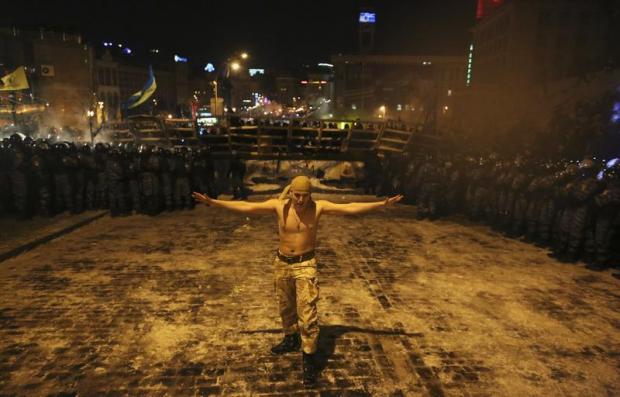

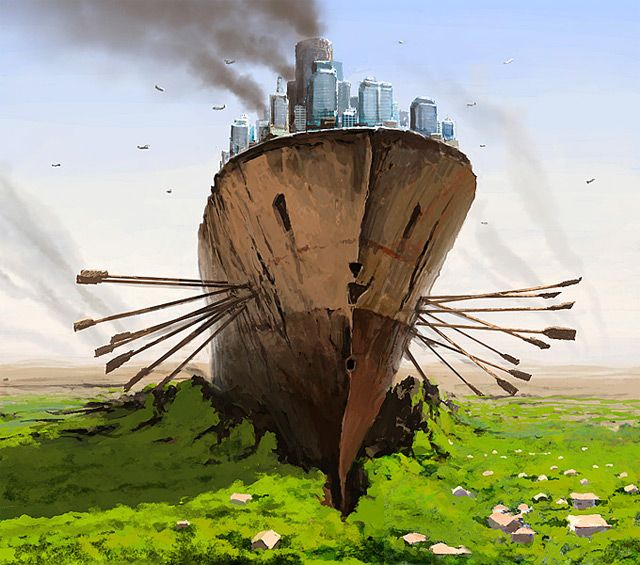
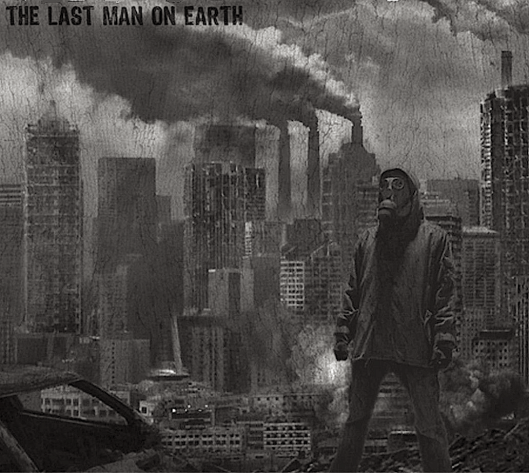
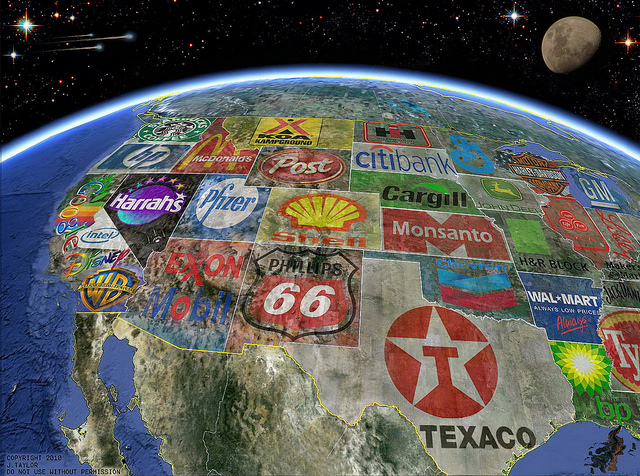


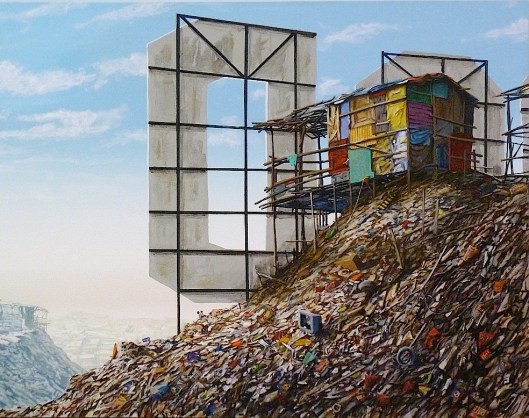




 Collapse of Industrial Civilization