The linear thinking that has dominated Western civilization since the Enlightenment has become a death trap for mankind in the 21st century. The dynamic system of the Earth’s biosphere with its many interconnected parts interacting in complex and unpredictable ways is clashing with modern man’s linear, sequential, and reductionist frame of thought for solving problems. Technical fixes only act as bandaids to the inherent flaws of global techno-capitalism. Time lags and feedbacks set in motion by industrial civilization’s rampant consumption of natural resources will extend over centuries and into deep geologic time. Ignoring the various environmental and social warnings at our own peril, we neither fully understand nor comprehend the consequences of our unsustainable way of life. The laws of physics and chemistry are indifferent to such human tragedy.
Institutional changes required to deal with complicated problems such as climate change move at a sloth’s pace, and the transition to new energy sources has proven historically to be a long, drawn-out process spanning decades. Never mind the fact that so-called ‘green energy’ cannot support the current mode of living nor the overpopulated state of the planet. In other words, our current socio-economic system is unsalvageable.
After one accepts, at least on a subconscious level, these realities, is it then any wonder that nihilism is on the rise? What is more nihilistic than the view that our fate is the end result of the “evolutionary success of an exceptionally rapacious primate”, that “human intelligence is a lethal mutation”(Ernst Mayr), and that industrial civilization is a cancerous growth? I would qualify such thinking by stating that intelligence without wisdom brings destruction. Wisdom is not a genetic trait and has little to do with intelligence. Wisdom is attained through life experience and conscious choice.
…Shanghai can come as a rude surprise. In spite of its nominally communist system, it is the most go-go, unfettered, money and status mad, materialistic place on earth. Its skyline alone is confirmation that money talks loudest. In no other city could you build the world’s largest, tallest and ominously curved phallus—stick it right up into the clouds like a giant “FUCK YOU!” to the world and not have trouble with the NIMBYs…
Billions clamoring for an American level of consumption appears to be the real weapon of mass destruction on the planet. Capitalism shows no sign of stopping its downward spiral into barbarism:
The dilemma of progress, as captured neatly by the authors of The Axemaker’s Gift(1995), is that the human species’ very success in exploiting its natural environment and dominating others of their kind (the two go hand in hand), and generally fulfilling its aspirations (and its aspirations, unlike those of all other animals, seem to have no limits) has directly led to its self-destruction. The linear march of progress, on this view, has been from human life in caves only minimally taxing its environment, to life as tribes and agriculturalists exploiting it just a bit more, to modern life. And what is modernity but the triangle of secular science, corporate-capitalism, and nation-states – all made possible by the human ability to create large, secular, result-oriented organizations? In this inexorable story of progress, nature (as well as human lifestyles friendlier to it) have been the losers. ~ Dr. Ovamir Anjum
Dennis Meadows, one of the authors of the prophetic book The Limits to Growth, says that because capitalist industries and the political-legal framework supporting them are so powerful and entrenched, humanity will not evolve through proactive change, but will stumble into multiple unfolding crises as it clings to failing policies and ideologies of promoting material growth at the expense of all else. If we look at current news, this is clearly what is happening:
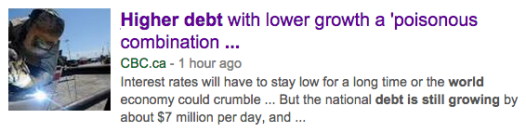
Global debt is still soaring:
…Overall, the world’s total debt load has risen from 160 per cent of national income in 2001 to almost 200 per cent after the crisis struck in 2009.
But contrary to all the talk of “deleveraging” that ratio has actually increased since the financial crisis, and was up to 215 per cent globally last year. Put another way, the world owed a collective $70 trillion US before the last recession. But today that figure is up to $100 trillion.
“Contrary to widely held beliefs, the world has not yet begun to delever and the global debt to GDP ratio is still growing, breaking new highs,” the report reads…
The cognitive dissonance between our fossil fuel use and the collapsing environment continues:
Global overpopulation shows no signs of stopping:
The Wealth Gap continues to grow:
The most striking finding in the new Survey of Consumer Finances may be the degree to which wealth is being concentrated in the hands of a small portion of the population.
That trend isn’t new. “Many other studies have also shown the lasting effects of the recession and documented rising income disparity in the United States,” writes Reuters.
But the SCF shows that the wealth gap continues to grow. The share of wealth belonging to the richest 3 percent of Americans was:
44.8 percent in 1989.
51.8 percent in 2007.
54.4 percent in 2013.
And the 6th extinction is far worse than we realize:
These are just a few of the realities once we scrape away the greenwashing, political spin, and optimism bias humans are prone to, but let’s not get “lost in a roman wilderness of pain.” Check back with me next year and the story will be much the same as humans accept higher poverty rates, a steeper Keeling Curve, and lower biodiversity levels as the new normal. There’s a name for this gradual adaptation of humans to a worsening environment —environmental generational amnesia. We really won’t know what we’ve been missing until everything is far too gone to support another generation of humans.
To the extent that we depend on prosthetic devices to keep ourselves and the biosphere alive, we will render everything fragile. To the extent that we banish the rest of life, we will impoverish our own species for all time. And if we should surrender our genetic nature to machine-aided ratiocination, and our ethics and art and our very meaning to a habit of careless discursion in the name of progress, imagining ourselves godlike and absolved from our ancient heritage, we will become nothing.
~ Edward O. Wilson, Consilience; Chapter 12: ‘What Does It All Mean?’
From its inception, capitalism paved a one-way path to annihilation, predicated as it was on unmitigated growth, the extraction of finite resources, the exaltation of individualism over communal ties, and the maximization of profit at the expense of the environment and society. The capitalist world was, as one author described so bleakly, ”dominated by the concerns of trade and Realpolitik rather than by human rights and spreading democracy”; it was a ”civilization influenced by the impersonal, bottom-line values of the corporations.” Capitalist industrial civilization was built on burning the organic remains of ancient organisms, but at the cost of destroying the stable climatic conditions which supported its very construction. The thirst for fossil fuels by our globalized, high-energy economy spurred increased technological development to extract the more difficult-to-reach reserves, but this frantic grasp for what was left only served to hasten the malignant transformation of Earth into an alien world.
The Fossil Fuel Age did not end for lack of fossil fuels, but because there was no place left to store its CO2 waste. Earth’s overwhelmed carbon sinks became carbon sources. Humans with their hubristic technological overreach had been living on borrowed time for a long time; techno-fixes were not able to artificially expand the carrying capacity of the planet any longer. The climax of the ecological crisis had arrived.
The ruling class tried to hold things together for as long as they could by printing money, propping up markets, militarizing domestic law enforcement, and orchestrating thinly veiled resource wars in the name of fighting terrorism, but the crisis of capitalism was intertwined with the ecological crisis and could never be solved by those whose jobs and social standing depended on protecting the status quo. All the corporate PR, greenwashing, political promises, cultural myths, and anthropocentrism could not hide the harsh Malthusian reality of ecological overshoot. As crime sky-rocketed and social unrest boiled over into rioting and looting, the elite retreated behind walled fortresses secured by armed guards, but the great unwinding of industrial civilization was already well underway. This evil genie was never going back in the bottle.
The melting of the glacial poles meant that global weather patterns and jet streams were irrevocably altered. Consequently, extreme floods and drought wreaked havoc on agriculture. Sea levels also rose much faster than predicted, inundating coastal cities and salinating farmland. Currency markets collapsed, cell phones went silent, transportation systems ground to a halt, and grocery shelves went bare. The disintegration of globalized trade, the dissolution of nation states, and the exhaustion of the biosphere brought forth a new dark age. Deadly microbes and pathogens that had lain dormant or been restricted to certain outlying areas of the planet were now free to migrate and proliferate in new regions. This opened the door for a string of global pandemics that the world had never seen before. Pestilence and famine whittled the population down to under a billion within a few decades.
Entropic Wastelands
The electric glow of the world’s cities was blotted out; the stars and moon were the only sources of illumination in the pitch black of night. A ghostly silence replaced the hustle and bustle of people and machinery that once animated the city. Time was no longer measured with the hands of a clock, but by the rise and fall of the sun and the changing of the seasons. A carpet of overgrown grass, weeds, bramble, and trees silently overtook the crumbling city, uprooting and splitting concrete and asphalt. Skyscrapers, once the temples of corporate power and wealth, were now nothing more than monstrous sundials casting their long shadows across the decaying wastelands. Never again would there be such a complex, globe-spanning civilization on Earth.
Haunted for millenia by the legacy of mankind’s fossil fuel binge, roving bands of human survivors were condemned to wander this angry Earth. Only the most physically and mentally fit were able to eke out an existence in an increasingly inhospitable world to pass through the evolutionary bottleneck. They huddled together at night around bonfires and fed the flames with old office furniture and business papers from abandoned buildings. Without electricity, modern medicine, and sanitation systems, life became a short and brutal affair. Nature’s primal forces could no longer be disregarded; their harsh reality sharpened all the senses. Nearly all the technology that had enslaved and anesthetized modern man for so long was now of no use in this neo-medieval world. Megacities were reduced to entropic wastelands, their detritus scavenged by these post-apocalyptic tribes.
Like a rocket disintegrating in mid-flight, capitalist industrial civilization rushed headlong into oblivion, always believing human ingenuity and free markets would solve the mounting number of crises. It turned out humans were extraordinarily clever at deceiving others and, in turn, equally clever at deceiving themselves. They burned the devil’s excrement, split atoms to play with lethal radiation, and tinkered with the building blocks of life, but they never heeded numerous warnings against such folly. Like Icarus who, flying too close to the sun, forgot that his wings were made of wax, humans ignored their earthly origins, believing too much in their own technological infallibility.
A passage from The World Without Us:
There Will Come Soft Rains
There will come soft rains and the smell of the ground,
And swallows circling with their shimmering sound;
And frogs in the pools singing at night,
And wild plum trees in tremulous white;
Robins will wear their feathery fire,
Whistling their whims on a low fence-wire;
And not one will know of the war, not one
Will care at last when it is done.
Not one would mind, neither bird nor tree,
If mankind perished utterly;
And Spring herself, when she woke at dawn
Would scarcely know that we were gone.
Citizens of the First World live in ignorance of their country’s violent imperialistic history. As Joe Bageant said, “Americans are cultivated like mushrooms from birth to death, kept in the dark and fed horseshit.” Nonetheless, the average pleb in America should realize by now that they too will be treated no different from those in the Third World exploited by empire. As illustrated by a recent study, U.S. citizens are mere cardboard cutouts in a façade of democracy with essentially no voice in their government’s actions. The wealthy elite call the shots, determining crucial government policy and the law of the land. When all the propaganda and myths are swept aside, America is revealed to be nothing more than a heartless oligarchy; you and I are simply marketing statistics and consumers, pawns and cogs within capitalist industrial civilization.
Empires weave their own self-serving and grandiose history while the vanquished are left to struggle for survival in the wreckage. A case in point is America’s current immigration crisis and its superficial analysis by the mainstream media which serves only to stoke racial fears amongst the ignorant masses while ignoring uncomfortable and disturbing root causes. The harsh reality is that America has a long history of carrying out covert and overt operations as well as instituting economic policies designed to exploit South and Central America, not to mention much of the rest of the world. One recent example was the 2009 coup of populist left-wing Honduran president Manuel Zelaya by elite military forces trained at the School of the Americas in Fort Benning, Georgia. Consider the following timeline of American intervention in Latin America since the 1950’s:
‘Free Trade’ for Corporations and Misery for Local Populations
Now consider the trade deals of NAFTA, CAFTA, and other “free trade” globalization schemes which have flooded our southern neighbors with cheap, subsidized produce from U.S. Big AG, decimating small farms and pushing millions off their land and into extreme destitution:
As part of neoliberal restructuring, Mexico would have to re-orientate its economy to the export rather than the domestic market. Mexico was already heavily dependent on trade with the US, but post-1982, Mexico’s dependency has become almost akin to that of a colony. US agricultural products – most notably corn – subsidised by American taxpayers now flooded the Mexican market, undercutting small domestic producers. For Mexican farmers the consequences have been ruinous and have devastated domestic production, a process which continues under the recent government of the National Action Party (PAN)…
…From the implementation of NAFTA in 1994 to 2000, 2 million farmers abandoned their lands. Fewer Mexicans now have access to health care and education than prior to 1980 as public spending has been cut as a result of ‘reforms’. By 2005 50 percent of the population had fallen below the poverty line, pushing some 3.3 million children under the age of 14 into work. Following the government’s agreement to exchange investment rights and trade barriers for loans and financial aid, Mexicans saw huge changes in their circumstances, such that by 1988 the cost of living had risen by 90 percent, while per capita income had fallen by some 50 percent. With the abandonment of social programmes, which alleviated at least some of the worst hardships, many communities in Mexico, with little or almost no help from the state, have had to fend for themselves…
…Much farming has since been replaced by agribusiness and large-scale meat farms, mostly foreign-owned. In recent years, widespread unemployment and the inability of farmers to gain an income from the land have meant that rural towns are being emptied of their inhabitants, leading to a tremendous population drain to the cities and the United States…Impoverished Mexican workers – employed primarily because they are cheaper to exploit than their US and Canadian counterparts – work to produce commodities which have no tangible benefit for their own society…
…The improved leverage of US power over Mexico’s economy is not solely an issue of having a workforce so ‘flexible’ that much of it is forced into sweatshop labour. The maquiladora belt functions effectively as an economic colony, with the local Mexican police, paid for by the Mexican taxpayer, providing the ‘security’ necessary for factories to operate unhindered by nuisance unions and human rights activists.
One of Mexico’s chief exports, then, is labour. Just as profits and goods leave the country, significant amounts of labour time are not reflected in the Mexican economy. Corporations benefit enormously from this win-win situation resulting in the continuing breakdown of society, a state of affairs reminiscent of a colonial economy, albeit without foreign control of what in any case is a pliant government. As a result, Mexican workers in the maquiladoras, notes Delgado-Wise, are little more than ‘manpower for foreign capital’.
While many of the poor seek work in factories owned by foreign companies or quit the countryside for work in the expanding metropolises, others cross into the US. If significant swathes of the arable land of northern Mexico are emptying, this is a trend connected intimately with free trade… – link
Militarizing the ‘Drug War’ and Arming Fascist Governments
So after destroying the means of survival for so many in Latin America, the poor and destitute turn to whatever means necessary in order to stay alive — crime, gangs, and the drug trade. The U.S. has reacted to this lawlessness by militarizing the “war on drugs”, providing even more weaponry and support to fascist governments who can then brutally squash any grassroots social movements which challenge the neoliberal capitalist order. It’s a vicious feedback loop in which the U.S. is forced to combat the very social disintegration of Latin America that U.S. economic policy has created. Thus, a fourth factor in America’s immigration crisis is the neocon militarization of the drug war and support of fascist governments aligned with U.S. corporate interests:
Narcotrafficking, like neoliberal capitalism, it seems, thrives in areas of severe poverty and unemployment where the civilian population is economically and politically disempowered and where state authorities are not powerful or willing enough to prevent the violent conflicts that narcotrafficking has produced. Additionally, for those who now have few opportunities in the traditional and legal sectors of the economy, narcotrafficking proves to be the only lucrative alternative…
…Civil society found itself vulnerable, impoverished and unable to rebuild the damaged and broken social services and infrastructure demolished by structural adjustment and neoliberal policy. Furthermore, the power and influence of the state have weakened in the last two and a half decades to the extent that in some areas drug traffickers operate quite freely and are immune to prosecution…
…With the authorities weakened, the line between the state and the narcotics industry is becoming increasingly blurred. A United Nations report estimated that between 50 and 60 percent of Mexican municipal government offices have been ‘captured or feudalised’ and coopted by narcotrafficking organisations. Mexican intelligence estimates that 62 percent of the Mexican police are presently under the control of the narco trade. According to rank and effectiveness, members of the police forces can receive anywhere between 5 to 70 thousand pesos monthly from cartels, a dramatic net increase on their state salaries. Of the 2.9 million arms given to the Mexican police forces, 57 percent are used in illicit activities.
Human Rights Watch reports that the military, in its purported struggle against the narcos, commits serious abuses against the civilian population, exposing its role rather as an institution of internal colonisation than one protecting society from violence. The same Mexican soldiers – potentially a force which could combat trafficking – are now deserting on a mass scale. Poor working conditions and pay led 217,000 Mexican soldiers to desert between 1993 and 2009. Among them, many leave the army to join the cartels and take their arms with them. One of the most powerful factions, the mercenary army, Los Zetas, was formed by deserters from an elite anti-drug squad of the Mexican army, taking with them their arms and training. Their sophisticated and professional tactics were developed, ironically, from training in the US by the DEA, the FBI and the US military in the war on drugs…
…Historian Miguel Tinker Salas has noted that in the case of Plan Colombia, military spending was intended to crush the strength of rural insurgents and guerrillas to offset the possibility of a popular rebellion, particularly as Colombia had among the worst levels of inequality in Latin America. In Mexico, maintaining a status quo which sees unprecedented levels of inequality and widespread poverty – exacerbated since the 1980s – is likely to involve the increasing use of force in order to quash the threat to the established order posed by social movements and popular revolt, all the more real as Mexico inches closer to collapse. Increasing attacks on organisers and activists of the anti-capitalist Zapatista initiative, La otra campaña, in Chiapas and the prolonged assault on inhabitants of Oaxaca in 2006 remind us that the state will always use military might to repress challenges to its authority and to the socio-economic order. US training of the Mexican military should be viewed in this light, bearing in mind that imperialism has two arms in Latin America – one military, the other economic.
Increasing poverty levels hardly seem to be a top priority for the leaders of the NAFTA signatories. For it is a state of affairs which benefits elites who have no interest in seeing ordinary Mexicans rise from poverty. Vast gaps between rich and poor may seem inexplicably cruel to outside observers, but within is a logic of which NAFTA was a clear expression. Rendering the population more desperate, reducing services and public spending, aggravating society’s vulnerability, rewards the powerful with greater political and economic dominance…– link
Climate Change and the Coffee Rust Fungus
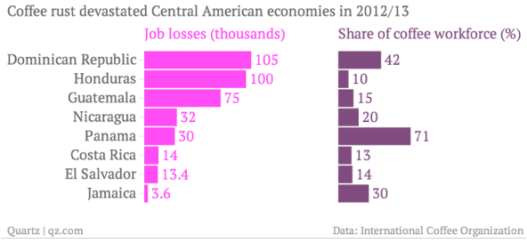
A fourth factor not discussed much is how climate change is wreaking havoc on the major South American crop of coffee which many rely upon for their livelihood and is the second most traded commodity in the world after oil. Coffee rust, known as “roya” in Spanish, first appeared in the region in the 1970s when climate change began to cause higher temperatures and excess rainfall favorable to the moisture-loving fungus. It has since mutated and spread throughout the region. Resistant coffee hybrids that scientists have created can’t keep up with the fast mutating rust fungus which seems to be growing stronger as climate change accelerates. For the past two years, the rust fungus called Hemileia vastatrix has destroyed 30% or more of the coffee harvest in Central America where coffee production employes one-third or more of the population in Guatemala, Honduras and Nicaragua :
All the coffee-producing countries of Central America have seen drops in production of 30% or more in each of the past two years. Some, such as Guatemala, report rising cases of chronic malnutrition in coffee workers’ children. Last week Oxfam cited coffee among other crops in a report that warned climate change was putting back the global fight against hunger “by decades”.
Nicaragua’s problem is particularly acute. Along with neighbouring Honduras, and Burma, it is already one of the three countries most affected by climate change, according to the 2013 Global Climate Risk Index. Nearly a third of its working population, about 750,000 people, depend on coffee directly or indirectly for a living. Coffee provides 20% of GDP. The Nicaraguan government is deeply worried: it has predicted that, because of falling rainfall and rising temperatures, by 2050 80% of its current coffee growing areas will no longer be usable.
This will mean disaster…
Warmer temperatures are also threatening a genetically diverse type of coffee called Arabica which is considered essential to the industry and comprises 70% of global coffee production. According to a recent study, by 2080 global warming will make two-thirds of today’s farms too hot to grow Arabica.
The three countries making up the largest percentage of child migrants that have been flooding the U.S. in recent times are Guatemala, Honduras, and El Salvador. These three countries also happen to be closely allied with the U.S. and its neo-liberal economic model. Nicaragua is an exception to its neighbors. Despite suffering similar losses to its coffee crop from rust fingus, Nicaraguan farmers did not fare as badly because they were supported by the programs of their socialist government, an anathema to America’s ruling oligarchs and neoliberal politicians:
In sharp contrast, Nicaragua, an equally poor country that receives far less U.S. aid because of our government’s hostility toward the Sandinistas, sends far fewer children across the U.S. border. Why? Since coming back into power in 2006, the Sandinistas have enacted strong programs designed to allow the poor to become self-sufficient.
The Immigration Issue: Red Meat for the American Masses
The only way to actually fix the immigration crisis is to address the root causes I have identified above. The response to date from the U.S. government has been to request billions in detention center and deportation funds, launch a PR campaign in the media of Central American countries to dissuade illegal immigration, and increase spending in law enforcement aid through CARSI (Central America Regional Security Initiative). Meanwhile, right-wing politicians fan the flames of racism and xenophobia with calls for militarizing the border to stop the hoards of swarthy barbarians at America’s doorstep. In reality, the current deteriorating social conditions in Central and South America are a direct result of the American corporatocracy and its rapacious economic system as well as anthropogenic climate disruption. The child migrants flooding across America’s border are, to a great degree, victims of U.S. foreign policy and climate change.
“This, then, is the legacy we leave to future generations so that we can turn on our lights and computers or make nuclear weapons… Have we, the human species, the ability to mature psychologically in time to avert these catastrophes, or, is it in fact, too late?” ~ Dr. Helen Caldicott
Radical, wide-scale planning should have been executed decades ago in response to the Limits to Growth study. Instead, we carried on with business-as-usual as the natural world underwent cataclysmic, mass extinction level changes. Every day, the insanity of capitalist industrial civilization(CIC) is on full display as we entertain ourselves with the illusion of token political gestures towards “sustainability”. None of it changes our death march over the cliff of extinction. Nature died long ago with man’s discovery of fossil fuels which fed his terminal overshoot. Any isolated pockets of remaining wilderness are trampled underfoot, amounting to no more than a mere novelty destination commercialized by the tourist industry.
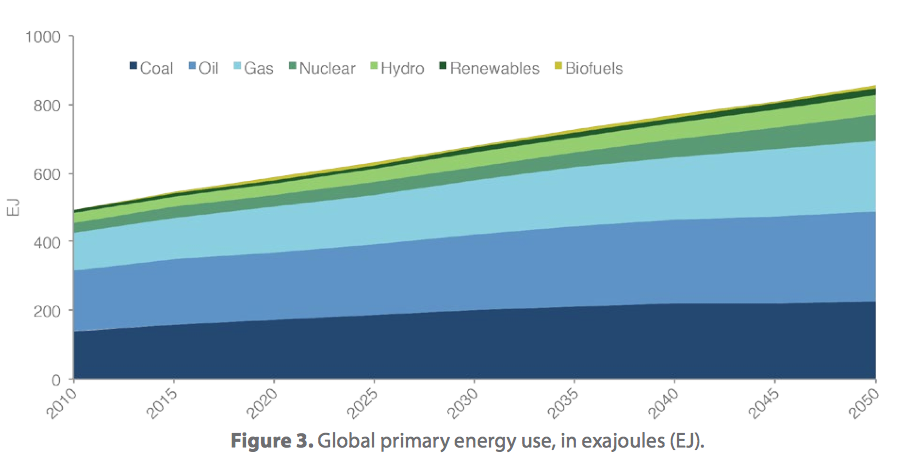
Enslaved to his own self-destructive technology, CIC continues to toxify and irradiate the planet, plasticize the oceans, and disrupt the chemical conditions that allow for life. A society that dehumanizes everything with the fetishization of technology and money will always see disaster as a money-making opportunity. Anthropogenic climate disruption is no exception. Competition amongst nations and corporations for economic/military supremacy, wealth, and power demands that the energy resources to be exploited first are those with the highest available ERoEI, i.e. fossil fuels. The charts bear out this cutthroat strategy and so do the actions of nation states who have made it a legal duty to maximize greenhouse gases. Giving up the competitive advantage of coal, oil, and gas ensures you will be eaten alive in the global economy. Thus nation states are locked into a capitalist race to the grave. The nasty greenhouse gas-emitting side effects of these fuels are simply another negative externality quietly pushed onto future generations. However, physical reality will eventually overtake a fake mass-media culture consumed by the idolatry of materialism and greed. The Earth doesn’t bail out a species that continuously spends more than it saves. Instead, the biospheric slate is wiped clean to make way for the next bout of evolutionary events.
Like radiation, GHG’s are seemingly invisible yet their effects are all too real. Because of the lag period involved in anthropogenic climate disruption, their devastating environmental costs will never be fully appreciated in time to avert disaster. Adding up the land, air, ice, and ocean warming data, a study from last year found that in recent decades the earth has been heating up at a rate of 250 trillion Joules per second. This is equivalent to:
Detonating four Hiroshima atomic bombs per second
Experiencing two Hurricane Sandys per second
Enduring four 6.0 Richter scale earthquakes per second
Being struck by 500,000 lightning bolts per second
Exploding more than eight Big Ben towers, with every inch packed full of dynamite, per second
For the Fox-news-befuddled masses, such analogies are meaningless because the threat is not in their face. In their conspiracy-addled minds, climate change is a socialist plot to ruin the American economy and undermine capitalism itself. To the genuflecting masses of capitalism, the mythical free market is seen as an all-powerful, self-regulating mechanism of the Earth, the Sun, and the Universe. Man-made constructs are inanimate and artificial, yet we cling to them as if they were immutable laws of nature.
Keeping industrial civilization chugging along in the face of planetary ecological collapse is eerily similar to the military doctrine of nuclear deterrence called M.A.D. (Mutually Assured Destruction), as commenter James explained:
Our competitive growth is MAD and considered on a geological time scale is only slightly slower than a sudden launch of nuclear missiles which may also eventually occur. We kid ourselves when we think that we’ll be fine as long as we never have a nuclear exchange, that sustainability is a possibility if we prevent nuclear war…
…This planet has the Big C, civilization, and it will torture its denizens as they struggle to maintain normalcy while the onslaught of malnutrition, decay and chaos drive them mad.
Do you think Hillary Clinton or Mitt Romney are going to ameliorate the conditions of your decline? Ever wonder what it’s like to be a human sacrifice?
Capitalist carbon man’s unwavering faith in the powers of technology ensures that Big C’s omnicidal, energy-slurping $46 trillion-dollar infrastructure(U.S.A. only) and its array of mechanized contraptions cranks onward, squeezing out the last drop of resources from a spent Earth. Human cannon fodder will continue to be shoveled into Iraq and the Middle East to keep the fossil fuel furnaces burning. America’s corporate-industrial-military-political-financial complex will protect its financial coffers at the expense of the destitute masses and a habitable planet. When it comes to money, there is no loyalty to anyone or anything in the land of the FEE and home of the bamboozled. Just like countless Wall Street predators who have passed through the revolving corporate/government door, former NSA chief Keith Alexander is now getting in on the action to exploit his national security credentials.
Collusion between big business, government and industry is hardly restricted to Japan. In every country, the health and safety of working people in their workplaces and their communities are routinely subordinated to the dictates of profit. Moreover, the past three decades of market restructuring have led to the systematic erosion of the limited regulations that previously existed. In many instances, regulatory bodies have been cut back or replaced by corporate “self-regulation”.
Fukushima is just one of the major disasters that have exposed the criminal character of capitalism. One year earlier, an explosion at the BP-run Deepwater Horizon oil rig in the Gulf of Mexico killed 11 workers and created the worst environmental catastrophe in US history. The Bush and Obama administrations fast-tracked the project, which proceeded without an environmental impact study, despite public concern and opposition. In the wake of the oil spill, the Obama administration acted as a virtual attorney for BP, assisting the energy giant to minimise the economic and political fallout. From the outset, the White House made clear that the disaster would not impede further offshore oil projects—including by BP.
The Japanese government, first under Prime Minister Naoto Kan, and now Prime Minister Yoshihiko Noda, has performed a similar service for TEPCO—providing a huge bailout for the company and limiting the payouts to small businesses and individuals whose lives have been devastated…
…The real lesson that should be drawn from the report’s revelations is the incompatibility between capitalism and even the most elementary needs of humanity for a healthy and secure environment….
Structuring a society to reward the most sociopathic and ruthless amongst us, create grotesque levels of inequality and political disenfranchisement, deify material wealth as the primary metric of success, privatize and profitize war, and use the planet as a garbage dump for toxic waste is a recipe for disaster.
Humans have thrown into the geological evolutionary processes of Earth several long-lived and very disruptive monkey wrenches. There are three which are noteworthy and will outlive us all in the deep time of planetary history:
Anthopogenic climate disruption will essentially last forever, according to Professor David Archer of Chicago University and his associates. He says “the climatic impacts of releasing fossil fuel carbon dioxide into the atmosphere will last longer than Stonehenge, longer than time capsules, far longer than the age of human civilization so far. Ultimate recovery takes place on timescales of hundreds of thousands of years, a geologic longevity typically associated in public perceptions with nuclear waste.”
Nuclear Waste from the production of nuclear power and nuclear bombs lasts essentially until the end of time. Coal-fired electric plants produce their own witch’s brew of radioactive waste as well. In the U.S. alone, roughly 2,000 metric tons of nuclear waste are produced every year with 70,000 tons now sitting at some 100 temporary sites across the country. A permanent disposal site has yet to be established to store the fatal stuff. The recent egregious, Homer Simpson-esque mishaps and incompetence at America’s only radioactive waste repository located in New Mexico don’t inspire any confidence that we can store this stuff safely even for a brief period, let alone for the thousands of years required. We’re too busy fracking around that fragile site to worry about any long-term consequences. Humans have sufficiently booby-trapped the planet that in the dying days of the Anthropocene, your chance of survival is the same as winning the Lotto.
A few of the deadly radioisotopes that can be found in nuclear waste are the following:
– uranium 238 (half-life 4.468 billion years)
– uranium 235 (half-life 700 million years)
– plutonium 244 (half-life 80 million years)
– iodine-129 (half-life 15.7 million years)
– neptunium-237 (half-life two million years)
– plutonium 242 (half-life 373,300 years)
– technetium-99 (half-life 220,000 years)
– plutonium-239 (half-life 24,000 years)
Depleted uranium is a byproduct of processing mined uranium for fuel in nuclear energy plants and as a component for nuclear bombs. Depleted uranium contains U-234, U-235, U-236, and U-238. Only two countries have acknowledged using depleted uranium in their weaponry, the US and UK, for its armor-piercing advantages. Only one country, Belgium, has banned its use. A couple of years ago, New Zealand put forth a bill to ban DU munitions, but it failed by one vote. The Dutch peace group PAX recently confirmed that the U.S. fired DU munitions into Iraqi civilian populations.
Once a DU shell impacts a target, it aerosolizes into a fine gas or mist which can then travel in the air for miles. These radioactive particles can get kicked up again and again by the wind or other disturbances after they have settled on the ground or in the sand. Once inhaled by humans, DNA is damaged and the ensuing cell mutations lead to cancer. For an example of the havoc depleted uranium has wreaked on the health of returning soldiers, watch this video. Investigative reporter Dr Nafeez Ahmedrecently reported how the World Health Organization tried to cover up the horrific, lingering effects of depleted uranium contamination in Iraq. For those Middle East countries, the use of these radioactive DU munitions by Western forces constitutes an under-the-radar nuclear scourge with cancers, birth defects, and chronic ill-health affecting generations upon generations into the distant future.
I suppose one could add plastics to the list of unimaginably long-lasting pollutants to the list. Microscopic particles of the stuff can be found at any beach and even in mountaintop lakes. And of course the scars from massive strip mining operations will remain as an indelible reminder of industrial civilization’s insatiable appetite for energy. Scientists didn’t declare this the Anthropocene Epoch for nothing; we have certainly left our mark like no other species before or since, literally terraforming the Earth into a planet inhospitable to ourselves. Perhaps aliens will pay a visit after the dust has all settled. They’ll surely shake their heads in disgust at the poisonous wreckage left behind by our fossil-fueled madness before zooming off into the night skies in search of a planet that has intelligent life.
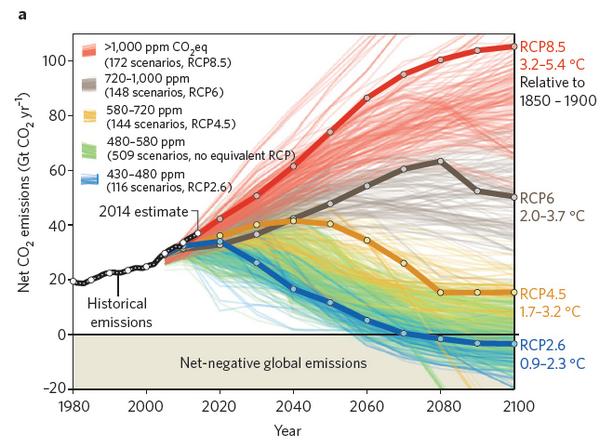
President Obama recently unveiled his plans for America to cut its CO2 emissions 30% compared to 2005 levels by 2030 “to limit warming below the 2˚C ceiling agreed by countries“, a plan that Al Gore declares “the most important step taken to combat the climate crisis in our country’s history.” I’m here to explain to you that if that is the best the human race can muster, we’re trapped in a very sad state of anthropocentric denial.
Keeping in mind that humans of industrial civilization have thus far warmed the planet by 0.85˚C in the last couple hundred years, the extreme weather events that have occurred just in the last decade, let alone in the last year, are clear evidence of an increasingly destabilized climate system. Catastrophic changes in the glacial zones of the Arctic and Antarctic have been set into motion, altering global jet streams and weather patterns as well as locking in a sea level rise that will make most coastal cities uninhabitable within a couple of generations. Thus we can see that the target of 2˚C is a totally fraudulent upper limit for anything safe; industrial civilization has already passed the point of no return into climate chaos.
The US political system is so broken, so blatantly an open bazaar where corporations can buy public policy puppets like so many street hookers, that it’s hard to imagine any policy stronger than the new EPA proposal going into effect and not being killed by the next presidential administration or strangled by the purse strings controlled by the Congress…
The commercial, capitalist part of society has completely outstripped the interests of humanity as a whole. In the case of fossil fuels, private firms and individuals are carrying out activities which are having dire consequences for everyone, but corporations are only interested in their own advantage and in fact are required by law to place shareholders’ interests above all else with no regard to the long-term well-being of the global community and future generations.
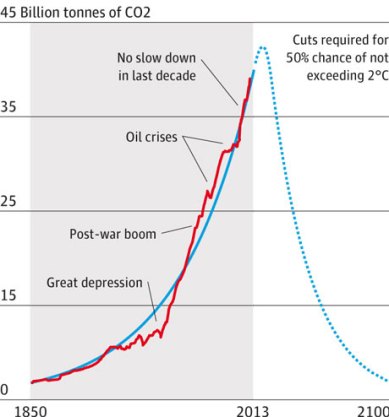
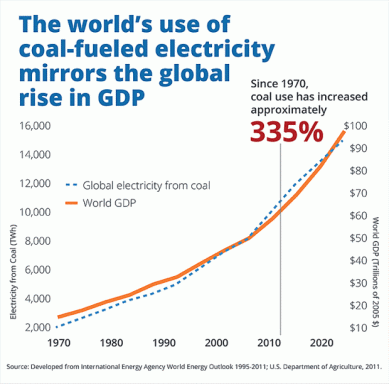
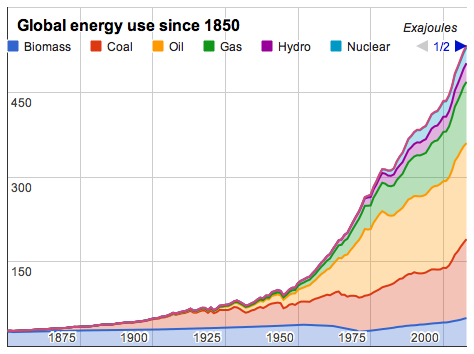
Although CO2 emissions have fallen in the U.S. in recent years due primarily to electricity plants switching to the cheaper source of natural gas, they have jumped back up once again according to the latest reports. Demand for coal abroad has also been on the rise with the U.S. exporting its supply to meet the demand. However, most disturbing is the following graph which illustrates that in the last 164 years, no new energy source has ever stopped our expanding usage of fossil fuels. Levels of carbon extraction are perhaps a more telling indicator of the primacy of fossil fuels and the direct correlation between economic growth and global emissions than the energy statistics of any one particular country:
…as Mike Berners-Lee and I argue in The Burning Question, despite radical changes in the global energy mix over the last two centuries (and even more radical changes within individual countries) energy use and carbon emissions have undergone remarkably consistent long-term exponential growth. The implication is that there’s a technological and social feedback loop at work, with each new energy source increasing access to and demand for all the other sources. Energy begets energy.
The graph below, which shows total human energy use since 1850, reflects this. When coal use took off in the nineteenth century biomass energy didn’t decline as is often assumed. In fact it increased, helped rather than hindered by coal-powered industrialisation and globalisation. Similarly, coal use increased when society started extracting large amounts of oil – which makes sense given that oil not only proved useful for coal mining but also enabled the mass roll-out both of cars and energy-hungry suburban homes. In turn, gas and hydro helped drive technological and engineering revolutions that have made obscure oil sources more viable…
…The fact that new energy sources tend to be additional to existing ones helps explain why more gas production has dinted neither US carbon extraction nor global emissions. But critics of gas beware: the same caveat applies to genuinely low-carbon energy sources such as renewables and nuclear, or indeed increasing energy efficiency. We usually assume that installing a wind turbine or nuclear plant will reduce global emissions but that’s not necessarily true, since the fossil fuel that the clean energy system replaces may get burned elsewhere instead, perhaps kick-starting new energy feedback loops in other parts of the world and driving global carbon emissions up yet further.
In some cases there has even been talk of using low-carbon energy sources directly to increase fossil fuel flows. For example, modular nuclear reactors are being considered as a way to propel natural gas down the remote pipelines that bring energy to Europe’s homes and power plants, or for melting tar to produce oil for the world’s billion-strong car fleet. This seems crazy at first given that it would be more efficient and less polluting to use the nukes directly for producing electricity, but existing infrastructure can determine our energy choices as much as the available energy sources do…
…there’s little evidence so far that fracking, wind power, nuclear or any other technology is helping us leave any carbon in the ground. Indeed, as I wrote recently, despite all the renewable power installed so far, all the fracking rigs, all the energy efficiency gains, all the national carbon cuts, and even a collapse in average fertility levels, global emissions are still growing at the same rate today as they were in the 1850s… – link
In The Biophysics of Civilization, Money = Energy, and the Inevitability of Collapse, a similar correlation was demonstrated between money (the economy) and CO2 emissions. Without fundamentally changing the economy’s dependency upon growth and profit, emissions will continue to rise and deceptive non-solutions will continue to be sold to the public. Even if all human industrial activity ceased this instant, we would still be looking at upwards of a 2.65˚C temperature rise, but capitalist industrial civilization is a superorganism that is on an unwavering trajectory. The scales have been tipped out of favor for mankind. The geologic pendulum will swing back to bring things into balance over millennia, and in the process industrial civilization will be crush beneath the iron hand of natural law.
One look inside the self-serving and hypocritical mind of those running in society’s elite circles will tell you there is no chance for any radical departure from the moribund thinking which keeps the rotted status quo in place.
[Nate Hagens: …from a (good?) friend of mine – married to a billionaire, very connected, energy investment guy – i sent him the EPA announcement]
Nate,
You have seen the movie Idiocracy, right? Well President Mountain Dew Commacho in that movie is a better leader than BO. At least Commacho knew sometimes you need to listen to smart people & put them in charge.
Long story short, the presidency is in meltdown mode. Everyone has figured out what I told you…he is a bad guy. Whether you definition of “bad guy” is a person who used his skin color to get where he is in DC then holding the US hostage to his bitter, bigoted edicts; or just a lucky ne’er do well who wanted to save the world, but instead made it worse. HE IS DONE! <<<the exclamation point is Carney quitting.
Nate, none of what he does means squat (especially the agencies like EPA)…dems/repub know it. Next elections will save the economy for 20-30 more years…I know you & I disagree on the timeline. I hope, and pray, you are wrong…but I do know your logic is correct.
Best,
Jxxxxx
Buy coal/BTU tomorrow on the dip.
Like the radiation from Fukushima, CO2 emissions are invisible and their calamitous effects can play out over generations. The masses simply can’t stomach hard reality when they are entranced by a techno-capitalist wonderland of mental distractions and virtual reality pitfalls.
This post is in response to Systemic Disorder commenter Palloy who thinks that peak oil will save mankind and that global warming “will not be as bad as +1.5°C.” I want to answer the question of what degree of warming we are already committed to if industrial civilization were to disappear off the face of the Earth right now.
Palloy is overlooking the part that aerosols from industrial activity play in temporarily cooling the planet. James Hansen called this the Faustian Bargain:
…Human activity modifies the impact of the greenhouse effect by the release of airborne particulate pollutants known as aerosols. These include black-carbon soot, organic carbon, sulphates, nitrates, as well as dust from smoke, manufacturing, wind storms, and other sources. Aerosols have a net cooling effect because they reduce the amount of sunlight that reaches the ground and they increase cloud cover. This is popularly known as “global dimming”, because the overall aerosol impact is to mask some of the warming effect of greenhouse gases.
Hansen’s new study estimates this aerosol “dimming” at 1.2 degrees (plus or minus 0.2°), much higher than previously figured. Aerosols are washed out of the atmosphere by rain on average every 10 days, so their cooling effect is only maintained because of continuing human pollution, the principal source of which is the burning of fossil fuels, which also cause a rise in carbon dioxide levels and global warming that lasts for many centuries…
The average global temperature rise thus far is about 0.85°C since the onset of the Industrial Revolution. Once industrial activity ceases and its accompanying aerosols fall out of the atmosphere, the average global temperature will jump to about 2°C, but it won’t simply stop there because Palloy forgets that there is a lag time involved with CO2 emissions. The effects we are feeling now were from our emissions 40 years ago:
…The estimate of 40 years for climate lag, the time between the cause (increased greenhouse gas emissions) and the effect (increased temperatures), has profound negative consequences for humanity. However, if governments can find the will to act, there are positive consequences as well.
With 40 years between cause and effect, it means that average temperatures of the last decade are a result of what we were thoughtlessly putting into the air in the 1960’s. It also means that the true impact of our emissions over the last decade will not be felt until the 2040’s. This thought should send a chill down your spine!…
This “committed warming” of past CO2 emissions whose effect will be manifested in the coming decades is about 0.6 degrees Celsius. Adding up the current warming of 0.85°C from the onset of the Industrial Revolution, the loss of aerosols with global dimming at 1.2°C, and the “committed” temperature rise from the 40-year lag time of CO2 emissions equal to 0.6°C, we get a total of 2.65°C. If all industrial activity stopped right now, we would already be committed to 2.65°C, a global average temperature rise of three times what we are currently experiencing. With all the drought, flooding, hurricanes, landslides, fires, and other manifestations of climate change that we are undergoing now, I shudder to think what the world will be like in 2050 and yet humans continue to burn coal and other fossil fuels at breakneck speed. According to the Climate Accountability Institute, half of all emissions have been produced in the past 25 years.
Now we get to the even more insidious aspects of anthropogenic climate change that very few comprehend. Dozens of self-reinforcing feedback loops have already been triggered, but we’ll discuss only one, the albedo effect, in the loss of our planet’s air conditioners, the Arctic and Antarctic:
(1) An increase in temperature decreases the area covered by sea ice as it melts leaving a larger area of exposed ocean.
(2) This decreases the reflection of sunlight as ice is far more reflective than the newly exposed ocean.
(3) Reduced reflection increases the area’s absorption of heat from the sun.
(4) This increases the temperature of the area, amplifying the original increase in temperature mentioned in (1).
A recent study calculated that the loss of Arctic ice reflectivity from 1979 to 2011 added an amplifying feedback to human warming equivalent to 25% of the heat captured by CO2 emissions during that same time.
We know that we don’t live in a linear world and that climate change is a non-linear phenomenon. Recent studies on abrupt climate change in Earth’s history reveal that temperatures have changed rapidly by 5°C in just 13 years. With the grand experiment mankind has irrevocably and haphazardly embarked on, the de-thawing of vast stores of permafrost and clathrates measured in the gigatons has commenced, creating the possibility for a sudden catastrophic release of such gases at any time. Methane, for about the first 10 to 20 years of its initial release before it breaks down into CO2, is many fold more potent as a greenhouse gas than carbon dioxide. Humans are too busy calculating everything in terms of economic profit with regards to newly exposed resources and shorter shipping routes in the Arctic to take the time to fathom what damage they have done. Industrial civilization has permanently disrupted the stable period known as the Holocene within which mankind and civilization have been allowed to prosper.
Thus, we can see that the world is changing quickly into an environment that may well be outside the habitability for humans. The timing of human near-term extinction is likely academic.
Apneaman left this message here just a short time ago:
Journalist Dahr Jamail & Professor Peter Wadhams say the resulting release of methane will lead to massive climate disruption, and that we have reached a point of no return.
Update (12-3-2014):
CO2 Takes Just 10 Years to Reach Planet’s Peak Heat (Not 40 Years)
In a study that could have important ramifications on estimating the impacts, costs and benefits of reducing carbon dioxide emissions, new research shows that CO2 brings peak heat within a decade of being emitted, with the effects then lingering 100 years or more into the future…
…The research, published Wednesday in Environmental Research Letters, provides policymakers and economists with a new perspective on how fast human carbon emissions heat the planet. Back-of-the-envelope estimates for how long it takes for a given puff of CO2 to crank up the heat have generally been from 40-50 years. But the new study shows that the timeframe for CO2 emissions to reach their maximum warming potential is likely closer to 10 years…. http://www.climatecentral.org/news/co2-emissions-peak-heat-18394
A recent investigative piece by Vice on the aftermath of the BP oil spill, America’s most devastating environmental accident to date and the “largest accidental marine oil spill in the history of the petroleum industry”, shows that people are still getting sick and dying in the Gulf region.
Award winning chemist, Dr. Wilma Subra, conducted blood tests on Gulf Coast residents who were symptomatic with new illnesses and found that some of the cancer-causing agents were 65 times the expected level in the victims blood tests. Subra noted that Corexit is in the air, the water and the Gulf resident’s blood.
“There’s a whole population that’s very sick and doesn’t have access to medical care, and that’s what we’ve been trying to work on now, from the very beginning, is getting them medical care so they will get better,” says Subra. “How many people do you think we’re talking about, do we have any guess?” “Hundreds of thousands along the whole coastal area,” Subra says. “Hundreds of thousands of people?” “That are sick, yes.”
It also is likely that the BP cleanup workers are going to suffer the same fate. Listen to what Dr. Wilma Subra had to say about the health of this group.
These findings can leave little doubt that BP’s use of Corexit has seriously compromised the collective life span of Gulf Coast residents. This is a staggering implication for the collective longevity in the Gulf. – link
Nearly 2 millions gallons of Corexitwere used to prevent the millions of barrels of leaked oil from hitting shorelines. Where did all that oil go? Once Corexit is dispersed over an oil slick, it causes the spilled oil to break apart and sink to the bottom of the ocean. In the case of the BP oil spill, this toxic material created massive kill zones on the Gulf floor. When oil and Corexit are mixed together, the resultant substance becomes 52 times more toxic and penetrates human skin much easier. The locals don’t eat what they catch, but remember that Obama said it was safe.
As of early October 2013, the United States Environmental Protection Agency (EPA) website specifically stated that the spill should have no effect on drinking water, and that any questions residents might have about their water should be directed to their drinking water provider. The website fails to mention that water from the Gulf, mixed with oil and Corexit could make its way into the ecosystem eventually, washing up onto the Gulf’s shores and seeping insidiously into the ground water. Florida’s ground water aqueduct system provides drinking water to 18 million residents. – link
The happy motoring culture of suburban sprawl, bread & circus infotainment, and celebrity/wealth worship has long since forgotten what has been called “the biggest public health crisis from a chemical poisoning in the history of this country“. Entrapped by poverty and lacking the means to escape the Gulf region, its residence have become part of the sacrifice zone offered up in the name of profit to the carbon-hungry God of industrial civilization.
None of the locals who took part in the clean-up effort were told of the dangers to their health, nor were they allowed to wear protective gear such as respiratory masks, suits, and gloves because it would have more accurately conveyed to the world the true nature of the disaster. More recently, BP has been accused of hiring internet trolls to threaten critics of its handling of the 2010 disaster. Surely the authorities were aware of the aftermath from the Exxon Valdez accident wherein the same dispersant was used by those clean-up workers who are now nearly all dead at the average age of 51. For BP and the U.S. government, image and corporate interests override the horrific realities of ecocide and corporate manslaughter. Better to sink the oil out of sight and mind in order to maintain the illusion that all is well rather than have a company pay the full cost for its recklessness. All that oil mixed with Corexit is now a 3 to 4 inch toxic layer blanketing the bottom of the Gulf of Mexico, inhibiting its biodegradation by natural oil-consuming bacteria and prolonging the disaster for decades. And BP is once again allowed to bid for U.S. government contracts after having sued the EPA in 2013 to lift the suspension. Of course lots of conspiracy theories surrounded the BP oil spill, but the only real conspiracy here was the government/corporate collusion to hide and minimize the damage, control the public’s perception of the disaster, and protect corporate profits over people and environment — nothing out of the ordinary for the corporatocracy we live under, here or abroad.
It’s not just in the oceans that we have to worry about oil spills. If we look at just one set of data from one inland state, you can get an idea of the staggering scale of the fallout from the oil drenched machine of industrial civilization:
When you take into account all the global destruction that capitalist industrial civilization has wrought over the last few centuries, you realize no solution will ever be forthcoming from our corporate overlords. The idea of corporate social responsibility (CSR) is simply a PR and marketing ploy. CSR employs ineffective market-based solutions, making it appear that a corporation is addressing a social or environmental problem when in fact it only serves to protect corporate financial interests and shift the blame to the individual and elsewhere. Over decades, corporations have molded society into atomized, uninformed, and passive consumers who parrot the same talking points fed to them from the mainstream media. Those wielding the power in society and leading mankind over a cliff are the same ones that hide behind the moniker of CSR, a smokescreen for continuing the looting and polluting of the planet to the point of ecological collapse.
As the catastrophes of the BP oil spill and Fukushima illustrate, a bankrupt planet is preferable to them over a bankrupt corporation. The Tragedy of the commons, as Noam Chomsky points out, has been perverted and twisted by the widespread adoption of the capitalist ethos. It actually means the opposite of what most have been taught to believe:
…there is another part of Magna Carta which has been forgotten. It had two components. The one is the Charter of Liberties which is being dismantled. The other was called the Charter of the Forests. That called for protection of the commons from the depredations of authority. This is England of course. The commons were the traditional source of sustenance, of food and fuel and welfare as well. They were nurtured and sustained for centuries by traditional societies collectively. They have been steadily dismantled under the capitalist principle that everything has to be privately owned, which brought with it the perverse doctrine of – what is called the tragedy of the commons – a doctrine which holds that collective possessions will be despoiled so therefore everything has to be privately owned. The merest glance at the world shows that the opposite is true. It’s privatization that is destroying the commons. That’s why the indigenous populations of the world are in the lead in trying to save Magna Carta from final destruction by its inheritors…
I’m afraid we are light years away from the Charter of the Forests and any sort of bucolic utopias. As for the future, think moonscapes, tumbleweeds, and the creaking sheet metal of rusted-out cars. The hyper-reality of megacities, with their pulsating neon lights and traffic-filled streets, will fall into silence and decay. Coastal cities will be swallowed up in watery graves. The impotence of man’s technology will become painfully evident as the global-scale geochemical disruptions caused by man quickly unfold, ripping asunder any hold we once had on Earth.
…If modern industrial capitalism were a person, he or she would be on suicide watch. The system that has brought us quantum physics and reality television, modern medicine and the columns of Andrew Bolt is set on a course which, by all the best reckoning, points directly to its doing itself in. If capitalism goes on — everything goes. Climate, coastlines, most living species, food supplies, the great bulk of humanity. And certainly, the preconditions for advanced civilisation, perhaps forever…
~ Renfrey Clarke
The flowering dogwoods are in bloom. Along the country lanes, the pink petals have already exploded into ephemeral radiance and begun to wither and fall from the branches of the Jane Magnolia trees. For me this means no longer having the agonizing luxury of hours to sit and write. After six months of bi-weekly essays, I feel I have expressed much of what had become balled up and cluttered in my mind, and now it is time to ruminate in the garden once again.
I named this blog, “Pray for Calamity,” because there are several major crises converging which threaten human civilization, and there are no existing structures capable of mitigating them. Democracy, capitalism, neo-liberal globalization; they are all incapable of undertaking the work necessary to avert cataclysm. The paradigms of thought and approach which are almost hardwired into the modern mind at this point, need to be scrubbed. Of the remaining, solvable ecological crises, which may not include climate change, there is no tool available to attend to them that comes from the conventional tool box of legal, lawful pursuit. These ecological crises, which range from topsoil depletion to tree extinctions to massive die off of oceanic life, cannot be remedied without a fundamental shift in the thinking of the people in the civilized world. If people do not begin to perceive the world as a living entity, interconnected, conscious, and with intrinsic value beyond how it can be carved up and sold, then it is only a matter of time until the human race begins to suffer on a massive scale due to their callous disregard for the other beings with whom they share this planet.
And then there are the political and economic and resource depletion crises as well.
Changing our minds, changing how we think, is physically speaking one of the easiest things we can do. However, when our egos and our identities are wholly interwoven with an idea or an ideology, changing our way of thinking and discarding the old ideas, can be the hardest thing we are asked to undertake. If our physical reality changes, this can create a rip in the threads that stitch our view of ourselves with a dogma or a paradigm. So I await calamity because the egos of the civilized have hardened their hearts and deafened their ears, and until those in the first world middle class feel the gnawing pain of persistent hunger and the fear of deafening uncertainty, they will refuse to consider that maybe everything they have been taught to believe about themselves and their collective destiny, is abjectly wrong.
—
“We’re many generations overdue for a revolution, in our thinking. I’m not talking about blood and violence although I’m afraid thats already happened. I’m talking about a revolution that’s probably the hardest kind, the kind that takes place within the human soul and the human mind. To be able to tear everything down, throw everything out, and start with a completely fresh piece of paper and say, ‘OK, how do we solve this problem?’”
Mike Ruppert said that in the documentary “Collapse.” While by no means a perfect man, Mike was a good person, and did his best to tell the truth as he knew it. He shot himself two weeks ago. He left many insights like this one as gifts for us.
People who become aware of the depth of the problems facing humanity at this juncture in time, often seek answers. They want to know what we need to do. Some suggest we need a revolution. Some suggest we need to take to the hills and hide on personal homesteads, to perhaps form communities of these homesteads and just hold on white knuckled through the bottle neck of collapse. Then there is Paul Kingsnorth of the Dark Mountain Project, who speaks of the difference between problems which are to be solved, and predicaments which are to be endured.
“What do you do,” he asked, “when you accept that all of these changes are coming, things that you value are going to be lost, things that make you unhappy are going to happen, things that you wanted to achieve you can’t achieve, but you still have to live with it, and there’s still beauty, and there’s still meaning, and there are still things you can do to make the world less bad? And that’s not a series of questions that have any answers other than people’s personal answers to them. Selfishly it’s just a process I’m going through.” He laughed. “It’s extremely narcissistic of me. Rather than just having a personal crisis, I’ve said: ‘Hey! Come share my crisis with me!’
Kingsnorth was recently interviewed by the New York Times. As a long time environmental activist who years ago lost faith that there is much we can do to “save the planet,” he decries the false hope sold by mainstream environmentalist groups. With friend Dougald Hine, Kingsnorth wrote the “Uncivilization” manifesto, on which The New York Times writes:
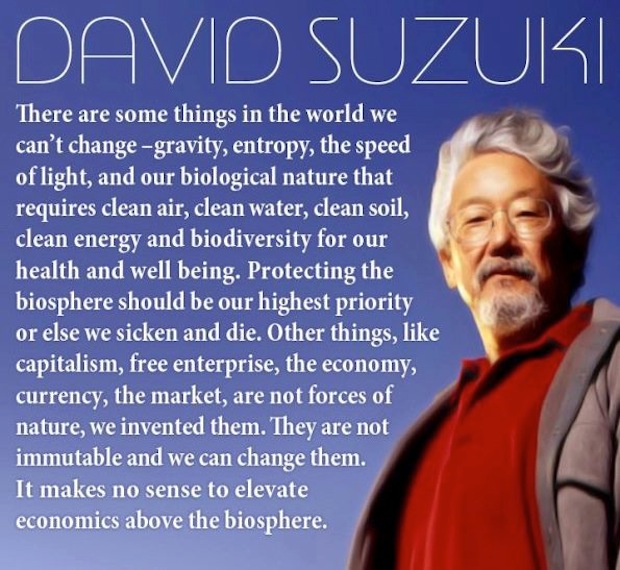
“Uncivilization” was firm in its conviction that climate change and other ecological crises are predicaments, and it called for a cadre of like-minded writers to “challenge the stories which underpin our civilization: the myth of progress, the myth of human centrality and the myth of separation from ‘nature.’ ”
On this matter I think Kingsnorth and Hine are right on the mark. We will never weather the predicaments before us, let alone solve what problems remain solvable, if we refuse to take an honest look at who we are, where we are, and just what the hell we are doing. I think this is a meditation that would benefit revolutionaries and those hiding in the hills alike. We must ask if civilization is something we are even interested in continuing. We must ask what it is we value most and whether or not the lifestyles we are cordoned into are even in line with those values. We must ask what it means to be human. And if we are to trust any of our conclusions, we must first find a way to step outside of everything our culture has programmed us to believe.
—
Civilization is a power structure. It is a rejection of natural law in favor of the control of those high on social hierarchies. Civilization is the domestication of nature and people alike. It is the creation of a once regional, now global farm where the multitudes of humans are livestock, restricted by the borders of various owners, and subjugated and exploited for the extraction of the surplus values generated by their labor. Non human life forms and entire ecosystems are subjugated likewise, and as this control apparatus is now world wide and hell bent on growing in scale year over year, life itself is at risk. Simultaneously, this architecture of domestication and control has blunted the souls of the humans it dominates, and like house pets, the great many people have been declawed and broken. This is the existential portion of the crisis we face. The meaninglessness of life on the inside. The dull static of the best case scenario, where those in the first world yearn for the life of tepid, safe predictability offered by the owner class, should only one produce enough without question or complaint. We are a wretched bunch who fetishize our oppressors and spew vitriol at insurrectionaries who would in trying to shake us loose even for a moment, dare make us late for work.
Navigating circumstances beyond our control in which masters are hostile to us, constantly maneuvering to exert more control over our lives as well as to extract more value from us even in our imprisonment or death; most people are surviving, not thriving. Merely jockeying through a preset condition of work and fee schedules has muted the potential of our species. What has been throttled cannot be measured in discoveries or inventions, but in the satisfaction of individuals and communities to thrive on their own terms. To be fully actualized and autonomous creatures. To witness the assembly line life of modern man is to suffer a snuff film.
If we are to rescue our own hearts and our minds, if we are to save the last embers of burning wildness in our souls and to break the tethers that bind our thinking to suicidal paradigms, then we must uncivilize. Like Buck in “The Call of the Wild,” we must seek to undomesticate ourselves, no only to survive the realities of the world into which we are being thrust, but because to be a house mutt lying bored at master’s feet is to barely exist at all.
—
So what does any of this really mean? What are the steps, the actions to undertake which will align the force of our arms with the rhythms of our hearts? Do we fight or do we flee? Or do we stand upon the hill and bear witness until the fire consumes us? Or is there perhaps some combination of all; a time for rebellion, a time to tend our gardens, and a time to merely sit and say goodbye?
Certainly, if people seek a recipe for action that can maintain society in a form even remotely similar to its present incarnation, then I offer nothing. If what people desire is a map of the future from which plans can be derived and survival assured, I have none. I think maybe it is time to give up on maps. Maybe it is time to just be in the territory for a while. Maybe it is time to give up on human words and to leave the electronic buzz of the internet and to set foot on soil and rock. If domestication is the product of being in the domicile, in the house, then perhaps what we need is to step outside. If the stories we have been told for generations have poisoned us; if these myths about the greatness of the lines on maps and the men who ruled those patchwork lines have only served to make us slaves to abstractions, engendering in us a self righteousness and a malice towards all that isn’t of our hands and seeding in us a fear of what lies outside comfortable walls, then perhaps it is time to go and to hear some different voices. To hear some new stories. Maybe, lost in the ballad of crowing frogs and moaning trees we can crumple up what is written before us and find a blank piece of paper, and on it we will write of our sadness and our fear. We will admit our weakness in the face of all that we have made and we will scratch out our apologies and our gratitude.
Then we will collect up everything that we think the future needs to be given, and we will carry it within us to barricades and to garden gates, to jail cells and to barn bays and to graves. We will find the fire that will make tomorrow worth struggling towards, in that dark, when we are bent and cold heaps of hungry, smoke smelling bone and sinew beneath taught and blackened skin. The madness of the world will grow raw, and real. Privation and awfulness will bloom, and we will endure it.
Humans live on hope and without it they fall into depression, oftentimes taking their own lives. In ‘The Evolution and Psychology of Self-Deception‘, optimism bias is said to be a defense or coping mechanism for survival. Most turn to religion for the ultimate hope of an afterlife nirvana. Voluntarily and unflinchingly holding one’s eyes open to the searing light of reality is an unnatural act for humans. For many, simply dealing with everyday life and the stress of surviving the concrete jungle is enough to drive them to despair, madness, and suicide. Whether they realize it or not, any normal person taking in the full scope of the multiple crises we face is surely prone to depression to some degree or another. I am now finding that I have to periodically distance myself from blogging on these subjects because it’s affecting my personal relationships as well as my mental/physical health. Suicide is on the rise in the modern world:
Death on the Farm:
…Since that crisis, the suicide rate for male farmers has remained high: just under two times that of the general population. And this isn’t just a problem in the U.S.; it’s an international crisis. India has had more than 270,000 farmer suicides since 1995. In France, a farmer dies by suicide every two days. In China, farmers are killing themselves to protest the government’s seizing of their land for urbanization. In Ireland, the number of suicides jumped following an unusually wet winter in 2012 that resulted in trouble growing hay for animal feed. In the U.K., the farmer suicide rate went up by 10 times during the outbreak of foot-and-mouth disease in 2001, when the government required farmers to slaughter their animals. And in Australia, the rate is at an all-time high following two years of drought.
Suicide Rate Rises Sharply in U.S.:
From 1999 to 2010, the suicide rate among Americans ages 35 to 64 rose by nearly 30 percent, to 17.6 deaths per 100,000 people, up from 13.7. Although suicide rates are growing among both middle-aged men and women, far more men take their own lives.
Why Suicide Has Become an Epidemic–and What We Can Do to Help:
…We know, thanks to a growing body of research on suicide and the conditions that accompany it, that more and more of us are living through a time of seamless black: a period of mounting clinical depression, blossoming thoughts of oblivion and an abiding wish to get there by the nonscenic route. Every year since 1999, more Americans have killed themselves than the year before, making suicide the nation’s greatest untamed cause of death. In much of the world, it’s among the only major threats to get significantly worse in this century than in the last…
…This year, America is likely to reach a grim milestone: the 40,000th death by suicide, the highest annual total on record, and one reached years ahead of what would be expected by population growth alone. We blew past an even bigger milestone revealed in November, when a study lead by Ian Rockett, an epidemiologist at West Virginia University, showed that suicide had become the leading cause of “injury death” in America. As the CDC noted again this spring, suicide outpaces the rate of death on the road—and for that matter anywhere else people accidentally harm themselves. Somewhere Ralph Nader is smiling, but the takeaway is darkly profound: we’ve become our own greatest danger.
This development evades simple explanation. The shift in suicides began long before the recession, for example, and although the changes accelerated after 2007, when the unemployment rate began to rise, no more than a quarter of those new suicides have been tied to joblessness, according to researchers. Guns aren’t all to blame either, since the suicide rate has grown even as the portion of suicides by firearm has remained stable.
The fact is, self-harm has become a worldwide concern. This emerged in the new Global Burden of Disease report, published in The Lancet this past December. It’s the largest ever effort to document what ails, injures, and exterminates the species. But allow me to save you the reading. Humankind’s biggest health problem is humankind…
That last article I quoted above, from a mainstream periodical, has more truth written between the lines than its author even realizes. Humans are their own worst enemy and perhaps the rise of suicides across the globe is a reflection of our ecocidal culture, one that values money over life and reduces everything to a financial statistic. Capitalism is the most pervasive religion on the planet today. Most living at the end of modern history have adopted the ruling elite’s belief system which says that all problems can and will be solved via the “free market” and human ingenuity, but as one Indian philosopher of the 21st century wisely observed:
“Nature shrinks as capital grows. The growth of the market cannot solve the very crisis it creates.” ~ Vandana Shiva
People are a reflection of their environment, and so it is in the waning days of industrial civilization and predatory capitalism that many will no longer have the will to go on. From an interesting obituary written by a friend of Michael C. Ruppert:
…I look at Ruppert’s life, his hard struggle, his victories and his short-comings. I wish we were closer in his final couple of years. I loved him. I say the following with love. I say the following because I don’t want to know any more great truth-loving writers to die this way. If you have a drinking problem, hit a meeting. Reach out. It worked for me, to stop flailing about, running from city to country to city, always moving, thinking a big move is going to change things. Get centered. Pray and meditate. Be still.
Something snapped in Ruppert sometime later in that decade, after the book. He moved to Venezuela, in rushed effort to seek political asylum from the Chavez government. Ruppert probably wasn’t anti-imperialist enough for their tastes, at least not in a leftist way. Oh, and the CIA/DIA family background probably didn’t help.
I wept. I felt rage today. I was mad at you, Mike, going out this way. It was too similar to Gary Webb, to Jim Hatfield the Bush biographer. I don’t want this pattern. Tell me it’s not the fate for writers of deep truth, to die, alone, shooting their brains out, because they went deep and hard after the invisible forces, the slithering stag. The hunter became hunted by the dragon.
No. Mike will be remembered for his discipline, his writing, his development of a critical paradigm. Our society is stronger for the deep analysis. In the same way that Ruppert investigated Gary Webb’s death, it’s up to us now to do the scientific and careful analysis of the crime scene. To pick up where he left off, and wake up to a new view of the matrix…
In their search for the truth, perhaps some travel too far down the rabbit hole of civilizational and environmental collapse to ever escape its malignant shadow; it consumes them like a cancer. A copy of Ruppert’s suicide letter can be read here. His research and thinking lead him to the inner sanctum of dark revelation and the unsettling details of civilization’s trajectory. The vaporware dreams of a technological utopia will most certainly go up in smoke as social unrest and resource wars consume the nations of the world in an age of climate chaos. The evil genius of mankind will be revealed in evermore lethal and destructive ways to kill his fellow man. And waiting in the wings of industrial civilization’s collapse is the toxic and radioactive tsunami from an aging fleet of nuclear reactors dependent on a functioning electric grid. Humans are capable of great acts of compassion and selflessness as well as great acts of cruelty and violence. The system rewards sociopathic behavior at the expense of the health of the whole. Ignoring such stark realities won’t change our odds for survival.
RIP Michael C. Ruppert, Feb. 3, 1951- April 13, 2014
Empires take what they want, first through diplomatic and economic pressure, then through the use of jackals and mercenaries, and finally with the shock and awe of military might dressed up with the appropriate propagandistic slogans of rescuing a resource-cursed country from its now out-of-favor dictator. ‘Regime change’ has become an acceptable TV euphemism for overthrowing governments. However, when those foreign oil taps start to run dry, important environmental regulations in the homeland get reinterpreted and scaled back in order to open up resources that once were thought of as undesirable. The elite systematically cannibalize their own societies while at the same time extracting massive profits by shredding the social safety net, criminalizing poverty and dissent, stripping away environmental protection, and gutting scientific research. In order to protect their ability to loot the commons, the elite circle believe it is more advantageous to keep the masses ignorant about the true extent of the planetary crisis their policies have created. If science gets in the way of “progress”, then it is summarily dismissed by outright denial, defunding, and deletion from public records as Apneaman points out:
…the gutting of Environment Canada by the Harper gang was an effective strategy in silencing scientists whose research was causing “sufficient embarrassment”. It was not violent, but they are just getting started. Then there are the non violent environmental protesters who are being sent to prison. Could you imagine that 20 years ago? Just getting started. As the benign dog points out, when the dollar hegemony slips even further it won’t be just the government and the rich looking to silence the critics. Does anyone one here really think people like the neo-cons are going to give up the reserve currency status without a fight?
For those countries who are located down low on the totem pole of energy wealth such as North Korea, the coffers of the State are filled by criminal activity of a more mundane variety such as drug smuggling and currency counterfeiting:
North Koreans began to produce meth in “big state-run labs.” The Los Angeles Times reports that narcotics investigators said the North Korean government controlled the production of meth and opium, as well as other drugs, in the 1990s in order to bring in “hard currency” for Kim Jong Il, the late North Korean leader. The government was engaging in the drug trade in order to save and improve its economic state as a nation. I do not by any means agree with the actions North Korean government chose to take. Instead of tending to its people’s health issues, it chose to spread life-threatening drugs throughout the world. In such a heavily government-dependent political system, the people have no hope to turn to a government official and ask for help. Individuals and families turned to the drug in times of desperation, leading to many North Koreans becoming fervent methamphetamine addicts. This situation is devastating and should not be overlooked. According to CNN, a majority — two-thirds to be exact — of the North Korean population has used methamphetamines. It is reportedly accessible in restaurants and has “become the drug of choice of high-ranking officials and the police.” http://www.centralfloridafuture.com/opinion/north-korea-s-meth-addiction-could-spell-disaster-for-us-1.2853884#.U0jHJyhRY20
It is no secret that North Korean diplomats and embassies are self-financing. In fact, they are profit earning and they must remit funds back to Pyongyang. While this means that DPRK diplomatic relations are not a drain on the treasury, as is typically the case with other countries, it does mean that the DPRK’s official representatives are more likely to make headlines for their business dealings rather than political statements. http://www.nkeconwatch.com/2009/11/22/dprk-diplos-arrested-for-smuggling-again/
Liu had been convicted of conspiracy and fraud involving millions of dollars made not by the Bureau of Engraving and Printing but by counterfeiting presses in a foreign country, presumably North Korea. The quality of these “supernote” forgeries is so high that he’d managed to pass enormous quantities through the electronic detection devices with which every Vegas slot machine is supposed to be equipped. The prosecutor was asking the judge to give him close to 25 years, and in the end Liu would receive more than 12. Liu’s crimes threatened not only the integrity of America’s currency but the very fabric of international peace. They were part of a vast criminal enterprise believed to be controlled by the North Korean state, set up and used to finance its nuclear-weapons and ballistic-missile programs. All of this, intelligence analysts say, is coordinated by a secret agency inside the North Korean government controlled directly by “the Dear Leader,” Kim Jong Il, himself. The agency is known as Office 39. (Given the opacity of anything inside North Korea, experts differ on whether “Office” should be “Bureau” or even “Room”—and they also suspect that the number itself may change.) http://www.vanityfair.com/politics/features/2009/09/office-39-200909
Cuba and North Korea are two interesting examples of countries that are both energy poor but also very different on the sociopolitical spectrum. Cuba appears to be closer to an ideal model for how energy descent should be handled, and North Korea is a much more frightening view of how things are run by a tiny, coddled elite. What follows is a review by Alice Friedemann of “Nothing to Envy. Ordinary lives in North Korea” written by Barbara Demick…
North Korea and Cuba were the first countries to lose oil, the lifeblood of civilization. Since we will all share that fate, it’s interesting to see what happened, though keep in mind that how severe the consequences are will depend on the carrying capacity of the region you’re in, how much civil order can be maintained, and the effectiveness of the leaders in power (i.e. see “Lessons Learned from How Cuba Survived Peak Oil” that compares California to Cuba).
There are enormous differences between the fates of Cuba and North Korea. Cuba had many advantages — a benign climate with year-round rainfall where three crops a year could be grown, a culture of helping one another out, and Castro prevented middlemen and speculators from charging astronomical amounts for food. For a detailed understanding of what happened in Cuba read this Oxfam analysis.
North Korea couldn’t be more opposite – a cold mountainous nation with only 15% of its land arable, and dictators so crazy and cruel they’re almost unmatched in history. North Korea might be the only nation with more prisoners per capita than America. There are many kinds of prisons, from detention centers to hard-labor camps, to gulags where your children, cousins, brothers, sisters, and parents would also be sent to for a crime you committed for generations to come. About 1% of the population– 200,000 people –permanently work in labor camps. The threat of these prisons has made it impossible for organized resistance to happen.
It’s hard to escape, and if you do, then your relatives end up in labor camps. Other nations aren’t keen on refugees – South Korea fears a collapse of North Korea and being overrun by 23 million people seeking food and shelter, and China has their own problems with 1.2 billion poor people.
The only good aspect I could find about North Korea was that the women there are less repressed than in the past. A century ago Korean women were so completely covered in clothing that the Taliban would find no faults. In one village north of Pyongyang women wore 7 foot long, 5 feet broad and 3 feet deep wicker hat constructions that kept women hidden from head to toe. Perhaps even more than Muslim women, Korean women were imprisoned in family compounds and could only leave at special times when the streets were cleared of men. One historian said that Korean women were “very rigidly secluded, perhaps more absolutely than women of any other nation”.
After the Korean War ended, North Korea lost most of its infrastructure and 70% of its housing. It was amazing that Kim Il-sung managed to create a Spartan economy where most were sheltered and clothed, had electricity, and few were illiterate. Grain and other foods were distributed as well. In autumn each family got about 150 pounds of cabbage per person to make kimchi, which was stored in tall earthen jars buried in the garden so they would stay cold but not freeze and hidden from thieves.
North Korea became utterly dependent on the kindness of other countries for oil, food, fertilizer, vehicles, and so on.
What happens when the oil stops flowing?
In the early 1990s North Korea suffered a double blow at a time when they were $10 billion in debt. China wanted cash up front for fuel and food while at the same time the Soviet Union demanded the much higher price of what oil was selling for on world markets.
The nation spun into a crash. Without oil and raw materials the factories shut down. With no exports, there was no money to buy fuel and food with. Electric plants shut, irrigation systems stopped running, and coal couldn’t be mined. The results were:
Power stations and the electric grid rusted beyond fixing
The lights went out.
Running water stopped so most went to a public pump to get water
Electric trams operated infrequently
People climbed utility poles to steal pieces of copper wire to barter for food
There were few motor vehicles
And few tractors, farming was done with oxen dragging plows
Hunger struck, which made people too exhausted to work long at the few factories and farms that were still surviving.
Perhaps this is why many nations have had no choice but to rely on muscle power after an economic crash or during a war, which means putting many people to work on farms. After the energy crisis, North Koreans over 11 were sent out to the country to plant rice, haul soil, spray pesticides, and weed. This was called “volunteer work”. Now that they couldn’t afford to buy fertilizer, every family was expected to provide a human bucketful of excrement to a warehouse miles away. The bucket was exchanged for a chit that could be traded for food.
Like Mao’s crazy schemes, North Korea’s dictators lurched from one mad idea to another — one day it was goat breeding, the next ostrich farms, or switching from rice to potatoes.
Food staples were grown on collective farms, and the state took the harvest and redistributed it. The farmers weren’t given enough to survive on, so they slacked on their collective fields to grow food to survive on, making the food crisis even worse. In the end, it was people in cities with no land to grow their own food on who ended up starving first. Every year, rationed amounts of food went down.
People were told the United States was at fault, and propaganda campaigns encouraged Koreans to think of themselves as tough, and that enduring hunger without complaint was a patriotic duty, and kept everyone’s hopes up by promising bumper crops in the coming harvest. The Koreans deceived themselves like the German Jews in the 1930s, and told themselves it couldn’t get any worse, things would get better. But they didn’t.
Worse yet, instead of spending money on agriculture, the defense budget sucked up a quarter of the GNP. One million men out of 23 million people were kept in arms – the 4th largest military in the world.
The only place to get food became the illegal black market, where prices were terribly high, sometimes 250 times higher than what the state used to sell food for.
Natural disasters made harvests even worse – in 1994 and 1995 Korea was struck with an extremely cold winter and torrential rains in the summer that destroyed the homes of 500,000 people and rice crops for 5.2 million people.
People began picking weeds and wild grasses to stretch out meals, as well as leaves, husks, stems, and the cobs of corn. Children can’t digest food this rough and could end up in a hospital, where doctors advised the rough material be ground up fine and cooked a long time. It wasn’t long before malnutrition led to increasing numbers of people with pellagra and other diseases. Hospitals soon ran out drugs and other supplies.