More threatening than the recent milestone of reaching 400 parts per million CO2 (ppm) is that of a methane level reaching 1800 parts per billion (ppb) which occured on the morning of June 16, 2013. This is more than two and a half times the methane levels of pre-industrial times.
From a historic perspective, greenhouse gas levels have risen abruptly to unprecedented levels. While already at a historic peak, humans have caused emissions of additional greenhouse gases. There’s no doubt that such greenhouse gas levels will lead to huge rises in temperatures. The question is how long it will take for temperatures to catch up and rise. – source
Robert Scribbler also reports that a persistently stagnant(blocked) and bulging Jet Stream has delivered historic heat waves to that region of Alaska and the Arctic. Melt ponds can be seen from satellite images:
…Yesterday, temperatures in Prince William Sound hit upwards of 93 degrees. Communities there, including Valdez and Cordova, both set new record highs. Talkeetna hit 94 degrees, also an all-time record high for the date. Meanwhile, Seward hit a new record of 88 degrees Fahrenheit. Temperatures in the interior rose to between the mid 80s and lower 90s.
This pulse of heat was driven by a persistent bulge in the Jet Stream over the Pacific Ocean, the Western United States, and the Pacific Northwest that has been present since mid winter. The bulge has resulted in warmer than normal temperatures and drier conditions for much of the Western US while keeping temperatures warm for western Canada and Alaska. It is a blocking pattern implicated in the ongoing drought conditions in places from Colorado to Nevada and California. A pattern which sees 44% of the US still locked in drought.
Sunday and Monday, this blocking pattern enabled warm air to flood north into Alaska, setting off a record heatwave there. You may not think of 50 and 60 degree temperatures in Barrow, Alaska as a heatwave. But when average highs for June there are about 38 degrees, 50 and 60 degree weather is quite hot for this time of year…
Last month it was reported that America will ‘officially’ see its own first climate refugees within the next four years:
The 350 residents of Newtok, Alaska, will soon be the country’s first “climate refugees.” The U.S. Army Corps of Engineers says the village is likely to be underwater in just four years…
…”The snow comes in a different time now. The snow disappears way late,” says villager Nathan Tom. “That’s making the geese come at the wrong time. Now they’re starting to lay eggs when there’s still snow and ice. We can’t even travel and go pick them. It’s getting harder. It’s changing a lot.”…
…The U.S. Government Accountability Office has estimated that the cost of moving Newtok — with 63 homes — might reach $130 million. The people of Newtok do not have that kind of money, Goldenberg says.
“These people are living well below the average income of other Americans. They’re able to live that way because they hunt and fish for what they eat,” she says. “So they can’t all of a sudden go and build and pay for new houses on the other side.”
The money has not been forthcoming from the government either, Goldenberg says. Neither the state nor federal government recognizes climate change as a disaster for the appropriation of relief funds…
Contrast this stark reality with the wildly unrealistic views of man’s technological infallibility. A concept which appeared back in 2008 is the utopia of floating cities, called “Floating Ecopolis for Climate Refugees”, which would hold 50,000 climate refugees as the coasts become inundated with rising sea water. I wonder how well these things, if they even were feasible and the money, materials, and energy were available, would hold up to the kinds of hurricanes that climate chaos would throw at it. No doubt it would fold up and sink to the bottom of the ocean like a tin pan:
Actually, there is another idea similar to the one above which was/is being planned by a billionaire libertarian. I can’t think of a more elitist view towards the Earth and fellow humans than this libertarian wet dream:
Thiel has been a big backer of the Seasteading Institute, which seeks to build sovereign nations on oil rig-like platforms to occupy waters beyond the reach of law-of-the-sea treaties. The idea is for these countries to start from scratch–free from the laws, regulations, and moral codes of any existing place. Details says the experiment would be “a kind of floating petri dish for implementing policies that libertarians, stymied by indifference at the voting booths, have been unable to advance: no welfare, looser building codes, no minimum wage, and few restrictions on weapons.”
“There are quite a lot of people who think it’s not possible,” Thiel said at a Seasteading Institute Conference in 2009, according to Details. (His first donation was in 2008, for $500,000.) “That’s a good thing. We don’t need to really worry about those people very much, because since they don’t think it’s possible they won’t take us very seriously. And they will not actually try to stop us until it’s too late…
As I said in my previous post, the über wealthy will try to insulate themselves from climate chaos, leaving the masses in their countries as climate refugees and victims of industrial civilization’s climate disaster. And the shit rolls downhill; third world countries and the poor will bear the brunt of it all. As you can see from the first part of this post, Native Americans in Alaska, some of America’s most disenfranchised and poverty-stricken citizens, will be the first to be flushed down the toilet of neoliberal capitalism. Perhaps we should take note of current events in Brazil.
The Arctic is melting, but it’s just an invitation to exploit it as the next hydrocarbon frontier. It’s a golden busine$$ opportunity with new shipping lanes, untapped oil/gas reserves, minerals, and fish. Hell, it’s even got potential as another tourist trap.
Drill it, frack it, dig it up, pump it out and burn it!
Gotta keep our six lane highways humming, our three-story malls and big-box stores bustling, our jumbo jets flying, and our semi trucks hauling.
Drill it, frack it, dig it up, pump it out and burn it!
Our food supply is failing from floods, droughts, and heat waves, but it’s the perfect open door for Mon$anto’s GMOs. A DNA tweak here and a genetic alteration there to our fossil fuel-dependent monoculture crops is all that is needed to withstand this strange new weather.
Drill it, frack it, dig it up, pump it out and burn it!
The forests are dying, biodiversity is disappearing, the oceans are acidifying and plasticizing, the fresh water aquifers are drying up, and the skies are simmering, but the show must go on, for the corporations know no other way. Business-as-usual must continue, even if it kills us.
Drill it, frack it, dig it up, pump it out and burn it!
The history of large-scale industrialization, whether capitalist or communist, has been marked by the mindset of ‘develop-first and clean-up later’ if at all. The costs of oil spills, nuclear meltdowns, dead zones, industrial GHG pollution, chemical contamination and countless other adverse effects of man’s activities are paid for collectively by the human race as well as every other living thing on the planet. The totality of all these environmental assaults has reached such a high degree that it has set into motion an escalating disruption and alteration of the Earth’s weather and seasonal patterns. Last year was a record for CO2 emissions; methane spikes have been recorded in the ongoing runaway climate change of the Arctic; and we now know that both poles are primarily melting from below by the warming oceans. What has been the response of this planet’s human inhabitants? …to sprint headlong toward the climate cliff. This kind of reaction to the unfolding eco-apocalypse can hardly be the sign of a wise being, but rather that of a fossil-fuel addict who cannot stop using, even in the face of death, i.e. near term extinction (NTE). Wisdom requires a broad and deep understanding of reality as well as acknowledgment of one’s limitations and humbleness of one’s capabilities. Industrial man exhibits neither of these traits, but instead thinks of himself as somehow outside the web of life and a Master over nature.
Radical change is unequivocally needed, and the alternative of business-as-usual, which we appear hellbent on following, is assuredly catastrophic and final. “But we have technology!”, they say. Technology cannot substitute for a stable climate or for the myriad of ecosystem services the Earth provides free of charge to the human economy. Sorry, but none of the geoengineering schemes proposed by man will bring back the melting glaciers and ice sheets nor stop the methane time bomb we have unwittingly released. We are talking about geologic processes which have been unleashed, far beyond the capability of humans to stop or control at this late stage. We’re sort of like ticks on a rampaging elephant. Nevertheless humans will try to sequester the carbon, sprinkle the atmosphere with reflective nanoparticles or aerosols, seed the ocean with iron, or any other of a number of schemes, but to no avail. I suppose the following 1990 statement by the U.N. Advisory Group on Greenhouse Gases should have been taken more seriously:
Beyond 1 degree C may elicit rapid, unpredictable and non-linear responses that could lead to extensive ecosystem damage.
In light of the sudden cancellation of the Halocene’s stable climate regime, I would say that the statement, “The American Way of Life is not negotiable!“, first uttered by George Bush Senior at the 1992 Earth Summit in Rio, is not only negotiable, but will soon be null and void. Yes the lifestyle of industrial civilization marked by mountains of disposable plastic bottles and wrappers, cheap crap shipped from Asia, and hours-long commutes from suburbia to corporate enslavement centers will inevitably fail as will all things propped up by hydrocarbon energy. What we took for convenience and progress was actually killing us, both physically and spiritually. The trappings of industrial civilization snuffed out the last connections we had with the real world so that people now think food comes from grocery stores, water comes from faucets, and climate control comes from a thermostat. As disconnected as we are, most never saw Mother Nature slowly pulling the plug on what Joe Bageant called “the theater state’s 400 million screens” of the “American Hologram.” Being released from the 24/7 American hologram would actually come as a welcome relief for most if not for the fact that the real world which they had been disassociated from for so long was rapidly deteriorating. In tandem with the collapse of the biosphere is America’s not so surreptitious slide into overt totalitarianism. You must have already figured out that a few well-heeled individuals are going to try to protect their opulent lifestyle as the rest of humanity turns to a diet of insects and rodents. Somebody’s got to pay the price for all those externalized costs and it’s going to be the unwashed masses – the climax of socialized losses and privatized gains.
And what about the children, if by some miracle a few do survive the ravages of climate chaos? Well, we can only hope that in the aftermath of their ancestor’s sociopathic behavior and lack of conscience, they will forgive us. Bequeathing a destroyed planet to one’s descendants most certainly earns such a person a seat in the innermost circle of Hell. But quite literally, Hell is what we are creating right here on Earth.
An article about ‘peak meat’ ran in The Atlantic and Quartz today, adding yet another peak to the mounting list of constrained and over-consumed resources on the planet:
Besides the health risks of eating too much red meat, i.e. heart disease, there is the environmental impact affecting everyone, meat-eaters and vegans alike. In the last couple years there have been increasing calls for the developed countries to dramatically cut their meat consumption by 50% to reduce greenhouse gases from industrial meat production. The fertilizers used to grow the feed crops for cattle “produce the most potent of the greenhouse gases.”
Retail sales of meat and poultry have risen in the U.S. in recent years, but the actual volume sold has been decreasing. The increased sales totals have been a result of increased prices due to higher production input costs. Look at the graph below and you’ll see that farmed fish have overtaken beef production. Part of this may be due perhaps to a more health-conscience public, but I believe the primary reason is because of increased production costs which are ultimately from increased energy costs or constraints of peak net energy:
As grain and soybean prices have risen well above historical levels in recent years, the cost of producing grain-eating livestock has also gone up. Higher prices have nudged consumers away from the least-efficient feeders. This means more farmed fish and less beef. In the United States, where the amount of meat in peoples’ diets has been falling since 2004, average consumption of beef per person has dropped by more than 13 percent and that of chicken by 5 percent. U.S. fish consumption has also dropped, but just by 2 percent…
…Cattle consume 7 pounds of grain or more to produce an additional pound of beef. This is twice as high as the grain rations for pigs, and over three times those of poultry. Fish are far more efficient, typically taking less than 2 pounds of feed to add another pound of weight. Pork and poultry are the most widely eaten forms of animal protein worldwide, but farmed fish output is increasing the fastest. – source
In the next graph we see that while farm fishing is on the rise, wild caught fish have been on the decline due to overfishing, destruction of ocean ecosystems, and what has been called peak fish.
So the world is replacing beef and wild-caught fish with farmed fish or aquaculture. But just as cattle farming and the overharvesting of the oceans for 7 billion people create their own far-reaching environmental impacts, so too does farmed fish:
As cattle ranches have displaced biologically rich rainforests, fish farms have displaced mangrove forests that provide important fish nursery habitats and protect coasts during storms. Worldwide, aquaculture is thought to be responsible for more than half of all mangrove loss, mostly for shrimp farming. In the Philippines, some two thirds of the country’s mangroves—over 100,000 hectares—have been removed for shrimp farming over the last 40 years. …Another problem with intensive confined animal feeding operations of all kinds, whether for farmed fish or for cattle, is not what gets extracted from the environment but what gets put in it. …Along with the vast quantities of waste, the antibiotic and parasite-killing chemicals used to deal with the unwanted disease and infestations that can spread easily in crowded conditions also can end up in surrounding ecosystems. The overuse of antibiotics in livestock operations can lead to antibiotic-resistant bacteria, threatening both human and animal health. In the United States, for instance, 80 percent of antibiotics use is in agriculture—and often not for treating sick animals but for promoting rapid weight gain. – source
On his website Peak Food, John Gossop lists the reasons why we are headed for a global famine in 2025:
In response to the increasing demand for food, wealthy countries have gone overseas on a land grab to secure soil and water resources:
…in the past 10 years, up to 227 million hectares of land were sold in developing and emerging countries, or signed away as long-term leases. The total area is roughly six times the size of Germany. In the past two years, competition has intensified further, especially in sub-Saharan Africa. According to Oxfam, more than 60 % of the land deals concern countries that suffer poverty and hunger. This is considered worrisome since international investors are basically interested in exporting commodities to richer economies. – source
Peak food production seems to have been reached due to the water-energy-food nexus, according to Marita Wiggerthale, trade and food expert for Oxfam Germany:
Peak food production has already been reached because there is increased competition between food, fuel and feed,” Wiggerthale said, pointing to biofuel production that diverts 15 percent of the world’s corn to engines and the world’s growing appetite for meat, which pushes farmers to grow food for animal feed at the expense of other food crops. – source
I’m not sure what new crops will survive in a climate pattern of extreme drought, floods, and fluctuating temperatures, but some think we can GMO are way out of this mess.
“Beekeeper Industry is Doomed and Cannot Survive for another 2 to 3 Years…”
And to add to the threat of the world’s food supply, a mass die-off of the bees is underway, probably from the nemesis effect of our pesticide and chemical-saturated environment. Don’t these news reporters look a little too relaxed reporting this horrific story in the video below?
Sacramento California is now witnessing first hand, the daunting implications of colony collapse disorder. It is estimated that California produces about 80 percent of the world’s almonds. There are 6,000 almond orchards in that region and many of the farmers are finding that there simply aren’t enough bees to pollinate their crop. A fourth generation beekeeper lost 70% of his hives while another lost 100%.
The negative effects of the honeybee shortage were predicted last year so measures were taken to try and offset this dangerous scenario. 11,000 hives were brought to California from all over the country; of these 11,000 hives, hundreds were found dead upon arrival. There are an abundance of theorized causes of colony collapse disorder, from disease, to mites, to pesticides. In a recent U.C. Davis study, in which a large sample of hives was examined, 150 different chemical residues were found on the bees.
The effects of honeybee loss are near cataclysmic as it is estimated that one third of the entire world’s food supply comes from pollination. Pesticides are a key suspect in the hunt for the culprit and fortunately there is something that we can all do to counter their use. We can buy organic, buy local, and grow our own food. Practicing self-sustainability and support for local sustainable farmers is a key factor in staving off the potential for worldwide food shortages… – source
As the recent news stories below illustrate, extreme weather is on the rise and has been scientifically linked to human-induced climate change. I find it amazing than in the midst of the beginning stages of collapse of industrial civilization, many will attribute the disintegrating environment to natural phenomenon, biblical and other religious prophecy, or the lizard illuminati. I suppose the real reason behind America’s hi-tech surveillance panopticon is to keep the hungry and destitute masses from overrunning the walled compounds of the elite when climate change and peak net energy really kick into gear. These days the number of headlines pointing to environmental collapse are overwhelming; choosing one is like shooting fish in a barrel. The population of Atlantic Puffin bird, called the ‘marine canary in the coal mine‘, has reportedly been “losing body weight and dying of starvation, possibly because of shifting fish populations as ocean temperatures rise.” The Arctic, an essential temperature regulator for the planet, is melting fast and releasing a carbon time bomb:
Over hundreds of millennia, Arctic permafrost soils have accumulated vast stores of organic carbon – an estimated 1,400 to 1,850 petagrams of it (a petagram is 2.2 trillion pounds, or 1 billion metric tons). That’s about half of all the estimated organic carbon stored in Earth’s soils. In comparison, about 350 petagrams of carbon have been emitted from all fossil-fuel combustion and human activities since 1850. Most of this carbon is located in thaw-vulnerable topsoils within 10 feet (3 meters) of the surface.
But, as scientists are learning, permafrost – and its stored carbon – may not be as permanent as its name implies. And that has them concerned.
“Permafrost soils are warming even faster than Arctic air temperatures – as much as 2.7 to 4.5 degrees Fahrenheit (1.5 to 2.5 degrees Celsius) in just the past 30 years,” Miller said. “As heat from Earth’s surface penetrates into permafrost, it threatens to mobilize these organic carbon reservoirs and release them into the atmosphere as carbon dioxide and methane, upsetting the Arctic’s carbon balance and greatly exacerbating global warming.”
Current climate models do not adequately account for the impact of climate change on permafrost and how its degradation may affect regional and global climate…
…“The Arctic is warming dramatically – two to three times faster than mid-latitude regions – yet we lack sustained observations and accurate climate models to know with confidence how the balance of carbon among living things will respond to climate change and related phenomena in the 21st century,” said Miller. “Changes in climate may trigger transformations that are simply not reversible within our lifetimes, potentially causing rapid changes in the Earth system that will require adaptations by people and ecosystems.”…
Adaptation will likely not be possible by humans, and as far as our sprawling steal and concrete cities are concerned – they’re toast.
…“Some of the methane and carbon dioxide concentrations we’ve measured have been large, and we’re seeing very different patterns from what models suggest,” Miller said. “We saw large, regional-scale episodic bursts of higher-than-normal carbon dioxide and methane in interior Alaska and across the North Slope during the spring thaw, and they lasted until after the fall refreeze. To cite another example, in July 2012 we saw methane levels over swamps in the Innoko Wilderness that were 650 parts per billion higher than normal background levels. That’s similar to what you might find in a large city.”…
The next headline sums up the climate policy of all governments – a joke. Business-as-usual will continue until it ain’t so usual anymore. Insurance costs will skyrocket and the wrath of nature will roll back all the transient wealth humans have built up atop the backs of our fossil fuel slaves. Externalized costs will be paid back in the wreckage of a civilization which thought of itself as superior to and separate from the natural world.
Reading the inklings of future trouble that the next three headlines portend, you’ll see global famine on the horizon:
We’re seeing more severe storms,” Vilsack said. “We’re facing more invasive species. More intense forest fire threatens communities each year. NOAA reported that 2012 was the second most intense year in our history for extreme weather events — droughts, flooding, hurricanes, severe storms, and devastating wildfire. NOAA also advised that last year was the warmest on record for the continental United States.”
He made it clear we can’t dismiss these changes as an aberration.
“The latest science tells us that the threat of a changing climate is new and different from anything we’ve ever tackled,” Vilsack said.
A historic multi-billion dollar flood disaster has killed at least eighteen people in Central Europe after record flooding unprecedented since the Middle Ages hit major rivers in Austria, the Czech Republic, Germany, Poland and Slovakia over the past two weeks. The Danube River in Passau, Germany hit the highest level since 1501, and the Saale River in Halle, Germany was the highest in its 400-year period of record. Numerous cities recorded their highest flood waters in more than a century, although in some locations the great flood of 2002 was higher. The Danube is expected to crest in Hungary’s capital city of Budapest on June 10 at the highest flood level on record, 35 cm higher than the record set in 2006. The flooding was caused by torrential rains that fell on already wet soils. In a 2-day period from May 30 – June 1, portions of Austria received the amount of rain that normally falls in two-and-half months: 150 to 200 mm (5.9 to 7.9″), with isolated regions experiencing 250 mm (9.8″). This two-day rain event had a greater than 1-in-100 year recurrence interval, according to the Austrian Meteorological Agency, ZAMG…
…The primary cause of the torrential rains over Central Europe during late May and early June was large loop in the jet stream that developed over Europe and got stuck in place…
…If it seems like getting two 1-in-100 to 1-in-500 year floods in eleven years is a bit suspicious–well, it is. Those recurrence intervals are based on weather statistics from Earth’s former climate. We are now in a new climate regime with more heat and moisture in the atmosphere, combined with altered jet stream patterns, which makes major flooding disasters more likely in certain parts of the world, like Central Europe. As I discussed in a March 2013 post, “Are atmospheric flow patterns favorable for summer extreme weather increasing?”, research published this year by scientists at the Potsdam Institute for Climate Impact Research (PIK) in German found that extreme summertime jet stream patterns had become twice as common during 2001 – 2012 compared to the previous 22 years. One of these extreme patterns occurred in August 2002, during Central Europe’s last 1-in-100 to 1-in-500 year flood. When the jet stream goes into one of these extreme configurations, it freezes in its tracks for weeks, resulting in an extended period of extreme heat or flooding, depending upon where the high-amplitude part of the jet stream lies. The scientists found that because human-caused global warming is causing the Arctic to heat up more than twice as rapidly as the rest of the planet, a unique resonance pattern capable of causing this behavior was resulting.According to German climate scientist Stefan Rahmstorf, “Planetary wave [jet stream] amplitudes have been very high in the last few weeks; we think this plays a role in the current German flooding event.
The biggest lie ever told is that we will be able to adapt to or mitigate a planet-wide shift in weather patterns, temperatures, and sea level rise on such a short time-scale as to be instantaneous in geologic records. Our fall – a tragicomedy of hubris, self-delusion, greed – will be more precipitous than our rise.
The IEA’s “plea to slow the damage” appears to be a call for help postmortem. I would find such stories of America’s omnipotent surveillance state much more disconcerting if not for the unfolding global ecocide.
According to a recent report from the International Energy Agency (IEA), world CO2 emissions hit an all-time high last year at 31.6 gigatons. This means that only a 532 gigaton cushion now remains between pushing the world above the dangerous 2 degree Celsius Equilibrium Climate Sensitivity threshold. At the current rate of emissions, we will run headlong into this threshold within a little more than 16 years. So before 2029, without major changes in the world’s energy structure, a civilization-endangering global warming of at least 2 degrees Celsius will be locked in.
In order to attempt to buy time to respond to this growing crisis, the International Energy Agency has published a policy paper containing recommendations for a path forward that is less damaging than the current one. The agency paper noted that the current emission path brings us to 3.6 to 5.3 degrees warming by the end of this…
I have yet to meet Guy McPherson, but with a blog entitled “Collapse of Industrial Civilization”, it appears inevitable. Who else on Earth has such an unvarnished view of the horror show modern man is orchestrating? Truth delivered up with no hidden agendas is a very bitter and difficult pill to swallow, but being a true radical means getting at the root of the problem irrespective of “ideological and/or theological prejudice“, or as Guy says…
For those wanting to keep abreast of the deteriorating habitability of the planet, Guy posts periodic updates to the unfolding climate chaos here.
There exists no high quality recording of Guy’s speech at the most recent “Age of Limits” conference that I know of. In order to review his talk I watched this clip and studied his powerpoint slides which he sent me and which are posted here.
I’m certain that many who attend Guy’s speeches don’t internalize all the information he sets forth, fore if they did, their language would lose all the culturally ingrained phrases of hope for any kind of eleventh hour rescue by our technology-worshipping society. If there were a fix, don’t you think we would have implemented it by now before setting off a list of unstoppable positive feedback loops, known and unknown? Hell, even the much-trumpeted cleanliness of natural gas has turned out to be a farce. A recent study shows methane release from natural gas production is much higher than was known.
We seem to be leaking greenhouse gases from every orifice. Yes Moore’s law and the illusion of infinite progress have brainwashed everyone into believing mankind is immortal, forever in control of primal earth forces. In 2000, Chris Bright of the Worldwatch Institute introduced the term “nemesis effect” which refers to the cumulative effect of multiple stressors and conditions that lead to unanticipated consequences. Taken as a whole, the information in Guy’s speech equates to a global nemesis effect which is taking the planetary biosphere past the threshold of human habitability.
After stating the “benefits to the biosphere” from the collapse of industrial civilization, he presented a brief history of climate science’s implication of man as the primary culprit of climate change:
Benefits to the Biosphere from the Collapse of Industrial Civilization
– will slow down climate chaos, but too late to stop it.
– will terminate human population overshoot which is proceeding currently at the rate of 217,000 per day (births minus deaths every single day).
– will slow or stop the 6th Great Extinction proceeding at a pace of roughly 217 species per day (conservative estimate).
– will terminate environmental decay such as the soil we wash away into the oceans, the air we foul, the water we pollute, and all the other consequences of industrial civilization.
Brief History of Climate Change Science and the Pinpointing of Human-Induced Climate Change
In 1847, George Perkins Marsh is credited with being the first person to have implicated human activity as the source of climate change.
In 1896, Swedish scientist Svante Arrhenius, considered the father of climate change science, predicted a 1 degree Celsius rise by the year 2,000. Few quote him today because he thought that a slight warming of the atmosphere would be a good thing for human agriculture. In the end, no such benefits will result from human-induced climate change due to the extreme weather swings and our oil-dependent agricultural system…
Last year, James Hansen (et al), pointed out that extreme weather events of all kinds (hot, cold, wet and dry) are becoming more frequent. In fact, their statistical analysis of historical data (as opposed to computer modelling of future events) demonstrated that extreme events (i.e. more than 3 standard deviation above or below average) are now ten times more likely than they used to be…
Our Oil-Dependent Agricultural System Spews CO2
Over the past 40 years, about 2 billion hectares of soil – equivalent to 15% of the Earth’s land area (an area larger than the United States and Mexico combined) – have been degraded through human activities, and about 30% of the world’s cropland have become unproductive. But it takes on average a whole century just to generate a single millimetre of topsoil lost to erosion.
Soil is therefore, effectively, a non-renewable but rapidly depleting resource.
We are running out of time. Within just 12 years, the report says, conservative estimates suggest that high water stress will afflict all the main food basket regions in North and South America, west and east Africa, central Europe and Russia, as well as the Middle East, south and south-east Asia.
Unfortunately, though, the report overlooks another critical factor – the inextricable link between oil and food. Over the last decade, food and fuel prices have been heavily correlated…
Past Predictions of Mass Extinction and Human Die-Off
Despite the rantings of wingnuts like Alex Jones, free-market ideologues, and conspiracy theorists, the following warning given in 1986 by Robert Watson, who was the director of NASA’s upper atmospheric program at that time, remains prescient…
A dramatic loss of ozone over antarctica proves the “greenhouse effect” is real and presages a gradual warming of the Earth that threatens floods, drought, human misery in a few decades and – if not checked – eventual extinction of the human species, scientists warned Tuesday…
Recent Findings of Hansen and the NASA scientists…
James Hansen, director of NASA’s Goddard Institute for Space Studies, warned Wednesday that human-made climate change could lead to the deaths of millions of species.
“If we continue with business as usual this century, we will drive to extinction 20 to 50 percent of the species on the planet,” he told Current TV host Eliot Spitzer. “We are pushing the system an order of magnitude faster than any natural changes of climate in the past.”
In a recently published study, Hansen and his team concluded that the drastic increase in record high temperatures in recent years could be directly traced to human-made climate change, particularly the increase in greenhouse gases…
Large-Scale Climate Assessment Projects
Guy then goes into some large-scale climate assessment studies which do not include data for:
(a) Positive Feedbacks (tipping points)
(b) Economic Collapse
Back in 1990, the U.N. Advisory Group on Greenhouse Gases warned:
Beyond 1 degree C may elicit rapid, unpredictable and non-linear responses that could lead to extensive ecosystem damage.
Our Dying Oceans and Back to the Future with Mass Extinctions
CO2 levels are now at 400ppm which does not account for methane and other greenhouse gases accumulating from human activity. CO2 has never exceeded 280 ppm in the last million years (based on actual readings of atmospheric chemistry from Antarctic ice-core data.) The last time greenhouse gases were at 400 ppm was three million years ago — a time when no humans existed. Humans have managed to radically alter the chemistry of the atmosphere to such a degree as to replicate pre-historic levels when no humans walked the Earth.
Phytoplankton has plummeted in the last century due to ocean warming and acidification:
A 2012 Science study found that the paceof ocean acidification today is ten times faster than during the PETM – the most rapid acidification event in the geologic record. Looking as far back as 300 million years, the study found that at current trends the projected rate of acidification of the world’s oceans will be the worst ever – worse than all the major extinctions of this time span: the end-Cretaceous, the end-Triassic, and even the end-Permian 250 million years ago, when 96% of marine species went extinct.
The current rate of (mainly fossil fuel) CO2 release stands out as capable of driving a combination and magnitude of ocean geochemical changes potentially unparalleled in at least the last ~300 million years of Earth history, raising the possibility that we are entering an unknown territory of marine ecosystem change.
Considering the projections of increasing temperatures from the numerous large-scale assessments listed above, we can logically predict that the remaining phytoplankton, the base of the food chain, will suffer catastrophically.
Can CO2 Emissions and Economic Growth Be Decoupled?
Even with the economic meltdown of 2008, carbon emissions only slowed temporarily, quickly rebounding in 2010.
What this implies is that only a complete collapse will prevent runaway climate change. Others seem to agree. A censored 2012 study [original paper here] by University of Utah professor Tim Garrett explains that energy efficiency gains actually accelerate global energy consumption and CO2 emission rates and that only collapse can stop this process:
…Taking [a] global perspective with respect to the economy, the implication is that efficiency gains will do the exact opposite of what most claim it will do. If technological changes allow global energy productivity or energy efficiency to increase, then civilization grows faster into the resources that sustain it. The consequence is that energy consumption and CO2 emissions accelerate.
CO2 emissions can be stabilized despite efficiency gains. But this is possible only if decarbonization occurs as quickly as energy consumption grows. At today’s consumption growth rates, this would require roughly one new nuclear power plant, or equivalent, to be deployed each day. Barring this, since wealth and energy consumption rates are linked, it can only be through an economic collapse that CO2 emissions rates will decline. If the size of civilization enters a long and profound decline then wealth, energy consumption and CO2 emissions will all decrease at roughly the same rate. If the collapse is sufficiently rapid then it may be possible to maintain atmospheric CO2 concentrations below levels that are normally considered dangerous.
Perhaps there is a way out of this admittedly grim sounding double-bind. But Jevons’ Paradox tells us that it will not be by way of increasing energy efficiency. Quite the opposite…
Although it “feels good to conserve energy,” he said, “there shouldn’t be any pretense that it will make a difference.”
These views, both radical and controversial, will be published this week in Climate Change, an online academic journal edited by renowned Stanford University climate scientist Stephen Schneider. Other research journals declined to publish Garrett’s research.
Garrett believes current options to potentially avert climate change — increased energy efficiencies, reduced population growth and a switch to power sources that don’t emit carbon dioxide, as well as underground storage of carbon dioxide from fossil fuel burning — are “not meaningful.”
“Fundamentally, I believe the system is deterministic,” Garrett said. “Changes in population and standard of living are only a function of the current energy efficiency. That leaves only switching to a non-carbon-dioxide-emitting power source as an available option.” Some economists are critical of his approach, but his solution is targeted to solve economic issues as “physics problems,” looking at civilization as one big problem instead of calculating individual problems based on population growth, increasing energy efficiency and other things.
“I end up with a global economic growth model different than they have,” he said. Garrett treats civilization as a “heat engine” that “consumes energy and does ‘work’ in the form of economic production, which then spurs it to consume more energy,” he said.
Ominous Signs of Disturbing a Fragile Planet
Following in the footsteps of Henry David Thoreau’s 1851 observations of flowering plants, Richard Primack, a professor of biology at Boston University, and his then-graduate student, Abe Miller-Rushing, observed the habits of the same species and found drastic changes:
…An analysis of Thoreau’s observations, those of another 19th-century naturalist and their own modern records indicate the first flowering date for 43 of the most common species has moved up by an average of 10 days. What’s more, species that aren’t shifting their flowering times in response to warmer springs are disappearing…
Recently, researchers at Penn State reconfigured the habitability zones for planets and Earth was calculated to be much further to the edge of what is called the ‘Goldilocks Zone’. The Goldilocks Zone is defined as…
…a narrow belt around a star where an orbiting planet would be warm enough to support life, but cool enough that life wouldn’t just go around bursting into flames all the time, a factor that can significantly delay evolutionary development. The term was introduced nearly two decades ago, and hasn’t been substantively updated since then.
Guy said that this suggests “relatively minor changes in the chemistry of the planet will produce significant impacts that might take us out of the habitable zone for humans.”
Back in 2010, researchers calculated the maximum wet-bulb temperatures reached in a high carbon dioxide emissions future climate scenario:
Reasonable worst-case scenarios for global warming could lead to deadly temperatures for humans in coming centuries, according to research findings from Purdue University and the University of New South Wales, Australia.
Researchers for the first time have calculated the highest tolerable “wet-bulb” temperature and found that this temperature could be exceeded for the first time in human history in future climate scenarios if greenhouse gas emissions continue at their current rate…
…”Whole countries would intermittently be subject to severe heat stress requiring large-scale adaptation efforts,” Huber said. “One can imagine that such efforts, for example the wider adoption of air conditioning, would cause the power requirements to soar, and the affordability of such approaches is in question for much of the Third World that would bear the brunt of these impacts. In addition, the livestock on which we rely would still be exposed, and it would make any form of outside work hazardous.”…
…”We found that a warming of 12 degrees Fahrenheit would cause some areas of the world to surpass the wet-bulb temperature limit, and a 21-degree warming would put half of the world’s population in an uninhabitable environment,” Huber said….
Since 1998, global surface air temperatures have flattened despite continued increases in greenhouse gases. Climate change deniers have used this as proof that there is no human-induced climate change happening. Where is all the heat going? Into the deep oceans…
…If extra heat is temporarily stored elsewhere thanks to natural climate variations, we won’t necessarily notice it.
But sooner or later it will inevitably emerge, which means that the current slowdown in warming may well be balanced by a period of rapid warming in a few years — nobody knows how many — from now. Scientists have always said that global warming would proceed in fits and starts, not in a smooth upward trend in temperatures…”
Another factor (global dimming or the aerosol effect from Asian industrialization) causing the dampening of current surface air temperatures in the last 15 years was mentioned in a previous post by David Wasdell:
…The effects of global dimming have been enhanced during this period [Asian Industrialization] by the mixing of more surface heat down to deeper ocean water, by the dominance of La Nina (cooler) conditions in the Pacific, and by a prolonged period of minimal solar radiation. The absence of temperature increase has also blocked all amplification from the temperature-dependent feedback mechanisms…
Unstoppable Feedback Loops
The following list of positive feedbacks are identified by Guy (with one added by me) as irreversible, although the last one appears to be hampered by the increasingly treacherous conditions that the resource extraction corporations are faced with as they try to set up shot in the melting and warming Arctic. I have added links to articles and essays, a few of which are very recent and add new information about these feedback loops (increased CO2 from hidden fires in the Amazon, boreal forest migration, and loss of top predators)
Standing on the Beach of Doom and waiting at the Last Chance Saloon for the waves to come in…Brace for Impact.
Irreversible Positive Feedback
1.) Methane hydrates are bubbling out the Arctic Ocean (Science, March 2010)
2.) Warm Atlantic water is defrosting the Arctic as it shoots through the Fram Strait (Science, January 2011)
3.) Siberian methane vents have increased in size from less than a meter across in the summer of 2010 to about a kilometer across in 2011 (Tellus, February 2011)
4.) Drought in the Amazon triggered the release of more carbon than the United States in 2010 (Science, February 2011)
Using an innovative satellite technique, NASA scientists have determined that a previously unmapped type of wildfire in the Amazon rainforest is responsible for destroying several times more forest than has been lost through deforestation in recent years…
…In years with the most understory fire activity, such as 2005, 2007 and 2010, the area of forest affected by understory fires was several times greater than the area of deforestation for expansion of agriculture, according to Morton. The study goes further and fingers climate conditions – not deforestation – as the most important factor in determining fire risk in the Amazon at a regional scale…
…The new knowledge about the scope of understory fires could have implications for estimates of carbon emissions from disturbed forests. How experts account for those emissions depends on the fate of the forest – how it is disturbed and how it recovers.
“We don’t yet have a robust estimate of what the net carbon emissions are from understory fires, but widespread damages suggest that they are important source of emissions that we need to consider,” Morton said…
5.) Peat in the world’s boreal forests is decomposing at an astonishing rate (Nature Communications, November 2011)
…The planet’s boreal forests won’t expand poleward. Instead, they’ll shift poleward. The difference lies in the prediction that as boreal ecosystems follow the warming climate northward, their southern boundaries will be overtaken by even warmer and drier climates better suited for grassland.
And that’s a key difference. Grassland stores a lot of carbon in its soil, but it accumulates at a much slower rate than is lost from diminishing forests…
6.) Methane is being released from the Antarctic, too — over ten tens more carbon than parts of the Arctic (Nature, August 2012)
7.) Russian forest and bog fires are growing (NASA, August 2012)
8.) Cracking of glaciers accelerates in the presence of increased carbon dioxide (Journal of Physics D: Applied Physics, October 2012)
9.) The Beauford Gyre has apparently Reversed Course (U.S. National Snow and Ice Data Center, October 2012)
10.) Exposure to sunlight increases bacterial conversion of exposed soil carbon, thus accelerating thawing of the permafrost (Proceedings of the National Academy of Sciences, February 2013)
11.) Summer ice melt in Antarctica — highest level in 1,000 years and the most rapid melting has occurred in the last 50 years (Nature Geoscience, April 2013)
I would add one more here…
12.) The Disappearance of Top Predators accelerates CO2 emissions (Nature Geoscience, Feb 2013)
People play a big role in predator decline and our study shows that this has significant, global implications for climate change and greenhouse gases,” says Atwood.
“We knew that predators shaped ecosystems by affecting the abundance of other plants and animals but now we know that their impact extends all the way down to the biogeochemical level.
Reversible Positive Feedback?
13.) Arctic drilling was fast-tracked by the Obama administration during the summer of 2012
Do they owe us a living- of course they f*cking do!
White Punks on Hope
The fine art of visualization has always been the domain of the artist, savant, musician, and others ostensibly outside of the obfuscation of bourgeois economics. Unfettered by the crushing gravitational pull of media propaganda, mainstream thinking and the lure of cash for the “right” perspective, occasionally an individual, a group, or infrequently, a culture emerges that can shed the blindness of false class consciousness and reveal what is hidden.
Some emergents are forgettable, some pedantic and clichéd, but all can be admired for at least daring to speak freely.
Reconstituted from the false promise of the ‘60’s hippie culture, and responding to the nihilism that infected an entire generation of Reagan and Thatcheresque refugees, a dissident core began to emerge.
The natural format given the disappointments of the ‘60’s was a hardened, cynical and violent counterculture vehemently opposing the peace, love, psychedelics, and innocence doctrine of the earlier eras.
Isolated from the mind numbing bombardment of institutionalized media messaging, alienated by the false promises of a decaying wage labor economy, and profoundly impacted by the specter of diminishing social mobility, the coming of age young adult was left with an inchoate rage against an unknowable and seemingly undefinable malaise.
It is said that the root of anger is fear. Fear of the unknown and unknowable, fear of denial of sustenance income, fear of failure, but mostly fear of prospects of mandatory participation in a system consisting of equal parts alienation, exploitation, and the active and unwilling transfer of wealth from those that produce to those that are the ownership class.
Lacking the clarity of class consciousness, what we are left with is fear and anger.
While much of the mainstream society is content with empty promises of lottery winnings, Las Vegas flights of fancy, and stores stocked with useless goods giving the perception of abundance, choice and liberty, those that are fearful and angry see other perspectives, and from these perspectives we can formulate a different narrative.
One such example was the ‘80’s punk collective Crass, consisting of Steve Ignorant, Penny Rimbaud, Eve Libertine, and Joy DiVerve and artist Gee Vaucher (whose work is featured here). This group was noteworthy as they had a reasonably well organized collective, and took particular satisfaction in critiquing the then active Falklands War, exposing the Thatcher administration as capitalizing on this act of State violence to bolster her home image.
They raised the ire of the US government as well as MI5 when they concocted a staged phone call between Reagan and Thatcher purporting to disclose US targeting of Europe with nuclear weapons as a response to the Soviet cold war threat.
Unfortunately, such antics that reach the highest forms of power are rare, and mostly we are left to view the world through the right side of a telescope, with a viewfinder supplied by the dissident.
From Her to Eternity
In the same vein as Crass, and at the same time, the punk band Poison Girls emerged from the collective with its unlikely front person, radical feminist and middle aged housewife Vi Subversa.
Vi Subversa provided vanguard class consciousness to young women of the day, as well as instructive peer examples questioning authority and male dominated counterculture. Illuminating and ridiculing female subservient expectations were (and still are) important steps to overturning bourgeois politics.
Venom laced vocals coupled with a whiskey toned, gravelly delivery were the hallmarks of the ska infused sound.
Our metaphoric viewfinder gives multidimensional focus to our predicament, a field dimension of time, space, geography, and focal plane, and while connected to a large scale telescope from the vantage point of the proper end, we can see the interconnectivity of capital over space and time, the diffuse tendrils of exploitation and alienation as they span continents.
The heft of the knurled wheel belies its frictionless connection as we spin the focusing knob through a dizzying kaleidoscope of images rapidly scrolling past the optic.
The wheel slows, the images in the telescope coalesce, and we can bring into focus a strange scene of dust, smoke, and the smell of charred wood and bodies. The date is Jan 10th 1860, and the location is Lawrence, Massachusetts, the site of the Pemberton Textile Mill, which has just collapsed and killed 145 workers, mostly immigrant women and children. In what will become a disturbing scene of repetition throughout the next 1 ½ centuries, the factory was expanded in a frenzy of production, with new floors added to substandard codes. The floors were supported by iron pillars, and the new floors were promptly laden with heavy machinery. During that fateful January day, the machines were all running simultaneously, and the cumulative harmonics of the machinery started a destructive oscillation in the iron support beams- and they failed catastrophically, bringing the entire structure down in seconds and trapping nearly 600 people.
Later that evening, in the process of extricating the trapped women and children, who were singing to console each other as the rescuers labored to clear the wreckage, a lantern was kicked over and ignited the oil soaked floor material, incinerating the trapped women.
Capital from the very beginning has sought access to immigrants, minorities and other disenfranchised and marginalized members of society to fulfill its boundless needs for low cost labor, and as a bonus, it prefers those that cannot protest or defend themselves.
The Mercy Seat
Another whimsical spin of the viewfinder knob advances us to March 25th, 1911, in New York City, where once again we image a collapsed building and smell the arid stench of burning flesh. 50 years of Industrial Revolution has changed very little it seems, robber barons are in their ascendancy and the accumulation of profits at enormous social cost is in full swing.
The Triangle Shirtwaist Factory has just burned to the ground, extinguishing the lives of 146 immigrant women and children. Once again, capital has attached its tentacles to the downtrodden and dispossessed, with wide spread deployments of factories incorporating abominable working conditions- hastily constructed with regard only for profits, blocked safety exits and locked fire escapes, where they existed at all, no doubt to minimize any theft of materials or unauthorized leaving of the workspace, no matter the circumstances.
The conventional wisdom of the 19th and early 20th century was that the working class was essentially a criminal class, particularly children were deemed to be vagrant and much better off in the throes of a 14 hour work day in the factories than “running the streets” getting into trouble. The narrative continued to adult males, who were portrayed as alcoholics, deadbeats, and candidates for debtor’s prisons if not “gainfully” employed in the service of the factories.
In this fashion, capital had begun its now time honored strategy of concocting false narratives meant to valorize and link its banal pursuit of profits at the expense of others, to peer reviewed social behavior “worthy” of the eager to please citizen. At various points the narrative linked religion, purity of purpose, and virtue with populating the various factories at the beck and call of capital.
The impressive aspect of this sham is the degree of acceptance that the calculus of exchanging wage labor for sustenance income is able to achieve. Tens of thousands are drawn off small farms for work in the factories, unwittingly substituting self dependence and true independence for wage servitude.
It is tempting to dismiss these tragic events as anomalies, but in fact the conditions in these factories were widespread, and a good representation of typical conditions.
We’ll close this vignette with a chilling account from Nick Cave (of Birthday Party fame)
as he recounts his appointment with the electric chair.
…….In Heaven His throne is made of gold
The ark of his Testament is stowed
A throne from which I’m told
All history does unfold.
Down here it’s made of wood and wire
And my body is on fire
And God is never far away.
Into the mercy seat I climb
My head is shaved, my head is wired
And like a moth that tries
To enter the bright eye
I go shuffling out of life
Just to hide in death awhile
And anyway I never lied……….
War to the Palaces, Peace to the Huts
It came by mail wrapped in cellophane like some type of indiscreet porn magazine, the spring issue of Jacobin magazine. You can of course get it online, but I prefer the hard copy, the artwork, the acid smell of high quality paper and above all the irony and hypocrisy of receiving such a publication in my predominantly Republican neighborhood.
Emblazoned though the wrapper was the large font, bold lettering from the heading above, the other side a schematic of a guillotine with the notation “some assembly required”.
Indeed.
You might be tempted to think that advances in material science and structural engineering over the last nearly century and a half would preclude the chances of such a disaster such as happened in 1860 Massachusetts from ever happening again, but you would be wrong.
On April 24th of this year, the eight story Rana Plaza garment factory collapsed in Bangladesh, trapping more than 3000 people, and ultimately killing more than 1100, mostly women and children. The building collapsed due to the improper addition of new upper floors necessary to accommodate production expansion. A power outage occurred on the day of the collapse, and when the power generators restarted the machinery oscillations precipitated the building collapse. Sound familiar? Serious structural cracks were observed the day before the collapse, but the recalcitrant workers were threatened with the loss of one month’s pay if they did not enter.
So they went in.
Just a few months prior, the nearby Tanzeen sweater factory caught fire and 117 workers were burned to death.
Bangladesh has about 5000 garment factories, employing about 4 million workers, 90% whom are women. The Bangladeshi workers earn about $37 per month compared to the “extravagant” Chinese wage rate of $350 per month. Because of this wage disparity, Bangladesh is the second largest manufacturer of textiles (and growing) as they displace the more expensive Chinese competition.
The vast majority of these exports are shipped to the US and the UK. A growing percentage of these garments are part of the West’s recent obsession with the so-called “fast fashion” movement, wherein consumers purchase what amounts to disposable clothing items which knock off the latest high couture fashion look at bargain basement prices.
Much of the remaining garments are T shirts and other undergarments for which consumers will not spend money.
About 2 dozen of the Bangladeshi members of Parliament own garment factories.
These facts illustrate the connectivity that the bourgeoisie political economy demands between capital, the levers of government, the exploitation of workers, and to the point of this post, the complicity of the consumer who can’t be bothered if children are being roasted alive in the manufacture of their underwear.
The mortal enemy of capital is transparency. As has been the case since the publication of “Capital” in 1867, the primary weapon of obfuscation is the focus on the means of exchange, e.g. the free market, and to hide the means of production where the atrocities reside.
But beyond this is the ugly, unspeakable truth. The consumer must have 3 for $5 T shirts, $.59 burritos and $1 cheeseburgers- because this my friends is sustenance survival. This is how the capitalist economy stair steps its way down the death spiral. Alternating between investing in production efficiencies in the form of machine automation, labor beat downs in the form of union busting, and dismantling the regulatory environment to further externalize costs, the last rung on the ladder is reducing sustenance costs of the worker. Why? Because profits are determined not by supply and demand as bourgeois neoclassical economics would have you believe, but by labor value. And in the face of an oversupply of willing workers, wage labor is largely determined by how cheaply the worker can be sustained. It is no coincidence that Walmart is the world’s largest company (measured by employee headcount), the capitalist economy makes room for any firm that works hard to globally reduce the sustenance costs for the US labor pool.
The Feeding of the 5000
I often get dragged into dinner party ruminations with libertarians, a hopeless ideology if there ever was one, particularly the Austrian version, and I am regularly subjected to patience shearing metaphors illustrating liberty and a tiny, impotent government as a way to correct the improprieties of global capitalism.
One of the more popular metaphors is the illustration of a marathon race, such as the Boston marathon. It goes something like this, our intrepid racers have a personal responsibility to train for the race, and based on the efficacy of their training and dedication, expect to race against a field of peers. The role of the race organizers (government) is simply to layout effective course markers and to administrate the race, prevent cheating, etc. The government must not interfere with the race, may not assist weaker racers, and may not impede stronger participants.
It’s a meritocracy, where one succeeds or fails on the merits of their own preparation, strength, and moral character. (Note the strong moralistic sub text)
Having put forth such a compelling case for self reliance, the argument quickly reverts to familiar claims of moral decay, lack of self sufficiency, and reliance on a nanny state for prosperity as causality for the contemporary tribulations of capital.
But due to the voluntary nature entering a race for the sole purposes of recreation, I think we can see this is a false narrative.
A better descriptor of the real world might be more accurately likened to the running of the bulls at Pamplona Spain.
With one exception- and that is that the race is now mandatory, and everyone must run. Run until you can run no more and are trampled or gored.
So the masses flee in terror, inches ahead (or sometimes behind) the sharpened point of the bull’s horns. It’s everyman for himself in this valorized blood sport, the low frequency rumble of cloven hooves just behind you, the hot breath of flared nostrils and the spray of animal spittle on the back of your neck. You run.
To the side of you a woman falls, immediately trampled under the cascade and fury of hooves, muscle and fur. A blur of sinew and flank, she disappears amid screams and dust. You run.
Like a bad Camus novel, one by one they fall around you, stricken, stumbling from exhaustion, they fall, as this race has been going on a long time, and will continue until you die. If you should be so lucky as to pull ahead of the masses, pushing and elbowing your way to the fore, you soon learn that you do not have to be faster than the bulls, just faster than the guy behind you. Jostling and pushing- tripping others to buy precious time, the bodies consumed under the stampeding livestock slow the herd so you may advance.
Once ahead you can run unhindered, free of those who would grab your shirt before they are pulled under, selecting short cuts and back alleys, gaining first yards, then blocks of advantage. Some get so far ahead they may stop to enjoy respite in a side café, but the rumble on the horizon, the rising dust, and the distant screams makes these stops short and full of worry.
When you see the tip of the horn and fully appreciate the nature of the race, you will never forget. It damages you in such a way as there is no recovery, remove yourself from the carnage and you will still run reflexively, in fact you will always run reflexively, from this point on.
And a very few get so far ahead they can never be caught by the herd, they are miles ahead in different cities and different countries, some do not even know there is such a race.
And so they buy their own bulls.
Travesty in the Garden of Gethsemane
But the hypocrisy is noticed by the mailman when he delivers my magazine. He chuckles at the irony. The interconnectedness and extant participation in the bourgeois economy cannot be subverted by hollow protest, not rectified by reading or writing.
The focusing wheel on our telescope is spun once more with a mighty thrust. It freewheels, and in the optics we see clouds, oceans, and continents. The continuum in time is passed through, the geography changes, the images begin to settle down.
We see a town that looks familiar. Your town. The focus sharpens and we see a house that seems familiar. Your house. We see a bedroom that seems familiar. Your bedroom. And in the dresser we see a neatly stacked pile of T shirts with blood stains on them. Your shirts.
I’ll admit, I don’t really read far into any of the scientific analyses. They all point the same direction: massive discontinuity and unpredictability, what some describe as nonlinear. Armed as I am with only a modest science education, the most basic fact still able to be grokked by the masses is that we live on a water world, where oceans are both the base of the food chain and the creator/regulator of the air we land-based creature breathe. The oceans need not die in their totality before withdrawal of their support functions kills us, yet we behave as if it’s all expendable. We can’t even admit such basic biological mechanisms, so the oceans are simultaneously overharvested and used as dump sites for everything. Real smart, like the rest of collective mistakes.”
Hello fellow collapsitarians, train wreck rubberneckers, concerned citizens, and everyone in between. My time for respite from the horrors of capitalist industrial civilization has arrived wherein I let this site sit fallow for a couple of weeks. When I rail against capitalism, this doesn’t by default make me a proponent of communism or any other ‘ism’. Globalized capitalism is what has conquered the world and it happens to be the current ‘ism’ destroying the biosphere with the industrial efficiency and speed of a Nazi gas chamber. The time to have created another ‘ism’ which may have saved humans from omnicide has long since passed. We are hurdling towards the end of the Anthropocene and into a period I call ‘The Great Cleansing’, whereby Mother Nature scrubs the Earth of all the hubristic artifacts and baggage of modern man. Of course there will quite a bit of noxious material that she’ll have to deal with and absorb such as radioactive waste, plastics, and CO2, but what is a few million years of remediation when compared to the Earth’s age of nearly 5 billion years with perhaps another 7.5 billion to go until consumed by the Sun. Despite all the insults and neglect that she has suffered at our hands, she will probably allow a small tribe of humans to survive the bottleneck. It would be a shame for the Svalbard Global Seed Vault to have no beneficiaries, would it not?
What was our major downfall? I think we put too much faith in technology. Indeed we have used our big brains to solve many seemingly insurmountable obstacles, but we’ve put our technological cleverness on a pedestal at the expense of everything else. Technology has become the God of the 21st Century, the saviour for all of industrial civilization’s increasingly complex and insoluble problems. Granted, it has allowed man to search the stars and decode the DNA of life, but in the process it has clouded our memory of where we’ve come from, the womb from whence we were born. We’re just temporary visitors here with no preeminent right to rule the world above all other living things, and it looks increasingly like we have overstayed our welcome. While Homo sapiens are busy arguing about who or what is responsible for their current predicament, Mother Nature is slowly ramping up her fury. Geophysical forces on a planetary scale have been unleashed; they can no longer be contained by the scientific computations and laboratory tinkerings of mankind. The die has been cast and our fate sealed. No geo-engineering scheme or whiz-bang techno fix can contain her. As the Arctic melts away, followed by the Greenland ice sheet, and then the West Antarctic, our coastal cities will succumb to the sea. Jet streams and hydrologic cycles will transfigure themselves. Our once hospitable and stable seasons for agriculture will become erratic, the water sparse, and the land barren. The great oceanic currents will stall and break down, creating the anoxic and purple-hued waters of a ‘Canfield Ocean‘. As Paul said, the human race is “living in some kind of fantasy land, a land in which truth is avoided”, but a handful of us have peered into the abyss of the unfolding eco-apocalypse, and the stark reality of mankind’s own extinction has been seared into our brains.
How do we go on from here? …one day at a time. What once was important has become trivial. This would include all of the trappings and illusions of mainstream culture. Functioning in this “fantasy world” and going through the motions seems otherworldly and fake. We feel like blurting our what we know to those around us, but we can’t. There’s a straitjacket awaiting us at the nearest insane asylum. No one believes what the cold hard facts and trends have told us after we discarded the rose-tinted glasses society demands everyone wear. And why should they? It’s a traumatic experience to the psyche. Everything about the world you have been taught, all the myths of eternal progress and man’s place in the universe, comes crashing down in a thousand pieces.
So the question remains of how to live in a world of illusions and fakery. Gravitate towards that which is real. Shut off your TV and walk outside to breath in the summer air and run your fingers along the bark of an ancient tree, hike into the wilderness and watch the stars at night, spend one-on-one time with those close to you. They don’t need to know what you know; most will refuse to believe the facts even when meticulously laid out before their eyes. Leave them in their comfort zone, at least for a little while longer or until they become curious. A citizen of modern industrial civilization who confronts the horrific future awaiting their unsustainable way-of-living is like a drug abuser trying to deal with his self-destructive addiction. Both are under the spell of a very powerful force that does not let go until death. They are prisoners, mentally and physically. To talk about this dark subject, the collapse of industrial civilization and mankind’s impending extinction, join a group of like-minded people. Such clubs seem to be growing these days.
It’s a bit odd talking into the ether of the internet to people I will never meet or hear the voices of, but such a venue is really the only place a dissident voice can be heard in today’s atomized and one-dimensional society. For the reasons discussed above, I cannot speak of these disturbing topics to anyone else. This is my only outlet.
When a former hedge fund manager uses the word “extinction” seven times in his article, that tends to get my attention. Robert Hunziker has written a new article entitled America’s Ecological Precipice which is an overview of many of the things we have been talking about here. He identifies two primary threats from the Arctic which is currently in runaway climate change:
(1) The warming Arctic alters the atmospheric jet streams, bringing in its wake embedded droughts similar to the 2012 blistering drought, the worst drought since the 1950s.
(2) Additionally, and more critically, the warming Arctic is flat-out releasing methane into the atmosphere like there is no tomorrow, threatening to heat up the entire planet, which, over time, could turn into a worldwide scorcher, possibly triggering an extinction event.
He mentions that the Arctic Methane Emergency Group [AMEG] has decided to quantify the amount of methane that is now escaping into the atmosphere from these Arctic areas. I was not aware of this, and I have not seen any data from them.
Based upon eight (8) joint Russian/American scientific expeditions into the Arctic under the aegis of the International Arctic Research Centre at the University Alaska Fairbanks, methane fields of a breathtakingly fantastic scale have been discovered with plumes over a half-mile wide spewing methane directly into the atmosphere in concentrations 100 times higher than normal. The Russian and American scientists have never before experienced anything of such magnitude, and in addition to powerful emissions from shallow waters where over 100 readings were recorded, it is spewing up from within cracks in the Arctic ice in the open seas far from land.
Moreover, the quantities of methane in the continental shelf alone are so huge and overwhelming that only 1% or 2% of the methane released could lead to an unstoppable chain reaction of runaway overheating of the planet.
Along these lines, the Arctic Methane Emergency Group is deciding to quantify, for the first time ever, the results of runaway climate change, leading to the probability of an extinction event on planet earth. Unfortunately for those who choose to disregard concerns about climate change, this could happen within their lifetimes, or their children, or grandchildren. Nobody knows for sure.
The most current readings from NOAA show a continual rise in global CH4 levels:
I suspected the Arctic readings would be off the chart, and indeed they are, according to those published at methane-hydrates.blogspot.com. Just to put in context those values in the chart below, levels of CH4 have historically been much lower, except in times of mass extinction:
In 2010, methane levels in the Arctic were measured at 1850 nmol/mol, a level over twice as high as at any time in the 400,000 years prior to the industrial revolution. Historically, methane concentrations in the world’s atmosphere have ranged between 300 and 400 nmol/mol during glacial periods commonly known as ice ages, and between 600 to 700 nmol/mol during the warm interglacial periods. It has a high global warming potential: 72 times that of carbon dioxide over 20 years, and 25 times over 100 years,[43] and the levels are rising. Recent research suggests that the Earth’s oceans are a potentially important new source of Arctic methane.[44]
…The Earth’s atmospheric methane concentration has increased by about 150% since 1750, and it accounts for 20% of the total radiative forcing from all of the long-lived and globally mixed greenhouse gases (these gases don’t include water vapor which is by far the largest component of the greenhouse effect).[47]– source
These sky high methane emissions are from East Antarctica and appear to be from methane hydrates in the form of free gas bubbling up through the ice sheet. The danger is that such emissions appear to be escalating not only over Antarctica, but also on the Qinghai-Tibet Plateau and in the Arctic. Just recently, a Russian ice base had to be evacuated due to the thinning ice in the Arctic. This is a foreboding sign of that which is to come.
Like the 350.org which campaigns in vain to stop the inexorable rise in CO2, there is now a similar group for methane emissions, called 1250now.org which aims to keep global CH4 below that level. As they say, the genie is already out of its bottle and such efforts are merely psychological exercises of comforting self-delusionment. At the same time, the heads of industry are just trying to figure out how to exploit the stuff in order to burn it.
I’ve strayed a bit from Hunziker’s original article so getting back to it, he describes how lackadaisical the U.S. government has been in response to such dire climate change warnings like that coming from the National Climate Assessment report which stated the following:
Threats to human health from increased extreme weather events, wildfires and air pollution, as well as diseases spread by insects and through food and water;
Less reliable water supply, and the potential for water rights to become a hot-button legal issue;
More vulnerable infrastructure due to sea-level rise, bigger storm surges, heavy downpours and extreme heat;
Warmer and more acidic oceans.
On the topic of our vanishing water supply and the state of America’s High Plains Aquifer, “one of the world’s great aquifers responsible for about 30% of America’s irrigated land,” Hunziker writes :
The recent extreme drought of 2012 across America’s breadbasket has brought the seriousness of a shortage of water to a crescendo as the Kansas Geological Survey reported that average water levels dropped nearly a third of the total decline since 1996… over a period of only two years! Or, put another way, 1/3 of the total 17-year drawdown of the aquifer occurred in 2 years. This is not a telltale signal of gathering disaster. Rather, the possibility of an impending collapse of the ecosystem is at the doorstep!
But most amusing is the story of GOP sweetheart Sarah Palin and her total flip-flop on the reality of climate change. When she was governor of Alaska back in 2007, she wholeheartedly endorsed taking action to ameliorate the effects of climate change:
At the time, Governor Palin stated: “Climate change is not just an environmental issue. It is also a social, cultural, and economic issue important to all Alaskans… As a result of this warming, coastal erosion, thawing permafrost, retreating sea ice, record forest fires, and other changes are affecting, and will continue to affect, the lifestyles and livelihoods of Alaskans.
But then when she joined McCain’s 2008 presidential ticket, her brain was apparently run through the Republican anti-science indoctrination machine and viola! She instantly became a climate change denier:
…Once Palin joined the Republican ticket, within 12 months, she dismissed climate science as “snake oil.”
…Nowadays, the politicians in Alaska, very much aware of the changes in the polar region, are positioning Alaska as a gateway for shipping traffic and production of oil beneath the increasingly ice-free seas of Arctic waters. And, Palin’s brief legacy of concern about a viciously changing climate evaporated into thin air. Poof… gone!
Money in American politics, like most other places in the world, corrupts absolutely. Money is all that is needed for smarmy politicians to turn their backs on the future of their own children. I hope they can eat all that worthless currency that’s flying off the money presses because real food is going to be hard to come by in the future, especially when the hungry masses are climbing your palace walls to raid your pantry:
According to NASA Goddard Institute of Space Studies, Kansas will be 4 degrees warmer in winter without Arctic ice, which regularly generates cold air masses that flow southward into the U.S. (You’ve probably heard weather forecasters say the following hundreds of times: People in the middle part of the country had better button up. We’ve got an Arctic Cold Front hitting this weekend and temperatures will drop 15-to-20 degrees overnight.) But, with an ice-less Arctic, this legacy of cool Arctic air serving to regulate the climate in the U.S. will be mostly gone, ineffective.
As follows, the problem for Kansas: Warmer winters are bad news for the wheat farmers’ requirement for freezing temperatures to grow winter wheat, and during summer, warmer days rob Kansas of precious soil moisture, drying out valuable wheat crop. Which means Kansas will increasingly depend upon one of the world’s largest aquifers, which is already drying up in certain locations, even if drought conditions are not present.
At the end of this post is a paper being worked on by Roger Blanchard Ph.D.[rblanchard@LSSU.edu]. He is a chemistry instructor at Lake Superior State University as well as author of several books, among them ‘The Future of Global Oil Production‘. This paper, which I assume is still in progress, is important for several reasons, one of which is the discussion on the lag time of CO2 and methane (CH4) greenhouse effects in the atmosphere as well as thermal inertia which, in this case, refers to the slow rate at which the stored heat in the ocean is transferred to the atmosphere in order to reach thermal equilibrium. The author remarks that “Few people appreciate thermal inertia and its consequences. I expect future generations to suffer the consequences for that lack of appreciation or caring.” The oceans have absorbed about 90% of the additional heat created from greenhouse gases caused by human activity. Thermal equilibrium between the ocean and atmosphere will take decades to occur:
Global warming hasn’t paused, it’s accelerating, especially in the oceans, according to a new study published online in the journal Geophysical Research Letters (GRL)…
…The scientists found that over the past decade, while surface air temperatures have not risen very much, there has been a warming of the deep oceans that is unprecedented over the past 50 years. They also found acceleration in the overall warming of the Earth. Consistent with previous research, they concluded, “In the last decade, about 30 percent of the warming has occurred below 700 meters, contributing significantly to an acceleration of the warming trend.” [Surprising Depth to Global Warming’s Effects]…
…The authors suggest that more heat is being transferred to the deep ocean layers, due to changes in wind patterns associated with an ocean cycle called the Pacific Decadal Oscillation. However, as Kevin Trenberth explained, this process is only temporary. Sooner or later the warming at the surface will accelerate once again, he said, adding, “…it contributes to the overall warming of the deep ocean that has to occur for the system to equilibrate. It speeds that process up. It means less short-term warming at the surface, but at the expense of a greater, earlier, long-term warming, and faster sea-level rise.”…
When the ocean cycles change state again, these models tell us that we can expect to see a rapid warming of temperatures at the surface. Another study published just this month in the journal Nature Climate Change has concluded that accelerated ocean warming can explain the slowed surface-air warming in recent years. Lead author Virginie Guemas noted, “If it is only related to natural variability then the rate of warming will increase soon.”
Contrary to claims that global warming has paused, the overall warming of the Earth has accelerated over the past decade. While we have experienced a respite in warming at the surface, it is a temporary one which will eventually be replaced by a rapid warming of surface air temperatures…
When we combine the temperature increase of a future loss in global dimming or the aerosol effect as well as the thermal equilibrium being eventually reached between the oceans and atmosphere, a large amount of global warming is in the pipeline to further strengthen current positive feedback loops and deepen the environmental collapse. Blanchard’s paper goes on to discusses the reasons behind the U.S. natural gas bubble which also apply to fracked oil wells.
– financial problems related to the recent glut in drilling which will affect future gas extraction projects
– the most productive shale gas deposits are peaking already
– the most productive shale gas deposits are being exploited first, leaving lower quality reservoirs as the remaining untapped places (low EROEI or EROI)
In 2007,roughly 9 percent of gross domestic product (GDP) was spent to purchase the energy used by the U.S. economy to produce the goods and services that comprised the GDP. Over recent decades that ratio has varied between 5 and 14 percent. The abrupt rise and subsequent decline in the proportion of the GDP spent for energy was seen during the “oil shocks” of the 1970s, in mid-2008, and again in 2011. Each of these increases in the price of oil relative to GDP had large impacts on discretionary spending—that is, on the amount of income that people can spend on what they want versus what they need. An increase in energy cost from 5 to 10 or even 14 percent of GDP would come mainly out of the 25 percent or so of the economy that usually goes to discretionary spending. Thus changes in the amount we spend on energy (much of which goes overseas) have very large impacts on the U.S. economy since most discretionary spending is domestic. This is why each significant increase in the price of oil (and of energy generally) has been associated with an economic recession, and it suggests that declining EROI will take an increasing economic toll in the future. – source
So I’m wondering what energy and finance resources our children and grandchildren will have left to fix the ecological wasteland we are leaving behind, if such a clean-up were even possible. There will be no clean-up, let alone mining of asteroids. The Skagit Riverbridge collapse, one of 69,000 structurally deficient bridges which haven’t been updated in decades, is just the latest sign of America’s neglected and crumbling infrastructure. Money printing cannot go on forever in a world of depleting energy.
Modern economic growth is based on systematically carrying out all three of the following:
Using up renewable resources faster than they can be replenished.
Generating wastes faster than the environment can absorb them.
Exhausting non-renewable resources.
Any system predicated on these actions will not survive indefinitely.
The short term profit-seeking, Darwinian paradigm of capitalism will abdicate to nature the responsibility of dealing with pollution and ecocide and resource depletion; nature will exact its revenge by culling the human population through wars, famine, disease, and eco-collapse. According to the tenants of capitalism, only the fittest will survive. This fear in the unwashed masses of a coming societal collapse and nature’s retribution is based on reality and is a primary source for the obsession with future dystopian societies and post-apocalyptic stories in American pop culture.

![image[5]](https://collapseofindustrialcivilization.com/wp-content/uploads/2013/06/image5.png?w=529&h=283)


![image[5]](https://collapseofindustrialcivilization.com/wp-content/uploads/2013/06/image51.png?w=529&h=108)

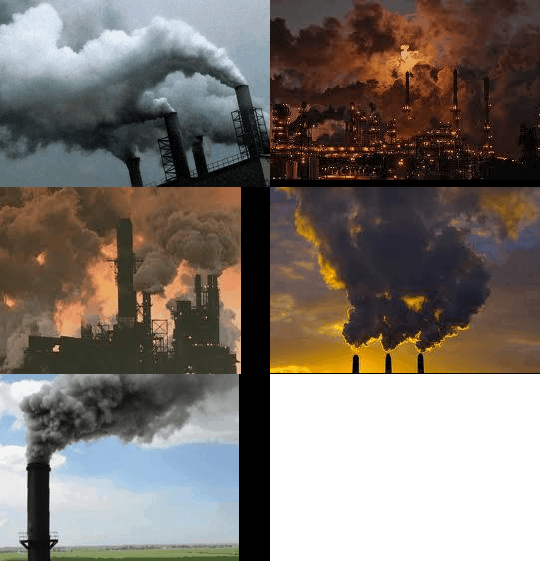


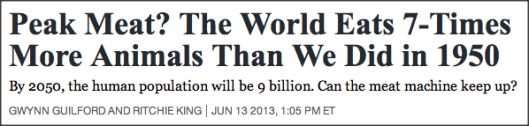




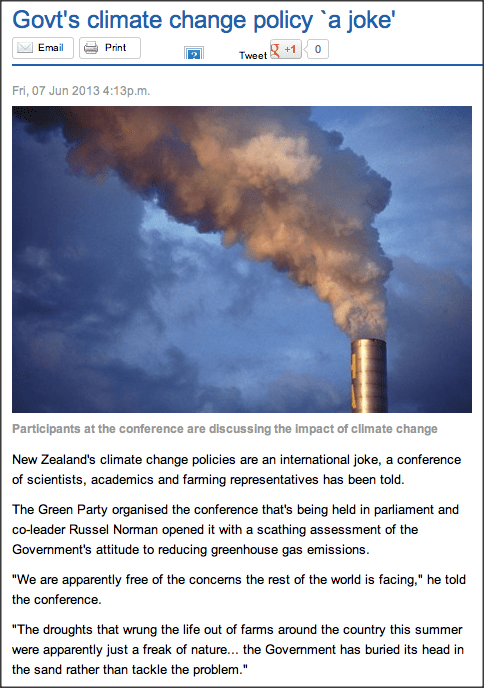
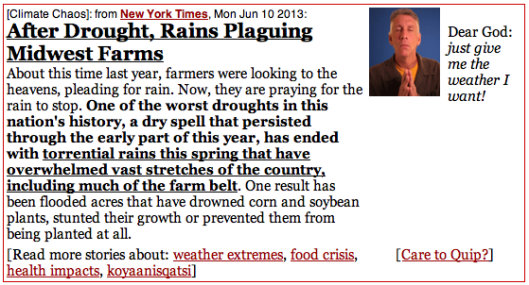






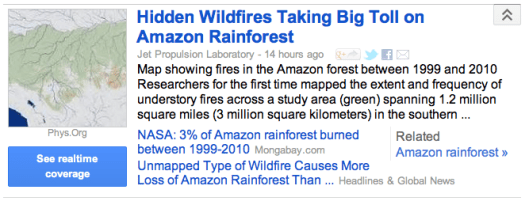


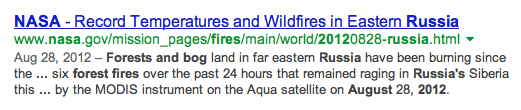




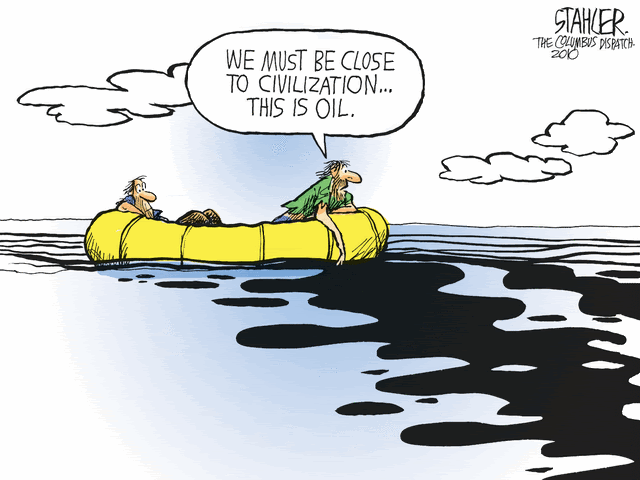










 Collapse of Industrial Civilization