Forbidden Thoughts and Sacred Obligations

Tags

, , , , , , , , , , , , , , , , ,

By TDoS
Originally posted at Prayforcalamity.com

When I was a younger man, I very much wanted to be taken seriously. To be taken seriously was to be asked your opinion. It was to be allowed a seat at the grown-up’s table in politics, economy, and all other matters that intelligent individuals busied themselves with. I wanted to be considered smart by other people who were considered smart. This meant that I had to be skeptical of any claims not supported by the dominant culture, shucking anything deemed mystical or superstitious. To be considered smart meant carrying an attitude of superiority, even open hostility towards anyone who claimed any truth not stamped with approval by the science of the dominant culture. Now I talk to trees.

My younger self would ridicule my present self, haughtily proclaiming the superiority of his well founded, reasonable ideologies. My present self would pity my younger self, and exit the conversation, too tired to expend what little communicative energy I have on someone so seemingly bereft of the ability to even momentarily entertain an idea that ran contrary to their set of inherited cultural dogma.

It is easy now to see that I was in a trap back then. As most young people are, I was attempting to make my way in a culture of accumulation, and thus I had to look and sound the part if I wanted to be accepted into the fold of “productive society.” Since abandoning any ambitions for career I have taken on various forms of employment to get by, and this has meant a lot of work in bars and restaurants. Briefly, I worked in a breakfast cafe in a college town that was home to a popular business school. Working there I would see students, mostly young white men, sitting at tables wearing ties and speaking in the language they were being conditioned to speak. It was strange to witness. I would wonder exactly where the break happened when these young men decided that they wanted to be just like their fathers. They probably wanted to be called “successful” by other people. They probably wanted to be considered smart. This would mean dressing, speaking, acting, thinking and even at their very core believing as their predecessors had initiated them to. They wanted to be taken seriously.

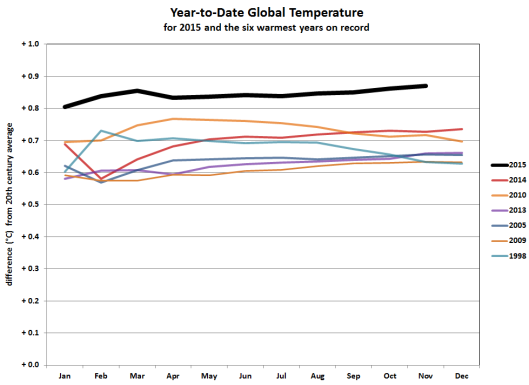
The year two thousand and fourteen was the hottest year ever recorded on planet Earth. Over the course of the year we were bombarded with statistics highlighting the peril of our time: Fifty percent of animal life has been killed over the last forty years, the Antarctic ice sheet melt has passed the point of no return, and coal use is still on the rise globally. Even the timid, watered down, almost entirely feckless mainstream US environmental movement is starting to make a tiny bit of sense, in noting that capitalism has got to go if we are to survive. Of course, much of what these liberal environmentalists are seeking is capitalist reform, but I digress.

The truth of the matter is that of course capitalism has to go in order to preserve the habitability of the planet. That’s just the beginning. All of industrial civilization must go, but because this is a forbidden concept amongst the serious folk who attend conferences, do media junkets, or – I don’t know – hold a senate seat, it will never even reach the table to be laughed at. The maintenance of the dominant culture requires that certain ideas are forbidden. Such restriction of thought is achieved in a myriad of ways, including by what Noam Chomsky termed, the “manufacturing of consent.” By and large, forbidden ideas are boxed out of public discourse by professionals who frame debate very narrowly, permitting only officially acceptable viewpoints, which then filter down to the masses.

We saw this recently with the uprisings in Ferguson, Missouri. The people of that city fought the police, and many of them had no problem declaring complete and utter disdain for the police as an institution. Despite the nearly five hundred Americans killed by police every year, and the untold number of assaults, robberies, frame ups, false arrests, and rapes committed by uniformed police officers, the dialog of so-called serious people is forbidden to ever move to a discussion of self defense against these villains, let alone abolishing them from civic life. Peter Gelderloos mentions this in his quinessential three part essay, Learning from Ferguson.

To allow people to fight back against the police, or to allow discussion of eliminating the police is forbidden because the police are a necessary component of a society of haves and have nots. In fact, I would be willing to bet there is a strong correlation between people who adamantly and unquestioningly support the police, and personal wealth, for the obvious reason that the more you have the more you have to lose. That means being happy that the taxpayers subsidize the jackboots who prevent even a public forum that might hint at discussing a redistribution of wealth.

After the Vietnam War, the propaganda ministers in the state realized that showing dead bodies on TV and in magazines had a demoralizing effect on the general public. Apparently the American population had some level of functioning empathy for other human beings, so broadcasting the corpses of dead US servicemen and even half burnt Vietnamese children soured their taste for carnage. Since realizing this, the US has locked out media that isn’t “embedded” from war zones, and despite the over a million dead in Iraq and Afghanistan, ten years of war haven’t found themselves plastered on the nightly news in any unbecoming fashion, despite the plentiful material. The children born deformed due to depleted uranium poisoning caused by US munitions should have been enough to wrench even the blood thirstiest of hawk bellies in the US, but their visages were never given a chance.

Forbidding an image and forbidding an idea are both attempted for the same reason; control. If you control what people think, you can control how they act. Even the most ardent critics of US policy will proclaim up and down their patriotism, less they be banished from serious forums. Sit and think for a few moments and I imagine you could come up with your own short list of forbidden ideas, never to be discussed, not by serious people. Civilization and its dominant culture have been practicing this tactic of control since inception, and there is an idea that has been so terrifying to the rulers of the civilized world that stamping it out has been an ongoing and bloody task for over ten thousand years. The most forbidden of ideas, is that the Earth is alive.

Serious people are concerned with objectivity. They perceive the universe to be a clockwork machine governed by laws and made of various inert bric-a-brac that can be manipulated to serve their purposes. Whether this manifests as a logging company cutting down a forest for timber, a meat packing concern quickening the rate at which they slaughter cows, or bulldozers scraping away layers of Earth in order to access the bitumen deposits beneath, the source of the thinking is the same.  The land is dead.  Inert.  It is raw material waiting to be put to purpose by human hands.  Further, knowledge and understanding of the universe and its lifeless bodies is to be achieved only through the application of western scientific principles. Anything that cannot be observed and quantified with the five human senses does not exist.

Even things that are alive, like trees and animals can be reduced with a trick of thinking into nothing but their component pieces. Trees don’t have brains, so they cannot think or feel or experience, so they are worthless except as corpses.  Animals may have brains, but those brains lack significant cortex or numbers of neurons, and so they cannot think or feel or experience, so they are worthless except as corpses.  Throughout the history of civilization this rationale has been applied to humans as well.  Whenever anyone is in the way of some expectation of power or wealth, they are reduced to nothingness, just a fleshy sum of their cells with a measly few watts of current surging through them.  Not sophisticated, not refined; much like animals really, and animals are worthless except as corpses, so let the homicide begin.  This mental twisting is the death rite of civilization.  It is the lullaby people in business suits sing so they can stay focused on the cash while they order another chimpanzee vivisected, purchase a new gas lease, or sign off on limited airstrikes over a civilian population.

In my life I have walked through forests clear cut for oil pipelines.  I have driven through the shale plays of West Texas.  I have seen copper mines, and coal mines, and all sorts of other massive holes blasted and scraped into the face of the planet.  Many people have seen these things.  Of course, many people work in these places and on these projects.  The difference is that upon the witnessing I feel something very somber that nags at me from the inside.  It is the feeling that gripped you as a child when you saw someone joyfully inflict pain upon someone helpless or weak while you were powerless to interfere. Because of this feeling I could never participate in ecologically destructive activities.  It would feel wrong, like treachery, like stabbing my mother in the gut for a paycheck.

And I think this feeling matters.  This feeling is part of the foundation of my personal ethos from which my principles blossom.  In short, my feelings of connectivity with the living world create in me a sense of responsibility to protect her, and a refusal to accept harming her for personal gain.  Often I wonder why so few people feel this particular empathy, but then I know the answer.  People have been trained by the dominant culture to think of all of these environmentally degrading activities as harmless.  They have been raised since childhood by people themselves raised since childhood to believe that the Earth is dead.  They have been told by respectable people to believe that forests are not alive and that plants do not feel and that at the end of the day, everything is arbitrary and meaningless.  There is an undercoat of nihilism which makes progress possible.

For generations people have been bullied into believing that the nagging in their conscience is an illusion caused by the brain.  When a forest makes you feel good, it is you fooling yourself. When you feel deep love for a place or for other living beings, it is an illusion, merely a sudden influx of serotonin in some receptor in your gray matter.  And who are you anyway?  Just some cells, some neurons, some electricity.  What is your love?  Your desire?  Your fear?  They are nothing.  Reflexes.  Chemicals.  The aimless, endless spinning of molecules through space and time.  Reduce it all down, break it into pieces.  Scatter them until you feel nothing at all. Now go make some money.  Be productive.  For Christ’s sake, be serious.

My friend is indigenous to the land now called Canada.  I ask him what it means to be a warrior, to have as a component of one’s culture a warrior society.  He points me to talks given by other first nations people which elucidate that in various indigenous languages the word “warrior” is understood differently than it is in English.  It isn’t aggressive, on the offense, macho, seeking to conquer.  To be a warrior is to be a shield bearer, a person who takes very seriously their sacred obligation to maintain the health of the land so that it can be passed on for many generations to come.  The ethos of such people forms their worldview, and this worldview informs their actions.  The end result is a relationship with one’s home that is not about domination and taking, but acting with reciprocity. Such a mindset is a barrier against excess and greed and wanton destruction of the land.

Under the dominant culture, there are no sacred obligations.  We are told from birth that work, production, and the pursuit of material wealth is the path taken by serious people.  Those who rebuff their instruction to accumulate for the sake of accumulation are losers and bums.  If one wants to defend their home, such intuitions are bent to the cause of imperial full spectrum dominance.  Home is converted to country, and the battlefield is determined by a board of directors.  This is not an ethos with a future.  It is a toxic set of ideas and myths that will guide human minds to the edge of the world and then over.  This idea is a parasite, and its hosts are pushing the ecosystems of the Earth to the brink.

My friend tells me about the deal the wolf made with mother Earth:

The wolf signed a contract with Mother Earth. The contract is this. The wolf may compete with all other life for survival. The wolf may not force other life into extinction for the purpose of eliminating competition. The wolf may not damage habitat to eliminate competition. The wolf may not wage war to prevent other life from feeding on the wolf. If the wolf abides by these laws and is able to compete, the wolf will survive in brotherhood with all other life. All life signs this contract, except for a group of humans. Until those people sign on the dotted line they will be doomed. They may already be doomed.

What strikes me about this is that to make a contract with another is to stand as equals.  Speaking of other beings or of the living planet herself as even able to enter into a contract is to grant to them the deference that they exist as you do; alive, dignified, valuable.

The dominant culture never seeks to stand equal with anything.  It seeks only to dominate.  It never presents obligations to its acolytes to defend other beings or the land.  It makes demands of the land.  The stark differences between these two perspectives is striking.  One asks you to be a warrior and to take up a shield in defense of your mother. The other commands you to take up a sword – or a plow, or an axe, or a bulldozer – and to plunge it into her breast.

I am not in any way suggesting that non-native people need to appropriate native culture.  What I am suggesting is that if the ethos of civilization goes unchallenged, then no matter how much awareness is raised and no matter how much people try to convert modern industrial society into a sustainable twin of itself, they will find only failure.  After all, as Terrence McKenna said and I have oft quoted, culture is our operating system, and the dominant culture has a starting point where the land is already dead, so how then can it take us anywhere but to a future where this founding principle is materialized?  Garbage in, garbage out.

How we go about changing the ethics, myths, and founding truths of people trapped in the cage of industrial civilization is not something I have a prescription for.  In “The Road” Cormac McCarthy wrote:

Where you’ve nothing else construct ceremonies out of the air and breathe upon them.

So I walk my land and I talk to the trees. Maybe they can hear me and maybe they can’t.  All of the serious people will laugh at my wasted breath.  Smart people will try to convince me that I am only talking to myself.  And maybe they are right.  Maybe I am a madman babbling over hill and holler.  But I can tell you this much for certain; I will never cut these trees down, and neither will my daughter.  So in the end, who gives a damn?

Spectating at the End of the World

Tags

, , , , , , , , , , , , , , , , , , ,

hourglass2

Front Row Seat to the Eco-Apocalypse

“I fear their euphoria of merchandise will have no end and they will entangle themselves to the point of chaos. They do not seem concerned that they are making us all perish with the epidemic of fumes that escape from all these things…” ~ Davi Kopenawa, Yanomami leader and shaman

Another year has turned over on Earth, home to an exothermic, bipedal omnivore known as capitalist carbon man whose expanding numbers and army of fossil-fueled machinery spans the globe. There’s nothing subtle or restrained about his reign of terror. He pokes and prods the climate change beast while taking for granted the stability of the Holocene, a peculiar aberration in the paleoclimate record. Plotted on a graph, the history of Earth’s climate resembles the jagged teeth of a demonic monster, a volatile creature whose abrupt and catastrophic shifts have wiped landscapes clean of most life. The consequences of burning the equivalent of an olympic sized swimming pool of oil (300,000 liters) per second, year after year, into the atmosphere will ultimately prove lethal to the planet’s habitability. Recently, scientists were surprised to discover a “Delaware-sized methane cloud” hovering over the U.S. southwest, the remnant of “years of intentionally released and errantly leaked natural gas during fossil fuel drilling operations.” No less problematic to the Earth’s homeostasis are the many other destructive habits of capitalist carbon man such as moving ten times more dirt than all natural processes, fixing more nitrogen than all terrestrial bacteria, and producing more sulfate than all ocean phytoplankton.

The exponential melting of Earth’s cryospheric regions is a foreboding harbinger of devastating sea level rise, altering oceanic and jet stream circulation, changing hydrologic cycles, and wholesale disruption of the entire planet’s biospheric system. A brief retrospective of our unfolding environmental meltdown by a major news source concludes that “2014 will likely go down as the year that melting polar ice caps graduated from being a geographic abstraction to a symbol of the irreversible ways we’ve warped the planet.” News reports continue to grow more ominous with recent warnings that the oceans are on the verge of belching their decades of stored heat from human industrial activity. CIVILIZATION is in the process of going ‘poof’ as its leaders play monkey politics and the masses are drowned in a sea of consumerist images. As Dr. McPherson recently pointed out, gallows humor is the 6th stage of grief for coping with a civilization that is blind to its own demise.

c19704e35d1108c4ac877d02c3160943

“Going Green” is a Marketing Slogan and Inverted Totalitarianism is the Most Successful Form of Tyranny

The unsettling truth is that the slogan “going green” has become a marketing ploy to greenwash capitalism and keep business-as-usual going. The speeches of corporate and political leaders are sprinkled with conscious-soothing key words such as “sustainable”, “eco-friendly”, and “2°C climate goal”, but there’s nothing sustainable about globalized techno-capitalism and the target of limiting warming to 2°C is a cruel illusion. So-called “green energy” is severely limited by suitable geography and intermittency of power production. The behemoth Google learned from its own extensive research that “today’s renewable energy technologies won’t save us.” The top business firms appear to be having a problem squaring their green rhetoric with reality, and there seems to be no way to make automobiles truly sustainable. Germany, the poster child for a green economy, is now “burning more coal than at any point since 1990.“:

“We already are on the edge of what is possible,” Mr. Löllgen said in an interview at his Düsseldorf office. “Is it worth it if we as a country succeed in reaching our targets in reducing carbon emissions, but sacrifice good jobs and our industrial base?”

Another misleading headline I get tired of reading states that humans may be headed for a 6th mass extinction. Let’s clarify this statement once and for all by admitting emphatically that we are well in the throes of a mass extinction which will likely include ourselves within this century. By all rational evidence, industrial civilization with its billions of inhabitants cannot survive without fossil fuels. The only way capitalist carbon man will ever be sustainable is as fertilizer beneath the crumbled concrete and asphalt ruins of industrial civilization. Don’t expect any mea culpa from a culture which has been programmed to believe converting all of nature into inanimate symbols of wealth is “progress” and “development”. Not even the dire warnings of esteemed scientists and religious leaders can break the spell cast by capitalism and its definition of progress. Our institutions have become intransigent, petrified monoliths to which all will be sacrificed.

“I think the notions of free will and self-determination have the appearance of reality during a civilization’s gestation and expansion phases, when there is more opportunity and social mobility. As things calcify, instruments becoming institutions that serve their own ends, the facade is harder to maintain. Human existence has always been contingent and constrained by circumstances. These ‘free’ notions are illusions, narrow windows of perception with a limited range of influence during times of transient prosperity.” ~ BP

The term inverted totalitarianism, coined a decade ago by philosopher Sheldon Wolin, describes America’s brand of despotism in which “every natural resource and every living being is commodified and exploited to collapse as the citizenry is lulled and manipulated into surrendering their liberties and their participation in government through excess consumerism and sensationalism.” Opposition to this dominant consumer culture is systematically co-opted and suppressed by the marginalization and alienation of alternative thought. Neoliberal capitalism governs not only states and economies, but extends right down to an individual’s behavior and way of living:

One of the goals of neoliberalism is to foster a population of individuals who will play an active role in their own self-governance by interacting with the market and consumption through calculated acts and investments… sets of rules and conditions are established between institutions, economic and social practices, and patterns of behavior. They generally function outside of conscious awareness and they habitually influence social behavior. Examples of dominant consumer culture discourse include the political linking of consumer sovereignty and choice with freedom, the linking of citizenship and national pride with consumption, the work and spend treadmill that many people choose to pursue, the commercialization of childhood and adolescence, and the celebration of consumer values through the mass media and advertising.
Social Psychology and Theories of Consumer Culture: A Political Economy

Who better to label people as “unpatriotic” if they acknowledge the reality of climate change than the host of TV’s quintessential symbol of capitalism, The Wheel of Fortune? Beneath this digital web of commercials and TV infotainment is the iron fist of militarized local police and the panopticon surveillance state which can quickly stomp out those troublesome malcontents who break free of the American hologram. What better way is there for controlling entire populations than to condition them to enjoy their chains of slavery? America’s form of tyranny, a blend of covert and overt oppression, is the most successful in the history of mankind.

Bt-v8MyIgAA4lVB

None of This Can Really Be Happening, Can It?

With all the disjointed and delusional thinking out there, I feel compelled to write a blog post periodically to get the facts straight and assure myself that what I see and hear every day is really happening. Yes, we really are terraforming the Earth into a barren wasteland while convincing ourselves that it’s worth it for the sake of a cubicle job and life in cookie-cutter suburbia. Yes, we really are ruled by the Washington-Wall Street-Pentagon complex. No, you will never get the raw truth from mainstream news outlets. Yes, I’m getting older and need to exercise more because a sedentary lifestyle is as bad as smoking. Yes, industrial civilization is still on track to collapse within my lifetime. As Robert Crumb’s mystic guru Mr. Natural exclaimed, “The whole universe is completely insane!”

291a5f85066512ef318f433786716315

Finding True North

Tags

, , , ,

By TD0S
Cross Posted from Prayforcalamity.com

—–

One of the great dangers of the life indoors, is the anesthetizing affect it has on a person. When we aren’t out in the world, we aren’t present to watch the dying. Attempting to talk about this via an electronic medium, even via the written word at all, is near futile because it requires the symbolic recreation of the tragedy unfolding around us, and the recreation will never carry the weight or the pain of the real thing.

So it comes down to data points. In essays past and in daily editorials available across the electronic press, we are fed the data points. Topsoil loss, species die off, the toxicity of the oceans, the acceleration of climate change; I can rattle off the data, but who cares? We are inside. Climate controlled. Masters of hundreds of energy slaves all whipped up to provide us with on demand entertainment, comfort, and snack food. We think we are safe inside our house, but the house is an illusion. There is no indoor, outdoor dichotomy. There is a temporary delusion blinding us to the reality of the storm bearing down.

In my previous essay I wrote that we must burn down the collective house that is civilization. We must demolish it thoroughly before the floors buckle and the roof caves in, despite the very real dependence we have developed upon this edifice. A conundrum indeed, but this conundrum is itself the question of our time, and it calls to all of us whether we are ready to square off with its implications or not.

Industrial civilization is destroying the living skin of the planet. Industrial civilization is rendering life on Earth impossible. This is inarguable. The only question then, is what to do. Where do our responsibilities lie, and how can we meet them with dignity, grace, and courage?

What do you value? What do you value the most in this world as you experience it? I think it is imperative that we start with this question because the answer will determine how we perceive our responsibilities as living beings. I refer to this as finding one’s polestar; their true north. Finding our pole star is essential because it is very easy to get entangled in the complexity of our culture, our socialization, our class status, and all of the other baggage we carry from lifetime after lifetime of trauma inflicted by the dominant culture. When we need reorientation, we come about to our true north, and keep from running wayward into the noise and distraction intentionally laid to ensnare the passionate.

My pole star is the healthy, fecund forest. I live in a wooded region, and when I look out my front door I see tree covered ravines. Beech, hickory, oak, maple, all stand stoically about me, their leaves blanketing and feeding the soil. I never feel so honest, so at home, so centered as when I stand in the deep blue dark of night, jacketed in the electric stillness of winter, staring up to the stars that peak through the tangled black fingers of the naked tree boughs. In those moments I feel whole, because I feel like part of a whole. My ancestors call to me from the past as they most certainly stood in the same pose of supplication, lost in wonder, and gratitude, and mystery.

This is where I go when I seek an ethical thread to follow through the spiritual and psychological quagmire of modern industrial civilization. When I look at the activities of humans, I ask what they mean for the forests. Not just my forest home, but for the forest homes of people and beings across the Earth. I ask if new technologies, or policies, or commercial activities will benefit these havens of life and solitude, or if they threaten them. I imagine the creeks and rivers that run through this region like blood in my veins, and usually the answer comes back to me that, no, the grand schemes of civilized man offer nothing good. They seek only to take, never to give back. They promise to dominate and ruin, and that is what they do.

When concrete is laid over what was once a field so that suburbanites can park their vehicles at a new strip of retail stores, the deep roots of plants do not surrender. Look to any patch of asphalt and you will find the rebellion under way. Grass, dock, wild onion, dandelion; they slowly crack and push through the rubble and road surface above them until they find their place in the sunlight once again. When under attack, these plants merely do what they must do to go about the business of living.

What fascinates me is that when hundreds or thousands of enraged people burn down the corporate chain stores that encircle them like army wagons on the frontier, these rioters are condemned. Spokespeople for the status quo feign innocent stupidity and ask, “Why are they burning down their own communities?” as if the concrete that is laid over the poor and working class is somehow their kin. Setting police cruisers and corporate chain stores alight is merely what these people must do to go about the business of living, whether this is consciously perceived or not.

The hierarchy of power that exists in this social paradigm attempts to mystify the public with language of togetherness when it suits them. They speak down to the lower orders as if we are one unit, one family, one tribe, each of us working together for the equal betterment of all. The actions of the powerful betray the truth, that those lower on the social hierarchy will labor, toil, suffer, and die for the comfort, power, and privilege of those at the top.

This is the framework by which responsibility is discussed within our society. If a man robs a store and is sent to prison for it, it is said that he is there to “pay his debt to society.” There are several implications in this statement surrounding the notion that this man was ever part of society to begin with, or that he desires to remain so. Of course, if he was robbing a store to pay his rent, keep the heat on, or feed his family, there will never be statements from the powerful to the effect that society failed this man, this valuable member of our collective, and forced him through circumstance to his act. Society will never pay its debt to this man, or to any man of his social rank. The idea that we are all daily electing to be in one cooperative social structure together is a pure fabrication.

As so often happens, officers of the state apparatus commit egregious violence, whether as police or soldiers, and their personal responsibility is almost never called into question. The only time an individual police officer or soldier is made to fall on their sword, is when their crime is so blatant, so heinous, and so public, that to not punish them would crack the façade of the entire control apparatus. By and large, these officers of the state do violence as a mode of day to day operations, all for the acquisition and maintenance of wealth and power as it exists and is distributed.

However, any actions deemed antagonistic to the structure of power and wealth will be vociferously condemned, and the perpetrators will be held liable for all knock on effects of these actions. For instance, if in an attempt to preserve the health and sanctity of one’s home, a person destroys the power sub station that operates the pumps for a tar sand pipeline that runs under their land, and this outage causes a cascade black out to follow suit, the state will likely hold responsible this person for any deaths or injuries that occur due to the lack of electricity that has resulted. If an old woman on a hospital respirator dies, the person who knocked out the sub station will likely be charged with manslaughter, if not murder. They will be called a terrorist. Anyone whose ideologies are even remotely similar to this person’s will also be labeled a terrorist, worthy of suspicion.

In short, this is the Law. People speak of the Law in moralistic terms, as if the volumes of clumsy codes and commands cobbled together by and for the wealthy were gifted to us by a choir of angels designed on building for us a just and balanced world. Of course, the Law is nothing of the sort. The Law has nothing to do with morals or ethics, as the bulk of the weight of the laws as they exist purpose to extort and exploit the poor for the powerful. Leaning on the law as an ethical or moral litmus is such a high form of laziness and ignorance as to be shameful.

This is the wall that encircles those of us who wish to see an end to the current order of power. We will be held to the highest account for the slightest ill that comes from any of our deeds, and the Law will be invoked in punishing even the most tepid of social activists. Meanwhile, an Airforce technician in a bunker will kill families thousands of miles away with hellfire missiles, and we will never know this person’s name. They will never be condemned for the deaths they directly and intentionally cause. In fact, they will be heralded and rewarded. Their efforts furthered the efforts of the machine of industrial civilization. They are on the team. Doctors designed torture programs for the CIA. Scientists design weaponized viruses. Capitalists pour heavy metals into rivers and continue cutting boreal forest to extract tar sand despite the globally acknowledged threat of climate catastrophe.

These people are all protected. Even attempting to slow them down in their work is a crime. The truth laid bare is that they have a sanctioned right to bring death, and you have no right to try to prevent them, whether violently or not.

It’s not about who you kill, it’s about who you kill for.

The police are on standby in any event, ready to gleefully dole out violence to even the most passive demonstrator. Any flinch, parry, or brush of a hand that can be deemed an attack on the police, of course, will result in charges, possibly felonies. The guardians of power too, are a protected class, so much so that in some places even passively ignoring police is classed as a felony.

The message is clear. This world doesn’t belong to us, but to them. We are a society in name only. Language about unity and country are pap for the masses. Those who don’t swallow it down get the club, or the bullet. But don’t worry, the comments section is still open. Feel free to air your frustrations beneath the article. Hashtag, give-up-already.

In the cold night air my breath is visible. Darkness comes early as we approach the solstice. When I scan over the ridge, I feel a peace in the center of my being. There are those who think this is all that is left. They say that we have already lost the big fights, and now all that remains is to hold close to those you love as the dying picks up speed, and the maniacs in power continue throttling forward.

I cannot help but feel that such placid thoughts, wherever they may be rooted, are an appeasement to the powerful. My blog wouldn’t be named “Pray for Calamity” if I didn’t believe that things would get worse before they got better. But I also know that without question I would die for my family and for our home, and thinking this opens me to the idea that there are so many great places and causes to die for on this planet at this time. Perhaps its time to stop seeing this as an age of impending calamity, but instead to see it as an age of opportunity to banish our fears, cage our egos, and to remember that death comes for us all, and that the greatest shame would be to waste our flesh when there are so many perfect targets for our rage. Perhaps we should begin to recognize this as an age of awakening; a time to reignite an internal fire that an oppressive and abusive culture has devoted so much energy to snuffing out.

So I ask, what is your pole star? What is your true north? What do you know in the center of your being to be good, and right, and true? The dominant culture attempts to bend the mind and break the heart, until all that is left is the fetishization of power. Domesticated, isolated, institutionalized, traumatized people begin to believe that their responsibilities are to the dominant system of buying, selling, killing, producing, and ever increasing efficiency at all of them.

I submit that these are not my responsibilities, and they are not yours. I submit that none of the language they weaponize and fire so readily at dissenting voices is applicable. We are not malcontents, radicals, insurgents, or terrorists. We are dandelions who do not wish to bend to the will of the concrete poured over us.

And when we are ready to remember all of this, we are warriors.

Locked-Up Inside the Complexity Trap

Tags

, , , , , , , , , , , , , , , , , , , , , , , , , , , , , , , , , , ,

imageedit_40_3593764711

From the acidified and plasticized oceans to the greenhouse gas-polluted atmosphere to the radioactive and heavy metal-contaminated soils, the Anthropocene Epoch will leave behind a planet radically altered in its atmospheric and biospheric chemistry. This disruption, unprecedented in geologic time for its rapidity and wide-scale destruction, is already too severe for the complex web of life that had evolved under earth’s previous life-sustaining homeostatic system. As Brian Moss (et al.) wrote in Climate Change Impacts on Freshwater Ecosystems, “The chemistry of the biosphere is the ultimate sine qua non of our existence.”:

It is expected that we will have lost over half the world’s land ecosystems to agriculture or development by 2050. The urbanites may not be noticing this but the consequences will nonetheless be huge, for it is these natural ecosystems that regulate the nature of the biosphere. We have absolutely no idea how much of them can be damaged without serious consequences for human survival. All we know is that such systems, honed by the utterly ruthless mechanisms of natural selection to be as near fit for purpose as possible, are just as crucial to us, indeed much more fundamentally so, than the local grocer, filling station or hospital. The chemistry of the biosphere is the ultimate sine qua non of our existence. …in contemplating the hitherto effects of climate change, we fail to realize that the loss of ecosystems and the changing climate are linked. Indeed we blithely cost the damage of climate change (Stern 2006) as we cost the goods and services we are losing through the application of the same approach of classical economics. We have failed to see the interaction of climate, ecology, and equability. Our attempts to mitigate climate change, in a desperate bid to avoid disruption of our societies, may inevitably be doomed to failure unless we begin to see the whole picture and not just the components we find most convenient to our cash economy. Link

Man-made climate change is the number one driver of the 6th mass extinction currently unfolding. Without bees, the grocery shelves look rather bare. Without coral reefs, the oceans are devoid of most life. Perhaps the greatest blind spot of humans is their inability to imagine that earth does not need them. The myopic, anthropocentric worldview that humans “own the earth” is emblematic of our economic system and its principles, and this belief that everything can be valued in dollars and cents will prove to be our undoing.

Modern man evolved in an environment composed of carbon dioxide(CO2) levels averaging 240ppm and methane(CH4) levels averaging 700ppb. Today’s atmosphere is now filled with nearly double the amount of CO2 and triple the CH4. A third greenhouse gas worth noting is nitrous oxide(N2O) which has 296 times the ‘Global Warming Potential’ (GWP) of CO2 and a lifespan of 150 years. N2O’s pre-industrial levels were around 270ppb, but are now at around 330ppb and climbing 0.3% per year. When all greenhouse gases are combined, the world is at a carbon dioxide equivalent (CO2e) of 479 ppm. And we’re locked into much more warming due to the carbon-based civilization we have built. Global dimming and the lag time of climate change have hidden the full effects yet to come, but the changes we are already seeing at only 0.85°C are catastrophic. If you are unaware of the runaway feedback loops causing the Arctic to warm twice as fast as the rest of the planet and the exponential ice melt happening in both of the Earth’s poles, then you haven’t been paying close enough attention. David Spratt elucidates some of the tipping points we have already breached:

…tipping points that have been passed thus far, at less than 1°C of warming:

  • The loss of the Amundsen Sea West Antarctic glaciers, and 1–4 metres of sea level rise (Rignot, Mouginot et al., 2014; Joughin, Smith et al., 2014). Dr Malte Meinshausen, advisor to the German government and one of the architects of the IPCC’s Representative Concentration Pathways, calls the evidence published this year of “unstoppable” (Rignot, 2014) deglaciation in West Antarctica “a game changer”, and a “tipping point that none of us thought would pass so quickly”, noting now we are “committed already to a change in coastlines that is unprecedented for us humans” (Breakthrough, 2014).
  • The loss of Arctic sea-ice in summer (Duarte, Lenton et al., 2012; Maslowski, Kinney et al., 2012), which will hasten regional warming, the mobilization of frozen carbon stores, and the deglaciation of Greenland.
  • Numerous ecosystems, which are already severely degraded or in the process of being lost, including the Arctic (Wolf, 2010). In the Arctic, the rate of climate change is now faster than ecosystems can adapt to naturally, and the fate of many Arctic marine ecosystems is clearly connected to that of the sea ice (Duarte, Lenton et al., 2012). In May 2008, Dr Neil Hamilton, who was then director of Arctic programmes for WWF, told a stunned audience (of which I was a member) at the Academy of Science in Canberra that WWF was not trying to preserve the Arctic ecosystem because “it was no longer possible to do so.”

Such environmental changes are imperceptible to the real-time cognitive processing of humans, but in geological ‘deep time’ these events are cataclysmic and portend a dire future for humans. As Jared Diamond described in his writings, climate change is the ultimate under-the-radar threat able to undermine human reasoning and response:

Psychological concepts of how we view the world around us, including ‘creeping normalcy’ or ‘landscape amnesia’, block day-to-day comprehension of what accelerating human activities represent—whether it is human population, the number of dammed rivers, forest destruction, or the impact of motor car emissions in a timespan that is geologically brief. Creeping normalcy refers to slow trends concealed in noisy fluctuations that people get used to without comment, while landscape amnesia describes forgetting how different the landscape looked 20–50 years ago (Diamond 2005: 425).

In his study of how societies fail, biogeographer Jared Diamond calls global warming a pre-eminent example of a ‘slow trend concealed by wide up and down fluctuations’ (2005: 425). He likens the denial of climate change impacts by leading politicians, including former US president George W. Bush (and his contemporary John Howard in Australia), in the late 1990s and early 2000s to the elite of ‘the medieval Greenlanders [who] had similar difficulties recognizing that their climate was gradually becoming colder, and the Maya and Anasazi (in Central and North America) [who] had trouble discerning that theirs was becoming drier’ (2005: 425). Link

broadcast_from_the_playground_by_inz_feelgood-d46s71d

Nate Hagens recently made a comment online which is key to understanding much of the frustration, obstinacy, and mass delusion that modern society exhibits when trying to understand one piece of the global crisis rather than taking a holistic approach:

“I think 95%+ of environmentalists don’t integrate systems, energy or human behavior into their analysis of our climate predicament and think we can just plug and play BTUs (British Thermal Units) and have low carbon economic growth – PCI (Post Carbon Institute) has spent most of the last 5 years trying to educate [the public] on this front, to little avail.”

Most energy experts know that “renewable energy” will never be able to replace energy-dense fossil fuels at the global scale (Just for oil, it’s 90 million barrels consumed every day and forecast to hit 96 million BPD by 2019), but they don’t take into full consideration the collapse of earth’s stable Holocene climate which has allowed industrial civilization to flourish. On the other side of the coin, most climate scientists and activists I have encountered do not understand the sever limitations of “renewable energy”, yet many are well aware of the looming disaster posed by anthropogenic climate disruption. Trying to fully comprehend the multiple interconnected global crisis bearing down on industrial civilization is like the allegory of the six blind men and an elephant. Unable to see the bigger picture, each man argues and maintains that their limited view of reality is the only correct one.

As global coal consumption continues its upwards march, the real outcome of the Lima climate conference is that humans are more than willing to hide behind contractual jargon and kick the can down the road rather than come to terms with the unsustainable nature of industrial civilization:

The shift of a single word—from a “shall” to a “may”—means the world will very likely continue to burn lots of coal. Instead of being required to provide “quantifiable information” about their greenhouse-gas emissions, countries may choose whether or not to include those statistics in their pledges instead, known in the jargon as “intended nationally determined contributions.Link

After more than two decades of climate talks, are we to believe that industrial civilization will ever reform itself for the sake of a living planet? As pervasive as self-deception is in modern society, the reinsurance industry is one sector of industrial civilization unable to turn a blind eye to the rising costs of increasingly extreme and chaotic weather events. The U.S. military is another entity impelled to acknowledge anthropogenic climate disruption, whether it be responding to the wreckage from monster typhoons in the Philippines or the destabilizing effects of droughts in the Middle East. After a few centuries of burning fossil fuels and the accumulation of vast amounts of climate science data, techno-capitalist carbon man is also being forced to react to the fact that the earth’s atmosphere is not an infinite pollution sink for his endless consumption of energy. The problem is that several planetary tipping points have already been irreversibly transgressed, threatening the very habitability of earth. Our predictable collective response is to try to techno-fix the problem rather than entertain any fundamental rethink of the pillars of the capitalist economic system and the scientific reductionism that have led us to this impasse. As evidenced by the number of articles published in mainstream periodicals these days about geoengineering the atmosphere, awareness appears to be growing amongst the business elite that things are starting to spiral out of control:

Snap 2014-12-16 at 08.56.34Snap 2014-12-16 at 09.15.51Snap 2014-12-16 at 11.00.31Snap 2014-12-16 at 11.33.30

Geoengineering is another problem-solving strategy that our complex society will employ in order to try to solve the ever-complicated problems arising from ecological overshoot. In his book The Collapse of Complex Societies, Joseph Tainter described this process of developing progressively more sophisticated technologies to solve problems. Geoengineering is wrought with dangers and even frightens many of those scientists who are working on such schemes, but it may be our last hope of saving ourselves from abrupt climate change and a hothouse Earth similar to past rapid warmings. Recent research has shown that the Paleocene–Eocene Thermal Maximum (PETM), a time in earth’s history when global temperatures rose upwards of 5°C in the space of about 13 years, serves as a better case study for modern climate change than previously thought:

About 55.5 million years ago, a burst of carbon dioxide raised Earth’s temperature 5°C to 8°C, which had major impacts on numerous species of plants and wildlife. Scientists analyzing ancient soil samples now say a previous burst of the greenhouse gas preceded this event, known as the Paleocene-Eocene thermal maximum (PETM), and probably triggered it. Moreover, they believe humans are pumping similar levels of carbon dioxide into the atmosphere right now, raising concerns that our own emissions may also destabilize Earth’s climate, triggering the planet to emit devastating bursts of carbon in the future.

The paper implies that even if we stopped emitting carbon dioxide right now, our descendants might still face huge temperature rises, says paleoclimatologist Gabriel Bowen of the University of Utah in Salt Lake City, the lead author of the new research. “It is a possibility,” he says, “and it’s a scary one.”…

…The researchers used climate models to investigate how the initial, smaller heating could have triggered the later surge in temperature. They estimate that the first thermal pulse is likely to have warmed Earth’s atmosphere by 2°C to 3°C, but that the atmospheric temperature would have gradually returned to normal as the heat was absorbed into the deep ocean. However, when that heat finally reached the ocean floor, it might have melted methane ices called clathrates, releasing the methane into the ocean and allowing it to make its way into the atmosphere. As a greenhouse gas, methane is 21 times more potent than carbon dioxide [up to several hundred times the Global Warming Potential of CO2 for the first two decades before decaying into CO2], so a sudden spike in methane emissions could lead to huge climate change.Link

If we are only going to use geoengineering techniques to try to keep business-as-usual afloat, then such efforts will be nothing more than the last gasps of a dying civilization, but if these technologies are coupled with an expedited wartime transformation of our society, culture, economy, and political institutions into a very low or zero carbon society, then perhaps such efforts would be worthwhile and could save our species from extinction. However, I see no signs of any such transition towards a decentralized, simplified society, and more noteworthy, neither does Tainter. We are firmly locked within the complexity trap:

…‘the study of social complexity does not yield optimistic results’ (Tainter, 2006: 99). In fact, there is something deeply tragic in Tainter’s view, because it suggests that civilisation, by its very nature, gets locked into a process of mandatory growth in complexity that eventually becomes unsupportable. Furthermore, history provides a disturbingly consistent empirical basis for this tragic view (Tainter, 1988), leading Tainter (2006: 100) to conclude that ‘all solutions to the problem of complexity are temporary.’ This seemingly innocuous statement is actually extremely dark, for it implies that ultimately and inevitably social complexity will outgrow its available energy supply. Link

As things stand right now, not only must we stop the rise of CO2, but we must also halt the loss of Arctic ice albedo and implement methods for pulling greenhouse gases out of the atmosphere because a 2°C warming limit is a thing of the past. Sound advice would be to stop digging when in catastrophic overshoot, but it does not appear we can stop because the system is in control, not us.

nuclear_antem_by_inz_feelgood-d38xad8

“You’re captives of a civilizational system that more or less compels you to go on destroying the world in order to live. … You are captives—and you have made a captive of the world itself. That’s what’s at stake, isn’t it?—your captivity and the captivity of the world.”
― Daniel Quinn, Ishmael

Accelerating Towards an Arctic Blue Ocean Event

Tags

, , , , , , , , , , , , , , , , , , , , ,

icecaps-gif

“For the last 8,000 years we’ve had [relatively] amazing stability with constant weather temperatures and sea level. This stability has allowed the development of agriculture, civilization, industrialization, and a population of 7 billion and rising. This apparent stability is entirely a fluke. It is by amazing good luck that we are here today looking back on the past.”
John Nissen (12-4-2014), Arctic Methane Emergency Group

On the 4th, 5th, and 6th of December of the year 2014, the Arctic Methane Emergency Group (AMEG) held press briefings at the COP-20 United Nations Climate Change Conference that is taking place in Lima, Peru. For those unfamiliar with AMEG, here is a summary about them from their website that illustrates their proven track record of predictions:

AMEG is a group of determined scientists, engineers, communicators and others, dedicated firstly to establishing what really is happening to our planet (especially in the Arctic) using best scientific evidence, secondly to finding effective and affordable means to deal with the situation, and thirdly communicating these matters to authority and the general public.

AMEG aims to position itself in the centre ground – neither overstating nor understating the dangers of climate change. We are only alarmist in the sense that we are drawing attention to the more unpleasant realities of rapid Arctic warming and climate change, which have been downplayed or ignored by IPCC, unwittingly backed up by the media. We are determinedly optimistic as regards promoting an intervention strategy against all the odds, believing that mankind must have the collective intelligence to sort out the mess that mankind has got itself into.

In early 2012, AMEG gave evidence to the UK’s Environment Audit Committee in their inquiry on protecting the Arctic. Much of our evidence was dismissed by government advisers, but all our evidence has been borne out by subsequent observations and events, including: the rapid rise in temperature of Arctic ocean and atmosphere; the dramatic decline of sea ice to a record minimum in September 2012 (following the exponential downward trend we had warned the committee about); the exponential increase in release of the potent greenhouse gas, methane, from the Arctic Ocean seabed; the exponential increase in melting of the Greenland Ice Sheet and consequent sea level rise; and the continuing disruption of the jet stream patterns we expected from Arctic warming, with resulting climate change in the form of weather extremes (despite a continuing hiatus in global warming), causing widespread crop failures and increase in the food price index above the crisis level, thus promoting civil conflict in a number of Asian and African countries where food prices have recently escalated, including most notably Syria.

Recent independent research, by scientists in AMEG and elsewhere, puts beyond reasonable doubt our assertion that the Arctic is locked in a vicious cycle of warming and melting, with the sea ice well past its tipping point. The current albedo forcing from snow and sea ice retreat is now estimated at around 0.4 to 0.5 Watts per square meter, averaged globally, amounting to 200 to 250 terawatts heating in the Arctic – more than mankind’s total energy consumption.  This albedo forcing is liable to double within a few years as the snow and sea ice further retreat. AMEG believes that the vicious cycle of warming and melting can only be broken by rapid intervention to cool the Arctic.  

Although AMEG’s research has concentrated on the Arctic and its effect on climate change, our study of IPCC’s own evidence suggests just how serious are the long-term prospects of climate change due to both CO2 and methane – far more serious than claimed by IPCC itself. The carbon budget for CO2 – the allowable amount of CO2 to avoid dangerous climate change – has already been used up, if one takes into account the effect of methane and other greenhouse gases. If one also takes into account the climate forcing through albedo loss in the Arctic, then it is clear that the world is heading for extremely dangerous global warming by mid-century, even without Arctic methane. The only way to head off such a disaster is by reducing the level of greenhouse gases in the atmosphere well below their current levels, using a combination of aggressive reduction in both CO2 and methane emissions but also by removal of CO2 from the atmosphere.

The videos of all three press briefings are below. They essentially cover much of the same material, but are all worth watching for the details that the different speakers give illustrating mankind’s dire predicament. Following the videos, I summarize AMEG’s discussions along with their conclusions. We truly are at a turning point in the survival of our species.

SUMMARY OF AMEG PRESS BRIEFINGS:
• The tipping point for the collapse of Arctic glaciers has been breached and a runaway meltdown of the North Pole ice cap is currently unfolding. Arctic ice is decaying exponentially. (For a better visualization, picture an area of ice the size of the state of Maine being lost every year since 1979.):

Highly reflective snow and ice is being replaced by dark sea water which is much more [absorbent] of solar energy causing the Arctic to warm much, much faster than the rest of the planet. This is destabilizing the atmospheric air circulation and ocean circulation. It is reducing the temperature gradient or difference between the equator and the pole which slows down the jet stream making it wavier with higher ridges and troughs. The jet stream has also become prone to stagnating in the same region. Very warm, humid southerly air can go to much higher latitudes than before, and cold arctic air can go to much southerly latitudes than before. This in itself is representing an enormous positive reinforcing feedback (not positive for humans) which is carrying more and more heat up into the Arctic and more and more coldness from the Arctic further south. What this will do is fracture the jet streams, leading us to a very different world, a less predictable climatic world where weather extremes such as torrential rains and extended droughts and floods come to dominate the weather system. The frequency, severity, and duration of these events all increase. These events also occur in regions where we did not have this before. For example, we get 80cm(32 inches) of snow in the Atacama Desert which is the driest region of the planet – an unprecedented event. We get torrential rains where we had desert before. We get desert where we had moderate temperatures before. This is already happening now with just 0.85 °C of warming that the world has experienced since the start of the industrial revolution. This situation is very dependent on the conditions in the Arctic. As the Arctic continues to exponentially decline in snow and sea ice cover, these extremes will undoubtedly have to increase. The physics of the system says so. Because we now live in a warmer planet, there is more evaporation of the oceans leading to more water vapor in the atmosphere which fuels stronger storms. (The atmosphere can hold 7% moisture for every 1°C increase in average temp. Since we have increased the average temp by ~0.8°C from pre-industrial times, we have 6% more water vapor in the atmosphere). Because we have changed the chemistry of the atmosphere, we have changed the planet’s weather and climate.

• Once we reach a point of no Arctic sea ice, perhaps as early as September 2015, this will create a “blue ocean event” in which all the heat from the sun will be able to penetrate Arctic waters, vastly accelerating the rate at which the Arctic is warming. Consequently, massive disruption of atmospheric circulation and ocean currents will ensue, thus locking the Arctic into an ice-free state. Global sea levels will rapidly rise and climate chaos will ramp up.
• The East Siberian Arctic Shelf, containing hundreds to thousands of times more heat trapping gases than what are presently in the atmosphere, is in the process of releasing a catastrophic amount of greenhouse gases.
• Climate models do not take into account fractures, imperfections in the sea floor, regions of unfrozen subsea methane and other weak points in methane deposits. The models simply treat these areas as uniform slabs that will act in a predictable and symmetrical manner.
• Historical ice core and sediment records show numerous instances of the Earth having undergone abrupt climate change of 5-6°C or greater within a very short time period, one or two decades.
• The initial heat-trapping strength of methane(CH4) is up to several hundred times more powerful than CO2 during the first couple decades of its release into the atmosphere before degrading into CO2.
• Collapse of Civilization is assured at a 4°C rise in global temperature.

Scientists consider a global warming of 6°C to be a threat to the survival of humanity, and anything beyond an increase of 2°C to be intolerable (as recorded at the Asia-Europe Summit by Khor, September 2006). Link

• Even conservative IPCC projections of BAU predict a 4°C rise in global temperature by the end of the century and this estimate does not include the methane release from the Arctic seabed, permafrost and tundra. No where in its reports does the IPCC state that a 4°C would be catastrophic to civilization and life on Earth.
• Simply attempting to “adapt” to anthropogenic climate change is not a realistic option.
• The meme of money and profit holds sway over all of society.
• The operating system of global civilization, i.e. neoclassical economics, is fatally flawed and it will kill us.
• The consequences of predicted drought from global warming will make food production impossible in most of the world…

imageedit_27_9878978785

AMEG’S CONCLUSIONS ARE:
• A life-affirming system of ecological economics must replace the current ecocidal model of neoclassical economics.
• Institutions must divest from fossil fuel investments and burst the carbon bubble.
• Techniques for cooling the Arctic need to be implemented now, such as spraying salt into the atmosphere to thicken clouds. Additionally, carbon sequestration techniques need to be implemented now, such as biochar burial which is a carbon negative technology that also enriches soil fertility.
• The world must recognize that a 2°C target is not the benchmark we need to worry about right now. We need to worry about and immediately deal with the destabilization and disruption of our climate and weather patterns that are already occurring today at 0.85 °C.
• Only a concerted international effort will provide us with a chance to mitigate and adapt to climate change by building a deep toolbox of approaches to reducing greenhouse gas emissions. However, reducing emissions alone will not be sufficient. An active withdrawal of CO2 from the atmosphere will need to be a part of managing climate change.

AMEG does not mention the Antarctic which was recently found to be melting three times faster than a decade ago:

The glaciers in the embayment lost mass throughout the entire period. The researchers calculated two separate quantities: the total amount of loss, and the changes in the rate of loss.

The total amount of loss averaged 83 gigatons per year (91.5 billion U.S. tons). By comparison, Mt. Everest weighs about 161 gigatons, meaning the Antarctic glaciers lost a Mt.-Everest’s-worth amount of water weight every two years over the last 21 years.

The rate of loss accelerated an average of 6.1 gigatons (6.7 billion U.S. tons) per year since 1992.

From 2003 to 2009, when all four observational techniques overlapped, the melt rate increased an average of 16.3 gigatons per year — almost three times the rate of increase for the full 21-year period. The total amount of loss was close to the average at 84 gigatons.

Also in the news a few months ago was the realization that Greenland’s ice sheet loss has doubled in just the last five years. Greenland’s ice is much more unstable and prone to collapse than previously thought, and it alone holds enough ice to raise sea levels by nearly twenty-three feet. Paul Beckwith notes that the rate of change in ice melt from Greenland and Antarctica has doubled every seven years for the last couple decades and that if we continue on this trend, then the world will indeed experience a sea level rise of nearly twenty-three feet by 2070.

Last month a seemingly reassuring headline stated that ‘Alaska shows no signs of rising Arctic methane‘ according to NASA’s CARVE project (Carbon in Arctic Reservoirs Vulnerability Experiment), but any hopes about the ticking methane time bomb in the Arctic were quickly dashed after reading the article:

…High concentrations of have been measured at individual Arctic sites, especially in Siberia. This adds to the concern that massive methane releases are already occurring in the far North. NASA’s multiyear Carbon in Arctic Reservoirs Vulnerability Experiment (CARVE) is the first experiment to establish emission rates for a large region of the Arctic…

Alaska composes about one percent of Earth’s total land area, and its estimated annual emissions in 2012 equaled about one percent of total global methane emissions. That means the Alaskan rate was very close to the global average rate.

“That’s good news, because it means there isn’t a large amount of methane coming out of the ground yet,” said lead author Rachel Chang, formerly at Harvard University, Cambridge, Massachusetts, and now an assistant professor and Canada Research Chair in Atmospheric Science at Dalhousie University, Halifax, Nova Scotia.

Charles Miller of NASA’s Jet Propulsion Laboratory, Pasadena, California, the principal investigator for CARVE, noted that results from a single year cannot show how emissions might be changing from year to year. “The 2012 data don’t preclude accelerated change in the future,” he said.

Vast amounts of carbon are stored in undecayed organic matter—dead plants and animals—in Arctic permafrost and peat. Scientists estimate that there is more than twice as much carbon locked in the frozen North as there is in the atmosphere today. The organic material won’t decay and release its carbon as long as it stays frozen. But climate change has brought warmer and longer summers throughout the Arctic, and permafrost soils are thawing more and more. If large amounts of undecayed matter were to defrost, decompose and release methane and carbon dioxide into the atmosphere, the impact on global temperatures would most likely be enormous.

Because no other program has made measurements as comprehensive and widespread as CARVE’s, Chang said, “One of the challenges is that we have nothing to compare our results to. We can’t say whether emissions have already increased or stayed the same. Our measurements will serve as a baseline.”

We already know that methane levels have increased two-and-a-half times since the pre-industrial era and “since 2007 atmospheric methane has been on a renewed sustained increase… due to planetary feedback emissions.” Methane has “more than doubled its 800,000 [year] maximum”:

This increase in atmospheric methane started as a result of carbon feedback feedback methane (CH4) from anomalously high temperatures in the Arctic and greater than average precipitation in the tropics, rather than from increased industrial emissions (Dlugokencky et al, 2009). Link

We also know that scientists continue to be shocked and awed at the increasingly accelerated rate at which glaciers around the world are melting. Essentially, industrial civilization is whistling past the graveyard.

Because of AMEG’s honest assessment about the climatic state of the world and the horrific future mankind faces, I support their efforts. We have no time left for philosophical musings about the ethics of AMEG’s geo-engineering ideas to cool the Arctic or debating why, how, and who is responsible for the mess we are in. The Blue Ocean Event is coming and time is not on our side.

“The end of the Arctic will be the noose gently placed around our necks. Get your affairs in order, Humankind.” ~ The Final Stand

Burning Down the House

Tags

, , , , , , , ,

Cross posted from Pray for Calmity
By TDoS

Despite the oddly warm weather that blew in today, we are in the depth of autumn. The days have been full of regular chores. Splitting firewood and stacking it on pallets outside the front door is something I tend to every third day or so, and I try to split in excess so that come the raw cold days of winter, I need not swing the maul. The gardens are almost all covered in a layer of horse manure, and the chicken coop is surrounded with straw bales in the hope that the next round of polar vortecies will not claim the lives of any of our birds. The quiet days spent fleshing deer hides and hauling gravel into the drainage trench around our house arouse my mind to thinking. Furious thinking about the state of the planet, the state of human beings within this culture, and just what the hell any of us should do with our time, our will, and our strength as we collectively are drawn into a decidedly more difficult future.

The bulk of my days this summer past were dedicated to the construction of our house. We have several acres of beautiful land in one of the forested pockets of North America, and through the heat and the rain I swung a framing hammer until at long last I now have a small, mostly finished cabin. It was not once lost on me, that building my house in a rural place as part of an attempt to alleviate myself of the necessity of the industrial capitalist system, I quite often had to lean heavily on that very system. “Using the grid to go off the grid,” my friend said. Despite having no wires or pipes running to my cabin, I know the truth of the matter: there is no escaping civilization. One can scoot to the edges, hang out near the lifeboats if you will, smoking a cigarette and waiting for the moment reality dawns on the crew and they cry “Abandon ship!” But no matter how far one goes, no matter how many comforts they shuck, the chemicals of industry still course through their blood. Catastrophic climate change will wipe out ways of life even in the remote, uncontacted jungles of the world. People who never drove a car or owned a cell phone will be subject to famine and cancer. Ironically, it is the poor who will likely suffer greatest as climatic change spurs droughts, floods, and mega storms. Worse yet, it is the non-human species who are being eradicated daily, never to return, for the hubris of petroleum man.

I hate this civilization, this machine, this juggernaut, this sleepwalking hungry ghost, this pathological ideology, this imaginary cage that we cannot seem to imagine a key for no matter how deeply we come to resent our captivity. But I still wanted a steel roof so that I could collect rainwater. It was July when I screwed the roof down to the purlins, and on that day I asked myself, “What does a person do, when they simultaneously need a thing, and need to destroy it?” Such a double bind cannot possibly have a rational answer, because the rational is captured by society, trademarked and owned by the dominant culture. We can only know in our souls, in the still wild places of our being what must be done, but making the case with the words crafted in the forges of civilization will almost certainly always fail. Words and arguments are Trojan Horses, trap doors to counter arguments, to platitudes, to endless winding hallways of thought not designed to deliver you anywhere, but merely to sap you of your energy in the traveling.

We know what we must do, and we know that we will never be able to rationalize it to the denizens of civilization, because at its very core a rationalization is a request for permission. Those who benefit most from the demise of the natural world and from the agony of the global poor will never permit anyone to cut the lights on this cavalcade of compounding tragedies.

We know what we must do. We must burn down the house we have built, force ourselves back into the wild. And further, we must tell the story to all of our children explaining that the house made us weak, it made us sedentary, it turned us against our land and our kin who dwell on the land, it made us servile to its own needs even as it fell apart around us, off-gassing formaldehyde and leaching fire retardants into our blood. We must explain that the lure the comfort of the house provides is undeniable, and that a long many days from now, the children of our children’s children may forget the perils that the house presents. We must send strong words and songs far into the unseen future, so that those who come after us value the freedom of their life out of doors with only simple shelters, that they understand the impermanence of the tipi or the wigwam is not a failing, but a strength, as the nature of life on this Earth is that of impermanence. We must convey the futility of attempts to forever banish the cold, the rain, or the wind with immovable dwellings, and that such folly will forever chain those who build them to a lifetime of work while making enemies of their surroundings as they till more soil for crops, as they sink more mines for more metal, as they cut trees for more wood, and still lose their great battle against the ravages of weather and time.

It is a great house we have collectively built. Many will say there is no other way of being. They will say that despite the dangers the house presents to body, mind, and soul, that these dangers are nothing when weighed against the impossibility of life outside. There will be those who even acknowledge the limitations of this house, they will nod in agreement when you tell them that the roof is caving and the foundation buckling. They will say, “Yes, yes, I know” when you present the children afflicted with leukemia brought about by the toxicity of the house’s very construction, and they will fight you still when you suggest dismantling this place and creating something new.

The house is a prison, and the people within it have become institutionalized, domesticated. They have been subjugated in spirit and thought to think there is no life outside the walls. If it were possible merely to escape, to dig a mighty tunnel to the far reaches of the mortar and beyond, perhaps that would be the righteous choice. But there is no place left that the ravages cannot reach you. There are no lands across the sea where you will not be subject the dictates of the warden, where the poisons of industry will not claim your health and kill your landbase. The walls must go, by any means necessary, even if in the here and now, we rely upon them.

Sleet is falling now outside of my window. It has been a long season of work, and as my body finds itself resting more, my mind grows agitated. There have been uprisings against police authority across the United States in recent weeks. The petroleum markets are in turmoil as global powers seek domination over their competitors. Experts are advising that the temperature of the planet will necessarily rise to one and a half degrees Celsius above baseline, and still the owner class seeks to exploit tar sand, deep-water oil, and coal.

What is a person to do? It seems that simultaneously, everything and nothing is possible. Action and inaction both appear to be dead ends. There are those who silently hope for a massive solar flare or a great pandemic, assuming the only way to break from this Mobius strip of horrors is if it is severed by some cataclysm delivered from above. This is praying for calamity, it is begging a still listening God for absolution, as if we have done anything to earn such favors.

As the winter sets in, I will be writing about our responsibilities in such times.

A Brief Thanksgiving Message

Tags

, , , , , , , , , , , , , , , , ,

0752712050Tomorrow is Thanksgiving, a holiday created from romanticized myths about grand and cordial feasts between pilgrims and the indigenous people whose lives, land, and culture would soon be exterminated from coast to coast. Truth be told, Thanksgiving sprang from the imaginative mind of Sarah Josepha Hale, an author and editor who campaigned for nearly two decades to make it a national holiday before winning over President Lincoln who made it official in 1863. Some historians believe Lincoln used the creation of Thanksgiving as propaganda during the Civil War to paint Northerners as the true founders of the nation whose cause in the war was virtuous and just. In her writings, Hale also pushed the delusional belief that the “United States government was founded without bloodshed.”

Today the holiday has become fully merged into the capitalist superstructure as a time to binge on turkey, mashed potatoes, stuffing, cranberry sauce and puddings just before camping outside consumerist temples for the true day of worship… Black Friday. Riots and mob violence are generally tolerated on Black Friday since it is the key event kicking off the holiday shopping season and driving up corporate profits. Protests and riots for social justice and equality are seen as threats to the capitalist status quo and are systematically undermined, quelled, and co-opted. As I explained in a previous post, the events in Ferguson dominating the headlines are rooted in our socio-economic system.

A few recent thoughts on Twitter about Ferguson and the state of the “civilized” world…

Snap 2014-11-25 at 16.31.44

Snap 2014-11-25 at 16.38.20

Snap 2014-11-25 at 16.40.47

Snap 2014-11-25 at 16.45.26

Snap 2014-11-25 at 16.48.04

We could go into great detail about each of the above comments, supporting them with a multitude of facts and references, but I think they speak for themselves and summarize quite well the disintegrating social fabric in America and across the world. Compounding the problem of our sociopathic and sclerotic economic system are the environmental crises of climate change, ocean acidification, resource depletion, and overpopulation, none of which can be successfully dealt with unless we address the system that underlies them all, i.e. capitalism and its energy-intensive way of life. The facts tell us it’s much too late to do anything to save ourselves, but this hopeless mindset only serves to empower those at the top who continue to profit from this corrupt and self-destructive system. It’s past time to step outside our comfort zone and do something to try and save a piece of the web of life fast disappearing before our eyes.

The following poem by William S. Burroughs resonates with what has gone horribly wrong in America and perhaps what has always been wrong.

Climate Chaos Casino: Another Roll of the Dice

Tags

, , , , , , , , ,

71d75d96a87e42e0872549392d418a9b-62e81f740681423c9e0d6d2ccf796237-0“A vehicle, with a large chunk of snow on its top, drives along Route 20 after digging out from a massive snow fall in Lancaster, N.Y. on Nov. 19”

Snow-Bombed Buffalo NY

Buffalo, NY is the latest loser of industrial civilization’s destabilization of the climate with a tally of 13 dead, 30 major roof collapses and nearly three times as many minor roof collapses, not to mention the soon-to-be flooded homes as the mountains of snow melt in next week’s wild oscillation back to unseasonably high temps. As much as 90 inches of snow fell on the Buffalo area in just three days, prompting climatologist Paul Beckwith to tweet the following remarks:

Snap 2014-11-21 at 22.03.16

Snap 2014-11-21 at 22.04.44

What Happens in the Arctic Does Not Stay in the Arctic

What caused this unusually heavy lake-effect snowstorm in Buffalo?…
Firstly, record warm Pacific waters gave birth to Super Typhoon Nuri, the second most intense tropical cyclone worldwide of 2014. Also fueling the creation of such a storm is an atmosphere over the oceans that has 5% more moisture in it than prior to 1970. From there the typhoon moved into the Bering Sea of the Arctic and transformed into an extratropical cyclone that was “the most powerful storm to ever move over the Bering Sea in recorded history in a terms of central pressure.” This cyclone caused an “Arctic outbreak” by pushing the weakened Jet Stream southward, carrying that region’s cold air down into North America. This blast of cold Arctic wind swept across the warm waters of the Great Lakes and strengthened the lake-effect snowfall. The lakes’ warm air evaporated up into the freezing atmosphere and condensed, coming down as a snow bomb on the residents of Erie county.

Clear image of lake effect snow from NASA. Clouds and snow are to the South and East of each Great Lake. :
B2-qb_5CAAAtCoi

Decadal data proves that a warming world is making this lake-effect snowfall even more intense as humans continue their grand chemistry experiment with the planet’s atmosphere. The waters of the Great Lakes are getting warmer and losing their historic freeze point to form ice cover during winter; thus an increasing temperature differential between the warm waters of the lakes and the cold Arctic air passing overhead provides greater energy for stronger lake-effect snowfalls. The more heat energy we inject into Earth’s atmosphere, the more statistically likely that freak weather and powerful storms will occur. Fossil fuel-burning humans are continuing to load the dice of climate chaos and the big losers will most certainly be the future generations of every living thing on the planet.

Lake Erie is warming (along with the rest of the planet) by a steady but measurable amount. Since 1960 that trend has been about a half of a degree Fahrenheit per decade. More important than this, though, Lake Erie has been losing its ability to freeze over in the winter, with a decline of about one sub-freezing day per year in recent decades. – Link

icecoverfigure2.gif.CROP.promovar-mediumlarge

Concomitantly, lake-effect snow events are increasing in the interim as the Arctic melts away and loses its ability to regulate global weather patterns.

screen_shot_20141119_at_8.25.45_am.png.CROP.promovar-mediumlarge.25.45_am

Deformed Jet Stream

According to climate experts Jennifer Francis and others, Anthropogenic global warming is altering jet stream behavior and making certain weather extremes more likely to occur:

“We know that the Arctic is warming much faster than everywhere else on the planet,” Francis said. That’s important because the speed of the jet stream as it moves eastwards is driven by the temperature differential between the Arctic and areas to the south.

“Because the warming is so fast, it’s causing that temperature differential to become smaller, and as a result the winds, west-east winds, are getting weaker,” Francis said.

When the jet stream weakens, it tends to wander more north and south — instead of its usually straight circle around the Northern Hemisphere. Francis said that scientists measuring the “waviness” of the jet stream have found that it becomes wavier as the Arctic melts. Masters echoed Francis, saying, “We’ve experienced record loss of Arctic sea ice and … when that happens it can influence the jet stream to allow more frequent plunges over the eastern part of the U.S.”

“We’ve had record-breaking Arctic sea ice loss over the last 15 years, and we’ve seen a lot more of these Arctic plunges over the eastern two-thirds of the U.S., starting around 2000,” Masters added. – Link

————————-

…the evidence in her favor is mounting — she cites no fewer than five (1, 2, 3, 4, 5) scientific papers published in the last year or so that she considers supportive, and hints that more are coming. “We’ve got 5 papers that all look at that particular mechanism in different ways — different analysis, different data sets, observation and models — and they all come to the same conclusion and they all identify this mechanism independently,” she says. – Link

Anthropogenic Climate Disruption is Still Greek to Most Americans

If polling studies are any indication, all of this talk about jet streams, extreme weather, and the melting Arctic is still greek to the average American:

The survey also reveals a “misunderstanding” of climate change as only one in 10 of those polled said they know that more than 90 percent of climate scientists say humans are contributing to global warming. Just half blame human activity while even fewer are “very worried” about climate change.

“Very few Americans are aware that 97 percent of climate scientists agree that global warming is human caused,” the authors said. “This public misunderstanding of the scientific consensus — which has been found in each of our surveys since 2008 — has significant consequences.” – Link

And the politicians are still talking out of both sides of their mouths on the subject:

Snap 2014-11-22 at 05.35.12

Snap 2014-11-22 at 05.38.17

As are corporations:

Snap 2014-11-20 at 15.22.21

And to the very end, the climate change illiterate will continue to drown out those who still have a certain level of brain activity:

Snap 2014-11-22 at 05.50.47

And lastly, the multiple environmental crises we face are like a multi-headed hydra. Cut one head off with a techno-fix and it grows two more. Even those who are well-read and knowledgable on climate change still hold fast to a techno-utopian future, clueless as to what is and isn’t sustainable:

Snap 2014-11-22 at 06.26.59

Remember… it’s the economy, stupid!

imageedit_6_7888817727

Death by Dollar$ and Suicide by CO2

Tags

, , , , , , , , , , , , , , , , , , , , , , , , , , , , , , , ,

befunky_artwork.jpg

Unresponsive and Corrupt Governments

Another election cycle passes and the American people responded with the lowest voter turnout since WWII. The staged events of today’s political rallies will soon be composed solely of people paid off with corporate bribes to wave flags and chant slogans. As ever more corporate money floods into the faux democratic process, participation by the average citizenry has plummeted. Americans are now more disillusioned with the charade of “American democracy” than at any time in history:

Confidence in Congress as an institution is at 7%, the lowest measurement in history and lower than any other institution tested, including organized labor, banks and big business. Views of the honesty and ethics of members of Congress are at 8% on average, one percentage point above lobbyists, but one point below car salesmen… – link

We are also undoubtedly becoming more callous and insensitive to our fellow-man when a 90-year-old gentleman is arrested for feeding the homeless from a church kitchen. In fact, we’ve lost all our humanity and exchanged it for the almighty dollar. Neoliberal capitalism has permeated very aspect of social and civic life, creating a new epitaph for the demise of such a mean-spirited culture —‘death by dollars’.

You Are What You Eat

I just became aware of Dr. Suzanne de la Monte’s studies on the food industry’s use of sugar in all its products in order to fabricate a consumer “bliss point” for maximizing sales. Capitalist industrial civilization has bred a morbidly obese creature conditioned to overeat processed food spiked with sugar, fat, and salt. A high-fructose diet has undoubtedly turned the cognitive skills of many into mush. John Oliver recently used a clip from her work in his takedown of the sugar industry:

“De la Monte has done her research by feeding healthy rats the equivalent of a North American diet, complete with all the sugars and fat. All her rats ended up demented.” – from the documentary The Secrets of Sugar

dxtku

The Dopamine Rush of Fossil Fuels

With the recent elections the lunatics have taken control of the asylum. Oklahoma Republican James Inhofe, recipient of 2012 Rubber Dodo Award, is in line to chair the Senate’s top environmental job, and incoming Senate Majority Leader Mitch McConnell says his first priority will be to “do whatever I can to get the EPA reined in.” At least a dozen newly-elected climate science deniers will be there to help Mitch compete with China and India in a race to global mass extinction.

The IPCC stated back in 2007 that emissions would have to peak in 2015 to avoid a rise of 2°C, but since that is not going to happen, they are putting their hopes in technology that could pull CO2 out of the atmosphere while conceding that such techniques are “uncertain” and “limited”. Mankind’s grave is already deep enough, yet we keep digging. Just as China’s coal consumption has registered a drop for the first time this century, India has announced it will pick up the slack by planning to double its coal production to meet the country’s soaring energy demand. Poland has rejected the IPCC target of zero emissions by 2100. In the U.S., new data has revealed that climate change has become the most politically divisive issue in the U.S.

According to energy expert Nate Hagens, modern-day carbon man’s metabolic energy consumption makes each of us a 30-ton primate. It appears the Pavlovian conditioning of modern man to energy dense fossil fuels and capitalist wealth have irrevocably hacked and rewired his brain’s reward system. The autopsy results for the age of the Anthropocene will read: “fossil fuel overdose” and “suicide by CO2”.

tumblr_neljxvFubj1ru5h8co1_500

Hydropower is Not Green

Even overlooking the GHG emissions from a dam’s construction and maintenance, hydropower is seen by some as a “renewable energy source”, yet it is apparently a much larger source of methane emissions than once thought, perhaps releasing nearly as much as the methane emissions that accompany the burning of fossil fuels:

…In 2012 study, researchers in Singapore found that greenhouse gas emissions from hydropower reservoirs globally are likely greater than previously estimated, warning that “rapid hydropower development and increasing carbon emissions from hydroelectric reservoirs to the atmosphere should not be downplayed.”

Those researchers suggest all large reservoirs globally could emit up to 104 teragrams of methane annually. By comparison, NASA estimates that global methane emissions associated with burning fossil fuels totals between 80 and 120 teragrams annually…

Nonetheless, industrial civilization is currently damming up every large river on the planet:

aaeb751b-77fe-4fa1-8969-3e20927fbde5

The Unraveling Web of Life

The WWF(World Wildlife Fund) released its biennial ‘Living Planet Report’ which some on Twitter are calling the ‘Dead Planet Report’. The silence of mass extinction draws ever nearer…

The report writers, based on data kept by the Zoological Society of London, studied 10,380 populations of 3,038 species of amphibians, birds, fish, mammals and reptiles from 1970 to 2010. Over these four decades, the average decline of these vertebrate species was 52 per cent – all in less than two human generations.

Amongst freshwater species the population decline was a staggering 76 per cent, owing to habitat loss, land fragmentation, pollution and invasive species.

In the same period terrestrial species declined by 39 per cent through unsustainable land use and increased poaching, often spurred on by wildlife crime syndicates.

Marine species declined also by 39 per cent, to include large migratory seabirds, many shark species and also sea turtles.

A major contributory factor to marine loss of life was through by catching (accidentally catching, in certain fish net sizes, species which were of no market value and then casting these dead fish overboard), illegal fishing and overfishing of the same fishing grounds.

Currently we need a 50 per cent bigger Earth to allow the regeneration of the natural resources we consume…

…By 2050, we will have an extra 2.4 billion people in our world, with urban populations increasing from 3.6 billion in 2011 to 6.3 billion. In 1970, there were only two megacities (over 10 million people) – New York and Tokyo; in 2014 there are 28 such cities – 16 in Asia, three each in Europe and Africa, four in Latin America and two in North America, all totalling 12 per cent of the world’s urban population.

The United Nations (UN) predicts that in 2025, there will be 37 megacities with eight new ones in Asia. Also in the pipeline are meta-cities – conurbations of over 20 million people – through the amalgamation of megacities…

…The report interestingly mentions that the diversity of human languages in our world is strongly correlated to areas of high plant diversity. Some linguists have predicted that 90 per cent of the world’s languages will expire by the end of this century…

Here is an interesting graph created by Paul Chefurka which shows that the combined biomass of humans with their farm animals exceeds the natural carrying capacity of the earth sevenfold:

10494612_10152825071748824_7136472336218372296_n

In the graphic, the “wild animal” biomass doesn’t include insects, bacteria, or marine organisms.

I used three data sources to develop the chart: a paper by world-respected ecological scientist Vaclav Smil, called “Harvesting the Biosphere”, linked below; world population estimates from the Wikipedia article of the same name; and the UN’s Medium Fertility variant for the human population in 2050 (9.6 billion).

The definition I used for Global Carrying Capacity is, “The biomass the planet can support without the assistance of human technology or fossil fuels.” The impact of human activity has gradually eroded the Earth’s carrying capacity over time, which is why I show the red dotted line sloping down to the right. The degree of erosion is very hard to estimate. My guess is that we may have lost around 25% by this point, some of which would of course be naturally regenerated over time in the absence of human activity. Any biomass above that dotted line has to be supported by human technology and energy supplies (which at this point are mostly from fossil fuels).

The conclusion is that we have been living in the midst of an accelerating Global Mass Extinction Event for over 100 years already. Unfortunately we’ve been too fixated on human issues like economics and politics to even notice, let alone realize what it means. Those who did realize the significance, both to wildlife and the human species, have been powerless to act in the face of economics and politics.

Paul gives the following further explanation for the graph:

The definition one uses for “carrying capacity” is so loose as to make it quite arbitrary. Here’s the definition I used: “The global carrying capacity is the total biomass of the organisms under consideration that the planet can support without the assistance of technology or fossil fuels.”

Accordingly, I estimated the carrying capacity in this case as being about the same as the world’s wild animal biomass in 10,000 BCE, with the assumption that the unassisted carrying capacity of the world would have been fully utilized at that point. I estimated the wild animal biomass in 10,000 BCE as being somewhat less than the combined wild and domestic animal biomass in 1900, per Smil. I made it lower in order to account for the technological intensification of farming already well under way by that time.

The slope of the carrying capacity line is arbitrary, because it’s impossible to determine how much we have actually eroded the world’s unassisted carrying capacity. We just know that we have. I chose the slope to correspond to my belief that we’ve eroded it by about 25% at this point. The actual slope is therefore somewhat editorial.

The Dalai Lama says, “Affection, a sense of community and a sense of concern for others are not some kind of luxury. They’re about the survival of humanity,” but the socio-economic system that rules the world is characterized by hyper-individualism and self-interest devoid of moral constraints. A system that enshrines greed and mocks equity and the public good will never be able to find a solution to the tragedy of privatizing the commons.

All lights are about to go out. No more electricity. All forms of transportation are about to stop, and the planet Earth will soon have a crust of skulls and bones and dead machinery. And nobody can do a thing about it. It’s too late in the game. Don’t spoil the party, but here’s the truth: We have squandered our planet’s resources, including air and water, as though there were no tomorrow, so now there isn’t going to be one.
~ Kurt Vonnegut

manofsteel12043 copy 3

Louis Bloom: Hyper-Capitalist 2.0

Tags

, , , , , , , , , , , , , , ,

a3770900773_10 (1)

In the movie Nightcrawler, Lou Bloom is a member of today’s lost generation of unemployed youths and he ekes out an existence by cannibalizing L.A.’s infrastructure for scrap metal money. After watching a stringer journalist film a car crash, the wheels in Lou’s head start turning and he immediately recognizes an opportunity. He immerses himself in the lucrative business of vulture journalism where stories are marketable only if the victims are white and live in affluent neighborhoods. Fear of urban crime creeping into the suburbs is what really sells. Lou’s gravitation towards the world of sensationalized, ratings-driven mainstream news seems a natural development for someone able to dehumanize and objectify people for the sake of a story. In fact, Lou becomes an artist of the macabre like photographers Arthur ‘Weegee’ Fellig or Enrique Metinides, using the camera to capture tragedy and death in the most visually arresting way possible. He quickly rises to the top of the field while rationalizing his cutthroat behavior with the platitudes of corporate self-help books and entrepreneurial manuals.

Gyllenhaal’s dramatic weight loss for the role of Lou was a brilliant move that renders the actor unrecognizable and gives him the look of a half-starved animal desperate for his next meal. The hungry coyotes that prowl the L.A. suburbs at night served as animal symbolism for Gyllenhaal’s portrayal of the cunning Lou who sees the corpses of his fellow human beings as merely stepping-stones to success. Halloween was a fitting day for the debut of a movie featuring such a protagonist whose ruthless drive to get to the top and whose only consideration is the bottom line are the real horrors of today’s institutionalized greed.

BeFunky_null_1.jpg

Lou could be considered a ‘disruptor‘ in L.A.’s market of freelance video journalism. He views everything solely in terms of his sociopathic business plan to expand and grow at any cost. For him, human relationships exist merely for economic gain. With consummate skill, he is able to warp anyone’s moral compass, twisting people’s own weaknesses against them in order to gain leverage for what he wants. Joe Loder (Bill Paxton), the leading competitor in the nightcrawler industry, falls prey to Lou in what could sardonically be called a ‘hostile takeover’.

The young homeless man named Rick (Riz Ahmed), whom Lou recruits as his hapless assistant and intern at the slave wage of $30 per night, meets a similar fate when he tries to negotiate for a higher wage. The darkly humorous relationship between these two serves as satirical commentary on today’s exploitive labor practices by corporations such as unpaid internships and the financial bondage of visa workers. Human resources, like other “resources,” are disposable inputs.

BeFunky_null_1.jpg

Nina Romina (Rene Russo) is the news director of a local TV station to whom Lou sells his gruesome work. Like his other victims, Lou identifies her most vulnerable insecurities and uses them to worm his way higher up in the ranks of shock-and-awe TV news. A mutually parasitic relationship develops between the two as Nina demands more eye-popping footage to boost her station’s rating and secure her job while Lou is more than happy to provide it no matter what ethical boundaries are crossed. At some point, the tail begins to wag the dog and news becomes a staged event created for mass consumption by a TV audience eager for the next lurid spectacle.

BeFunky_null_1.jpg

Below is a fascinating interview with the movie’s director Dan Gilroy who discusses the messages the story makes about capitalism and modern society.

Some quotes from the director:

“…maybe the problem isn’t just Lou… The problem might be a society that creates a Lou and rewards Lou…”

“Every scene in Nightcrawler is ultimately a transaction. I’m very interested in the economic aspects of it, what it says about capitalism. I believe that Lou moves through a landscape of a world of transactions. I believe that’s the world we’re increasingly living in. I believe it’s a much more dog-eat-dog world. I believe that people are much more aware that whatever safety net we thought was there is really not there. What used to be a domestic competition is now a global competition. People are willing to do your job for a fraction of what you do.”

“I believe that Lou is representative of our times. And I believe the Lous are increasingly being rewarded… If you came back ten years in the film, Lou would probably be running a major company. I feel a lot of the people in the boardroom have sociopathic behavior and are being rewarded for it. They are making choices that are affecting tens of thousands of people’s lives. They are putting people out on the street… What Lou does would serve him very well in the boardroom… He’s a uber-capitalist. He’s a hyper-capitalist… The thing about hyper-capitalism is that everything becomes bottom line. Hyper-capitalism to me almost becomes the jungle. It’s the strong will consume the weak.”

“If Nightcrawler shows anything, it’s that the world we live in is a very hard-edged place where people do not take into account human dignity… Look what we’ve come to.”