A seahorse grips a Q-tip in the gyre. I double-tap and scroll a little higher. My straw becomes a pelican’s last meal. I swipe the knowing from my eyes; it can’t be real.
The glacier calves; I vote for cheaper gas. We crown the con man, mow the burning grass. I know the script. I read it anyway— A smiling extra in my own decay.
We kiss with lips that have forgotten why. You ask. I’m fine. We smile. We lie. Your hand finds mine like muscle memory— Two ghosts rehearsing who we used to be.
He watches the flood from forty floors above. The bourbon’s good. The glass is thick enough. A child’s shoe bobs by on the evening news— He flips the channel. What else would he choose?
The pipeline bleeds where the aquifer ran dry. A drone strike hums beneath a quiet sky. We cracked the bedrock for the last of what was there— The well is empty. So is every prayer.
My daughter asks me what the glacier was. I show her photographs. She nods because That’s what you do with fairy tales and myth— I hold her hand. It’s all I have to give.
Where forests stood, we raised our steel instead, And fed the furnaces with ancient dead. We burned a million years to feed the fire And named the rising smoke our own empire.
We stood like gods atop the world we’d claimed While glaciers cracked and forests died unnamed. The warnings came; we drowned them out with trade And sold tomorrow for the deals we made.
We broke the mountains open for their ore And left them gutted, hollow to the core. The tides returned our plastic to the shore, Bleached coral paved the ashen ocean floor.
The rivers thickened, poisoned vein by vein, The harvests blackened under acid rain. What evolution built across the ages We struck from life like words from burning pages.
The few grew fat on what the many lost, And never paused to calculate the cost. Their towers climbed as water tables fell— They built their heaven on the road to hell.
The towers leaned like drunks against the sky, Too tired to stand, too stubborn yet to die. Where traffic screamed, green fingers split the stone— The wind moved through the ruins we had sown.
And still she stirs, life pushing through the scars, Green tendrils breaching rusted iron bars. She will not mourn the ones who would not bend— We lit the fire and authored our own end.
A footnote in the earth’s long-written tome: A species rose, then burned its only home. The stars won’t mourn, the galaxies won’t care— We flared and vanished into thinning air.
Skyscrapers, once symbols of progress and power, now stood as hollow, decaying shells. Entangled with vines and creeping vegetation, their frames of twisted steel clawed at the sky. Shattered windows gaped like empty eye sockets, staring blindly at the deserted streets below. The ground was a mosaic of cracked asphalt and decaying artifacts from a world whose demise had been long overdue. The air hummed with the eerie stillness of abandonment, broken only by the whisper of wind through empty buildings and the distant groan of swaying metal. The sky was a fever dream—a wash of blood-red and smoldering amber, where clouds boiled like molten iron, backlit by the sun’s dying ember as it sank into the horizon. This otherworldly sunset spilled across the ruinous landscape, casting long, crisscrossing shadows.
Cloaked in a tattered robe that seemed to merge with the surrounding wreckage, a lone figure walked where the remnants of human ambition had been swallowed by nature and time. His hooded face, half-lost in darkness, hinted at a respirator grafted from scavenged tech, wires snaking around his face like cybernetic veins. When not tending to his small garden of genetically modified crops designed to withstand the increasingly harsh conditions of a hothouse Earth, his days were spent reclaiming and repurposing fragments of the technosphere, curating the relics of a civilization that would never have historians. Clinging to such routines was vital to maintaining his sanity. He moved with a deliberate, almost ritualistic pace down the debris-strewn street as he remembered the stories his parents told him about the world before—when the skies were still blue, and the air didn’t burn your lungs if you breathed too deeply.
His first journal entry (summer 2053):
“I was born into a world that was already unraveling. The air was thick with 435 ppm of CO2, and people argued over whether it was too late to change. They called it climate change, but it was more than that—it was the end of everything we knew. By the time I was old enough to understand, the storms had grown fiercer and the crops were all failing. As the food and water disappeared, wars became rampant. I didn’t understand why everyone was so angry, why they couldn’t just work together. But now… now I get it. Fear makes people selfish. And when the world started to die, so did we. Governments fell, cities drowned, and the skies turned gray. By 2050, the collapse was complete. The last messages from satellites stopped. The last voices on the radio went silent. And now, here I am, twenty-five years old, standing in the waste of a world that couldn’t save itself. As far as I know, I am the lone survivor of a species that devoured itself in an orgy of greed and ignorance.
I don’t know how I’m still here. Maybe it’s luck. Maybe it’s a curse. I’ve walked through uninhabited cities, overgrown with weeds and silence. I’ve seen the bones of the old world disintegrating under the sun. Sometimes I talk to the shadows, just to hear a voice. Sometimes I wonder if I myself am even real.
I wish I could’ve seen the world the way it was supposed to be—green and alive, full of people laughing and living. But all I have are the ashes and the memories of what we lost. I don’t know if anyone will ever read this, but if they do… don’t make the same mistakes my ancestors did. Don’t take the world for granted. Because once it’s gone, it’s gone forever.”
In the end, he clung to a fragile truth: Meaning is not found, but forged. Even here, in this desolate world, he chose to witness. To breathe. To exist as a testament to what once was. The universe may not care, but in his defiance—watering a lone plant, singing off-key to the horizon—he became both mourner and monument. A flicker of meaning in the infinite dark, until even that flicker faded. Let the cosmos shrug, he thought, Let entropy gnaw. For a fleeting moment in time, he was the curator of the absurd, the bard of the extinct, the gardener of ghosts.
The Final Revelation: A Symphony of Rot and Hubris
The man’s name was forgotten, even to himself. He had not spoken it aloud in years. Names required other people to give them meaning, and the only company he kept now were the ghosts that flickered at the edges of his vision—phantoms of crowds that once thronged these streets, their laughter now reduced to the creak of collapsing girders. His garden, a patch of sickly green defiantly clawing through irradiated soil, was his sole tether to purpose. The crops were grotesque parodies of life: tomatoes swollen like tumors, cornstalks oozing black sap, all engineered by desperate minds in the final days of the Biosphere Collapse. They kept him alive, though he often wondered if the mutations in his cells—the ones that made his fingertips numb and his heart race—would kill him before starvation could.
The man’s boots crunched over shards of glass and bone as he ventured deeper into the cavernous remains of what was once a cathedral of human ingenuity—a monolithic structure half-buried beneath the earth, its entrance yawning like the throat of some prehistoric beast. He had stumbled upon it weeks prior, while digging for uncontaminated soil near his garden. From his final journal entry…
Journal Entry #2,147 (Estimated Date: Late Summer, 2058)
Location: Sector 7-G, The Necropolis
“The air tastes like rust today.
I write this by the dim glow of a solar-charged lantern, its light barely piercing the perpetual dusk that clings to the Necropolis. The ink is a slurry of ash and my own blood. The paper, crumbling book pages retrieved from the dusty shelves of monuments to forgotten knowledge. They say the apocalypse is loud—screams, explosions, the cacophony of collapse. But no one told me how quiet it would be afterward. The silence here is a living thing. It slithers into my ears at night, hissing static, until I swear I can hear the echoes of car horns and laughter trapped in the wind.
The sun rose angry again, its light filtered through a haze of particulate matter the Old World quaintly called “aerosols.” I’ve begun categorizing the colors of dawn like a deranged meteorologist. Today was Code Crimson—a sign of intensified ozone depletion. My respirator’s filters lasted exactly three hours.
I tended the garden first. The usual ritual: whispering half-remembered prayers to the Solanum lycopersicum hybrids while their pustule-like fruits swelled under my touch. Their roots now secrete a milky acid that dissolves concrete. Adaptation, I suppose, to a world hardscaped by man.
Afternoon brought me to the edge of the Riverbed Market—a collapsed overpass where the desperate once bartered heirloom seeds for potassium iodide tablets. Now, it’s a graveyard of plastic and femurs. I was digging near the old riverbed, where the soil’s less toxic, when I discovered something in the mud. My shovel hit metal. My Geiger counter spiked briefly, then flatlined. Dead? Or jammed? I should have walked away, but curiosity has become a rare luxury in this barren existence. At first, I thought it was another car husk, but then I saw the insignia: a serpent coiled around a globe, its eyes two blood-red gems. It was the same symbol I had seen etched into abandoned labs and emergency broadcasts. The elites’ seal. Their godhead. The doors were half-buried, rusted shut. With knuckles bleeding and delirium tremens setting in from water rationing, I labored for several days to clear the rubble and pry the doors open. I will explore what hidden secrets are here tomorrow, after a night’s rest.”
Inside, the air was cooler, tinged with the metallic tang of preserved decay. Flickering emergency lights cast a jaundiced glow over walls lined with steel panels, their surfaces etched with the faded logos of long-dead conglomerates: Elysium Solutions. Prometheus Industries. The Gaia Initiative. All of them tech giants that promised to “engineer a sustainable future.” His respirator hissed as he descended staircases spiraling deep into the earth, each step echoing like a funeral drum.
At the lowest level, he found them…
The Chambers of the Chosen
Like something from a futuristic sci-fi movie, rows of hibernation pods stretched into the darkness, each one a sarcophagus for the withered human husks within. Men and women in tailored suits, their skin parchment-thin, clung to the vestiges of opulence—gold and diamond cufflinks, silk scarves, faces frozen in expressions of smug serenity. Their pods were adorned with plaques: Architect Series. Project Lazarus. Rebirth Protocol Initiated 2045.
A holographic terminal flickered to life as he approached, its blue light slicing through the gloom. The face that materialized was pristine, golden-haired, and smiling—a corporate avatar with eyes like shards of ice. “Welcome, Architect,” it intoned, voice syrup-smooth. “Status report: Global cleansing at 98.7% efficacy. Surface conditions stabilized. Initiate Phase Three: Repopulation.”
The man’s breath hitched. His numb fingers brushed the screen, pulling up files— decades of encrypted memos, video logs, clinical projections.
“The herd must be culled,” declared a sharp-faced man in a 2035 recording, his suit worth more than a city block. “Climate collapse is inevitable, but we can sculpt it. A controlled demolition. Famine. Sterilization vectors in the GMO crops. The masses will blame themselves—their consumption, their wars. By the time the dust settles, only we will remain to inherit the Earth.”
Another log, 2042: a woman smirking over champagne. “The beauty of it is, they’ll beg for our solutions. Bioengineered crops to ‘save’ them? Perfect. Once ingested, the sterility agents activate. No more hungry mouths. And the mutations… well, collateral damage.”
Laughter, crisp and cruel, echoed through the chamber.
The man staggered back, clutching his chest. His garden. The swollen tomatoes, the oozing corn—he’d been eating them for years. He tore off his gloves, staring at the lesions webbing his hands, the black spider veins creeping toward his heart. They’d sterilized him. They’d turned his body into a tomb for a lineage already extinguished.
But the terminal’s final log gutted him. 2050: the same golden avatar, now fraying at the edges. “Critical error detected in Lazarus Protocol. Solar flares compromised hibernation and preservation systems. Revival sequence failed. All Architects deceased. Project Lazarus: Terminated.”
The elites had miscalculated. Their sanctuary became a crypt. Their grand design—a symphony of control—had devolved into a cacophony of blunders. They had orchestrated the apocalypse, only to be suffocated by their own arrogance and undone by a solar flare—a shrug from the universe they’d claimed to command. Their pods now grotesque fish tanks for corpses.
The man’s laughter erupted, raw and jagged, bouncing off the walls and climbing into hysteria, then crumbling into sobs. All this death, all this pain—for nothing. No rebirth. No renewal. Just ash and irony, thick enough to choke on. You thought you’d be gods, he mused, but you were just rats in a maze of your own making.
He fell against a pod, its occupant’s skeleton fingers pointing at his face. The mutations were accelerating—his vision blurring, breath shallow.As darkness crept in, he wondered if the Architects’ ghosts haunted this place too, screaming into the void with him.
The Last Sunset
Aboveground, the man crawled to his garden and collapsed at the edge of the plot, his breath rattling through the respirator’s filters. With trembling hands, he unclasped the mask, letting it fall. The air bit his lungs, acrid and metallic, but he welcomed the pain. It was real. He was real.Above him, the sky burned—a molten tapestry of crimson and gold, the sun a bloated orb sinking into the horizon as though even it longed to escape the weight of this ruined world.
He plucked a deformed tomato, its skin pulsating, and bit into it. Acidic juice dribbled down his chin. He slumped onto his side, cheek pressed to the soil. The ground pulsed faintly, as though the Earth itself still harbored a heartbeat beneath its scars. His mother’s face flickered in his mind—her calloused hands, her voice singing lullabies as fires raged outside their bunker. “The world’s just tired,” she’d lied.
In his final moment, he smiled. Not at the elites’ hubris, or the cruel joke of their failed Eden, but at the simplicity of it all. The Earth needed noArchitects. It would fold their bones into its crust, dissolve their bunkers into sediment, and let the rains scrub their epitaphs from the stones.
When the sun dipped below the horizon, it took him with it. His body curled into the soil, a fossil among fossils in the barren ground.
The Earth, as ever, was unimpressed. She had withstood fire, ice, and multiple mass extinctions before. She would survive this too.
Epilogue: The Earth’s Quiet Revenge
For aeons, the Earth wore its scars like armor. The man’s bones dissolved into the soil, his garden plot swallowed by creeping moss that thrived on radiation. The bunkers—those arrogant time capsules of human vanity—crumpled like sugar cubes, their steel ribs digested by hyper-evolved bacteria that feasted on rust and regret. Rains, now laced with reactive compounds from the shattered ozone, scrubbed the poison from the air, molecule by molecule, etching fractal patterns into the rubble. Tectonic plates shrugged, burying entire cities so deep their glass and steel metamorphosed into jagged veins of obsidian and iron.
The Earth, of course, did not celebrate. It simply persisted. It had no need for memory, no use for elegies. Humanity’s reign was reduced to a geological hiccup, a fossilized sneeze in the strata. When a comet streaked overhead one night, its tail rippling like a banner, the planet barely noticed. It was too busy spinning new life forms. The Earth had folded mankind into its tapestry, as indifferent to their absence as it had been to their chaos. And somewhere, in the molten core, it might have hummed—a low, tectonic chuckle—at the sheer audacity of their belief that they’d ever mattered at all. Humans? A mere rash she’d scratched. Their epitaphs were written in isotopes, their Eden a compost layer.
“Mars would be more habitable than this place right now so it’s crazy. There’s absolutely nothing,” said Shaun, a resident of the Palisades Bowl community.
In a world undergoing hydroclimate whiplash, the latest apocalyptic catastrophe has now befallen one of the richest cities in the world in the richest nation on Earth. Warm 100 mile per hour winds have spawned walls of fire reaching more than 100 feet in height within the city of Los Angeles, obliterating entire neighborhoods for as far as the eye can see and blanketing the city with a pall of toxic substances. A reporter who was there at the time said those hurricane force winds made it impossible for him to walk, as he was forced to take shelter in an abandoned car. A fire chief for the city said he had never seen a fire storm of such strength and magnitude in his entire multidecadal career. Experts are quoted as saying a firewall from a ten lane highway would not have stopped the Palisades inferno, with winds carrying embers miles ahead of the fire. As of today, warnings have been issued again for the imminent return of those ominous Santa Ana winds. The dryness levels of air, soil, and vegetation in California have been “literally off the chart.” The ongoing LA fires will likely become the costliest natural disaster in US history and help create a record-breaking year for property loss from extreme disasters. As this Pyrocene Age continues to gather force, a climate change-denying US President, who promises to erase any sort of facade about caring for the environment or curbing GHG emissions, has been sworn in again for another round of kleptocracy. Pseudo president-elect Musk, who believes that the primary threat to civilization is a dwindling human population, will have his own office in the White House complex.
Underpopulation concerns and EA(Effective Altruism) are particularly popular among wealthy white men like Musk, perhaps because they justify the push for infinite growth — more people, more wealth, more space exploration, and a continuation of the business-as-usual that favors the rich.
Peter Kalmus, a climate scientist who saw the writing on the wall and left his home in California after observing the increase in heatwaves and its effect on the local environment in recent years, had this to say a few days ago:
“…no place is actually safe. These kinds of impacts of these floods and fires and heat waves and storms, I think of them sort of like popcorn happening around the whole planet. You can’t know exactly where any one of these events is going to happen, but they’re starting to come at a higher frequency, sort of like when the popcorn really starts to get going and they’re starting to pop harder. It drives me kind of bonkers when people say this, especially when climate scientists who should know better say like, this is the new normal, for example. It is not. We are on a rising escalator towards higher planetary temperatures and all of the more frequent and severe impacts that come with that, which is really, frankly, terrifying.”
We could say that the ‘new normal’ is No New Normalfor millennia, which is how long it will take Earth’s systems to stabilize after the Anthropocene Epoch has ended. Why did modern humans discount the future so much? If you ask scientist William Rees, he will say it is because humans, like any other organism, will expand and use any tool available to us to consume all available resources until environmental constraints impede us. And this innate biological urge is bolstered by today’s religion of Capitalism which started in the 16th century and today emphasizes infinite economic growth and profit. With fantasies of geoengineering techno-fixes, modern humans have literally externalized the entire cost of destroying the planet’s habitability for humans or any other large or small vertebrate and invertebrate that has evolved to live within the Holocene Epoch. Talk about a behavioral blind spot! The collective failure of modern Homo sapien to grasp the complexities of our environmental impacts and deal with them to any significant degree is our fatal flaw. We are proving our collective intelligence to be not much better than yeast in a wine vat. It’s far easier to imagine a cataclysmic reckoning from ecological overshoot that wipes out Earth’s human population rather than any radical and cooperative effort by nationstates to abandon our fossil-fueled economy and religion of Technocapitalism. Our ever-expanding Technosphere now outweighs all life on Earth and can be considered a parasitic threat as it accumulates ever more nonbiodegradable waste in the biosphere. With the current President-elect having amassed a cabinet of uber-wealthy far exceeding that of any other in American history, you should not expect the habitability of the planet to be a topic of discussion or even a fleeting thought in their $kull. In fact, the first order of business was to withdraw from the Paris Climate Pact. The death drive is alive and well in the human psyche; it will be full throttle into the abyss of the Anthropocene extinction.
You’ve got to love the title of this 2024 report from Munich Re, the largest reinsurer in the world…
Hardly any other year has made the consequences of global warming so clear: with annual average temperatures reaching around 1.5°C above pre-industrial levels for the first time, 2024 will surpass the previous record from 2023. This makes the past eleven years the warmest since the beginning of systematic record-keeping.
The impact of man-made climate change on weather disasters has been proven many times over by research: in many regions, severe thunderstorms and heavy rainfall are becoming more frequent and more extreme. Although tropical cyclones are not generally increasing in number, the proportion of extreme cyclones is growing. They, in turn, are rapidly intensifying and bringing extreme precipitation with them.
This was the case for Helene and Milton, where World Weather Attribution studies have shown that both hurricanes were significantly more severe and brought much more extreme rainfall than in a hypothetical world without climate change. For the flash floods in the Valencia region, another study found that climate change made an event with this rainfall intensity twice as likely to occur.
And in the case of the flooding in Brazil, a study came to the conclusion that weather conditions such as those seen this year have become twice as likely due to climate change; as a result, they are becoming more frequent…
*Note that their report does not include heatwaves and droughts.
Here is the most current chart showing the upward trajectory of billion dollar weather disasters for the US, from 1980 through 2024:.
Considering we have now gone full Oligarch, you may never see a chart like this again or you may simply be brainwashed into discarding it as fake news. The politicization of our multi-pronged crisis or polycrisis will further fracture the average citizen’s ability to cope with societal breakdown. Some already believe nothing can be trusted in a world of AI and deep fake technology.Will anything convince people of this existential threat, as they continue flocking to the most vulnerable places??? Some of the younger generation are making a conscious choice:
My own daughter, a recent college graduate, told me she’d decided to stay in Chicago not just because of relatively affordable housing, but because it is “a cold climate near a large body of fresh water”. Such are the dystopian calculations of a generation born into a warming world.
Let’s not mince words; we are returning the planet to the climate volatility characteristic of the Pleistocene Epoch when agriculture was impossible, but we are doing it with fire rather than ice. There is no analog in geologic time for such a Fire Age, other than the similarity with prior mass extinctions wherein the chemical makeup of the atmosphere and oceans was altered through volcanism, albeit at a much slower rate and longer expanse of time. The Permian-Triassic extinction event, considered to be the fastest extinction in our geologic past, played out over 60,000 years. We can already see that the unpredictable hydroclimate whiplash we have set in motion from our fire-catalyzed climate upheaval will eventually make any attempts at large-scale agriculture impossible to sustain. An accelerated water cycle is already locked into the world’s climate system and now irreversible. A new study shows these wild swings between heavy precipitation and severe drought have increased substantially worldwide since the 1950s:
Using a metric of ‘hydroclimate whiplash’ based on the Standardized Precipitation Evapotranspiration Index, global-averaged subseasonal (3-month) and interannual (12-month) whiplash have increased by 31–66% and 8–31%, respectively, since the mid-twentieth century. Further increases are anticipated with ongoing warming, including subseasonal increases of 113% and interannual increases of 52% over land areas with 3 °C of warming.
“…The potential refugee problem in GLOBAL MERCANTILISM could be unprecedented. Africans would push into Europe, Chinese into the Soviet Union, Latins into the United States, Indonesians into Australia. Boundaries would count for little – overwhelmed by the numbers. Conflicts would abound. Civilisation could prove a fragile thing.”
Since 1990, global CO2 emissions have increased by more than 60% and they continue their inexorable rise with 2024 marking the highest rate of increase since record-keeping began in 1958, driven by record wildfires:
“These latest results further confirm that we are moving into uncharted territory faster than ever as the rise continues to accelerate,” says Prof Ralph Keeling, who leads the measurement programme at the Scripps Institution of Oceanography in the US.
Modern industrial civilization is entrapped in a Death Spiral characterized by denial, distrust, dogmatic thinking, flawed decision making, myopic single-minded focus on one ‘solution’, and self-reinforcing dysfunctional behavior. This has lead to a monumental gap between the elite and the masses, rise of authoritarianism, and rampant resource waste and depletion. We deny our way of life is unsustainable and carry on as if we are separate and superior to the environment that gave birth to us and which sustains us. We live and compete within a socioeconomic system which pits neighbor against neighbor and atomizes communities and families, dehumanizing individuals as consumers. Corporate media feeds us scripted narratives to manage and control the information we receive, thus creating an age of paranoia and distrust. Our political leaders are puppets of big-monied corporate interests which prioritize economic growth and profit over environmental and social concern. The fate of humanity rests in the hands of leaders who hide behind greenwashing and promise nothing more than delusional techno-fixes for growing existential threats. Are we not in the final stages of catabolic capitalism where society itself gets consumed and profit is extracted from scarcity, disaster, conflict, and crisis?
…Sandy Trust, the lead author of the report, said there was no realistic plan in place to avoid this scenario.
He said economic predictions, which estimate that damages from global heating would be as low as 2% of global economic production for a 3C rise in global average surface temperature, were inaccurate and were blinding political leaders to the risks of their policies.
The climate risk assessments being used by financial institutions, politicians and civil servants to assess the economic effects of global heating were wrong, the report said, because they ignored the expected severe effects of climate change such as tipping points, sea temperature rises, migration and conflict as a result of global heating…
…If these risks were taken into account the world faced an increasing risk of “planetary insolvency”, where the Earth’s systems were so degraded that humans could no longer receive enough of the critical services they relied on to support societies and economies.
The decline in global human population this century will not be a smooth bell curve, but a precipitous vertical drop. How could there be any other outcome when we have deluded ourselves into thinking that living in megacities of concrete and steel, driving 3,000 pound exoskeletons over asphalt roads, and eating steaks exported from Brazil are all part of a natural and sustainable way of life?!? The apocalyptic hellscapes we see in places like Gaza and Syria are coming to all of the civilized world one day and very soon.
When the Black Death struck Europe in the Middle Ages, the fundamental values that held society together broke down. Husbands and wives abandoned each other and mothers abandoned their children. This void of ethics that overtook the population is described in Boccaccio’s Decameron, considered a masterpiece of Italian prose and a documentary of life during that time. The book describes the sense of hopelessness that spread throughout the world, because it did not matter what stature one held in life or what one did or did not do to avoid the disease, all were subject to its lethality. Some implored their God in vain while others pursued a carpe diem spirit in an attempt to grab the last bit of pleasure from life when they were able. The common explanation for the indiscriminate devastation wrought by the Black Plague was God’s punishment for human wrongdoing. Nothing in human behavior has changed since then and I believe the ecological overshoot that man finds himself in today, manifested most prominently as climate chaos amongst a myriad of other threats, will cause humans to question the futility of life and their existence just as did those victims of the bubonic plague. A recent study has found that climate chaos is indeed worsening neurological diseases and mental health disorders. Another study found that people are denying climate change as a form of self-deception necessary to maintain their psychological health.
Since those Dark Ages, mankind has developed the ability to accurately track and predict our own demise. Vast networks of satellites and other data monitoring tools are informing us that the planet is becoming increasingly more inhospitable for the vast majority of life on Earth, yet we plod onward, ignoring another plea by the world’s scientists. A reassessment of the Limits to Growth Study and its World3 model using different calibrations was done 6 months ago and the results are the same, which is to say that humanity is still following business-as-usual and heading for collapse within the next two decades:
...the model results clearly indicate the imminent end of the exponential growth curve. The excessive consumption of resources by industry and industrial agriculture to feed a growing world population is depleting reserves to the point where the system is no longer sustainable.
All the expertise and modern technology we possess will not be coming to save us; there is no techno-fix or deus ex machina remotely scalable to the planetary crises we face. Emergency atmospheric geoengineering schemes won’t save us at this point. Can’t we just suck the 900 billion tons of CO2 out of the atmosphere that we have spewed since the beginning of the industrial revolution? No. It bears repeating that the spiking Keeling curve is non-reversible on human timescales.
“We sadly continue to break records in the CO2 rise rate,” said Ralph Keeling, director of the CO2 program at Scripps. “The ultimate reason is continued global growth in the consumption of fossil fuels.” ~ May 8, 2024
The rate of ocean warming has nearly quadrupled since the late twentieth century, doubling since 1993. In the last twelve month, ocean heating has been on a tear, shattering records consistently. The world is currently undergoing the fourth global coral bleaching event on record, the second in the last decade, and the Great Barrier Reef is suffering its worst bleaching event in recorded history. This year’s hurricane season will likely be a record-breaker. The oceans are starting to release all that thermal energy we have been unceremoniously dumping into them. At one time, oceans seemed like an endless sink for the emissions from humanity’s nonstop consumption of fossil fuels, but that appears to be coming to an end. The world’s rivers are warming and losing oxygen even faster than the oceans. In contrast to those grim stats, humanity is set to consume more resources in the next 30 years as we have since the dawn of civilization. We have already consumed the future and are now, as they say, eating the seed corn.
The insurance industry, the backbone of the global economy, is beginning to buckle: “I believe we’re marching toward an uninsurable future.” As is typical of our modern-day society, the hypocritical insurance industry is heavily invested in fossil fuels while simultaneously warning about the looming destruction from climate change. Billion dollar disasters are increasing while the time between such disasters is decreasing. This continual rebuilding that needs to be done more often would be another doom-loop cycle for our crumbling civilization, considering the carbon emissions required in such repair and reconstruction. Compound extreme weather and climate events, combinations of two or more extremes (hazards) that occur concurrently or sequentially, are also increasing and expected to grow many fold over in the future. These compound weather events will inevitably create a perfect storm that will one day permanently destroy supply chains and economies by acting as a constant disruptor to stability. It would have the same effect as a monster cyclone, or hypercane, traveling the globe in perpetuity, waxing and waning in strength but never dying, and leaving a path of destruction wherever it roamed. A stable climate no longer exists to support the reconstruction of what once was. Walden Thoreau’s words seem very prescient today: “What is the use of a house if you haven’t got a tolerable planet to put it on?” With corporations also gobbling up single-family homes to monopolize the real estate market in America, we can officially say that the American dream of owning a home is dead. George Carlin always said you had to be asleep to believe anything about the American Dream.
I have been hearing about the need to abandon fossil fuels since President Carter put solar panels on the White House 45 years ago. I am still waiting for the techno-optimists to explain to me how they will save us from this new age we have created, known as the Pyrocene or Age of Fire; rest in peace, Holocene. We could also call our modern-day clusterfuck the Plasticene or Age of Plastics. Scientists are finding the stuff in every nook and cranny of the planet, including Antarctic krill, men’s testicles, and throughout the human body. If you drive a vehicle, you are contributing to the primary source for microplastics in the environment, tires, which account for 78%. Just as they lied about their knowledge of the catastrophic effects from burning their fossil fuel products, so too did the oil and plastics industry lie about their greenwashing fraud called recycling.
I never get an adequate, rational answer to our conundrum, because there is none. ChatGPT provides no better insight than the techno-optimists. The problem of a planet overrun by humans will resolve itself in short order and be recorded in the geologic fossil record after we put a cherry on top of this fossil fuel orgy, flattening the planet into a glass parking lot with nuclear weapons. That is another part of human nature that we will never escape…warfare. We seem to be one twitch away from WWIII and the next Stone Age. In fact, there are nearly 200 armed conflicts raging around the world right now, the largest number in decades. This marked uptick in violence could be an ominous sign of a violent new era. From the 2023 Armed Conflict Survey:
“The accelerating climate crisis continues to act as a multiplier of both root causes of conflict and institutional weaknesses in fragile countries…”
We are on the verge of authoritarian rule as global conditions break down and people embrace centralized solutions. Xenophobia will grow and borders will be shut down, sources of food and energy will be fought over and secured, and rationing of resources will be enforced.
After studying our ecological overshoot for several decades, I have some observations that must be accepted as fact:
“Renewable” energy is not displacing our massive fossil fuel consumption at all, but only serving as a small addition to the total global energy consumption.
“Renewable” or alternative energy, such as solar and wind, is dependent on fossil fuels for its manufacture, installation, maintenance, and eventual disposal.
The so-called “Energy Transition” away from fossil fuels is pure techno-hopium and will never materialize.
No such “Energy Transition” can be accomplished without radical reductions in resource consumption. This is antithetical to the basic biological urge for expansion by most organisms, including humans, and current trends illustrate this behavior. We also keep finding more ways to consume evermore energy. On top of this, the World Bank is urging faster economic growth for emerging economies in order for them to repay mounting debts.
Governments are ill-equipped to deal with industrial civilization’s complex polycrisis because effective solutions would undermine economic growth.
The latest deadline to ‘save the planet’ is now two years from now, according to a UN Climate Change official. No doubt another arbitrary date given to justify someone’s job and department budget. According to Global Footprint Network’s calculations, humans have been in overshoot for over half a century. Others would say that we have been in overshoot since the dawn of agriculture 10,000 years ago, surviving only by mining the Earth’s soils. Like fossil fuels, the vast nutrient store of soils represents a unique one-time gift that has been squandered by agricultural erosion. Without petroleum and arable soils, the Earth will only support perhaps 5% of the present global population, as it did before the advent of agriculture. Considering that we are being constantly blindsided by faster-than-normal and worse-than-expected findings from scientists, I suspect there are far less food harvests left for us than we think. Hotter temperatures and pollution are hastening the destruction of topsoil. Our temporary extension of Earth’s carrying capacity for humans is coming to an end. Once Earth’s life support systems start to unravel, the grotesquely inflated human population will crash. In the meantime, “Memento moriturum; maxime faciunt vitae!”
My last post was in September 2023, and since then, the state of the planet has gotten considerably worse. I feel like the 2030’s will be the decade when the wheels start coming off this ride of industrial civilization. Until I speak to you all again, please enjoy those blue skies and store-bought food while they last. And remember, industrial civilization is a heat engine and it will suddenly break one day!
And if it does affect the economy, we’ll find a way to extract a profit from it….
Driven mostly by rising global temperatures from the continued burning of fossil fuels, extreme weather events such as typhoons, hurricanes, floods, heatwaves and drought are becoming more frequent, increasing 83% worldwide in the past 20 years (as of 2020), and the costs have increased by 800% over that same period. In 2023, the world has witnessed the highest ocean surface temperature, lowest Antarctic sea ice extent ever recorded, and hottest summer. Physicist Time Garrett likens these extreme weather events to a roving beast that makes no place safe and will eventually bring down civilization:
I feel like we expected climate change to be this gradual thing we’d be challenged to adjust to. Instead, it’s more like a roving beast. We never know when it will strike, where, or even how, just that eventually it will come for us too…At some point this roving beast will pounce often enough that civilization will lose its capacity to repair climate damages even as they accelerate. By being squeezed at both ends, a point will arrive at which civilization tips towards collapse. ~ Prof Tim Garrett
And so it is that modern civilization appears on the surface to be very robust at sustaining itself, but not when the shocks are coming at us more frequently and with growing intensity. To quote Luke Kemp, aka ‘Dr. Doom’, a research affiliate at the Center for the Study of Existential Risk at the University of Cambridge and a visiting faculty fellow at the Notre Dame Institute for Advanced Studies:
…that is potentially my biggest fear going forward: I think our homogenized, interconnected world is very good at buffering against small shocks. But it’s much more likely to amplify a sufficiently large shock into a system-wide crisis.
Experts call it ‘flickering’ when a complex system starts to briefly sample a new regime before tipping into it. Multiple extremes of varying kinds happening at the same time are clear warnings of climate tipping points. Tim Lenton, University of Exeter climate researcher, believes the extraordinary events we are seeing today could be an early warning of tipping towards a new and more inhospitable climate system.
What happens in the oceans does not stay in the oceans. This year, the oceans have hit their hottest ever recorded temperature. Warming oceans are having many harmful effects such as decimating fisheries, altering marine life migration patterns, robbing phytoplankton and zooplankton as well as the rest of the oceanic ecosystem of a key food supply by preventing nutrient-rich deep ocean water upwelling from occurring, and increasing the frequency and intensity of harmful algal blooms. Warming oceans also play a crucial role in shaping land weather patterns. Increased sea surface temperatures can lead to more frequent and intense heatwaves by altering atmospheric circulation patterns in ways that enhance drought conditions. Warming oceans provide more moisture to evaporate into the atmosphere and fuel more powerful atmospheric rivers. Libya just experienced the deadliest flood of the 21st Century, with 7,000 confirmed dead and up to 20,000 more feared dead in the eastern city of Derna. 25% of the city is estimated to be destroyed after two dams collapsed due to extreme rainfall.
What happens in the Antarctic does not stay in the Antarctic. A record low minimum extent of Antarctic sea ice this summer has left an area of open ocean bigger than Greenland. If this “missing” sea ice were a country, it would be the tenth largest in the world. The recent discovery that emperor penguin colonies experienced unprecedented breeding failure in Antarctica due to total sea ice loss in 2022 supports predictions that over 90% of emperor penguin colonies will be quasi-extinct by the end of the century. Emperor penguins have largely been sheltered from the ravages of man, except for human-induced climate change. This does not bode well for Homo sapiens since the cryosphere plays a vital role in the climate system. The polar regions are known as Earth’s refrigerator and they regulate climate, weather patterns, and maritime food supplies.
The planet’s cooling system is broken. The June–August 2023 global surface temperature was 2.07°F (1.15°C) above the 20th-century average of 60.1°F (15.6°C). This ranks as the warmest June–August period since records began 174 years ago. The hot, dry and windy conditions that fuelled the historic wildfires in Quebec Canada were made at least twice as likely due to human-induced climate change. As of this week, the Canadian wildfires have spewed 410 million metric tons of carbon dioxide into the atmosphere, roughly the equivalent of Mexico’s 2021 emissions. The IPCC models assumed that those forests would continue to be a carbon sink.
For the first time ever, scientists have quantified all nine planetary boundaries which make Earth habitable and six of them have already been transgressed while two of the remaining three are close to being breeched. Most worrisome for the scientists is that all four boundaries that cover the biological world are at or near critical levels. Without them, we are much less resilient. Lest we forget, humanity’s conundrum is an overshoot of nearly every safe environmental boundary that allowed humans to survive and thrive in the last 10,000 years:
Prof Johan Rockström, the then director of the Stockholm Resilience Centre who led the team that developed the boundaries framework, said: “Science and the world at large are really concerned over all the extreme climate events hitting societies across the planet. But what worries us, even more, is the rising signs of dwindling planetary resilience.”
A study from about year ago (and shortly after my last blog post) states that we may have already activated 5 catastrophic climate tipping points at our current 1.1°C of warming since the Industrial Revolution and that we are likely on the brink of setting off many more once reaching 1.5°C. A cascade of tipping points awaits us:
“This sets Earth on course to cross multiple dangerous tipping points that will be disastrous for people across the world. To maintain liveable conditions on Earth and enable stable societies, we must do everything possible to prevent crossing tipping points”…Prof Johan Rockström, the director of the Potsdam Institute for Climate Impact Research, who was part of the study team, said: “The world is heading towards 2-3°C of global warming.”
The absurdity of our response, or lack thereof, is becoming ever more apparent as conditions continue to deteriorate around us. When a whole industry springs forth to do the clean-up work for disasters while simultaneously investing in Fossil Fuel extraction, the profit-driven pyramid scheme that is modern civilization cannot be more clearly demonstrated. As these extreme weather events ramp up, access to quality water fit for use by humans and ecosystems is expected to decline. The world’s crumbling water infrastructure will only exacerbate these effects. The insurance industry, perhaps the only business venture whose profit depends on a clear-eyed view of the science behind human-induced climate change, is now dropping coverage for the coastlines, floodplains, and wildfire areas as the US breaks the record this year for billion dollar disasters. There are still nearly four months left to go as supercharged hurricanes continue to form in our overheated oceans. With this year’s marked uptick of such extreme weather events, the realization that we are fucked is becoming more obvious to the common layman. A recent blog post from another self-professed ‘doomer’ summarizes the societal angst currently building in our collective consciousness, whispering to us that all is far from right in the world:
This world always had to end. It was never going to last more than a generation. It couldn’t. All the facts made that very clear from the start. The rich and the corrupt simply chose to ignore that. They lied.
That’s not the worst part.
It’s not the collapse.
It’s not the death of our hopes and dreams. It’s the fact that we’re not allowed to grieve it and move on. Imagine trying to grieve the loss of a friend or a parent when half of everyone you know won’t even admit they’re dead. Imagine you’re stuck in a real-life version of Weekend at Bernie’s.
That’s what we’re doing.
It’s the norms that force us to engage in acts of cultural necrophilia. It’s having to pretend for our bosses, our coworkers, our friends, and our relatives. It’s watching everyone we know screw a corpse.
However, as someone in the comment section makes clear, her blog post, while well written, is still very Homo sapien-centric. For most of the nonhuman natural world, their existence ended some time ago:
Great essay but as usual these days it is highly homo sapien centric.
We have already lost more than half, two thirds even, of all life on the planet. World wildlife populations have declined by over 70% since 1970. Wildlife populations in Latin America and the Caribbean plummeting at a staggering rate of 94%.
Soil and the human gut have a direct relationship, as soil microbiome diversity decreases so does the diversity in the human gut microbiome, and with it comes drastic events, such as depletion of sustainable production of food and rise of disease in humans. – Link
All of which is happening now and increasing exponentially.
Indeed, if modern civilization has no regard for the natural world around them and creates a throwaway society in which we are now awash in our own carcinogenic waste, i.e. microplastics, industrial chemicals, pesticides, etc, and gives no consideration to the lives of future generations, one cannot be blamed for having little hope that humanity can steer this wayward ship away from its omnicidal course. Noam Chomsky is no more optimistic when he states: “Now, we are at the point when the major institutions of organized society are intent on destroying organized human life on Earth and the millions of other species.” Surely no one in charge can truly believe with a straight face that humans can maintain their overpopulated numbers even to mid century, let alone sustain any sort of organized society by century’s end. At least one scientist is on the right track in voicing the inevitability of a major human population correction. We’ll leave behind a rather toxic but interesting fossil layer in the geologic strata for the Anthropocene epoch of Fire and Flood.
Nate Hagens’ recent interview of Professor Peter Ward, entitled “Oceans – What’s the Worst that Can Happen?”, serves as a good overview of mankind’s destruction of the marine biosphere and our road to extinction. The title is a rather rhetorical question because very bad things have happened, are already happening, and even worse things are unavoidable and on the horizon despite hopes that humans will run out of ways to extract the dirtiest and most inaccessible fossil fuel deposits. We have seen how inextricably linked economic growth is to rising fossil fuel consumption, no matter the mounting disasters happening before our eyes and the steady stream of dire warnings issued from the scientific community. The most current of such warnings came from the UN last month, and it states that escalating synergies between disasters, economic vulnerabilities and ecosystem failures are increasing the risk of a “global collapse” scenario. Such a catastrophic scenario appears all but inevitable. Constricting fossil fuel consumption is like squeezing a balloon. If one country stops consumption, another takes up the slack. For example, efforts to cripple Russia’s fossil fuel exports for their unwarranted invasion of Ukraine don’t appear to be very effective since China and India have simply stepped in and increased their purchases. Rising oil prices have also more than offset a decline in Russia’s export volumes. Perhaps an unintended consequence of those higher energy prices will be the ripple effect through the economy, making food unaffordable for large swaths of the globe and destabilizing governments.
Getting back to the Peter Ward interview, the professor states matter of factly, “Every time we get into a car, it’s putting more of those CO2 particles into the atmosphere. And if this isn’t collective suicide by Homo sapiens, I don’t know what is.” Unfortunately for us, humans have created an unsustainable civilization supporting billions of people while at the same time destroying the very foundation upon which that system is dependent. Humans are by far outperforming the carbon-spewing volcanoes of past mass extinctions. Nicholas Money, renowned mycologist and author of many books, recently wrote:
Decades ago, Gerald Durrell, the famous conservationist, recognized that “the human race is in the position of a man sawing off the tree branch he is sitting on.” Thirty years after Durrell’s death, the human population has increased by 2 billion and the damage has intensified. The branch will snap now whether we keep sawing or not.
The timeline for extinctions is not known, but, sooner or later, the disappearing mammals will be joined by the other groups of animals. Almost everything will be leaving the metaphorical ark, creeping down the gangplank into oblivion. Millions of other species, seen and unseen, including plants, seaweeds, and fungi will be leaving, too. The tiniest of organisms will inherit the planet, but great gulps of the microbial world will also disappear in the depths of this planetary holocaust…
Exact dates are not known, but mankind’s final fate can be seen scrawled upon the familiar checklist for mass extinctions which we are quickly ticking off, one by one. As Ward points out, every time there has been a major disruption in Earth’s delicate biogeochemical carbon cycle, there has been a mass extinction. Today that disruption is happening on a timescale much faster than at any time in the past, even faster than the asteroid impact that killed off the dinosaurs. During the K-T extinction, the immediate impact of the asteroid killed only the large animals. It took thousands of years for the consequent climate change to kill off smaller organisms. Current trends are exponentially faster, not only with anthropogenic climate disruption incinerating the biosphere within a lifetime but also by a multi-pronged attack from other human activities such as chemical and plastic pollution, the global spread of invasive species, and humanity’s massive overdraw on the planet’s resources.
As pressures on Earth’s land grow and terrestrial resources look increasingly exhausted, governments and corporations are seeing the next big wins on, in and under the high seas. Whether it is mineral exploration, shipping, energy, tourism, desalination, cable laying, bioprospecting or more, ocean-based industries are picking up speed fast.
This “blue acceleration” has many people worried…With the power to profit from remote ocean resources growing rapidly, and the laws that govern their exploitation less than clear, we risk a free-for-all in the deep. “Our society has been based on the degradation of nature, destruction of nature,” says marine ecologist Enric Sala…
The new plunge into the ocean has come about in part because technologies – from ocean drilling and offshore wind turbines to desalination plants and factory trawlers – have made it possible. “A lot of offshore industries were unthinkable even just a few decades ago,” says Jouffray.
And so it goes, Homo sapiens onward march of eating the seed corn and leaving a husk of a planet for future generations …if there are to be any.
Back to Peter Ward and that checklist for mass extinction…The second step after a large release of heat trapping gasses is that Earth’s poles will start warming up much faster than the rest of the globe, melting the polar icecaps and reducing the heat differential between the equator and higher latitudes. A recent study found that the Arctic is heating up as much as seven times faster than the global average. The Antarctic is warming four times faster than the global average. This diminishing heat differential between the higher latitudes and the equator leads to the third step which is that ocean currents and atmospheric jet streams slow down and become stagnant and swampish. As professor Ward points out, swamps have a lot of nasty, toxic aspects to them such as hydrogen sulfide. This has happened to the oceans many times in Earth’s history with deadly consequences, the most recent being the PETM extinction which was associated with the largest deep-sea mass extinction event in the last 93 million years. Less than 5% of sea creatures survived. The oceans became a poisonous and miasmic brew of acidification, hypoxia and sulfide gases. Deep ocean upwellings injected hydrogen sulfide into the atmosphere, laying waste to plants and animals. This killer gas rose to the upper atmosphere and also attacked the ozone layer, allowing deadly ultraviolet radiation from the sun to amplify the destruction of plant and animal life. Fossil spores contained in strata from the PETM extinction show deformities consistent with damage from UV radiation. Major disruptions in the hydrologic cycle occurred with evidence of increased continental runoff. Land suffered extreme precipitation events. Dinoflagellates, tiny organisms that ooze toxins and create deadly algal blooms called ‘red tides’, flourished in the nearly 100°F surface water of the equator. Less than a third of the large animal species made it. Nearly all trees died. No ice existed on the planet during that time. Sea levels were around 300 feet higher than now.
“There is a pressing need to document and predict hypoxic episodes and hotspots of low oxygen in order to take protective actions for aquaculture, put in place precautionary measures for affected fisheries, and monitor the wellbeing of important fish stocks,” Limburg said.
“Without this understanding, we are in the dark about impacts that have large economic-ecological implications.”…
“These problems are getting worse because we are not solving the problems of nutrient run-off and our waters are continuing to warm.
Despite the horrors described thus far, what really scares Professor Ward is sea level rise. Ward believes that the volcano of mankind will sputter out before we reach the levels required for a full-fledged Canfield Ocean, and negative feedback loops in the climate system will pull Earth back from the brink. The “Canfield Ocean”, a sulfidic and partially oxic ocean, existed for more than 40% of Earth history, between the Archean and Ediacaran periods. It would take millennia to reach that state again, but humans are supercharging the process to get there by releasing into the ocean vast quantities of nutrients from agricultural fertilizer, soil erosion, industrial waste and sewage, in addition to the ever-growing release of CO2 and methane emissions. Humans have become a geologic force breaching most if not all of the planetary boundaries that make Earth hospitable for life. The mechanisms required for Earth to return to a dead, toxic planet may have already been irreversibly set into motion.
Getting back to Ward’s fear, the most recent report on sea level rise states that it is accelerating with an increase of one foot expected along U.S. coasts by 2050. And that is only if emissions are curbed now. Otherwise, expect up to 5 feet. The researchers say that one foot of SLR over the next three decades is equal to the total that occurred over the past century. Just one foot of vertical rise in sea level will swallow up 100 feet of shoreline if the slope is just 1% or more, a typical slope for most coastlines. To make matters worse, most coastal cities are sinking at a rate faster than the seas are rising. Thus within the next few decades, we could see several hundred feet of shoreline swallowed up along coasts of America and around the world, creating the largest human migration in history. Ward believes we’ll have six feet of sea level rise by 2080 which will destroy a big percentage of the world’s rice production, primarily through salinization. Rice is the number one food source for a majority of the world population today. Sea level rise alone could devastate global trade, not to mention the inevitable damage to ports from stronger storms. The latest IPCC report made it clear that parts of the planet are fast becoming uninhabitable:
Life in some locations on the planet is rapidly reaching the point where it will be too hot for the species that live there to survive, international climate experts said in a report Monday.
“With climate change, some parts of the planet will become uninhabitable,” said German scientist Hans-Otto Pörtner, co-chair of Working Group II for the Intergovernmental Panel on Climate Change (IPCC), which produced the report released in Berlin…
…Increased heat waves, droughts and floods are already exceeding plants’ and animals’ tolerance thresholds, driving mass mortalities in species such as trees and corals, according to the report…
…Sherilee Harper, a lead author on the North American chapter and an associate professor at the University of Alberta’s public health school, said she was personally struck by the effect climate change already is having on the “physical and mental health of many Americans.”
Peter Ward then brings up something I don’t remember hearing about global warming. The higher temperatures are disrupting the sperm fertility of organisms. Ward says it’s an existential threat to the amount of food we can produce. Recent studies show this to be true and the damage continues across generations:
…according to new research. New findings reveal that heatwaves damage sperm in insects – with negative impacts for fertility across generations. The research team say that male infertility during heatwaves could help to explain why climate change is having such an impact on species populations, including climate-related extinctions in recent years.
Nate and Peter then get into the societal ignorance preventing humans from addressing any serious problem, let alone the existential threat of anthropogenic climate disruption. Peter says, “How could we, as a species, take something as simple as masks and turn it into a political ploy where the level of ignorance will kill you, will kill you?!?” Nate then explains how social media algorithms are set up to highlight the most polarizing content in order to generate more user activity since their business model is based on user engagement. In order to keep users online, the social media platforms are also designed to be very addictive such as with the infinite scroll feature and the “like” button.
In 2017, Facebook’s former president, Sean Parker, said publicly that the company sought to consume users’ time as much as possible, and that the act was “exploiting a vulnerability in human psychology”…”That means that we needed to sort of give you a little dopamine hit every once in a while because someone liked or commented on a photo or a post or whatever… It’s a social validation feedback loop… You’re exploiting a vulnerability in human psychology…” – link
There is no fixing this dysfunctional social media ecosystem because it is operating exactly as intended. Our profit-driven economic system is rooted in inequality, exploitation, dispossession, and environmental destruction. And encouraging the public to turn off the horror show of climate chaos and biodiversity annihilation are essential for this system to continue. Exploiting tribal biases is a good way to keep the plebs fighting amongst themselves as the last dollar is extracted from a dying planet. Nate asks, “If we can’t have a discussion on what’s real or not with COVID, how are we going to have one about the ocean’s ecosystems and Earth systems and our collective future?” Indeed.
“I’m telling you that we’re putting our kids onto a global school bus that will with 98% probability end in a deadly crash.” ~ Hans Joachim Schellnhuber, Director Emeritus of Potsdam Institute
I recently saw the movie ‘Don’t Look Up’ after avoiding it since its release and I must say, that movie mirrors the tragic state of our society to a T. When you see Dr. Randall Mindy (DiCaprio) finally losing his cool, raging against a shallow, celebrity-idolizing, commercialized society on some glib TV talk show, this was not a stretch for the actor (an ardent environmental activist) who simply had to replace the oncoming fictional comet with the asteroid of abrupt climate change currently bearing down on us. At first, no one will listen to the scientist’s warning, not even the President of the United States Janie Orlean (Meryl Streep) who is more worried about her polling numbers and keeping her campaign contributors happy than being bothered by an existential threat to civilization. Once tech guru Peter Isherwell (Mark Rylance) plants a bug in the President’s ear about how the comet could be exploited for its trillions of dollars worth of rare earth minerals, then all bets are off for deflecting the oncoming catastrophe. The creepy Techno-Utopist Isherwell reflects our own society’s blind worship of technology and consumerism as the answer to all its ills, when in reality they are only further alienating us from the natural world that underpins our survival. Throughout the movie, there are beautiful clips of nature that briefly flash across the screen, reminding me of what we are losing in our ongoing sixth mass extinction. Modern man and the havoc he is wreaking on the planet is happening in a microsecond when viewed in geologic time scales, but humans have trouble seeing it because we live an ephemeral existence, easily inured to an ever impoverished world.
Labeling the comet’s collision course with Earth as mere fear-mongering, politicians and TV talking heads manage to politicize the threat amongst the population, hence the title of the movie. Throngs of mindless people attending political rallies while wearing trucker caps with the slogan ‘Don’t Look Up’ reminded me of scenes from the MAGA crowd in thrall to their grift-scheming conman. Those who speak too much about the reality of the approaching comet are ziptied, blinded with a hood over their head, hauled off to an undisclosed location, and compelled to stay quiet by the authorities. In our real world, a fate much worse than that awaits those who oppose fossil fuel companies, miners, loggers, and others who are destroying the planet. Only when the comet and its long tail become clearly visible in the sky do people take the threat seriously, but by then it is too late. Back to reality, there’s no indication that such a tipping point in public consciousness has changed our trajectory towards ecological disintegration and collapse of civilization. Near the end of the movie as the planet-killing comet is colliding with Earth, Dr. Mindy’s family and a few of his colleagues are holding hands at their last supper and Dr. Mindy says, “We really did have everything, didn’t we?” The same can be said of what we are losing in today’s unfolding anthropogenic mass extinction. A thousand species a day, each a product of eons of evolution and designed for a specific purpose, being permanently erased from this planet along with any sort of stable and predictable climate means we are trashing Eden and descending into the hellscape depicted in Bosch’s Garden of Earthly Delights. This most recent study confirms past warnings:
“Drastically increased rates of species extinctions and declining abundances of many animal and plant populations are well documented, yet some deny that these phenomena amount to mass extinction,” said Robert Cowie, lead author of the study, in a press release. “This denial is based on a highly biased assessment of the crisis which focuses on mammals and birds and ignores invertebrates, which of course constitute the great majority of biodiversity.”…“Dedicated conservation biologists and conservation agencies are doing what they can, focused mainly on threatened birds and mammals, among which some species may be saved from the extinction that would otherwise ensue,” the paper said. “But we are pessimistic about the fate of most of the Earth’s biodiversity, much of which is going to vanish without us ever knowing of its existence.”…The researchers write that it is crucial to fight against the crisis and manipulating it is an abrogation of moral responsibility.
Of course the ones in charge, blinded by their greedy dream to profit from an oncoming disaster, surreptitiously escape Earth on a rocket ship, cryogenically preserved until they reach a distant Earth-like planet in the Goldilocks Zone of another solar system. This colonization of some other habitable planet by Earth-bound humans is a fetish amongst techno-optimists and futurists, but it is a pipe-dream not only because it is impossible due to basic biological constraints and technological infeasibility but also for the simple reason that if we cannot keep our house in order here on the planet that gave birth to us, we don’t deserve another chance. And for God’s sake, can Elon Musk stop ranting that humans have to get off Earth because all life will be snuffed out after the sun theoretically expands into a giant red star five billion years from now? Just as in the movie, our tech demigods will lead us over the cliff while planning their own getaway to a private underground bunker or second homes far away in some distant country. It is frightening to think that we are only seeing the beginning of this unfolding global ecological apocalypse that will affect every living thing on Earth. Nearly all past mass extinctions have occurred due to a disruption of the carbon cycle, only now it is happening at a rate of speed multiple times faster than previous ones and with humans serving as the architect of their own demise. In the last 500 million years, across 6 mass extinctions and the countless rise and fall of global temperatures and sea levels, the only time the climate changed faster was 66 million years ago when Earth got hit by a 10km asteroid that killed off 75% of all species. Mass extinction events turn freshwater bodies into toxic soup, and we’re seeing the same thing happen today. But fret not, technology will save us and stock prices are up this week, not to mention that our social media rankings are going gangbusters.
It has been said that when civilizations begin to die, they go insane. Perhaps Stoicism and Buddhism are the most useful philosophies in an age where the future is bleak and no one seems to be facing reality. After half a century of dire warnings from noted scientists, numerous Climate Action Inaction Summits (rigged to fail), revelations of decades-old climate studies from Fossil Fuel Corporations themselves proving all along that they knew, and worsening extreme weather events as well as the planet’s quickly disappearing cryosphere (what happens in the Arctic does not stay in the Arctic), here is where we stand today:
A report published Friday by the International Energy Agency found that global demand for electricity surged 6% in 2021, fueled by a colder winter and the dramatic economic rebound from the pandemic. That drove both prices and carbon emissions to new records.
The growth in demand was particularly intense in China, where it jumped by about 10%…
…Electricity generated by renewables grew by 6% globally last year, while coal-fired generation leaped 9% due to high demand and skyrocketing natural gas prices, which made it look like a more attractive option.
Carbon dioxide emissions from power generation rose 7% as a result, reaching an all-time high after declining the previous two years…
…The IEA found that emissions from the power sector will “remain around the same level from 2021 to 2024,” even though they need to decline “sharply” for the world to limit global warming to 1.5 degrees Celsius and avoid the worst effects of climate change.
As physicist Tim Garrett has pointed out, “Any new energy source adds impetus to the conversion of raw resources into the stuff of civilization, accelerating growth and future demands for all energy types. Renewables add to the consumption, they do not replace.” Also, gains in energy efficiency are simply supplanted by more growth.
Keep in mind that even if we were to magically reduce our CO2 emissions overnight, the opposite of what is happening, we will never again see the climate we grew up in. It is never returning. Realize that the current level of CO2 equivalent GHGs already exceeds 500 ppm. The increased pace of extreme weather events we are now getting from climate change is shocking even those scientists who predicted it. The Arctic is greening with the treeline advancing northward 40 to 50 meters every year from what was once an annual increase of only a few centimeters. Adding yet another pernicious feedback loop to the climate crisis, beavers are moving into the warming Arctic in greater numbers and radically transforming the landscape with their dams, further accelerating the thaw of permafrost that releases methane and carbon dioxide into the atmosphere. A worrying new study shows Earth’s ability to reflect solar radiation is weakening — as the ocean is heating it is failing to generate clouds that reflect back sunlight. Astoundingly, half of that weakening has happened in the last four years:
“The albedo drop was such a surprise to us when we analyzed the last 3 years of data – many scientists hoped that a warmer Earth may lead to more clouds and higher albedo which would then help to moderate warming and balance the climate system But this shows the opposite is true”
If this trend of Earth dimming due to climate change continues, climate models will have to (once more) be significantly revised to include this additional net warming. We are headed for a Miocene climate during which the Antarctic ice volume was half of what it is today and the Arctic Ocean was ice-free in winter. Sea levels were 130 feet or higher and temperatures were about 5 to 8ºC warmer. Our ancestors were apes at that time. The European shoreline was 120 miles inland from today’s coast and dense swamp-forests resembling modern Louisiana clogged coasts and estuaries in Denmark and Germany. Nothing living in its region today is adapted to what will come. Remember those trees in the Pacific Northwest that sizzled in the heatwave of last year’s summer? A new study paints a dire picture for their future, as well as ours:
“By some estimates, it’s probably the largest scorch event in history,” Oregon State University researcher Christopher Still told OPB’s “Think Out Loud” on Monday. “I mean this is a new thing for us to be seeing on Earth, so it’s sort of a dubious milestone.”…
…“If this just keeps going, if these are happening every five or 10 years, it’s gonna be really grim I think for most of the forests of the Pacific Northwest.”
As the saying goes, “Lessons in life will be repeated until they are learned.” And so humans have yet to understand their place in the world, punch drunk on more than a century-long bacchanalia of fossil fuel burning. In the end, nature will put us in our place, and not in a good way. It is interesting to note that right around the peak of industrial civilization’s collapse, humans will have evidently lost their biological ability reproduce due to chemical pollution. We have saturated the Earth with so many and so much chemicals that we have breached another planetary boundary:
The cocktail of chemical pollution that pervades the planet now threatens the stability of global ecosystems upon which humanity depends, scientists have said.
Plastics are of particularly high concern, they said, along with 350,000 synthetic chemicals including pesticides, industrial compounds and antibiotics. Plastic pollution is now found from the summit of Mount Everest to the deepest oceans, and some toxic chemicals, such as PCBs, are long-lasting and widespread.
The study concludes that chemical pollution has crossed a “planetary boundary”, the point at which human-made changes to the Earth push it outside the stable environment of the last 10,000 years.
“There has been a fiftyfold increase in the production of chemicals since 1950 and this is projected to triple again by 2050,” said Patricia Villarrubia-Gómez, a PhD candidate and research assistant at the Stockholm Resilience Centre (SRC) who was part of the study team. “The pace that societies are producing and releasing new chemicals into the environment is not consistent with staying within a safe operating space for humanity.”
Pfft!!! Just another fancy-schmancy warning by some pedantic scientists for the world to ignore. No need to worry, we can live in hermetically sealed bubbles that filter out all that nasty stuff, can’t we? All of our socializing and entertainment take place indoors on digital screens anyway, doesn’t it? But wait, there’s more. The Doomsday Glacier is coming for us. The Thwaites Glacier is the size of Florida and it is cracking apart on the surface and melting from below, loosening its anchor on the undersea mountain that holds it in place. If this glacier goes, it could unleash much more ice from the West Antarctic ice sheet that is held in place behind it, causing an immediate and catastrophic effect (10 feet) of sea level rise. One scientist says it could go within a few years. This development falls in line with what another expert, Professor Harold R. Wanless, had said years ago about sea level rise and climate change—that sea level rise does not happen in a gradual and linear fashion but rather as sudden, large pulses. I blogged about him six years ago, and what he said back then in the context of what is happening now gives me chills:
…Subsequent ice melt was not a gradual acceleration and then deceleration process. Rather it was a series of very rapid pulses of sea level rise followed by pauses. These rapid pulses of rise, from three to thirty feet, were fast enough to leave drowned reefs, sandy barrier islands, tidal inlet deltas, and other coastal deposits abandoned across the continental shelf. That is what happens when climate change warms enough to destabilize some ice sheet sector. It rapidly disintegrates, resulting in a rapid rise.
Just a couple years ago, a study of ancient ice in the West Antarctic Ice Sheet showed that multiple meters of sea level rise occurred from less than 2ºC of warming at the beginning of the last interglacial period. As we are once again witnessing today, the West Antarctic Ice Sheet is highly sensitive to collapse from slight temperature increases.
Circling back to the movie I was discussing earlier, there is a scene in which junior astronomer and Ph.D. student Kate Dibiasky (Jennifer Lawrence) is with a group of disaffected youth who are discussing conspiracy theories regarding the global elite, and Dibiasky says in an exasperated voice, “You guys, the truth is way more depressing. They’re not even smart enough to be as evil as you’re giving them credit for.” Perhaps the truth is even more depressing than that. In the grand scheme of things, free will appears to be nothing more than a figment of our imagination. Like microbes proliferating in a Petri dish and dying off after overshooting their confines, humans are essentially replicating the same process albeit on a planetary scale. Evidently, we are biologically programmed to eventually crash and burn. Just as with all other species, humans have the imperative to expand their numbers, exploiting all resources until stopped by environmental constraints, and those limits to growth are fast approaching as we speak.
“Facts do not cease to exist because they are ignored.” ~ Aldous Huxley
The foundation beneath our house of cards is beginning to buckle and heave. For far too long, humans have poked the sleeping monster of abrupt climate change and it’s starting to awaken. Thus far, nearly a thousand deaths in British Columbia alone are likely attributable to hyperthermia caused by a persistent heat dome that has spiked temperatures to unprecedented levels. Take note that we are seeing these unreal temperature spikes at the end of a cooler La Nina cycle. When these heat domes form during the next warmer El Nino cycle, the results will be disastrous. We have now made such mass casualty events 150 times more likely with our heat-trapping gases which have doubled the earth’s energy imbalance in just the last 15 years. Over a billion sea creatures are estimated to have cooked to death off the western shores of Canada. “Eventually, we just won’t be able to sustain these populations of filter feeders on the shoreline to be anywhere near the extent that we’re used to,” says Chris Harley, a marine biologist at the University of British Columbia. This will have massive effects up and down many ecological networks. Remember last year when Australia’s mega-fires killed or harmed 3 billion animals? I thought that horrific trauma would be mankind’s epiphany on climate change, but it’s clear that as long as there is a dollar to be made there will be justification for genocide and ecocide. The planet’s last remaining natural resources and biodiversity are being liquidated at breakneck speed in order to maintain the colossal enterprise of industrial civilization.
Modern society is more connected than ever digitally, but not emotionally or intimately. Too fragmented and dysfunctional to save itself, we exist not as human beings but as consumers and statistical numbers on a spreadsheet. Thus it is easy to write off the millions of deaths from industrial pollution as a cost of doing business, especially when the rules of the game are written for shareholders far removed from the damage being wrought. Our suicidal march into the abyss seems to be preordained because we have paid no heed to an endless stream of dire scientific reports and warnings that span decades. Like the collapse of the Surfside apartment building in Miami where the residents lived oblivious to warnings signs from decades ago, the collapse of industrial civilization will follow a similar response to anthropogenic climate breakdown. At this late stage, techno-optimists still cling to the belief that somehow we can adapt and thrive in an inhospitable and deteriorating post-Holocene epoch. At the same time, disinformation and propaganda continue to be spread by those who are outright denying the growing existential threat. The end result is the same, no matter which side prevails. Humans can’t even agree on what is reality, so how could they possibly organize a coherent response in time:
There is no escape from this cage modern man has constructed for himself. As lead scientist Dr. Robert Rohde at @BerkeleyEarth points out, 78% of humanity’s energy systems are powered by fossil fuels as of 2020. Oil and gas took 90 years to displace coal as the main energy source, illustrating that transitions take a very long time and ‘renewables’ remain a small fraction of total energy consumed. Scientists are becoming increasingly unnerved:
“We should be alarmed because the IPCC models are just not good enough,” Dame Julia Slingo of the @metoffice says.
“The obvious acceleration of the breakdown of our stable climate simply confirms that – when it comes to the climate emergency – we are in deep, deep s***!” says UCL’s @ProfBillMcGuire. “Many in the climate science community would agree, in private if not in public.”
“It blows my mind that we could get the temperatures that we’re observing here in the Pacific north-west, especially on the west sides of the Cascades that have that proximity to the ocean, that it could get that hot for so many days in a row,” said Nick Bond, Washington state climatologist. “I would have been willing to guess something like that in the middle of the century, in the latter part of the century.”
“The extreme nature of the record, along with others, is a cause for real concern,” says veteran scientist Professor Sir Brian Hoskins. “What the climate models project for the future is what we would get if we are lucky. The models’ behaviour may be too conservative.”
As has been pointed out before, but which is still not accepted let alone understood by the vast majority, is that even if we employed techno-fixes such as Bill Gates’ Solar Radiation Management Company, it would not stop climate change’s evil twin, ocean acidification, which is threatening to collapse the entire marine ecosystem. A recent paper by marine biologists and environmental consultants has warned that human society faces extinction if nothing is done to reverse the destruction of the oceans:
Over the last 70 years since the 1950’s and the production of toxic forever chemicals and plastic, more than 50% of all marine life, including plants and animals under 1 mm in size, have been lost from the world’s oceans, and that decline continues at a rate of 1% year on year…Over the next 25 years, pH will continue to drop from pH8.04 to pH7.95, and carbonate-based life forms will simply dissolve. This will result with an estimated 80% to 90% loss of all remaining marine life when compared to the 1950’s. Becoming carbon neutral will not stop the pH from dropping to 7.95, and even in the unlikely event of the world achieving Net Zero by 2030 it will not stop the pH dropping to less than pH7.95. Coupled with the micro-plastic and toxic chemical stressors on marine life, the GOES team believe there will be a trophic cascade collapse of the entire marine ecosystem.
Adding to this warning is another recent study showing that freshwater lakes are losing oxygen at a rate 9.3 times that of the oceans:
That matters, because not only do we get much of our drinking water from lakes and use them for recreational activities, but they support an extensive variety of species. “These substantial declines in oxygen potentially threaten biodiversity, especially the more oxygen-sensitive species,”…Rose identified a second problem too: Deep water is becoming less clear because of a host of factors including erosion, algal growth, and fertilizer runoff from nearby agricultural fields and residential developments. Murkier waters make plants less likely to survive, which means less photosynthesis and less oxygen down below. And that, of course, is bad news for the lakes’ creatures. “Just like humans, every complex life form on the planet depends on oxygen,” Rose says. “In water, that’s in the dissolved form.”
There was a study a few years ago which concluded that deoxygenation of the world’s waters from a warming world is what really drove the end-Permian mass extinction. The lead author is quoted as saying:
“This study shows that we’re on that same road toward extinction, and the question is how far down it we go.”
Keep in mind that we don’t have to reach the same elevated levels of CO2 in past geologic extinction events for things to get really nasty, causing modern civilization to crumble. Remember also that the Anthropocene Extinction has multiple prongs such as chemical and plastic pollution, deforestation, and other manmade pressures on the environment that did not exist in Earth’s history. According to paleontologist Dr. Peter Ward, all major extinctions occurred when CO2 levels exceeded 1000ppm. Past extinction events took hundreds of thousands to millions of years to play out, but our current rate of change is 25,000 times faster than the last known event (Paleocene Thermal Extinction) which took a million years for CO2 to increase by 100ppm. We are on track to reach 1000ppm within a century, but we’ll never get there of our own volition because our civilization will be toast long before then; however, once tipping points in the climate system are breached, positive feedback loops will have been set in motion that will propel CO2 levels upward beyond our control. For instance, the Amazon is now emitting more carbon than it is absorbing. In an interview four years ago, Dr Ward gave this warning:
“…we really are going to have unintended consequences and much more rapid heating than even the models say — for the simple reason that the [IPCC] models are highly conservative, too conservative.”
You may be asking yourself when humans will finally wise up and end this madness. Henri L Vichier-Guerre, a reader of this blog, recently posted a quote from a very good book entitled Requiem for a Species: Why We Resist the Truth About Climate Change by Clive Hamilton in 2010:
…even with the most optimistic set of assumptions – the ending of deforestation, a halving of emissions associated with food production, global emissions peaking in 2020 and then falling by 3 per cent a year for a few decades – we have no chance of preventing emissions rising well above a number of critical tipping points that will spark uncontrollable climate change. The Earth’s climate would enter a chaotic era lasting thousands of years before natural processes eventually establish some sort of equilibrium. Whether human beings would still be a force on the planet, or even survive, is a moot point. One thing seems certain: there will be far fewer of us.
As Henri L Vichier-Guerre points out, none of those optimistic things have happened in the intervening years. On the contrary, the ecological destruction has accelerated and the chances of anyone at all surviving grows more remote with each passing year. Henri goes on to quote the following on why no one in any significant seat of power is talking about our impending doom:
Not everyone believes we should be completely forthright with the general public about the depths of our crisis, including many of those in our Government.
Because it’s far too late to do anything to mitigate the crisis.
Far too late to avoid a global environmental, ecological and economic catastrophe.
This may go some way to explaining why the general public is still not being told the truth by Governments around the world.
It may go some way to explaining why many of the super-rich have already set up lavish underground ‘doomsday bunkers’ where they and their families can bug out when the shit hits the fan.
We have plenty of bread and circus distractions to keep us preoccupied until the very end. Television did not get its name ‘The Boob Tube’ for nothing. Now we have the infinite scroll of websites to hypnotize and control the masses. Click that ‘Like’ button. Sophisticated social media algorithms feed you what you want to see and hear 24/7. Cognitive biases are reinforced and facts no longer matter in a world suffering from severe truth decay. Aldous Huxley’s vision of a world driven by absolute consumerism that sacrifices human values and controls the masses with a non-stop supply of diversions via mindless entertainment and sensorial stimulation has become a dystopic reality. Just as in his book, it’s all happening in broad daylight with the tacit acceptance of everyone as we watch the world burn.
It’s rather jarring to see an expert like Tim Garrett, whose work I have followed for many years, come out and say so bluntly that we will not do the steps needed to save ourselves. And the reason is very simple…
People will raise hell if their right to pollute and consume is severely curtailed. We see this today with people’s refusal to simply wear a damn mask and do what’s for the greater good in a global pandemic. Now can you imagine the outrage when they are told they have to drastically reduce their living standards to prevent catastrophic climate change, a threat we cannot see but which will nevertheless destroy us in the long run? The reality that humans are causing the climate to warm, with catastrophic consequences, demands radical government intervention in the market as well as collective action on an unprecedented scale. This has been known for decades and those catastrophic consequences are now coming to fruition, yet we remain a carbon-based, growth-oriented civilization.
The later the “peak” the harder the reductions, bearing in mind that it is the area under the lines (cumulative emissions) which ensures a 2°C outcome. The 2020 peak (above) indicates the “unprecedented” 10% reductions trajectory giving only a 50/50 chance of staying under 2°C.
Prof Kevin Anderson says there is no longer a non radical option, and for developed economies to play an equitable role in holding warming to 2°C (with 66% probability) emissions compared to 1990 levels would require at least a 40% reduction by 2018, 70% reduction by 2024, and 90% by 2030. This would require “in effect a Marshall plan for energy supply”. Low-carbon supply technologies cannot deliver the necessary rate of emission reductions, and they need to be complemented with rapid, deep and early reductions in energy consumption, what Anderson calls a radical emission reduction strategy. All this suggests that even holding warming to a too high 2°C limit now requires an emergency approach. Emergency action has proven fair and necessary for great social and economic challenges we have faced before. Call it the great disruption, the war economy, emergency mode, or what you like; the story is still the same, and it is now the only remaining viable path.
~ David Spratt, The Myth of Burnable Carbon, Climate Code Red, 2014.
Not only do we need to halt future CO2 emissions, but we need to magically extract CO2 already in the atmosphere with technology that does not exist. Quoting Prof Anderson from last month:
…in 2020 such technologies remain highly speculative, with a few very small laboratory/pilot schemes now operating, with other proposed technologies still in the imagination of academics and tech-entrepreneurs. This faith in utopian technology reflects a deep and systemic bias that has hugely undermined the real scale of the mitigation challenge and misinformed policy makers for many years.


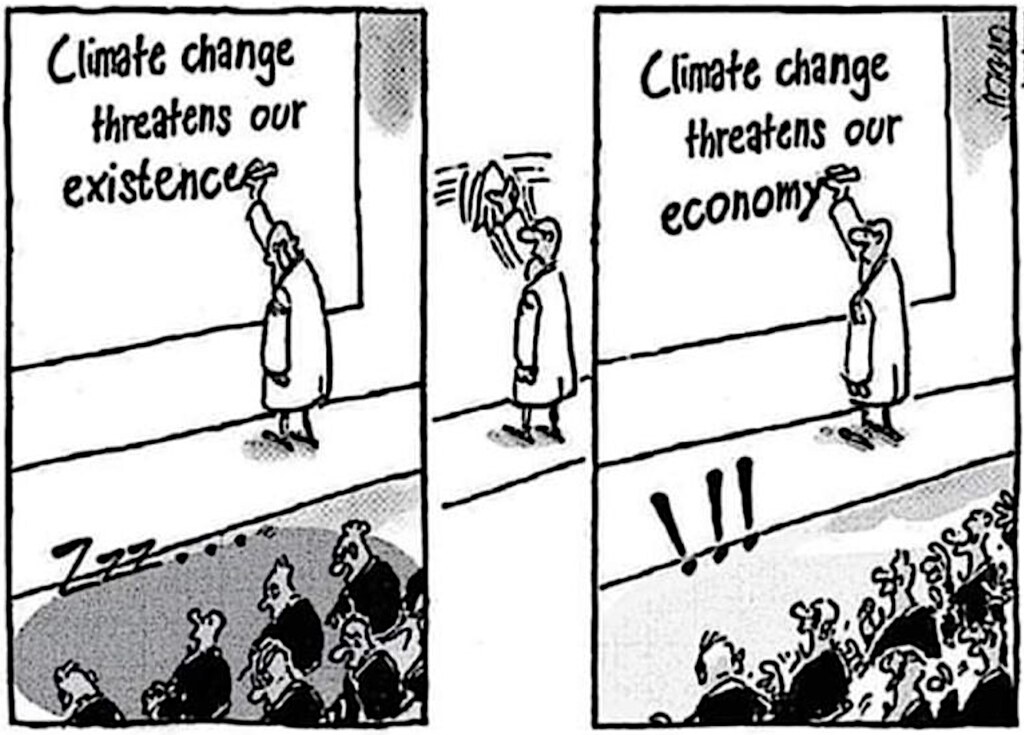


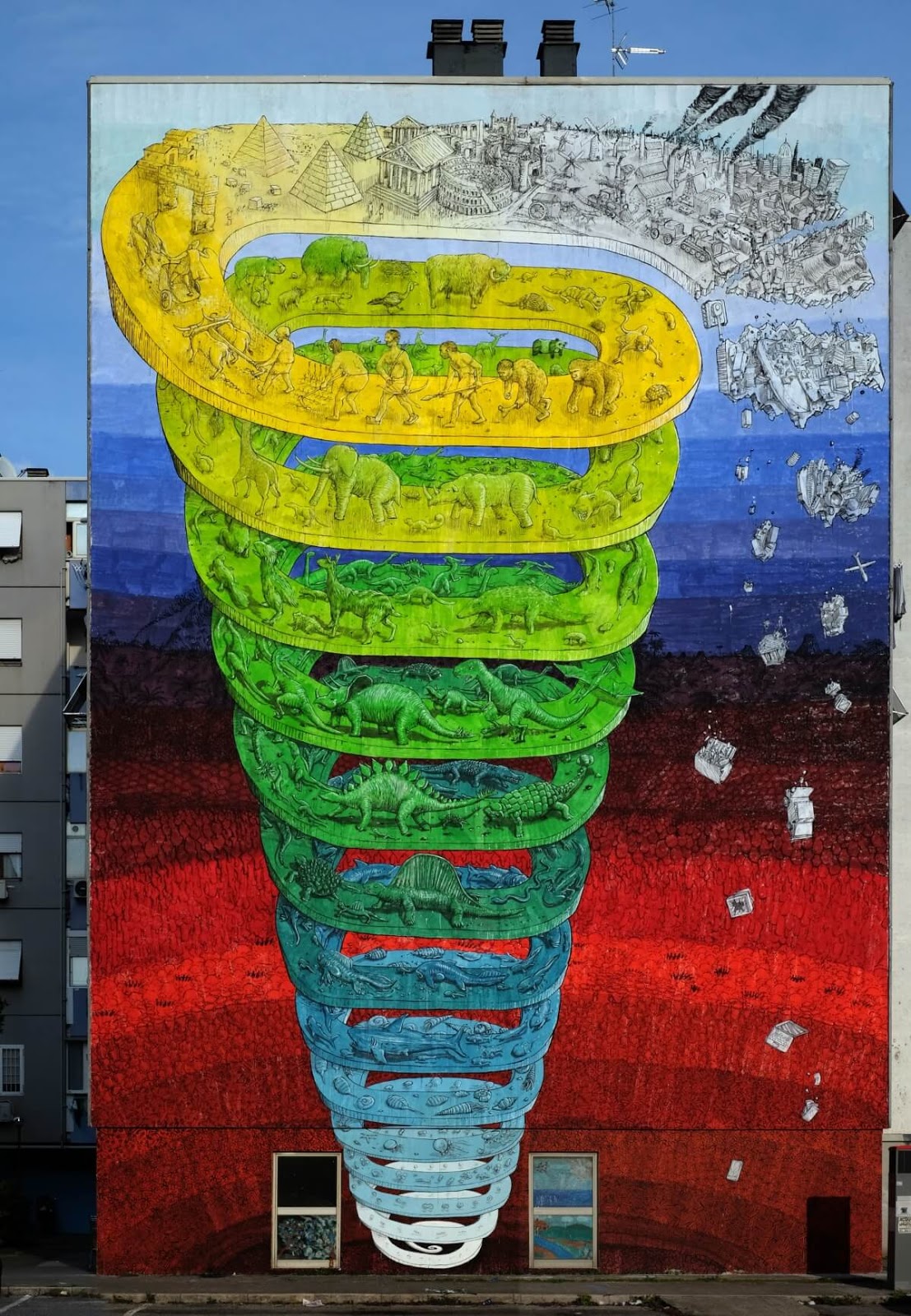
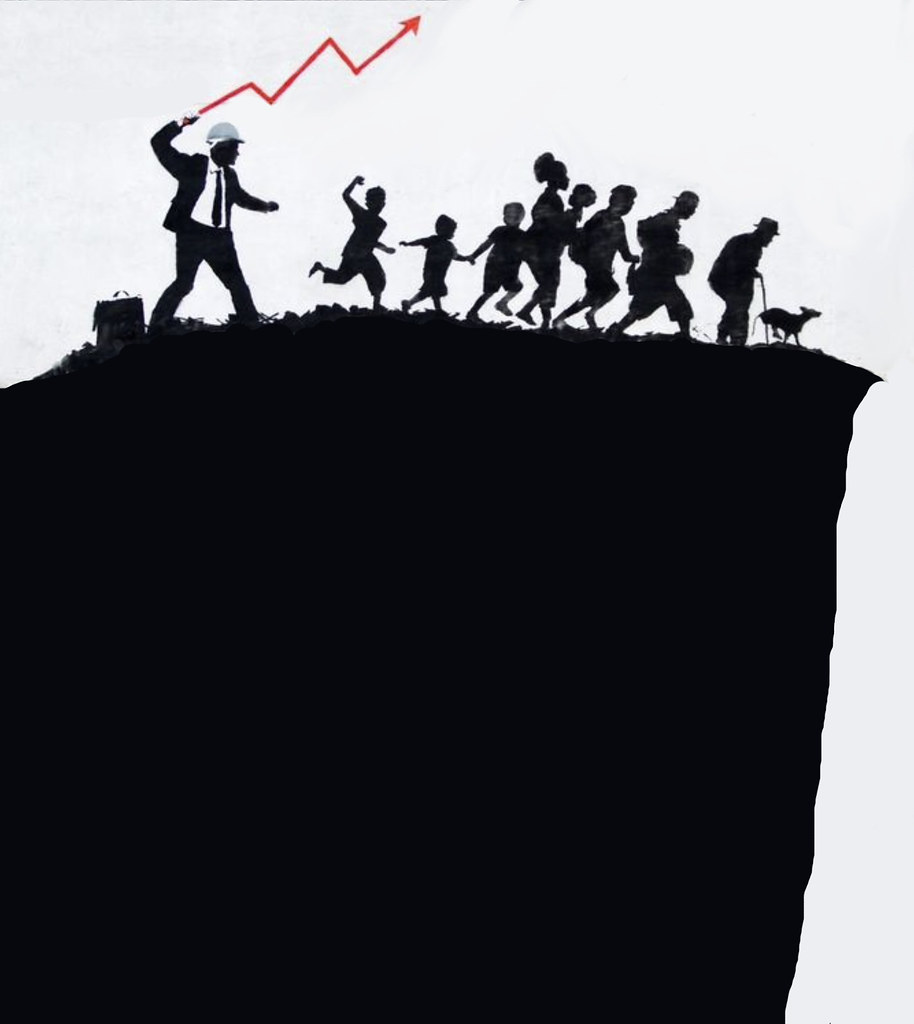


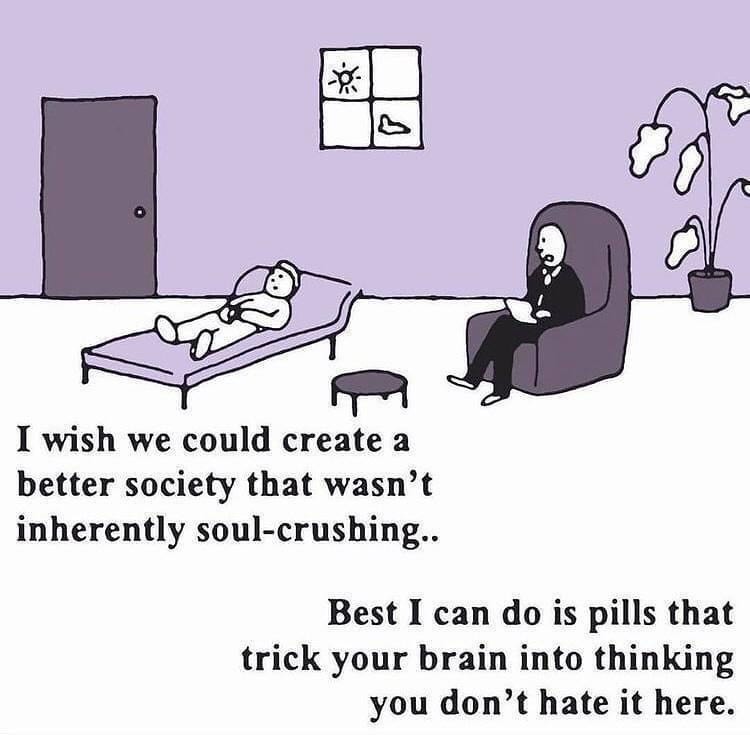
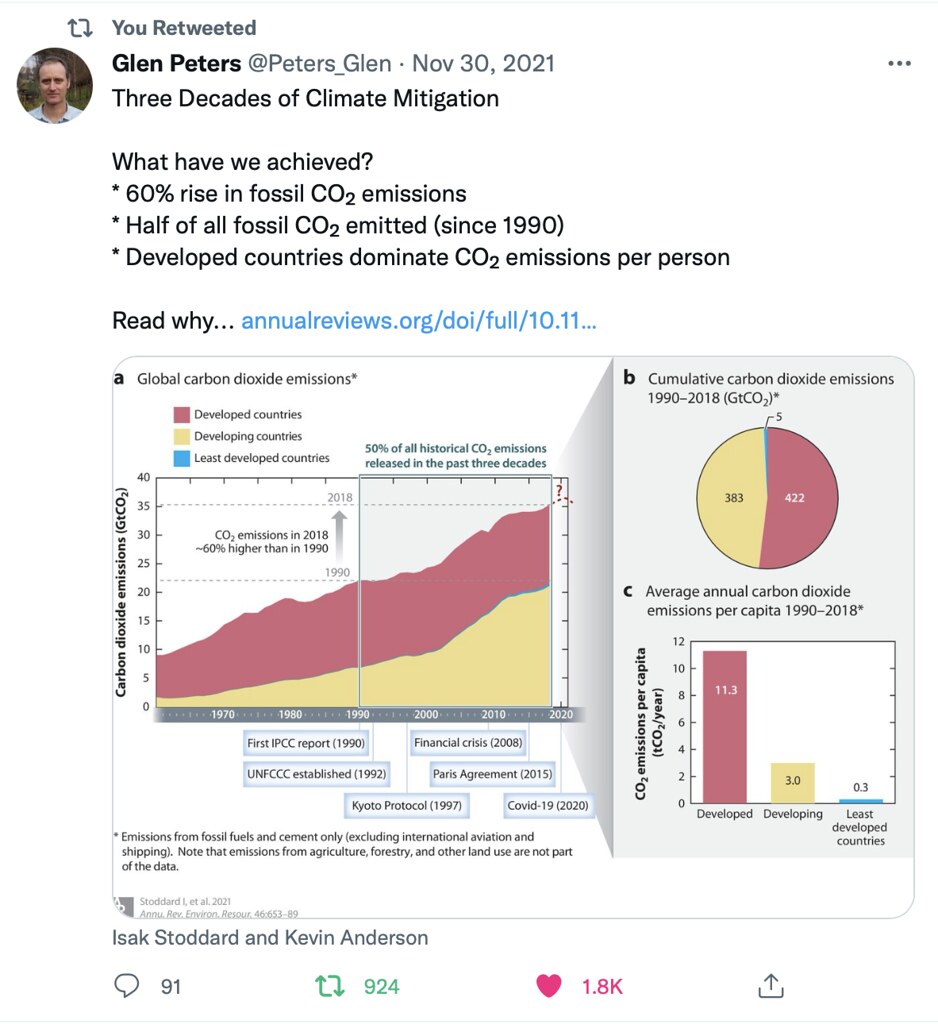
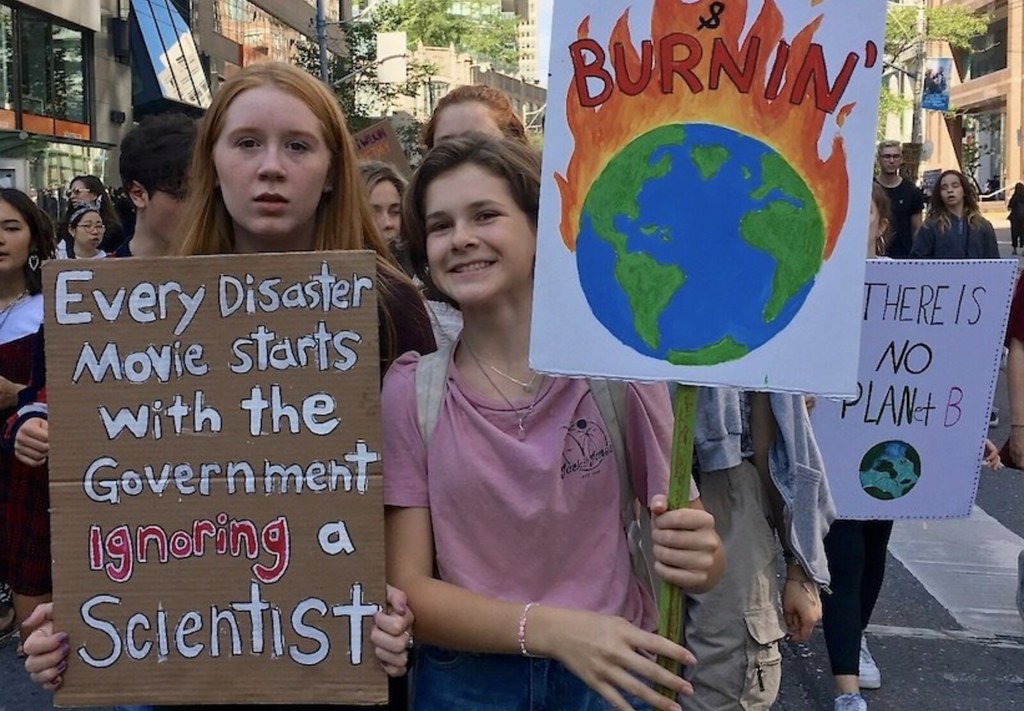


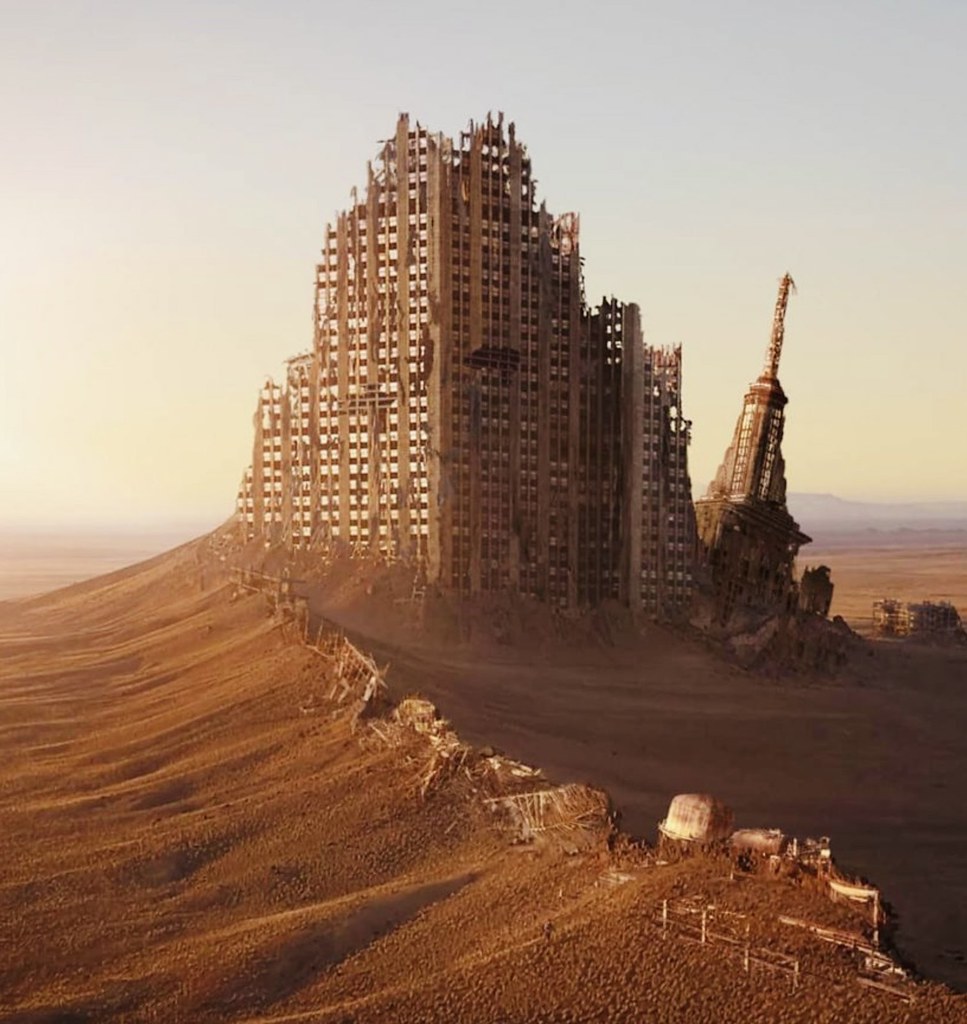

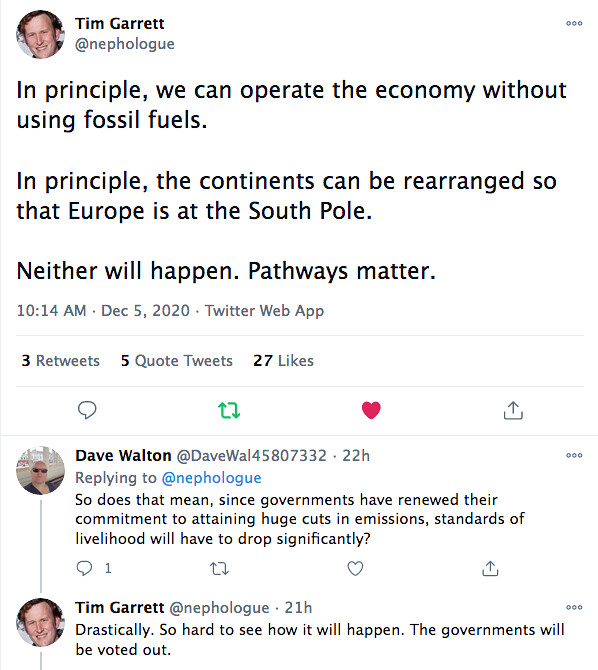

 Collapse of Industrial Civilization