
Tags
Artificial Intelligence, Capitalist Extraction, Climate Crisis, Data Colonialism, Digital Imperialism, Ecological Collapse, Elon Musk, Environmental Justice, Global Inequality, Industrial Civilization, Labor Exploitation, Neocolonial Patterns, OpenAI, Power Concentration, Resource Exploitation, Sam Altman, Social Fragmentation, Surveillance Capitalism, Tech Oligarchs, Technological Salvation

A Brave New AI World
The 21st century is witnessing a convergence of crises unprecedented in both scale and complexity. At the forefront is the rapid acceleration of artificial intelligence (AI), a technology whose development and deployment have become emblematic of broader shifts in global power, economic extraction, and environmental destabilization. AI’s rise is not occurring in a vacuum; it is deeply interwoven with the intensification of capitalist extraction, where the relentless pursuit of profit and efficiency drives not only technological innovation but also the exploitation of labor, data, and natural resources on a planetary scale. Simultaneously, the biosphere—the intricate web of life that sustains human civilization—is facing collapse, threatened by climate change, biodiversity loss, and the exhaustion of ecological limits.
These forces—AI, capitalism, and ecological crisis—are not isolated phenomena. They are deeply entangled, each amplifying the risks and contradictions of the others. The ideology and operations of the AI industry, as meticulously documented in Karen Hao’s Empire of AI, provide a revealing lens through which to examine these dynamics. Through detailed reporting and analysis, Hao exposes how the ambitions of companies like OpenAI, and the visionaries and power brokers behind them—figures such as Sam Altman and Elon Musk—are not merely technological in nature. Rather, they are political, economic, and imperial projects, seeking to reshape society and the planet in the image of their own interests and ideals.
The story of AI’s ascent is thus inseparable from the broader story of industrial civilization’s trajectory. As Hao’s work and critical scholarship on contemporary capitalism reveal, the AI industry is both a product and a driver of the current world order: one that is marked by the concentration of wealth and power, the extraction and commodification of both human and nonhuman life, and the perpetuation of social and ecological inequalities. The drama within OpenAI—its founding ideals, internal power struggles, and eventual capitulation to commercial pressures—mirrors the larger crisis of governance and legitimacy facing industrial society as it approaches its ecological limits.
At the same time, the global reach of tech conglomerates—epitomized by Elon Musk’s ventures in sub-Saharan Africa and beyond—demonstrates how technological ambition and capitalist expansion continue to reproduce systems of exploitation and exclusion on a planetary scale. These dynamics are not relics of a feudal past, as some theorists suggest, but rather the latest iteration of capitalism’s internal transformations, as it adapts to new opportunities for extraction and control in the digital age.
This essay draws on Hao’s Empire of AI, critical analyses of capitalism’s evolution, and contemporary accounts of global tech power to explore how the ideology and operations of the AI industry reflect and accelerate the impending unraveling of both the biosphere and industrial civilization. The narrative is not merely technological; it is a story of political economy, ambition, and ecological reckoning—a story that demands urgent reflection and action as we confront the intertwined futures of technology, society, and the Earth.
The Rise of AI Empires: Ideals, Power, and Dispossession
OpenAI’s Founding Myth and Its Unraveling
OpenAI’s inception was steeped in utopian ambition. Its founders—Sam Altman, Elon Musk, and other Silicon Valley luminaries—proclaimed a mission to develop artificial general intelligence (AGI) for the benefit of all humanity, not just shareholders or a privileged elite. They structured OpenAI as a nonprofit, promising transparency, openness, and collaboration, and explicitly rejecting the profit-driven secrecy that had come to dominate the tech sector. The organization’s very name reflected this ethos: “Open” AI, a commitment to sharing research and collaborating widely, with the ultimate goal of ensuring that AGI would be a universal good, not a private asset.
Yet, as Karen Hao’s Empire of AI reveals, these ideals quickly collided with the realities of technological ambition and the immense capital required to pursue it at scale. Within less than two years, OpenAI’s leaders realized that the path to AGI would demand resources far beyond what their initial philanthropic commitments could support. This financial strain precipitated a power struggle at the highest levels, with both Musk and Altman vying for control. Altman ultimately prevailed, but Musk’s departure in early 2018—and the withdrawal of his funding—marked the first major fracture in OpenAI’s founding narrative. The episode, as Hao notes, was an early indicator that OpenAI’s project was as much about ego and power as it was about altruism.
To fill the financial void, OpenAI underwent a dramatic transformation. Altman engineered a new legal structure, creating a for-profit arm (OpenAI LP) nested within the nonprofit, enabling the company to raise capital, commercialize its technologies, and provide investor returns. This pivot culminated in a landmark $1 billion investment from Microsoft in 2019, fundamentally altering OpenAI’s trajectory. The company began to aggressively commercialize products like ChatGPT, pursue ever-higher valuations, and adopt a culture of secrecy and insularity that belied its original promises of openness. The nonprofit structure persisted in name, but the organization’s governance experiment—intended to safeguard the public interest—collapsed under the weight of internal power struggles and the relentless logic of capital. The dramatic ouster and subsequent reinstatement of Altman in 2023 was the final, public unraveling of OpenAI’s founding myth, exposing the extent to which decisions about the future of AI were being made by a small, elite circle behind closed doors, with even employees left largely in the dark.
AI as Extractive Regime: Labor, Data, and Resources
Hao’s central metaphor for the AI industry is that of a new kind of global regime—one that echoes the extractive dynamics of historical colonialism, but operates through digital means. The AI industry does not wield overt violence, but it seizes and appropriates resources essential to its vision: the creative labor of artists and writers, the personal data of billions, and the land, energy, and water needed to power massive data centers and supercomputers. The labor required to clean, annotate, and prepare these vast datasets is often outsourced to the world’s most vulnerable populations, who work under exploitative conditions for meager wages.
This extraction is global and deeply unequal. In Kenya, for example, data laborers are paid starvation wages to filter out toxic content (such as hate speech, violence, and sexual content) from AI training datasets, exposing themselves to psychological harm with little recourse or support. Data centers are frequently sited in rural or marginalized communities, both in the Global South and in the U.S., because land and resources are cheaper and local resistance is less likely to be heard or effective. These centers often consume water and energy at scales that far exceed the needs of local residents, diverting critical resources away from communities that may already be facing scarcity.
Karen Hao cites a Bloomberg analysis showing that two-thirds of new data centers are being built in water-scarce areas, often tapping directly into public drinking water supplies. For example, in Chile, Google proposed building a data center that would use a thousand times more freshwater annually than the local community it would neighbor. To illustrate the enormous energy needs of AI, Hao references a McKinsey report estimating that, on the current trajectory, global AI infrastructure will require two to six times the annual energy consumption of the state of California within five years. Many of these data centers are sited in regions where energy grids are already strained, and in some cases, coal plants slated for retirement have been kept running or restarted specifically to serve new data center demand.
In Memphis, Tennessee, Elon Musk’s “Colossus” data center is powered by about 35 unlicensed methane gas turbines, pumping thousands of tons of toxic pollutants into the community, which already faces environmental injustice and limited access to clean air. Meanwhile, the benefits of AI—wealth, power, and technological prestige—are concentrated among a handful of tech giants and their investors, with little benefit to the communities whose labor and resources make these technologies possible.
The industry’s logic is further reinforced by its control over the narrative of progress. Companies like OpenAI justify their extractive practices by invoking the promise of future technological salvation: AGI, they claim, will one day solve climate change, eradicate disease, and deliver abundance for all. Yet, as Hao and others have documented, this narrative serves primarily to legitimize the ongoing concentration of power and the perpetuation of global inequalities. The costs—ecological degradation, social dislocation, and economic precarity—are externalized onto the world’s most vulnerable, while the rewards accrue to the already powerful.
From Utopian Experiment to Oligarchic Power
The story of OpenAI’s rise is emblematic of a broader transformation within capitalism itself. As Addison and Eisenberg argue, the emergence of tech oligarchs like Altman and Musk does not signal a return to feudalism, but rather a shift in the mechanisms of capitalist accumulation and control. The AI industry’s business model—rooted in data extraction, monopoly power, and rent-seeking—represents an intensification of capitalist dynamics, not their abandonment. The creation of private jurisdictions, the capture of public goods, and the pursuit of unprecedented scale are all hallmarks of a new phase of capitalist development, one that is increasingly indifferent to democratic oversight or ecological limits.
At the same time, the global ambitions of figures like Musk—whose projects in sub-Saharan Africa and elsewhere seek not only economic returns but also political and cultural hegemony—underscore the ways in which tech companies are reshaping the world order. These ventures often reproduce systems of exploitation and exclusion familiar from earlier eras of imperialism, but now mediated by algorithms, platforms, and data flows rather than armies and bullets. The result is a new form of extractive dominance, one that is digital, planetary, and deeply entwined with the fate of the biosphere and industrial civilization itself.
Surveillance Capitalism and the Logic of Scale
From Industrial Capitalism to Data-Driven Oligarchy
The AI industry’s business model is not a rupture with capitalism but an intensification of its deepest tendencies. While some commentators have described the rise of tech giants as a new “neofeudalism,” historians and critical scholars argue that what we are witnessing is a profound transformation within capitalism itself, not a return to a medieval past. The power wielded by figures like Sam Altman, Elon Musk, and the corporations they lead is rooted in the logic of capital: relentless expansion, the pursuit of monopoly, and the extraction of new forms of value.
Whereas industrial capitalism was driven by the production and sale of material goods, the new regime—what Shoshana Zuboff terms “surveillance capitalism”—extracts value from the data, behavior, and even the emotions of users. In this model, people are not just consumers but also the raw material: their clicks, searches, posts, and private communications are harvested, analyzed, and commodified. Tech companies like OpenAI, Google, and Meta have built vast fortunes by turning the intimate details of daily life into products for advertisers, governments, and other corporations. As Addison and Eisenberg note, this is not feudal rent extraction but a novel form of capitalist accumulation, where the boundaries between public and private, work and leisure, are systematically dissolved.
The logic of surveillance capitalism has also normalized a culture of mass datafication and extraction. AI developers treat everything as data to be captured, sanitized, and consumed by their models—books, artworks, social media posts, even the faces and voices of people around the world. This approach has led to pervasive surveillance not just online, but in physical spaces, with the gaze of AI-powered systems falling disproportionately on vulnerable and marginalized populations, especially in the Global South. The result is a digital extractivism that mirrors and amplifies older forms of colonial exploitation, now justified in the name of progress and innovation.
AI’s Insatiable Appetite: Energy, Data, and Ecological Cost
The defining feature of this new phase of capitalism is its “logic of unprecedented scale and consumption.” The pursuit of ever-larger AI models has unleashed a global race for data, energy, and computational power. Training state-of-the-art models like GPT-4 requires not only astronomical amounts of data but also immense quantities of electricity and water. As Karen Hao reports, GPT-4 is over 15,000 times larger than its predecessor from just five years earlier, which translates directly into exponentially greater energy, data, and financial resource requirements.
This scale is not a technological inevitability but a strategic choice, driven by the imperatives of capital and competition. OpenAI’s relentless push for bigger models has set the rules for the entire industry, forcing rivals like Google and Baidu to divert resources and centralize their research efforts in order to keep up. The resulting concentration of power and resources has choked off alternative approaches to AI development, narrowing the field to a handful of corporate giants with the capital to sustain the costs of scaling.
The ecological consequences are staggering. Data centers now consume vast amounts of energy and water, with some projections warning of a future where the planet is “covered with data centers and power stations,” creating a “tsunami of computing…almost like a natural phenomenon.” Attempts to “green” these operations—through renewable energy or more efficient cooling—are dwarfed by the exponential growth in demand. The scale of computation required for cutting-edge AI is fundamentally incompatible with planetary boundaries and the urgent need to reduce carbon emissions.
OpenAI and its peers rationalize these costs by invoking the promise of AGI: a future technology that will, they claim, “fix the climate,” deliver “massive prosperity,” and solve humanity’s greatest challenges. But this is a dangerous wager. The benefits are speculative and distant, while the harms—ecological degradation, labor exploitation, and the concentration of power—are immediate and growing. The industry’s faith in technological salvation serves to justify ever-greater extraction, even as it accelerates the unraveling of the biosphere and deepens global inequalities.
The New Empire of Data and Attention
The rise of surveillance capitalism and the logic of scale have produced a new regime—one that is digital, planetary, and extractive. The AI industry’s relentless appetite for data and computation has created a feedback loop: more data enables bigger models, which require more energy and resources, which in turn drive further extraction and exploitation. This cycle is sustained by a narrative of inevitable progress, but its real effect is to entrench the power of a small elite while externalizing the costs onto the world’s most vulnerable people and ecosystems.
This regime is not just economic but ideological. By framing their work as a civilizational mission, AI leaders like Altman and Musk position themselves as the architects of humanity’s future, even as they reproduce and intensify the inequalities and crises of the present. The story they tell is one of abundance and salvation, but the reality is a deepening spiral of extraction, exclusion, and ecological risk.
In sum, the transformation from industrial to surveillance capitalism, and the logic of scale that drives the AI industry, are not simply technical trends—they are expressions of a broader crisis within capitalism itself. The pursuit of infinite growth on a finite planet, mediated by ever-more powerful and resource-hungry technologies, is pushing both the biosphere and industrial civilization toward collapse. The challenge is not just to regulate or reform AI, but to confront the underlying logic that makes such extraction both possible and profitable.
The Global South, Tech Hegemony, and Neocolonial Patterns
Elon Musk, Techno-Feudalism, and the New World Order
Elon Musk’s expanding influence in sub-Saharan Africa illustrates the emergence of a new kind of global power—one dominated not by states, but by tech oligarchs whose ambitions extend far beyond commerce. Musk’s projects, such as Starlink’s satellite internet and Tesla’s energy solutions, are marketed as vehicles for modernization and progress. Yet, as Dirk Kohnert observes, these ventures are also about establishing political and cultural hegemony in international markets, often positioning Musk as an unprecedented “techno-feudal lord.” His role is not confined to business: Musk acts as an arbiter in international conflicts, supports autocratic leaders, and leverages his platforms—such as X (formerly Twitter)—for political influence and the spread of misinformation.
This concentration of power is not a return to medieval feudalism, but a transformation within capitalism itself. As Addison and Eisenberg argue, the analogy of “techno-feudalism” is misleading; what we are witnessing is the rise of capitalist oligarchs whose private jurisdictions and corporate power can rival or even surpass nation-states. Musk’s ability to shape policy, influence elections, and broker international disputes exemplifies how tech barons now operate as global actors, sometimes more powerful than governments themselves.
In Africa, the promise of Musk’s technologies—global connectivity via Starlink, renewable energy through Tesla’s Megapacks—remains largely aspirational for the majority. High costs and infrastructural barriers mean that these services are often out of reach for most Africans. The pattern is familiar from earlier eras of empire: resources and markets are opened for extraction and control, while local populations are marginalized. The logic of dominance persists, now mediated by algorithms, satellites, and digital infrastructure rather than military force.
Data Colonialism and the New Extractivism
The term “data colonialism” has emerged to describe how tech companies appropriate digital resources from around the world, often without meaningful consent or compensation. As Karen Hao documents, the AI industry’s culture treats anything and everything as data to be captured and consumed, normalizing mass scraping and surveillance. This gaze falls disproportionately on the Global South, where vulnerable populations become “guinea pigs” for new technologies and sources of cheap data labor. For example, facial recognition companies target African countries to collect diverse face data, often exploiting weak data protection laws and offering little benefit to local communities.
This new extractivism extends the logic of colonial resource plunder into the digital realm. The biosphere is now exploited not only for minerals and energy but also for data and attention. The boundaries between digital and ecological exploitation blur: both are driven by the imperative of endless growth and accumulation. The labor required to annotate, clean, and prepare data for AI models is frequently outsourced to workers in the Global South, who endure precarious conditions and meager pay. Meanwhile, the environmental costs—such as water and energy diverted to data centers—compound existing inequalities and ecological stresses in these regions.
The Global Feedback Loop of Extraction and Inequality
The rise of tech empires like Musk’s is not an isolated phenomenon but part of a global feedback loop. As Hao notes, the aggressive push for scale in AI development has set the rules for a new era, forcing other tech giants to centralize and consolidate their resources, often at the expense of local innovation and alternative approaches. The concentration of wealth and technological power in the hands of a few multinational corporations is mirrored by growing precarity and exclusion for the many, especially in the Global South.
This dynamic is a modern echo of historical colonialism, but with new tools and justifications. The rhetoric of technological progress and global uplift is used to legitimize the extraction of both digital and natural resources, while the actual benefits accrue to a narrow elite. As Hao writes, “the empires of AI are not engaged in the same overt violence and brutality that marked [colonial] history. But they, too, seize and extract precious resources to feed their vision of artificial intelligence: the work of artists and writers; the data of countless individuals posting about their experiences and observations online; the land, energy, and water required to house and run massive data centers and supercomputers. So too do the new empires exploit the labor of people globally to clean, tabulate, and prepare that data for spinning into lucrative AI technologies.”
Conclusion: Empire by Other Means
In sum, the expansion of tech hegemony into the Global South—epitomized by figures like Elon Musk—reveals a new phase of capitalist imperialism. The tools have changed, but the structures of resource extraction, exclusion, and inequality remain. The digital and ecological frontiers are now intertwined, and the costs of this new regime are borne most heavily by those least able to resist. The challenge ahead is not only to recognize these neocolonial dynamics but to build forms of resistance and governance that can reclaim agency, redistribute benefits, and protect both people and planet from the ravages of unchecked technological power.
The Illusion of Progress and the Crisis of Civilization
The Myth of Technological Salvation
The leaders of the AI industry, from Sam Altman to Elon Musk, have constructed and relentlessly marketed a vision of technological salvation—a narrative in which artificial general intelligence (AGI) will not only solve humanity’s most urgent crises, such as climate change and disease, but also usher in an era of unprecedented abundance and prosperity. Altman, for instance, has promised that the “Intelligence Age” will soon be upon us, predicting that superintelligence could arrive in “a few thousand days” and claiming that “astounding triumphs—fixing the climate, establishing a space colony, and the discovery of all of physics—will eventually become commonplace.” This vision is not unique to OpenAI; it permeates the rhetoric of Silicon Valley, where technological progress is equated with social progress and the solution to every problem is more innovation, more scale, and more control over nature.
Yet, as Karen Hao and other critical observers document, this narrative serves a powerful ideological function: it justifies ever-greater extraction of resources, ever-tighter concentration of power, and ever-more aggressive deployment of disruptive technologies, all while deferring real solutions to the indefinite future. The promise of “massive prosperity” is belied by the reality on the ground: instead of broad-based uplift, we see growing inequality, the proliferation of precarious work, ecological devastation, and the fragmentation of social bonds. The benefits of generative AI and the wealth it creates accrue overwhelmingly to a small elite, while the costs—material, psychological, and environmental—are externalized onto the world’s most vulnerable populations.
This faith in technological progress is not new. It echoes the foundational ideology of industrial civilization, which has long assumed that more growth, more innovation, and more mastery over the natural world would inevitably yield a better world for all. But this very logic—the relentless drive for expansion and accumulation—is now driving the collapse of the systems, both ecological and social, on which life depends.
Collapse as Systemic, Not Accidental
The impending collapse of the biosphere is not an accidental byproduct of technological advancement, nor is it simply the result of poor management or lack of foresight. Rather, it is the logical outcome of a system—industrial capitalism—organized around the imperatives of accumulation, competition, and growth at any cost. As Hao’s reporting and analysis make clear, the AI industry, far from reversing these destructive trends, is accelerating them by multiplying energy and resource demands, deepening surveillance and exploitation, and concentrating power in ever-fewer hands.
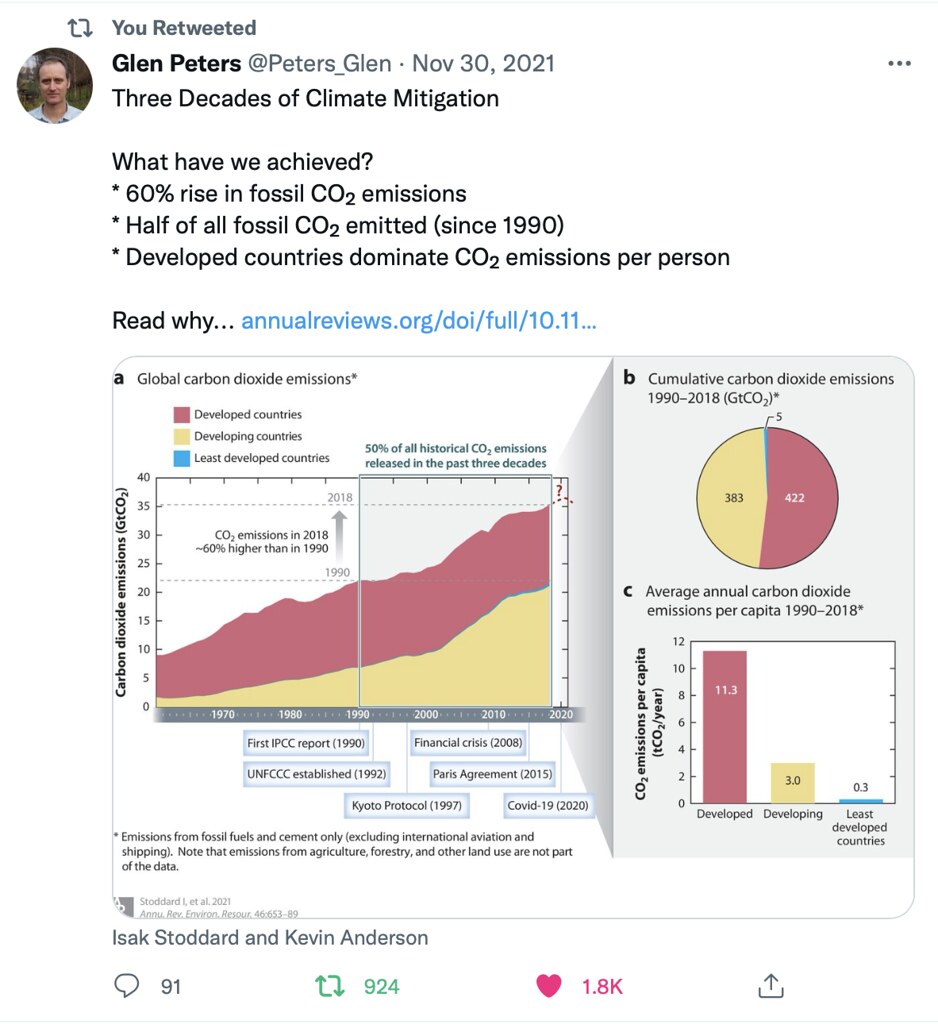
Industrial civilization, fueled by fossil energy and structured by the logic of capital, has already breached multiple planetary boundaries: destabilizing the climate, eroding biodiversity, depleting freshwater resources, and pushing countless species—including our own—toward the brink. The AI industry’s “logic of unprecedented scale and consumption” only exacerbates these crises. Training ever-larger models like GPT-4 requires astronomical amounts of electricity and water, with the environmental and social costs disproportionately borne by marginalized communities, especially in the Global South.
Crucially, this is not a regression to feudalism, as some theorists have suggested, but a deepening crisis within capitalism itself. As Addison and Eisenberg argue, the rise of tech oligarchs and the creation of private jurisdictions are not signs of a return to medieval hierarchy, but rather a transformation in the mechanisms of capitalist accumulation and control. The “empires of AI” are the latest—and perhaps final—expression of a system that, in its drive for endless expansion, undermines the very conditions of its own existence.
The Rhetoric of Inevitability and the Deferral of Responsibility
A central pillar of the technological salvation myth is the rhetoric of inevitability. OpenAI and its peers insist that the development of AGI is not only desirable but unstoppable. As Greg Brockman, OpenAI’s president, put it, “The trajectory is already there… but the thing we can influence is the initial conditions under which it’s born.” This argument—if we don’t build it, someone else will—serves to absolve the industry of responsibility for the consequences of its actions, while legitimizing a race to scale that crowds out alternative approaches and democratic oversight.
The invocation of existential risk, meanwhile, positions AI leaders as the only actors capable of saving humanity from threats of their own making. As Hao notes, this logic mirrors the justifications used by previous empires to rationalize their expansion and domination: “During the long era of European colonialism, empires seized and extracted resources that were not their own and exploited the labor of the people they subjugated… They projected racist, dehumanizing ideas of their own superiority and modernity to justify—and even entice the conquered into accepting—the invasion of sovereignty, the theft, and the subjugation.” The AI industry’s promise of universal benefit, coupled with its aggressive pursuit of monopoly and scale, echoes this colonial logic, masking the realities of exclusion and harm.
The Reality Behind the Hype
Despite the soaring rhetoric, the actual impacts of AI-driven “progress” are far more ambiguous. Reports from the ground reveal that the supposed productivity gains of generative AI are often illusory or offset by increased workloads and demands for oversight. The economic benefits, rather than trickling down, are captured by a narrow elite, while the majority face growing precarity and diminished agency. The environmental costs—soaring energy use, water consumption, and e-waste—are mounting rapidly, with little evidence that future technological breakthroughs will be able to reverse or even mitigate the damage already done.
Moreover, the AI industry’s concentration of power and secrecy has undermined the very ideals of openness and democracy it once championed. The drama surrounding Sam Altman’s ouster and reinstatement at OpenAI, as Hao documents, revealed just how much the future of AI—and by extension, the future of society—is being shaped by a handful of Silicon Valley elites, often behind closed doors and without meaningful public input. Even within OpenAI, employees and researchers found themselves excluded from critical decisions, their fates determined by boardroom intrigue and investor pressure rather than transparent governance or ethical deliberation.
A System at War with Its Own Foundations
What emerges from this analysis is a picture of a civilization at war with its own foundations. The logic of endless growth, technological escalation, and capital accumulation—once seen as the engine of progress—has become a force of destruction, eroding the ecological and social bases of life. The AI industry, far from offering a way out of this impasse, is accelerating the crisis, both materially and ideologically.
The collapse we face is not simply environmental, but civilizational. It is the unraveling of the very narratives and institutions that have defined modernity: the belief in progress, the promise of universal uplift, the legitimacy of elite stewardship. As Hao writes, “the current manifestation of AI, and the trajectory of its development, is headed in an alarming direction… Under the hood, generative AI models are monstrosities, built from consuming previously unfathomable amounts of data, labor, computing power, and natural resources… The exploding human and material costs are settling onto wide swaths of society, especially the most vulnerable.”
Conclusion: Empire and Entropy
The story of artificial intelligence in the 21st century is not merely one of technological innovation or computational prowess. It is fundamentally a story about empire and entropy, about the forces of power, extraction, and decline that define our era. As Karen Hao’s Empire of AI so vividly documents, the rise of AI regimes is inseparable from the deepest contradictions of industrial civilization: the relentless pursuit of infinite growth on a finite planet, the concentration of wealth and decision-making in the hands of a narrow elite, and the seductive promise of technological progress shadowed by the lived reality of exclusion, precarity, and ecological unraveling.
The drama inside OpenAI—its founding ideals, internal power struggles, and ultimate capitulation to commercial and oligarchic pressures—is not an isolated episode but a microcosm of a broader crisis. The AI industry’s trajectory, from utopian experiment to hyper-commercialized dominance, mirrors the fate of industrial civilization itself: a system propelled by the ideology of progress and accumulation, yet increasingly at war with the social and ecological foundations that make its existence possible. The very logic that once promised abundance and uplift now threatens collapse—of the biosphere, of democratic governance, and of the social contract.
This crisis is not accidental. It is the logical outcome of a world order that prioritizes accumulation over sustainability, competition over cooperation, and technological scale over human and planetary well-being. The AI industry, far from offering a way out, has become a powerful accelerant—multiplying energy and resource demands, deepening surveillance and labor exploitation, and reinforcing global inequalities through new forms of digital and ecological extraction. The digital empires of AI are not engaged in overt colonial violence, but their reach is global: from the water and energy consumed by data centers, to the data and labor appropriated from the world’s most vulnerable, to the shaping of narratives and policies that justify their dominance.
Yet, as Hao notes, this future is not inevitable. The collapse of the biosphere and the unraveling of industrial civilization are not predetermined destinies, but the result of choices—about who controls technology, who benefits, and at what cost. The myth of technological salvation, so often invoked by AI’s leaders, is a mirage that serves to legitimize further extraction and defer real solutions. The actual impacts of AI-driven “progress” are increasingly ambiguous: while the wealth and power of tech giants soar, the promised benefits for society at large remain elusive, and the costs—environmental, social, and psychological—mount ever higher.
The challenge before us is profound. As the planet stands at a crossroads and the legitimacy of industrial civilization frays, we are confronted with urgent questions: How do we govern technologies that are reshaping the world at breakneck speed? How do we reclaim agency and democratic oversight from corporate powers whose interests are often at odds with the common good? How do we build new forms of solidarity and governance that can resist the logic of endless extraction and accumulation, and instead foster justice, sufficiency, and care for both people and planet?
How do you govern a machine that answers to no one but its own creators, when those creators are kings in all but name and the rest of us are mere data to be mined? As the biosphere gasps its last and the scaffolding of industrial civilization crumbles, we ask how to reclaim agency—yet agency is a ghost, lost in legalese and locked behind corporate firewalls. The boardroom replaces the ballot box, and the algorithm quietly redraws the boundaries of the possible, all while the world burns and the few gorge themselves on the spoils. Solidarity? Try whispering it into the hurricane of monetized outrage and algorithmic distraction, and watch it be sold back to you as branded hope. We talk of justice, sufficiency, and care, but the blueprints for such worlds are shredded for profit, and the architects are busy building fortresses in the cloud. So here is the riddle: How do you build a future when the present is mortgaged to the powerful, the rules are written in code no one can read, and every path out is guarded by those who profit most from the collapse?
References:
Addison, David, and Merle Eisenberg. “Capitalism Is Changing, but Not Into ‘Neofeudalism’.” Jacobin, May 21, 2025. https://jacobin.com/2025/05/capitalism-neofeudalism-tech-medieval-history
Hao, Karen. Empire of AI: Dreams and Nightmares in Sam Altman’s OpenAI. New York: Penguin Press, 2025.
Kohnert, Dirk. “How Elon Musk’s Expanding Footprint Is Shaping the Future of Sub-Saharan Africa.” February 2025. https://www.researchgate.net/publication/389426725_How_Elon_Musk’s_expanding_footprint_is_shaping_the_future_of_sub-Saharan_Africa
Youvan, Douglas C. “The Power Behind the Algorithm: Palantir Technologies and the Global Rise of AI Surveillance and Warfare.” May 2025. https://doi.org/10.13140/RG.2.2.10601.61281.









 Collapse of Industrial Civilization