In keeping with what I said earlier, I’m taking a break for a couple weeks from in-depth blogging, but until then I will post or reblog articles that happen to catch my eye.
Has mankind triggered the trip switch for his own extinction? Looking at just the headlines below and the comment from the Chemist, I would say the answer is a resounding “Yes!” This conclusion brings me no pleasure, but immeasurable depths of angst and depression. The so-called “doomers” are perhaps the most humanistic amongst the population. They see things as they are, not what people hope them to be or what many idealize industrial civilization to be. Nothing hides under the Sun.
I’m coming off my two week blogging binge so posts will be light to nonexistent until I start up again in a few weeks. Studies have shown that inordinate time spent on the internet has harmful effects, both physiologically and psychologically; thus breaks from blogging and the morbid fascination with industrial civilization’s slow-motion train wreck are wise.
Occasionally I’ll scour YouTube for any interesting videos for this site and I found one.
Messing with global biospheric systems which have evolved over millions of years and expecting business-as-usual to continue is perhaps the greatest delusion of man. Civilization-ending runaway climate change could be right around the corner, and from just an intuitive level such a scenario seems all but inevitable. An abrupt change to our comfortable, normalcy-biased mode of living and thinking is very much in the cards – all the more reason for me to stop and smell the roses before there are no roses.
In a small way the plight of the British in 1940 resembles the state of the civilised world now. At that time we had had nearly a decade of the well-intentioned, but quite wrong belief that peace was all that mattered. The followers of the peace lobbies of the 1930s resembled the green lobbies now, their intentions were more than good, but wholly inappropriate for the war that was about to start.”
~ James Lovelock, The Vanishing face of Gaia
(quoted in ‘the end of more’)
Year 2013
In the early years of the twenty-first century, reports from the global scientific community started to take on a more dire tone as Arctic amplification melted the ice sheets and glaciers of the North Pole, deformed the jet stream, and altered oceanic currents. The Arctic treeline marched northward gaining footholds in land now unlocked from its frozen slumber. Animals, insects, viruses, and pathogens, which were driven by the warming planet to migrate northward, wreaked havoc on native species. Heatwaves also became more common in the lower latitudes where the bulk of humanity lived. Seasonal transitions became less gradual and more abrupt. Extremes of weather, flood and drought, started to occur more frequently and with greater destructive force. Perhaps the only business of Homo economicus to speak candidly about the reality of climate change was the insurance industry only because its business model could not hide or externalize the high costs of climate chaos. Humans had built their entire global civilization and profligate lifestyle upon the burning of rich, energy-dense fossil fuels. To change the course of this behemoth ship was well beyond the scope of any one nation or group of people. Talk of modern civilization running on so-called renewable energy ignored the fact that such alternative sources were only extenders of the faltering fossil fuel age, and such a transition was too late anyway. The seeds of our downfall had been sown over a century ago when man accepted the Faustian bargain of exploiting carbon-based energy whose power came with the price of a wrecked planet. The marketing ploys of “green” and “organic” were no fix for the unstoppable wave of eco-destruction unleashed by disaster capitalism. The leaders of all countries knew there was no politically viable way to stem the human population explosion which was also at the root of the ecological crisis.
We have become Vishnu and Shiva, the ancient Hindu gods of creation and destruction: As we create more of us, far more than we now understand the planet can sustain, we are creating our own destruction, both terrible and beautiful. Our scientists, exploring the frontiers of our knowledge of the world, have gathered enough data for us to understand that our consumption and proliferation have set in motion a planetary change in our relatively comfortable envelope of climate.
In the last few decades the climate of the Earth had defied all the overly conservative, human-centric estimates that were designed to maintain the suicidal path of business-as-usual. Of course most scientists were shocked at the rapidity with which the climate had spiraled out of control. Nations which were the major producers of the world’s food soon halted exports in order to feed their own frightened and hungry populations and stave off revolt. Those countries heavily reliant on imports for their sustenance quickly devolved into anarchy and killing fields. Politicians were the first to be done away with, drawn and quartered with their heads placed on spikes. The thin veneer of civilization dissolved under the brutal reality of power outages, food riots, and climate chaos. Some countries with nuclear plants suffered Fukushima-like meltdowns due to the loss of their power grid while others, who were able to keep a lid on the disaster by maintaining electrical power under a state of marshal law, carried out accelerated decommissioning of their reactors. Nevertheless, with the collapse of the electric grid large swaths of the Earth were rendered uninhabitable by leaking radiation and toxic rain. The sudden downward spiral of civilization was also punctuated by the detonation of a few nuclear bombs in countries like Pakistan where arsenals had fallen into the hands of radical groups. In the eyes of the believers, Armageddon had finally arrived.
Year 2087
For hundreds of miles north and south of the equator a death zone of searing heat, barren land, dry riverbeds, and lifeless ocean encircled the Earth, but a few places at the poles still held small pockets of human communities who practiced subsistence farming and fishing as well as the art of scavenging technology from the past. Even though the rusted steal hulks of factories, cars, airliners, ships, and other relics of CO2-spewing industrialization now lay motionless in fields of tall grass or at the bottom of the ocean, the effects of the CO2/methane bomb unleashed by modern man would last for millennia. Sea level rise and the chaotic weather of the planet had displaced all the elaborate infrastructure that had been built to take advantage of once predictable growing seasons, fertile soils, and river systems. Gaia had pulled the rug out from under man leaving him scampering for cover like bugs from beneath an overturned rock, and there was nowhere to run. The few humans who presently eked out an existence at the poles were simply the flotsam and jetsam of the great collapse. The coddled elite who had actually planned for this eco-apocalypse committed suicide long ago when their stash of fine wine ran out and their gold had no value to anyone.
Year 2127
The sound of human voices no longer filled the air. As a matter of fact, the sound of any living thing had vanished. Nearly all the monuments of human achievement and ingenuity had crumbled away like sand castles before a rising tide. Only a few ancient relics still stood like the pyramids in Egypt and long segments of the Great Wall of China. Not much remained of the “disposable society” of modern times except for a few large construction projects such as Hoover Dam. Repossession on the humans was the only option Gaia had for a species that had built up mountains of environmental damage with no intention of ever changing its omnicidal ways. The slate had to be wiped clean before the slow, million year process of remediation could begin…
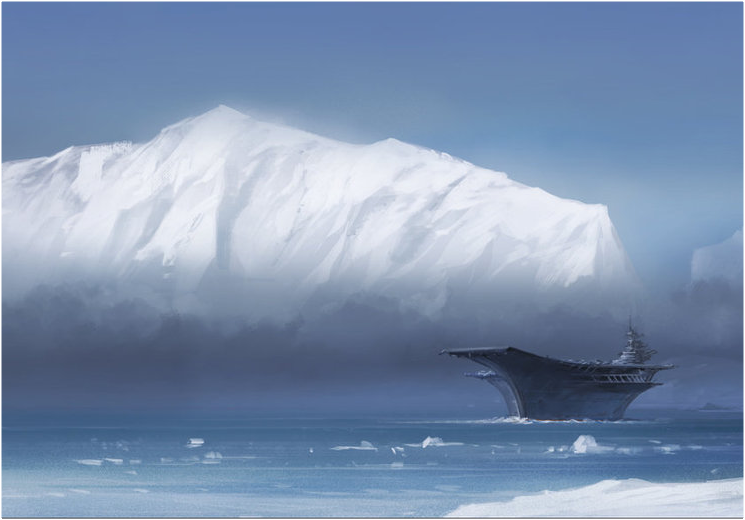
Vast, flat expanses of viscous ooze, unbroken by waves, covered all of what once were vibrant oceans. Great belches of toxic hydrogen sulfide would occasionally break the calm of these oily, purple-colored plains stretching far into the horizon. The deadness of the these poisonous waters was mirrored by the stillness on the land which now was exposed to the full forces of UV radiation through a destroyed ozone layer. High overhead, thin wisps of clouds slowly moved along a pale green sky. A fetid, noxious smell filled the air and the silence of extinction was everywhere.
Hello fellow realists. I haven’t spent much time in the last 14 months at Chris Martenson’s Peak Prosperity site, but I just listened to a podcast he made with climate scientist Dr. Mark A. Cochrane who gives an informative talk on extreme weather, the mangled jet stream, the overly conservative IPCC, the global climate debt, and other interesting topics on climate change. It’s worth your time. Martenson had originally relegated the talk of climate change and even Cochrane’s own climate change thread to the “Controversial Topics” forum at PeakProsperity.com, but Martenson has apparently become more accepting in the last year of the near 100% scientific consensus of climate change. Being a money man, it’s no surprise that Martenson would be nervous and reluctant to speak out on what capitalist industrial civilization is doing to the life support system of every living thing on the planet. To say that human-induced climate change is a “challenging issue” is perhaps the understatement of the millennium. The environmental conditions will continue to change and degenerate for the next 1,000 years even were we to halt all GHG emissions today. I’m sure homo economicus will find ways to profit from the eco-apocalypse just as he has profited from hunger, war, the prison industrial complex, the frantic exploitation of even dirtier and more dangerous fossil fuels, and every other ill that has befallen man. Thanks to Mike at DamnTheMatrix for originally posting this podcast.
[Warning on Dr. Cochrane’s statement that water vapor is the “main culprit” in causing global warming: See the comments section of this post.]
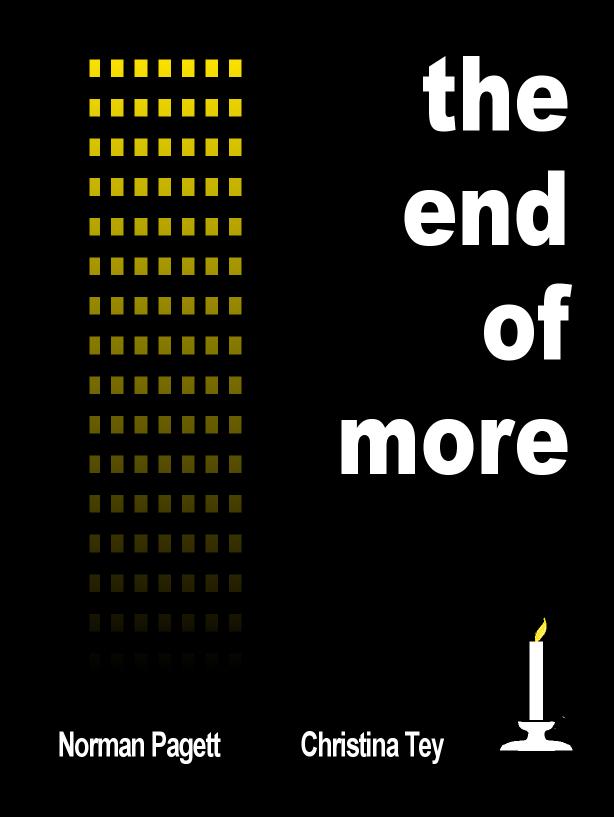
I’m currently reading the book “The End of More“(aka ‘Your Medieval Future’) which, if I remember correctly, had the working title of ScareCities, apparently in reference to what is going to happen to all the megacities of the world as we fall down the cliff of peak net energy and suffer a thousand cuts from a climate thrown out of balance. When I’m done with the book, I’ll post a review of it. It’s turning out to be a real page-turner. You can download the kindle book here for the U.S. and here for the UK. The authors state that the purpose of their book is to explain the evolutionary history of modern man and how he “has used all his ingenuity and his fighting skills to bring energy, food, water, and other natural resources to the brink of exhaustion.”
Here is an excerpt:
Kevin Moore is a frequent visitor here and leaves very erudite and informative comments. He’s written a few books that we may want to look into as well. Here are the links to a couple of them:
Before I get into a particular discussion on the new business opportunities afforded by a rapidly melting Arctic, I need to preface it with a short explanation and history of who wrote the article in question and what this group’s agenda is. The Council on Foreign Relations (CFR) was established after the First World War to formulate and plan the imperial ambitions of the U.S. as the world’s new superpower. The CFR is composed of top officials in the banking, manufacturing, commerce, and finance industries, as well as lawyers, university bureaucrats, and public figures from the media networks. CFR meetings are often held in secret. The primary funders of the CFR have been The Ford Foundation, the federal government, the Rockefeller Foundation, and the Carnegie Foundation. There exists a revolving door between positions held in the CFR and those in the government. The CFR represents the U.S. financial oligarchy and the wealthy elite of America. Lawrence H. Shoup wrote a seminal book on the CFR entitled ‘Imperial Brain Trust – Council on Foreign Relations’. I have a link to it under “Notes and Documents’ on the left side of this website. A quote from page 278 of that book best summarizes what the CFR is truly about:
A recent article by Shoup puts some familiar faces to the CFR with Democratic Party politician Dianne Feinstein and her husband finance capitalist Richard C. Blum, both members of the Council. In the following selection from that article, you can see how environmental protection is subverted for the financial interests of the power elite:
So now we go to the ecological catastrophe unfolding in the Arctic which the CFR and the ruling class see as simply another doorway through which capital accumulation can be carried out via environmental exploitation. The title of the CFR’s article is ‘The Coming Arctic Boom‘ published in the July/August 2013 edition of their journal ‘Foreign Affairs’.
In this deranged essay, the CFR gushes over the busine$$ opportunitie$ afforded by such a once-in-a-lifetime event as the melting of the Arctic:
[My comments are highlighted red and in brackets]
Yeah that’s who forms foreign policy for this country. The Mack Truck of climate chaos is barreling full speed ahead with mankind straight in its path, but all Homo Stupidicus can see are dollar signs.
Perhaps the most critical area in which industrial civilization has disconnected itself from nature is food production. Ask a city dweller where his food comes from and he’ll give you the name of a grocery store chain. Of course they know the food is produced somewhere outside the concrete jungle, but exactly where, by whom, and how are questions no one asks. And for the masses who are busy eking out a living on the treadmill of capitalism, the convenience of “fast food” often trumps all other considerations. The giant food manufacturers have spent considerable time tinkering with the three ingredients of sugar, salt, and fat in their processed food so as to reach a “bliss-point” for hooking the “consumer”. Thus in the process of commodifying, commercializing, and mass marketing our meals, we have lost the connection to nature fostered by food grown on a small-scale, sustainable manner. Nature Deficit Disorder appears to be rampant. As S. Roy Kaufman explains, industrialized food production has destroyed the human bond to the land:
Is “economy of scale and efficiency” really the best thing to pursue on the only planet humans have to live on? It turns out that in our quest to feed the most people at the lowest price, we have externalized a lot of costs which are now coming back to bite us in the ass. For example, bee pollination is priceless, but we are killing these insects off with our chemical pesticides and herbicides. The same goes for other plants, animals, and microbes which support the natural processes required to keep the land productive. As these creatures disappear from the landscape, we lose known and unknown ‘environmental services’ beneficial to man and the ecosystem. Industrial farming is a heavy user of CO2-emitting fossil fuels and contributes to a large percentage of the global warming we are experiencing. Biodiversity loss and destruction of crop yields are an inevitable consequence of a warming planet, even right down to the soil microbes. Pesticide and fertilizer run-off is polluting streams and rivers as well as creating massive dead zones in the ocean.
In the past century alone, over 50 per cent of the world’s wetlands have been lostbecause of the demands of agriculture. And of the more than 3500 species currently under threat worldwide, 25 per cent are fish and amphibians. – link
Industrial agriculture destroys biodiversity not only because it wipes out entire ecosystems and habitats, but because it favors genetically engineered monocultures. The following pictograph is a shocking illustration of how industrial agriculture has reduced the variety of foods we eat over the last century:
…Over the past hundred years, the variety of seeds planted has dwindled from hundreds to just a handful. Animal diversity is suffering a similar fate. Large commercial farms that focus on specific animals or plants to maximize yields and profits have caused the variety in our food supply to plummet.
Today, only 30 crops provide 95 percent of our food, and only four crops (maize, wheat, rice and potato) account for 60 percent of what we eat. We’ve lost three-quarters of the genetic diversity of crops in only 100 years. Now 1,500 of the 7,600 animal breeds are at risk of extinction.
Why should we care? Well, we need biodiversity to grow food, or in other words, to survive….
The Achilles’ heel of our monoculture crops is that they are vulnerable to small environmental changes. Dependency on such genetically uniform crops leaves modern society in danger of famine due to crop failure:
The lessons of the 1972 epidemic of ‘corn leaf blight’ have still not been learnt. The Committee on Genetic Vulnerability of Major Crops at the US National Research Council at the time posed the question: “How uniform genetically are other crops upon which the nation depends, and how vulnerable, therefore, are they to epidemics? The answer is that most major crops are ‘impressively genetically uniform and thus vulnerable and results from government legislative and economic policy’. – link
Another problem of the industrial agriculture complex has been the overuse of herbicides and pesticides to control weeds, insects, and viruses in order to maximize crop yield. It worked for a while but over the last couple decades the pests and pathogens have evolved to become immune to our chemicals:
Techno-Narcissism Looking at the just-completed 5.5 million square foot mega-building in Chengdu China, one could hold the mistaken belief that there is no ever-worsening ecological crisis of Earth or that mankind’s dominion over nature, built on a once stable and predictable weather regime, is not in serious jeopardy. The report that just came out a few days ago describing America’s energy infrastructure as “a sitting duck in the face of climate change” can be applied to all of the world’s infrastructure as well. So why is humanity continuing to build ugly monstrosities that will be ripped apart by torrential flooding, epic hurricanes, and other continent-sized storms as described by James Hansen in his book “Storms of My Grandchildren”? Because it’s all about growth, and capitalist carbon man is propping up his “growth” with the Viagra drug of QE money printing and accounting fraud, but Mother Nature ain’t amused and will bobbitize man’s conceit in short order. Industrial civilization’s relentless construction of such projects under the pall of climate chaos is the height of foolishness. We seem to be saying, “Why worry about deadly air pollution, runaway climate change in the Arctic, and a dangerously deformed, agriculture-destroying Jet Stream when you can create an artificial ecosystem complete with its own “sun” and a man-made beach free from algae bloom pollution?”:
…But most impressive of all is the artificial sun. Being an industrial hub, Chendu is known for its rather serious smog problem, with air qualities ranking in the mid to high 100s (unhealthy for people with allergies or respiratory problems). Hence the reason for the 24 hour, 150-meter-long LED screen that serves as a stand-in for the horizon. While inside, people do not have to worry about grey skies preventing them from getting a little warmth and a possible tan.
With this last aspect, China may now lead the world in terms of creating buildings that are more akin to self-contained ecosystems than anything else. In addition to this being a major building milestone, this structure may represent the way of the future for a nation that’s running out of healthy spaces to put its people. It’s no secret that China, with roughly 1,354,040,000 people as of 2013, is severely overpopulated, but even more problematic is the fact that urban population densities and air and water pollution continue to grow apace, leading to hundreds of thousands of respiratory and pollution-related deaths a year.
As more people move to the city, air and water quality becomes more problematic, and more living space needs to be created, the only solution may be to build structures that contain all the facilities needed to make life complete. This would include sun, surf, air circulation and vacation spots – everything that makes indoor living feel like an outdoor experience.
The idea of building such self-contained super structures to house an overpopulated planet from the natural world we are fast destroying is a psychosis of epic proportions. It illustrates the extreme level of detachment industrial civilization has reached in relation to its dependence on a healthy and irreplaceable environment. With the exception of space colonies, insanity and hubris are rarely illustrated on such a grand scale. As a last-ditch effort to survive climate chaos, perhaps hermetically sealed ‘space’ colonies, complete with wall-to-wall and overhead display screens simulating what the ‘outside’ used to look like when we could actually go outside, are what we will soon be building right here on a wrecked planet.
Another behemoth construction plan that caught my eye is this one:
Deep beneath the Bohai Sea, Chinese engineers may soon begin boring the longest submarine tunnel on the planet. At an estimated 76 miles (123km) long, it would surpass the combined length of world’s two longest underwater tunnels—Japan’s Seikan Tunnel and the Channel Tunnel between the UK and France. To connect the bustling northern ports of Dalian and Yantai, the engineers will have to tunnel through two fault zones that have caused a slew of deadly earthquakes in the last century…
…Provincial leaders of Shandong and Liaoning hope the tunnel will stimulate economic growth by connecting China’s northern rustbelt region with the upper reaches of the wealthy eastern coast. A member of the Chinese Academy of Engineering projected annual revenue of $3.7 billion, largely from freight, meaning the project would potentially pay for itself in 12 years. And if that’s not rationale enough, there’s bonus of claiming another world record (the government seems to have a fondness for superlative infrastructure)…
…But depth and length are only part of the challenge—the Bohai Tunnel also will need to plan around two major fault zones…
…Throughout modern Chinese history, the Tanlu and Zhangjiakou Penglai fault zones have been the source of chronic seismic activity. The 1976 Tangshan earthquake, which killed between 250,000 and 650,000 people, is the most notorious, though as you can see in the map above, there have been others. Perhaps the most concerning historical earthquake for the tunnel engineers to consider is the 7.4-magnitude quake of 1969 that occurred under the bay itself.
What exactly is there to do about it? Li Sangzhong, a maritime geology professor at Ocean University of China, told Caixin that the solution was simply to reinforce the strength of the tunnels walls so that it could “withstand at least a magnitude eight earthquake.
Yes growth at any cost and through any tectonic fault line, especially if you can rack up a world record or two, is the undying belief of homo economicus. “Mine is bigger than yours” is the game being played by a species living high on the fumes of fossil fuels and lust of money… madness to the Nth degree. But of course this isn’t madness in the context of an organism simply exploiting an energy source to its full potential under the social cues of capitalism, now is it?
The Reality of Eco-Apocalypse
Despite AMEG’s(Arctic Emergency Methane Group) techno-narcissist support of geoengineering our way out of this environmental crisis, they are one of the more clear-minded groups of scientists when it comes to the severity of our civilization-ending predicament. Here are excerpts from a presentation given by AMEG at the “Davos Atmosphere and Cryosphere Assembly DACA13”, July 12, 2013:
We’re in the midst of a global extinction event and facing mass starvation, yet the world is building even more colossal monoliths to the failing God of global industrial capitalism. The superorganism of capitalist industrial civilization is suicidally barreling down a one-way road which cannot be diverted by the likes of passionate, yet small-numbered groups of activists and conscientious whistleblowers. This thing has a mind of its own and won’t go down for good until the annihilation of eco-apocalypse reshapes its megacities into moth-eaten hulks of concrete and steel.
The gasping beast fell down with a thunderous boom, and all was still and quiet over the war-ravaged Earth. The vanity of man laid claim to the land no longer.
One of many aphorisms about problemsolving goes something to the effect that the first step to finding a solution is proper identification of the problem. The redneck version of this is, “Well, that there’s yer problem!” as though all problems were duh! obvious. Both presuppose the existence of the problem and an eventual solution, getting cart and horse, chicken and egg, cause and effect, and other teleological dialectics hopelessly mixed up. If you’re a business guru, an image consultant, a press agent, a campaign manager, an ad man, a lobbyist, or a lawyer, you can simply sidestep redefine problems as work to be done, an opportunity to seek profit, or a messaging issue, any of which causes mouth-breathers to go chasing after misdirection, much like an errant charge of racism completely derails rational thought. Those with a few still-functioning synapses are more likely too gobsmacked by your own idiocy to retain focus. Same result.
Inside the Beltway — a proxy for the halls of power distributed predominantly along the East Coast and populated by an insane clown posse coterie of one-percenters who truly do regard setbacks as profitable opportunities in disguise — the preferred term is optics, meaning that any given problem is really only about visual appearance, and even then, only so long as it stays in the public’s fickle viewfinder. Thus, we get meaningless canards such as “clean coal” and “energy independence” that fly in the face of, oh I dunno, physical reality? We also get the impossible levitating act of fiat currency and indeed the entire growth paradigm. Yes, the growth paradigm, stated here accurately and succinctly as “grow or die.” Alternatives probably don’t include a steady state, frequently greenwashed as sustainability, because all species expand and contract their populations according to available food/energy. That’s just basic biology, and homo sapiens are crowning proof of it ever since we figgered out how to exploit ancient sun-blood in the form of fossil fuels and went into full-blown population overshoot. Well, let me suggest, that there’s yer problem!
The problem begs for a solution, of course, but aye here’s the rub: all things have their moment, and ours is running out. Our civilization will inevitably join those before that have sputtered and spluttered out (though ours probably has a few loud bangs left in it), and far and away sooner than expected, homo sapiens will join the pantheon of species to fall into the dustbin of evolutionary history, meaning quite plainly that we go extinct. That’s a whole different sort of existential crisis from the one that defines (among others) the human condition: præscientiam mortem or foreknowledge of death.
Lest anyone believe that this is a new problem, let me point out that from at least the beginnings of monotheism millennia ago, the response has been the same: launch a public relations campaign and adopt new optics. For the Christian faithful, that means being saved from death and delivered to eternal bliss in the company of god. For the Islamic faithful, the afterlife specified by the Quran — at least for male martyrs — is 72 virgin maidens in paradise. (Female martyrs can expect to find their husbands in paradise, which sounds like a cruel joke to Westerners.) Maybe that’s not so bad, except that the mutual exclusivity of such dogma guarantees that they are in fact just publicity, grappling with the problem of perception. Who’da thunk, then, that atheism, which calmly insists that this life, here and now in all its earthly manifestations and embodiments, is the real show, the only show in fact, so let’s try to do it right and equitably and with what integrity can be mustered, who’da thunk that atheism would turn out to be a better expression of humanity than the various rape-and-plunder-the-earth, go-forth-ye-and-multiply versions of faith?
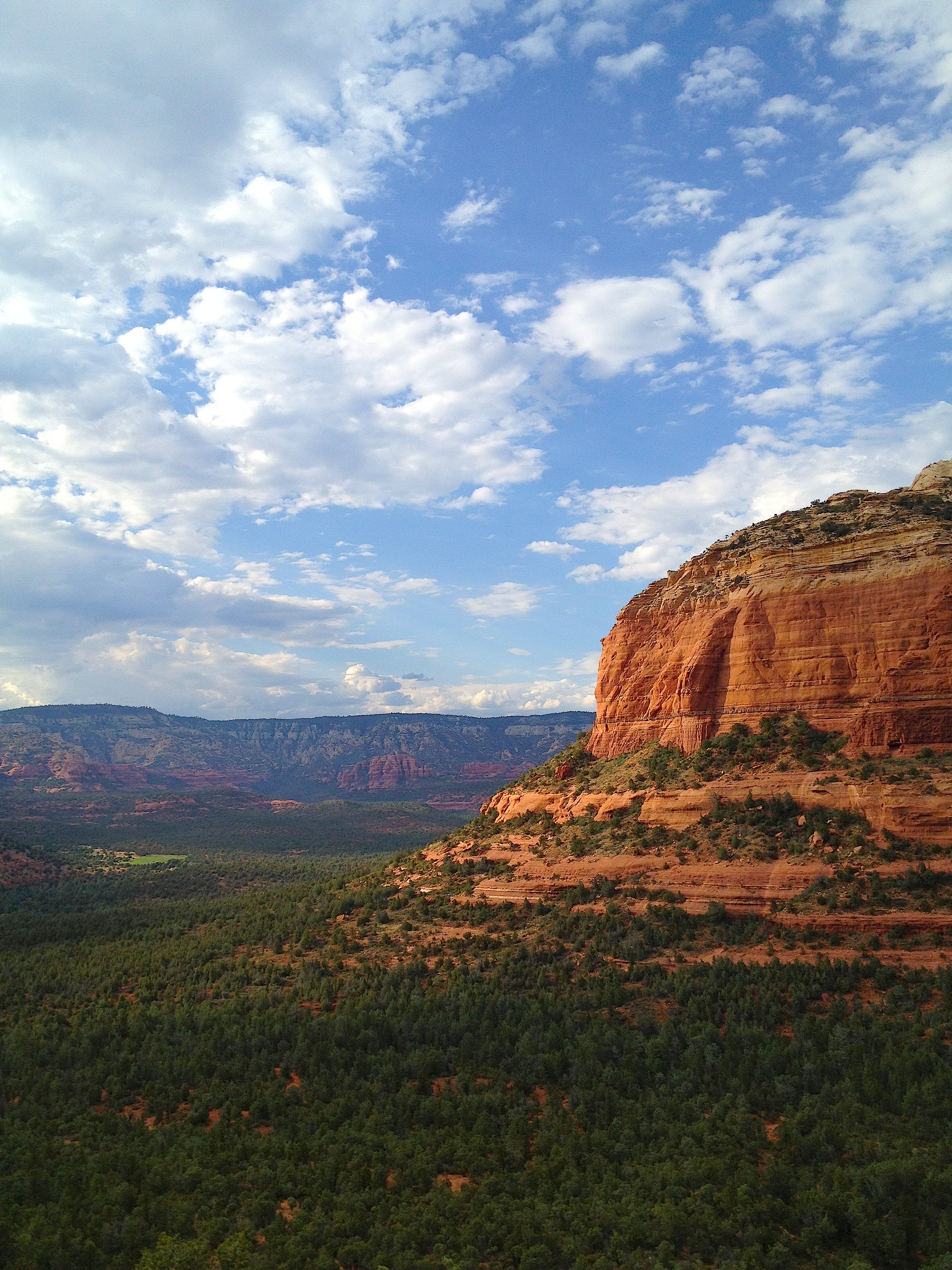
This past weekend I trekked through the Sedona desert to Devil’s Bridge for some scenic vistas and to find the ideal place to meditate and clear my mind. Looking at these beautiful pictures, you wouldn’t know that industrial civilization is beginning to come apart at the seams. With the doomsday trifecta of peak oil, climate change, and the final blow-off stage of overpopulation, Egypt is a microcosm of what lies ahead for all of us in a world of austerity and class war, expensive food, and loss of faith in institutions/breakdown of government.
Thoughts flicker through my mind about how precarious and transient my position is in this hostile terrain. Without oil, I would not even be hiking in the hot desert. I had to drive to get here. The life-sustaining water in my mass-produced thermos was delivered into my house through an elaborate system of pipes and treatment plants. My shoes and clothing are made overseas, perhaps in a sweatshop, and shipped to the local department store where I bought them. And if I break a leg and need emergency services, a gas-guzzling helicopter may even be dispatched to pick me out of the wilderness. Suffice it to say, industrial civilization has made the world much smaller, but at a horrible price. Humans have become fixated on fossil fuels to their own detriment, like a moth fatally attracted to a burning street lamp. The average person lives and travels far beyond the capacity of the Earth to sustain such an energy-intensive mode of living. Pampered by fossil fuel slaves, the citizens of industrial civilization cannot imagine a world without such luxuries and don’t even entertain such thoughts. As a matter of fact, I’m thought of as crazy for even suggesting our energy-laden lifestyles are an aberration in the great scheme of history. I push such absurd thoughts out of my mind and take in the breathtaking scenery.
But then I wonder how this place will look in a few decades, seeing how Arizona is the fastest warming state in the union. Two days after this state’s tragic loss of 19 firefighters in the Yarnell Hill Fire, my neighborhood situated roughly two hours away was pelted with a torrential downpour and hail up to one inch in diameter. Extremes of weather, fire and ice, are a hallmark of climate change and promise to take many more victims in the future:
That hail destroyed a number of plants in our vegetable garden. So much for cucumbers and lettuce.
No amount of hints dropped by Mother Nature will sink into the collective skull of humanity. Industrial civilization with its countless techno-gadgetry solutions is the hammer, and everything else is the nail. Rising sea levels require massive sea gates; crop failure requires genetically modified plants; CO2 pollution requires carbon sequestration, terrorism requires 24/7 surveillance of all citizens, etc. Vested interests and human nature always find a way to rationalize the irrational and push reason out the window. The superorganism of capitalist industrial civilization has constricted our imagination and choices, strapping us into a speeding car headed for the abyss of extinction.
I find solace and tranquility in nature far from the maddening buzz of modern civilization.
See the animal in his cage that you built
Are you sure what side you’re on?
Better not look him too closely in the eye
Are you sure what side of the glass you are on?
See the safety of the life you have built
Everything where it belongs
Feel the hollowness inside of your heart
And it’s all
Right where it belongs
This grimly humorous video comes from Mike Sosebee. A small percentage of us just can’t drink the kool-aid and prefer cold, hard reality over the myth telling and Madison Avenue song-and-dance of capitalist industrial civilization. The entire American hologram is dependent on the masses buying the illusion that all is well. Don’t look behind the curtain. There’s a mountain of corpses and ecological horrors hiding behind that thin veneer of our self-reassuring stories… stories about our corporatocracy democracy, our corporate scripted independent news media, our resource-plundering ‘freedom fighting’ military, our exploitive and destructive wealth-building economy, our move towards a “green-washed” sustainable lifestyle, etc. As commenter Dopamine says, we’re on “a dopamine drip line, a natural morphine intravenous of belief that obscures the less rewarding reality of your existence. That humans are going to turn things around is another belief assuaging the fact that our families have to spend the next hundred years walking through a minefield from which many will not emerge, and for those that do make it, there awaits a planet wasted… And we are completely unable to avoid this perilous journey because our brains quickly substitute a “feel good” fantasy whenever we venture too far into the darkness of our reality. We will walk into the darkness surrounded by pink unicorns, omnipotent Gods, visions of unspoiled paradises, the overflowing font of fusion and so on…”
Although colonizing and enslaving foreign lands and people have always been the modus operandi of this country, I’m sure the elites who founded America never could have imagined that their 1% successors would be able to manipulate the social discourse and behavior of nearly 400 million with consumer goods called TV’s and computers, nor could they have imagined the future Malthusian conditions that would eventually end not only the brief experiment of America, but the entire human experience on planet Earth. When Easter Island became uninhabitable, the rest of the planet never noticed, but now the human footprint will be felt in every nook and cranny of Earth for millennium. Paleontologist Louise Leakey, granddaughter of famed archeologist and naturalist Louis Leakey, uses the analogy of a roll of toilet paper to effectively illustrate the brief but devastatingly influential reign of mankind over the planet.
…To put the history of life on planet earth into a time perspective, imagine unrolling a toilet roll down a hillside. If there are 400 sheets of tissue paper in the roll, then the very first life in the oceans is seen at sheet 240. The age of the dinosaurs begins at sheet 19. Dinosaurs in their many forms and great diversity are around for 14 and a half sheets. Dinosaurs are extinct by the end of the Cretaceous, 5 squares from the end, making way for the mammals. Our story and place on the timeline as upright walking apes begins only in the last half of the very last sheet. The human story as Homo sapiens, is represented by less than 2 millimeters of this, some 200,000 years.
Our own individual lifetimes cannot be depicted on this final sheet of the toilet roll as it would be too thin a line, yet we have been witness to more change to the planet, to the diversity of life, global climate and natural habitats in this same time period. We are undoubtedly the cause of the sixth mass extinction event that the planet has seen in its history…
“Doomer”, as in someone concerned with apocalyptic scenarios of global collapse, is definitely a term of modern usage reflecting the growing unease of the population. People who eschew the word “collapse” in favor of “decline” seem to be hoping that the road ahead will be gentle, predictable and somewhat manageable rather than violent, erratic, and uncontrollable. With homo economicus locked into the infinite growth mantra, there appears to be no other outcome other than a sudden crashing into the fast-approaching wall of environmental limits. The aftermath will be as unrecognizable as the mangled metal of a 100 MPH car crash rather than the slow deterioration and failure of a heavily driven automobile. Oh but that’s too horrible of a thought for the masses to entertain, especially since it threatens our tranquil dreams of white picket-fenced homes with well manicured lawns. Things will be as they always have been, with only minor changes or uncertainties. The dopamine drip line is not in danger of running dry any time soon, and as things deteriorate more and more, the dosage of self-delusional drugs will be increased, lest the population starts to wake up from their stupor. The religious fanatic and mass murderer Jim Jones doesn’t hold a candle to the psychos at the helm of capitalist industrial civilization.




![ER80_Last_exit___part_One_by_OmeN2501[1]](https://collapseofindustrialcivilization.com/wp-content/uploads/2013/07/er80_last_exit___part_one_by_omen25011.jpg)