Upon the shore, the sails unfurled—a shadow split the sand,
The Arawaks, open-handed, met the strangers on their land.
But steel and hunger answered gifts; the blade betrayed the hand,
And memory’s first encounter bled sorrow through the land.
The victors chisel chronicles, their glory set in stone,
Yet deep beneath the monuments, lost voices weep alone.
History’s map distorts the truth—its borders, blurred and planned;
The silenced and forgotten ones still haunt this stolen land.
A nation’s myth is mortared with the bones of those bereft,
Each monument to progress built on conquest and on theft.
Can gold and glory balance out the suffering and the pain,
Or does the ledger overflow with loss that can’t be named?
The color line, a scar across the centuries of blight,
Millions bound in bondage, stripped of dignity and right.
Yet whispers stoked resistance, hope burning out of sight,
Their courage, fierce and quiet, set darkened fields alight.
The poor and desperate, shipped away, indentured, whipped, and sold,
Their hunger turned to labor, their resistance crushed, controlled.
Class lines hardened—fortunes swelled as hope was overthrown,
The promise of equality a seed that’s never grown.
The memory of nations is not the memory you knew,
For nations are not families, nor interests shared by you.
The past is not a single tale, but conflict, clash, and strife,
A struggle for compassion in the shadowed halls of life.
If history is but a tool for those who hold the reigns,
Then every page that’s left unturned perpetuates the chains.
But hidden in the margins are the moments that resist,
The fugitive, the rebel, and the dreamers who persist.
To mourn the victims is not all, nor to condemn the strong,
But seek the fleeting moments when the powerless belonged.
In every age, a spark of justice flickers, faint but clear—
A lesson waits in listening, for those who choose to hear.
So let us read with skeptic’s eye, with empathy and doubt,
To find the threads of common cause that history leaves out.
For justice is not handed down, nor progress preordained—
It lives in acts of memory, in all that’s lost and gained.
And so the ledger closes—not with peace, but with a scream,
A continent’s inheritance: the violence of the dream.
Beneath our cities’ towers, the bones still shape the land,
And sorrow carves its memory where monuments now stand.
The silence of the vanished, the cries that went unheard,
Are buried in our language, in every history’s word.
Yet from the ash and shadow, a question will demand:
Who dares to claim the future, with blood upon your hand?
Through shifting earth and ancient stone,
Ambition’s seeds were darkly sown;
From hunter’s fire to empire’s dream,
The scales of fortune tilt unseen, supreme.
Beneath the state’s cold, armored shell,
Where power’s paradox holds sway and dwells,
The few ascend as the many fade,
While peace is forged in cruelty’s trade.
Upon the world’s vast, shadowed sweep,
The Four Horsemen in silence creep—
War, plague, collapse, and revolution’s hand,
Unleashing storms that ravage the land.
No gentle hand nor iron law decreed
Could stem the tide of wanton hunger, need;
For every hope, each dream released,
Was torn apart by the savage beast.
The rich ascend, the poor restrained,
Until disaster breaks the chain;
Then ashes mix, distinctions blur,
And all stand equal—ranks no more.
Yet after storms, new seeds take root,
New hierarchies soon bear their fruit;
The cycle turns, the gap expands,
As power flows through eager hands.
So ponder this, O mortal mind:
Is justice but death’s gift to find?
Or can we forge, by will or art,
A kinder world, a fairer start?
But history’s long echo, deep and vast,
Coughs: “The Great Leveler dies as storms pass.
Without the horsemen’s grisly call,
Inequality reclaims us all.”
When the final reckoning has run,
The Horsemen scoff at what we’ve won—
For in the silence that follows strife,
We find equality in death, not life.
Three days. Nine meals. The ledger doesn’t lie. The trucks stop rolling. Warehouses run dry. The freezer coughs, then stills. Time to flee. Just-in-time was the plan. There was no Plan B.
First meal missed: a joke. The second: doubt. Third: the deadbolt slides. Fourth: the lights go out. By nine, the street belongs to what we hid. Civilization was a thing we did.
The trucks run the highways. The ships split the sea. A just-in-time miracle. A mortgaged guarantee. A cyclone. A drone strike. A server blinks red. The Age of Abundance hung by a thread.
First empty cart. First price that no one pays. Day two: the register dies. Day three: the blaze. The pump clicks dry. The dollar is a joke. The contract was a promise. The promise turned to smoke.
Nine meals. The primate wakes inside the eye. The handshake curls to fist. We learn the reason why. Three sunsets from the thing we swore we weren’t. The mask slipped off. The face was always burnt.
The shelves are full tonight. Tomorrow: who can say. The trucks run now. The thread holds one more day. Nine meals from silence. Three sunsets from the dark. The ice was never thick. Tread lightly. Leave no mark.
“Mars would be more habitable than this place right now so it’s crazy. There’s absolutely nothing,” said Shaun, a resident of the Palisades Bowl community.
In a world undergoing hydroclimate whiplash, the latest apocalyptic catastrophe has now befallen one of the richest cities in the world in the richest nation on Earth. Warm 100 mile per hour winds have spawned walls of fire reaching more than 100 feet in height within the city of Los Angeles, obliterating entire neighborhoods for as far as the eye can see and blanketing the city with a pall of toxic substances. A reporter who was there at the time said those hurricane force winds made it impossible for him to walk, as he was forced to take shelter in an abandoned car. A fire chief for the city said he had never seen a fire storm of such strength and magnitude in his entire multidecadal career. Experts are quoted as saying a firewall from a ten lane highway would not have stopped the Palisades inferno, with winds carrying embers miles ahead of the fire. As of today, warnings have been issued again for the imminent return of those ominous Santa Ana winds. The dryness levels of air, soil, and vegetation in California have been “literally off the chart.” The ongoing LA fires will likely become the costliest natural disaster in US history and help create a record-breaking year for property loss from extreme disasters. As this Pyrocene Age continues to gather force, a climate change-denying US President, who promises to erase any sort of facade about caring for the environment or curbing GHG emissions, has been sworn in again for another round of kleptocracy. Pseudo president-elect Musk, who believes that the primary threat to civilization is a dwindling human population, will have his own office in the White House complex.
Underpopulation concerns and EA(Effective Altruism) are particularly popular among wealthy white men like Musk, perhaps because they justify the push for infinite growth — more people, more wealth, more space exploration, and a continuation of the business-as-usual that favors the rich.
Peter Kalmus, a climate scientist who saw the writing on the wall and left his home in California after observing the increase in heatwaves and its effect on the local environment in recent years, had this to say a few days ago:
“…no place is actually safe. These kinds of impacts of these floods and fires and heat waves and storms, I think of them sort of like popcorn happening around the whole planet. You can’t know exactly where any one of these events is going to happen, but they’re starting to come at a higher frequency, sort of like when the popcorn really starts to get going and they’re starting to pop harder. It drives me kind of bonkers when people say this, especially when climate scientists who should know better say like, this is the new normal, for example. It is not. We are on a rising escalator towards higher planetary temperatures and all of the more frequent and severe impacts that come with that, which is really, frankly, terrifying.”
We could say that the ‘new normal’ is No New Normalfor millennia, which is how long it will take Earth’s systems to stabilize after the Anthropocene Epoch has ended. Why did modern humans discount the future so much? If you ask scientist William Rees, he will say it is because humans, like any other organism, will expand and use any tool available to us to consume all available resources until environmental constraints impede us. And this innate biological urge is bolstered by today’s religion of Capitalism which started in the 16th century and today emphasizes infinite economic growth and profit. With fantasies of geoengineering techno-fixes, modern humans have literally externalized the entire cost of destroying the planet’s habitability for humans or any other large or small vertebrate and invertebrate that has evolved to live within the Holocene Epoch. Talk about a behavioral blind spot! The collective failure of modern Homo sapien to grasp the complexities of our environmental impacts and deal with them to any significant degree is our fatal flaw. We are proving our collective intelligence to be not much better than yeast in a wine vat. It’s far easier to imagine a cataclysmic reckoning from ecological overshoot that wipes out Earth’s human population rather than any radical and cooperative effort by nationstates to abandon our fossil-fueled economy and religion of Technocapitalism. Our ever-expanding Technosphere now outweighs all life on Earth and can be considered a parasitic threat as it accumulates ever more nonbiodegradable waste in the biosphere. With the current President-elect having amassed a cabinet of uber-wealthy far exceeding that of any other in American history, you should not expect the habitability of the planet to be a topic of discussion or even a fleeting thought in their $kull. In fact, the first order of business was to withdraw from the Paris Climate Pact. The death drive is alive and well in the human psyche; it will be full throttle into the abyss of the Anthropocene extinction.
You’ve got to love the title of this 2024 report from Munich Re, the largest reinsurer in the world…
Hardly any other year has made the consequences of global warming so clear: with annual average temperatures reaching around 1.5°C above pre-industrial levels for the first time, 2024 will surpass the previous record from 2023. This makes the past eleven years the warmest since the beginning of systematic record-keeping.
The impact of man-made climate change on weather disasters has been proven many times over by research: in many regions, severe thunderstorms and heavy rainfall are becoming more frequent and more extreme. Although tropical cyclones are not generally increasing in number, the proportion of extreme cyclones is growing. They, in turn, are rapidly intensifying and bringing extreme precipitation with them.
This was the case for Helene and Milton, where World Weather Attribution studies have shown that both hurricanes were significantly more severe and brought much more extreme rainfall than in a hypothetical world without climate change. For the flash floods in the Valencia region, another study found that climate change made an event with this rainfall intensity twice as likely to occur.
And in the case of the flooding in Brazil, a study came to the conclusion that weather conditions such as those seen this year have become twice as likely due to climate change; as a result, they are becoming more frequent…
*Note that their report does not include heatwaves and droughts.
Here is the most current chart showing the upward trajectory of billion dollar weather disasters for the US, from 1980 through 2024:.
Considering we have now gone full Oligarch, you may never see a chart like this again or you may simply be brainwashed into discarding it as fake news. The politicization of our multi-pronged crisis or polycrisis will further fracture the average citizen’s ability to cope with societal breakdown. Some already believe nothing can be trusted in a world of AI and deep fake technology.Will anything convince people of this existential threat, as they continue flocking to the most vulnerable places??? Some of the younger generation are making a conscious choice:
My own daughter, a recent college graduate, told me she’d decided to stay in Chicago not just because of relatively affordable housing, but because it is “a cold climate near a large body of fresh water”. Such are the dystopian calculations of a generation born into a warming world.
Let’s not mince words; we are returning the planet to the climate volatility characteristic of the Pleistocene Epoch when agriculture was impossible, but we are doing it with fire rather than ice. There is no analog in geologic time for such a Fire Age, other than the similarity with prior mass extinctions wherein the chemical makeup of the atmosphere and oceans was altered through volcanism, albeit at a much slower rate and longer expanse of time. The Permian-Triassic extinction event, considered to be the fastest extinction in our geologic past, played out over 60,000 years. We can already see that the unpredictable hydroclimate whiplash we have set in motion from our fire-catalyzed climate upheaval will eventually make any attempts at large-scale agriculture impossible to sustain. An accelerated water cycle is already locked into the world’s climate system and now irreversible. A new study shows these wild swings between heavy precipitation and severe drought have increased substantially worldwide since the 1950s:
Using a metric of ‘hydroclimate whiplash’ based on the Standardized Precipitation Evapotranspiration Index, global-averaged subseasonal (3-month) and interannual (12-month) whiplash have increased by 31–66% and 8–31%, respectively, since the mid-twentieth century. Further increases are anticipated with ongoing warming, including subseasonal increases of 113% and interannual increases of 52% over land areas with 3 °C of warming.
“…The potential refugee problem in GLOBAL MERCANTILISM could be unprecedented. Africans would push into Europe, Chinese into the Soviet Union, Latins into the United States, Indonesians into Australia. Boundaries would count for little – overwhelmed by the numbers. Conflicts would abound. Civilisation could prove a fragile thing.”
Since 1990, global CO2 emissions have increased by more than 60% and they continue their inexorable rise with 2024 marking the highest rate of increase since record-keeping began in 1958, driven by record wildfires:
“These latest results further confirm that we are moving into uncharted territory faster than ever as the rise continues to accelerate,” says Prof Ralph Keeling, who leads the measurement programme at the Scripps Institution of Oceanography in the US.
Modern industrial civilization is entrapped in a Death Spiral characterized by denial, distrust, dogmatic thinking, flawed decision making, myopic single-minded focus on one ‘solution’, and self-reinforcing dysfunctional behavior. This has lead to a monumental gap between the elite and the masses, rise of authoritarianism, and rampant resource waste and depletion. We deny our way of life is unsustainable and carry on as if we are separate and superior to the environment that gave birth to us and which sustains us. We live and compete within a socioeconomic system which pits neighbor against neighbor and atomizes communities and families, dehumanizing individuals as consumers. Corporate media feeds us scripted narratives to manage and control the information we receive, thus creating an age of paranoia and distrust. Our political leaders are puppets of big-monied corporate interests which prioritize economic growth and profit over environmental and social concern. The fate of humanity rests in the hands of leaders who hide behind greenwashing and promise nothing more than delusional techno-fixes for growing existential threats. Are we not in the final stages of catabolic capitalism where society itself gets consumed and profit is extracted from scarcity, disaster, conflict, and crisis?
…Sandy Trust, the lead author of the report, said there was no realistic plan in place to avoid this scenario.
He said economic predictions, which estimate that damages from global heating would be as low as 2% of global economic production for a 3C rise in global average surface temperature, were inaccurate and were blinding political leaders to the risks of their policies.
The climate risk assessments being used by financial institutions, politicians and civil servants to assess the economic effects of global heating were wrong, the report said, because they ignored the expected severe effects of climate change such as tipping points, sea temperature rises, migration and conflict as a result of global heating…
…If these risks were taken into account the world faced an increasing risk of “planetary insolvency”, where the Earth’s systems were so degraded that humans could no longer receive enough of the critical services they relied on to support societies and economies.
The decline in global human population this century will not be a smooth bell curve, but a precipitous vertical drop. How could there be any other outcome when we have deluded ourselves into thinking that living in megacities of concrete and steel, driving 3,000 pound exoskeletons over asphalt roads, and eating steaks exported from Brazil are all part of a natural and sustainable way of life?!? The apocalyptic hellscapes we see in places like Gaza and Syria are coming to all of the civilized world one day and very soon.
“We must now understand that our own well-being can be achieved only through the well-being of the entire natural world around us.” ~ Thomas Berry
As governments stared glass-eyed at what was unfolding in China earlier this year, the fragility of modern life’s interconnectedness was soon to be laid bare by a microscopic organism. Within a couple months of the onset of the coronavirus pandemic, airline travel from China had spread the novel virus to more than 60 countries. Despite decades of warnings about the inevitability of such an event, politicians had paid about as much lip service to preventing the next pandemic as they had to dealing with climate change. As has been warned by health experts, the best we can hope for is to blunt the effects of the COVID-19 disease on the global population; eradicating it will be futile. Something similar could be said of the legacy effects of our CO2 emissions which will haunt life on Earth for time immemorial.
A study from 2014 found the total number of infectious disease outbreaks has more than quadrupled between 1980 and 2010. Approximately 75% of all emerging infectious diseases originate from animals and chances for pandemics are increasing as humanity’s growing assault on the natural world disrupts what remains of the planet’s ecosystems. If you need further evidence that we are annihilating life on Earth, consider that the microscopic mite, among the oldest and most plentiful invertebrates on the planet and a keystone species in many ecosystems, is disappearing at least 1,000 times the natural rate. More novel zoonotic diseases will eventually be unleashed into the bloodstream of the globalized economy as corporations revive parasitic growth at the expense of a habitable planet. The coronavirus pandemic is a symptom of our unfolding Anthropocene Mass Extinction which is accelerating.
The current pandemic may well mark the beginning of the end for growth as we knew it. In the U.S. right now, there are 29 million unemployed and tens of thousands of small businesses that have closed during the pandemic will never reopen. In the Age of Environmental Breakdown, there can never be a return to normal. For the normal that industrial civilization has become accustomed to is the very thing ripping to pieces those white picket-fenced lives in suburbia. A Biden presidency may bring back some sense of sanity and order to those pursuing the illusion of the American Dream, but it won’t alter global civilization’s current trajectory toward an increasingly chaotic world of never-ending disasters. The synergistic effects of biodiversity collapse, climate change, and industrial pollution will act as a growing weight on the economy.
We just learned that Greenland’s ice sheets crossed a tipping point two decades ago and will never recover, as far as human timescales are concerned. Nothing will bring them back except another ice age, and humans have managed to erase the next one scheduled to have occurred some 50,000 years hence. 100,000 years will have past before the planet completely rids itself of the CO2 humans have loaded into the atmosphere. Second only to Antarctica in terms of ice volume, Greenland’s melt-off could eventually contribute 23 feet of global sea level rise. Antarctica’s ice sheets have also been found to be much more vulnerable to collapse than previously known, as rising atmospheric temperatures melt their surface and a warming ocean destabilizes them from below. Coastal erosion, flooding, and soil salinization from sea level rise are growing drags on the economy. About 40% of the global population lives near the coast and will account for the largest mass migration in human history. Indeed, billions of U.S. tax dollars are now being used in a new strategy to relocate entire neighborhoods from coastal regions persistently hit by flooding in recent years.
With the meltdown of the Earth’s cryosphere, we are witnessing a large-scale catastrophic disruption to a critical part of the Earth system under which all life has adapted. In particular, the relatively stable climate of the Holocene is what allowed for the development of agriculture and human civilization. We no longer live in that era; We have entered the chaos of the Anthropocene, a time of deadly climate disruption, social upheaval, mass extinction, and ultimately collapse of industrial civilization. With arctic amplification weakening jet streams, larger and more intense heat domes now form over geographic regions to help spark megafires, power grid blackouts, and heat-related deaths. In Phoenix AZ, a heatwave just obliterated a previous record of most days over 110°F (50 plus), and another record-breaking heatwave is on its way as I speak. California’s Death Valley just recorded the highest temperature on Earth since reliable records began. The six most recent years (2014-2019) and 2020 have been the hottest ever recorded, with each decade since 1980 being hotter than the previous.
Heatwaves aren’t just striking on land; they are also cooking the oceans. Increasingly severe and frequent marine heatwaves(MHWs) have surged by more than 50% in recent decades. Warming oceans help create more destructive and more frequent hurricanes and typhoons. They also threaten biodiversity and ecosystem function on a global scale. Scientists have observed that stony corals around the world are hunkering down into survival mode, exhibiting the same traits as they did prior to the last great extinction. Let that sink in for a moment…Yes, a relatively primitive organism with a rudimentary nervous system is actually preparing for a mass extinction while the so-called ‘Wise Ape’ blissfully carries on destroying his very own life-support systems.
“It was incredibly spooky to witness how corals are now exhibiting the same traits as they did at the last major extinction event,” said Professor David Gruber, a researcher and marine biologist with The Graduate Center, CUNY and Baruch College. “Corals seem to be preparing to jump across an extinction boundary, while we are putting our foot further on the pedal.”
Apparently, coral are not hampered by politics in their decision-making processes. These creatures of the primordial seas will likely outsurvive the Self-Absorbed Ape who has insulated himself in a technological cocoon of false security, oblivious to the harsh physical laws of nature indifferently working to take him down. Hell, scientists are now finding microplastics in every human tissue they examine, and the health effects are unknown. How’s that for forethought?
Scientists can issue warnings about our impending demise until they are blue in the face, and they have, but they and the public are at the mercy of economic, financial, and political forces beyond anyone’s power. Couple that with the fact that the average person on the street has a Trump-level of comprehension about these existential crises and is being bombarded on social media by fake news that plays on emotions and deep-rooted inter-group distrust. Cheap energy and the individualistic consumer culture have created an illusion of abundance and destroyed any sort of communal cooperation which was once the basis of everyday life. I’ve walked this Earth for over five decades and have seen a steady and continuous degradation of the natural world; corporate greenwashing is rampant. The growth in ‘green energy’ has not displaced fossil fuel fuel consumption to any great degree; fossil fuels still supply 84% of global energy consumption. Worse yet, just to maintain our current growth in energy consumption would require an unattainable expansion in alternative energies. If one connects all the dots on our current state, then there is no refuting this most clear-eyed of scientific assessments:
“Given the momentum in both the Earth and human systems, and the growing difference between the ‘reaction time’ needed to steer humanity towards a more sustainable future, and the ‘intervention time’ left to avert a range of catastrophes in both the physical climate system (e.g., melting of Arctic sea ice) and the biosphere (e.g., loss of the Great Barrier Reef), we are already deep into the trajectory towards collapse.”
The end of the world is the ‘cha-ching’ of a cash register as the last vestiges of nature are converted to dollars. Lest we forget, 71% of global emissions come from just 100 companies and more than half of global industrial emissions since 1988 originated from 25 corporate and state-owned entities. While the ultra-wealthy reap the profits of a poisoned ecology, the rest of the world is left to take the brunt of consequences from a world that grows more dangerous by the day. Those living on the edge who lost their livelihood during this pandemic are the collateral damage of an out-of-control socio-economic system whose incompatibility with life on Earth becomes more evident with each passing year. There’s nowhere to escape for most people because, to one degree or another, we are all entrapped in this system. The immutable laws of biology, physics, and chemistry have set an expiration date on America’s non-negotiable way of life, ensuring that many more will soon fall victim to the short-term greed of capitalism. As Stephen Hawking warned, “Stupidity and greed will kill off humans.”
When a 16-year-old girl named Greta Thunberg spoke with trembling anger of the unspeakable crimes today’s adults are committing against her and future generations, a chill ran down my spine. She will be alive to see the pulses of rapid sea level rise, the unraveling of industrial agriculture, the mass migration of hundreds of millions of climate refugees, and the disintegration of Earth’s biosphere. Today’s world with the ever-worsening breakdown of the biosphere is much more dangerous than during the Cold War when the threat of imminent nuclear annihilation hung in the air like the sword of Damocles, as expressed by President Kennedy: “Every man, woman and child lives under a nuclear sword of Damocles, hanging by the slenderest of threads, capable of being cut at any moment by accident or miscalculation or by madness.” Not only does the threat of nuclear war persist, the sword of abrupt climate breakdown now looms ever larger as governments are rendered impotent.
Scientists and the Red Cross recently warned the world is currently suffering at least one climate catastrophe per week and nearly two million people per week are needing humanitarian assistance. A UN global assessment confirms the planet is currently experiencing 2,500 conflicts over fossil fuel, water, food and land — conflicts directly related to the ongoing collapse of the earth’s biodiversity. No civilization in history has faced a complete reshuffling of the planet’s biosphere, let alone the ecological armageddon brought on by a Pandora’s box of pollutants from industrial civilization. Microplastics are literally raining from the sky. Irrevocably out-of-step with the natural world, modern civilization is destroying its host ecosystem by altering the geochemistry of the planet. A mass extinction event unlike any in Earth’s history is underway. Even if a small fraction of the global population survives this overshoot, it will take 10 million years for biodiversity to bounce back. Since atmospheric CO2 will ultimately be drawn down through a very slow natural process called sedimentation, the Earth will not reach pre-industrial CO2 levels againfor more than 100,000 years. The last time CO2 levels were this high was 3 millions years ago during the Pliocene when temperatures were 3-4°C(5-7°F) higher globally than today, and sea levels were 15-20 meters(50-65 feet) higher. It was too warm for glacial ice sheets to even exist in the northern hemisphere.
At 412 ppm and rising, experts said temperature rises of 3-4C are likely now locked in.
What does any honest scientist have to say about mankind’s prospects in a 4°C world:
“We have already observed impacts of climate change on agriculture. We have assessed the amount of climate change we can adapt to. There’s a lot we can’t adapt to even at 2C. At 4C the impacts are very high and we cannot adapt to them.” Rachel Warren, University of East Anglia
“Thinking through the implications of 4 degrees of warming shows that the impacts are so significant that the only real adaptation strategy is to avoid that at all cost because of the pain and suffering that is going to cost.” Prof. Neil Adger, University of Exeter
“…there is also no certainty that adaptation to a 4°C world is possible. A 4°C world is likely to be one in which communities, cities and countries would experience severe disruptions, damage, and dislocation, with many of these risks spread unequally. It is likely that the poor will suffer most and the global community could become more fractured, and unequal than today. The projected 4°C warming simply must not be allowed to occur.” World Bank report (2012) Turn down the heat: why a 4°C warmer world must be avoided
“If we don’t reduce greenhouse gas emissions and ultimately stabilize CO2 — and we also have to draw down a lot of carbon out of the atmosphere. If we don’t achieve that, there’s no real prospect for a stable society or even a governable society…” Jason Box, Prof in glaciology at the Geological Survey of Denmark and Greenland
People are completely oblivious to our dependence on the complex adaptive systems that allow humans to exist and persist. To be clear, when the global temperature rises by 4°C within this century it will be faster than the blink of a geological eye, and we, along with 80% or more of the planet’s species are finished. 96% of all marine species and more than two-thirds of terrestrial species perished during the Great Dying at the Permian-Triassic interface. Global mean temperature at that time rose an estimated 5-8°C over a timespan of 3,000-20,000 years. A 4°C rise over just two centuries will be a rate of warming 15 to 100 times faster than that past extinction event. At this speed of warming, regions would experience temperature spikes of 10-15 degrees above normal in some months. Ecosystems would implode and the services they provide that sustain us would be obliterated. Virtually every vertebrate species on Earth would disappear, along with most plants and many invertebrates.
At just 1°C of warming we are already seeing major ecosystems such as coral reefs unraveling. Hurricanes so powerful that they require a new category now barrel across the Atlantic ocean and completely decimate islands; the cataclysmic Storms of our Grandchildren that Hansen warned about have only just begun. Arctic permafrost melt has already exceeded 2090 projections. It was economist William Nordhaus that set the 2°C warming target in 1975, not scientists. What did he get for this dangerous speculation, divorced from empirics? The Nobel, naturally. These days he is saying 3.5°C is just fine. John Kerry says we cannot leave the climate emergency in the hands of the neanderthals in power, but I dare say that anyone promoting mainstream economic theory is guilty of omnicide. Capitalism’s “extractivism” has turned the entire planet into a sacrifice zone.
Grand Bahama island before/after Hurricane Dorian made landfall, Sept 1, 2019
The rise of political ‘populism’ and the election of reactionary politicians in the U.S. and abroad has thrown yet another monkey wrench into any possibility of tackling the climate crisis. The demagogic Trump administration is simply burying any scientific evidence and ignoring its government’s own research on such things as the recent surge in climate refugees from Latin America due to climate-induced food insecurity. Russia and Brazil have both encouraged and precipitated the wildfire infernos raging in their countries. The catastrophe unfolding in the Amazon is a direct result of President Bolsonaro’s neoliberal policies designed to plunder the Amazon much like Trump’s dismantling of the EPA and deregulation of corporations. Both ignore the science of climate change and the reality of ecological collapse. In the case of Russia’s Putin, it was a cold economic calculus: “If the cost of putting out these remote fires is greater than the profit that could be made from selling the timber, they can decide to let it burn.”
And then there’s the global debt bomb of $250 trillion waiting to explode, not to mention the $200-250 trillion global carbon debt which increases by 16 trillion every year. Meanwhile, banks are quietly shielding themselves from climate catastrophe at taxpayers’ expense by shifting risky coastal mortgages off their books and onto the federal government’s Fannie and Freddie programs. Just as the U.S. government is leaving vulnerable countries to fend for themselves, so are private institutions unloading the risks onto the public. For those at the very top of our economic pyramid scheme who control public policy, dwindling resources will be kept first and foremost for them while everyone else is treated as collateral damage. This dereliction of responsibility, this cutting and running, is how the deteriorating conditions of the world are being handled. Throughout history, society’s elite have shown the same arrogance and hubris in the face of impending calamity. For example, the Fall of the Roman Empire:
If you read the chronicles of the early 5th century AD, you get the impression of total mayhem, with barbarian armies crisscrossing Europe and few, if any, Roman nobles and commanders trying to defend the Empire. Most of them seemed to be maneuvering to find a safe place where they could find safety for themselves. We don’t know what was the final destiny of Rutilius Namatianus but, since he had the time to finish his poem, we may imagine that he could build himself a castle in Southern France and his descendants may have become feudal lords. But not everyone made it. For instance, Paulinus of Pella, another rich Roman, contemporary of Namatianus, desperately tried to hold on his possessions in Europe, eventually considering himself happy just for having been able of surviving to old age.
We see a pattern here: when the rich Romans saw that things were going really out of control, they scrambled to save themselves while, at the same time, denying that things were so bad as they looked. We can see that clearly in Namatianus’ poem: he never ever hints that Rome was doomed. At most, he says, it was a temporary setback and soon Rome will be great again.
Thunberg’s speech alluded to such behavior by the polluting nations:
For more than 30 years, the science has been crystal clear. How dare you continue to look away and come here saying that you’re doing enough, when the politics and solutions needed are still nowhere in sight. You say you hear us and that you understand the urgency. But no matter how sad and angry I am, I do not want to believe that. Because if you really understood the situation and still kept on failing to act, then you would be evil. And that I refuse to believe.
Yes, Greta, they are evil; they have access to every expert on the seriousness of the crisis and they are building walls and saving their own skin while continuing business-as-usual. Lest we forget, the fossil fuel industry’s own scientists accurately predicted the life-threatening effects of its product decades ago and not only did they do nothing to stop it, they funded and orchestrated a vast network of climate denial propaganda which continues to this day and have raced to exploit even more fossil fuels from the melting Arctic. When you consider that billions of people are going to die as a result, their actions become by far the greatest crimes against humanity ever committed. Make no mistake, our society is trading a livable planet for an unsustainable way of life that is irreparably depleting finite resources and altering the earth for eons, making it uninhabitable for organized human societies. Each day of business-as-usual further degrades the planet’s biodiversity.
“As the temperature rises, the patricians will seek refuge as polar migrants, or set sail on heavily armed ocean liners. Millions more will live in underground cities, anywhere to escape the sun. Dazzling reports of new methods for sopping up the gigatons of carbon dioxide will create ripples of enthusiasm and then fade in the next news cycle. Fisheries and agriculture will collapse, drugs will provide little solace, and everyone will curl up in a foetal position in the end, like the ash-entombed victims at Pompeii, whimpering in the inescapable heat. The likelihood of this outcome increases as the years pass and the smoke rises.”
~ Nicholas P. Money, THE SELFISH APE: Human Nature and Our Path to Extinction
"The latest climate simulation models are projecting temperature increases of up to 7°C by the end of this century. Unless you have a magical faith in technology, then that level of temperature rise signifies the potential end of our species…"https://t.co/kdldvQXGCapic.twitter.com/a5DUZOXOG9
“It may seem impossible to imagine that a technologically advanced society could choose, in essence, to destroy itself, but that is what we are now in the process of doing.” ~ Elizabeth Kolbert
Have things improved since I wrote my last essay a year ago for this blog? Have we miraculously transformed our entire energy system into one that does not poison and degrade the natural world? Have we slowed the onslaught of plastic pollution choking the planet’s rivers, lakes, and oceans? Have we done anything meaningful to halt the deterioration of the planet’s biodiversity toward mass extinction? Has this global, hi-tech civilization done anything significant to avert its own demise? Despite a constant flow of warnings from the scientific community and even a letter signed by more than 20,000 scientists, the simple answer is no. We have failed to address the complexity of our rising population and a degrading environment. Yes, we are self-conscious and thus able to recognize the fact that we are destroying the only home we have, but will the end result differ much from a population overshoot of bacteria in a Petri dish? Dependent on a continuous stream of finite resources imported from across the globe, modern megacities contain the seeds of their own destruction and that of all other life forms upon which humanity depends for its survival. The exponential growth of modern civilization ensures that one of the next doubling times will produce an absolute increase in overshoot that tips the world into unavoidable collapse. Enough damage may well have already been done; we’re just waiting for inertia to catch up to the impacts.
2017 set a global record for the most skyscrapers built in a single year and 2018 is predicted to eclipse it. The fossil fuel energy spent to construct those concrete and steel buildings translates into a melting cryosphere. Not to mention the fact that the carbon footprint of some of the world’s biggest cities is 60% bigger than previously estimated. “Renewable energy” still only comprises a tiny fraction of global energy consumption and plans for a total transition will take decades, if it’s even possible. Any growth in ‘renewable energy’ has been offset by increased consumption of fossil fuels in the developing world. 2017 marked a new record high in CO2 emissions with 2018 set to break that record. Global CO2 emissions have yet to peak, and the UN has warned that we are on course for a 3C world. It doesn’t help that the current U.S. administration plans to cut funding for alternative energy R&D, with the Energy Department expecting no drop in the U.S. carbon footprint through 2050. Having embedded itself in the U.S. government over a century ago, the fossil fuel industry has consistently worked to block climate change action and undermine environmental laws. A UK shipping executive recently admitted his industry is guilty of doing the same to protect their bottom line. The utilities companies knew the dangers as well. Like most corporations, the viability of their business model depends on perpetuating an unsustainable way of life. With warnings ignored since the late 1800s starting with the work of Svante Arrhenius, it should be obvious by now that intelligence without sapience has produced deadly results. A new study finds “the most accurate climate change models predict the most alarming consequences.” The recently released U.S. National Climate Assessment has similar findings:
While climate models incorporate important climate processes that can be well quantified, they do not include all of the processes that can contribute to feedbacks (Ch. 2), compound extreme events, and abrupt and/or irreversible changes. For this reason, future changes outside the range projected by climate models cannot be ruled out (very high confidence). Moreover, the systematic tendency of climate models to underestimate temperature change during warm paleoclimates suggests that climate models are more likely to underestimate than to overestimate the amount of long-term future change (medium confidence). (Ch. 15)
In a new ominous research finding, the evil twin of climate change(ocean acidification) is threatening the base of the marine food chain by disrupting the production of phytoplankton. This is yet another positive feedback loop increasing the rate of global warming. Climate feedback loops and ice sheet modeling are two weak areas of climate science, which means many unpleasant surprises. This is why researchers are constantly astonished. Adaptation is not a luxury most organisms have at the present rates of change. Techno-fixes are but a pipe dream.
A study published last year pulls no punches by describing the mass extermination of billions of animals in recent decades as a “biological annihilation.” Extinction risks for many species are vastly underestimated. Insects, the base of the terrestrial food chain, are faring no better. With the steep loss of invertebrates, multiple studies indicate the world is “on course for an ecological Armageddon”. Trees are dying at an unprecedented rate from extreme weather events, portending profound effects to Earth’s carbon cycle. Coral bleaching events are now happening four times more frequently than a few decades ago. Dr Charlie Veron, a renowned scientist specializing in corals and reefs, said this last year:
“Half of all coral colonies on the Great Barrier Reef died over the past two years due to coral bleaching,’’ Dr Veron said.
“It’s going to be a horrible world. Young people now are going to curse the present generation for what we’ve done. We’ll have left them a planet in dire straits.’’
“Between a quarter and a third of all marine species have part of their life cycle in a coral reef. Taking away the reefs precipitates ecological collapse of the oceans. It’s happened twice in the past due to volcanoes releasing carbon dioxide and lava flows, but that was nothing like the amount of carbon dioxide being released now.’’
No one thought that ecosystems such as The Great Barrier Reef would be circling the drain this soon. How these changes are affecting flora and fauna as well as human societies is critical, but it’s like trying to predict the outcome of a high speed car crash as it’s happening. Hindsight is 20/20, but it only serves a purpose if you are still around to learn from it. Abrupt climate change is happening now and we’re not prepared for it. Fighting to protect the very life support system we all share, environmentalists are under attack worldwide and being murdered in record numbers. The problem of poaching is so bad that scientists are advising people to scrub all GPS data from their nature photos before publication to help protect endangered species from being ransacked. The voracious consumption and defilement of the planet continues unabated, despite clear signs the once-stable biosphere that enabled the establishment of human civilizations is quickly unraveling(Puerto Rico, Houston, never-ending wildfire seasons, melting Arctic and Antarctic sea ice, widespread glacial retreat, shrinking lakes, and many other signs of a destabilized climate). The following picture taken in Oregon last summer illustrates my point; seemingly oblivious to the massive wildfires raging in the background, a group of golfers continues playing a round…“We’re trading a habitable climate for a few generations of easy living.”
Climate change is just one of many factors in mankind’s planetary overshoot. We even have a day designated in recognition of our oversized ecological footprint which comes earlier every year, with nary a mention of it in official economic reports. As Herman Daly has explained, the global economic system treats the earth as a business in liquidation. The destruction of the natural world is enshrined in our positive economic indicators, i.e. rising GDP. And if need be, those numbers will be massaged to meet expectations. On a subconscious level, the growth imperative applies to all species including humans:
Humans share two behavioral traits with all other species that are critically important to (un)sustainability. Numerous experiments show that unless or until constrained by negative feedback (e.g., disease, starvation, self-pollution) the populations of all species:
• Expand to occupy all accessible habitats.
• Use all available resources.
Like mindless bacteria bent on their own success, humans are victims of their own DNA and ingenuity. Any civilization that develops energy harvesting technologies allowing for rapid population growth will generate entropy which will in turn almost certainly have strong feedback effects on the planet’s habitability. Our exponentially growing economy is on a collision course with an immovable ecosphere.
The end of the world is coming for the naked ape, not by a cabal of bankers or any sort of cockamamie conspiracy tale like chemtrails, but by us –the entire human race– and the economic system we have developed. We’ve become hostages to the complex structures and ever more intricate specialization of an economic system designed to exploit diminishing resources. Pollution and waste are of little concern for capitalism until they become a significant drain on overall profitability and new frontiers to exploit are exhausted. When profitability on a global scale is finally threatened by climate change, it will be far too late. The response will be militarized and authoritarian.
On a more insidious note, capitalism is driven by a deep instinctive drive to accumulate which was a very survival-positive compulsion during our several million years of evolving into Homo sapiens to overcome dry periods and other threats. Capitalism hits on this genetic proclivity, and when we get a clear opportunity to grab a big time accumulation, get rich and all, social good be damned. Our big and powerful cerebral cortex is hard-pressed to find a cure.
“I am rather pessimistic. The maladaptive assumptions of prevailing cultures are deeply ingrained. The notion that economic growth must take precedence over all other considerations and general ignorance of biological and ecological realities do not augur well for the future.” ~ Professor Stephen Boyden, human ecologist
In Collapse: How Societies Choose to Fail or Succeed, Jared Diamond found that a common factor was the myopic and self-serving decision-making of elites who believed they could insulate themselves from the consequences of societal disasters. As the elites reaped the rewards, the resulting damage to everyone else built up over time until calamity struck. The grim reality is that history has proven such cycles of extreme wealth inequality have only been broken by catastrophes –plagues, revolutions, massive wars, and collapsed states. The U.S. has now reached a degree of wealth disparity unequaled in history:
Overall, the highest-ever historical Gini the researchers found was that of the ancient Old World (think Patrician Rome), which got a score of .59. While the degrees of inequality experienced by historical societies are quite high, the researchers note, they’re nowhere near as high as the Gini scores we’re seeing now…”it is safe to say that the degree of wealth inequality experienced by many households today is considerably higher than has been the norm over the last ten millennia,” the researchers write in their paper.
The crisis of civilization is planet-wide this time. We’ve turned a utopian world of plenty into a dystopian world of fascist-leaning governments, industrial disasters, collapsing ecosystems, and technological addiction. We have a Commander in Chief who tweets bizarre debunked conspiracies at 3 am, gets his intel briefings from right-wing TV shows, dismantles any remaining hindrances to unbridled capitalism, and doesn’t know the difference between weather and climate. Public discourse has been dumbed down to the level of Fox news talking points and tribal groupthink. Those who can discern actual ‘fake news’ from scientific fact are left to watch in horror as mainstream scientific projections continue to prove overly optimistic. Not only are regulations being cut left and right, they are not being enforced. Government science advisors are being purged and replaced with mouthpieces for industrial polluters. In fact, this administration is actively working to delegitimize and destroy government institutions. A sizable population of low information voters supports such actions, but it’s only to their own detriment. Although both major parties are under the sway of corporate power, Trump and company represent an exceptionally predatory class of people. The Union of Concerned Scientists is monitoring the current administration’s war on science and public health; their latest report is here:
The administration’s one-year record shows an unprecedented level of stalled and disbanded scientific advisory committees, cancelled meetings, and dismissed experts. The consequences for the health and safety of millions of Americans could be profound.
We live in an age of unparalleled technological advancement, while at the same time we turn a blind eye to the disintegrating natural world that gave birth to us, having forgotten that our destiny lies in our relationship with the earth. Like Icarus who, in his exuberance, ignored his father’s warnings and flew too close to the sun, modern man with his technology has ascended to great heights without heeding sound advice.
“We’ve arranged a civilization in which most crucial elements profoundly depend on science and technology. We have also arranged things so that almost no one understands science and technology. This is a prescription for disaster.” ~ Carl Sagan
“The point of modern propaganda isn’t only to misinform or push an agenda. It is to exhaust your critical thinking, to annihilate truth.” – Gary Kasparov
With each passing day, the mental stability of our narcissistic, megalomaniacal president is increasingly being called into question by those unnerved from his erratic behavior. The unhinged press conferences, comically embarrassing meetings with world leaders, and uncensored tweets reveal just how illiterate, delusional, and divisive America’s first reality TV president truly is, and the consequences won’t be confined to the imaginary world of a television screen. The irony is that the very news media networks whom the president disparages on a daily basis were instrumental in getting him elected, allowing Trump’s circus to hog the headlines in an ‘issues free’ campaign. Trump received $1.9 billion in free media coverage, 190 times as much as he paid for while the major networks made tons of revenue off Trump’s theatrics. Driving this symbiotic relationship is the fierce competition for ratings determining the advertising revenue and bottom line of these corporate-owned news networks. The media exploited Trump’s sensationalist behavior for profit, helping to drive his campaign to the top of this money-grubbing pyramid scheme. We are, as Neil Postman mused, amusing ourselves to death. Most of these networks are now busy trying to contain the monster they helped create. The other great irony is that America is getting a taste of its own medicine after having meddled in other country’s elections for decades; the CIA was one of the early developers of cyber warfare and is one of the world’s most ruthless practitioners of it.
Of the many Trump lies glossed over by corporate media, the most dangerous one is that anthropogenic climate change is a hoax. The Trump administration is riddled with like-minded Flat-Earthers bent on dismantling the EPA and stoking fossil fuel consumption. In Trumpland, alternative facts are as valid as any empirical evidence. Scientists are being muzzled and the masses are being gaslighted. Conspiracy theories, hearsay, and pure fantasy have replaced meaningful public discourse. We have a demagogue working to blind everyone to what scientists are telling us and our own eyes can see. A civilization which cannot discern the truth cannot make rational decisions for the future, let alone the present. Trump’s kleptocracy will flourish in such an environment while repeating the mantra, “It’s all about the American people.”
The dumbing down of American is most evident in the slow decay of substantive content in the enormously influential media, the 30 second sound bites (now down to 10 seconds or less), lowest common denominator programming, credulous presentations on pseudoscience and superstition, but especially a kind of celebration of ignorance” ~ Carl Sagan
The loss of the Fairness Doctrine in 1987 was an important milestone in America’s decline towards a “post-truth” culture, paving the way for the “outrage industry” and talk radio demagogues like Rush Limbaugh. Twitter is the new bully pulpit for a tyrant-aspiring charlatan, and his antics serve as a useful tool for distracting the public from the right-wing agenda of extreme deregulation and privatization, otherwise known as the Overthrow Project. The biggest danger of wealth inequality is capture of the political system by the elites. This has already happened in America and abroad to the extent that there is now a new globalized elite who have more fealty towards each other than their country of origin, completely lacking positive feelings and loyalty towards their own native lands. The existing oligarchy is being strengthened at the expense of an already polarized and economically disenfranchised society. The Trump regime is corporatism on steroids.
As the famous saying goes, “There’s a sucker born every minute” and Trump is just the latest huckster to exploit them. His rhetoric appeals to people’s emotions and raises their dopamine levels, but facts have a tendency to get in the way of a good story. Trump’s base of supporters, however, appear immune to facts that contradict their leaders’s disinformation. One of his big campaign pledges was to bring back the manufacturing base of the U.S. and revive the Rust Belt, but this promise rings hollow in the age of techno-capitalism. Machines have taken over manufacturing and Trump’s protectionist policies will in all likelihood accelerate this process. AI promises to bring even more radical disruption to the job market:
At a time when the Trump administration is promising to make America great again by restoring old-school manufacturing jobs, AI researchers aren’t taking him too seriously. They know that these jobs are never coming back, thanks in no small part to their own research, which will eliminate so many other kinds of jobs in the years to come, as well…
In the US, the number of manufacturing jobs peaked in 1979 and has steadily decreased ever since. At the same time, manufacturing has steadily increased, with the US now producing more goods than any other country but China. Machines aren’t just taking the place of humans on the assembly line. They’re doing a better job. And all this before the coming wave of AI upends so many other sectors of the economy.
Trump’s fake stance on protecting American workers will not unwind decades of globalization, unrelenting automation, or the machinations of corporate capitalism. His promise to reignite the coal industry is yet more empty rhetoric; independent energy experts at BNEF dismantle his claim:
Coal power is just too costly and inflexible, explains BNEF: “Super-low-cost renewable power — what we are now calling ‘base-cost renewables’ — is going to force a revolution in the way power grids are designed, and the way they are regulated.”
When you add the revolution in cheap fracked gas — which Trump has pledged to double down on — it’s no surprise the country shut down over 40 gigawatts of coal-fired power stations since 2000…
It’s also being driven by a collapse in the export market, as countries from Europe to Asia also move away from coal because of its economic and human cost…
So Trump won’t be bringing back the domestic coal industry. And even if he could, he can’t bring back the jobs because it’s the coal industry itself that wiped out most of those jobs through productivity gains from “strip mines and machinery”…
What kind of world is going to support all this labor-saving, hi-tech gadgetry when its creators are too short-sighted to maintain the habitability of the planet for their own descendants? There is no deus ex machina to prevent catastrophic collapse of the oceans nor is there one to stop catastrophic climate change. Industrial civilization is a one-hit wonder for which there are no solutions that scale up to the mountain of problems it has created. Dealing with the environmental costs of fossil fuels is the classic “prisoner’s dilemma” whereby the incentive to cheat for short-term economic gain prevents the cooperation needed by everyone. The economic, legal, and moral framework to tackle climate change simply does not exist. The invisible hand of the “free market” has turned into the boot of environmental catastrophe.
Primates, mankind’s closest biological cousins in the animal kingdom, are in steep decline because they have the “misfortune of being concentrated in areas rich in certain resources precious to their sapient but ravenous cousins.” Not even our fellow human beings can escape war and death when they live atop coveted resources, so what chance does any other species have?
“People have argued that we only have to worry about human-caused extinctions if we do something that causes the loss of 80 or 90 percent of species on the planet,” said UC Berkeley environmental scientist James W. Kirchner.
“Our analysis shows that even if the human impact is much smaller than that – 20 or 30 or even 50 percent of species – it’s still going to take 10 million years for the Earth to recover. That is well past the expected life span of the human species, or even of the genus Homo.” – Link
The study quoted above was from the year 2000 and has the usual hopeful spin:
“It is not preordained that high levels of human-caused extinction have to happen,” Kirchner said. “Our future depends on what we choose to do on a national and international level, as a society. Those decisions are critical because they will have very long-lasting consequences.”
Not surprisingly, we have failed to heed that advice. Scientists say our rampant road building has dissected the Earth’s land into 600,000 fragments too small to support significant wildlife. A new study covering 130 countries finds deforestation rises with incomes in developing economies and never reverses. This is particularly troubling because Africa is a developing continent with some of the world’s largest tracts of remaining undisturbed forests and biodiversity hotspots. Biodiversity loss is an existential threat comparable to climate change. The glaring warning from all these studies is that the Western way of life exported across the entire planet has brought us to a point of cataclysmic overshoot. Business-as-usual only exacerbates the crisis:
Real-world CO2 emissions have tracked the high end of earlier [IPCC] emissions scenarios, and until the currently wealthy countries can produce a large decline in their own emissions per capita, it is dubious to project that emissions per capita in the less developed countries will not continue on a trajectory up to the levels of currently wealthy countries…[The top 10% of the economically wealthy in the world produce almost as much total GHG emissions as the bottom 90% combined]… – Link
Trump peddles the false hope of regaining material wealth for a collapsing middle class with his slogan “Make America great again”, but after being elected, is giving more power and riches to those who have created this environmental and social catastrophe. Capitalism is, as Martin Luther King observed, “socialism for the rich, rugged individualism for the poor.” Nonetheless, in the bigger scheme of modern civilization’s looming collapse, the ‘Trumpocene’ amounts to nothing more than polishing the brass on the Titanic.
A time is coming when what we do to Earth is completely overshadowed by what Earth does to us. We have already condemned the planet to an ice-free Arctic and no amount of techno-fixes will return it to its former state. Were humans to disappear today from the Earth, the after-effects of our massive fossil fuel binge would reverberate for aeons. The last time there was an ice-free Arctic was during the Eemian period 125,000 years ago at the height of the last major interglacial period, but the CO2 levels of today are much higher now and causing the climate to change at a rate that is 170 times that of natural forces with much more warming to come. According to a new study, manmade global warming is replicating conditions that triggered an abrupt sea level rise of several meters in the ocean around Antarctica some 15,000 years ago. The damage done is irreversible not only on a human timescale or a civilizational time scale, but a species timescale. The total global carbon dioxide emissions load from the onset of the industrial revolution is enough to push the next ice age back by 100,000 years and only deep geologic time will significantly remediate the chemistry of a CO2-spiked atmosphere. The same is true for ocean acidification. The natural process of continental rock weathering to neutralize all of the CO2 from human activity that is entering the oceans would take hundreds of thousands of years. Plankton blooms, a key part of the entire marine food web and the biological carbon pump, are being disrupted by warming, acidifying oceans. The Great Barrier Reef is expected to be completely dead within the next two decades and 98% of all reefs around the world gone by mid century. The latest research indicates ocean acidification is much worse for corals that previously thought.
Manmade persistent organic pollutants(POPs) such as PCBs and flame retardants can be found in the most remote places on Earth such as the 36,000-foot-deep Mariana Trench in the western Pacific Ocean where researchers tested crustaceans and found them to contain 50 times more POPs than crabs living in one of China’s most polluted rivers. Once these endocrine-disrupting compounds settle into the sediments, they can remain there for thousands of years before being disturbed and recirculated into the environment once again as a contaminant. Microplastics less than 5mm in size are ubiquitous in the environment, having been documented in the waters of both the Arctic and Antarctic and recently found on 73% of Britain’s beaches.
The irrational ramblings of a demagogue won’t change a shifting earth laying waste to a once rich ecosphere and grinding to dust the landmarks of modern man. Delusions and protestations have no bearing on the laws of chemistry and thermodynamics.
Six years ago David Eagleman, a neuroscientist and American writer, delivered a lecture entitled ‘Six Easy Steps to Avert the Collapse of Civilization’. I got the urge to review his advice and critique how well we have followed it. Below are his abbreviated steps along with my commentary on each one:
[1.] “Try not to cough on one another.”
Over the course of numerous microbe generations amounting to a small fraction of a single human lifetime, pathogens have mutated and adapted faster than the antibiotic defenses human’s have built. Through a combination of factors—medical, social and economic—our war on pathogens is being lost, and these superbugs could be the next global pandemic. The danger grows with mankind’s expanding ecological footprint: a rising world population, the widespread use of antibacterial drugs in humans and agriculture, the speed and intensity of an international transport system, and so on. As history has shown, pandemics have always been a consequence of humans breaking down the interface between man and Earth’s wilderness. A recent study highlights this fact:
Tackling antibiotic resistance on only one front is a waste of time because resistant genes are freely crossing environmental, agricultural and clinical boundaries, new research has shown.
Analysis of historic soil archives dating back to 1923 has revealed a clear parallel between the appearance of antibiotic resistance in medicine and similar antibiotic resistant genes detected over time in agricultural soils treated with animal manure…
…”Unless we reduce use and improve stewardship across all sectors — environmental, clinical and agricultural — we don’t stand a chance of reducing antibiotic resistance in the future.”
As of yet, humans are not heeding this advice in any coordinated manner as another new study reveals that antibiotic use and resistance is increasing globally while new antibiotics discoveries have nearly halted. China and India, for instance, have poor regulatory and environmental enforcement:
The NHS is buying drugs from pharmaceutical companies in India whose dirty production methods are fueling the rise of superbugs, write Andrew Wasley & Madlen Davies. There are no checks or regulations in place to stop this happening – even though the rapid growth in antibiotic resistant bacteria in India is spreading across the world, including to the UK and NHS hospitals… government-commissioned study found superbugs would kill more people than cancer by 2050 if no action is taken, and cited pollution in pharmaceutical supply chains as a major problem. – Link
“If you want to see where resistance is occurring in animals, look across the pond to China. They play by a whole different set of rules,” he[Dr. Larry Hollis] says. “Whenever a new antibiotic is developed, the Chinese see the patent filings, figure out how to make it, and without any regulatory structure, it goes straight to animals. By the time it’s available here, the antibiotic is already showing resistance.” – Link
India is a global center of antibiotic manufacture. 80% of the active pharmaceutical ingredients used by pharmaceutical companies worldwide, including the United States and Europe, are made in China. Following their manufacture, most of these ingredients are exported to India for processing and subsequent worldwide sale. The good manufacturing practices in China and India do not include environmental safeguards. “Unfortunately, environmental regulations are currently left up to national regulators, who are not inclined to do much. In India, the effluent discharge load of ciprofloxacin in 2007 was 45 kg per day – the amount consumed in Sweden, which has a population of 9 million, over 5 days,” said Dr. Gandra. – Link
Our hospitals can’t even keep track of how many people are dying from these superbugs. So it seems disease-carrying bacteria shall inherit the Earth, but truth be told, they have always been the dominant forms of life. A population of eight billion people provides a rich substrate for them to colonize and feed upon.
[2.] “Don’t lose things.”
In modern times there has been a large decline in hard-copy forms of record-keeping with ever more material being transferred onto digital formats, especially news reports and visual/auditory records, but the ephemeral nature of our digital media makes it prone to disappearing. Virtually all of the most useful and important artifacts of our time are digital and very little of it is intended to survive. Much of the 20th Century and beyond will be a vast gaping historical black hole except for the plastics, radiation and soot entering the geological record:
Digital information itself has all kinds of advantages. It can be read by machines, sorted and analyzed in massive quantities, and disseminated instantaneously. “Except when it goes, it really goes,” said Jason Scott, an archivist and historian for the Internet Archive. “It’s gone gone. A piece of paper can burn and you can still kind of get something from it. With a hard drive or a URL, when it’s gone, there is just zero recourse.”…
…If a sprawling Pulitzer Prize-nominated feature in one of the nation’s oldest newspapers can disappear from the web, anything can. “There are now no passive means of preserving digital information,” said Abby Rumsey, a writer and digital historian. In other words if you want to save something online, you have to decide to save it. Ephemerality is built into the very architecture of the web, which was intended to be a messaging system, not a library… – Link
The slow creep of technological obsolescence or a sudden cosmic disaster like a Carrington Event could usher in a ‘Digital Dark Age’, making any historical electronic documents unreadable. Google’s Vint Cerf says we’ve grown complacent in how media is stored. He warns that we may find ourselves lost in a bit-rot future unable to access important media documents, scientific data, etc., but leaving behind any kind of record on an overheated world could be a moot point if there’s no one left to read it.
[3.] “Tell each other faster.”
Communication speed has increased exponentially with technology but the infrastructure that supports it is very vulnerable. Aside from the growing threat of cyber-attack, it’s been documented that the most common cause of communication failure is due to the destruction of physical infrastructures. Roughly 200 undersea fiber optic cables link the world’s telecommunications, but they are “poorly armored, rarely patrolled and only occasionally monitored.” The possibility of human saboteurs is ever-present for landlines as well. These systems are usually the first sites to be targeted in wars and crackdowns by authoritarian governments.
Telecommunication infrastructure is also threatened by natural disasters such as earthquakes, hurricanes, and severe weather which can sever cables and flood underground equipment. A study from a couple of years ago found an increase in severe weather has led to a doubling of major power outages across the country in the past decade.
Telling each other faster has not made one iota of a difference in preventing the unmitigated disaster of global warming and climate change. If after decades of climate conferences, libraries filled to the brim with studies and data, and now the imminent death of the largest organism on the planet—the Great Barrier Reef of Australia, we still cannot collectively take this existential threat seriously, then failure and death will be our just deserts.
[4.] “Mitigate tyranny.”
Hyper-nationalist movements are on the rise around the world, and they can be a precursor to authoritarianism. A country by country guide and analysis of fascism and the far right in Europe can be found here. Hyper-nationalism can lead to racism, vicious cycles of revenge, and genocide in which a segment of the population is scapegoated for society’s failures. With the appointment of Steven Bannon to Trumps’s presidential inner circle, the darkness of Trump’s worldview should be evident to most. Trump will soon have America’s militarized police forces at his behest and the world’s surveillance network at his fingertips, enabling him to act on his penchant for vindictiveness in far-reaching ways.
Trump won’t bring back coal because it would mean destroying the natural gas industry which has grown to displace the use of coal in recent years. Trump is going to learn how hard it is to change the dynamics of our energy system. Previous presidents have hit that same wall. Besides, automation is taking over all the blue-collar jobs of Trump’s supporters. All those “big league jobs” promised by Trump just went up in smoke:
…research shows that the automation of U.S. factories is a much bigger factor than foreign trade in the loss of factory jobs. A study at Ball State University’s Center for Business and Economic Research last year found that trade accounted for just 13 percent of America’s lost factory jobs. The vast majority of the lost jobs — 88 percent — were taken by robots and other homegrown factors that reduce factories’ need for human labor. – Link
[5.] “Get more brains involved in solving problems.”
Physicist Jonathan Huebner says in his study that rates of global innovations judged significant to human beings have been declining in recent decades, in fact it’s halved in the past hundred years. Joseph Tainter in his own study has come to a similar conclusion:
Over the last 40 years, the number of patents per inventor has decreased by 20% and the number of inventors per patent has increased by almost 50%. Although the quality of patents is unknown (it can not be measured quantitatively), it seems we nowadays get less bang for the buck compared to half a century ago. Larger, interdisciplinary research teams cost a lot more money as they need the support of administrative personnel and formal institutions. This decrease in productivity has been masked by the fact that the whole enterprise (research & development) has grown in absolute terms (i.e. more scientists and more money being poured into R&D). – Link
This decline in innovation is directly related to diminishing EROI of our energy resources and the limits of complexity. As Jonathan Miles said in Want Not, “This is our condition. We do not solve problems. We replace them with other problems.” The myriad of crises bearing down on us defies comprehension and certainly won’t be solved by applying more of the same techno-fix thinking.
[6.] “Try not to run out of energy.”
The EROI of fossil fuels, the master resource of industrial civilization, has been in decline for some time and a recent report sheds light on this:
A new peer-reviewed study led by the Institute of Physics at the National Autonomous University of Mexico has undertaken a comparative review of the EROI of all the major sources of energy that currently underpin industrial civilization—namely oil, gas, coal, and uranium.
Published in the journal Perspectives on Global Development and Technology, the scientists note that the EROI for fossil fuels has inexorably declined over a relatively short period of time: “Nowadays, the world average value EROI for hydrocarbons in the world has gone from a value of 35 to a value of 15 between 1960 and 1980.”
In other words, in just two decades, the total value of the energy being produced via fossil fuel extraction has plummeted by more than half. And it continues to decline… – Link
No other energy source has the energy density of fossil fuels and the existing alternative or “renewable” energy sources won’t power our current set of living arrangements. Although technology is extending the Fossil Fuel Age, running out of economically recoverable fossil fuels means a radical change in society, if such a thing as ‘society’ can persist in the aftermath of biospheric collapse. I suppose a seventh bullet point is in order and would say something along the lines of, “It’s an ill bird that fouls its own nest.”
Another climate conference has once again come and gone, echoing hollow promises and ugly unspoken realities. I won’t waste anyone’s time analyzing the verbiage of this so-called agreement which failed to even mention the term fossil fuels, probably at the behest of those who financed the entire farce, i.e. the carbon-extraction companies. Suffice it to say that countries were approving fossil fuel exploration projects before the ink of the global climate agreement had fully dried. As long as corporations are able to push environmental and social costs off their balance sheets and onto the backs of the weak and defenseless, dirty coal will be burnt and the cheapest slave labor will be employed. Questioning root causes like our inherently unsustainable way of life is still very much taboo and will remain so even after our descendants are sifting through the wreckage. Sure, mainstream publications have expanded their coverage of man-made climate change and global warming, but these existential threats to life on Earth remain an enigma to the vast majority, a footnote in some obscure textbook.
Retailers on the East Coast talk about a crisis for winter clothing sales because the weather has been too unseasonably warm to attract buyers, but nary a mention of man’s role in influencing these abnormal events, such as a super El Niño amplified by global warming. As the developed world continues to roll the climate chaos dice, we now face a higher chance of turbo-charged El Niños every 4 to 12 years and all the destruction that they bring —mass coral bleaching events, die-offs of marine mammals, record flooding and drought, crop failure and famine, refugee crises, etc. This year’s El Niño is on track to becoming the strongest on record with meteorologist Eric Holthaus exclaiming, “Our planet’s climate has undergone a step-change this year.”:
This climate “step-change” may also be indicative of a considerable underestimation of the Earth’s climate sensitivity. What should be painfully obvious by now is that the carbon footprint for everyone will have to decrease dramatically and quickly in order to slow emissions. In other words, the world’s richest will have to radically alter their lifestyles. That’s never going to happen in any variant of capitalism, a system so entrenched that it is inconceivable to imagine anything substantially different taking its place. Instead we get things like corporate greenwashing, carbon trading, decades of climate conferences, First World offshoring of manufacturing emissions into the Third World, and out-and-out fraud like the VW auto emissions scandal. The problem has been identified for nearly half a century, yet we continue to deceive ourselves with half-baked solutions and hypocritical indignation. The inertia of the system is simply too great and the dominant culture has a tendency to kill the messenger of bad news, so there is a strong incentive to sugarcoat things, but a deus ex machina is nowhere on the horizon. We’ll only change in response to the hard realities from an increasingly inhospitable planet. Sunken costs and material incentives built into our socio-economic system prevent radical change and fetishize the myth of the easy techno-fix, a yet-to-be-invented technology that will magically sustain modern civilization while at the same time keep the wolves of ecological collapse at bay. Even more delusional, a prominent tech magnate has urged humanity to pursue interstellar colonization before we render the Earth uninhabitable, but as an internet commenter quipped, “A post-nuclear war, global warming-baked and hyper polluted Earth will still be paradise compared to Mars.” Some technophiles admit the future actually looks rather grim:
…But the most worrisome threats are not merely anthropogenic, they’re technogenic. They arise from the fact that advanced technologies are (a) dual-use in nature, meaning that they can be employed for both benevolent and nefarious purposes; (b) becoming more powerful, thereby enabling humans to manipulate and rearrange the physical world in new ways; and (c) in some cases, becoming more accessible to small groups, including, at the limit, single individuals…
Just as technology is not neutral, so too is the economic system driving this technology. The institution of capitalism, which has been copied and exported all over the world since WW II, has established widespread acceptance for the condition of mass production, mass consumption, and waste at an ever accelerating rate, pushing the world deeper and deeper into ecological crisis. For example, the ubiquity of plastics now exhibits itself as microscopic pieces on every beach in the world and in our dinner with trillions more pieces in the oceans than previously thought. Scientists estimate that nearly all sea birds will be ingesting some sort of plastic by 2050. In spite of this growing evidence of a plasticised planet, the production of plastics has only increased while recycling remains an effort in futility:
For more than 50 years, global production of plastic has continued to rise. Some 299 million tons of plastics were produced in 2013, representing a 3.9 percent increase over 2012’s output. With a market driven by consumerism and convenience, along with the comparatively low price of plastic materials, demand for plastic is growing. Recovery and recycling, however, remain insufficient, and millions of tons of plastics end up in landfills and oceans each year – link
There’s no going back from this global complexity trap we’ve built around ourselves. All those bits of plastic will end up in the sedimentary layer of the Anthropocene along with elevated concentrations of CO2, radionuclides from nuclear fallout and waste, as well as novel metals and pollutants never before seen. Once underway, mass extinctions cannot be reversed, especially when driven by over seven billion pleasure-seeking, individualistic “consumers”. Materialism and greed, we are told, are natural human instincts, and they are all too eagerly rewarded by an economic system which reduces everything to a financial object and monetizes every aspect of the natural world. Today’s environmentalism is, as Derrick Jensen pointed out, similar to the palliative care given to prisoners in Nazi Germany death camps. The emaciated ecological ghosts of so many species are right before us, yet nearly everyone is blind to the unfolding catastrophe of the 6th mass extinction:
…we lose a huge chunk of the world’s diversity that will never come back. We lose the potential for communication with other lifeforms, with the only remaining ones eventually whittled down to domesticated animals or weed species that thrive in civilized man’s destructive footsteps. The conversation of life itself is turning into small talk, but the only recognition that seems to be made by this culture is how [biodiversity loss] “reduces carbon storage”. How trees and animals can provide “ecosystem services”, as if they existed for nothing more than to continue the existence of the mad king ape. – pathofraven
Yes, we are pretty far gone when a four minute comedy routine makes more sense than anything broadcasted on the evening news. Corporate mass media-controlled public debates have degenerated into infomercial sound bites. In a society where success is measured by the key metrics of money and profit, it should be no surprise that a wealthy, xenophobic businessman is able to garner mass appeal by hogging publicity and playing on the fears and base desires of the populus. “Make America Great Again” is a catchy slogan for a society ignorant of the collapsing world around them and oblivious to the over-consumptive, profligate way of life that is proving to be their undoing. For a celebrity-obsessed culture whose world is falling apart, the next logical choice for its leader would seem to be a reality TV show star who says he can restore the illusion of the American dream and build a great wall to keep all the riff-raff out.
A fascist right-wing administration might just provide that extra push that takes us all over the edge into collapse. With the Presidency largely serving as a figurehead position for the Deep State, I’m not convinced a different candidate would make a measurable difference in the grand scheme of things anyway. Our “democracy” is, after all, just one more illusion in a bread-and-circus election cycle:
“Today, we must look to the city of Las Vegas, Nevada, as a metaphor of our national character and aspiration, its symbol a thirty-foot-high cardboard picture of a slot machine and a chorus girl. For Las Vegas is a city entirely devoted to the idea of entertainment, and as such proclaims the spirit of a culture in which all public discourse increasingly takes the form of entertainment. Our politics, religion, news, athletics, education and commerce have been transformed into congenial adjuncts of show business, largely without protest or even much popular notice. The result is that we are a people on the verge of amusing ourselves to death.” – Neil Postman, Amusing Ourselves to Death: Public Discourse in the Age of Show Business
So while terrorism takes center stage in the overstretched Empire of Amnesia, remember this simple fact: 303 Americans were killed in terrorist attacks worldwide in the last decade while 320,523 Americans were killed because of gun violence in that same time period. Random mass shootings, capitalism’s “free market” genocides, the disruption of the Holocene’s stable climate regime by anthropogenic climate disruption, tipping points in the earth’s biosphere, terminal industrial disease, and many other things come to mind that pose a much bigger danger to the average American, but the War on Terror, conceived as open-ended, serves as a conveniently omnipresent boogieman for jerking the chain of the taxpayer and justifying the growth of an intrusive security state. What better way to control the masses as the wheels continue coming off the global economy and the biosphere becomes evermore threadbare. The rich will retreat into their luxury spider holes until the coast is clear.


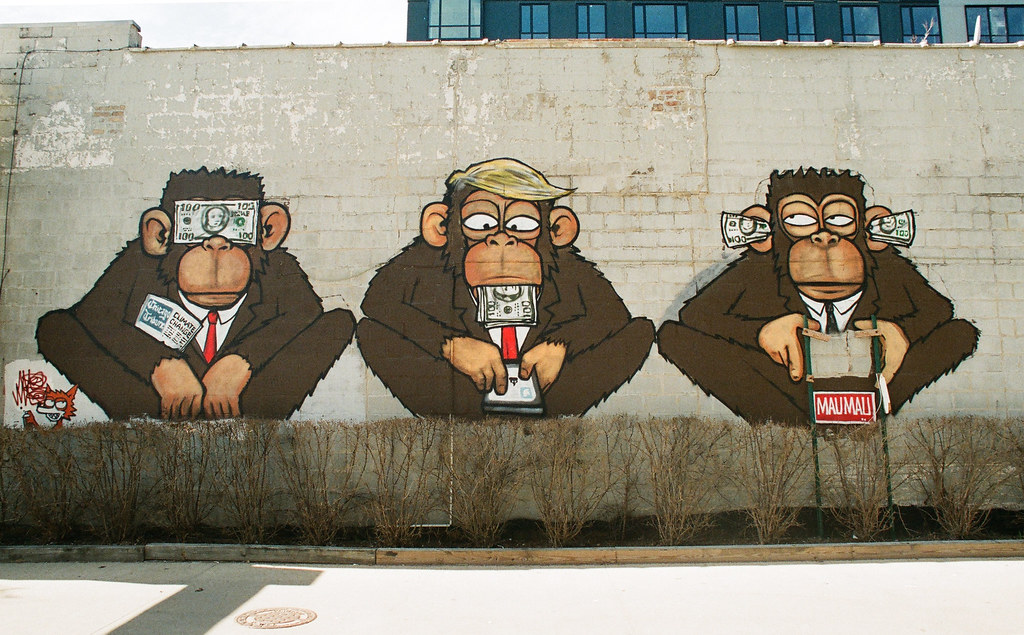

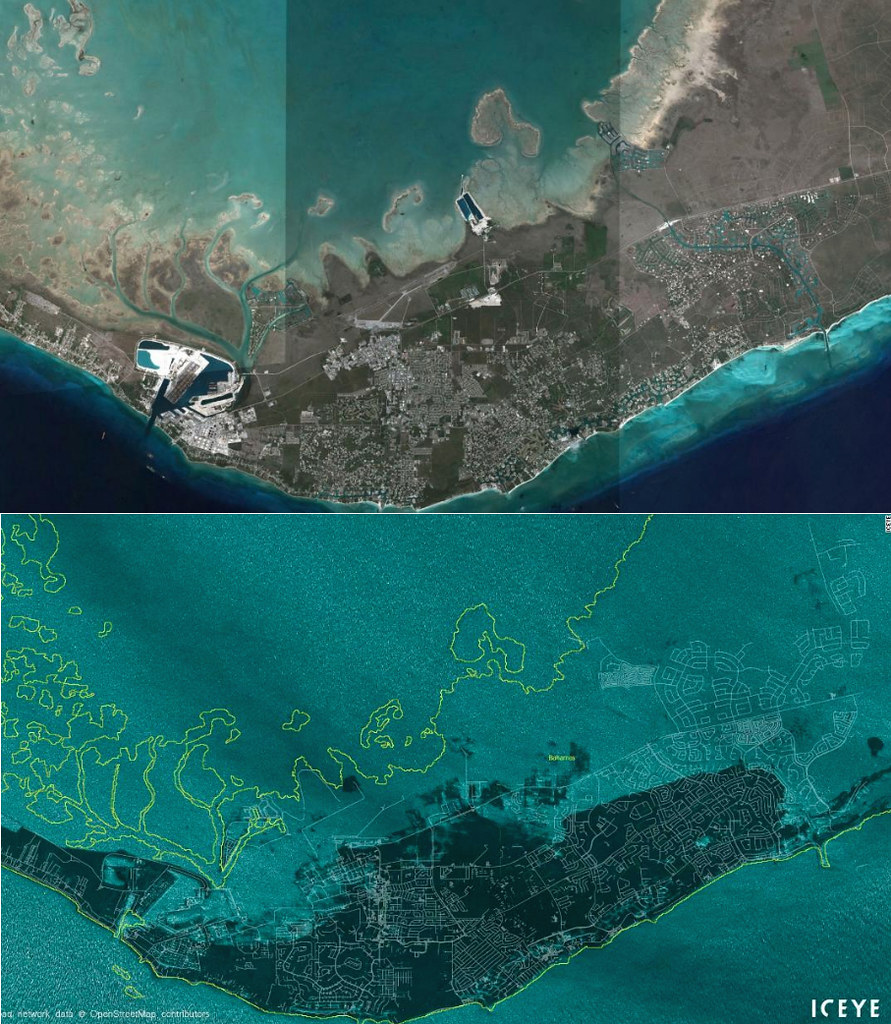


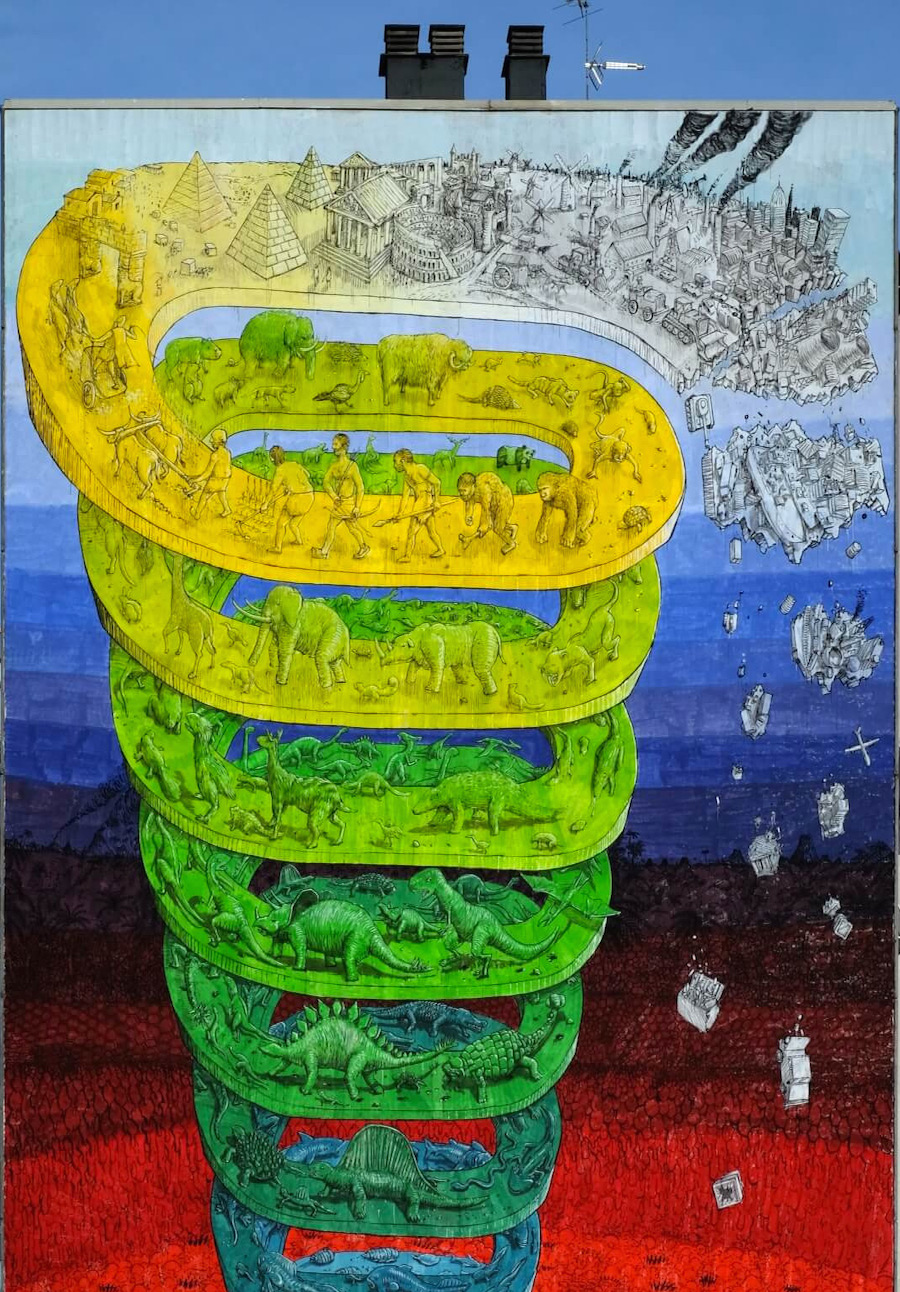


 Collapse of Industrial Civilization