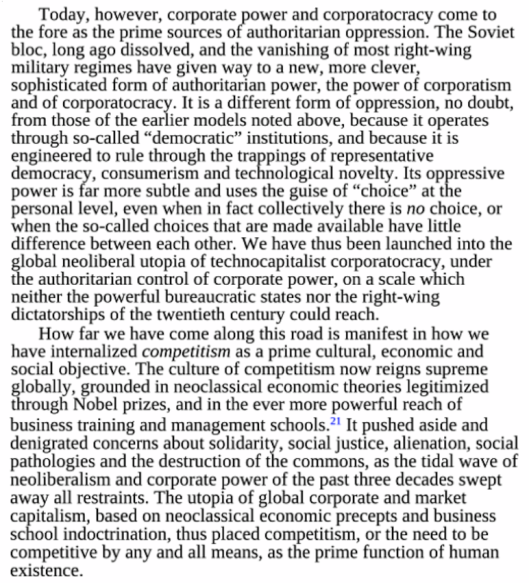
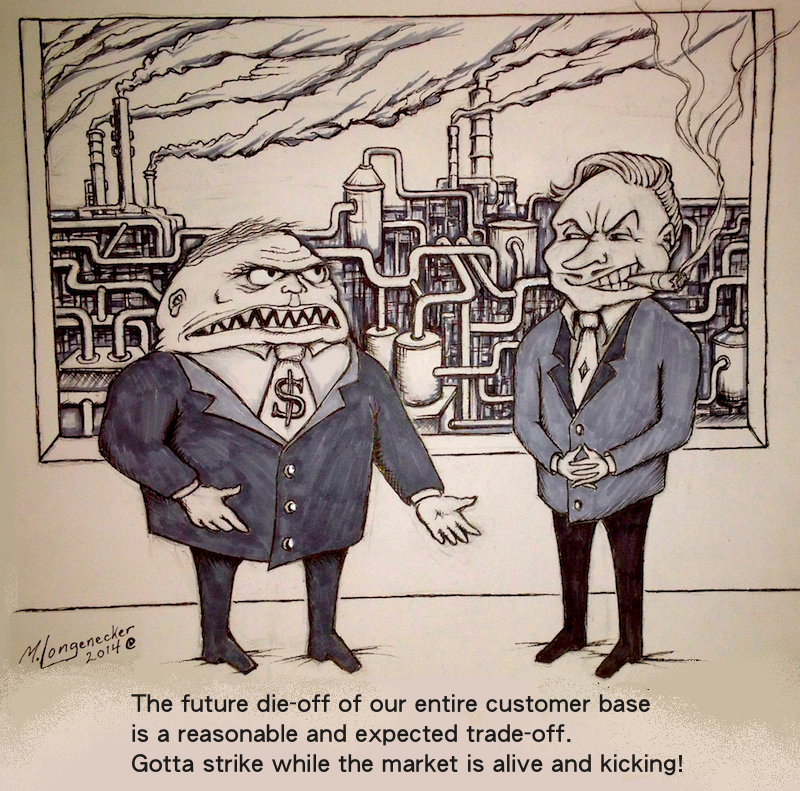
What’s with these eco-freaks!?! Don’t they see they’re destroying the economy. We need to defang the EPA and go balls out like China’s doing. So what if we create a little waste! There’s money to be made from gas masks, water filtration, hazmat suits and cancer treatment. If the Earth worshippers get really bothersome, we’ll just sic the security and surveillance state on them. Send over a couple unmanned aerial vehicles on their ass. Drones… a multibillion-dollar industry! Beautiful, isn’t it? If we have to lock them up, we’ll profit from that too. There’s no problem that can’t be turned into a business scheme.
The upper class that creates wealth, like myself, is just better at procuring what this world respects –money, power, prestige and all the other measurements of social status. They say “money makes the world go round”, but really it’s just a symbol for energy exchanged for work, as in human labor or the virtual slave labor of our fossil fuel-based civilization. Based on the law of the conservation of energy and political thermodynamics, all organisms seek to conserve energy and overcome the disorder and decay of entropy. Humans are following their biological inclination to search out the richest source of energy and procreate. In fossil fuels we found the mother lode of them all to do both, live like kings and fill the planet with our numbers. We have an innate instinct to burn the stuff and have sex. Just look at how the Dutch and Flemish became the first in pre-industrial times to exploit fossil fuels in the form of peat:
The opening of the peat bogs in the northern provinces from the 1580s onwards meant that the Dutch had a cheap energy source that was widely available, while most other countries in Europe were entirely dependent on wood – which had become ever more expensive as deforestation advanced. The Netherlands’ ample fuel reserves stimulated the development of various fuel-intensive and export-oriented industries…
…The high energy consumption of the Dutch was an anomaly in seventeenth century Europe. The same goes for their prosperity, and for the level of urbanization and industrialisation in the country…
Consequently, their economy became the most powerful in the world. Eventually the peat bogs were mined to exhaustion until new technology arose which allowed even deeper mining below the water. This more intensive process came at the environmental cost of losing agricultural land to the lakes which formed from this new mining technique.
…The authorities, horrified by the loss of agricultural land – and the associated tax income – tried to stop the peat diggers during the sixteenth century by placing export prohibitions and restrictions on peat mining below the water table, but they failed. Digging out peat was more lucrative than cultivating crops. In total, peat digging would turn more than 60,000 hectares (600 km2) of land into water in Holland and Utrecht – almost 10 percent of their total surface area…
This all sounds eerily familiar with America’s current binge on fracking, doesn’t it? These days the entire world is scavenging the hard-to-get energy resources since all the low hanging energy has been consumed.
Blood, Sweat, Oil and Psychopaths
There is some archeological evidence that Romans used coal in England during the second and third centuries (100-200 AD), but they relied primarily on slave labor along with lesser-used sources of fire, animal labor, and wind:
Historians estimate that in the first century of the empire, Rome consumed between one hundred thousand and half-a-million slaves every single year [14][15]. The slaves used for hard agricultural labour and as rowers in Roman ships had a life-expectancy of perhaps only a few years – and those in the mines only a few months. Slaves were, quite simply, an energy resource to be exploited. Nevertheless, despite the high mortality rate, such was the quantity of slave imports that they comprised between 30 and 40 per cent of the population in the empire’s Italian provinces – an enormous proportion [14].
There were, however, cultures much more reliant on slaves than the Roman Empire such as the Spartan Empire with its slave class of helots who, according to Greek historian Herodotus, outnumbered the free by seven to one.
“Parts of iron slave chains that native Britons were forced to wear under Roman rule. This particular item was found at Sheepen, Colchester.”
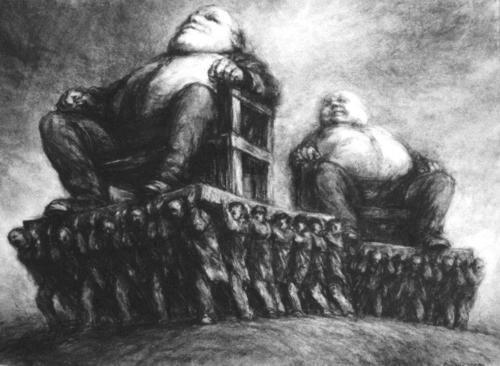
You so-called wage slaves and working poor of industrial civilization have never had it so good, have you? The average person has dozens and sometimes hundreds of slaves working for them at any given time, courtesy of our gift of fossil fuels. Of course there’s always an oddball Luddite in the crowd, but the average person is not going to walk away from such a life of Riley. And do you really believe that the wealthy elite, whose self-image is infinitely more tied up in their bank account digits than the lowly commoner, is going to give up their amassed fortunes and vaunted position in society for the betterment of mankind? Hell, they think there’s too many of the “unwashed masses” as it is. Why would they want to save the disposable bottom feeders? The global elite clawed their way to the top by stomping on whoever got in their way and dominating the competition. Some degree of lying, cheating, tax-dodging, bribing of officials and “bending” of the law is always buried beneath the squeaky clean propaganda of their PR machines. Show me a truly “sustainable” corporation and I’ll show you a virgin prostitute. Of course they all want to be the benefactor of some humanitarian foundation once they’ve secured their riches, but not a single one of them is a Mother Teresa.
We’ve got the perfect economic system for psychopaths to rule the world in broad daylight under the cloak of democracy and normality:
One in a hundred regular people is a psychopath…That figure rises to 4% of CEO’s and business leaders…The reason why is because capitalism, at its most ruthless, rewards psychopathic behavior –the lack of empathy, the glibness, cunning and manipulative behavior… Capitalism at its most remorseless is a physical manifestation of psychopathy, a form of psychopathy that has come down to affect us all.
About this little problem of climate change that you all are wringing your hands over, I can tell you that the elite think this is really The Market’s way of clearing the dead wood from the economic forest floor. Yes, they really believe they have the inside track on how to beat this thing. Their immense wealth is going to protect them like a cocoon and then they’ll emerge like a butterfly into a new world free of all the huddled, diseased, and starving masses. Who knows, maybe they’ll even feed all those corpses into one of their newly invented biomass energy converters. In their technotopian thinking, they believe the next few decades is sufficient time to develop geoengineering technology that will allow for the rehabilitation of the Earth once the overpopulation problem is taken care of. They know climate change is going to make life nearly impossible for most everything no matter what we do, so they calculated that it serves their interests to simply let business-as-usual run its course and allow the catastrophe to unfold rather than change the rules of the game, in which case all their wealth and privilege would be lost. Yes, they would rather cling to their loot while developing strategies to survive the human culling. Climate change will bring novel viruses that could make short work of it all without any major wars or mass starvation, and no one will ever know what hit them. Its true origin will forever remain a mystery as the powers-that-be sit comfortably behind guarded walls, safely inoculated from the spreading pandemic.
Cold, Dark, and Soulless: Culling the Numbers
Don’t waste your energy hoping that heartless moneyed interests will find the wisdom and virtue to heal a fractured planet or mitigate the untold human suffering that is to come. The global elite has more in common with each other than their own countrymen. Superfluous workers need to be trimmed. Natural resources must be replenished. There will be no more nation states. We’ve been building up our police states for when the time comes. Who will survive the overshoot and collapse has already been decided and it won’t be the billions of dim-witted mouth-breathers. Robots will be ours workers and slaves. They will collect the dead and clean up the aftermath while the Earth is allowed to regenerate in due time. The few selected for their skill, talent, intelligence, and allegiance will preserve and maintain our computers, technology, and culture. We’ll reboot the earth and a new era will dawn for the chosen few. We’re counting on the masses to be malleable and do nothing, to die quietly. As a matter of fact, our planning and research on social and behavioral control gives us a near 100% certainty that this will be the case. We’ve raised them to be obedient consumers and docile sheep.
They will go to the slaughterhouse without a fight, clutching their religious icons and babbling their insane conspiracies.
“You can’t beat death but you can beat death in life, sometimes.
And the more often you learn to do it, the more light there will be.”
~ Charles Bukowski
What had been designed to be our servants became our masters, then our owners and gods, and finally our destroyer….
Some days I wake up and despise the monotony and pettiness of this culture and its followers: its celebrity worship, its staged news reporting, its chameleon politicians, its conniving marketers of consumerism, its cookie-cutter neighborhoods, its push-button surveillance state, and its clueless masses all working together to create the illusion of normalcy. Everyone goes along with this mindless program like obedient slaves, afraid of the social stigma attached to questioning any radical deviation from what constitutes normal. God forbid anyone openly discusses the cliff we are fast approaching, its sheer drop-off and craggy rocks below coming more clearly into view. One last scramble for the last bit of habitable land at the poles will be the inevitable end game as atmospheric warming catches up to the glacial melt and sea level rise humans have set into motion. In light of all the scientific evidence accumulated over decades, mankind has known for some time that a radical reconfiguration of our socio-economic system was the only way to avoid collapse, as described beautifully back in 2008 by a longtime blogger who has been writing for nearly a decade:
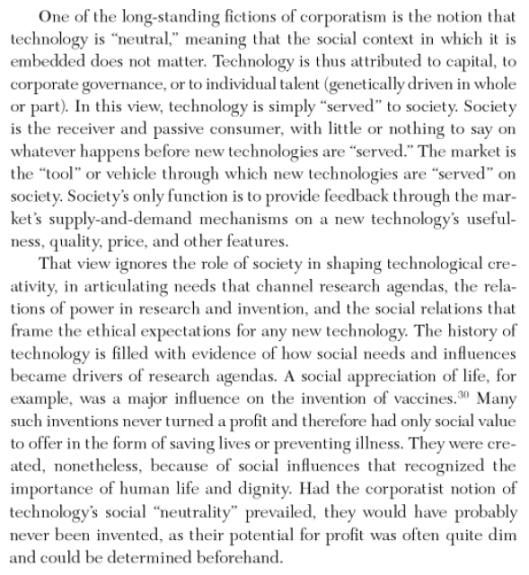
There can be no “soft-landing” for a species adding another million of itself every 4 and a half days to consume and convert into more and more human flesh what little remains of the planet’s tattered web of life. Worshiping paper symbols of wealth as the only measurement of social and environmental worth, our species has monetized and misunderstood nature, ignoring its true incalculable value. Surely something is amiss when the financial interests of the insecticide industry trump the health of humans and the survival of pollinators. Examining the root cause of such corrosive effects in our economic system, i.e. capitalism, is nearly as taboo as mentioning the collapse of modern civilization. The culturally Pavlovianresponses to any such criticism directed at capitalism or the unsustainability of industrial civilization is to argue for the rehabilitation of capitalism into something less destructive and tout humanity’s unfailing ability to adapt to any situation. Reinforced by past successes such as the Green Revolution, robotic exploration of distant planets, and Moore’s Law of technological advancement, the marriage of capitalism and technology has created a mindset which takes for granted the belief that the marketplace will create a hi-tech fix to any and all problems. Little green aliens, paranormal experiences, and techno-utopian futures seem to be more socially acceptable subjects for discussion rather than the collapse of a way-of-life that requires several more Earths if everyone were to live like Americans. Perhaps that is why we get technotopian books like this one:
The myth of progress is central to corporate ideologies of materialism, modernism, and technocapitalism. The mythical quality of technological progress was expressed most succinctly in GE’s slogan from the 1950’s: “Progress is our most important product.”
There are reportedly hundreds of Transhumanist-affiliated groups(life extensionists, techno-optimists, Singularitarians, biohackers, roboticists, AI proponents, and futurists) in the world with the largest, the Singularity Network, claiming 10,000 members. Few in our society can imagine this planet exhausted of its resources, inhospitable to agriculture, and devoid of all its keystone species, but such a world is fast becoming reality as industrial civilization steamrolls the planet under the direction of technocapitalism. Millions of factories continue to spit out products by the ton to be shipped to every corner of the globe. The ravenous hordes struggling for a higher standard of living never think twice about the energy and eco-social damage tied to these consumer products that magically appear on store shelves.
“A transhuman future is a day-dream and we are rapidly running out of the luxury of being able to do nothing about the very real problems that face us now. A transhuman future is a nightmare of the electric sheep.”
~ Dr. Paul Willis
The boundaries of a finite planet have been temporarily extended by technology, giving mankind a false sense of power over his environment, but technological complexity is not immune to the law of diminishing returns; the problems are overwhelming the solutions:
“…Technology cannot bring back a concentrated resource deposit like soil, phosphates and fossil fuels that have been dispersed and converted so completely that no amount of energy can get them back. The links in the technological evolutionary chain have been successful so far, but all it takes is a single broken link that will drop us into the waste heap of failed evolution. The next link of the chain always exists in the imaginations of men, technological wonders to carry us forward, but malignant growth, the kind sponsored by corporate, banking and Wall St. entities, will guarantee the current technological link is our last one…”
For a culture that lives for today and ignores the consequences of tomorrow, the show must go on even as cracks and weaknesses in this false façade become more evident day by day. Omar N. Bradley may have been thinking about weapons of mass destruction when he made an observation about mankind’s tools of self-destruction, but he could not have been more prescient in the broader sense of technology’s reach into our lives when he said, “If we continue to develop our technology without wisdom or prudence, our servant may prove to be our executioner.”
As in previous fallen civilizations, today’s elite are more out of touch with our precarious position than most realize, and they will try to cling to their wealth and social status despite how much blood flows in the streets as the masses bear the brunt of collapse first –poverty, disease, war, starvation, etc., but ultimately no one can run from the death of the Earth’s oceans, the spread of novel diseases, and the die-off of trees. Those now deciding how our technologic scalpels will be wielded are not institutions looking out for the greater good of humanity, but by the ultra wealthy for their own personal financial enrichment and narcissistic interests:
“For better or worse,” said Steven A. Edwards, a policy analyst at the American Association for the Advancement of Science, “the practice of science in the 21st century is becoming shaped less by national priorities or by peer-review groups and more by the particular preferences of individuals with huge amounts of money…
…that personal setting of priorities is precisely what troubles some in the science establishment. Many of the patrons, they say, are ignoring basic research — the kind that investigates the riddles of nature and has produced centuries of breakthroughs, even whole industries — for a jumble of popular, feel-good fields like environmental studies and space exploration…
..the rise of science philanthropy may simply help “rich fields, universities and individuals to get richer.” The new patrons are responsible for one of the most striking trends on these campuses: the rise of privately financed institutes, the new temples of science philanthropy.
This privatization of science is just one more aspect of capitalism’s usurpation and corruption of the body politic.
The art in this blog post is from Polish artist Zdzislaw Beksiński whose intricately detailed paintings of apocalyptic landscapes, mutated and deformed humans, and surreal images were said to be inspired from his nightmares. He never gave titles to his paintings and signed them on the back. It is said he would often wake up in the middle of night to paint his dark visions. In 2005 he was found dead lying on the floor of his Warsaw flat in a pool of blood, stabbed 17 times.
Perhaps the greatest nightmare of modern man is the fact that he is at the mercy of an ever-expanding industrial civilization running on autopilot, as Zygmunt Bauman described, with no realistic way to stop its onslaught of toxic waste, greenhouse gas emissions, deforestation, and numerous other ecocidal features. I can see this horror when I look at much of Beksiński’s work, but I also see nature reclaiming the battlefield after man has defeated himself.
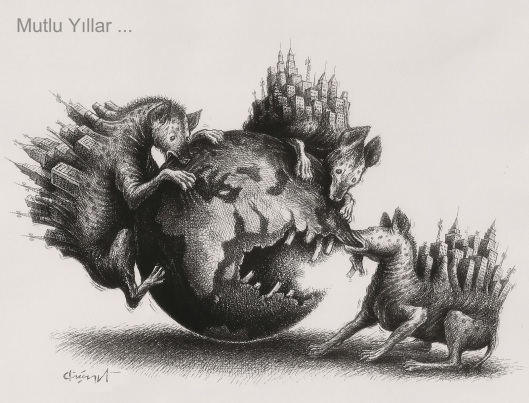
To a great degree, humans are their own worst enemy, prisoners of their flawed cerebral wiring with its neuroses, blind spots, and cognitive biases, but the real enemy is the omnicidal juggernaut our numbers have created; its base urges can’t be contained.
Cold War antipathies between the “free world” and the Communist Block used to be conceptualized (in short) as “us and them” (sometimes “us vs. them”), which meant the U.S. and the U.S.S.R., the last two great superpowers. Additional facets to geopolitics were added by China, North Korea, the Middle East, India and Pakistan, and Brazil (mostly members of the nuclear club), but they didn’t figure as prominently in the rhetoric as what was clearly (even then) a false dualism. Binary thinking of this sort continues today in bogus phrases such as “either you’re with us or against us” or “if you’re not part of the solution then you’re part of the problem.” In American politics, the two-party system (Republicans and Democrats) appears to be intransigent and permanent despite political parties having risen and fallen over time both here and abroad. This herd team mentality keeps most political thinkers and observers from examining third-party alternatives with much seriousness the same way it forestalls bipartisanship. A little known fact is that the government-sounding agency called the Commission on Presidential debates is, in reality, a private corporation financed by Anheuser-Busch and other major companies and created by the Republican and Democratic parties to seize control of the presidential debates from The League of Women Voters in 1987.
Close identification with in-groups is learned early in life as cliques form in middle school (or before?) and is reinforced as each of us progresses through life’s phases. For instance, married/committed couples have a divergent set of understandings of personal relationships from unmarried individuals seeking/searching for a significant other. Childless couples have fundamentally differing social perspectives from those raising children (parents’ outlooks tracking with their children’s development). Working class folks have fewer opportunities and prerogatives than white-collar and professional workers. The rich enjoy considerable obeisance from everyone and benefit from undeserved favors and preferential treatment that the lower and middle classes can only look upon with envy and/or resentment. Examples go on and on.
We cling to these identities with surprising faithfulness, considering how they lump everyone rather imprecisely into categories, not altogether arbitrarily constructed but crude nonetheless. Blends of attitudes and truly creative, outlying thinking don’t figure in discussions dominated by rigid fidelity to narrow rhetoric, sound bites, and talking points. Interestingly, this same us-and-them effect is at work in discussions of collapse and NTE, the players divided unevenly between those who just don’t get it (for a variety of reasons) and those who believe all indications arebeyond controversy, meaning,completely obvious: we’re on a hopelessly downward trajectory. Of course, this division omits the bulk of the population for whom the issue isn’t even broached, and even for those who acknowledge the issue, there are a surprising number of positions on the continuum, such as those who get it but haven’t extrapolated far enough, those who get it but lie or deny out of one motivation or another (e.g., self-enrichment or political gain, albeit short-term), and those who don’t get it yet are exceeding well-versed in the evidence (so that it can be argued and spun).
All these dividing lines, rather than being a celebration of diversity, make us a fractured society along multiple faults. Perhaps it’s just my perception, but there seems to be a widening gap between those who openly admit our future must lead ineluctably to doom and techno-utopians for whom future horizons loom bright. I’ve suggested elsewhere that newcomers to the issue of collapse have a lot of catching up to do, but that naïvely assumed a common, shared understanding of our reality upon which to base incontrovertible conclusions. Let me suggest something a bit more radical: the utter failure of the masses to grasp the immensity of the collapse story already unfolding around us while a few intrepid folks call bullshit on the substitute story offered by clever politicians, pundits, and marketeers — rhetoricians all — is equivalent to the divide between a poor, illiterate, itinerant farmer (or hunter or trapper) ca. 1780 and the Founders, a tiny group of landed gentry who were exceptionally well-educated men — Renaissance men, if you will, all having deep understanding of political and Enlightenment philosophy of the day. It must have been nearly impossible for the Founders to communicate effectively with the governed.
Today, the situation is reversed: mouth-breathing populists are now governing and have seized upon the means to manipulate the masses through disinformation and misdirection. Further, popular leaders and opinion-makers refuse to hear and simply cannot understand what a wizened few are telling them, namely, that unsustainable practices of industrial civilization have reached fever pitch and will soon become a hellscape of our own creation. Like a Revolutionary Era agriculturist or outdoorsman, today’s populists (and the large portion of the population they reflect — who elect them, in fact) may possess narrow expertise at their individual endeavors. Yet ironically, they remain over specialized and cut off from broad intellectual traditions and are thus functionally illiterate. Similarly, the masses to whom they proselytize have at best limited command of reading and almost no critical thinking skills whatsoever. (We never even approached universal literacy, which is a gateway to erudition.) A liberal arts education is to them hollow and meaningless, they are fundamentally immune to what science instructs, and their heads are full of entertainments (e.g., superhero geekery and professional sports) and other distractions that block real knowledge and understanding gained through careful, sustained consideration of an array of sources and perspectives. Contrast them with folks who read voluminously, study trends and scientific reports, and draw conclusions from a wealth of evidence: the two groups might as well be speaking Mandarin and English for all the communication passing between them.
My sense of the term populist should not be mistaken for leaders who embody the will of the people. That’s obviously not happening. The most basic function of government is to formulate policy and allocate funds to execute those policies. The graphic below shows top policy priorities over the past five years:
Well down the list is dealing with global warming (and I’m guessing the related complex of problems). Protecting the environment fares about 10–20 points better, as though it were a separate issue. What is most important to the public, however, are those things at which our leaders are failing the worst: the economy and jobs; terrorism; and education. Every administration and Congress initially pays ample lip service to priorities with wide public support but then diverts to a different agenda. This paragraph by Joel Hirschhorn captures the sort of populism now practiced.
With the Bush-corrosion of our Constitution and collapse of the economic system after it had been exploited by the rich and corrupt, what better time for revolution? Instead, we got a president with a glib tongue, a terrific smile and a deep commitment to the two-party plutocracy and corporate state. Obama is no populist, not even close. Nor is he a genuine reformer. At best, he is a master exploiter of populism.
It’s noteworthy that Hirschhorn saw through the B.S. five years ago.
According to the latest poll conducted by CBS “60 Minutes” and the magazine Vanity Fair, 61 percent of Americans want to raise taxes on the wealthy as the primary way to cut the budget. The same poll finds that the second most popular first choice for cutting the nation’s budget deficit, at 20 percent, is cutting the military budget. That is, 81 percent of us — four out of five — would cut the deficit by taxing the rich and/or slashing military spending. Only four percent of those polled favored cutting Medicare … and only three percent favored cutting Social Security … A second poll, this time by CNN, reports that 63 percent of Americans oppose the US War in Afghanistan and want it ended. Only 35 percent say they support the war (now in its ninth year).
With such a disconnect stalling meaningful discussion before it begins, no wonder that controlling rhetoric is defined instead by funding (profit), celebrity (guru glorification, including green-washing types), and false solutionism. They are precisely the wrong kinds of issues, of course. The right kinds might involve the realization that…
in an interconnected world, we all succeed and fail together in this life (there is no us and them anymore),
the time has long passed for solutions and (an attempt at) mitigation is the next step, and
moral choices about how we act in the time remaining us are of paramount importance once deteriorating conditions lead to widespread chaos.
Instead we get slick salesmanship to keep the economy humming (funneling capital to the top) and the masses calmed or blissed-out on gadgetry. We get not-so-behind-the-scenes preparations to cull and quarantine the population when the going gets rough. And we succumb to infighting among those who can’t achieve consensus about what’s to be done. Us and them to the bitter end.
“Life is tragic and absurd and none of it has any purpose at all. Science has killed religion, there’s no hope for the future with seven billion of us on the planet, and the only thing you can do is to laugh in the face of it all.”
~ TC Boyle
This past Thursday night I went to a reading by author T.C. Boyle at Northern Arizona University’s Cline Library. Outside the entrance of the auditorium were a couple of tables lined with signed copies of his numerous novels and collections of short stories and manned by a few young people, perhaps college students, taking people’s money. I had already bought a copy of T.C. Boyle Stories at the local bookstore before coming and read a few of the short stories before the auditorium doors opened. I seldom go to such events, but what had first caught my eye were the titles of some of his books, one of which is A friend of the Earth whose premise is rather dystopic.
While waiting in line for the event, I opened up my book and read “The Extinction Tales” from the author’s first volume of short stories. The title of this particular short story states exactly what it’s about, taking the reader across continents and centuries from the massacre of the passenger pigeon to the genocide of the aboriginal Tasmanians. A couple of modern-day vignettes serve as the bookends to this vast sweep of history, at the beginning the hunting skills of a lighthouse caretaker’s pet cat snuff out the remaining population of the island’s unique bird species and at the end a man is haunted by the death of his father whose funeral he neglected to attend.
The doors opened and perhaps 100 to 200 people filled the seats. After a few fawning introductions by a couple of NAU faculty members, Tom Coraghessan Boyle took the lectern. Tall and lanky with a goatee, wearing red sneakers, and dressed in black with the glowing cat eyes of a printed t-shirt peaking through his opened sports jacket, he appeared more hipster than a sixty-something tenured English professor, but spoke as eloquently and articulately as one would expect.
He read two stories, but the second one resonated with me the most. “The Relive Box” is an allegorical tale of a middle-aged single father who becomes obsessed with the latest hi-tech escapism device which mentally transports people back to any specified time in their life by reading their memories. He’s stuck reliving various moments of his past while his present life falls apart. The ‘here and now’ simply becomes lifeless space and time to be filled by the ‘relive box’.
The parallels with today’s addiction to computers, video games, iPhones, and social media are obvious; our inseparable relationship with technology has made us virtual cyborgs. Our enslavement to technology extends to a societal level with the wide-held assumption that geoengineering and adaptive technologies will evolve in time to spare us from the worst of a collapsing environment, allowing business-as-usual to continue no matter how dire current scientific reports and future projections may be. Unarmed by a blind faith in technology, industrial civilization barrels headlong into a world growing more violent and unstable by the day. Technocapitalists live by the sword of technology and will die by it as well.
In the words of David Simon, “There are now two Americas. My country is a horror show.”
Technology is no different in capitalism’s overriding dependency on the successful accumulation of capital:
The system within which institutions, cultures, and people operate determines its policies, beliefs, and behaviors. Those operating within a capitalist system conform to the dictates of corporations. Capitalism cannot be reformed and its resiliency to stay afloat during environmental collapse is remarkable:
Nonetheless, in the final analysis, our entire way of life based on fossil fuels and infinite growth on a planet of finite resources is untenable…
“A small minority — people who are at the margins of the system and who are thus able to observe it as if from outside, who are not tied into any of the major influence groups, and who have learned to seek out alternative sources of information and think critically — will gradually come to the conclusion that the entire system of industrial civilization is inherently unsustainable.”
~ Richard Heinberg, Powerdown: Options and Actions for a Post-Carbon World
A “post-carbon world” may very well not include people, but building an alternative system demands that we believe a post-collapse world does include survivors.
There is much speculation as to the total CO2 equivalent of all greenhouse gases mankind has pumped into the atmosphere directly and indirectly (positive feedback loops of thawing tundra and permafrost, ocean clathrates, etc). There was a study done in 2005:
“The total CO2 equivalent (CO2-eq) concentration of all long-lived GHGs is currently estimated to be about 455ppm CO2-eq” (Solomon et al. 2007), as of 2005.”
And more recently there was a study done roughly 8 years later by Ron Prinn, Professor of Atmospheric Science in MIT’s Department of Earth, Atmospheric and Planetary Sciences, which came up with a figure of 478ppm.
Robert Scribbler has written an informative post which puts all of this in context, including the temporary negative feedback of aerosols from the burning of fossil fuels. From my research, his essay provides the clearest picture of where we are at: a world locked into roughly 4C of warming if all emissions stopped today.
We know that fossil fuels remain the primary source of energy throughout the world with countries like India and China continuing to increase their consumption of coal:
The facts are horrifying enough. At some point fossil fuels will cease to be burned, and for the cynical-minded that time appears to be when industrial civilization can no longer physically dig them out of the ground.
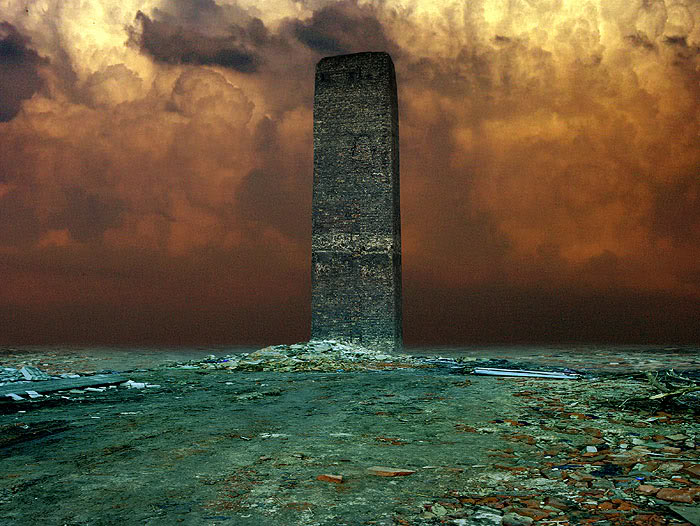
On the highway to a smokestack hell, Faust met a devil who said to him:
“Give me all your tomorrows, all your children and all your children’s children, and I will make this one day, for you, a paradise.”
* * * * *
Understanding how much warming may be in store from all the CO2, methane, N2O and other greenhouse gasses humans have pumped into the atmosphere can be a bit problematic. First, definitions have tended to be confused due to the fact that equilibrium climate sensitivity measures (Charney) used to project warming for this century by the IPCC only take into account about half of long-term (slow feedback) warming should CO2 and other greenhouse gas levels remain high.
For example, equilibrium climate sensitivity measures show an effective rate of warming by about 3 degrees Celsius (C) for every doubling of CO2 from 1880 onward. By this…
I’m middle-aged and my nine-to-five work routine keeps the financial wolves at bay; as with most Americans, I’m dependent on every paycheck. Being fully aware of mankind’s global ecological overshoot definitely puts an extra twist into my daily outlook when I head off for work. How long will my job be around as the pressures of peak oil and climate change mount? Of course we’re all riding the crest of the largest bubble in history, i.e. human overpopulation, where enough people are added each day to fill a large city with every single inhabitant becoming a new source of pollution and CO2 emissions. This past year seems to be a real seminal point in the breakdown of modern agriculture with several major breadbasket regions getting hit hard by record drought such as California and Brazil. There is no adapting to this kind of extreme weather in which snowpack, seasonal rain showers, and aquifers dry up and then when moisture does come, it’s delivered in torrential floods. And yet a sea of hungry mouths continue to arrive each day. Very few of these new parents are aware of the inevitable mass starvation on the horizon. How could they know when unending economic growth is demanded by their governments, environmentalists and investigative journalists are treated as terrorists, and truth-tellers are silenced? So our predicament will be handled in the most ad hoc and chaotic manner, think Katrina or Fukushima. We were all born into this dysfunctional, irredeemable system, and there’s no escaping the long arm of industrial civilization…
“The problem was you had to keep choosing between one evil or another, and no matter what you chose, they sliced a little bit more off you, until there was nothing left. At the age of 25 most people were finished. A whole god-damned nation of assholes driving automobiles, eating, having babies, doing everything in the worst way possible, like voting for the presidential candidates who reminded them most of themselves.”
~ Charles Bukowski, Ham on Rye
The gears of the corporate state continue to grind onward while the plastic people go about their artificial lives oblivious to the strange rattling in the engine compartment. There really is no “carefree living” these days while you wish you could ‘unknow’ the dark thoughts of the wicked that is coming. No one or no thing is coming to save us.
Per the optimal foraging theory, humans are only following basic biological urges by burning the most optimal and high EROEI energy sources available to them – fossil fuels. The situation is complicated further by all the numerous mental traps humans subconsciously employ to avoid uncomfortable truths. Infighting between vested interests jockying to protect their slice of the pie is yet another gremlin in the engine. I really find little comfort in the thought that no matter how much damage we humans exact on the environment, life will eventually return to the planet. This seems to absolve us from acting as the so-called sentient and wise beings we claim to be. We might as well drop the pretenses and acknowledge the self-inflicted damage wrought by our technocapitalism. Its insidious mechanisms are busy digging a mass grave for everyone:
Philosopher Peter Lamborn Wilson called it the Technopathocracy of modern society. This dehumanizing system we live under offers the illusion of choice while also inculcating into the populace its antisocial nature, for instance cutthroat competition as “normal” and “healthy”. What the psychopathic elite deem as positive values becomes normalized:
While we’re on the subject of technology, a few interesting factoids on E-waste:
It represents 2 percent of America’s trash in landfills, but equals 70 percent of overall toxic waste.
20 to 50 million metric tons of e-waste are disposed worldwide every year.
Only 12.5 percent of e-waste is currently recycled
80 to 85 percent of electronic products were discarded in landfills or incinerators, which can release certain toxics into the air.
It takes 539 pounds of fossil fuel, 48 pounds of chemicals, and 1.5 tons of water to manufacture one computer and monitor
“[It] is the world’s fastest growing waste stream, rising by 3 to 5 per cent every year, due to the decreased lifespan of the average computer from six years to two,” says Wong.
“In countries such as Australia the disposal of e-waste in landfills generates a potent leachate, which has high concentrations of flame retardant chemicals and heavy metals. These can migrate through soils and groundwater and eventually reach people.”
Wong says developed countries often send e-waste to developing countries in Asia and Africa for recycling, taking advantage of these countries’ lower cost of labour and lower environmental regulation.
But, he says, in these countries e-waste is processed to remove precious materials such as gold, silver and platinum, under “extremely primitive conditions”, leading to extensive pollution of air, water, food and people.
“The toxic chemicals generated through open burning of e-waste include PCDD, PBDEs, PAHs, PCBs and heavy metals,” says Wong. “[These] have given rise to serious environmental contamination.”
“Some of these toxic chemicals are known to build up in fish especially, which may then be traded locally and around the world.”
Wong says that science has now clearly demonstrated the risk of these toxic chemicals being passed on to the next generation, while babies are still in the womb, or in their mother’s milk.
“At the same time these e-waste contaminated sites are extremely hard to clean up due to the complex chemical mixtures they contain,” he says.
E-waste is simply one more positive feedback loop in our technocapitalist system that is overwhelming the planet like plastic waste in the oceans and GHG’s in the atmosphere. Mathematician Eric Schechter succinctly explains a few major flaws in capitalism which guarantee our own death by ecocide if the system is allowed to continue on its course:
“We must overthrow the system before ecocide kills us all. And if we throw out the plutocracy without changing our culture, the culture will just generate a new plutocracy. All parts of the system are interconnected, so we must change every aspect of our lives — in effect, we are part of what we must overthrow; we must change ourselves.”
Some Major Flaws of Capitalism:
If we were all valued members of the economy, rising productivity would theoretically make us all affluent, but under capitalism, just the opposite happens. The benefits of increased productivity are pocketed by the handful of people who control the workplace — the owners, the management executives, etc. Workers are seen as expendable tools.
Market fundamentalists claim that everyone profits from a “voluntary trade,” because they exchange something they value less for something they value more. But it doesn’t really work out that way. The wealthy keep the much larger portion of the profit S-P, and the poor’s portion will be just barely enough for survival. The wealthy get wealthier, because they have the bargaining power and only engage in deals that make them wealthier; they decline any other deals.
Greed is built into the system. A corporation is compelled, both by competition and by its legal charter, to maximize profits by any means available, disregarding or even concealing harm to workers, consumers, and the rest of the world. Fines for breaking rules generally are smaller than the profits obtained from such misbehavior, and so such fines are simply viewed as a part of the normal cost of doing business. Any CEO who finds scruples is quickly fired and replaced. Externalized costs are omitted from our measurements and calculations. We are taught to see our interests as separate, and the well-being of the community is not the responsibility of anyone in particular. The commons gets privatized and plundered, and as a result the ecosystem is dying.
The accumulation of capital corrupts all levers of government. Once upon a time, some of us believed that the market could be regulated and kept moral by government. But we were mistaken — it’s inevitable that the wealthy will capture the government. After all, wealth can be used for influence.
So as long as the system stays intact, we’re all along for the suicide ride over the cliff. Certainly anyone who is half awake can see that despite all the Rio Earth Summits and talk of “going green” over the last several decades, our path to the graveyard is all but written in stone. The human species will snuff itself out with the help of a socio-economic ideology that all the brainwashed people worship.
Sit back and enjoy the ride…
“Capitalism has survived communism. Now, it eats away at itself.”
~ Charles Bukowski, The Captain is Out to Lunch and the Sailors
Have Taken Over the Ship
This website got an interesting comment in the ‘About’ section from a well-educated fellow who works in the technology sector of the economy. His credentials are impressive. I did some checking to see if he really was who I thought he was and it definitely appears so. His IP address takes me directly to the Science Applications International Corporation(SAIC). SAIC is a major defense contractor with “friends in high places”, having received numerous no-bid contracts from the government. Its top personnel move freely within the government/corporate revolving door. A noteworthy fact in their history is that they were “instrumental” in fabricating the myth that Saddam had weapons of mass destruction and they pushed war as the only option. SAIC was the contractor that waisted hundreds of millions of taxpayer dollars on the failed Trailblazer project which was an attempt to create a system that would spy on cell phone, internet, and other electronic communications. Needless to say, they have an extensive and dark history:
Additional information on SAIC is here. Now that I’ve gotten that introduction out of the way, let’s look at the message from Tihamer Toth-Fejel:
Tihamer,
I’m happy you got a chuckle out of this website. We here at CoIC try to deal with the angst of the collapse of industrial civilization by treating the situation with gallows humor. Yes the Roman Empire did take some time to collapse, but I’m very confident that we don’t have the luxury of “hundreds of years” to see modern civilization disappear into the dustbin of history. The reasons for such an accelerated crash have been documented here and elsewhere numerous times. You only have to read The Limits to Growth to know much of what was accurately predicted decades ago. Collapse doesn’t happen overnight, but occurs in pulses and waves. Nothing as large and extensive as modern civilization will simply disappear overnight and no one here pushes such a theory. Ecologic overshoot is not a hard concept to understand and mankind is subject to it just as any other organism, although we have proven very adept at ‘extending and pretending’ our overexpansion. Cognitive biases are “an inevitable feature of adaptive behavior in all organisms, including ourselves.” Perhaps mankind can exhibit a collective free will and turn this ship around, but I highly doubt it. Our political system is beholden to Wall Street money and everything in Washington is predicated on the short-term election cycle. The same goes for our economy which needs constant growth and quarterly profits at the expense of a habitable planet. Dealing with climate change interferes with profits, so the capitalists feel better when they bury their heads in the sand. Unfortunately, humans did not evolve to deal with seemingly invisible, long-term, existential threats such as climate change and ocean acidification, many of their effects being nonlinear and complex.
Concerning your second point, I am indeed using the internet to write about the collapse of industrial civilization. What is your point? I think you are implying that I am anti-technology, encouraging mankind to live in caves. If you read my core beliefs for this site, you’ll find your answer; nonetheless, we do recognize the rule that technology is a byproduct of available energy resources, and at the rate that humanity is exhausting the plant, animal, and mineral wealth of this planet, I’m not sure what pixy dust the techno-optimists think is going to maintain our current set of unsustainable living arrangements. Perhaps you can tell us. And if humans were able to bend the laws of physics and create some new energy source, we would still be in trouble due to overpopulation and our enormous consumption of natural resources. I think Brutus had it right when he called humans “locusts” stripping the land bare.
On your third point, yes planet Earth will eventually die… in about five billion years when our sun becomes a red giant, maybe. Does this inevitability give us the green light to exterminate everything within a mere century? This would be somewhat analogous to a three-year-old committing suicide because they have come to the realization that they only have roughly 80 more years to live. And what about future generations? Is that even a consideration in your thinking? Perhaps you could even expand your thinking to include this planet’s myriad other life-forms whose biological functions support a vast web of life that makes our very own existence possible. Humans are currently overseeing the 6th mass extinction which will likely take us all down as well, but I’m sure you are well aware of this crisis and are working diligently on some sort of techno-fix for it. Your last sentence implies that you are a person of the anti-environmental, right-wing persuasion who sees those concerned about the habitability of the planet as eco-terrorists. This is a predictable viewpoint from someone who is an apparent contractor for the DoD and servant of the corporatocracy, but I assure you that future biospheric events will change the minds of even the most greeny-hating, military-industrial-complex loving demagogues on the planet.
While the false debate continues in mostly right-wing circles that today’s Capitalism is some aberrant form of “true” Capitalism, the end game and final victory of Capital continues to play out with multinational corporations becoming the ‘winner take all’ in their complete takeover of the world’s economies and governments. As discussed before, the TTIP and TPP are the latest maneuvers in this corporate grab for power, wealth, and resources. Any last vestiges of environmental protection, worker rights, and sovereignty will be shredded. No illusions of democracy should be maintained in a world of corporate feudalism where gross social inequality will have become irreversible and the will of common people smothered by the abuses of great wealth:
“[The TTIP] proposes to establish a Regulatory Co-operation Council combining US and EU regulatory agencies with the purpose of working towards deeper ‘regulatory co-operation and increased compatibility for future and existing regulatory measures’. For example, health and safety regulations and food standards between the US and the EU will be made ‘compatible’, or more simply put, downgraded or removed.
The TTIP and TPP are intended to include investor-state dispute settlement clauses. When a corporation considers its expected future profits are being harmed by a government it can lodge a case before these tribunals consisting of three lawyers who represent corporate interests. These lawyers have no conflict of interest restrictions on their operations. There are no limits on the awards that can be claimed against governments and very limited rights of appeal for governments. Even if a government wins a case it must pay the tribunal’s costs and legal fees – averaging $9m a case. UNCTAD reports a tenfold increase in such cases since 2000. Any health or environmental policy that conflicted with corporate interests would be subjected to these extra-judicial tribunals. Tribunals are currently organised under World Bank and United Nations rules. The compensation is taken from the taxpayers.
Of the world’s ten biggest law firms, ranked by revenue, four are British and six are US. A golden age for corporate lawyers beckons! ConDem Coalition government Minister without Portfolio Ken Clarke explained, ‘Investor protection is a standard part of free-trade agreements – it was designed to support businesses investing in countries where the rule of law is unpredictable, to say the least.’
Legalised plunder
The following are just a few of the cases that corporations have brought to the investor-state dispute settlement tribunals: …” – link
The PR machine continues to churn out lies even under the glaring reality of today’s obscene wealth disparity. One particular study, entitled Your Fate? Thank Your Ancestors, was discussed in the New York Times recently, proclaiming that an individual’s path to success or failure in any society is foreordained in their genetic make-up and family lineage. Of course genes do play a part in the intelligence, talents, and behavior of every individual, but this particular meme is based on the myth that people in present day capitalist economies live and operate within “modern meritocracy societies” wherein everyone has the freedom and opportunity to develop and utilize the full potential of their talents. As one commenter at the New York Times rightly stated:
“This [study] appears to be one of a growing number arguing for the inherent superiority of some people over others while strenuously avoiding terms like superiority. The claim that some are born to lead and rule and others to be ruled over is as old as human civilization.”
Such propaganda serves the purpose of those at the top of the capitalist social hierarchy, allowing them to justify capitalism’s grotesque social inequality while at the same time preaching to the masses that their poor standing in society is a result of their genetic heritage and not the result of a structurally unjust and undemocratic system. In other words, those at the top deserve to be there and so do those at the bottom.
Many people remain under the spell of the American Dream which promises they can rise to the top of this corrupt system or at least receive the trickle down benefits it claims to offer, but the stark reality of shrinking wages and pensions, persistent unemployment, and rising costs of bare necessities prove otherwise. It’s known as “the meritocracy myth” and one book with that title, written by two professors, explains that a person’s social status is based more on factors such as class structure, politics, and race rather than on individual merit and initiative. Their major arguments are summarized below:
“Factors associated with Individual “Merit”
1.) Money makes money.
Sources of revenue that are unrelated to jobs, such as income from capital gains, dividends, interest payments, government subsidies as well as appreciating assets of wealth such as businesses, real estate, and stocks are predominantly owned by a small fraction of society’s upper echelon. This maldistribution of wealth illustrates that America is not a “middle class society”, but one of the haves and have-nots where wealth is concentrated at the very top of the system.
“…the shape of the distribution of merit resembles a “bell curve” with small numbers of incompetent people at the lower end, most people of average abilities in the middle and small numbers of talented people at the upper end. The highly skewed distribution of economic outcomes, however, appears quite in excess of any reasonable distribution of merit. Something that is distributed “normally” cannot be the direct and proportional cause of something with such skewed distributions…”
“Most experts point out, for instance, that ‘intelligence,’ as measured by IQ tests, is partially a reflection of inherent intellectual capacity and partially a reflection of environmental influences. It is the combination of capacity and experience that determines ‘intelligence.’ Even allowing for this ‘environmental’ caveat, IQ scores only account for about 10% of the variance in income differences among individuals (Fisher et al. 1996). Since wealth is less tied to achievement than income, the amount of influence of intelligence on wealth is much less. Other purportedly innate ‘talents’ cannot be separated from experience, since any ‘talent’ must be displayed to be recognized and labeled as such (Chambliss 1989). There is no way to determine for certain, for instance, how many potential world-class violinists there are in the general population but who have never once picked up a violin. Such ‘talents’ do not spontaneously erupt but must be identified and cultivated.”
3.) Hard work does not necessarily equate to economic success.
“Applying talents is also necessary. Working hard is often seen in this context as part of the merit formula. Heads nod in acknowledgment whenever hard work is mentioned in conjunction with economic success. Rarely is this assumption questioned. But what exactly do we mean by hard work? Does it mean the number of hours expended in the effort to achieve a goal? Does it mean the amount of energy or sheer physical exertion expended in the completion of tasks? Neither of these measures of “hard” work is directly associated with economic success. In fact, those who work the most hours and expend the most effort (at least physically) are often the most poorly paid in society. By contrast, the really big money in America comes not from working at all but from owning, which requires no expenditure of effort, either physical or mental. In short, working hard is not in and of itself directly related to the amount of income and wealth that individuals have.”
4.) Mental Attitude
“According to the culture of poverty argument, people are poor because of deviant or pathological values that are then passed on from one generation to the next, creating a “vicious cycle of poverty.” According to this perspective, poor people are viewed as anti-work, anti-family, anti-school, and anti-success. Recent evidence reported in this journal (Wynn, 2003) and elsewhere (Barnes, Gould ;1999, Wilson, 1996), however, indicates that poor people appear to value work, family, school, and achievement as much as other Americans. Instead of having “deviant” or “pathological” values, the evidence suggests that poor people adjust their ambitions and outlooks according to realistic assessments of their more limited life chances.
An example of such an adjustment is the supposed “present-orientation” of the poor. According to the culture of poverty theory, poor people are “present-oriented” and are unable to “defer gratification.” Present orientation may encourage young adults to drop out of school to take low wage jobs instead staying in school to increase future earning potential. However, the present orientation of the poor can be an “effect” of poverty rather than a “cause.” That is, if you are desperately poor, you may be forced to be present oriented. If you do not know where your next meal is coming from, you essentially have no choice but to be focused on immediate needs first and foremost. By contrast, the rich and middle class can “afford” to be more future oriented since their immediate needs are secure. Similarly, the poor may report more modest ambitions than the affluent, not because they are unmotivated, but because of a realistic assessment of limited life chances. In this sense, observed differences in outlooks between the poor and the more affluent are more likely a reflection of fundamentally different life circumstances than fundamentally different attitudes or values.”
5.) Moral character and integrity
“Although ‘honesty may be the best policy’ in terms of how one should conduct oneself in relations with others, there is little evidence that the economically successful are more honest than the less successful. The recent spate of alleged corporate ethics scandals at such corporations as Enron, WorldCom, Arthur Andersen, Adelphia, Bristol-Myers Squibb, Duke Energy, Global Crossing, Xerox as well as recent allegations of misconduct in the vast mutual funds industry reveal how corporate executives often enrich themselves through less than honest means. White-collar crime in the form of insider trading, embezzlement, tax fraud, insurance fraud and the like is hardly evidence of honesty and virtue in practice. And neither is the extensive and sometimes highly lucrative so-called ‘irregular’ or ‘under the table’ economy—much of it related to vice in the form of drug trafficking, gambling, pornography, loan sharking, or smuggling. Clearly, wealth alone is not a reflection of moral superiority. To get ahead in America, it no doubt helps to be bright, shrewd, to work hard, and to have the right combination of attitudes that maximize success within given fields of endeavor. Playing by the rules, however, probably works to suppress prospects for economic success since those who play by the rules are more restricted in their opportunities to attain wealth and income than those who choose to ignore the rules.”
Nonmerit Barriers to Mobility
1.) The effects of initial class placement at birth on future life chances.
“…those born into great wealth start far ahead of those born to poor parents, who have a huge deficit to overcome if they are to catch up. Indeed, of all the factors that we might consider, where we start out in life has the greatest effect on where we end up. In the race to get ahead, the effects of inheritance come first and merit second, not the other way around.
Inheritance provides numerous cumulative nonmerit advantages that are available in varying degrees to all those born into at least some relative advantage, excluding only those at the very bottom of the system. Included among these nonmerit advantages are high standards of living from birth, inter vivos gifts (gifts between the living) such as infusions of cash and property bestowed by parents on their children at critical junctures in the life course (going to college, getting married, buying a home, having children, starting a business, etc.), insulation from downward mobility (family safety nets which prevent children from skidding in times of personal crises, setbacks, or as the result of personal failures), access to educational opportunities as well as other opportunities to acquire personal merit or to have merit identified and cultivated, better health care and consequently longer and healthier lives (which increases earning power and the ability to accumulate assets during the life course).
Another advantage of inheritance is access to high-powered forms of social and cultural capital. Social capital is one’s ‘social resources’ and refers to essentially to the value of whom you know. Cultural capital is one’s cultural resources and refers essentially to the social value of what you know. Everyone has friends, but those born into privilege have friends in high places with resources and power. Everyone possesses culture—bodies of knowledge and information needed to navigate through social space. Full acceptance into the highest social circles, however, requires knowledge of the ways of life of a particular group…”
2.) Bad Luck
“Bad luck can take many forms but two very common forms of bad luck are to be laid off from a job that you are good at or to spend many years preparing for a job for which demand either never materializes or declines. In looking at jobs and job opportunities, Americans tend to focus on the ‘supply’ side of markets for labor; that is, the pool of available people in the labor force. Much less attention is paid to the ‘demand’ side, or the number and types of jobs available. In the race to get ahead, it is possible and all too common for meritorious individuals to be ‘all dressed up with no place to go.’ For the past twenty years, the ‘growth’ jobs in America have disproportionately been in the low wage service sector of the economy. At the same time, more Americans are getting more education, especially higher education. Simply put, these trends are running in opposite directions: the economy is not producing as many high-powered jobs as the society is producing highly qualified people to fill them (Collins 1979, Livingstone 1998).
In addition to the number and types of jobs available, the locations of jobs both geographically and within different sectors of the economy also represent non-merit factors in the prospects for employment. For instance, a janitor who works for a large corporation New York City may get paid much more for doing essentially the same job as a janitor who works for a small family business in a small town in Mississippi. These effects are independent of the demands of the jobs or the qualifications or merit of the individuals holding them. Differences in benefits and wages between such jobs are often substantial and may mean the difference between a secure existence and poverty… rates of poverty in the United States continue to vary by region and locations within regions suggesting that geography is still a major factor in the distribution of economic opportunity.”
3.) Education
“…those with more education, on average, have higher income and wealth. Education is thus often seen as the primary means of upward social mobility. In this context, education is widely perceived as a gatekeeper institution which sifts and sorts individuals according to individual merit. Grades, credits, diplomas, degrees, and certificates are clearly “earned,” not purchased or appropriated. But, as much research has demonstrated, educational opportunity is not equally distributed in the population (Bowles and Gintis 1976, 2002, Bourdieu and Passeron 1990, Aschaffenburg and Maas 1997, Kozol, 1991, Sacks, 2003, Ballantine 2001). Upper class children tend to get upper class educations (e.g. at elite private prep schools and ivy league colleges), middle class children tend to get middle class educations (e.g. at public schools and public universities), and working class people tend to get working class educations (e.g. public schools and technical or community colleges), and poor people tend to get poor educations (e.g. inner city schools that have high drop out rates and usually no higher education). Educational attainment clearly depends on family economic standing and is not simply a major independent cause of it. The quality of schools and the quality of educational opportunity vary according to where one lives, and where one lives depend on familial economic resources and race. Most public schools, for instance, are supported by local property taxes. The tax base is higher in wealthy communities and proportionally lower in poorer areas. These discrepancies give rise to the perpetual parental scramble to locate in communities and neighborhoods that have reputations for “good schools,” since parents want to provide every possible advantage to their children that they can afford. To the extent that parents are actually successful in passing on such advantages, educational attainment is primarily a reflection of family income. In sum, it is important to recognize that individual achievement occurs within a context of unequal educational opportunity.”
4.) Loss of Self-Employment Opportunities and the Offshoring of Jobs
“…self-employment is popularly perceived as a major route to upward mobility. Opportunities to get ahead on the basis of being self-employed or striking out on one’s own to start a new business, however, have sharply declined. In colonial times, about three-fourths of the non-slave American population was self- employed most as small family farmers. Today, only seven percent of the labor force is self-employed (U.S. Census Bureau 2002). The “family farm,” in particular, is on the brink of statistical extinction. As self-employment has declined, the size and dominance of corporations has increased. This leaves many fewer opportunities for “self-made” individuals to enter existing markets or to establish new ones. America has witnessed the sharp decline of “mom and pop” stores, restaurants, and retail shops and the concomitant rise of Wal-Marts, Holiday Inns, and McDonalds. As more Americans work for someone else in increasingly bureaucratized settings, the prospects of rapid “rags to riches” mobility decline.
In addition to the decline of self-employment, manufacturing has also experienced drastic workforce reduction as production facilities have increasingly moved to foreign countries in efforts to reduce costs of production. This is a significant trend since the United States became a world power based on its industrial strength, which supported a large and relatively prosperous working and middle class. Some service jobs, such as customer service and computer programming, are also being moved to foreign countries in increasing numbers. All of these trends are occurring quite independent of the merit of individuals but nevertheless profoundly impact the opportunities of individuals to get ahead…”
5.) Discrimination
“Discrimination not only suppresses merit; it is the antithesis of merit. Race and sex discrimination have been the most pervasive forms of discrimination in America, [but others include] sexual orientation, religion, age, physical disability (unrelated to job performance), physical appearance…”
In addition to the worsening inequality endemic to the system, the social fabric of society will be torn apart by a world now in the throes of multiple ecological crises. The availability and affordability of food and water will be magnified by anthropogenic climate change as the agricultural regions of an overpopulated world are ravaged by drought, flood, and fire. Infrastructure will begin to fail more frequently as extreme weather begins to rack up damage. The aloof elite, who ensconce themselves behind gated walls and the luxury that their wealth buys, will fan the flames of resentment and civil unrest in a desperate population scrambling just for the necessities of life. The cultural myths of capitalism are fraying and the collapse of industrial civilization, unable to change its omnicidal course for sundry reasons, is seemingly written in stone.
One of the many recurring themes and ideas that appear at The Spiral Staircase is that the essential form taken by consciousness is story or narrative. Story enables us to orient ourselves in the world and make it somewhat intelligible. It should not be overlooked that it is we who tell ourselves stories, narrating life as we go via the inner voice no less than attending to the great stories that inform culture. The Bible is one such story (or collection of stories), though its message is interpreted with a scandalously high degree of controversy. (I’m especially intrigued by Paula Hay’s thesis over at Mythodrome that the story of The Fall is really about the loss of animism, not a literal expulsion from the Garden of Eden. The Tao Te Ching and the Qur’an are similar, one might even say, competing stories from other world cultures.) Story has taken on many forms throughout history, beginning with oral tradition. Setting epics in song and/or verse made them memorable, since fixed written forms came rather late in history (conceived in terms of tens of thousands of years). The appearance of books eroded oral tradition gradually, and the transition of the book into an everyday object after the invention of the printing press eventually helped undermine the authority of the Medieval Church, which housed libraries and trained clerics in the philosophical, ecclesiastical, and scientific (as it was then understood) interpretation of texts. Story continued its development in the Romantic novel and serial fiction, which attracted a mass audience. Today, however, with literacy in decline, cinema and television are the dominant forms of story.
Many categories, types, and genres of story have evolved in fiction. Considering that story arcs typically progress from calm to conflict to resolution, the nature of conflict and the roles we are asked to assume through identification with characters (often archetypal) are a subtly effective vehicle for learning and mind control. Those whose minds have been most deeply and successfully infiltrated are often the same who argue vociferously in defense of a given story, no matter the evidence, with arguments playing out in political spheres and mass media alike. In addition to lighter fare such as RomComs and coming-of-age stories, both of which define not-yet-fully-formed characters through their solidifying relationships, we get hero/antihero/superhero, war, and dystopian tales, where characters tend to be chiseled in place, mostly unchanging as action and events around them take center stage. It is significant that in such tales of conflict, antagonists typically appear from outside: political opponents, foreigners and terrorists, aliens (from space), and faceless, nameless threats such as infectious disease that one might poetically regard as destiny or fate. They threaten to invade, transform, and destroy existing society, which must be defended at all cost even though, ironically, no one believes on a moment’s contemplation it’s really worth saving. Exceptionally, the antagonist is one of us, but an aberrant, outlying example of us, such as a domestic terrorist or serial killer. And while plenty of jokes and memes float around in public that we are often our own worst enemies, becoming the monsters we aim to defeat, stories that identify our full, true threat to ourselves and the rest of creation precisely because of who we are and how we now live are relatively few.
In light of the story of industrial collapse, probably the biggest, baddest story of all time but which is only told and understood in fleeting glimpses, it occurred to me that at least two shows found in cinema and TV have gotten their basic stories mostly correct: The Matrix (predominantly the first film) and The Terminator (the TV show to a greater degree than the movie franchise). In both, a very few possess the truth: knowledge of our enslavement (actual or prospective) to machines of our own invention. Characters in the matrix may feel a sense of unease, of the projected reality being somehow off, but only a few take the notorious red pill and face reality in all its abject despair while most prefer the blue pill (or more accurately, no pill) and the blissful ignorance of illusion. Traveling back and forth between realities (one known to be quite false), the ultrachic glamor and superhero antics of the false reality are far, far more appealing than the dull, cold, grey reality without makeup, costumes, and enhanced fighting skills. Everyone behaves in the false reality with cool, almost emotionless confidence, whereas in the other reality everyone is strained to the breaking point by continuous stress at the threat of annihilation. In Terminator world, time travel enables a few to come back from the future, in the process spilling the beans about what happens after the Singularity, namely, that machines go on a rampage to kill humanity. The dominant emotion of the few initiates is again stress, which manifests as bunker mentality and constant battle readiness. Casualties are not limited to frayed nerves and strained civility, though; plenty of innocent bystanders die alongside those fighting to survive or forestall the future.
Those are only stories, reflections of our preoccupations and diversions from the truth available to witness without needing a red pill. But reality is nonetheless a bitter pill to swallow, so few who become aware of the option to square up to it vs. ignore it really want the truth. I judge that most are still blissfully unaware an option exists, though evidence and supporting stories are everywhere to be found. For those of us unable to pretend or unknow what we now know, the appearance of stress, paranoia, self-abnegation, infighting, gallows humor, and nihilism run parallel to character traits in the Matrix and Terminator worlds. Through story, reconfigured as entertainment, we may indeed be working through some of our psychological issues. And we experience some of the same coming together and tearing apart that inevitably accompany the great events of history. But unlike the childish teaser in this CBS News story that the apocalypse has a date, the machinations of history, like death and extinction, are not strictly events but processes. The process we initiated unwittingly but then ignored is beginning its final crescendo. Stories we tell ourselves conventionally end with triumphal resolution, flatly ignoring the destruction left in their wake. I warn: do not look for triumph in the story of industrial collapse except in those tiny, anonymous moments of grace where suffering ends.