As the recent news stories below illustrate, extreme weather is on the rise and has been scientifically linked to human-induced climate change. I find it amazing than in the midst of the beginning stages of collapse of industrial civilization, many will attribute the disintegrating environment to natural phenomenon, biblical and other religious prophecy, or the lizard illuminati. I suppose the real reason behind America’s hi-tech surveillance panopticon is to keep the hungry and destitute masses from overrunning the walled compounds of the elite when climate change and peak net energy really kick into gear. These days the number of headlines pointing to environmental collapse are overwhelming; choosing one is like shooting fish in a barrel. The population of Atlantic Puffin bird, called the ‘marine canary in the coal mine‘, has reportedly been “losing body weight and dying of starvation, possibly because of shifting fish populations as ocean temperatures rise.” The Arctic, an essential temperature regulator for the planet, is melting fast and releasing a carbon time bomb:
Over hundreds of millennia, Arctic permafrost soils have accumulated vast stores of organic carbon – an estimated 1,400 to 1,850 petagrams of it (a petagram is 2.2 trillion pounds, or 1 billion metric tons). That’s about half of all the estimated organic carbon stored in Earth’s soils. In comparison, about 350 petagrams of carbon have been emitted from all fossil-fuel combustion and human activities since 1850. Most of this carbon is located in thaw-vulnerable topsoils within 10 feet (3 meters) of the surface.
But, as scientists are learning, permafrost – and its stored carbon – may not be as permanent as its name implies. And that has them concerned.
“Permafrost soils are warming even faster than Arctic air temperatures – as much as 2.7 to 4.5 degrees Fahrenheit (1.5 to 2.5 degrees Celsius) in just the past 30 years,” Miller said. “As heat from Earth’s surface penetrates into permafrost, it threatens to mobilize these organic carbon reservoirs and release them into the atmosphere as carbon dioxide and methane, upsetting the Arctic’s carbon balance and greatly exacerbating global warming.”
Current climate models do not adequately account for the impact of climate change on permafrost and how its degradation may affect regional and global climate…
…“The Arctic is warming dramatically – two to three times faster than mid-latitude regions – yet we lack sustained observations and accurate climate models to know with confidence how the balance of carbon among living things will respond to climate change and related phenomena in the 21st century,” said Miller. “Changes in climate may trigger transformations that are simply not reversible within our lifetimes, potentially causing rapid changes in the Earth system that will require adaptations by people and ecosystems.”…
Adaptation will likely not be possible by humans, and as far as our sprawling steal and concrete cities are concerned – they’re toast.
…“Some of the methane and carbon dioxide concentrations we’ve measured have been large, and we’re seeing very different patterns from what models suggest,” Miller said. “We saw large, regional-scale episodic bursts of higher-than-normal carbon dioxide and methane in interior Alaska and across the North Slope during the spring thaw, and they lasted until after the fall refreeze. To cite another example, in July 2012 we saw methane levels over swamps in the Innoko Wilderness that were 650 parts per billion higher than normal background levels. That’s similar to what you might find in a large city.”…
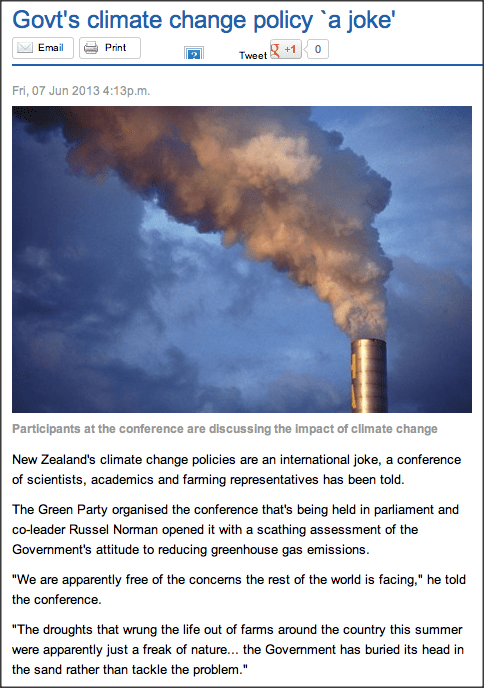
The next headline sums up the climate policy of all governments – a joke. Business-as-usual will continue until it ain’t so usual anymore. Insurance costs will skyrocket and the wrath of nature will roll back all the transient wealth humans have built up atop the backs of our fossil fuel slaves. Externalized costs will be paid back in the wreckage of a civilization which thought of itself as superior to and separate from the natural world.
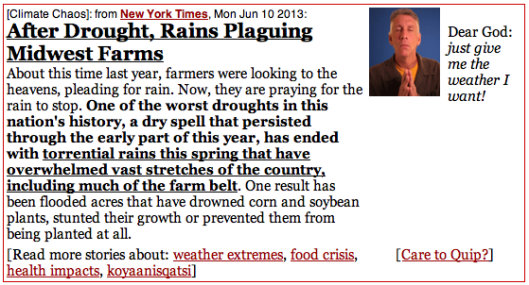
Reading the inklings of future trouble that the next three headlines portend, you’ll see global famine on the horizon:
We’re seeing more severe storms,” Vilsack said. “We’re facing more invasive species. More intense forest fire threatens communities each year. NOAA reported that 2012 was the second most intense year in our history for extreme weather events — droughts, flooding, hurricanes, severe storms, and devastating wildfire. NOAA also advised that last year was the warmest on record for the continental United States.”
He made it clear we can’t dismiss these changes as an aberration.
“The latest science tells us that the threat of a changing climate is new and different from anything we’ve ever tackled,” Vilsack said.
A historic multi-billion dollar flood disaster has killed at least eighteen people in Central Europe after record flooding unprecedented since the Middle Ages hit major rivers in Austria, the Czech Republic, Germany, Poland and Slovakia over the past two weeks. The Danube River in Passau, Germany hit the highest level since 1501, and the Saale River in Halle, Germany was the highest in its 400-year period of record. Numerous cities recorded their highest flood waters in more than a century, although in some locations the great flood of 2002 was higher. The Danube is expected to crest in Hungary’s capital city of Budapest on June 10 at the highest flood level on record, 35 cm higher than the record set in 2006. The flooding was caused by torrential rains that fell on already wet soils. In a 2-day period from May 30 – June 1, portions of Austria received the amount of rain that normally falls in two-and-half months: 150 to 200 mm (5.9 to 7.9″), with isolated regions experiencing 250 mm (9.8″). This two-day rain event had a greater than 1-in-100 year recurrence interval, according to the Austrian Meteorological Agency, ZAMG…
…The primary cause of the torrential rains over Central Europe during late May and early June was large loop in the jet stream that developed over Europe and got stuck in place…
…If it seems like getting two 1-in-100 to 1-in-500 year floods in eleven years is a bit suspicious–well, it is. Those recurrence intervals are based on weather statistics from Earth’s former climate. We are now in a new climate regime with more heat and moisture in the atmosphere, combined with altered jet stream patterns, which makes major flooding disasters more likely in certain parts of the world, like Central Europe. As I discussed in a March 2013 post, “Are atmospheric flow patterns favorable for summer extreme weather increasing?”, research published this year by scientists at the Potsdam Institute for Climate Impact Research (PIK) in German found that extreme summertime jet stream patterns had become twice as common during 2001 – 2012 compared to the previous 22 years. One of these extreme patterns occurred in August 2002, during Central Europe’s last 1-in-100 to 1-in-500 year flood. When the jet stream goes into one of these extreme configurations, it freezes in its tracks for weeks, resulting in an extended period of extreme heat or flooding, depending upon where the high-amplitude part of the jet stream lies. The scientists found that because human-caused global warming is causing the Arctic to heat up more than twice as rapidly as the rest of the planet, a unique resonance pattern capable of causing this behavior was resulting.According to German climate scientist Stefan Rahmstorf, “Planetary wave [jet stream] amplitudes have been very high in the last few weeks; we think this plays a role in the current German flooding event.
The biggest lie ever told is that we will be able to adapt to or mitigate a planet-wide shift in weather patterns, temperatures, and sea level rise on such a short time-scale as to be instantaneous in geologic records. Our fall – a tragicomedy of hubris, self-delusion, greed – will be more precipitous than our rise.
I have yet to meet Guy McPherson, but with a blog entitled “Collapse of Industrial Civilization”, it appears inevitable. Who else on Earth has such an unvarnished view of the horror show modern man is orchestrating? Truth delivered up with no hidden agendas is a very bitter and difficult pill to swallow, but being a true radical means getting at the root of the problem irrespective of “ideological and/or theological prejudice“, or as Guy says…
For those wanting to keep abreast of the deteriorating habitability of the planet, Guy posts periodic updates to the unfolding climate chaos here.
There exists no high quality recording of Guy’s speech at the most recent “Age of Limits” conference that I know of. In order to review his talk I watched this clip and studied his powerpoint slides which he sent me and which are posted here.
I’m certain that many who attend Guy’s speeches don’t internalize all the information he sets forth, fore if they did, their language would lose all the culturally ingrained phrases of hope for any kind of eleventh hour rescue by our technology-worshipping society. If there were a fix, don’t you think we would have implemented it by now before setting off a list of unstoppable positive feedback loops, known and unknown? Hell, even the much-trumpeted cleanliness of natural gas has turned out to be a farce. A recent study shows methane release from natural gas production is much higher than was known.
We seem to be leaking greenhouse gases from every orifice. Yes Moore’s law and the illusion of infinite progress have brainwashed everyone into believing mankind is immortal, forever in control of primal earth forces. In 2000, Chris Bright of the Worldwatch Institute introduced the term “nemesis effect” which refers to the cumulative effect of multiple stressors and conditions that lead to unanticipated consequences. Taken as a whole, the information in Guy’s speech equates to a global nemesis effect which is taking the planetary biosphere past the threshold of human habitability.
After stating the “benefits to the biosphere” from the collapse of industrial civilization, he presented a brief history of climate science’s implication of man as the primary culprit of climate change:
Benefits to the Biosphere from the Collapse of Industrial Civilization
– will slow down climate chaos, but too late to stop it.
– will terminate human population overshoot which is proceeding currently at the rate of 217,000 per day (births minus deaths every single day).
– will slow or stop the 6th Great Extinction proceeding at a pace of roughly 217 species per day (conservative estimate).
– will terminate environmental decay such as the soil we wash away into the oceans, the air we foul, the water we pollute, and all the other consequences of industrial civilization.
Brief History of Climate Change Science and the Pinpointing of Human-Induced Climate Change
In 1847, George Perkins Marsh is credited with being the first person to have implicated human activity as the source of climate change.
In 1896, Swedish scientist Svante Arrhenius, considered the father of climate change science, predicted a 1 degree Celsius rise by the year 2,000. Few quote him today because he thought that a slight warming of the atmosphere would be a good thing for human agriculture. In the end, no such benefits will result from human-induced climate change due to the extreme weather swings and our oil-dependent agricultural system…
Last year, James Hansen (et al), pointed out that extreme weather events of all kinds (hot, cold, wet and dry) are becoming more frequent. In fact, their statistical analysis of historical data (as opposed to computer modelling of future events) demonstrated that extreme events (i.e. more than 3 standard deviation above or below average) are now ten times more likely than they used to be…
Our Oil-Dependent Agricultural System Spews CO2
Over the past 40 years, about 2 billion hectares of soil – equivalent to 15% of the Earth’s land area (an area larger than the United States and Mexico combined) – have been degraded through human activities, and about 30% of the world’s cropland have become unproductive. But it takes on average a whole century just to generate a single millimetre of topsoil lost to erosion.
Soil is therefore, effectively, a non-renewable but rapidly depleting resource.
We are running out of time. Within just 12 years, the report says, conservative estimates suggest that high water stress will afflict all the main food basket regions in North and South America, west and east Africa, central Europe and Russia, as well as the Middle East, south and south-east Asia.
Unfortunately, though, the report overlooks another critical factor – the inextricable link between oil and food. Over the last decade, food and fuel prices have been heavily correlated…
Past Predictions of Mass Extinction and Human Die-Off
Despite the rantings of wingnuts like Alex Jones, free-market ideologues, and conspiracy theorists, the following warning given in 1986 by Robert Watson, who was the director of NASA’s upper atmospheric program at that time, remains prescient…
A dramatic loss of ozone over antarctica proves the “greenhouse effect” is real and presages a gradual warming of the Earth that threatens floods, drought, human misery in a few decades and – if not checked – eventual extinction of the human species, scientists warned Tuesday…
Recent Findings of Hansen and the NASA scientists…
James Hansen, director of NASA’s Goddard Institute for Space Studies, warned Wednesday that human-made climate change could lead to the deaths of millions of species.
“If we continue with business as usual this century, we will drive to extinction 20 to 50 percent of the species on the planet,” he told Current TV host Eliot Spitzer. “We are pushing the system an order of magnitude faster than any natural changes of climate in the past.”
In a recently published study, Hansen and his team concluded that the drastic increase in record high temperatures in recent years could be directly traced to human-made climate change, particularly the increase in greenhouse gases…
Large-Scale Climate Assessment Projects
Guy then goes into some large-scale climate assessment studies which do not include data for:
(a) Positive Feedbacks (tipping points)
(b) Economic Collapse
Back in 1990, the U.N. Advisory Group on Greenhouse Gases warned:
Beyond 1 degree C may elicit rapid, unpredictable and non-linear responses that could lead to extensive ecosystem damage.
Our Dying Oceans and Back to the Future with Mass Extinctions
CO2 levels are now at 400ppm which does not account for methane and other greenhouse gases accumulating from human activity. CO2 has never exceeded 280 ppm in the last million years (based on actual readings of atmospheric chemistry from Antarctic ice-core data.) The last time greenhouse gases were at 400 ppm was three million years ago — a time when no humans existed. Humans have managed to radically alter the chemistry of the atmosphere to such a degree as to replicate pre-historic levels when no humans walked the Earth.
Phytoplankton has plummeted in the last century due to ocean warming and acidification:
A 2012 Science study found that the paceof ocean acidification today is ten times faster than during the PETM – the most rapid acidification event in the geologic record. Looking as far back as 300 million years, the study found that at current trends the projected rate of acidification of the world’s oceans will be the worst ever – worse than all the major extinctions of this time span: the end-Cretaceous, the end-Triassic, and even the end-Permian 250 million years ago, when 96% of marine species went extinct.
The current rate of (mainly fossil fuel) CO2 release stands out as capable of driving a combination and magnitude of ocean geochemical changes potentially unparalleled in at least the last ~300 million years of Earth history, raising the possibility that we are entering an unknown territory of marine ecosystem change.
Considering the projections of increasing temperatures from the numerous large-scale assessments listed above, we can logically predict that the remaining phytoplankton, the base of the food chain, will suffer catastrophically.
Can CO2 Emissions and Economic Growth Be Decoupled?
Even with the economic meltdown of 2008, carbon emissions only slowed temporarily, quickly rebounding in 2010.
What this implies is that only a complete collapse will prevent runaway climate change. Others seem to agree. A censored 2012 study [original paper here] by University of Utah professor Tim Garrett explains that energy efficiency gains actually accelerate global energy consumption and CO2 emission rates and that only collapse can stop this process:
…Taking [a] global perspective with respect to the economy, the implication is that efficiency gains will do the exact opposite of what most claim it will do. If technological changes allow global energy productivity or energy efficiency to increase, then civilization grows faster into the resources that sustain it. The consequence is that energy consumption and CO2 emissions accelerate.
CO2 emissions can be stabilized despite efficiency gains. But this is possible only if decarbonization occurs as quickly as energy consumption grows. At today’s consumption growth rates, this would require roughly one new nuclear power plant, or equivalent, to be deployed each day. Barring this, since wealth and energy consumption rates are linked, it can only be through an economic collapse that CO2 emissions rates will decline. If the size of civilization enters a long and profound decline then wealth, energy consumption and CO2 emissions will all decrease at roughly the same rate. If the collapse is sufficiently rapid then it may be possible to maintain atmospheric CO2 concentrations below levels that are normally considered dangerous.
Perhaps there is a way out of this admittedly grim sounding double-bind. But Jevons’ Paradox tells us that it will not be by way of increasing energy efficiency. Quite the opposite…
Although it “feels good to conserve energy,” he said, “there shouldn’t be any pretense that it will make a difference.”
These views, both radical and controversial, will be published this week in Climate Change, an online academic journal edited by renowned Stanford University climate scientist Stephen Schneider. Other research journals declined to publish Garrett’s research.
Garrett believes current options to potentially avert climate change — increased energy efficiencies, reduced population growth and a switch to power sources that don’t emit carbon dioxide, as well as underground storage of carbon dioxide from fossil fuel burning — are “not meaningful.”
“Fundamentally, I believe the system is deterministic,” Garrett said. “Changes in population and standard of living are only a function of the current energy efficiency. That leaves only switching to a non-carbon-dioxide-emitting power source as an available option.” Some economists are critical of his approach, but his solution is targeted to solve economic issues as “physics problems,” looking at civilization as one big problem instead of calculating individual problems based on population growth, increasing energy efficiency and other things.
“I end up with a global economic growth model different than they have,” he said. Garrett treats civilization as a “heat engine” that “consumes energy and does ‘work’ in the form of economic production, which then spurs it to consume more energy,” he said.
Ominous Signs of Disturbing a Fragile Planet
Following in the footsteps of Henry David Thoreau’s 1851 observations of flowering plants, Richard Primack, a professor of biology at Boston University, and his then-graduate student, Abe Miller-Rushing, observed the habits of the same species and found drastic changes:
…An analysis of Thoreau’s observations, those of another 19th-century naturalist and their own modern records indicate the first flowering date for 43 of the most common species has moved up by an average of 10 days. What’s more, species that aren’t shifting their flowering times in response to warmer springs are disappearing…
Recently, researchers at Penn State reconfigured the habitability zones for planets and Earth was calculated to be much further to the edge of what is called the ‘Goldilocks Zone’. The Goldilocks Zone is defined as…
…a narrow belt around a star where an orbiting planet would be warm enough to support life, but cool enough that life wouldn’t just go around bursting into flames all the time, a factor that can significantly delay evolutionary development. The term was introduced nearly two decades ago, and hasn’t been substantively updated since then.
Guy said that this suggests “relatively minor changes in the chemistry of the planet will produce significant impacts that might take us out of the habitable zone for humans.”
Back in 2010, researchers calculated the maximum wet-bulb temperatures reached in a high carbon dioxide emissions future climate scenario:
Reasonable worst-case scenarios for global warming could lead to deadly temperatures for humans in coming centuries, according to research findings from Purdue University and the University of New South Wales, Australia.
Researchers for the first time have calculated the highest tolerable “wet-bulb” temperature and found that this temperature could be exceeded for the first time in human history in future climate scenarios if greenhouse gas emissions continue at their current rate…
…”Whole countries would intermittently be subject to severe heat stress requiring large-scale adaptation efforts,” Huber said. “One can imagine that such efforts, for example the wider adoption of air conditioning, would cause the power requirements to soar, and the affordability of such approaches is in question for much of the Third World that would bear the brunt of these impacts. In addition, the livestock on which we rely would still be exposed, and it would make any form of outside work hazardous.”…
…”We found that a warming of 12 degrees Fahrenheit would cause some areas of the world to surpass the wet-bulb temperature limit, and a 21-degree warming would put half of the world’s population in an uninhabitable environment,” Huber said….
Since 1998, global surface air temperatures have flattened despite continued increases in greenhouse gases. Climate change deniers have used this as proof that there is no human-induced climate change happening. Where is all the heat going? Into the deep oceans…
…If extra heat is temporarily stored elsewhere thanks to natural climate variations, we won’t necessarily notice it.
But sooner or later it will inevitably emerge, which means that the current slowdown in warming may well be balanced by a period of rapid warming in a few years — nobody knows how many — from now. Scientists have always said that global warming would proceed in fits and starts, not in a smooth upward trend in temperatures…”
Another factor (global dimming or the aerosol effect from Asian industrialization) causing the dampening of current surface air temperatures in the last 15 years was mentioned in a previous post by David Wasdell:
…The effects of global dimming have been enhanced during this period [Asian Industrialization] by the mixing of more surface heat down to deeper ocean water, by the dominance of La Nina (cooler) conditions in the Pacific, and by a prolonged period of minimal solar radiation. The absence of temperature increase has also blocked all amplification from the temperature-dependent feedback mechanisms…
Unstoppable Feedback Loops
The following list of positive feedbacks are identified by Guy (with one added by me) as irreversible, although the last one appears to be hampered by the increasingly treacherous conditions that the resource extraction corporations are faced with as they try to set up shot in the melting and warming Arctic. I have added links to articles and essays, a few of which are very recent and add new information about these feedback loops (increased CO2 from hidden fires in the Amazon, boreal forest migration, and loss of top predators)
Standing on the Beach of Doom and waiting at the Last Chance Saloon for the waves to come in…Brace for Impact.
Irreversible Positive Feedback
1.) Methane hydrates are bubbling out the Arctic Ocean (Science, March 2010)
2.) Warm Atlantic water is defrosting the Arctic as it shoots through the Fram Strait (Science, January 2011)
3.) Siberian methane vents have increased in size from less than a meter across in the summer of 2010 to about a kilometer across in 2011 (Tellus, February 2011)
4.) Drought in the Amazon triggered the release of more carbon than the United States in 2010 (Science, February 2011)
Using an innovative satellite technique, NASA scientists have determined that a previously unmapped type of wildfire in the Amazon rainforest is responsible for destroying several times more forest than has been lost through deforestation in recent years…
…In years with the most understory fire activity, such as 2005, 2007 and 2010, the area of forest affected by understory fires was several times greater than the area of deforestation for expansion of agriculture, according to Morton. The study goes further and fingers climate conditions – not deforestation – as the most important factor in determining fire risk in the Amazon at a regional scale…
…The new knowledge about the scope of understory fires could have implications for estimates of carbon emissions from disturbed forests. How experts account for those emissions depends on the fate of the forest – how it is disturbed and how it recovers.
“We don’t yet have a robust estimate of what the net carbon emissions are from understory fires, but widespread damages suggest that they are important source of emissions that we need to consider,” Morton said…
5.) Peat in the world’s boreal forests is decomposing at an astonishing rate (Nature Communications, November 2011)
…The planet’s boreal forests won’t expand poleward. Instead, they’ll shift poleward. The difference lies in the prediction that as boreal ecosystems follow the warming climate northward, their southern boundaries will be overtaken by even warmer and drier climates better suited for grassland.
And that’s a key difference. Grassland stores a lot of carbon in its soil, but it accumulates at a much slower rate than is lost from diminishing forests…
6.) Methane is being released from the Antarctic, too — over ten tens more carbon than parts of the Arctic (Nature, August 2012)
7.) Russian forest and bog fires are growing (NASA, August 2012)
8.) Cracking of glaciers accelerates in the presence of increased carbon dioxide (Journal of Physics D: Applied Physics, October 2012)
9.) The Beauford Gyre has apparently Reversed Course (U.S. National Snow and Ice Data Center, October 2012)
10.) Exposure to sunlight increases bacterial conversion of exposed soil carbon, thus accelerating thawing of the permafrost (Proceedings of the National Academy of Sciences, February 2013)
11.) Summer ice melt in Antarctica — highest level in 1,000 years and the most rapid melting has occurred in the last 50 years (Nature Geoscience, April 2013)
I would add one more here…
12.) The Disappearance of Top Predators accelerates CO2 emissions (Nature Geoscience, Feb 2013)
People play a big role in predator decline and our study shows that this has significant, global implications for climate change and greenhouse gases,” says Atwood.
“We knew that predators shaped ecosystems by affecting the abundance of other plants and animals but now we know that their impact extends all the way down to the biogeochemical level.
Reversible Positive Feedback?
13.) Arctic drilling was fast-tracked by the Obama administration during the summer of 2012
At the end of this post is a paper being worked on by Roger Blanchard Ph.D.[rblanchard@LSSU.edu]. He is a chemistry instructor at Lake Superior State University as well as author of several books, among them ‘The Future of Global Oil Production‘. This paper, which I assume is still in progress, is important for several reasons, one of which is the discussion on the lag time of CO2 and methane (CH4) greenhouse effects in the atmosphere as well as thermal inertia which, in this case, refers to the slow rate at which the stored heat in the ocean is transferred to the atmosphere in order to reach thermal equilibrium. The author remarks that “Few people appreciate thermal inertia and its consequences. I expect future generations to suffer the consequences for that lack of appreciation or caring.” The oceans have absorbed about 90% of the additional heat created from greenhouse gases caused by human activity. Thermal equilibrium between the ocean and atmosphere will take decades to occur:
Global warming hasn’t paused, it’s accelerating, especially in the oceans, according to a new study published online in the journal Geophysical Research Letters (GRL)…
…The scientists found that over the past decade, while surface air temperatures have not risen very much, there has been a warming of the deep oceans that is unprecedented over the past 50 years. They also found acceleration in the overall warming of the Earth. Consistent with previous research, they concluded, “In the last decade, about 30 percent of the warming has occurred below 700 meters, contributing significantly to an acceleration of the warming trend.” [Surprising Depth to Global Warming’s Effects]…
…The authors suggest that more heat is being transferred to the deep ocean layers, due to changes in wind patterns associated with an ocean cycle called the Pacific Decadal Oscillation. However, as Kevin Trenberth explained, this process is only temporary. Sooner or later the warming at the surface will accelerate once again, he said, adding, “…it contributes to the overall warming of the deep ocean that has to occur for the system to equilibrate. It speeds that process up. It means less short-term warming at the surface, but at the expense of a greater, earlier, long-term warming, and faster sea-level rise.”…
When the ocean cycles change state again, these models tell us that we can expect to see a rapid warming of temperatures at the surface. Another study published just this month in the journal Nature Climate Change has concluded that accelerated ocean warming can explain the slowed surface-air warming in recent years. Lead author Virginie Guemas noted, “If it is only related to natural variability then the rate of warming will increase soon.”
Contrary to claims that global warming has paused, the overall warming of the Earth has accelerated over the past decade. While we have experienced a respite in warming at the surface, it is a temporary one which will eventually be replaced by a rapid warming of surface air temperatures…
When we combine the temperature increase of a future loss in global dimming or the aerosol effect as well as the thermal equilibrium being eventually reached between the oceans and atmosphere, a large amount of global warming is in the pipeline to further strengthen current positive feedback loops and deepen the environmental collapse. Blanchard’s paper goes on to discusses the reasons behind the U.S. natural gas bubble which also apply to fracked oil wells.
– financial problems related to the recent glut in drilling which will affect future gas extraction projects
– the most productive shale gas deposits are peaking already
– the most productive shale gas deposits are being exploited first, leaving lower quality reservoirs as the remaining untapped places (low EROEI or EROI)
In 2007,roughly 9 percent of gross domestic product (GDP) was spent to purchase the energy used by the U.S. economy to produce the goods and services that comprised the GDP. Over recent decades that ratio has varied between 5 and 14 percent. The abrupt rise and subsequent decline in the proportion of the GDP spent for energy was seen during the “oil shocks” of the 1970s, in mid-2008, and again in 2011. Each of these increases in the price of oil relative to GDP had large impacts on discretionary spending—that is, on the amount of income that people can spend on what they want versus what they need. An increase in energy cost from 5 to 10 or even 14 percent of GDP would come mainly out of the 25 percent or so of the economy that usually goes to discretionary spending. Thus changes in the amount we spend on energy (much of which goes overseas) have very large impacts on the U.S. economy since most discretionary spending is domestic. This is why each significant increase in the price of oil (and of energy generally) has been associated with an economic recession, and it suggests that declining EROI will take an increasing economic toll in the future. – source
So I’m wondering what energy and finance resources our children and grandchildren will have left to fix the ecological wasteland we are leaving behind, if such a clean-up were even possible. There will be no clean-up, let alone mining of asteroids. The Skagit Riverbridge collapse, one of 69,000 structurally deficient bridges which haven’t been updated in decades, is just the latest sign of America’s neglected and crumbling infrastructure. Money printing cannot go on forever in a world of depleting energy.
Modern economic growth is based on systematically carrying out all three of the following:
Using up renewable resources faster than they can be replenished.
Generating wastes faster than the environment can absorb them.
Exhausting non-renewable resources.
Any system predicated on these actions will not survive indefinitely.
The short term profit-seeking, Darwinian paradigm of capitalism will abdicate to nature the responsibility of dealing with pollution and ecocide and resource depletion; nature will exact its revenge by culling the human population through wars, famine, disease, and eco-collapse. According to the tenants of capitalism, only the fittest will survive. This fear in the unwashed masses of a coming societal collapse and nature’s retribution is based on reality and is a primary source for the obsession with future dystopian societies and post-apocalyptic stories in American pop culture.
What would a capitalist society and its Technophiliacs do to solve a problem of their own making, a problem caused by the burning of fossil fuels, overconsumption, urban sprawl, and our wasteful industrialized way-of-life? As one former oil executive put it, “Climate change is a waste management problem.” So instead of actually dealing with the problem head on, industrial civilization will try everything it can to circumnavigate the problem, allowing CO2 emissions and our unsustainable lifestyles to persist. This is where geoengineering becomes the tourniquet for our moribund society. Here’s what the pro-business right-wing think tank, American Enterprise Institute, has to say about tinkering with our damaged atmosphere:
…We can shrug off or deny the problem, as politicians, particularly in the US, often do. That’s reckless. But what if corporations shoulder more costs and lead the technological charge, all for a huge potential payoff? That could be a game changer. In a nutshell, that’s the realpolitik argument for geoengineering….
…Let’s hope entrepreneurs do more than just smell profits. If visionary geoengineers are lucky enough to succeed, it’s going to cost big bucks over decades. If there is no business case for tackling climate change–no money to be made –it simply won’t happen.Let’s hope we are unleashing enlightened capitalist forces that just might drive the kind of technological innovation necessary to genuinely tackle climate change.
As long as there’s a dollar to be made, the enlightened self-interest of capitalism can keep the fires of climate chaos at bay. Now we can burn all those dirty unconventional oils without losing sleep. Only capitalism can manage to turn the prospect of self-extinction into a money-making venture.
In his essay “The Philosophy of Geoengineering“, Clive Hamilton tells how CO2 emissions since the industrial revolution have suppressed the next Ice Age that would have occurred in roughly 50,000 years and that with further anticipated CO2 build-up by modern man, we may well suppress future glaciation for the next 500,000 years.
Nothing humans have ever done approaches the momentousness of this fact. Our activities have so changed the climatic future that we have over-ruled one and perhaps several ice ages. The Earth will take tens of thousands of years to reach a new equilibrium following the pulse of carbon emissions sent into the atmosphere by humans in the twentieth and twenty-first centuries. Only then might the era of human-induced global warming approach an end.
It is for this reason that the Anthropocene represents not only a new epoch in geological history but a new epoch in human history, comparable only to the arrival of settled agriculture and the industrial revolution…
Thus the Anthropocene Age was coined to reflect the planet-altering force that modern man has become. Since 1950 and the “Great Acceleration”, mankind’s environmental impact tripled. Debate has been heated as to when exactly the Anthropocene Age began, with some scientists including the advent of farming 8,000 years ago, but not until the late 18th century when man’s industrial activities kicked into gear did humans begin to truly overshoot their environment on a planetary scale. By not recognizing this fact, industrial capitalism and consumerism of modern time are excused for their environmental destructiveness and unsustainable nature.
...The dispute is not merely academic. One implication of [William] Ruddiman‘s early Anthropocene‘ hypothesis is that if humans have been a planetary force since civilization emerged then there is nothing fundamentally new about the last couple of centuries of industrialism. In this view, it is in the nature of civilized humans to transform the Earth, and what is in the nature of the species cannot be resisted. By focusing attention on ‘humankind‘ in general rather than the forms of social organization that emerged more recently, the Anthropocene becomes in some sense natural. In this view, global warming is not the product of industrial rapaciousness, an unregulated market, human alienation from nature or excessive faith in technology; it is merely the result of humans doing what humans are meant to do, that is, using the powers Prometheus gave us to better our lot. This gives rise to a relaxed view about human impacts on the natural world; Ruddiman himself seems quite comfortable with the idea that over the next 200 years all economically accessible fossil fuels may be mined and burned…
The early Anthropocene hypothesis is interpreted as exonerating modern humans of blame for environmental decline…
…Perhaps the defenders of the ‘good Anthropocene’ intuitively understand that if the beginning of the new epoch is located at the end of the eighteenth century, with a step-change in the 1950s, then we must ask what was distinctive about those times. The answer of course is the inception of industrial capitalism and then the turbocharged era of industrial expansion that followed World War 2, a surge only intensified with the era of hyper-consumerism that washed over the rich world in the 1990s and 2000s. If free-market industrialism and ‘affluenza‘ are the source of the problem then perhaps they must be constrained, a suggestion that raises conservative hackles…
Thus we are mental and physical prisoners of a social system which treats everything on Earth as a commodity, reducing it to an object of exploitation for profit:
…The thinking that gives rise to geoengineering is the same thinking that first creates the world as an object suitable for technological manipulation. As a result, the only global warming escape routes that occur to us are technological ones, whether they be new forms of low-emission energy, carbon capture and storage or engineering the climate. So this view prompts the rhetorical question: How can we think our way out of a problem when the problem is the way we think?
This morning the main topic on Democracy Now was goengineering:
We’re approaching the one year anniversary of this website and I really have not explicitly stated my core beliefs and ideas. So let me begin by stating ten essential positions of this website:
1.) Anti-Capitalist. Capitalism has several fatal flaws which we’ve discussed here in numerous posts. It is at the root of our social and environmental ills. A system which atomizes society, turning each against the other as competitors and targeting all members of society with a nonstop stream of marketing and advertising propaganda, is the antithesis of a community-building ethos.
…cast your eyes on capitalism as a meme that effectively mutates the thinking of people, turning them into over consumers and profiteers. It is the relentless drive to grow profits that pushes us to do what we do. And that meme has metastasized globally. That is the real disease.
The original capitalism arose as a means to aggregate enough excess harvest so as to re-invest in capital equipment (before formal depreciation entered the scene) for the farm or village. It quickly led to investment in growing the capacity of a community to support more people and have more stuff and that led us, eventually, to what we have today — unbridled avarice and waste… ~ George Mobus
2.) Anti-Imperialist. Imperialism is the economic dominance and exploitation of a country, often underwritten by military force.
3.) Anti-Militarist (not the same as Pacifist). This stance goes along with 1 and 2. The Military Industrial Complex (MIC) has become a branch of government unto itself. ‘War for profit’ is big business with retiring generals becoming consultants to the weapons manufacturers. A large percentage of congressmen and senators are personally invested in the American war machine. With the War on Terror, the tail is wagging the dog.
4.) Man is part of nature, not separate from it. All life forms on Earth have intrinsic worth which cannot be accurately monetized or commodified. Economic activity by humans incurs environmental costs, but these costs are externalized. An economy which internalizes these costs is the only sustainable system able to support human societies long-term. What is the final cost of CO2 emissions, but likely the extinction of the human species along with everything else (6th Mass Extinction).
5.) Technology is not corrupt, the system is. I am not anti-technology. How a society applies a particular technology determines that technology’s social worth. Do we use it to keep vegitative patients alive at great cost? Do we use it to produce energy whose byproduct is toxic waste lingering for eons? Do we use it to annihilate each other under a mushroom cloud?
Many citizens of industrial capitalism have become technophiliacs, developing an unhealthy and unrealistic faith in the ability of technology to solve any and all problems. That’s a failure of a social system which deifies technology, promoting it as a cure-all while also using it to reproduce inequality and injustice.
Speaking on the Arab Spring and the Egyptian Revolution, Professor David Correia says:
…In the end, the particular objects and artifacts of everyday “technology” are the tools of corporations and authoritarian governments. And by now it should be clear that democracy and capitalism do not cohere and the revolution cannot be carried out via “technology.” Rather the struggle must become a struggle over the social, political and economic conditions that have made the everyday objects of technology—our digital campfires—nothing more than the tools of authoritarian despotism and capital accumulation.
6.) We live under a form of growing tyranny called inverted totalitarianism. I first read about the term inverted totalitarianism from journalist Chris Hedges who quotes from political philosopher Sheldon Wolin. Hedges has done a great job of documenting and explaining the rise of the corporate state in this country and around the world. From the Fourth Estate to higher education to all other social institutions and venues, we have literally been ‘occupied’ by corporations.
7.) Climate Change, or more aptly ‘climate disruption’, is human-caused.
Our use of fossil fuels since the beginning of the industrial revolution has disrupted the natural carbon cycle of the planet. I have numerous links on this site to scientific findings proving that climate change is happening and is caused by human activity. The evidence is overwhelming and supported by near unanimity amongst the scientific community. The fossil fuel lobby is extremely powerful and has financed a ‘public deception’ campaign to cast doubt on the root cause of climate change.
8.) Peak Oil is real and happening. It’s all about Energy Return on Investment (EROEI), and it’s a liquid fuel crisis. Despite the rampant self-deception of carbon man and the ‘public deception’ campaign by the fossil fuel industry, America is not and will not become energy self-sufficient in its current configuration of ‘urban sprawl to nowhere’ and its capitalist cornerstone of the automobile industry (individualized transportation).
Despite increased efforts to get more drivers to adopt fuel-efficient vehicles, U.S. households spent the highest percentage of their income on gasoline in 2012 than they did in any other year in nearly three decades except for 2008, according to new estimates.
The Energy Information Administration reported that the average household spent $2,912 on gasoline in 2012, or nearly four percent of their pre-tax income. – source
9.) Peak everything is happening. From industrial minerals which serve as the building blocks for modern civilization to the seafood that we eat, humans are eating the planet out of house and home. The energy bonanza of fossil fuels enabled the human population to spread far and wide, becoming a force of nature which now has the dubious distinction of having a geologic era named after it – The Anthropocene – and which has spurred one Professor to start a campaign in order to rename Homo sapiens to something other than ‘wise’. The Four Horsemen of Industrial Civilization (Climate Change, Peak Net Energy, Ocean Acidification, and Peak Water) are converging to bring Homo sapiens reign to an end.
10.) With business-as-usual, humans will likely become extinct by the end of this century or shortly thereafter. Multiple tipping points have already been triggered which will have non-linear and self-reinforcing feedback effects. We have covered many of these feedback loops on this site. Suffice it to say, only the timing of the final consequences is debatable at this point. Massive and radical changes to our society could always be started to lessen the final impacts, but such a proposal is like telling a nicotine addict, who smokes through their tracheostomy, that “it’s never too late to quit.” Ugghh!
So I think we can all agree on most if not all of the above statements. If there are any questions on my core beliefs or if there are ideas which you think should have been included, then let me know. By the way, none of the above positions makes me a “Doomer”. I hate that title. I’m a realist.
Humans are the premier practitioners of hype.
At this very moment, brave conservationists are risking their lives to protect dwindling groups of existing African forest elephants from heavily armed poachers. And here we are in this safe auditorium talking about bringing back the Woolly Mammoth. Think about it… Hype can come back to bite you.
Excellent summary by Jay Hanson(America 2.0) on a new report covering the peak net energy situation in America:
That’s interesting that 2015 is pegged as the time when maximum U.S. production will occur from our present drilling binge. That’s the same year mentioned in this report:
And Nate Hagens mentioned in my previous post that in 2015 Mexico would become an importer of oil due to the precipitous drop in production of their once great Cantrell oil fields.
Craftier, but apparently no wiser than yeast, the human species will follow the same path of other biota in the well-worn process of overshoot and collapse. Gail Tverberg explains:
As far as future scenarios are concerned, I thought the following exchange was telling:
Some believe that a near-term financial crash will prevent the further catastrophic burning of fossil fuels. I think that just the opposite will occur. The financial system will be kept artificially propped up and industrial civilization will indeed burn as much fossil fuels as it can lay its hands on… until climate chaos wreaks havoc on our ability to mass produce food. The money system can be manipulated to keep industrial civilization going until real world biophysical constraints come into play. With higher energy prices, the economy will be cannibalized to keep the whole fetid system chugging along, as it has since 1970 when neoliberal capitalism emerged. Yeast eats itself [autolysis] after using up available sugars, so why would humans behave differently after burning through our keystone resource?
This whole post reminds me of another article I read a few years ago which gave me chills. It’s no longer available at its original source, so I’ve reproduced it here:
We think we have free will and the ability to forge the future, but from a biological systems perspective the human species appears to have no real control over its final fate. As Brutus said, “The future is the future is the future whether we subscribe to it or not.”
The video below is a talk given on Earth Day this year by Nate Hagens at the University of Wisconsin-Oshkosh. It’s entitled “What if the Future is Real?”. This talk is not just about the issue of resource depletion and the multiple crises facing us, but about human behavior, how we perceive the natural world and our responsibilities to future descendants. Nate Hagens [Masters Degree in Finance from the University of Chicago and a PhD in Natural Resources from the University of Vermont] is a former editor of The Oil Drum and worked on Wall Street for a decade before “seeing the light”. I found his talk useful. My notes/summary are below the video.
The extinction event which I talked about in ‘Free Markets, Corporate Profits and Mass Extinctions‘ looks by all unbiased scientific accounts to be happening again. Instead of volcanoes inducing climate change, today it is man’s industrial activities, specifically the burning of stored ancient sunlight, that is bringing about the end of the world as we know it. We will soon breach 400 ppm of atmospheric CO2 levels:
The ratio of carbon dioxide in Earth’s atmosphere is flirting with 400 parts per million, a level last seen about 2.5 million to 5 million years ago, according to the Scripps Institution of Oceanography at UC San Diego….
…The speed at which Earth’s atmosphere has reached that density of carbon dioxide, a known greenhouse gas, has scientists alarmed.
Scientists estimate that average temperatures during the Pliocene rose as much as 18 degrees Fahrenheit. Sea levels during that 2.8-million-year epoch ranged between 16-131 feet higher than current levels, according to Richard Norris, a Scripps geologist.
“I think it is likely that all these ecosystem changes could recur, even though the time scales for the Pliocene warmth are different than the present,” Norris said. Heating the ocean probably will cause sea level rises and change the Ph balance of the ocean, affecting a wide array of marine life, he said. “Our dumping of heat and CO2 into the ocean is like making investments in a pollution bank,” he said…
Let’s go over and update the major tipping points again(covered earlier here and here) which are currently in play:
Jason Box speaks the language of Manhattans. Not the drink—the measuring unit.
As an expert on Greenland who has traveled 23 times to the massive, mile thick northern ice sheet, Box has shown an uncanny ability to predict major melts and breakoffs of Manhattan-sized ice chunks. A few years back, he foretold the release of a “4x Manhattans” piece of ice from Greenland’s Petermann Glacier, one so big that once afloat it was dubbed an “ice island.” In a scientific paper published in February of 2012, Box further predicted “100 % melt area over the ice sheet” within another decade of global warming. As it happened, the ice sheet’s surface almost completely melted just a month later in July—an event that, in Box’s words, “signals the beginning of the end for the ice sheet.”
Box, who will speak at next week’s Climate Desk Live briefing in Washington, D.C., pulls no punches when it comes to attributing all of this to humans and their fossil fuels. “Those who claim it’s all cycles just don’t understand that humans are driving the cycle right now, and for the foreseeable future,” he says. And the coastal consequences of allowing Greenland to continue its melting—and pour 23 feet’s worth of sea level into the ocean over the coming centuries—are just staggering. “If you’re the mayor of Hamburg, or Shanghai, or Philadelphia, I think it’s in your job description that you think forward a century,” says Box. “They’re completely inundated by the year 2200.”…
3.) Unleashing of Tundra methane clathrates and sub-sea methane deposits from (1) and (2):
Courtesy of the work by Sam Carana, the multitude of reinforcing feedback loops from the loss of the Arctic Ice Sheet are listed below:
Albedo feedback: Accelerated warming in the Arctic speeds up the decline of ice and snow cover, further accelerating albedo change.
Methane feedback: Methane releases in the Arctic further add to the acceleration of warming in the Arctic, further contributing to weaken Arctic methane stores and increasing the danger that methane releases will trigger runaway global warming.
Currents feedback: Sea ice loss can cause vertical sea currents to weaken, reducing the cooling effect they had on the seabed. This can thus further cause sediments to warm up that can contain huge amounts of methane in the form of free gas and hydrates.
Storms feedback: Increased frequency and intensity of storms can cause substantially more vertical mixing of the sea water column, causing more warming of the seabed, thus further contributing to the warming of sediments, as above.
Storms feedback: Accelerated warming in the Arctic can result in more storms, causing mixing of cold Arctic air with warmer air from outside the Arctic. The net result is a warmer Arctic.
Storms feedback: More open waters can result in more storms that can push the ice across the Arctic Ocean, and possibly all the way out of the Arctic Ocean.
Storms feedback: Storms also cause more waves that break up the sea ice. Smaller pieces of ice melt quicker than large pieces. A large flat and solid layer of ice is also less susceptible to wind than many lighter and smaller pieces of ice that will stand out above the water and capture the wind like the sails of yachts.
Storms feedback: Storms cause waters to become more wavy. Calm waters can reflect much sunlight back into space, acting as a mirror, especially when the sun shines under a low angle. Wavy waters, on the other hand, absorb more sunlight.
Fires feedback: More extreme weather comes with heatwaves and storms. Thus, this is in part another storms feedback. The combination of storms and fires can be deadly. Heatwaves can spark fires that, when fueled up by storms, turn into firestorms affecting huge areas and causing huge amounts of emissions. Storms can whip up particles that when deposited on ice, snow or the bare soil, can cause more sunlight to be absorbed.
Open doors feedback: Accelerated warming in the Arctic causes the polar vortex and jet stream to weaken, causing more extreme weather and making it easier for warm air to enter the Arctic.
Two papers released last week in the journal Nature Geoscience provide evidence that warming and melt in West Antarctica are occurring at levels that are highly unusual compared to natural variability.
The West Antarctic Ice Sheet contains about 2.2 million cubic kilometers of ice; enough to raise global sea levels by 3 to 4m. What’s making glaciologists nervous is that the ice rests on bedrock which is below sea level; this makes it vulnerable to attack from below by a warming ocean as well as attack from above by increasing air temperatures.
As some of us were heading off for the Easter holiday weekend, the Brazilian government was quietly releasing deforestation trends showing an increase in deforestation for the first time in five years.
These numbers use the DETER rapid response satellite system, a system that provides estimates of deforestation rates every month. Over the time period documented, August 2012 to February 2013, the rates increased an estimated 26.82% and an area of the Amazon larger than the size of the city of London disappeared.
In absolute numbers, that means 1,695 square kilometers (654 square miles) of forest have disappeared. That equals an area the size of 237,000 soccer fields…
…The increase in deforestation rates can be directly attributed to the Brazilian government’s systematic dismantling of the laws and agencies that protect the Amazon…
…President Dilma Rousseff’s approval of a new Forest Code, a law that provides amnesty for crimes committed after 2008 in the Amazon and reduces large areas of protected land, paved the way for the increase in deforestation. The president also structurally weakened government agencies like IBAMA, the federal environmental enforcement agency, so unfortunately it won’t be a surprise if deforestation continues to rise in the Amazon…
After more than a decade, the mountain pine beetle epidemic that surged through British Columbia appears finally to be in remission. Having devastated the province’s lodgepole pine forests, the insect is running out of food.
But forest managers now see new beetle infestations appearing at the edge of the Boreal Forest, in Alberta, and in the Yukon and Northwest Territories — areas well outside the insect’s historical range. As a warming climate lifts the temperature limitations that once kept the beetle in check, scientists fear it may continue its push across the continent, perhaps as far as the Atlantic Coast…
…Without debating the causes of global climate change the effects of forest dieback can be viewed factually. The earth is warming and droughts are increasing in severity and magnitude. Temperature and drought are major contributing factors to forest dieback, so more trees will be dying in the future. As more carbon is released from dead trees, especially in the Amazon and Boreal Forests, more greenhouse gasses are released into the atmosphere. Increased levels of greenhouse gasses increase the temperature of the atmosphere. The negative feedback loop is reinforced and the biological adaptations of the species determine its survival. Projections for dieback vary, but the threat of global climate change only stands to increase the rate of dieback. The issue is complex and models are intricate, so scientists have serious work ahead of them.[8]
Scientists do not know the tipping points of climate change and can only estimate the timescales. When a tipping point, the critical threshold, is reached a small change in human activity can have long-term consequences on the environment. Two of the nine tipping points for major climate changes forcast for the next century are directly related to forest diebacks. Scientists are worried that forest dieback in the Amazon[9] rain forest and the Boreal[10] evergreen forest will trigger a tipping point in the next 50 years.[2]… – source
7.) The Sahara and Sahel in Africa
It is difficult to estimate the overall ability to increase food production, but a recent analysis suggests that human consumption may be approaching the limits of the net primary plant production (NPP) — that is, the maximum photosynthetic production that is possible on the planet.
It is “not whether humans will reach the global NPP boundary but when they will do so.” It seems probable that the developed countries will continue their excessively high levels of consumption. The emerging economies are likely to continue to eat more protein and a larger slice of grain production in countries with an appropriate climate for grain production will be diverted to feeding animals, or ethanol to drive automobiles. A child born in the Sahel today could belong to the first generation to come to maturity in the contemporary world where the ability to feed large numbers of ecological refugees may well diminish. It is also possible that the secondary effects of the collision of population growth and climate change could create what scientists call an “asymmetrical uncertainty.” The possible consequences of this asymmetrical uncertainty on political processes and violence could range from a slow worsening of the current situation to extremely serious conflict over resources and threats to security. Biologically, adverse factors can interact in ways that can cause a rapid downward spiral. For example, as noted above, ambient temperatures over 29°C (84°F) lead to a rapid decline in crop yields.
[At least 95% of the food production in the Sahel is based on rain-fed agriculture. The agricultural sector employs, directly or indirectly, more than half of the Sahel’s population…Global warming will mean that in temperate lands, where much of the global crop production occurs, the most productive regions will migrate away from the equator. While the net aggregate change as a result of climate change at a global level may be slow, the regional effects in the Sahel will be more rapid, significant, and adverse.] – source
8.) The El Nino Southern Oscillation(ENSO):
Climate models appear to be unable to accurately predict ENSO changes. Although scientists can predict some large-scale and long-term effects of anthropogenic global warming, there remains a lot of unknowns about specific regional effects.
The problem may lie in the models’ inability to reproduce the cycling between the ENSO’s El Niño and La Niña phases, especially given that many scientists think that La Niña is the major driver of drought in the southwest. The ENSO “behaves much messier in the real world than in climate models”, says Jessica Tierney, a climate scientist at the Woods Hole Oceanographic Institution in Massachusetts who has investigated the role of the ENSO in East African rainfall variability2. “We’re not sure how it has varied in the past, and we don’t know how it might change in response to climate change. This is really one of the big uncertainties we’re facing.”
In addition to their failure to reproduce El Niño and La Niña, existing models do not fully capture other factors that influence rainfall, such as clouds and vegetation. But Smerdon adds that the atmospheric and oceanic dynamics that inhibit rainfall and favour prolonged drought may be essentially random and so almost unpredictable.
Last week’s findings highlight the broader challenge of predicting how precipitation patterns will change as the global climate warms. Models are often at odds over the very direction of regional changes. For example, different projections prepared for the Colorado Water Conservation Board disagree on whether mean precipitation in the state will increase or decrease by 2050 (ref. 3).
But the uncertainties don’t change the larger picture, scientists say. “Climate models are not perfect, but they do the big things really well,” says Tierney. “We can be pretty confident that the southwest will warm and that water will become scarcer.
…since the 1970s the atmospheric circulation patterns over the Pacific have tended to favor La Nina conditions over El Nino ones. And, they write: “The overall trend towards a stronger, La Niña-like Walker circulation is nearly concurrent with the observed increase in global average temperatures.”
We know from historical data that from these two climatic events – the Medieval Warm Period(the long stable warming period over Europe) and the Little Ice Age(a well-known described historical event) – that the temperature changed, and our big question is, “Does the ocean also respond in this very short time scale?”
And one of the major results and maybe one of the biggest prices is that the ocean and the thermohaline circulation(THC) respond to these thermal drivers within just a decade.
…What we are mostly concerned about is that there is a certain threshold which is then reached, a certain point of no return more or less. So we will have a trend where it’s getting warmer and warmer and warmer, and there will be no return from this warming… and that will change the whole system, the whole flow of the system, and the thermohaline circulation may be changed…
The major threats we see right now to the thermohaline circulation mainly derive from the Arctic region. We see increased melting from the Greenland Ice Sheet. We see a retreat of Arctic See Ice. We see large reorganizations in the Arctic ocean system which accumulate fresh water. All of these things are components which may affect the thermohaline circulation.”
The most important factors affecting changes in the conditions of the thermohaline circulation are:
1.) Global warming itself caused partly by greenhouse gases from human activity.
2.) From AGW, there will be more rainfall in the higher latitudes causing glacial melt.
Density in the water is a key factor for the THC driver mechanisms. Cold surface water temperatures make the water denser and high ocean salinity cause these waters to sink. These are the main engines that run the THC, but now more fresh water is entering the ocean through the melting of the Arctic and Greenland ice sheets.
When this is integrated into the models, a new development of the engines is revealed. In a warmer climate state, the engine of the Labrador Sea seems to simply collapse…
10.) The Indian Summer Monsoon:
…Writing in the journal Environmental Research Letters, researchers at the Potsdam Institute for Climate Impact Research and Potsdam University in Germany said increasing temperatures and a change in strength of a Pacific Ocean circulation pattern known as the Pacific Walker circulation in spring could cause more frequent and severe changes in monsoon rainfall.
The Walker circulation usually brings areas of high pressure to the western Indian Ocean but in El Nino years this pattern gets shifted eastward, bringing high pressure over India and suppressing the monsoon, they said.
Computer simulations show that with future global warming the Walker circulation is likely to bring more high pressure over India even without an increase in El Nino events.
These failures of the monsoon system suggested by the simulation, defined as a 40 percent to 70 percent reduction in rainfall below normal levels, were unprecedented in the researchers’ observational record, taken from the India Meteorological Department dating back to the 1870s.
“Our study points to the possibility of even more severe changes to monsoon rainfall caused by climatic shifts that may take place later this century and beyond,” lead author Jacob Schewe said. – source
Indeed if humans were able to set aside their anthropocentric view of the world, we would be frantically changing our behavior and rearranging our economic and social activities in order to prevent our own demise. But alas, if things aren’t right between one’s ears, then everything else is moot.
(Edit on 3-9-2015: The following video has been made “private”, but it can be viewed in its entirety here.)
Most have heard about various studies showing the benefits to human health, both for mind and body, that are gained by contact with the non-city environment. As humans destroy more and more of the natural world, physical and mental illness will inevitably increase. For this reason, industrial civilization could rightly be called a ‘death machine’. Converting what is healthy and life-giving into something that is inanimate and disposable is the height of insanity, but this is how the economy works. All of the planet’s life-support systems are viewed through the prism of profit and loss. Industrial civilization’s sociopathic hierarchy is the result of such a system, rewarding those who can grab as much $profit$ as possible, as fast as possible.
Ironically, many of those who make it to the top of the capitalist hierarchy end up buying large tracts of the natural world, even islands, to escape what is commonly called the rat race, the game of hustling for money or trying to accumulate enough paper tokens to exchange for the necessities of life, the very things which are rapidly being destroyed by industrial civilization – clean water, air, soil, and biodiverse-rich ecosystems. We also strive to acquire “creature comforts” which are defined as “not really needed by humans, but that improve comfort or a sense of being at ease.” Imagine the billions of people who have now bought into this hustler’s game of chasing after the “necessities of life” such as ‘piped-in’ water, central heating/cooling, monocultured food crops, and factory farmed meats, in addition to the “creature comforts” like flat screen TV’s and sundry digital devices, electric appliances, mass-produced furniture, and personal automobiles. More people joining the industrialized mode of living requires the conversion of a living planet into a dead and barren planet.
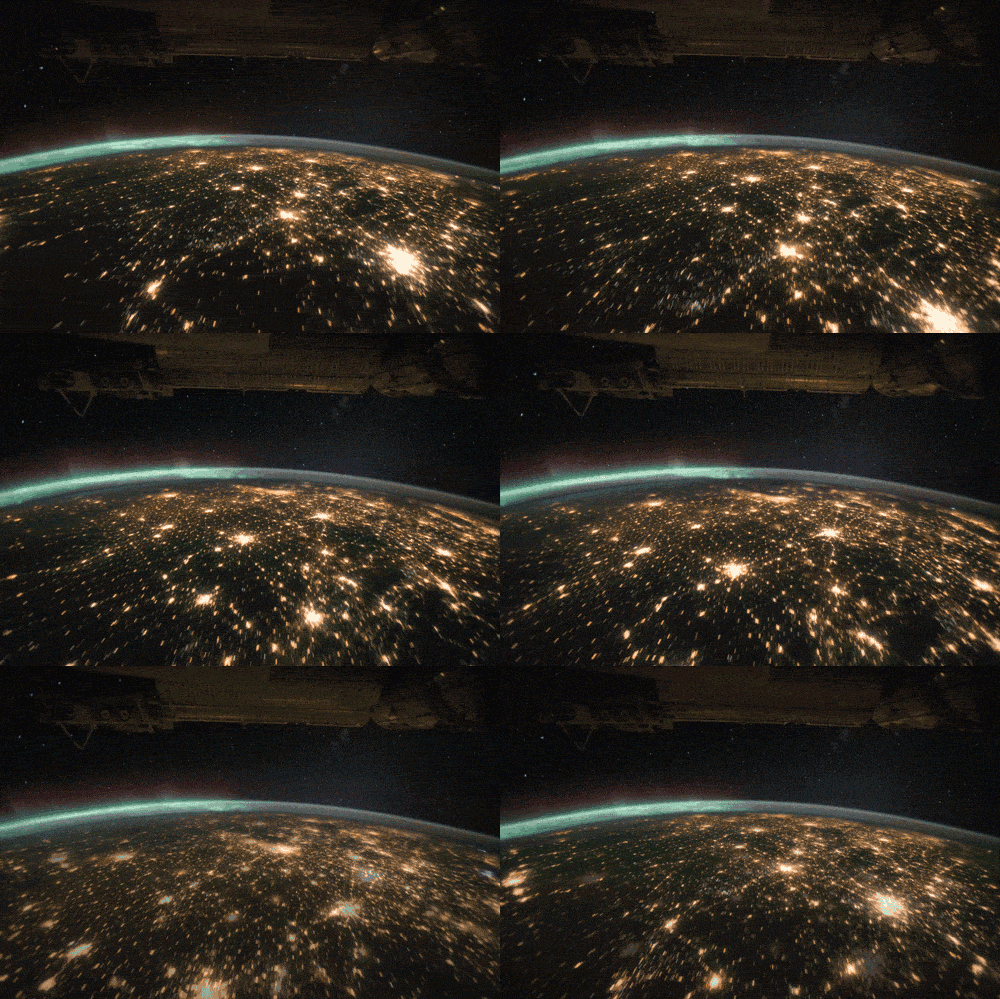
Viewed from the night sky, the circuit board layout of cities glows bright like molten fire. Industrial civilization’s infrastructure scars the horizon with geometric hard lines; gone is the unpredictable mosaic of trees, grass, streams, and rock which are dug up, covered over, and flattened. The meat grinder of industrial capitalism eats up nature and replaces it with a vast grid-like design of asphalt, concrete, and energy-consuming buildings. Nature gets steamrolled over to make way for strip malls, billboards, and the game of hustling for money – what humans call “progress” and “development”. To be blunt, ecologically sustainable cities do not exist:
…the story of unsustainable cities is characterized by a ‘tragedy of the commons’ phenomenon not only in the deployment of urban infrastructure but also in the overuse of the natural capital that sustain the city.
… looking at the story of unsustainable cities from the perspective of a simple general equilibrium urban model, open access to urban land leads to high concentrations of population, huge deployment of urban infrastructure and irreversible degradation of the natural capital creating a ‘tragedy of urban infrastructure’ that undermines the sustainability of cities creating preannounced urban ruins.
Psychotic disorders are the side effect of living in present day mega-cities:
…Previous research has shown that people living in cities have a 21% increased risk of anxiety disorders and a 39% increased risk of mood disorders. In addition, the incidence of schizophrenia is twice as high in those born and brought up in cities…By 2050, almost 70% of people are predicted to be living in urban areas…
The social media cocoons and virtual realities people surround themselves with in our digitized and commodified world must also contribute to this mental sickness. The innate unsustainability of modern cities underlies this unhealthy living arrangement. For instance, Japan adopted the fossil-fuel-powered, high-consumption, industrial way of life and has gone parabolic in its ecologic overshoot:
Japan’s per capita Ecological Footprint is 55 percent higher than the world average, 140 percent higher than BRIICS and 171 percent higher than ASEAN countries. However, Japan’s per capita Footprint is 27 percent less than the average G7 countries’, of which Japan is a member. This is mostly due to the United States’ high per capita Ecological Footprint and its relatively large population size, which drives up the G7 average…
….On average, the shipping distance of food imported into Japan is about 4500 miles, approximately the direct distance between Tokyo and Moscow…
…It takes 1.5 years for the Earth to regenerate the renewable resources that Japanese people use…
For those consumed by the system, the Aokigahara Forest in Japan is the world’s second most popular place to commit suicide; the first is the Golden Gate Bridge in San Francisco.
…if you look beyond the modern, Western schools of psychiatry, you find that in traditional societies among primary people, the people we once used to call primitives, that it is understood that sanity and madness have to be defined always in relationship to the natural habitat; and that indeed to a very large extent, madness is understood to be an imbalance between the individual and the natural environment or between an entire tribe or a people and its natural environment…”
“…What Auschwitz was to its human inmates — an expertly rationalized, efficiently organzied killing ground — our urban/industrial system is fast becoming for the biosphere at large, and, for ourselves, as an inseparable part of the environment… ~ THEODORE ROSZAK
Living in an Age of Madness, the best one can do is to keep from succumbing to the insanity.
The horrific bombings which took place recently at the Boston Marathon are the most significant terrorist attack to have occurred on U.S. soil since 9-11. My condolences go out to the innocent victims. Ideologies of any sort can be twisted to justify abhorrent acts. This terrorist act opens up old wounds for an Empire which in the last decade has gone on the offensive, spending vast resources on foreign wars and a security and surveillance state. Even with such Herculean expenditures, the asymmetric nature of terrorism demonstrates there is no foolproof solution for preventing such acts. The perpetrators spent perhaps a few hundred bucks on their homemade bombs, and we spend incalculable multiples of treasure and blood in return. This was really the goal of Osama bin Laden – to draw the Empire into costly wars and expenditures of life and limb. As has been stated by others, the best that can be hoped for from a military standpoint is to keep terrorist groups in a constant degraded and disorganized state. As much as left-leaning individuals as myself like to point out the foreign policy “transgressions”(to put it mildly) of the American Empire, decades of capitalist imperialism will never be put back into the bottle. Such bombings are pretty much daily occurrences in war-ravaged Iraq and Afghanistan as well as other areas of the Middle East. Our incursions into those countries only seem to have fueled the fire.
A law enforcement official had some interesting info on the bombings:
…A preliminary analysis of the bombs, which went off near the race’s finish line on Boylston Street, suggests they are similar to the improvised explosive devices found in war-torn regions like Iraq and Afghanistan, the law enforcement official said.
“The shrapnel, the simplicity of it — it’s something right out of the Iraq War. A basic roadside bomb,” the official said.
That “basic bomb” can be seen in the design of the Boston bombs, the law enforcement official said: pressure cookers stuffed with nails, ball bearings and other projectiles, and hidden in black duffel bags left near the 26.2 mile mark in the race.
What appear to be fragments from a pressure cooker were recovered at the scene, along with BBs, nails and black-nylon fragments possibly from a bag used to house the device, the FBI said.
Black explosive powder and a circuit board believed to have been used to detonate the bombs were also found, the federal official said.
Similar explosives have been used in third-world hot spots from South Asia to the Persian Gulf, and one of the devices used in the botched bombing of Times Square in May 2010 employed a pressure cooker.
The Pakistani Taliban, which claimed blame for the 2010 Times Square attempt, said it had no role in the Boston attack, according to The Associated Press.
A 2010 bulletin issued by the Department of Homeland Security and the FBI warned pressure-cooker bombs are as easy to transport as they are to conceal.
“Terrorists can exploit the innocuous appearance of easily transportable items such as pressure cookers to conceal IED components,” the alert said. “Placed carefully, such devices provide little or no indication of an impending attack.”
That some victims lost limbs in the blast puts the device “into a powerful class,” said John Goodpaster, head of the forensic science program at Indiana University–Purdue University, and former chemist with the federal bureau of Alcohol, Tobacco, Firearms and Explosives.
Goodpaster said the blasts appeared to be from a “high explosive of some kind, military explosive, commercial explosive or improvised explosive.”
…
The sooner the world can get off MENA oil, thereby pulling the plug on the financial network of terrorist groups, the better off we’ll all be, not to mention our indispensable biosphere.
According to Wikipedia resources:
…Saudi Arabia is said to be the world’s largest source of funds for Salafi jihadist terrorist militant groups, such as al-Qaeda, the Afghan Taliban, and Lashkar-e-Taiba in South Asia, and donors in Saudi Arabia constitute the most significant source of funding to Sunni terrorist groups worldwide, according to Hillary Clinton.[1] According to a secret December 2009 paper signed by the US secretary of state, “Saudi Arabia remains a critical financial support base for al-Qaida, the Taliban, LeT and other terrorist groups.”[2]
The violence in Afghanistan and Pakistan is partly bankrolled by wealthy, conservative donors across the Arabian Sea whose governments do little to stop them.[1] Three other Arab countries which are listed as sources of militant money are Qatar, Kuwait, and the United Arab Emirates, all neighbors of Saudi Arabia…
…Actually 70 percent isn’t unheard of for Portugal. For a few hours in 2011, Portugal was entirely run on renewable power. Yet this was the first time so much was sustained for a quarter.
Portugal’s investment in modernizing its electricity grid in 2000 has come in handy. Like in many countries, power companies owned their own transmission lines. What the government did in 2000 was to buy all the lines, creating a publicly owned and traded company to operate them. This was used to create a smart grid that renewable energy producers could connect to (encouraged by government-organized auctions to build new wind and hydro plants)…
Of course planet Earth has an avalanche of environmental problems coming to a head in the near future (all caused by humans, mind you), but it’s good to see some accomplishments in at least one area of human impact – reduction of fossil fuels – even if it may be too little, too late.