Someone said in my last post that I’m making energy into a God. I’m here to tell you that energy is a God. Like a diehard cigarette addict smoking through their tracheostomy, we continue to use the stuff in the face of extinction-threatening effects to the climate. Our foreign policy revolves around how to get the stuff. In patriotic flag-waving fervor, we send our kids off to war over the stuff. Hell, we’ll butcher an entire country to grab the stuff while dressing it all up as a War on Terror. We even have a term for those poor souls suffering from the affliction of sitting on the stuff. We call it the resource curse. True to form, Iraq is the most glaring example of this feeding frenzy by the multinational oil companies, accompanied by wholesale corruption and that thunderous sucking sound of taxpayer money down a bottomless pit:
I’ll be going on sabbatical for a while, so I’ll leave you with a further discussion of the failings of Capitalism. Any talk of growth is simply another version of the capitalist system. In order to ensure the survival of our species, we must break from that paradigm. It’s as simple as that. Below are excerpts of an essay which hits on the major problems of our current economic system. I’ll post again when I can, but the next two weeks will be sporadic.
… Harmony in the world—among its people and between humans and the rest of the ecosystems—is not possible in the context of capitalism. Capitalism, a system that has been in existence for some 500 years (merchant capitalism for approximately 250 years and industrial capitalism for about 250 years)—a relatively short time in the 150,000 year history of anatomically modern humans—has shown that it fosters interpersonal relations and metabolic interactions with the earth that are detrimental to achieving a harmonious existence. This is a result of capitalism’s basic characteristics and the relationships it creates as it normally functions. The purpose of capitalism is not to satisfy human needs and preserve the environment. There is only one purpose and driving force—ultimately responsible for both its dynamic periods and its crises and long periods of slow growth (stagnation)—and that is the accumulation of capital without end. The capitalist system has a number of basic characteristics and also fosters specific human characteristics and relationships. Here are ten key aspects of capitalism:
It has to grow (or else it is in crisis) and its very logic and motivating force impels growth.
It has no other driving force than the accumulation of ever greater amounts of capital.
Through the creation of so-called “externalities” (or side effects) it wreaks damage on humans as well as the ecosystem and the life support systems needed by humanity and other species. In Paul Sweezy’s words: “As far as the natural environment is concerned, capitalism perceives it not as something to be cherished and enjoyed but as a means to the paramount ends of profit-making and still more capital accumulation.”1
It promotes the use of nonrenewable resources without regard to the needs of future generations, as if there was no end to them, and abuses even renewable resources such as ocean fisheries and forests.
It creates vast inequality in income, wealth, and power both within and between countries. Not only class, but race, gender, and other inequalities are built into its laws of motion.
It requires and produces a reserve army of labor—people precariously connected to the economy, most kept in poverty or near poverty—so that labor is available during economic upswings and workers can easily be fired when not needed by businesses.
It promotes national economic and political competition and imperialism, leading to wars for domination and access to resources.
It fosters and rewards those particular human traits that are useful for thriving or even just existing in such a possessive-individualist society—selfishness, individualism, competition, greed, exploitation of others, consumerism—while not allowing the full expression of those human characteristics needed for a harmonious society (cooperation, sharing, empathy, and altruism).
It leads to the breakdown of human health since people operate in a hierarchical society, with many working under dangerous and physically debilitating conditions or in jobs that are repetitive and boring—while subject to job loss or fear of losing their job. (There are many adverse long-term health effects following the loss of one’s job.)2
It leads to the breakdown of healthy communities as people become more solitary in outlook and behavior and indigenous culture is replaced by the dominant national or international capitalist culture and outlook. People become dedicated to obtaining more for themselves and their families and depending less on reciprocal relationships with others.
The growth imperative of capitalism deserves special attention because it is one of the major stumbling blocks with respect to harmony between humans and the environment. Accumulation without end means using ever greater quantities of resources—without end—even as we find ways to use resources more efficiently. An economy growing at the very meager rate of 1 percent a year will double in about seventy-two years, but one growing at 2 percent a year, still a low rate, will double in size in thirty-six years. And when growing at 3 and 4 percent, economies will double in twenty-four and eighteen years respectively. China recently has seen recorded growth rates of up to 10 percent, meaning economic output doubles at a rate of approximately every seven years! Yet, we are already using up resources far too fast from the one planet we have—depleting the stocks of nonrenewable resources rapidly and misusing and overusing resources that are theoretically “renewable.” If the world’s economy doubles within the next twenty to thirty years this can only hasten the descent into ecological, and probably societal, chaos and destruction.
Thus capitalism promotes the processes, relationships, and outcomes that are precisely the opposite of those needed for an ecologically sound, just, harmonious society.
…
Rational and useful alternative solutions to any problem depend upon a realistic analysis and diagnosis as to what is causing it to occur. When such analysis is lacking substance the proposed “solutions” will most likely be useless. For example, there are people fixated on nonrenewable resource depletion that is caused, in their opinion, by “overpopulation.” Thus, they propose, as the one and only “solution,” a rapid “degrowth” of the world’s population. Programs that provide contraceptives to women in poor countries are therefore offered as an important tool to solving the global ecological problem. However, those concerned with there being too many people generally do not discuss the economic system that is so destructive to the environment and people or the critical moral and practical issue of the vast inequalities created by capitalism. Even the way that capitalism itself requires population growth as part of its overall expansion is ignored.
Thus, a critical aspect almost always missing from discussions by those concerned with population as it affects resource use and pollution is that the overwhelming majority of the earth’s environmental problems are caused by the wealthy and their lifestyles—and by a system of capital accumulation that predominantly serves their interests. The World Bank staff estimates that the wealthiest 10 percent of humanity are responsible for approximately 60 percent of all resource use and therefore 60 percent of the pollution (most probably an underestimate). Commentators fixated on nonrenewable resources and pollution as the overriding issues cannot see that one of their main “solutions”—promoting birth control in poor countries—gets nowhere near to even beginning to address the real problem. It should go without saying that poor people should have access to medical services, including those involving family planning. This should be considered a basic human right. The rights of women in this respect are one of the key indicators of democratic and human development. But how can people fixated on the mere population numbers ignore the fact that it is the world’s affluent classes that account for the great bulk of those problems—whether one is looking at resource use, consumption, waste, or environmental pollution—that are considered so important to the survival of society and even humanity?
In addition to the vast quantity of resources used and pollution caused by wealthy individuals, governments are also responsible. The U.S. military is one of the world’s prime users of resources—from oil to copper, zinc, tin, and rare earths. The military is also is the single largest consumer of energy in the United States.5
While capitalism creates many of the features and relationships discussed above, we must keep in mind that long before capitalism existed there were negative societal aspects such as warfare, exploitation of people and resources, and ecological damage. However, capitalism solidifies and makes these problems systemic while at the same time creating other negative aspects.
Living in Harmony with the Planet
It is certain that there is no way to reach a truly harmonious civilization with an economic system in which decisions are made by private individuals based on how much capital will be accumulated as well as personal greed and consumerism. In such a society “[s]ocial relations became but reflections of the dominating force of society’s capitalist economics.”6Hierarchical class structures are solidified—with workers (blue and white collar), small business owners (this includes farmers and craftspeople working on their own or in small units), and owners and managers of large businesses. The relationship of a worker to a business manager or owner reflects differences of wealth and power in the workplace and in the world outside. And the worker and the boss have differing interests. The boss is trying to maximize profits while the worker is trying to get more income and better working conditions. Because of the motive force of capitalism and the procedures, practices, and approaches embedded in its DNA, there is no way to reform or modify the system to accomplish the goals of sustainability, harmony, or ecological civilization. Capitalism, in its very essence, is anti-sustainability, anti-harmony, and anti-ecology. For Marx capitalism generated an “irreparable rift” in the metabolism of nature and society, requiring the “restoration” of this basic metabolism essential to life—a restoration that necessitated a more harmonious social order beyond capitalism.7
No one can predict the details of any future civilization. But, to be ecological and socially sustainable—basic requirements for harmonious society—an economy will need to have the sole purpose of satisfying basic human material and nonmaterial needs (which, of course, includes a healthy ecosystem) for all people. As with many pre-capitalist societies, economics will need to be submerged within human relationships and must be under control of the people…
This is a stellar interview with Matt Taibbi and Yves Smith worth watching from start to finish. They cover a lot of ground in a short time including the shredding of the social fabric by Wall Street malfeasance and the fact that your grandmother’s life is more endangered by a high-finance businessman in a suit and tie rather than the local purse snatcher on the street corner. Remember when Lloyd Blankfein admitted that some of their financial instruments were of no benefit to society?
Excerpt on the comparisons with Wall Street and the Mafia Dons:
BILL MOYERS: You’re describing a corrupt financial and political system. And both of you in recent writings, your current article in “Rolling Stone,” which is devastating on the scam that the “Wall Street learned from the Mafia,” and a recent column you wrote about the mafia state, you’re both using that metaphor to apply to our financial and political system. When I read your pieces, you’re not playing with words there. You mean it.
YVES SMITH: Yeah.
BILL MOYERS: Why do you mean it?
YVES SMITH: Well, the mafia, when it gets to be big enough, first thing it has services that people feel they need if they’re in a difficult situation. So, for example, loan sharking. If you really need money, they do have the money. And people enter into these loan shark deals even though they know it’s going to be very difficult to pay 20 percent or more interest and they’ll have their legs broken if they don’t pay back.
And the banks actually behave very much in that manner when they find people who really need money. So you see this with credit cards, you know, that, or, and with mortgages. That if you hit– it’s not this if you hit any tripwire, that, you know, become in arrears, the banks basically act in this very extortionate manner and don’t cut any breaks.
MATT TAIBBI: And I think that there’s also this, they are the mafia because of their vast criminality in Wall Street now is that it’s bribery, theft, fraud, bid rigging, price fixing, gambling, loan sharking. All of these things, it’s all organized.
I mean, the story I just wrote about, which was about the systematic rigging of municipal bond auctions, which affected every community in every state in the country and all of the major banks were involved, including Chase.
They were rigging the auctions that were designed to create a fair rate of return on the investments that towns were getting on their– the money they borrowed for municipal bonds. And this is not like something that the mafia does. This is what the mafia does. The mafia has historically, it’s one of their staple businesses, is bid rigging for construction or garbage or, you know, street cleaning services, whatever it is.
They’re doing exactly the same thing. The only thing that’s different is there’s no violence involved. But what their method of control is that they’re ubiquitous. They have this incredible political power that the mafia never had.
YVES SMITH: And they also have what amounts to an oligopoly. I mean, for many of these services, you have a great deal of difficulty going beyond the five biggest banks, you know? This is– it’s the consequence of too big to fail is that when, you know, some of the smaller players, again, you know, like– JPMorgan buying Bear Stearns.
In the crisis, when the smaller players got sick, they were merged into the bigger players. So now if you want– for a lot of these services, there aren’t that many players for you to go to. You really have no choice in– other than to deal with the big banks.
BILL MOYERS: Congress is paid to be informed and to hold these guys accountable. Why don’t they ask the kind of questions you’re dealing with here?
MATT TAIBBI: People refuse to look at these banks and think of them as organized crime organizations.
They in their eyes, organized crime is always either the Italian mafia or the Irish mafia. This isn’t what it looks like. But that is who they are. And I think that they’re treated with a kind of deference and respect, because traditionally that’s not who they were. They were these icons of finance who helped build this country.
But that’s not who they are anymore. And I think, it’s hard for people to wrap their heads around that and treat them the way they should be treated.
YVES SMITH: Well, I think people don’t want to think that there’s something wrong with leaders. And CEOs are leaders of the business community. If you really believe that CEOs of businesses that are really fundamental to the economy are corrupt, you have to think of a very serious restructuring of the business and financial system.
And even if people kind of intellectually might be willing to contemplate that, they don’t really want to go to what the implications are. So it’s much easier for them to block out that thought.
Critical to remember is that the key cause of the short-term, predatory behavior discussed above is what is called the ‘financialization’ of capitalism over the last several decades. In other words, the productive aspect of the economy, such as manufacturing and research and development, were replaced by manipulation of the economy with financial instruments and creating wealth-extracting bubbles. An example of a corporation becoming financialized is GE:
Since over half of GE’s revenue is derived from financial services, it is arguably a financial company with a manufacturing arm.
Examples of financial bubbles in our economy are the dot-com bubble, the commodities bubble, the housing bubble, the student loan debt bubble, the credit card debt bubble, or even more recently the gas fracking bubble:
…Chesapeake and its lesser competitors resemble a Ponzi scheme, overhyping the promise of shale gas in an effort to recoup their huge investments in leases and drilling. When the wells don’t pay off, the firms wind up scrambling to mask their financial troubles with convoluted off-book accounting methods. “This is an industry that is caught in the grip of magical thinking,” Berman says. “In fact, when you look at the level of debt some of these companies are carrying, and the questionable value of their gas reserves, there is a lot in common with the subprime mortgage market just before it melted down.” Like generations of energy kingpins before him, it would seem, McClendon’s primary goal is not to solve America’s energy problems, but to build a pipeline directly from your wallet into his.
The numbers vary slightly on the internet as to the finance industry’s take of the total profits of the economy, but the overall trend has been an ever-increasing slice of the economic pie. Just before the financial meltdown of 2008, finance accounted for more than a third of total profit in the economy and it has come roaring back since then. The Free Market Economy has evolved from a supposed model of efficient use of capital for the benefit of production to the efficient funneling upwards of capital to the elite 1%. And of course there is the revolving door between the government and finance industry. The graph below shows the growth of the finance industry as a percentage of the total corporate profits since 1948:
American companies are now run by money men who have different priorities than those business leaders of the past. David Bollier explains:
We all know the story of enclosure as it applies to the commons. The lesser-known story is that businesses are enclosing themselves – aggressively cannibalizing their own internal productive capacities in order to maximize short-term profits.
Harvard business guru Clayton Christensen argues in Forbes magazine that business executives are so habituated to seeing the world through a scrim of financial abstractions that they are blindly undercutting their own long-term productive capacities. The problem is so pervasive, says Christensen, that “whole sectors of the economy are dying…”
Financialization could be called the degenerate, end-stage of capitalism where making money from money is the be-all and end-all of corporate decision-making.
Professor Wolff discusses with William Tabb this financialization of the economy in more detail here. Our economy has become a giant Ponzi scheme. This won’t end well.
“The Saudis have a saying that acknowledges their luck in being born on top of billions of barrels of oil and the inevitability of its depletion:
“My father rode a camel, I drive a car, my son flies a jet plane, his son will ride a camel.”
Delusional Americans believe they have a right to cheap plentiful oil forever. They refuse to acknowledge that luck has played the major part in their rise to economic power. The American saying will be:
My great grandfather rode a horse, my grandfather drove a Model T, my father drove a Buick, I leased a Cadillac Escalade, my son died in the Middle East fighting for my oil, his son will never be born.” – Jim Quinn
If you needed further proof of the ulterior motives behind the invasion and destruction of Iraq, I give you this post from Farooque Chowdhury’s Diary. [I have embedded links in the article and done some grammatical edits.]
“Mysteries” of the Iraq War are getting exposed: Rupert Murdoch, the media Moghul, pressed Tony Blair, the British prime minister, to hasten joining the Iraq War. Murdoch did it on behalf of the US Republicans. And, the war took over 100,000 lives.
It is not only the interests behind waging the war, but also the principles and interests the bourgeois press uphold, and the secretive and conspiratorial way the bourgeois democracy works, the lies that are fabricated, how the readers are misinformed, and the manipulation of mass psychology that is being divulged.
The Guardian, British newspaper and AFP, news agency, reported the facts.
The news reports said:
“Rupert Murdoch took part in an ‘over-crude’ attempt by US Republicans to push Tony Blair into action before the invasion of Iraq, the former British prime minister’s ex-media chief claimed [Alastair Campbell…].
“Alastair Campbell said the News Corporation media baron warned Blair in a phone call of the dangers in delaying signing up to the March 19, 2003 invasion, as part of an attempt to speed up Britain joining the military campaign.”
Campbell’s assertions were made in The Burden of Power: Countdown to Iraq, diaries from his years at Blair’s side. [Here is his blog]
The news reports said:
“Campbell suggested Murdoch made moves to help the right-wing Republican Party of then US president George W. Bush before the March 18 vote in the […] House of Commons on deploying troops to Iraq, which was passed.”
Citing Campbell the news reports said:
On March 11, 2003, Blair “took a call from Murdoch who was pressing on timings, saying how News International would support us […]”
The reports said:
“‘Both TB [Tony Blair] and I felt it was prompted by Washington, and another example of their over-crude diplomacy. Murdoch was pushing all the Republican buttons, how the longer we waited the harder it got.’
“Campbell said Murdoch’s intervention came ‘out of the blue’.
“‘On one level (Murdoch) was trying to be supportive, saying ‘I know this is a very difficult place, my papers are going to support you on this’. Fine.
“‘But I think Tony did feel that there was something a bit crude about it. It was another very right-wing voice saying to him: ‘Look, isn’t it about time you got on with this?’”
The news reports said:
“Gordon Brown agitated so aggressively against Tony Blair – demanding a departure date soon after the 9/11 attacks – that Downing Street concluded in 2002 that the then chancellor was ‘hell-bent on TB’s destruction’.
Murdoch’s “worldwide contacts through the businesses that” he operated should not be missed while going through the news items. However, in his witness statement to the Leveson inquiry Murdoch said: “As for the three telephone calls with the then prime minister, Tony Blair, in 2003, I cannot recall what I discussed with him now, […] or indeed even if I spoke with him at all. I understand that published reports indicate that calls were placed by him to me. What I am sure about is that I would not in any telephone call have conveyed a secret message of support for the war; the NI titles’ position on Iraq was a matter of public record before 11 March 2003.” His famous declaration: “I’ve never asked a prime minister for anything.” He cited “four articles from the Sun and the News of the World which illustrated their ‘pro-war stance’ before 11 March 2003 when the main phone call took place.” The media Moghul’s company termed the assertion that he lobbied Blair over the Iraq War on behalf of the US Republicans as “complete rubbish”. It said: “Furthermore, there isn’t even any evidence in Alastair Campbell’s diaries to support such a ridiculous claim.” It should be mentioned that News International is News Corp.’s British newspaper arm, publishing The Times, The Sun and The Sunday Times. Blair faced a challenge getting his Labour Party lawmakers to back UK’s involvement. Many of them rebelled. (“Murdoch pushed Blair on Iraq: ex-media chief” and “Rupert Murdoch pressured Tony Blair over Iraq, says Alastair Campbell”, June 16, 2012)
Already known is the Bush – Blair 2003 Iraq memo or Manning memo, a secret memo of a meeting between Bush and Blair. The historic meeting took place on January 31, 2003 in the White House. The memo, written by David Manning, Blair’s chief foreign adviser, showed that the US had already decided on the invasion of Iraq at that point. Manning participated at the meeting. The memo showed Bush and Blair made a secret deal to carry out the invasion regardless of whether WMD were discovered by UN inspectors. The fact contradicts statements Blair made to the British parliament that Saddam Hussein would be given a final chance to disarm. Existence of the memo was made by Philippe Sands in his book Lawless World. The New York Times collected the memo and confirmed its authenticity.
Then, there is the Colin Powell case. While arguing for invading Iraq Powel claimed that Saddam was hiding a secret biological weapons program. Powell dramatically and confidently held up a vial he said could contain anthrax during his presentation of the Iraq case at the UN in 2003. But, later, the claim proved bogus.
Powel relied on information provided by an Iraqi defector. The defector was code-named “Curveball”. CBS News identified Rafid Ahmed Alwan al-Janabi as “Curveball”. Rafid made the false claims to German intelligence officials. The US used the claim that ultimately turned out to be a lie. But the Empire used the false information to start the war. The UN inspectors found no evidence of a biological weapons program, which was claimed.
In interviews with The Guardian, Rafid told the way he sought asylum in Germany and wanted to see an end to Saddam’s regime. “They gave me this chance. I had the chance to fabricate something to topple the regime. I and my sons are proud of that […]”
Defector tells how US officials ‘sexed up’ his fictions to make the case for 2003 invasion.
The “story” of falsehood and fabrication doesn’t end there.
Citing Britain’s The Independent, Thomas Ferguson, Senior Fellow at the Roosevelt Institute and Professor of Political Science at the University of Massachusetts, Boston, wrote: The Independent news report “buries forever all claims that the US, the UK, and other governments did not have oil on their minds as they prepared to invade Iraq.” He referred to a book that drew on more than a thousand secret government documents. These show meetings between the UK government and British oil companies in the run up to the war. “These demonstrate that all the denials in London and Washington that policymakers were not concerned about oil as they invaded were as false as the famous cover story about weapons of mass destruction.” These also show that all the governments were negotiating over rights to oil long before the invasion and that they were working closely with their companies. Dick Cheney’s Energy Task Force was reviewing documents on Iraqi oil well before the attack on 9/11. (“Oil-Soaked Politics: Secret U.K. Docs on Iraq”)
So, the profit issue emerges. The Iraq war brought profit to all interested: weaponeer, supplier, infrastructureer, defense contractor, mercenary companies, and a section of media and politicians.
According to MSN Money(link to Cheney and his war profits), Halliburton’s KBR, Inc. division made $17.2 bn in the desert war in the 2003-2006 period, which was one-fifth of KBR’s total revenue for the 2006 fiscal year. Halliburton was involved with construction and maintenance of military bases, oil field repairs, and infrastructure rebuilding projects in the country.
Veritas Capital Fund/DynCorp, the private equity fund, gathered $1.44 bn through its DynCorp subsidiary by imparting training to new Iraqi police forces. The company is termed by many as a ‘state within a state’.
Through repair, maintenance, etc. work in Iraqi oil fields the Washington Group International gathered $931 mn in the period 2003-2006. Through the work of munitions disposal the Environmental Chemical got $878 mn by the end of fiscal 2006. The Aegis of the UK made $430 mn. (“25 Most Vicious Iraq War Profiteers”)
And, after the Bush Blair, Murdoch, Halliburton war business, where stood Iraq?
Thomas E. Ricks, Washington Post Pentagon correspondent quoted Mohammed Abdullah, an Iraqi in his Fiasco: The American Military Adventure in Iraq: “They said they came to liberate us. Liberate us from what? They came and said they would free us. Free us from what? We have traditions, morals, and customs. We are Arabs. We’re different from the West. Baghdad is the mother of Arab culture, and they want to wipe out our culture, absolutely.”
Iraq now stands devastated, a bold sign of Naked Imperialism (title of a book by John Bellamy Foster). Parts of life in the land have been wiped out. Does imperialism have the power to restore what has been lost in Iraq? It’s incapable. Imperialism’s devastating power lacks power to create and nourish life and nature. Iraq is one of the monuments of destruction imperialism has constructed in many parts of the world.
I haven’t done any bashing truth-telling on Mitt Romney yet, so now would be a good time since it looks like King Romney is closing the gap in war chest funds. As Matt Taibbi pointed out earlier this year, “the candidate who raises the most money wins an astonishing 94% of the timein America.” And Romney appears to be the golden boy for our financial oligarchs. According to the experts in such matters of our staged elections, Romney has the backing of the 1%:
..Romney will certainly have the advantage as Wall Street tycoons and conservative billionaires line up to contribute. One billionaire, casino magnate Sheldon Adelson, was reportedly ready to make “limitless” contributions, more than $100 million, to Romney to defeat the president….
“…Romney and his allies are certain to hold the financial upper hand, not least because the Supreme Court’s Citizens United decision in 2010 allowed for a flood of corporate cash. The unspoken hope in Chicago is that superior strategy and a shrewd use of technology can make up for Obama’s diminished stature and more formidable opponent.”
Now as I explained in my post ‘Obama: Figurehead for the Corporatocracy‘, the job of the President is more of a PR position for who really runs the country, i.e. the corporatocracy. If you look at Obama’s record, he is indistinguishable from his predecessor in all issues that matter to the common person. For instance, contrary to Obama’s pre-election populist rhetoric, he has escalated America’s militarism such as in drone and cyber warfare, and he has widened even further the wealth gap. Having previously signed trade agreements with South Korea, Panama and Colombia, Obama continues to sell out the American worker to multinational corporations as revealed in a recently leaked document of a trade agreement called the Trans-Pacific Strategic Economic Partnership (also known as the Trans-Pacific Partnership, orTPP). Like all trade agreements before, this one is no different in the way that it was created, i.e. solely by corporate lobbyists, leaving the American public completely shut out. Compare that with what Obama said in 2008:
We can’t keep passing unfair trade deals like NAFTA that put special interests over workers’ interests…
Rest assured, King Romney will continue the dismantling of America and its Third Worldization in favor of the parasitic financial sector and transnational corporations. He says this TPP tade agreement should be passed through as soon as possible:
Reinstate the president’s Trade Promotion Authority
Complete negotiations for the Trans-Pacific Partnership
Pursue new trade agreements with nations committed to free enterprise and open markets
Create the Reagan Economic Zone
King Romney will also continue to support the military-industrial-complex and America’s war economy, painting himself as a pro-military, self-sacrificing patriotic citizen. But as Cenk Uygur notes, the truth is somewhere 180 degrees from what is painted for mass consumption:
Now after the 2012 political circus concludes, we will have had twelve years of rule by a president with no military service, and with another 4 more years to come. War is not for the privileged wealthy, but for the children of the impoverished 99% in America’s hinterland.
About 1 in 5 current members of Congress is a veteran, but less than 1% of their offspring are. – David Freed
Jack Nelson-Pallmeyer, author and Associate Professor of Justice and Peace Studies at the University of St. Thomas, clarifies for us the ugly reality behind the wars sold to us today:
Hidden in these tragic figures[cost and lives lost] is war’s dirty secret. As historian and former U.S. Army Colonel Andrew Bacevich clearly states, “War is a source of enormous wealth and power [that delivers] profit, power, and privilege to a long list of beneficiaries.”[2] These beneficiaries find it expedient and surprisingly easy to sell war and militarized priorities to a reluctant public using deception, fear, and patriotism.
The politicos no longer represent us, only themselves and the elite monied interests. So no matter who wins this election, expect more of the same from our corporate overlords.
I first heard about Peter Van Buren through a guest post by Jesselyn Radack onGlenn Greenwald’s blog discussing another case of Obama’s ever-widening war on whistleblowers:
Today, I’m not writing about the Espionage Act being used to chill journalists and whistleblowers, but something equally as troubling: the assault on whistleblowers’ First Amendment rights, illustrated by the creepy case of Peter Van Buren.
Here is Peter discussing the outright corruption of what I call our military-media-congressional complex:
And another interview he did recently with Eliot Spitzer on CurrentTV:
Van Buren has a sardonic, humorous writing style with many of his posts which makes them enjoyable to read. As Van Buren explains in the following blog entry, the vast black hole that is Iraq continues to milk American citizens dry through the privatization of war via guns-for-hire eager to project America’s increasingly militarized foreign policy. Besides having our pocketbooks raided by this outsourcing of war for profit, these paid mercenaries aren’t the best of ambassadors for spreading good will and a positive image for America, if there ever existed such a thing from our naked grab for resources by way of military invasion. But in a land of such high rhetoric and such low character, when you need someone to carry out the dirty work of our economy, extrajudicial assassins are a President’s best friend. A case in point is the infamous war profiteer Blackwater, then changed to Xe, and now metamorphosized into Academi (still operating with the testosterone-laced, self-righteous warrior-of-God mentality):
I wrote recently about the return of Blackwater to the State Department, with the mercenary guns-for-hire company changing its name once again (now called Academi in a homage to bad spelling) and buying an existing contract to put it back into the State Department’s world.
It gets creepier, as government seems to get these days.
Slam Dunk on Inman
Academi now boasts two celebrities on its Board of Directors, former attorney general John Ashcroft and retired admiral Bobby Inman. Ashcroft of course is Mr. Homeland Security, the guy who set in motion the smorgasbord of unconstitutional wiretapping, spying and detentions without trial that followed 9/11. He is also the guy who was so offended by the marble statues at the Department of Justice that he had them draped to hide classical nude details.
From a State Department-Blackwater love fest perspective, Inman is a slam-dunk. Inside Foggy Bottom, Inman is permanently associated with the up-armoring of embassies abroad through the 1985 “Inman Report,” a call to arms that resulted in the moated, blast-proof, unapproachable fortress embassies America promotes its image through today. The Report was also the catalyst for the establishment of the part of the State Department which titularly oversees the deployment of mercenaries, everyone’s favorite Bureau of Diplomatic Security, DS. Inman’s word is gospel to DS, so his appearance on the Academi Board is no accident.
Small World
Keeping the circle of life theme going, Academi’s CEO Ted Wright used to be president of mega-contractor KBR, the firm Dick Cheney worked for and the firm that made billions running the backstage logistics portion of the Iraq and Afghan crusades. One of Academi’s VPs worked for Queen Noor of Jordan, and has ties to the Bush dynasty. It is indeed a small world.
More creepiness?
Academi, on its “pro shop” web site, sells God’s Will T-shirts, pictured above. Just the thing for the budding merc crusader to wear while gunning down Muslims for profit. Jeez, and people wonder why we’re not winning.
A Devil’s Bargain
In the days since 9/11, State has undergone a fundamental shift, one that has required the organization to make a Devils’ Bargain with mercenaries like Academi. Prior to 9/11, State’s policy was generally to evacuate embassies in countries at war, reinserting diplomats when things quieted down to the point that diplomacy was again possible. This strategy worked well for some 220 years of American history.
After 9/11, State felt compelled to out-macho the military, to prove its manliness in the testosterone-fueled Bush (and now Obama) years. This meant opening and/or keeping open embassies in the midst of shooting wars, originally just in Iraq and Afghanistan, but now spread alongside America’s increasingly one-tune foreign policy of belligerence to places like South Sudan, Yemen and elsewhere in drone land. The US military, already stretched thin by endless war, has neither the forces nor the interest in guarding State’s pasty pseudo warriors, and so the Department of State is forced to turn to private armies, like Academi, mercenaries, to enable its macho posture abroad.
I saw groups like Blackwater in action in Iraq, often alongside our own military. The mercs were what our military would be like without the NCO corps to enforce discipline, a frat house with guns, lots of guns. While State makes wordplay out of claiming to supervise its mercs, overpaid, ‘roided ‘dudes with guns named Smitty, J-Dub, Spider and the like take little notice when requested to follow the laws of war in protecting diplomats so far out of their environments. It is a situation that isn’t just likely to go wrong, it is one that practically demands to devolve into crisis.
The solution is straightforward. State should understand and admit that it is neither equipped, trained nor needed for combat situations. State should take a step back from adventures that assure its role as negotiators, diplomats, public diplomacists and the like will be misunderstood at best, and refocus its resources away from spending billions on private armies. Until then, State is forced into bed with creepy organizations like Academi, and will suffer for it.
How are things in Iraq these days in the aftermath of our implementation of disaster capitalism? … just peachy. This video best describes the privatization of the Iraqi economy and its oil that is presently going on:
A recurrent theme in the reality based community is the continued assertion that infinite growth cannot happen on a finite planet. This simple statement seems to be quite self-evident to those announcing it, yet the powers that be cannot seem to be able to wrap their head around it. We live in a society awash with advertisements that seek to sell you something at some price. Capitalism commodifies everything and its ethos of mandatorily attaching some arbitrary, imagined worth to all things has permeated every aspect of our lives, our ethics, and our value system. We are a society that projects a cost/price analysis on everything, including relationships with fellow humans. According to ‘Save the Children’ charity chief executive, Justin Forsyth, half a billion children over the next 15 years will suffer long-term mental and physical harm due to stunted growth by malnutrition. Surely if we valued the future life of our grandchildren more than profit, then we would not allow such a thing to happen. If our own children’s future is not valued enough to save them from our greed and shortsightedness, then why would the environment be treated any differently, despite its importance to the survival of every living thing on the planet. The scientist James Lovelock once said that Green is the color of mold and corruption. If we cannot separate the needs of capitalism from the needs of our planet, then every last bit of resources and life-sustaining gift from the earth will be chopped up into tradable, sellable units and thrown into the gaping jaws of the free market. Philosopher Leonardo Boff notes:
The fundamental defect in the UN’s document for Rio+20 is the total absence of a new vision or new cosmology that would create the hope of the «future that we want», the motto of the great gathering. As such, it belies a promising future.
To those who drafted it, the future depends on the economy. There is little value in the adjectives they attach to it: sustainable or green. The green economy in particular constitutes a great assault on the last bastion of nature: transforming into merchandise and putting a price on everything that is common, natural, vital and indispensable to life, such water, the soil, fertility, jungles, genes, etcetera. That which pertains to life is sacred and must not be passed to the sphere of business. Instead, it becomes part of the market place, under the categorical imperative: take all you want, make business with everything, especially with nature and with her goods and services.
This is the supreme egocentrism and arrogance of the human being, or, as it is also called, anthropocentrism. Human beings see the Earth as a warehouse of resources only for them, without realizing that we are not the only ones who inhabit the Earth, nor do we own her; we do not feel that we are part of nature, but outside and above her, as her «lords and masters». We forget, however, that there exists a whole visible community of life (5% of the biosphere) and quadrillions of quadrillions of invisible microorganisms (95%) that guarantee the vitality and fecundity of the Earth. They all belong to the Earth/condominium and have the right to live and coexist with us. Without interdependent relationships with them, we could not even exist. The Rio+20 document does not take any of this into account. We can then safely say that with that document there is no salvation. It opens a path towards the abyss…
This straitjacket of capitalism will not release its grip on civilization until the needs of this ever-consuming, ever-growing, ever-alienating economic system kills its host. Gil Smart gives insight into this dead-end thinking taking us all over the cliff in his short writing called Faith of our fantasies:
…we face a coming era of constrained resources. Fiscal resources; energy; environmental resources. Continual growth, the type we have conditioned to believe as natural and inevitable, is neither.
I read Megan McArdle’s stuff in the Atlantic, where recently she opined about Europe’s changing demographics (i.e. fewer births, more oldsters) and how this makes robust growth more difficult. She got a letter in return from someone questioning the premise – saying that perpetual growth isn’t possible. This was her response:
Whether or not continuous economic growth is possible, or desirable, the fact remains that modern economies are predicated on the assumption that it will happen. Both individuals and governments have planned for a future in which incomes steadily rise, allowing people to enjoy lengthy retirements, advanced health care, independent living, and of course, repayment of the massive debts that almost everyone has accumulated over the past few decades.
If that growth doesn’t materialize, the shock will be enormous. Generational battles over things like pensions have occurred in the context of rising incomes; they will become bitter indeed if young and old are fighting over a shrinking economic pie. The most brutal shock will of course be over debt. If incomes fall, debt will become an ever larger burden. But if countries default, they will merely shift the shock to someone else — too often, to pensioners at home or abroad.
However laudable Europe’s demographic decline may be from an environmental point of view, it will be an economic disaster for many who expected a stable, prosperous future.
Get it? This is the idea on which we’ve staked our future. And if the idea’s wrong?
Well. I guess that means you’re up shite creek, then.
If we plow blindly down this path, infused with the faith that what we want is what will actually happen – we’re doomed. But not charging down this path requires a fundamental restructuring of the way we think – not bloody likely in this society. Or maybe any society.
Well, Mr. Smart, along with a restructuring of our way of thinking will also be required a restructuring of society. And the elite who sit atop our current social hierarchy of capitalism, benefiting the most from its exploitation and theft, will not let go of the power they hold until it’s ripped from their cold, dead hands, whether by an angry mob or the wrath of an abused and ravaged Mother Earth.
Apparently the Mafia gang in the oval office decided it would be a good idea to employ the same tactics used by those they decide to ‘off’. As in the days of yore when Romans would usurp a foreign army and incorporate the best of that foe’s weapons and tactics, so it is that the American Empire follows in the footsteps of its long deceased predecessor, the Roman Empire. It’s called the “double tap” — sending in a second predator drone strike shortly after the first responders come to the scene of the initial assassination strike to rescue any survivors or retrieve the dead, including the mourners of resultant funerals held days later. This is a policy of treating the population as guilty by association, exterminating any and all who might be linked, however remotely, with the intended target:
According to the NYT, the Administration assumed that, “people in an area of known terrorist activity, or found with a top Qaeda operative, are probably up to no good” and therefore all military age males in a strike zone could be targeted. A former senior counterterrorism official calls earlier drone targeting, “guilt by association.” Of signature strikes in Pakistan, a senior (apparently still-serving) official joked “that when the C.I.A. sees ‘three guys doing jumping jacks,’ the agency thinks it is a terrorist training camp.” And one of Obama’s top political advisors, David Axelrod, was attending targeting meetings, injecting a political taint on the program…
There is no due process for a “suspicious” person to be marked for death by drone. Ask George Zimmerman about that. The only requirement is vague and ethereal intelligence information which, if it’s as reliable as the Iraq WMD intel, appears by all accounts to be radicalizing the affected population tenfold. This boomerang effect will inevitably please our Military Industrial Complex’s constant search for new enemies to grind into profits of war. Death by Drone smacks of a street thug mentality similar to some cheesy gangster movie script. Francine Prose notes :
As drama, the scene is reminiscent of great moments in cable TV: Tony Soprano and his colleagues deciding whom to whack, The Wire’s Avon Barksdale and Stringer Bell conferring on which of their child employees must be eliminated. But it’s one thing to see murders planned on television and quite another to read that this planning session is occurring in the White House Situation Room in January, 2010, and that President Obama has assumed the grim responsibility of casting the final vote on every death sentence that this jury (so obviously outside traditional legal channels) is handing down…
..[consider] the following quote from Michael Leiter, former Director of the National Counterterrorism Center:
You can pass a lot of laws,” Mr. Leiter said, “These laws are not going to get Bin Laden dead.
Get Bin Laden dead? With its execrable grammar, its calculated thuggishness, and, for all that we have been reading about the assumption of personal responsibility, its euphemistic avoidance of what is really at issue (to get dead is not the same as to kill, and it’s never laws but people who get other people dead), the quote suggests a new dispensation in which our government, at the highest level, has given Tony Soprano license to ignore the rule of law and murder actual human beings, some of them harmless civilians. Shouldn’t we feel more frightened than reassured by the knowledge that the leader of our country holds himself accountable for every one of these deaths?
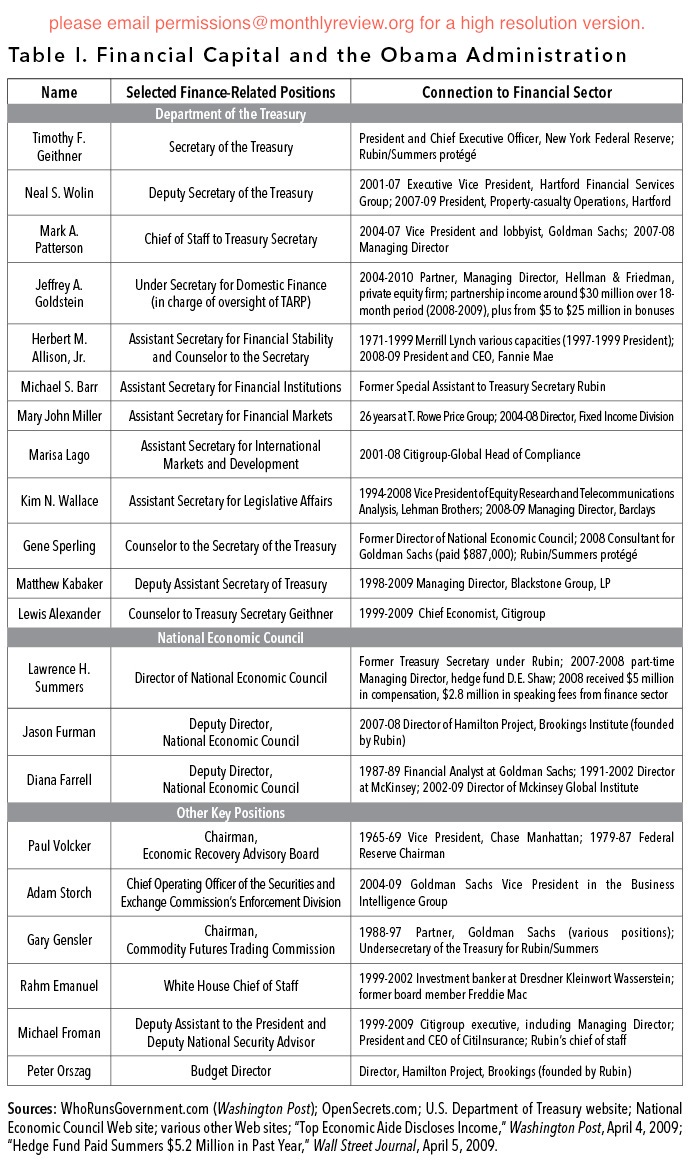
The above montage of clips from the satirical movie ‘The Distinguished Gentleman‘, in which Freshman Congressman (and con man) Thomas Jefferson Johnson (Eddie Murphy) is schooled in the ways of Washington by legendary lobbyist Terry Corrigan (Kevin McCarthy), is as true today as it was back when that movie was made more than twenty years ago, so says Marty Kaplan. The following excerpts from the transcript of Bill Moyer’s latest report – Big Money, Big Media, Big Trouble – tells the sorry and sordid tale of our political economy/society. This Moyer’s interview with Kaplan, a true insider to our political and media complex, is quite extraordinary. He affirms what the general populace is unable to comprehend… that we live in a society in which the news media and government institutions are entirely owned by the corporate oligarchs. The government regulators are owned by the very companies they are charged with over-seeing by way of Wall Street’s army of lobbyists and the revolving door that exists between government and private sector positions. Actual news to inform the public on the state of affairs and issues affecting them is virtually nonexistent on the media airwaves.
…what’s really driving it, if you think of this as a symptom and not a cause, I think what’s really driving it is the absolute demonization of any kind of idea of public interest as embodied by government. And at the same time, a kind of corporate triumphalism, in which the corporations, the oligarchs, the plutocrats, running this country want to hold onto absolute power absolutely. And it’s an irritant to them to have the accountability that news once used to play.
…the notion of spectator democracy has, I think, extended to include the need to divert the country from the master narrative, which is the influence and importance and imperviousness to accountability of large corporations and the increasing impotence of the public through its agency, the government, to do anything about it. So the more diversion and the more entertainment, the less news, the less you focus on that story, the better off it is.
And the self-serving triviality of corporate-run ‘news’ media has become a self-reinforcing mechanism whereby stats are being kept of what is the most popular story which then gets kicked up to the top and influences what that corporate news channel reports on in the future. It’s all driven by ratings and profit rather than educating and informing people on facts and real issues. So Neil Postman was right… We are being entertained to death, literally. This nihilism plays right into the hands of those controlling the levers of power who would not benefit from a well-informed, well-eduated public. The vast majority of public discourse has been reduced to an echo chamber of the crap (divisive ‘wedge issues’, celebrity gossip, sensationalist stories, corporate propaganda, consumerist materialism, valorization of the predatory skills of the modern competitive capitalist, etc.) that fills the corporate-controlled airwaves.
…
BILL MOYERS: You wrote The Distinguished Gentleman 20 years ago. Could you write it today?
MARTY KAPLAN: Oh God, it still is the same. All you have to do is add a couple of zeros to the amount of money. And the same laws still apply. It is fabulous and miserable at the same time.
BILL MOYERS: Was Washington then, and is it now, the biggest con game going?
MARTY KAPLAN: It is the biggest con game going. And the stakes are enormous. And the effort to regulate them is hopeless, because the very people who are in charge of regulating them are the same people who are wholly-owned subsidiaries of the lobbies that run them.
BILL MOYERS: I have it on very good authority that a prominent Washington senator recently told a group of lobbyists in Washington, a room full of lobbyists, that they are the lifeblood of the city. And I thought, “Kaplan has to do a vampire movie now.” Right?
MARTY KAPLAN: Exactly. The connection between the legislators and the lobbyists is so intimate that it’s not even embarrassing for a senator to say that in front of a room. The culture is so hermetically sealed from the rest of the country that it doesn’t occur to them that there is something deeply outrageous and offensive and corrosive of democracy to admit that the money side of politics and the elected side of politics belong to each other.
BILL MOYERS: You wrestle with this, you and your colleagues at the Norman Lear Center, and all the time, on how, on what the system is doing to us. So let me ask you, “How did this happen in America? How did our political system become the problem instead of the answer?”
MARTY KAPLAN: Part of it is the nexus of media, money, and special interest politics. The citizens have given the airwaves to the station. We own the electromagnetic spectrum and for free we give out licenses to television stations. Those stations, in turn, use that spectrum to get enormous amounts of money from special interests and from members of Congress in order to send these ads back to us to influence us. So we lose it in both ways. The other day, the president of CBS, Les Moonves, was reported by “Bloomberg” to have said “Super PACs may be bad for America, but they’re … good for CBS.” I mean, there it is. This is a windfall every election season, which seems not to even stop ever, for the broadcast industry. So not only are they raking it in, they’re also creating a toxic environment for civic discourse. People don’t hear about issues. They hear these negative charges, which only turn them off more. The more negative stuff you hear, the less interested you are in going out to vote. And so they’re being turned off, the stations are raking it in, and the people who are chortling all the way to Washington and the bank are the ones who get to keep their hands on the levers of power. So one of the big reasons that things are at the pass they are is that the founders never could have anticipated that a small group of people, a financial enterprise and the technology could create this environment in which facts, truth, accountability, that stuff just isn’t entertaining. So because it’s not entertaining, because the stations think it’s ratings poison, they don’t cover it on the news.
BILL MOYERS: They don’t cover the news.
MARTY KAPLAN: They don’t cover politics and government in the sense of issues. They’re happy, occasionally to cover horse race and scandal and personality and crime and that aspect of politics. But if you look at a typical half hour of news, local news, because local news is one of the most important sources of news for Americans about campaigns. A lot—
BILL MOYERS: You and your colleagues have done a lot of research on local news.
MARTY KAPLAN: Yes, we’ve been studying it now since 1998. And each year it gets more depressing and it’s hard to believe. We, not long ago, did a study of the Los Angeles media market. We looked at every station airing news and every news broadcast they aired round the clock. And we put together a composite half hour of news. And if you ask, “How much in that half hour was about transportation, education law enforcement, ordinances, tax policy?” everything involving locals, from city to county. The answer is, in a half hour, 22 seconds.
BILL MOYERS: Twenty-two seconds devoted to what one would think are the serious issues of democracy, right?
MARTY KAPLAN: Yes. Whereas, in fact, there are three minutes about crime, and two and a half minutes about the ugliest dog contest, and two minutes about entertainment. There’s plenty of room for stuff that the stations believe will keep people from changing the dial.
BILL MOYERS: What is the irony to me is that these very same stations that are giving 22 seconds out of a half hour to serious news, are raking— and not covering politics, are raking in money from the ads that the politicians and their contributors are spending on those same papers.
MARTY KAPLAN: Yes, they’re earning hundreds of thousands and millions of dollars from the ads that they are being paid to run. And not even risking running a minute of news, which might actually check on the accuracy of an ad. Truth watches, they’re almost invisible now.
BILL MOYERS: So they will tell you, however, that they’re in the entertainment business. That they’re in the business to amuse the public, to entertain the public. And if they do these serious stories about the schools or about the highways or about this or that, the public tunes out. That the clicks begin to register as—
MARTY KAPLAN: It’s one of the great lies about broadcasting now. There are consultants who go all around the country and they tell the general managers and the news directors, “It is only at your peril that you cover this stuff.” But one of the things that we do is, the Lear Center gives out the Walter Cronkite award for excellence in television political journalism every two years. And we get amazing entries from all over the country of stations large and small of reporters under these horrendous odds doing brilliant pieces and series of pieces, which prove that you can not only do these pieces on a limited budget, but you can still be the market leader.
…
MARTY KAPLAN: Well, what’s really driving it, if you think of this as a symptom and not a cause, I think what’s really driving it is the absolute demonization of any kind of idea of public interest as embodied by government. And at the same time, a kind of corporate triumphalism, in which the corporations, the oligarchs, the plutocrats, running this country want to hold onto absolute power absolutely. And it’s an irritant to them to have the accountability that news once used to play.
BILL MOYERS: What do you mean by that? News challenges their assumptions, challenges their power?
MARTY KAPLAN: It used to be that the news programs that aired, believe it or not, had news on them. They had investigative stories.
But then somewhere in the 1980s, when 60 Minutes started making a profit, CBS put the news division inside the entertainment division. And then everyone followed suit. So ever since then, news has been a branch of entertainment and, infotainment, at best.
But there was a time in which the press, the print press, news on television and radio were speaking truth to power, people paid attention, and it made a difference. The— I don’t think the Watergate trials would have happened, the Senate hearings, had there not been the kind of commitment from the news to cover the news rather than cutting away to Aruba and a kidnapping.
BILL MOYERS: What is the basic consequence of taking the news out of the journalism box and putting it over into the entertainment box?
MARTY KAPLAN: People are left on their own to fend for themselves. And the problem is that there’s not that much information out there, if you’re an ordinary citizen, that comes to you. You can ferret it out. But it oughtn’t be like that in a democracy. Education and journalism were supposed to, according to our founders, inform our public and to make democracy work.
You can’t do it unless we’re smart. And so the consequence is that we’re not smart. And you can see it in one study after another. Some Americans think that climate change is a hoax cooked up by scientists, that there’s no consensus about it. This kind of view could not survive in a news environment, which said, “This is true and that’s false.” Instead we have an environment in which you have special interest groups manipulating their way onto shows and playing the system, gaming the notion that he said she said is basically the way in which politics is now covered.
It’s all about combat. If every political issue is the combat between two polarized sides, then you get great television because people are throwing food at each other. And you have an audience that hasn’t a clue, at the end of the story, which is why you’ll hear, “Well, we’ll have to leave it there.” Well, thank you very much. Leave it there.
BILL MOYERS: You have talked and written about “the straightjacket of objectivity.” Right? What is that?
MARTY KAPLAN: Well, the problem with telling the truth is that in this postmodern world, there’s not supposed to be something as truth anymore. So all you can do if you are a journalist is to say, “Some people say.” Maybe you can report a poll. Maybe you can quote somebody. But objectivity is only this phony notion of balance, rather than fact-checking.
There are some gallant and valiant efforts, like PolitiFact and Flackcheck.org that are trying to hold ads and news reports accountable. But by and large, that’s not what you’re getting. Instead the real straightjacket is entertainment. That’s what all these sources are being forced to be. Walter Lippmann in the 1920s had a concept called “spectator democracy” in which he said that the public was a herd that needed steering by the elites. Now he thought that people just didn’t have the capacity to understand all these complicated issues and had to delegate it to experts of various kinds.
But since then, the notion of spectator democracy has, I think, extended to include the need to divert the country from the master narrative, which is the influence and importance and imperviousness to accountability of large corporations and the increasing impotence of the public through its agency, the government, to do anything about it. So the more diversion and the more entertainment, the less news, the less you focus on that story, the better off it is.
BILL MOYERS: Are you saying that the people who run this political media business, the people who fund it, want to divert the public’s attention from their economic power? Is that what you’re saying?
MARTY KAPLAN: Yes.
Let us fight about you know, whether this circus or that circus is better than each other, but please don’t focus on the big change which has happened in this country, which is the absolute triumph of these large, unaccountable corporations.
This is about as dismal and effective a conspiracy, out in plain sight, as there possibly could be. So I don’t say that this is going to be solved or taken care of. What I do say is the first step toward it is at least acknowledging how toxic the situation has become.
…
BILL MOYERS: What you’re saying is that the political square is now a commercial enterprise, owned and operated for the benefit of the brand, CNN, Fox, all of those, right?
MARTY KAPLAN: That’s correct.
BILL MOYERS: How did it happen? How did we sell what belonged to everyone?
MARTY KAPLAN: By believing that what is, is what always has been and what should be. The notion that what goes on is actually made by people, changes through time, represents the deployment of political power. That notion has gone away. We think it’s always been this way. People now watching these CNN and Fox. They think this is how it works. They don’t have a sense of history. The amnesia, which has been cultivated by journalism, by entertainment in this country, helps prevent people from saying, “Wait a minute, that’s the wrong path to be on.”
BILL MOYERS: Amnesia, forgetfulness? You say that they’re cultivating forgetfulness?
MARTY KAPLAN: Absolutely.
…
BILL MOYERS: You made a very important speech not long ago at a media conference in Barcelona. And you tried and did draw the distinction between— you said the battle of the future is between big data and big democracy. In layman’s language, what is that?
MARTY KAPLAN: Big data, the age of big data that we’re supposed to be in, refers to the way in which, as we go on the internet, as we do all these media activities, watching television, which are at the center of our lives, we’re leaving a trail behind. We’re giving bits of ourselves up. And that set of bits is being collected and mined relentlessly.
So every time we buy a product or send an e-mail or vote how many stars to a restaurant, all this stuff creates a profile that companies buy and sell to each other. And that stuff is being used currently not only to market to us, to target ads toward us, but it’s also being used to profile us. There’s something called “web lining.” Which is similar to what used to be called “red lining.” The— that phenomenon, which is now illegal, in which people who were discriminated against because of the neighborhoods they live in. Right now—
BILL MOYERS: Banks drew a red line around impoverished neighborhoods that they would not then serve.
MARTY KAPLAN: Exactly. And so today imagine if you were to permit a private detective to follow you as you went to your drug store and bought a medication to help you with depression or as you made a phone call to a bankruptcy lawyer, because you needed one. Imagine if that kind of information could be put together and used against you to decide that you’re a bad credit risk or that maybe your insurance company should turn you down, because you suffer from this problem.
That kind of information, that kind of digital profiling is something which is emerging as a huge industry. And unless there are controls on it and constraints, as they have to some degree in Europe but not nearly enough even there, we are about to kiss goodbye our ownership of our privacy and also even the ownership financially of our information. We are the people who make Facebook and Twitter worth the billions of dollars that they’re worth, because we are giving up our information to them, which they are then selling and raising capital around.
BILL MOYERS: But in a libertarian era, what are the restraints and constraints against that? Where are they going to come from?
MARTY KAPLAN: Well, right now, the constraints in this country are voluntary. The Obama White House not long ago issued a digital code of conduct, which included privacy. In which they asked companies and companies did step up to it to say, “We’re not going to track people if they don’t want to be tracked.” And other such efforts to get people in control.
But what we do know, the record of just the past couple of months, is that company after company was doing stuff to us that’s astonishing, that we didn’t know about. The ways in which the apps that you use on your smartphones were vacuuming up information about you, your address book and all your pictures.
Stuff that you had no idea you had consented to, which in fact usually you had not, suddenly was all owned by other people, as well. You have not given permission, but that essential part of you is now not yours. That’s the name of the game now. This is baked into the business model of data mining, which is at the heart of so much of the digital economy.
BILL MOYERS: But that’s big data. You talked about big democracy.
MARTY KAPLAN: So at the same time as our data is being mined, there is this movement to protect people using technology to give them the power to say, “I’m not going to opt into this stuff.” We’re still at the beginning of this industry. And there has to be rules of the road. And part of those rules include my attention rights. My rights to control my identity, my privacy, and my ownership of information.”
BILL MOYERS: In your speech in Barcelona, you pointed to two simultaneous covers of TIME Magazine appearing the same week. One for the editions in Europe, Asia, and South Pacific, and it was about the crisis in Europe. The other, which appeared in the American edition, featured a cover about animal friendships. You use these two covers to illustrate the difference between what you call “push journalism” and “pull journalism.” What’s the difference?
MARTY KAPLAN: Push journalism is the old days, which seem no longer to apply in the era of the internet, in which an editor, a gatekeeper, says, “Here’s the package which you need to know.” All of that is ancient history now.
Instead, now, it’s all driven by what the consumer is pulling. And if the consumer says, “I want ice cream all the time.” And whether that ice cream is Lindsay Lohan, or the latest crime story, that’s what’s delivered. And as long as it’s being pulled, that’s what is being provided. So it’s quite possible that in the U.S., the calculation was made that the crisis in Europe and the head of Italy would not be a cover that one could use. But that pet friendships would be the sort of thing that would fly off the newsstand.
BILL MOYERS: So the reader is determining what we get from the publication?
MARTY KAPLAN: On a minute by minute basis, stories that the reader’s interested in immediately go to the top of the home page. There are actually pieces of software that give editorial prominence to stuff that people by voting with their clickers have said is of interest to them. No one is there to intervene and say, “Wait a minute, that story is just too trivial to occupy more than this small spot below the fold.” Instead, the audience’s demand is what drives the placement and the importance of journalistic content.
BILL MOYERS: So George Orwell anticipated a state as big brother, hovering over us, watching us, keeping us under surveillance, taking care of our needs as long as we repaid them with utter loyalty. Aldous Huxley anticipated a Brave New World in which we were amusing ourselves to death. Who’s proving the most successful prophet? Huxley or Orwell?
MARTY KAPLAN: Well, I think Huxley is probably right, as Neil Postman said in—
BILL MOYERS: The sociologist, yes.
MARTY KAPLAN: —in Amusing Ourselves to Death. That there’s no business but show business. And we are all equally guilty, because it’s such fun to be entertained. So you don’t need big brother, because we already have big entertainment.
BILL MOYERS: And the consequences of that?
MARTY KAPLAN: That we are as in Brave New World, always in some kind of stupor. We have continual partial attention to everything and tight critical attention on nothing.
…
According to stats from 2010 for TV viewing by adult Americans, we’re glued to the boob tube in our waking hours. This explains why having an intelligent conversation with most Americans is an impossible task. All they can do is regurgitate what has been constantly programmed into their heads.
• The average American watches 35:34 (hours/minutes) of TV per week
• Kids aged 2-11 watch 25:48 (hours/minutes) of TV per week (Q1 2010)
• Adults over 65 watch 48:54 (hours/minutes) of TV per week (Q1 2010)
And according to the latest Nielsen study, TV viewing is on the increase, notwithstanding a tiny drop in the number of households who own a TV:
…despite all the competition from cable TV, videogames, and the Internet, the average household watched 59 hours, 28 minutes of broadcast TV per week during the 2010-2011 season, setting a new record. Lanzano drew particular attention to the competition — or lack of it — from Facebook, noting that while the average person spends about 13 minutes a day on Facebook, they spend 297 minutes watching TV. “No wonder our friends at [General Motors] are making some changes,” he said. [Last month GM announced that it will stop placing ads on Facebook, after determining that they had little impact.]
It’s important to keep in mind that at the root of industrial civilization’s problems is an economic system called capitalism which requires infinite growth at the expense of our global life support system, the earth. The end game is a spent and destroyed environment in which a small global elite control the overwhelming percentage of the planet’s extracted wealth while the vast majority of the world’s population exist in squalor and debt peonage. The social hierarchy of our system can be visualized as a large pyramid with the wealthiest of society represented as the eye of a thin needle sitting atop the massive base that represents the rest of humanity. It seems the only impediment to capitalism is its own unstoppable path to self-destruction. For the power that accumulated capital wields has taken over all aspects of societal behavior – cultural, spiritual, political, legal, and analytical – to the detriment of us all.
“…About two years ago, WWF, the international organization involved in the area of ecology, said in its Living Planet report: A second planet will be required by 2030 to meet our needs as over-use of Earth’s natural resources and carbon pollution have become critical. If all human being in this world used resources at the same per capita rate as the US or the UAE, four and a half planets would be needed. More than 70 countries were exhausting their freshwater sources at an alarming, unsustainable rate. About two-thirds of these countries experience water scarcity ranging from moderate to severe. In 2007, the world’s 6.8 billion humans were living 50% beyond the planet’s threshold of sustainability. The report highlighted the rich-poor ecological gap. In 1970-2007, an index of biodiversity showed a world decline of almost 30%. In the tropics, it was alarming: 60%.
No brain with logic will claim that the acts are isolated from the world economic system: capitalism. “From the outset,” Joe Bageant, author of the book about working class in America Deer Hunting with Jesus: Dispatches from America’s Class War , writes, “capitalism was always about the theft of the people’s sustenance. It was bound to lead to the ultimate theft – the final looting of the source of their sustenance – nature.” (“Our Plunder of Nature will End up Killing Capitalism and Our Obscene Lifestyles”, Countercurrents , July 13, 2010 )
“The main feature of capitalism is the seductive assertion that you can get something for nothing in this world.” (ibid.) Owners of this system, the capitalists, Joe continues, “hate any sort of cost.” They, he describes, “remain unimpressed by global warming, or melting polar ice caps, or Southwestern desert armadillos showing up in Canada , or hurricanes getting bigger and more numerous every year.”
These are the elites in control of the world environment in continents and countries. “Just before the economy blew out,” according to Joe, “these elites held slightly less than $80 trillion. After the blowout/bailout, their combined investment wealth was estimated at a little over $83 trillion. To give some idea, this is four years of the gross output of all the human beings on earth.”
This massive money power takes hold of political power. Owning this unimaginably monstrous money-political power system they put their footprint on ecology that is changing the planet’s environment irreversibly.
This system, the masters of the system in the center, in the periphery, in between the center and the periphery, try their best to maximize profit by minimizing cost, by appropriating labor, robbing nature, grabbing everything within their reach, putting costs on public. Pollution, destruction of ecology and ruination of nature thus creep into public domain – a human concern.
Acts of the masters are turning into crime, crime against the planet, against posterity, against humanity.
The World Future Council leaders said: “These are crimes against the future … These are crimes that will not only injure future generations, but destroy any future at all for millions of people.”
The Council has called for appointing “ombudspersons for future generations”, “guardians appointed at global, national and local levels whose job would be to help safeguard environmental and social conditions by speaking up authoritatively for future generations in all areas of policy-making. This could take the shape of a parliamentary commissioner, a guardian, a trustee or an auditor, depending on how it best fits into a nation’s governance structure.”
But questions are there: How far the ombudspersons can act where power structure, economy and political power is of, by and for polluters, grabbers, eco-murderers? If they can act, then, why do environment law/court/ministry/inspectors, depending on arrangement in countries, can’t act? What will happen if polluters grab that proposed holy post as have happened in countries by different lobbies/interests/gangs? What’s the guarantee that the proposed holy persons’ observations/edicts/verdicts will be implemented? Are not there instances of trampling/violation of all basic, fundamental, moral, ethical, human, natural, principled rights/practices/conventions/laws/rules around the world, in countries?
Out of their sense of urgency the WFC leaders’ suggestion sounds nice, but not functional. It’s detached from reality, the socio-economic-environmental -political reality.
What’s the reality?
An answer is provided by Fred Magdoff and John Bellamy Foster in their seminal analysis What Every Environmentalist Needs to Know about Capitalism: A Citizen’s Guide to Capitalism and the Environment (2011): Capitalism is a system that must continually expand, a system that, by its very nature, will eventually come up against the reality of finite natural resources, a system geared to expansionist growth in the search for profits that will inevitably transgress planetary boundaries.
By its very nature the system stands against ecology and environment as its only concern is profit, nothing else. Standing for environment will lead to questioning the ever hungry system.
Pushing 1 billion persons down to extreme poverty, and enriching a few, whose consumption is threatening the planet is one of the major “contributions” of the system. Other than the hungry and starved, there are energy poor, electricity poor, water poor, information poor, basic rights poor, safety poor, they are the poor masses deprived of honor and dignity, and there are the food rich, energy rich, electricity rich, water rich, information rich, luxury rich, power and privilege rich, resource rich, consumption rich, the rich few controlling everything.
Imbalance and inequity at this level can’t sustain environment and ecology. The first one, imbalance and inequity, is linear, ever expanding while the later one, environment and ecology, demands diversity, tolerance, consideration, accommodation. Observance related to environment turns hollow and chattering if this aspect of political economy is ignored…


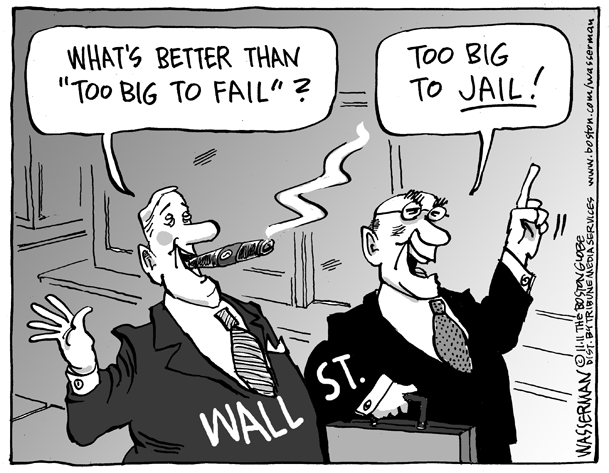

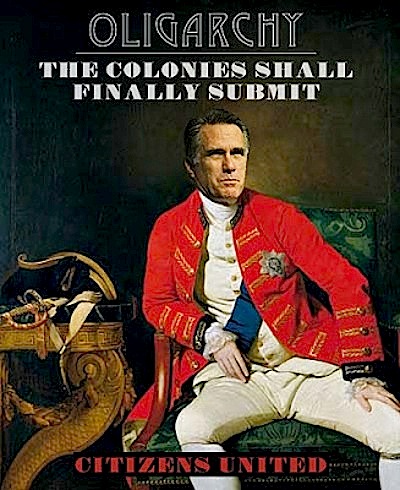


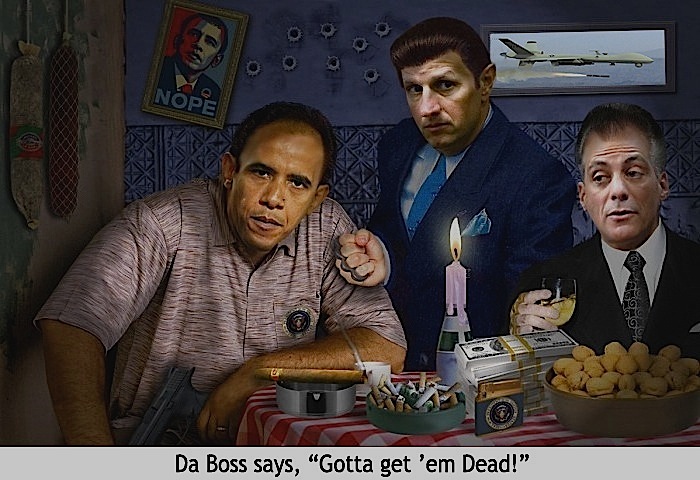
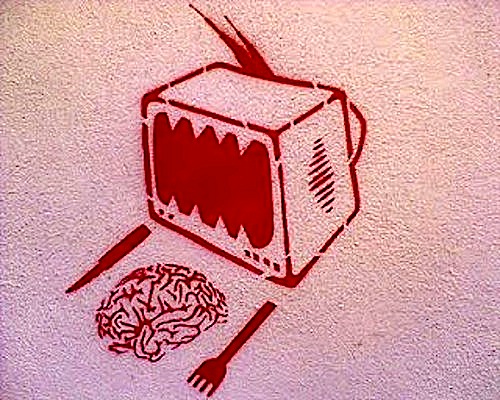
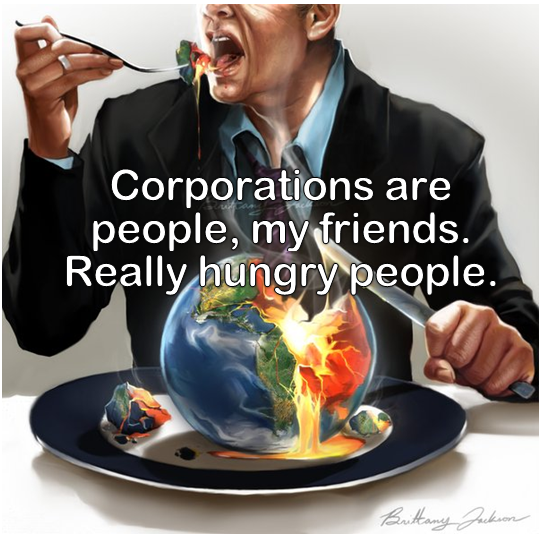
 Collapse of Industrial Civilization