…So, with the most recent BLS data, 20% of the popular vote would be less than 48 million people. Of course, let’s be frank. Neither political party wants every American to vote. Voter suppression in both parties is as American as apple pie. The Republicans don’t want all of those people they have thrown under the bus to come to the polls. And, the Democrats don’t want all of those voters showing up that they endlessly lie to with empty promises. If one person-one vote democracy was really an intent under a system controlled by political parties, money couldn’t buy a politician, we would have a national voting day where everyone had the day off, we would have a system that truly educates people on issues rather than one of demagogy and lies, we would provide free public transportation to those unable to get to the polls themselves and numerous other incentives for people to vote. The smaller the turnout, the more the status quo benefits in a system of looting, pillaging, exploitation and corruption. Or so their perception goes… – link
One thing is certain – both corporate puppets support the system that is killing you:
Post Script:
An important point was brought up by Alex Smith of EcoShock Radio about the numbers in this post. The list of top campaign contributors by Opensecrets does not include the dark world of Super PACs and other tax-exempt groups which can shield the identity of their donors – a billion spent on the presidential race. See the comments section of this post for further details.
Here is the interview with Alf Hornborg along with a couple of essays of his. To understand our predicament, you must understand that the flow of energy, fossil fuels, humans have tapped into for running our economy, machinery, and energy-intensive mode of living has some serious environmental drawbacks, namely climate change and ocean acidification, which will certainly lead to our own destruction with the business-as-usual path we are so determined to follow. Some of the other consequences of basing our way of life so heavily upon fossil fuels are resource wars, support of brutal dictatorships in resource-cursed countries, hypocritical foreign policies based on resource control rather than the publicly professed mantra of human rights and democracy, the fomentation of resentment and terrorism towards the West, etc. So if you couple fossil fuels with capitalism, then you have a truly planet-destroying system. Capitalism is coerced competition for finite wages and resources, pitting person against person, company against company, and nation against nation. What the State calls Terrorism is really defined as those who have grievances with the plunder of their homeland’s resources to support the unsustainable lifestyles of OECD countries. If China continues to follow the same arc of resource consumption as America, the ‘War on Terror’ will be theirs as well. My favorite quote from Horborg:
Is the war on terrorism and climate debate two sides of the same coin? Imports of cheap oil are just as crucial as exports of carbon dioxide for a high-energy future. Both are confined to the parts of the world that have amassed the most purchasing power.
14 July 2011, 12:54 PM
Alf Hornborg on How We Have Been Mystified by Technology
by Adam Robbert & JP Hayes
Alf Hornborg, professor in the department of Human Ecology at Lund University, Sweden has long been untangling the tightly fused networks that merge the material dimensions of the environment with the cultural processes of society. “Machine Fetishism” Hornborg’s term for the way in which we have been mystified by technology highlights the links between technology and asymmetries in global exchange and uncovers the relationship between ecology and power. As technological devices multiply exponentially in a vain attempt to make our lives “efficient,” “luxurious” and “productive,” Hornborg, restless in his critique of technocapitalism, reminds us that on planet earth everything is a zero-sum game – one person’s gain is always another’s loss. Last January we caught up with Professor Hornborg to see where his latest thinking on machines, money and climate change stand and how we, as the concerned and informed, can intervene to make a difference.
Q: You have suggested that the difficulties in understanding the relationship between the environment, the economy and technology arise partly out of the separation between the social and natural sciences within the university. Bringing the natural and social sciences together implies entangling material dimensions of the environment with the cultural processes of society. How has this split mystified our understanding of the relationships between ecology and economics, and how is this affecting our ability to respond to major events such as the mass extinction of species, climate change and global inequality?
It is becoming increasingly obvious that material processes in the biosphere are very much intertwined with cultural aspects such as our ways of thinking and our consumption patterns. The most obvious example is perhaps climate change, which we know is largely driven by our patterns of consumption. If ecologists look at the biosphere as if there were no human societies in it, and economists look at societies as if they didn’t depend on the biosphere, none of them will know how to handle things like climate change. As long as economists continue to think that the only relevant metric for measuring global trade is money, they will not see the asymmetric net transfers of real resources such as energy and matter that make technological expansion possible within some areas of the world.
Q: Your analysis of technology as a globally situated event that requires the establishment of multiple asymmetric economic linkages to be in place raises questions about the role of technology in current ecological problems. If technology, and in particular machine technology, requires inequalities in the terms of global trade, how are we to assess the appropriate use and level of technology employed in solving ecological problems?
I don’t think modern technology will be of much use in solving ecological problems, because modern technology is basically a way of shuffling around resources and problems between different social groups. For example, by shifting to ethanol European car drivers may think they are becoming sustainable, but Brazilians engaged in growing sugar cane may be growing less sustainable as a result. Solving ecological problems should not be about finding new technological solutions, which generally means shifting the problems onto someone else, but about developing new economies and lifestyles which reduce environmental degradation.
Q: You advocate a “zero-sum” approach to your analysis of the relationship between ecology and economics, with technology acting as a kind of basin within which material exchanges of the biosphere and economic or political policies churn. In this way, what you call “machine fetishism” produces the image of a machine that exists without its connections to culture, power and ecology. Could you elaborate on how the illusion of machine technology came to take hold and what relevance unmasking machine power for what is –a globally situated object- has for encouraging a more politically just and environmentally sound society?
Our faith in technology emerged most markedly in the early nineteenth century, as colonial Britain was accumulating resources from all over the world and investing its economic surpluses in new machinery. To British economists of the time, it seemed as if ecological (land) constraints had been overcome once and for all, and the magic wands of labor and capital would suffice for economic progress to continue. That is exactly the time when modern economic ideology was born. What these Europeans could not grasp was that their capital was built on the exploitation of land and labor elsewhere in the world. In other words, the factors of production were NOT substitutable in an absolute sense. We are all ultimately dependent on land.
Q: Following David Harvey’s analysis of money, you have suggested that money is a social institution that generates “space-time” in such a way that is both an “objective, political ecological framework” and a “subjective experience.” In other words, money becomes the medium by which society, technology and even the whole biosphere are transformed within a particular set of cultural ideas. Given the latest financial crises, what do you foresee the role of currency to be in the transformation of the relationship between ecology and economics?
The financial crises illustrate the risks a society takes when it permits monetary assets and real, biophysical resources to become so thoroughly dissociated from each other. Our current problems with overconsumption would not have been possible if money had not become so completely disconnected from material resources. I am not saying that the gold standard that we abandoned in the seventies was a solution, but at least it limited the possibilities of printing ever more money to keep the treadmill of consumption (and production) spinning at a pace that satisfies the corporate demand for profits. But the real problem with money is not that it is fictitious, as all money must be, but that it embodies the idea that everything can be exchanged for everything else. What we need is an economy with at least two incommensurable currencies, to distinguish between values that should not be interchangeable, such as local subsistence and survival versus globalized entertainment.
Q: In your analysis of the industrial revolution you suggest that the “technomass” of industrial civilization is now competing with the “biomass” for living space on planet earth. How are we to approach the reality that we are already thoroughly enmeshed within a technosphere that now seems to require our continued maintenance (so as not to leak the wrong toxic substances into the wrong environments) and the fact the we need to be equally attentive to the livelihood of the biosphere which we depend upon for life?
The sooner we stop prioritizing the metabolic needs of our “technomass”, at the expense of human and other biomass, the better. Our technological fixes are no less absurd than the fetishism that brought earlier civilizations to collapse, whether through overinvestment in armies (Rome), temples (Maya), or megalithic statues (Easter Island).
Q: Given that you believe that an integration of the social and natural sciences would lead to better policy strategies, could you comment on the differences or similarities between these two spheres? Do the cultural, political and economic relations that social scientists study differ in nature from the ecological and material systems that a natural scientist study? Their conjunction seems necessary, and yet problems of integration seem numerous. What is our way forward here?
Yes, the social and natural sciences study different kinds of phenomena and need to respect the limitations of either approach. Societies have always implicated questions of power, unequal distribution, and collective processes of meaning-creation and ideology. Ecosystems can be studied and understood without insights about any of these things. On the other hand, as economists and others illustrate, social systems can be studied (if not understood) without any regard to the flows of matter and energy that preoccupy the ecologists. To understand the interface between social and ecological systems we need to understand POWER as partly material, partly symbolic. Social power is based on unequal access to material resources, but also on the ideological mystification of such inequalities.
Q: Uncertainties of measurement and misleading methodological approaches characterize current economic attempts to manage the world system. Such a measurement/theory mismatch creates uncertainty and error in understanding what is occurring in the present state of economic-ecological affairs. As a result of these poor methodologies, modern bureaucracies have created a routine of socioeconomic functioning that is notable for its lack of applicability to social & environmental reality. How can we characterize and develop change that ensures the development of a truly sustainable world system? How can we, as academics, activists, and concerned citizens, best intervene, as you say, “in the destructive logic of our current economic system?”
First of all by recognizing the dilemma as I have outlined it in my earlier responses. Second by using their political agency (ultimately as voters in democratic political systems) to choose representatives who are prepared to reorganize the economy for the long-term good of all people and ecosystems, rather than for the short-term benefits of corporate interests.
Q: Could you comment on the role of emergent popular discourses on the environment such as “green capitalism,” “sustainable development” and “ecological economics?” Though each is different in character and always subject to a variety of uses, do you think that these movements, in general, are adequate to the tasks they set out to solve?
I don’t believe in “green capitalism” or “sustainable development” the way they are currently conceived, as both are oxymorons. “Ecological economics” is a very important arena for discussion, but will lead to real changes in our thinking only if it is able to radically transcend the assumptions of conventional economics.
Q: What, in your opinion, are the most effective modes available with which to express a need for change within the current political and economic regimes? If traditional models of education, politics and economic theories are not serving the urgency of the crises at hand, what action do you advise concerned peoples to take?
The best we can do is to develop awareness of our global predicament and resort to it as opportunities for real change appear, not least as we confront crises of various kinds in the future. Crises, whether financial, environmental, or other (or a combination of them), can offer possibilities of change, and it is important for society not to be confused by such events, but to understand what is happening and be prepared to safeguard the health and security of citizens.
Q: If you are correct in asserting that “mainstream” thinking about the environment is fundamentally flawed and will not lead to positive change (as advocated by the sustainable development movement, for example) where do we start? Must we begin from scratch so as to completely re-interpret the ingredients and causes of our crises, or do we in fact have something like a base or foothold from which we can begin a renewed attempt to make a difference in the world? Who are the primary thinkers involved that provide us with tools that the 21st century can believe in?
The Internet has provided humanity with a unique chance to globally communicate about crises and how to handle them. I will not mention any specific thinkers, only note that the social and natural sciences both have rich traditions of thought that attempt to show how social power and inequalities are interconnected with natural circumstances such as land constraints, soil fertility, and thermodynamics. We need more current researchers working on how these different kinds of knowledge can be stitched together. Unfortunately, a very small minority of researchers is dedicated to such challenges.
Published January 6, 2010 – 10:00
Updated January 7, 2010 – 09:31
What will future historians say about the early 2,000’s?That it was the turning point.In the course of that decade were visualized the unsustainable contradictions within global fossil fuel-driven industrial capitalism.
First came 9/11. We sat glued in front of the television screen and saw the towers fall, again and again. We were just as shocked as the European upper classes two hundred years ago when the mob guillotined the royals in Paris. How could such a hit happen to us? Where did all this hate come from? Are there really such contradictions in the global community? Could it have to do with oil, this stored solar energy from the ancient landscape that drives most of our lives, that we can afford to continue paying for it? And to whom then is this resource so critical that some countries are prepared to go to war for it.
Then came the Peace Prize of Al Gore, a person who appeared to have become the world’s most powerful man able to say that we were destroying the planet, and be rewarded for it. If a U.S. Vice President, Nobel Committee and the UN climate panel agree on the reality of global warming, may we take it seriously? Should we stop using fossil fuels?
Then came the financial crisis – the worst stock market collapse since 1929.Is the world economy really so vulnerable?And how is it that economists could not predict it?Are there contexts in the world that economists have not understood?
The early 2,000’s was the decade when we passed the peak of conventional oil production, that which in English is called peak oil. We now, therefore, use the remaining oil faster than we can find new deposits. We realize that oil prices will rise in the future, making our current lifestyle increasingly untenable… a two hundred year old bubble approaching the breaking point.
In two centuries we have been able to forget that the earth’s land surface is the resource that limits us.We have become used to deriving our energy from drilled holes in the earth’s crust instead of from our landscape.We have lived in the former solar energy of epochs instead of the annual insolation stored in living plants.
What should we do when we can no longer afford oil? How will the land be sufficient when it once again will have to support both people and vehicles? It used to be horse feed we had to compete with, now it is the cane for ethanol.
Not only do biofuels take up land space needed for food for a growing world population, but they also can not be nearly enough to sustain the consumption levels that the rich world has become accustomed to.
The early 2,000’s was also the decade when we definitely realized that the balance of power in the world would not be forever. China became an economic power by cashing in on cheap labor and lax environmental laws. We buy Chinese goods like never before. But is continuing to wallow in their products the best thing we can do for the Chinese, their environment and our common atmosphere?
The early 2,000’s was also the decade when a new kind of president moved into the White House. A whole world had understood that the American people could no longer hope to solve global conflicts by taking up arms. But what options are there really for Obama?
During the past decade, two of America’s most powerful politicians received the Nobel Peace Prize, the one for his warning us of what can happen to the climate if we continue to burn oil, the other in hopes that he will refrain from war…always for oil.
And just before the decade is over, we will experience COP 15. Fifteen thousand delegates and a hundred heads of state will gather in Copenhagen to discuss whether there is any hope. We know that carbon dioxide emissions are only continuing to increase despite all the warnings and promises. We recognize that emissions are as unevenly distributed in the world as money. An average American emits 18.7 tons of carbon dioxide per year; an average of 1.3 tons for Indians.
Perhaps we can imagine a connection between these various trends and events? Is the war on terrorism and climate debate two sides of the same coin? Imports of cheap oil are just as crucial as exports of carbon dioxide for a high-energy future. Both are confined to the parts of the world that have amassed the most purchasing power.
Economic growth is basically about earning money to expend resources.And the more money we earn today, the more resources we can afford to consume tomorrow.No wonder it is difficult to reduce carbon emissions.
But this is a logic that economists are not trained in. Can we hope that the next decade offers more insight – and more power shifts?
Alf Hornborg
Professor of Human Ecology, Lund University
For my own records and for your curious minds, I’m posting some abstracts on papers that were written for an upcoming symposium called the 17th World Congress of the IUAES (Manchester, UK; 5th-10th August 2013). Many of these papers sound very interesting:
Papers
That Big Slow Curve: Fossil Fuel Based Growth meets A Prosperous Way Down
This century and the last may someday be called the Oil Years. Many who view our human economies in biophysical terms have come to conceive the peak of oil production as a turning point for peoples of the world. For the Odum’s, A Prosperous Way Down (2001) is in no part inevitable as oil production peaks and declines. Their book offers guidelines for a preferable future, a hopeful scenario, but with clear recognition that there are many less desirable and more likely directions that the world may take. In this paper I will reprise the Odum’s preferred scenario as it relates to undesirable alternatives. I will place these scenarios along the path of a big slow curve—the 80-year curve of world oil consumption. At human time scales, we might think that the big slow curve is difficult to detect or attend to. However, I will argue that the effects of asset growth and decline are indeed attended to, and have dramatically affected cultural trends in these oil years. This is because the detection of the growth (or its absence) of cultural assets is of central concern to all ‘consumers’ within ecosystems, but especially to human consumers who produce and manage their own food in various ways. These issues will be explored with mini-model simulations.
Accumulation by Displaced Emission: On Climate, Consumers, and the Rhetoric of Confidence
Whether referred to as ecological modernization, bright green environmentalism, or the rationalization of lifestyles, technological improvement has long been presented as a “win-win” strategy resulting in both economic growth and improved environmental health. Yet significant and mounting research suggests that these strategies have not delivered on their promises. Efficiency gains are being rapidly outstripped by sustained net growth in consumption. Drawing on in-depth ethnographic research, this paper explores a series of reports published by the Swedish Environmental Protection Agency and their subsequent impact on other nations. The report authors advocate a zero-sum approach to understanding green house gas emissions – recognizing that while Sweden has reduced domestic emissions since 1990 — simultaneous growth in the consumption of imported goods and services has resulted in net increases elsewhere. The Swedish “consumption approach” to global GHG emissions accounting helps to elucidate the zero-sum reality of outsourcing emissions to nations where the need for economic development results in environmental injustice. While it is certainly more just to attribute all environmental costs to the consumers who benefit from the products associated with emissions, this perspective was contentious in Sweden where many saw it as anti-market. Its logical conclusion implied moving past economic and environmental de-coupling, toward de-growth. While these reports have had a substantial impact on several other nations, I argue that the approach they advocate is unlikely to gain much traction within UN climate talks until the pro-growth rhetoric surrounding consumer choice, responsibility, and freedom are challenged.
In this paper I argue that the metaphors that we use to think about global economic processes suffer from inherent limitations. The metaphors come from early moral and vitalistic thinking about the economy, and from modernist mechanical models which have now been enhanced with systems thinking, nationalism, and what I call “ecologism” which fetishizes nature. I propose that both cornucopian and zero-sum limited-good ideas about the future are fundamentally flawed, and are incapable of projecting a credible imagination of sustainability. I focus particularly on the language and metaphors of temporality and boundaries, both of which incorporate assumptions which we know to be false. I also discuss the prevailing dualism in discourse about the economy, and the way it limits our thinking and blinds us to what Latour calls “the proliferation of hybrids.” The economy is a cyborg, partially human and partially machine, and the sooner we recognize this, and stop fighting the pre-determined wars of modernism, the better we will be capable of thinking about a planet with 10 or 11 billion human beings on it.
Rethinking Economy
Author: Stephen Gudeman (University of Minnesota/ Max Planck Institute for Social Anthropology) email
Long Abstract
Most economists see material life as consisting of markets surrounded by market-like behavior: everything else is a positive or negative externality on market exchange. The anthropological perspective is different. I see economies as fields of value defined by crosscutting coordinates. One axis locates economies on a scale from High Relationship to Low Relationship transactions; the other positions economies on a measure from High Markets to Low Markets. Set diagonally to this “graph view” are five, increasingly abstract and encompassing institutional spheres that shift from the House, to Community, to Commerce, to Finance, to Meta finance. This view offers a comparative way to understand economies, change, and the contemporary crises. It suggests that economy is built on a material base whose uses change and are differentially valued. The more abstract spheres, through cronyism, oligopolies, information control and other devices, extract “value” that is first achieved through production and innovation. Unless mollified by communal action, this power of abstraction heightens unequal distribution and leads to environmental degradation seen in terms of entropy and pollution. I contest the belief in growth that is generated by market competition and consumption desires, as well as the ideology that growth, with its increasing toll on the environment, is the remedy to unequal distribution. Placing limits on the growth of inequalities in wealth counters the entropic toll we are incurring, and the reverse.
Revisiting the Image of Limited Good: On Sustainability, Thermodynamics, and the Illusion of Creating Wealth
Author: Paul Trawick (Idaho State University) email
Long Abstract
This paper focuses on worldview, examining two cultural models that are now contending for dominance on the world stage: the open-system model long promoted by economists, referred to as the ‘image of unlimited good’, and a closed-system model, the ‘image of limited good’ made famous by George Foster, who attributed it to members of peasant societies throughout the world. The former worldview is based on the idea that people ‘create’ wealth, an illusion arising from a fundamental confusion about the respective properties of real wealth and virtual wealth, or productive capital and finance capital. This perspective ignores the near-total reliance of the global economy on fossil fuels and other non-renewable resources, finite forms of real wealth whose exploitation is governed by the laws of thermodynamics. The alternative “zero-sum” worldview rests on the axiom that most of the ‘goods’ that people value in life are inherently scarce, being derived from those limited resources and raw materials, a scarcity that must somehow be shared. Based on an ethnographic and ethnological argument, a radical shift toward the closed-system view is said to be necessary if people are to act collectively to impose sustainable limits on their expanding consumption, a cultural change that may already be underway.
The moral economy and moral ecology of organic food in Western Sicily: from growth to degrowth?
Author: Giovanni Orlando (Independent Scholar) email
Long Abstract
For almost a century now the dominant socio-ecological regime of the world agri-food system has rested on the two pillars of productivism and mass consumption. An idea of limitless growth is thus intrinsic to it. Such growth has resulted in the degradation of ecosystems and the exploitation of farmers and consumers. The organic food movement has sought to counter this situation by developing agri-food systems that renew, rather than deplete, natural resources, and that do justice to farmers and consumers. Potentially, then, organic food can be grounded in non-accumulative paradigms such as agroecology and degrowth. From a cultural point of view, what values and symbols would underpin these ‘sustainable’ paradigms? This paper tries to answer this question in Western Sicily, Italy. By looking at the practices and discourses of people who grow, sell and eat organic foods, it explores the degree to which subjects hold values about nature and people that speak to notions of degrowth and agroecology. The paper uncovers a common thread in people’s emphasis on what might be termed ‘excess’. From the fear of the dietary abominations created by an excessive use of technology in food manufacturing and processing, to the outrage for the abuses caused by a desire for excessive profits in food retailing, the paper shows how the ideal of sufficiency, documented by anthropologists in a variety of non-Western societies, creates a moral economy-ecology of organic food.
The Revival of Survival: Pioneering a Post-Financial America
The financial crash of 2008 precipitated the renaissance of a primordial American tradition: survivalism. Often stigmatized as an eccentricity, the survivalist ethos is in fact deeply ingrained in American cultural production, from post-apocalyptic film to millenarian religious movements, as well as in American capitalism, generating millions of dollars in annual profits through the production of demand for palliative commodities. In recent years survivalism has indeed infiltrated mainstream American politics at multiple scales, from New York City’s “go-bag” scheme to Wyoming state’s “doomsday bill” to the CDC’s “zombie-preparedness” initiative. Like its historical predecessors, Great Recession survivalism is predicated upon a zero-sum logic simultaneously economic and environmental, entailing fears of an imminent collapse of finite financial and ecological resources as well as alternative visions for post-crisis continuity. This paper examines the history of survivalist ideology as a heterodox response to capitalistic crisis that is cyclically subsumed by its alleged antithesis: a cultural manifestation of deep-seated doubts about the propensity for endless growth which has itself been absorbed into the warp and weft of capitalist expansion through commoditisation.
Why Solar Panels Don’t Grow on Trees: Technological Utopianism and the Uneasy Relation between Ecomarxism and Ecological Economics
Ever since the Industrial Revolution saved Britain from ecological crisis in the early nineteenth century, visions of miraculous new technologies have alleviated Euro-American anxieties about the impending doom of the fossil-fuelled capitalism that it inaugurated. Although Malthus’s worries about land shortages were transcended by world-historical events as well as by Ricardo’s and Marx’s different versions of technological optimism, they were soon reincarnated in Jevons’s warnings about the depletion of coal. Today economists generally dismiss the pessimism not only of Malthus and Jevons, but also of current concerns over peak oil, by expressing faith in human ingenuity. To retrospectively ridicule pessimists by referring to technological progress that they did not anticipate has become an established pattern of mainstream thought. Almost regardless of ideological persuasion, the seemingly self-evident concept of “technological progress” inherited from early industrialism has been resorted to as an article of faith serving to dispel the specter of truncated growth. The increasingly acknowledged threats of peak oil and global warming are thus generally countered with visions of a future civilization based on solar power. In this paper I discuss this technological scenario as a utopia that raises serious doubts about mainstream understandings of what “technology” really is, and what it means to say that something is “technologically” feasible. The technological utopianism professed, for instance, by ecomarxists raises difficult but fundamental analytical questions about the relation between thermodynamics and theories of economic value.
Decoupling waste from growth
Author: Catherine Alexander (Durham University) email
Long Abstract
The correlation between increased waste production and increased wealth
headlines the EU’s environmental strategy. On the basis of trends so far,
the OECD projects a 45% increase in waste from 1995. The need for
continual economic expansion is taken as an unproblematic given. The
question that therefore seems to present itself is how to continue to
increase wealth without environmental despoilation. The EU’s Sixth
Environment Action Programme identifies waste prevention and management
as one of its top priorities. Its primary objective is to decouple waste
generation from economic activity, so that EU growth will no longer lead
to more and more rubbish. In the paper I make three points in response.
The first is that the desirability of growth remains unquestioned,
alternatives unexplored. The second is that environmental justice or
equity seems now to be foregrounded, often at the expense of other
inequalities produced by capitalist relations. The answer to waste
production, however, appears to be shifted away from economic rationales
of constant expansion to technocratic solutions or campaigns to change
consumers’ ‘attitudes and behaviour’ or the sleight of hand involved in
reclassifying wastes as energy (with the potentially bizarre prospect of
an economy that demands more waste in order to feed energy demands). I
suggest that the production of wastes is intimately tied to every aspect
of mass economic activity from extraction, through production,
distribution and consumption to disposal, and crucially, capitalist growth
depends on things breaking down, the inability to repair things, fashion.
One of the first steps forward might be to recognize that this kind of
growth is inseparable from social and environmental degradation.
I’ve never seen such an avaricious society……John Adams
Far from the valorized notion of job creators, father figure capitalists and the land of milk and honey, Morris Berman rightly points out the roots of a system that demands one sell their labor power for substinence wages must of necessity- at some point- redirect to a swindle.
The mandate of selling one’s own labor power in a system that requires exploitation to function reduces the calculus of survival to one of two options:
1.) The availability of plentiful jobs with wages ratcheting upwards over the years, allowing the worker to attain financial independence through an eventual participation in rent seeking retirement.
-Or-
2.) Hitting the big payoff, the mother lode, striking it rich-in other words achieving success at the envied goal of rich accumulation, usually through starting their own business, day trading or some other similar scheme of differential accumulation.
I suppose there is a third option, which is the life of crime, e.g. using criminal means to achieve sufficient accumulation to attempt to satisfy, in perpetuity, the need to sell one’s labor power for substinence. This is also the thesis that professional gamblers prefer, but as we shall see from this post, there is not much difference from these options and option # 2 above.
Great wealth unexplained is often the accumulation of a series of crimes and illegalities undiscovered, from insider trading to market manipulation, monopolies and official corruption, occasionally mixed in with sheer dumb luck and ruthless disregard for the law.
That is why the wealthy are rarely the great artists, athletes, or inventors who they hold up as the example of excellence to which they can hardly presume. The modern wealthy generally create nothing except a climate of injustice, fraud, and corruption.
When times are good, as in the period of most of the 19th and early/mid 20th century, when labor is relatively scarce and wages relatively high, option 1 provides passable solace to the American middle class worker. From about 1970 onward, roughly coinciding with the onset of neo-liberal capitalism, we have toggled to a relative surplus of workers with the onset of cheap labor in the Far East. Now we have too many workers competing with a highly discounted foreign labor pool, with entire industries “offshored” to China with the easily anticipated resultant of a hollowed out community structure left behind, with insufficient tax base to support itself.
In addition, the capitalist mode of production has at the same time affected a massive maldistribution of wealth, wherein entire segments are using accumulated profits for rent seeking endeavor, extracting as much money from the economy as fast as possible with no regard to the consequences. So we have vast numbers of affluent and wealthy individuals with no place to invest with consistent returns, as the low hanging fruit of reliable investment opportunities for this class has been consumed by simply too much wealth chasing too few investment opportunities.
The intersection of these two phenomena goes a long way to explain our current situation, how we got here and why we are not likely to leave. Of course, all of this has been written and discussed previously ad nauseum, but for me, the puzzling question is why do people go along with what must now be for most, a clear case of cause and effect?
Even a cursory look at income and wealth distribution shows a 3σ distribution of income, in statistics this means that 99.6% of all income is captured with average value of some $22,500 in annual wage earner income. None of the values within this 3σ distribution of income is sufficient to satisfy the basic objective of achieving enough of a “nest egg” to catapult oneself into a comfortable retirement, given the current FDIC insured interest rates typically used for most retirees.
The conclusion- you must be a statistical outlier to achieve financial independence, you must somehow, against all odds, land in the 4σ-6σ range of incomes, which is to say .4%-.0001% of total wage earners. These are the probabilities of lotteries, hence my declaration to “The Lottery of the Middle Class”.
Why do vast numbers of people accept a system of forced exploitation with such small numbers of possible positive outcomes? It is a near statistical certainty that you will die with insufficient money to take care of yourself and family-even after 30 or 40 years of labor- why roll the dice on this almost certain bust?
The answer lies partially in Marx’s theory of class consciousness, and to be sure, if times are good and sufficient standard of living upgrades are provided, usually through technology, then people are not likely to dig too deeply into the underpinnings of probabilities. But when times are not good, when a labor surplus is apparent, and when even so called “guaranteed” rates of return are fast evaporating, what then?
Sociology has shown us that class consciousness is not all it was cracked up to be, it turns out Americans don’t necessarily begrudge others –in fields other than their own- the realization of outsized incomes, profits, and wealth. On a street where all the residents are plumbers, the house on the end of the street owned by an attorney is not criticized, under the presumption that he has more education, more experience, and has taken more risk-supposedly- to the furtherance of his “well deserved” wealth. After all, each plumber had the option to choose a field in law, goes the rationale, and instead went in to plumbing, and you reap what you sow, so to speak.
So this is part of it. And class consciousness is also a part of it too.
But increasingly, it is becoming evident that other factors are influencing the relative success of others within our immediate frame of reference. Many freshly minted law school graduates can’t get a job. Many “blue chip” trades and vocations cannot get work- at all. So something is wrong with this narrative, and this specter of doubt and confusion intersects nicely with the emergence of pop culture figures in professional sports, reality TV shows, and other public spectacles of wealth and accumulation.
This leads us to the lottery mentality, the barely conscious realization that we had better come up with some huge and rapid “winnings” if we are to propel ourselves into the outlier category, and achieve financial independence.
The specific reaction to this notion varies by income stratification, but the underlying themes are always the same, get rich, get rich quick, and get it at the expense of someone else. But for this to work, we need the lottery equivalent of the 2nd Law of Thermodynamics, we need a tacit acceptance of the necessity of exploitation, as we need to allow it’s existence- at our expense-until such time as we can harness the very same exploitative skill sets against someone else to benefit ourselves.
For those in the middle to upper middle class, this usually means some type of business scheme, a Walter Mittyesque flight of fancy that the intrepid entrepreneur will someday cook up a batch of Kettle Korn or beef jerky to sell at the local swap meet, or who has an invention of a Pet Rock or similarly useless contrivance with no redeeming social quality. These fanciful daydreams are part of the illusion, the faintly obscure vision that within all of our grasp is the Big Reveal, that golden idea that will launch us into the glorious world of senseless accumulation.
But statistics are unkind to the dreamer, the probabilities of any of these “ideas” propelling the prospective entrepreneur into the outlier categories is slim indeed. In a world were aggregate demand has been obliterated by a near complete loss of disposable income, and private debt has choked off any semblance of borrowing for such trinkets, the “market” for many of the useless doodads is non existent. And of the more substantial contributions to society that might garner realistic revenue, such as a new pharmaceutical compound or medical device, the squadrons of scientists needed and tens of millions of dollars of capital required relegate any substantive ideas to the universe of monopoly scale corporations.
Like the gleam of the Powerball Lottery MegaMillions, the pull is too great and the desperation too profound to ignore. So the Faustian bargain of turning a blind eye to the accelerating exploitation intrinsic in the capitalist mode of production is undertaken with a sigh and a shrug of indifference, for someday, it will be your turn. To deny the exploitation is to quit 5 minutes before the miracle has happened, to close off any avenue of the Walter Mitty fantasy, because if no one else gets it, than neither do you.
At the other end of income stratification, the lower class, we see a strikingly similar protocol, these actors are quite a bit more likely to buy an actual lottery ticket, preferring to dispense with the tedium of writing a business plan. Or perhaps it is to aspire to professional sports, or a reality TV show, or perhaps a rap star. All with statistically similar outcomes. But surprisingly, the mnemonic of the Donald Trumps of the world, haranguing and extolling those to bootstrap themselves off the dole into the riches that capitalism offers does trickle down to the trailer parks and tenements of the world.
Nowhere is this sad and pathetic prophesy more humorously portrayed than the outrageous Canadian television show (now off the air) Trailer Park Boys. Filmed as a faux “mockumentary” this show, which ran 7 seasons in Canada (and sporadically on American cable) was brilliant in its over the top portrayal of life in a trailer park. Dismissed by some as just crude humor (and be warned it is crude and profane in the extreme) the opening scenes of bucolic wonder with golden sunsets and neatly manicured yards, children playing on the swings all goes very, very wrong. The characters represent what it looks like when a community either cannot- or will not- sell their labor power and cannot exist in a normative society. The characters are perennially down market, no education, no social mobility and no future, they bond together under a thick haze of alcoholism and drug use, the show uses side splitting humor as salve to an extremely pathetic covalence, with the characters unable to differentiate between petty crime and legitimate commerce, as the differentiation is reduced to shades of barely discernable grey.
At this level of stratification the difference between a “business” that involves stealing shopping carts for scrap metal is no more or less noble than a Harvard graduate selling financial derivatives.
Stripping away any overture of intellectual loftiness, absent any academic commentary, the Trailer Park Boys reduce those bucolic sunsets into the banal vision of life on the fringes of Capitalism- and expose a nation of swindlers and hustlers, relying on a lottery to survive.
Democracy Now had an interesting little run-in with David Koch at the RNC that the corporate-laden media tried to sweep under the rug. With all the dittoheads in the audience chanting “USA! USA! USA!” as the Romneybot of the billionaires mouthed his platitudes, it was refreshing to see an actual journalist at work:
While oil and gas giant David Koch was protected from questioning by his ‘survivaball’ of humans that sprang upright around him, Amy Goodman was able to direct the same question to Edward Cox who answered in the following manner:
AMY GOODMAN: Are you concerned about, especially young people, looking at what’s happening in the country, where a handful of multi-millionaires and billionaires are so disproportionately determining the democratic process?
EDWARD COX:That’s a statement that isn’t true. This country is governed by the people. That’s what it’s always been based on.
RNC SECURITY 1: Will you keep this moving? One deep.
AMY GOODMAN: Yeah, I will. I will.
RNC SECURITY 1: OK, thank you.
AMY GOODMAN: OK, one deep, I got you. Mr. Cox answered a question. Why can’t—why can’t Mr. Koch answer a question? I only have one question.
KOCH HANDLER 2: He’s not going to answer. Get out of here.
If you really want to know how David Koch would have answered Amy’s question, a similar inquiry was put to him by Politicker “about the controversial level of influence major contributors have on American elections.” Here was his answer:
We have a free society and people are free to do what they want, you know, as long as they don’t hurt others and they obey the law,” Mr. Koch said. “So, I believe in free speech and if people want to spend money in politics or something else, it’s their right, nothing wrong with that. So, I endorse that.
So you see, as far as the elite are concerned, we live in a free society in which there should be no constraints on the corrupting influence that wealth has on government institutions and public policy. For them, freedom includes the ability to buy the instruments of government so that the interests of the elite may be best served rather than the common good of the citizenry who failed to rise to the ranks of the 0.001% in the game of capitalism. As Noam Chomsky explains in “Plutonomy and the Precariat: On the History of the U.S. Economy in Decline“:
For the general population, the 99% in the imagery of the Occupy movement, it’s been pretty harsh — and it could get worse. This could be a period of irreversible decline. For the 1% and even less — the .1% — it’s just fine. They are richer than ever, more powerful than ever, controlling the political system, disregarding the public. And if it can continue, as far as they’re concerned, sure, why not?
Going back to Chomsky’s article, the interests of the elite do not include facing up to the reality of climate change because it’s a direct threat to their power and the wealth they have hoarded. Capitalism must be defended at all costs, even if that means denying that this system is causing our own extinction:
…Practically every country in the world is taking at least halting steps towards trying to do something about it. The United States is also taking steps, mainly to accelerate the threat. It is the only major country that is not only not doing something constructive to protect the environment, it’s not even climbing on the train. In some ways, it’s pulling it backwards.
And this is connected to a huge propaganda system, proudly and openly declared by the business world, to try to convince people that climate change is just a liberal hoax. “Why pay attention to these scientists?”
We’re really regressing back to the dark ages. It’s not a joke. And if that’s happening in the most powerful, richest country in history, then this catastrophe isn’t going to be averted — and in a generation or two, everything else we’re talking about won’t matter…
In the minds of the elite, if they can’t keep a stranglehold on the world, then they’ll be damned if anyone else is going to be allowed to live on a habitable planet.
Paul Ryan, cool cat wannabe, loves Rage Against the Machine’s music, he says. He must not listen to the lyrics. Here’s what the band’s guitarist/activist Tom Morello has to say:
Ryan’s love of Rage Against the Machine is amusing, because he is the embodiment of the machine that our music has been raging against for two decades. Charles Manson loved the Beatles but didn’t understand them. Governor Chris Christie loves Bruce Springsteen but doesn’t understand him. And Paul Ryan is clueless about his favorite band, Rage Against the Machine.
And of course he had to recently disavow himself from his ethical and spiritual idol, Ayn Rand:
Such pompous, self-serving, and seemingly sociopathic behavior among the elite in capitalist America is nothing new. As a matter of fact, it seems to have always been the norm in American history:
I recently read a book by University of Maryland historian Terry Bouton,Taming Democracy, which is an account of the intense struggles over wealth and power that emerged in the earliest days of the United States. Bouton’s detailed research was focused on Pennsylvania, but he describes patterns that also appeared elsewhere in the infant republic.
The core of the story he tells is that the colonial coalition that made possible the political break with Britain fractured even while the Revolutionary War was still in progress, as wealthy interests in the colonies quickly had second thoughts about the democratic fervor that they had helped to set in motion and how it might jeopardize their ability to amass still more wealth….
…The story demonstrates that strong class consciousness and class-specific drivers of policy have been a major part of American politics since independence. A key part of that class struggle all along has been a strong sense among a wealthy elite of separateness from the non-wealthy, and of having a right to push hard for public policies that favor their own class even if they are clearly detrimental to others.
A major figure in Bouton’s account is the Philadelphia merchant and financier Robert Morris…
…An even more blatant ploy of using government to favor his own class’ interests at the expense of others concerned speculation in war debt. Amid poverty, scarcity of money, and uncertainty about government funding of debt, many holders of IOUs — who had furnished support to the war effort ranging from food to blacksmithing — sold them for cents on the dollar to speculators who hoped to redeem them eventually for much more than that.
Morris not only participated in this game but openly promoted it. He told the Continental Congress in 1782 that speculators should be encouraged to buy up the IOUs “at a considerable discount” and then have the government bring the pieces of paper “back to existence” by paying them off at top dollar.
This big transfer of wealth would provide the affluent with “those funds which are necessary to the full exercise of their skill and industry.” Bouton writes, “As Morris saw it, taking money from ordinary taxpayers to fund a huge windfall for war debt speculators was exactly the kind of thing that needed to be done to make America great.”
We have tended to whitewash such aspects of American history from our consciousness, for several reasons. One is the hagiography we customarily apply to the Founding Fathers. Another is that we lose sight of the connections between class consciousness of the past and that of today by euphemizing today’s version and espousing more subtle notions of trickle-down economics than the crude version that Morris espoused.
People of his economic stratum were known at the time as “gentlemen”; today they would more likely be called “job creators.” A further reason is Americans’ belief in the national myth that America is less stratified into classes, and exhibits more mobility between classes, than do other countries and especially the old countries of Europe. That myth has become increasingly distant from fact in recent decades…
For those who believe that class structure and the struggles therein do not exist in America, history shows that it has always been a part of our country, reasserting itself with a vengeance in recent times. With the elite having a lock on mass media and now the use of the empire’s security and surveillance state to squash dissenters, malcontents, and any challengers of the status quo, there does not seem to be any going back to a society embodied by a strong middle class, especially in an age where the economic pie is forever shrinking.
Jeffrey Sachs’ op ed piece entitled “America Has Lost the battle Over Government” in the Financial Times explains how the budget plans of our two corporate candidate stooges are strikingly similar and offer no real choice for the American citizen. With the modern-day instruments of mass media manipulation being the most sophisticated tool for mind control in the history of man, you are made to think that the current election is an epic struggle between the forces of good and evil, but the American’s fate of joblessness, dwindling social assistance programs, a permanently growing underclass, and the slide into an oligarchic Third World country has already been written in stone by the transnational capitalist forces and its corporate state. Crime will surely go up, lifespan expectancy will go down for the underclass, and the infrastructure of the nation will continue its trajectory into dilapidation and decay. Sacrificing your body in the Empire’s foreign resource wars and geopolitical games will be one of the only jobs available for our debt-ridden youth:
…Mr Ryan’s plan calls for federal revenues of 18.4 per cent of gross domestic product in 2016 and 18.5 per cent in 2020 (though his lower tax rates would probably put those targets out of reach). His budget outlays come in at 19.7 per cent and 19.5 per cent in 2016 and 2020, respectively. Of the total outlays in 2016, Mr Ryan targets “discretionary” programmes at 5.9 per cent of GDP; social security, 5 per cent; Medicare, 3.2 per cent; other mandatory spending, 3.7 per cent; and interest payments, 1.9 per cent.
Now consider Mr Obama’s budget unveiled in February. Federal revenues are targeted at 19.1 per cent of GDP in 2016 and 19.7 per cent of GDP in 2020, only about 1 percentage point above Mr Ryan’s revenue targets. In Mr Obama’s 2016 budget targets, discretionary spending is set at 5.9 per cent of GDP; social security, 5 per cent; Medicare, 3.2 per cent; other mandatory spending, 5.8 per cent; and interest payments, 2.5 per cent.
In fact, Mr Obama’s overall discretionary spending targets are essentially the same as Mr Ryan’s. Whether Mr Obama or Mr Romney wins, the “non-security” discretionary budget – for education, job skills, infrastructure, science and technology, space, environmental protection, alternative energy and climate change adaptation – is on the chopping block. Mr Obama’s budget would shrink non-security discretionary programmes from an already insufficient 3.1 per cent of GDP in 2011 to 1.8 per cent in 2020. That is the “liberal” alternative.
In bemoaning Mr Obama’s budget, I do not mean to equate it with Mr Ryan’s. Mr Ryan’s budget is nothing short of heartless in the face of the dire crisis facing America’s poor. It is also reckless, guaranteed to leave millions of children without the quality of education and skills they will need as adults. Yet the sad truth is that the Democrats offer no progressive alternative. Both parties are accomplices to the premeditated asphyxiation of the state. Viewed from an international perspective, the constricted range of the US fiscal debate is striking. Total US government revenues (combining federal, state and local governments) in 2011 came in at about 32 per cent of GDP. This compares with an average of 44 per cent in the EU and 50 per cent in northern Europe.
Many Americans will say that they are dodging the European curse by keeping taxation so low but they should look again. Northern Europe (Germany, the Netherlands, Denmark, Finland, Norway and Sweden) gets great value for its tax revenues: lower budget deficits, lower unemployment rates, lower public debt-to-GDP ratios, lower poverty rates, greater social mobility, better job training, longer life expectancy, lower greenhouse gas emissions, higher reported life satisfaction and greater macroeconomic stability.
America’s two political parties depend on wealthy contributors to finance their presidential campaigns. These donors want and expect their taxes to stay low. As a result, social divisions, broken infrastructure, laggard educational attainments, high carbon emissions and chronic budget deficits are likely to continue no matter who is elected, even though the public supports higher taxes on corporations and the rich…
Chris Hedges was back in court over the government’s appeal of Judge Forrest’s earlier injunction of the NDAA. As a matter of fact, the government has refused to comply with the injunction. Hedges states he and the other plaintiffs “will most likely have to continue this fight in an appellate court and perhaps the Supreme Court.” He also notes that no matter the results of the rigged U.S. elections, no meaningful change will come to the deteriorating lives of ordinary Americans:
…The corporate state has convinced the masses, in essence, to clamor for their own enslavement. There is, in reality, no daylight between Mitt Romney and Obama about the inner workings of the corporate state. They each support this section within the NDAA and the widespread extinguishing of civil liberties. They each will continue to funnel hundreds of billions of wasted dollars to defense contractors, intelligence agencies and the military. They each intend to let Wall Street loot the U.S. Treasury with impunity. Neither will lift a finger to help the long-term unemployed and underemployed, those losing their homes to foreclosures or bank repossessions, those filing for bankruptcy because of medical bills or college students burdened by crippling debt. Listen to the anguished cries of partisans on either side of the election divide and you would think this was a battle between the forces of light and the forces of darkness. You would think voting in the rigged political theater of the corporate state actually makes a difference. The charade of junk politics is there not to offer a choice but to divert the crowd while our corporate masters move relentlessly forward, unimpeded by either party, to turn all dissent into a crime…
A lot of Americans buy into this “cult of individualism” and anti-government sentiment which the elites of the corporate state artfully peddle in order to dismantle any remnants of a functioning government that might serve the common good of its citizenry. In this way, the corporate state has convinced the masses to cheer the destruction of government and its beneficial roles. But of course we cannot call our lobbyist-infested, corporate-controlled government an actual representation of the people’s interests. Just as our two-partied presidential election is an orchestrated illusion of democracy, so is the false dichotomy of government and corporations which are merely separated by a revolving door. The government has become, for the most part, a tool for wealth extraction by multinational corporations. During a period of multiple civilization-ending crises when leadership is in dire need, the degeneration of government from a socially beneficial entity into a puppet of Wall Street’s rapacious greed is the greatest tragedy of our time.
“The end of the human race will be that it will eventually die of civilization.”
~ Ralph Waldo Emerson
The water-energy-food nexus is an interlocking problem. For example, biofuel production takes land and water away from food production. Besides the contamination to water reservoirs, the process of hydrofracking and tar sands utilizes massive amounts of water which could otherwise be saved for farming:
Oil sands extraction uses significant amounts of water (2-4.5 barrels per barrel of oil produced), which ends up in toxic tailings lagoons that have never been successfully reclaimed. An analysis using industry data estimated that these lagoons already leak over a billion gallons of contaminated water into the environment each year. – source
Hydrofracking injects large volumes of water (up to six million gallons of water per gas well) mixed with sand and toxic chemical additives at high pressures to release the gas. Most of the water is then returned to the surface as polluted wastewater – that must be treated by wastewater treatment plants already overburdened and not necessarily designed to remove these chemicals. Industry analysts predict it will cost $3 billion to treat the industrial wastewater associated with Marcellus shale development… Groundwater supplies may become contaminated with these chemicals as they already have in parts of Pennsylvania and other states. Currently, oil and gas companies that use hydraulic fracturing are exempt from regulations under the Safe Drinking Water Act that would require them to disclose the cocktail of chemicals they use.
– source
Scaling back on the production of these unconventional energy sources in order to conserve land and water for food will increase the cost of conventional oil, and thus food prices, since industrial agriculture is dependent on fossil fuels:
Due to the vast size of these [industrial] farms, the farms are operated in a similar manner to that of large industrial factories. And these “factories” require large quantities of synthetic fertilizers, pesticides, and fuel all derived from fossil fuels, which is a limited natural resource on our planet (Hidden Costs of Industrial Agriculture, 2008). “After cars, the food system uses more fossil fuel than any other sector of the economy — 19 percent.” This high dependence on fossil fuels makes industrial agriculture heavily unsustainable. “Twentieth-century industrialization of agriculture has increased the amount of greenhouse gases emitted by the food system by an order of magnitude; chemical fertilizers (made from natural gas), pesticides (made from petroleum), farm machinery, modern food processing and packaging and transportation have together transformed a system that in 1940 produced 2.3 calories of food energy for every calorie of fossil-fuel energy it used into one that now takes 10 calories of fossil-fuel energy to produce a single calorie of modern supermarket food” (Pollan, 2008).
The monkey wrench of climate change is now thrown into the picture…
What happens to the stability of the world when fertile lands become dust bowls, when rainfall no longer follows its traditional seasonal pattern, when crop yield forecasts become less and less reliable as climate change begins to bite? We don’t have to look very far back to see the upheaval caused in countries whose majority population lives on the razor-edge of starvation:
2007–2008 – Food riots in India, Peru, Morocco, Egypt, Bangladesh, Pakistan, Zimbabwe, Mozambique, Namibia,
Uzbekistan, Indonesia, Yemen, Guinea, Cameroon,
Burkina Faso, Mauritania and Senegal. [64][65][66][67][68][69]
And again in 2010-2011:
For those who think that adaption to climate change is feasible, please consider what Kurt Cobb articulates in a recent post:
…costly existing agricultural infrastructure won’t be easily moved or replaced. …soil quality is not uniform from place to place. [Do you] think that as temperatures warm and devastate the American grain belt with recurrent drought, we can simply transfer the growing of much of the world’s export grain crop north to the Canadian Shield which has soil so thin it has never supported agriculture?
The ‘Catch-22’ kicker is that the continued use of fossil fuels, the indispensable elixir of industrial civilization’s existence, is exactly what is causing climate chaos in the first place. And as I showed with one simple chart in a previous post, we are using more of this deadly ingredient than ever before. In his latest article ‘The hunger wars in our future’, Michael Klare warns us about the social disruptions that lie in the future as a result of the insidious water-energy-food nexus that grips our modern-day way of life:
…When we think about climate change (if we think about it at all), we envision rising temperatures, prolonged droughts, freakish storms, hellish wildfires, and rising sea levels. Among other things, this will result in damaged infrastructure and diminished food supplies. These are, of course, manifestations of warming in the physical world, not the social world we all inhabit and rely on for so many aspects of our daily well-being and survival. The purely physical effects of climate change will, no doubt, prove catastrophic. But the social effects including, somewhere down the line, food riots, mass starvation, state collapse, mass migrations, and conflicts of every sort, up to and including full-scale war, could prove even more disruptive and deadly…
At this point, the focus is understandably on the immediate consequences of the still ongoing Great Drought: dying crops, shrunken harvests, and rising food prices. But keep an eye out for the social and political effects that undoubtedly won’t begin to show up here or globally until later this year or 2013. Better than any academic study, these will offer us a hint of what we can expect in the coming decades from a hunger-games world of rising temperatures, persistent droughts, recurring food shortages, and billions of famished, desperate people.
Remember when both Bush, Cheney and Obama famously quipped that “the American way of life was non-negotiable.” Mother Nature and the Grim Reaper have rephrased that self-righteous slogan to read:
“The American way of life is unsustainable, non-redeemable, and a limited-time-only.”
Continuing on my last post’s theme of technology and man’s insatiable quest for more lethal weapons, Chris Hedges wrote an article this week in remembrance of the 60th anniversary of the Hiroshima and Nagasaki bombings. He reminds us that science and technology are amoral, advancing of their own accord, and that they have become the new religion, heralding solutions to all that ails modern man. Geoengineering, anyone?
The atomic blasts, ignited in large part to send a message to the Soviet Union, were a reminder that science is morally neutral. Science and technology serve the ambitions of humankind. And few in the sciences look beyond the narrow tasks handed to them by corporations or government. They employ their dark arts, often blind to the consequences, to cement into place systems of security and surveillance, as well as systems of environmental destruction, that will result in collective enslavement and mass extermination. As we veer toward environmental collapse we will have to pit ourselves against many of these experts, scientists and technicians whose loyalty is to institutions that profit from exploitation and death…
It was science, industry and technology that made possible the 20th century’s industrial killing. These forces magnified innate human barbarity. They served the immoral. And there are numerous scientists who continue to work in labs across the country on weapons systems that have the capacity to exterminate millions of human beings. Is this a “rational” enterprise? Is it moral? Does it advance the human species? Does it protect life?
For many of us, science has supplanted religion. We harbor a naive faith in the godlike power of science. Since scientific knowledge is cumulative, albeit morally neutral, it gives the illusion that human history and human progress also are cumulative. Science is for us what totems and spells were for our premodern ancestors. It is magical thinking. It feeds our hubris and sense of divine empowerment. And trusting in its fearsome power will mean our extinction…
Now on to the second point – Transnational Capitalism. This is an excellent article written by a former hedge fund manager that gives an overall, system-wide summation of the capitalist system controlling the world. It’s well worth the read and helps to flesh out what I have alluded to in other posts – the emergence of an elite capitalist class that has no allegiance to any country and shares more in common with its global members than with the fellow countrymen and the nation-state from whence they originated. Some excerpts:
This federation of convenience by the global elite is a lingering problem for the lower economic classes in America. The U.S.-based CEO of one of the world’s largest hedge funds told Chrystia Freeland that his firm’s investment committee often discusses the question of who wins and who loses in today’s economy. In a recent internal debate, he said, one of his senior colleagues argued that the hollowing-out of the American middle class didn’t really matter. “His point was that if the transformation of the world economy lifts four people in China and India out of poverty and into the middle class, and meanwhile means one American drops out of the middle class, that’s not such a bad trade.” Notice the CEO’s reference to “not such a bad trade” as representative of free market lingo, i.e., “trade.” Everything is measured in trade terms, like statistics, if you look in the mirror, you’ll see the reflection of a commodity.
This viewpoint is typical of how the global ruling class thinks, and proof positive of it is reflected in today’s politics in America. The right wing embodies this same viewpoint by striving to strip the federal government of public welfare services, privatizing governmental assets, and undercutting benefits to society at large, especially via manipulation of the federal tax code. This same occurrence is happening in real time right now in Greece, Spain, and Portugal as the cadre of elite technocrats out of Brussels, de facto capital of the EU, dictate nation-state policies to those three forlorn countries. The world’s elites love hard times/recessions because of the set up. It makes it easier for them to strip away government largess via austerity programs that they force upon governments, and it allows for undercutting the wages of average citizens as well as dismantling of governmental regulations. This, in turn, prompts protestors to congregate in the streets of capital cities, but over time, the capitalist class waits them out, temporarily residing in one of their homes elsewhere, away from danger, and with time on their side, the capitalists win.
Upon reading Chrystia Freeland’s article in Atlantic Magazine, one comes away with the impression the elite capitalists look down with disdain upon the masses of people, expressing a contempt for those in society who do not have the personal merit to rise to the occasion of wealth and power. Meritocracy is their biblical source, not equality and fraternity. These are hackneyed terms from ‘America of old’ and no longer applicable in the new technologically enhanced world, which itself is the major source of many of the new self-made wealthy.
This global ruling class controls the levers of an emergent trans-national state apparatus of global decision-making and orders emanate from the IMF, World Bank, the EU, and the WTO. The ruling bloc of this world order consists of chieftains of global corporations and financial conglomerates, major players in the dominant political parties of the world, media conglomerates, and technocratic elites….
…
According to William Robinson: Transnational capital has been able to break free of nation-state constraints to shift the correlation of class and social forces worldwide sharply in its favour and to undercut the strength of popular and working class movements around the world. One new structural dimension of 21st century global capitalism is a dramatic expansion of the global superfluous population or that portion marginalized and locked out of productive participation … constituting some one-third of humanity. The need to assure the social control of this mass of humanity living in slums gives a powerful impetus to neo-fascist projects and facilitates the transition from social welfare to social control, otherwise known as police states. Over time, this system becomes ever more violent and the ability of economic power to determine electoral outcomes opens the door for 21st century fascism to emerge without a rupture in electoral cycles and/or a constitutional change.
The door for 21st century fascism has more than opened. It has been blown off the hinges…
Just as science is amoral, so is capitalism which treats everything living and inanimate as a commodity ripe for exploitation. Welcome to a world ruled by the new globe-trotting, predatory elite who will profit from what remains of the planet’s depleting resources and exhausted ecosystems while paying no heed to the plight of the masses or future generations.
“Earth provides enough to satisfy every man’s needs, but not every man’s greed.”
~ Mahatma Gandhi
Growing up in the seat of American power gave Gore Vidal, historian and scathing critic of the Empire, a front row seat to its inner workings. He was raised in Washington, D.C. at the home of his grandfather, Oklahoma Senator Thomas P. Gore. Being related to Jacqueline Kennedy, he held close ties to the Kennedy clan. He was also distantly related to Al Gore and Jimmy Carter. Gore Vidal himself ran for public office twice, once for Congress in 1960 in New York and once for the U.S. Senate in California in 1982. He knew his subject well enough to speak of the skeletons in its closet and the truth behind the glossy facade. In fact, he once said, “You know, I’ve been around the ruling class all my life, and I’ve been quite aware of their total contempt for the people of the country.”
My belated tribute to Gore Vidal will simply be to present twelve quotes from him and let his words speak for themselves. You could do much worse with your time than to spend it studying the writings of Gore Vidal:
The genius of our ruling class is that it has kept a majority of the people from ever questioning the inequity of a system where most people drudge along, paying heavy taxes for which they get nothing in return.
~~~~~~~
…fifty years ago, Harry Truman replaced the old republic with a national-security state whose sole purpose is to wage perpetual wars, hot, cold, and tepid. Exact date of replacement? February 27, 1947. Place: The White House Cabinet Room. Cast: Truman, Undersecretary of State Dean Acheson, a handful of congressional leaders. Republican senator Arthur Vandenberg told Truman that he could have his militarized economy only IF he first “scared the hell out of the American people” that the Russians were coming. Truman obliged. The perpetual war began. Representative government of, by, and for the people is now a faded memory. Only corporate America enjoys representation by the Congress and presidents that it pays for in an arrangement where no one is entirely accountable because those who have bought the government also own the media. Now, with the revolt of the Praetorian Guard at the Pentagon, we are entering a new and dangerous phase. Although we regularly stigmatize other societies as rogue states, we ourselves have become the largest rogue state of all. We honor no treaties. We spurn international courts. We strike unilaterally wherever we choose. We give orders to the United Nations but do not pay our dues…we bomb, invade, subvert other states. Although We the People of the United States are the sole source of legitimate authority in this land, we are no longer represented in Congress Assembled. Our Congress has been hijacked by corporate America and its enforcer, the imperial military machine…
~~~~~~~
We should stop going around babbling about how we’re the greatest democracy on earth, when we’re not even a democracy. We are a sort of militarised republic.
~~~~~~~
Apparently, a democracy is a place where numerous elections are held at great cost without issues and with interchangeable candidates.
~~~~~~~
Think of the earth as a living organism that is being attacked by billions of bacteria whose numbers double every forty years. Either the host dies, or the virus dies, or both die.
~~~~~~~
…I think it is tragic that the poor man has almost no chance to rise unless he is willing to put himself in thrall to moneyed interests.
~~~~~~~
Happily for the busy lunatics who rule over us, we are permanently the United States of Amnesia. We learn nothing because we remember nothing.
~~~~~~~
We have ceased to be a nation under law but instead a homeland where the withered Bill of Rights, like a dead trumpet vine, clings to our pseudo-Roman columns.
~~~~~~~
We must always remember that the police are recruited from the criminal classes.
~~~~~~~
The hatred Americans have for their own government is pathological, if understandable. At one level it is simply thwarted greed: since our religion is making a buck, giving a part of that buck to any government is an act against nature.
~~~~~~~
As societies grow decadent, the language grows decadent, too. Words are used to disguise, not to illuminate, action: you liberate a city by destroying it. Words are to confuse, so that at election time people will solemnly vote against their own interests.
~~~~~~~
Every four years the naive half who vote are encouraged to believe that if we can elect a really nice man or woman President everything will be all right. But it won’t be. Any individual who is able to raise $25 million to be considered presidential is not going to be much use to the people at large. He will represent oil, or aerospace, or banking, or whatever moneyed entities are paying for him. Certainly he will never represent the people of the country, and they know it. Hence, the sense of despair throughout the land as incomes fall, businesses fail and there is no redress.
…In the State Department we used to discuss how much time that mythical average American citizen put in each day listening, reading, and arguing about the world outside his country. It seemed to us that ten minutes a day would be a high average.” So why bore the people? Secret bipartisan government is best for what, after all, is or should be a society of docile workers, enthusiastic consumers, obedient soldiers who will believe just about anything for at least ten minutes…
…Of course, there were elections during the crucial time, but Truman-Dewey, Eisenhower-Stevenson, Kennedy-Nixon were of a single mind as to the desirability of inventing first a many-tentacled enemy–communism, the star of the chamber of horrors–then, to combat so much evil, install a permanent wartime state at home, with loyalty oaths, the national peacetime draft, and secret police to keep watch over homegrown traitors, as the few enemies of the national security state were known.
Then followed forty years of mindless wars, which created a debt of $5 trillion that hugely benefited aerospace companies and firms like General Electric, whose longtime TV spokesman, Ronald Reagan, eventually retired to the White House…
Mr. Vidal, you told the truth with wit and wisdom and may you now rest in peace for that valuable legacy.

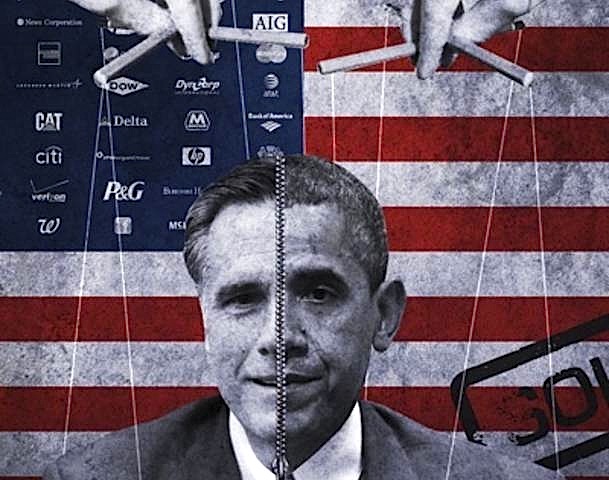


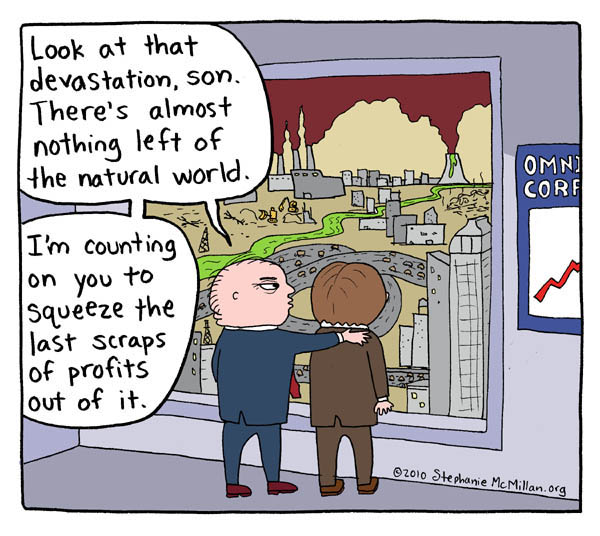


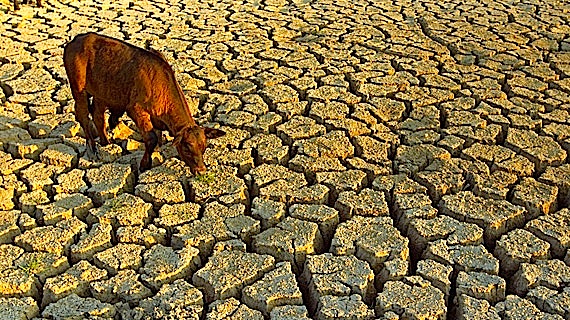
 Collapse of Industrial Civilization