One of many aphorisms about problemsolving goes something to the effect that the first step to finding a solution is proper identification of the problem. The redneck version of this is, “Well, that there’s yer problem!” as though all problems were duh! obvious. Both presuppose the existence of the problem and an eventual solution, getting cart and horse, chicken and egg, cause and effect, and other teleological dialectics hopelessly mixed up. If you’re a business guru, an image consultant, a press agent, a campaign manager, an ad man, a lobbyist, or a lawyer, you can simply sidestep redefine problems as work to be done, an opportunity to seek profit, or a messaging issue, any of which causes mouth-breathers to go chasing after misdirection, much like an errant charge of racism completely derails rational thought. Those with a few still-functioning synapses are more likely too gobsmacked by your own idiocy to retain focus. Same result.
Inside the Beltway — a proxy for the halls of power distributed predominantly along the East Coast and populated by an insane clown posse coterie of one-percenters who truly do regard setbacks as profitable opportunities in disguise — the preferred term is optics, meaning that any given problem is really only about visual appearance, and even then, only so long as it stays in the public’s fickle viewfinder. Thus, we get meaningless canards such as “clean coal” and “energy independence” that fly in the face of, oh I dunno, physical reality? We also get the impossible levitating act of fiat currency and indeed the entire growth paradigm. Yes, the growth paradigm, stated here accurately and succinctly as “grow or die.” Alternatives probably don’t include a steady state, frequently greenwashed as sustainability, because all species expand and contract their populations according to available food/energy. That’s just basic biology, and homo sapiens are crowning proof of it ever since we figgered out how to exploit ancient sun-blood in the form of fossil fuels and went into full-blown population overshoot. Well, let me suggest, that there’s yer problem!
The problem begs for a solution, of course, but aye here’s the rub: all things have their moment, and ours is running out. Our civilization will inevitably join those before that have sputtered and spluttered out (though ours probably has a few loud bangs left in it), and far and away sooner than expected, homo sapiens will join the pantheon of species to fall into the dustbin of evolutionary history, meaning quite plainly that we go extinct. That’s a whole different sort of existential crisis from the one that defines (among others) the human condition: præscientiam mortem or foreknowledge of death.
Lest anyone believe that this is a new problem, let me point out that from at least the beginnings of monotheism millennia ago, the response has been the same: launch a public relations campaign and adopt new optics. For the Christian faithful, that means being saved from death and delivered to eternal bliss in the company of god. For the Islamic faithful, the afterlife specified by the Quran — at least for male martyrs — is 72 virgin maidens in paradise. (Female martyrs can expect to find their husbands in paradise, which sounds like a cruel joke to Westerners.) Maybe that’s not so bad, except that the mutual exclusivity of such dogma guarantees that they are in fact just publicity, grappling with the problem of perception. Who’da thunk, then, that atheism, which calmly insists that this life, here and now in all its earthly manifestations and embodiments, is the real show, the only show in fact, so let’s try to do it right and equitably and with what integrity can be mustered, who’da thunk that atheism would turn out to be a better expression of humanity than the various rape-and-plunder-the-earth, go-forth-ye-and-multiply versions of faith?
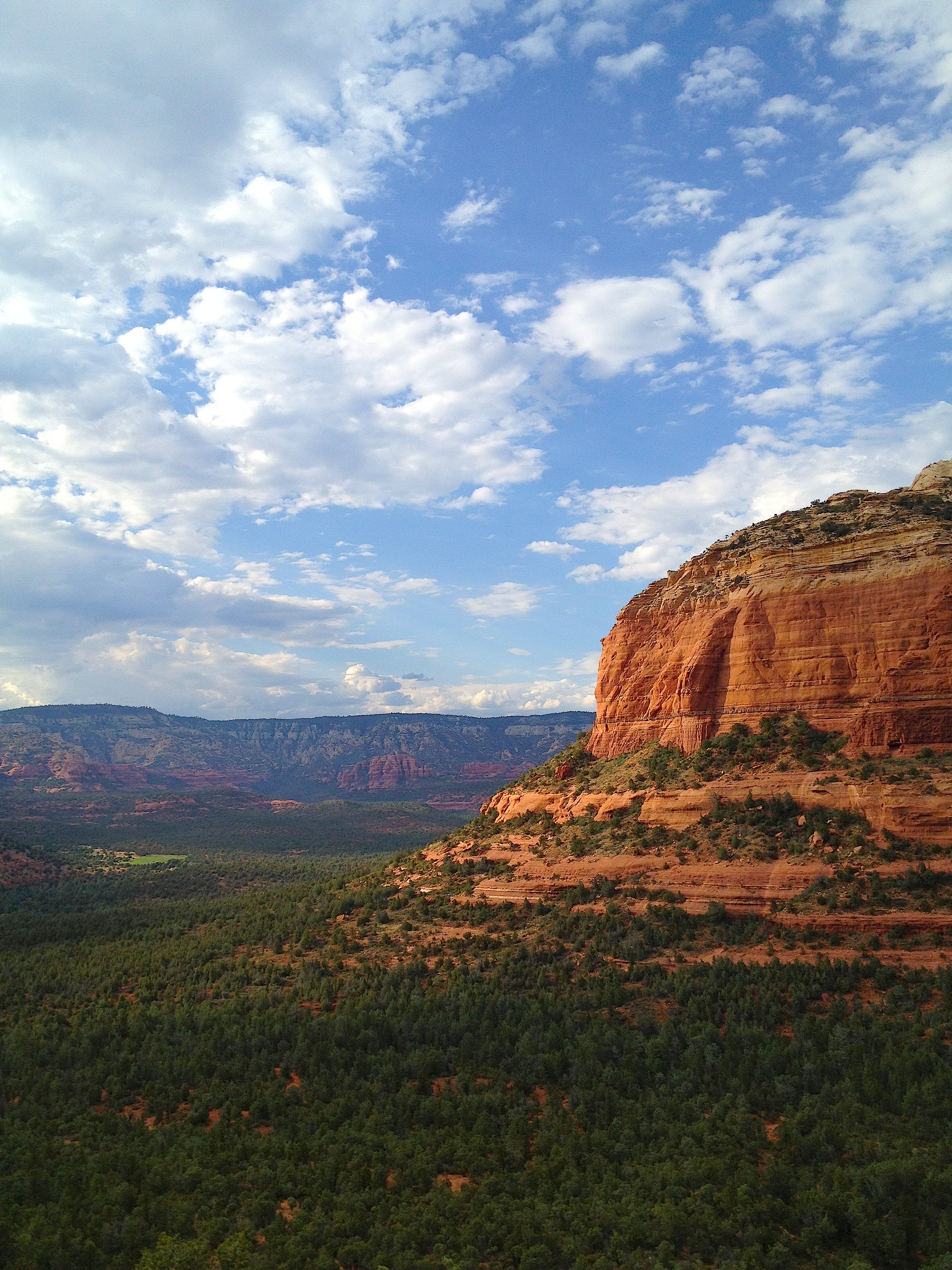
This past weekend I trekked through the Sedona desert to Devil’s Bridge for some scenic vistas and to find the ideal place to meditate and clear my mind. Looking at these beautiful pictures, you wouldn’t know that industrial civilization is beginning to come apart at the seams. With the doomsday trifecta of peak oil, climate change, and the final blow-off stage of overpopulation, Egypt is a microcosm of what lies ahead for all of us in a world of austerity and class war, expensive food, and loss of faith in institutions/breakdown of government.
Thoughts flicker through my mind about how precarious and transient my position is in this hostile terrain. Without oil, I would not even be hiking in the hot desert. I had to drive to get here. The life-sustaining water in my mass-produced thermos was delivered into my house through an elaborate system of pipes and treatment plants. My shoes and clothing are made overseas, perhaps in a sweatshop, and shipped to the local department store where I bought them. And if I break a leg and need emergency services, a gas-guzzling helicopter may even be dispatched to pick me out of the wilderness. Suffice it to say, industrial civilization has made the world much smaller, but at a horrible price. Humans have become fixated on fossil fuels to their own detriment, like a moth fatally attracted to a burning street lamp. The average person lives and travels far beyond the capacity of the Earth to sustain such an energy-intensive mode of living. Pampered by fossil fuel slaves, the citizens of industrial civilization cannot imagine a world without such luxuries and don’t even entertain such thoughts. As a matter of fact, I’m thought of as crazy for even suggesting our energy-laden lifestyles are an aberration in the great scheme of history. I push such absurd thoughts out of my mind and take in the breathtaking scenery.
But then I wonder how this place will look in a few decades, seeing how Arizona is the fastest warming state in the union. Two days after this state’s tragic loss of 19 firefighters in the Yarnell Hill Fire, my neighborhood situated roughly two hours away was pelted with a torrential downpour and hail up to one inch in diameter. Extremes of weather, fire and ice, are a hallmark of climate change and promise to take many more victims in the future:
That hail destroyed a number of plants in our vegetable garden. So much for cucumbers and lettuce.
No amount of hints dropped by Mother Nature will sink into the collective skull of humanity. Industrial civilization with its countless techno-gadgetry solutions is the hammer, and everything else is the nail. Rising sea levels require massive sea gates; crop failure requires genetically modified plants; CO2 pollution requires carbon sequestration, terrorism requires 24/7 surveillance of all citizens, etc. Vested interests and human nature always find a way to rationalize the irrational and push reason out the window. The superorganism of capitalist industrial civilization has constricted our imagination and choices, strapping us into a speeding car headed for the abyss of extinction.
I find solace and tranquility in nature far from the maddening buzz of modern civilization.
See the animal in his cage that you built
Are you sure what side you’re on?
Better not look him too closely in the eye
Are you sure what side of the glass you are on?
See the safety of the life you have built
Everything where it belongs
Feel the hollowness inside of your heart
And it’s all
Right where it belongs
This grimly humorous video comes from Mike Sosebee. A small percentage of us just can’t drink the kool-aid and prefer cold, hard reality over the myth telling and Madison Avenue song-and-dance of capitalist industrial civilization. The entire American hologram is dependent on the masses buying the illusion that all is well. Don’t look behind the curtain. There’s a mountain of corpses and ecological horrors hiding behind that thin veneer of our self-reassuring stories… stories about our corporatocracy democracy, our corporate scripted independent news media, our resource-plundering ‘freedom fighting’ military, our exploitive and destructive wealth-building economy, our move towards a “green-washed” sustainable lifestyle, etc. As commenter Dopamine says, we’re on “a dopamine drip line, a natural morphine intravenous of belief that obscures the less rewarding reality of your existence. That humans are going to turn things around is another belief assuaging the fact that our families have to spend the next hundred years walking through a minefield from which many will not emerge, and for those that do make it, there awaits a planet wasted… And we are completely unable to avoid this perilous journey because our brains quickly substitute a “feel good” fantasy whenever we venture too far into the darkness of our reality. We will walk into the darkness surrounded by pink unicorns, omnipotent Gods, visions of unspoiled paradises, the overflowing font of fusion and so on…”
Although colonizing and enslaving foreign lands and people have always been the modus operandi of this country, I’m sure the elites who founded America never could have imagined that their 1% successors would be able to manipulate the social discourse and behavior of nearly 400 million with consumer goods called TV’s and computers, nor could they have imagined the future Malthusian conditions that would eventually end not only the brief experiment of America, but the entire human experience on planet Earth. When Easter Island became uninhabitable, the rest of the planet never noticed, but now the human footprint will be felt in every nook and cranny of Earth for millennium. Paleontologist Louise Leakey, granddaughter of famed archeologist and naturalist Louis Leakey, uses the analogy of a roll of toilet paper to effectively illustrate the brief but devastatingly influential reign of mankind over the planet.
…To put the history of life on planet earth into a time perspective, imagine unrolling a toilet roll down a hillside. If there are 400 sheets of tissue paper in the roll, then the very first life in the oceans is seen at sheet 240. The age of the dinosaurs begins at sheet 19. Dinosaurs in their many forms and great diversity are around for 14 and a half sheets. Dinosaurs are extinct by the end of the Cretaceous, 5 squares from the end, making way for the mammals. Our story and place on the timeline as upright walking apes begins only in the last half of the very last sheet. The human story as Homo sapiens, is represented by less than 2 millimeters of this, some 200,000 years.
Our own individual lifetimes cannot be depicted on this final sheet of the toilet roll as it would be too thin a line, yet we have been witness to more change to the planet, to the diversity of life, global climate and natural habitats in this same time period. We are undoubtedly the cause of the sixth mass extinction event that the planet has seen in its history…
“Doomer”, as in someone concerned with apocalyptic scenarios of global collapse, is definitely a term of modern usage reflecting the growing unease of the population. People who eschew the word “collapse” in favor of “decline” seem to be hoping that the road ahead will be gentle, predictable and somewhat manageable rather than violent, erratic, and uncontrollable. With homo economicus locked into the infinite growth mantra, there appears to be no other outcome other than a sudden crashing into the fast-approaching wall of environmental limits. The aftermath will be as unrecognizable as the mangled metal of a 100 MPH car crash rather than the slow deterioration and failure of a heavily driven automobile. Oh but that’s too horrible of a thought for the masses to entertain, especially since it threatens our tranquil dreams of white picket-fenced homes with well manicured lawns. Things will be as they always have been, with only minor changes or uncertainties. The dopamine drip line is not in danger of running dry any time soon, and as things deteriorate more and more, the dosage of self-delusional drugs will be increased, lest the population starts to wake up from their stupor. The religious fanatic and mass murderer Jim Jones doesn’t hold a candle to the psychos at the helm of capitalist industrial civilization.
Building on a report which came out late last year, the World Bank released another report yesterday with the catchy title of ‘Turn Down the Heat: Climate Extremes, Regional Impacts, and the Case for Resilience‘. It was prepared for them by the Potsdam Institute for Climate Impact Research and Climate Analytics and describes the effects of present day, 2°C, and 4°C (or 7.2° F) warming on agriculture, water resources, coastal ecosystems and cities across Sub-Saharan Africa, South Asia and South East Asia. Here are the key findings:
– By the 2030s, droughts and heat will leave 40% of the land in Sub-Saharan Africa, presently growing maize, unable to support that crop.
– Rising temperatures threaten major loss of savanna grasslands and the pastoral livelihoods of millions.
– By the 2050s, malnutrition is projected to increase by 25-90 percent compared to the present in various African subregions.
– In South Asia, the critical monsoon season may become erratic and unpredictable, precipitating a major crisis in the region.
– The devastating Pakistan floods of 2010 may become common place, threatening tens of millions.
– Extreme droughts across India may threaten their food system and lead to widespread shortages.
– As a temperature increase of 4°C approaches, rural populations across South East Asia are faced with sea level rise, more intense tropical cyclones, and loss of critical marine ecosystem services.
– Climate refugees fleeing into urban areas may lead to larger numbers of people living in ‘temporary’ camps which will increase their exposure to heat waves, flooding, and diseases.
– Sea level rise has been occurring faster than previously projected and a rise of as much as 50 cm by the 2050s may already be unavoidable as a result of past emissions.
– By the 2030s a sea level rise of 15 cm, coupled with more intense cyclones, threatens to inundate much of Manilla, Mumbai, Kolkata, Ho Chi Minh City, and Bangkok.
Obviously this sort of climatic change is going to increase terrorism and war as well as tax the electric grid and infrastructure of industrial civilization. It may get so unbearable that many will pray for NTE.
World Bank Group President Jim Yong Kim had this to say:
This new report outlines an alarming scenario for the days and years ahead – what we could face in our lifetime. The scientists tell us that if the world warms by 2°C — warming which may be reached in 20 to 30 years — that will cause widespread food shortages, unprecedented heat-waves, and more intense cyclones. In the near-term, climate change, which is already unfolding, could batter the slums even more and greatly harm the lives and the hopes of individuals and families who have had little hand in raising the Earth’s temperature.
He goes on to add the following hopium:
I do not believe the poor are condemned to the future scientists envision in this report. In fact, I am convinced we can reduce poverty even in a world severely challenged by climate change. We can help cities grow clean and climate resilient, develop climate smart agriculture practices, and find innovative ways to improve both energy efficiency and the performance of renewable energies. We can work with countries to roll back harmful fossil fuel subsidies and help put the policies in place that will eventually lead to a stable price on carbon.
Spare me the false concern with the world’s poor and destitute. Has the World Bank lifted a finger to stop the global land grab?
…The World Bank has played a decisive role in turning agriculture into an industry, and promoting the ever-increasing incorporation of natural goods into the market. Everything seems to indicate that it remains faithful to this role today, and continues to facilitate land grabs that represent great business opportunities for capitalists but greater dispossession for rural communities. – source
Without a complete paradigm shift, there can be no other outcome except economic collapse, famine, pestilence, war, and a major population contraction. When the wolves are in sheep’s clothing, expect business-as-usual. Reports describing the dire nature of our predicament will continue to be published just as every prediction in said reports becomes reality. Population overshoot, resource depletion, and a destabilized climate cannot be mitigated by making cities “clean and climate resilient.” If you recall, the mega-cities of today are by their very nature unsustainable because they import vast amounts of resources to support their overstretched ecological footprint. The World Bank report even says that 50cm sea level rise is likely already baked into the cake from past emissions, all the while CO2 and methane levels continue to rise. How would you make all the coastal cities, whose residents comprise a major portion of the world’s population, “climate resilient”? Last time I checked, the devastation left by Hurricane Sandy was still visible and many people were rebuilding right where their house previously stood, with the hope that Sandy was a “once in a lifetime event”. “Develop climate smart agriculture practices” is code for GMOing our way out of this problem. A “stable price” for carbon? Is that going to stop China’s coal consumption?
…Despite its efforts to limit coal consumption and focus on alternative fuel sources, China’s thermal coal demand was expected to double by 2030, analyst Wood Mackenzie reported this week.
In a paper titled ‘China: The Illusion of Peak Coal’, Wood Mackenzie reported that the Asian major’s demand would grow to around seven-billion tons a year of thermal coal, which was contrary to speculation that China’s thermal coal demand may reach a peak in the next decade.
“It is very unlikely that demand for thermal coal in China will peak before 2030,” said William Durbin, Wood Mackenzie’s Beijing-based president of global markets.
“Why? Because China’s aggressive investment programme for nuclear, natural gas and renewables capacity is centred in the coastal region while coal-fired capacity grows in the central and western provinces. Indeed, there are also a plethora of coal-intensive conversion projects being built or planned that are significantly adding to demand.”…
…“Government mandates to improve the environment by reducing coal use will require steep investments in alternatives, the use of emission control technology or reduced economic growth rate targets – options which are not currently happening,” Durbin said.
“But what is noteworthy, however, is that there is greater potential for further demand growth beyond our expectations. Failure to meet an aggressive noncoal-power capacity build, investment in more efficient technologies and the expansion of the UHV network will increase the dependence on and use of coal. In the end, China’s thermal coal demand will see persistent growth until 2030, rendering peak coal an illusion.
Humans can talk about becoming sustainable until they are blue in the face, but with a global population growing by more than 200k per day, the rest of the planet striving for a high consumption western lifestyle, and external environmental costs of business(doubling every 14 years) ignored by corporations, how can that ever be possible? It won’t… until it can’t.
I have yet to meet Guy McPherson, but with a blog entitled “Collapse of Industrial Civilization”, it appears inevitable. Who else on Earth has such an unvarnished view of the horror show modern man is orchestrating? Truth delivered up with no hidden agendas is a very bitter and difficult pill to swallow, but being a true radical means getting at the root of the problem irrespective of “ideological and/or theological prejudice“, or as Guy says…
For those wanting to keep abreast of the deteriorating habitability of the planet, Guy posts periodic updates to the unfolding climate chaos here.
There exists no high quality recording of Guy’s speech at the most recent “Age of Limits” conference that I know of. In order to review his talk I watched this clip and studied his powerpoint slides which he sent me and which are posted here.
I’m certain that many who attend Guy’s speeches don’t internalize all the information he sets forth, fore if they did, their language would lose all the culturally ingrained phrases of hope for any kind of eleventh hour rescue by our technology-worshipping society. If there were a fix, don’t you think we would have implemented it by now before setting off a list of unstoppable positive feedback loops, known and unknown? Hell, even the much-trumpeted cleanliness of natural gas has turned out to be a farce. A recent study shows methane release from natural gas production is much higher than was known.
We seem to be leaking greenhouse gases from every orifice. Yes Moore’s law and the illusion of infinite progress have brainwashed everyone into believing mankind is immortal, forever in control of primal earth forces. In 2000, Chris Bright of the Worldwatch Institute introduced the term “nemesis effect” which refers to the cumulative effect of multiple stressors and conditions that lead to unanticipated consequences. Taken as a whole, the information in Guy’s speech equates to a global nemesis effect which is taking the planetary biosphere past the threshold of human habitability.
After stating the “benefits to the biosphere” from the collapse of industrial civilization, he presented a brief history of climate science’s implication of man as the primary culprit of climate change:
Benefits to the Biosphere from the Collapse of Industrial Civilization
– will slow down climate chaos, but too late to stop it.
– will terminate human population overshoot which is proceeding currently at the rate of 217,000 per day (births minus deaths every single day).
– will slow or stop the 6th Great Extinction proceeding at a pace of roughly 217 species per day (conservative estimate).
– will terminate environmental decay such as the soil we wash away into the oceans, the air we foul, the water we pollute, and all the other consequences of industrial civilization.
Brief History of Climate Change Science and the Pinpointing of Human-Induced Climate Change
In 1847, George Perkins Marsh is credited with being the first person to have implicated human activity as the source of climate change.
In 1896, Swedish scientist Svante Arrhenius, considered the father of climate change science, predicted a 1 degree Celsius rise by the year 2,000. Few quote him today because he thought that a slight warming of the atmosphere would be a good thing for human agriculture. In the end, no such benefits will result from human-induced climate change due to the extreme weather swings and our oil-dependent agricultural system…
Last year, James Hansen (et al), pointed out that extreme weather events of all kinds (hot, cold, wet and dry) are becoming more frequent. In fact, their statistical analysis of historical data (as opposed to computer modelling of future events) demonstrated that extreme events (i.e. more than 3 standard deviation above or below average) are now ten times more likely than they used to be…
Our Oil-Dependent Agricultural System Spews CO2
Over the past 40 years, about 2 billion hectares of soil – equivalent to 15% of the Earth’s land area (an area larger than the United States and Mexico combined) – have been degraded through human activities, and about 30% of the world’s cropland have become unproductive. But it takes on average a whole century just to generate a single millimetre of topsoil lost to erosion.
Soil is therefore, effectively, a non-renewable but rapidly depleting resource.
We are running out of time. Within just 12 years, the report says, conservative estimates suggest that high water stress will afflict all the main food basket regions in North and South America, west and east Africa, central Europe and Russia, as well as the Middle East, south and south-east Asia.
Unfortunately, though, the report overlooks another critical factor – the inextricable link between oil and food. Over the last decade, food and fuel prices have been heavily correlated…
Past Predictions of Mass Extinction and Human Die-Off
Despite the rantings of wingnuts like Alex Jones, free-market ideologues, and conspiracy theorists, the following warning given in 1986 by Robert Watson, who was the director of NASA’s upper atmospheric program at that time, remains prescient…
A dramatic loss of ozone over antarctica proves the “greenhouse effect” is real and presages a gradual warming of the Earth that threatens floods, drought, human misery in a few decades and – if not checked – eventual extinction of the human species, scientists warned Tuesday…
Recent Findings of Hansen and the NASA scientists…
James Hansen, director of NASA’s Goddard Institute for Space Studies, warned Wednesday that human-made climate change could lead to the deaths of millions of species.
“If we continue with business as usual this century, we will drive to extinction 20 to 50 percent of the species on the planet,” he told Current TV host Eliot Spitzer. “We are pushing the system an order of magnitude faster than any natural changes of climate in the past.”
In a recently published study, Hansen and his team concluded that the drastic increase in record high temperatures in recent years could be directly traced to human-made climate change, particularly the increase in greenhouse gases…
Large-Scale Climate Assessment Projects
Guy then goes into some large-scale climate assessment studies which do not include data for:
(a) Positive Feedbacks (tipping points)
(b) Economic Collapse
Back in 1990, the U.N. Advisory Group on Greenhouse Gases warned:
Beyond 1 degree C may elicit rapid, unpredictable and non-linear responses that could lead to extensive ecosystem damage.
Our Dying Oceans and Back to the Future with Mass Extinctions
CO2 levels are now at 400ppm which does not account for methane and other greenhouse gases accumulating from human activity. CO2 has never exceeded 280 ppm in the last million years (based on actual readings of atmospheric chemistry from Antarctic ice-core data.) The last time greenhouse gases were at 400 ppm was three million years ago — a time when no humans existed. Humans have managed to radically alter the chemistry of the atmosphere to such a degree as to replicate pre-historic levels when no humans walked the Earth.
Phytoplankton has plummeted in the last century due to ocean warming and acidification:
A 2012 Science study found that the paceof ocean acidification today is ten times faster than during the PETM – the most rapid acidification event in the geologic record. Looking as far back as 300 million years, the study found that at current trends the projected rate of acidification of the world’s oceans will be the worst ever – worse than all the major extinctions of this time span: the end-Cretaceous, the end-Triassic, and even the end-Permian 250 million years ago, when 96% of marine species went extinct.
The current rate of (mainly fossil fuel) CO2 release stands out as capable of driving a combination and magnitude of ocean geochemical changes potentially unparalleled in at least the last ~300 million years of Earth history, raising the possibility that we are entering an unknown territory of marine ecosystem change.
Considering the projections of increasing temperatures from the numerous large-scale assessments listed above, we can logically predict that the remaining phytoplankton, the base of the food chain, will suffer catastrophically.
Can CO2 Emissions and Economic Growth Be Decoupled?
Even with the economic meltdown of 2008, carbon emissions only slowed temporarily, quickly rebounding in 2010.
What this implies is that only a complete collapse will prevent runaway climate change. Others seem to agree. A censored 2012 study [original paper here] by University of Utah professor Tim Garrett explains that energy efficiency gains actually accelerate global energy consumption and CO2 emission rates and that only collapse can stop this process:
…Taking [a] global perspective with respect to the economy, the implication is that efficiency gains will do the exact opposite of what most claim it will do. If technological changes allow global energy productivity or energy efficiency to increase, then civilization grows faster into the resources that sustain it. The consequence is that energy consumption and CO2 emissions accelerate.
CO2 emissions can be stabilized despite efficiency gains. But this is possible only if decarbonization occurs as quickly as energy consumption grows. At today’s consumption growth rates, this would require roughly one new nuclear power plant, or equivalent, to be deployed each day. Barring this, since wealth and energy consumption rates are linked, it can only be through an economic collapse that CO2 emissions rates will decline. If the size of civilization enters a long and profound decline then wealth, energy consumption and CO2 emissions will all decrease at roughly the same rate. If the collapse is sufficiently rapid then it may be possible to maintain atmospheric CO2 concentrations below levels that are normally considered dangerous.
Perhaps there is a way out of this admittedly grim sounding double-bind. But Jevons’ Paradox tells us that it will not be by way of increasing energy efficiency. Quite the opposite…
Although it “feels good to conserve energy,” he said, “there shouldn’t be any pretense that it will make a difference.”
These views, both radical and controversial, will be published this week in Climate Change, an online academic journal edited by renowned Stanford University climate scientist Stephen Schneider. Other research journals declined to publish Garrett’s research.
Garrett believes current options to potentially avert climate change — increased energy efficiencies, reduced population growth and a switch to power sources that don’t emit carbon dioxide, as well as underground storage of carbon dioxide from fossil fuel burning — are “not meaningful.”
“Fundamentally, I believe the system is deterministic,” Garrett said. “Changes in population and standard of living are only a function of the current energy efficiency. That leaves only switching to a non-carbon-dioxide-emitting power source as an available option.” Some economists are critical of his approach, but his solution is targeted to solve economic issues as “physics problems,” looking at civilization as one big problem instead of calculating individual problems based on population growth, increasing energy efficiency and other things.
“I end up with a global economic growth model different than they have,” he said. Garrett treats civilization as a “heat engine” that “consumes energy and does ‘work’ in the form of economic production, which then spurs it to consume more energy,” he said.
Ominous Signs of Disturbing a Fragile Planet
Following in the footsteps of Henry David Thoreau’s 1851 observations of flowering plants, Richard Primack, a professor of biology at Boston University, and his then-graduate student, Abe Miller-Rushing, observed the habits of the same species and found drastic changes:
…An analysis of Thoreau’s observations, those of another 19th-century naturalist and their own modern records indicate the first flowering date for 43 of the most common species has moved up by an average of 10 days. What’s more, species that aren’t shifting their flowering times in response to warmer springs are disappearing…
Recently, researchers at Penn State reconfigured the habitability zones for planets and Earth was calculated to be much further to the edge of what is called the ‘Goldilocks Zone’. The Goldilocks Zone is defined as…
…a narrow belt around a star where an orbiting planet would be warm enough to support life, but cool enough that life wouldn’t just go around bursting into flames all the time, a factor that can significantly delay evolutionary development. The term was introduced nearly two decades ago, and hasn’t been substantively updated since then.
Guy said that this suggests “relatively minor changes in the chemistry of the planet will produce significant impacts that might take us out of the habitable zone for humans.”
Back in 2010, researchers calculated the maximum wet-bulb temperatures reached in a high carbon dioxide emissions future climate scenario:
Reasonable worst-case scenarios for global warming could lead to deadly temperatures for humans in coming centuries, according to research findings from Purdue University and the University of New South Wales, Australia.
Researchers for the first time have calculated the highest tolerable “wet-bulb” temperature and found that this temperature could be exceeded for the first time in human history in future climate scenarios if greenhouse gas emissions continue at their current rate…
…”Whole countries would intermittently be subject to severe heat stress requiring large-scale adaptation efforts,” Huber said. “One can imagine that such efforts, for example the wider adoption of air conditioning, would cause the power requirements to soar, and the affordability of such approaches is in question for much of the Third World that would bear the brunt of these impacts. In addition, the livestock on which we rely would still be exposed, and it would make any form of outside work hazardous.”…
…”We found that a warming of 12 degrees Fahrenheit would cause some areas of the world to surpass the wet-bulb temperature limit, and a 21-degree warming would put half of the world’s population in an uninhabitable environment,” Huber said….
Since 1998, global surface air temperatures have flattened despite continued increases in greenhouse gases. Climate change deniers have used this as proof that there is no human-induced climate change happening. Where is all the heat going? Into the deep oceans…
…If extra heat is temporarily stored elsewhere thanks to natural climate variations, we won’t necessarily notice it.
But sooner or later it will inevitably emerge, which means that the current slowdown in warming may well be balanced by a period of rapid warming in a few years — nobody knows how many — from now. Scientists have always said that global warming would proceed in fits and starts, not in a smooth upward trend in temperatures…”
Another factor (global dimming or the aerosol effect from Asian industrialization) causing the dampening of current surface air temperatures in the last 15 years was mentioned in a previous post by David Wasdell:
…The effects of global dimming have been enhanced during this period [Asian Industrialization] by the mixing of more surface heat down to deeper ocean water, by the dominance of La Nina (cooler) conditions in the Pacific, and by a prolonged period of minimal solar radiation. The absence of temperature increase has also blocked all amplification from the temperature-dependent feedback mechanisms…
Unstoppable Feedback Loops
The following list of positive feedbacks are identified by Guy (with one added by me) as irreversible, although the last one appears to be hampered by the increasingly treacherous conditions that the resource extraction corporations are faced with as they try to set up shot in the melting and warming Arctic. I have added links to articles and essays, a few of which are very recent and add new information about these feedback loops (increased CO2 from hidden fires in the Amazon, boreal forest migration, and loss of top predators)
Standing on the Beach of Doom and waiting at the Last Chance Saloon for the waves to come in…Brace for Impact.
Irreversible Positive Feedback
1.) Methane hydrates are bubbling out the Arctic Ocean (Science, March 2010)
2.) Warm Atlantic water is defrosting the Arctic as it shoots through the Fram Strait (Science, January 2011)
3.) Siberian methane vents have increased in size from less than a meter across in the summer of 2010 to about a kilometer across in 2011 (Tellus, February 2011)
4.) Drought in the Amazon triggered the release of more carbon than the United States in 2010 (Science, February 2011)
Using an innovative satellite technique, NASA scientists have determined that a previously unmapped type of wildfire in the Amazon rainforest is responsible for destroying several times more forest than has been lost through deforestation in recent years…
…In years with the most understory fire activity, such as 2005, 2007 and 2010, the area of forest affected by understory fires was several times greater than the area of deforestation for expansion of agriculture, according to Morton. The study goes further and fingers climate conditions – not deforestation – as the most important factor in determining fire risk in the Amazon at a regional scale…
…The new knowledge about the scope of understory fires could have implications for estimates of carbon emissions from disturbed forests. How experts account for those emissions depends on the fate of the forest – how it is disturbed and how it recovers.
“We don’t yet have a robust estimate of what the net carbon emissions are from understory fires, but widespread damages suggest that they are important source of emissions that we need to consider,” Morton said…
5.) Peat in the world’s boreal forests is decomposing at an astonishing rate (Nature Communications, November 2011)
…The planet’s boreal forests won’t expand poleward. Instead, they’ll shift poleward. The difference lies in the prediction that as boreal ecosystems follow the warming climate northward, their southern boundaries will be overtaken by even warmer and drier climates better suited for grassland.
And that’s a key difference. Grassland stores a lot of carbon in its soil, but it accumulates at a much slower rate than is lost from diminishing forests…
6.) Methane is being released from the Antarctic, too — over ten tens more carbon than parts of the Arctic (Nature, August 2012)
7.) Russian forest and bog fires are growing (NASA, August 2012)
8.) Cracking of glaciers accelerates in the presence of increased carbon dioxide (Journal of Physics D: Applied Physics, October 2012)
9.) The Beauford Gyre has apparently Reversed Course (U.S. National Snow and Ice Data Center, October 2012)
10.) Exposure to sunlight increases bacterial conversion of exposed soil carbon, thus accelerating thawing of the permafrost (Proceedings of the National Academy of Sciences, February 2013)
11.) Summer ice melt in Antarctica — highest level in 1,000 years and the most rapid melting has occurred in the last 50 years (Nature Geoscience, April 2013)
I would add one more here…
12.) The Disappearance of Top Predators accelerates CO2 emissions (Nature Geoscience, Feb 2013)
People play a big role in predator decline and our study shows that this has significant, global implications for climate change and greenhouse gases,” says Atwood.
“We knew that predators shaped ecosystems by affecting the abundance of other plants and animals but now we know that their impact extends all the way down to the biogeochemical level.
Reversible Positive Feedback?
13.) Arctic drilling was fast-tracked by the Obama administration during the summer of 2012
We’re approaching the one year anniversary of this website and I really have not explicitly stated my core beliefs and ideas. So let me begin by stating ten essential positions of this website:
1.) Anti-Capitalist. Capitalism has several fatal flaws which we’ve discussed here in numerous posts. It is at the root of our social and environmental ills. A system which atomizes society, turning each against the other as competitors and targeting all members of society with a nonstop stream of marketing and advertising propaganda, is the antithesis of a community-building ethos.
…cast your eyes on capitalism as a meme that effectively mutates the thinking of people, turning them into over consumers and profiteers. It is the relentless drive to grow profits that pushes us to do what we do. And that meme has metastasized globally. That is the real disease.
The original capitalism arose as a means to aggregate enough excess harvest so as to re-invest in capital equipment (before formal depreciation entered the scene) for the farm or village. It quickly led to investment in growing the capacity of a community to support more people and have more stuff and that led us, eventually, to what we have today — unbridled avarice and waste… ~ George Mobus
2.) Anti-Imperialist. Imperialism is the economic dominance and exploitation of a country, often underwritten by military force.
3.) Anti-Militarist (not the same as Pacifist). This stance goes along with 1 and 2. The Military Industrial Complex (MIC) has become a branch of government unto itself. ‘War for profit’ is big business with retiring generals becoming consultants to the weapons manufacturers. A large percentage of congressmen and senators are personally invested in the American war machine. With the War on Terror, the tail is wagging the dog.
4.) Man is part of nature, not separate from it. All life forms on Earth have intrinsic worth which cannot be accurately monetized or commodified. Economic activity by humans incurs environmental costs, but these costs are externalized. An economy which internalizes these costs is the only sustainable system able to support human societies long-term. What is the final cost of CO2 emissions, but likely the extinction of the human species along with everything else (6th Mass Extinction).
5.) Technology is not corrupt, the system is. I am not anti-technology. How a society applies a particular technology determines that technology’s social worth. Do we use it to keep vegitative patients alive at great cost? Do we use it to produce energy whose byproduct is toxic waste lingering for eons? Do we use it to annihilate each other under a mushroom cloud?
Many citizens of industrial capitalism have become technophiliacs, developing an unhealthy and unrealistic faith in the ability of technology to solve any and all problems. That’s a failure of a social system which deifies technology, promoting it as a cure-all while also using it to reproduce inequality and injustice.
Speaking on the Arab Spring and the Egyptian Revolution, Professor David Correia says:
…In the end, the particular objects and artifacts of everyday “technology” are the tools of corporations and authoritarian governments. And by now it should be clear that democracy and capitalism do not cohere and the revolution cannot be carried out via “technology.” Rather the struggle must become a struggle over the social, political and economic conditions that have made the everyday objects of technology—our digital campfires—nothing more than the tools of authoritarian despotism and capital accumulation.
6.) We live under a form of growing tyranny called inverted totalitarianism. I first read about the term inverted totalitarianism from journalist Chris Hedges who quotes from political philosopher Sheldon Wolin. Hedges has done a great job of documenting and explaining the rise of the corporate state in this country and around the world. From the Fourth Estate to higher education to all other social institutions and venues, we have literally been ‘occupied’ by corporations.
7.) Climate Change, or more aptly ‘climate disruption’, is human-caused.
Our use of fossil fuels since the beginning of the industrial revolution has disrupted the natural carbon cycle of the planet. I have numerous links on this site to scientific findings proving that climate change is happening and is caused by human activity. The evidence is overwhelming and supported by near unanimity amongst the scientific community. The fossil fuel lobby is extremely powerful and has financed a ‘public deception’ campaign to cast doubt on the root cause of climate change.
8.) Peak Oil is real and happening. It’s all about Energy Return on Investment (EROEI), and it’s a liquid fuel crisis. Despite the rampant self-deception of carbon man and the ‘public deception’ campaign by the fossil fuel industry, America is not and will not become energy self-sufficient in its current configuration of ‘urban sprawl to nowhere’ and its capitalist cornerstone of the automobile industry (individualized transportation).
Despite increased efforts to get more drivers to adopt fuel-efficient vehicles, U.S. households spent the highest percentage of their income on gasoline in 2012 than they did in any other year in nearly three decades except for 2008, according to new estimates.
The Energy Information Administration reported that the average household spent $2,912 on gasoline in 2012, or nearly four percent of their pre-tax income. – source
9.) Peak everything is happening. From industrial minerals which serve as the building blocks for modern civilization to the seafood that we eat, humans are eating the planet out of house and home. The energy bonanza of fossil fuels enabled the human population to spread far and wide, becoming a force of nature which now has the dubious distinction of having a geologic era named after it – The Anthropocene – and which has spurred one Professor to start a campaign in order to rename Homo sapiens to something other than ‘wise’. The Four Horsemen of Industrial Civilization (Climate Change, Peak Net Energy, Ocean Acidification, and Peak Water) are converging to bring Homo sapiens reign to an end.
10.) With business-as-usual, humans will likely become extinct by the end of this century or shortly thereafter. Multiple tipping points have already been triggered which will have non-linear and self-reinforcing feedback effects. We have covered many of these feedback loops on this site. Suffice it to say, only the timing of the final consequences is debatable at this point. Massive and radical changes to our society could always be started to lessen the final impacts, but such a proposal is like telling a nicotine addict, who smokes through their tracheostomy, that “it’s never too late to quit.” Ugghh!
So I think we can all agree on most if not all of the above statements. If there are any questions on my core beliefs or if there are ideas which you think should have been included, then let me know. By the way, none of the above positions makes me a “Doomer”. I hate that title. I’m a realist.
Humans are the premier practitioners of hype.
At this very moment, brave conservationists are risking their lives to protect dwindling groups of existing African forest elephants from heavily armed poachers. And here we are in this safe auditorium talking about bringing back the Woolly Mammoth. Think about it… Hype can come back to bite you.
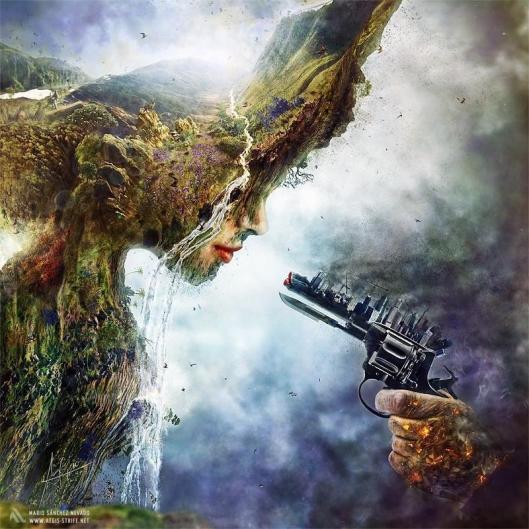
Most have heard about various studies showing the benefits to human health, both for mind and body, that are gained by contact with the non-city environment. As humans destroy more and more of the natural world, physical and mental illness will inevitably increase. For this reason, industrial civilization could rightly be called a ‘death machine’. Converting what is healthy and life-giving into something that is inanimate and disposable is the height of insanity, but this is how the economy works. All of the planet’s life-support systems are viewed through the prism of profit and loss. Industrial civilization’s sociopathic hierarchy is the result of such a system, rewarding those who can grab as much $profit$ as possible, as fast as possible.
Ironically, many of those who make it to the top of the capitalist hierarchy end up buying large tracts of the natural world, even islands, to escape what is commonly called the rat race, the game of hustling for money or trying to accumulate enough paper tokens to exchange for the necessities of life, the very things which are rapidly being destroyed by industrial civilization – clean water, air, soil, and biodiverse-rich ecosystems. We also strive to acquire “creature comforts” which are defined as “not really needed by humans, but that improve comfort or a sense of being at ease.” Imagine the billions of people who have now bought into this hustler’s game of chasing after the “necessities of life” such as ‘piped-in’ water, central heating/cooling, monocultured food crops, and factory farmed meats, in addition to the “creature comforts” like flat screen TV’s and sundry digital devices, electric appliances, mass-produced furniture, and personal automobiles. More people joining the industrialized mode of living requires the conversion of a living planet into a dead and barren planet.
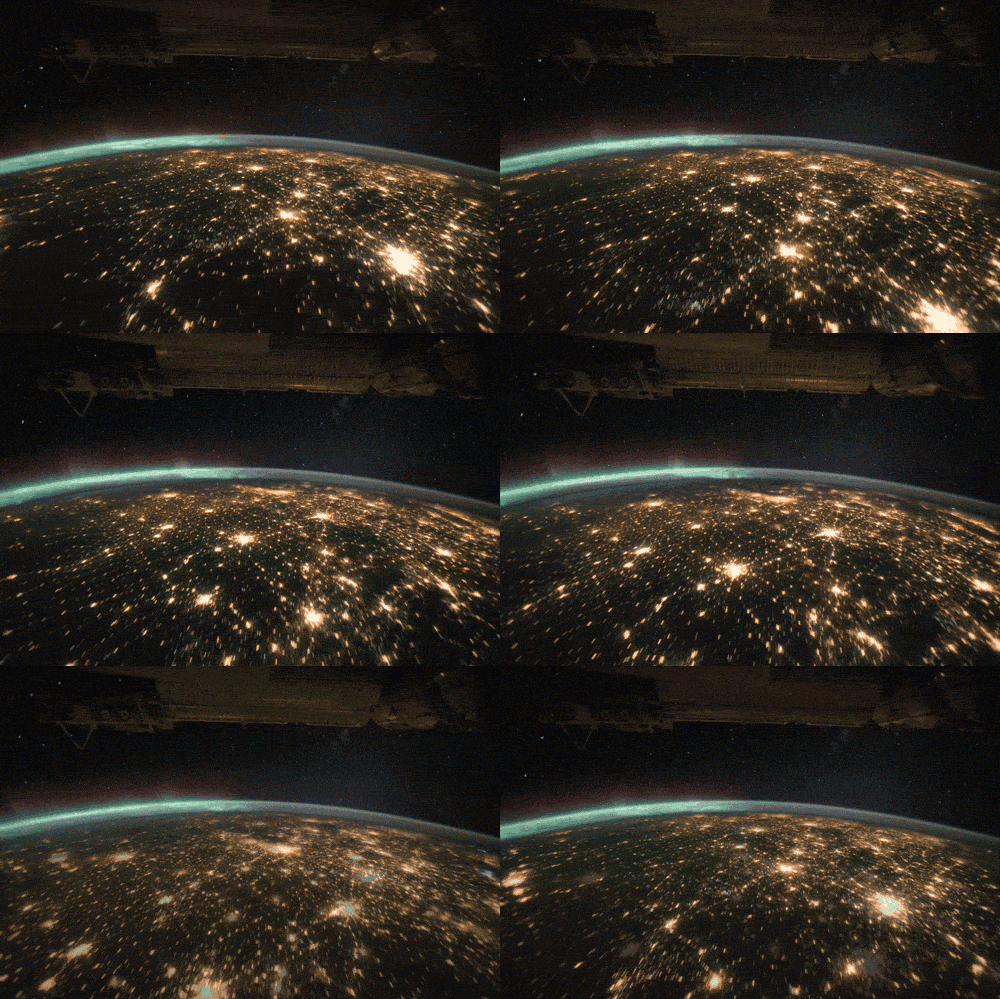
Viewed from the night sky, the circuit board layout of cities glows bright like molten fire. Industrial civilization’s infrastructure scars the horizon with geometric hard lines; gone is the unpredictable mosaic of trees, grass, streams, and rock which are dug up, covered over, and flattened. The meat grinder of industrial capitalism eats up nature and replaces it with a vast grid-like design of asphalt, concrete, and energy-consuming buildings. Nature gets steamrolled over to make way for strip malls, billboards, and the game of hustling for money – what humans call “progress” and “development”. To be blunt, ecologically sustainable cities do not exist:
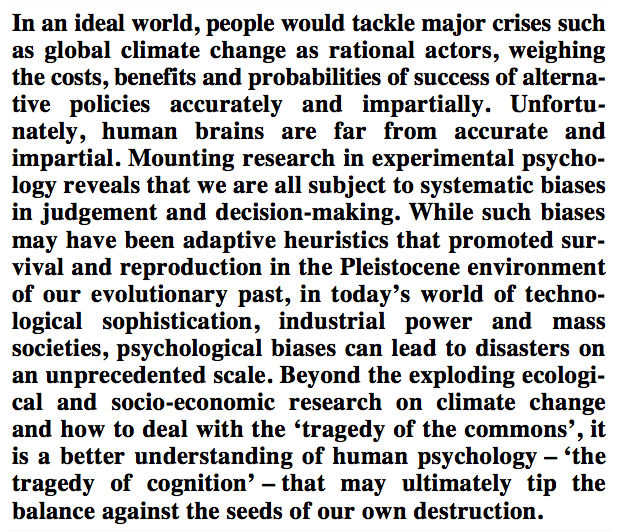
…the story of unsustainable cities is characterized by a ‘tragedy of the commons’ phenomenon not only in the deployment of urban infrastructure but also in the overuse of the natural capital that sustain the city.
… looking at the story of unsustainable cities from the perspective of a simple general equilibrium urban model, open access to urban land leads to high concentrations of population, huge deployment of urban infrastructure and irreversible degradation of the natural capital creating a ‘tragedy of urban infrastructure’ that undermines the sustainability of cities creating preannounced urban ruins.
Psychotic disorders are the side effect of living in present day mega-cities:
…Previous research has shown that people living in cities have a 21% increased risk of anxiety disorders and a 39% increased risk of mood disorders. In addition, the incidence of schizophrenia is twice as high in those born and brought up in cities…By 2050, almost 70% of people are predicted to be living in urban areas…
The social media cocoons and virtual realities people surround themselves with in our digitized and commodified world must also contribute to this mental sickness. The innate unsustainability of modern cities underlies this unhealthy living arrangement. For instance, Japan adopted the fossil-fuel-powered, high-consumption, industrial way of life and has gone parabolic in its ecologic overshoot:
Japan’s per capita Ecological Footprint is 55 percent higher than the world average, 140 percent higher than BRIICS and 171 percent higher than ASEAN countries. However, Japan’s per capita Footprint is 27 percent less than the average G7 countries’, of which Japan is a member. This is mostly due to the United States’ high per capita Ecological Footprint and its relatively large population size, which drives up the G7 average…
….On average, the shipping distance of food imported into Japan is about 4500 miles, approximately the direct distance between Tokyo and Moscow…
…It takes 1.5 years for the Earth to regenerate the renewable resources that Japanese people use…
For those consumed by the system, the Aokigahara Forest in Japan is the world’s second most popular place to commit suicide; the first is the Golden Gate Bridge in San Francisco.
…if you look beyond the modern, Western schools of psychiatry, you find that in traditional societies among primary people, the people we once used to call primitives, that it is understood that sanity and madness have to be defined always in relationship to the natural habitat; and that indeed to a very large extent, madness is understood to be an imbalance between the individual and the natural environment or between an entire tribe or a people and its natural environment…”
“…What Auschwitz was to its human inmates — an expertly rationalized, efficiently organzied killing ground — our urban/industrial system is fast becoming for the biosphere at large, and, for ourselves, as an inseparable part of the environment… ~ THEODORE ROSZAK
Living in an Age of Madness, the best one can do is to keep from succumbing to the insanity.
The decades of escalating heat and dryness, which inevitably returned with a vengeance after some years of waning, had reduced the world’s food production to a mere shell of its former glory. The grocery stores, whose well-stocked shelves city dwellers had grown accustomed to, were now all boarded up and abandoned after being ransacked for their remains – expired cans of food. Industrial agriculture could only be subsidized for so long by an over-exploited and abused environment, but nobody ever really thought that day would come. The green revolution was supposed to be the answer to feeding the world’s growing population. Unfortunately it turned out to be yet another Ponzi scheme built on a finite, dwindling energy source, the burning of which was destabilizing the climate. Nearly all the mega cities and great metropolises had turned into death traps and were quickly emptied of their human inhabitants after a series of violent riots sparked by starving populations. Areas where water was still plentiful were inundated with refugees. Nonetheless, a small population of human scavengers had remained in these great ghost cities of the Post Industrial Age and managed to eke out a life while enjoying the somber solitude of decaying edifices and vacant streets.
A few of these remnant city-dwellers frequented the dust-laden corridors of old libraries. Television and other electricity-depenedent digital devices, which had once been so pervasive and addictive, were no longer available after the heat engine of carbon-based civilization broke down. Thus books and the written word were the surviving medium for amusement and escapism. Even in these desperate times, people found time to dream and wonder. When the grid flickered and finally blinked out for good, much of what had passed for entertainment was now viewed in retrospect as a widespread collective mental illness. The citizenry of the fossil-fuel crazed civilization had retreated further and further into an artificial world of digital bytes and glowing computer screens while the natural world had disintegrated around them.
The recent past leading up to the final days of industrial civilization was looked upon as an age of irony. Science and technology had created miraculous abilities to save lives while at the same time enabling the wholesale destruction of mankind through hi-tech weaponry. Knowledge and wisdom were available at the touch of a keystroke, while mass death and misery hinged on the push of a button. People appeared on the surface to be free, yet their thoughts and actions were carefully manipulated by a veil of infotainment; people’s lives were affected much more by things left unspoken. The pursuit of “happiness” became the law of the land; the pursuit of truth was criminalized and viewed as the deviant behavior of malcontents and miscreants. Questioning the dominant paradigm was obstructive to progress; solutions to the world’s problems were entrusted to ideologues of free-market capitalism and worshippers of endless technological advancement.
A reduction in complexity was inevitable, but did it have to come at the expense of a bankrupt planet? Cheap and abundant energy slaves no longer existed, and even if they did, there was nothing to transition to on a planet plagued with a destabilized climate for the next millennium. The human population would never again reach anything like the 9 billion at the zenith of the fossil fuel age, and this was a welcome thought for those few who remained. Quoting from a dog-eared book found by one of the humans scavenging in a library, or “book cemetery” as it was now known:
What is the greater danger – nuclear warfare or the population explosion? The latter absolutely! To bring about nuclear war, someone has to DO something; someone has to press a button. To bring about destruction by overcrowding, mass starvation, anarchy, the destruction of our most cherished values-there is no need to do anything. We need only do nothing except what comes naturally – and breed. And how easy it is to do nothing…
…Democracy cannot survive overpopulation. Human dignity cannot survive [overpopulation]. Convenience and decency cannot survive [overpopulation]. As you put more and more people onto the world, the value of life not only declines, it disappears…
And not much did survive. But for those last vagabonds of humanity, the tragedy of the Great Collapse and mankind’s downfall were the grist of post-apocalyptic folklore, never to be forgotten.
…a second Dark Age had fallen on Western civilization, in which denial and self-deception, rooted in an ideological fixation on “free” markets, disabled the world’s powerful nations in the face of tragedy. Moreover, the scientists who best understood the problem were hamstrung by their own cultural practices, which demanded an excessively stringent standard for accepting claims of any kind–even those involving imminent threats. Here, our future historian, living in the Second People’s Republic of China, recounts the events of the Period of the Penumbra (1988–2073) that led to the Great Collapse and Mass Migration (2074)…
The paper starts off with a brief history of industrial civilization’s chemical and material pollutions overloading the Earth’s environmental sinks. The sheer volume of mankind’s activities, from the Ozone Hole created by CFC’s to the resource-depleting diet of industrial cattle-farming, became a force of nature unto itself threatening the very habitability of the planet. The scientific community began to recognize that man’s industrial activities were upending the earth’s life support systems; various organizations and institutions were created to try to ‘protect the environment’, but the interests of free market capitalism with its high-consumption lifestyle created a backlash against any restriction and attempts to recognize the limits of the human economy’s unending growth. The party had to continue no matter how dire the consequences. 1988 is said to have marked the beginning of the “Penumbral Period”, perhaps meaning a time of partial illumination where the threat was seen, but no effective action was taken. Indeed, we dug our grave faster with the building of evermore coal-fired plants and the destruction of the remaining ecosystems in the face of a series of extreme and ominous weather events which had the earmarks of manmade climate change.
By the early 2000s, dangerous anthropogenic interference in the climate system was under way. Fires, floods, hurricanes, and heat waves began to intensify, but these effects were discounted. Those in what we might call active denial insisted that the extreme weather events reflected natural variability, despite a lack of evidence to support that claim. Those in passive denial continued life as they had been living it, unconvinced that a compelling justification existed for broad changes in industry and infrastructure. Scientists became entangled in arcane arguments about the “attribution” of singular events; however, the threat to civilization inhered not in any individual flood, heat wave, or hurricane, but in the overall shifting climate pattern, its impact on the cryosphere, and the increasing acidification of the world ocean…
…what was anomalous in 2021 soon became the new normal. Even then, political, business, and religious leaders refused to accept that the primary cause was the burning of fossil fuels. A shadow of ignorance and denial had fallen over people who considered themselves children of the Enlightenment. For this reason, we now know this era as the Period of the Penumbra.
If you don’t like reality, then withdraw into fantasy and rewrite history; “we’re an empire now, and when we act, we create our own reality,” said Karl Rove.
In the early Penumbral Period, scientists were accused of being “alarmist” in order to increase financial support for their enterprise, gain attention, or improve their social standing. At first, the accusations took the form of public denunciations; later they included threats, thefts, and the subpoena of private correspondence. Then legislation was passed (particularly in the United States) that placed limits on what scientists could study and how they could study it, beginning with the notorious “Sea Level Rise Denial Bill,” passed in 2012 by the government of what was then the U.S. state of North Carolina (now part of the Atlantic Continental Shelf ) and the Government Spending Accountability Act of 2012, which restricted the ability of government scientists to attend conferences to share and analyze the results of their research.
Though ridiculed when first introduced, the Sea Level Rise Denial Bill would become the model for the U.S. National Stability Protection Act of 2022, which led to the conviction and imprisonment of more than three hundred scientists for “endangering the safety and well-being of the general public with unduly alarming threats.” By exaggerating the threat, it was argued, scientists were preventing the economic development essential for coping with climate change. When the scientists appealed, their convictions were upheld by the U.S. Supreme Court under the Clear and Present Danger doctrine, which permitted the government to limit speech deemed to represent an imminent threat.
…robust evidence shows that people systematically overestimate the probability of positive future contingencies, and underestimate the probability of negative ones — only those who are depressed or dysphoric come to accurate assessments…
Diogenes of Sinope must have practiced a sort of philosophical dysphoria.
Another cause for modern man’s downfall was the adoption of an excessively stringent standard for accepting causal links between climate change and human industrial activities:
…Historians have long argued about why this standard was accepted, given that it had no substantive mathematical basis. We have come to understand the 95 percent confidence limit as a social convention rooted in scientists’ desire to demonstrate their disciplinary severity. Just as religious orders of prior centuries had demonstrated moral rigor through extreme practices of asceticism in dress, lodging, behavior, and food–in essence, practices of physical self-denial–so, too, did natural scientists of the twentieth century attempt to demonstrate their intellectual rigor through intellectual self-denial. This practice led scientists to demand an excessively stringent standard for accepting claims of any kind, even those involving imminent threats…
CO2 emissions continued to rise not only in developing countries, but also developed countries as fossil fuel production accelerated with shale gas extraction and Canadian oil-sand processing. The world was firmly in the grasp of the fossil fuel energy trap.
…How did these wealthy nations–rich in the resources that would have enabled an orderly transition to a zero net-carbon infrastructure–justify the deadly expansion of fossil fuel production? Certainly, they fostered the shadow of denial that obscured the link between climate change and fossil fuel production and consumption. They also entertained a second delusion: that natural gas from shale could offer a “bridge to renewables.” Believing that conventional oil and gas resources were running out (which they were, but at a rate insufficient to avoid disruptive climate change), and stressing that natural gas, when combusted, produced only half as much CO2 as coal, political and economic leaders persuaded themselves and their constituents that promoting shale gas was an environmentally and ethically sound approach.
This line of reasoning, however, neglected three crucial factors. First, fugitive methane emissions–CH4 that escaped unburned into the atmosphere–greatly accelerated warming. (Again, scientists had foreseen this phenomenon, but their predictions were buried in specialized journals.) Second, the argument presupposed that net CO2 emissions would fall, which would have required strict restrictions on coal and petroleum use. Third, and most important, the sustained low prices of fossil fuels, supported by continued subsidies and a lack of external cost accounting, undercut efficiency efforts and weakened emerging markets for solar, wind, and biofuels (including crucial liquid biofuels for aviation). Thus, the bridge to a zero-carbon future collapsed before the world had crossed it. The bridge to the future became a bridge to nowhere.
The following scenario seems to me to be our most likely future under the current path of business-as-usual:
…The net result? Fossil fuel production escalated, greenhouse gas emissions increased, and climate disruption accelerated. In 2001, the IPCC had predicted that atmospheric CO2 would double by 2050. In fact, that benchmark had been met by 2042. Scientists had expected a mean global warming of 2 to 3 degrees Celsius; the actual figure was 3.9 degrees. Though originally merely a benchmark for discussion with no particular physical meaning, the doubling of CO2 emissions turned out to be significant: once the corresponding temperature rise reached 4 degrees, rapid changes began to ensue.
By 2040, heat waves and droughts were the norm. Control measures such as water and food rationing and Malthusian drills had been widely implemented. In wealthy countries, hurricane- and tornado-prone regions were depopulating, putting increased social pressure on areas less subject to those hazards. In poor nations, conditions were predictably worse: rural portions of Africa and Asia were already experiencing significant depopulation from out-migration, malnutrition-induced disease and infertility, and starvation. Still, sea level had risen only 9 to 15 centimeters around the globe, and coastal populations were mainly intact.
Then, in the Northern Hemisphere summer of 2041, unprecedented heat waves scorched the planet, destroying food crops around the globe. Panic ensued, with food riots in virtually every major city. Mass migration of under-nourished and dehydrated individuals, coupled with explosive increases in insect populations, led to widespread outbreaks of typhus, cholera, dengue fever, yellow fever, and, strangely, AIDS (although a medical explanation for the latter has never been forthcoming). Surging insect populations also destroyed huge swaths of forests in Canada, Indonesia, and Brazil. As social order broke down, governments were overthrown, particularly in Africa, but also in many parts of Asia and Europe, further decreasing social capacity to deal with increasingly desperate populations. The U.S. government declared martial law to prevent food riots and looting, and the United States and Canada announced that the two countries would form the United States of North America in order to begin resource-sharing and northward population relocation. The European Union announced similar plans for voluntary northward relocation of eligible citizens from its southernmost regions to Scandinavia and the United Kingdom…
World leaders convened to hastily put together a climate geoengineering scheme in an effort to halt the collapse, but unforeseen side effects occurred and the project was immediately stopped, resulting in even more dire consequences. Various feedback loops unleashed a “Venusian death” on planet Earth:
…This massive addition of carbon led to what is known as the Sagan effect (sometimes more dramatically called the Venusian death): a strong positive feedback loop between warming and CH4 release. Planetary temperature increased by an additional 6 degrees Celsius over the 5 degree rise that had already occurred…
The rapid melting of the West Antarctic Ice Sheet and the Greenland Ice Sheet resulted in massive sea level rise and more apocalyptic human and non-human suffering:
…Analysts had predicted that a five-meter sea level rise would dislocate 10 percent of the global population. Alas, their estimates proved low: the reality was closer to 20 percent. Although records for this period are incomplete, it is likely that 1.5 billion people were displaced around the globe, either directly from the impacts of sea level rise or indirectly from other impacts of climate change, including the secondary dislocation of inland peoples whose towns and villages were overrun by eustatic refugees. Dislocation contributed to the Second Black Death, as a new strain of the bacterium Yersinia pestis emerged in Europe and spread to Asia and North America. In the Middle Ages, the Black Death killed as much as half the population of Europe; this second Black Death had similar effects. Disease also spread among stressed nonhuman populations. Although accurate statistics are scant because twentieth-century scientists did not have an inventory of total global species, it is not unrealistic to estimate that 60 to 70 percent of species were driven to extinction…
This doomsday narration then ends with a sort of “happy note” which seems to me to be wishful thinking, an improbable turn of events which saves mankind from total extinction. The last few pages discuss more the pitfalls that mankind fell into leading to such a dire fate: positivism or Baconianism and market fundamentalism.
…power did not reside in the hands of those who understood the climate system, but rather in political, economic, and social institutions that had a strong interest in maintaining the use of fossil fuels. Historians have labeled this system the carbon-combustion complex: a network of powerful industries comprised of primary fossil fuel producers; secondary industries that served fossil fuel companies (drilling and oil held service companies, large construction firms, and manufacturers of plastics and other petrochemicals); tertiary industries whose products relied on inexpensive fossil fuels (especially automobiles and aviation); and financial institutions that serviced their capital demands. Maintaining the carbon-combustion complex was clearly in the self-interest of these groups, so they cloaked this fact behind a network of “think tanks” that issued challenges to scientific knowledge they found threatening…
…When scientists discovered the limits of planetary sinks, they also discovered market failure. The toxic effects of DDT, acid rain, the depletion of the ozone layer, and climate change were serious problems for which markets did not provide a spontaneous remedy. Rather, government intervention was required: to raise the market price of harmful products, to prohibit those products, or to finance the development of their replacements. But because neoliberals were so hostile to centralized government, they had, as Americans used to say, “painted themselves into a corner.” The American people had been persuaded, in the words of President Reagan, that government was “the problem, not the solution.” Thus, citizens slid into passive denial, accepting the contrarian arguments that the science was unsettled. Lacking widespread support, government leaders were unable to shift the world economy to a net carbon-neutral energy base. As the implications for market failure became indisputable, scientists came under attack, blamed for problems they had not caused but merely documented…
Watching the following video, we can see such a future, as describe above, being played out before our very eyes:
Real Time episode with Bill Maher – aired April 5, 2013: Bill Maher led an intense panel discussion on the reliability of science on his show tonight, with Maher, Abby Huntsman, Senator Bernie Sanders, and 19-year-old science education activist Zack Kopplin arguing with Wall Street Journal columnist Steve Moore over scientific consensus on global warming. Moore continually insisted the debate is not over, but Maher repeatedly explained how sound science is not up for debate and that Moore should “have the humility” to defer to actual scientific experts on the issue…
Alien 1: “Lets zip over to Galactic Sector ZZ9 Plural Z Alpha where exists that one habitable planet overrun by its egomaniacal, carbon-burning organisms.”
Alien 2: “You mean the ones that call themselves ‘wise’, but which have completely disassociated themselves from their planet’s life-giving qualities. They have a very bad habit of wielding their technology in a half-hazard and suicidal manner.”
Alien 1: “Yeah that’s the one. I’m surprised they’ve made it this far with all those mushrooming obliteration devices they have stockpiled.”
Aliens 1,2, & 3: “HA! HA!” Look at that! They’re cooking themselves with those carbon-burners… all to support a fleeting lifestyle of high energy and resource consumption.”
Alien 2: “Don’t they know it’ll all be gone very soon and they’ll be left with a moonscaped planet that has the temperature of Venus?”
Alien 1: “Some of them do, but most appear to be prisoners of their own self-indulgent delusions. They refuse to listen no matter how much the sentient minority jump up and down to try to get their attention.
It seems that this earthling species spends most of its time attempting to accumulate more and more of these paper and metal tokens by converting all of their planet’s resources into these fictitious symbols of wealth.”
Alien 3: “The situation looks to be rather grim down there. They don’t seem to have any sort of self-constraint. I believe one of their own even called their species a plague on the planet.”
Alien 2: “Did anyone listen to him?”
Alien 1: “No, the few who heard him mostly just got offended and went back to the business of obsessing over economic growth and accumulating evermore of those paper tokens.”
Alien 2: “Really? Well, what if we install some emergency buttons at strategic locations around the planet to limit their activities? I’m sure the self-aware among them would consider activating such devices.”























 Collapse of Industrial Civilization