A recurrent theme in the reality based community is the continued assertion that infinite growth cannot happen on a finite planet. This simple statement seems to be quite self-evident to those announcing it, yet the powers that be cannot seem to be able to wrap their head around it. We live in a society awash with advertisements that seek to sell you something at some price. Capitalism commodifies everything and its ethos of mandatorily attaching some arbitrary, imagined worth to all things has permeated every aspect of our lives, our ethics, and our value system. We are a society that projects a cost/price analysis on everything, including relationships with fellow humans. According to ‘Save the Children’ charity chief executive, Justin Forsyth, half a billion children over the next 15 years will suffer long-term mental and physical harm due to stunted growth by malnutrition. Surely if we valued the future life of our grandchildren more than profit, then we would not allow such a thing to happen. If our own children’s future is not valued enough to save them from our greed and shortsightedness, then why would the environment be treated any differently, despite its importance to the survival of every living thing on the planet. The scientist James Lovelock once said that Green is the color of mold and corruption. If we cannot separate the needs of capitalism from the needs of our planet, then every last bit of resources and life-sustaining gift from the earth will be chopped up into tradable, sellable units and thrown into the gaping jaws of the free market. Philosopher Leonardo Boff notes:
The fundamental defect in the UN’s document for Rio+20 is the total absence of a new vision or new cosmology that would create the hope of the «future that we want», the motto of the great gathering. As such, it belies a promising future.
To those who drafted it, the future depends on the economy. There is little value in the adjectives they attach to it: sustainable or green. The green economy in particular constitutes a great assault on the last bastion of nature: transforming into merchandise and putting a price on everything that is common, natural, vital and indispensable to life, such water, the soil, fertility, jungles, genes, etcetera. That which pertains to life is sacred and must not be passed to the sphere of business. Instead, it becomes part of the market place, under the categorical imperative: take all you want, make business with everything, especially with nature and with her goods and services.
This is the supreme egocentrism and arrogance of the human being, or, as it is also called, anthropocentrism. Human beings see the Earth as a warehouse of resources only for them, without realizing that we are not the only ones who inhabit the Earth, nor do we own her; we do not feel that we are part of nature, but outside and above her, as her «lords and masters». We forget, however, that there exists a whole visible community of life (5% of the biosphere) and quadrillions of quadrillions of invisible microorganisms (95%) that guarantee the vitality and fecundity of the Earth. They all belong to the Earth/condominium and have the right to live and coexist with us. Without interdependent relationships with them, we could not even exist. The Rio+20 document does not take any of this into account. We can then safely say that with that document there is no salvation. It opens a path towards the abyss…
This straitjacket of capitalism will not release its grip on civilization until the needs of this ever-consuming, ever-growing, ever-alienating economic system kills its host. Gil Smart gives insight into this dead-end thinking taking us all over the cliff in his short writing called Faith of our fantasies:
…we face a coming era of constrained resources. Fiscal resources; energy; environmental resources. Continual growth, the type we have conditioned to believe as natural and inevitable, is neither.
I read Megan McArdle’s stuff in the Atlantic, where recently she opined about Europe’s changing demographics (i.e. fewer births, more oldsters) and how this makes robust growth more difficult. She got a letter in return from someone questioning the premise – saying that perpetual growth isn’t possible. This was her response:
Whether or not continuous economic growth is possible, or desirable, the fact remains that modern economies are predicated on the assumption that it will happen. Both individuals and governments have planned for a future in which incomes steadily rise, allowing people to enjoy lengthy retirements, advanced health care, independent living, and of course, repayment of the massive debts that almost everyone has accumulated over the past few decades.
If that growth doesn’t materialize, the shock will be enormous. Generational battles over things like pensions have occurred in the context of rising incomes; they will become bitter indeed if young and old are fighting over a shrinking economic pie. The most brutal shock will of course be over debt. If incomes fall, debt will become an ever larger burden. But if countries default, they will merely shift the shock to someone else — too often, to pensioners at home or abroad.
However laudable Europe’s demographic decline may be from an environmental point of view, it will be an economic disaster for many who expected a stable, prosperous future.
Get it? This is the idea on which we’ve staked our future. And if the idea’s wrong?
Well. I guess that means you’re up shite creek, then.
If we plow blindly down this path, infused with the faith that what we want is what will actually happen – we’re doomed. But not charging down this path requires a fundamental restructuring of the way we think – not bloody likely in this society. Or maybe any society.
Well, Mr. Smart, along with a restructuring of our way of thinking will also be required a restructuring of society. And the elite who sit atop our current social hierarchy of capitalism, benefiting the most from its exploitation and theft, will not let go of the power they hold until it’s ripped from their cold, dead hands, whether by an angry mob or the wrath of an abused and ravaged Mother Earth.
In my post “The Vicious Price/Demand Cycle of Peak Oil & Blackouts in Greece” I mentioned the global land grabs occurring, primarily in Third World countries, by corporations and ‘developed’ countries in order to secure the resources to feed their nation’s citizens and extract profit. These resource appropriations take place at the expense of local, indigenous people who have farmed the land in a sustainable way for centuries if not thousands of years. The bottom line of these land grabs is to get control of the water resources connected to the land. The non-profit organization called GRAIN published an excellent article today explaining this theft in great detail. I highly recommend reading it in its entirety. Also worth reading is “The Land Grabbers: The New Fight Over Who Owns the Earth” by Fred Pearce, an excerpt of which was published today at Salon.com.
Although all the countries who practice industrial monoculture farming and factory farming are unsustainable and depleting their fresh water resources faster than they are being replenished by natural rainwater/snowmelt, Saudi Arabia is the most severe example:
…perhaps the situation is nowhere more dramatic than in the Middle East. Saudi Arabia has no rain or rivers to speak of, but possesses vast ‘fossil water’ aquifers beneath the desert. During the 1980s the Saudi government invested $40 billion of its oil revenues to pump this precious water to irrigate a million hectares of wheat. Later, in the 1990s, in order feed the growing industrial dairy farms that popped up across the desert, many farmers switched to alfalfa, a crop that needs even more water. It was clear that the miracle couldn’t last; the aquifers soon collapsed and the government decided to outsource its food production to Africa and other parts of the world instead. Some 60% of the country’s fossil water under the desert was squandered in the process. Gone and lost forever.
As Saudi Arabia uses its oil wealth to procure resources abroad, so is China doing the same with the wealth generated from its success as an exporter and the huge trade surplus it has built up:
More than 40% of the Earth’s land is used for human needs, including cities and farms; and with the population set to grow by a further two billion by 2050, that figure could soon exceed 50%. Rising demand for resource-expensive foods such as beef could mean it happens by 2025, Prof Barnofsky’s modelling suggests. “It really will be a new world, biologically, at that point,” he said. “I think that if we want to avoid the most unpleasant surprises, we want to stay away from the 50% mark.
Reading about these land grabs by resource hungry wealthy countries who practice industrialized farming makes me think of the following quote and how little time we have left before mass starvation on a global scale occurs:
I’ve written before about what exactly it means to have an unsustainable agricultural system: If our current system doesn’t change, then one day it will collapse, and millions — if not billions — will starve. This collapse won’t have been unprecedented; it may, in fact, be an almost inevitable part of a cycle of growth and devastation that humanity has been experiencing since the agricultural revolution, as described in a new book, Empires of Food, by the academic Evan D. G. Fraser and the journalist Andrew Rimas.
The book analyzes the agricultural system in places and time periods from Mesopotamia to Rome to the Middle Ages and beyond. It chronicles a disturbingly reliable pattern of agricultural innovation, expansion, and trade that accompanies periods of favorable weather (just as we’ve experienced for the past half-century) and then the horrific implosion of the food system (and the civilization that built it) that always follows because of soil erosion, overpopulation, and climate change. Economic troubles caused by unsound banking practices also usually figure prominently in the demise. Does any of this sound eerily familiar?
Concerning the real reason for the land grabs: Water
“The tensions in south western Ethiopia illustrate the central importance of access to water in the global land rush. Hidden behind the current scramble for land is a world-wide struggle for control over water. Those who have been buying up vast stretches of farmland in recent years, whether they are based in Addis Ababa, Dubai or London, understand that the access to water they gain, often included for free and without restriction, may well be worth more over the long-term, than the land deals themselves.
In recent years, Saudi Arabian companies have been acquiring millions of hectares of lands overseas to produce food to ship back home. Saudi Arabia does not lack land for food production. What’s missing in the Kingdom is water, and its companies are seeking it in countries like Ethiopia.
Indian companies like Bangalore-based Karuturi Global are doing the same. Aquifers across the sub-continent have been depleted by decades of unsustainable irrigation. The only way to feed India’s growing population, the claim is made, is by sourcing food production overseas, where water is more available.
And companies like Chayton Capital think that Africa is the best place to find that water. The message repeated at farmland investor conferences around the globe is that water is abundant in Africa. It is said that Africa’s water resources are vastly under utilised, and ready to be harnessed for export oriented agriculture projects.
The reality is that a third of Africans already live in water-scarce environments and climate change is likely to increase these numbers significantly. Massive land deals could rob millions of people of their access to water and risk the depletion of the continent’s most precious fresh water sources.
All of the land deals in Africa involve large-scale, industrial agriculture operations that will consume massive amounts of water. Nearly all of them are located in major river basins with access to irrigation. They occupy fertile and fragile wetlands, or are located in more arid areas that can draw water from major rivers. In some cases the farms directly access ground water by pumping it up. These water resources are lifelines for local farmers, pastoralists and other rural communities. Many already lack sufficient access to water for their livelihoods. If there is anything to be learnt from the past, it is that such mega-irrigation schemes can not only put the livelihoods of millions of rural communities at risk, they can threaten the freshwater sources of entire regions. (See Water mining, the wrong type of farmingandDeath of the Aral Sea)”
In the not-so-distant future, water will become “the single most important physical-commodity based asset class, dwarfing oil, copper, agricultural commodities and precious metals,” says Citigroup’s chief economist, Willem Buiter.
Hydro-colonialism?
The Nile and the Niger basins are only two of the examples of the massive give away of land and water rights. The areas where land grabbing is concentrated in Africa coincide closely with the continent’s largest river and lake systems, and in most of these areas irrigation is a prerequisite of commercial production.
The Ethiopian government is constructing a dam in the Omo river, to generate electricity and irrigate a huge sugarcane plantation; a project that threatens hundreds of thousands of indigenous people that depend on the river further downstream. It also threatens to empty the world biggest desert lake, Lake Turkana, fed by the Omo river. In Mozambique the government had signed off on a 30,000 hectares plantation along the Limpopo river which would have directly affected farmers and pastoralists now depending on the water. The project was revoked because the investor didn’t deliver, but the government is looking for others to take over. In Kenya, a tremendous controversy has arisen from the government’s plans to hand out huge areas of land in the delta of the Tana River with disastrous implications for the local communities depending on the delta’s water. The already degraded Senegal river basin and its delta have been subject to hundreds of thousands of hectares in land deals, putting foreign agribusiness in direct competition for the water with local farmers. The list goes on, and is growing by the day. This table shows a selection of the most important cases.
Peter Brabeck-Letmathe, the Chairman of Nestle, says that these deals are more about water than land: “With the land comes the right to withdraw the water linked to it, in most countries essentially a freebie that increasingly could be the most valuable part of the deal.”[8] Nestle is a leading marketer of bottled water under brand names including Pure Life, Perrier, S.Pellegrino and a dozen others. It has been charged with illegal and destructive groundwater extraction, and of making billions of dollars in profits on cheap water while dumping environmental and social costs onto communities. [9]
Asked at an agricultural investment conference whether it is possible to make money from water, Judson Hill of one of the private equity funds involved, was unequivocal: “Buckets, buckets of money,” he told a meeting of bankers and investors in Geneva. “There are many ways to make a very attractive return in the water sector if you know where to go.”
In the not-so-distant future, water will become “the single most important physical-commodity based asset class, dwarfing oil, copper, agricultural commodities and precious metals,” says Citigroup’s chief economist, Willem Buiter.[10] No surprise, then, that so many corporations are rushing to sign land deals that give them wide-ranging control over African water. Especially when African governments are essentially giving it away. Corporations understand what’s at stake. There are “buckets of money” to be made on water, if only it can be controlled and turned it into a commodity. (SeeVirtual water and Grabbing carbon credits?)
The secrecy that shrouds land deals makes it hard to know exactly what’s being handed over to foreign companies. But from those contracts that have been leaked or made public, it is apparent that the contracts tend not to contain any specific mention of water rights at all, leaving the companies free to build dams and irrigation canals at their discretion, sometimes with a vague reference to ‘respecting water laws and regulations’.[11] This is the case in the agreements signed between the Ethiopian government and both Karuturi and Saudi Star in Gambela, for example. In some contracts, a minor user fee is agreed upon for the water, but without any limitation on the amount of water that can be withdrawn. Only in rare cases are even minimal restrictions imposed during the dry season, when access to water is so critical for local communities. But even in instances where governments may have the political will and capacity to negotiate conditions to protect local communities and the environment, this is made increasingly difficult due to existing international trade and investment treaties that give foreign investors strong rights in this respect.[12]”
Stop the water grab
If this land and water grab is not put to an end, millions of Africans will lose access to the water sources they rely on for their livelihoods and their lives. They may be moved out of areas where land and water deals are made or their access to traditional water sources may simply be blocked by newly built fences, canals and dikes. This is already happening in Ethiopia’s Gambela, where the government is forcibly moving thousands of indigenous people out of their traditional territories to make way for export agriculture. By 2013, the government wants to remove 1.5 million people from their territories across Ethiopia.[13] As the bulldozers move into the newly acquired lands, this will become an increasingly common feature in Africa’s rural areas, generating more tensions and conflicts over scarce water resources.
But the impacts will run far beyond the immediately affected communities. The recent wave of land grabbing is nothing short of an environmental disaster in the making. There is simply not enough water in Africa’s rivers and water tables to irrigate all the newly acquired land. If and when they are put under production, these 21st century industrial plantations will rapidly destroy, deplete and pollute water sources across the continent. Such models of agricultural production have generated enormous problems of soil degradation, salinisation and waterlogging wherever they have been applied. India and China, two shining examples that Africa is being pushed to emulate, are now in a water crisis as a result of their Green Revolution practices. Over 200 million people in India and 100 million in China depend on foods produced by the over-pumping of water.[14] Fearing depleted water supplies or perhaps depleted profits, companies from both countries are looking now to Africa for future food production.
Africa is in no shape for such an imposition. More than one in three Africans live with water scarcity, and the continent’s food supplies are set to suffer more than any other’s from climate change. Building Africa’s highly sophisticated and sustainable indigenous water management systems could help resolve this growing crisis, but these are the very systems being destroyed by land grabs.
Advocates of the land deals and mega irrigation schemes argue that these big investments should be welcomed as an opportunity to combat hunger and poverty in the continent. But bringing in the bulldozers to plant water-intensive export crops is not and cannot be a solution to hunger and poverty. If the goal is to increase food production, then there is ample evidence that this can be most effectively done by building on the traditional water management and soil conservation systems of local communities. [15] Their collective and customary rights over land and water sources should be strengthened not trampled.
But this is not about combating hunger and poverty. This is theft on a grand scale of the very resources – land and water – which the people and communities of Africa must themselves be able to manage and control in order to face the immense challenges they face this century.
Going Further
Fred Pearce, The Landgrabbers: The new fight over who owns the Earth,
Eden Project, 2012.
Fred Pearce, When the rivers run dry: What happens when our water runs out? Eden Project, 2006
Farmlandgrab.org News and information on large-scale land grabs. Updated daily. Maintained by GRAIN as a research-sharing and monitoring project open to your contributions and participation.
Apparently the Mafia gang in the oval office decided it would be a good idea to employ the same tactics used by those they decide to ‘off’. As in the days of yore when Romans would usurp a foreign army and incorporate the best of that foe’s weapons and tactics, so it is that the American Empire follows in the footsteps of its long deceased predecessor, the Roman Empire. It’s called the “double tap” — sending in a second predator drone strike shortly after the first responders come to the scene of the initial assassination strike to rescue any survivors or retrieve the dead, including the mourners of resultant funerals held days later. This is a policy of treating the population as guilty by association, exterminating any and all who might be linked, however remotely, with the intended target:
According to the NYT, the Administration assumed that, “people in an area of known terrorist activity, or found with a top Qaeda operative, are probably up to no good” and therefore all military age males in a strike zone could be targeted. A former senior counterterrorism official calls earlier drone targeting, “guilt by association.” Of signature strikes in Pakistan, a senior (apparently still-serving) official joked “that when the C.I.A. sees ‘three guys doing jumping jacks,’ the agency thinks it is a terrorist training camp.” And one of Obama’s top political advisors, David Axelrod, was attending targeting meetings, injecting a political taint on the program…
There is no due process for a “suspicious” person to be marked for death by drone. Ask George Zimmerman about that. The only requirement is vague and ethereal intelligence information which, if it’s as reliable as the Iraq WMD intel, appears by all accounts to be radicalizing the affected population tenfold. This boomerang effect will inevitably please our Military Industrial Complex’s constant search for new enemies to grind into profits of war. Death by Drone smacks of a street thug mentality similar to some cheesy gangster movie script. Francine Prose notes :
As drama, the scene is reminiscent of great moments in cable TV: Tony Soprano and his colleagues deciding whom to whack, The Wire’s Avon Barksdale and Stringer Bell conferring on which of their child employees must be eliminated. But it’s one thing to see murders planned on television and quite another to read that this planning session is occurring in the White House Situation Room in January, 2010, and that President Obama has assumed the grim responsibility of casting the final vote on every death sentence that this jury (so obviously outside traditional legal channels) is handing down…
..[consider] the following quote from Michael Leiter, former Director of the National Counterterrorism Center:
You can pass a lot of laws,” Mr. Leiter said, “These laws are not going to get Bin Laden dead.
Get Bin Laden dead? With its execrable grammar, its calculated thuggishness, and, for all that we have been reading about the assumption of personal responsibility, its euphemistic avoidance of what is really at issue (to get dead is not the same as to kill, and it’s never laws but people who get other people dead), the quote suggests a new dispensation in which our government, at the highest level, has given Tony Soprano license to ignore the rule of law and murder actual human beings, some of them harmless civilians. Shouldn’t we feel more frightened than reassured by the knowledge that the leader of our country holds himself accountable for every one of these deaths?
The above montage of clips from the satirical movie ‘The Distinguished Gentleman‘, in which Freshman Congressman (and con man) Thomas Jefferson Johnson (Eddie Murphy) is schooled in the ways of Washington by legendary lobbyist Terry Corrigan (Kevin McCarthy), is as true today as it was back when that movie was made more than twenty years ago, so says Marty Kaplan. The following excerpts from the transcript of Bill Moyer’s latest report – Big Money, Big Media, Big Trouble – tells the sorry and sordid tale of our political economy/society. This Moyer’s interview with Kaplan, a true insider to our political and media complex, is quite extraordinary. He affirms what the general populace is unable to comprehend… that we live in a society in which the news media and government institutions are entirely owned by the corporate oligarchs. The government regulators are owned by the very companies they are charged with over-seeing by way of Wall Street’s army of lobbyists and the revolving door that exists between government and private sector positions. Actual news to inform the public on the state of affairs and issues affecting them is virtually nonexistent on the media airwaves.
…what’s really driving it, if you think of this as a symptom and not a cause, I think what’s really driving it is the absolute demonization of any kind of idea of public interest as embodied by government. And at the same time, a kind of corporate triumphalism, in which the corporations, the oligarchs, the plutocrats, running this country want to hold onto absolute power absolutely. And it’s an irritant to them to have the accountability that news once used to play.
…the notion of spectator democracy has, I think, extended to include the need to divert the country from the master narrative, which is the influence and importance and imperviousness to accountability of large corporations and the increasing impotence of the public through its agency, the government, to do anything about it. So the more diversion and the more entertainment, the less news, the less you focus on that story, the better off it is.
And the self-serving triviality of corporate-run ‘news’ media has become a self-reinforcing mechanism whereby stats are being kept of what is the most popular story which then gets kicked up to the top and influences what that corporate news channel reports on in the future. It’s all driven by ratings and profit rather than educating and informing people on facts and real issues. So Neil Postman was right… We are being entertained to death, literally. This nihilism plays right into the hands of those controlling the levers of power who would not benefit from a well-informed, well-eduated public. The vast majority of public discourse has been reduced to an echo chamber of the crap (divisive ‘wedge issues’, celebrity gossip, sensationalist stories, corporate propaganda, consumerist materialism, valorization of the predatory skills of the modern competitive capitalist, etc.) that fills the corporate-controlled airwaves.
…
BILL MOYERS: You wrote The Distinguished Gentleman 20 years ago. Could you write it today?
MARTY KAPLAN: Oh God, it still is the same. All you have to do is add a couple of zeros to the amount of money. And the same laws still apply. It is fabulous and miserable at the same time.
BILL MOYERS: Was Washington then, and is it now, the biggest con game going?
MARTY KAPLAN: It is the biggest con game going. And the stakes are enormous. And the effort to regulate them is hopeless, because the very people who are in charge of regulating them are the same people who are wholly-owned subsidiaries of the lobbies that run them.
BILL MOYERS: I have it on very good authority that a prominent Washington senator recently told a group of lobbyists in Washington, a room full of lobbyists, that they are the lifeblood of the city. And I thought, “Kaplan has to do a vampire movie now.” Right?
MARTY KAPLAN: Exactly. The connection between the legislators and the lobbyists is so intimate that it’s not even embarrassing for a senator to say that in front of a room. The culture is so hermetically sealed from the rest of the country that it doesn’t occur to them that there is something deeply outrageous and offensive and corrosive of democracy to admit that the money side of politics and the elected side of politics belong to each other.
BILL MOYERS: You wrestle with this, you and your colleagues at the Norman Lear Center, and all the time, on how, on what the system is doing to us. So let me ask you, “How did this happen in America? How did our political system become the problem instead of the answer?”
MARTY KAPLAN: Part of it is the nexus of media, money, and special interest politics. The citizens have given the airwaves to the station. We own the electromagnetic spectrum and for free we give out licenses to television stations. Those stations, in turn, use that spectrum to get enormous amounts of money from special interests and from members of Congress in order to send these ads back to us to influence us. So we lose it in both ways. The other day, the president of CBS, Les Moonves, was reported by “Bloomberg” to have said “Super PACs may be bad for America, but they’re … good for CBS.” I mean, there it is. This is a windfall every election season, which seems not to even stop ever, for the broadcast industry. So not only are they raking it in, they’re also creating a toxic environment for civic discourse. People don’t hear about issues. They hear these negative charges, which only turn them off more. The more negative stuff you hear, the less interested you are in going out to vote. And so they’re being turned off, the stations are raking it in, and the people who are chortling all the way to Washington and the bank are the ones who get to keep their hands on the levers of power. So one of the big reasons that things are at the pass they are is that the founders never could have anticipated that a small group of people, a financial enterprise and the technology could create this environment in which facts, truth, accountability, that stuff just isn’t entertaining. So because it’s not entertaining, because the stations think it’s ratings poison, they don’t cover it on the news.
BILL MOYERS: They don’t cover the news.
MARTY KAPLAN: They don’t cover politics and government in the sense of issues. They’re happy, occasionally to cover horse race and scandal and personality and crime and that aspect of politics. But if you look at a typical half hour of news, local news, because local news is one of the most important sources of news for Americans about campaigns. A lot—
BILL MOYERS: You and your colleagues have done a lot of research on local news.
MARTY KAPLAN: Yes, we’ve been studying it now since 1998. And each year it gets more depressing and it’s hard to believe. We, not long ago, did a study of the Los Angeles media market. We looked at every station airing news and every news broadcast they aired round the clock. And we put together a composite half hour of news. And if you ask, “How much in that half hour was about transportation, education law enforcement, ordinances, tax policy?” everything involving locals, from city to county. The answer is, in a half hour, 22 seconds.
BILL MOYERS: Twenty-two seconds devoted to what one would think are the serious issues of democracy, right?
MARTY KAPLAN: Yes. Whereas, in fact, there are three minutes about crime, and two and a half minutes about the ugliest dog contest, and two minutes about entertainment. There’s plenty of room for stuff that the stations believe will keep people from changing the dial.
BILL MOYERS: What is the irony to me is that these very same stations that are giving 22 seconds out of a half hour to serious news, are raking— and not covering politics, are raking in money from the ads that the politicians and their contributors are spending on those same papers.
MARTY KAPLAN: Yes, they’re earning hundreds of thousands and millions of dollars from the ads that they are being paid to run. And not even risking running a minute of news, which might actually check on the accuracy of an ad. Truth watches, they’re almost invisible now.
BILL MOYERS: So they will tell you, however, that they’re in the entertainment business. That they’re in the business to amuse the public, to entertain the public. And if they do these serious stories about the schools or about the highways or about this or that, the public tunes out. That the clicks begin to register as—
MARTY KAPLAN: It’s one of the great lies about broadcasting now. There are consultants who go all around the country and they tell the general managers and the news directors, “It is only at your peril that you cover this stuff.” But one of the things that we do is, the Lear Center gives out the Walter Cronkite award for excellence in television political journalism every two years. And we get amazing entries from all over the country of stations large and small of reporters under these horrendous odds doing brilliant pieces and series of pieces, which prove that you can not only do these pieces on a limited budget, but you can still be the market leader.
…
MARTY KAPLAN: Well, what’s really driving it, if you think of this as a symptom and not a cause, I think what’s really driving it is the absolute demonization of any kind of idea of public interest as embodied by government. And at the same time, a kind of corporate triumphalism, in which the corporations, the oligarchs, the plutocrats, running this country want to hold onto absolute power absolutely. And it’s an irritant to them to have the accountability that news once used to play.
BILL MOYERS: What do you mean by that? News challenges their assumptions, challenges their power?
MARTY KAPLAN: It used to be that the news programs that aired, believe it or not, had news on them. They had investigative stories.
But then somewhere in the 1980s, when 60 Minutes started making a profit, CBS put the news division inside the entertainment division. And then everyone followed suit. So ever since then, news has been a branch of entertainment and, infotainment, at best.
But there was a time in which the press, the print press, news on television and radio were speaking truth to power, people paid attention, and it made a difference. The— I don’t think the Watergate trials would have happened, the Senate hearings, had there not been the kind of commitment from the news to cover the news rather than cutting away to Aruba and a kidnapping.
BILL MOYERS: What is the basic consequence of taking the news out of the journalism box and putting it over into the entertainment box?
MARTY KAPLAN: People are left on their own to fend for themselves. And the problem is that there’s not that much information out there, if you’re an ordinary citizen, that comes to you. You can ferret it out. But it oughtn’t be like that in a democracy. Education and journalism were supposed to, according to our founders, inform our public and to make democracy work.
You can’t do it unless we’re smart. And so the consequence is that we’re not smart. And you can see it in one study after another. Some Americans think that climate change is a hoax cooked up by scientists, that there’s no consensus about it. This kind of view could not survive in a news environment, which said, “This is true and that’s false.” Instead we have an environment in which you have special interest groups manipulating their way onto shows and playing the system, gaming the notion that he said she said is basically the way in which politics is now covered.
It’s all about combat. If every political issue is the combat between two polarized sides, then you get great television because people are throwing food at each other. And you have an audience that hasn’t a clue, at the end of the story, which is why you’ll hear, “Well, we’ll have to leave it there.” Well, thank you very much. Leave it there.
BILL MOYERS: You have talked and written about “the straightjacket of objectivity.” Right? What is that?
MARTY KAPLAN: Well, the problem with telling the truth is that in this postmodern world, there’s not supposed to be something as truth anymore. So all you can do if you are a journalist is to say, “Some people say.” Maybe you can report a poll. Maybe you can quote somebody. But objectivity is only this phony notion of balance, rather than fact-checking.
There are some gallant and valiant efforts, like PolitiFact and Flackcheck.org that are trying to hold ads and news reports accountable. But by and large, that’s not what you’re getting. Instead the real straightjacket is entertainment. That’s what all these sources are being forced to be. Walter Lippmann in the 1920s had a concept called “spectator democracy” in which he said that the public was a herd that needed steering by the elites. Now he thought that people just didn’t have the capacity to understand all these complicated issues and had to delegate it to experts of various kinds.
But since then, the notion of spectator democracy has, I think, extended to include the need to divert the country from the master narrative, which is the influence and importance and imperviousness to accountability of large corporations and the increasing impotence of the public through its agency, the government, to do anything about it. So the more diversion and the more entertainment, the less news, the less you focus on that story, the better off it is.
BILL MOYERS: Are you saying that the people who run this political media business, the people who fund it, want to divert the public’s attention from their economic power? Is that what you’re saying?
MARTY KAPLAN: Yes.
Let us fight about you know, whether this circus or that circus is better than each other, but please don’t focus on the big change which has happened in this country, which is the absolute triumph of these large, unaccountable corporations.
This is about as dismal and effective a conspiracy, out in plain sight, as there possibly could be. So I don’t say that this is going to be solved or taken care of. What I do say is the first step toward it is at least acknowledging how toxic the situation has become.
…
BILL MOYERS: What you’re saying is that the political square is now a commercial enterprise, owned and operated for the benefit of the brand, CNN, Fox, all of those, right?
MARTY KAPLAN: That’s correct.
BILL MOYERS: How did it happen? How did we sell what belonged to everyone?
MARTY KAPLAN: By believing that what is, is what always has been and what should be. The notion that what goes on is actually made by people, changes through time, represents the deployment of political power. That notion has gone away. We think it’s always been this way. People now watching these CNN and Fox. They think this is how it works. They don’t have a sense of history. The amnesia, which has been cultivated by journalism, by entertainment in this country, helps prevent people from saying, “Wait a minute, that’s the wrong path to be on.”
BILL MOYERS: Amnesia, forgetfulness? You say that they’re cultivating forgetfulness?
MARTY KAPLAN: Absolutely.
…
BILL MOYERS: You made a very important speech not long ago at a media conference in Barcelona. And you tried and did draw the distinction between— you said the battle of the future is between big data and big democracy. In layman’s language, what is that?
MARTY KAPLAN: Big data, the age of big data that we’re supposed to be in, refers to the way in which, as we go on the internet, as we do all these media activities, watching television, which are at the center of our lives, we’re leaving a trail behind. We’re giving bits of ourselves up. And that set of bits is being collected and mined relentlessly.
So every time we buy a product or send an e-mail or vote how many stars to a restaurant, all this stuff creates a profile that companies buy and sell to each other. And that stuff is being used currently not only to market to us, to target ads toward us, but it’s also being used to profile us. There’s something called “web lining.” Which is similar to what used to be called “red lining.” The— that phenomenon, which is now illegal, in which people who were discriminated against because of the neighborhoods they live in. Right now—
BILL MOYERS: Banks drew a red line around impoverished neighborhoods that they would not then serve.
MARTY KAPLAN: Exactly. And so today imagine if you were to permit a private detective to follow you as you went to your drug store and bought a medication to help you with depression or as you made a phone call to a bankruptcy lawyer, because you needed one. Imagine if that kind of information could be put together and used against you to decide that you’re a bad credit risk or that maybe your insurance company should turn you down, because you suffer from this problem.
That kind of information, that kind of digital profiling is something which is emerging as a huge industry. And unless there are controls on it and constraints, as they have to some degree in Europe but not nearly enough even there, we are about to kiss goodbye our ownership of our privacy and also even the ownership financially of our information. We are the people who make Facebook and Twitter worth the billions of dollars that they’re worth, because we are giving up our information to them, which they are then selling and raising capital around.
BILL MOYERS: But in a libertarian era, what are the restraints and constraints against that? Where are they going to come from?
MARTY KAPLAN: Well, right now, the constraints in this country are voluntary. The Obama White House not long ago issued a digital code of conduct, which included privacy. In which they asked companies and companies did step up to it to say, “We’re not going to track people if they don’t want to be tracked.” And other such efforts to get people in control.
But what we do know, the record of just the past couple of months, is that company after company was doing stuff to us that’s astonishing, that we didn’t know about. The ways in which the apps that you use on your smartphones were vacuuming up information about you, your address book and all your pictures.
Stuff that you had no idea you had consented to, which in fact usually you had not, suddenly was all owned by other people, as well. You have not given permission, but that essential part of you is now not yours. That’s the name of the game now. This is baked into the business model of data mining, which is at the heart of so much of the digital economy.
BILL MOYERS: But that’s big data. You talked about big democracy.
MARTY KAPLAN: So at the same time as our data is being mined, there is this movement to protect people using technology to give them the power to say, “I’m not going to opt into this stuff.” We’re still at the beginning of this industry. And there has to be rules of the road. And part of those rules include my attention rights. My rights to control my identity, my privacy, and my ownership of information.”
BILL MOYERS: In your speech in Barcelona, you pointed to two simultaneous covers of TIME Magazine appearing the same week. One for the editions in Europe, Asia, and South Pacific, and it was about the crisis in Europe. The other, which appeared in the American edition, featured a cover about animal friendships. You use these two covers to illustrate the difference between what you call “push journalism” and “pull journalism.” What’s the difference?
MARTY KAPLAN: Push journalism is the old days, which seem no longer to apply in the era of the internet, in which an editor, a gatekeeper, says, “Here’s the package which you need to know.” All of that is ancient history now.
Instead, now, it’s all driven by what the consumer is pulling. And if the consumer says, “I want ice cream all the time.” And whether that ice cream is Lindsay Lohan, or the latest crime story, that’s what’s delivered. And as long as it’s being pulled, that’s what is being provided. So it’s quite possible that in the U.S., the calculation was made that the crisis in Europe and the head of Italy would not be a cover that one could use. But that pet friendships would be the sort of thing that would fly off the newsstand.
BILL MOYERS: So the reader is determining what we get from the publication?
MARTY KAPLAN: On a minute by minute basis, stories that the reader’s interested in immediately go to the top of the home page. There are actually pieces of software that give editorial prominence to stuff that people by voting with their clickers have said is of interest to them. No one is there to intervene and say, “Wait a minute, that story is just too trivial to occupy more than this small spot below the fold.” Instead, the audience’s demand is what drives the placement and the importance of journalistic content.
BILL MOYERS: So George Orwell anticipated a state as big brother, hovering over us, watching us, keeping us under surveillance, taking care of our needs as long as we repaid them with utter loyalty. Aldous Huxley anticipated a Brave New World in which we were amusing ourselves to death. Who’s proving the most successful prophet? Huxley or Orwell?
MARTY KAPLAN: Well, I think Huxley is probably right, as Neil Postman said in—
BILL MOYERS: The sociologist, yes.
MARTY KAPLAN: —in Amusing Ourselves to Death. That there’s no business but show business. And we are all equally guilty, because it’s such fun to be entertained. So you don’t need big brother, because we already have big entertainment.
BILL MOYERS: And the consequences of that?
MARTY KAPLAN: That we are as in Brave New World, always in some kind of stupor. We have continual partial attention to everything and tight critical attention on nothing.
…
According to stats from 2010 for TV viewing by adult Americans, we’re glued to the boob tube in our waking hours. This explains why having an intelligent conversation with most Americans is an impossible task. All they can do is regurgitate what has been constantly programmed into their heads.
• The average American watches 35:34 (hours/minutes) of TV per week
• Kids aged 2-11 watch 25:48 (hours/minutes) of TV per week (Q1 2010)
• Adults over 65 watch 48:54 (hours/minutes) of TV per week (Q1 2010)
And according to the latest Nielsen study, TV viewing is on the increase, notwithstanding a tiny drop in the number of households who own a TV:
…despite all the competition from cable TV, videogames, and the Internet, the average household watched 59 hours, 28 minutes of broadcast TV per week during the 2010-2011 season, setting a new record. Lanzano drew particular attention to the competition — or lack of it — from Facebook, noting that while the average person spends about 13 minutes a day on Facebook, they spend 297 minutes watching TV. “No wonder our friends at [General Motors] are making some changes,” he said. [Last month GM announced that it will stop placing ads on Facebook, after determining that they had little impact.]
It’s important to keep in mind that at the root of industrial civilization’s problems is an economic system called capitalism which requires infinite growth at the expense of our global life support system, the earth. The end game is a spent and destroyed environment in which a small global elite control the overwhelming percentage of the planet’s extracted wealth while the vast majority of the world’s population exist in squalor and debt peonage. The social hierarchy of our system can be visualized as a large pyramid with the wealthiest of society represented as the eye of a thin needle sitting atop the massive base that represents the rest of humanity. It seems the only impediment to capitalism is its own unstoppable path to self-destruction. For the power that accumulated capital wields has taken over all aspects of societal behavior – cultural, spiritual, political, legal, and analytical – to the detriment of us all.
“…About two years ago, WWF, the international organization involved in the area of ecology, said in its Living Planet report: A second planet will be required by 2030 to meet our needs as over-use of Earth’s natural resources and carbon pollution have become critical. If all human being in this world used resources at the same per capita rate as the US or the UAE, four and a half planets would be needed. More than 70 countries were exhausting their freshwater sources at an alarming, unsustainable rate. About two-thirds of these countries experience water scarcity ranging from moderate to severe. In 2007, the world’s 6.8 billion humans were living 50% beyond the planet’s threshold of sustainability. The report highlighted the rich-poor ecological gap. In 1970-2007, an index of biodiversity showed a world decline of almost 30%. In the tropics, it was alarming: 60%.
No brain with logic will claim that the acts are isolated from the world economic system: capitalism. “From the outset,” Joe Bageant, author of the book about working class in America Deer Hunting with Jesus: Dispatches from America’s Class War , writes, “capitalism was always about the theft of the people’s sustenance. It was bound to lead to the ultimate theft – the final looting of the source of their sustenance – nature.” (“Our Plunder of Nature will End up Killing Capitalism and Our Obscene Lifestyles”, Countercurrents , July 13, 2010 )
“The main feature of capitalism is the seductive assertion that you can get something for nothing in this world.” (ibid.) Owners of this system, the capitalists, Joe continues, “hate any sort of cost.” They, he describes, “remain unimpressed by global warming, or melting polar ice caps, or Southwestern desert armadillos showing up in Canada , or hurricanes getting bigger and more numerous every year.”
These are the elites in control of the world environment in continents and countries. “Just before the economy blew out,” according to Joe, “these elites held slightly less than $80 trillion. After the blowout/bailout, their combined investment wealth was estimated at a little over $83 trillion. To give some idea, this is four years of the gross output of all the human beings on earth.”
This massive money power takes hold of political power. Owning this unimaginably monstrous money-political power system they put their footprint on ecology that is changing the planet’s environment irreversibly.
This system, the masters of the system in the center, in the periphery, in between the center and the periphery, try their best to maximize profit by minimizing cost, by appropriating labor, robbing nature, grabbing everything within their reach, putting costs on public. Pollution, destruction of ecology and ruination of nature thus creep into public domain – a human concern.
Acts of the masters are turning into crime, crime against the planet, against posterity, against humanity.
The World Future Council leaders said: “These are crimes against the future … These are crimes that will not only injure future generations, but destroy any future at all for millions of people.”
The Council has called for appointing “ombudspersons for future generations”, “guardians appointed at global, national and local levels whose job would be to help safeguard environmental and social conditions by speaking up authoritatively for future generations in all areas of policy-making. This could take the shape of a parliamentary commissioner, a guardian, a trustee or an auditor, depending on how it best fits into a nation’s governance structure.”
But questions are there: How far the ombudspersons can act where power structure, economy and political power is of, by and for polluters, grabbers, eco-murderers? If they can act, then, why do environment law/court/ministry/inspectors, depending on arrangement in countries, can’t act? What will happen if polluters grab that proposed holy post as have happened in countries by different lobbies/interests/gangs? What’s the guarantee that the proposed holy persons’ observations/edicts/verdicts will be implemented? Are not there instances of trampling/violation of all basic, fundamental, moral, ethical, human, natural, principled rights/practices/conventions/laws/rules around the world, in countries?
Out of their sense of urgency the WFC leaders’ suggestion sounds nice, but not functional. It’s detached from reality, the socio-economic-environmental -political reality.
What’s the reality?
An answer is provided by Fred Magdoff and John Bellamy Foster in their seminal analysis What Every Environmentalist Needs to Know about Capitalism: A Citizen’s Guide to Capitalism and the Environment (2011): Capitalism is a system that must continually expand, a system that, by its very nature, will eventually come up against the reality of finite natural resources, a system geared to expansionist growth in the search for profits that will inevitably transgress planetary boundaries.
By its very nature the system stands against ecology and environment as its only concern is profit, nothing else. Standing for environment will lead to questioning the ever hungry system.
Pushing 1 billion persons down to extreme poverty, and enriching a few, whose consumption is threatening the planet is one of the major “contributions” of the system. Other than the hungry and starved, there are energy poor, electricity poor, water poor, information poor, basic rights poor, safety poor, they are the poor masses deprived of honor and dignity, and there are the food rich, energy rich, electricity rich, water rich, information rich, luxury rich, power and privilege rich, resource rich, consumption rich, the rich few controlling everything.
Imbalance and inequity at this level can’t sustain environment and ecology. The first one, imbalance and inequity, is linear, ever expanding while the later one, environment and ecology, demands diversity, tolerance, consideration, accommodation. Observance related to environment turns hollow and chattering if this aspect of political economy is ignored…
I was looking for an analysis of the Wisconsin recall election results of Scott Walker, and the best, most incisive one I found is reprinted with permission below. The bold emphasis and links in the article are mine. The Big Money behind Walker controlled the narrative of the recall election by framing the problem of the economy as a choice between costly, corrupt and selfish unionized state workers versus a wasteful state government attempting to streamline itself and cut costs for the taxpayer. Absent in that polarizing message by the Corporatists was their real agenda of dismantling worker’s rights at the altar of the free market, shipping jobs oversees to exploit the cheapest of labor pools. Also absent was the Corporatist’s agenda of cutting the taxes on the wealthiest of society’s elite while dismantling and privatizing social/public services. Interestingly, the only two unions that backed Walker, the fire fighters and the police, were exempted from Walker’santi-collective bargaining law. Also of note is Obama’s absence from supporting the workers in Wisconsin. As explained in my post, Obama: Figurehead for the Corporatocracy, this betrayal should come as no surprise. Divide and conquer is a very effective strategy to destroy the workers who have been subject to indoctrination of Neoliberal policy since Ronald Reagan. The myth of the wealthy being job creators still works, and the public doesn’t have a clue about the evils of privatization. The class war continues with the wealthy effortlessly manipulating the levers of power and mainstream media to their advantage…
Gov. Scott Walker’s anti-recall campaign sold the lie that greedy public sector workers and their unions were costing the taxpayers exorbitant amounts for high wages and lavish pensions.
The recall election in Wisconsin was won by organized Big Money. Lots will be said by many pundits about various aspects of the election, but the most important issue is how Big Money or the 1 percent were able to shape the electoral environment. Looking at that question exposes how capitalist democracy operates.
It also helps to answer the question being asked by many—why do people vote against their own interests?
In his victory speech, Wisconsin Gov. Scott Walker said he wanted to first of all thank God for his abundant gifts. This was not only an appeal to the religious right-wing but also an attempt to give praise to the billionaires whose gifts brought him the election victory.
On Jan. 18, 2011, Walker told billionaire Diane Hendricks that his strategy was to go after collective bargaining rights for public employees first and then get a Right to Work for Less law, in a strategy which he explicitly described as divide and conquer. She gave him over $500,000 during just a three month period in 2012. Hendricks’ ABC Supply Inc., the nation’s largest wholesale distributor of roofing, windows and siding paid no state income taxes in 2010.
Although pay for teachers had been capped since 1993 and public sector unions were not on the offensive, the goal of Walker and his backers in 2011 was to eliminate these unions. Unions for public employees are the last sources of significant power for organized labor as well as for the interests of unorganized workers.
Tens of millions of dollars were pumped into Walker’s campaign to win the recall election. Much of it came from the super wealthy outside of Wisconsin. This money created the slick right-wing Madison Avenue ads that inundated every household.
The rich put their money into this fight because they saw it as part of their class war against the workers. This was a referendum on slashing workers’ rights, especially public workers. It was played out in Wisconsin but finance capital saw that it would have national ramifications.
Role of the Democratic Party
The recall effort itself was the result of the efforts of hundreds of thousands of workers who gathered one million signatures to recall Walker. When they filed those petitions on Jan. 17, it was crystal clear that they wanted this election to be about basic labor rights—the right to bargain, the right to have a contract and the right to have union recognition including long established union security clauses providing for dues.
The Democratic Party took over the message and shifted it to a blander mixture with a focus on corruption. The national Democratic Party essentially ran away from the Wisconsin battle in a way that once again shows that they have no interest in supporting labor’s cause. President Obama did not come to the state to support the fight for basic rights. His absence served as another example from a long list of unfulfilled campaign promises—that he would walk on union picket lines after he became president and that he would fight to get labor laws passed with fairer terms for union elections—the Employee Free Choice Act—and more.
Role of labor
The ranks of labor were pushing for a battle in the electoral arena. Public unions put significant money and organizational resources into the fight. These unions included the teachers unions, firefighters, AFSCME (state city and county workers), SEIU and others.
However, two locals in Milwaukee—police and fire unions—endorsed Walker in the recall, while no statewide unions did. It is important to remember that Walker exempted these unions from any of the negative effects of his anti-collective bargaining law. Firefighters, of course, are workers that all of labor should support, and this local union betrayal was especially odious because an African American firefighter and union leader was a candidate for lieutenant governor. Instead of a message that public workers have rights that everyone should have, the anti-labor story is that if anyone has a wage, a right or a pension that others do not have, then we should take it away from them.
While Walker is most known for his initial attack against the public sector unions, the construction trades also joined the recall effort in a more significant way than in almost any other previous fight. The statewide Operating Engineers Local 139, with about 9,000 members, previously had endorsed Scott Walker for governor in 2010 on the promise that he would not support Right to Work legislation while delivering a larger budget for bridges and infrastructure. Walker’s flip on that overcame reservations about the Democratic candidate who, as a Mayor of Milwaukee, bargained hard against them on major contracts.
Union leaders had come together as a coalition and chosen Democratic Party politician Dane County Executive Kathleen Falk as their candidate in the recall primary. The time limits imposed by the state’s election process required quick action, but the union leaders’ lack of involvement among the hundreds of thousands of activists who had put the recall on the ballot was a signal of things to come. Falk was defeated in the recall primary by Milwaukee Mayor Tom Barrett (who had previously been defeated by Walker in 2010).
No thought was given to having a truly independent candidate with a real program addressing workers’ needs. Eventually, the labor leaders deferred to the regular Democratic Party pundits and confined the campaign to a shifting message that did not resonate with people.
Support for labor from the most oppressed communities
Organizations and leaders in the African American and Latino communities—some of the most oppressed sectors of the population—campaigned hard to get rid of Scott Walker. Early reports reveal that record numbers were mobilized to vote.
SEIU had organizers working in poor communities for some time to help mobilize action and exert power on a number of issues.
Democrat Barrett’s concession speech
When Barrett took the podium to announce that he had lost the race, he stressed that now is the time to “work together” with Walker. This is typical “good form” for a Democratic Party leader but poison for labor. Now is not the time to work with union busters; now is the time to organize even more diligently against them.
He talked about “democracy”—but not workers democracy. He called on people to stay engaged with city and state politics.
Why did some workers vote for Walker?
Without a doubt some people are wondering: What were they thinking! Why did they vote for Walker?
The Walker campaign focused on taxes and make-believe figures on job creation. Their message was that greedy public sector workers and their unions were costing the taxpayers exorbitant amounts for high wages and lavish pensions that others don’t have.
Walker constantly refers to “union bosses” and his allies frequently refer to “union thugs” or “union goons”. These terms turn reality on its head. If he were speaking the truth, he would be talking about the captains of finance who are his bosses and who are financing and directing his actions.
When Walker’s Wisconsin budget bill was passed, it increased spending in FY 2013 on prisons while imposing $792 million in aid cuts to school districts, $250 million in cuts to the university system and $71.6 million in cuts to technical colleges. In addition, nearly $500 million was cut from Medicaid programs, eliminating necessary important components of health care. At the same time, these financial bosses have gotten Walker and the legislature to approve $1.6 billion in corporate tax breaks over the next 10 years. Profits have increased—but not jobs.
That is their program, and they sell it by vilifying labor. In areas reached mostly by right-wing radio and governed by right-wing elites from the pulpit to the County Board, the Big Lie works. It is a Big Lie that has been in development since the 1940s and especially since the 1960s. As corporations move production overseas, the ruling class spins the story in a way to blame unions here for “pricing themselves out of the market.” They spin the story to divide workers in the United States from workers abroad.
In 2012 so far, General Electric has moved its medical equipment division headquarters from Waukesha, Wisconsin to Shanghai, China. The Thermo-Fisher Corporation is planning to move nearly 1,100 jobs from Wisconsin to Mexico.
In the race for maximum profits at any cost and the race to shove workers down to the lowest level of rights and pay on a world scale, they have refined the Big Lie technique and used it on a mass scale.
The truth about public services such as education, health care, child welfare and transportation is never told. These services are rights that were won through struggle—and which would never be provided by private companies that only care about profit.
The truth about public workers is never told—that their pay is modest, that most do not qualify for social security and their only pension is what the union has been able to win in a contract or through legislation.
Instead of a message that public workers have rights that everyone should have, the story is that if anyone has a wage, a right or a pension that others do not have, then we should take it away from them. And at the same time ignore the vast wealth of the CEOs. Ignore the vast profits made by the banks and the holders of state and local government bonds who get their interest payments first from every state budget while programs for the people get cut.
The principal blame for the election result in Wisconsin is not with the workers of Wisconsin but with the rich who spin this message and who control the levers of power in that state and around the country.
The road not taken: This is what democracy could have looked like
In March of last year, when Walker threw down the gauntlet and signed the “Budget Bill” killing many collective bargaining rights, labor leaders opted to move the struggle from the streets into the electoral arena.
Many experienced labor activists, including some leaders in the Madison area, know that workers have greater power in the streets because of the way money controls elections. On Feb. 22, 2011, the 97 unions of the South Central Federation of Labor of Wisconsin, representing 45,000 workers, unanimously passed a resolution calling for the preparation for a general strike.
A general strike would have electrified workers everywhere. It could have begun as a one day strike in Wisconsin cities with the greatest union strength and then expanded in terms of both days and areas covered. Millions of workers across the country who were upset with cutbacks, layoffs, privatization and more would have been inspired to take action.
Shutting down the state would have been a quicker and more definite blow to Walker and could have resulted in a defeat for Walker as compared to the defeat for labor experienced in the recall election.
General strikes are feared by the ruling class. In reference to a Philadelphia teachers strike—Jan. 8 to Feb. 28, 1973—William Usery, director of the Federal Mediation Service, said that “We came within an eyelash this year of having a test of the effectiveness of the general strike as a weapon in the United States—a weapon that has at times paralyzed the economies of France and Italy.” He went on to say that if labor had engaged in the general strike that many had called for—and if they had won—then “there would have been enormous pressures to do it again—and again—and again.”
That is the fear of the ruling class. If workers exercise their power, there could be no stopping them. No rights would be out of reach.
The Democratic Party is doing all it can to orient people to the November presidential election and away from struggle. Almost without exception labor leaders are focused on that election.
Rank-and-file members can learn a lot from this experience in Wisconsin. Labor’s hope lies not in the electoral arena but in solidarity and action on the job and in the community.”
Danny Schechter, journalist, author (Plunder: The Crime of Our Time), television producer and an independent filmmaker, has a new essay today describing the takeover of our political process by big money and the subsequent formation of what can only be called the ‘presidential electoral complex,’ an industry unto itself. This industry consists of armies of consultants and experts well-versed in perception management, public relations, advertising and marketing, and even psychological warfare. The facts don’t matter any more, only the public’s perception of it. And so politics is more about controlling the sentiment of the masses than anything else. Thus like the military industrial complex controlling foreign policy and America’s militarism, we can say that the Presidential Electoral Complex has also perverted the nation’s ability to hold true democratic elections which represent the will of the people. The tail is wagging the dog in both instances:
…one of Jimmy Carters’s advisers, Pat Cadell, …said in 1979 that just because you have been elected doesn’t mean you stop campaigning, He wrote in his “Initial Working Paper on Political Strategy,” “it is my thesis governing with public approval requires a continuing political campaign.”
Journalist Sidney Blumental, before he joined the Clinton White House, wrote The Permanent Campaign in 1980, revealing that political parties were dead and had been replaced by political consultants and other campaign professionals. (Disclosure: I helped get the book published by Beacon Press.)
In other words, politics had changed fundamentally: the old-style bosses were out and a new style media-driven system was in. Politics had also become a business with a whole retinue of advertising specialists, market researchers and pollsters.
Today, political journalist Joe Hagen labels this new army of experts for hire a “presidential electoral complex” – almost on the same scale as the military industrial complex. Their advice does not come cheap, with the tail today wagging the dog.
Any serious candidate hires his team and then has to raise millions to pay for it. When politics spawned a profession, the big money that’s transformed politics no longer went just to candidates but to the industry around them.
They also developed a stake in the fostering polarization and continuing crisis so that their counsel will be solicited more often. Increasingly political campaigns were run like military commands with centralized top-down direction, defensive and offensive strategies and tactics as well as psychological warfare. The campaign gurus are well schooled in the techniques of perception management.
This industry is bi-partisan with hired guns always shopping for the best deal irrespective of party. One-time dirty trickster Roger Stone who worked first for Richard Nixon ended up advising everyone from Al Sharpton to Donald Trump, to Libertarian Gary Johnson.
Some of these advisers step over the legal line like GOP operative Alan Raymond but few get caught. The New York Times reported In New Hampshire’s hotly contested 2002 Senate race, Democratic get-out-the-vote phone banks were jammed with incoming calls on Election Day. The Republican, John Sununu, won re-election by under 20,000 votes, and Allen Raymond, a Republican Party operative, went to jail for his role in the jamming.
Raymond has now written a book about his experiences, How to Rig an Election: Confessions of a Republican Operative. In it, he paints a picture of the corruption of modern politics that should leave no doubt about the creativity and cynicism of operatives like Raymond or the need for tough new election-reform legislation.
Wikipedia had two other examples of the focus on permanent campaigns:
“A famous example that illustrates just how strongly this mind-set has come to influence politics was during the Clinton Administration when pollster Dick Morris asked voters to help decide where Bill Clinton would go on vacation.
“In the words of columnist Joe Klein, ‘The pressure to “win” the daily news cycle – to control the news – has overwhelmed the more reflective, statesmanlike aspects of the office.’ (After getting caught in a sex scandal, Morris was fired by Clinton and later resurfaced as a pundit at Fox News.)
Many of the press secretaries and campaign managers work hard to contain mistakes. The bookshelves are filled with advice about how to do that. This is from an email promoting interviews with a campaign expert turned author:
“Every word and action on the campaign trail from a televised debate to a town meeting, to an innocent question from a voter to a pointed question from the media … all of these daily events call for immediate, strategic communication.
“Any blunder should be a wake-up call: communication has power. But as with any form of power, it needs to be harnessed effectively or it can all too often backfire.
“This year’s primaries were riddled with missteps and over-reaching. As the focus shifts from primaries to the general elections, Romney will have to walk the line between connecting to the audience and pandering. On the other hand, President Obama will be less under scrutiny for potential gaffes, but more for his inattention to issues that are brewing, followed by a dramatic game-changing address.
“‘However, this can all change in a split-second, as proven by the undeniable power of word choice,’ comments Helio Fred Garcia, President of the crisis management firm Logos Consulting Group and the Executive Director of the Logos Institute for Crisis Management & Executive Leadership.”
Garcia, who teaches now at NYU, discusses strategies that might be useful in a new book on the Power of Communication, or is it manipulation:
“– Leaders are judged on the fulfillment of expectations. Leaders must resist saying what merely sounds good in the moment and creating a say-do gap.
“– The only reason for communication is to change something – to influence the way audiences think and feel. Before you communicate, know what it is you want to change.
“– Facts do not speak for themselves. If we speak only facts, the audience will either not pay attention to those facts or will provide their own context to make sense of the facts, which could trigger a negative frame.
“– Communication is a continuation of business by other means. You need to engage your audience to enhance your position, thereby improving your competitive advantage.
“–Leaders must conquer the first mover advantage – a maneuver that prevents critics and adversaries from framing the situation. This has become increasingly more important in today’s world of social media.”
This same techniques are also used to sell war, as Mother Jones reported: “As long as the United States appears to be on the move against foreign adversaries, the question of whether any action is actually taken becomes of secondary interest. As Blumenthal suggested two decades ago, results and concrete proposals are less important than perception and image.”
Even as Blumenthal was partial to Hillary Clinton, who hired him for her unsuccessful primary campaign in 2008, The Economist noted that his description of a permanent campaign soon became President Obama’s prescription:
“Mr. Obama is currently deploying the formidable resources he built up during his campaign — including contact details for 10m donors, supporters and volunteers — to sell his policies. David Plouffe, the man who managed Mr. Obama’s presidential campaign, has sent millions of e-mails to encourage them to support the White House’s agenda.
“One of them contains as good a definition of the permanent campaign as any: ‘In the next few weeks we’ll be asking you to do some of the same things we asked of you during the campaign — talking directly to people in your communities about the president’s ideas for long-term prosperity.’ “Another, which includes a video of the president, asks supporters to put pressure on their congressman to pass Mr. Obama’s budget, by calling his or her office and reciting a little pro-Obama speech.”
The Republicans have learned these lessons too and now have more money than Democrats to invest in them. Politics is now a growing industry with money and politics more joined at the hip than ever and an interest in keeping the big money flowing into its bank account.”
Operating in concert with the Presidential Electoral Complex are the Army of Lobbyists representing the monied interests of corporations and the financial elite. Republican political operative and financial consultant Mallory Factor appeared on CurrentTV in April, saying no one party has access to the big donors and that Democrats and Republicans both rely on money. This video was available on YouTube, but has since been taken off. You can still see it here.
A couple weeks ago, Jennifer Granholm from CurrentTV aired an editorial video in which she says that “the super rich are monopolizing our democracy and effectively ruining the founding fathers’ vision of how the United States should operate, sending us back to an era that is more like a one-king rule than a real democracy.” She names Romney as the willing supplicant of the monied interests. She says the Democrats have been forced to play the same game, but I think she doesn’t go far enough: both parties are equally corrupt in my eyes. Anyone who still puts one iota of faith in our perverse, money-driven political system is just plain stupid.
Cenk Uyger did a better job of describing our systemically corrupt system back in November 2011. See also David Cohen’s excellent post: “The Idiot’s Guide To Buying A Congressman“.
Hope? Don’t make me laugh. If change was possible through our political system, they’d make it illegal.
Humans love to automate their life. That’s why we have such things as cruise control in our vehicles, robotic assembly lines in factories and ATM machines at banks, to name a few examples. Then you have more insidious automating like algo trading or high frequency trading in the stock market, NSA/CIA/FBI data mining and collection, and Targeted Drone assassination. With our so-called Drone War, the assumption of innocence has been thrown out the window in favor of a George Zimmerman vigilante style assumption of guilt. Glenn Greenwald adds detail to this State Terrorism mindset here. This sort of power that Obama has assumed circumvents any form of trial by jury and issues of constitutionality and moral consciousness. It is also designed, whether intentionally or not, to strike fear into the world and inhibit/control people’s behavior. It’s a high-tech, automated form of totalitarianism which does not waste time on frivolities such as freedom of speech, criminal investigation, and the judicial process of ascertaining guilt or innocence. GLOBAL GUERRILLAShas a post on this:
The US President’s Hit List or “Death by PowerPoint”
US national security agencies increasingly use computerized analysis of collected data to designate a person as an enemy combatant.
The US currently uses non-judicial Presidential “hit lists” to simplify the killing of people (including US citizens) designated as enemy combatants.
The US is rapidly increasing its use of drones to kill enemy combatants nearly anywhere in the world 24x7x365.
The scary part is that the combination of these trends is the path of least resistance to an automated totalitarianism.
For those of you out of the loop on what is going on, it probably seemed to be a bit of a stretch. Particularly, the idea that the President could put American citizens on a military hit list without going through a judicial process.
If you were skeptical on the existence of a hit list, here’s an article from today’s (almost on cue) New York Times.
Some choice bits from the article. It shows there are still humans in the loop, although the process used to nominate people (including Americans) to kill is largely ad hoc.
Obama has placed himself at the helm of a top secret “nominations” process to designate terrorists for kill or capture, of which the capture part has become largely theoretical.
Obama … insisted on approving every new name on an expanding “kill list,” poring over terrorist suspects’ biographies on what one official calls the macabre “baseball cards” of an unconventional war.
Obama’s ambassador to Pakistan, Cameron P. Munter, has complained to colleagues that “he didn’t realize his main job was to kill people”
a disputed method for counting civilian casualties… counts all military-age males in a strike zone as combatants, according to several administration officials…
“It bothers me when they say there were seven guys, so they must all be militants,” the official said. “They count the corpses and they’re not really sure who they are.”
It [the hit list nomination process] is the strangest of bureaucratic rituals: Every week or so, more than 100 members of the government’s sprawling national security apparatus gather, by secure video teleconference, to pore over terrorist suspects’ biographies and recommend to the president who should be the next to die.
This secret “nominations” process is an invention of the Obama administration, a grim debating society that vets the PowerPoint slides bearing the names, aliases and life stories of suspected members of Al Qaeda’s branch in Yemen or its allies in Somalia’s Shabab militia.
The video conferences are run by the Pentagon, which oversees strikes in those countries, and participants do not hesitate to call out a challenge, pressing for the evidence behind accusations of ties to Al Qaeda.
Remember also that local police forces will be the recipients of the Drone technology America is using to obliterate those smarmy, suspicious-looking terrorists on the other side of the globe. Back in February, Congress passed Bill, HR 658 which will fund 30,000 DRONE UNMANNED AIRCRAFT for use inside America’s boundaries at the behest of the Department of Homeland Security. And the Drone lobbyists are out in full force on the Washington Beltway:
“The more our government, eased of any former legal moorings, abuses its position to maintain the edge of secrecy, the more it demands transparency of citizens. From naked body scans at airports, to urine samples, from the huge base being built to store our PERSONAL correspondences, to the “right” of government to listen in. I mean all this is STILL being sold to the Fox-viewing public under the banner of freedom!
……
We’ve crossed the rubicon where literature becomes reality, and the progeny of 1984, Kafka’s “The Trial,” and the Star Wars trilogy merge together into a dystopian display that no doubt is sending many to either anti-depressants, booze, or (undiagnosed symptoms of) Stockholm Syndrome. As the troops fight “them” over there, so they don’t have to fight “them” over here… and all for our FREEDOMS! The heists underway impact our liberties, pocketbooks, minds, and bodies!”
———
“Whenever “security forces” become overmighty they also become paranoid. Look at the Soviets; look at Hitler’s Germany. There were enemies everywhere, not least within.
More than this, however, is the chaotic nature of how the power forces within an autocracy evolve. In both Hitler’s Germany and Lenin’s Russia, sheer chaos played a major part – things get hot and sizzle off in unexpected directions.
In America the same forces are at work, but they are evolving in relation to a different set of political givens and a radically different technological environment. With current technology, Hitler or Stalin would have ruled the world in no time. There will be no coup, revolution, or Reichstag moment in America. It will be the world’s first auto-autocracy – a voluntary (or at least non-resistant) slide into a police state, in which everyone denies it is a police state. Naomi Wolf has all the details.”
The power elite and the Corporate State will use whatever tools at their disposal to protect the status quo and their privileged positions within it. One common and insidious method deployed is the security and surveillance apparatus. Covert methods are used to employ operatives who will infiltrate a threatening opposition group or social movement in order to either help discredit it or to generate a climate of fear so as to stifle and discourage such activities, effectively neutralizing its momentum. Such appears to be the case in Cleveland on May Day and in Chicago during the NATO summit this month:
Gelsomino said “Mo” and “Gloves”[two police informants] began befriending activists in the Chicago area in early May and were present when Church, Chase or Betterly were arrested. She said many activists in Chicago for the NATO protests knew “Mo” and “Gloves” and are now worried they could also be arrested.
Critics say filing terrorism-related charges against protesters is reminiscent of previous police actions ahead of major political events, when authorities moved quickly to prevent suspected plots but sometimes quietly dropped the charges later.
McCarthy on Saturday flatly dismissed the idea the arrests of the initial three suspects were anything more than an effort to stop “an imminent threat.”
Kris Hermes, an attorney with the National Lawyers Guild, which has represented many of the activists, said the charges against Senakiewicz and Neiweem are also an “effort to frighten people and to diminish the size of the demonstrations.”
“Even if charges are dropped or reduced later, they will have succeeded in spreading fear and intimidation,” Hermes said.
Truth-Out has an excellent article discussing these two cases in more detail:
” … Another lawyer, who has been handling high-profile political cases like the Cleveland 5 for nearly 40 years, mentioned that in addition to the use of undercover agents and informants, the FBI employs “agent provocateurs” to infiltrate and discredit political movements, changing the name of programs to make it appear as if it has reformed its underhanded ways.
In the case of the five Chicago activists who have been swept up on terrorism charges, defense attorneys charge that two police informants nicknamed “Mo” and “Gloves” were the masterminds. In the post-9/11 era the FBI has up to 60,000 informants and spies around the United States, according to an expose by Mother Jones. The FBI cut its teeth as a repressive police force during the Red Scare after World War 1, raiding homes and deporting thousands of legal foreign-born radicals in the labor, anarchist and socialist movements. After World War II, the FBI destroyed thousands of lives and decimated the left during the McCarthy Era. The FBI famously spied on Martin Luther King, Jr., during the 1960s and at one point thousands of agents were devoted to disrupting and sabotaging the anti-Vietnam War, student and black liberation movements.
During the 1980s the FBI spied on Central American solidarity activists. Since Sept. 11 the FBI has snared hundreds of Muslim Americans in cases involving informants who supplied the ideas, motivation and means for a terrorist plot. In recent years the FBI has termed “animal rights and environmental extremists,” as well as anarchists as some of the main domestic terrorist threats. It has used infiltrators, most infamously one code-named Anna, to entrap environmental activists. In 2008, the FBI sent a snitch by the name of Brandon Darby on a fishing expedition, and he managed to cajole and push two Austin, Texas youth into agreeing to make Molotov cocktails at the Republican National Convention in St. Paul, Minn. These were all political cases as are the two against the Cleveland 5 and the Chicago group.
The fact that the FBI sprang cases during the biggest Occupy events this year – May Day and NATO – indicates it has the Occupy movement in its sights. They are hardly the only ones. Reams of federal government documents secured by the Partnership for Civil Justice Fund reveal widespread government surveillance and information gathering on the movement ranging from the Department of Homeland Security to the Pentagon. The public interest legal organization asserts that the documents regarding Occupy Wall Street “scratch the surface of a mass intelligence network including Fusion Centers, saturated with ‘anti-terrorism’ funding, that mobilizes thousands of local and federal officers and agents to investigate and monitor the social justice movement.”
For now the Cleveland 5 are languishing in jail. Connor Stevens and Doug Wright have been on suicide watch according to those who visited them. Brandon Baxter wrote in a letter dated May 19, “So Skelly was just dragged out of his cell a bit ago, He wrote ‘They all want me to DIE’ all over his walls, They said they’ll bring him back, but he may be a suicide watch for awhile.”
Their trial has been set for September 17, 2012, the one-year anniversary of Occupy Wall Street, after the defense objected to Sept. 11, which was originally scheduled as the trial start date….”
Evan Rowe, an acquaintance of one of the accused, gives another astute observation for why these elaborate entrapment schemes have been utilized:
In Rowe’s opinion, the arrests were a “public relations exercise” by law enforcement agencies that need to invent sophisticated terrorist plots to justify their out-sized budgets, he said.
The FBI affidavit — analyzed here by RT — confirms, again, what many have warned about regarding the growing surveillance and security agencies in the United States: To keep themselves employed and justify their budgets, people in agencies like the FBI are orchestrating plots to catch “terrorists” who, otherwise, seem to be quite unable to do anything on their own. Last fall, Mother Jones reported on FBI efforts against Muslim extremists and concluded that many of those were instances of entrapment as well.
In activist circles, there are a series of notorious cases of entrapment by federal authorities. In 2006, for instance, environmental activist Eric McDavid, encouraged by an informant known as “Anna,” was convicted on conspiracy charges. Another more notorious case is that of Brandon Darby — a well-known anarchist and activist-turned-informant — and his entrapment of David McKay and Bradley Cowder. The award winning film, Better This World, tells the story of how McKay and Cowder were convicted on charges of conspiracy to commit terrorism.
“In most cases,” said Stepanian, “this is not one coordinated crackdown with a puppet-master. It’s a bottom-up [phenomenon] where special investigators are creating things for themselves to do. They go to potential targets to justify their position and create work for themselves.”
Perhaps even more troubling than the manipulation of vulnerable individuals — whether they be political activists or members of mosques — is the way in which law enforcement meanwhile manipulates public discourse about terrorism, Islam or, in this case, a growing social movement.
According to Schulte, the operation in Cleveland appears to have been part of a pre-planned narrative meant to paint Occupiers as a group with terrorist thugs in their midst, discouraging others from joining the movement. The FBI had a media statement prepared for immediate release on May Day after the arrests, and it hosted an unusually high-profile press conference the following day. There have been more than 300 pleas involving FBI informants in six years and such kind of overt media blitz from the feds is rare. Rolling Stone reporter Rick Perlstein observes, comparing two different anti-terrorism operations at the end of April, “that the State is singling out ideological enemies.” He reports that authorities are much less likely, for instance, to use tactics of entrapment against violent white supremacist groups.
Harkening back in history during the McCarthy Era and the Red Scare, The Harvard Crimson, the nation’s oldest continuously published daily college newspaper, recently reprinted an article from its archives in 1949 which illustrates the same kind of tactics being used today and their effect on the populace:
Yale University is caught in a mystifying web of “cold war” security. So is Harvard. So is M.I.T. So is the country. What makes Yale different is that Yale is scared–scared right out of its civil liberties. The older faculty men, secure in tenure appointments, are just worried. Certain faculties, notably those of the law and medical schools, are not even worried. But the younger faculty members and the graduate students, especially in the physics department are scared stiff. “We’re afraid to open our mouths on any idea left of Wilsonian liberalism,” one physics instructor says. Other young instructors have admitted that this attitude is wide-spread in the science departments. (Little information is available in other fields in the university; it is well known, however, that although many instructors have Progressive Party sympathies, very few men did any active work for Wallace in the recent election.)
Why is this true at Yale? There are two reasons. The first is the appointment policy followed by the Prudential Committee, the standing committee of the Yale Corporation, in the one case in which the facts are known: no card-carrying or de facto Communists will henceforward be admitted to the Yale faculty. The young graduate students and faculty men put it a different way: “There will be no witch-hunts at Yale (quoted from President Charles Seymour), because there will be no witches.” What worries the young men is how far the Prudential Committee intends to go with this policy….
The second reason is the FBI–not just the eight or so regular New Haven agents, but the many more undercover agents, the liaison men on the faculty, the FBI informants, official, semi-official, and just plain snoopers. Provost Furniss himself says that the known agents are only a minority in the New Haven FBI system. No one agrees on this system’s area of investigation. In the physics department alone, some feel that every faculty member and student is under surveillance…
“Most people [Americans] have been reduced to a market demographic. They’re consumers, they’re not citizens. No matter how active they are within the system [employment, religion, government, etc.] the system is the problem.” – Joe Bageant
The ideology we have today permeating every aspect of life in America is neoliberal capitalism which takes its ultimate expression in the form of megacorporations or multi-national corporations whose tentacles of power and influence reach deep into government and other nations as well, considering that their wealth and budgets are larger than that of many small countries. Indeed in America the government and the corporate world are one, merely separated by a revolving door.
As long as you conform to what they have programmed you to be, an obedient consumer, then behavior which is in line with that mindset is deemed permissible or legal. Similar behavior which questions the consumer culture and the power structure behind it is deemed illegal and is either squashed or otherwise corralled through State violence and coercion. In an article in the early 1980s in which he referred to the American people as ‘consumer-depositors’ in thrall to the financial elite, Gore Vidal saw into this aspect of the system decades ago.
Consumerism as Hegemony:
By hegemony, Gramsci meant the permeation throughout society of an entire system of values, attitudes, beliefs and morality that has the effect of supporting the status quo in power relations. Hegemony in this sense might be defined as an “organizing principle” that is diffused by the process of socialization into every area of daily life. To the extent that this prevailing consciousness is internalized by the population it becomes part of what is generally called “common sense” so that the philosophy, culture and morality of the ruling elite comes to appear as the natural order of things.
It was Wall Street banks and hedge funds, not home buyers, who created the enormous demand for high-risk mortgages to pool, to securitize, and to turn into Ponzi-like gambling structures with names like CDOs, CDO squared and synthetic CDOs. It was the money-grubbing rating agencies that blessed these pieces of garbage with AAA ratings. As a result, trillions of dollars of worthless toxic assets polluted our financial system. When the bubble they induced burst, our system crashed, causing 8 million working people to lose their jobs in a matter of months due to no fault of their own. Anyone who still blames low-income home buyers, or regulations or Greece — or anyone other than Wall Street — should be checked for dementia.
This deregulation of capitalism into a more predatory and destructive form has occurred at the same time as our government has slowly militarized this nation’s domestic police force and turned our country into a Security and Surveillance State. We are paying for our own enslavement. The rapacious corporate forces that were behind the meltdown of our economy in 2008 are now backed in power by this strengthened Authoritarian State. The inverted totalitarianism that Sheldon Wolin talked about has come to fruition. The great irony is that this totalitarianism is not coming from some socialist revolution as feared by the far right, but from Neoliberal Capitalism, the very system that Fox news and the corporate mainstream media trumpet.
With the dawning of an age of depletion and peak resources, Consumerism and the antisocial behavior of neoliberal capitalism can no longer survive and are simply being propped up and enforced by the iron fist of the Corporate State. Peak oil had a hand in bursting Wall Street’s housing bubble. This scenario of an ever-growing oppresive State in the face of an energy-starved future bodes ill for the rest of us who are not so privileged to be sitting in ivory towers, oblivious to the coming storm. Author Brian Davey describes this disconnection with reality that the elite suffer from, ensconced as they are in their own world of narcissism and luxury:
…There is nothing new in the phenomena of power arrogance and hubris. Since the earliest civilisations, rulers have made decisions and overreached their power in the confident belief that they had God on their side. In more modern times our rulers have believed that nature rewards the fittest, in other words, them.
Irrespective of what point in history they emerge, the starting point of most elites is the comfortable assumption that, as things have typically gone right for them in the past, they will continue to go right in the future. This belief is compounded by the fact that for a long time it has been the “little people” who bear the costs while those higher up the food chain reap the benefits. Power means that they are effectively cocooned from the negative kick-back from their actions. Long before the rulers themselves are successfully challenged and fall — and this typically happens only in the final stages — millions of others have already lost out badly and immense damage has been done.
What we term hubris is the cruel arrogance that arises from a failure of bottom-up feedback in systems where vast social and geographical distances exist between the powerful and the powerless. The punishment of Nemesis, the Greek goddess who was supposed to re-impose limits on those who overstepped their power, typically befalls entire societies before it befalls the rulers. Today the vast distance that separates the global elite from ordinary people is magnified further by the high-power technologies of communications, transport, production and weaponry. Nemesis, when she comes, will be global….



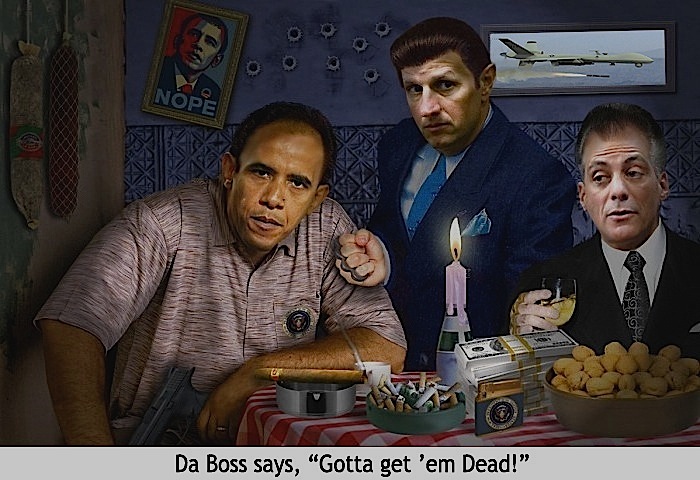
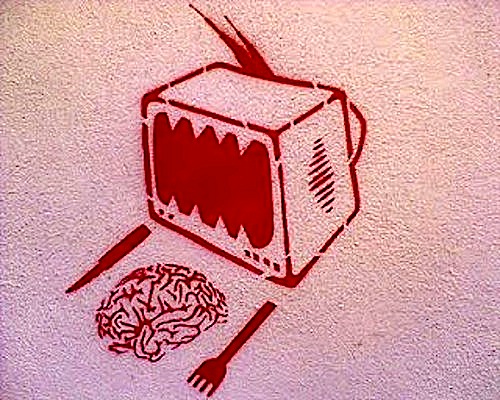
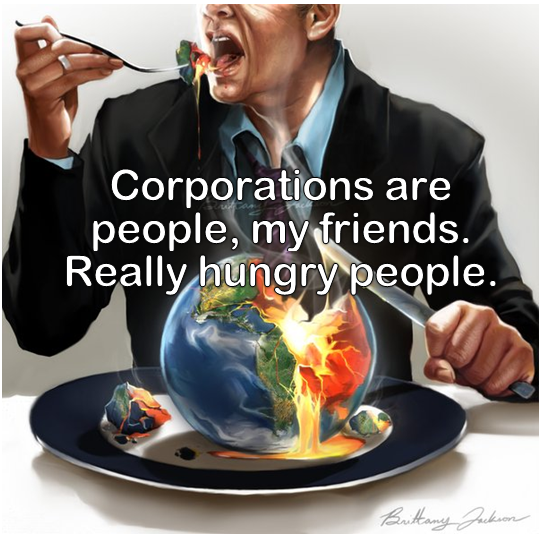





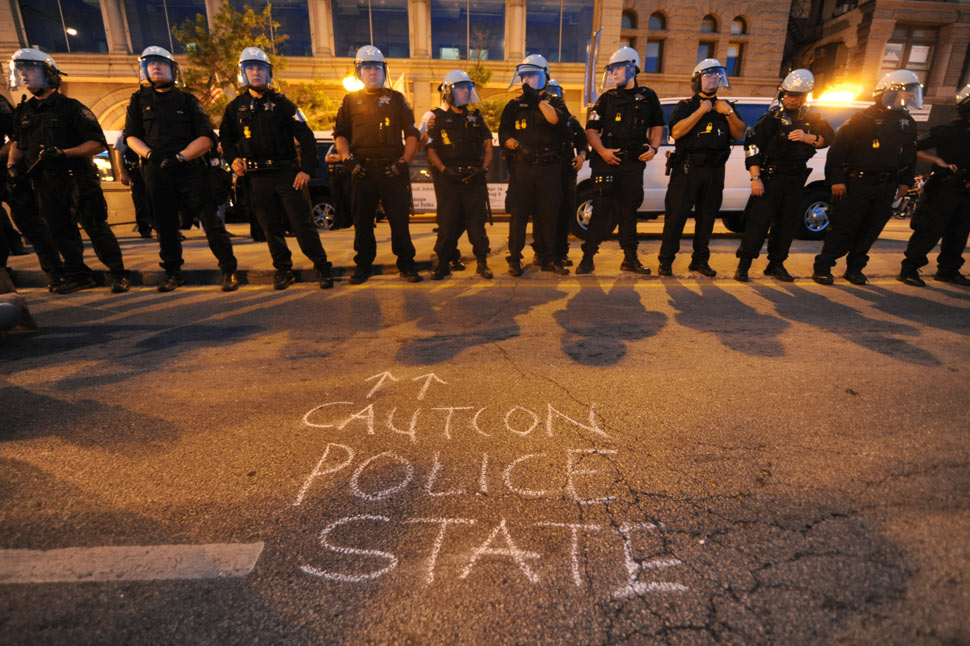


 Collapse of Industrial Civilization
