George Monbiot recently penned an interesting article entitled ‘We were wrong on peak oil. There’s enough to fry us all‘ which clearly shows that he is clueless about what the definition of Peak Oil is. George, you are an influential writer; so please read the following explanation when writing future articles about oil:
Peak Oil is the term used to describe the point when worldwide production of conventional crudeoil peaks in volume, which is expected to result in increased oil prices due to a decline in the availability of cheap and easily accessible oilsources. The low hanging fruit, as it were, has been plucked.
In Monbiot’s article, he never mentions EROI or EROEI which basically is the energy you get back after investing/expending a certain amount of energy to retrieve that barrel of oil. There are a lot of resources that explain this, but I recommend Chris Martenson’s crash course, Chapter 17b, since that was the first place that taught me.
Monbiot, along with the typical business-as-usual oil analysts, misses the fact that conventional crude production has been flat since 2004 and declares that all the Peak Oil experts were wrong. He makes the mistake of lumping crude oil extraction, a conventional source, with the more generic term of ‘liquid fuels’ which include unconventional sources like deep-sea drilling, tar sands, shale oil, liquefied coal, and biofuels. The conventional sources of oil have higher EROI’s than the harder-to-get unconventional sources. This means that as we turn more and more to the difficult-to-extract sources, we get less bang for the buck because we are spending an increasing amount of our economy’s limited resources on obtaining that critical energy. Less net energy means a smaller budget for societal complexity, thus, a return to a simpler society. And the trip down the net energy ladder is an exponential, not linear, descent. Even though Monbiot completely misunderstands what Peak Oil is and that we have indeed reached it, he at least realizes what will result from our scraping of the bottom of the EROI barrel — a global ecological catastrophe. And that is something that all peak oil deniers fail to acknowledge.
Peak Oil never meant we would run out of oil; it just meant that we would get the easy stuff first and then be forced to spend ever more to get what’s left. This means more oil spills, polluted groundwater, and damage to our planet than occurred when the black stuff flowed abundantly from easily accessible areas in the earth’s crust.
Worldwide, the average EROI of oil is down to 20:1 from its original value of 100:1 eighty years ago. In the 1930s, it took about one barrel of energy to extract 100 barrels of energy. By 1970, with deeper wells and greater energy expenditures for pumping and processing the oil, the EROI of domestic oil had fallen to 40:1. Today U.S. oil is produced at an EROI of about 14:1. Globally, it takes the energy in one barrel of oil to extract 20 barrels of oil. This means that our oil-fuelled economy simply has less capacity to generate wealth than it did back then, because we have to increase the share of the energy that used to be dedicated to producing goods and services back into extracting more energy.
Even more troubling than oil’s 20:1 global average is the figure for new oil, just 5:1. It takes a lot of energy to drill five miles under the ocean and pump crude back to a refinery, or to cook tar sands to extract a usable fuel. The energy wellspring at the heart of our economy no longer gushes a torrent of wealth; it is a smaller, much-diminished stream. – source
Fortunately, there was at least one commenter of George’s article at the Guardian who understands all this:
George, peak cheap oil has come and gone. Hubbert’s sphere was the low-hanging fruit. EROEI with what remains means a permanent era of high energy prices: this is, put simply, the difference between charging folk to pick-yer-own strawberries and paying workers to harvest them from treetops (health & safety precautions included).
Studying this phenomenon, in 2007-8 I predicted a downward staircase pattern whereby oil would spike repeatedly every 1-3 years; this would burst economic bubbles and create recession and demand destruction. The latter would calm the price back down and then the cycle would repeat itself. I see no reason at all to alter that forecast…
I noticed that Dave Cohen also did a Monbiot write-up explaining the naivety of George in his jumping on the bandwagon of the corporate fossil fuel PR team. Human bias runs through 99% of mankind’s discourse; so the sooner you learn to question everything, the better off you will be in learning to discern the truth from self-serving ulterior motives.
David Cameron could be replaced by any number of heads of state. The externalization of costs is intrinsic to capitalism and not something that can be changed without radically altering what we know to be this current economic system. I’ll be on sabbatical for a few weeks, so I won’t be analyzing too much, but Monbiot just put out an essay that deserves some commentary when I get more time.
David Hilfiker is someone I’ve quoted before, but I haven’t revisited his website until recently. I’m glad to find that he’s still producing. His work is licensed under a creative commons, so I’m re-publishing a recent essay of his worth reading:
If we can’t fix something, does it make sense to try?
It’s too late to prevent climate change; it already happening, and much worse is coming. The powerful forces of consumerism, a capitalist economic system, government, the power of the corporations, and the influence of the media create a web that we will not untangle without profound changes in our society. If we can’t actually solve the problems of global warming and climate change, if the results are going to be tragic, where do we find hope? How do we respond? Paradoxically, responses are popping up everywhere. Something new is afoot.
I sometimes teach classes about the environmental crises facing us and the devastation they’ll cause. One of the basic messages of the course is that preventing climate change is no longer possible. It’s already here and much more is inevitable. I explain at the beginning of the course that the forces arrayed against environmental sanity are simply too strong for the usual political or personal fixes to be effective. And until we understand what we’re up against, we can’t react effectively. American consumerism, the structure of our government, the nature of our economic system, the power of the corporations, and the dominance of media are a tightly interwoven web that is virtually invulnerable to human attack. I warn class members that the first two-thirds of our time together will be depressing, but I ask them to hang in there with me until our last sessions when we can begin to talk about what hope might look like.
But they never do hang in there. By the third or fourth session, each class has, in one way or another, resisted or outright refused to continue examining the web and has insisted on asking, sometimes angrily, what we can do about it.
But to ask “What can we do about it?” usually means “What can we do to fix it?” When I respond that there’s nothing we can do to fix it, there’s near rebellion within the class. Where’s the hope, then? What good does it do to understand it if we can’t fix it? Why should we do anything at all?
Every class so far has responded this way. It seems built in, programmed. You may have similar feelings as you read on. What’s going on?
The Positive Outlook as Problem
Our country’s historical optimism and positive outlook are blinding us to the painful future that awaits us. We Americans have an unshakeable faith in progress, in our capacity to overcome obstacles. “Things’ll turn out,” we remind each other. “Look at the bright side,” we say. Even when things clearly won’t work out, even when there is no bright side, it’s rude to say so in mixed company.
This official optimism is thoroughly grounded not only in the Enlightenment thinking that suffuses the West but also in our particular history as a nation. The colonization of the Americas, the taming of the frontier, and the growth of an affluent middle class all required confidence unwarranted by the chances of success. But the eventual success reinforced our native optimism. Until the last fifty years, our experience has been that as a nation we can accomplish whatever we set our minds to.
We’ve been understandably proud of our can-do attitude. We attribute much of our success to our optimism and willingness to forge on against seemingly insuperable odds. We have risen above nature, we believe, and are no longer subject to it. Our intellect and our technology will ultimately solve any problem. Anything less than a positive outlook is considered “defeatist” or “needlessly depressing.” We shouldn’t be “quitters.” Optimism is part of the American creed. It’s official.
So what’s the matter with that?
The circumstances of our history have changed dramatically and our persistent optimism is obscuring reality, shrouding what’s really happening and diverting us from our real work. The United States is the only industrialized country, for instance, where there is no national, politically effective response to our environmental future. The most benign bill to establish a system of cap-and-trade of carbon emissions didn’t stand a chance in Congress. Of the 65 Republicans who agreed to answer the question (most refused an interview), “only five said they believed a ‘significant amount’ of climate change was due to human activity.”[1] As we’ll see, there are political and economic reasons for this stance, but it could not dominate the public discussion except for our official optimism that, really, we can manage anything that happens.
Global Climate Change
The environmental challenges we face are overwhelming, any one of which could rise to the top of our list of concerns under the right circumstances:
climate change
the loss of farmland the size of Nebraska around the world every year
the decimation of ocean fisheries from overfishing
the loss of biological diversity with an estimated rate of species extinction 1000 times the rate of normal loss
the pollution of air and water, the long-term effects of which (cancer, fetal abnormalities, cognitive dysfunction, and so on) often take decades to reveal themselves, and
the loss of freshwater, which will almost certainly lead to 21st century resource wars
Any of these is a profound threat to our civilization, but the most immediate and most on our minds is climate change, so I’ll stick with that. Carbon Emissions, Tipping Points, and Likely Outcomes
Most readers will know a fair amount about global climate change, recognize that it’s primarily the result of carbon dioxide (CO2) emissions from human activity, and accept the scientific consensus of an ominous future if carbon emissions are not controlled. To recapitulate briefly, climate change is the result of a drastic rise greenhouse gases—CO2, methane, nitrous oxide and others—unlike any the Earth has seen in 200,000 years. Sunlight can pass unchanged through this layer of gases, but the warmth produced when it strikes the Earth can’t pass back out. So the Earth has warmed an average of 0.7º Celsius (C) or 1.0º Fahrenheit (F) above the baseline that had been consistent for millennia.
What some are just beginning to acknowledge is that the battle to prevent climate change is already lost. Even some mainstream TV has dropped the conditional. It’s no longer “possible” or “some-scientists-say” climate change or “if” or “when” climate change occurs. With rising oceans; frightening changes in disease distribution; the increasing occurrence of record-setting heat waves and droughts; and record floods, hurricanes and tornados; the climate is changing fast. As environmentalist Bill McKibben writes in his book Eaarth, we live on a new planet … and we won’t get the old one back.
Given the current forty percent increase in the concentration of greenhouse gasses, the unwillingness of major polluters like China and the United States even to consider real changes, and how long it will take to reach sustainable levels of emissions even after major polluters have sincerely committed themselves to radical action, CO2 emissions won’t even begin to decrease anytime soon, and certainly not before further, even more dangerous, destabilization of the climate.
Reports from the UN’s Intergovernmental Panel on Climate Change (IPCC) warn that if we don’t keep the total temperature rise below 2º C, the risks will be too great to accept. Unfortunately, because of CO2’s long half-life in the atmosphere, just the CO2 we’ve already emitted commits us to a rise of 1.5º C.
One must understand, however, that the IPCC’s estimates and predictions are very conservative. Their mandate is to carefully present data that is unassailable, but individually many scientists on the panel are more forthcoming and, in general, deeply pessimistic. For them, the science is bad enough, but the practicalities are worse. We’ll examine those practicalities below.
The End of the Long Summer
There’s a further dark cloud on the horizon that—in keeping with our innate optimism—has been only minimally publicized. The last 11,700 years have been a period of unusual climatic stability, labeled by one author “The Long Summer.”[2] Without this stability, many scientists believe, agriculture and the establishment of our civilizations would have been unlikely. But in the last 120,000 years, no other stable period like this has occurred. The normal has been wild swings in climate with temperature changes of up to 10º C in as little as fifty years, perhaps fewer.
Scientists aren’t yet sure what has given us the long summer, but, given the much more common instability in our history, they fear that even small temperature changes will tip us out of this fragile balance and into almost unimaginable scenarios. The details (when and how bad) are unknown but could include: sea level rises of twenty feet or more that inundate Florida and much of the tip of Manhattan; an uninhabitable tropical belt and American Southwest; the loss of the Amazon rainforest; and the deaths of even billions of people from hunger, thirst, and the resultant political instability.
Unfortunately, this is not science fiction. How could it happen? One reason we can’t make reliable specific predictions is that “positive feedback loops” are one of the big unknowns that science doesn’t yet understand well. The loss of albedo (the fraction of the sun’s rays reflected away from the Earth) that causes the Arctic’s melting ice is well known. Ice reflects most sunlight harmlessly back into space, but the darker, ice-free water absorbs it, warming the sea. As warming shrinks the ice cap, less ice and more open sea causes further warming, melting the ice cap even faster. That’s a positive feedback loop, a destructive spiral.
A potentially more ominous example comes from the massive amounts of methane stored in the arctic permafrost, frozen Siberian peat bogs, and vast deposits under ocean beds. Molecule for molecule methane is twenty times more potent a greenhouse gas than CO2 although its much smaller concentrations in the atmosphere make it, currently, less important than CO2. When the permafrost or peat bogs begin to melt, however, the methane is released, intensifying the greenhouse effect, warming the earth, further melting the permafrost and round we go. There’s so much methane locked in the permafrost and peat bogs that once serious amounts begin to be released, all bets about climate future are off. The even greater amounts of methane under ocean beds are very sensitive to the temperature of the water just above them; even a small change could cause large “burps” of methane release, which are believed to have caused dramatic warming and mass extinctions earlier in Earth’s geological history.
There are many other known positive feedback loops:
Oceans are a major sink for CO2, but as they warm they can’t hold as much CO2.
Rain forests sequester huge amounts of CO2, but as the tropics warm, they dry out and release all that carbon, further warming the Earth.
Ocean plankton, small plants responsible for approximately half of the Earth’s photosynthesis,[3] metabolize CO2, taking the carbon with it when it dies and sinks to the bottom. Warming seas reduce not only the amount of ocean plankton but also its metabolism, decreasing CO2 uptake, increasing the concentration in the atmosphere and creating another vicious feedback loop.
The timing of such feedback loops and the resultant sudden rise in temperature can’t yet be predicted, but their likelihood renders the IPCC’s gradual curve hopelessly conservative. Even more worrisome are the still unknown feedback loops in this complex organism that is Earth.
Such feedback loops will be important in the end of the long summer. Rising temperatures will almost certainly push the climate off the perch it’s balanced on. How soon? According to the geological record, even the current 0.7º C rise has previously been enough to bump the earth off balance. And once that happens, it’s a whole new ballgame. The Earth itself becomes the major player—and the illusion of human control of the environment will dissipate quickly.
No amount of optimism can change the reality that we live on a new planet.
Political and Social Realities That Will Make Change Very Difficult
So far what I’ve said will be not be news to anyone who has made it their business to study these matters. The nation’s response to this frightening reality, however, has been muted. Some individuals have changed their lifestyles considerably to reduce their carbon footprint; some states have followed the leads of California and New England in passing laws to limit CO2 emissions. But the federal government has done virtually nothing.
If we don’t understand the reasons behind this minimal response, we will either continue in our blind optimism or descend into despair. Even most national environmental groups still talk—publicly at least—about avoiding the coming tragedy if we do such and so: if the people were to push hard enough, if politicians could be convinced, if the media were to wake up, and so on. But these environmentalists have apparently not been talking to the political or social scientists, for the “ifs” aren’t going to happen. Few of the writings on climate change (or other environmental crises, for that matter) have taken political and/or economic realities, consumerism, the power of modern media, or the influence of the corporations into account,[4] which is something like ignoring sexual desire when considering overpopulation.
Each of these forces is powerful in itself. But it is their interaction that creates the impenetrable web that will make escalating climate change inevitable.
A small diversion: As a physician I’m in the habit of being precise with my language, and I’m quite aware that, logically, nothing in the future is inevitable. But climate change has already happened and given the physics of CO2 and the time it will take to reduce emissions once the world agrees to reduce them significantly, much more climate change is utterly certain. But I’m saying something more. What I mean is that given this web of forces, calamitous climate change is as certain as human predictions get. There will be no world-wide binding agreement to reduce emissions in the foreseeable future. Only a literal miracle or a momentous breakdown in the social and economic order soon would be enough to open new possibilities.
Given the precarious position of our economy, the dysfunction of our politics, and the coming environmental realities, of course, such a breakdown is likely eventually, say within 50 years, if not sooner. But when it eventually happens and the requisite changes are eventually made, it will be too late to prevent widespread suffering.
The danger is that recognition of the inevitability of this catastrophe can lead to despair and inaction. My purpose is not to snuff out hope but to open our eyes. Gar Alperovitz has written that within human history change is “as common as grass.” And we must prepare ourselves for that moment, ready to take advantage of it to limit the coming catastrophe as much as possible. And until those changes can occur we must find ways of acting that will relieve as much suffering as possible.
Let’s begin to tease the web apart.
Consumerism
Although the majority of Americans recognize the reality of climate change and want governmental action, there has been no sustained popular demand for a change in policy. Why not?
Most Americans are deeply committed to their material lifestyle. The unspoken reality is that any effective challenge to climate change will require a radical transformation of that material lifestyle. Environmentalists and their organizations generally want to avoid this “inconvenient truth,” but the energy for indoor temperatures to our satisfaction, transportation of food, importation of goods from distant lands, personal transportation, manufacturing and much else all guzzle fossil fuels and emit CO2. A sustainable level carbon emissions—ie a level that the natural earth could recycle without rises in atmospheric CO2 levels—would be about two tons of CO2 for each person in the world per year. The average American uses 20 tons. As China, India and other poor countries develop economically, it’s utterly unrealistic—to say nothing of unjust—to expect them to keep to a 2-ton limit unless the Western world reduces its consumption accordingly.
What would 2 tons per year for the average American look like? It’s difficult to imagine, but for starters it would mean:
no air travel (period)
mostly local transportation on foot or bicycle (or the not-yet-existent) adequate public transportation
vegetarian, if not vegan, diets
only locally produced food … even in the winter
no air conditioners … even in the South
elimination of individual ownership of luxuries (and many other things we consider necessary), for instance, TVs, computers or washing machines
reducing the average size of our homes by at least a third, if not a half (or having others share our space)
and so on
Virtually no national environmental group acknowledges publically that a truly sustainable lifestyle will require such drastic changes. In Al Gore’s otherwise excellent and important film, Inconvenient Truth, we are left with the impression that changing to CFL light bulbs, driving a Prius, recycling, and buying carbon offsets would be enough. Well, no, it won’t be enough. In this sense those opposing carbon limitations are absolutely right: our “way of life” will have to change. Polls may show that most Americans are concerned about the environment, but how many will voluntarily vote for such changes until absolutely forced to?
This consumerism is powerfully encouraged by media advertising. Corporations and the US government are powerful purveyors of consumerism. Only economic reality (that is, major declines in personal incomes) will force a possible (though not guaranteed) loosening of the vise-like grip of American consumerism. But consumerism is only one element of the web.
The Capitalist Economic System
Our current economic system has been a direct cause of our environmental crises. Absent government intervention, capitalism’s fundamental theory precludes a significant reduction in carbon emissions. Think about these basic assumptions of capitalism:
Self-interest should be the primary economic motivator.
Monetary profit is the only goal.
The value of everything is measured by money.
Who gets what is determined by how much money they have.
Property is private and—within broad legal limits—owners can do anything they want with their property, regardless of the suffering it may cause others.
I am not exaggerating; these assumptions are recognized in basic economic textbooks. While individual owners and corporations serving a local area may, and fortunately often do, ignore some of the assumptions for the sake of the wider community, large publicly-held corporations adhere to them rigorously. But if we examined these assumptions carefully, most of us would find each one immoral as a basis for our behavior. Who of us, for instance, believes that pure self-interest, defined as monetary profit, should be one’s goal, especially one’s sole goal?
How does capitalism lead inexorably to environmental devastation? First, the problem of “externalities” is well recognized. An externality is a cost of producing a product that is foisted onto someone else in order to sell the product at the cheapest price. Environmental costs, for instance, are usually externalized. When a coal-fueled electric plant discharges CO2 into the air, for instance, the company doesn’t pay for the cost of the resulting damage; the rest of us do. The public thus subsidizes electricity generation from fossil fuels which allows the companies to lower their prices. If companies had to pay the full cost of their production, however, wind and solar power would be more than competitive, and we’d have much more of it.
Competition will force externalization of environmental costs upon even the CEO who is truly concerned about the environment. If the company were to buy the expensive equipment necessary to sequester the CO2, its electricity would be priced out of the market. It’s not necessarily greed (although it sometimes is); it’s not necessarily an unconcerned management (although it sometimes is). The problem is built right into capitalism and wouldn’t change significantly if you or I were the CEO. The morally right decision would too often run a company out of business.
A second, related, built-in characteristic of capitalism is that businesses must grow to survive; growth generally requires higher and higher levels of consumption fueled by powerful advertising that increases consumer desire and the sense that luxury items are actually necessities. Consumer desire increases, creating growth and the increased consumption of natural resources.
Third, the private nature of property legally inhibits the government from many of the regulations that could limit greenhouse gas emissions.
Adam Smith, the first theorist of capitalism, recognized another problem. Extremes of inequality are built into free-market capitalism. Under capitalism, government intervention is required through some kind of redistribution of income, for instance, progressive taxation. Free-market theorists claim that in material terms the market “lifts all boats.” Even if this were true, it’s clear that in practice the freer the market, the greater the inequality. Inequality ultimately destroys democracy because of the power of the wealthy and the powerlessness of the poor. The wealthy not only have massively disproportionate influence on government, they also control the media, which can obscure what’s actually happening politically. This demoralizes the population who consequently won’t become active and work to change policy. This has become especially obvious in the United States over the last thirty years.
The theory of capitalism loudly trumpeted by those in power, constrains government from “interfering in the market,” but that “interference” is, in fact, the only way to control capitalism’s built-in environmental devastation.
Corporations and Their Structure
Their wealth and power give corporations commanding influence over attempts at environmental sanity. Whole communities can be held hostage to a corporate threat to abandon the area, destroying jobs. Corporate political contributions and lobbying provide overwhelming influence over politicians. Their immense size allows them power over the structure of the economy, for instance, over economic agreements among and within countries.
Much of the corporate impact on the environment is exacerbated by the legal structure of the corporation. Small or local businesses tend to moderate capitalism’s underlying assumptions through loyalty to employees, concern about environmental impact on the local community, and rigorously honest behavior. But the “owners” of large corporations are many thousands of investors—whether working-class individuals through their retirement funds, wealthy individuals, or other corporations—who have bought stocks for the sole purpose of financial returns. Management has only one mandate, to maximize profits, which leads to the pure capitalism described above. Regardless of the environmental consciousness of the management, corporate managers are constrained from any other concern except the best interests of the stockholders, the bottom line.
Since the late 1800s, corporations have, notoriously, had most of the legal rights of individuals. Outside narrow legal limits, the right to free speech, for instance, allows the most blatantly exploitative advertising, which pushes the conspicuous consumption at the heart of global climate change. The right to free speech also allows corporations to offer essentially unlimited financial support to advancing a particular political position. The corporate right to privacy prevents routine public examination of the internal records which could hold them accountable for their practices; such accountability could have prevented the operational “shortcuts” that led to the Gulf oil disaster. The corporate right to equal protection before the law makes the efforts of West Virginians to prevent mountain-top removal much more difficult. And so on. We are so used to these individual rights being afforded to corporations that—except when their most egregious behavior leads to disasters—we hardly think about it.
But corporations are not persons.
They are immortal.
They are wealthy beyond imagination and collectively have dominance over the economic lives of millions of voters.
No live person or group of persons has actual legal responsibility for their actions. Shareholders cannot be held accountable for even illegal behavior by the corporation. Corporate managers have no personal responsibility for corporate actions that might hurt, or even kill, others, as long as the action is technically legal. True, the corporation may go bankrupt, but the worst actual persons can suffer is the loss of their investment.
As inanimate “persons” corporations feel no sense of moral responsibility, for instance, to their communities.
The power of corporations has not always been so overwhelming. Those of us of a certain age can remember
when unions were strong enough to successfully stand up to employers,
when CEO salaries were “only” forty times their employees;’ not six hundred,
when their impact upon democracy was not so detrimental, and
when it was possible to get elected without corporate support.
But in the late 1970s—after media became crucial to getting elected and campaign costs skyrocketed—the business community developed new and powerful tactics. Previously, individual companies or industries had lobbied for their own interests, often at cross-purposes with one another. But, as documented by Jacob Hacker and Paul Pierson in Winner-Take-All Politics, in the 1970s, several national business associations (such as the Chamber of Commerce and the Business Roundtable) organized their members to act in concert. Within only two or three years the impact on government had become profound, forcing Democrats—who controlled the presidency and both houses of Congress in the late 1970s—to reduce corporate and capital gains taxes and preventing them from passing labor and consumer-protection legislation. While there have been important exceptions, virtually no one gets elected and no bill gets passed if the corporations are united and strongly opposed. And even when they lose the vote in Congress, the corporate lobbying presence at every step of the way assures their influence in writing the details of the laws, writing the regulations, pressuring the regulatory agencies, and assuring their own impact in enforcing the law. Corporations can lose the election and win the wars. An obvious example is the failure of even the Democrats—despite vast popular support—to agree on minimal tax increases on the wealthy.
Corporations provide the cheap goods and encourage the consumerist culture of more. They own the media and are thus powerful influences on the cultural and political beliefs of the consumer.
Media
Progressives will sometimes respond to these concerns by suggesting that, when economic conditions turn bad enough, the middle class will soon start voting for the 99%. And virtually every progressive essay on either the environment or economic inequality will eventually suggest new legislation or a constitutional amendment that could change things for the better. And there is no shortage of workable ideas: public financing of campaigns, tax rates as progressive as they were thirty or fifty years ago, a Tobin tax that would put a minuscule tax (perhaps ¼ of one percent) on stock transactions, powerful cap-and-trade legislation, and so on. The ideas are endless, and they are all good ones that would indeed improve the situation markedly. What those who suggest these ideas usually ignore or vastly underestimate, however, is the power of advertising and, thus, the media, to influence our thinking.
We are all aware of the power of advertising to keep us addicted to consumerism. We can be sold things we don’t need, don’t really want, and certainly can’t afford … even if they are collectively destroying us. As individuals, however, most of us believe that we are immune to the effects of advertising. But advertisers would not spend over $3 billion a year in the US alone if it were not effective. A hundred years of psychological research has provided the industry the tools to influence us well underneath our conscious radar. Even media content that’s not technically advertising is, for the most part, a powerful advertisement for a consumerist lifestyle as we watch the way that the mostly affluent characters in the dramas live.
Also often missed is the ability of a well-funded advertising campaign to sway voters’ preferences and their understanding of an issue. Polls suggest that less than 5% of people know much about political issues or how politics work. In our ingnorance, it’s not difficult for the media to use the same techniques used to sell us new cars in order to sell us political opinions and policies. A good example is the sophisticated advertising campaign against that majority of Americans who, at the beginning of the campaign, supported required caps on carbon emissions. At the end of the advertising campaign, however, large swaths of the population viewed the bill as damaging to the economy, certain to raise prices, and devastating to employment. The bill, toothless as it was, didn’t stand a chance against the media.
Other than poorly funded public radio and television, the national media are large corporations themselves, almost always owned by other corporations. Like most corporations, media claim to be strongly pro-environment. But their impact on global climate change has been devastating.
Yes, it’s true that American voters could radically change the system to reduce carbon emissions, but they won’t … at least until things get much worse. Against the propaganda, fear techniques, and commitment to consumerism, the likelihood of a majority of the electorate demanding the very painful change necessary is extraordinarily low. And when it does finally happen, it will be far too late to prevent truly catastrophic change.
Government
Only government—when it is functioning as government—can mandate limits on carbon emissions or regulate the many other changes necessary. With a democratic government, a nation’s people decides what the majority wants and creates laws to make it possible.
The government could modify the economic system to force the internalization of environmental costs or alleviate inequality. It could drastically reduce the political power of corporations through public financing of campaigns and limitations on corporate lobbying. Government could control the power of media by breaking up the oligopoly, reinstating the fairness doctrine, mandating balanced coverage of political issues, and requiring a certain percentage of public service programming. It could eliminate economic subsidies for oil companies or corporate farming. And it could use its “bully pulpit” to enlist the support of the population in reducing our material consumption. Needless to say, little of this will happen anytime soon.
Perhaps the most dangerous and successful tactic of the far right over the last forty years has been to convince most of us—liberals and conservatives alike—that the federal government is incompetent at its best and malevolent at its worst. Considering the government a negative force, voters have been willing either to “starve the beast” by supporting tax cuts and reducing government impact or to withdraw from the democratic process completely. As the government becomes weaker, of course, it becomes less capable of providing services effectively, which makes voters even less willing to invest in it, a vicious circle of emasculation. As government loses its public support, however, the corporations and the 1% remain by far the strongest kids on the block.
Like the corporations, government is also firmly committed to economic growth fueled by consumerism. George W Bush’s notorious comment after 9/11, “Go shopping,” is emblematic. What the public learns is that “growth” (ie material growth) is necessary to the American way of life … which is true if increasing material wealth is essential to the American way of life.
The government’s unwillingness to face climate change is typified by President George HW Bush’s statement twenty years ago at the first Earth Summit: “The American way of life is not negotiable.”
Unfortunately, the founders of our country deliberately and explicitly designed the Constitution to prevent radical change. The presidential system (rather than a parliament led by a prime minister) and the two separate houses of Congress (one of which is elected to two-year terms, the other to staggered six-year terms) means that the president often belongs to a different party from the legislature and/or that the legislature itself is divided. Since the consent of both houses of Congress and the president is almost always necessary, controversial change is seriously hampered. An amendment to the Constitution requires two-thirds vote of each house of Congress, plus ratification by 75% of state legislatures. The filibuster—while not established by the Constitution—is a matter of Senate rules. This requirement of a supermajority can hamstring the Senate … as it has, most notably since the last presidential election.
This governmental structure makes blocking change much easier than creating change. With its power to block legislation, the minority can control and paralyze government, as the Republican Party is now doing. While government has the technical capacity to make the needed changes, in fact, it is virtually impotent in the face of the wealthy and the corporations.
The “impossibility” of making change with the usual means
So, that’s the web of forces blocking the way to environmental sanity. The political histories of DDT and tobacco teach us that it can take decades after a scientific consensus is reached to create adequate regulation. And those political struggles were before the corporations developed their extraordinary power. Each strand in the web is supported by each of the others, making any one element virtually impervious to change from below. I’ve taken these many paragraphs outlining these forces because I really do mean that change is not possible within the current social, economic, and political structure of our country. Despite our native optimism, many of us know this: voting, political organizing, running pro-environment candidates, lobbying, recycling campaigns, running for office, or anything else we have imagined have not fundamentally challenged these dominant forces and won’t until other powerful forces confront them.
I’m sure I sound like an utter cynic or nihilist. But I’m not emphasizing the inevitability of tragedy out of cynicism, perverseness or sensationalism. Nor do I have a secret roadmap to a solution that I’m about to reveal. Rather, I think we need to consciously face up to what most of us at some level really know. Only this will allow meaningful hope and appropriate response.
How Do We Respond to the Coming Tragedy?
Despair, grief, even cynicism and apathy are normal responses to the coming tragedy. We must not push them aside but recognize their reality and allow ourselves to grieve. And we must help each other navigate through these painful waters.
But we must also remember that what’s coming makes it even more important to find hope within our grief and act with courage and decisiveness. We can’t make it all better, but we have been given the opportunity to participate in what is perhaps the greatest human struggle in recorded history. We are witness to a time in history like no other, and we can make a difference. Helen Keller once said, “I rejoice to live in such a splendidly disturbing time.” [5]
What can we do? One response is to continue our work to reduce carbon emissions even in the face of the lost opportunity to prevent climate change. One of the great tasks before us is to alleviate as much as possible the human suffering that is coming. Because there will be so much pain, even our seemingly small response—reducing our own consumption, educating others about the realities of what we face, working for (even minimal) political change, or forcing an oil company to slow down (or even back down from) some planned expansion—anything that slows the process down even minutely will still have profound impact on this greatest of all challenges.
Another important task will be to mitigate the impact of the climate change that will occur. Two obvious examples are the Dutch strengthening of their dikes and the prior preparations to relocate residents of South Pacific islands that will soon be inundated. One impact of climate change will be a disruption in the economy. Such disruptions always impact the poor most heavily so any work for justice is also an important response to climate change. Creating structures that will give the best chances for survival in a post-carbon world (local sustainability, learning basic skills, farming and farmers markets, for example) will be important.
Until recently many environmentalists have resisted such work for mitigation for fear of relaxing societal pressure to reduce carbon emissions. It’s a legitimate point, but since complete prevention is no longer an option, mitigation must be part of any response we make.
Such responses may feel puny and insufficient to us who are used to fixing things. We will need each other’s help to work through those feelings of despair and hopelessness.
Localization
As one important kind of reaction, the localization movement is particularly important. Even small responses by individual citizens, small cities, or regions with common interests are crucial to the survival of our civilization. In any ecological niche, diversity and complexity give the needed resilience against threats. But the modern obsession with efficiency has destroyed much of that complexity. In her book The End of the Long Summer, Dianne Dumanoski points out that “the electronics industry has relied on specialized semiconductor chips made by [only] two companies who manufacture them in the same industrial park” in Taiwan.[6] A small earthquake or terrorist strike could wipe them out.
But local initiatives to create, grow or manufacture what is absolutely needed in the immediate area mean that many separate locations within the world are supplying necessities, offering a functional diversity that, like any ecology, offers stability in the face of multiple threats. Protest against local environmental damage can provide an opportunity for social and political change that tends to unite the community. Democracy, too, can be localized through the intimacy of town meetings or individual meetings with elected officials who are more likely to be neighbors than bureaucrats. Jobs that are localized, that is, tied to local needs—in hospitals, schools, garbage collection, and so on—can’t be exported abroad.
This localizing of power, production and social connection is well underway. In his book Blessed Unrest, Paul Hawken describes his lecturing on environmental issues in the mid-1990s. He noticed that, at the end of his talks, people would often come up, describe their (mostly) local environmental or political projects, and hand him their business cards. Soon he had thousands of cards. Wondering what this meant, he started researching such small groups around the world. He estimates that there may be over a million such groups from the massive Sierra Club to individual young people selling local produce in the farmers’ market. If we Include not only the social justice groups, indigenous rights groups and those with no official standing that Hawken recognizes but also the many direct-service nonprofits, there are millions around the world. Hawken points out that the first group formally created to meet the needs of others was the Society for Abolition of the Slave Trade organized in England in 1787. Now they are countless. And their explosive growth continues, spreading inexorably.
These are not, Hawken stresses, an organized movement, with any kind of central leadership. Their goals are often quite different from one another, sometimes working at cross-purposes. They come into existence and may disappear. But they’re part of a spiritual awakening that’s happening around the globe.
The Earth’s Immune System
Hawken likens this loose network to the human immune system, which has usually been characterized in top-down military images, but, in fact … there’s nobody in charge. There are different parts to the immune system that actually work independently, and within each of those parts there are millions of individual elements that do their job with considerable independence. The immune system is only minimally coordinated and comprises diverse, disordered and imprecise entities … and yet without it we’d die in a matter of days.
Like the immune system, these countless organizations in this global web may have little individual power to cure the earth’s sickness, and there’s no guarantee of any individual’s or group’s positive impact. You might think that—given the vast and powerful forces aligned against them—their uncoordinated efforts would have only minor impact. But Hawken’s work suggests that the whole may be much greater than the sum of its parts.
The city of Cleveland, for instance, is experimenting with worker-owned cooperatives that supply laundry to hospitals and educational institutions, creating local jobs that pay reasonable wages and are not going to move away. Hawken has long lists of other examples, for instance, small local banks that have sprung up to meet the financial needs of the community (and have been relatively immune from the 2008 crash, largely because their loans were made on a personal basis); they are a good example of functional redundancy. Volunteer organizations form free clinics, social service organizations, or foot patrols to protect the neighborhood. Credit unions and other co-ops (with about 120 million members across the country), 10,000 worker-owned firms, and community- or customer-owned businesses have all begun to change the face of capitalism.
These millions of organizations may be something like an ant colony. No single ant grasps the big picture or needs to direct the group’s effort, but following a few simple innate principles, the shortest route to the food is located, the anthill is built. Perhaps these few simple principles of the global movement are care for the Earth, care for one another, and care for future generations.
Hawken subtitles his book How the Largest Movement in the World Came into Being and Why No One Saw It Coming.
Its grass-roots origins, minimal ideology and loose coordination give this movement a resilience that no top-down organization could ever have; you can’t kill it by co-opting the leadership … because there isn’t any overall leadership. Its use of modern communications technology give the whole a power never before available to dispersed groups. The “movement” constantly grows and renews itself; one organization may disappear because of whatever, but others take its place. Those that are small with few resources by necessity use their resources efficiently and work with profound dedication. They are familiar with local conditions. They go with whatever works rather than ideology, so they tend to be far less polarizing than national politics. Unlike most larger organizations, they’re much more able to switch their activity in response to the actual conditions on the ground. They can make mistakes, even disappear, without seriously undermining the whole.
The current international order won’t last forever; it never does. As Alperovitz writes, the details are never clear in advance, but fundamental political, economic, and social change is routine in world history. The upheavals of the last decade are only the foreshocks. And we’re right in the middle of that now. What will happen when the current order falters? Could it be that a new order has been developing, unnoticed, right under our nose? The Polish union Solidarity had its political uprising, but after that was crushed, it continued organizing, providing needed services that the government couldn’t handle, developing a powerful base. It became almost a shadow government, so that, when the Polish government collapsed in the 1980s, Solidarity was there to pick up the pieces.
Hope
Do I think that these organizations are going to save the environment? No, I don’t. Do I think that they will topple the current order, bring about justice, and restore human rights? Possibly, but not anytime soon.
Then what about hope? If the future is so bleak, where does one find hope? My response is: Hope for what? What do you want to be able to hope for? Hope that we’ll prevent climate change? Hope that our lifestyle will survive? Hope that our grandchildren will inherit the same Earth we’ve known? I don’t know where to find that kind of hope except in illusion.
But if we hope to ameliorate the worst of climate change, if we hope to prepare ourselves so that the damage is minimized, or if we hope to create new structures that provide for local communities, then there is reason for hope. If, at a personal level, we hope for fulfilling and deeply meaningful work; if we hope for joy in participating with others for the general good; if we hope for community; in fact, if we hope for any of the most important things in life, then there’s hope and a lot of it.
Let me offer one possible scenario. The collapse, whether it comes now or in fifty years, will be painful, one we probably can’t imagine now … not just from the environment but from financial instability, inequality, resource wars and so on. In the rubble of all that, some new order will have to develop. It could be fascist totalitarianism, but it could also be the fundamental rebuilding we are hoping for. After the economic collapse of the Great Depression, Franklin Roosevelt picked up ideas and small projects that had been lying around and working on a small scale. He expanded them into national programs. As our future new order is built, it may also be the ideas lying around, the already existent small structures we’ve created that will be picked up. And they could form the basis for a new society. For that, it’s reasonable to hope.
Given the uncertainty of the future, we can’t know what’s going to be picked up and what will disappear. But we do know that loving others, having compassion for our neighbor, prioritizing the poor, caring for the Earth, and following our deepest yearnings are both needed now and must be the hallmarks of the new society that will survive. Anything based on those values is worth doing.
So we follow the leadings we’re given: OccupyingOurLocalCommunity, personal recycling, getting arrested to stop the XL pipeline, putting pressure on politicians to stop mountaintop removal, teaching adult education, fostering community-supported agriculture, growing our own food, supporting large national organizations, working for a constitutional amendment, lobbying political representatives, running for office, and on and on. It may be that we continue to do the very same things we’re doing now. Those things that are not going to change the immediate future may well be part of the coming new order. If our understanding of reality deepens and is not blinded by optimism, we are less susceptible to being blown away by our failure to fix the crisis or the criticism that what we’re doing won’t make any difference. Perhaps our preparation will ameliorate the future crisis and lessen much suffering. Perhaps our preparations will be taken up as building blocks for a new society. We live under fewer illusions. We cannot hope to get the same Earth back, but we can hope to soften what’s coming. We can find hope in the process, in the community, in our work together. These are hopes we can count on.
I’ll be going on sabbatical for a while, so I’ll leave you with a further discussion of the failings of Capitalism. Any talk of growth is simply another version of the capitalist system. In order to ensure the survival of our species, we must break from that paradigm. It’s as simple as that. Below are excerpts of an essay which hits on the major problems of our current economic system. I’ll post again when I can, but the next two weeks will be sporadic.
… Harmony in the world—among its people and between humans and the rest of the ecosystems—is not possible in the context of capitalism. Capitalism, a system that has been in existence for some 500 years (merchant capitalism for approximately 250 years and industrial capitalism for about 250 years)—a relatively short time in the 150,000 year history of anatomically modern humans—has shown that it fosters interpersonal relations and metabolic interactions with the earth that are detrimental to achieving a harmonious existence. This is a result of capitalism’s basic characteristics and the relationships it creates as it normally functions. The purpose of capitalism is not to satisfy human needs and preserve the environment. There is only one purpose and driving force—ultimately responsible for both its dynamic periods and its crises and long periods of slow growth (stagnation)—and that is the accumulation of capital without end. The capitalist system has a number of basic characteristics and also fosters specific human characteristics and relationships. Here are ten key aspects of capitalism:
It has to grow (or else it is in crisis) and its very logic and motivating force impels growth.
It has no other driving force than the accumulation of ever greater amounts of capital.
Through the creation of so-called “externalities” (or side effects) it wreaks damage on humans as well as the ecosystem and the life support systems needed by humanity and other species. In Paul Sweezy’s words: “As far as the natural environment is concerned, capitalism perceives it not as something to be cherished and enjoyed but as a means to the paramount ends of profit-making and still more capital accumulation.”1
It promotes the use of nonrenewable resources without regard to the needs of future generations, as if there was no end to them, and abuses even renewable resources such as ocean fisheries and forests.
It creates vast inequality in income, wealth, and power both within and between countries. Not only class, but race, gender, and other inequalities are built into its laws of motion.
It requires and produces a reserve army of labor—people precariously connected to the economy, most kept in poverty or near poverty—so that labor is available during economic upswings and workers can easily be fired when not needed by businesses.
It promotes national economic and political competition and imperialism, leading to wars for domination and access to resources.
It fosters and rewards those particular human traits that are useful for thriving or even just existing in such a possessive-individualist society—selfishness, individualism, competition, greed, exploitation of others, consumerism—while not allowing the full expression of those human characteristics needed for a harmonious society (cooperation, sharing, empathy, and altruism).
It leads to the breakdown of human health since people operate in a hierarchical society, with many working under dangerous and physically debilitating conditions or in jobs that are repetitive and boring—while subject to job loss or fear of losing their job. (There are many adverse long-term health effects following the loss of one’s job.)2
It leads to the breakdown of healthy communities as people become more solitary in outlook and behavior and indigenous culture is replaced by the dominant national or international capitalist culture and outlook. People become dedicated to obtaining more for themselves and their families and depending less on reciprocal relationships with others.
The growth imperative of capitalism deserves special attention because it is one of the major stumbling blocks with respect to harmony between humans and the environment. Accumulation without end means using ever greater quantities of resources—without end—even as we find ways to use resources more efficiently. An economy growing at the very meager rate of 1 percent a year will double in about seventy-two years, but one growing at 2 percent a year, still a low rate, will double in size in thirty-six years. And when growing at 3 and 4 percent, economies will double in twenty-four and eighteen years respectively. China recently has seen recorded growth rates of up to 10 percent, meaning economic output doubles at a rate of approximately every seven years! Yet, we are already using up resources far too fast from the one planet we have—depleting the stocks of nonrenewable resources rapidly and misusing and overusing resources that are theoretically “renewable.” If the world’s economy doubles within the next twenty to thirty years this can only hasten the descent into ecological, and probably societal, chaos and destruction.
Thus capitalism promotes the processes, relationships, and outcomes that are precisely the opposite of those needed for an ecologically sound, just, harmonious society.
…
Rational and useful alternative solutions to any problem depend upon a realistic analysis and diagnosis as to what is causing it to occur. When such analysis is lacking substance the proposed “solutions” will most likely be useless. For example, there are people fixated on nonrenewable resource depletion that is caused, in their opinion, by “overpopulation.” Thus, they propose, as the one and only “solution,” a rapid “degrowth” of the world’s population. Programs that provide contraceptives to women in poor countries are therefore offered as an important tool to solving the global ecological problem. However, those concerned with there being too many people generally do not discuss the economic system that is so destructive to the environment and people or the critical moral and practical issue of the vast inequalities created by capitalism. Even the way that capitalism itself requires population growth as part of its overall expansion is ignored.
Thus, a critical aspect almost always missing from discussions by those concerned with population as it affects resource use and pollution is that the overwhelming majority of the earth’s environmental problems are caused by the wealthy and their lifestyles—and by a system of capital accumulation that predominantly serves their interests. The World Bank staff estimates that the wealthiest 10 percent of humanity are responsible for approximately 60 percent of all resource use and therefore 60 percent of the pollution (most probably an underestimate). Commentators fixated on nonrenewable resources and pollution as the overriding issues cannot see that one of their main “solutions”—promoting birth control in poor countries—gets nowhere near to even beginning to address the real problem. It should go without saying that poor people should have access to medical services, including those involving family planning. This should be considered a basic human right. The rights of women in this respect are one of the key indicators of democratic and human development. But how can people fixated on the mere population numbers ignore the fact that it is the world’s affluent classes that account for the great bulk of those problems—whether one is looking at resource use, consumption, waste, or environmental pollution—that are considered so important to the survival of society and even humanity?
In addition to the vast quantity of resources used and pollution caused by wealthy individuals, governments are also responsible. The U.S. military is one of the world’s prime users of resources—from oil to copper, zinc, tin, and rare earths. The military is also is the single largest consumer of energy in the United States.5
While capitalism creates many of the features and relationships discussed above, we must keep in mind that long before capitalism existed there were negative societal aspects such as warfare, exploitation of people and resources, and ecological damage. However, capitalism solidifies and makes these problems systemic while at the same time creating other negative aspects.
Living in Harmony with the Planet
It is certain that there is no way to reach a truly harmonious civilization with an economic system in which decisions are made by private individuals based on how much capital will be accumulated as well as personal greed and consumerism. In such a society “[s]ocial relations became but reflections of the dominating force of society’s capitalist economics.”6Hierarchical class structures are solidified—with workers (blue and white collar), small business owners (this includes farmers and craftspeople working on their own or in small units), and owners and managers of large businesses. The relationship of a worker to a business manager or owner reflects differences of wealth and power in the workplace and in the world outside. And the worker and the boss have differing interests. The boss is trying to maximize profits while the worker is trying to get more income and better working conditions. Because of the motive force of capitalism and the procedures, practices, and approaches embedded in its DNA, there is no way to reform or modify the system to accomplish the goals of sustainability, harmony, or ecological civilization. Capitalism, in its very essence, is anti-sustainability, anti-harmony, and anti-ecology. For Marx capitalism generated an “irreparable rift” in the metabolism of nature and society, requiring the “restoration” of this basic metabolism essential to life—a restoration that necessitated a more harmonious social order beyond capitalism.7
No one can predict the details of any future civilization. But, to be ecological and socially sustainable—basic requirements for harmonious society—an economy will need to have the sole purpose of satisfying basic human material and nonmaterial needs (which, of course, includes a healthy ecosystem) for all people. As with many pre-capitalist societies, economics will need to be submerged within human relationships and must be under control of the people…
I’ve been at this blogging for about six weeks now, reading and researching industrial civilization’s demise. The more one goes back and looks at the wholesale destruction we have done and continue to do to this planet, and in turn ourselves, the more you come to realize how blind and foolish we have been. Entire ecosystems have been wiped off the face of the earth and whole environmental systems altered beyond their normal evolution. In place of forests, jungles, and deserts, we have constructed vast tracts of monoculture industrial farming, endless vistas of cookie cutter suburbia, thousands upon thousands of miles of asphalt roads, parking lots, and concrete paths, and cathedral-like malls for the citizenry to partake in the consumption of goods made by someone we’ll never meet and shipped from lands we may never visit.
What underpinned the creation of this entire edifice of modern man in less than two centuries? The power to transform the earth in our image came from cheap, energy-dense fossil fuel, i.e. oil. So highly dense in energy is oil that just one barrel of it equates to the labor of one man working forty hours a week for twelve years. Was all of this frenetic, ant-like labor worth it if, at the end of the day, we find that all of that effort to be for nought, cleared away by an escalating, civilization-ending climate chaos? It seems that we went to a party and drank so much of the intoxicating drinks offered to us that we ended up killing ourselves from the overdose and subsequent poisoning. For those sitting at the top of the capitalist hierarchy, do they not fully understand that a world thrown out of balance will not spare the elite sitting behind their barb-wire walled and guarded mansions? Is the desperate clawing at low EROEI fossil fuel sources worth the expense of further, unmitigated environmental destruction just to eke out a few more decades of what is inevitably a self-destructive system? What will we be left with but a completely poisoned and pillaged planet with no resources left to construct an alternative that might replace the current bankrupt system.
Right now we are in the intoxication phase, blind to the self-imposed eradication that comprises our present course in energy policy. So blind are the elite that they are willing to lie and propagandize in order to make sure the plans go forth. Having poisoned the biosphere, oceans, and land, the only place left seems to be deep beneath the ground beyond everyone’s sight where the remaining life-giving reservoirs of water rest.
The following article is perhaps the most important one I have posted thus far on ‘Collapse of Industrial Civilization’ because it gets at the root cause from which all the global crises have emerged, threatening not only the mass extinction of all flora and fauna, but also mankind’s own annihilation. This is the final act in the tragedy of the commons and it’s capitalism’s last gasp to commodify the rest of the planet for GDP growth, profits and the externalization of costs onto communities and the environment. There can be no price tag put on ecosystems because they are a finite entity priceless to the existence of life as we know it. But this is what is being created by the profit-at-any-cost transnational corporations in a so-called ‘green economy’ and its ‘sustainable development’. We can see this in the global land grab that was discussed in my post Hydro-Colonialism.
The Church of the Almighty Free Market is sending out its missionaries to ensure that neoliberal capitalism extracts the last bit of life from a ravaged planet teetering on the verge of ecological bankruptcy. If you want the unvarnished, non-commercialized report of the Rio Earth Summit, go here.
The upcoming Rio Earth Summit gives us a window into a fierce battle for the future of global environmental action. Danny Chiversexplains what it’s all about.
Many people don’t even know it’s happening. But from 20-22 June more than a hundred heads of state, along with an estimated 50,000 representatives from businesses, NGOs, trades unions, local government and others will gather in Rio de Janeiro for the 2012 UN Earth Summit.
The conference’s official website makes it look like a friendly gathering of world leaders and other ‘stakeholders’ from business and civil society. However, underneath the surface layer of polite discussion documents and optimistic press releases, a battle is raging.
Harmless-sounding phrases like ‘green economy’ and ‘sustainable development’ have become grounds for bitter dispute, as different governments and business interests attempt to redefine these terms to meet their own agenda.
Like a door that swings unexpectedly open to reveal a family squabble, the 2012 Rio Summit gives us a glimpse of an argument that’s been rumbling away largely out of the public eye – an argument about the future direction of intergovernmental environmental action.
This year’s event is commonly referred to as Rio+20 as it falls exactly two decades after the famous 1992 Earth Summit in the same city. That earlier UN conference is often cited as a key moment in the history of environmental politics: it established the UN Framework Convention on Climate Change, the Convention on Biological Diversity, the Rio Declaration and Agenda 21.
The price of everything
While these measures contained many fine words and good ideas, they didn’t have much regulatory force behind them and relied on voluntary actions by governments, business and civil society.
This row of well-meaning policy sandcastles have spent the past 20 years being eaten away by a rising tide of fundamentalist free-market economics, unfettered financial speculation, and consolidated corporate power.
As a result, any environmental and social gains from the first Rio summit look small next to the destruction wrought by a voracious corporate sector and by governments obsessed with growth in GDP before all else.
Global inequality has increased, natural habitats have been degraded and climate talks have been stalled by a mix of corporate lobbying and self-interested political horse-trading.
Much of this has been done by companies and politicians under the banner of ‘sustainable development’ – sustainable in this case meaning ‘able to keep making money into the future’.
A shift to a genuinely sustainable society will require us to challenge these negative forces, rein in the excesses of corporations and markets, and build an entirely different economy based on wellbeing for the many rather than profits for the few.
But Rio+20 shows little sign of achieving this. It could make things worse. The preparatory Green Economy Report launched by the UN Environment Programme (UNEP) in 2011 provoked outrage among NGOs by focusing on market-based and technological responses to the environmental crisis, rather than the underlying economic and political causes.
Silvia Ribeiro from the campaign group ETC Mexico points out: ‘Collapsing financial markets in Northern countries mean that banks and other investors are now looking desperately for new areas of expansion and speculation. We can see these desires leaving their mark on the Rio+20 process. The “Green Economy” now under discussion would unleash a wave of risky but lucrative new technologies such as synthetic biology, nanotechnology and climate technofixes. This isn’t about finding the best environmental solutions: it’s about creating profitable new investments.’
Another key theme of the 2011 UNEP report – which had investment banker Pavan Sukdhev as a lead author – was that placing a financial value on natural systems, cycles and habitats would allow markets to price them properly, and thus prevent them from being degraded.
Large polluting industries… like mafia bosses invited to a meeting on reducing gang violence
This approach has broad support from many Northern governments and institutions like the World Bank and International Monetary Fund, but has set off alarm bells elsewhere.
Thomas Barlow from the World Development Movement says: ‘The global market is a fundamental part of the problem. Through its quest for never-ending growth, it helps to drive our insatiable appetite for the things – like clean air, water, biodiversity – that nature provides.
‘Protection of these cannot be left in the hands of this market – we cannot afford to live in a world where ecosystems are protected if, and only if, there is more profit to be made by protecting them than by trashing them.
‘Protection of natural systems will only happen through bringing the market under control, not by giving it yet more power over nature.’
Unacknowledged power
What price a gliding treefrog in the costing of ‘eco-system services’ that the Rio+20 process seems to be heading towards?
How has this controversial vision of the green economy crept into the Rio+20 process? Part of the problem is that the UN is attempting to figure out a global governance system that would prevent environmental destruction, but is allowing those most responsible for that destruction to claim a disproportionate voice within the process. Large polluting industries, business lobby groups and financial institutions are welcomed in as well-meaning ‘stakeholders’ – like mafia bosses invited to a meeting on reducing gang violence.
While the UN’s stated commitment to dialogue and consensus is laudable, the process fails to acknowledge the imbalances of power that allow the wealthiest governments to wield greater influence within the negotiations, while small farmers, indigenous groups, and other representatives of affected communities are given token representation but largely ignored.
The businesses with the most wealth and power are those that have flourished in an economy based on the unrestricted use of natural resources and the exploitation of many of the world’s people. Those with the most to lose from a shift to true sustainability are therefore those with the most power to block that change. Some, like South African petrochemical giant Sasol, influence the UN process through cosy relationships with national governments. Some, like Brazilian miner Vale, muscle in on civil society networks and influence their input in the Rio process. Still others work via lobbying organizations such as the International Emissions Trading Association. Meanwhile, industry groups, like the World Business Council for Sustainable Development, have had an organizing role within the various Rio+20 pre-meetings.
this kind of research accepts and reinforces the terms laid down for us by the existing system – the idea that nothing can be valued unless it has a price tag
The scientific community has also been getting increasingly vocal. A major conference called Planet Under Pressure brought together almost 3,000 scientists in London in March, with the aim of giving some stark warnings and policy advice to politicians in the run-up to Rio. The ‘State of the Planet’ declaration issued from the conference didn’t mince its words: ‘Research now demonstrates that the continued functioning of the Earth system as it has supported the wellbeing of human civilization in recent centuries is at risk… creating the potential for a humanitarian emergency on a global scale.’
The accompanying policy papers recognized the need for social change and better environmental governance, not just more technology. Useful concepts like planetary boundaries and the ‘Inclusive Wealth Index’ (an alternative to GDP) were presented, and speakers from the stage spoke repeatedly for the need for a ‘paradigm shift’ in society.
However, there was little acknowledgement of what this would mean in practice, that there are powerful interests working against such a shift and that they will need to be challenged. Instead, the general plan seemed to be just to keep on telling people about the problem and hoping that good folks from across society will agree to work together to fix it – including the big corporations.
The waters were particularly muddy in the discussions around ‘valuing ecosystem services’. Researchers have been assessing the monetary value of crucial environmental services such as the water-filtering properties of wetlands, in order to explain to policymakers just how much would be lost by damaging or destroying them. For example, the Stockholm Environment Institute calculated that the economic value of the oceans could be reduced by up to $2 trillion per year if climate change is left unchecked.
These studies are doubtless carried out with the best of intentions and may help to protect some ecosystems in the short term. However, they could also represent a dangerous first step towards the ‘costing’ of ecosystem services for trade on the open market. Rather than seeking that much-vaunted paradigm shift, this kind of research accepts and reinforces the terms laid down for us by the existing system – the idea that nothing can be valued unless it has a price tag.
Timid monstrosity
Of course, scientists aren’t a lab-coated homogeneous mass. Nor are activists all of one mind. Some NGOs and civil society groups have fully engaged with the Rio+20 process, sending submissions into the draft document and delegates to the meetings; others have preferred to spend their time mobilizing people elsewhere, including at a parallel People’s Summit which will take place in Rio during the UN talks. Many are pursuing a dual strategy, both inside and outside the talks.
However, most are united in their criticism of the draft declaration that’s been put together so far – the ‘outcome document’ that governments will sign up to at the end of Rio+20. An initial 19-page ‘zero draft’ document was launched in January as a starting point for discussion. It contained no binding resolutions of any kind, just a wish-list of voluntary actions that business and government would be ‘encouraged’ to take, and lots of mentions of a poorly defined ‘green economy’.
In response, civil society and industry groups put forward their own suggested amendments. Environmental campaigners, indigenous peoples and Southern farmers’ groups called for major changes; meanwhile, the business lobby were generally happy with the document, asking for adjustments like the removal of references to technology transfer and the role of small farmers.
Governments – often grouped into ‘blocs’ – then submitted formal amendments to the draft, with suggested additions and removals. These suggestions swelled the document from 19 to over 150 pages, reflecting the level of disagreement involved. Derek Osborn of the Stakeholder Forum has described the new draft as a ‘monstrosity’ full of ‘timidity, caution, suspicion, protection of vested interests, and even attempts to undermine and go backward on rights, actions and issues already agreed.’
Groups like the Indigenous Environmental Network (IEN) and La Via Campesina are calling for a very different Rio+20 agreement based on respect for people’s rights to land, food and clean water. Tom Goldtooth, Executive Director of IEN, said: ‘Systems such as “payment for ecological services” and using forests in carbon offset markets do nothing but make Mother Earth into the World Trade Organization of nature.’ He stated that Indigenous Peoples from around the world would be coming together at Rio to ‘oppose an agenda based on the privatization and commodification of nature’. Campaigners like theETC Group are calling for proper technology assessment measures to be built in to any agreement, before untested geo-engineering and synthetic biology techniques are unleashed in the name of the green economy.
Quite how all of this will be boiled down into any kind of coherent final statement remains to be seen. However it emerges, the new Rio declaration will give us a snapshot of where we’re at with these crucial debates, and how far we still need to go.
Moving forwards
On a more positive note, Rio+20 has been a good opportunity to raise the profile of some interesting and potentially useful sustainability ideas. It’s also helped to bring together disparate groups and build important new alliances. For example, an international pre-Rio+20 conference organized by the Central Workers of Argentina reinforced alliances between trades unions and environmental movements. According to Lucia Ortiz of Friends of the Earth Brazil: ‘Trades Unions are getting very concerned about the “green economy” agenda, because it represents a deepening of neoliberal policies, and threatens to undermine the social rights already secured by past struggles. They are working in solidarity with environmentalists, indigenous peoples, farmers and women’s rights activists, calling instead for a transition to a sustainable and just society free from the exploitation of workers and of nature.’
The best thing to come out of Rio+20 could be the strengthening of social movements in opposition to one of its core ideas. The false green economy’s grand Brazilian showcase might just be the event that helps to trigger its downfall.
Note: The People Summit held dialogues outside of the UN participation structure and published ‘Another Future is Possible’ in direct opposition to the orientations the UN negociators have been taking in the past few months. Their position: the green economy as defined in the negociations deepens “the commodification, privatization, and financialization of nature and its functions. It is a reaffirmation of full control of the entire biosphere by the economy” and is to be rejected.
A recurrent theme in the reality based community is the continued assertion that infinite growth cannot happen on a finite planet. This simple statement seems to be quite self-evident to those announcing it, yet the powers that be cannot seem to be able to wrap their head around it. We live in a society awash with advertisements that seek to sell you something at some price. Capitalism commodifies everything and its ethos of mandatorily attaching some arbitrary, imagined worth to all things has permeated every aspect of our lives, our ethics, and our value system. We are a society that projects a cost/price analysis on everything, including relationships with fellow humans. According to ‘Save the Children’ charity chief executive, Justin Forsyth, half a billion children over the next 15 years will suffer long-term mental and physical harm due to stunted growth by malnutrition. Surely if we valued the future life of our grandchildren more than profit, then we would not allow such a thing to happen. If our own children’s future is not valued enough to save them from our greed and shortsightedness, then why would the environment be treated any differently, despite its importance to the survival of every living thing on the planet. The scientist James Lovelock once said that Green is the color of mold and corruption. If we cannot separate the needs of capitalism from the needs of our planet, then every last bit of resources and life-sustaining gift from the earth will be chopped up into tradable, sellable units and thrown into the gaping jaws of the free market. Philosopher Leonardo Boff notes:
The fundamental defect in the UN’s document for Rio+20 is the total absence of a new vision or new cosmology that would create the hope of the «future that we want», the motto of the great gathering. As such, it belies a promising future.
To those who drafted it, the future depends on the economy. There is little value in the adjectives they attach to it: sustainable or green. The green economy in particular constitutes a great assault on the last bastion of nature: transforming into merchandise and putting a price on everything that is common, natural, vital and indispensable to life, such water, the soil, fertility, jungles, genes, etcetera. That which pertains to life is sacred and must not be passed to the sphere of business. Instead, it becomes part of the market place, under the categorical imperative: take all you want, make business with everything, especially with nature and with her goods and services.
This is the supreme egocentrism and arrogance of the human being, or, as it is also called, anthropocentrism. Human beings see the Earth as a warehouse of resources only for them, without realizing that we are not the only ones who inhabit the Earth, nor do we own her; we do not feel that we are part of nature, but outside and above her, as her «lords and masters». We forget, however, that there exists a whole visible community of life (5% of the biosphere) and quadrillions of quadrillions of invisible microorganisms (95%) that guarantee the vitality and fecundity of the Earth. They all belong to the Earth/condominium and have the right to live and coexist with us. Without interdependent relationships with them, we could not even exist. The Rio+20 document does not take any of this into account. We can then safely say that with that document there is no salvation. It opens a path towards the abyss…
This straitjacket of capitalism will not release its grip on civilization until the needs of this ever-consuming, ever-growing, ever-alienating economic system kills its host. Gil Smart gives insight into this dead-end thinking taking us all over the cliff in his short writing called Faith of our fantasies:
…we face a coming era of constrained resources. Fiscal resources; energy; environmental resources. Continual growth, the type we have conditioned to believe as natural and inevitable, is neither.
I read Megan McArdle’s stuff in the Atlantic, where recently she opined about Europe’s changing demographics (i.e. fewer births, more oldsters) and how this makes robust growth more difficult. She got a letter in return from someone questioning the premise – saying that perpetual growth isn’t possible. This was her response:
Whether or not continuous economic growth is possible, or desirable, the fact remains that modern economies are predicated on the assumption that it will happen. Both individuals and governments have planned for a future in which incomes steadily rise, allowing people to enjoy lengthy retirements, advanced health care, independent living, and of course, repayment of the massive debts that almost everyone has accumulated over the past few decades.
If that growth doesn’t materialize, the shock will be enormous. Generational battles over things like pensions have occurred in the context of rising incomes; they will become bitter indeed if young and old are fighting over a shrinking economic pie. The most brutal shock will of course be over debt. If incomes fall, debt will become an ever larger burden. But if countries default, they will merely shift the shock to someone else — too often, to pensioners at home or abroad.
However laudable Europe’s demographic decline may be from an environmental point of view, it will be an economic disaster for many who expected a stable, prosperous future.
Get it? This is the idea on which we’ve staked our future. And if the idea’s wrong?
Well. I guess that means you’re up shite creek, then.
If we plow blindly down this path, infused with the faith that what we want is what will actually happen – we’re doomed. But not charging down this path requires a fundamental restructuring of the way we think – not bloody likely in this society. Or maybe any society.
Well, Mr. Smart, along with a restructuring of our way of thinking will also be required a restructuring of society. And the elite who sit atop our current social hierarchy of capitalism, benefiting the most from its exploitation and theft, will not let go of the power they hold until it’s ripped from their cold, dead hands, whether by an angry mob or the wrath of an abused and ravaged Mother Earth.
The above montage of clips from the satirical movie ‘The Distinguished Gentleman‘, in which Freshman Congressman (and con man) Thomas Jefferson Johnson (Eddie Murphy) is schooled in the ways of Washington by legendary lobbyist Terry Corrigan (Kevin McCarthy), is as true today as it was back when that movie was made more than twenty years ago, so says Marty Kaplan. The following excerpts from the transcript of Bill Moyer’s latest report – Big Money, Big Media, Big Trouble – tells the sorry and sordid tale of our political economy/society. This Moyer’s interview with Kaplan, a true insider to our political and media complex, is quite extraordinary. He affirms what the general populace is unable to comprehend… that we live in a society in which the news media and government institutions are entirely owned by the corporate oligarchs. The government regulators are owned by the very companies they are charged with over-seeing by way of Wall Street’s army of lobbyists and the revolving door that exists between government and private sector positions. Actual news to inform the public on the state of affairs and issues affecting them is virtually nonexistent on the media airwaves.
…what’s really driving it, if you think of this as a symptom and not a cause, I think what’s really driving it is the absolute demonization of any kind of idea of public interest as embodied by government. And at the same time, a kind of corporate triumphalism, in which the corporations, the oligarchs, the plutocrats, running this country want to hold onto absolute power absolutely. And it’s an irritant to them to have the accountability that news once used to play.
…the notion of spectator democracy has, I think, extended to include the need to divert the country from the master narrative, which is the influence and importance and imperviousness to accountability of large corporations and the increasing impotence of the public through its agency, the government, to do anything about it. So the more diversion and the more entertainment, the less news, the less you focus on that story, the better off it is.
And the self-serving triviality of corporate-run ‘news’ media has become a self-reinforcing mechanism whereby stats are being kept of what is the most popular story which then gets kicked up to the top and influences what that corporate news channel reports on in the future. It’s all driven by ratings and profit rather than educating and informing people on facts and real issues. So Neil Postman was right… We are being entertained to death, literally. This nihilism plays right into the hands of those controlling the levers of power who would not benefit from a well-informed, well-eduated public. The vast majority of public discourse has been reduced to an echo chamber of the crap (divisive ‘wedge issues’, celebrity gossip, sensationalist stories, corporate propaganda, consumerist materialism, valorization of the predatory skills of the modern competitive capitalist, etc.) that fills the corporate-controlled airwaves.
…
BILL MOYERS: You wrote The Distinguished Gentleman 20 years ago. Could you write it today?
MARTY KAPLAN: Oh God, it still is the same. All you have to do is add a couple of zeros to the amount of money. And the same laws still apply. It is fabulous and miserable at the same time.
BILL MOYERS: Was Washington then, and is it now, the biggest con game going?
MARTY KAPLAN: It is the biggest con game going. And the stakes are enormous. And the effort to regulate them is hopeless, because the very people who are in charge of regulating them are the same people who are wholly-owned subsidiaries of the lobbies that run them.
BILL MOYERS: I have it on very good authority that a prominent Washington senator recently told a group of lobbyists in Washington, a room full of lobbyists, that they are the lifeblood of the city. And I thought, “Kaplan has to do a vampire movie now.” Right?
MARTY KAPLAN: Exactly. The connection between the legislators and the lobbyists is so intimate that it’s not even embarrassing for a senator to say that in front of a room. The culture is so hermetically sealed from the rest of the country that it doesn’t occur to them that there is something deeply outrageous and offensive and corrosive of democracy to admit that the money side of politics and the elected side of politics belong to each other.
BILL MOYERS: You wrestle with this, you and your colleagues at the Norman Lear Center, and all the time, on how, on what the system is doing to us. So let me ask you, “How did this happen in America? How did our political system become the problem instead of the answer?”
MARTY KAPLAN: Part of it is the nexus of media, money, and special interest politics. The citizens have given the airwaves to the station. We own the electromagnetic spectrum and for free we give out licenses to television stations. Those stations, in turn, use that spectrum to get enormous amounts of money from special interests and from members of Congress in order to send these ads back to us to influence us. So we lose it in both ways. The other day, the president of CBS, Les Moonves, was reported by “Bloomberg” to have said “Super PACs may be bad for America, but they’re … good for CBS.” I mean, there it is. This is a windfall every election season, which seems not to even stop ever, for the broadcast industry. So not only are they raking it in, they’re also creating a toxic environment for civic discourse. People don’t hear about issues. They hear these negative charges, which only turn them off more. The more negative stuff you hear, the less interested you are in going out to vote. And so they’re being turned off, the stations are raking it in, and the people who are chortling all the way to Washington and the bank are the ones who get to keep their hands on the levers of power. So one of the big reasons that things are at the pass they are is that the founders never could have anticipated that a small group of people, a financial enterprise and the technology could create this environment in which facts, truth, accountability, that stuff just isn’t entertaining. So because it’s not entertaining, because the stations think it’s ratings poison, they don’t cover it on the news.
BILL MOYERS: They don’t cover the news.
MARTY KAPLAN: They don’t cover politics and government in the sense of issues. They’re happy, occasionally to cover horse race and scandal and personality and crime and that aspect of politics. But if you look at a typical half hour of news, local news, because local news is one of the most important sources of news for Americans about campaigns. A lot—
BILL MOYERS: You and your colleagues have done a lot of research on local news.
MARTY KAPLAN: Yes, we’ve been studying it now since 1998. And each year it gets more depressing and it’s hard to believe. We, not long ago, did a study of the Los Angeles media market. We looked at every station airing news and every news broadcast they aired round the clock. And we put together a composite half hour of news. And if you ask, “How much in that half hour was about transportation, education law enforcement, ordinances, tax policy?” everything involving locals, from city to county. The answer is, in a half hour, 22 seconds.
BILL MOYERS: Twenty-two seconds devoted to what one would think are the serious issues of democracy, right?
MARTY KAPLAN: Yes. Whereas, in fact, there are three minutes about crime, and two and a half minutes about the ugliest dog contest, and two minutes about entertainment. There’s plenty of room for stuff that the stations believe will keep people from changing the dial.
BILL MOYERS: What is the irony to me is that these very same stations that are giving 22 seconds out of a half hour to serious news, are raking— and not covering politics, are raking in money from the ads that the politicians and their contributors are spending on those same papers.
MARTY KAPLAN: Yes, they’re earning hundreds of thousands and millions of dollars from the ads that they are being paid to run. And not even risking running a minute of news, which might actually check on the accuracy of an ad. Truth watches, they’re almost invisible now.
BILL MOYERS: So they will tell you, however, that they’re in the entertainment business. That they’re in the business to amuse the public, to entertain the public. And if they do these serious stories about the schools or about the highways or about this or that, the public tunes out. That the clicks begin to register as—
MARTY KAPLAN: It’s one of the great lies about broadcasting now. There are consultants who go all around the country and they tell the general managers and the news directors, “It is only at your peril that you cover this stuff.” But one of the things that we do is, the Lear Center gives out the Walter Cronkite award for excellence in television political journalism every two years. And we get amazing entries from all over the country of stations large and small of reporters under these horrendous odds doing brilliant pieces and series of pieces, which prove that you can not only do these pieces on a limited budget, but you can still be the market leader.
…
MARTY KAPLAN: Well, what’s really driving it, if you think of this as a symptom and not a cause, I think what’s really driving it is the absolute demonization of any kind of idea of public interest as embodied by government. And at the same time, a kind of corporate triumphalism, in which the corporations, the oligarchs, the plutocrats, running this country want to hold onto absolute power absolutely. And it’s an irritant to them to have the accountability that news once used to play.
BILL MOYERS: What do you mean by that? News challenges their assumptions, challenges their power?
MARTY KAPLAN: It used to be that the news programs that aired, believe it or not, had news on them. They had investigative stories.
But then somewhere in the 1980s, when 60 Minutes started making a profit, CBS put the news division inside the entertainment division. And then everyone followed suit. So ever since then, news has been a branch of entertainment and, infotainment, at best.
But there was a time in which the press, the print press, news on television and radio were speaking truth to power, people paid attention, and it made a difference. The— I don’t think the Watergate trials would have happened, the Senate hearings, had there not been the kind of commitment from the news to cover the news rather than cutting away to Aruba and a kidnapping.
BILL MOYERS: What is the basic consequence of taking the news out of the journalism box and putting it over into the entertainment box?
MARTY KAPLAN: People are left on their own to fend for themselves. And the problem is that there’s not that much information out there, if you’re an ordinary citizen, that comes to you. You can ferret it out. But it oughtn’t be like that in a democracy. Education and journalism were supposed to, according to our founders, inform our public and to make democracy work.
You can’t do it unless we’re smart. And so the consequence is that we’re not smart. And you can see it in one study after another. Some Americans think that climate change is a hoax cooked up by scientists, that there’s no consensus about it. This kind of view could not survive in a news environment, which said, “This is true and that’s false.” Instead we have an environment in which you have special interest groups manipulating their way onto shows and playing the system, gaming the notion that he said she said is basically the way in which politics is now covered.
It’s all about combat. If every political issue is the combat between two polarized sides, then you get great television because people are throwing food at each other. And you have an audience that hasn’t a clue, at the end of the story, which is why you’ll hear, “Well, we’ll have to leave it there.” Well, thank you very much. Leave it there.
BILL MOYERS: You have talked and written about “the straightjacket of objectivity.” Right? What is that?
MARTY KAPLAN: Well, the problem with telling the truth is that in this postmodern world, there’s not supposed to be something as truth anymore. So all you can do if you are a journalist is to say, “Some people say.” Maybe you can report a poll. Maybe you can quote somebody. But objectivity is only this phony notion of balance, rather than fact-checking.
There are some gallant and valiant efforts, like PolitiFact and Flackcheck.org that are trying to hold ads and news reports accountable. But by and large, that’s not what you’re getting. Instead the real straightjacket is entertainment. That’s what all these sources are being forced to be. Walter Lippmann in the 1920s had a concept called “spectator democracy” in which he said that the public was a herd that needed steering by the elites. Now he thought that people just didn’t have the capacity to understand all these complicated issues and had to delegate it to experts of various kinds.
But since then, the notion of spectator democracy has, I think, extended to include the need to divert the country from the master narrative, which is the influence and importance and imperviousness to accountability of large corporations and the increasing impotence of the public through its agency, the government, to do anything about it. So the more diversion and the more entertainment, the less news, the less you focus on that story, the better off it is.
BILL MOYERS: Are you saying that the people who run this political media business, the people who fund it, want to divert the public’s attention from their economic power? Is that what you’re saying?
MARTY KAPLAN: Yes.
Let us fight about you know, whether this circus or that circus is better than each other, but please don’t focus on the big change which has happened in this country, which is the absolute triumph of these large, unaccountable corporations.
This is about as dismal and effective a conspiracy, out in plain sight, as there possibly could be. So I don’t say that this is going to be solved or taken care of. What I do say is the first step toward it is at least acknowledging how toxic the situation has become.
…
BILL MOYERS: What you’re saying is that the political square is now a commercial enterprise, owned and operated for the benefit of the brand, CNN, Fox, all of those, right?
MARTY KAPLAN: That’s correct.
BILL MOYERS: How did it happen? How did we sell what belonged to everyone?
MARTY KAPLAN: By believing that what is, is what always has been and what should be. The notion that what goes on is actually made by people, changes through time, represents the deployment of political power. That notion has gone away. We think it’s always been this way. People now watching these CNN and Fox. They think this is how it works. They don’t have a sense of history. The amnesia, which has been cultivated by journalism, by entertainment in this country, helps prevent people from saying, “Wait a minute, that’s the wrong path to be on.”
BILL MOYERS: Amnesia, forgetfulness? You say that they’re cultivating forgetfulness?
MARTY KAPLAN: Absolutely.
…
BILL MOYERS: You made a very important speech not long ago at a media conference in Barcelona. And you tried and did draw the distinction between— you said the battle of the future is between big data and big democracy. In layman’s language, what is that?
MARTY KAPLAN: Big data, the age of big data that we’re supposed to be in, refers to the way in which, as we go on the internet, as we do all these media activities, watching television, which are at the center of our lives, we’re leaving a trail behind. We’re giving bits of ourselves up. And that set of bits is being collected and mined relentlessly.
So every time we buy a product or send an e-mail or vote how many stars to a restaurant, all this stuff creates a profile that companies buy and sell to each other. And that stuff is being used currently not only to market to us, to target ads toward us, but it’s also being used to profile us. There’s something called “web lining.” Which is similar to what used to be called “red lining.” The— that phenomenon, which is now illegal, in which people who were discriminated against because of the neighborhoods they live in. Right now—
BILL MOYERS: Banks drew a red line around impoverished neighborhoods that they would not then serve.
MARTY KAPLAN: Exactly. And so today imagine if you were to permit a private detective to follow you as you went to your drug store and bought a medication to help you with depression or as you made a phone call to a bankruptcy lawyer, because you needed one. Imagine if that kind of information could be put together and used against you to decide that you’re a bad credit risk or that maybe your insurance company should turn you down, because you suffer from this problem.
That kind of information, that kind of digital profiling is something which is emerging as a huge industry. And unless there are controls on it and constraints, as they have to some degree in Europe but not nearly enough even there, we are about to kiss goodbye our ownership of our privacy and also even the ownership financially of our information. We are the people who make Facebook and Twitter worth the billions of dollars that they’re worth, because we are giving up our information to them, which they are then selling and raising capital around.
BILL MOYERS: But in a libertarian era, what are the restraints and constraints against that? Where are they going to come from?
MARTY KAPLAN: Well, right now, the constraints in this country are voluntary. The Obama White House not long ago issued a digital code of conduct, which included privacy. In which they asked companies and companies did step up to it to say, “We’re not going to track people if they don’t want to be tracked.” And other such efforts to get people in control.
But what we do know, the record of just the past couple of months, is that company after company was doing stuff to us that’s astonishing, that we didn’t know about. The ways in which the apps that you use on your smartphones were vacuuming up information about you, your address book and all your pictures.
Stuff that you had no idea you had consented to, which in fact usually you had not, suddenly was all owned by other people, as well. You have not given permission, but that essential part of you is now not yours. That’s the name of the game now. This is baked into the business model of data mining, which is at the heart of so much of the digital economy.
BILL MOYERS: But that’s big data. You talked about big democracy.
MARTY KAPLAN: So at the same time as our data is being mined, there is this movement to protect people using technology to give them the power to say, “I’m not going to opt into this stuff.” We’re still at the beginning of this industry. And there has to be rules of the road. And part of those rules include my attention rights. My rights to control my identity, my privacy, and my ownership of information.”
BILL MOYERS: In your speech in Barcelona, you pointed to two simultaneous covers of TIME Magazine appearing the same week. One for the editions in Europe, Asia, and South Pacific, and it was about the crisis in Europe. The other, which appeared in the American edition, featured a cover about animal friendships. You use these two covers to illustrate the difference between what you call “push journalism” and “pull journalism.” What’s the difference?
MARTY KAPLAN: Push journalism is the old days, which seem no longer to apply in the era of the internet, in which an editor, a gatekeeper, says, “Here’s the package which you need to know.” All of that is ancient history now.
Instead, now, it’s all driven by what the consumer is pulling. And if the consumer says, “I want ice cream all the time.” And whether that ice cream is Lindsay Lohan, or the latest crime story, that’s what’s delivered. And as long as it’s being pulled, that’s what is being provided. So it’s quite possible that in the U.S., the calculation was made that the crisis in Europe and the head of Italy would not be a cover that one could use. But that pet friendships would be the sort of thing that would fly off the newsstand.
BILL MOYERS: So the reader is determining what we get from the publication?
MARTY KAPLAN: On a minute by minute basis, stories that the reader’s interested in immediately go to the top of the home page. There are actually pieces of software that give editorial prominence to stuff that people by voting with their clickers have said is of interest to them. No one is there to intervene and say, “Wait a minute, that story is just too trivial to occupy more than this small spot below the fold.” Instead, the audience’s demand is what drives the placement and the importance of journalistic content.
BILL MOYERS: So George Orwell anticipated a state as big brother, hovering over us, watching us, keeping us under surveillance, taking care of our needs as long as we repaid them with utter loyalty. Aldous Huxley anticipated a Brave New World in which we were amusing ourselves to death. Who’s proving the most successful prophet? Huxley or Orwell?
MARTY KAPLAN: Well, I think Huxley is probably right, as Neil Postman said in—
BILL MOYERS: The sociologist, yes.
MARTY KAPLAN: —in Amusing Ourselves to Death. That there’s no business but show business. And we are all equally guilty, because it’s such fun to be entertained. So you don’t need big brother, because we already have big entertainment.
BILL MOYERS: And the consequences of that?
MARTY KAPLAN: That we are as in Brave New World, always in some kind of stupor. We have continual partial attention to everything and tight critical attention on nothing.
…
According to stats from 2010 for TV viewing by adult Americans, we’re glued to the boob tube in our waking hours. This explains why having an intelligent conversation with most Americans is an impossible task. All they can do is regurgitate what has been constantly programmed into their heads.
• The average American watches 35:34 (hours/minutes) of TV per week
• Kids aged 2-11 watch 25:48 (hours/minutes) of TV per week (Q1 2010)
• Adults over 65 watch 48:54 (hours/minutes) of TV per week (Q1 2010)
And according to the latest Nielsen study, TV viewing is on the increase, notwithstanding a tiny drop in the number of households who own a TV:
…despite all the competition from cable TV, videogames, and the Internet, the average household watched 59 hours, 28 minutes of broadcast TV per week during the 2010-2011 season, setting a new record. Lanzano drew particular attention to the competition — or lack of it — from Facebook, noting that while the average person spends about 13 minutes a day on Facebook, they spend 297 minutes watching TV. “No wonder our friends at [General Motors] are making some changes,” he said. [Last month GM announced that it will stop placing ads on Facebook, after determining that they had little impact.]
It’s important to keep in mind that at the root of industrial civilization’s problems is an economic system called capitalism which requires infinite growth at the expense of our global life support system, the earth. The end game is a spent and destroyed environment in which a small global elite control the overwhelming percentage of the planet’s extracted wealth while the vast majority of the world’s population exist in squalor and debt peonage. The social hierarchy of our system can be visualized as a large pyramid with the wealthiest of society represented as the eye of a thin needle sitting atop the massive base that represents the rest of humanity. It seems the only impediment to capitalism is its own unstoppable path to self-destruction. For the power that accumulated capital wields has taken over all aspects of societal behavior – cultural, spiritual, political, legal, and analytical – to the detriment of us all.
“…About two years ago, WWF, the international organization involved in the area of ecology, said in its Living Planet report: A second planet will be required by 2030 to meet our needs as over-use of Earth’s natural resources and carbon pollution have become critical. If all human being in this world used resources at the same per capita rate as the US or the UAE, four and a half planets would be needed. More than 70 countries were exhausting their freshwater sources at an alarming, unsustainable rate. About two-thirds of these countries experience water scarcity ranging from moderate to severe. In 2007, the world’s 6.8 billion humans were living 50% beyond the planet’s threshold of sustainability. The report highlighted the rich-poor ecological gap. In 1970-2007, an index of biodiversity showed a world decline of almost 30%. In the tropics, it was alarming: 60%.
No brain with logic will claim that the acts are isolated from the world economic system: capitalism. “From the outset,” Joe Bageant, author of the book about working class in America Deer Hunting with Jesus: Dispatches from America’s Class War , writes, “capitalism was always about the theft of the people’s sustenance. It was bound to lead to the ultimate theft – the final looting of the source of their sustenance – nature.” (“Our Plunder of Nature will End up Killing Capitalism and Our Obscene Lifestyles”, Countercurrents , July 13, 2010 )
“The main feature of capitalism is the seductive assertion that you can get something for nothing in this world.” (ibid.) Owners of this system, the capitalists, Joe continues, “hate any sort of cost.” They, he describes, “remain unimpressed by global warming, or melting polar ice caps, or Southwestern desert armadillos showing up in Canada , or hurricanes getting bigger and more numerous every year.”
These are the elites in control of the world environment in continents and countries. “Just before the economy blew out,” according to Joe, “these elites held slightly less than $80 trillion. After the blowout/bailout, their combined investment wealth was estimated at a little over $83 trillion. To give some idea, this is four years of the gross output of all the human beings on earth.”
This massive money power takes hold of political power. Owning this unimaginably monstrous money-political power system they put their footprint on ecology that is changing the planet’s environment irreversibly.
This system, the masters of the system in the center, in the periphery, in between the center and the periphery, try their best to maximize profit by minimizing cost, by appropriating labor, robbing nature, grabbing everything within their reach, putting costs on public. Pollution, destruction of ecology and ruination of nature thus creep into public domain – a human concern.
Acts of the masters are turning into crime, crime against the planet, against posterity, against humanity.
The World Future Council leaders said: “These are crimes against the future … These are crimes that will not only injure future generations, but destroy any future at all for millions of people.”
The Council has called for appointing “ombudspersons for future generations”, “guardians appointed at global, national and local levels whose job would be to help safeguard environmental and social conditions by speaking up authoritatively for future generations in all areas of policy-making. This could take the shape of a parliamentary commissioner, a guardian, a trustee or an auditor, depending on how it best fits into a nation’s governance structure.”
But questions are there: How far the ombudspersons can act where power structure, economy and political power is of, by and for polluters, grabbers, eco-murderers? If they can act, then, why do environment law/court/ministry/inspectors, depending on arrangement in countries, can’t act? What will happen if polluters grab that proposed holy post as have happened in countries by different lobbies/interests/gangs? What’s the guarantee that the proposed holy persons’ observations/edicts/verdicts will be implemented? Are not there instances of trampling/violation of all basic, fundamental, moral, ethical, human, natural, principled rights/practices/conventions/laws/rules around the world, in countries?
Out of their sense of urgency the WFC leaders’ suggestion sounds nice, but not functional. It’s detached from reality, the socio-economic-environmental -political reality.
What’s the reality?
An answer is provided by Fred Magdoff and John Bellamy Foster in their seminal analysis What Every Environmentalist Needs to Know about Capitalism: A Citizen’s Guide to Capitalism and the Environment (2011): Capitalism is a system that must continually expand, a system that, by its very nature, will eventually come up against the reality of finite natural resources, a system geared to expansionist growth in the search for profits that will inevitably transgress planetary boundaries.
By its very nature the system stands against ecology and environment as its only concern is profit, nothing else. Standing for environment will lead to questioning the ever hungry system.
Pushing 1 billion persons down to extreme poverty, and enriching a few, whose consumption is threatening the planet is one of the major “contributions” of the system. Other than the hungry and starved, there are energy poor, electricity poor, water poor, information poor, basic rights poor, safety poor, they are the poor masses deprived of honor and dignity, and there are the food rich, energy rich, electricity rich, water rich, information rich, luxury rich, power and privilege rich, resource rich, consumption rich, the rich few controlling everything.
Imbalance and inequity at this level can’t sustain environment and ecology. The first one, imbalance and inequity, is linear, ever expanding while the later one, environment and ecology, demands diversity, tolerance, consideration, accommodation. Observance related to environment turns hollow and chattering if this aspect of political economy is ignored…
I was looking for an analysis of the Wisconsin recall election results of Scott Walker, and the best, most incisive one I found is reprinted with permission below. The bold emphasis and links in the article are mine. The Big Money behind Walker controlled the narrative of the recall election by framing the problem of the economy as a choice between costly, corrupt and selfish unionized state workers versus a wasteful state government attempting to streamline itself and cut costs for the taxpayer. Absent in that polarizing message by the Corporatists was their real agenda of dismantling worker’s rights at the altar of the free market, shipping jobs oversees to exploit the cheapest of labor pools. Also absent was the Corporatist’s agenda of cutting the taxes on the wealthiest of society’s elite while dismantling and privatizing social/public services. Interestingly, the only two unions that backed Walker, the fire fighters and the police, were exempted from Walker’santi-collective bargaining law. Also of note is Obama’s absence from supporting the workers in Wisconsin. As explained in my post, Obama: Figurehead for the Corporatocracy, this betrayal should come as no surprise. Divide and conquer is a very effective strategy to destroy the workers who have been subject to indoctrination of Neoliberal policy since Ronald Reagan. The myth of the wealthy being job creators still works, and the public doesn’t have a clue about the evils of privatization. The class war continues with the wealthy effortlessly manipulating the levers of power and mainstream media to their advantage…
Gov. Scott Walker’s anti-recall campaign sold the lie that greedy public sector workers and their unions were costing the taxpayers exorbitant amounts for high wages and lavish pensions.
The recall election in Wisconsin was won by organized Big Money. Lots will be said by many pundits about various aspects of the election, but the most important issue is how Big Money or the 1 percent were able to shape the electoral environment. Looking at that question exposes how capitalist democracy operates.
It also helps to answer the question being asked by many—why do people vote against their own interests?
In his victory speech, Wisconsin Gov. Scott Walker said he wanted to first of all thank God for his abundant gifts. This was not only an appeal to the religious right-wing but also an attempt to give praise to the billionaires whose gifts brought him the election victory.
On Jan. 18, 2011, Walker told billionaire Diane Hendricks that his strategy was to go after collective bargaining rights for public employees first and then get a Right to Work for Less law, in a strategy which he explicitly described as divide and conquer. She gave him over $500,000 during just a three month period in 2012. Hendricks’ ABC Supply Inc., the nation’s largest wholesale distributor of roofing, windows and siding paid no state income taxes in 2010.
Although pay for teachers had been capped since 1993 and public sector unions were not on the offensive, the goal of Walker and his backers in 2011 was to eliminate these unions. Unions for public employees are the last sources of significant power for organized labor as well as for the interests of unorganized workers.
Tens of millions of dollars were pumped into Walker’s campaign to win the recall election. Much of it came from the super wealthy outside of Wisconsin. This money created the slick right-wing Madison Avenue ads that inundated every household.
The rich put their money into this fight because they saw it as part of their class war against the workers. This was a referendum on slashing workers’ rights, especially public workers. It was played out in Wisconsin but finance capital saw that it would have national ramifications.
Role of the Democratic Party
The recall effort itself was the result of the efforts of hundreds of thousands of workers who gathered one million signatures to recall Walker. When they filed those petitions on Jan. 17, it was crystal clear that they wanted this election to be about basic labor rights—the right to bargain, the right to have a contract and the right to have union recognition including long established union security clauses providing for dues.
The Democratic Party took over the message and shifted it to a blander mixture with a focus on corruption. The national Democratic Party essentially ran away from the Wisconsin battle in a way that once again shows that they have no interest in supporting labor’s cause. President Obama did not come to the state to support the fight for basic rights. His absence served as another example from a long list of unfulfilled campaign promises—that he would walk on union picket lines after he became president and that he would fight to get labor laws passed with fairer terms for union elections—the Employee Free Choice Act—and more.
Role of labor
The ranks of labor were pushing for a battle in the electoral arena. Public unions put significant money and organizational resources into the fight. These unions included the teachers unions, firefighters, AFSCME (state city and county workers), SEIU and others.
However, two locals in Milwaukee—police and fire unions—endorsed Walker in the recall, while no statewide unions did. It is important to remember that Walker exempted these unions from any of the negative effects of his anti-collective bargaining law. Firefighters, of course, are workers that all of labor should support, and this local union betrayal was especially odious because an African American firefighter and union leader was a candidate for lieutenant governor. Instead of a message that public workers have rights that everyone should have, the anti-labor story is that if anyone has a wage, a right or a pension that others do not have, then we should take it away from them.
While Walker is most known for his initial attack against the public sector unions, the construction trades also joined the recall effort in a more significant way than in almost any other previous fight. The statewide Operating Engineers Local 139, with about 9,000 members, previously had endorsed Scott Walker for governor in 2010 on the promise that he would not support Right to Work legislation while delivering a larger budget for bridges and infrastructure. Walker’s flip on that overcame reservations about the Democratic candidate who, as a Mayor of Milwaukee, bargained hard against them on major contracts.
Union leaders had come together as a coalition and chosen Democratic Party politician Dane County Executive Kathleen Falk as their candidate in the recall primary. The time limits imposed by the state’s election process required quick action, but the union leaders’ lack of involvement among the hundreds of thousands of activists who had put the recall on the ballot was a signal of things to come. Falk was defeated in the recall primary by Milwaukee Mayor Tom Barrett (who had previously been defeated by Walker in 2010).
No thought was given to having a truly independent candidate with a real program addressing workers’ needs. Eventually, the labor leaders deferred to the regular Democratic Party pundits and confined the campaign to a shifting message that did not resonate with people.
Support for labor from the most oppressed communities
Organizations and leaders in the African American and Latino communities—some of the most oppressed sectors of the population—campaigned hard to get rid of Scott Walker. Early reports reveal that record numbers were mobilized to vote.
SEIU had organizers working in poor communities for some time to help mobilize action and exert power on a number of issues.
Democrat Barrett’s concession speech
When Barrett took the podium to announce that he had lost the race, he stressed that now is the time to “work together” with Walker. This is typical “good form” for a Democratic Party leader but poison for labor. Now is not the time to work with union busters; now is the time to organize even more diligently against them.
He talked about “democracy”—but not workers democracy. He called on people to stay engaged with city and state politics.
Why did some workers vote for Walker?
Without a doubt some people are wondering: What were they thinking! Why did they vote for Walker?
The Walker campaign focused on taxes and make-believe figures on job creation. Their message was that greedy public sector workers and their unions were costing the taxpayers exorbitant amounts for high wages and lavish pensions that others don’t have.
Walker constantly refers to “union bosses” and his allies frequently refer to “union thugs” or “union goons”. These terms turn reality on its head. If he were speaking the truth, he would be talking about the captains of finance who are his bosses and who are financing and directing his actions.
When Walker’s Wisconsin budget bill was passed, it increased spending in FY 2013 on prisons while imposing $792 million in aid cuts to school districts, $250 million in cuts to the university system and $71.6 million in cuts to technical colleges. In addition, nearly $500 million was cut from Medicaid programs, eliminating necessary important components of health care. At the same time, these financial bosses have gotten Walker and the legislature to approve $1.6 billion in corporate tax breaks over the next 10 years. Profits have increased—but not jobs.
That is their program, and they sell it by vilifying labor. In areas reached mostly by right-wing radio and governed by right-wing elites from the pulpit to the County Board, the Big Lie works. It is a Big Lie that has been in development since the 1940s and especially since the 1960s. As corporations move production overseas, the ruling class spins the story in a way to blame unions here for “pricing themselves out of the market.” They spin the story to divide workers in the United States from workers abroad.
In 2012 so far, General Electric has moved its medical equipment division headquarters from Waukesha, Wisconsin to Shanghai, China. The Thermo-Fisher Corporation is planning to move nearly 1,100 jobs from Wisconsin to Mexico.
In the race for maximum profits at any cost and the race to shove workers down to the lowest level of rights and pay on a world scale, they have refined the Big Lie technique and used it on a mass scale.
The truth about public services such as education, health care, child welfare and transportation is never told. These services are rights that were won through struggle—and which would never be provided by private companies that only care about profit.
The truth about public workers is never told—that their pay is modest, that most do not qualify for social security and their only pension is what the union has been able to win in a contract or through legislation.
Instead of a message that public workers have rights that everyone should have, the story is that if anyone has a wage, a right or a pension that others do not have, then we should take it away from them. And at the same time ignore the vast wealth of the CEOs. Ignore the vast profits made by the banks and the holders of state and local government bonds who get their interest payments first from every state budget while programs for the people get cut.
The principal blame for the election result in Wisconsin is not with the workers of Wisconsin but with the rich who spin this message and who control the levers of power in that state and around the country.
The road not taken: This is what democracy could have looked like
In March of last year, when Walker threw down the gauntlet and signed the “Budget Bill” killing many collective bargaining rights, labor leaders opted to move the struggle from the streets into the electoral arena.
Many experienced labor activists, including some leaders in the Madison area, know that workers have greater power in the streets because of the way money controls elections. On Feb. 22, 2011, the 97 unions of the South Central Federation of Labor of Wisconsin, representing 45,000 workers, unanimously passed a resolution calling for the preparation for a general strike.
A general strike would have electrified workers everywhere. It could have begun as a one day strike in Wisconsin cities with the greatest union strength and then expanded in terms of both days and areas covered. Millions of workers across the country who were upset with cutbacks, layoffs, privatization and more would have been inspired to take action.
Shutting down the state would have been a quicker and more definite blow to Walker and could have resulted in a defeat for Walker as compared to the defeat for labor experienced in the recall election.
General strikes are feared by the ruling class. In reference to a Philadelphia teachers strike—Jan. 8 to Feb. 28, 1973—William Usery, director of the Federal Mediation Service, said that “We came within an eyelash this year of having a test of the effectiveness of the general strike as a weapon in the United States—a weapon that has at times paralyzed the economies of France and Italy.” He went on to say that if labor had engaged in the general strike that many had called for—and if they had won—then “there would have been enormous pressures to do it again—and again—and again.”
That is the fear of the ruling class. If workers exercise their power, there could be no stopping them. No rights would be out of reach.
The Democratic Party is doing all it can to orient people to the November presidential election and away from struggle. Almost without exception labor leaders are focused on that election.
Rank-and-file members can learn a lot from this experience in Wisconsin. Labor’s hope lies not in the electoral arena but in solidarity and action on the job and in the community.”
Here is a new and lengthy interview with John Michael Greer on a website called Legalise Freedom:
“The politicians don’t know what’s going on; they have no clue. They don’t get it. There’s a lot of very good reasons why they shouldn’t get it because one of the things that’s going to happen down the road is that they are toast. Their entire world is toast. The only reason that the politicians and the financiers, the modern rich and powerful, have the wealth and the power that they do is that they know how to manipulate. They are in a position to manipulate this very complex, very intricate, very brittle, very fragile system that runs on vast amounts of fossil fuel energy. As that system breaks down, their power goes away. And they’re going to be in roughly the same situation as all those heads of Communist Parties in Eastern Europe when the Communist Parties in Eastern Europe suddenly dissolved out from under them. This is what happens when very complex civilizations start breaking down. The former leadership finds that it has no skills at all that are relevant to the current situation. In the meantime they’re going to increase their grip on the levers of power and flows of money with everything they’ve got.
And you can go out there and protest; you can wave a sign; you can shout obscenities at the status quo or what have you and it will either be ignored or, if it causes sufficient embarrassment, the police are going to come and beat the living crap out of you. Or eventually you may be dragged from you bed at 3 a.m. and shot in the head and tumbled into an unmarked grave. This is the kind of thing that can happen, and it does happen all the time in the Third World. And this is something we can understand in our current situation where the modern industrial nations are becoming Third World countries. The Third World country is a country in the modern world that doesn’t have access to a lot of energy.” – JMG
A bit of background on Mr. Greer:
Background
The world is finally beginning to wake up to its critical dependence on oil and the vitally important issues associated with it such as rapidly rising energy prices and the threat of climate change. Unlike the energy crisis of the 1970s, however, there is a lurking fear that now the times are different and the crisis may not easily be resolved.
The Long Descent examines the basis of such fear through three core themes:
1. Industrial society is following the same well-worn path that has led other civilizations into decline, a path involving a much slower and more complex transformation than the sudden catastrophes imagined by so many social critics today.
2. The roots of the crisis lie in the cultural stories that shape the way we understand the world. Since problems cannot be solved with the same thinking that created them, these ways of thinking need to be replaced with others better suited to the needs of our time.
3. It is too late for massive programmes to implement top-down change; the change must come from individuals.
Hope exists in actions that range from taking up a handicraft or adopting an ‘obsolete’ technology, through planting an organic vegetable garden, taking charge of your own health care or spirituality, and building community.
John Michael Greer is a certified Master Conserver, organic gardener, and scholar of ecological history… Follow him at The Archdruid Report.


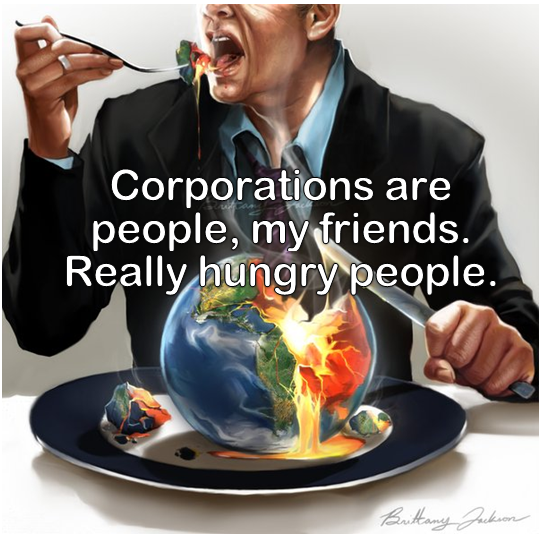


 Collapse of Industrial Civilization
