He arrived believing light meant welcome home,
Each open hand a mirror of his own.
His trust lay open like an unlocked door;
he hadn’t learned what locks were even for.
But doors he’d trusted opened into walls,
And laughter learned to echo down the halls.
The light he’d followed home was baring teeth;
He learned the city’s grammar underneath.
No demons here—just men who kept a tab,
Whose open hands concealed the coming grab.
They fed on him with contracts, not with claws;
The city’s teeth were hidden in its laws.
He knelt where only rats and rain could see,
And let the dark ask what he’d ceased to be.
It took his coat, his coins, his final breath—
But something in his blood refused his death.
He gathered what the city hadn’t taken:
A name, a pulse, a faith not yet forsaken.
The night demanded he lie down and stay—
He answered it by walking into day.
He walked not past the dark but through its length,
And forged a kind of language from his strength.
The boy who came mistaking light for home
Now bore true light like marrow, blood, and bone.
At nine I folded something into thirds And pushed it down before I had the words. It lives beneath my tongue still, patient, curled— the first secret I swallowed from the world.
At work I answer emails, nod, agree, A fluent ghost of who I’m meant to be. My colleagues think I’m easy, calm, polite. They’ve never heard me bargain with the night.
It happened in the kitchen, after three. No ceremony. Nothing warning me. The folded thing I’d kept began to unfold. It had my face. It was nine years old.
Its eyes were open but the lids were wrong— They blinked real slow, like time had stretched too long. It wore my Sunday shirt, soaked in red. I saw it start to speak. I fled.
That night I poured a drink and went to bed. I told myself I’d dreamed the shirt, the red. But now I feel him standing where I stand— Not asking to be held, just to hold my hand.
I tell you this not as a man made whole, But as a hand still reaching for his soul. He’s still standing in that kitchen. Still nine. The silence was never his. It was mine.
I beg you not to crush me for the sin of being slight, Let not my fragile form decree the measure of my right. I beg you not to scorn me—no malice have I earned, You don’t curse the tide for turning nor the moth for being burned.
But I know it’s in your nature, you were shaped by colder hands, Taught that strength is only proven by the wreckage where you stand. No one showed you tenderness, no balm to soothe your blade, To beg for grace feels futile when the world in blood is made.
So why would you show mercy when there’s glory to be claimed? No requiem for shadows, no lament for the unnamed. But if you must, then grant me this: be deliberate and be swift— Let the world not taste my trembling nor the wind my hollow rift.
My existence leaves no imprint on the ledger of this earth, Neither curse nor benediction from the moment of my birth. But the atoms that composed me will return to dust and dew, And tonight, perhaps, the stars will dim as one light leaves their view.
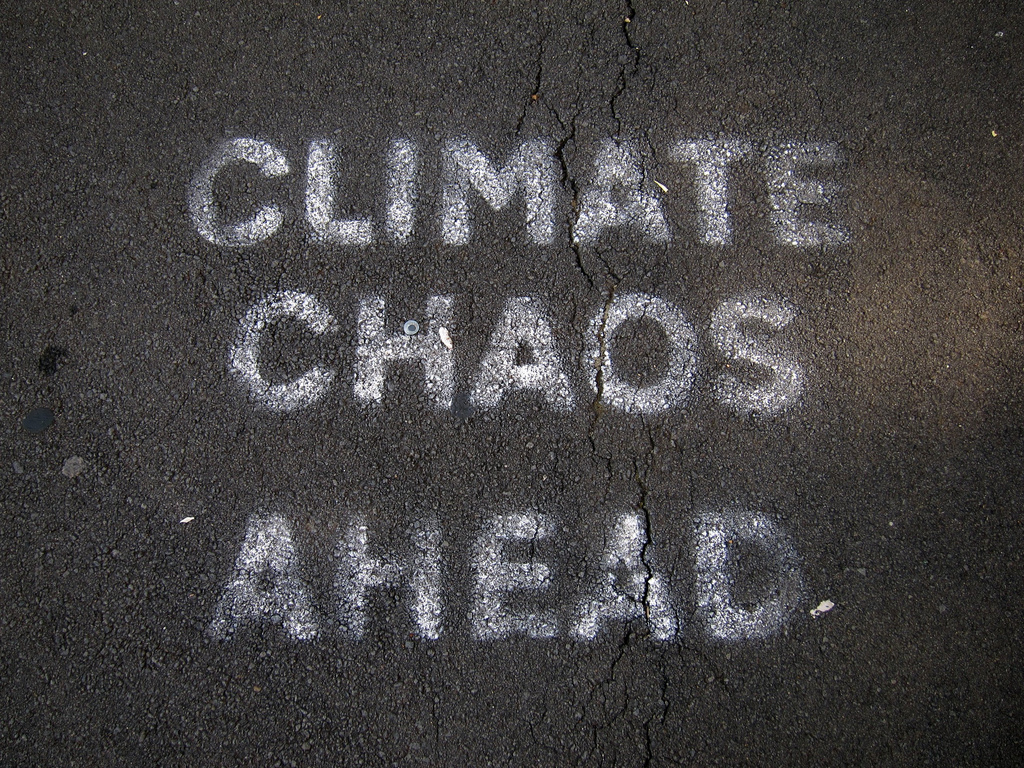
When the Black Death struck Europe in the Middle Ages, the fundamental values that held society together broke down. Husbands and wives abandoned each other and mothers abandoned their children. This void of ethics that overtook the population is described in Boccaccio’s Decameron, considered a masterpiece of Italian prose and a documentary of life during that time. The book describes the sense of hopelessness that spread throughout the world, because it did not matter what stature one held in life or what one did or did not do to avoid the disease, all were subject to its lethality. Some implored their God in vain while others pursued a carpe diem spirit in an attempt to grab the last bit of pleasure from life when they were able. The common explanation for the indiscriminate devastation wrought by the Black Plague was God’s punishment for human wrongdoing. Nothing in human behavior has changed since then and I believe the ecological overshoot that man finds himself in today, manifested most prominently as climate chaos amongst a myriad of other threats, will cause humans to question the futility of life and their existence just as did those victims of the bubonic plague. A recent study has found that climate chaos is indeed worsening neurological diseases and mental health disorders. Another study found that people are denying climate change as a form of self-deception necessary to maintain their psychological health.
Since those Dark Ages, mankind has developed the ability to accurately track and predict our own demise. Vast networks of satellites and other data monitoring tools are informing us that the planet is becoming increasingly more inhospitable for the vast majority of life on Earth, yet we plod onward, ignoring another plea by the world’s scientists. A reassessment of the Limits to Growth Study and its World3 model using different calibrations was done 6 months ago and the results are the same, which is to say that humanity is still following business-as-usual and heading for collapse within the next two decades:
...the model results clearly indicate the imminent end of the exponential growth curve. The excessive consumption of resources by industry and industrial agriculture to feed a growing world population is depleting reserves to the point where the system is no longer sustainable.
All the expertise and modern technology we possess will not be coming to save us; there is no techno-fix or deus ex machina remotely scalable to the planetary crises we face. Emergency atmospheric geoengineering schemes won’t save us at this point. Can’t we just suck the 900 billion tons of CO2 out of the atmosphere that we have spewed since the beginning of the industrial revolution? No. It bears repeating that the spiking Keeling curve is non-reversible on human timescales.
“We sadly continue to break records in the CO2 rise rate,” said Ralph Keeling, director of the CO2 program at Scripps. “The ultimate reason is continued global growth in the consumption of fossil fuels.” ~ May 8, 2024
The rate of ocean warming has nearly quadrupled since the late twentieth century, doubling since 1993. In the last twelve month, ocean heating has been on a tear, shattering records consistently. The world is currently undergoing the fourth global coral bleaching event on record, the second in the last decade, and the Great Barrier Reef is suffering its worst bleaching event in recorded history. This year’s hurricane season will likely be a record-breaker. The oceans are starting to release all that thermal energy we have been unceremoniously dumping into them. At one time, oceans seemed like an endless sink for the emissions from humanity’s nonstop consumption of fossil fuels, but that appears to be coming to an end. The world’s rivers are warming and losing oxygen even faster than the oceans. In contrast to those grim stats, humanity is set to consume more resources in the next 30 years as we have since the dawn of civilization. We have already consumed the future and are now, as they say, eating the seed corn.
The insurance industry, the backbone of the global economy, is beginning to buckle: “I believe we’re marching toward an uninsurable future.” As is typical of our modern-day society, the hypocritical insurance industry is heavily invested in fossil fuels while simultaneously warning about the looming destruction from climate change. Billion dollar disasters are increasing while the time between such disasters is decreasing. This continual rebuilding that needs to be done more often would be another doom-loop cycle for our crumbling civilization, considering the carbon emissions required in such repair and reconstruction. Compound extreme weather and climate events, combinations of two or more extremes (hazards) that occur concurrently or sequentially, are also increasing and expected to grow many fold over in the future. These compound weather events will inevitably create a perfect storm that will one day permanently destroy supply chains and economies by acting as a constant disruptor to stability. It would have the same effect as a monster cyclone, or hypercane, traveling the globe in perpetuity, waxing and waning in strength but never dying, and leaving a path of destruction wherever it roamed. A stable climate no longer exists to support the reconstruction of what once was. Walden Thoreau’s words seem very prescient today: “What is the use of a house if you haven’t got a tolerable planet to put it on?” With corporations also gobbling up single-family homes to monopolize the real estate market in America, we can officially say that the American dream of owning a home is dead. George Carlin always said you had to be asleep to believe anything about the American Dream.
I have been hearing about the need to abandon fossil fuels since President Carter put solar panels on the White House 45 years ago. I am still waiting for the techno-optimists to explain to me how they will save us from this new age we have created, known as the Pyrocene or Age of Fire; rest in peace, Holocene. We could also call our modern-day clusterfuck the Plasticene or Age of Plastics. Scientists are finding the stuff in every nook and cranny of the planet, including Antarctic krill, men’s testicles, and throughout the human body. If you drive a vehicle, you are contributing to the primary source for microplastics in the environment, tires, which account for 78%. Just as they lied about their knowledge of the catastrophic effects from burning their fossil fuel products, so too did the oil and plastics industry lie about their greenwashing fraud called recycling.
I never get an adequate, rational answer to our conundrum, because there is none. ChatGPT provides no better insight than the techno-optimists. The problem of a planet overrun by humans will resolve itself in short order and be recorded in the geologic fossil record after we put a cherry on top of this fossil fuel orgy, flattening the planet into a glass parking lot with nuclear weapons. That is another part of human nature that we will never escape…warfare. We seem to be one twitch away from WWIII and the next Stone Age. In fact, there are nearly 200 armed conflicts raging around the world right now, the largest number in decades. This marked uptick in violence could be an ominous sign of a violent new era. From the 2023 Armed Conflict Survey:
“The accelerating climate crisis continues to act as a multiplier of both root causes of conflict and institutional weaknesses in fragile countries…”
We are on the verge of authoritarian rule as global conditions break down and people embrace centralized solutions. Xenophobia will grow and borders will be shut down, sources of food and energy will be fought over and secured, and rationing of resources will be enforced.
After studying our ecological overshoot for several decades, I have some observations that must be accepted as fact:
“Renewable” energy is not displacing our massive fossil fuel consumption at all, but only serving as a small addition to the total global energy consumption.
“Renewable” or alternative energy, such as solar and wind, is dependent on fossil fuels for its manufacture, installation, maintenance, and eventual disposal.
The so-called “Energy Transition” away from fossil fuels is pure techno-hopium and will never materialize.
No such “Energy Transition” can be accomplished without radical reductions in resource consumption. This is antithetical to the basic biological urge for expansion by most organisms, including humans, and current trends illustrate this behavior. We also keep finding more ways to consume evermore energy. On top of this, the World Bank is urging faster economic growth for emerging economies in order for them to repay mounting debts.
Governments are ill-equipped to deal with industrial civilization’s complex polycrisis because effective solutions would undermine economic growth.
The latest deadline to ‘save the planet’ is now two years from now, according to a UN Climate Change official. No doubt another arbitrary date given to justify someone’s job and department budget. According to Global Footprint Network’s calculations, humans have been in overshoot for over half a century. Others would say that we have been in overshoot since the dawn of agriculture 10,000 years ago, surviving only by mining the Earth’s soils. Like fossil fuels, the vast nutrient store of soils represents a unique one-time gift that has been squandered by agricultural erosion. Without petroleum and arable soils, the Earth will only support perhaps 5% of the present global population, as it did before the advent of agriculture. Considering that we are being constantly blindsided by faster-than-normal and worse-than-expected findings from scientists, I suspect there are far less food harvests left for us than we think. Hotter temperatures and pollution are hastening the destruction of topsoil. Our temporary extension of Earth’s carrying capacity for humans is coming to an end. Once Earth’s life support systems start to unravel, the grotesquely inflated human population will crash. In the meantime, “Memento moriturum; maxime faciunt vitae!”
My last post was in September 2023, and since then, the state of the planet has gotten considerably worse. I feel like the 2030’s will be the decade when the wheels start coming off this ride of industrial civilization. Until I speak to you all again, please enjoy those blue skies and store-bought food while they last. And remember, industrial civilization is a heat engine and it will suddenly break one day!
Six years ago David Eagleman, a neuroscientist and American writer, delivered a lecture entitled ‘Six Easy Steps to Avert the Collapse of Civilization’. I got the urge to review his advice and critique how well we have followed it. Below are his abbreviated steps along with my commentary on each one:
[1.] “Try not to cough on one another.”
Over the course of numerous microbe generations amounting to a small fraction of a single human lifetime, pathogens have mutated and adapted faster than the antibiotic defenses human’s have built. Through a combination of factors—medical, social and economic—our war on pathogens is being lost, and these superbugs could be the next global pandemic. The danger grows with mankind’s expanding ecological footprint: a rising world population, the widespread use of antibacterial drugs in humans and agriculture, the speed and intensity of an international transport system, and so on. As history has shown, pandemics have always been a consequence of humans breaking down the interface between man and Earth’s wilderness. A recent study highlights this fact:
Tackling antibiotic resistance on only one front is a waste of time because resistant genes are freely crossing environmental, agricultural and clinical boundaries, new research has shown.
Analysis of historic soil archives dating back to 1923 has revealed a clear parallel between the appearance of antibiotic resistance in medicine and similar antibiotic resistant genes detected over time in agricultural soils treated with animal manure…
…”Unless we reduce use and improve stewardship across all sectors — environmental, clinical and agricultural — we don’t stand a chance of reducing antibiotic resistance in the future.”
As of yet, humans are not heeding this advice in any coordinated manner as another new study reveals that antibiotic use and resistance is increasing globally while new antibiotics discoveries have nearly halted. China and India, for instance, have poor regulatory and environmental enforcement:
The NHS is buying drugs from pharmaceutical companies in India whose dirty production methods are fueling the rise of superbugs, write Andrew Wasley & Madlen Davies. There are no checks or regulations in place to stop this happening – even though the rapid growth in antibiotic resistant bacteria in India is spreading across the world, including to the UK and NHS hospitals… government-commissioned study found superbugs would kill more people than cancer by 2050 if no action is taken, and cited pollution in pharmaceutical supply chains as a major problem. – Link
“If you want to see where resistance is occurring in animals, look across the pond to China. They play by a whole different set of rules,” he[Dr. Larry Hollis] says. “Whenever a new antibiotic is developed, the Chinese see the patent filings, figure out how to make it, and without any regulatory structure, it goes straight to animals. By the time it’s available here, the antibiotic is already showing resistance.” – Link
India is a global center of antibiotic manufacture. 80% of the active pharmaceutical ingredients used by pharmaceutical companies worldwide, including the United States and Europe, are made in China. Following their manufacture, most of these ingredients are exported to India for processing and subsequent worldwide sale. The good manufacturing practices in China and India do not include environmental safeguards. “Unfortunately, environmental regulations are currently left up to national regulators, who are not inclined to do much. In India, the effluent discharge load of ciprofloxacin in 2007 was 45 kg per day – the amount consumed in Sweden, which has a population of 9 million, over 5 days,” said Dr. Gandra. – Link
Our hospitals can’t even keep track of how many people are dying from these superbugs. So it seems disease-carrying bacteria shall inherit the Earth, but truth be told, they have always been the dominant forms of life. A population of eight billion people provides a rich substrate for them to colonize and feed upon.
[2.] “Don’t lose things.”
In modern times there has been a large decline in hard-copy forms of record-keeping with ever more material being transferred onto digital formats, especially news reports and visual/auditory records, but the ephemeral nature of our digital media makes it prone to disappearing. Virtually all of the most useful and important artifacts of our time are digital and very little of it is intended to survive. Much of the 20th Century and beyond will be a vast gaping historical black hole except for the plastics, radiation and soot entering the geological record:
Digital information itself has all kinds of advantages. It can be read by machines, sorted and analyzed in massive quantities, and disseminated instantaneously. “Except when it goes, it really goes,” said Jason Scott, an archivist and historian for the Internet Archive. “It’s gone gone. A piece of paper can burn and you can still kind of get something from it. With a hard drive or a URL, when it’s gone, there is just zero recourse.”…
…If a sprawling Pulitzer Prize-nominated feature in one of the nation’s oldest newspapers can disappear from the web, anything can. “There are now no passive means of preserving digital information,” said Abby Rumsey, a writer and digital historian. In other words if you want to save something online, you have to decide to save it. Ephemerality is built into the very architecture of the web, which was intended to be a messaging system, not a library… – Link
The slow creep of technological obsolescence or a sudden cosmic disaster like a Carrington Event could usher in a ‘Digital Dark Age’, making any historical electronic documents unreadable. Google’s Vint Cerf says we’ve grown complacent in how media is stored. He warns that we may find ourselves lost in a bit-rot future unable to access important media documents, scientific data, etc., but leaving behind any kind of record on an overheated world could be a moot point if there’s no one left to read it.
[3.] “Tell each other faster.”
Communication speed has increased exponentially with technology but the infrastructure that supports it is very vulnerable. Aside from the growing threat of cyber-attack, it’s been documented that the most common cause of communication failure is due to the destruction of physical infrastructures. Roughly 200 undersea fiber optic cables link the world’s telecommunications, but they are “poorly armored, rarely patrolled and only occasionally monitored.” The possibility of human saboteurs is ever-present for landlines as well. These systems are usually the first sites to be targeted in wars and crackdowns by authoritarian governments.
Telecommunication infrastructure is also threatened by natural disasters such as earthquakes, hurricanes, and severe weather which can sever cables and flood underground equipment. A study from a couple of years ago found an increase in severe weather has led to a doubling of major power outages across the country in the past decade.
Telling each other faster has not made one iota of a difference in preventing the unmitigated disaster of global warming and climate change. If after decades of climate conferences, libraries filled to the brim with studies and data, and now the imminent death of the largest organism on the planet—the Great Barrier Reef of Australia, we still cannot collectively take this existential threat seriously, then failure and death will be our just deserts.
[4.] “Mitigate tyranny.”
Hyper-nationalist movements are on the rise around the world, and they can be a precursor to authoritarianism. A country by country guide and analysis of fascism and the far right in Europe can be found here. Hyper-nationalism can lead to racism, vicious cycles of revenge, and genocide in which a segment of the population is scapegoated for society’s failures. With the appointment of Steven Bannon to Trumps’s presidential inner circle, the darkness of Trump’s worldview should be evident to most. Trump will soon have America’s militarized police forces at his behest and the world’s surveillance network at his fingertips, enabling him to act on his penchant for vindictiveness in far-reaching ways.
Trump won’t bring back coal because it would mean destroying the natural gas industry which has grown to displace the use of coal in recent years. Trump is going to learn how hard it is to change the dynamics of our energy system. Previous presidents have hit that same wall. Besides, automation is taking over all the blue-collar jobs of Trump’s supporters. All those “big league jobs” promised by Trump just went up in smoke:
…research shows that the automation of U.S. factories is a much bigger factor than foreign trade in the loss of factory jobs. A study at Ball State University’s Center for Business and Economic Research last year found that trade accounted for just 13 percent of America’s lost factory jobs. The vast majority of the lost jobs — 88 percent — were taken by robots and other homegrown factors that reduce factories’ need for human labor. – Link
[5.] “Get more brains involved in solving problems.”
Physicist Jonathan Huebner says in his study that rates of global innovations judged significant to human beings have been declining in recent decades, in fact it’s halved in the past hundred years. Joseph Tainter in his own study has come to a similar conclusion:
Over the last 40 years, the number of patents per inventor has decreased by 20% and the number of inventors per patent has increased by almost 50%. Although the quality of patents is unknown (it can not be measured quantitatively), it seems we nowadays get less bang for the buck compared to half a century ago. Larger, interdisciplinary research teams cost a lot more money as they need the support of administrative personnel and formal institutions. This decrease in productivity has been masked by the fact that the whole enterprise (research & development) has grown in absolute terms (i.e. more scientists and more money being poured into R&D). – Link
This decline in innovation is directly related to diminishing EROI of our energy resources and the limits of complexity. As Jonathan Miles said in Want Not, “This is our condition. We do not solve problems. We replace them with other problems.” The myriad of crises bearing down on us defies comprehension and certainly won’t be solved by applying more of the same techno-fix thinking.
[6.] “Try not to run out of energy.”
The EROI of fossil fuels, the master resource of industrial civilization, has been in decline for some time and a recent report sheds light on this:
A new peer-reviewed study led by the Institute of Physics at the National Autonomous University of Mexico has undertaken a comparative review of the EROI of all the major sources of energy that currently underpin industrial civilization—namely oil, gas, coal, and uranium.
Published in the journal Perspectives on Global Development and Technology, the scientists note that the EROI for fossil fuels has inexorably declined over a relatively short period of time: “Nowadays, the world average value EROI for hydrocarbons in the world has gone from a value of 35 to a value of 15 between 1960 and 1980.”
In other words, in just two decades, the total value of the energy being produced via fossil fuel extraction has plummeted by more than half. And it continues to decline… – Link
No other energy source has the energy density of fossil fuels and the existing alternative or “renewable” energy sources won’t power our current set of living arrangements. Although technology is extending the Fossil Fuel Age, running out of economically recoverable fossil fuels means a radical change in society, if such a thing as ‘society’ can persist in the aftermath of biospheric collapse. I suppose a seventh bullet point is in order and would say something along the lines of, “It’s an ill bird that fouls its own nest.”
As China’s appetite for resources wanes with the bursting of its real estate bubble and America’s shale oil boom fueled by easy credit comes to an end, floundering petrostates are beginning to queue up for bail-outs. Financialization appears to have exacerbated the collapse in oil prices. Of course none of this capitalist boom-bust cycle negates the fundamentals of peak oil; prices will swing upwards again in a few years as marginal producers get weeded out. After all, the world still consumes nearly three million gallons of oil per minute, and only a relatively thin margin separates surplus from a shortage. Most of our energy usage does not involve electricity which is what alternative energies like wind and solar produce. Electricity comprises just 18% of the total global energy consumption of which alternatives make up a tiny sliver. 250 new human beings are added to the planet every minute; each born into a world of depleting resources and mounting pollution; each scrambling to secure the necessities of life. The black stuff will remain the primary fuel supporting this growing population of a globalized technological civilization.
A recent study estimates that if we are serious about implementing alternative energies to satisfy the goals of the Paris climate accord, then upwards of 12 trillion dollars will have to be spent over the next 25 years. This price tag is an investment that is 75% more than current growth projections. At a time when governments have spent their last ammo pumping more electronic money into the economy to try to stimulate economic growth, the prospects of decarbonizing the entire global energy system appears daunting, especially considering the many shortcomings of alternative energies. Time constraints on a planet indifferent to our energy needs are also bearing down on us:
As the Keeling curve creeps irreversibly higher and the gap between rhetoric and reality widens, pipe dreams like geoengineering and carbon sequestration will become desperate Hail Marys for a species whose time is running out. The New York Times editorial by Piers Sellers, a NASA Earth Sciences director who has terminal cancer, perfectly sums up this techno-fix mindset: “…it will be up to the engineers and industrialists of the world to save us.” Keep calm, keep shopping, and await further instructions; the elites have it all under control. Jeb Bush’s recent comment that we should pin our hopes on “someone in a garage” fixing climate change illustrates the widespread delusion that technological innovation, good ol’ entrepreneurial spirit, and capitalist market-based solutions will be our saviours. Ironically, Jeb belongs to the political party hell-bent on defunding public education, a policy that would seem to make those plucky garage inventors even more implausible.
We cannot possibly rely on a system that profits from the very disaster it has helped to create, yet that is the dead-end feedback loop we are locked into. Mexico is a good example of how landscapes and communities are being carved up for alternative energy farms and carbon trading schemes that benefit only large corporations. Even philanthrocapitalism promotes the convenient myth that market forces and the whims of billionaires will solve systemic problems. The precautionary principle has been thrown out the window in the pursuit of short-term profits and power. We have only a vague inkling of nature’s rich complexity and interdependence. The scale of our ignorance is frightening considering our oversized impact.
The truth of our predicament has been criminally concealed since the 1970s by the fossil fuel industry which all the while knew that an overheated Arctic would melt away, exposing fresh deposits of carbon for them to exploit. Unfortunately the bonanza they planned for has not materialized; melting permafrost wreaks havoc on infrastructure and exploration. The cryospheric regions of earth, key geographic features regulating the planet’s climate, were systematically dismantled within the geologic blink of an eye; such environmental changes are imperceptible to the real-time cognitive processing of humans, but in geological ‘deep time’ these events are cataclysmic and portend a dire future for humans. There are more signs that the Atlantic Meridional Overturning Circulation (AMOC) is slowing down.
“We’re sitting on these planetary boundaries right now, argues Rockstrom, and if these systems flip from one stable state to another — if the Amazon tips into a savannah, if the Arctic loses its ice cover and instead of reflecting the sun’s rays starts absorbing them in water, if the glaciers all melt and cannot feed the rivers — nature will be fine, but we will not be.” ~ Johan Rockstrom, director of the Stockholm Resilience Center
The time to avoid critical tipping points in those decades has passed. The projections from the IPCC were downplayed and underestimated in order to continue the destructive business-as-usual:
“…new scientific findings were more than twenty times as likely to support the ASC perspective [that disruption through AGW may be far worse than the IPCC has suggested] than the usual framing of the issue in the U.S. mass media. The findings indicate that…if reporters wish to discuss ‘‘both sides’’ of the climate issue, the scientifically legitimate ‘‘other side’’ is that, if anything, global climate disruption may prove to be significantly worse than has been suggested in scientific consensus estimates to date”.
We’re in the early throes of economic and ecological system failure; headlines grow more alarming each year:
Plastic is projected to outweigh fish in the world’s oceans by 2050. This may happen much sooner since it was just discovered the number of fish remaining in the ocean has been grossly overestimated. We only recycle 5-10% of plastics today and many are not recyclable. It’s cheaper for industry not to recycle and the quality of plastic is degraded when it is recycled. No international body exists that can hope to regulate dumping in the oceans. International ships dump freely without consequence. Unenforceable legislation is heroically passed in bodies of government from time to time, but it remains ineffective. Waste is also shipped across borders to more “business friendly” countries where waste can be cost-effectively dumped.
Hot days are occurring 145 times more often over the last 10 years than just a few decades ago. Unique World Heritage Sites are being destroyed by climate change. The latest one, an ancient Gondwana ecosystem in Tazmania, burned down to the ground from fires sparked by dry lightning strikes, a direct result of climate change. A warming planet is also providing a growing range of favorable places for mosquitoes, the bane of mankind, to spread pestilence and disease. Our interconnected world can fast-track their dissemination with the help of a single intercontinental plane flight. At the moment, the Zika virus is grabbing headlines with its explosive expansion. Scientists are on the verge of confirming that it has jumped to the common mosquito and the WHO recently declared it an international health emergency. Microcephaly appears to be just the tip of the iceberg for the fallout of this virus. Normal-appearing newborns are suffering ill effects as well. It is believed that the Zika virus was introduced into Brazil during the World Soccer Cup in 2014 when an influx of tourists visited cities throughout Brazil. The 2016 Olympics in Rio will provide a perfect vehicle for the worldwide distribution of Zika.
“…history tells us that civilizations experiencing dramatic declines in their net energy uptake usually develop authoritarian political systems in an effort to stave off collapse, but then crash and disappear anyway.” ~Eric Zencey
Historically speaking, the elite are last to feel the effects of their hubristic decision-making, insulated as they are in their positions of wealth and power. Modern ideals and virtues of human rights, social justice, and a strong American middle class have all been aberrations of a civilization built atop a surfeit of energy.
The disparity between MSM news and real world problems like climate change, pollution, growing wealth inequality, the unraveling food chain, etc. are breathtaking. Wrecking the biosphere and bringing on a mass extinction leaves no one unscathed or in any position to survive long-term. Secret plans of survival by the “elite” are simply another myth. The wealthy may be buying up tracts of land in remote areas, but they are perhaps more delusional than anyone else because of how their wealth insulates them from hard realities. Without all those just-in-time supply chains operating seamlessly across a stable planet, no one gets out alive.