As the recent news stories below illustrate, extreme weather is on the rise and has been scientifically linked to human-induced climate change. I find it amazing than in the midst of the beginning stages of collapse of industrial civilization, many will attribute the disintegrating environment to natural phenomenon, biblical and other religious prophecy, or the lizard illuminati. I suppose the real reason behind America’s hi-tech surveillance panopticon is to keep the hungry and destitute masses from overrunning the walled compounds of the elite when climate change and peak net energy really kick into gear. These days the number of headlines pointing to environmental collapse are overwhelming; choosing one is like shooting fish in a barrel. The population of Atlantic Puffin bird, called the ‘marine canary in the coal mine‘, has reportedly been “losing body weight and dying of starvation, possibly because of shifting fish populations as ocean temperatures rise.” The Arctic, an essential temperature regulator for the planet, is melting fast and releasing a carbon time bomb:
Over hundreds of millennia, Arctic permafrost soils have accumulated vast stores of organic carbon – an estimated 1,400 to 1,850 petagrams of it (a petagram is 2.2 trillion pounds, or 1 billion metric tons). That’s about half of all the estimated organic carbon stored in Earth’s soils. In comparison, about 350 petagrams of carbon have been emitted from all fossil-fuel combustion and human activities since 1850. Most of this carbon is located in thaw-vulnerable topsoils within 10 feet (3 meters) of the surface.
But, as scientists are learning, permafrost – and its stored carbon – may not be as permanent as its name implies. And that has them concerned.
“Permafrost soils are warming even faster than Arctic air temperatures – as much as 2.7 to 4.5 degrees Fahrenheit (1.5 to 2.5 degrees Celsius) in just the past 30 years,” Miller said. “As heat from Earth’s surface penetrates into permafrost, it threatens to mobilize these organic carbon reservoirs and release them into the atmosphere as carbon dioxide and methane, upsetting the Arctic’s carbon balance and greatly exacerbating global warming.”
Current climate models do not adequately account for the impact of climate change on permafrost and how its degradation may affect regional and global climate…
…“The Arctic is warming dramatically – two to three times faster than mid-latitude regions – yet we lack sustained observations and accurate climate models to know with confidence how the balance of carbon among living things will respond to climate change and related phenomena in the 21st century,” said Miller. “Changes in climate may trigger transformations that are simply not reversible within our lifetimes, potentially causing rapid changes in the Earth system that will require adaptations by people and ecosystems.”…
Adaptation will likely not be possible by humans, and as far as our sprawling steal and concrete cities are concerned – they’re toast.
…“Some of the methane and carbon dioxide concentrations we’ve measured have been large, and we’re seeing very different patterns from what models suggest,” Miller said. “We saw large, regional-scale episodic bursts of higher-than-normal carbon dioxide and methane in interior Alaska and across the North Slope during the spring thaw, and they lasted until after the fall refreeze. To cite another example, in July 2012 we saw methane levels over swamps in the Innoko Wilderness that were 650 parts per billion higher than normal background levels. That’s similar to what you might find in a large city.”…
The next headline sums up the climate policy of all governments – a joke. Business-as-usual will continue until it ain’t so usual anymore. Insurance costs will skyrocket and the wrath of nature will roll back all the transient wealth humans have built up atop the backs of our fossil fuel slaves. Externalized costs will be paid back in the wreckage of a civilization which thought of itself as superior to and separate from the natural world.
Reading the inklings of future trouble that the next three headlines portend, you’ll see global famine on the horizon:
We’re seeing more severe storms,” Vilsack said. “We’re facing more invasive species. More intense forest fire threatens communities each year. NOAA reported that 2012 was the second most intense year in our history for extreme weather events — droughts, flooding, hurricanes, severe storms, and devastating wildfire. NOAA also advised that last year was the warmest on record for the continental United States.”
He made it clear we can’t dismiss these changes as an aberration.
“The latest science tells us that the threat of a changing climate is new and different from anything we’ve ever tackled,” Vilsack said.
A historic multi-billion dollar flood disaster has killed at least eighteen people in Central Europe after record flooding unprecedented since the Middle Ages hit major rivers in Austria, the Czech Republic, Germany, Poland and Slovakia over the past two weeks. The Danube River in Passau, Germany hit the highest level since 1501, and the Saale River in Halle, Germany was the highest in its 400-year period of record. Numerous cities recorded their highest flood waters in more than a century, although in some locations the great flood of 2002 was higher. The Danube is expected to crest in Hungary’s capital city of Budapest on June 10 at the highest flood level on record, 35 cm higher than the record set in 2006. The flooding was caused by torrential rains that fell on already wet soils. In a 2-day period from May 30 – June 1, portions of Austria received the amount of rain that normally falls in two-and-half months: 150 to 200 mm (5.9 to 7.9″), with isolated regions experiencing 250 mm (9.8″). This two-day rain event had a greater than 1-in-100 year recurrence interval, according to the Austrian Meteorological Agency, ZAMG…
…The primary cause of the torrential rains over Central Europe during late May and early June was large loop in the jet stream that developed over Europe and got stuck in place…
…If it seems like getting two 1-in-100 to 1-in-500 year floods in eleven years is a bit suspicious–well, it is. Those recurrence intervals are based on weather statistics from Earth’s former climate. We are now in a new climate regime with more heat and moisture in the atmosphere, combined with altered jet stream patterns, which makes major flooding disasters more likely in certain parts of the world, like Central Europe. As I discussed in a March 2013 post, “Are atmospheric flow patterns favorable for summer extreme weather increasing?”, research published this year by scientists at the Potsdam Institute for Climate Impact Research (PIK) in German found that extreme summertime jet stream patterns had become twice as common during 2001 – 2012 compared to the previous 22 years. One of these extreme patterns occurred in August 2002, during Central Europe’s last 1-in-100 to 1-in-500 year flood. When the jet stream goes into one of these extreme configurations, it freezes in its tracks for weeks, resulting in an extended period of extreme heat or flooding, depending upon where the high-amplitude part of the jet stream lies. The scientists found that because human-caused global warming is causing the Arctic to heat up more than twice as rapidly as the rest of the planet, a unique resonance pattern capable of causing this behavior was resulting.According to German climate scientist Stefan Rahmstorf, “Planetary wave [jet stream] amplitudes have been very high in the last few weeks; we think this plays a role in the current German flooding event.
The biggest lie ever told is that we will be able to adapt to or mitigate a planet-wide shift in weather patterns, temperatures, and sea level rise on such a short time-scale as to be instantaneous in geologic records. Our fall – a tragicomedy of hubris, self-delusion, greed – will be more precipitous than our rise.
I have yet to meet Guy McPherson, but with a blog entitled “Collapse of Industrial Civilization”, it appears inevitable. Who else on Earth has such an unvarnished view of the horror show modern man is orchestrating? Truth delivered up with no hidden agendas is a very bitter and difficult pill to swallow, but being a true radical means getting at the root of the problem irrespective of “ideological and/or theological prejudice“, or as Guy says…
For those wanting to keep abreast of the deteriorating habitability of the planet, Guy posts periodic updates to the unfolding climate chaos here.
There exists no high quality recording of Guy’s speech at the most recent “Age of Limits” conference that I know of. In order to review his talk I watched this clip and studied his powerpoint slides which he sent me and which are posted here.
I’m certain that many who attend Guy’s speeches don’t internalize all the information he sets forth, fore if they did, their language would lose all the culturally ingrained phrases of hope for any kind of eleventh hour rescue by our technology-worshipping society. If there were a fix, don’t you think we would have implemented it by now before setting off a list of unstoppable positive feedback loops, known and unknown? Hell, even the much-trumpeted cleanliness of natural gas has turned out to be a farce. A recent study shows methane release from natural gas production is much higher than was known.
We seem to be leaking greenhouse gases from every orifice. Yes Moore’s law and the illusion of infinite progress have brainwashed everyone into believing mankind is immortal, forever in control of primal earth forces. In 2000, Chris Bright of the Worldwatch Institute introduced the term “nemesis effect” which refers to the cumulative effect of multiple stressors and conditions that lead to unanticipated consequences. Taken as a whole, the information in Guy’s speech equates to a global nemesis effect which is taking the planetary biosphere past the threshold of human habitability.
After stating the “benefits to the biosphere” from the collapse of industrial civilization, he presented a brief history of climate science’s implication of man as the primary culprit of climate change:
Benefits to the Biosphere from the Collapse of Industrial Civilization
– will slow down climate chaos, but too late to stop it.
– will terminate human population overshoot which is proceeding currently at the rate of 217,000 per day (births minus deaths every single day).
– will slow or stop the 6th Great Extinction proceeding at a pace of roughly 217 species per day (conservative estimate).
– will terminate environmental decay such as the soil we wash away into the oceans, the air we foul, the water we pollute, and all the other consequences of industrial civilization.
Brief History of Climate Change Science and the Pinpointing of Human-Induced Climate Change
In 1847, George Perkins Marsh is credited with being the first person to have implicated human activity as the source of climate change.
In 1896, Swedish scientist Svante Arrhenius, considered the father of climate change science, predicted a 1 degree Celsius rise by the year 2,000. Few quote him today because he thought that a slight warming of the atmosphere would be a good thing for human agriculture. In the end, no such benefits will result from human-induced climate change due to the extreme weather swings and our oil-dependent agricultural system…
Last year, James Hansen (et al), pointed out that extreme weather events of all kinds (hot, cold, wet and dry) are becoming more frequent. In fact, their statistical analysis of historical data (as opposed to computer modelling of future events) demonstrated that extreme events (i.e. more than 3 standard deviation above or below average) are now ten times more likely than they used to be…
Our Oil-Dependent Agricultural System Spews CO2
Over the past 40 years, about 2 billion hectares of soil – equivalent to 15% of the Earth’s land area (an area larger than the United States and Mexico combined) – have been degraded through human activities, and about 30% of the world’s cropland have become unproductive. But it takes on average a whole century just to generate a single millimetre of topsoil lost to erosion.
Soil is therefore, effectively, a non-renewable but rapidly depleting resource.
We are running out of time. Within just 12 years, the report says, conservative estimates suggest that high water stress will afflict all the main food basket regions in North and South America, west and east Africa, central Europe and Russia, as well as the Middle East, south and south-east Asia.
Unfortunately, though, the report overlooks another critical factor – the inextricable link between oil and food. Over the last decade, food and fuel prices have been heavily correlated…
Past Predictions of Mass Extinction and Human Die-Off
Despite the rantings of wingnuts like Alex Jones, free-market ideologues, and conspiracy theorists, the following warning given in 1986 by Robert Watson, who was the director of NASA’s upper atmospheric program at that time, remains prescient…
A dramatic loss of ozone over antarctica proves the “greenhouse effect” is real and presages a gradual warming of the Earth that threatens floods, drought, human misery in a few decades and – if not checked – eventual extinction of the human species, scientists warned Tuesday…
Recent Findings of Hansen and the NASA scientists…
James Hansen, director of NASA’s Goddard Institute for Space Studies, warned Wednesday that human-made climate change could lead to the deaths of millions of species.
“If we continue with business as usual this century, we will drive to extinction 20 to 50 percent of the species on the planet,” he told Current TV host Eliot Spitzer. “We are pushing the system an order of magnitude faster than any natural changes of climate in the past.”
In a recently published study, Hansen and his team concluded that the drastic increase in record high temperatures in recent years could be directly traced to human-made climate change, particularly the increase in greenhouse gases…
Large-Scale Climate Assessment Projects
Guy then goes into some large-scale climate assessment studies which do not include data for:
(a) Positive Feedbacks (tipping points)
(b) Economic Collapse
Back in 1990, the U.N. Advisory Group on Greenhouse Gases warned:
Beyond 1 degree C may elicit rapid, unpredictable and non-linear responses that could lead to extensive ecosystem damage.
Our Dying Oceans and Back to the Future with Mass Extinctions
CO2 levels are now at 400ppm which does not account for methane and other greenhouse gases accumulating from human activity. CO2 has never exceeded 280 ppm in the last million years (based on actual readings of atmospheric chemistry from Antarctic ice-core data.) The last time greenhouse gases were at 400 ppm was three million years ago — a time when no humans existed. Humans have managed to radically alter the chemistry of the atmosphere to such a degree as to replicate pre-historic levels when no humans walked the Earth.
Phytoplankton has plummeted in the last century due to ocean warming and acidification:
A 2012 Science study found that the paceof ocean acidification today is ten times faster than during the PETM – the most rapid acidification event in the geologic record. Looking as far back as 300 million years, the study found that at current trends the projected rate of acidification of the world’s oceans will be the worst ever – worse than all the major extinctions of this time span: the end-Cretaceous, the end-Triassic, and even the end-Permian 250 million years ago, when 96% of marine species went extinct.
The current rate of (mainly fossil fuel) CO2 release stands out as capable of driving a combination and magnitude of ocean geochemical changes potentially unparalleled in at least the last ~300 million years of Earth history, raising the possibility that we are entering an unknown territory of marine ecosystem change.
Considering the projections of increasing temperatures from the numerous large-scale assessments listed above, we can logically predict that the remaining phytoplankton, the base of the food chain, will suffer catastrophically.
Can CO2 Emissions and Economic Growth Be Decoupled?
Even with the economic meltdown of 2008, carbon emissions only slowed temporarily, quickly rebounding in 2010.
What this implies is that only a complete collapse will prevent runaway climate change. Others seem to agree. A censored 2012 study [original paper here] by University of Utah professor Tim Garrett explains that energy efficiency gains actually accelerate global energy consumption and CO2 emission rates and that only collapse can stop this process:
…Taking [a] global perspective with respect to the economy, the implication is that efficiency gains will do the exact opposite of what most claim it will do. If technological changes allow global energy productivity or energy efficiency to increase, then civilization grows faster into the resources that sustain it. The consequence is that energy consumption and CO2 emissions accelerate.
CO2 emissions can be stabilized despite efficiency gains. But this is possible only if decarbonization occurs as quickly as energy consumption grows. At today’s consumption growth rates, this would require roughly one new nuclear power plant, or equivalent, to be deployed each day. Barring this, since wealth and energy consumption rates are linked, it can only be through an economic collapse that CO2 emissions rates will decline. If the size of civilization enters a long and profound decline then wealth, energy consumption and CO2 emissions will all decrease at roughly the same rate. If the collapse is sufficiently rapid then it may be possible to maintain atmospheric CO2 concentrations below levels that are normally considered dangerous.
Perhaps there is a way out of this admittedly grim sounding double-bind. But Jevons’ Paradox tells us that it will not be by way of increasing energy efficiency. Quite the opposite…
Although it “feels good to conserve energy,” he said, “there shouldn’t be any pretense that it will make a difference.”
These views, both radical and controversial, will be published this week in Climate Change, an online academic journal edited by renowned Stanford University climate scientist Stephen Schneider. Other research journals declined to publish Garrett’s research.
Garrett believes current options to potentially avert climate change — increased energy efficiencies, reduced population growth and a switch to power sources that don’t emit carbon dioxide, as well as underground storage of carbon dioxide from fossil fuel burning — are “not meaningful.”
“Fundamentally, I believe the system is deterministic,” Garrett said. “Changes in population and standard of living are only a function of the current energy efficiency. That leaves only switching to a non-carbon-dioxide-emitting power source as an available option.” Some economists are critical of his approach, but his solution is targeted to solve economic issues as “physics problems,” looking at civilization as one big problem instead of calculating individual problems based on population growth, increasing energy efficiency and other things.
“I end up with a global economic growth model different than they have,” he said. Garrett treats civilization as a “heat engine” that “consumes energy and does ‘work’ in the form of economic production, which then spurs it to consume more energy,” he said.
Ominous Signs of Disturbing a Fragile Planet
Following in the footsteps of Henry David Thoreau’s 1851 observations of flowering plants, Richard Primack, a professor of biology at Boston University, and his then-graduate student, Abe Miller-Rushing, observed the habits of the same species and found drastic changes:
…An analysis of Thoreau’s observations, those of another 19th-century naturalist and their own modern records indicate the first flowering date for 43 of the most common species has moved up by an average of 10 days. What’s more, species that aren’t shifting their flowering times in response to warmer springs are disappearing…
Recently, researchers at Penn State reconfigured the habitability zones for planets and Earth was calculated to be much further to the edge of what is called the ‘Goldilocks Zone’. The Goldilocks Zone is defined as…
…a narrow belt around a star where an orbiting planet would be warm enough to support life, but cool enough that life wouldn’t just go around bursting into flames all the time, a factor that can significantly delay evolutionary development. The term was introduced nearly two decades ago, and hasn’t been substantively updated since then.
Guy said that this suggests “relatively minor changes in the chemistry of the planet will produce significant impacts that might take us out of the habitable zone for humans.”
Back in 2010, researchers calculated the maximum wet-bulb temperatures reached in a high carbon dioxide emissions future climate scenario:
Reasonable worst-case scenarios for global warming could lead to deadly temperatures for humans in coming centuries, according to research findings from Purdue University and the University of New South Wales, Australia.
Researchers for the first time have calculated the highest tolerable “wet-bulb” temperature and found that this temperature could be exceeded for the first time in human history in future climate scenarios if greenhouse gas emissions continue at their current rate…
…”Whole countries would intermittently be subject to severe heat stress requiring large-scale adaptation efforts,” Huber said. “One can imagine that such efforts, for example the wider adoption of air conditioning, would cause the power requirements to soar, and the affordability of such approaches is in question for much of the Third World that would bear the brunt of these impacts. In addition, the livestock on which we rely would still be exposed, and it would make any form of outside work hazardous.”…
…”We found that a warming of 12 degrees Fahrenheit would cause some areas of the world to surpass the wet-bulb temperature limit, and a 21-degree warming would put half of the world’s population in an uninhabitable environment,” Huber said….
Since 1998, global surface air temperatures have flattened despite continued increases in greenhouse gases. Climate change deniers have used this as proof that there is no human-induced climate change happening. Where is all the heat going? Into the deep oceans…
…If extra heat is temporarily stored elsewhere thanks to natural climate variations, we won’t necessarily notice it.
But sooner or later it will inevitably emerge, which means that the current slowdown in warming may well be balanced by a period of rapid warming in a few years — nobody knows how many — from now. Scientists have always said that global warming would proceed in fits and starts, not in a smooth upward trend in temperatures…”
Another factor (global dimming or the aerosol effect from Asian industrialization) causing the dampening of current surface air temperatures in the last 15 years was mentioned in a previous post by David Wasdell:
…The effects of global dimming have been enhanced during this period [Asian Industrialization] by the mixing of more surface heat down to deeper ocean water, by the dominance of La Nina (cooler) conditions in the Pacific, and by a prolonged period of minimal solar radiation. The absence of temperature increase has also blocked all amplification from the temperature-dependent feedback mechanisms…
Unstoppable Feedback Loops
The following list of positive feedbacks are identified by Guy (with one added by me) as irreversible, although the last one appears to be hampered by the increasingly treacherous conditions that the resource extraction corporations are faced with as they try to set up shot in the melting and warming Arctic. I have added links to articles and essays, a few of which are very recent and add new information about these feedback loops (increased CO2 from hidden fires in the Amazon, boreal forest migration, and loss of top predators)
Standing on the Beach of Doom and waiting at the Last Chance Saloon for the waves to come in…Brace for Impact.
Irreversible Positive Feedback
1.) Methane hydrates are bubbling out the Arctic Ocean (Science, March 2010)
2.) Warm Atlantic water is defrosting the Arctic as it shoots through the Fram Strait (Science, January 2011)
3.) Siberian methane vents have increased in size from less than a meter across in the summer of 2010 to about a kilometer across in 2011 (Tellus, February 2011)
4.) Drought in the Amazon triggered the release of more carbon than the United States in 2010 (Science, February 2011)
Using an innovative satellite technique, NASA scientists have determined that a previously unmapped type of wildfire in the Amazon rainforest is responsible for destroying several times more forest than has been lost through deforestation in recent years…
…In years with the most understory fire activity, such as 2005, 2007 and 2010, the area of forest affected by understory fires was several times greater than the area of deforestation for expansion of agriculture, according to Morton. The study goes further and fingers climate conditions – not deforestation – as the most important factor in determining fire risk in the Amazon at a regional scale…
…The new knowledge about the scope of understory fires could have implications for estimates of carbon emissions from disturbed forests. How experts account for those emissions depends on the fate of the forest – how it is disturbed and how it recovers.
“We don’t yet have a robust estimate of what the net carbon emissions are from understory fires, but widespread damages suggest that they are important source of emissions that we need to consider,” Morton said…
5.) Peat in the world’s boreal forests is decomposing at an astonishing rate (Nature Communications, November 2011)
…The planet’s boreal forests won’t expand poleward. Instead, they’ll shift poleward. The difference lies in the prediction that as boreal ecosystems follow the warming climate northward, their southern boundaries will be overtaken by even warmer and drier climates better suited for grassland.
And that’s a key difference. Grassland stores a lot of carbon in its soil, but it accumulates at a much slower rate than is lost from diminishing forests…
6.) Methane is being released from the Antarctic, too — over ten tens more carbon than parts of the Arctic (Nature, August 2012)
7.) Russian forest and bog fires are growing (NASA, August 2012)
8.) Cracking of glaciers accelerates in the presence of increased carbon dioxide (Journal of Physics D: Applied Physics, October 2012)
9.) The Beauford Gyre has apparently Reversed Course (U.S. National Snow and Ice Data Center, October 2012)
10.) Exposure to sunlight increases bacterial conversion of exposed soil carbon, thus accelerating thawing of the permafrost (Proceedings of the National Academy of Sciences, February 2013)
11.) Summer ice melt in Antarctica — highest level in 1,000 years and the most rapid melting has occurred in the last 50 years (Nature Geoscience, April 2013)
I would add one more here…
12.) The Disappearance of Top Predators accelerates CO2 emissions (Nature Geoscience, Feb 2013)
People play a big role in predator decline and our study shows that this has significant, global implications for climate change and greenhouse gases,” says Atwood.
“We knew that predators shaped ecosystems by affecting the abundance of other plants and animals but now we know that their impact extends all the way down to the biogeochemical level.
Reversible Positive Feedback?
13.) Arctic drilling was fast-tracked by the Obama administration during the summer of 2012
On a higher level, we have a superorganism, our civilization, which has accessed an energy gradient the same way that old growth forests have.
The human population makes up this superorganism’s myriad of cells. The nervous system is made up of the various mediums that transmit information – internet, television, phone, print media, etc… The circulatory system is the transportation system providing paths of production and distribution – roads, bridges, trains, airline and shipping routes, etc… Of course energy, primarily oil and fossil fuels, are the life-blood that fuels this system. If you have ever tried to fight against this Leviathan, you will have its immune system, the law and security apparatus, thrust upon you so that you may be hammered into conformity or isolated and quarantined in a tiny prison cell. Of course there are many malcontent cells within the belly of the beast, but capitalist industrial civilization is fortified with self-perpetuating social structures which ensure its survival.
Take for instance its education system which churns out countless drones who lack the ability to think critically and are filled with fragmented and specialized knowledge which prepares them as cogs for the corporate world. Everything, including one’s relationship with fellow humans, is reduced to a “business relationship” or “investment”. The various institutions of modern society are configured to reinforce capitalist industrial civilization. The media are corporate mouthpieces and echo chambers for the dominant capitalist system – materialism, conspicuous consumption, atomization and alienation of man from nature and from his own humanity, etc… The entertainment industry fosters an acquisitiveness for high consumption lifestyles. It relies on the corporate state to mass market and mass produce these values. The primary metric of social worth in the corporate state is money, and the class which has managed to accumulate vast sums of it are those who have usurped the levers of governance. You have heard of the two-tiered justice system we have in this country which coddles the elite and discards everyone else. Thus the ethos of society flows downward from those who have at their disposal the power to mold and influence society’s perceptions and norms.
Will man go extinct? He certainly seems to be doing everything in his power to make sure it happens:
…the worship of an economic system that reduces everything to a financial object.
…the continued exploitation and burning of an increasingly more expensive and environmentally damaging energy source which is causing the climate to swing out of control with various feedback loops.
…the dismantling and perversion of regulations and the rule of law to satisfy greed and a grossly unjust social hierarchy.
…the indoctrination of the population into a materialist society detached from the appreciation of nature’s fundamental role in our survival.
…the degeneration of public debate into infomercial sound bites by way of mass media manipulation.
…the wholesale destruction of the natural world and the latest attempts of a so-called green economy to monetize every bit of nature in order to save capitalism.
…and the spread of the above described culture through globalization.
If you think about the modern globalized civilization as a super-organism, then you come to realize how futile it is to think that an organism, any organism, would voluntarily starve itself or constrict its own growth. If you plant a tree in a pot, it will eventually become root-bound or send its roots over the lip of the container or straight through the ceramic wall. This is exactly what our capitalist industrial civilization is doing.
It has utilized every resource available to sustain growth, and now speaks of manipulating the weather in order to avoid the threat that climate chaos poses to its vitality. As far as mineral depletion, there has even been plans drawn up to mine asteroids for their deposits. The next frontier is to break the bonds of Earth itself. But we have irreparably cracked the vase that is our home. The Arctic will soon have an annual “window” in September through which the sun’s rays will work their way inside, prying that annual crack ever wider every year. In addition, we have pushed most other species, the building blocks of biodiversity, out of their habitat and onto the one-way path of extinction. The life-giving fluids of our vase have slowly been poisoned and acidified by the waste from our fossil fuel energy slaves. The hydrologic cycle within our little world has been hopelessly fouled with. The superorganism of capitalist industrial civilization is now starving the majority of its cells in order to keep healthy a few of its privileged cells who sit in places of power and Mammon worship. This potted plant or superorganism we call industrial civilization is looking rather pale and shriveled these days. As a matter of fact, it’s like a tree whose bark has been peeled off. It’s still standing at the moment and it does not know it’s dead, but its days are surely numbered.
The hope of environmentalists can no longer be that this corrupt system will run out of energy(Peak Oil), that the money presses will break down, or that it can be changed through capitalist schemes of “greening the economy”. The only thing that would have stopped the destruction would have been to build a new system that holds the health of the natural world as the primary metric through which all human activity is viewed and planned. Suffice it to say that such a system would not have been capitalism. Of course such a sentiment would brand you as an “eco-terrorist”, but the purpose of this essay is not to give hopium, but to describe the entrenched power structure which has laid waste to the environmental movement and our planet. Although small and ineffective, individual acts of moral courage and sacrifice are all that is left as this Beast of industrialized civilization tumbles to the ground, dying from self-inflicted wounds too numerous to count.
Since I was young, I knew I’d find you
But our love was a song sung by a dying swan
And even now you’ll hear me calling
You’ll hear me calling
And in your dreams you’ll see me falling, falling
Breathe in the light
I’ll stay here in the shadows
Waiting for a sign, as the tide grows
Higher, and higher, and higher…
What would a capitalist society and its Technophiliacs do to solve a problem of their own making, a problem caused by the burning of fossil fuels, overconsumption, urban sprawl, and our wasteful industrialized way-of-life? As one former oil executive put it, “Climate change is a waste management problem.” So instead of actually dealing with the problem head on, industrial civilization will try everything it can to circumnavigate the problem, allowing CO2 emissions and our unsustainable lifestyles to persist. This is where geoengineering becomes the tourniquet for our moribund society. Here’s what the pro-business right-wing think tank, American Enterprise Institute, has to say about tinkering with our damaged atmosphere:
…We can shrug off or deny the problem, as politicians, particularly in the US, often do. That’s reckless. But what if corporations shoulder more costs and lead the technological charge, all for a huge potential payoff? That could be a game changer. In a nutshell, that’s the realpolitik argument for geoengineering….
…Let’s hope entrepreneurs do more than just smell profits. If visionary geoengineers are lucky enough to succeed, it’s going to cost big bucks over decades. If there is no business case for tackling climate change–no money to be made –it simply won’t happen.Let’s hope we are unleashing enlightened capitalist forces that just might drive the kind of technological innovation necessary to genuinely tackle climate change.
As long as there’s a dollar to be made, the enlightened self-interest of capitalism can keep the fires of climate chaos at bay. Now we can burn all those dirty unconventional oils without losing sleep. Only capitalism can manage to turn the prospect of self-extinction into a money-making venture.
In his essay “The Philosophy of Geoengineering“, Clive Hamilton tells how CO2 emissions since the industrial revolution have suppressed the next Ice Age that would have occurred in roughly 50,000 years and that with further anticipated CO2 build-up by modern man, we may well suppress future glaciation for the next 500,000 years.
Nothing humans have ever done approaches the momentousness of this fact. Our activities have so changed the climatic future that we have over-ruled one and perhaps several ice ages. The Earth will take tens of thousands of years to reach a new equilibrium following the pulse of carbon emissions sent into the atmosphere by humans in the twentieth and twenty-first centuries. Only then might the era of human-induced global warming approach an end.
It is for this reason that the Anthropocene represents not only a new epoch in geological history but a new epoch in human history, comparable only to the arrival of settled agriculture and the industrial revolution…
Thus the Anthropocene Age was coined to reflect the planet-altering force that modern man has become. Since 1950 and the “Great Acceleration”, mankind’s environmental impact tripled. Debate has been heated as to when exactly the Anthropocene Age began, with some scientists including the advent of farming 8,000 years ago, but not until the late 18th century when man’s industrial activities kicked into gear did humans begin to truly overshoot their environment on a planetary scale. By not recognizing this fact, industrial capitalism and consumerism of modern time are excused for their environmental destructiveness and unsustainable nature.
...The dispute is not merely academic. One implication of [William] Ruddiman‘s early Anthropocene‘ hypothesis is that if humans have been a planetary force since civilization emerged then there is nothing fundamentally new about the last couple of centuries of industrialism. In this view, it is in the nature of civilized humans to transform the Earth, and what is in the nature of the species cannot be resisted. By focusing attention on ‘humankind‘ in general rather than the forms of social organization that emerged more recently, the Anthropocene becomes in some sense natural. In this view, global warming is not the product of industrial rapaciousness, an unregulated market, human alienation from nature or excessive faith in technology; it is merely the result of humans doing what humans are meant to do, that is, using the powers Prometheus gave us to better our lot. This gives rise to a relaxed view about human impacts on the natural world; Ruddiman himself seems quite comfortable with the idea that over the next 200 years all economically accessible fossil fuels may be mined and burned…
The early Anthropocene hypothesis is interpreted as exonerating modern humans of blame for environmental decline…
…Perhaps the defenders of the ‘good Anthropocene’ intuitively understand that if the beginning of the new epoch is located at the end of the eighteenth century, with a step-change in the 1950s, then we must ask what was distinctive about those times. The answer of course is the inception of industrial capitalism and then the turbocharged era of industrial expansion that followed World War 2, a surge only intensified with the era of hyper-consumerism that washed over the rich world in the 1990s and 2000s. If free-market industrialism and ‘affluenza‘ are the source of the problem then perhaps they must be constrained, a suggestion that raises conservative hackles…
Thus we are mental and physical prisoners of a social system which treats everything on Earth as a commodity, reducing it to an object of exploitation for profit:
…The thinking that gives rise to geoengineering is the same thinking that first creates the world as an object suitable for technological manipulation. As a result, the only global warming escape routes that occur to us are technological ones, whether they be new forms of low-emission energy, carbon capture and storage or engineering the climate. So this view prompts the rhetorical question: How can we think our way out of a problem when the problem is the way we think?
This morning the main topic on Democracy Now was goengineering:
The video below is a talk given on Earth Day this year by Nate Hagens at the University of Wisconsin-Oshkosh. It’s entitled “What if the Future is Real?”. This talk is not just about the issue of resource depletion and the multiple crises facing us, but about human behavior, how we perceive the natural world and our responsibilities to future descendants. Nate Hagens [Masters Degree in Finance from the University of Chicago and a PhD in Natural Resources from the University of Vermont] is a former editor of The Oil Drum and worked on Wall Street for a decade before “seeing the light”. I found his talk useful. My notes/summary are below the video.
The extinction event which I talked about in ‘Free Markets, Corporate Profits and Mass Extinctions‘ looks by all unbiased scientific accounts to be happening again. Instead of volcanoes inducing climate change, today it is man’s industrial activities, specifically the burning of stored ancient sunlight, that is bringing about the end of the world as we know it. We will soon breach 400 ppm of atmospheric CO2 levels:
The ratio of carbon dioxide in Earth’s atmosphere is flirting with 400 parts per million, a level last seen about 2.5 million to 5 million years ago, according to the Scripps Institution of Oceanography at UC San Diego….
…The speed at which Earth’s atmosphere has reached that density of carbon dioxide, a known greenhouse gas, has scientists alarmed.
Scientists estimate that average temperatures during the Pliocene rose as much as 18 degrees Fahrenheit. Sea levels during that 2.8-million-year epoch ranged between 16-131 feet higher than current levels, according to Richard Norris, a Scripps geologist.
“I think it is likely that all these ecosystem changes could recur, even though the time scales for the Pliocene warmth are different than the present,” Norris said. Heating the ocean probably will cause sea level rises and change the Ph balance of the ocean, affecting a wide array of marine life, he said. “Our dumping of heat and CO2 into the ocean is like making investments in a pollution bank,” he said…
Let’s go over and update the major tipping points again(covered earlier here and here) which are currently in play:
Jason Box speaks the language of Manhattans. Not the drink—the measuring unit.
As an expert on Greenland who has traveled 23 times to the massive, mile thick northern ice sheet, Box has shown an uncanny ability to predict major melts and breakoffs of Manhattan-sized ice chunks. A few years back, he foretold the release of a “4x Manhattans” piece of ice from Greenland’s Petermann Glacier, one so big that once afloat it was dubbed an “ice island.” In a scientific paper published in February of 2012, Box further predicted “100 % melt area over the ice sheet” within another decade of global warming. As it happened, the ice sheet’s surface almost completely melted just a month later in July—an event that, in Box’s words, “signals the beginning of the end for the ice sheet.”
Box, who will speak at next week’s Climate Desk Live briefing in Washington, D.C., pulls no punches when it comes to attributing all of this to humans and their fossil fuels. “Those who claim it’s all cycles just don’t understand that humans are driving the cycle right now, and for the foreseeable future,” he says. And the coastal consequences of allowing Greenland to continue its melting—and pour 23 feet’s worth of sea level into the ocean over the coming centuries—are just staggering. “If you’re the mayor of Hamburg, or Shanghai, or Philadelphia, I think it’s in your job description that you think forward a century,” says Box. “They’re completely inundated by the year 2200.”…
3.) Unleashing of Tundra methane clathrates and sub-sea methane deposits from (1) and (2):
Courtesy of the work by Sam Carana, the multitude of reinforcing feedback loops from the loss of the Arctic Ice Sheet are listed below:
Albedo feedback: Accelerated warming in the Arctic speeds up the decline of ice and snow cover, further accelerating albedo change.
Methane feedback: Methane releases in the Arctic further add to the acceleration of warming in the Arctic, further contributing to weaken Arctic methane stores and increasing the danger that methane releases will trigger runaway global warming.
Currents feedback: Sea ice loss can cause vertical sea currents to weaken, reducing the cooling effect they had on the seabed. This can thus further cause sediments to warm up that can contain huge amounts of methane in the form of free gas and hydrates.
Storms feedback: Increased frequency and intensity of storms can cause substantially more vertical mixing of the sea water column, causing more warming of the seabed, thus further contributing to the warming of sediments, as above.
Storms feedback: Accelerated warming in the Arctic can result in more storms, causing mixing of cold Arctic air with warmer air from outside the Arctic. The net result is a warmer Arctic.
Storms feedback: More open waters can result in more storms that can push the ice across the Arctic Ocean, and possibly all the way out of the Arctic Ocean.
Storms feedback: Storms also cause more waves that break up the sea ice. Smaller pieces of ice melt quicker than large pieces. A large flat and solid layer of ice is also less susceptible to wind than many lighter and smaller pieces of ice that will stand out above the water and capture the wind like the sails of yachts.
Storms feedback: Storms cause waters to become more wavy. Calm waters can reflect much sunlight back into space, acting as a mirror, especially when the sun shines under a low angle. Wavy waters, on the other hand, absorb more sunlight.
Fires feedback: More extreme weather comes with heatwaves and storms. Thus, this is in part another storms feedback. The combination of storms and fires can be deadly. Heatwaves can spark fires that, when fueled up by storms, turn into firestorms affecting huge areas and causing huge amounts of emissions. Storms can whip up particles that when deposited on ice, snow or the bare soil, can cause more sunlight to be absorbed.
Open doors feedback: Accelerated warming in the Arctic causes the polar vortex and jet stream to weaken, causing more extreme weather and making it easier for warm air to enter the Arctic.
Two papers released last week in the journal Nature Geoscience provide evidence that warming and melt in West Antarctica are occurring at levels that are highly unusual compared to natural variability.
The West Antarctic Ice Sheet contains about 2.2 million cubic kilometers of ice; enough to raise global sea levels by 3 to 4m. What’s making glaciologists nervous is that the ice rests on bedrock which is below sea level; this makes it vulnerable to attack from below by a warming ocean as well as attack from above by increasing air temperatures.
As some of us were heading off for the Easter holiday weekend, the Brazilian government was quietly releasing deforestation trends showing an increase in deforestation for the first time in five years.
These numbers use the DETER rapid response satellite system, a system that provides estimates of deforestation rates every month. Over the time period documented, August 2012 to February 2013, the rates increased an estimated 26.82% and an area of the Amazon larger than the size of the city of London disappeared.
In absolute numbers, that means 1,695 square kilometers (654 square miles) of forest have disappeared. That equals an area the size of 237,000 soccer fields…
…The increase in deforestation rates can be directly attributed to the Brazilian government’s systematic dismantling of the laws and agencies that protect the Amazon…
…President Dilma Rousseff’s approval of a new Forest Code, a law that provides amnesty for crimes committed after 2008 in the Amazon and reduces large areas of protected land, paved the way for the increase in deforestation. The president also structurally weakened government agencies like IBAMA, the federal environmental enforcement agency, so unfortunately it won’t be a surprise if deforestation continues to rise in the Amazon…
After more than a decade, the mountain pine beetle epidemic that surged through British Columbia appears finally to be in remission. Having devastated the province’s lodgepole pine forests, the insect is running out of food.
But forest managers now see new beetle infestations appearing at the edge of the Boreal Forest, in Alberta, and in the Yukon and Northwest Territories — areas well outside the insect’s historical range. As a warming climate lifts the temperature limitations that once kept the beetle in check, scientists fear it may continue its push across the continent, perhaps as far as the Atlantic Coast…
…Without debating the causes of global climate change the effects of forest dieback can be viewed factually. The earth is warming and droughts are increasing in severity and magnitude. Temperature and drought are major contributing factors to forest dieback, so more trees will be dying in the future. As more carbon is released from dead trees, especially in the Amazon and Boreal Forests, more greenhouse gasses are released into the atmosphere. Increased levels of greenhouse gasses increase the temperature of the atmosphere. The negative feedback loop is reinforced and the biological adaptations of the species determine its survival. Projections for dieback vary, but the threat of global climate change only stands to increase the rate of dieback. The issue is complex and models are intricate, so scientists have serious work ahead of them.[8]
Scientists do not know the tipping points of climate change and can only estimate the timescales. When a tipping point, the critical threshold, is reached a small change in human activity can have long-term consequences on the environment. Two of the nine tipping points for major climate changes forcast for the next century are directly related to forest diebacks. Scientists are worried that forest dieback in the Amazon[9] rain forest and the Boreal[10] evergreen forest will trigger a tipping point in the next 50 years.[2]… – source
7.) The Sahara and Sahel in Africa
It is difficult to estimate the overall ability to increase food production, but a recent analysis suggests that human consumption may be approaching the limits of the net primary plant production (NPP) — that is, the maximum photosynthetic production that is possible on the planet.
It is “not whether humans will reach the global NPP boundary but when they will do so.” It seems probable that the developed countries will continue their excessively high levels of consumption. The emerging economies are likely to continue to eat more protein and a larger slice of grain production in countries with an appropriate climate for grain production will be diverted to feeding animals, or ethanol to drive automobiles. A child born in the Sahel today could belong to the first generation to come to maturity in the contemporary world where the ability to feed large numbers of ecological refugees may well diminish. It is also possible that the secondary effects of the collision of population growth and climate change could create what scientists call an “asymmetrical uncertainty.” The possible consequences of this asymmetrical uncertainty on political processes and violence could range from a slow worsening of the current situation to extremely serious conflict over resources and threats to security. Biologically, adverse factors can interact in ways that can cause a rapid downward spiral. For example, as noted above, ambient temperatures over 29°C (84°F) lead to a rapid decline in crop yields.
[At least 95% of the food production in the Sahel is based on rain-fed agriculture. The agricultural sector employs, directly or indirectly, more than half of the Sahel’s population…Global warming will mean that in temperate lands, where much of the global crop production occurs, the most productive regions will migrate away from the equator. While the net aggregate change as a result of climate change at a global level may be slow, the regional effects in the Sahel will be more rapid, significant, and adverse.] – source
8.) The El Nino Southern Oscillation(ENSO):
Climate models appear to be unable to accurately predict ENSO changes. Although scientists can predict some large-scale and long-term effects of anthropogenic global warming, there remains a lot of unknowns about specific regional effects.
The problem may lie in the models’ inability to reproduce the cycling between the ENSO’s El Niño and La Niña phases, especially given that many scientists think that La Niña is the major driver of drought in the southwest. The ENSO “behaves much messier in the real world than in climate models”, says Jessica Tierney, a climate scientist at the Woods Hole Oceanographic Institution in Massachusetts who has investigated the role of the ENSO in East African rainfall variability2. “We’re not sure how it has varied in the past, and we don’t know how it might change in response to climate change. This is really one of the big uncertainties we’re facing.”
In addition to their failure to reproduce El Niño and La Niña, existing models do not fully capture other factors that influence rainfall, such as clouds and vegetation. But Smerdon adds that the atmospheric and oceanic dynamics that inhibit rainfall and favour prolonged drought may be essentially random and so almost unpredictable.
Last week’s findings highlight the broader challenge of predicting how precipitation patterns will change as the global climate warms. Models are often at odds over the very direction of regional changes. For example, different projections prepared for the Colorado Water Conservation Board disagree on whether mean precipitation in the state will increase or decrease by 2050 (ref. 3).
But the uncertainties don’t change the larger picture, scientists say. “Climate models are not perfect, but they do the big things really well,” says Tierney. “We can be pretty confident that the southwest will warm and that water will become scarcer.
…since the 1970s the atmospheric circulation patterns over the Pacific have tended to favor La Nina conditions over El Nino ones. And, they write: “The overall trend towards a stronger, La Niña-like Walker circulation is nearly concurrent with the observed increase in global average temperatures.”
We know from historical data that from these two climatic events – the Medieval Warm Period(the long stable warming period over Europe) and the Little Ice Age(a well-known described historical event) – that the temperature changed, and our big question is, “Does the ocean also respond in this very short time scale?”
And one of the major results and maybe one of the biggest prices is that the ocean and the thermohaline circulation(THC) respond to these thermal drivers within just a decade.
…What we are mostly concerned about is that there is a certain threshold which is then reached, a certain point of no return more or less. So we will have a trend where it’s getting warmer and warmer and warmer, and there will be no return from this warming… and that will change the whole system, the whole flow of the system, and the thermohaline circulation may be changed…
The major threats we see right now to the thermohaline circulation mainly derive from the Arctic region. We see increased melting from the Greenland Ice Sheet. We see a retreat of Arctic See Ice. We see large reorganizations in the Arctic ocean system which accumulate fresh water. All of these things are components which may affect the thermohaline circulation.”
The most important factors affecting changes in the conditions of the thermohaline circulation are:
1.) Global warming itself caused partly by greenhouse gases from human activity.
2.) From AGW, there will be more rainfall in the higher latitudes causing glacial melt.
Density in the water is a key factor for the THC driver mechanisms. Cold surface water temperatures make the water denser and high ocean salinity cause these waters to sink. These are the main engines that run the THC, but now more fresh water is entering the ocean through the melting of the Arctic and Greenland ice sheets.
When this is integrated into the models, a new development of the engines is revealed. In a warmer climate state, the engine of the Labrador Sea seems to simply collapse…
10.) The Indian Summer Monsoon:
…Writing in the journal Environmental Research Letters, researchers at the Potsdam Institute for Climate Impact Research and Potsdam University in Germany said increasing temperatures and a change in strength of a Pacific Ocean circulation pattern known as the Pacific Walker circulation in spring could cause more frequent and severe changes in monsoon rainfall.
The Walker circulation usually brings areas of high pressure to the western Indian Ocean but in El Nino years this pattern gets shifted eastward, bringing high pressure over India and suppressing the monsoon, they said.
Computer simulations show that with future global warming the Walker circulation is likely to bring more high pressure over India even without an increase in El Nino events.
These failures of the monsoon system suggested by the simulation, defined as a 40 percent to 70 percent reduction in rainfall below normal levels, were unprecedented in the researchers’ observational record, taken from the India Meteorological Department dating back to the 1870s.
“Our study points to the possibility of even more severe changes to monsoon rainfall caused by climatic shifts that may take place later this century and beyond,” lead author Jacob Schewe said. – source
Indeed if humans were able to set aside their anthropocentric view of the world, we would be frantically changing our behavior and rearranging our economic and social activities in order to prevent our own demise. But alas, if things aren’t right between one’s ears, then everything else is moot.
(Edit on 3-9-2015: The following video has been made “private”, but it can be viewed in its entirety here.)
This week, a number of top scientists, experts, DoD and Homeland Security Department notables are convening an emergency meeting warning White House officials that the Arctic Ocean could be ice-free during summertime within two years.
This A-Team (A for Arctic) includes NASA’s chief scientist Gale Allen, National Science Foundation Director Cora Marett, Director of the Oceans Institute of the University of Western Australia marine scientist Prof Carlos Duarte, and nine other top Arctic specialists together with key representatives from the US Department of Homeland Security and the Pentagon.
The Washington meeting is the second major climate emergency meeting of its kind to occur within the past month. Just a few weeks ago, the UK held its own climate meeting in response to severe and unprecedented weather occurring throughout Europe this winter and spring.
Scientists and specialists descending on the White House are now echoing increasingly urgent warnings coming from Arctic…
The decades of escalating heat and dryness, which inevitably returned with a vengeance after some years of waning, had reduced the world’s food production to a mere shell of its former glory. The grocery stores, whose well-stocked shelves city dwellers had grown accustomed to, were now all boarded up and abandoned after being ransacked for their remains – expired cans of food. Industrial agriculture could only be subsidized for so long by an over-exploited and abused environment, but nobody ever really thought that day would come. The green revolution was supposed to be the answer to feeding the world’s growing population. Unfortunately it turned out to be yet another Ponzi scheme built on a finite, dwindling energy source, the burning of which was destabilizing the climate. Nearly all the mega cities and great metropolises had turned into death traps and were quickly emptied of their human inhabitants after a series of violent riots sparked by starving populations. Areas where water was still plentiful were inundated with refugees. Nonetheless, a small population of human scavengers had remained in these great ghost cities of the Post Industrial Age and managed to eke out a life while enjoying the somber solitude of decaying edifices and vacant streets.
A few of these remnant city-dwellers frequented the dust-laden corridors of old libraries. Television and other electricity-depenedent digital devices, which had once been so pervasive and addictive, were no longer available after the heat engine of carbon-based civilization broke down. Thus books and the written word were the surviving medium for amusement and escapism. Even in these desperate times, people found time to dream and wonder. When the grid flickered and finally blinked out for good, much of what had passed for entertainment was now viewed in retrospect as a widespread collective mental illness. The citizenry of the fossil-fuel crazed civilization had retreated further and further into an artificial world of digital bytes and glowing computer screens while the natural world had disintegrated around them.
The recent past leading up to the final days of industrial civilization was looked upon as an age of irony. Science and technology had created miraculous abilities to save lives while at the same time enabling the wholesale destruction of mankind through hi-tech weaponry. Knowledge and wisdom were available at the touch of a keystroke, while mass death and misery hinged on the push of a button. People appeared on the surface to be free, yet their thoughts and actions were carefully manipulated by a veil of infotainment; people’s lives were affected much more by things left unspoken. The pursuit of “happiness” became the law of the land; the pursuit of truth was criminalized and viewed as the deviant behavior of malcontents and miscreants. Questioning the dominant paradigm was obstructive to progress; solutions to the world’s problems were entrusted to ideologues of free-market capitalism and worshippers of endless technological advancement.
A reduction in complexity was inevitable, but did it have to come at the expense of a bankrupt planet? Cheap and abundant energy slaves no longer existed, and even if they did, there was nothing to transition to on a planet plagued with a destabilized climate for the next millennium. The human population would never again reach anything like the 9 billion at the zenith of the fossil fuel age, and this was a welcome thought for those few who remained. Quoting from a dog-eared book found by one of the humans scavenging in a library, or “book cemetery” as it was now known:
What is the greater danger – nuclear warfare or the population explosion? The latter absolutely! To bring about nuclear war, someone has to DO something; someone has to press a button. To bring about destruction by overcrowding, mass starvation, anarchy, the destruction of our most cherished values-there is no need to do anything. We need only do nothing except what comes naturally – and breed. And how easy it is to do nothing…
…Democracy cannot survive overpopulation. Human dignity cannot survive [overpopulation]. Convenience and decency cannot survive [overpopulation]. As you put more and more people onto the world, the value of life not only declines, it disappears…
And not much did survive. But for those last vagabonds of humanity, the tragedy of the Great Collapse and mankind’s downfall were the grist of post-apocalyptic folklore, never to be forgotten.
…a second Dark Age had fallen on Western civilization, in which denial and self-deception, rooted in an ideological fixation on “free” markets, disabled the world’s powerful nations in the face of tragedy. Moreover, the scientists who best understood the problem were hamstrung by their own cultural practices, which demanded an excessively stringent standard for accepting claims of any kind–even those involving imminent threats. Here, our future historian, living in the Second People’s Republic of China, recounts the events of the Period of the Penumbra (1988–2073) that led to the Great Collapse and Mass Migration (2074)…
The paper starts off with a brief history of industrial civilization’s chemical and material pollutions overloading the Earth’s environmental sinks. The sheer volume of mankind’s activities, from the Ozone Hole created by CFC’s to the resource-depleting diet of industrial cattle-farming, became a force of nature unto itself threatening the very habitability of the planet. The scientific community began to recognize that man’s industrial activities were upending the earth’s life support systems; various organizations and institutions were created to try to ‘protect the environment’, but the interests of free market capitalism with its high-consumption lifestyle created a backlash against any restriction and attempts to recognize the limits of the human economy’s unending growth. The party had to continue no matter how dire the consequences. 1988 is said to have marked the beginning of the “Penumbral Period”, perhaps meaning a time of partial illumination where the threat was seen, but no effective action was taken. Indeed, we dug our grave faster with the building of evermore coal-fired plants and the destruction of the remaining ecosystems in the face of a series of extreme and ominous weather events which had the earmarks of manmade climate change.
By the early 2000s, dangerous anthropogenic interference in the climate system was under way. Fires, floods, hurricanes, and heat waves began to intensify, but these effects were discounted. Those in what we might call active denial insisted that the extreme weather events reflected natural variability, despite a lack of evidence to support that claim. Those in passive denial continued life as they had been living it, unconvinced that a compelling justification existed for broad changes in industry and infrastructure. Scientists became entangled in arcane arguments about the “attribution” of singular events; however, the threat to civilization inhered not in any individual flood, heat wave, or hurricane, but in the overall shifting climate pattern, its impact on the cryosphere, and the increasing acidification of the world ocean…
…what was anomalous in 2021 soon became the new normal. Even then, political, business, and religious leaders refused to accept that the primary cause was the burning of fossil fuels. A shadow of ignorance and denial had fallen over people who considered themselves children of the Enlightenment. For this reason, we now know this era as the Period of the Penumbra.
If you don’t like reality, then withdraw into fantasy and rewrite history; “we’re an empire now, and when we act, we create our own reality,” said Karl Rove.
In the early Penumbral Period, scientists were accused of being “alarmist” in order to increase financial support for their enterprise, gain attention, or improve their social standing. At first, the accusations took the form of public denunciations; later they included threats, thefts, and the subpoena of private correspondence. Then legislation was passed (particularly in the United States) that placed limits on what scientists could study and how they could study it, beginning with the notorious “Sea Level Rise Denial Bill,” passed in 2012 by the government of what was then the U.S. state of North Carolina (now part of the Atlantic Continental Shelf ) and the Government Spending Accountability Act of 2012, which restricted the ability of government scientists to attend conferences to share and analyze the results of their research.
Though ridiculed when first introduced, the Sea Level Rise Denial Bill would become the model for the U.S. National Stability Protection Act of 2022, which led to the conviction and imprisonment of more than three hundred scientists for “endangering the safety and well-being of the general public with unduly alarming threats.” By exaggerating the threat, it was argued, scientists were preventing the economic development essential for coping with climate change. When the scientists appealed, their convictions were upheld by the U.S. Supreme Court under the Clear and Present Danger doctrine, which permitted the government to limit speech deemed to represent an imminent threat.
…robust evidence shows that people systematically overestimate the probability of positive future contingencies, and underestimate the probability of negative ones — only those who are depressed or dysphoric come to accurate assessments…
Diogenes of Sinope must have practiced a sort of philosophical dysphoria.
Another cause for modern man’s downfall was the adoption of an excessively stringent standard for accepting causal links between climate change and human industrial activities:
…Historians have long argued about why this standard was accepted, given that it had no substantive mathematical basis. We have come to understand the 95 percent confidence limit as a social convention rooted in scientists’ desire to demonstrate their disciplinary severity. Just as religious orders of prior centuries had demonstrated moral rigor through extreme practices of asceticism in dress, lodging, behavior, and food–in essence, practices of physical self-denial–so, too, did natural scientists of the twentieth century attempt to demonstrate their intellectual rigor through intellectual self-denial. This practice led scientists to demand an excessively stringent standard for accepting claims of any kind, even those involving imminent threats…
CO2 emissions continued to rise not only in developing countries, but also developed countries as fossil fuel production accelerated with shale gas extraction and Canadian oil-sand processing. The world was firmly in the grasp of the fossil fuel energy trap.
…How did these wealthy nations–rich in the resources that would have enabled an orderly transition to a zero net-carbon infrastructure–justify the deadly expansion of fossil fuel production? Certainly, they fostered the shadow of denial that obscured the link between climate change and fossil fuel production and consumption. They also entertained a second delusion: that natural gas from shale could offer a “bridge to renewables.” Believing that conventional oil and gas resources were running out (which they were, but at a rate insufficient to avoid disruptive climate change), and stressing that natural gas, when combusted, produced only half as much CO2 as coal, political and economic leaders persuaded themselves and their constituents that promoting shale gas was an environmentally and ethically sound approach.
This line of reasoning, however, neglected three crucial factors. First, fugitive methane emissions–CH4 that escaped unburned into the atmosphere–greatly accelerated warming. (Again, scientists had foreseen this phenomenon, but their predictions were buried in specialized journals.) Second, the argument presupposed that net CO2 emissions would fall, which would have required strict restrictions on coal and petroleum use. Third, and most important, the sustained low prices of fossil fuels, supported by continued subsidies and a lack of external cost accounting, undercut efficiency efforts and weakened emerging markets for solar, wind, and biofuels (including crucial liquid biofuels for aviation). Thus, the bridge to a zero-carbon future collapsed before the world had crossed it. The bridge to the future became a bridge to nowhere.
The following scenario seems to me to be our most likely future under the current path of business-as-usual:
…The net result? Fossil fuel production escalated, greenhouse gas emissions increased, and climate disruption accelerated. In 2001, the IPCC had predicted that atmospheric CO2 would double by 2050. In fact, that benchmark had been met by 2042. Scientists had expected a mean global warming of 2 to 3 degrees Celsius; the actual figure was 3.9 degrees. Though originally merely a benchmark for discussion with no particular physical meaning, the doubling of CO2 emissions turned out to be significant: once the corresponding temperature rise reached 4 degrees, rapid changes began to ensue.
By 2040, heat waves and droughts were the norm. Control measures such as water and food rationing and Malthusian drills had been widely implemented. In wealthy countries, hurricane- and tornado-prone regions were depopulating, putting increased social pressure on areas less subject to those hazards. In poor nations, conditions were predictably worse: rural portions of Africa and Asia were already experiencing significant depopulation from out-migration, malnutrition-induced disease and infertility, and starvation. Still, sea level had risen only 9 to 15 centimeters around the globe, and coastal populations were mainly intact.
Then, in the Northern Hemisphere summer of 2041, unprecedented heat waves scorched the planet, destroying food crops around the globe. Panic ensued, with food riots in virtually every major city. Mass migration of under-nourished and dehydrated individuals, coupled with explosive increases in insect populations, led to widespread outbreaks of typhus, cholera, dengue fever, yellow fever, and, strangely, AIDS (although a medical explanation for the latter has never been forthcoming). Surging insect populations also destroyed huge swaths of forests in Canada, Indonesia, and Brazil. As social order broke down, governments were overthrown, particularly in Africa, but also in many parts of Asia and Europe, further decreasing social capacity to deal with increasingly desperate populations. The U.S. government declared martial law to prevent food riots and looting, and the United States and Canada announced that the two countries would form the United States of North America in order to begin resource-sharing and northward population relocation. The European Union announced similar plans for voluntary northward relocation of eligible citizens from its southernmost regions to Scandinavia and the United Kingdom…
World leaders convened to hastily put together a climate geoengineering scheme in an effort to halt the collapse, but unforeseen side effects occurred and the project was immediately stopped, resulting in even more dire consequences. Various feedback loops unleashed a “Venusian death” on planet Earth:
…This massive addition of carbon led to what is known as the Sagan effect (sometimes more dramatically called the Venusian death): a strong positive feedback loop between warming and CH4 release. Planetary temperature increased by an additional 6 degrees Celsius over the 5 degree rise that had already occurred…
The rapid melting of the West Antarctic Ice Sheet and the Greenland Ice Sheet resulted in massive sea level rise and more apocalyptic human and non-human suffering:
…Analysts had predicted that a five-meter sea level rise would dislocate 10 percent of the global population. Alas, their estimates proved low: the reality was closer to 20 percent. Although records for this period are incomplete, it is likely that 1.5 billion people were displaced around the globe, either directly from the impacts of sea level rise or indirectly from other impacts of climate change, including the secondary dislocation of inland peoples whose towns and villages were overrun by eustatic refugees. Dislocation contributed to the Second Black Death, as a new strain of the bacterium Yersinia pestis emerged in Europe and spread to Asia and North America. In the Middle Ages, the Black Death killed as much as half the population of Europe; this second Black Death had similar effects. Disease also spread among stressed nonhuman populations. Although accurate statistics are scant because twentieth-century scientists did not have an inventory of total global species, it is not unrealistic to estimate that 60 to 70 percent of species were driven to extinction…
This doomsday narration then ends with a sort of “happy note” which seems to me to be wishful thinking, an improbable turn of events which saves mankind from total extinction. The last few pages discuss more the pitfalls that mankind fell into leading to such a dire fate: positivism or Baconianism and market fundamentalism.
…power did not reside in the hands of those who understood the climate system, but rather in political, economic, and social institutions that had a strong interest in maintaining the use of fossil fuels. Historians have labeled this system the carbon-combustion complex: a network of powerful industries comprised of primary fossil fuel producers; secondary industries that served fossil fuel companies (drilling and oil held service companies, large construction firms, and manufacturers of plastics and other petrochemicals); tertiary industries whose products relied on inexpensive fossil fuels (especially automobiles and aviation); and financial institutions that serviced their capital demands. Maintaining the carbon-combustion complex was clearly in the self-interest of these groups, so they cloaked this fact behind a network of “think tanks” that issued challenges to scientific knowledge they found threatening…
…When scientists discovered the limits of planetary sinks, they also discovered market failure. The toxic effects of DDT, acid rain, the depletion of the ozone layer, and climate change were serious problems for which markets did not provide a spontaneous remedy. Rather, government intervention was required: to raise the market price of harmful products, to prohibit those products, or to finance the development of their replacements. But because neoliberals were so hostile to centralized government, they had, as Americans used to say, “painted themselves into a corner.” The American people had been persuaded, in the words of President Reagan, that government was “the problem, not the solution.” Thus, citizens slid into passive denial, accepting the contrarian arguments that the science was unsettled. Lacking widespread support, government leaders were unable to shift the world economy to a net carbon-neutral energy base. As the implications for market failure became indisputable, scientists came under attack, blamed for problems they had not caused but merely documented…
Watching the following video, we can see such a future, as describe above, being played out before our very eyes:
Real Time episode with Bill Maher – aired April 5, 2013: Bill Maher led an intense panel discussion on the reliability of science on his show tonight, with Maher, Abby Huntsman, Senator Bernie Sanders, and 19-year-old science education activist Zack Kopplin arguing with Wall Street Journal columnist Steve Moore over scientific consensus on global warming. Moore continually insisted the debate is not over, but Maher repeatedly explained how sound science is not up for debate and that Moore should “have the humility” to defer to actual scientific experts on the issue…
Like a meth addict whose gums are dissolving, muscles deteriorating, skin abscessing, and behavior becoming psychotic, industrial civilization is deteriorating, the social fabric is getting threadbare, and leaders of rogue countries are spouting off nuclear threats. I believe we would all agree that a radical change to society is in the best interest of the long-term survival of Homo sapiens. So to break our current self-destructive path which is not unlike that of cancer cells killing off its host, what obstacles are in our way preventing us from achieving mass consensus. Some call it the ‘wall of propaganda’ which our current economic system has constructed to protect its interests, namely the almighty profit margin, at literally all costs. Media Lens has an excellent article out discussing this ‘wall of deceit’ which corporate capitalism surrounds itself with in order to maintain the unsustainable business-as-usual.
The article starts out:
The systematic propaganda of the corporate media – its deep-rooted antipathy towards upholding proper journalistic standards in the public interest – extends to its coverage of human-induced climate change. The Independent recently delivered a masterpiece of headline obfuscation with:
‘World cools on global warming as green fatigue sets in.’
The news report said:
‘Only 49 per cent of people now consider climate change a very serious issue – far fewer than at the beginning of the worldwide financial crisis in 2009.’
As usual, there was no mention of the role of the corporate media as a leading cause of why ‘green fatigue’ has supposedly set in. No mention of the media’s shameful failure to explore root causes of the climate crisis, not least the elite-serving corporate globalisation that has taken humanity to the brink of disaster. Chris Shaw, a social sciences researcher at the University of Sussex, noted on Twitter that nor was there ‘any mention of the work of the merchants of doubt, paid for and acting on the behalf of corporate interests’.
We’ve discussed this before and it continues to be the case – mass media in the hands of corporations is a pillar of inverted totalitarianism. In addition, the corporations also make use of the state’s security and surveillance apparatus in order to stifle any grassroots movements which threaten the status quo. Thusly, we are enthralled to the corporate state. The article then goes on to quote important rebuttal points made by Joe Romm to the corporate media’s claim of the public suffering from a ‘green fatigue’:
• ‘There is not one single TV show on any network devoted to this subject [climate change], which is, arguably, more consequential than any other preventable issue we face.’ • ‘The public is exposed to constant messages promoting business as usual and indeed idolizing conspicuous consumption…’ • ‘The major energy companies bombard the airwaves with millions and millions of dollars of repetitious pro-fossil-fuel ads. The environmentalists spend far, far less money.’
The popular mantra of keeping the global temperature below a 2ºC increase is another misleading idea put forth and circulated in the mass media:
‘The chances of the world holding temperature rises to 2C – the level of global warming considered “safe” by scientists – appear to be fading fast.’
Here, Vidal uncritically relayed the dangerous and discredited notion of a 2ºC ‘safe limit’ for global temperature rise. Climate change has been hereby reduced to a phenomenon defined by a single global dangerous number. This is a simplistic and damaging view of climate which, in reality, varies widely in time and space with multiple, overlapping impacts and feedbacks including ice melt, sea level rise, increasing storms and devastating droughts. Social scientist Chris Shaw, whom we mentioned above, has studied how this skewed ‘safe limit’ framing of the climate change debate arose, and how it has become a stranglehold on climate policy and even on progressive voices who should know better. Shaw warns that ‘falsely ascribing a scientifically derived dangerous limit to climate change diverts attention away from questions about the political and social order that have given rise to the crisis.’ He notes:
‘The oft quoted quip attributed to Einstein, that the definition of insanity is to keep doing the same thing, even after it has failed, seems particularly apposite for the “dangerous limits” framing of climate policy.’
Rapid and dangerous climate change is already underway, with little chance now of keeping global temperature rise to under 2ºC …
…switch on the television or the radio, or open up a newspaper, and – bar a few items in passing – it’s as if none of this is happening. Instead, the public is being force-fed a diet of celebrity gossip, huge advertising campaigns to consume more and more, and tedious ‘news’ and ‘debates’ that elucidate almost nothing about the real world.
Journalists and editors at all levels of the major news organisations must be aware, to some extent, that the glorious vision of the media ‘holding power to account‘ is more myth than reality. But very few media professionals have the honesty, bravery and decency to speak out. We understand that it is not easy; one’s hopes of a stellar media career or even the prospect of continued employment might be on the line. In the early days of Media Lens, we used to entertain the very slim possibility that – if anyone – the environment editors of the major newspapers might do so. But signs of media sanity from even these quarters are scarce…
The Article then illustrates a few examples of media outlets like the BBC and The Guardian who are cobbled by the corporate need to downplay the catastrophic effects of human-induced climate change. The ever pervasive regime of business interests holds sway over public discourse:
Locked Inside A Box
…Take one report on the BBC News at Ten last month (February 19, 2013), for instance, by John Moylan, the BBC’s employment and industry correspondent. On the flagship television news programme, watched by millions around the country, Boylan spoke of the rising demand for energy and the cost of fuel. He stood in front of impressive high-tech graphics and he eloquently made his points. And he referred, briefly, to EU environmental targets on closing ‘dirty polluting power plants’.
But Moylan did not once mention climate change. In an era when leading scientists are warning of the catastrophic dangers of climate instability under global warming, how could the BBC correspondent possibly justify this omission from his report? We asked him, twice, but did not receive an answer…
…But what about the Guardian? It has long been considered by many greens as a sort of ‘flagship’ newspaper for the environment movement. This has never been an accurate picture. But even more so in recent years when, notes Haaretz columnist Zafrir Rinat, the paper has been avidly:
‘developing business ties with corporations leading to the creation of the websites such as Global Development Professionals, which received financing from the Bill and Melinda Gates Foundation and a host of corporations. The Guardian is also involved in several environmental ventures that are expected to yield profits.’
Rinat spoke with Joe Confino, an executive editor of the Guardian, and the chairman and editorial director of Guardian Sustainable Business. This is a Guardian-corporate partnership which promotes the notion of ‘corporate social responsibility’, a public relations oxymoron that should be exposed repeatedly.
Confino said:
‘We are partners in ventures with businesses that we are convinced are going in the right direction on sustainability. The condition for all cooperation is preserving complete editorial independence.’
But high-ranking newspaper professionals always assert that there is a ‘firewall’ between advertising and editorial content, a claim that does not withstand scrutiny. Moreover, as Haaretz’s Rinat rightly points out:
‘Behind this [Guardian and corporate business] cooperation lies a pretentious worldview that it is possible to convince corporations to operate differently along the entire production chain, from the raw materials stage up through handling the refuse from the final products that are sold.’
Rinat added that ‘the media is still part of the problem because it continues to promote in its reports the culture of consumerism that depletes the planet’s resources.’ He noted that Confino ‘doesn’t deny’ this crucial point but, disappointingly, the Haaretz columnist did not press the Guardian executive about it.
Consider that a major imperative for corporate newspapers like the Guardian, struggling with dwindling advertising revenue, is to boost the numbers of people exposed to online ads by visiting their websites. Chris Elliott, the Guardian readers’ editor, was upfront about this in a recent column when he said that this was ‘essential’ to ‘secure the future’ of the paper.
But there are flickerings of internal dissent:
‘in the last six months three colleagues have written or spoken to me to express concern that the entirely reasonable desire to attract people to the site may be skewing news and features agendas.’
One ‘conflicted colleague’, as Elliott put it somewhat pejoratively, said:
‘There have been occasions recently where stories have been commissioned by editors who have talked about how they hope it will “play well” online – this appears to have been at the very forefront of their mind when commissioning. Certainly this is the prime driver of many online picture galleries. Obviously … we want to be well-read and popular, but it is a slippery slope, and it now appears that in a few cases we are creating stories purely to attract clicks.’
Given that Elliott’s piece was likely a sanitised, for-public-consumption version of the reality, one wonders what Guardian staff are really thinking, and how widespread is the concern, perhaps even direct opposition, inside their plush corporate offices…
Then we get to the crux of the whole matter, a life or death decision that modern society must work out before it is far too late:
…Covering dangerous climate change […] means not just reporting the science of climate change responsibly – a task too far for the Daily Mail and Mail on Sunday. But it also means investigating the systemic reasons for global warming. That must include a critical appraisal of corporate-driven capitalism and unrestrained consumerism. And, finally, it must also mean full and open public debate about alternative ways of organising society to benefit human well-being and the climate stability of the planet.
There you have it in that last quoted paragraph. In order to move ahead and avert disaster, we must be given the unvarnished truth rather than be kept in the dark and fed shit. In order to do that, we have to get at the root of the problem – capitalism.




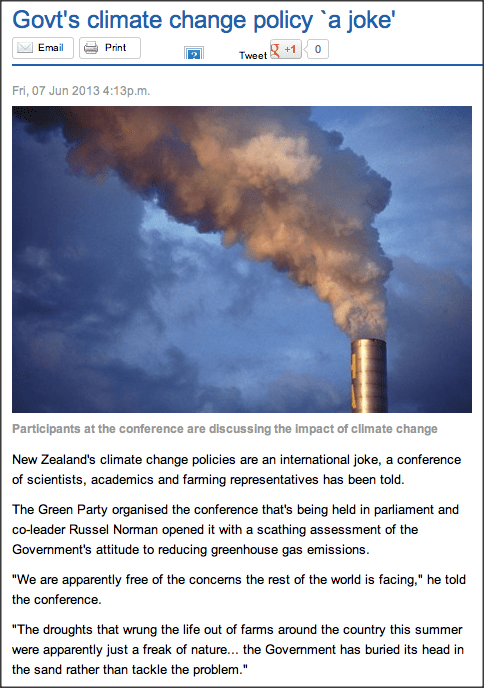
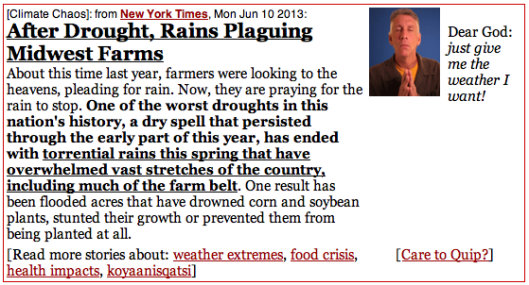












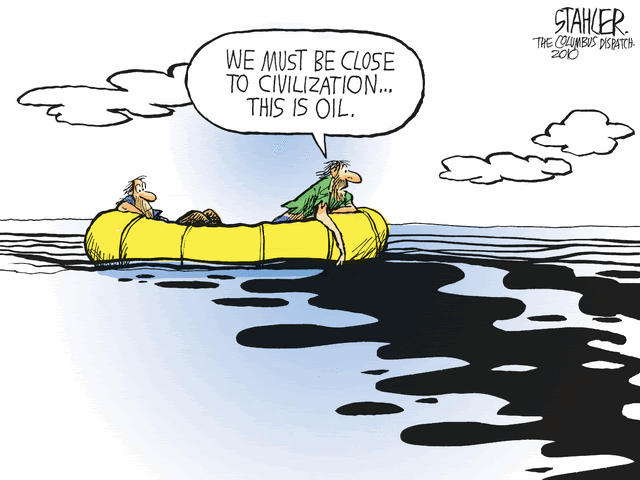




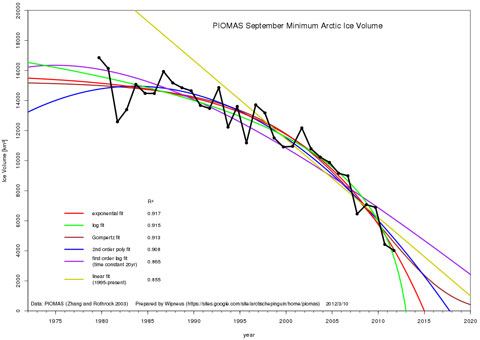




 Collapse of Industrial Civilization