If it’s too loud- you’re too old.

Tags

, , , , , , , , , , , , ,

That epiphany from the ‘60’s would seem just as relevant today in separating the grey suited establishment war mongers from the more enlightened artistic underclass- if one is to follow the travails of the Russian all girl punk band, Pussy Riot.

MOSCOW — The face of dissent in Russia was once that of the outcast intellectual such as Nobel laureates Andrei Sakharov and Alexander Solzhenitsyn. Then it was the oligarch who grew rich in the post-Soviet chaos and used his wealth to challenge the Kremlin.
The torch was passed again on Friday.

A Moscow court convicted three young punk rockers, members of the provocatively named group Pussy Riot, of “premeditated hooliganism” and sentenced them to two years in prison. The crime: a February “punk prayer” at Moscow’s Christ the Savior Cathedral in which the balaclava-clad, mini-skirted rockers appealed for the downfall of President Vladimir Putin.

The litmus test for any societies tolerance for free speech and freedom of expression has for several decades been vulnerable to exposure by punk music. Designed specifically to shock and mobilize awareness, the overclass has historically been unable to process the messaging intrinsic to this form of expression, as its unformed, inchoate rage is destabilizing to a political economy that requires compliance, conformity, and coercion in addressing normative society.

A fiction writer from the Golden Age of Russian literature could never have dreamed up a scenario as absurd and a story as far-fetched as the persecution of the punk rock band Pussy Riot,” two activists with the Human Rights Foundation, chaired by Kasparov, wrote in an article for Forbes magazine’s website.

Sneering at the faux teen rebellion embodied by the ‘50’ and ‘60’s rock music movement, the punk movement disavowed any necessity to even play a musical instrument, as listening to a track or two from Pussy Riot will bear witness.

This result is confusing, and at the same time profoundly disturbing to the criminal overclass (deservedly) hypersensitive to the ground swell of unpredictable social movement as evidenced by recent OWS protests, riots in Paris suburbs, and similar uprisings across the world. These flare ups are symptomatic of a deep and profound buildup of rage that is slowly recognizing, en masse, the failure of capitalism and the rapidly manifesting loss of social mobility perhaps best expressed by the two word anthem of a violently nihilistic generation – No Future.

In an apparent show of solidarity, an apartment dweller across the street from the courtroom blared one of the group’s songs loud enough to disturb the judge’s reading of the verdict. Police scrambled to cut the electricity to the apartment and silence the protest.

Relatives, friends and other spectators in the courtroom shouted, “Shame!” when the judge imposed the sentence. Outside, police detained supporters thronging the building, roughing up and arresting at least 60, independent Russian media reported, including former world chess champion Garry Kasparov.

A generation that has lost hope is a dangerous generation indeed.

With its origins in places like Manchester, England, New York, and Los Angeles, disenfranchised youth banded together under the auspices of loud and violent music to commiserate, and at the same time ventilate, pent up fury upon discovery of the grim future first posited under the Reagan and concomitant Thatcher administrations. Lashing out first at any authority figures, the diffuse wave of anger soon settled on corporations and neo-liberal figureheads such as Reagan and Thatcher to receive the brunt of the vehemence.

This renewed focus soon enjoined the intelligentsia, always watchful for a grass roots movement to carry forth a sympathetic political message, the poli-sci majors and other college students soon joined their working class brethren to reject the on campus messaging of the likes of the Young Republicans and other social groups and class structures designed to advance the education, furtherance, and maintenance of the rentier class.

Austrian economist Joseph Schumpeter theorized in the late ‘30’s that Marx’s prediction of a revolt initiating from the working class was wrong, he disagreed, suggesting instead that the spark would come from déclassé intellectuals-a point furthered by Chris Hedges’ assertion that this movement would be joined by under utilized (and unemployed) professional workers.

Though the rockers’ plight could fade from public attention over time, they represent “a potential spark out there,” said Paul Gregory, a Russian scholar at Stanford’s Hoover Institution, pointing to the power of international cultural figures in the volatile political atmosphere in Russia.

But if something were to happen to one of the young rockers in prison, like a suspicious death or suicide, that could be “the kind of thing that could bring millions of people out on the streets,” Gregory said.

Indeed.

With names like The Slits, The Raincoats, Pylon, Au Pairs, Blood on the Saddle, Kleenex, and the Bush Tetras, the pioneering girl punk bands of the late ’70 and early ‘80’s brought a notable message to the scene.

The torch has been passed.

King Romney’s Turd on a Silver Platter: Paul Ryan

Tags

, , , , , , , , , , , , , , , ,

Just discovered this blog: The Paul Ryan Watch:

Paul Ryan, cool cat wannabe, loves Rage Against the Machine’s music, he says. He must not listen to the lyrics. Here’s what the band’s guitarist/activist Tom Morello has to say:

Ryan’s love of Rage Against the Machine is amusing, because he is the embodiment of the machine that our music has been raging against for two decades. Charles Manson loved the Beatles but didn’t understand them. Governor Chris Christie loves Bruce Springsteen but doesn’t understand him. And Paul Ryan is clueless about his favorite band, Rage Against the Machine.

Rolling Stone has more.

As Paul Ryan preaches to the masses about the evils of living on the dole of government largesse, it was revealed recently that his family’s fortune was made from contracts with the U.S. government.

And of course he had to recently disavow himself from his ethical and spiritual idol, Ayn Rand:

 
Such pompous, self-serving, and seemingly sociopathic behavior among the elite in capitalist America is nothing new. As a matter of fact, it seems to have always been the norm in American history:

America’s Plutocratic Traditions 

I recently read a book by University of Maryland historian Terry Bouton, Taming Democracy, which is an account of the intense struggles over wealth and power that emerged in the earliest days of the United States. Bouton’s detailed research was focused on Pennsylvania, but he describes patterns that also appeared elsewhere in the infant republic.

The core of the story he tells is that the colonial coalition that made possible the political break with Britain fractured even while the Revolutionary War was still in progress, as wealthy interests in the colonies quickly had second thoughts about the democratic fervor that they had helped to set in motion and how it might jeopardize their ability to amass still more wealth….

…The story demonstrates that strong class consciousness and class-specific drivers of policy have been a major part of American politics since independence. A key part of that class struggle all along has been a strong sense among a wealthy elite of separateness from the non-wealthy, and of having a right to push hard for public policies that favor their own class even if they are clearly detrimental to others.

A major figure in Bouton’s account is the Philadelphia merchant and financier Robert Morris…

…An even more blatant ploy of using government to favor his own class’ interests at the expense of others concerned speculation in war debt. Amid poverty, scarcity of money, and uncertainty about government funding of debt, many holders of IOUs — who had furnished support to the war effort ranging from food to blacksmithing — sold them for cents on the dollar to speculators who hoped to redeem them eventually for much more than that.

Morris not only participated in this game but openly promoted it. He told the Continental Congress in 1782 that speculators should be encouraged to buy up the IOUs “at a considerable discount” and then have the government bring the pieces of paper “back to existence” by paying them off at top dollar.

This big transfer of wealth would provide the affluent with “those funds which are necessary to the full exercise of their skill and industry.” Bouton writes, “As Morris saw it, taking money from ordinary taxpayers to fund a huge windfall for war debt speculators was exactly the kind of thing that needed to be done to make America great.”

We have tended to whitewash such aspects of American history from our consciousness, for several reasons. One is the hagiography we customarily apply to the Founding Fathers. Another is that we lose sight of the connections between class consciousness of the past and that of today by euphemizing today’s version and espousing more subtle notions of trickle-down economics than the crude version that Morris espoused.

People of his economic stratum were known at the time as “gentlemen”; today they would more likely be called “job creators.” A further reason is Americans’ belief in the national myth that America is less stratified into classes, and exhibits more mobility between classes, than do other countries and especially the old countries of Europe. That myth has become increasingly distant from fact in recent decades…

For those who believe that class structure and the struggles therein do not exist in America, history shows that it has always been a part of our country, reasserting itself with a vengeance in recent times. With the elite having a lock on mass media and now the use of the empire’s security and surveillance state to squash dissenters, malcontents, and any challengers of the status quo, there does not seem to be any going back to a society embodied by a strong middle class, especially in an age where the economic pie is forever shrinking.

Update on the Embattled Water-Energy-Food Nexus

Tags

, , , , , , , , , , ,

I’m working on adding graphics and trimming down a couple videos made from an extraenvironmentalist podcast of interviews with energy specialists Chris Nelder and Gregor Macdonald; but in the meantime, here is an update on the water-energy-food nexus exacerbated by climate change which I blogged about here. The social consequences are spelled out:

…US farms are already crippled: the Department of Agriculture says the corn (maize) crop is likely to be the worst since 1995. As a result, the Food Price Index (FPI) of the United Nations Food and Agriculture Organization rose 6 per cent in July, to 213.

That is dangerously high, says Yaneer Bar-Yam of the New England Complex Systems Institute in Massachusetts. He has found that if the FPI goes above 210, riots and unrest become more likely around the world. Both the 2011 Arab Spring and the 2008 riots in places such as Mexico, India, Russia and Belgium may have been partly triggered by high food prices.

More unrest is likely in the next year, although we cannot predict where, says Bar-Yam. That depends on how governments respond… – source

…and on the energy and water front:

…Power plants are a hidden casualty of droughts, says Barbara Carney of the National Energy Technology Laboratory (NETL) in Morgantown, West Virginia, because they are completely dependent on water for cooling and make up about half the water usage in the US. That makes them vulnerable in a heat wave. If water levels in the rivers that cool them drop too low, the power plant – already overworked from the heat – won’t be able to draw in enough water. In addition, if the cooling water discharged from a plant raises already-hot river temperatures above certain thresholds, environmental regulations require the plant to shut down.

One nuclear plant in Connecticut recently had to shut down because the sea water used for cooling was too warm. Nationwide, nuclear generation is at its lowest in a decade, with the plants operating at only 93 per cent of capacity.

Nuclear is the thirstiest power source. According to NETL, the average nuclear plant that generates 12.2 million megawatt hours of electricity requires far more water to cool its turbines than other power plants. Nuclear plants need 2725 litres of water per megawatt hour for cooling. Coal or natural gas plants need, on average, only 1890 and 719 litres respectively to produce the same amount of energy….

Bio fuel thirst

Reports of how much energy the US has generated this summer won’t be released for some months, he says. The North American Energy Reliability Corporation’s most recent report (PDF) calls the drought outlook “not optimistic” for energy, but says that most of the US should be able to meet its energy demands this year. The exception is Texas, where resources are expected to be tight.

Utility-scale power isn’t the only energy source being hurt by the drought, however. With corn harvests expected to be as low as 75 per cent of normal yields, biofuel production is also suffering. Compared to other energy sources, biofuel production requires the most water.

…Arjen Hoekstra of the University of Twente in the Netherlands calculates the total water use of different industries – including not just cooling but every step in the supply chain as well. According to his “water footprint calculator”, biofuels require orders of magnitude more water than any other energy source… – source

Some farmers profit from the energy industry’s scramble for water while other farmers are fearful, holding back water for their crops…

…Select Energy sources water for oil companies in drilling hotspots across the country, and some landowners can make between $70,000 and $85,000 over the course of a year and a half by selling the water in their ponds to the company, said Mike Wilson, a regional sales manager at Select Energy.

But many landowners aren’t as willing to give up their water now that supplies have become so scarce.

“Farmers are scared about the water supply, too,” said Jeff Gordon, CEO of Texas Coastal Energy Co., a small oil company that began exploring in Kansas last year. “They are now saying, ‘We need to save our water for our crop and our livestock.’ ”

Related: Farmers hit the jackpot in Kansas oil boom

With two oil wells slated to be drilled in the next month, Texas Coastal is considering drilling its own water well at a cost of between $10,000 and $25,000.

Otherwise, it would have to pay to truck water in from out of state or buy it from local farmers and ranchers. Either method could add 3% to 4% to the overall cost of drilling an oil well. Depending on the size of the well and the amount of water required, that could add up to between $20,000 and $200,000.

To the oil companies, it’s worth it. With oil prices hovering around $90 a barrel and the cost to produce a barrel of oil only around $15, the profits are huge, said Gordon, whose company is still aggressively leasing mineral rights, which gives it rights to drill on certain properties.

If the drought worsens or persists for too much longer, however, it could threaten the oil boom, particularly among the smaller drilling companies that can’t afford the added costs and delays, he said.

Related: Boom chasers, next stop Kansas

“That can cripple a drilling company, as lack of water can basically suspend operations,” he said.

Petro River’s Alba said the drought won’t affect his current drilling plans, but he will carefully assess water availability before expanding into other areas of Kansas.

Scrambling to get the oil companies to stayMike Lanie, the economic development director in Harper County, which is at the center of the oil boom, is determined to keep oil companies from pulling out. – source

The United Nations Food and Agriculture Organization as well as the American livestock industry have recently urged Congress to suspend the ethanol mandate.

The financial drain on the system from the drought…

The U.S. government recently announced it would buy $170 million in various meats to help drought-stricken farmers. Other costs to the taxpayer from this epic drought include payouts from federal crop insurance programs:

Crop insurance losses: Your tax dollars on the hook
The drought of 2012 is also likely to result in record payouts from the federal crop insurance program. This taxpayer-funded program subsidizes insurance for farmers and also partially compensates private insurers, with additional emergency assistance that kicks in during extreme events like the current drought.

Last year, weather-related events led to crop insurance claims of $10.7 billion as of April 30, 2012. According to Bruce Babcock, a professor of economics at Iowa State University, this year’s losses could add up to $30 to $40 billion. Gary Schnitkey, a University of Illinois extension economist, calculates that 2012 insurance payouts for Illinois corn alone could top $3.2 billion. – source

Our response to the primary underlying cause of these increasingly disastrous droughts has been to find more drought-resistant crops and livestock. I suppose this strategy will work up to a point, but it doesn’t get at the root of the problem which is industrial civilization’s unbreakable marriage to fossil fuels.

America’s Two-Headed Corporate Hydra Monster of Politics & the Abandonment of the People

Tags

, , , , , , , , , , , , , , , , , , , , ,

Jeffrey Sachs’ op ed piece entitled “America Has Lost the battle Over Government” in the Financial Times explains how the budget plans of our two corporate candidate stooges are strikingly similar and offer no real choice for the American citizen. With the modern-day instruments of mass media manipulation being the most sophisticated tool for mind control in the history of man, you are made to think that the current election is an epic struggle between the forces of good and evil, but the American’s fate of joblessness, dwindling social assistance programs, a permanently growing underclass, and the slide into an oligarchic Third World country has already been written in stone by the transnational capitalist forces and its corporate state. Crime will surely go up, lifespan expectancy will go down for the underclass, and the infrastructure of the nation will continue its trajectory into dilapidation and decay. Sacrificing your body in the Empire’s foreign resource wars and geopolitical games will be one of the only jobs available for our debt-ridden youth:

…Mr Ryan’s plan calls for federal revenues of 18.4 per cent of gross domestic product in 2016 and 18.5 per cent in 2020 (though his lower tax rates would probably put those targets out of reach). His budget outlays come in at 19.7 per cent and 19.5 per cent in 2016 and 2020, respectively. Of the total outlays in 2016, Mr Ryan targets “discretionary” programmes at 5.9 per cent of GDP; social security, 5 per cent; Medicare, 3.2 per cent; other mandatory spending, 3.7 per cent; and interest payments, 1.9 per cent.

Now consider Mr Obama’s budget unveiled in February. Federal revenues are targeted at 19.1 per cent of GDP in 2016 and 19.7 per cent of GDP in 2020, only about 1 percentage point above Mr Ryan’s revenue targets. In Mr Obama’s 2016 budget targets, discretionary spending is set at 5.9 per cent of GDP; social security, 5 per cent; Medicare, 3.2 per cent; other mandatory spending, 5.8 per cent; and interest payments, 2.5 per cent.

In fact, Mr Obama’s overall discretionary spending targets are essentially the same as Mr Ryan’s. Whether Mr Obama or Mr Romney wins, the “non-security” discretionary budget – for education, job skills, infrastructure, science and technology, space, environmental protection, alternative energy and climate change adaptation – is on the chopping block. Mr Obama’s budget would shrink non-security discretionary programmes from an already insufficient 3.1 per cent of GDP in 2011 to 1.8 per cent in 2020. That is the “liberal” alternative.

In bemoaning Mr Obama’s budget, I do not mean to equate it with Mr Ryan’s. Mr Ryan’s budget is nothing short of heartless in the face of the dire crisis facing America’s poor. It is also reckless, guaranteed to leave millions of children without the quality of education and skills they will need as adults. Yet the sad truth is that the Democrats offer no progressive alternative. Both parties are accomplices to the premeditated asphyxiation of the state. Viewed from an international perspective, the constricted range of the US fiscal debate is striking. Total US government revenues (combining federal, state and local governments) in 2011 came in at about 32 per cent of GDP. This compares with an average of 44 per cent in the EU and 50 per cent in northern Europe.

Many Americans will say that they are dodging the European curse by keeping taxation so low but they should look again. Northern Europe (Germany, the Netherlands, Denmark, Finland, Norway and Sweden) gets great value for its tax revenues: lower budget deficits, lower unemployment rates, lower public debt-to-GDP ratios, lower poverty rates, greater social mobility, better job training, longer life expectancy, lower greenhouse gas emissions, higher reported life satisfaction and greater macroeconomic stability.

America’s two political parties depend on wealthy contributors to finance their presidential campaigns. These donors want and expect their taxes to stay low. As a result, social divisions, broken infrastructure, laggard educational attainments, high carbon emissions and chronic budget deficits are likely to continue no matter who is elected, even though the public supports higher taxes on corporations and the rich…

Chris Hedges was back in court over the government’s appeal of Judge Forrest’s earlier injunction of the NDAA. As a matter of fact, the government has refused to comply with the injunction. Hedges states he and the other plaintiffs “will most likely have to continue this fight in an appellate court and perhaps the Supreme Court.” He also notes that no matter the results of the rigged U.S. elections, no meaningful change will come to the deteriorating lives of ordinary Americans:

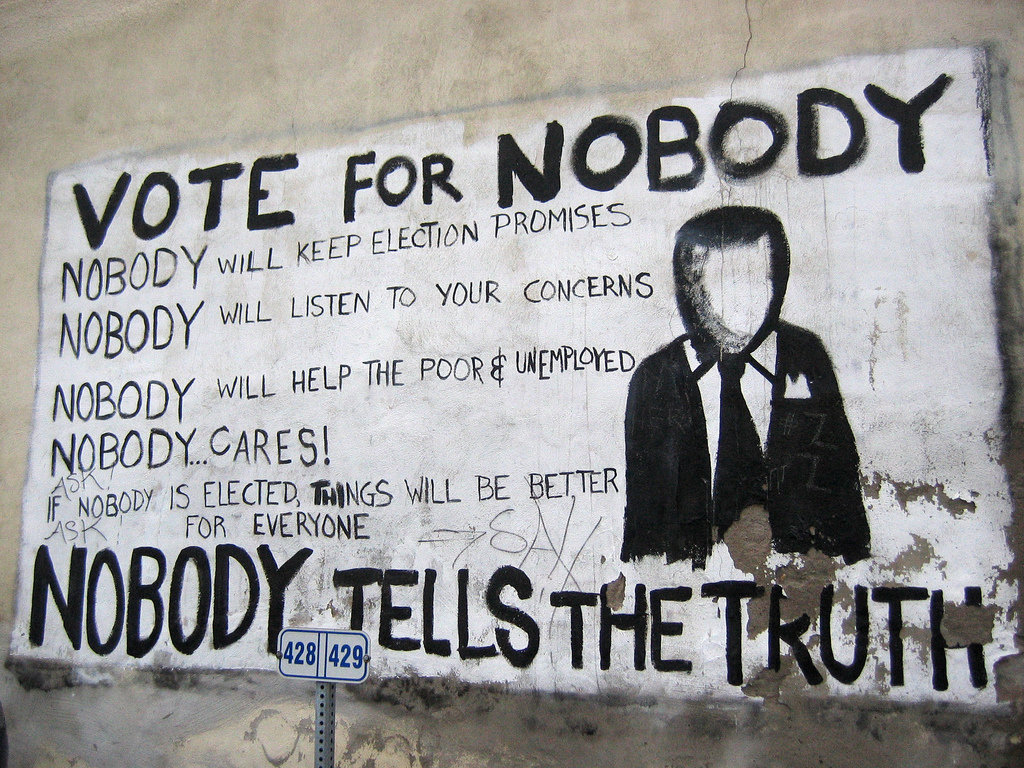
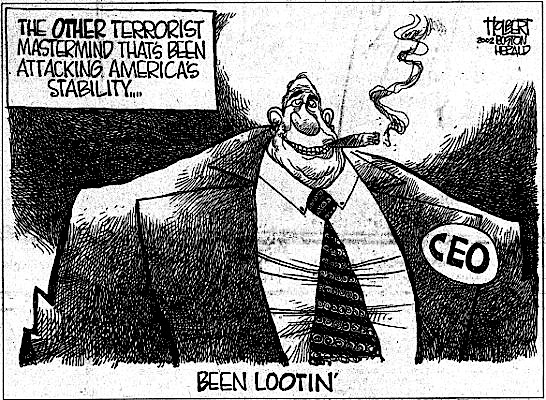
…The corporate state has convinced the masses, in essence, to clamor for their own enslavement. There is, in reality, no daylight between Mitt Romney and Obama about the inner workings of the corporate state. They each support this section within the NDAA and the widespread extinguishing of civil liberties. They each will continue to funnel hundreds of billions of wasted dollars to defense contractors, intelligence agencies and the military. They each intend to let Wall Street loot the U.S. Treasury with impunity. Neither will lift a finger to help the long-term unemployed and underemployed, those losing their homes to foreclosures or bank repossessions, those filing for bankruptcy because of medical bills or college students burdened by crippling debt. Listen to the anguished cries of partisans on either side of the election divide and you would think this was a battle between the forces of light and the forces of darkness. You would think voting in the rigged political theater of the corporate state actually makes a difference. The charade of junk politics is there not to offer a choice but to divert the crowd while our corporate masters move relentlessly forward, unimpeded by either party, to turn all dissent into a crime…

A lot of Americans buy into this “cult of individualism” and anti-government sentiment which the elites of the corporate state artfully peddle in order to dismantle any remnants of a functioning government that might serve the common good of its citizenry. In this way, the corporate state has convinced the masses to cheer the destruction of government and its beneficial roles. But of course we cannot call our lobbyist-infested, corporate-controlled government an actual representation of the people’s interests. Just as our two-partied presidential election is an orchestrated illusion of democracy, so is the false dichotomy of government and corporations which are merely separated by a revolving door. The government has become, for the most part, a tool for wealth extraction by multinational corporations. During a period of multiple civilization-ending crises when leadership is in dire need, the degeneration of government from a socially beneficial entity into a puppet of Wall Street’s rapacious greed is the greatest tragedy of our time.

Last Man Scrambling

Tags

, , , , , , , , , , , , , , ,

If Ayn Rand was alive today, she would believe that climate change was a conspiracy theory.

I want to preface this post by saying I don’t endorse either Wall Street stooge of our political system’s two-headed corporate hydra monster. The Democratic party fell sway to Big Money a long time ago. See ‘Death of the Liberal Class‘ by Chris Hedges. But I do want to focus on the party that doesn’t mince words or even pretend (at least not very well for those who read) to represent the greater good of society. The primary ideology of the Republicans (and faux Democrats) is neoliberal capitalism whose tenets are laid out here. If there ever was a time when ‘the greater good’ should be our primary objective, the time is now. We are facing an environmental crisis, financial crisis, economic system crisis, food crisis, energy crisis, wealth disparity crisis, etc. Oh, I should have mentioned we’re also facing the possible probable extinction of our own species. But the modus operandi that the our leaders rulers are following is not to solve any of the civilization-ending crises, but to do what Richard Heinberg described as the “Last Man Standing” strategy:

I thought that world leaders would want to keep their nations from collapsing. They must be working hard to prevent currency collapse, financial system collapse, food system collapse, social collapse, environmental collapse, and the onset of general, overwhelming misery—right? But no, that’s not what the evidence suggests. Increasingly I am forced to conclude that the object of the game that world leaders are actually playing is not to avoid collapse; it’s simply to postpone it a while so as to be the last nation to go down, so yours can have the chance to pick the others’ carcasses before it meets the same fate.

The elite 1% are playing a similar game against the 99% which I call “The Last Man Scrambling”. Paul Rosenberg’s latest essay discusses a 2006 book by Yale University political scientist Jacob S. Hacker who explains how the 99% are being financially eaten alive by what is termed the “risk-shift” – the systematic shifting of risk from large institutions onto the backs of citizens, including the most vulnerable among us, under the neoliberal rhetoric of “individuals taking personal responsibility”:

…The figures Hacker cited were staggering. First, regarding basic economic security: Personal bankruptcies increased from 300,000 in 1980 to 2 million in 2005 – a 567 per cent increase. The chance that an average American’s income will drop 50 per cent or more over a two-year period increased from 7 per cent in the 1970s to 17 per cent in 2002 – a 143 per cent increase. Long-term unemployment (more than 6 months) at the peak of the business cycle is triple what it was in the 1960s.

Second, regarding health security: The number of Americans without health insurance was 46.6 million, up from about 24 million in 1980. The decline was entirely due to cuts in employer-provided health coverage. Worse still, over 80 million Americans lack health insurance over some time during a two-year period.

Third, regarding retirement security: The percentage of large and medium-sized corporations offering traditional “defined-benefit” pensions, with a guaranteed monthly benefit for life, fell from more than 80 per cent in 1980 to less than a third in 2006. And 401(k)s that replaced them? There’s a reason folks call them 201(k)s now.

Fourth, the burden was particularly hard on families with children, whom conservatives claim to care about most. Their bankruptcy rates are twice that of childless couples.

These are just a few of the frightening figures Hacker cited, and in every case, he argued, the basic cause was the same: risk had been systematically shifted from large institutions most capable of handling it onto the shoulders of the most vulnerable. This was largely a result of a rhetoric of “personal responsibility”, but what was actually being shifted was not responsibility, but risk.

Rosenberg then ties this in with what Romney/Ryan have planned for the American plebs:

So what does all that have to do with Paul Ryan? Simple: Ryan’s infamous budget plan has many well-known problems with it, but it would also vastly intensify the Great Risk Shift, as Democratic strategist Mark Schmitt cogently pointed out in April 2011 (“The Ryan Plan: The Biggest Risk Shift Ever“).

“It’s not just that Ryan slashes spending,” Schmitt wrote, “he places the burden of risk on American families’ shoulders.” That’s precisely what the Great Risk Shift has done step-by-step over the past 30 years.  With the Ryan plan, the process would be dramatically accelerated.

In one concise paragraph, Schmitt summarised Hacker’s point about the true value and function of the welfare state that America’s elites have been gradually dismantling since the 1970s:

The achievement of the New Deal and the Great Society was not primarily in providing benefits to the poor and the old, although that’s often how both liberals and conservatives talk about it now. What those programmes did best was to reduce risks for individuals by sharing them across society. Whether it was health insurance through Medicare and Medicaid, insurance against poverty in old age through Social Security, federal mortgage insurance that made homeownership possible, or the Federal Deposit Insurance Corporation that enabled people to save for the future with confidence, when government absorbed and shared some of the risks of life, individuals were able to take chances and make the most of their potential.

And, in contrast, he noted: 

Today, though, the only risks we’re sharing are the wrong ones: Wealthy investors are protected by real or implicit guarantees such as “too big to fail,” while the risks that should be shared, through social insurance, are instead privatised – that is, pushed down the line onto us as individuals.

So that’s what you call “The Last Man Scrambling” –for a livable-wage job, for affordable health care, for food on the table… Forget retirement; most will now die with their working boots on. And all this occurs while corporate profits soar to their highest level since WWII and the corporate tax burden sinks to its lowest level...

The Political Circus and the Approaching Post-Human Era

Tags

, , , , , , , , , , , , , , , ,

Here is a nice little skewering of King Romney by Cliff Schecter entitled Mitt RomneyThe aristocrat. Some excerpts:

…if you knew you were running for president, wouldn’t you perhaps spend at least five years before running making your taxes look as clean as a whistle? I’m saying no Grand Caymans, no Switzerland, no stashing bullion in the cargo bay of Curiosity to reach the low-tax surface of Mars (ok, one of these might be an exaggeration).

Not Romney, though. He apparently had to use every manoeuvre known to man and man’s most deceitful accountant to ensure he paid low-to-no taxes. So how has he handled the fallout? Stonewalling, uncomfortable denials, and lashing out at those who attack him for his hidden returns, such as Senator Harry Reid – thereby keeping the whole story in the news that much longer (genius!).

He’s even got porn star Jenna Jameson saying she is going to vote for him because “when you’re rich, you want a Republican in office.” (Of course, other porn actors interviewed by The Daily Beast are pro-Obama, showing that even in the world of X-rated entertainment, Mitt can find a way to divide the top 1 per cent from everyone else)…

Amazingly, if you look at the polls, a large percentage of American’s(aka the clueless, MSM spoon-fed plebs) would still vote for someone who is part of the cosseted 0.001% responsible for hiding 20 to 30 trillion in off-shore tax havens and who boldly regurgitate the lie that corporations in America have the highest tax rate in the world (the nominal rate is meaningless; it’s the effective rate produced from all the tax loopholes that counts). But as they say, the propaganda-ridden minds of the American public are mere putty in the hands of the corporate-owned media machine. Mind you, I know there is no real measurable difference between Obama and Romney when it comes to our self-inflicted trajectory toward a post-human era, but voting for Romney, a financier of the criminal class on Wall Street, takes ‘voting against your own interests’ to a whole new level. I mean this guy financed Bain Capital with blood money from death squad oligarchs in South America. I understand the utter failure Obama has been for the masses who bought into the “Hope” slogan, but voting for King Romney is like saying, “I give up; please rape me and then throw me to the lions.”

In a comment section of Schecter’s piece, a reader sumarizes perfectly what King Romney is about:

Let us focus that the issue is not Rommey or the VP RP, the issue is what is behind Rommey. Rommey is the representative of global capitalism; he is not interested in the American people as a nation, but as consumers; for him the solvency of the middle class is of no importance. It is the maintenance of corporate America and global capital that matters for him. He advocates trickle down economics and the emancipation of corporations over people. [In] the end Rommey, like any other warmonger, will use war [as] an economic incentive.

– ’nuff said. So how are the American plebs doing? For starters, a recent study found that nearly half the population in the U.S. dies penniless and dependent on Social Security. Basically we are now a nation of the grotesquely wealthy, the ‘just-getting-by’, and the crumb scrapers. The ‘just-getting-by’ segment is always in danger of falling into the ranks of the crumb scrapers. And the elite 1%, as we have discussed in prior posts, have built up a security and surveillance state as well as the prison industrial complex in order to deal with those who have any funny ideas of changing that status quo.

…now back to our two corporate stooges who are vying for the coveted PR position of the corporatocracy. Matt Taibbi has a new article out which shows how our tax system favors the wealthy and how Big Money from Wall Street perverts our political system:

…We’ve known for seven months now, for instance, that Romney paid $3 million in federal taxes in 2010 on $21.7 million in taxable revenue, an effective tax rate of 13.9 percent. Which, as most people know, is less than half the rate most people pay on their income tax.

When Romney released these numbers, he said they were “entirely legal and fair,” and added, “I’m proud of the fact that I pay a lot of taxes.”

The Romney tax returns are a prime example of our increasingly two-tiered bureaucratic system, in which there is one set of rules for poor and middle-class people, and another set of rules for people like Mitt Romney. …

<snip>

In Mitt’s case, the money you and I make to support ourselves is called income and is taxed up to 35 percent, but the money Mitt makes raiding companies with borrowed money and extracting draconian management fees from captive companies that have no choice but to pay them is called “Carried Interest,” and taxed at a top rate of 15%.

The ostensible excuse for this outrageous difference is based upon a built-in cultural value judgment, which says that the work Mitt Romney does raiding companies with borrowed money is more valuable than the work ordinary people do laying asphalt or teaching autistic children. Here’s what one private equity spokesperson said by way of explanation for this difference:

Steve Judge, the president of the Private Equity Growth Capital Council, a trade group for private equity funds, said carried interest is a way to reward risk takers in a way that tax havens do not. “They don’t have the purpose of incentivizing risk taking,” Judge said. “That makes it inappropriate to blend carried interest with them.”

So the carried interest tax break is a way to “incentivize” the kind of work Mitt Romney does. One wonders then if the relatively higher tax rates paid by teachers and librarians and cops is … what? A disincentive? Anyway, it’s this skewed set of obligations that Mitt Romney thinks is “fair.”

The Obama administration, if it wanted to, could make a lot of hay over this. It could say, “Mitt Romney doesn’t want to release his tax returns for years and years during the last decade. But the years for which he did release returns, he paid a rate that’s less than half of what most ordinary American professionals make – and he thinks that’s ‘fair.’”

Now, Obama has gone after Mitt’s tax returns – a little. He’s released a few ads here and there, including one called “Makes You Wonder” that called Mitt’s use of carried interest in his tax return a “trick,” a semantic move for which Obama was criticized, since it was actually nothing of the sort. Mitt Romney’s ability to pay a top rate of 15% for his work was no trick at all but a fully-legal expression of the values of our current political system, a system, again, that Mitt Romney is “proud of” and thinks is “fair.”

The reason the Obama administration hasn’t gone after this aggressively is probably the same reason it hasn’t fought harder to repeal that carried interest tax break (which Obama incidentally promised to do four years ago), and the same reason that everyone from Corey Booker to Bill Clinton has urged Obama to lay off the theme of private equity thuggery in his campaign against Romney. Big-time politicians are still afraid to explain to the American people how exactly it is that many Wall Street firms make their money, because they’re afraid to lose access to the crumbs those firms sometimes toss their way.

In the case of Romney, what we’ve mostly heard is that he’s a turnover specialist who sometimes creates jobs and sometimes eliminates them – a kind of ideologically-neutral efficiency consultant who takes a cut when poorly-run companies cut out the fat. The Obama ads about Bain have been emotionally effective, but they’re still frustratingly vague about the actual mechanics of these takeovers. We learn from these ads that a bunch of rich guys took over plants and fired workers, but what we don’t learn is how companies like Bain raise the money for those takeovers, why the plants subsequently become cash-poor, how this industry works generally, and not just at Bain.

In fact the takeover method espoused by Bain and many other private equity firms is a lot closer to the Tony Soprano-takes-over-Davey-Scatino’s-sporting-goods-store “Bust Out” model (and we’ll be getting into this more in the magazine in upcoming weeks) than it is to anything like legitimate consulting.

Barack Obama is one of the few politicians with the communication skills to explain this to middle America, but he’s refusing to go there, probably because he’s still hoping for a post-election rapprochement with Wall Street. He wants to go after Bain Capital, but not private equity in general; he wants to go after Mitt Romney’s missing tax returns, but not the tax returns of all people like Mitt Romney.

So there you have it. Both sock-puppet politicians continue to protect the monied interests, skirt the real issues, and bamboozle the sheeple. But as I said, in a post-human era of the not-too-distant future, you can’t get too riled up about such trivialities.

Catastrophic Planetary Tipping Points

Tags

, , , , , ,

“Did you feel you were tricked by the future you picked?” ~ Peter Gabriel

Another Version of the Truth

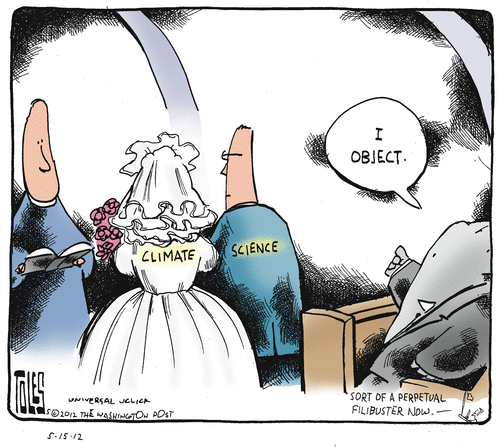
I was set to write a post about gross inequality, but I had a dream nightmare last night about the end of the world as we humans know it. Remember the monkey wrench I wrote about recently? If the pervasive mindset amongst our leaders and society at large is that we can continue growing the economy, using the environment as a sink for our waste, and that our burning of the planet’s fossil fuels has no effect on the thin atmospheric skin covering the earth, all other issues of social injustice become meaningless. All the magnificent art, music, scientific breakthroughs, and intellectual writings of our species will be swept away like dust mites before a broom. With the pick of Paul Ryan as VP, you can disregard what King Romney, aka Mr. etch-a-sketch, said about climate change. The interdependence of industrial civilization with fossil fuels is an unbreakable bond that overrides all other human concerns including the very hospitableness of the planet for our species. 

Humans are now burning more than 1 million tons of coal, oil, and natural gas every hour.

 at his blog Brane Space has just posted an essay which should give you pause for what havoc we are unleashing by our insatiable appetite for the carbon energy we dig up and suck out of the Earth. In addition to the references cited by Copernicus, I want to mention an article written a couple of years ago in the online German publication of Die Welt which reported on the discussions at a scientific conference in Aussois, France concerning the planet Venus. They determined that the hellish planet of Venus was much more similar to Earth than previously thought. Their conclusions were based on high-tech measurements and analysis from the European Venus Expresslaunched in 2005.

Venus in the past may have been very similar to Earth – with oceans – and even life. Then the climate changed, and the planet turned into red-hot desolation.

…it is a prime example of a runaway greenhouse effect that may have started in a way that is feared to be now taking place on Earth.

Due to its thick cloud cover, only 20% of the solar energy reaches the planet’s surface. This 20%, however, cannot be radiated back into space because of Venus’s dense atmosphere, and thus leads to enormous heating of the planet.

The manmade pollution of the Earth’s  atmosphere – warns a majority of climatologists – could also lead to a runaway situation whose final result would be what we have on Venus today.

Scientists have been studying other planets like Venus, Mars and Jupiter for some time now and have come to the overall conclusion that huge consequences for a planet’s climate from feedbacks like the greenhouse effect is “not a mere speculative theory. It was an observation of real events.” Man’s hubris and power of self-deception know no bounds. The Earth cannot be shoehorned into man’s fabricated economy of endless growth and infinite money printing. The crutches of religion and technology will quickly wither when we are faced with catastrophic planetary tipping points.

As Copernicus observes in his latest post How Did a Once ‘Good’ Planet Go Bad?:

It is clear that learning the object lesson of what happened to our neighbor planet can have mighty consequences to what may befall our own (though admittedly not from the same causes)….Perhaps we need to pay much more attention to our own planet and especially its carbon load and carbon footprint made by each of us, lest we hasten our path to becoming another Venus. Why do good planets go bad? Maybe because natural conditions incite the bad effects in the first place, or…..maybe a resident species aids and abets the natural causes by consuming too much of the wrong form of energy!

King Romney: Stuck in Cognitive Dissonance

Tags

, , , , ,

I did not waste my time reading King Romney’s 2010 book No Apology; The Case for American Greatness, but someone who did sacrifice some eyesight to it has some interesting observations which I’ll comment on. Romney may be the only Presidential candidate to explicitly acknowledge in writing the fact of peak oil:

Many analysts predict that the world’s production of oil will peak in the next ten to twenty years, but oil expert Matt Simmons, author of Twilight in the Desert: The Coming Saudi Oil Shock and the World Economy, presents a compelling case that Middle Eastern oil production may have already reached its peak.  Simmons bases his contention on his investigation into the highly secretive matter of the level of reserves in the Saudi oil fields. But whether the peak is already past or will be reached within a few years, world oil supply will decline at some point, and no one predicts a corresponding decline in demand. If we want America to remain strong and wish to ensure that future generations have secure and prosperous lives, we must consider our current energy policies in the light of how these policies will affect our grandchildren. (pg 233)

Romney also acknowledges climate change, but then enunciates the contradiction the vast majority of the population cling to, which is the notion that we can limit GHG within our fossil-fuel based industrial civilization while maintaining economic growth and business as usual. This fantasy will never be, even if we were able to magically enlarge the planet and its resource base in order to accommodate more growth. So in the end, Romney is not a true Peak Oiler. His “energy policies” ultimately involve the ubiquitous growth imperative:

“It’s impossible not to take a look at our current energy policies without considering the question of climate change.  I believe that climate change is occurring – the reduction in the size of global ice caps is hard to ignore.  I also believe that human activity is a contributing factor.” (pg 227)

Romney hedges this statement in the next paragraph by saying he is “uncertain how much of the warming is attributable to man and how much is attributable to factors out of our control.” Three pages later, Mitt concludes his discussion of climate change saying that “Internationally, we should work to limit the increase in emissions in global green house gases, but in doing so, we shouldn’t put ourselves in a disadvantageous economic position that penalizes American jobs and economic growth.”  (pg 330)

Isn’t it amazing that a person who may be the next President (even though it is just a PR position for the corporatocracy) can talk about the reality of peak oil while still mouthing the imperatives of economic growth? How long will this cognitive dissonance hold out? I give it no more than a decade, at the most, if our financial system manages to be kept propped up for that long. For to finally come to grips with the finiteness of the earth and its resources and the illusoriness of the economic growth dictate is to admit that the “American way of life” never was “non-negotiable.”

They Hate Us for Our (Fictitious) Freedoms???

Tags

, , , , , , , , , , , , , , ,

I noticed today that our Department of (In)Justice will allow the crimes of their corporate masters, i.e. Goldman Sachs, to stand. The Department of (In)Justice has bigger fish to fry like the poor guy in this recent story:

A protester belonging to an Occupy Wall Street group in rural Pennsylvania is being charged with felony attempted bank robbery and a terrorism-related charge for holding signs up during a demonstration at a local Wells Fargo branch.

David C. Gorczynski, 22, was charged on Tuesday with attempted bank robbery and terroristic threatening, both felonies, as well as one misdemeanor charge of disorderly conduct. Police detained him after he walked into an Easton, PA Wells Fargo branch with a sign that read “You’re being robbed” and another that said “Give a man a gun, he can rob a bank. Give a man a bank, and he can rob a country.”

Gorczynski was at the Wells Fargo bank as part of a demonstration led by Occupy Easton, the small Pennsylvania town’s OWS offshoot…

“He is not the criminal. If the police were truly there to protect and serve the taxpayers, the banksters would be arrested and this man would be called a hero,” the Occupy Easton group responds on Facebook.

Gorczynski was released on $10,000 bond after a defense and bail fund established online helped bring in enough money to buy his freedom after his arrest.

Remember what little man Bush said: “They hate us for our freedoms.” So Bush, the Neocons, and the Faux Democrats proceeded to dismantle the very freedoms that were purported to be the reason for why the terrorists hated us. We should be thankful our dear leaders were wise enough to know how to get at the root of the problem, our freedoms, in order to prevent further animosity toward America.

So as to not incur the wrath of future terrorist attacks, our every movement, thought, and expressed opinion must be tracked to ensure we are not exercising any freedoms believed to be so inflammatory to the terrorists amongst us:

…So what is TrapWire, and why has its leak created such a commotion? According to reporting at RT, TrapWire is a detailed surveillance system that “can collect information about people and vehicles that is more accurate than facial recognition, draw[s] patterns, and do[es] threat assessments of areas that may be under observation from terrorists.” Anything suspect gets input into the system to be “analyzed and compared with data entered from other areas within a network for the purpose of identifying patterns of behavior that are indicative of pre-attack planning.”

According to the article, this system has been secretly installed in most major cities and around landmarks across the United States, in Canada, and in the UK. Most local police forces are installing their own monitoring software that works in conjunction with TrapWire. Private properties, including casinos, are now signing up to TrapWire. Essentially, it sounds like Big Brother identifying you, watching you, assessing your every move for abnormalities, then indexing your behavior.

Last year, while the occupy movement peacefully protested in cities across the country, a new-militarized police force presented itself, and moved to brutalize protesters exercising their rights to freedom of speech and assembly. It was as if these long-cherished American values had suddenly become viewed by our government as threats to its power. The scores of video footage capturing these egregious acts of brutality — from city to city, in a seemingly coordinated effort — resemble scenes carried out in faraway lands by despotic regimes.

Here is the reality about freedom: you may have a bill of rights, but if you are brutalized anytime you attempt to exercise those rights, you eventually become intimidated from ever doing so. And that appears to be the new order in America.

The brutality against occupy protesters became such an issue for human rights groups, as well as media groups whose reporters were being assaulted (including NY Times, The Associated Press, The New York Post, The Daily News, Thomson Reuters, Dow Jones & Company, etc.), that even the U.N. felt compelled to intervene. Two U.N. human rights envoys petitioned the Obama Administration to “protect Occupy protesters against excessive force by law enforcement officials.” The White House completely ignored their petition, and did absolutely nothing to reign in, much less condemn, the brutality.

Legal experts from NYU and Fordham University filed complaints with the NYPD, the U.S. Department of Justice and the United Nations, accompanied by a 132 page report entitled Suppressing Protest: Human Rights Violations in the U.S. Response to Occupy Wall Street. The document “catalogs 130 specific alleged incidents of excessive police force, and hundreds of additional violations, including unjustified arrests, abuse of journalists, unlawful closure of sidewalks and parks to protesters, and pervasive surveillance of peaceful activists.” This document barely scratches the surface, since its scope is limited just to the police response in NYC. The group plans to release similar publications for Boston, Charlotte, Oakland, and San Francisco.

For those of you who believe that our nation’s dramatic shift towards a police-state is justifiable, in light of 9-11, you should know that nearly every police-state throughout history became so under the guise of national security threats. Most despotic regimes faced real, perceived, or sometimes manufactured threats to their national security. And most of them could point historians back to their own 9-11-like ‘turning point’.

For example, Adolph Hitler would surely point historians to the burning of the Reichstag building on February 27, 1933 as Germany’s ‘turning point’. He blamed the arson on the Communists (Note: some prominent historians believed the Nazis themselves were responsible for the arson). But regardless of who actually burned Reichstag, the Nazis capitalized on that crucial moment in a way that would forever change the course of history.

They used the shock and fear generated by that event as justification for the Reichstag Fire Decree. This new law suspended basic rights of all Germans and allowed detention without trial. Sound familiar? That was Hitler’s very first step in consolidating his power, and transforming Germany into a despotic regime.

A government shifting towards despotism always works to capitalize on a nation’s fear. It uses that fear as the impetus to strip its citizens of their inalienable rights. And unfortunately, once those rights have been fleeced, it often takes a full-scale revolution or war just to restore them.

America, land of the free feeble and home of the brave bamboozled…

Climate Chaos: The Monkey Wrench that Unravels Everything

Tags

, , , , , , , ,


“The end of the human race will be that it will eventually die of civilization.”
~ Ralph Waldo Emerson

The water-energy-food nexus is an interlocking problem. For example, biofuel production takes land and water away from food production. Besides the contamination to water reservoirs, the process of hydrofracking and tar sands utilizes massive amounts of water which could otherwise be saved for farming:

Oil sands extraction uses significant amounts of water (2-4.5 barrels per barrel of oil produced), which ends up in toxic tailings lagoons that have never been successfully reclaimed. An analysis using industry data estimated that these lagoons already leak over a billion gallons of contaminated water into the environment each year.
source

Hydrofracking injects large volumes of water (up to six million gallons of water per gas well) mixed with sand and toxic chemical additives at high pressures to release the gas. Most of the water is then returned to the surface as polluted wastewater – that must be treated by wastewater treatment plants already overburdened and not necessarily designed to remove these chemicals. Industry analysts predict it will cost $3 billion to treat the industrial wastewater associated with Marcellus shale development…
Groundwater supplies may become contaminated with these chemicals as they already have in parts of Pennsylvania and other states. Currently, oil and gas companies that use hydraulic fracturing are exempt from regulations under the Safe Drinking Water Act that would require them to disclose the cocktail of chemicals they use.
source

Scaling back on the production of these unconventional energy sources in order to conserve land and water for food will increase the cost of conventional oil, and thus food prices, since industrial agriculture is dependent on fossil fuels:

Due to the vast size of these [industrial] farms, the farms are operated in a similar manner to that of large industrial factories. And these “factories” require large quantities of synthetic fertilizers, pesticides, and fuel all derived from fossil fuels, which is a limited natural resource on our planet (Hidden Costs of Industrial Agriculture, 2008). “After cars, the food system uses more fossil fuel than any other sector of the economy — 19 percent.” This high dependence on fossil fuels makes industrial agriculture heavily unsustainable. “Twentieth-century industrialization of agriculture has increased the amount of greenhouse gases emitted by the food system by an order of magnitude; chemical fertilizers (made from natural gas), pesticides (made from petroleum), farm machinery, modern food processing and packaging and transportation have together transformed a system that in 1940 produced 2.3 calories of food energy for every calorie of fossil-fuel energy it used into one that now takes 10 calories of fossil-fuel energy to produce a single calorie of modern supermarket food” (Pollan, 2008).

The monkey wrench of climate change is now thrown into the picture…

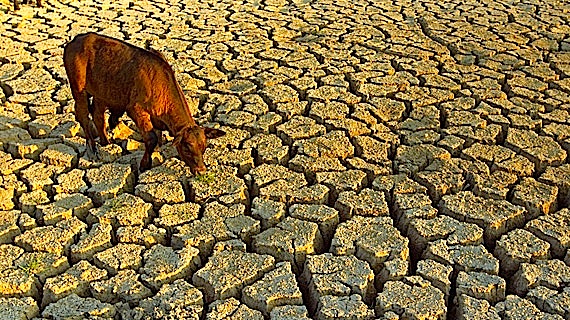
What happens to the stability of the world when fertile lands become dust bowls, when rainfall no longer follows its traditional seasonal pattern, when crop yield forecasts become less and less reliable as climate change begins to bite? We don’t have to look very far back to see the upheaval caused in countries whose majority population lives on the razor-edge of starvation:

2007–2008 – Food riots in India, Peru, Morocco, Egypt, Bangladesh, Pakistan, Zimbabwe, Mozambique, Namibia, 
Uzbekistan, Indonesia, Yemen, Guinea, Cameroon, 
Burkina Faso, Mauritania and Senegal. [64][65][66][67][68][69]

And again in 2010-2011: 

 
For those who think that adaption to climate change is feasible, please consider what Kurt Cobb articulates in a recent post:

…costly existing agricultural infrastructure won’t be easily moved or replaced. …soil quality is not uniform from place to place. [Do you] think that as temperatures warm and devastate the American grain belt with recurrent drought, we can simply transfer the growing of much of the world’s export grain crop north to the Canadian Shield which has soil so thin it has never supported agriculture?

The ‘Catch-22’ kicker is that the continued use of fossil fuels, the indispensable elixir of industrial civilization’s existence, is exactly what is causing climate chaos in the first place. And as I showed with one simple chart in a previous post, we are using more of this deadly ingredient than ever before. In his latest article The hunger wars in our future, Michael Klare warns us about the social disruptions that lie in the future as a result of the insidious water-energy-food nexus that grips our modern-day way of life:

…When we think about climate change (if we think about it at all), we envision rising temperatures, prolonged droughts, freakish storms, hellish wildfires, and rising sea levels. Among other things, this will result in damaged infrastructure and diminished food supplies. These are, of course, manifestations of warming in the physical world, not the social world we all inhabit and rely on for so many aspects of our daily well-being and survival. The purely physical effects of climate change will, no doubt, prove catastrophic. But the social effects including, somewhere down the line, food riots, mass starvation, state collapse, mass migrations, and conflicts of every sort, up to and including full-scale war, could prove even more disruptive and deadly…

At this point, the focus is understandably on the immediate consequences of the still ongoing Great Drought: dying crops, shrunken harvests, and rising food prices. But keep an eye out for the social and political effects that undoubtedly won’t begin to show up here or globally until later this year or 2013. Better than any academic study, these will offer us a hint of what we can expect in the coming decades from a hunger-games world of rising temperatures, persistent droughts, recurring food shortages, and billions of famished, desperate people.

Remember when both Bush, Cheney and Obama famously quipped that “the American way of life was non-negotiable.” Mother Nature and the Grim Reaper have rephrased that self-righteous slogan to read:

“The American way of life is unsustainable, non-redeemable, and a limited-time-only.”