This is a stellar interview with Matt Taibbi and Yves Smith worth watching from start to finish. They cover a lot of ground in a short time including the shredding of the social fabric by Wall Street malfeasance and the fact that your grandmother’s life is more endangered by a high-finance businessman in a suit and tie rather than the local purse snatcher on the street corner. Remember when Lloyd Blankfein admitted that some of their financial instruments were of no benefit to society?
Excerpt on the comparisons with Wall Street and the Mafia Dons:
BILL MOYERS: You’re describing a corrupt financial and political system. And both of you in recent writings, your current article in “Rolling Stone,” which is devastating on the scam that the “Wall Street learned from the Mafia,” and a recent column you wrote about the mafia state, you’re both using that metaphor to apply to our financial and political system. When I read your pieces, you’re not playing with words there. You mean it.
YVES SMITH: Yeah.
BILL MOYERS: Why do you mean it?
YVES SMITH: Well, the mafia, when it gets to be big enough, first thing it has services that people feel they need if they’re in a difficult situation. So, for example, loan sharking. If you really need money, they do have the money. And people enter into these loan shark deals even though they know it’s going to be very difficult to pay 20 percent or more interest and they’ll have their legs broken if they don’t pay back.
And the banks actually behave very much in that manner when they find people who really need money. So you see this with credit cards, you know, that, or, and with mortgages. That if you hit– it’s not this if you hit any tripwire, that, you know, become in arrears, the banks basically act in this very extortionate manner and don’t cut any breaks.
MATT TAIBBI: And I think that there’s also this, they are the mafia because of their vast criminality in Wall Street now is that it’s bribery, theft, fraud, bid rigging, price fixing, gambling, loan sharking. All of these things, it’s all organized.
I mean, the story I just wrote about, which was about the systematic rigging of municipal bond auctions, which affected every community in every state in the country and all of the major banks were involved, including Chase.
They were rigging the auctions that were designed to create a fair rate of return on the investments that towns were getting on their– the money they borrowed for municipal bonds. And this is not like something that the mafia does. This is what the mafia does. The mafia has historically, it’s one of their staple businesses, is bid rigging for construction or garbage or, you know, street cleaning services, whatever it is.
They’re doing exactly the same thing. The only thing that’s different is there’s no violence involved. But what their method of control is that they’re ubiquitous. They have this incredible political power that the mafia never had.
YVES SMITH: And they also have what amounts to an oligopoly. I mean, for many of these services, you have a great deal of difficulty going beyond the five biggest banks, you know? This is– it’s the consequence of too big to fail is that when, you know, some of the smaller players, again, you know, like– JPMorgan buying Bear Stearns.
In the crisis, when the smaller players got sick, they were merged into the bigger players. So now if you want– for a lot of these services, there aren’t that many players for you to go to. You really have no choice in– other than to deal with the big banks.
BILL MOYERS: Congress is paid to be informed and to hold these guys accountable. Why don’t they ask the kind of questions you’re dealing with here?
MATT TAIBBI: People refuse to look at these banks and think of them as organized crime organizations.
They in their eyes, organized crime is always either the Italian mafia or the Irish mafia. This isn’t what it looks like. But that is who they are. And I think that they’re treated with a kind of deference and respect, because traditionally that’s not who they were. They were these icons of finance who helped build this country.
But that’s not who they are anymore. And I think, it’s hard for people to wrap their heads around that and treat them the way they should be treated.
YVES SMITH: Well, I think people don’t want to think that there’s something wrong with leaders. And CEOs are leaders of the business community. If you really believe that CEOs of businesses that are really fundamental to the economy are corrupt, you have to think of a very serious restructuring of the business and financial system.
And even if people kind of intellectually might be willing to contemplate that, they don’t really want to go to what the implications are. So it’s much easier for them to block out that thought.
Critical to remember is that the key cause of the short-term, predatory behavior discussed above is what is called the ‘financialization’ of capitalism over the last several decades. In other words, the productive aspect of the economy, such as manufacturing and research and development, were replaced by manipulation of the economy with financial instruments and creating wealth-extracting bubbles. An example of a corporation becoming financialized is GE:
Since over half of GE’s revenue is derived from financial services, it is arguably a financial company with a manufacturing arm.
Examples of financial bubbles in our economy are the dot-com bubble, the commodities bubble, the housing bubble, the student loan debt bubble, the credit card debt bubble, or even more recently the gas fracking bubble:
…Chesapeake and its lesser competitors resemble a Ponzi scheme, overhyping the promise of shale gas in an effort to recoup their huge investments in leases and drilling. When the wells don’t pay off, the firms wind up scrambling to mask their financial troubles with convoluted off-book accounting methods. “This is an industry that is caught in the grip of magical thinking,” Berman says. “In fact, when you look at the level of debt some of these companies are carrying, and the questionable value of their gas reserves, there is a lot in common with the subprime mortgage market just before it melted down.” Like generations of energy kingpins before him, it would seem, McClendon’s primary goal is not to solve America’s energy problems, but to build a pipeline directly from your wallet into his.
The numbers vary slightly on the internet as to the finance industry’s take of the total profits of the economy, but the overall trend has been an ever-increasing slice of the economic pie. Just before the financial meltdown of 2008, finance accounted for more than a third of total profit in the economy and it has come roaring back since then. The Free Market Economy has evolved from a supposed model of efficient use of capital for the benefit of production to the efficient funneling upwards of capital to the elite 1%. And of course there is the revolving door between the government and finance industry. The graph below shows the growth of the finance industry as a percentage of the total corporate profits since 1948:
American companies are now run by money men who have different priorities than those business leaders of the past. David Bollier explains:
We all know the story of enclosure as it applies to the commons. The lesser-known story is that businesses are enclosing themselves – aggressively cannibalizing their own internal productive capacities in order to maximize short-term profits.
Harvard business guru Clayton Christensen argues in Forbes magazine that business executives are so habituated to seeing the world through a scrim of financial abstractions that they are blindly undercutting their own long-term productive capacities. The problem is so pervasive, says Christensen, that “whole sectors of the economy are dying…”
Financialization could be called the degenerate, end-stage of capitalism where making money from money is the be-all and end-all of corporate decision-making.
Professor Wolff discusses with William Tabb this financialization of the economy in more detail here. Our economy has become a giant Ponzi scheme. This won’t end well.
The other day I saw the headline story ‘Injection Wells: The Poison Beneath Us‘ at ProPublica and wondered to what lengths we as a society will go to keep industrial civilization running before we come to our flippin’ senses figure out that our current way of life is neither sustainable nor the model for the rest of the world to emulate. BraneSpace did a post on this subject as another obvious sign that we have hit peak oil:
…I want to confine attention in this blog to the energy issue, that of Peak Oil certainly having passed in 2005, and the further evidence being what I call energy pursuit desperation. Evidence? Since 2005, 680,000 waste and injection wells have been drilled, of which nearly 150,000 have injected millions of liters of toxic industrial fluids below the surface to “frack” natural gas. None of this polluted water can then be incorporated back into the hydrological cycle because of the 190 -odd contaminants (most carcinogenic) that the fracked water contains.
“In 10 to 100 years we are going to find out that most of our groundwater is polluted,” according to Mario Salazar, an engineer who worked for 25 years as a technical expert with the EPA’s underground injection program in Washington. “A lot of people are going to get sick, and a lot of people may die.”
Another aspect to what I call “energy desperation”, in the sense of being willing (now) to put aside concerns for life quality to obtain energy: The 2005 Federal Energy Appropriations Bill which exempts the gas industry from compliance with:
– The Clean Water Act
– The Safe Drinking Water Act
– The Clean air Act
– The Superfund (CERCLA) Act
The last implying they can dump as much toxic crap as they want and there’ll be no “toxic release inventory'” to assay it, and hence, no need to ever clean it up. If this isn’t desperation, what is? The willingness to put our future health as a nation in dire risk to satisfy immediate energy demands – mainly to dredge whatever low EROEI (energy returned on energuy invested) sources from the ground since the high EROEI oil has peaked.
More signs of desperation in the western states, such as Colorado: According to a Denver Post report on the results of an analysis by the Western Resource Associates (WRA), “Colorado’s oil and gas drilling consumes enough water to sustain 79,000 households for a year- enough for a medium sized city.”
This despite the fact the state has been in the throes of drought for years (though the severity has waxed and waned) and now is as bad as it was in 2002, with wildfires occupying more land than the whole Florida panhandle. But how is our water being used? On oil drilling and fracking!
According to WRA, between 22,100 and 39,500 acre-feet are pumped into the ground each year for drilling wells and hydraulic fracturing to coax out oil and gas. Tens of thousands of wells now dot the Colorado countryside. Meanwhile, farmers in the state barely have sufficient water to bring one crop to market far less all of them.. (As much as 5 million gallons of water can be injected into a single fracking well, of which 200,000 is laden with carcinogenic toxins such as benzene, so the water can’t be re-used.)
Pair this with the earlier use of corn (a food crop) for ethanol, and you have the makings of an energy desperation syndrome of epic proportions. But hardly anyone hears of the extent of it or the harm done…
This is what I and others call the Third-Worldization of America as we descend the net energy cliff of peak oil. We start using the harder to extract, dirtier stuff like tar sands, deep water oil, and gas fracking:
The formula for making Canada and the U.S. the “Saudi Arabia” of the twenty-first century is grim but relatively simple: environmental protections will have to be eviscerated and those who stand in the way of intensified drilling, from landowners to local environmental protection groups, bulldozed out of the way. Put another way, North America will have to be Third-Worldified…
Has any American bothered to look at how our energy hungry lifestyles have left the environment in the Third World? That’s what happens when mass consumerism is coupled with unfettered free-market capitalism devoid of regulation. If you missed it, Obama recently opened the gates for the oil companies to drill in the Antarctic:
Someone at the Oildrum once said that our planet will look like it’s been denuded and scavenged by a swarm of hungry locusts when humans are done with it. That seems to be an apt description at the rate we are going trying to prolong the impossible. To put another more devious twist on this situation, we now have privately owned water companies partnering up with the fracking industry in order to profit off the exorbitant amount of water those drillers need to perform their nasty business:
…The water companies — American Water and Aqua America — are leading drinking water suppliers in Pennsylvania, where drilling is booming. They also sell water to gas companies — which use a drilling technique that requires massive amounts of water — and have expressed interest in treating drilling wastewater, a potentially lucrative opportunity.
These investor-owned, publicly traded water utility companies are also dues-paying “associate members” of the gas industry’s powerful Marcellus Shale Coalition, a fact confirmed by coalition spokesman Travis Windle, who says associate members pay $15,000 annually in dues. “Our associate members are really the backbone of the industry,” adds Windle…
…Aqua America is aggressively positioning itself to take advantage of what CEO Nick DeBenedictis has described to investors as a “water-energy nexus that could have a positive impact on the future of our company.” In recent years, the company has made sizeable acquisitions in Texas and Ohio – states that, like Pennsylvania, are home to large shale gas plays – and is also building a pipeline in Pennsylvania to supply water to drillers.
It’s not a good sign when a life-giving resource the public wants protected is owned by a company profiting from it. We then get perverse alliances like that described above in which the water company sees dollar signs when it looks at the profligate use of H2O by the fracking industry. You see, our capitalist system is not engineered to protect resources, but to maximize their consumption for the most profit possible, whether that be through people drinking it or the fracking industry pumping millions of gallons of water into the earth mixed with a witch’s brew of toxic chemicals. The for-profit water companies cannot be trusted to regulate themselves in regards to what is in the public’s best interests.
I’m glad that at least one state is smart enough to see the self-destruction of fracking and is strong enough to do something about it:
…many of our official pronouncements – echoing those of most elite institutions and organizations – proudly and confidently insist that our future lies in “globalization.” Globalization – for lack of a better term – is, in actuality, the building out of a monoculture, a singular culture based upon basic presuppositions of modern political, economic and social theory.
Nature abhors monocultures. Nature abhors them so much that they do not exist in accordance with nature. They would be unknown but for modern man.
A monoculture is a single form of life – or, by extension, a single culture – that exists over a large expanse of space, even globally. Nature abhors monocultures because they are so susceptible to annihilation by one agent of destruction. In plant or animal life, for example, a single virus or bacteria, a single destructive fungus or disease, a single hostile predator or pest would wipe out an entire monoculture without the barest resistance. It is the very nature of nature to avoid monocultures – indeed, it cannot be otherwise since any form of monoculture cannot long exist in nature. Life in the natural realm is manifold and varied, precisely so that some life will weather the inevitable deadly challenges that arise. – Patrick J. Deneen
The following is an excellent essayby Chris Williams, a professor in the Dept of Chemistry & Physical Science, Pace Universityand author of Ecology and Socialism: Solutions to Capitalist Ecological Crisis (Haymarket Books, 2010). It goes well with my previous post on the corporatized Rio Earth Summit. In the last two decades only four out of ninety United Nation environmental sustainability pledges have been fulfilled, a pretty dismal failure by anyone’s standards. The four were: reducing ozone depletion, removing lead from gasoline, improving access to water supplies and boosting research for marine pollution. The reason for its epic failure is that the whole process of sustainability and scaling back ecologically destructive megatrends have been co-opted by our economic system, i.e. capitalism. The need for continuous growth and expansion into new markets is inherent in capitalism. It has come to define our culture and relationship with nature and our fellow man. As history has clearly shown, capitalism will be the death of us all if we allow this ethic-less system to define ourselves and to continue its rampant, unbridled destruction in the name of ‘development’ and profit.
Sometimes, the calendar of international conferences attended by global elites serves up potent lessons for the rest of us, when they shine a spotlight on the deliberately murky affairs of the people who run the system. As the 20 most powerful world leaders deliberate on economic issues in Los Cabos, Mexico for the G20 summit, representatives of the rest will be simultaneously converging on Rio de Janeiro to consider how to follow up on the original Earth Summit, 20 years ago this year.
At these seemingly separate gatherings, we in truth observe the two sides of the capitalist coin. Namely, how can the capitalist elite continue the necessary work of exploiting both humans and the natural world in the service of profit, while cloaking their intentions in the benign language of growth, development and sustainability? Fine words to cover nefarious ends. No doubt, as people’s livelihoods and world decay around them as a direct consequence of the system the elite oversee, and in response the flame of revolt is rekindled from Cairo to Athens, political elites in the two locations will reflect on the fact that it’s not getting any easier. From the other side, critics and commentators of the two conferences are missing an important and significant lesson when they consider them in isolation.
At the original Earth Summit in Rio, it was generally accepted that environmental questions could not be separated from economic ones. This year, the two conferences, occurring concurrently at different ends of the South American continent, bring to light how this thinking has been undermined. Furthermore, they indicate with geographical and political precision where the priorities of the global elite lie. While the most important world leaders hot-foot it to Mexico to discuss global economic development, they send low-level delegates to Brazil to discuss issues they deem less vital; to be exact, planetary ecological crisis.
Indeed, so desperate were the Brazilian organizers of Rio+20 to cajole the British premier to attend, they changed the date of the conference so as to avoid conflicting with the much more important and worthy 60th anniversary celebrations of the Queen of England’s ascension to the throne. An attempt that proved ultimately and embarrassingly futile, as British Prime Minister, David Cameron, chose to cling to the coattails of President Obama and other G20 leaders in Los Cabos, as they calculate, connive and concoct the further dismemberment and disenfranchisement of communities of workers and peasants around the world.
In a further sad irony, to enhance attendance at Rio, Brazil is providing flights courtesy of the Brazilian air-force to those countries too poor to send delegates. It’s hard to imagine that the countries who can’t afford to send delegates to an environmental conference will have the financial capacity to take action to preserve biodiversity and a stable climate without international funding and technology transfer. But the concept or even use of the word “transfer” is exactly what the United States delegation is trying to excise from any document emerging from Rio+20.
In Los Cabos, 20 people wielding enormous economic power gather to ensure that nothing stands in the way of the international accumulation of money by their respective corporations; that capitalist growth continues, uninterrupted by paltry considerations such as democracy. Scheming and plotting in Los Cabos, the 20 leaders will huddle, concerned that their plans have been exposed by the people of Greece. As they jet to Mexico, one of the first countries to be devastated by the neoliberal prescription of privatization, deregulation and cuts to social spending, the election results in Greece ring in their ears as a collective rebuke to austerity and unemployment. In unprecedented numbers, Greeks exercised their democratic rights by voting for a previously obscure and marginal left coalition, SYRIZA and against handing the welfare of their country over to unelected technocrats governing from afar. A vote, it should be emphasized, carried out in the teeth of apocalyptic warnings of doom from central bank acolytes of the 1%, desperate to stop the people voting ‘the wrong way’.
As for the Global South, capitalist economic development, particularly since its neoliberal mutation, has been a disaster of gigantic proportions as money and natural wealth are siphoned into Western financial institutions. According to Oxfam, gross capital flows to developing countries fell from $309 billion in 2010 to $170 billion in 2011. Last year, aid donations from major donors experienced the first decrease in 14 years, dropping by $3.4 billion; overall aid was $16 billion below what the G8 committed to delivering in 2009. The drop in aid, along with legal and illicit financial transfers out of the developing world, mean that for every dollar received in aid (much of it tied to the purchase of materials from the West), 7-10 dollars go out. In 2009 alone, the developing world saw $903 billion disappear overseas thanks to a rigged system from which the majority cannot benefit. While 16 of the 20 members of the G20 have seen inequality increase over the last 20 years, as complement to that process, is it any wonder that developing countries seem to be permanently ‘developing’ even as social and ecological conditions there also worsen?
The violent dispossession that characterized the bloody dawn of capitalism captured by Marx in his writings on the enforced removal of peasants in the 1500’s amid the first acts of privatization – the land enclosures, is repeated in contemporary form through land grabs; his writing has a remarkably contemporary ring to it: “Thus were the agricultural people, first forcibly expropriated from the soil, driven from their homes, turned into vagabonds, and then whipped, branded, tortured by laws grotesquely terrible, into the discipline necessary for the wage system.”
In the 20 years since the optimism of the first Earth Summit in Rio, carbon emissions have increased by 50% and, since 1950, while the rest of the world has seen an average increase in temperature of 0.70C, the arctic, due to various positive feedback loops, has experienced double that. Absent serious action, whereas the world is now on track for 20C of warming, the arctic is on course for a truly calamitous 3-60C. The June 16th 2012 special edition of The Economist pondered an ice-free arctic with a mixture of trepidation, casual racist indifference and a general leaning toward monetary excitement: “In the long run the unfrozen north could cause devastation. But, paradoxically, in the meantime, no arctic species will profit from it as much as the one causing it: humans. Disappearing sea ice may spell the end of the last Eskimo cultures, but hardly anyone lives in an igloo these days anyway. And the great melt is going to make a lot of people rich.” Yes, to The Economist, while the change may be “devastating” to ancient and indigenous cultures, along with cold-adapted species, a certain small subset of humans will become rich while ‘making a killing’ – in all senses of the phrase.
We and the land have certainly changed and the continuation planned by the capitalists and their political representatives has unquestionably become impossible, as further capitalist development begins to contradict not just human rights or a sense of social progress, but the thermodynamic laws of the universe, which underpin a stable biosphere, upon which all life ultimately depends.
To quote British journalist George Monbiot on the reasons for the failure of so many environmental conferences, “These summits have failed for the same reason that the banks have failed. Political systems that were supposed to represent everyone now return governments of millionaires, financed by and acting on behalf of billionaires. The past 20 years have been a billionaires’ banquet. At the behest of corporations and the ultra-rich, governments have removed the constraining decencies – the laws and regulations – which prevent one person from destroying another. To expect governments funded and appointed by this class to protect the biosphere and defend the poor is like expecting a lion to live on gazpacho.”
From the other side of the political spectrum, representatives of the US environmental organization, Environmental Defense Fund, writing in a New York Times op-ed concede that “As the Arctic becomes ice-free, we can expect that it will be drilled for oil”. But, nevertheless, despite two decades of failure, hold out hope that with just a little more effort and market reforms such as cap and trade, 10 years from now we’ll be okay “with determination and the right policies, by the time Rio+30 rolls around, optimism might be the order of the day.”
Now, socialists are often decried as Utopians. We are told, our ideas may sound good in theory, but humans living equitably with one another in a democratic system based on cooperation, in a society that lives in harmony with the natural world, will simply never work in practice. Is it more realistic to believe that the same system that got us to this point will extricate us? The message from the ‘realists’ seems to be that while we may well have covered the arctic in drilling rigs by then, just give it another 10 years and things will be fine. Going beyond the wrong-headed pronouncements of the EDF, UN Secretary-General, Ban Ki-moon managed a level of fervor that would have put Dr. Pangloss himself to shame, “Increasingly, we understand that, with smart public policies, governments can grow their economies, alleviate poverty, create decent jobs and accelerate social progress in a way that respects the earth’s finite natural resources.”
One has to ask, who are the real Utopians? To many people around the world, leftwing and explicitly socialist ideas, along with class-based revolt, are re-emerging as real alternatives precisely because our rulers quite clearly have no answer other than an extension of the market into whole new areas. Meena Raman of the Malaysia-based Third World Network, was unequivocal in her denunciation of the US’s role in derailing climate negotiations in Durban in 2002 and in Rio+20: “Given the US stance, we do not want President Obama or any US leader to come to Rio to bury what was agreed in 1992 in Rio. We cannot expect the US to show any leadership in truly wanting to save the planet and the poor. So it is better for President Obama to stay at home.”
Meanwhile, 105 scientific institutions are urging action at Rio on population and consumption “For too long population and consumption have been left off the table due to political and ethical sensitivities. These are issues that affect developed and developing nations alike, and we must take responsibility for them together,” said Charles Godfray, a fellow of the Royal Society. Except that population growth is a function of poverty and it is in fact the countries with the largest levels of consumption, such as the United States and Europe, that not only are the historical cause of the ecological crisis, but are helping to drive it to its logical conclusion – a cascading collapse of ecosystems – by advocating continual economic expansion and the generation of poverty through the promotion of financial and trade agreements that accentuate inequality. Capitalism is like a shark; just as these animals can never stop moving forward for fear of drowning, so capitalism must grow or die.
It’s important to understand why negotiators see the primary way to save the environment is through putting a price on it. This is the main thrust of the talks and accepted by all negotiating parties inside the conference, representing a major schism with the tens of thousands of protesters attending the Rio+20 People’s Summit who are being forcibly kept out of the deliberations by armed riot police.
The argument goes that only by giving natural resources “value” in monetary terms can the environment be protected. On the one hand, it’s easy to see the further privatization of every molecule of water, every tree and every piece of land as dovetailing beautifully with the desires of the corporations. Extending the “free” market to new areas for exploitation is a tried and true method to enhance profits. Those who run the corporations are not slow to catch on and self-advocate: “For companies this is enlightened self interest…Those who can afford water should pay. Water is essentially over exploited because we are not valuing it as an economic good. Introducing methodologies such as escalating tariffs, which some countries have already done, will help in terms of using water intelligently, often for the first time.” So said, Gavin Power, deputy director of the UN Global Compact, which is acting as an umbrella group for 45 of the most powerful CEO’s, from such well-known environmentally conscious concerns as Coca Cola, Glaxo-SmithKline, Nestle, Merck and Bayer, to ensure their voice is heard at Rio+20.
But advocacy for the “valuation” of natural resources occurs not just or even primarily because it coincides with what corporations want. Many of the people arguing for such quantization of nature genuinely believe it will help preserve biodiversity, slow climate change and reduce the pressure on natural resources.
More fundamentally, the need to place “fair value” on everything is part of the ideological foundation of capitalism. Within the philosophy of capitalism, if something does not have a price, it cannot have value. Hence, putting the correct price, otherwise known as internalizing the cost, of a natural good, is to make possible its rational exploitation and simultaneous conservation. To those mired deep within the labyrinth of a capitalistic value system, there is no contradiction between these two aims: the commodification of nature can be seen both as a way of making money from it, and as a way of saving it, as perfectly expressed by Ban Ki-moon.
The quantification of nature is the rational end-point of capitalism’s philosophical approach to nature and hence a practical approach to ‘saving nature’. The non-quantifiable, qualitative side of nature, the purely spiritual and awe-inducing beauty of watching a sunrise for example, is not only entirely absent, or under-appreciated, it is essentially unknowable. Hence, assuming you’re not prepared to advocate regulatory reforms to place limits on the operation of corporations and boundaries beyond which they cannot cross, or you’re not advocating revolution, then extending the market becomes the only option left, consequently the focus at Rio+20 on doing exactly that.
However, for those of us who truly want to see a better world, the extension of its commodification to every single particle of nature cannot be an answer. Taking our inspiration from the rising struggles of 2011 around the globe, it is imperative that we link up the movements of social resistance, and forge new alliances with organized labor and the disenfranchised of the planet to force regulatory changes onto those who would foist false solutions on us. Only by linking social and ecological change and fighting on both fronts, autonomous of mainstream political parties, while creating our own independent battle organizations, can we hope to make progress.
Ultimately, however, it is just as vital that fighters for social emancipation, human freedom and ecological sanity, recognize that capitalism represents the annihilation of nature and, thus, humanity. A system based on cooperation, real democracy, long-term planning, and production for need not profit, i.e., socialism, represents the reconciliation of humanity with nature. And its achievement will, as Marx pointed out, of necessity be much less violent than the process by which capitalism was born in the first place:
“The transformation of scattered private property, arising from individual labor, into capitalist private property is, naturally, a process, incomparably more protracted, violent, and difficult, than the transformation of capitalistic private property, already practically resting on socialized production, into socialized [common] property. In the former case, we had the expropriation of the mass of the people by a few usurpers; in the latter, we have the expropriation of a few usurpers by the mass of the people.”
We currently live in an age that has been characterized as the Anthropocene, the Age of Man, by some scientists to take into account how drastically human civilization has altered the biosphere on a geological time scale. Only by overthrowing capitalism and moving toward a cooperative, planned economy based on democracy and sustainability can we move toward an age characterized, after Epicurus, as the Oikeiotocene – The Age of Conformity to Nature.
The following article is perhaps the most important one I have posted thus far on ‘Collapse of Industrial Civilization’ because it gets at the root cause from which all the global crises have emerged, threatening not only the mass extinction of all flora and fauna, but also mankind’s own annihilation. This is the final act in the tragedy of the commons and it’s capitalism’s last gasp to commodify the rest of the planet for GDP growth, profits and the externalization of costs onto communities and the environment. There can be no price tag put on ecosystems because they are a finite entity priceless to the existence of life as we know it. But this is what is being created by the profit-at-any-cost transnational corporations in a so-called ‘green economy’ and its ‘sustainable development’. We can see this in the global land grab that was discussed in my post Hydro-Colonialism.
The Church of the Almighty Free Market is sending out its missionaries to ensure that neoliberal capitalism extracts the last bit of life from a ravaged planet teetering on the verge of ecological bankruptcy. If you want the unvarnished, non-commercialized report of the Rio Earth Summit, go here.
The upcoming Rio Earth Summit gives us a window into a fierce battle for the future of global environmental action. Danny Chiversexplains what it’s all about.
Many people don’t even know it’s happening. But from 20-22 June more than a hundred heads of state, along with an estimated 50,000 representatives from businesses, NGOs, trades unions, local government and others will gather in Rio de Janeiro for the 2012 UN Earth Summit.
The conference’s official website makes it look like a friendly gathering of world leaders and other ‘stakeholders’ from business and civil society. However, underneath the surface layer of polite discussion documents and optimistic press releases, a battle is raging.
Harmless-sounding phrases like ‘green economy’ and ‘sustainable development’ have become grounds for bitter dispute, as different governments and business interests attempt to redefine these terms to meet their own agenda.
Like a door that swings unexpectedly open to reveal a family squabble, the 2012 Rio Summit gives us a glimpse of an argument that’s been rumbling away largely out of the public eye – an argument about the future direction of intergovernmental environmental action.
This year’s event is commonly referred to as Rio+20 as it falls exactly two decades after the famous 1992 Earth Summit in the same city. That earlier UN conference is often cited as a key moment in the history of environmental politics: it established the UN Framework Convention on Climate Change, the Convention on Biological Diversity, the Rio Declaration and Agenda 21.
The price of everything
While these measures contained many fine words and good ideas, they didn’t have much regulatory force behind them and relied on voluntary actions by governments, business and civil society.
This row of well-meaning policy sandcastles have spent the past 20 years being eaten away by a rising tide of fundamentalist free-market economics, unfettered financial speculation, and consolidated corporate power.
As a result, any environmental and social gains from the first Rio summit look small next to the destruction wrought by a voracious corporate sector and by governments obsessed with growth in GDP before all else.
Global inequality has increased, natural habitats have been degraded and climate talks have been stalled by a mix of corporate lobbying and self-interested political horse-trading.
Much of this has been done by companies and politicians under the banner of ‘sustainable development’ – sustainable in this case meaning ‘able to keep making money into the future’.
A shift to a genuinely sustainable society will require us to challenge these negative forces, rein in the excesses of corporations and markets, and build an entirely different economy based on wellbeing for the many rather than profits for the few.
But Rio+20 shows little sign of achieving this. It could make things worse. The preparatory Green Economy Report launched by the UN Environment Programme (UNEP) in 2011 provoked outrage among NGOs by focusing on market-based and technological responses to the environmental crisis, rather than the underlying economic and political causes.
Silvia Ribeiro from the campaign group ETC Mexico points out: ‘Collapsing financial markets in Northern countries mean that banks and other investors are now looking desperately for new areas of expansion and speculation. We can see these desires leaving their mark on the Rio+20 process. The “Green Economy” now under discussion would unleash a wave of risky but lucrative new technologies such as synthetic biology, nanotechnology and climate technofixes. This isn’t about finding the best environmental solutions: it’s about creating profitable new investments.’
Another key theme of the 2011 UNEP report – which had investment banker Pavan Sukdhev as a lead author – was that placing a financial value on natural systems, cycles and habitats would allow markets to price them properly, and thus prevent them from being degraded.
Large polluting industries… like mafia bosses invited to a meeting on reducing gang violence
This approach has broad support from many Northern governments and institutions like the World Bank and International Monetary Fund, but has set off alarm bells elsewhere.
Thomas Barlow from the World Development Movement says: ‘The global market is a fundamental part of the problem. Through its quest for never-ending growth, it helps to drive our insatiable appetite for the things – like clean air, water, biodiversity – that nature provides.
‘Protection of these cannot be left in the hands of this market – we cannot afford to live in a world where ecosystems are protected if, and only if, there is more profit to be made by protecting them than by trashing them.
‘Protection of natural systems will only happen through bringing the market under control, not by giving it yet more power over nature.’
Unacknowledged power
What price a gliding treefrog in the costing of ‘eco-system services’ that the Rio+20 process seems to be heading towards?
How has this controversial vision of the green economy crept into the Rio+20 process? Part of the problem is that the UN is attempting to figure out a global governance system that would prevent environmental destruction, but is allowing those most responsible for that destruction to claim a disproportionate voice within the process. Large polluting industries, business lobby groups and financial institutions are welcomed in as well-meaning ‘stakeholders’ – like mafia bosses invited to a meeting on reducing gang violence.
While the UN’s stated commitment to dialogue and consensus is laudable, the process fails to acknowledge the imbalances of power that allow the wealthiest governments to wield greater influence within the negotiations, while small farmers, indigenous groups, and other representatives of affected communities are given token representation but largely ignored.
The businesses with the most wealth and power are those that have flourished in an economy based on the unrestricted use of natural resources and the exploitation of many of the world’s people. Those with the most to lose from a shift to true sustainability are therefore those with the most power to block that change. Some, like South African petrochemical giant Sasol, influence the UN process through cosy relationships with national governments. Some, like Brazilian miner Vale, muscle in on civil society networks and influence their input in the Rio process. Still others work via lobbying organizations such as the International Emissions Trading Association. Meanwhile, industry groups, like the World Business Council for Sustainable Development, have had an organizing role within the various Rio+20 pre-meetings.
this kind of research accepts and reinforces the terms laid down for us by the existing system – the idea that nothing can be valued unless it has a price tag
The scientific community has also been getting increasingly vocal. A major conference called Planet Under Pressure brought together almost 3,000 scientists in London in March, with the aim of giving some stark warnings and policy advice to politicians in the run-up to Rio. The ‘State of the Planet’ declaration issued from the conference didn’t mince its words: ‘Research now demonstrates that the continued functioning of the Earth system as it has supported the wellbeing of human civilization in recent centuries is at risk… creating the potential for a humanitarian emergency on a global scale.’
The accompanying policy papers recognized the need for social change and better environmental governance, not just more technology. Useful concepts like planetary boundaries and the ‘Inclusive Wealth Index’ (an alternative to GDP) were presented, and speakers from the stage spoke repeatedly for the need for a ‘paradigm shift’ in society.
However, there was little acknowledgement of what this would mean in practice, that there are powerful interests working against such a shift and that they will need to be challenged. Instead, the general plan seemed to be just to keep on telling people about the problem and hoping that good folks from across society will agree to work together to fix it – including the big corporations.
The waters were particularly muddy in the discussions around ‘valuing ecosystem services’. Researchers have been assessing the monetary value of crucial environmental services such as the water-filtering properties of wetlands, in order to explain to policymakers just how much would be lost by damaging or destroying them. For example, the Stockholm Environment Institute calculated that the economic value of the oceans could be reduced by up to $2 trillion per year if climate change is left unchecked.
These studies are doubtless carried out with the best of intentions and may help to protect some ecosystems in the short term. However, they could also represent a dangerous first step towards the ‘costing’ of ecosystem services for trade on the open market. Rather than seeking that much-vaunted paradigm shift, this kind of research accepts and reinforces the terms laid down for us by the existing system – the idea that nothing can be valued unless it has a price tag.
Timid monstrosity
Of course, scientists aren’t a lab-coated homogeneous mass. Nor are activists all of one mind. Some NGOs and civil society groups have fully engaged with the Rio+20 process, sending submissions into the draft document and delegates to the meetings; others have preferred to spend their time mobilizing people elsewhere, including at a parallel People’s Summit which will take place in Rio during the UN talks. Many are pursuing a dual strategy, both inside and outside the talks.
However, most are united in their criticism of the draft declaration that’s been put together so far – the ‘outcome document’ that governments will sign up to at the end of Rio+20. An initial 19-page ‘zero draft’ document was launched in January as a starting point for discussion. It contained no binding resolutions of any kind, just a wish-list of voluntary actions that business and government would be ‘encouraged’ to take, and lots of mentions of a poorly defined ‘green economy’.
In response, civil society and industry groups put forward their own suggested amendments. Environmental campaigners, indigenous peoples and Southern farmers’ groups called for major changes; meanwhile, the business lobby were generally happy with the document, asking for adjustments like the removal of references to technology transfer and the role of small farmers.
Governments – often grouped into ‘blocs’ – then submitted formal amendments to the draft, with suggested additions and removals. These suggestions swelled the document from 19 to over 150 pages, reflecting the level of disagreement involved. Derek Osborn of the Stakeholder Forum has described the new draft as a ‘monstrosity’ full of ‘timidity, caution, suspicion, protection of vested interests, and even attempts to undermine and go backward on rights, actions and issues already agreed.’
Groups like the Indigenous Environmental Network (IEN) and La Via Campesina are calling for a very different Rio+20 agreement based on respect for people’s rights to land, food and clean water. Tom Goldtooth, Executive Director of IEN, said: ‘Systems such as “payment for ecological services” and using forests in carbon offset markets do nothing but make Mother Earth into the World Trade Organization of nature.’ He stated that Indigenous Peoples from around the world would be coming together at Rio to ‘oppose an agenda based on the privatization and commodification of nature’. Campaigners like theETC Group are calling for proper technology assessment measures to be built in to any agreement, before untested geo-engineering and synthetic biology techniques are unleashed in the name of the green economy.
Quite how all of this will be boiled down into any kind of coherent final statement remains to be seen. However it emerges, the new Rio declaration will give us a snapshot of where we’re at with these crucial debates, and how far we still need to go.
Moving forwards
On a more positive note, Rio+20 has been a good opportunity to raise the profile of some interesting and potentially useful sustainability ideas. It’s also helped to bring together disparate groups and build important new alliances. For example, an international pre-Rio+20 conference organized by the Central Workers of Argentina reinforced alliances between trades unions and environmental movements. According to Lucia Ortiz of Friends of the Earth Brazil: ‘Trades Unions are getting very concerned about the “green economy” agenda, because it represents a deepening of neoliberal policies, and threatens to undermine the social rights already secured by past struggles. They are working in solidarity with environmentalists, indigenous peoples, farmers and women’s rights activists, calling instead for a transition to a sustainable and just society free from the exploitation of workers and of nature.’
The best thing to come out of Rio+20 could be the strengthening of social movements in opposition to one of its core ideas. The false green economy’s grand Brazilian showcase might just be the event that helps to trigger its downfall.
Note: The People Summit held dialogues outside of the UN participation structure and published ‘Another Future is Possible’ in direct opposition to the orientations the UN negociators have been taking in the past few months. Their position: the green economy as defined in the negociations deepens “the commodification, privatization, and financialization of nature and its functions. It is a reaffirmation of full control of the entire biosphere by the economy” and is to be rejected.
“Over the last thirty years, the United States has been taken over by an amoral financial oligarchy, and the American dream of opportunity, education, and upward mobility is now largely confined to the top few percent of the population. Federal policy is increasingly dictated by the wealthy, by the financial sector, and by powerful (though sometimes badly mismanaged) industries such as telecommunications, health care, automobiles, and energy. These policies are implemented and praised by these groups’ willing servants, namely the increasingly bought-and-paid-for leadership of America’s political parties, academia, and lobbying industry.” – Charles Ferguson – Predator Nation
The way that ‘our’ representatives fawned over Jamie Dimon at the Senate hearings on his derivatives gambling loss was the subject of a recent piece by Matt Taibbi. As one Daily Kos commenter put it, he was surprised one of the senators “didn’t crawl under Dimon’s chair and stroke him with the Invisible Hand of the Free Market.” But as journalist Ellen Brown explains, the answer is deeper than the mere fact that JP Morgan is the biggest campaign donor to many members of the Banking Committee. JPM’s derivatives are propping up US debt:
…financial analysts Jim Willie and Rob Kirby think it may be something far larger, deeper, and more ominous. They contend that the $3 billion-plus losses in London hedging transactions that were the subject of the hearing can be traced, not to European sovereign debt (as alleged), but to the record-low interest rates maintained on U.S. government bonds.
The national debt is growing at $1.5 trillion per year. Ultra-low interest rates MUST be maintained to prevent the debt from overwhelming the government budget. Near-zero rates also need to be maintained because even a moderate rise would cause multi-trillion dollar derivative losses for the banks, and would remove the banks’ chief income stream, the arbitrage afforded by borrowing at 0% and investing at higher rates.
The low rates are maintained by interest rate swaps, called by Willie a “derivative tool which controls the bond market in a devious artificial manner.” How they control it is complicated, and is explored in detail in the Willie piece here and Kirby piece here.
Kirby contends that the only organization large enough to act as counterparty to some of these trades is the U.S. Treasury itself. He suspects the Treasury’s Exchange Stabilization Fund, a covert entity without oversight and accountable to no one. Kirby also notes that if publicly-traded companies (including JPMorgan, Goldman Sachs, and Morgan Stanley) are deemed to be integral to U.S. national security (meaning protecting the integrity of the dollar), they can legally be excused from reporting their true financial condition. They are allowed to keep two sets of books.
Interest rate swaps are now over 80 percent of the massive derivatives market, and JPMorgan holds about $57.5 trillion of them. Without the protective JPMorgan swaps, interest rates on U.S. debt could follow those of Greece and climb to 30%. CEO Dimon could, then, indeed be “the guy in charge”: he could be controlling the lever propping up the whole U.S. financial system.
Talk about a house of cards built on sand!!! It’s one big gambling casino using worthless monopoly money!
Kunstler discusses the massive mountain of lies and fiction surrounding our world of fraudulent finance and the danger it poses to our civilization in the age of peak oil:
The world is heading for a “lower standard of living,” and the only question is “how disorderly will that process be.”
“The Saudis have a saying that acknowledges their luck in being born on top of billions of barrels of oil and the inevitability of its depletion:
“My father rode a camel, I drive a car, my son flies a jet plane, his son will ride a camel.”
Delusional Americans believe they have a right to cheap plentiful oil forever. They refuse to acknowledge that luck has played the major part in their rise to economic power. The American saying will be:
My great grandfather rode a horse, my grandfather drove a Model T, my father drove a Buick, I leased a Cadillac Escalade, my son died in the Middle East fighting for my oil, his son will never be born.” – Jim Quinn
If you needed further proof of the ulterior motives behind the invasion and destruction of Iraq, I give you this post from Farooque Chowdhury’s Diary. [I have embedded links in the article and done some grammatical edits.]
“Mysteries” of the Iraq War are getting exposed: Rupert Murdoch, the media Moghul, pressed Tony Blair, the British prime minister, to hasten joining the Iraq War. Murdoch did it on behalf of the US Republicans. And, the war took over 100,000 lives.
It is not only the interests behind waging the war, but also the principles and interests the bourgeois press uphold, and the secretive and conspiratorial way the bourgeois democracy works, the lies that are fabricated, how the readers are misinformed, and the manipulation of mass psychology that is being divulged.
The Guardian, British newspaper and AFP, news agency, reported the facts.
The news reports said:
“Rupert Murdoch took part in an ‘over-crude’ attempt by US Republicans to push Tony Blair into action before the invasion of Iraq, the former British prime minister’s ex-media chief claimed [Alastair Campbell…].
“Alastair Campbell said the News Corporation media baron warned Blair in a phone call of the dangers in delaying signing up to the March 19, 2003 invasion, as part of an attempt to speed up Britain joining the military campaign.”
Campbell’s assertions were made in The Burden of Power: Countdown to Iraq, diaries from his years at Blair’s side. [Here is his blog]
The news reports said:
“Campbell suggested Murdoch made moves to help the right-wing Republican Party of then US president George W. Bush before the March 18 vote in the […] House of Commons on deploying troops to Iraq, which was passed.”
Citing Campbell the news reports said:
On March 11, 2003, Blair “took a call from Murdoch who was pressing on timings, saying how News International would support us […]”
The reports said:
“‘Both TB [Tony Blair] and I felt it was prompted by Washington, and another example of their over-crude diplomacy. Murdoch was pushing all the Republican buttons, how the longer we waited the harder it got.’
“Campbell said Murdoch’s intervention came ‘out of the blue’.
“‘On one level (Murdoch) was trying to be supportive, saying ‘I know this is a very difficult place, my papers are going to support you on this’. Fine.
“‘But I think Tony did feel that there was something a bit crude about it. It was another very right-wing voice saying to him: ‘Look, isn’t it about time you got on with this?’”
The news reports said:
“Gordon Brown agitated so aggressively against Tony Blair – demanding a departure date soon after the 9/11 attacks – that Downing Street concluded in 2002 that the then chancellor was ‘hell-bent on TB’s destruction’.
Murdoch’s “worldwide contacts through the businesses that” he operated should not be missed while going through the news items. However, in his witness statement to the Leveson inquiry Murdoch said: “As for the three telephone calls with the then prime minister, Tony Blair, in 2003, I cannot recall what I discussed with him now, […] or indeed even if I spoke with him at all. I understand that published reports indicate that calls were placed by him to me. What I am sure about is that I would not in any telephone call have conveyed a secret message of support for the war; the NI titles’ position on Iraq was a matter of public record before 11 March 2003.” His famous declaration: “I’ve never asked a prime minister for anything.” He cited “four articles from the Sun and the News of the World which illustrated their ‘pro-war stance’ before 11 March 2003 when the main phone call took place.” The media Moghul’s company termed the assertion that he lobbied Blair over the Iraq War on behalf of the US Republicans as “complete rubbish”. It said: “Furthermore, there isn’t even any evidence in Alastair Campbell’s diaries to support such a ridiculous claim.” It should be mentioned that News International is News Corp.’s British newspaper arm, publishing The Times, The Sun and The Sunday Times. Blair faced a challenge getting his Labour Party lawmakers to back UK’s involvement. Many of them rebelled. (“Murdoch pushed Blair on Iraq: ex-media chief” and “Rupert Murdoch pressured Tony Blair over Iraq, says Alastair Campbell”, June 16, 2012)
Already known is the Bush – Blair 2003 Iraq memo or Manning memo, a secret memo of a meeting between Bush and Blair. The historic meeting took place on January 31, 2003 in the White House. The memo, written by David Manning, Blair’s chief foreign adviser, showed that the US had already decided on the invasion of Iraq at that point. Manning participated at the meeting. The memo showed Bush and Blair made a secret deal to carry out the invasion regardless of whether WMD were discovered by UN inspectors. The fact contradicts statements Blair made to the British parliament that Saddam Hussein would be given a final chance to disarm. Existence of the memo was made by Philippe Sands in his book Lawless World. The New York Times collected the memo and confirmed its authenticity.
Then, there is the Colin Powell case. While arguing for invading Iraq Powel claimed that Saddam was hiding a secret biological weapons program. Powell dramatically and confidently held up a vial he said could contain anthrax during his presentation of the Iraq case at the UN in 2003. But, later, the claim proved bogus.
Powel relied on information provided by an Iraqi defector. The defector was code-named “Curveball”. CBS News identified Rafid Ahmed Alwan al-Janabi as “Curveball”. Rafid made the false claims to German intelligence officials. The US used the claim that ultimately turned out to be a lie. But the Empire used the false information to start the war. The UN inspectors found no evidence of a biological weapons program, which was claimed.
In interviews with The Guardian, Rafid told the way he sought asylum in Germany and wanted to see an end to Saddam’s regime. “They gave me this chance. I had the chance to fabricate something to topple the regime. I and my sons are proud of that […]”
Defector tells how US officials ‘sexed up’ his fictions to make the case for 2003 invasion.
The “story” of falsehood and fabrication doesn’t end there.
Citing Britain’s The Independent, Thomas Ferguson, Senior Fellow at the Roosevelt Institute and Professor of Political Science at the University of Massachusetts, Boston, wrote: The Independent news report “buries forever all claims that the US, the UK, and other governments did not have oil on their minds as they prepared to invade Iraq.” He referred to a book that drew on more than a thousand secret government documents. These show meetings between the UK government and British oil companies in the run up to the war. “These demonstrate that all the denials in London and Washington that policymakers were not concerned about oil as they invaded were as false as the famous cover story about weapons of mass destruction.” These also show that all the governments were negotiating over rights to oil long before the invasion and that they were working closely with their companies. Dick Cheney’s Energy Task Force was reviewing documents on Iraqi oil well before the attack on 9/11. (“Oil-Soaked Politics: Secret U.K. Docs on Iraq”)
So, the profit issue emerges. The Iraq war brought profit to all interested: weaponeer, supplier, infrastructureer, defense contractor, mercenary companies, and a section of media and politicians.
According to MSN Money(link to Cheney and his war profits), Halliburton’s KBR, Inc. division made $17.2 bn in the desert war in the 2003-2006 period, which was one-fifth of KBR’s total revenue for the 2006 fiscal year. Halliburton was involved with construction and maintenance of military bases, oil field repairs, and infrastructure rebuilding projects in the country.
Veritas Capital Fund/DynCorp, the private equity fund, gathered $1.44 bn through its DynCorp subsidiary by imparting training to new Iraqi police forces. The company is termed by many as a ‘state within a state’.
Through repair, maintenance, etc. work in Iraqi oil fields the Washington Group International gathered $931 mn in the period 2003-2006. Through the work of munitions disposal the Environmental Chemical got $878 mn by the end of fiscal 2006. The Aegis of the UK made $430 mn. (“25 Most Vicious Iraq War Profiteers”)
And, after the Bush Blair, Murdoch, Halliburton war business, where stood Iraq?
Thomas E. Ricks, Washington Post Pentagon correspondent quoted Mohammed Abdullah, an Iraqi in his Fiasco: The American Military Adventure in Iraq: “They said they came to liberate us. Liberate us from what? They came and said they would free us. Free us from what? We have traditions, morals, and customs. We are Arabs. We’re different from the West. Baghdad is the mother of Arab culture, and they want to wipe out our culture, absolutely.”
Iraq now stands devastated, a bold sign of Naked Imperialism (title of a book by John Bellamy Foster). Parts of life in the land have been wiped out. Does imperialism have the power to restore what has been lost in Iraq? It’s incapable. Imperialism’s devastating power lacks power to create and nourish life and nature. Iraq is one of the monuments of destruction imperialism has constructed in many parts of the world.
Most who are up on current news are aware of the Great Pacific Garbage Patch and our throw-away culture. By the way, there are five of these ocean gyres filled with plastics across the world’s waters. Last month a report was released from the Scripps Institute which puts into perspective what has been the environmental price of our convenience-obsessed culture:
Scripps Institute graduate Miriam Goldstein was chief scientist on a similar expedition to the Great Pacific Garbage Patch in 2009. According to her research, there has been a 100-fold increase in plastic garbage in the last 40 years, most of it broken down into tiny crumbs to form a concentrated soup.
The particles are so small and profuse that they can’t be dredged out. “You need a net with very fine mesh and then you’re catching baby fish, baby squid — everything,” Goldstein says. “For every gram of plastic you’re taking out, you probably take out more or less the equivalent of sea life.”
Scientists are worried that the marine organisms that adapt to the plastic could displace existing species. Goldstein said this was a major concern, as organisms that grow on hard surfaces tend to monopolize already scarce food, to the detriment of other species.
“Things that can grow on the plastic are kind of weedy and low diversity — a parallel of the things that grow on the sides of docks,” she says. “We don’t necessarily want an ocean stuffed with barnacles.”
Eriksen says the mood on the Sea Dragon has been upbeat, with crew members playing a ukulele and doing yoga, “but the sobering reality is that we’re trawling through a synthetic soup.“
LOL. The researchers mood has been “upbeat” despite the “sobering reality” of their work. Forensic detectives usually develop a morbid sense of humor to deal with the gruesomeness of their work. This might be a tactic that the environmental scientist will want to adopt as we continue working on our own self-eradication from a ravaged planet.
The plastic stuff is broken down into parts so small as to make it impossible to clean them out of the ocean, not to mention the astronomically prohibitive cost of doing so. In other words, we are unable to clean it up:
Stiv Wilson of the ocean conservation group 5 Gyres has made a first attempt to tally how much plastic is in the global ocean.
In a new post on 5gyres.org, Wilson takes what appears to be the first-ever stab at trying to figure it out.
The number he comes up with is staggering: he conservatively estimates there are 315 billion pounds of plastic in the oceans right now.
Now, Wilson will be the first to admit a lot of assumptions were made in order to arrive at that number, but most of them err on the side of caution. It’s worth going through his thought process and calculations here.
To help visualize that massive heap of trash, Wilson divides by a “supertanker” — that is, a giant ship that could theoretically sail through the seas, skimming out the plastic junk as it goes (much of which hovers down to 90 feet below the surface).
No such ship has been outfitted to skim plastic. But let’s say it did, and it could hold 500 million pounds of plastic. You’d need 630 of them to do the job, or about 17 percent of the planet’s current fleet of oil tankers.
Yipes.
To make it a little more personal, every American produces about 600 pounds of garbage each year. The proportion of plastic varies from household to household, but overall about half of all waste is synthetic. Some of that probably ends up in landfill, or recycled (Wilson says only about 3 percent of virgin plastic gets recycled).
Either way, the pile of plastic you inadvertently dump into the ocean each year is probably more than you can lift.
The point of the calculations is this: cleaning up the plastics in the ocean ain’t gonna happen. Well-intentioned programs designed to take the fight to the high seas, like Project Kaisei and the Environmental Cleanup Coalition, for example, are exercises in futility.
“I’m not trying to call them out,” Wilson told Discovery News. “What I really fear is a barge full of plastic coming in under the Golden Gate bridge, the media taking pictures and people thinking ‘oh good, we’ve solved that problem.'”
A real cleanup would be astronomically expensive, both in terms of dollars and equipment
According to scientists from the Algalita Marine Research Foundation, the patch is just too large and too “broken down” to be cleanable. As plastic is exposed to the sun, it photodegrades (breaks down) into fine plastic chips. In some areas, the plastic is as fine as dust. Once the plastic turns into dust, it sinks to the bottom of the ocean, making it even more difficult to clean.
…removing plastics from the ocean would expend energy about 250 times plastic’s mass .
The following video is a short documentary made back in 2008 by Vice, but it’s worth the watch to give you an idea of the problem which has gotten worse since then:
In his book GARBOLOGY, Pulitzer Prize-winning author Edward Humes says that the plastic we expel out into the ocean every year is the weight equivalent of 40 aircraft carriers. Since plastic is not biodegradable, it only gets broken down into smaller pieces which persist in the environment, acting as accumulators of hydrophobic pollutants “like DDT, an extremely toxic pesticide, and PCB’s – dangerous persistent organic pollutants. These can be up to one million times more concentrated on the surface of these bits of plastic than they are in the ambient sea water.” Being mistaken for plankton or other food, they get eaten by fish and birds and have now entered the food chain for long into the future. This plastic, as it degrades, also releases chemicals that are endocrine disruptors:
The team analyzed sand and seawater from more than 200 sites in 20 countries, mainly in Southeast Asia and North America. All contained what Saido described as a “significant” amount of BPA, ranging from 0.01 parts per million (ppm) to 50 ppm. They concluded that polycarbonates and epoxy resin coatings and paints were the main source.
Plastics may be the most persistent memory of mankind that we leave behind:
The tipping point is only recognized and acknowledged after it’s too late. Exponential, or non-linear, growth is sneaky in that one minute things appear manageable, even benign, when in fact we are mere moments away from total saturation and death. That’s the situation we are in now, having reached the limits of growth on a finite planet. Despite all the handwringing about the Euro Crisis and fixing the problem there, the only way out is degrowth and an awareness that we must live within the means that the earth will allow. For self-serving reasons, the social hierarchy that benefits from the current system will not allow this to happen because it would mean a radical restructuring of how the economy works and how the world’s resources are used and distributed. This is the straitjacket we are caught in by those benefiting at the top of the ponzi scheme who want to use austerity in an attempt to preserve the current scheme at the expense of the masses. But under our capitalist economic system, austerity becomes self-defeating:
The reasons given by S&P, the rating agency concerned, is revealing: “we believe that a reform process based on a pillar of fiscal austerity alone risks becoming self-defeating, as domestic demand falls in line with consumers’ rising concerns about job security and disposable incomes, eroding national tax revenues” (www.standardandpoors.com).
Without growth, debt reduction becomes impossible – and yet the only way capitalism has to stimulate growth is by government intervention, thus increasing debt! Capitalism is caught in a vicious pincer movement from which it cannot escape.
The following post explains why we have reached the limits of cheap fossil-fuel driven growth, requiring an out-of-the-box thinking in order to solve our current problems.
The true danger posed by our exploding population is not our absolute numbers but the inability of our environment to cope with so many of us doing what we do.
“In the last 200 years the population of our planet has grown exponentially, at a rate of 1.9% per year. If it continued at this rate, with the population doubling every 40 years, by 2600 we would all be standing literally shoulder to shoulder.” says Professor Stephen Hawking as reported by Edward Morgan in Looking at the New Demography.
Suffice to say the rate of population growth will not continue, and Morgan makes the case we are already in stage 5 of The Demographic Transition Model
click on chart for sharper image
Peak Oil Implications on Population Growth
Whereas Morgan presents a relatively benign view of things, even wondering if there are ways to reverse stage 5 decline, Paul Chefurka in Population: The Elephant in the Room sees things quite differently, primarily because of oil usage.
Each of the global problems we face today is the result of too many people using too much of our planet’s finite, non-renewable resources and filling its waste repositories of land, water and air to overflowing. The true danger posed by our exploding population is not our absolute numbers but the inability of our environment to cope with so many of us doing what we do.
It is becoming clearer every day, as crises like global warming, water, soil and food depletion, biodiversity loss and the degradation of our oceans constantly worsen, that the human situation is not sustainable. Bringing about a sustainable balance between ourselves and the planet we depend on will require us, in very short order, to reduce our population, our level of activity, or both. One of the questions that comes up repeatedly in discussions of population is, “What level of human population is sustainable?“
Oil first entered general use around 1900 when the global population was about 1.6 billion. Since then the population has quadrupled. When we look at oil production overlaid on the population growth curve we can see a very suggestive correspondence:
A closer look at the two curves from 1900 to the 2005 reinforces the impression of a close correlation:
The first questions everyone one asks when they accept the concept of Peak Oil is, “When is it going to happen?” and “How fast is the decline going to be?”
The steepness of the post-peak decline is open to more debate than the timing of the peak itself. There seems to be general agreement that the decline will start off very slowly, and will increase gradually as more and more oil fields enter decline and fewer replacement fields are brought on line. The decline will eventually flatten out, due both to the difficulty of extracting the last oil from a field as well as the reduction in demand brought about by high prices and economic slowdown.
The post-peak decline rate could be flattened out if we discover new oil to replace the oil we’re using. Unfortunately our consumption is outpacing our new discoveries by a rate of 5 to 1. to make matters worse, it appears that we have probably already discovered about 95% of all the conventional crude oil on the planet.
A full picture of the oil age is given in the graph below. This model incorporates actual production figures up to 2005 and my best estimate of a reasonable shape for the decline curve. It also incorporates my belief that the peak is happening as we speak.
In ecology, overshoot is said to have occurred when a population’s consumption exceeds the carrying capacity of its environment, as illustrated in this graphic:
Overshoot
Populations in serious overshoot always decline. This is seen in wine vats when the yeast cells die after consuming all the sugar from the grapes and bathing themselves in their own poisonous alcoholic wastes. It’s seen in predator-prey relations in the animal world, where the depletion of the prey species results in a die-back of the predators. Actually, it’s a bit worse than that. The population may actually fall to a lower level than was sustainable before the overshoot. The reason is that unsustainable consumption while in overshoot allowed the species to use more non-renewable resources and to further poison their environment with excessive wastes.
In the case of humanity, our use of oil has allowed us to perform prodigious feats of resource extraction and waste production that would simply have been inconceivable before the oil age. If our oil supply declined, the lower available energy might be insufficient to let us extract and use the lower grade resources that remain. A similar case can be made for a lessened ability to deal with wastes in our environment.
Excess Deaths
[Chefurka goes through a series of grim charts culminating with with this explanation of what is coming]
The Cost
The human cost of such an involuntary population rebalancing is, of course, horrific. Based on this model we would experience an average excess death rate of 100 million per year every year for the next 75 years to achieve our target population of one billion by 2082. The peak excess death rate would happen in about 20 years, and would be about 200 million that year. To put this in perspective, WWII caused an excess death rate of only 10 million per year for only six years.
Given this, it’s not hard to see why population control is the untouchable elephant in the room – the problem we’re in is simply too big for humane or even rational solutions. It’s also not hard to see why some people are beginning to grasp the inevitability of a human die-off.
UN Population Projections
Let’s put aside the really grim projections and simply ponder the “low population track” in the following charts of population projections from the UN.
I cannot find the article or source for that chart but the image is from a link on Seeking Alpha.
Demographic and Economic Questions
Is that low UN track that unbelievable? If not, what if the starting point is now, not 2040?
Who is going to pay the medical costs of all the retirees in the developed-world if people live longer and the population simply stagnates?
Where are the energy resources going to come from if the population keeps growing instead?
Where are the energy needs of China alone going to come from at the current rate of China’s economic growth regardless of whether the Chinese population grows or not?
Those who think we are going to “grow” our way out the the current global economic mess better have good answers for the questions in points number one and three above.
Problem number two is a huge problem in Japan right now. The US will face the same problem not too far down the road.
Those who suggest immigration and population growth is the solution to problem number two better have an answer to question number three while also explaining how immigration and population growth is nothing more than a can-kicking exercise.
The China problem is right here, right now. Peak oil all but ensures China’s growth rate is going to plunge in the not too distant future, there is going to be a huge global showdown over oil supplies with China the winner, or a cheap easy to produce means of renewable energy is found in the next five years?
The following video is from 2degrees and helps visualize human population growth from “1 AD up to 2030 AD. Each dot represents 1 million people.” The only time global population shrank was during the Black Death in Europe from 1348 to 1350 with the death toll estimated at somewhere between 75 and 200 million people or 25% to over 60% of the population.
Yesterday the author of The Elements of the Corporatocracy at his site Brane Space published a post called ‘Could the ‘Black Death’ Strike Again?‘ in which he brings up a recent case in Oregon and posits that with austerity measures imposed on our indebted economy in the age of peak oil, our infrastructure will inevitably deteriorate faster without the funds or cheap energy to maintain such things as the endless labyrinth of water pipes and waste management infrastructure. This scenario certainly is what we are facing. The American Society of Civil Engineers’ Report Card on America’s Infrastructure gave the country an overall grade of “D” in its most recent report and put a price tag of $2.2 Trillion to make it meet adequate conditions. Another fast approaching reality is that of “peak antibiotics“. The director-general of the World Health Organization, Dr. Margaret Chen, says that we are facing a world without antibiotics:
If current trends continue unabated, the future is easy to predict. Some experts say we are moving back to the pre-antibiotic era. No. This will be a post-antibiotic era,” Chan said. “In terms of new replacement antibiotics, the pipeline is virtually dry…The cupboard is nearly bare.
The UK is facing a “massive” rise in antibiotic-resistant blood poisoning caused by the bacterium E.coli – bringing closer the spectre of diseases that are impossible to treat.
Experts say the growth of antibiotic resistance now poses as great a threat to global health as the emergence of new diseases such as Aids and pandemic flu.
Professor Peter Hawkey, a clinical microbiologist and chair of the Government’s antibiotic-resistance working group, said that antibiotic resistance had become medicine’s equivalent of climate change.
The “slow but insidious growth” of resistant organisms was threatening to turn common infections into untreatable diseases, he said. Already, an estimated 25,000 people die each year in the European Union from antibiotic-resistant bacterial infections.
“It is a worldwide issue – there are no boundaries,” he said. “We have very good policies on the use of antibiotics in man and in animals in the UK. But we are not alone. We have to think globally.” Between 2005 and 2009 the incidence of E.coli “bacteraemias” [the presence of bacteria in the blood] rose by 30 per cent, from 18,000 to over 25,000 cases. Those resistant to antibiotics have risen from 1 per cent at the beginning of the century to 10 per cent…
Also worth reading are these three articles from last year:
In 2010, Professor Timothy Walsh had a sobering outlook for the future prospects of our battle with antibiotic-resistant bacteria:
Professor Timothy Walsh told Wales on Sunday that in the “Darwinian” battle against disease-carrying bacteria, we are on the losing side.
And he said that we will all have to face up to a world where antibiotics simply do not work anymore.
His claim came after he and his team of scientists at Cardiff University found 37 cases in the UK of a deadly new form of superbug that is resistant to ALL antibiotics….
He said: “This is Darwin’s survival of the fittest – and we are on the losing side.
“The real test is – can bacteria evolve resistance and maintain resistance quicker than we can develop antibacterial drugs?
“The ultimate answer to that is yes, it can.
“We have all been scratching around to try to find new classes of antibiotics, but ultimately bacteria’s DNA systems can evolve and transfer very quickly so the odds are not in our favour.
“We have to be realistic and accept that this is potentially the future we will have to face.”
The world’s population has exploded from two billion people 80 years ago to more than six billion today – all thanks to the discovery and mass production of antibiotics like penicillin.
Because bacteria multiply every 20 to 30 minutes, they evolve very quickly and become resistant to antibiotics used against them.
In the past, this has not mattered because scientists were producing so many new types of drug, but in the last 15 years development of new antibiotics has almost ground to a halt, meaning bacteria are catching up fast…
Worth reprinting in relation to the above article is a response by Dr Edo McGowan PhD, Medical Geo-hydrology, Environmental and public policy analyst, environmental scientist, medical geo-hydrologist working with environmental contaminants:
“A principal route for the spread of newly emerging infectious diseases is through sewage treatment plants which generate these bugs and then release them. Genetic information is rapidly spread amongst the very large number of bacteria found in sewage treatment works. The issue of over prescribing antibiotics may now be vastly over-shadowed by the generation and release of pathogens and superbugs by sewer plants. There have been some good studies coming out of India on the augmentation and generation of sewage assisted superbugs derived from hospitals, see: (http://www.indmedica.com/journals.php?journalid=6&issueid=21&articleid=179&action=article)
What we are finding in America is that the regulatory community, including the US/EPA and the US CDC have been asleep at the switch when it comes to how superbugs are made and then multiplied in sewer plants, thence spread through sewage byproducts such as biosolids into the environment. Several U.S. scientists as well as scientists around the world have documented the spread of antibiotic resistance via treated sewage, biosolids or released treated wastewater. For example, see: “Vancomycin resistant enterococci (VRE) in Swedish sewage sludge”, by Leena Sahlström, Verena Rehbinder, Ann Albihn, Anna Aspan, and Björn Bengtsson. Acta Veterinaria Scandinavica 2009, 51:24 doi:10.1186/1751-0147-51-24.
Documentation of antibiotic resistance spread by sewage goes back decades but the regulatory community continued to ignore it—-or worse, hid it. The standards used are antiquated and the regulators are well aware of this also. Thus, along the great rivers in the U.S. and other nations, each successive city gets its drinking water from the immediate up-stream sewage outfall of the preceding city. Agricultural lands with applied biosolids also drain into these rivers carrying antibiotic resistant pathogens, see: “Increased frequency of drug-resistant bacteria and fecal coliforms in an Indiana Creek adjacent to farmland amended with treated sludge” by Shivi Selvaratnam and J. David Kunberger.
This process cycles these bugs and each time they get stronger. The fact that we are now finding pharmaceuticals in drinking water shows one that the wastewater systems are not working. Unbeknown to most, there are antibiotic resistant genes, so small that they pass through most water treatment plants and are in fact now found in drinking water. These are not affected by chlorine at currently used levels. They easily transit within the human gut to the gut bacteria and there wait like tiny time bombs for an incoming pathogen, thus arming this pathogen with yet more resistance and virulence.
Once in the gut biota this damaging genetic information can remain for years and also because of the very large number of bacteria in the normal gut biota, there are opportunities for creating higher level pathogens. Antibiotic resistant infections in the United States now cause more deaths than AIDS. This is not an easy issue for U.S. regulators to accept, especially if they want you to believe all is well and rosy. But unless we want to return to amputation as the cure for infections, the regulatory community around the globe needs to wake up.
We may delay what Professor Timothy Walsh indicates by immediately dealing with the current standards for wastewater and redesigning sewer plants. There are extant systems and designs that greatly diminish the flow-through of pathogens. Additionally, the current use of sewage sludge on agricultural land merely spreads more antibiotic resistance into farming areas, thence into the food supply. The current use of reclaimed water on food crops does the same. We have created this problem. It may be that current surgeries will not be possible because of the risk of unstoppable infection and cure for infection may revert to amputation.” – Dr. Edo McGowan
…A permanently contracting economy will result in a bioethical crisis as fewer resources are available to an increasingly stressed global population. We need to reconsider our goals of expansion of capitalism-driven wealth as the system loses its surplus energy. Instead we need to consider the sustainable good of the entire country during the contraction of the economy. We need justice in terms of basic needs for all, with more attention to the health of entire communities rather than individual rights. Failure to provide basic needs for all affects the whole system, with increases in epidemics due to stress, overcrowding, poor nutrition, dirty water and pollution, and failures in vaccination programs and general control of illnesses.
Based on the apparent politics of today, as we continue to descend, what we will probably get as the system becomes more imbalanced and unsustainable is limited fee for service care for the wealthy (with eventual failure of insurance), very limited care for the poor, and early mortality for many….
So if we take into account these various elements of peak oil, austerity cuts, a crumbling infrastructure and ineffective waste treatment facilities, a for-profit healthcare system that primarily serves the wealthy, and “peak antibiotics”, then the outlook does not look good for avoiding another outbreak or plague of some sort. In fact, it appears inevitable if you also consider that bacteria have been imbued with superior mutation and survival abilities from their unbroken 3.5 billion year reign on this planet.
I haven’t done any bashing truth-telling on Mitt Romney yet, so now would be a good time since it looks like King Romney is closing the gap in war chest funds. As Matt Taibbi pointed out earlier this year, “the candidate who raises the most money wins an astonishing 94% of the timein America.” And Romney appears to be the golden boy for our financial oligarchs. According to the experts in such matters of our staged elections, Romney has the backing of the 1%:
..Romney will certainly have the advantage as Wall Street tycoons and conservative billionaires line up to contribute. One billionaire, casino magnate Sheldon Adelson, was reportedly ready to make “limitless” contributions, more than $100 million, to Romney to defeat the president….
“…Romney and his allies are certain to hold the financial upper hand, not least because the Supreme Court’s Citizens United decision in 2010 allowed for a flood of corporate cash. The unspoken hope in Chicago is that superior strategy and a shrewd use of technology can make up for Obama’s diminished stature and more formidable opponent.”
Now as I explained in my post ‘Obama: Figurehead for the Corporatocracy‘, the job of the President is more of a PR position for who really runs the country, i.e. the corporatocracy. If you look at Obama’s record, he is indistinguishable from his predecessor in all issues that matter to the common person. For instance, contrary to Obama’s pre-election populist rhetoric, he has escalated America’s militarism such as in drone and cyber warfare, and he has widened even further the wealth gap. Having previously signed trade agreements with South Korea, Panama and Colombia, Obama continues to sell out the American worker to multinational corporations as revealed in a recently leaked document of a trade agreement called the Trans-Pacific Strategic Economic Partnership (also known as the Trans-Pacific Partnership, orTPP). Like all trade agreements before, this one is no different in the way that it was created, i.e. solely by corporate lobbyists, leaving the American public completely shut out. Compare that with what Obama said in 2008:
We can’t keep passing unfair trade deals like NAFTA that put special interests over workers’ interests…
Rest assured, King Romney will continue the dismantling of America and its Third Worldization in favor of the parasitic financial sector and transnational corporations. He says this TPP tade agreement should be passed through as soon as possible:
Reinstate the president’s Trade Promotion Authority
Complete negotiations for the Trans-Pacific Partnership
Pursue new trade agreements with nations committed to free enterprise and open markets
Create the Reagan Economic Zone
King Romney will also continue to support the military-industrial-complex and America’s war economy, painting himself as a pro-military, self-sacrificing patriotic citizen. But as Cenk Uygur notes, the truth is somewhere 180 degrees from what is painted for mass consumption:
Now after the 2012 political circus concludes, we will have had twelve years of rule by a president with no military service, and with another 4 more years to come. War is not for the privileged wealthy, but for the children of the impoverished 99% in America’s hinterland.
About 1 in 5 current members of Congress is a veteran, but less than 1% of their offspring are. – David Freed
Jack Nelson-Pallmeyer, author and Associate Professor of Justice and Peace Studies at the University of St. Thomas, clarifies for us the ugly reality behind the wars sold to us today:
Hidden in these tragic figures[cost and lives lost] is war’s dirty secret. As historian and former U.S. Army Colonel Andrew Bacevich clearly states, “War is a source of enormous wealth and power [that delivers] profit, power, and privilege to a long list of beneficiaries.”[2] These beneficiaries find it expedient and surprisingly easy to sell war and militarized priorities to a reluctant public using deception, fear, and patriotism.
The politicos no longer represent us, only themselves and the elite monied interests. So no matter who wins this election, expect more of the same from our corporate overlords.


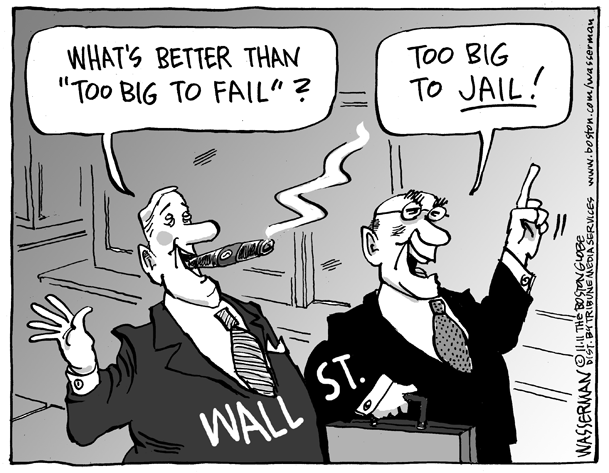


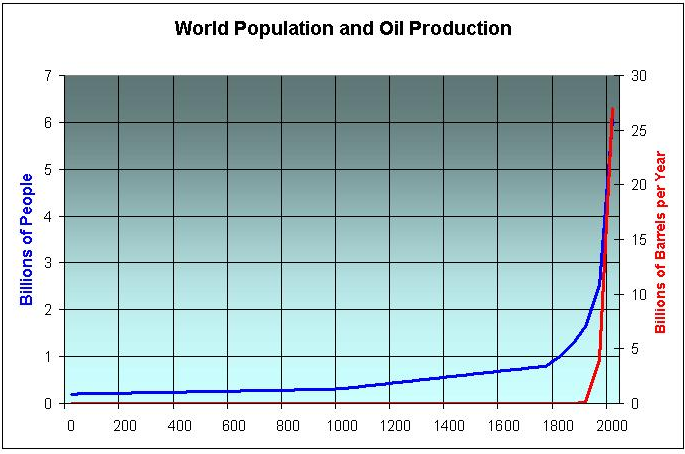


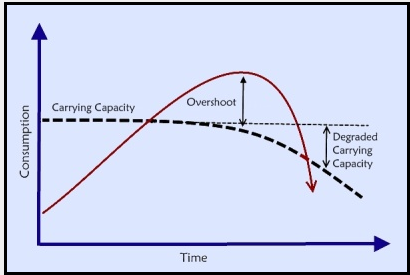



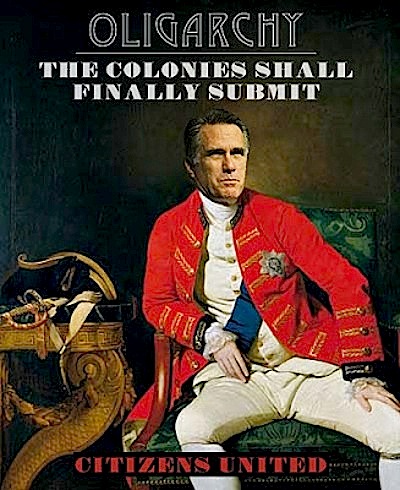

 Collapse of Industrial Civilization