Paul Ryan, cool cat wannabe, loves Rage Against the Machine’s music, he says. He must not listen to the lyrics. Here’s what the band’s guitarist/activist Tom Morello has to say:
Ryan’s love of Rage Against the Machine is amusing, because he is the embodiment of the machine that our music has been raging against for two decades. Charles Manson loved the Beatles but didn’t understand them. Governor Chris Christie loves Bruce Springsteen but doesn’t understand him. And Paul Ryan is clueless about his favorite band, Rage Against the Machine.
And of course he had to recently disavow himself from his ethical and spiritual idol, Ayn Rand:
Such pompous, self-serving, and seemingly sociopathic behavior among the elite in capitalist America is nothing new. As a matter of fact, it seems to have always been the norm in American history:
I recently read a book by University of Maryland historian Terry Bouton,Taming Democracy, which is an account of the intense struggles over wealth and power that emerged in the earliest days of the United States. Bouton’s detailed research was focused on Pennsylvania, but he describes patterns that also appeared elsewhere in the infant republic.
The core of the story he tells is that the colonial coalition that made possible the political break with Britain fractured even while the Revolutionary War was still in progress, as wealthy interests in the colonies quickly had second thoughts about the democratic fervor that they had helped to set in motion and how it might jeopardize their ability to amass still more wealth….
…The story demonstrates that strong class consciousness and class-specific drivers of policy have been a major part of American politics since independence. A key part of that class struggle all along has been a strong sense among a wealthy elite of separateness from the non-wealthy, and of having a right to push hard for public policies that favor their own class even if they are clearly detrimental to others.
A major figure in Bouton’s account is the Philadelphia merchant and financier Robert Morris…
…An even more blatant ploy of using government to favor his own class’ interests at the expense of others concerned speculation in war debt. Amid poverty, scarcity of money, and uncertainty about government funding of debt, many holders of IOUs — who had furnished support to the war effort ranging from food to blacksmithing — sold them for cents on the dollar to speculators who hoped to redeem them eventually for much more than that.
Morris not only participated in this game but openly promoted it. He told the Continental Congress in 1782 that speculators should be encouraged to buy up the IOUs “at a considerable discount” and then have the government bring the pieces of paper “back to existence” by paying them off at top dollar.
This big transfer of wealth would provide the affluent with “those funds which are necessary to the full exercise of their skill and industry.” Bouton writes, “As Morris saw it, taking money from ordinary taxpayers to fund a huge windfall for war debt speculators was exactly the kind of thing that needed to be done to make America great.”
We have tended to whitewash such aspects of American history from our consciousness, for several reasons. One is the hagiography we customarily apply to the Founding Fathers. Another is that we lose sight of the connections between class consciousness of the past and that of today by euphemizing today’s version and espousing more subtle notions of trickle-down economics than the crude version that Morris espoused.
People of his economic stratum were known at the time as “gentlemen”; today they would more likely be called “job creators.” A further reason is Americans’ belief in the national myth that America is less stratified into classes, and exhibits more mobility between classes, than do other countries and especially the old countries of Europe. That myth has become increasingly distant from fact in recent decades…
For those who believe that class structure and the struggles therein do not exist in America, history shows that it has always been a part of our country, reasserting itself with a vengeance in recent times. With the elite having a lock on mass media and now the use of the empire’s security and surveillance state to squash dissenters, malcontents, and any challengers of the status quo, there does not seem to be any going back to a society embodied by a strong middle class, especially in an age where the economic pie is forever shrinking.
Jeffrey Sachs’ op ed piece entitled “America Has Lost the battle Over Government” in the Financial Times explains how the budget plans of our two corporate candidate stooges are strikingly similar and offer no real choice for the American citizen. With the modern-day instruments of mass media manipulation being the most sophisticated tool for mind control in the history of man, you are made to think that the current election is an epic struggle between the forces of good and evil, but the American’s fate of joblessness, dwindling social assistance programs, a permanently growing underclass, and the slide into an oligarchic Third World country has already been written in stone by the transnational capitalist forces and its corporate state. Crime will surely go up, lifespan expectancy will go down for the underclass, and the infrastructure of the nation will continue its trajectory into dilapidation and decay. Sacrificing your body in the Empire’s foreign resource wars and geopolitical games will be one of the only jobs available for our debt-ridden youth:
…Mr Ryan’s plan calls for federal revenues of 18.4 per cent of gross domestic product in 2016 and 18.5 per cent in 2020 (though his lower tax rates would probably put those targets out of reach). His budget outlays come in at 19.7 per cent and 19.5 per cent in 2016 and 2020, respectively. Of the total outlays in 2016, Mr Ryan targets “discretionary” programmes at 5.9 per cent of GDP; social security, 5 per cent; Medicare, 3.2 per cent; other mandatory spending, 3.7 per cent; and interest payments, 1.9 per cent.
Now consider Mr Obama’s budget unveiled in February. Federal revenues are targeted at 19.1 per cent of GDP in 2016 and 19.7 per cent of GDP in 2020, only about 1 percentage point above Mr Ryan’s revenue targets. In Mr Obama’s 2016 budget targets, discretionary spending is set at 5.9 per cent of GDP; social security, 5 per cent; Medicare, 3.2 per cent; other mandatory spending, 5.8 per cent; and interest payments, 2.5 per cent.
In fact, Mr Obama’s overall discretionary spending targets are essentially the same as Mr Ryan’s. Whether Mr Obama or Mr Romney wins, the “non-security” discretionary budget – for education, job skills, infrastructure, science and technology, space, environmental protection, alternative energy and climate change adaptation – is on the chopping block. Mr Obama’s budget would shrink non-security discretionary programmes from an already insufficient 3.1 per cent of GDP in 2011 to 1.8 per cent in 2020. That is the “liberal” alternative.
In bemoaning Mr Obama’s budget, I do not mean to equate it with Mr Ryan’s. Mr Ryan’s budget is nothing short of heartless in the face of the dire crisis facing America’s poor. It is also reckless, guaranteed to leave millions of children without the quality of education and skills they will need as adults. Yet the sad truth is that the Democrats offer no progressive alternative. Both parties are accomplices to the premeditated asphyxiation of the state. Viewed from an international perspective, the constricted range of the US fiscal debate is striking. Total US government revenues (combining federal, state and local governments) in 2011 came in at about 32 per cent of GDP. This compares with an average of 44 per cent in the EU and 50 per cent in northern Europe.
Many Americans will say that they are dodging the European curse by keeping taxation so low but they should look again. Northern Europe (Germany, the Netherlands, Denmark, Finland, Norway and Sweden) gets great value for its tax revenues: lower budget deficits, lower unemployment rates, lower public debt-to-GDP ratios, lower poverty rates, greater social mobility, better job training, longer life expectancy, lower greenhouse gas emissions, higher reported life satisfaction and greater macroeconomic stability.
America’s two political parties depend on wealthy contributors to finance their presidential campaigns. These donors want and expect their taxes to stay low. As a result, social divisions, broken infrastructure, laggard educational attainments, high carbon emissions and chronic budget deficits are likely to continue no matter who is elected, even though the public supports higher taxes on corporations and the rich…
Chris Hedges was back in court over the government’s appeal of Judge Forrest’s earlier injunction of the NDAA. As a matter of fact, the government has refused to comply with the injunction. Hedges states he and the other plaintiffs “will most likely have to continue this fight in an appellate court and perhaps the Supreme Court.” He also notes that no matter the results of the rigged U.S. elections, no meaningful change will come to the deteriorating lives of ordinary Americans:
…The corporate state has convinced the masses, in essence, to clamor for their own enslavement. There is, in reality, no daylight between Mitt Romney and Obama about the inner workings of the corporate state. They each support this section within the NDAA and the widespread extinguishing of civil liberties. They each will continue to funnel hundreds of billions of wasted dollars to defense contractors, intelligence agencies and the military. They each intend to let Wall Street loot the U.S. Treasury with impunity. Neither will lift a finger to help the long-term unemployed and underemployed, those losing their homes to foreclosures or bank repossessions, those filing for bankruptcy because of medical bills or college students burdened by crippling debt. Listen to the anguished cries of partisans on either side of the election divide and you would think this was a battle between the forces of light and the forces of darkness. You would think voting in the rigged political theater of the corporate state actually makes a difference. The charade of junk politics is there not to offer a choice but to divert the crowd while our corporate masters move relentlessly forward, unimpeded by either party, to turn all dissent into a crime…
A lot of Americans buy into this “cult of individualism” and anti-government sentiment which the elites of the corporate state artfully peddle in order to dismantle any remnants of a functioning government that might serve the common good of its citizenry. In this way, the corporate state has convinced the masses to cheer the destruction of government and its beneficial roles. But of course we cannot call our lobbyist-infested, corporate-controlled government an actual representation of the people’s interests. Just as our two-partied presidential election is an orchestrated illusion of democracy, so is the false dichotomy of government and corporations which are merely separated by a revolving door. The government has become, for the most part, a tool for wealth extraction by multinational corporations. During a period of multiple civilization-ending crises when leadership is in dire need, the degeneration of government from a socially beneficial entity into a puppet of Wall Street’s rapacious greed is the greatest tragedy of our time.
Dateline 1981, Orange County, CA and what was to become ground zero for global mortgage fraud, perpetrated by the likes of Angelo Mozilla, nicknamed by the media Agent Orange for his decadent fake (and very nearly orange) tan of the criminal overclass, we begin with the nascent dawn of Reagan’s “Morning in America” on the cusp of the soon to break Savings and Loan Crisis.
The scene was a 2 ½ hour drive to a nondescript 3 bedroom tract home in Huntington Beach, about a mile or two from the ocean. It was the parent’s home of a fellow college student who was taking advantage of their parent’s vacation to host a party, replete with backyard keg and the requisite single light bulb lamp nearby to prevent spills.
With all the irony of the two working parent hierarchy of the times, the homeowners were so busy with their jobs that neither had time to go to the beach, the dreary patina of tract home living had quietly subsumed the idealism of living near the beach.
This was not lost on the college aged son, who upon learning that the house would be vacant, promptly released word of the party. We arrived to the house after the considerable drive, and found amplifiers and a drum set already assembled in the living room, with microphone stand at the ready. After mingling aimlessly for an hour or two amongst the preppy college students with Izod shirt logos and sweaters with arms carefully folded around their necks, the cacophony of Bob Seger and the “Silver Bullet Band” began to grate on our nerves.
There is only so much you can take, but we knew something they did not-there was to be a special guest.
Indeed, after another stultifying hour, a beat up van pulled up out front, and three guys wearing surfer shorts and tee shirts came inside and plugged in their guitars. They played but three songs, and this was one of them:
Afterwards, they abruptly left. In the vacuum left behind, there was a palatable unease, sweaters were nervously adjusted, no one really said anything. Someone put the Bob Seger album back on, which thankfully was put out of its misery with the elliptical trajectory of an angry beer bottle.
Forward to 2008, high rise office towers with names like “Dieco”, “Countrywide”, and “Indy Mac” prominently displayed, which housed platoons of tens of thousands of mortgage workers who filled these towers every day. Their “products” were mortgages and refi’s, doling out money to whoever had a pulse and a desire to own a piece of the American dream, then securitizing these phony loans to sell off to pension funds and other unsuspecting investors.
The well publicized financing arm of the mortgage crisis gets all the attention, but behind the scenes we have something much more interesting occurring. To illustrate, we again go to the epicenter of all that went wrong in the mortgage cum real estate biz, Orange County, CA.
To enable the construction of vast numbers of new homes that will serve as the collateralization of these new dollars to be leant, we need institutional infrastructure designed to encourage inventor participation and insure equity growth. In other words, we need giveaways.
With infrastructure too big a charter for small independent developers and investors, a new entity emerged, that of the Master Planned Community. Usually dominated by large regional landowners with significant political connections already in place, they began in earnest to create circumstances favorable to large scale tract development, a process that was prototyped with the first large scale master planned community in the ‘70’s (Irvine, CA), and then rapidly ported to other states and counties.
In California, Prop 13 limits the amount of YOY property tax that can be assessed. But to grow and develop hundreds of thousands of new homes, this requires infrastructure, such as schools, utilities and roads. In the first major attempt to privatize large swaths of the public domain, a bond mechanism legislation called “Mello-Roos” was enacted, enabling developers to externalize all of the infrastructure costs onto the homeowners in the form of a tax supplement, which is not governed by Prop 13. It is very nearly impossible to buy new construction in CA without falling under this forced bond payment. It is often very near 100% of the standard (mandatory) State property tax. The bonds are nominally for 20 years, but most homeowners will tell you they never go away, constantly renewed with no redress for residents.
This privatization sets in motion the walling off of entire communities, and in so doing, of course some type of privatized governance must be constructed and imposed on the new homeowners so as to “protect their investment”. This is done in the form of an H.O.A, or homeowners association, who govern and regulate the homeowners under a privatized army of volunteers, enforcing a Byzantine set of rules and regulations. They do so by collecting the H.O.A dues, which can range up to $800-900/month in some communities, paid monthly by each homeowner, and it should be noted that failure to pay will result in forfeiture of your property.
The bylaws and regulations that are administered by the H.O.A are published in a lengthy document (usually several hundred pages) listing all the infractions that can result in a penalty being assessed. They govern what color you can paint your house, what contractor you must use for painting your house, how neat your yard must be (mandatory landscaping) strict architectural rules (no changes allowed) and incredibly, how long your garage door may remain open during the day, how long your trash cans may remain on the street after pickup, and strict “lifestyle” provisions.
If you violate any one of the hundreds of regulations, you will be assessed a fine, and if you fail to pay the fine, you will forfeit your property. To enforce this, a group of volunteers usually “walks” the neighborhood, clipboards in hand, to note any and all infractions that can result in fines being assessed.
Hell hath no fury like a HOA privatized government volunteer with clipboard in hand and hard hat jauntily worn, the stern gaze of compliance ready to stare down errant homeowners foolhardy enough to think their carbon copy “Plan B” faux Mediterranean air conditioned nightmare is their castle. The lender has collateralized 30 years of any and all possible equity appreciation in the form of a mortgage, the HOA has established a privatized, regulation filled “government” that under the guise of mutual contractual consent has put in place rules and regulations that no public government on earth would get away with, sublimely forfeiting many constitutional protections (such as due process), including specifically forfeiting the ability to file homestead claims on your own property (protection for the primary residence from creditors in the event of a personal bankruptcy), the authoritarian noose of end stage capitalism begins to tighten the slipnot of compliance around the necks of the middle class homeowners, who almost universally wave their tiny flags and shout liberty, down with government, and up with free markets, blissfully unaware just how far down the river they have been sold.
Home ownership was originally advocated at the national level in the late ‘40’s just after WWII as a means to give the middle class a “stake” in their future, but mostly to discourage civil unrest under the principle that property ownership was an impediment to middle class organization of anti-establishment activities.
It would be a mistake to view today’s finance capitalism as the “final stage” of industrial capitalism. The name of the new game is neofeudalism and austerity, and its preferred mode of exploitation is debt peonage. Like creditors in ancient Rome, today’s financial power is seeking to replace democracy with a financial oligarchy. The result is a resurgence of pre-capitalist “primitive accumulation,” by debt creation and foreclosure rather than the military conquests of past epochs.
Much of the dismantling of the social fabric that describes the general malaise of our times is not visible to the consumer or generic citizen. However, to peer down the darkened hallways in the backstage of American business is to glimpse the machinations of a frightening leviathan that subsumes social power in a manner that cannot be conceptualized in the traditional left vs. right paradigm.
The issue at hand is privatization, the stalwart conviction that free markets are the only means of adjudication for the natural tension between self seeking utility maximization of the individual, and the needs and rights of society as a independent entity. The perpetrators have constructed an arena of false contest, populated with sacrificial ideological tropes in pursuit of their real agenda.
It is the purpose of this article to examine some of the hidden means by which privatization- as practiced by the bourgeoisie- is being used to subsume the sovereignty of both individuals and small businesses.
A critical component to understanding privatization is to understand the need for obfuscation, e.g. to become invisible. Barring this, the next best defense against revolution and dissent is to deny that any disagreement exists, or if it does, then to valorize it and present it as irrefutable status quo, thus enjoining the conservatives who are loathe to change anything deemed as established, and can be counted on to circle the wagons in the so called “pursuit of liberty”.
Staunchly in the category of invisibility is the entire concept of rent-seeking, which is to say, the premise of unearned labor, or in plain English, getting something for nothing. Much of the financial economy of today is nearly totally dedicated to rent-seeking activities, so called financial engineering that attempts, through various debt mechanisms, to extract value from either land or industrial production without adding any value whatsoever. (For a particularly good and thorough discussion of rent seeking see this article)
If you are getting something for nothing, the last thing you want is for anyone else to know of this; so much of the current media discussion is either valorizing the financial class, or by working to maintain the invisibility of the rent-seeking genre. An understanding of this rent-seeking activity, and it’s relationship to so-called “free market” dynamics is critical to debunking the more mainstream conservative and Libertarian theories of economics, which crumble rather quickly within this framework.
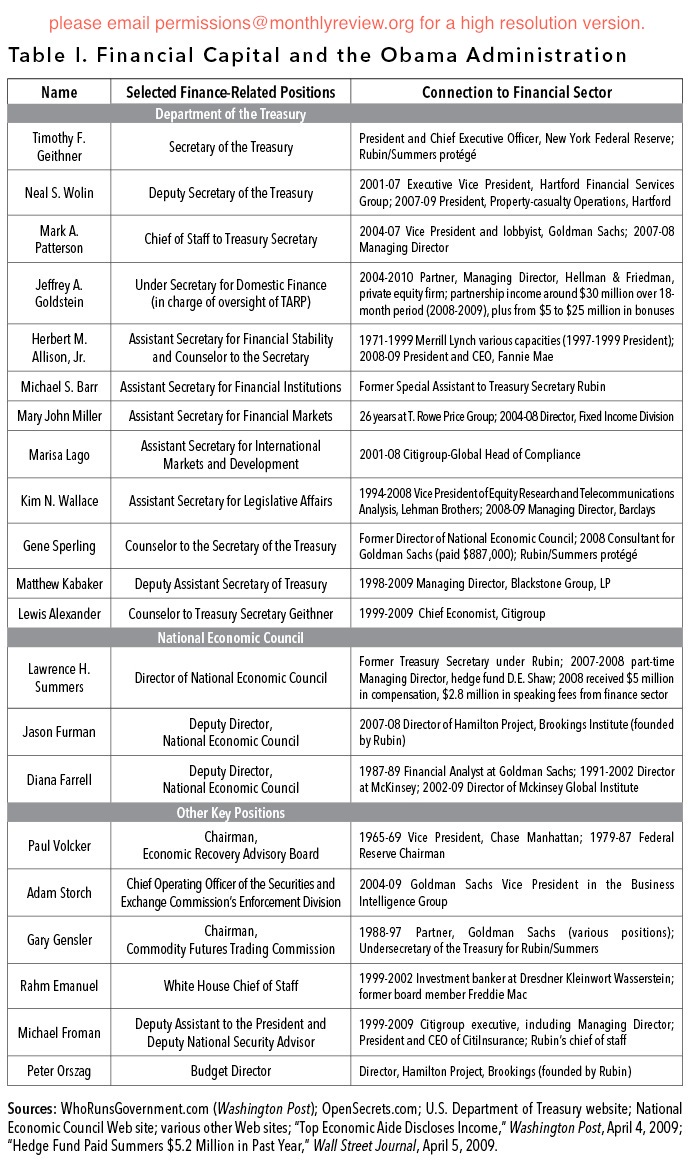
Another frame of reference which adds to this discussion is a remedial listing of the three circuits of Capitalism, a.) Industrial capitalism, b.) Mercantilist Capitalism, and c.) Finance (Money lending) Capitalism. All three strains utilize exploitation to achieve access to surplus value, and all three seek to exchange supra-profits for social power. To illustrate, we can look at the Forbes list of the top 10 wealthiest Americans, and we can see that these three strains are all represented:
1. Bill Gates Microsoft (Industrial Capitalist)
2. Warren Buffett Berkshire Hathaway (Finance Capitalist)
3. Larry Ellison Oracle (Industrial Capitalist).
4. Christy Walton Walmart (Mercantile Capitalist)
5. Charles Koch manufacturing, energy (Industrial Capitalist)
6. David Koch manufacturing, energy (Industrial Capitalist)
7. Jim Walton Walmart (Mercantile Capitalist)
8. Alice Walton Walmart (Mercantile Capitalist)
9. S. Robson Walton Walmart (Mercantile Capitalist)
10. Michael Bloomberg (Finance Capitalist)
What is interesting about the relationship of these three strains is the internal competition for surplus value which is quite remarkable and very vigorous. Most of the publicized argument for regulatory constraints against the Finance Capitalist for example, is not from consumers or citizens, but stems from Industrial Capitalists who are loathe to give up surplus value to rent-seekers, preferring instead to capture this surplus for their own uses.
To further set the stage for our discussion, we can examine briefly the extents of control on modern media and the political economy by these three strains. The Financial Capitalists dominate the levers of power through direct capture of government figures, usually by interchanging and exchanging employees back and forth through key positions, as well their highly documented financial contributions. The Mercantilists however, are dominant in the advertising media, preferring instead to take their case directly to the consumer, shaping and stimulating demand by convincing consumers to purchase products and services that they did not know they needed. The long standing and principal Industrial Capitalists of course use both media and government to advance their objectives, but they add another dimension to their ideological control by purchasing controlling stakes in free market think tanks, such as the Libertarian Cato Institute (Koch brothers), the Heritage Foundation, and many others. Most of the so called “free market” think tanks that are influential on public policy can be traced to a controlling interest from Industrial Capital.
So we can see that the three strains of capital have hegemony in their own unique portals, influencing public policy with free domain to the exchange of their out-sized surplus values into social power.
The end game of all this is for the furtherance of rent-seeking activities. This is done in many different ways, but the subject of this article is a focus on privatization, and specifically the behind-the-scenes activities that are imposed on small businesses as well as employees.
The top level observation regarding the push to privatization is that it simply allows capitalist enterprise, large and small, to subvert constitutional protections by engaging private citizens in superficially mutual contracts. Modern political philosophy has been co-opted to allow wide ranging civil rights abuses under the cover of “mutual consent” in the context of a contract between private parties.
Examples would be private party contracts between employees (employment agreements) and between large and small businesses (supply agreements) .
Once private citizens enter into so called mutual contracts, the court system provides wide latitude for enforcement of virtually any draconian measure, as long as two private parties ostensibly agree. In many cases, basic constitutional protections are circumvented, and the entire principle of political economy is upended in the favor of the author of the contract. In theory, the employee or small business has the “right” to not sign any agreement which runs roughshod over his best interests, but in practice, such options are not readily available, particularly for employment agreements, when a prospective employee may be in desperate need of a job, as he or she is forced to sell his labor power for sustenance wages. If there are insufficient offerings of competing private employment contracts (as is often the case) the prospective employee must take what he can get- however onerous and biased the contractual terms are.
This is of course the objective of the Capitalist economy, to 1.) insure a standing army of unemployed workers, at the ready, to fill on demand openings in the Capitalist mode of production, incurring no costs to the Capitalist until such time as this labor power is needed, and then when needed to hire only using draconian and highly biased employment agreements that transfer State-like control to a Capitalist entity that is much better positioned to provide enforcement. 2.) To externalize costs to the greatest degree possible, such as societal infrastructure costs, by creating a privatized, Capitalist entity to take over former State controlled functions and to apply the aforementioned labor principles to realize this new profit center, that can cater such services only to these that can afford them, while exploiting those that provide labor power to these privatized entities.
Once these externalized functions are brought under the umbrella of the Capitalist mode of production, the issue of mutually agreeable contract law can be brought to bear to strip these workers of their Constitutional rights, and further weaken any efforts to consolidate and resist.
The folks over at Crooked Timber have provided some particularly good examples and arguments around this notion of using contract law to subvert even basic liberties:
Life at Work
To understand the limitations of these …….. we have to understand how little freedom workers enjoy at work. Unfreedom in the workplace can be broken down into three categories.
1. Abridgments of freedom inside the workplace
On pain of being fired, workers in most parts of the United States can be commanded to pee or forbidden to pee. They can be watched on camera by their boss while they pee. They can be forbidden to wear what they want, say what they want (and at what decibel), and associate with whom they want. They can be punished for doing or not doing any of these things—punished legally or illegally (as many as 1 in 17 workers who try to join a union is illegally fired or suspended). But what’s remarkable is just how many of these punishments are legal, and even when they’re illegal, how toothless the law can be. Outside the usual protections (against race and gender discrimination, for example), employees can be fired for good reasons, bad reasons, or no reason at all. They can be fired for donating a kidney to their boss (fired by the same boss, that is), refusing to have their person and effects searched, calling the boss a “cheapskate” in a personal letter, and more. They have few rights on the job—certainly none of the First, Fourth, Fifth, Sixth, and Seventh Amendment liberties that constitute the bare minimum of a free society; thus, no free speech or assembly, no due process, no right to a fair hearing before a panel of their peers—and what rights they do have employers will fight tooth and nail to make sure aren’t made known to them or will simply require them to waive as a condition of employment. Outside the prison or the military—which actually provide, at least on paper, some guarantee of due process—it’s difficult to conceive of a less free institution for adults than the average workplace.
2. 2. Abridgements of freedom outside the workplace
In addition to abridging freedoms on the job, employers abridge their employees’ freedoms off the job. Employers invade employees’ privacy, demanding that they hand over passwords to their Facebook accounts, and fire them for resisting such invasions. Employers secretly film their employees at home. Workers are fired for supporting the wrong political candidates (“work for John Kerry or work for me”), failing to donate to employer-approved candidates, challenging government officials, writing critiques of religion on their personal blogs (IBM instructs employees to “show proper consideration…for topics that may be considered objectionable or inflammatory—such as politics and religion”), carrying on extramarital affairs, participating in group sex at home, cross-dressing, and more. Workers are punished for smoking or drinking in the privacy of their own homes. (How many nanny states have tried that?) They can be fired for merely thinking about having an abortion, for reporting information that might have averted the Challenger disaster, for being raped by an estranged husband. Again, this is all legal in many states, and in the states where it is illegal, the laws are often weak.
3. 3. Use of sanctions inside the workplace as a supplement to—or substitute for—political repression by the state
While employers often abridge workers’ liberty off the job, at certain moments, those abridgments assume a larger function for the state. Particularly in a liberal state constrained by constitutional protections such as the First Amendment, the instruments of coercion can be outsourced to—or shared with—the private sector. During the McCarthy period, for example, fewer than 200 men and women went to jail for their political beliefs, but as many as 40% of American workers—in both the public and private sectors—were investigated (and a smaller percentage punished) for their beliefs.
And, perhaps most succinctly:
What makes the private sector, especially the workplace, such an attractive instrument of repression is precisely that it can administer punishments without being subject to the constraints of the Bill of Rights. It is an archipelago of private governments, in which employers are free to do precisely what the state is forbidden to do: punish without process. Far from providing a check against the state, the private sector can easily become an adjutant of the state. Not through some process of liberal corporatism but simply because employers often share the goals of state officials and are better positioned to act upon them.
So this is the end state that the “free market” evangelists push for, this is the holy grail of privatization, externalized costs to a system that can act outside of the constraints of the Bill of Rights.
We can extend this discussion to the even further reaches of transparency, that of the nature of contracts between large and small businesses. In addition to the above noted employer/employee social relations enforced under a Capitalist entity governed by private contract, the same private contract modality has some startling repercussions for business:
1.) Mercantilists demand slotting fees to product producers for prominent product (shelf) placement at retail locations. They routinely create profit centers with draconian shipping requirements, for example, if a shipping label is off center from a specific location on a carton by even an inch, the producer is fined for each instance of this deviation. Missing or incorrectly filled out paperwork, spelling errors, any excuse for a “deviation” results in a back charge (fine) to the producers. It is not unusual to see small manufacturers shipping product to “big box” retailers, and to have so many back charges that their entire profit margin is consumed before the first unit is even sold. Which of course, is the goal.
2.) Small manufacturers are expected to honor dubious return policies, many large retailers force contract language on suppliers that require them to accept returns months, sometime years after shipment, often when the product was clearly misused. Replacement costs are often entirely pushed onto the supplier, yielding a system that is nearly impossible to accurately track inventory, when such products are never really sold, if they can be returned for full credit months later.
3.) Contract language for even small, non-mercantilist orders has escalated dramatically over the last few years. Consider:
a. Supply agreements can dictate and restrict any outspoken political dissent or endorsement.
b. You can be forced to decline sales within certain industries, to certain customers deemed competitive to the purchaser, or constrained to within certain geographic radii.
c. You can be prohibited from selling a certain product or service to anyone but the original purchaser.
d. You can be forced to accept liability for failures that have nothing to do with your product or service.
e. You can be forced to submit to a dress code for certain customer facing events, and translate this code internally to your own organization.
f. You are often forced to agree to all types of intrusive audits, in some cases unannounced, and can be forced to absorb any lost production costs or accounting support costs in support of these audits- regardless of their outcome.
4.) But perhaps most egregiously, it is now increasingly common to submit to mandatory electronic form of payment, wherein you provide your confidential banking account information, and payment is only made, and cannot be made any other way, by means of a wire transfer directly into your private business account. Reading of the small print in the contract yields an almost universal caveat, the payer can reverse any payment immediately and electronically, directly from your account, without notice and without permission; further, if there is any payment dispute, fines or penalties, or the occurrence of any perceived damages and liability that can result in charge backs to you, the supplier, these can be extracted without notice and without permission.
If you read the fine print on any recent home mortgage documentation you will see similar examples of this from our friends the Finance Capitalists, and if you are foolish enough to consider borrowing money for a business venture from a Finance Capitalist, you will get a first class education in exploitation via contract documents.
The sum total of all this, under the mantle of privatization, is the absolute and unchallenged control by the large scale Capitalist of both consumer and small business based endeavor, seeking to capitalize any surplus value that is achieved though small business or consumer debt onset, and to reduce this to rent-seeking in a fashion that would put Mussolini to shame.
Turns out the devil you don’t know is far worse than the devil you do know.
Paul Craig Roberts has written a very insightful piece entitled War On All Fronts. He describes an Empire which is pushing on all fronts, despite a collapsing economy and declining living standards for its own citizens here at home. Yes, the cost of American Empire has outstripped the benefits it once offered to its common citizen.
The world is catching on to the American corporatocracy’s covert use of what are called NGOs [non-governmental agencies] in spreading dissent within other countries and over throwing foreign governments. The latest case is Russia which is now passing a law similar to what the U.S. uses whereby members of NGOs, who are funded by foreign governments, must register with the U.S. Justice Department as ‘foreign agents’ under America’s ‘Foreign Agents Registration Act’(FARA):
…The Washington-funded Russian political opposition masquerades behind “human rights” and says it works to “open Russia.” What the disloyal and treasonous Washington-funded Russian “political opposition” means by “open Russia” is to open Russia for brainwashing by Western propaganda, to open Russia to economic plunder by the West, and to open Russia to having its domestic and foreign policies determined by Washington.
“Non-governmental organizations” are very governmental. They have played pivotal roles in both financing and running the various “color revolutions” that have established American puppet states in former constituent parts of the Soviet Empire. NGOs have been called “coup d’etat machines,” and they have served Washington well in this role. They are currently working in Venezuela against Chavez.
Of course, Washington is infuriated that its plans for achieving hegemony over a country too dangerous to attack militarily have been derailed by Russia’s awakening, after two decades, to the threat of being politically subverted by Washington-financed NGOs. Washington requires foreign-funded organizations to register as foreign agents (unless they are Israeli funded). However, this fact doesn’t stop Washington from denouncing the new Russian law as “anti-democratic,” “police state,” blah-blah. Caught with its hand in subversion, Washington calls Putin names. The pity is that most of the brainwashed West will fall for Washington’s lies, and we will hear more about “gangster state Russia.”…
Considering the revelation earlier this year that corporations were paying “strategic intelligence” firm Stratfor to spy on activists, it would come as no surprise that many NGOs here in the US are also used by multinational corporations to push their corporate agendas. As one commenter notes, the use of domestic NGOs in America by corporations is likely commonplace and key in controlling political dissent and keeping the ideology of neoliberal capitalism dominant over American society:
…How many of our “Tax-Exempt Foundations” and even religious organizations are in fact fronts for Global Corporations? Each state of the union could, if it had citizens with spines, force local do-good groups to register just like the outside agitators they really are. Politics in America would change overnight.
The Russians have been screwed by US “advice” since the Harvard Boys played Joseph to Russia’s Pharaoh after 1989 and destroyed their economy. Everyone should read the old Nation article even if only the cached version…
And on the Asian front we have China which is seen as another threat to be contained:
…President Obama today was asked about the strategy of containing China by establishing stronger economic and diplomatic ties with countries in the region – such as with the Trans-Pacific Partnership (TPP) trade deal, which excludes China — as well as with today’s military announcement. What does the US fear from China? he was asked.
“The notion that we fear China is mistaken,” he said. “The notion that we are looking to exclude China is mistaken.”
The president insisted that “we haven’t excluded China from the TPP. What we have said is the future of this region depends on robust trade and commerce and the only way we’re going to grow that trade is if we have a high-standards trade agreement where everybody is playing by the same rules. …
Having drained the U.S. economy by offshoring to China in order to take advantage of their cheap labor pool and nonexistent environmental regulation over the last several decades, the American corporatocracy now looks to curtail a creature of its own making. Roberts notes the following:
…China has been cooperative with Washington, because the offshoring of the US economy to China was an important component in China’s unprecedented high rate of economic development. American capitalists got their short-run profits, and China got the capital and technology to build an economy that in another 2 or 3 years will have surpassed the sinking US economy. Jobs offshoring, mistaken for free trade by free market economists, has built China and destroyed America…
…It looks as if an over-confident US government is determined to have a three-front war: Syria, Lebanon, and Iran in the Middle East, China in the Far East, and Russia in Europe. This would appear to be an ambitious agenda for a government whose military was unable to occupy Iraq after nine years or to defeat the lightly-armed Taliban after eleven years, and whose economy and those of its NATO puppets are in trouble and decline with corresponding rising internal unrest and loss of confidence in political leadership:
There is a lot to think about in this latest article by Roberts and it says everything about the chaotic and expansionary nature of capitalism, much more than that of empire. Whether you are pro or anti-capitalist, the facts laid before our eyes do not lie. I found the following comment to Robert’s article a perfect mirror of my own thoughts:
Finally, revelations that Unregulated Capitalism and Democracy can only co-exist for so long. Those who have ignored this fact are now suffering from the ultimate results of this reality. Those who have always known this and are not surprised are likely doing quite well and could care less. Socialism, the Kryptonite to unregulated Capitalism, has reportedly gained increasing favor of late with younger people who can find no benefit associated with an economic philosophy that exists to serve a minority class consisting of the very wealthy as it strives to insure it’s dominance by perpetuating a Plutocracy masquerading as a functioning Democracy. Throughout history, Democracies have existed without a Capitalist economic system but the reverse is rare to find as Capitalism eventually requires total compliance by government to save it from it’s own excesses. Considering the fact that our economy has once again hit the fan, 11 recessions and two depressions in the last eighty years, when are we going to stop buying into the brainwashing and stop our blind acceptance of an unregulated economic system that is perpetually unstable and now requires a constant state of war and suffering by a majority of the planet’s inhabitance to insure a utopia for a wealthy minority at the very top?
This is a stellar interview with Matt Taibbi and Yves Smith worth watching from start to finish. They cover a lot of ground in a short time including the shredding of the social fabric by Wall Street malfeasance and the fact that your grandmother’s life is more endangered by a high-finance businessman in a suit and tie rather than the local purse snatcher on the street corner. Remember when Lloyd Blankfein admitted that some of their financial instruments were of no benefit to society?
Excerpt on the comparisons with Wall Street and the Mafia Dons:
BILL MOYERS: You’re describing a corrupt financial and political system. And both of you in recent writings, your current article in “Rolling Stone,” which is devastating on the scam that the “Wall Street learned from the Mafia,” and a recent column you wrote about the mafia state, you’re both using that metaphor to apply to our financial and political system. When I read your pieces, you’re not playing with words there. You mean it.
YVES SMITH: Yeah.
BILL MOYERS: Why do you mean it?
YVES SMITH: Well, the mafia, when it gets to be big enough, first thing it has services that people feel they need if they’re in a difficult situation. So, for example, loan sharking. If you really need money, they do have the money. And people enter into these loan shark deals even though they know it’s going to be very difficult to pay 20 percent or more interest and they’ll have their legs broken if they don’t pay back.
And the banks actually behave very much in that manner when they find people who really need money. So you see this with credit cards, you know, that, or, and with mortgages. That if you hit– it’s not this if you hit any tripwire, that, you know, become in arrears, the banks basically act in this very extortionate manner and don’t cut any breaks.
MATT TAIBBI: And I think that there’s also this, they are the mafia because of their vast criminality in Wall Street now is that it’s bribery, theft, fraud, bid rigging, price fixing, gambling, loan sharking. All of these things, it’s all organized.
I mean, the story I just wrote about, which was about the systematic rigging of municipal bond auctions, which affected every community in every state in the country and all of the major banks were involved, including Chase.
They were rigging the auctions that were designed to create a fair rate of return on the investments that towns were getting on their– the money they borrowed for municipal bonds. And this is not like something that the mafia does. This is what the mafia does. The mafia has historically, it’s one of their staple businesses, is bid rigging for construction or garbage or, you know, street cleaning services, whatever it is.
They’re doing exactly the same thing. The only thing that’s different is there’s no violence involved. But what their method of control is that they’re ubiquitous. They have this incredible political power that the mafia never had.
YVES SMITH: And they also have what amounts to an oligopoly. I mean, for many of these services, you have a great deal of difficulty going beyond the five biggest banks, you know? This is– it’s the consequence of too big to fail is that when, you know, some of the smaller players, again, you know, like– JPMorgan buying Bear Stearns.
In the crisis, when the smaller players got sick, they were merged into the bigger players. So now if you want– for a lot of these services, there aren’t that many players for you to go to. You really have no choice in– other than to deal with the big banks.
BILL MOYERS: Congress is paid to be informed and to hold these guys accountable. Why don’t they ask the kind of questions you’re dealing with here?
MATT TAIBBI: People refuse to look at these banks and think of them as organized crime organizations.
They in their eyes, organized crime is always either the Italian mafia or the Irish mafia. This isn’t what it looks like. But that is who they are. And I think that they’re treated with a kind of deference and respect, because traditionally that’s not who they were. They were these icons of finance who helped build this country.
But that’s not who they are anymore. And I think, it’s hard for people to wrap their heads around that and treat them the way they should be treated.
YVES SMITH: Well, I think people don’t want to think that there’s something wrong with leaders. And CEOs are leaders of the business community. If you really believe that CEOs of businesses that are really fundamental to the economy are corrupt, you have to think of a very serious restructuring of the business and financial system.
And even if people kind of intellectually might be willing to contemplate that, they don’t really want to go to what the implications are. So it’s much easier for them to block out that thought.
Critical to remember is that the key cause of the short-term, predatory behavior discussed above is what is called the ‘financialization’ of capitalism over the last several decades. In other words, the productive aspect of the economy, such as manufacturing and research and development, were replaced by manipulation of the economy with financial instruments and creating wealth-extracting bubbles. An example of a corporation becoming financialized is GE:
Since over half of GE’s revenue is derived from financial services, it is arguably a financial company with a manufacturing arm.
Examples of financial bubbles in our economy are the dot-com bubble, the commodities bubble, the housing bubble, the student loan debt bubble, the credit card debt bubble, or even more recently the gas fracking bubble:
…Chesapeake and its lesser competitors resemble a Ponzi scheme, overhyping the promise of shale gas in an effort to recoup their huge investments in leases and drilling. When the wells don’t pay off, the firms wind up scrambling to mask their financial troubles with convoluted off-book accounting methods. “This is an industry that is caught in the grip of magical thinking,” Berman says. “In fact, when you look at the level of debt some of these companies are carrying, and the questionable value of their gas reserves, there is a lot in common with the subprime mortgage market just before it melted down.” Like generations of energy kingpins before him, it would seem, McClendon’s primary goal is not to solve America’s energy problems, but to build a pipeline directly from your wallet into his.
The numbers vary slightly on the internet as to the finance industry’s take of the total profits of the economy, but the overall trend has been an ever-increasing slice of the economic pie. Just before the financial meltdown of 2008, finance accounted for more than a third of total profit in the economy and it has come roaring back since then. The Free Market Economy has evolved from a supposed model of efficient use of capital for the benefit of production to the efficient funneling upwards of capital to the elite 1%. And of course there is the revolving door between the government and finance industry. The graph below shows the growth of the finance industry as a percentage of the total corporate profits since 1948:
American companies are now run by money men who have different priorities than those business leaders of the past. David Bollier explains:
We all know the story of enclosure as it applies to the commons. The lesser-known story is that businesses are enclosing themselves – aggressively cannibalizing their own internal productive capacities in order to maximize short-term profits.
Harvard business guru Clayton Christensen argues in Forbes magazine that business executives are so habituated to seeing the world through a scrim of financial abstractions that they are blindly undercutting their own long-term productive capacities. The problem is so pervasive, says Christensen, that “whole sectors of the economy are dying…”
Financialization could be called the degenerate, end-stage of capitalism where making money from money is the be-all and end-all of corporate decision-making.
Professor Wolff discusses with William Tabb this financialization of the economy in more detail here. Our economy has become a giant Ponzi scheme. This won’t end well.
I haven’t done any bashing truth-telling on Mitt Romney yet, so now would be a good time since it looks like King Romney is closing the gap in war chest funds. As Matt Taibbi pointed out earlier this year, “the candidate who raises the most money wins an astonishing 94% of the timein America.” And Romney appears to be the golden boy for our financial oligarchs. According to the experts in such matters of our staged elections, Romney has the backing of the 1%:
..Romney will certainly have the advantage as Wall Street tycoons and conservative billionaires line up to contribute. One billionaire, casino magnate Sheldon Adelson, was reportedly ready to make “limitless” contributions, more than $100 million, to Romney to defeat the president….
“…Romney and his allies are certain to hold the financial upper hand, not least because the Supreme Court’s Citizens United decision in 2010 allowed for a flood of corporate cash. The unspoken hope in Chicago is that superior strategy and a shrewd use of technology can make up for Obama’s diminished stature and more formidable opponent.”
Now as I explained in my post ‘Obama: Figurehead for the Corporatocracy‘, the job of the President is more of a PR position for who really runs the country, i.e. the corporatocracy. If you look at Obama’s record, he is indistinguishable from his predecessor in all issues that matter to the common person. For instance, contrary to Obama’s pre-election populist rhetoric, he has escalated America’s militarism such as in drone and cyber warfare, and he has widened even further the wealth gap. Having previously signed trade agreements with South Korea, Panama and Colombia, Obama continues to sell out the American worker to multinational corporations as revealed in a recently leaked document of a trade agreement called the Trans-Pacific Strategic Economic Partnership (also known as the Trans-Pacific Partnership, orTPP). Like all trade agreements before, this one is no different in the way that it was created, i.e. solely by corporate lobbyists, leaving the American public completely shut out. Compare that with what Obama said in 2008:
We can’t keep passing unfair trade deals like NAFTA that put special interests over workers’ interests…
Rest assured, King Romney will continue the dismantling of America and its Third Worldization in favor of the parasitic financial sector and transnational corporations. He says this TPP tade agreement should be passed through as soon as possible:
Reinstate the president’s Trade Promotion Authority
Complete negotiations for the Trans-Pacific Partnership
Pursue new trade agreements with nations committed to free enterprise and open markets
Create the Reagan Economic Zone
King Romney will also continue to support the military-industrial-complex and America’s war economy, painting himself as a pro-military, self-sacrificing patriotic citizen. But as Cenk Uygur notes, the truth is somewhere 180 degrees from what is painted for mass consumption:
Now after the 2012 political circus concludes, we will have had twelve years of rule by a president with no military service, and with another 4 more years to come. War is not for the privileged wealthy, but for the children of the impoverished 99% in America’s hinterland.
About 1 in 5 current members of Congress is a veteran, but less than 1% of their offspring are. – David Freed
Jack Nelson-Pallmeyer, author and Associate Professor of Justice and Peace Studies at the University of St. Thomas, clarifies for us the ugly reality behind the wars sold to us today:
Hidden in these tragic figures[cost and lives lost] is war’s dirty secret. As historian and former U.S. Army Colonel Andrew Bacevich clearly states, “War is a source of enormous wealth and power [that delivers] profit, power, and privilege to a long list of beneficiaries.”[2] These beneficiaries find it expedient and surprisingly easy to sell war and militarized priorities to a reluctant public using deception, fear, and patriotism.
The politicos no longer represent us, only themselves and the elite monied interests. So no matter who wins this election, expect more of the same from our corporate overlords.
The above montage of clips from the satirical movie ‘The Distinguished Gentleman‘, in which Freshman Congressman (and con man) Thomas Jefferson Johnson (Eddie Murphy) is schooled in the ways of Washington by legendary lobbyist Terry Corrigan (Kevin McCarthy), is as true today as it was back when that movie was made more than twenty years ago, so says Marty Kaplan. The following excerpts from the transcript of Bill Moyer’s latest report – Big Money, Big Media, Big Trouble – tells the sorry and sordid tale of our political economy/society. This Moyer’s interview with Kaplan, a true insider to our political and media complex, is quite extraordinary. He affirms what the general populace is unable to comprehend… that we live in a society in which the news media and government institutions are entirely owned by the corporate oligarchs. The government regulators are owned by the very companies they are charged with over-seeing by way of Wall Street’s army of lobbyists and the revolving door that exists between government and private sector positions. Actual news to inform the public on the state of affairs and issues affecting them is virtually nonexistent on the media airwaves.
…what’s really driving it, if you think of this as a symptom and not a cause, I think what’s really driving it is the absolute demonization of any kind of idea of public interest as embodied by government. And at the same time, a kind of corporate triumphalism, in which the corporations, the oligarchs, the plutocrats, running this country want to hold onto absolute power absolutely. And it’s an irritant to them to have the accountability that news once used to play.
…the notion of spectator democracy has, I think, extended to include the need to divert the country from the master narrative, which is the influence and importance and imperviousness to accountability of large corporations and the increasing impotence of the public through its agency, the government, to do anything about it. So the more diversion and the more entertainment, the less news, the less you focus on that story, the better off it is.
And the self-serving triviality of corporate-run ‘news’ media has become a self-reinforcing mechanism whereby stats are being kept of what is the most popular story which then gets kicked up to the top and influences what that corporate news channel reports on in the future. It’s all driven by ratings and profit rather than educating and informing people on facts and real issues. So Neil Postman was right… We are being entertained to death, literally. This nihilism plays right into the hands of those controlling the levers of power who would not benefit from a well-informed, well-eduated public. The vast majority of public discourse has been reduced to an echo chamber of the crap (divisive ‘wedge issues’, celebrity gossip, sensationalist stories, corporate propaganda, consumerist materialism, valorization of the predatory skills of the modern competitive capitalist, etc.) that fills the corporate-controlled airwaves.
…
BILL MOYERS: You wrote The Distinguished Gentleman 20 years ago. Could you write it today?
MARTY KAPLAN: Oh God, it still is the same. All you have to do is add a couple of zeros to the amount of money. And the same laws still apply. It is fabulous and miserable at the same time.
BILL MOYERS: Was Washington then, and is it now, the biggest con game going?
MARTY KAPLAN: It is the biggest con game going. And the stakes are enormous. And the effort to regulate them is hopeless, because the very people who are in charge of regulating them are the same people who are wholly-owned subsidiaries of the lobbies that run them.
BILL MOYERS: I have it on very good authority that a prominent Washington senator recently told a group of lobbyists in Washington, a room full of lobbyists, that they are the lifeblood of the city. And I thought, “Kaplan has to do a vampire movie now.” Right?
MARTY KAPLAN: Exactly. The connection between the legislators and the lobbyists is so intimate that it’s not even embarrassing for a senator to say that in front of a room. The culture is so hermetically sealed from the rest of the country that it doesn’t occur to them that there is something deeply outrageous and offensive and corrosive of democracy to admit that the money side of politics and the elected side of politics belong to each other.
BILL MOYERS: You wrestle with this, you and your colleagues at the Norman Lear Center, and all the time, on how, on what the system is doing to us. So let me ask you, “How did this happen in America? How did our political system become the problem instead of the answer?”
MARTY KAPLAN: Part of it is the nexus of media, money, and special interest politics. The citizens have given the airwaves to the station. We own the electromagnetic spectrum and for free we give out licenses to television stations. Those stations, in turn, use that spectrum to get enormous amounts of money from special interests and from members of Congress in order to send these ads back to us to influence us. So we lose it in both ways. The other day, the president of CBS, Les Moonves, was reported by “Bloomberg” to have said “Super PACs may be bad for America, but they’re … good for CBS.” I mean, there it is. This is a windfall every election season, which seems not to even stop ever, for the broadcast industry. So not only are they raking it in, they’re also creating a toxic environment for civic discourse. People don’t hear about issues. They hear these negative charges, which only turn them off more. The more negative stuff you hear, the less interested you are in going out to vote. And so they’re being turned off, the stations are raking it in, and the people who are chortling all the way to Washington and the bank are the ones who get to keep their hands on the levers of power. So one of the big reasons that things are at the pass they are is that the founders never could have anticipated that a small group of people, a financial enterprise and the technology could create this environment in which facts, truth, accountability, that stuff just isn’t entertaining. So because it’s not entertaining, because the stations think it’s ratings poison, they don’t cover it on the news.
BILL MOYERS: They don’t cover the news.
MARTY KAPLAN: They don’t cover politics and government in the sense of issues. They’re happy, occasionally to cover horse race and scandal and personality and crime and that aspect of politics. But if you look at a typical half hour of news, local news, because local news is one of the most important sources of news for Americans about campaigns. A lot—
BILL MOYERS: You and your colleagues have done a lot of research on local news.
MARTY KAPLAN: Yes, we’ve been studying it now since 1998. And each year it gets more depressing and it’s hard to believe. We, not long ago, did a study of the Los Angeles media market. We looked at every station airing news and every news broadcast they aired round the clock. And we put together a composite half hour of news. And if you ask, “How much in that half hour was about transportation, education law enforcement, ordinances, tax policy?” everything involving locals, from city to county. The answer is, in a half hour, 22 seconds.
BILL MOYERS: Twenty-two seconds devoted to what one would think are the serious issues of democracy, right?
MARTY KAPLAN: Yes. Whereas, in fact, there are three minutes about crime, and two and a half minutes about the ugliest dog contest, and two minutes about entertainment. There’s plenty of room for stuff that the stations believe will keep people from changing the dial.
BILL MOYERS: What is the irony to me is that these very same stations that are giving 22 seconds out of a half hour to serious news, are raking— and not covering politics, are raking in money from the ads that the politicians and their contributors are spending on those same papers.
MARTY KAPLAN: Yes, they’re earning hundreds of thousands and millions of dollars from the ads that they are being paid to run. And not even risking running a minute of news, which might actually check on the accuracy of an ad. Truth watches, they’re almost invisible now.
BILL MOYERS: So they will tell you, however, that they’re in the entertainment business. That they’re in the business to amuse the public, to entertain the public. And if they do these serious stories about the schools or about the highways or about this or that, the public tunes out. That the clicks begin to register as—
MARTY KAPLAN: It’s one of the great lies about broadcasting now. There are consultants who go all around the country and they tell the general managers and the news directors, “It is only at your peril that you cover this stuff.” But one of the things that we do is, the Lear Center gives out the Walter Cronkite award for excellence in television political journalism every two years. And we get amazing entries from all over the country of stations large and small of reporters under these horrendous odds doing brilliant pieces and series of pieces, which prove that you can not only do these pieces on a limited budget, but you can still be the market leader.
…
MARTY KAPLAN: Well, what’s really driving it, if you think of this as a symptom and not a cause, I think what’s really driving it is the absolute demonization of any kind of idea of public interest as embodied by government. And at the same time, a kind of corporate triumphalism, in which the corporations, the oligarchs, the plutocrats, running this country want to hold onto absolute power absolutely. And it’s an irritant to them to have the accountability that news once used to play.
BILL MOYERS: What do you mean by that? News challenges their assumptions, challenges their power?
MARTY KAPLAN: It used to be that the news programs that aired, believe it or not, had news on them. They had investigative stories.
But then somewhere in the 1980s, when 60 Minutes started making a profit, CBS put the news division inside the entertainment division. And then everyone followed suit. So ever since then, news has been a branch of entertainment and, infotainment, at best.
But there was a time in which the press, the print press, news on television and radio were speaking truth to power, people paid attention, and it made a difference. The— I don’t think the Watergate trials would have happened, the Senate hearings, had there not been the kind of commitment from the news to cover the news rather than cutting away to Aruba and a kidnapping.
BILL MOYERS: What is the basic consequence of taking the news out of the journalism box and putting it over into the entertainment box?
MARTY KAPLAN: People are left on their own to fend for themselves. And the problem is that there’s not that much information out there, if you’re an ordinary citizen, that comes to you. You can ferret it out. But it oughtn’t be like that in a democracy. Education and journalism were supposed to, according to our founders, inform our public and to make democracy work.
You can’t do it unless we’re smart. And so the consequence is that we’re not smart. And you can see it in one study after another. Some Americans think that climate change is a hoax cooked up by scientists, that there’s no consensus about it. This kind of view could not survive in a news environment, which said, “This is true and that’s false.” Instead we have an environment in which you have special interest groups manipulating their way onto shows and playing the system, gaming the notion that he said she said is basically the way in which politics is now covered.
It’s all about combat. If every political issue is the combat between two polarized sides, then you get great television because people are throwing food at each other. And you have an audience that hasn’t a clue, at the end of the story, which is why you’ll hear, “Well, we’ll have to leave it there.” Well, thank you very much. Leave it there.
BILL MOYERS: You have talked and written about “the straightjacket of objectivity.” Right? What is that?
MARTY KAPLAN: Well, the problem with telling the truth is that in this postmodern world, there’s not supposed to be something as truth anymore. So all you can do if you are a journalist is to say, “Some people say.” Maybe you can report a poll. Maybe you can quote somebody. But objectivity is only this phony notion of balance, rather than fact-checking.
There are some gallant and valiant efforts, like PolitiFact and Flackcheck.org that are trying to hold ads and news reports accountable. But by and large, that’s not what you’re getting. Instead the real straightjacket is entertainment. That’s what all these sources are being forced to be. Walter Lippmann in the 1920s had a concept called “spectator democracy” in which he said that the public was a herd that needed steering by the elites. Now he thought that people just didn’t have the capacity to understand all these complicated issues and had to delegate it to experts of various kinds.
But since then, the notion of spectator democracy has, I think, extended to include the need to divert the country from the master narrative, which is the influence and importance and imperviousness to accountability of large corporations and the increasing impotence of the public through its agency, the government, to do anything about it. So the more diversion and the more entertainment, the less news, the less you focus on that story, the better off it is.
BILL MOYERS: Are you saying that the people who run this political media business, the people who fund it, want to divert the public’s attention from their economic power? Is that what you’re saying?
MARTY KAPLAN: Yes.
Let us fight about you know, whether this circus or that circus is better than each other, but please don’t focus on the big change which has happened in this country, which is the absolute triumph of these large, unaccountable corporations.
This is about as dismal and effective a conspiracy, out in plain sight, as there possibly could be. So I don’t say that this is going to be solved or taken care of. What I do say is the first step toward it is at least acknowledging how toxic the situation has become.
…
BILL MOYERS: What you’re saying is that the political square is now a commercial enterprise, owned and operated for the benefit of the brand, CNN, Fox, all of those, right?
MARTY KAPLAN: That’s correct.
BILL MOYERS: How did it happen? How did we sell what belonged to everyone?
MARTY KAPLAN: By believing that what is, is what always has been and what should be. The notion that what goes on is actually made by people, changes through time, represents the deployment of political power. That notion has gone away. We think it’s always been this way. People now watching these CNN and Fox. They think this is how it works. They don’t have a sense of history. The amnesia, which has been cultivated by journalism, by entertainment in this country, helps prevent people from saying, “Wait a minute, that’s the wrong path to be on.”
BILL MOYERS: Amnesia, forgetfulness? You say that they’re cultivating forgetfulness?
MARTY KAPLAN: Absolutely.
…
BILL MOYERS: You made a very important speech not long ago at a media conference in Barcelona. And you tried and did draw the distinction between— you said the battle of the future is between big data and big democracy. In layman’s language, what is that?
MARTY KAPLAN: Big data, the age of big data that we’re supposed to be in, refers to the way in which, as we go on the internet, as we do all these media activities, watching television, which are at the center of our lives, we’re leaving a trail behind. We’re giving bits of ourselves up. And that set of bits is being collected and mined relentlessly.
So every time we buy a product or send an e-mail or vote how many stars to a restaurant, all this stuff creates a profile that companies buy and sell to each other. And that stuff is being used currently not only to market to us, to target ads toward us, but it’s also being used to profile us. There’s something called “web lining.” Which is similar to what used to be called “red lining.” The— that phenomenon, which is now illegal, in which people who were discriminated against because of the neighborhoods they live in. Right now—
BILL MOYERS: Banks drew a red line around impoverished neighborhoods that they would not then serve.
MARTY KAPLAN: Exactly. And so today imagine if you were to permit a private detective to follow you as you went to your drug store and bought a medication to help you with depression or as you made a phone call to a bankruptcy lawyer, because you needed one. Imagine if that kind of information could be put together and used against you to decide that you’re a bad credit risk or that maybe your insurance company should turn you down, because you suffer from this problem.
That kind of information, that kind of digital profiling is something which is emerging as a huge industry. And unless there are controls on it and constraints, as they have to some degree in Europe but not nearly enough even there, we are about to kiss goodbye our ownership of our privacy and also even the ownership financially of our information. We are the people who make Facebook and Twitter worth the billions of dollars that they’re worth, because we are giving up our information to them, which they are then selling and raising capital around.
BILL MOYERS: But in a libertarian era, what are the restraints and constraints against that? Where are they going to come from?
MARTY KAPLAN: Well, right now, the constraints in this country are voluntary. The Obama White House not long ago issued a digital code of conduct, which included privacy. In which they asked companies and companies did step up to it to say, “We’re not going to track people if they don’t want to be tracked.” And other such efforts to get people in control.
But what we do know, the record of just the past couple of months, is that company after company was doing stuff to us that’s astonishing, that we didn’t know about. The ways in which the apps that you use on your smartphones were vacuuming up information about you, your address book and all your pictures.
Stuff that you had no idea you had consented to, which in fact usually you had not, suddenly was all owned by other people, as well. You have not given permission, but that essential part of you is now not yours. That’s the name of the game now. This is baked into the business model of data mining, which is at the heart of so much of the digital economy.
BILL MOYERS: But that’s big data. You talked about big democracy.
MARTY KAPLAN: So at the same time as our data is being mined, there is this movement to protect people using technology to give them the power to say, “I’m not going to opt into this stuff.” We’re still at the beginning of this industry. And there has to be rules of the road. And part of those rules include my attention rights. My rights to control my identity, my privacy, and my ownership of information.”
BILL MOYERS: In your speech in Barcelona, you pointed to two simultaneous covers of TIME Magazine appearing the same week. One for the editions in Europe, Asia, and South Pacific, and it was about the crisis in Europe. The other, which appeared in the American edition, featured a cover about animal friendships. You use these two covers to illustrate the difference between what you call “push journalism” and “pull journalism.” What’s the difference?
MARTY KAPLAN: Push journalism is the old days, which seem no longer to apply in the era of the internet, in which an editor, a gatekeeper, says, “Here’s the package which you need to know.” All of that is ancient history now.
Instead, now, it’s all driven by what the consumer is pulling. And if the consumer says, “I want ice cream all the time.” And whether that ice cream is Lindsay Lohan, or the latest crime story, that’s what’s delivered. And as long as it’s being pulled, that’s what is being provided. So it’s quite possible that in the U.S., the calculation was made that the crisis in Europe and the head of Italy would not be a cover that one could use. But that pet friendships would be the sort of thing that would fly off the newsstand.
BILL MOYERS: So the reader is determining what we get from the publication?
MARTY KAPLAN: On a minute by minute basis, stories that the reader’s interested in immediately go to the top of the home page. There are actually pieces of software that give editorial prominence to stuff that people by voting with their clickers have said is of interest to them. No one is there to intervene and say, “Wait a minute, that story is just too trivial to occupy more than this small spot below the fold.” Instead, the audience’s demand is what drives the placement and the importance of journalistic content.
BILL MOYERS: So George Orwell anticipated a state as big brother, hovering over us, watching us, keeping us under surveillance, taking care of our needs as long as we repaid them with utter loyalty. Aldous Huxley anticipated a Brave New World in which we were amusing ourselves to death. Who’s proving the most successful prophet? Huxley or Orwell?
MARTY KAPLAN: Well, I think Huxley is probably right, as Neil Postman said in—
BILL MOYERS: The sociologist, yes.
MARTY KAPLAN: —in Amusing Ourselves to Death. That there’s no business but show business. And we are all equally guilty, because it’s such fun to be entertained. So you don’t need big brother, because we already have big entertainment.
BILL MOYERS: And the consequences of that?
MARTY KAPLAN: That we are as in Brave New World, always in some kind of stupor. We have continual partial attention to everything and tight critical attention on nothing.
…
According to stats from 2010 for TV viewing by adult Americans, we’re glued to the boob tube in our waking hours. This explains why having an intelligent conversation with most Americans is an impossible task. All they can do is regurgitate what has been constantly programmed into their heads.
• The average American watches 35:34 (hours/minutes) of TV per week
• Kids aged 2-11 watch 25:48 (hours/minutes) of TV per week (Q1 2010)
• Adults over 65 watch 48:54 (hours/minutes) of TV per week (Q1 2010)
And according to the latest Nielsen study, TV viewing is on the increase, notwithstanding a tiny drop in the number of households who own a TV:
…despite all the competition from cable TV, videogames, and the Internet, the average household watched 59 hours, 28 minutes of broadcast TV per week during the 2010-2011 season, setting a new record. Lanzano drew particular attention to the competition — or lack of it — from Facebook, noting that while the average person spends about 13 minutes a day on Facebook, they spend 297 minutes watching TV. “No wonder our friends at [General Motors] are making some changes,” he said. [Last month GM announced that it will stop placing ads on Facebook, after determining that they had little impact.]
In my last post The Armageddon of the Financial Arms Race, I featured Andrew Haldane and one of his speeches, highly critical of the banking sector. I thought it odd that a top official in banking, the British version of Ben Bernanke, would be so forthright about the malfeasance and recklessness of the sector that he is a part of. Isn’t he supposed to be propagandizing for the banks and subservient to their interests like our own Ben Bernanke and his predecessor Greenspan? I looked a little deeper and found that those same thoughts have come to other Americans. Here is Justin Fox, editorial director of the Harvard Business Review Group and author of The Myth of the Rational Market: A History of Risk, Reward, and Delusion on Wall Street:
…Why isn’t anybody in the U.S. writing stuff like this? I don’t know of any official at the Fed or the bank regulatory agencies doing the kind of searching examination of how the world works that Haldane has become known for (maybe Ben Bernanke’s upcoming lecture series will be a start, but I doubt it) — and I don’t know of any non-government economists or journalists here doing it in quite the sweeping, convincing way he has, either (if I’m just missing out, let me know in the comments). I think part of it is politics. In the UK the notion that something was flawed about the way financial markets and big banks were organized seems to be universally shared, allowing Haldane to take that as a starting point and then leap into his investigations. In the U.S. there’s still a substantial minority (even among economists) that attributes all our problems to Fannie and Freddie, the Federal Reserve, or some other malign Washington force. Which makes it much harder to move forward with the discussion…


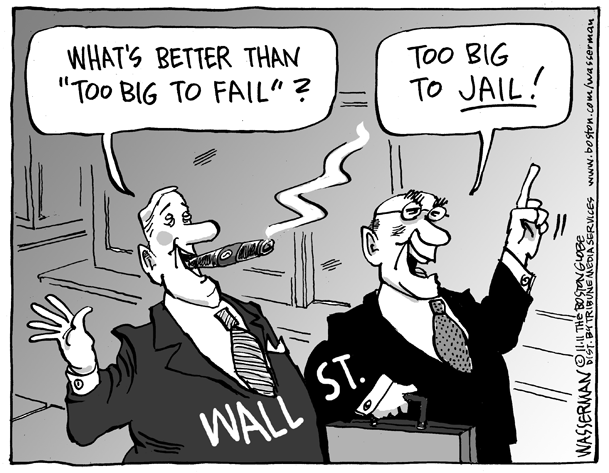
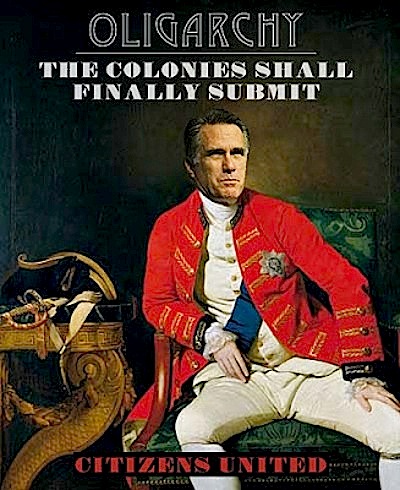

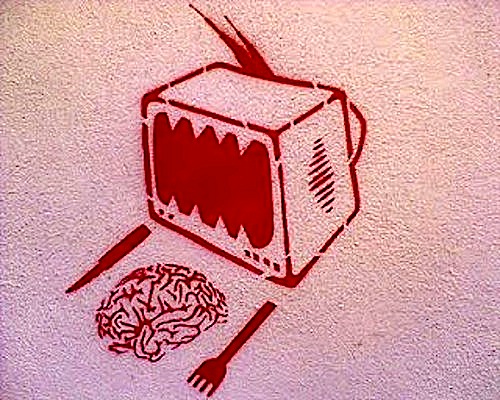
 Collapse of Industrial Civilization