First off, I need to make it clear that I do not subscribe to the bizarre conspiracy theories about planned detonations of the twin towers. Did top government officials know something was afoot? Yes, there were ample detailed warnings concerning an impending attack. As the above news story from the NYT describes, intelligence officials were so convinced that an attack was imminent that they wanted to quit their jobs to avoid being blamed for what was coming. What ensued afterward is best described as taking advantage of a crisis or “not letting a good crisis go to waste.” Iraq’s oil resources were already on the minds of the neocons and the oil corporations; a spectacular terrorist attack on America would be the perfect event by which the Western elite could demonize all of the Middle East in order to make one last run on what was left of the world’s depleting hydrocarbons. When the lifeblood of your economy is running out, more extreme and radical options get thrown onto the table. And so the media whipped up the nationalist fervor of the country and false claims of Al Qaeda ties with Iraq and WMD’s were spun into the national consciousness. Much blood and treasure were spent; the coffers of the Arms Dealers swelled; a security and surveillance state blossomed to tamp down domestic social unrest; and a new enemy was born to take the place of disaster capitalism’s old nemesis of communism. The financial elite and the neocons, the American war machine, and Big Oil gloated over their Machiavellian maneuvers. But blowback is always the counterweight to the perceived success of such unscrupulous deeds. What’s in the news today:
Making the world safe for capitalism and empire definitely has its drawbacks, don’t you think? When you support oppressive tyrants, throwing them under the bus when their usefulness has expired, fund and arm radical Islamist rebels, and only give lip service to democracy, reality has a way of raising its ugly head in the end.
The following interview from yesterday dovetails with the above commentary on 9-11 and foresees the future. Eventually, unfettered capitalism consumes entire planets when left to its own devices:
CHRIS HEDGES: Yes, because it was an understanding that unfettered, unregulated, unchecked, unimpeded corporate capitalism knows only one word, and that’s “more.” They commodify everything. Human beings are commodities, the natural world is a commodity, that they exploit until exhaustion or collapse. And we see that with the melting of the summer Arctic ice, 40 percent gone. What is the response of our corporate overlords? It’s to raid those waters for the last fish stocks, mineral, oil, natural gas. It makes Herman Melville’s Moby Dick the most prescient book in American literature. It’s utterly suicidal. These are all Ahabs. There’s a quote. I think Ahab says, you know, “My means and my methods are sane. My object is mad.” It’s utter insanity. And if we do not wrest power back from these corporate forces, if we do not reverse this corporate coup d’état, they will quite literally kill off the ecosystem on which the human species depends for life and force all of us in this downward race to the bottom, so that the conditions of workers in Immokalee, Florida, begin to replicate the conditions of workers everywhere.
We’re caught in capitalism’s feedback loop of self-destruction. The corporate state will make everything cower before the altar of “The Market”. Unfortunately, the ecosystems of the planet will have the final say on such demands.
Imagine a world where the elite’s professional frontmen, aka TV pundits and ‘talking heads’, framed the public debate and steered public opinion for a nation of 350 million people. In such a world, journalism became an infomercial formulated by such apparatuses as spin alley and fed to the masses as expert opinion and deep intellectual insight. Now imagine that virtually the entire nation voluntarily bought an electronic device for their home that would pipe all these fabricated talking points, along with the mind-numbing bread & circus entertainment, into their living space. We have, as Gore Vidal described, entered a digital fun house from which we cannot escape.
A novelty called television had begun to appear in household after household, it’s cold, grey distorting eye relentlessly projecting a fun house view of the world. Those who followed the ugly, new-minted word media began to note that often while watching television we kept fading in and out of the chamber of horrors… ~ Vidal
Occasionally an insightful article will be written which lifts, if only briefly, the veil of the American hologram and allows, for those brave enough to look, a glimpse of the conniving little man behind the curtain furiously working the levers to create the Great and Powerful Oz. Depending on how much you reveal of the dark truths lurking behind the curtain, you may eventually find yourself subject to unrelenting persecution and holed up in a dark solitary cell or some South American embassy situated in a vassal state. The long arm of Empire has a way of reaching those who cross her.
Lawyer and blogger Jonathan Turley is someone I frequently follow. Amongst his humorous work he also posts about serious subjects, one of which is the recently published The Pretense of Punditryby guest blogger Mike Spindell. In this post, Mr. Spindell sheds light on the inner workings behind the face of TV punditry that bombards you 24/7 and molds the conventional wisdom of the day.
What all of these shows have in common is that they are repeatedly populated by the same people, whether politicians, journalists, economists or political operators. This link gives the background of the truth of Sunday morning “journalism”. The casts rarely change and in all but the rarest of cases these guests make up what could be called our nation’s “Pundit Class”. They are seen as the “Serious People”, who lead America’s national debate on vital issues. I’ve been a “political junkie” since the age of ten. For many years I was misled into believing that these “Serious People” were really my intellectual betters when it came to public affairs and that political discussion must only exist within the ground rules of debate established by our “Pundit Class”. Beginning with the murder of JFK and in the ensuing disillusionment of the Sixties I’ve come to see that not only is this “Pundit Class” inherently corrupt, but only a rare few can barely be called intellectually informative. This group is in reality the paid propagandists of the elite 1% that rule this country and their main task is to limit the scope of our national debate.
The essay then goes into the recent plagiarism case of one of the “most esteemed members of the Pundit Class, Fareed Zakaria.” Zakaria, born in India and from the elite group of that country, is a courtier to the present Transnational Capitalism & Globalization that has been wreaking havoc on the working class and natural environment of every nation on earth.
“When Fareed Zakaria was suspended on Friday from Time and CNN, for plagiarism, this wasn’t merely justice, it was poetic justice: it rhymed. What it rhymed with was his own lifelong devotion to the global economic star system that he, as a born aristocrat in India, who has always been loyal to the aristocracy, inherited and has always helped to advance, at the expense of the public in every nation. He was suspended because, as a born aristocrat, who is a long-time member of the Council on Foreign Relations, the Trilateral Commission, the Bilderberg Group, and many other of the global aristocracy’s primary organizations, he is so well-connected that his writing-commissions are more than any one person can possibly handle, and he consequently cannot possibly actually write all that is attributed to him. He certainly cannot research it all.”
As a paid public relations person for the corporatocracy, Fareed Zakaria is armed with a cadre of writers who produce the carefully vetted, status quo viewpoints that he spoon feeds his millions of viewers. As Spindell points out, it was no surprise that a few days after the plagiarism accusations, an article appeared which exonerates Zakaria and brushes the case under the proverbial rug.
I think back to graduate schools papers I’ve written and wonder how I would have fared if I had “made a terrible mistake” in them through plagiarism. Would an investigation of my “isolated incident” and remorse have allowed me to continue in school? However, protecting Mr. Zakaria, one of the chosen, is not only important for his sake, but for the sake of these “News Entities” that rely so heavily on the “connected” pundit class to provide their“cogent” analysis of major issues.
How many other “Pundits” acting as the “serious” people are setting the parameters of the national debate through their appearances on Sunday Morning talk shows, News Channels, the PBS News Hour and it appears as paid guest speakers at supposedly meaningful conferences and conventions? The person who first came to mind as I read this article on Zakaria was Thomas Friedman. Friedman is a son of privilege who married into a billionaire family. He has been a champion of “Globalization”, which to me has always meant unbridled support for the multinational Corporatocracy…
…what is obvious and known about Friedman is that he is a pundit star, ranking with, or possibly above Zakaria in the firmament of “Serious People” who frame our national debate and dominate our national media. This is really nothing new in our country. In the past the “serious people” were the likes of Walter Lippman, and Scotty Reston. These past pundits and “cold warriors”, share a commonality with Zakaria and Friedman, in that they all serve(d) the interests of the Corporate and Monied Elite that run this country from behind the scenes. Indeed, I’m sure that you the reader could expand this very small list of those who are deemed acceptable to lead the “serious” discussion of our national/international issues.
I assert that the entire Liberal versus Conservative debate in this country is but a smokescreen that distracts us from the one most vital issue. Our nation and indeed the world is and has been controlled by an Elite representing those with most money and power. Their first allegiance is to themselves, their class and to the belief that they alone are fit to rule us all. Call it what you will, but to me it is the continuation of feudalism in modern guise. Just as in feudalism there were “Courtiers” who gladly did the bidding of their “Royal Masters”, in order to enrich their own lives. Most of the “Courtiers” were either born to, or became part of the elite, while maintaining the pretense of speaking for the benefit of all humanity…we are surrounded by experts, who in reality are propagandists purveying non-existent mythology to keep us in the thrall of the Elite…
Interestingly, Matt Taibbi has also written about the fraudster Thomas Friedman, hypnotist to the boob-tube worshipping consumers, here and here:
When some time ago a friend of mine told me that Thomas Friedman’s new book, Hot, Flat, and Crowded, was going to be a kind of environmentalist clarion call against American consumerism, I almost died laughing.
Beautiful, I thought. Just when you begin to lose faith in America’s ability to fall for absolutely anything—just when you begin to think we Americans as a race might finally outgrow the lovable credulousness that leads us to fork over our credit card numbers to every half-baked TV pitchman hawking a magic dick-enlarging pill, or a way to make millions on the Internet while sitting at home and pounding doughnuts— along comes Thomas Friedman, porn-stached resident of a positively obscene 11,400 square foot suburban Maryland mega-monstro-mansion and husband to the heir of one of the largest shopping-mall chains in the world, reinventing himself as an oracle of anti-consumerist conservationism.
Where does a man who needs his own offshore drilling platform just to keep the east wing of his house heated get the balls to write a book chiding America for driving energy inefficient automobiles? Where does a guy whose family bulldozed 2.1 million square feet of pristine Hawaiian wilderness to put a Gap, an Old Navy, a Sears, an Abercrombie and even a motherfucking Foot Locker in paradise get off preaching to the rest of us about the need for a “Green Revolution”? Well, he’ll explain it all to you in 438 crisply written pages for just $27.95, $30.95 if you have the misfortune to be Canadian.
I’ve been unhealthily obsessed with Thomas Friedman for more than a decade now. For most of that time, I just thought he was funny. And admittedly, what I thought was funniest about him was the kind of stuff that only another writer would really care about—in particular his tortured use of the English language. Like George W. Bush with his Bushisms, Friedman came up with lines so hilarious you couldn’t make them up even if you were trying—and when you tried to actually picture the “illustrative” figures of speech he offered to explain himself, what you often ended up with was pure physical comedy of the Buster Keaton/Three Stooges school, with whole nations and peoples slipping and falling on the misplaced banana peels of his literary endeavors…
Matt has also written about the master propagandist Fareed Zakaria here:
From a distance I’ve always vaguely admired the skills of Newsweek’s Fareed Zakaria, who is maybe this country’s preeminent propagandist. Any writer who doesn’t admire what this guy does is probably not being honest with himself, because being the public face of conventional wisdom is an extremely difficult job — and as a man of letters Zakaria routinely succeeds, or pseudo-succeeds, at the most seemingly impossible literary tasks, making the sensational seem dull, the outrageous commonplace, and rendering horrifying absolutes ambigious and full of gray areas.
Wheras most writers grow up dreaming of using their talents to stir up the passions, to inflame and amuse and inspire, Zakaria shoots for the opposite effect, taking controversial and explosive topics and trying to help rattled readers somehow navigate their way through them to yawns, lower heart rates, and states of benign unconcern. He’s back at it again with a new piece about the financial crisis called “The Capitalist Manifesto,” which is one of the first serious attempts at restoring the battered image of global capitalism in the mainstream press.
This writer has done work like this before, using a big canvas to rework an uncooperative chunk of history in the wake of a crisis. Zakaria is probably best known for his post 9/11 “Why Do They Hate Us?” article, a sort of masterpiece of milquetoast propaganda that laid the intellectual foundation for a wide array of important War on Terror popular misconceptions, not the least of which being the whole “They hate us for our freedom” idea. One of Zakaria’s central arguments in that piece was that poor struggling Arabs were driven to envious violence by the endless pop-culture reminders of American affluence and progress. It was just too much to take, seeing all those cool blue jeans and all that great satellite TV.
In one exchange in that piece Zakaria talks with an elderly Arab intellectual who scoffs at Zakaria’s suggestion that Arab cities should try to be more like globalization-friendly capitals like Singapore, Seoul and Hong Kong. The old Arab protests that those cities are just cheap imitations of Houston and Dallas, and what great and ancient civilization would want that?
I thought the old Arab’s comment was funny, but Zakaria imbued it with serious significance. “This disillusionment with the West,” he wrote, “is at the heart of the Arab problem.” And while witty Arab potshots at tacky southern strip-mall meccas like Houston were significant enough to put high up in Newsweek’s seminal piece about the root causes of 9/11, things like America’s habitual toppling of sovereign Arab governments and installation of ruthless dictators like the Shah of Iran were left out more or less entirely (Zakaria managed to write a whole section on the Iranian revolution without even mentioning that the Shah come to power thanks to a CIA-backed overthrow of democratically-elected Mohammed Mosaddeq, whose crime was ejecting Western oil companies from Iran)…
Just as American journalism has become a paid spokesman for the exploitive economic system controlling the world, so too has the entire economic profession been bought off: How The Federal Reserve Bought The Economics Profession…
The Federal Reserve, through its extensive network of consultants, visiting scholars, alumni and staff economists, so thoroughly dominates the field of economics that real criticism of the central bank has become a career liability for members of the profession, an investigation by the Huffington Post has found.
And for one more example, the Great Wall of Propaganda extends to our system’s need for perpetual war as well…
Jeffrey Sachs’ op ed piece entitled “America Has Lost the battle Over Government” in the Financial Times explains how the budget plans of our two corporate candidate stooges are strikingly similar and offer no real choice for the American citizen. With the modern-day instruments of mass media manipulation being the most sophisticated tool for mind control in the history of man, you are made to think that the current election is an epic struggle between the forces of good and evil, but the American’s fate of joblessness, dwindling social assistance programs, a permanently growing underclass, and the slide into an oligarchic Third World country has already been written in stone by the transnational capitalist forces and its corporate state. Crime will surely go up, lifespan expectancy will go down for the underclass, and the infrastructure of the nation will continue its trajectory into dilapidation and decay. Sacrificing your body in the Empire’s foreign resource wars and geopolitical games will be one of the only jobs available for our debt-ridden youth:
…Mr Ryan’s plan calls for federal revenues of 18.4 per cent of gross domestic product in 2016 and 18.5 per cent in 2020 (though his lower tax rates would probably put those targets out of reach). His budget outlays come in at 19.7 per cent and 19.5 per cent in 2016 and 2020, respectively. Of the total outlays in 2016, Mr Ryan targets “discretionary” programmes at 5.9 per cent of GDP; social security, 5 per cent; Medicare, 3.2 per cent; other mandatory spending, 3.7 per cent; and interest payments, 1.9 per cent.
Now consider Mr Obama’s budget unveiled in February. Federal revenues are targeted at 19.1 per cent of GDP in 2016 and 19.7 per cent of GDP in 2020, only about 1 percentage point above Mr Ryan’s revenue targets. In Mr Obama’s 2016 budget targets, discretionary spending is set at 5.9 per cent of GDP; social security, 5 per cent; Medicare, 3.2 per cent; other mandatory spending, 5.8 per cent; and interest payments, 2.5 per cent.
In fact, Mr Obama’s overall discretionary spending targets are essentially the same as Mr Ryan’s. Whether Mr Obama or Mr Romney wins, the “non-security” discretionary budget – for education, job skills, infrastructure, science and technology, space, environmental protection, alternative energy and climate change adaptation – is on the chopping block. Mr Obama’s budget would shrink non-security discretionary programmes from an already insufficient 3.1 per cent of GDP in 2011 to 1.8 per cent in 2020. That is the “liberal” alternative.
In bemoaning Mr Obama’s budget, I do not mean to equate it with Mr Ryan’s. Mr Ryan’s budget is nothing short of heartless in the face of the dire crisis facing America’s poor. It is also reckless, guaranteed to leave millions of children without the quality of education and skills they will need as adults. Yet the sad truth is that the Democrats offer no progressive alternative. Both parties are accomplices to the premeditated asphyxiation of the state. Viewed from an international perspective, the constricted range of the US fiscal debate is striking. Total US government revenues (combining federal, state and local governments) in 2011 came in at about 32 per cent of GDP. This compares with an average of 44 per cent in the EU and 50 per cent in northern Europe.
Many Americans will say that they are dodging the European curse by keeping taxation so low but they should look again. Northern Europe (Germany, the Netherlands, Denmark, Finland, Norway and Sweden) gets great value for its tax revenues: lower budget deficits, lower unemployment rates, lower public debt-to-GDP ratios, lower poverty rates, greater social mobility, better job training, longer life expectancy, lower greenhouse gas emissions, higher reported life satisfaction and greater macroeconomic stability.
America’s two political parties depend on wealthy contributors to finance their presidential campaigns. These donors want and expect their taxes to stay low. As a result, social divisions, broken infrastructure, laggard educational attainments, high carbon emissions and chronic budget deficits are likely to continue no matter who is elected, even though the public supports higher taxes on corporations and the rich…
Chris Hedges was back in court over the government’s appeal of Judge Forrest’s earlier injunction of the NDAA. As a matter of fact, the government has refused to comply with the injunction. Hedges states he and the other plaintiffs “will most likely have to continue this fight in an appellate court and perhaps the Supreme Court.” He also notes that no matter the results of the rigged U.S. elections, no meaningful change will come to the deteriorating lives of ordinary Americans:
…The corporate state has convinced the masses, in essence, to clamor for their own enslavement. There is, in reality, no daylight between Mitt Romney and Obama about the inner workings of the corporate state. They each support this section within the NDAA and the widespread extinguishing of civil liberties. They each will continue to funnel hundreds of billions of wasted dollars to defense contractors, intelligence agencies and the military. They each intend to let Wall Street loot the U.S. Treasury with impunity. Neither will lift a finger to help the long-term unemployed and underemployed, those losing their homes to foreclosures or bank repossessions, those filing for bankruptcy because of medical bills or college students burdened by crippling debt. Listen to the anguished cries of partisans on either side of the election divide and you would think this was a battle between the forces of light and the forces of darkness. You would think voting in the rigged political theater of the corporate state actually makes a difference. The charade of junk politics is there not to offer a choice but to divert the crowd while our corporate masters move relentlessly forward, unimpeded by either party, to turn all dissent into a crime…
A lot of Americans buy into this “cult of individualism” and anti-government sentiment which the elites of the corporate state artfully peddle in order to dismantle any remnants of a functioning government that might serve the common good of its citizenry. In this way, the corporate state has convinced the masses to cheer the destruction of government and its beneficial roles. But of course we cannot call our lobbyist-infested, corporate-controlled government an actual representation of the people’s interests. Just as our two-partied presidential election is an orchestrated illusion of democracy, so is the false dichotomy of government and corporations which are merely separated by a revolving door. The government has become, for the most part, a tool for wealth extraction by multinational corporations. During a period of multiple civilization-ending crises when leadership is in dire need, the degeneration of government from a socially beneficial entity into a puppet of Wall Street’s rapacious greed is the greatest tragedy of our time.
…By accepting and encouraging countries to pay for its oil in currencies other than the U.S. dollar, Iran has deliberately taken the same action that, I argue in Making the World Safe for Capitalism, led directly to the U.S. invasion of Iraq. In September 2000, Saddam Hussein announced that Iraq would no longer accept the “currency of its enemy”, the U.S. dollar, and from that time onwards any country that wanted to purchase oil from Iraq would have to do so in euros. I further argue that the motivation for the United States’ invasion of Iraq was to eliminate the threats a post-U.N. sanctions Iraq posed to the key underpinnings of American economic hegemony, and to install a pro-U.S. client state and permanent American military presence in the region. The book examines how a post-U.N. sanctions Iraq either directly threatened the ongoing success of American economic power, or provided enormous opportunities to extend it.
All the same considerations are in play with Iran, starting with Iran’s direct threat to the dollar as the dominant global reserve currency. But that is just one aspect of the much larger issue: that Iran openly defies U.S. neoliberal hegemony. Like Iraq pre-invasion, Iran is not a member of the WTO, has not had any dealings with the IMF since 1984, and does not have any debt with it or the World Bank. Like Iraq before it, and evidenced by China’s oil development contracts, the U.S. and its oil companies are cut out of any future oil development in Iran. Like a post-sanctions Iraq, Iran has the potential to be the dominant power in the region and to provide development assistance on a vastly different model to that imposed by the WTO, World Bank and IMF, against which so much of the Middle East is rebelling….
The article details how the BRIC countries and many other nations are circumventing the U.S. sanctions with Iran and using gold as well as other commodities to buy Iranian oil. The sanctions have pretty much been rendered worthless because so many countries are defying what was designed to isolate and starve Iran into submission.
He explains how the Petrodollar System works:
In a nutshell, any country that wants to purchase oil from an oil producing country has to do so in U.S. dollars. This is a long standing agreement within all oil exporting nations, aka OPEC, the Organization of Petroleum Exporting Countries. The UK for example, cannot simply buy oil from Saudi Arabia by exchanging British pounds. Instead, the UK must exchange its pounds for U.S. dollars. The major exception at present is, of course, Iran.
This means that every country in the world that imports oil—which is the vast majority of the world’s nations—has to have immense quantities of dollars in reserve. These dollars of course are not hidden under the proverbial national mattress. They are invested. And because they are U.S. dollars, they are invested in U.S. Treasury bills and other interest bearing securities that can be easily converted to purchase dollar-priced commodities like oil. This is what has allowed the U.S. to run up trillions of dollars of debt: the rest of the world simply buys up that debt in the form of U.S. interest bearing securities.
The flip-side of this are the countries that produce and export oil, in particular Saudi Arabia and the other Arab producers. The only way the system can possibly work is if oil producers refuse to accept anything other than U.S. dollars as payment for their oil. This they have done since the Nixon Administration’s manipulation of the OPEC oil crisis in the mid-1970’s, which succeeded in getting Saudi Arabia, traditionally the world’s dominant producer, to agree to accept only dollars for oil. The Saudis used their influence to get the rest of OPEC to agree as well. In return, the U.S. offered to militarily defend not so much Saudi Arabia, but the horrifically repressive monarchy that ruled it.[11]
But there was a kicker: Nixon and his Secretary of State Henry Kissinger also got the Saudis to agree to invest their mega oil profits in the U.S. economy. In addition to buying interest bearing U.S. government securities, the Saudis also invested in New York banks. Because the OPEC oil embargo had quadrupled global oil prices, the Saudis and other Arab producers suddenly had a great deal of money to invest. The money parked in those New York banks then became available to be loaned to the rest of the world, which faced major financial crises due to—yes, you guessed it—the sudden quadrupling of oil prices. By the year 2000 and Iraq’s dramatic switch to selling Iraq’s oil in euros, Saudi Arabia had recycled as much as $1 trillion, primarily in the United States. Kuwait and the United Arab Emirates recycled $200–300 billion.[12]
And because those loans were in U.S. dollars, they had to be paid back in U.S. dollars. When U.S. interest rates skyrocketed to 21 percent in the early 1980’s, interest on the loans also skyrocketed. This in turn precipitated a third world debt crisis, which was mercilessly exploited by Wall Street and the U.S. In this case, the exploitation came in the form of requiring countries to “structurally adjust” their economies along neoliberal lines in return for World Bank and IMF bailout loans. By 2009, the total debt owed on these bailouts and other loans was an astounding $3.7 trillion. In 2008, they paid over $602 billion servicing these debts to rich countries, primarily the United States.[13] From 1980 to 2004, they paid an estimated $4.6 trillion.[14]
The history of how this came about is fascinating, and I discuss it in detail in Making the World Safe for Capitalism. The short version is that from the 1944 Bretton Woods agreement which set up the International Monetary Fund and the precursors to the World Bank and World Trade Organisation, the dollar was accepted as the international currency for all trade. Crucially though, the dollar was backed up by gold, which was fixed at $35 an ounce. This meant the U.S. had to have enough gold on hand to back up any and all dollars it printed.
Faced with escalating costs from the Vietnam War, in the early 1970s Nixon abandoned the gold standard and replaced it with the petrodollar system described above. Almost simultaneously, he abolished the IMF’s international capital constraints on American domestic banks, which in turn allowed Saudi Arabia and other Arab producers to recycle their petrodollars in New York banks.
The petrodollar system, and U.S. ability to manipulate the dollar as the global reserve currency and hence global debt, has been the bedrock of American economic power...
…But as the article explains, since the financial crisis of 2008, the status of the dollar as the reserve currency of the world has been thrown into question and challenged by even formerly staunch U.S. allies. As the lifeblood of a country’s economy, i.e. oil, becomes increasingly hard to come by, the demands of an old ‘friend’, named Uncle Sam, will likely fall on deaf ears, especially when he’s now seen by the rest of the world as a drunken, pickpocketing buffoon swinging at shadows.
Sometimes, in order to move forward we must look back. I am reflecting once more on another man’s life and words, very prescient and witty words. I was reminded again of his legacy this morning after reading the Congressional Record honoring the life and accomplishments of Gore Vidal by US Congressman Steve Cohen who was brave enough to give it. Before we get to Gore, let’s talk a bit about mankind’s technological prowess in terms of lethal weaponry.
In the great expanse of Earth’s history, industrial civilization will be chronicled as a mere blip in geologic memory, but in the human scale of time perception, our self-inflicted demise by way of ecocide is slow and seemingly imperceptible. And so while we quietly commit self-extermination by breaching environmental tipping points, mankind’s annihilation may also arrive via the proliferation of weapons of mass destruction, facilitated by the ongoing advancement of technology:
Scott Kemp, an assistant professor of nuclear science and engineering at the Massachusetts Institute of Technology, says that the worry with SILEX laser technology “is that it is particularly suited for nuclear proliferation, even better than centrifuges. SILEX can also enrich fuel-grade uranium to weapons-grade in fewer steps than a … centrifuge.”
Kemp was until 2011 science advisor in the Office of the Special Advisor for Nonproliferation and Arms Control at the U.S. State Department.
Writing in the latest issue of the Bulletin of the Atomic Scientists, he says that before the plant is licensed the U.S. government or Congress should commission an independent inquiry into whether its benefits outweigh the added proliferation risk. Other U.S. nuclear scientists and arms control specialists have previously called for similar action….
A U.S. State Department assessment in 1999 of the SILEX technology and the plans to start commercial processing conceded that a laser enrichment facility “might be easier to build without detection and could be a more efficient producer of high enriched uranium for a nuclear weapons program.”…
“It seems likely,” the State Department said, “that success with SILEX would renew interest in laser enrichment by nations with benign intent as well as by proliferants with an interest in finding an easier route to acquiring fissile material for nuclear weapons.”
While there are still some details to sort out, it’s pretty clear that making weapons at home using 3-D printers from commonly available materials is going to become much more commonplace in the near future. In fact, as 3-D printing technology matures, materials feedstock improves, and designs for weapons proliferate, we might soon see the day when nearly everyone will be able to print the weapons of their choice in the numbers they desire, all within the privacy of their own homes.
“Through my work at NTI, I’m often asked, “What are the odds of nuclear use by a terrorist group?” Today, I received a letter from Warren Buffett, who is an adviser to NTI, describing the statistical chance of a nuclear, biological or chemical weapon attack in the United States. His letter said:”
If the chance of a weapon of mass destruction being used in a given year is 10 percent and the same probability persists for 50 years, the probability of the event happening at least once during that 50 years is 99.5 percent. Thus, the chance of getting through the 50-year period without a disaster is .51 percent — just slightly better than one in 200.
“If the probability of similar weapons being utilized can be reduced to 3 percent per year, the world has a 21.8 percent chance of making it through 50 years without an event. And if the annual chance can be reduced to 1 percent, there is a 60.5 percent chance of making it through 50 years.
Now back to the insightful and prophetic words of Gore Vidal:
JAY: Fascism in Germany wasn’t a coup; it was a many-year process. [crosstalk] feel normal. I’m not suggesting we’re living in an equivalent period, but there are lessons to be learned about.
VIDAL: But it is equivalent. I mean, don’t be shy of saying that. The response to the Reichstags Fire is precisely that to 9/11, which was invoked by this administration’s people. “And if we don’t fight them over there, we gotta fight ’em over here.” This little fool. How are they going to get here? Greyhound bus? I mean, he is so stupid himself that he assumes everybody else is equally stupid. If he had been really elected, I would say everybody else was stupid, but he wasn’t.
…
VIDAL: After all, you are in opposition to American media, and so am I. And we know how false it is, and how corrupt it is, and how engaged they are for mischief, making money for the ownership of the country. There’s nothing to be done about them. And no wonder, even when the American people might ever again, which I doubt, have an uncorrupted presidential election. 2000 was corrupted. 2004 was corrupted. I don’t think we’ll ever get to know the people’s voice, and the people have no voice because they have no information. That is why you’re doing useful work here. That’s why I’m chatting with you here. That could be useful, to tell them actually what happens around the world. That poor guy running for Congress, everybody jumped on him, particularly [inaudible] people. He suggested that our foreign policy might have had something to do with 9/11, that we were deeply disliked in the Muslim world for other reasons. It’s the same presidential, I guess. “Do you believe in evolution?” said this idiot. I mean, to reveal the leadership of the United States hasn’t made it to the 20th century, that our leadership is as ignorant as that. Five of them said, no, no, thinking little lord Jesus was going to vote for them.
JAY: It’s in these moments of crisis, like terrorist attack, that you start to see people’s colors.
VIDAL: Yellow.
JAY: In Britain as well, and I was really taken aback. After the bus London bombings, Ken Livingstone, ‘Red’ Ken Livingstone, was asked, was there any connection between these bombings and UK foreign policy, and he said there’s no connection whatsoever. This is just people that hate our way of life.
VIDAL: Yeah, that’s the new lie that they like to tell. Well, that’s Bush allover. “They just hate us.” Why? Nobody has to ask them why. He doesn’t know why. “Well, they envy us, our form of government.” Who envies us that can of worms we’ve got in Washington? And it’s been many years in the United States since I have seen a Norwegian coming to get a green card.
JAY: The economic structure of television makes what I’m going to ask difficult to accomplish. But do you think television journalists have learned anything from this last four years?
VIDAL: Well, they’ve always been lazy, and they’re not used to getting to the heart of problems, of matters. They’re not used to investigating anything. Socrates tells us that the unexamined life is not worth living, and that is an absolute truth. Those who want to examine life don’t go in for journalism, because they’re not allowed to. So they’ve got to be very careful. They have to think about tenure if they’re at a university. They’ve got to think about, you know, the publisher and advertisers. So it’s a difficult row to hoe, and we have no intellectual tradition of any kind in the United States. I even told Arthur Schlesinger, “You know, Arthur, one Schlesinger does not make a spring.” He was horrified.
…
VIDAL: …It’s when the news starts to break, how two presidential elections, 2000 and 2004, were stolen and The New York Times would not review the book written about it by Congressman Conyers, nor Washington Post, nor Wall Street Journal, the great instruments of news were silent. Well, they’re saying, “We don’t give a goddamn about the United States. Just stew in your own juice. Leave us alone. We have corporate figures to add up now, and we have certain things we want to put in place, and we may have a couple of candidates for you dumdums, but you probably won’t like them.” You know, I’ve been around the ruling class all my life, and I’ve been quite aware of their total contempt for the people of the country. And the Republican machine became so good at transmitting its own feelings about the world to the enemy, to the liberals, once anyone, any of the right wing hear what I just said, he’ll say, “Oh, the liberals have always hated America. We know that. They despise family values, because they’re only interested in gang bangs and drugs and so forth.” This is the way they deal. And whenever they have a real coward for president, like Bush himself, and you have a hero like Kerry, “Oh, he’s a coward. Didn’t you know that? We’ve got five guys who were in Vietnam with him.” What they do is whatever is their transgression, whatever are their faults, they lie and apply it to the other person. That confuses everything. If I were an average voter in the United States, I wouldn’t know who was telling the truth, whether Kerry really had run away and didn’t get purple hearts, or whether Junior, you know, had actually learned how to fly a plane.
JAY: And television news covers the lies like news.
VIDAL: Yes. It has a lock on it.
…
VIDAL: …There’s not anyone with an IQ above, you know, lowest room temperature who isn’t interested in something like this [truth in news]. Everybody is on to the con act of our media, that they are obeying bigger, richer interests than informing the public, which is the last thing that corporate America has ever been interested in doing. So I think, you know, the sky’s the limit to the amount of audience you can get. And one of the secrets is, aside from telling the truth which most people in America hate because they’ve been brought up on advertising, and they think the truth is just something irrelevant, irrelevant, you know. Everybody lies. You know, I love that line. So it’s alright to steal the election. Well, that isn’t what the world’s about. And I think it’s really come down to we’re going to be blown up one of these days. We have now acquired so many enemies with so much power in the world that, well, they’re going to take a couple of cracks at us. I would rather have Real News here telling us just where it was they struck, where it is, intelligence says they may strike again, and maybe why they’re doing it – we blew up their mosque, we killed their president, or whatever it was that set them off. What our fictional news does now, and this is–all it is is fiction, whether it’s CNN or CBS or NBC, it’s all fiction. The people making this junk know that. The viewers suspect it. But where are they going to turn to? Where are they going to find out? They can’t all go out and get a, you know, subscription to The Nation, which would help straighten them out, at least in print. So you’re going to be the only alternative, and the word will start to spread. Look at the speed with which, you know, just by telling jokes, John Stewart and company, got the attention of everybody. And now they say, well, most of the real news that the people know about they get from the satirizing of it that Stewart does. And very funny he is, too. In other words you build a better mousetrap, and the mouse will come to your door.
“…You can’t just go into Iraq and smash them to pieces and pretend that they are an enemy. They will become one if you knock down their houses and kill them. They get very grumpy, you know, when you do things like that to them. So he [Bush] managed to make a lot of enemies. We’re the ones the bombs are going to fall on… He’ll [Bush] be in his bunker in that awful place in Texas where he lives. He’ll be hidden away. He’ll be safe. It will be our cities that are going to get it when some of these suicide bombers get angry at us and blame us for his misdeeds… It was a coup d’état after 9-11. A bunch of ambitious hoods, from the oil and gas business mostly, decided now is the time to take over everything. And the neoconservatives were right there with them, and they wanted big armies in the Middle East to destroy countries they didn’t like. They wanted to get rid of Syria, Iraq, Afghanistan, Iran… they have a long list, they’ve still got it. I don’t think they’re going to have a chance to utilize it because we ran out of money…”
Growing up in the seat of American power gave Gore Vidal, historian and scathing critic of the Empire, a front row seat to its inner workings. He was raised in Washington, D.C. at the home of his grandfather, Oklahoma Senator Thomas P. Gore. Being related to Jacqueline Kennedy, he held close ties to the Kennedy clan. He was also distantly related to Al Gore and Jimmy Carter. Gore Vidal himself ran for public office twice, once for Congress in 1960 in New York and once for the U.S. Senate in California in 1982. He knew his subject well enough to speak of the skeletons in its closet and the truth behind the glossy facade. In fact, he once said, “You know, I’ve been around the ruling class all my life, and I’ve been quite aware of their total contempt for the people of the country.”
My belated tribute to Gore Vidal will simply be to present twelve quotes from him and let his words speak for themselves. You could do much worse with your time than to spend it studying the writings of Gore Vidal:
The genius of our ruling class is that it has kept a majority of the people from ever questioning the inequity of a system where most people drudge along, paying heavy taxes for which they get nothing in return.
~~~~~~~
…fifty years ago, Harry Truman replaced the old republic with a national-security state whose sole purpose is to wage perpetual wars, hot, cold, and tepid. Exact date of replacement? February 27, 1947. Place: The White House Cabinet Room. Cast: Truman, Undersecretary of State Dean Acheson, a handful of congressional leaders. Republican senator Arthur Vandenberg told Truman that he could have his militarized economy only IF he first “scared the hell out of the American people” that the Russians were coming. Truman obliged. The perpetual war began. Representative government of, by, and for the people is now a faded memory. Only corporate America enjoys representation by the Congress and presidents that it pays for in an arrangement where no one is entirely accountable because those who have bought the government also own the media. Now, with the revolt of the Praetorian Guard at the Pentagon, we are entering a new and dangerous phase. Although we regularly stigmatize other societies as rogue states, we ourselves have become the largest rogue state of all. We honor no treaties. We spurn international courts. We strike unilaterally wherever we choose. We give orders to the United Nations but do not pay our dues…we bomb, invade, subvert other states. Although We the People of the United States are the sole source of legitimate authority in this land, we are no longer represented in Congress Assembled. Our Congress has been hijacked by corporate America and its enforcer, the imperial military machine…
~~~~~~~
We should stop going around babbling about how we’re the greatest democracy on earth, when we’re not even a democracy. We are a sort of militarised republic.
~~~~~~~
Apparently, a democracy is a place where numerous elections are held at great cost without issues and with interchangeable candidates.
~~~~~~~
Think of the earth as a living organism that is being attacked by billions of bacteria whose numbers double every forty years. Either the host dies, or the virus dies, or both die.
~~~~~~~
…I think it is tragic that the poor man has almost no chance to rise unless he is willing to put himself in thrall to moneyed interests.
~~~~~~~
Happily for the busy lunatics who rule over us, we are permanently the United States of Amnesia. We learn nothing because we remember nothing.
~~~~~~~
We have ceased to be a nation under law but instead a homeland where the withered Bill of Rights, like a dead trumpet vine, clings to our pseudo-Roman columns.
~~~~~~~
We must always remember that the police are recruited from the criminal classes.
~~~~~~~
The hatred Americans have for their own government is pathological, if understandable. At one level it is simply thwarted greed: since our religion is making a buck, giving a part of that buck to any government is an act against nature.
~~~~~~~
As societies grow decadent, the language grows decadent, too. Words are used to disguise, not to illuminate, action: you liberate a city by destroying it. Words are to confuse, so that at election time people will solemnly vote against their own interests.
~~~~~~~
Every four years the naive half who vote are encouraged to believe that if we can elect a really nice man or woman President everything will be all right. But it won’t be. Any individual who is able to raise $25 million to be considered presidential is not going to be much use to the people at large. He will represent oil, or aerospace, or banking, or whatever moneyed entities are paying for him. Certainly he will never represent the people of the country, and they know it. Hence, the sense of despair throughout the land as incomes fall, businesses fail and there is no redress.
…In the State Department we used to discuss how much time that mythical average American citizen put in each day listening, reading, and arguing about the world outside his country. It seemed to us that ten minutes a day would be a high average.” So why bore the people? Secret bipartisan government is best for what, after all, is or should be a society of docile workers, enthusiastic consumers, obedient soldiers who will believe just about anything for at least ten minutes…
…Of course, there were elections during the crucial time, but Truman-Dewey, Eisenhower-Stevenson, Kennedy-Nixon were of a single mind as to the desirability of inventing first a many-tentacled enemy–communism, the star of the chamber of horrors–then, to combat so much evil, install a permanent wartime state at home, with loyalty oaths, the national peacetime draft, and secret police to keep watch over homegrown traitors, as the few enemies of the national security state were known.
Then followed forty years of mindless wars, which created a debt of $5 trillion that hugely benefited aerospace companies and firms like General Electric, whose longtime TV spokesman, Ronald Reagan, eventually retired to the White House…
Mr. Vidal, you told the truth with wit and wisdom and may you now rest in peace for that valuable legacy.
Connecting the ‘War on Terror’ with the control of resources abroad and the crushing of dissent both here and overseas:
In order to overtake and dominate, sometimes you have to draw your opponent in close to you. Knowing that the oil and gas reserves of the Middle East make it an area of vital geopolitical and national security importance, an empire would use all available opportunities to insert itself there, even if it meant invasion under some false pretense. With the trumped-up claims of terrorist ties to Iraq and WMD, 9-11 gave the empire the pretense to invade. Today we can see the results here and here and here.
“Moreover, as America becomes an increasingly multi-cultural society, it may find it more difficult to fashion a consensus on foreign policy issues, except in the circumstance of a truly massive and widely perceived direct external threat.” (p. 211)
“Never before has a populist democracy attained international supremacy. But the pursuit of power is not a goal that commands popular passion, except in conditions of a sudden threat or challenge to the public’s sense of domestic well-being. The economic self-denial (that is, defense spending) and the human sacrifice (casualties, even among professional soldiers) required in the effort are uncongenial to democratic instincts. Democracy is inimical to imperial mobilization.” (p.35)
“To put it in a terminology that harkens back to the more brutal age of ancient empires, the three grand imperatives of imperial geostrategy are to prevent collusion and maintain security dependence among the vassals, to keep tributaries pliant and protected(!), and to keep the barbarians from coming together.” (p.40)
Now we get to today’s video from Journeyman pictures which gives further evidence from a whistleblower that all the stops were pulled in order to make this ‘War on Terror’ fly. No more Geneva Convention, no more questioning of the efficacy or, for that matter, morality of the brutal torture done by countries we once condemned as barbaric:
The War on Terror was the perfect existential threat needed to prop up neoliberal capitalism and its resultant world of an opulently rich class ruling over the teeming masses of serfs. In a civilization dominated globally by such an economic system which is designed to funnel the shrinking wealth (i.e. energy) of society into the hands of a tiny elite, there can be no other future to look forward to for those at the bottom but despair and poverty:
I’m politically agnostic so I don’t really pay too much attention to the machinations of our faux democracy, best described as a “kabuki theater of empty formalisms that disguise the offstage conspiracies of corporate/state elites.” Politics has become like the fake professional wrestling of the WWF: a rigged and meaningless spectacle for the apathetic masses.
The latest titillating maneuver comes from the DNC in the form of a video illustrating King Romney waffling over if/when he’ll disclose his income tax returns. It features Romney’s Olympic-qualified dressage horse named Rafalca and was to be Volume 1 of a series of videos:
But apparently the video cut too close to the bone for the Romney Royalty, and since late Wednesday the DNC has decided to pull the plug on the series:
…At the time, the DNC was billing the video as “the first in a series of digital products highlighting Rafalca.”
But by late Wednesday, the DNC had done a complete 180 and decided it “will longer use the Romney’s Olympic-bound dressage horse to portray Mitt Romney as ‘dancing around the issues’ because it could be seen as offensive to the (Mitt Romney’s) wife Ann,” CNN’s Political Ticker blog reported….
…The catalyst for the DNC’s about-face on the wisdom of “highlighting Rafalca” was an interview, scheduled to air Thursday, in which Ann Romney told Good Morning America’s Robin Roberts, “It makes me laugh. It’s like ‘Really?’ You know, there’s so many people out of work right now, and there’s this guy right here that has the answers for fixing the economy, and all these attacks are going to be — they’re going to try everything. They’re going to throw spaghetti at the wall.”
What’s even more offensive and alarming is that the masses can’t readily see that, for all practical purposes, there is no difference between the two candidates we are being offered when it comes to reality-based issues such as the collapsing middles class, institutionalized criminal behavior on Wall Street, enthrallment to the banks and military industrial complex, and myopic vision on dire environmental issues like climate change which threatens to take us all down, rendering every other issue moot. But let’s humor the idea that humanity will still be here in any sizable numbers by mid-century and take a look at the financial viability of the 99%:
So we have the poverty-stricken plebs choosing between a wealthy elite and an exorbitantly wealthy elite. And many still think that’s a choice they need to make. To what end I don’t know. As some like to say, “Jesus wept!”
The above video is a discussion with Dr. Charles Hall of the Dept. of the SUNY-Environmental and Forest Biology. He is the primary creator behind the concept of EROEI in the field of biophysical economics. He also cowrote the new book “Energy and the Wealth of Nations“. I just heard about this book, but from the reviews I have read it appears to be essential reading for those concerned about a world faced with depleting energy sources and an economic system ill-suited to deal with this crisis.
Throughout the history of civilizations, economies have been based on energy inputs, whether by human slaves or oil energy slaves. The bits of paper and metal we receive for our work are only tokens representing muscle or brain output. Money is simply a token of energy exchange and has no intrinsic value of its own. Without the constant input of primary energy, a civilization’s economy ceases to function as it once did. The following comment by an engineer illustrates my point:
…Consider: A fit human being has a maximum productive energy output of about 100 watts. Such a person working for 10 hours provides 1000 watt-hours of energy, which is to say, 1 kWh. In other words, by working quite literally like a slave, a person can produce about 1kWh per day. For this we pay $0.05 to $0.25 in most parts of this country. Granted, that’s provided as electrical, not mechanical energy but my point is to illustrate the enormous gap between the energy intensity that was historically possible, and the energy intensity that we take for granted now. The extreme cheapness that makes this energy intensity possible is a product of the fact that we are using up a one-time endowment of fossilized sunlight. It is not something that can be duplicated with a renewable source.
Nor is it something that we can continue to obtain from fossil fuels for very much longer, even if we don’t care about climate change or ecosystem health. The cheapest of fuels, coal, comes with a set of fairly immediate externalized costs – if we pursue a coal-based energy system, those externalized costs will accumulate quickly enough to drag us down in fairly short order (through e.g. medical expenses). The current, temporary glut of cheap natural gas notwithstanding, other fossil fuels will not fill this need either. There may be “plenty” of oil at $100/bbl, but that abundance will not be sustained at a lower price point – again, a function of declining EROEI…
The less energy you get back from the energy you invested, the worse off you are. If a civilization is expending all its energy and resources and only getting enough fuel back to function at its current state, then it is just subsisting and cannot grow and expand in complexity. With a population that is constantly increasing, this means intractable unemployment, crumbling infrastructure, and social unrest. As Joseph Tainter has explained, a complex society such as ours gets to the point where more energy is required simply to maintain the infrastructure it’s come to depend on. Forget growing or replacing, but just maintaining the present infrastructure requires more energy than was originally spent to build it. To make matters worse, a corrupt government and myopic ruling elite don’t recognize the realities of biophysical economics. Indeed, our entire economic system operates in a make-believe world that tries to impose neoclassical theorems on finite natural systems. Just as Rome imploded from the inability to maintain its over-extended reach through its limited energy resources, so too will the U.S. repeat this mistake of depleting returns on supporting a far-flung empire built from cheap fossil fuels.
David Cameron could be replaced by any number of heads of state. The externalization of costs is intrinsic to capitalism and not something that can be changed without radically altering what we know to be this current economic system. I’ll be on sabbatical for a few weeks, so I won’t be analyzing too much, but Monbiot just put out an essay that deserves some commentary when I get more time.
David Hilfiker is someone I’ve quoted before, but I haven’t revisited his website until recently. I’m glad to find that he’s still producing. His work is licensed under a creative commons, so I’m re-publishing a recent essay of his worth reading:
If we can’t fix something, does it make sense to try?
It’s too late to prevent climate change; it already happening, and much worse is coming. The powerful forces of consumerism, a capitalist economic system, government, the power of the corporations, and the influence of the media create a web that we will not untangle without profound changes in our society. If we can’t actually solve the problems of global warming and climate change, if the results are going to be tragic, where do we find hope? How do we respond? Paradoxically, responses are popping up everywhere. Something new is afoot.
I sometimes teach classes about the environmental crises facing us and the devastation they’ll cause. One of the basic messages of the course is that preventing climate change is no longer possible. It’s already here and much more is inevitable. I explain at the beginning of the course that the forces arrayed against environmental sanity are simply too strong for the usual political or personal fixes to be effective. And until we understand what we’re up against, we can’t react effectively. American consumerism, the structure of our government, the nature of our economic system, the power of the corporations, and the dominance of media are a tightly interwoven web that is virtually invulnerable to human attack. I warn class members that the first two-thirds of our time together will be depressing, but I ask them to hang in there with me until our last sessions when we can begin to talk about what hope might look like.
But they never do hang in there. By the third or fourth session, each class has, in one way or another, resisted or outright refused to continue examining the web and has insisted on asking, sometimes angrily, what we can do about it.
But to ask “What can we do about it?” usually means “What can we do to fix it?” When I respond that there’s nothing we can do to fix it, there’s near rebellion within the class. Where’s the hope, then? What good does it do to understand it if we can’t fix it? Why should we do anything at all?
Every class so far has responded this way. It seems built in, programmed. You may have similar feelings as you read on. What’s going on?
The Positive Outlook as Problem
Our country’s historical optimism and positive outlook are blinding us to the painful future that awaits us. We Americans have an unshakeable faith in progress, in our capacity to overcome obstacles. “Things’ll turn out,” we remind each other. “Look at the bright side,” we say. Even when things clearly won’t work out, even when there is no bright side, it’s rude to say so in mixed company.
This official optimism is thoroughly grounded not only in the Enlightenment thinking that suffuses the West but also in our particular history as a nation. The colonization of the Americas, the taming of the frontier, and the growth of an affluent middle class all required confidence unwarranted by the chances of success. But the eventual success reinforced our native optimism. Until the last fifty years, our experience has been that as a nation we can accomplish whatever we set our minds to.
We’ve been understandably proud of our can-do attitude. We attribute much of our success to our optimism and willingness to forge on against seemingly insuperable odds. We have risen above nature, we believe, and are no longer subject to it. Our intellect and our technology will ultimately solve any problem. Anything less than a positive outlook is considered “defeatist” or “needlessly depressing.” We shouldn’t be “quitters.” Optimism is part of the American creed. It’s official.
So what’s the matter with that?
The circumstances of our history have changed dramatically and our persistent optimism is obscuring reality, shrouding what’s really happening and diverting us from our real work. The United States is the only industrialized country, for instance, where there is no national, politically effective response to our environmental future. The most benign bill to establish a system of cap-and-trade of carbon emissions didn’t stand a chance in Congress. Of the 65 Republicans who agreed to answer the question (most refused an interview), “only five said they believed a ‘significant amount’ of climate change was due to human activity.”[1] As we’ll see, there are political and economic reasons for this stance, but it could not dominate the public discussion except for our official optimism that, really, we can manage anything that happens.
Global Climate Change
The environmental challenges we face are overwhelming, any one of which could rise to the top of our list of concerns under the right circumstances:
climate change
the loss of farmland the size of Nebraska around the world every year
the decimation of ocean fisheries from overfishing
the loss of biological diversity with an estimated rate of species extinction 1000 times the rate of normal loss
the pollution of air and water, the long-term effects of which (cancer, fetal abnormalities, cognitive dysfunction, and so on) often take decades to reveal themselves, and
the loss of freshwater, which will almost certainly lead to 21st century resource wars
Any of these is a profound threat to our civilization, but the most immediate and most on our minds is climate change, so I’ll stick with that. Carbon Emissions, Tipping Points, and Likely Outcomes
Most readers will know a fair amount about global climate change, recognize that it’s primarily the result of carbon dioxide (CO2) emissions from human activity, and accept the scientific consensus of an ominous future if carbon emissions are not controlled. To recapitulate briefly, climate change is the result of a drastic rise greenhouse gases—CO2, methane, nitrous oxide and others—unlike any the Earth has seen in 200,000 years. Sunlight can pass unchanged through this layer of gases, but the warmth produced when it strikes the Earth can’t pass back out. So the Earth has warmed an average of 0.7º Celsius (C) or 1.0º Fahrenheit (F) above the baseline that had been consistent for millennia.
What some are just beginning to acknowledge is that the battle to prevent climate change is already lost. Even some mainstream TV has dropped the conditional. It’s no longer “possible” or “some-scientists-say” climate change or “if” or “when” climate change occurs. With rising oceans; frightening changes in disease distribution; the increasing occurrence of record-setting heat waves and droughts; and record floods, hurricanes and tornados; the climate is changing fast. As environmentalist Bill McKibben writes in his book Eaarth, we live on a new planet … and we won’t get the old one back.
Given the current forty percent increase in the concentration of greenhouse gasses, the unwillingness of major polluters like China and the United States even to consider real changes, and how long it will take to reach sustainable levels of emissions even after major polluters have sincerely committed themselves to radical action, CO2 emissions won’t even begin to decrease anytime soon, and certainly not before further, even more dangerous, destabilization of the climate.
Reports from the UN’s Intergovernmental Panel on Climate Change (IPCC) warn that if we don’t keep the total temperature rise below 2º C, the risks will be too great to accept. Unfortunately, because of CO2’s long half-life in the atmosphere, just the CO2 we’ve already emitted commits us to a rise of 1.5º C.
One must understand, however, that the IPCC’s estimates and predictions are very conservative. Their mandate is to carefully present data that is unassailable, but individually many scientists on the panel are more forthcoming and, in general, deeply pessimistic. For them, the science is bad enough, but the practicalities are worse. We’ll examine those practicalities below.
The End of the Long Summer
There’s a further dark cloud on the horizon that—in keeping with our innate optimism—has been only minimally publicized. The last 11,700 years have been a period of unusual climatic stability, labeled by one author “The Long Summer.”[2] Without this stability, many scientists believe, agriculture and the establishment of our civilizations would have been unlikely. But in the last 120,000 years, no other stable period like this has occurred. The normal has been wild swings in climate with temperature changes of up to 10º C in as little as fifty years, perhaps fewer.
Scientists aren’t yet sure what has given us the long summer, but, given the much more common instability in our history, they fear that even small temperature changes will tip us out of this fragile balance and into almost unimaginable scenarios. The details (when and how bad) are unknown but could include: sea level rises of twenty feet or more that inundate Florida and much of the tip of Manhattan; an uninhabitable tropical belt and American Southwest; the loss of the Amazon rainforest; and the deaths of even billions of people from hunger, thirst, and the resultant political instability.
Unfortunately, this is not science fiction. How could it happen? One reason we can’t make reliable specific predictions is that “positive feedback loops” are one of the big unknowns that science doesn’t yet understand well. The loss of albedo (the fraction of the sun’s rays reflected away from the Earth) that causes the Arctic’s melting ice is well known. Ice reflects most sunlight harmlessly back into space, but the darker, ice-free water absorbs it, warming the sea. As warming shrinks the ice cap, less ice and more open sea causes further warming, melting the ice cap even faster. That’s a positive feedback loop, a destructive spiral.
A potentially more ominous example comes from the massive amounts of methane stored in the arctic permafrost, frozen Siberian peat bogs, and vast deposits under ocean beds. Molecule for molecule methane is twenty times more potent a greenhouse gas than CO2 although its much smaller concentrations in the atmosphere make it, currently, less important than CO2. When the permafrost or peat bogs begin to melt, however, the methane is released, intensifying the greenhouse effect, warming the earth, further melting the permafrost and round we go. There’s so much methane locked in the permafrost and peat bogs that once serious amounts begin to be released, all bets about climate future are off. The even greater amounts of methane under ocean beds are very sensitive to the temperature of the water just above them; even a small change could cause large “burps” of methane release, which are believed to have caused dramatic warming and mass extinctions earlier in Earth’s geological history.
There are many other known positive feedback loops:
Oceans are a major sink for CO2, but as they warm they can’t hold as much CO2.
Rain forests sequester huge amounts of CO2, but as the tropics warm, they dry out and release all that carbon, further warming the Earth.
Ocean plankton, small plants responsible for approximately half of the Earth’s photosynthesis,[3] metabolize CO2, taking the carbon with it when it dies and sinks to the bottom. Warming seas reduce not only the amount of ocean plankton but also its metabolism, decreasing CO2 uptake, increasing the concentration in the atmosphere and creating another vicious feedback loop.
The timing of such feedback loops and the resultant sudden rise in temperature can’t yet be predicted, but their likelihood renders the IPCC’s gradual curve hopelessly conservative. Even more worrisome are the still unknown feedback loops in this complex organism that is Earth.
Such feedback loops will be important in the end of the long summer. Rising temperatures will almost certainly push the climate off the perch it’s balanced on. How soon? According to the geological record, even the current 0.7º C rise has previously been enough to bump the earth off balance. And once that happens, it’s a whole new ballgame. The Earth itself becomes the major player—and the illusion of human control of the environment will dissipate quickly.
No amount of optimism can change the reality that we live on a new planet.
Political and Social Realities That Will Make Change Very Difficult
So far what I’ve said will be not be news to anyone who has made it their business to study these matters. The nation’s response to this frightening reality, however, has been muted. Some individuals have changed their lifestyles considerably to reduce their carbon footprint; some states have followed the leads of California and New England in passing laws to limit CO2 emissions. But the federal government has done virtually nothing.
If we don’t understand the reasons behind this minimal response, we will either continue in our blind optimism or descend into despair. Even most national environmental groups still talk—publicly at least—about avoiding the coming tragedy if we do such and so: if the people were to push hard enough, if politicians could be convinced, if the media were to wake up, and so on. But these environmentalists have apparently not been talking to the political or social scientists, for the “ifs” aren’t going to happen. Few of the writings on climate change (or other environmental crises, for that matter) have taken political and/or economic realities, consumerism, the power of modern media, or the influence of the corporations into account,[4] which is something like ignoring sexual desire when considering overpopulation.
Each of these forces is powerful in itself. But it is their interaction that creates the impenetrable web that will make escalating climate change inevitable.
A small diversion: As a physician I’m in the habit of being precise with my language, and I’m quite aware that, logically, nothing in the future is inevitable. But climate change has already happened and given the physics of CO2 and the time it will take to reduce emissions once the world agrees to reduce them significantly, much more climate change is utterly certain. But I’m saying something more. What I mean is that given this web of forces, calamitous climate change is as certain as human predictions get. There will be no world-wide binding agreement to reduce emissions in the foreseeable future. Only a literal miracle or a momentous breakdown in the social and economic order soon would be enough to open new possibilities.
Given the precarious position of our economy, the dysfunction of our politics, and the coming environmental realities, of course, such a breakdown is likely eventually, say within 50 years, if not sooner. But when it eventually happens and the requisite changes are eventually made, it will be too late to prevent widespread suffering.
The danger is that recognition of the inevitability of this catastrophe can lead to despair and inaction. My purpose is not to snuff out hope but to open our eyes. Gar Alperovitz has written that within human history change is “as common as grass.” And we must prepare ourselves for that moment, ready to take advantage of it to limit the coming catastrophe as much as possible. And until those changes can occur we must find ways of acting that will relieve as much suffering as possible.
Let’s begin to tease the web apart.
Consumerism
Although the majority of Americans recognize the reality of climate change and want governmental action, there has been no sustained popular demand for a change in policy. Why not?
Most Americans are deeply committed to their material lifestyle. The unspoken reality is that any effective challenge to climate change will require a radical transformation of that material lifestyle. Environmentalists and their organizations generally want to avoid this “inconvenient truth,” but the energy for indoor temperatures to our satisfaction, transportation of food, importation of goods from distant lands, personal transportation, manufacturing and much else all guzzle fossil fuels and emit CO2. A sustainable level carbon emissions—ie a level that the natural earth could recycle without rises in atmospheric CO2 levels—would be about two tons of CO2 for each person in the world per year. The average American uses 20 tons. As China, India and other poor countries develop economically, it’s utterly unrealistic—to say nothing of unjust—to expect them to keep to a 2-ton limit unless the Western world reduces its consumption accordingly.
What would 2 tons per year for the average American look like? It’s difficult to imagine, but for starters it would mean:
no air travel (period)
mostly local transportation on foot or bicycle (or the not-yet-existent) adequate public transportation
vegetarian, if not vegan, diets
only locally produced food … even in the winter
no air conditioners … even in the South
elimination of individual ownership of luxuries (and many other things we consider necessary), for instance, TVs, computers or washing machines
reducing the average size of our homes by at least a third, if not a half (or having others share our space)
and so on
Virtually no national environmental group acknowledges publically that a truly sustainable lifestyle will require such drastic changes. In Al Gore’s otherwise excellent and important film, Inconvenient Truth, we are left with the impression that changing to CFL light bulbs, driving a Prius, recycling, and buying carbon offsets would be enough. Well, no, it won’t be enough. In this sense those opposing carbon limitations are absolutely right: our “way of life” will have to change. Polls may show that most Americans are concerned about the environment, but how many will voluntarily vote for such changes until absolutely forced to?
This consumerism is powerfully encouraged by media advertising. Corporations and the US government are powerful purveyors of consumerism. Only economic reality (that is, major declines in personal incomes) will force a possible (though not guaranteed) loosening of the vise-like grip of American consumerism. But consumerism is only one element of the web.
The Capitalist Economic System
Our current economic system has been a direct cause of our environmental crises. Absent government intervention, capitalism’s fundamental theory precludes a significant reduction in carbon emissions. Think about these basic assumptions of capitalism:
Self-interest should be the primary economic motivator.
Monetary profit is the only goal.
The value of everything is measured by money.
Who gets what is determined by how much money they have.
Property is private and—within broad legal limits—owners can do anything they want with their property, regardless of the suffering it may cause others.
I am not exaggerating; these assumptions are recognized in basic economic textbooks. While individual owners and corporations serving a local area may, and fortunately often do, ignore some of the assumptions for the sake of the wider community, large publicly-held corporations adhere to them rigorously. But if we examined these assumptions carefully, most of us would find each one immoral as a basis for our behavior. Who of us, for instance, believes that pure self-interest, defined as monetary profit, should be one’s goal, especially one’s sole goal?
How does capitalism lead inexorably to environmental devastation? First, the problem of “externalities” is well recognized. An externality is a cost of producing a product that is foisted onto someone else in order to sell the product at the cheapest price. Environmental costs, for instance, are usually externalized. When a coal-fueled electric plant discharges CO2 into the air, for instance, the company doesn’t pay for the cost of the resulting damage; the rest of us do. The public thus subsidizes electricity generation from fossil fuels which allows the companies to lower their prices. If companies had to pay the full cost of their production, however, wind and solar power would be more than competitive, and we’d have much more of it.
Competition will force externalization of environmental costs upon even the CEO who is truly concerned about the environment. If the company were to buy the expensive equipment necessary to sequester the CO2, its electricity would be priced out of the market. It’s not necessarily greed (although it sometimes is); it’s not necessarily an unconcerned management (although it sometimes is). The problem is built right into capitalism and wouldn’t change significantly if you or I were the CEO. The morally right decision would too often run a company out of business.
A second, related, built-in characteristic of capitalism is that businesses must grow to survive; growth generally requires higher and higher levels of consumption fueled by powerful advertising that increases consumer desire and the sense that luxury items are actually necessities. Consumer desire increases, creating growth and the increased consumption of natural resources.
Third, the private nature of property legally inhibits the government from many of the regulations that could limit greenhouse gas emissions.
Adam Smith, the first theorist of capitalism, recognized another problem. Extremes of inequality are built into free-market capitalism. Under capitalism, government intervention is required through some kind of redistribution of income, for instance, progressive taxation. Free-market theorists claim that in material terms the market “lifts all boats.” Even if this were true, it’s clear that in practice the freer the market, the greater the inequality. Inequality ultimately destroys democracy because of the power of the wealthy and the powerlessness of the poor. The wealthy not only have massively disproportionate influence on government, they also control the media, which can obscure what’s actually happening politically. This demoralizes the population who consequently won’t become active and work to change policy. This has become especially obvious in the United States over the last thirty years.
The theory of capitalism loudly trumpeted by those in power, constrains government from “interfering in the market,” but that “interference” is, in fact, the only way to control capitalism’s built-in environmental devastation.
Corporations and Their Structure
Their wealth and power give corporations commanding influence over attempts at environmental sanity. Whole communities can be held hostage to a corporate threat to abandon the area, destroying jobs. Corporate political contributions and lobbying provide overwhelming influence over politicians. Their immense size allows them power over the structure of the economy, for instance, over economic agreements among and within countries.
Much of the corporate impact on the environment is exacerbated by the legal structure of the corporation. Small or local businesses tend to moderate capitalism’s underlying assumptions through loyalty to employees, concern about environmental impact on the local community, and rigorously honest behavior. But the “owners” of large corporations are many thousands of investors—whether working-class individuals through their retirement funds, wealthy individuals, or other corporations—who have bought stocks for the sole purpose of financial returns. Management has only one mandate, to maximize profits, which leads to the pure capitalism described above. Regardless of the environmental consciousness of the management, corporate managers are constrained from any other concern except the best interests of the stockholders, the bottom line.
Since the late 1800s, corporations have, notoriously, had most of the legal rights of individuals. Outside narrow legal limits, the right to free speech, for instance, allows the most blatantly exploitative advertising, which pushes the conspicuous consumption at the heart of global climate change. The right to free speech also allows corporations to offer essentially unlimited financial support to advancing a particular political position. The corporate right to privacy prevents routine public examination of the internal records which could hold them accountable for their practices; such accountability could have prevented the operational “shortcuts” that led to the Gulf oil disaster. The corporate right to equal protection before the law makes the efforts of West Virginians to prevent mountain-top removal much more difficult. And so on. We are so used to these individual rights being afforded to corporations that—except when their most egregious behavior leads to disasters—we hardly think about it.
But corporations are not persons.
They are immortal.
They are wealthy beyond imagination and collectively have dominance over the economic lives of millions of voters.
No live person or group of persons has actual legal responsibility for their actions. Shareholders cannot be held accountable for even illegal behavior by the corporation. Corporate managers have no personal responsibility for corporate actions that might hurt, or even kill, others, as long as the action is technically legal. True, the corporation may go bankrupt, but the worst actual persons can suffer is the loss of their investment.
As inanimate “persons” corporations feel no sense of moral responsibility, for instance, to their communities.
The power of corporations has not always been so overwhelming. Those of us of a certain age can remember
when unions were strong enough to successfully stand up to employers,
when CEO salaries were “only” forty times their employees;’ not six hundred,
when their impact upon democracy was not so detrimental, and
when it was possible to get elected without corporate support.
But in the late 1970s—after media became crucial to getting elected and campaign costs skyrocketed—the business community developed new and powerful tactics. Previously, individual companies or industries had lobbied for their own interests, often at cross-purposes with one another. But, as documented by Jacob Hacker and Paul Pierson in Winner-Take-All Politics, in the 1970s, several national business associations (such as the Chamber of Commerce and the Business Roundtable) organized their members to act in concert. Within only two or three years the impact on government had become profound, forcing Democrats—who controlled the presidency and both houses of Congress in the late 1970s—to reduce corporate and capital gains taxes and preventing them from passing labor and consumer-protection legislation. While there have been important exceptions, virtually no one gets elected and no bill gets passed if the corporations are united and strongly opposed. And even when they lose the vote in Congress, the corporate lobbying presence at every step of the way assures their influence in writing the details of the laws, writing the regulations, pressuring the regulatory agencies, and assuring their own impact in enforcing the law. Corporations can lose the election and win the wars. An obvious example is the failure of even the Democrats—despite vast popular support—to agree on minimal tax increases on the wealthy.
Corporations provide the cheap goods and encourage the consumerist culture of more. They own the media and are thus powerful influences on the cultural and political beliefs of the consumer.
Media
Progressives will sometimes respond to these concerns by suggesting that, when economic conditions turn bad enough, the middle class will soon start voting for the 99%. And virtually every progressive essay on either the environment or economic inequality will eventually suggest new legislation or a constitutional amendment that could change things for the better. And there is no shortage of workable ideas: public financing of campaigns, tax rates as progressive as they were thirty or fifty years ago, a Tobin tax that would put a minuscule tax (perhaps ¼ of one percent) on stock transactions, powerful cap-and-trade legislation, and so on. The ideas are endless, and they are all good ones that would indeed improve the situation markedly. What those who suggest these ideas usually ignore or vastly underestimate, however, is the power of advertising and, thus, the media, to influence our thinking.
We are all aware of the power of advertising to keep us addicted to consumerism. We can be sold things we don’t need, don’t really want, and certainly can’t afford … even if they are collectively destroying us. As individuals, however, most of us believe that we are immune to the effects of advertising. But advertisers would not spend over $3 billion a year in the US alone if it were not effective. A hundred years of psychological research has provided the industry the tools to influence us well underneath our conscious radar. Even media content that’s not technically advertising is, for the most part, a powerful advertisement for a consumerist lifestyle as we watch the way that the mostly affluent characters in the dramas live.
Also often missed is the ability of a well-funded advertising campaign to sway voters’ preferences and their understanding of an issue. Polls suggest that less than 5% of people know much about political issues or how politics work. In our ingnorance, it’s not difficult for the media to use the same techniques used to sell us new cars in order to sell us political opinions and policies. A good example is the sophisticated advertising campaign against that majority of Americans who, at the beginning of the campaign, supported required caps on carbon emissions. At the end of the advertising campaign, however, large swaths of the population viewed the bill as damaging to the economy, certain to raise prices, and devastating to employment. The bill, toothless as it was, didn’t stand a chance against the media.
Other than poorly funded public radio and television, the national media are large corporations themselves, almost always owned by other corporations. Like most corporations, media claim to be strongly pro-environment. But their impact on global climate change has been devastating.
Yes, it’s true that American voters could radically change the system to reduce carbon emissions, but they won’t … at least until things get much worse. Against the propaganda, fear techniques, and commitment to consumerism, the likelihood of a majority of the electorate demanding the very painful change necessary is extraordinarily low. And when it does finally happen, it will be far too late to prevent truly catastrophic change.
Government
Only government—when it is functioning as government—can mandate limits on carbon emissions or regulate the many other changes necessary. With a democratic government, a nation’s people decides what the majority wants and creates laws to make it possible.
The government could modify the economic system to force the internalization of environmental costs or alleviate inequality. It could drastically reduce the political power of corporations through public financing of campaigns and limitations on corporate lobbying. Government could control the power of media by breaking up the oligopoly, reinstating the fairness doctrine, mandating balanced coverage of political issues, and requiring a certain percentage of public service programming. It could eliminate economic subsidies for oil companies or corporate farming. And it could use its “bully pulpit” to enlist the support of the population in reducing our material consumption. Needless to say, little of this will happen anytime soon.
Perhaps the most dangerous and successful tactic of the far right over the last forty years has been to convince most of us—liberals and conservatives alike—that the federal government is incompetent at its best and malevolent at its worst. Considering the government a negative force, voters have been willing either to “starve the beast” by supporting tax cuts and reducing government impact or to withdraw from the democratic process completely. As the government becomes weaker, of course, it becomes less capable of providing services effectively, which makes voters even less willing to invest in it, a vicious circle of emasculation. As government loses its public support, however, the corporations and the 1% remain by far the strongest kids on the block.
Like the corporations, government is also firmly committed to economic growth fueled by consumerism. George W Bush’s notorious comment after 9/11, “Go shopping,” is emblematic. What the public learns is that “growth” (ie material growth) is necessary to the American way of life … which is true if increasing material wealth is essential to the American way of life.
The government’s unwillingness to face climate change is typified by President George HW Bush’s statement twenty years ago at the first Earth Summit: “The American way of life is not negotiable.”
Unfortunately, the founders of our country deliberately and explicitly designed the Constitution to prevent radical change. The presidential system (rather than a parliament led by a prime minister) and the two separate houses of Congress (one of which is elected to two-year terms, the other to staggered six-year terms) means that the president often belongs to a different party from the legislature and/or that the legislature itself is divided. Since the consent of both houses of Congress and the president is almost always necessary, controversial change is seriously hampered. An amendment to the Constitution requires two-thirds vote of each house of Congress, plus ratification by 75% of state legislatures. The filibuster—while not established by the Constitution—is a matter of Senate rules. This requirement of a supermajority can hamstring the Senate … as it has, most notably since the last presidential election.
This governmental structure makes blocking change much easier than creating change. With its power to block legislation, the minority can control and paralyze government, as the Republican Party is now doing. While government has the technical capacity to make the needed changes, in fact, it is virtually impotent in the face of the wealthy and the corporations.
The “impossibility” of making change with the usual means
So, that’s the web of forces blocking the way to environmental sanity. The political histories of DDT and tobacco teach us that it can take decades after a scientific consensus is reached to create adequate regulation. And those political struggles were before the corporations developed their extraordinary power. Each strand in the web is supported by each of the others, making any one element virtually impervious to change from below. I’ve taken these many paragraphs outlining these forces because I really do mean that change is not possible within the current social, economic, and political structure of our country. Despite our native optimism, many of us know this: voting, political organizing, running pro-environment candidates, lobbying, recycling campaigns, running for office, or anything else we have imagined have not fundamentally challenged these dominant forces and won’t until other powerful forces confront them.
I’m sure I sound like an utter cynic or nihilist. But I’m not emphasizing the inevitability of tragedy out of cynicism, perverseness or sensationalism. Nor do I have a secret roadmap to a solution that I’m about to reveal. Rather, I think we need to consciously face up to what most of us at some level really know. Only this will allow meaningful hope and appropriate response.
How Do We Respond to the Coming Tragedy?
Despair, grief, even cynicism and apathy are normal responses to the coming tragedy. We must not push them aside but recognize their reality and allow ourselves to grieve. And we must help each other navigate through these painful waters.
But we must also remember that what’s coming makes it even more important to find hope within our grief and act with courage and decisiveness. We can’t make it all better, but we have been given the opportunity to participate in what is perhaps the greatest human struggle in recorded history. We are witness to a time in history like no other, and we can make a difference. Helen Keller once said, “I rejoice to live in such a splendidly disturbing time.” [5]
What can we do? One response is to continue our work to reduce carbon emissions even in the face of the lost opportunity to prevent climate change. One of the great tasks before us is to alleviate as much as possible the human suffering that is coming. Because there will be so much pain, even our seemingly small response—reducing our own consumption, educating others about the realities of what we face, working for (even minimal) political change, or forcing an oil company to slow down (or even back down from) some planned expansion—anything that slows the process down even minutely will still have profound impact on this greatest of all challenges.
Another important task will be to mitigate the impact of the climate change that will occur. Two obvious examples are the Dutch strengthening of their dikes and the prior preparations to relocate residents of South Pacific islands that will soon be inundated. One impact of climate change will be a disruption in the economy. Such disruptions always impact the poor most heavily so any work for justice is also an important response to climate change. Creating structures that will give the best chances for survival in a post-carbon world (local sustainability, learning basic skills, farming and farmers markets, for example) will be important.
Until recently many environmentalists have resisted such work for mitigation for fear of relaxing societal pressure to reduce carbon emissions. It’s a legitimate point, but since complete prevention is no longer an option, mitigation must be part of any response we make.
Such responses may feel puny and insufficient to us who are used to fixing things. We will need each other’s help to work through those feelings of despair and hopelessness.
Localization
As one important kind of reaction, the localization movement is particularly important. Even small responses by individual citizens, small cities, or regions with common interests are crucial to the survival of our civilization. In any ecological niche, diversity and complexity give the needed resilience against threats. But the modern obsession with efficiency has destroyed much of that complexity. In her book The End of the Long Summer, Dianne Dumanoski points out that “the electronics industry has relied on specialized semiconductor chips made by [only] two companies who manufacture them in the same industrial park” in Taiwan.[6] A small earthquake or terrorist strike could wipe them out.
But local initiatives to create, grow or manufacture what is absolutely needed in the immediate area mean that many separate locations within the world are supplying necessities, offering a functional diversity that, like any ecology, offers stability in the face of multiple threats. Protest against local environmental damage can provide an opportunity for social and political change that tends to unite the community. Democracy, too, can be localized through the intimacy of town meetings or individual meetings with elected officials who are more likely to be neighbors than bureaucrats. Jobs that are localized, that is, tied to local needs—in hospitals, schools, garbage collection, and so on—can’t be exported abroad.
This localizing of power, production and social connection is well underway. In his book Blessed Unrest, Paul Hawken describes his lecturing on environmental issues in the mid-1990s. He noticed that, at the end of his talks, people would often come up, describe their (mostly) local environmental or political projects, and hand him their business cards. Soon he had thousands of cards. Wondering what this meant, he started researching such small groups around the world. He estimates that there may be over a million such groups from the massive Sierra Club to individual young people selling local produce in the farmers’ market. If we Include not only the social justice groups, indigenous rights groups and those with no official standing that Hawken recognizes but also the many direct-service nonprofits, there are millions around the world. Hawken points out that the first group formally created to meet the needs of others was the Society for Abolition of the Slave Trade organized in England in 1787. Now they are countless. And their explosive growth continues, spreading inexorably.
These are not, Hawken stresses, an organized movement, with any kind of central leadership. Their goals are often quite different from one another, sometimes working at cross-purposes. They come into existence and may disappear. But they’re part of a spiritual awakening that’s happening around the globe.
The Earth’s Immune System
Hawken likens this loose network to the human immune system, which has usually been characterized in top-down military images, but, in fact … there’s nobody in charge. There are different parts to the immune system that actually work independently, and within each of those parts there are millions of individual elements that do their job with considerable independence. The immune system is only minimally coordinated and comprises diverse, disordered and imprecise entities … and yet without it we’d die in a matter of days.
Like the immune system, these countless organizations in this global web may have little individual power to cure the earth’s sickness, and there’s no guarantee of any individual’s or group’s positive impact. You might think that—given the vast and powerful forces aligned against them—their uncoordinated efforts would have only minor impact. But Hawken’s work suggests that the whole may be much greater than the sum of its parts.
The city of Cleveland, for instance, is experimenting with worker-owned cooperatives that supply laundry to hospitals and educational institutions, creating local jobs that pay reasonable wages and are not going to move away. Hawken has long lists of other examples, for instance, small local banks that have sprung up to meet the financial needs of the community (and have been relatively immune from the 2008 crash, largely because their loans were made on a personal basis); they are a good example of functional redundancy. Volunteer organizations form free clinics, social service organizations, or foot patrols to protect the neighborhood. Credit unions and other co-ops (with about 120 million members across the country), 10,000 worker-owned firms, and community- or customer-owned businesses have all begun to change the face of capitalism.
These millions of organizations may be something like an ant colony. No single ant grasps the big picture or needs to direct the group’s effort, but following a few simple innate principles, the shortest route to the food is located, the anthill is built. Perhaps these few simple principles of the global movement are care for the Earth, care for one another, and care for future generations.
Hawken subtitles his book How the Largest Movement in the World Came into Being and Why No One Saw It Coming.
Its grass-roots origins, minimal ideology and loose coordination give this movement a resilience that no top-down organization could ever have; you can’t kill it by co-opting the leadership … because there isn’t any overall leadership. Its use of modern communications technology give the whole a power never before available to dispersed groups. The “movement” constantly grows and renews itself; one organization may disappear because of whatever, but others take its place. Those that are small with few resources by necessity use their resources efficiently and work with profound dedication. They are familiar with local conditions. They go with whatever works rather than ideology, so they tend to be far less polarizing than national politics. Unlike most larger organizations, they’re much more able to switch their activity in response to the actual conditions on the ground. They can make mistakes, even disappear, without seriously undermining the whole.
The current international order won’t last forever; it never does. As Alperovitz writes, the details are never clear in advance, but fundamental political, economic, and social change is routine in world history. The upheavals of the last decade are only the foreshocks. And we’re right in the middle of that now. What will happen when the current order falters? Could it be that a new order has been developing, unnoticed, right under our nose? The Polish union Solidarity had its political uprising, but after that was crushed, it continued organizing, providing needed services that the government couldn’t handle, developing a powerful base. It became almost a shadow government, so that, when the Polish government collapsed in the 1980s, Solidarity was there to pick up the pieces.
Hope
Do I think that these organizations are going to save the environment? No, I don’t. Do I think that they will topple the current order, bring about justice, and restore human rights? Possibly, but not anytime soon.
Then what about hope? If the future is so bleak, where does one find hope? My response is: Hope for what? What do you want to be able to hope for? Hope that we’ll prevent climate change? Hope that our lifestyle will survive? Hope that our grandchildren will inherit the same Earth we’ve known? I don’t know where to find that kind of hope except in illusion.
But if we hope to ameliorate the worst of climate change, if we hope to prepare ourselves so that the damage is minimized, or if we hope to create new structures that provide for local communities, then there is reason for hope. If, at a personal level, we hope for fulfilling and deeply meaningful work; if we hope for joy in participating with others for the general good; if we hope for community; in fact, if we hope for any of the most important things in life, then there’s hope and a lot of it.
Let me offer one possible scenario. The collapse, whether it comes now or in fifty years, will be painful, one we probably can’t imagine now … not just from the environment but from financial instability, inequality, resource wars and so on. In the rubble of all that, some new order will have to develop. It could be fascist totalitarianism, but it could also be the fundamental rebuilding we are hoping for. After the economic collapse of the Great Depression, Franklin Roosevelt picked up ideas and small projects that had been lying around and working on a small scale. He expanded them into national programs. As our future new order is built, it may also be the ideas lying around, the already existent small structures we’ve created that will be picked up. And they could form the basis for a new society. For that, it’s reasonable to hope.
Given the uncertainty of the future, we can’t know what’s going to be picked up and what will disappear. But we do know that loving others, having compassion for our neighbor, prioritizing the poor, caring for the Earth, and following our deepest yearnings are both needed now and must be the hallmarks of the new society that will survive. Anything based on those values is worth doing.
So we follow the leadings we’re given: OccupyingOurLocalCommunity, personal recycling, getting arrested to stop the XL pipeline, putting pressure on politicians to stop mountaintop removal, teaching adult education, fostering community-supported agriculture, growing our own food, supporting large national organizations, working for a constitutional amendment, lobbying political representatives, running for office, and on and on. It may be that we continue to do the very same things we’re doing now. Those things that are not going to change the immediate future may well be part of the coming new order. If our understanding of reality deepens and is not blinded by optimism, we are less susceptible to being blown away by our failure to fix the crisis or the criticism that what we’re doing won’t make any difference. Perhaps our preparation will ameliorate the future crisis and lessen much suffering. Perhaps our preparations will be taken up as building blocks for a new society. We live under fewer illusions. We cannot hope to get the same Earth back, but we can hope to soften what’s coming. We can find hope in the process, in the community, in our work together. These are hopes we can count on.

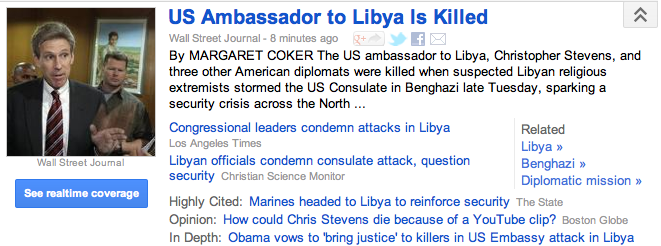

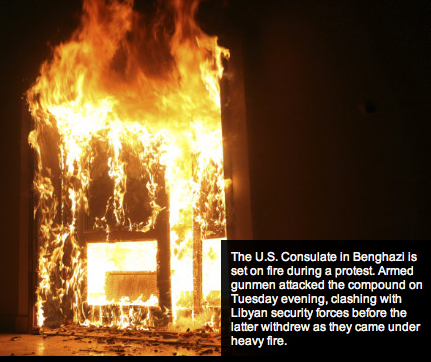




 Collapse of Industrial Civilization