The U.S. military industrial complex is the single biggest leech upon society. Both parties unquestioningly support it. While many view a Romney in the White House would be like adding an accelerant to the flame of U.S. militarism, Obama has proven himself one of the most militarily aggressive American leaders in decades. The military industrial complex sucks up more than half of every tax dollar and enriches weapons manufacturers at the expense of this country’s citizens. If you look back in history and read some of the essays of William Blum, you’ll have all the proof you need that the capitalists of America are not a stabilizing force in the world, but a destabilizing one. As others have noted, empires collapse from within. While they continue expanding outward and investing in their reach of hegemony, the needs of the citizens back at home are overlooked and neglected. We have an empire at the expense of democracy:
…In the first minutes of the debate, Biden gloated about how the economic blockade of Iran orchestrated by Washington had devastated the Iranian economy and caused widespread suffering among the people. He boasted of the US role in aiding the Syrian forces seeking to overthrow the Assad regime. And he repeatedly defended the administration by declaring that it had the full support of the Pentagon brass—accepting Ryan’s premise that the generals should have veto power over foreign policy.
The questions offered by debate moderator Martha Raddatz—an ABC News foreign correspondent with close ties to the US military-intelligence apparatus—took as their point of departure the unchallengeable legitimacy of the operations of American imperialism abroad and the profit system at home.
Many of them touched on foreign and military policy, in every case tacitly assuming that the United States has the right to bomb, invade and conquer any country it chooses. The discussion between the candidates dealt with the expediency of such military actions, not whether they were legally or morally justifiable.
Similarly, the parts of the debate that touched on domestic policy—the economy, health care, taxes and social issues like abortion—took for granted the existing division of the wealth of society between the tiny minority that controls nearly all of it and the large majority who are struggling to survive.
In the entire 90 minutes, there was not a single question or answer about the conditions of life of the working class—about cuts in wages, pensions and other benefits; the growth of poverty, homelessness and hunger; the spreading plague of evictions and foreclosures; the deterioration of public services such as education; the collapse of the social infrastructure…
Do you see a problem with this picture of the U.S.?
Other threats loom larger than the boogeyman terrorist. While we create enemies to fight, real manmade dangers like global warming and climate change are growing, threatening to wipe all of humanity off the face of the Earth. Humans don’t have that much time left on this planet, so it would probably be a wise decision to ratchet back all the war mongering, move away from a war-based economy, and try another approach to how we interact with the rest of the world before it all ends in more and more resource wars and the plume of a mushroom cloud.
Iran appears to be next on our bombing agenda. If we had not covertly overthrown their democratically elected leader, Mohammad Mosaddegh, in 1953 because he wanted to nationalize their oil resources, could we have averted this impending war?…
At a time where one of the few job choices for the youth of this country is to either flip hamburgers at a greasy spoon or line up as cannon fodder in oil wars, you have to wonder if the American dream has not become an American nightmare. Corporations enjoy record profits and little to no taxes while the next generation is kicked to the curb…
Sadly, suicide is the avenue many young people take to escape this parasitic and cut-throat political economy of ours. Yes, we eat our own young by way of the for-profit college industrial-complex.
Student loans can’t be discharged in bankruptcy. Credit card debt has even led to some untimely deaths. Why are we condemning our young people?
This week’s credit check: The average undergraduate student graduates college with $4,100 in credit card debt and $19,300 in student loans. Suicide is the second leading cause of death among college students…
President Obama’s recent budget proposal included ending an experiment that gave out Pell Grants for summer courses and eliminating a subsidy for paying interest on student loans for current grad students. That looks mild, of course, compared to what the GOP proposes to do — cut the maximum grant payment by $845, end funding to other aid programs, kill AmeriCorps entirely, and slash billions from agencies that support academic research.
But as explained in “Up to Our Eyeballs“, the cuts to grants isn’t exactly new. Grants have been declining over the last thirty years as loans came to replace them in financing college educations. Two-thirds of financing used to come from grants, in fact, and now two-thirds comes from loans — which is to say, taking on debt. The book notes, “The maximum [Pell Grant] award today covers about one-third the average expense of tuition and fees at a four-year private college, and only 22 percent of all grant recipients actually get the maximum.” Meanwhile, tuition is climbing — it rose 122% at public universities from 1986 to 2006. The average graduate leaves college with $19,300 in student loan debt, up from $9,250 about ten years ago.
And now loan defaults are on the rise. A new federal analysis shows that about one-quarter of students who took out loans to attend for-profit college defaulted within three years of starting repayment. That rate is also up for public colleges — at 11%, up 10% from the previous report — and private nonprofit colleges — at 8%, up from about 7%. This may come as little surprise with an unemployment rate of 9%. Indeed, while in some ways college graduates are better off than those without a degree, they’ve still seen the highest percentage increase in unemployment. It can be hard to keep up with loan payments when you can’t find a job. And unlike most forms of debt, student loan debt is with you forever — you can’t discharge it in bankruptcy. In fact, “Up to Our Eyeballs” notes that about 9% of Americas aged 45-64 still have student loan debt.
That’s all bad enough, but going to college also opens up another Pandora’s box of debt: credit card offers. Students graduated college with an average of $4,100 in credit card debt in 2008 and half of all undergraduates had four or more cards. In the 2006 movie Maxed Out, mothers Trisha and Jeanne recount how both of their children went off to school and were hit with tons of card offers — even though neither student had much income or any credit history. Neither parent had any idea what was going on, but eventually one of them had racked up 12 different cards and the other was behind on the very first card she got. In the end, both children killed themselves out of the desperation of not being able to pay off their debts. Suicide is disturbingly common among this age group: it is the second leading cause of death among those aged 15-24, and the rate has increased 200% for this group over the past 50 years. The reasons are complex and varied, but one cause can be financial strain…
We live in the age of bubbles. Condemning our children to suffocating debt right off the bat with little prospect of meaningful employment is another sign of a society that it morally and ethically bankrupt.
The Student Loan Bubble:
“Since 2009 student loans (non revolving consumer loans) have increased from 100 billion to 450 billion. The green dashed line shows where this debt should be based on the historical trend line and as shown below the student debt held by the US Federal government has ballooned in the past few years. This is what a bubble looks like.” – link
With all of the other problems we are leaving the next generation(climate change, an oligarchic economy, peak oil, the sixth mass extinction, etc), you would think that we would at least try to help them out in their education, but if we really cared about them and the future, then we would not be carrying along with business-as-usual, our heads planted firmly in the sand, while the very habitability of the planet hangs in the balance.
The youth are on their own. Climate change has become a campaign slogan, nothing more…
Climate change is indisputably anthropogenic – human-made. The long deep-pocketed propaganda, public relations, and lobbying arms of the corporate carbon industrial complex have long insisted that global warming is a reflection of unalterable natural forces that operate independently of human control. But the preponderant majority of the climate-sentient world agrees with the overwhelming consensus finding of contemporary earth scientists that global warming is anthropogenic (“human made”) – that it reflects the visible hand of human practice, politics, and policy. It knows that the story of the world’s broken ecology is about the human release of greenhouse gases resulting from the uncontrolled extraction and use of carbon-based fossil fuels.[8]
The harsh reality has to be acknowledged in elite capitalist media. Reflecting its duty to provide its privileged readers with reasonably accurate information, even the neoliberal, arch-capitalist Anglo-American Economist magazine acknowledges the dominant role of human agency in a recent special supplemental report on “The Vanishing North.” According to The Economist last June, “The shrinkage of the sea ice is no less a result of human hands than the ploughing of the prairies. The cause is global pollution, and the risks it carries are likewise global. The Arctic, no longer distant or inviolable, has emerged, almost overnight, as a powerful symbol of the age of man.”[9]
“Accelerating the Catastrophe”
What do the two dominant U.S. business parties offer towards the goal of saving the planet – well, its living species – from the crisis of anthropogenic global warming? Less than nothing. An escalation of the assault, in fact, making the problem worse.
Writing about the drastic melting of “the earth’s air-conditioner,” Gillis notes a chilling lack of urgency in reacting to the problem the part of rich nation governments, whose “main response has been to plan for exploitation of newly accessible minerals in the Arctic, including more oil.”[10]
Instead of acting to limit greenhouse emissions, those governments see the retreat of the great northern ice cover as an opportunity “to accelerate the catastrophe…The reaction,” Noam Chomsky notes, “demonstrates an extraordinary willingness to sacrifice the lives of our children and grandchildren for short-term gain. Or, perhaps, an equally remarkable willingness to shut our eyes so as not to see the impending peril.”[11] …
…The Republicans and the Democrats both decline to take the great time bomb of climate change[18] with anything remotely like the seriousness it deserves since doing so would disrupt “the economy.” They both worship at the altar of growth and the notion that “a rising tide lifts all boats” – capitalism’s longstanding fake, eco-cidal answer to popular pressure for jobs, and end to poverty, and the downward redistribution of income and wealth.[19] They both refuse to let long-term considerations of livable ecology and human survival interfere with the short-term pursuit of material expansion and the bottom line, not to mention the short-term logic of the election cycle.
I often wonder why people, who know that climate change is real, refuse to discuss it. They refuse to discuss it because it will upset their regimen of making money and carrying along with business-as-usual.
Bill Mckibben was on some late night TV show and he mentioned that the executive of some oil company said that if we need to move our food production north, then we will. Here is why that won’t work. Climate change means widespread famine, wars for dwindling resources, the fall of States, and the final extinction of man. There’s no more pretending that economic growth is possible or even a sane path for us to follow. Yet the system continues on through coerced participation.
I wonder if our forebears from 100 years ago would alter their actions if they knew from scientific and observable evidence that their way of life would cause the extinction of their progeny. Do you think they were more sensible back then? At that time, Edward Bernays and the tools of mass media manipulation had not yet entered society. Are not climate change deniers and free market ideologues the flat-earthers or Salem witch hunters of the 21st century? Feel free to give me an answer if you have one.
If you destroy the oceans, the cradle of life, then they will overtake you, returning you from whence you came…
You don’t want to push the system past those kind of tipping points because, if we do, we leave a situation for our children and grandchildren that will be out of their control. They won’t be able to stop it.
This post is the second in the climate tipping points series. Part one is here. Before getting into some of the other tipping points, I want to mention an excellent new paper, Going to Extremes: Climate Change and the Increasing Risk of Weather Disasters, written by Dr. Jonathan Overpeck, Professor of Geosciences and Atmospheric Sciences at the University of Arizona. It encapsulates a lot of pertinent information explaining the new reality of extreme weather events which humans will have to contend with from here on out.
An excerpt:
Agriculture
Scientists warn that global warming may threaten global food security as the changing climate could fundamentally affect humanity’s collective ability to feed itself. Although an increase in the amount of carbon dioxide in the atmosphere may initially promote plant growth, it does not necessarily translate into more food. Crops tend to grow more quickly in higher temperatures, leading to shorter growing periods and less time to produce grains. However, a changing climate will bring other, more significant hazards for agriculture, including greater water stress and the risk of higher temperature extremes that can quickly damage crops.
Agricultural impacts will vary across regions and by crop. Moderate warming and changes in precipitation are expected to decrease yield in seasonally dry and low-latitude areas. In California, where half the nation’s fruit and vegetable crops are grown, climate change is projected to decrease yields of almonds, walnuts, avocados, and table grapes by up to 40% by 2050.
Scientists have determined that any benefits increased carbon dioxide for some crops will be largely outweighed by negative factors if global temperature rises more than 1.8°F (1.0°C) from late 20th century values. It is expected that for each degree of warming, yields of corn in the United States and Africa, and wheat in India, will drop by 5-15%. In addition, if temperatures rise 9°F (5°C), most regions of the world would experience yield losses and global grain prices would potentially double…
…[The] NOAA recently concluded, after looking through 50 years of weather data, that droughts like the record 2011 Texas drought was made “roughly 20 times more likely” because of global warming. Indeed, observations have shown that certain extremes—high heat, heavy precipitation and floods, duration and intensity of droughts and extremes related to higher sea levels—have increased over the last half of the century.
Continuing on the list of Lenton’s and Schellnhuber’s tipping points…
6.) The Sahara and Sahel in Africa could change dramatically, becoming either far more dry or far more wet, as ocean temperature and vegetation-climate feedbacks change within a decade or so. This is considered an “intermediately sensitive” tipping point with large uncertainty.
Desertification and lower rainfalls with infrequent torrential floods from a warming climate is the clear winner according to studies:
One of the most significant climatic variations in the African Sahel since the late 1960s has been the persistent decline in rainfall. The Sahel is characterized by strong climatic variations and an irregular rainfall that ranges between 200mm and 600 mm with coefficients of variation ranging from 15 to 30% (Fox and Rockström, 2003; Kandji et al., 2006). A rainfall decrease of 29-49% has been observed in the 1968-1997 period compared to the 1931-1960 baseline period within the Sahel region (McCarthy et al., 2001). The West Africa region has experienced a marked decline in rainfall from 15 to 30% depending on the area (Niasse, 2005). The trend was abruptly interrupted by a return of adequate rainfall conditions in 1994. This was considered to be the wettest year of the past 30 years and was thought to perhaps indicate the end of the drought. Unfortunately, dry conditions returned after 1994 (McCarthy et al., 2001).
The rainfall variability in Africa has been studied by numerous authors since the beginning of the recent drought period in the 1970s. Many studies focused on the Sahelian areas ( Farmer, 1988; Lamb & Peppier, 1992; Hulme, 1992). Others also compared Sahelian rainfall with rainfall over other West African and Central Afrcan rregions (Thompson et al. 1985; Buishand, 1984).
Eminent scientist, Sir Gordon Conway, the former chief scientific adviser to the British Department for International Development and the former President of the Rockefeller Foundation said that Africa is already warming up faster than the global average and that the continent will experience a greater amount of intense droughts, floods and storm surges as a result…
…While there are many facets to climate change in Africa, in the case of central Nigeria it is important to look at food, water and migration. The environmental concerns in the Delta region and rising water levels across the south coast present challenges in themselves and would require an article in themselves.
Food crisis
Climate change threatens the ability of West Africa to compete in the global food system. An increase in temperature will undoubtedly reduce yields in a region where the population is set to double within the next two decades. Some projections claim that crop production will drop by 50% within the same timeframe as this population boom.
Nigerian food producers do not have the capacity to deal with such climate or population fluctuations. Consequently food availability in many regions will be dangerously compromised leading to greater competition for resources.
Water crisis
In addition to the concerns of food production, the availability of water in the Sahel reached crisis levels several times in recent years. In 2010 the region suffered a widespread famine, partially as a result of water shortages, and is now in the midst of an ongoing drought that has affected 18 million people.
Debates continue to rage over the future of Sahelian water as some project a decrease in rainfall of 40 percent in a region beset by drought already. Others have posited that rainfall may increase the Sahel but that such a change would likely lead to an infestation of locusts the like of which have been destroying farmland in Mali and Niger in recent weeks. When the rains do arrive the cities in the region are often unable to deal with them, evidenced by yesterday’s lethal flooding in Jos which has killed at least 35 people.
While future projections of waterfall vary, there is no doubting the present and impending threats from desertification.
Desertification is the most egregious form the temperature increase has taken as much of the Sahel is already suffering from climate-induced drought. Approximately 1,350 square miles of Nigerian land turns to desert each year. To put it in perspective, that is over twice the size of Greater London becoming impossible to farm each year. This leads to both farmers and herdsmen having to abandon their homes to move to an area with more abundant resources.
Migration crisis and conflict
Encroaching deserts do not merely mean water scarcity and a threat to food security but also mass migration. The direct competition for resources has the potential to become more acute in several regions of Nigeria and beyond in West Africa.
An example would be the millions of Malians and Burkinabes in Cote d’Ivoire as a result of the Sahelian droughts of the 1970s and 1980s. When the use of migrant labour lost its appeal to Cote d’Ivoire amidst the conflicts of the 1990s it set the course for outside interests to have a major impact on internal conflicts. Migration disputes continue between the two countries to this day including a substantial impact upon the Ivorian crisis of 2010-11.
As the Sahel continues to dry up as a result of climate change, the land can no longer support the animal stocks required by herders to survive. Since the only useful land to the herders is to the south of the desert, they move their herds towards the agricultural regions populated by sedentary farmers. Naturally, the destruction of crops by the herds creates tensions between those moving the animals and those who struggle to grow enough food for themselves in an increasingly unforgiving climate.
The policy solutions up to this point have focused on short-term political factors leading to knee-jerk responses to the violence. Communities in Ghana, Burkina Faso and Nigeria have expelled Fulani herders. The existential threat is forcing the Fulani to fight back.
A refusal to acknowledge the role that climate change has played in the region has led to a failure of governance. Such forced relocations are merely postponing the problem for a future government rather than trying to fix it. In this sense the agricultural policies in Nigeria have become a microcosm for climate policy.
In the case of Nigeria poor governance as a result of political short-termism has exacerbated the food crisis, the catalyst for migration issues. Until the 1970s agriculture made up 60% of Nigeria’s GDP. Since then technological stagnation, myopic policies and corruption have turned the country into a net importer at a cost of $150 billion each year. The $500 million allocated to agriculture in the 2012 budget could be enough to facilitate the needs of the country if spent wisely. Some have even argued that Nigeria has the capacity to be the breadbasket for the whole of West Africa.
Politics of inaction
Political short-termism has blighted Plateau State both in terms of local politicians and the global response to climate change. The sudden explosions of conflict in the region have been predicted for decades. Despite the upsurge in brutal violence, the policies remain largely the same.
With roughly 40% of Africa now affected by desertification, solutions will have to come soon. One such solution is the ‘Green Wall’, a wall of trees 4,300 miles long and 9 miles wide stretching across the African continent from Senegal to Djibouti. The idea has been advocated by West African leaders for over 30 years but has only now been realised.
Erecting walls has rarely provided a long-term solution to conflict. It is unlikely to do so for climate change.
7.) The El Nino Southern Oscillation, occurring across the tropical Pacific Ocean roughly every five years, refers to patterns of warming and cooling in the Pacific Ocean that affect weather worldwide. It could within 100 years change to a persistent warm or cool pattern, or change so that warm El Nino patterns are more intense, leading to more intense droughts in some areas, and likelihood of flooding elsewhere. This is considered an “intermediately sensitive” tipping point with large uncertainty.
Kevin Trenberth, Senior Scientist in the Climate Analysis Section at the National Center for Atmospheric Research (NCAR), suggests that we are seeing changes in El Nino:
There’s another elephant in the room: the long-term influence of greenhouse gases. “In my view, El Niño and La Niña are very likely changing as a consequence of climate change, but such changes cannot be measured when you get only one event every three to seven years,” says Trenberth. “The natural variability is enough to make it impossible to determine a climate change signal.” Still, he adds, when it comes to El Niño and La Niña, it’s best not to assume that past performance is any guarantee of future results.
8.) The Atlantic thermohaline circulation (THC) is a global 3-dimensional belt of ocean currents that transports large amounts of heat and freshwater around the world. In the North Atlantic, it manifests in a meridional overturning circulation (AMOC) which, through its northward transport of warm tropical waters by the Gulf Stream and North Atlantic Current, ensures these warm waters reach Europe.
The THC could collapse within 100 years as warming of the oceans alters water density and disrupts the global circulation of the seas. This is considered a “lowly sensitive” tipping point, with intermediate uncertainty.
from ‘Abrupt Climate Change‘ (Lead Author: Thomas L. Delworth,* NOAA Geophysical Fluid Dynamics Laboratory, Princeton, NJ):
…AMOC and the likelihood of future changes in the AMOC in response to increasing greenhouse gases, including the possibility of abrupt change.
We have five primary findings:
• It is very likely that the strength of the AMOC will decrease over the course of the 21st century in response to increasing greenhouse gases, with a best estimate decrease of 25-30%.
• Even with the projected moderate AMOC weakening, it is still very likely that on multidecadal to century time scales a warming trend will occur over most of the European region downstream of the North Atlantic Current in response to increasing greenhouse gases, as well as over North America.
• No current comprehensive climate model projects that the AMOC will abruptly weaken or collapse in the 21st century. We therefore conclude that such an event is very unlikely. Further, an abrupt collapse of the AMOC would require either a sensitivity of the AMOC to forcing that is far greater than current models suggest or a forcing that greatly exceeds even the most aggressive of current projections (such as extremely rapid melting of the Greenland ice sheet). However, we cannot completely exclude either possibility.
• We further conclude it is unlikely that the AMOC will collapse beyond the end of the 21st century because of global warming, although the possibility cannot be entirely excluded.
• Although our current understanding suggests it is very unlikely that the AMOC will collapse in the 21st century, the potential consequences of such an event could be severe. These would likely include sea level rise around the North Atlantic of up to 80 centimeters (in addition to what would be expected from broad-scale warming of the global ocean and changes in land-based ice sheets due to rising CO2), changes in atmospheric circulation conditions that influence hurricane activity, a southward shift of tropical rainfall belts with resulting agricultural impacts, and disruptions to marine ecosystems.
9.) The Indian summer monsoon, which is needed to sustain crops, could collapse anytime as land-to-ocean pressure gradients change with pollution and warming patterns. That could lead to an “erratic” fluctuation that would “chaotically change between an active and a weak phase.” This is considered an “intermediately sensitive” tipping point with large uncertainty.
THE dizzying midday heat of India’s northern plains cracks the earth. Farmers slump on the charpoys on which they sleep outdoors. It should be raining, yet the sky is clear. Prithi Singh, lean and wrinkled, says his entire rice crop has withered, along with fields sown for fodder. After two summers of erratic and delayed monsoons, this year the rains simply failed…
The monsoon months, June to September, bring three-quarters of India’s annual rainfall. Official studies show it to be erratic in four out of every ten years. Yet farmers rarely get any useful warning of shortfalls. As recently as late June, India’s meteorologists were predicting a normal monsoon. Punjab and Haryana, two north-western agricultural states, now say rains are about 70% below average.
Six western states have issued drought warnings.
The government in Delhi says it may soon offer emergency help. The country remains predominantly rural: over 600m out of 1.24 billion Indians rely directly on farming. Nearly two-thirds of Indian fields are fed only by rain. A one-off drought is tolerable. Rural job-creation schemes have lifted incomes for the poorest. Food prices have only started to creep up. Granaries are overflowing, thanks to recent bumper crops.
What is disturbing, though, are tentative signs of long-term change to the summer rains. A less stable monsoon pattern would be harder to predict. It would arrive late more often, yield less water, become more sporadic, or dump rain in shorter, more destructive bursts (which happened two years ago in Pakistan, where the Indus basin disastrously flooded). The concerns of experts about the monsoon long predate today’s dry spell.
Too little is known about summer weather systems on the subcontinent. India is short of observation stations, weather planes, satellites, climate scientists and modellers. The government and foreign donors are scrambling to make amends. But even with better data, monsoons are ill-understood once they leave the sea or low-lying land. At altitude, notably, for instance, approaching the Himalayas, it is far trickier to grasp just how factors such as wind direction, air pressure, latent heating and moisture levels interact to deliver monsoon rains.
One trend looks clear: India has grown warmer over the past six decades. Glaciers are melting in the Himalayas, and orchards in the range’s valleys are being planted on ever-higher slopes in search of a temperate climate. Crops in the northern grain belt, notably wheat, are near their maximum tolerance to heat, and so are vulnerable to short-term blasts of higher temperatures. North India’s cities are also growing hotter.
How more warmth affects the monsoon is not straightforward. A land mass heating faster than the oceans will, in theory, draw in more moisture to produce heavier monsoons. Yet the reverse appears to be happening. Specialists who met in February in Pune, in Maharashtra state, reported a 4.5% decline in monsoon rain in the three decades to 2009.
India’s leading climate modeller, R. Krishnan, of the Indian Institute of Tropical Meteorology in Pune, points to a study showing a “steady decline” in rainfall on the Western Ghats, which run down the west coast. A Japanese model that he has applied to southern India predicts that a still more rapid decline in rainfall is likely.
Such a fall may matter little for states such as Kerala in the south, which gets a monthly drenching of 50 centimetres (20 inches) during the wet season. But Mr Krishnan notes other changes, notably evidence that far fewer depressions have formed in the Bay of Bengal, off India’s east coast, in recent summers. Since these help drive rain to India’s arid northern plains, he concludes that “there is every reason to be concerned about the monsoon.”…
…Yet a decline in average rainfall may not be the main worry. Experts who met in Delhi in May to discuss climate-induced “extreme events” in India suggest that likelier threats include more short and devastating downpours and storms, more frequent floods and droughts, longer consecutive dry days within monsoons, more rapid drying of the soil as the land heats, and a greater likelihood that plant and animal diseases might spread.
It does not bode well for farmers, or for crammed cities with poor sewerage and other rotten infrastructure. Slums and coastal cities look especially vulnerable. Mumbai was overwhelmed in 2005 when nearly a metre of rain was dumped on the city in 24 hours.
Such events will happen more often, the highest official in the country’s environment ministry warns. He wants urgently to bring about a big increase in insurance schemes that spread weather-related risks. Rajendra Pachauri, who leads the United Nations’ Intergovernmental Panel on Climate Change, worries that India is not yet even seriously debating the new threats. He says it is ill-prepared for floods and droughts “that are now considered once-in-every-20-years events, but will be happening once in two years.
Part three of climate tipping points will be posted in a week or two.
“Capitalism has the innate genius of being inexorably driven to destroy everything it encounters, in order to turn it into money. ‘Creative destruction’ -the creation of money through the destruction of life. It is reaching its absolutely inevitable apotheosis now.”
~ Mulga Mumblebrain
Capitalism has unleashed the real weapon of mass destruction…
I was doing a little net surfing this morning and wondered what my buddy Jeremy Scahill has been up to. Shoot, it’s been 6 months since I’ve seen an article from him. A recent video of him reaffirms why I like him so much…
We live in this culture where we have this reality television which has become the real world, and what’s being done with our dollars, and with our soldiers, and in foreign countries in our name has become page seven. ~ Jeremy Scahill
He still has a sense of humor too.
Concerning those debates, which in this day and age are only another reality TV production brought to you by Wall Street, Democracy Now had a truly jaw-dropping show on the corporate takeover of the political debates over the last couple of decades. Secret agreements were formed between the two parties which framed the “debates” so that only predetermined, soft-ball questions would be asked and no third party candidates would be allowed to participate. When you watch a “presidential debate”, what you are seeing is pure fluff and staged answers. You might as well be hearing ventriloquist voices emanating from manikins. And to top it all off, one of the primary corporate sponsors of the debates is Anheuser-Busch. How fitting… Bud Light and cheesy made-for-TV “reality” shows constitute the method by which the American sheeple choose their ‘leaders’. I don’t know whether to laugh or cry.
I urge you to watch this interview. It explains a lot about the development of the modern American Cororatocracy and the dumbing down of its population of “consumers”.
Here is George Farah’s Website (click the pic to go there):
I found the following story pathetic, predictable, and a microcosm of America’s inverted totalitarianism. This is the corporate state flexing its fascist muscles with for-hire private armies, replete with the latest face-stomping boots and weaponry from Homeland Security. You can never have too much police intimidation in the land of the fearful and home of the paranoid.
Basic rights are what the workers were requesting, but the corporations are working hard to ensure American workers are on the same footing as laborers of Third World sweatshops.
…and don’t forget the sonic cannons to completely suppress the oppressed:
Criminalizing dissent extinguishes free speech. The threat of a nightstick cracking open your head is a good silencer. I fail to see much difference between America and China at this point. A lot has been written recently about the rise of America’s ‘Security and Surveillance State’. Let’s recap:
…the financialization of the economy and culture has resulted in the poisonous growth of monopoly power, predatory lending, abusive credit card practices and misuses of CEO pay. The false but central neoliberal tenet that markets can solve all of society’s problems has no way of limiting the power of money and has given rise to “a politics in which policies that favor the rich … have allowed the financial sector to amass vast economic and political power.”[24] As Joseph Stiglitz points out, there is more at work in this form of governance than a pandering to the wealthy and powerful: There is also the specter of an authoritarian society “where people live in gated communities,” large segments of the population are impoverished or locked up in prison and Americans live in a state of constant fear as they face growing “economic insecurity, health care insecurity [and] a sense of physical insecurity.”[25] In other words, the authoritarian nature of neoliberal political governance and economic power is also visible in the rise of a national security state in which civil liberties are being drastically abridged and violated.
As the war on terror becomes a normalized state of existence, the most basic rights available to American citizens are being shredded. The spirit of revenge, militarization and fear now permeates the discourse of national security. For instance, under Presidents Bush and Obama, the idea of habeas corpus with its guarantee that prisoners have minimal rights has given way to policies of indefinite detention, abductions, targeted assassinations, drone killings and an expanding state surveillance apparatus. The Obama administration has designated 46 inmates for indefinite detention at Guantanamo because, according to the government, they can be neither tried nor safely released. Moreover, another “167 men now confined at Guantanamo … have been cleared for release yet remain at the facility.”[26]
With the passing of the National Defense Authorization Act in 2012, the rule of legal illegalities has been extended to threaten the lives and rights of US citizens. The law authorizes military detention of individuals who are suspected of belonging not only to terrorist groups such as al-Qaeda but to “associated forces.” As Glenn Greenwald points out, this “grants the president the power to indefinitely detain in military custody not only accused terrorists, but also their supporters, all without charges or trial.”[27] The vagueness of the law allows the possibility of subjecting US citizens who are considered in violation of the law to indefinite detention. Of course, that might include journalists, writers, intellectuals and anyone else who might be accused because of their dealings with alleged terrorists. Fortunately, US District Judge Katherine Forrest of New York agreed with Chris Hedges, Noam Chomsky and other writers who have challenged the legality of the law. Judge Forrest recently acknowledged the unconstitutionality of the law and ruled in favor of a preliminary barring of the enforcement of the National Defense Authorization Act.[28]
The anti-democratic practices at work in the Obama administration also include the US government’s use of state secrecy to provide a cover or prevent being embarrassed by practices that range from the illegal use of torture to the abduction of innocent foreign nationals. Under the rubric of national security, a shadow state has emerged that eschews transparency and commits unlawful acts. Given the power of the government to engage in a range of illegalities and to make them disappear through an appeal to state secrecy, it should come as no surprise that warrantless wiretapping, justified in the name of national security, is on the rise at both the federal and state levels. For instance, the New York City Police Department “implemented surveillance programs that violate the civil liberties of that city’s Muslim-American citizens [by infiltrating] mosques and universities [and] collecting information on individuals suspected of no crimes.”[29] And the American public barely acknowledged this shocking abuse of power. Such anti-democratic policies and practices have become the new norm in American society and reveal a frightening and dangerous move toward a 21st century version of authoritarianism.
This police state the über wealthy are building better live up to all the hype that’s been advertised about it. There are too many horsemen (Climate Change, Peak Oil, Neoliberal Economic Policies, 6th Mass Extinction, Water Scarcity, Ocean Acidification) bearing down on humanity to even entertain the idea that the starving masses will go die quietly in some dark corner.
He and some friends wrote a paper, released yesterday, arguing that increases in food prices over the last few years can be explained almost entirely by two factors: financial market speculation and the growing use of corn for ethanol production rather than food.
Now these arguments have been madebefore, and also disputed or minimized. The new paper rejects a lot of those criticisms; more interestingly, it constructs a fairly simple four-parameter model that can pretty closely match the actual trends in food prices over the last few years:
So, neat. Also disturbing. And more disturbing is this:
That’s from their companion, non-mathy paper that proposes “that protests may reflect not only long-standing political failings of governments, but also the sudden desperate straits of vulnerable populations. If food prices remain high, there is likely to be persistent and increasing global social disruption.” The main graph is food prices, the red dotted lines are incidents of rioting. Charmingly the numbers in parentheses are death tolls. They predict global doom in 2012-2013.
We apparently value feeding our cars over alleviating worldwide hunger and misery as well as preventing global unrest. A little unrest is always good for the bottom line of the Military Industrial Complex.
“Food prices (blue) and food price model (red) including projected increases in coming months. The social unrest threshold, corrected for inflation (purple dashed line) is a level of food prices that is likely to cause food riots of impoverished populations and social disruption. Parameters as in July update, modified to include larger recent reported FAO food price index increase of 6%.” – link
And a new report buy Oxfam, Extreme Weather, Extreme Prices, looks into the grim future of food production in a world of extreme climate change:
Even under a conservative scenario, another US drought in 2030 could raise the price of maize by as much as 140 per cent over and above the average price of food in 2030, which is already likely to be double today’s prices.
Drought and flooding in southern Africa could increase the consumer price of maize and other coarse grains by as much as 120 per cent. Price spikes of this magnitude today would mean the cost of a 25kg bag of corn meal – a staple which feeds poor families across Africa for about two weeks – would rocket from around $18 to $40.
A nationwide drought in India and extensive flooding across South East Asia could see the world market price of rice increase by 25 per cent. This could see domestic spikes of up to 43 per cent on top of longer term price rises in rice importing countries of such as Nigeria, Africa’s most populous country.
My prediction is that we will continue to sacrifice land and human lives at the altar of American, and now Chinese, car culture. Walmart, the enduring symbol of happy fascism in America, will enjoy a growing pool of cheap labor amid cut-throat competition to ensure stellar profit margins. And a new reality TV series featuring climate change survivors will air on America’s propaganda box. Why not? We’ve already got a reality TV series to promote our perpetual war economy.
Here is the interview with Alf Hornborg along with a couple of essays of his. To understand our predicament, you must understand that the flow of energy, fossil fuels, humans have tapped into for running our economy, machinery, and energy-intensive mode of living has some serious environmental drawbacks, namely climate change and ocean acidification, which will certainly lead to our own destruction with the business-as-usual path we are so determined to follow. Some of the other consequences of basing our way of life so heavily upon fossil fuels are resource wars, support of brutal dictatorships in resource-cursed countries, hypocritical foreign policies based on resource control rather than the publicly professed mantra of human rights and democracy, the fomentation of resentment and terrorism towards the West, etc. So if you couple fossil fuels with capitalism, then you have a truly planet-destroying system. Capitalism is coerced competition for finite wages and resources, pitting person against person, company against company, and nation against nation. What the State calls Terrorism is really defined as those who have grievances with the plunder of their homeland’s resources to support the unsustainable lifestyles of OECD countries. If China continues to follow the same arc of resource consumption as America, the ‘War on Terror’ will be theirs as well. My favorite quote from Horborg:
Is the war on terrorism and climate debate two sides of the same coin? Imports of cheap oil are just as crucial as exports of carbon dioxide for a high-energy future. Both are confined to the parts of the world that have amassed the most purchasing power.
14 July 2011, 12:54 PM
Alf Hornborg on How We Have Been Mystified by Technology
by Adam Robbert & JP Hayes
Alf Hornborg, professor in the department of Human Ecology at Lund University, Sweden has long been untangling the tightly fused networks that merge the material dimensions of the environment with the cultural processes of society. “Machine Fetishism” Hornborg’s term for the way in which we have been mystified by technology highlights the links between technology and asymmetries in global exchange and uncovers the relationship between ecology and power. As technological devices multiply exponentially in a vain attempt to make our lives “efficient,” “luxurious” and “productive,” Hornborg, restless in his critique of technocapitalism, reminds us that on planet earth everything is a zero-sum game – one person’s gain is always another’s loss. Last January we caught up with Professor Hornborg to see where his latest thinking on machines, money and climate change stand and how we, as the concerned and informed, can intervene to make a difference.
Q: You have suggested that the difficulties in understanding the relationship between the environment, the economy and technology arise partly out of the separation between the social and natural sciences within the university. Bringing the natural and social sciences together implies entangling material dimensions of the environment with the cultural processes of society. How has this split mystified our understanding of the relationships between ecology and economics, and how is this affecting our ability to respond to major events such as the mass extinction of species, climate change and global inequality?
It is becoming increasingly obvious that material processes in the biosphere are very much intertwined with cultural aspects such as our ways of thinking and our consumption patterns. The most obvious example is perhaps climate change, which we know is largely driven by our patterns of consumption. If ecologists look at the biosphere as if there were no human societies in it, and economists look at societies as if they didn’t depend on the biosphere, none of them will know how to handle things like climate change. As long as economists continue to think that the only relevant metric for measuring global trade is money, they will not see the asymmetric net transfers of real resources such as energy and matter that make technological expansion possible within some areas of the world.
Q: Your analysis of technology as a globally situated event that requires the establishment of multiple asymmetric economic linkages to be in place raises questions about the role of technology in current ecological problems. If technology, and in particular machine technology, requires inequalities in the terms of global trade, how are we to assess the appropriate use and level of technology employed in solving ecological problems?
I don’t think modern technology will be of much use in solving ecological problems, because modern technology is basically a way of shuffling around resources and problems between different social groups. For example, by shifting to ethanol European car drivers may think they are becoming sustainable, but Brazilians engaged in growing sugar cane may be growing less sustainable as a result. Solving ecological problems should not be about finding new technological solutions, which generally means shifting the problems onto someone else, but about developing new economies and lifestyles which reduce environmental degradation.
Q: You advocate a “zero-sum” approach to your analysis of the relationship between ecology and economics, with technology acting as a kind of basin within which material exchanges of the biosphere and economic or political policies churn. In this way, what you call “machine fetishism” produces the image of a machine that exists without its connections to culture, power and ecology. Could you elaborate on how the illusion of machine technology came to take hold and what relevance unmasking machine power for what is –a globally situated object- has for encouraging a more politically just and environmentally sound society?
Our faith in technology emerged most markedly in the early nineteenth century, as colonial Britain was accumulating resources from all over the world and investing its economic surpluses in new machinery. To British economists of the time, it seemed as if ecological (land) constraints had been overcome once and for all, and the magic wands of labor and capital would suffice for economic progress to continue. That is exactly the time when modern economic ideology was born. What these Europeans could not grasp was that their capital was built on the exploitation of land and labor elsewhere in the world. In other words, the factors of production were NOT substitutable in an absolute sense. We are all ultimately dependent on land.
Q: Following David Harvey’s analysis of money, you have suggested that money is a social institution that generates “space-time” in such a way that is both an “objective, political ecological framework” and a “subjective experience.” In other words, money becomes the medium by which society, technology and even the whole biosphere are transformed within a particular set of cultural ideas. Given the latest financial crises, what do you foresee the role of currency to be in the transformation of the relationship between ecology and economics?
The financial crises illustrate the risks a society takes when it permits monetary assets and real, biophysical resources to become so thoroughly dissociated from each other. Our current problems with overconsumption would not have been possible if money had not become so completely disconnected from material resources. I am not saying that the gold standard that we abandoned in the seventies was a solution, but at least it limited the possibilities of printing ever more money to keep the treadmill of consumption (and production) spinning at a pace that satisfies the corporate demand for profits. But the real problem with money is not that it is fictitious, as all money must be, but that it embodies the idea that everything can be exchanged for everything else. What we need is an economy with at least two incommensurable currencies, to distinguish between values that should not be interchangeable, such as local subsistence and survival versus globalized entertainment.
Q: In your analysis of the industrial revolution you suggest that the “technomass” of industrial civilization is now competing with the “biomass” for living space on planet earth. How are we to approach the reality that we are already thoroughly enmeshed within a technosphere that now seems to require our continued maintenance (so as not to leak the wrong toxic substances into the wrong environments) and the fact the we need to be equally attentive to the livelihood of the biosphere which we depend upon for life?
The sooner we stop prioritizing the metabolic needs of our “technomass”, at the expense of human and other biomass, the better. Our technological fixes are no less absurd than the fetishism that brought earlier civilizations to collapse, whether through overinvestment in armies (Rome), temples (Maya), or megalithic statues (Easter Island).
Q: Given that you believe that an integration of the social and natural sciences would lead to better policy strategies, could you comment on the differences or similarities between these two spheres? Do the cultural, political and economic relations that social scientists study differ in nature from the ecological and material systems that a natural scientist study? Their conjunction seems necessary, and yet problems of integration seem numerous. What is our way forward here?
Yes, the social and natural sciences study different kinds of phenomena and need to respect the limitations of either approach. Societies have always implicated questions of power, unequal distribution, and collective processes of meaning-creation and ideology. Ecosystems can be studied and understood without insights about any of these things. On the other hand, as economists and others illustrate, social systems can be studied (if not understood) without any regard to the flows of matter and energy that preoccupy the ecologists. To understand the interface between social and ecological systems we need to understand POWER as partly material, partly symbolic. Social power is based on unequal access to material resources, but also on the ideological mystification of such inequalities.
Q: Uncertainties of measurement and misleading methodological approaches characterize current economic attempts to manage the world system. Such a measurement/theory mismatch creates uncertainty and error in understanding what is occurring in the present state of economic-ecological affairs. As a result of these poor methodologies, modern bureaucracies have created a routine of socioeconomic functioning that is notable for its lack of applicability to social & environmental reality. How can we characterize and develop change that ensures the development of a truly sustainable world system? How can we, as academics, activists, and concerned citizens, best intervene, as you say, “in the destructive logic of our current economic system?”
First of all by recognizing the dilemma as I have outlined it in my earlier responses. Second by using their political agency (ultimately as voters in democratic political systems) to choose representatives who are prepared to reorganize the economy for the long-term good of all people and ecosystems, rather than for the short-term benefits of corporate interests.
Q: Could you comment on the role of emergent popular discourses on the environment such as “green capitalism,” “sustainable development” and “ecological economics?” Though each is different in character and always subject to a variety of uses, do you think that these movements, in general, are adequate to the tasks they set out to solve?
I don’t believe in “green capitalism” or “sustainable development” the way they are currently conceived, as both are oxymorons. “Ecological economics” is a very important arena for discussion, but will lead to real changes in our thinking only if it is able to radically transcend the assumptions of conventional economics.
Q: What, in your opinion, are the most effective modes available with which to express a need for change within the current political and economic regimes? If traditional models of education, politics and economic theories are not serving the urgency of the crises at hand, what action do you advise concerned peoples to take?
The best we can do is to develop awareness of our global predicament and resort to it as opportunities for real change appear, not least as we confront crises of various kinds in the future. Crises, whether financial, environmental, or other (or a combination of them), can offer possibilities of change, and it is important for society not to be confused by such events, but to understand what is happening and be prepared to safeguard the health and security of citizens.
Q: If you are correct in asserting that “mainstream” thinking about the environment is fundamentally flawed and will not lead to positive change (as advocated by the sustainable development movement, for example) where do we start? Must we begin from scratch so as to completely re-interpret the ingredients and causes of our crises, or do we in fact have something like a base or foothold from which we can begin a renewed attempt to make a difference in the world? Who are the primary thinkers involved that provide us with tools that the 21st century can believe in?
The Internet has provided humanity with a unique chance to globally communicate about crises and how to handle them. I will not mention any specific thinkers, only note that the social and natural sciences both have rich traditions of thought that attempt to show how social power and inequalities are interconnected with natural circumstances such as land constraints, soil fertility, and thermodynamics. We need more current researchers working on how these different kinds of knowledge can be stitched together. Unfortunately, a very small minority of researchers is dedicated to such challenges.
Published January 6, 2010 – 10:00
Updated January 7, 2010 – 09:31
What will future historians say about the early 2,000’s?That it was the turning point.In the course of that decade were visualized the unsustainable contradictions within global fossil fuel-driven industrial capitalism.
First came 9/11. We sat glued in front of the television screen and saw the towers fall, again and again. We were just as shocked as the European upper classes two hundred years ago when the mob guillotined the royals in Paris. How could such a hit happen to us? Where did all this hate come from? Are there really such contradictions in the global community? Could it have to do with oil, this stored solar energy from the ancient landscape that drives most of our lives, that we can afford to continue paying for it? And to whom then is this resource so critical that some countries are prepared to go to war for it.
Then came the Peace Prize of Al Gore, a person who appeared to have become the world’s most powerful man able to say that we were destroying the planet, and be rewarded for it. If a U.S. Vice President, Nobel Committee and the UN climate panel agree on the reality of global warming, may we take it seriously? Should we stop using fossil fuels?
Then came the financial crisis – the worst stock market collapse since 1929.Is the world economy really so vulnerable?And how is it that economists could not predict it?Are there contexts in the world that economists have not understood?
The early 2,000’s was the decade when we passed the peak of conventional oil production, that which in English is called peak oil. We now, therefore, use the remaining oil faster than we can find new deposits. We realize that oil prices will rise in the future, making our current lifestyle increasingly untenable… a two hundred year old bubble approaching the breaking point.
In two centuries we have been able to forget that the earth’s land surface is the resource that limits us.We have become used to deriving our energy from drilled holes in the earth’s crust instead of from our landscape.We have lived in the former solar energy of epochs instead of the annual insolation stored in living plants.
What should we do when we can no longer afford oil? How will the land be sufficient when it once again will have to support both people and vehicles? It used to be horse feed we had to compete with, now it is the cane for ethanol.
Not only do biofuels take up land space needed for food for a growing world population, but they also can not be nearly enough to sustain the consumption levels that the rich world has become accustomed to.
The early 2,000’s was also the decade when we definitely realized that the balance of power in the world would not be forever. China became an economic power by cashing in on cheap labor and lax environmental laws. We buy Chinese goods like never before. But is continuing to wallow in their products the best thing we can do for the Chinese, their environment and our common atmosphere?
The early 2,000’s was also the decade when a new kind of president moved into the White House. A whole world had understood that the American people could no longer hope to solve global conflicts by taking up arms. But what options are there really for Obama?
During the past decade, two of America’s most powerful politicians received the Nobel Peace Prize, the one for his warning us of what can happen to the climate if we continue to burn oil, the other in hopes that he will refrain from war…always for oil.
And just before the decade is over, we will experience COP 15. Fifteen thousand delegates and a hundred heads of state will gather in Copenhagen to discuss whether there is any hope. We know that carbon dioxide emissions are only continuing to increase despite all the warnings and promises. We recognize that emissions are as unevenly distributed in the world as money. An average American emits 18.7 tons of carbon dioxide per year; an average of 1.3 tons for Indians.
Perhaps we can imagine a connection between these various trends and events? Is the war on terrorism and climate debate two sides of the same coin? Imports of cheap oil are just as crucial as exports of carbon dioxide for a high-energy future. Both are confined to the parts of the world that have amassed the most purchasing power.
Economic growth is basically about earning money to expend resources.And the more money we earn today, the more resources we can afford to consume tomorrow.No wonder it is difficult to reduce carbon emissions.
But this is a logic that economists are not trained in. Can we hope that the next decade offers more insight – and more power shifts?
Alf Hornborg
Professor of Human Ecology, Lund University
Occam’s razor suggests that the more likely explanation for some phenomenon is the explanation which requires the fewest number of assumptions or required assertions. Even though in science the correct answer is sometimes the more complex one, rationally speaking, the fewer amount of assumptions that we have to make in order to get a theory to work, the better.
For example, think of how many assumptions you have to make to consider the September 11th attacks a government conspiracy. So many claims about time, space, engineering, politics, prior knowledge, flight patterns, etc., must be made to even start bridging the gap. On the other hand, the simpler explanation that requires less assumptions (and indeed has more evidence) is that a group of terrorists hijacked some planes and flew them into the buildings.
By association, Occam’s razor regularly dismantles most conspiracy theories without much effort. Of course, any of the conspiracies could be true, but without evidence the numerous assumptions that need to be made push these theories into irrational confines.
The infographic below takes a similar approach. On the side that accepts anthropogenic (human-caused) global warming, it takes many more assumptions to make the idea that the majority of the world’s climate scientists are in collusion to make a worldwide hoax from which they see no benefit work than it does to think that oil companies are protecting their bottom line. We know that there are huge oil lobbies, oil companies that have scientists in their pockets, and that large corporations are trying to purposefully undermine the science of climate.
Therefore, which makes more sense?
At the root of the Anthropocene Crisis of the 21st century is the unabated expansion of humankind fueled by fossil fuels. We are pushing all other living things off the cliff of extinction, with ourselves soon to follow.
…32 per cent of livestock breeds are under threat of extinction within the next 20 years, the UN Food and Agriculture Organization says. And 75 per cent of the genetic diversity of agricultural crops has been lost since 1900.
“Because we don’t really know the full impacts of climate change down the line, we don’t really know what’s going to happen in terms of growing conditions around the world. It’s just safer for us to have a lot of these other varieties in our pocket,” said David Ainsworth, spokesman of the CBD Secretariat.
Cooper said the pace of extinctions among the planet’s estimated 9 million species – plants, animals from insects to whales but excluding legions of tiny bacteria – was perhaps 100 times the background rate estimated in fossil records.
“If you project the rates into the future, the rest of the century, they are likely to be 100 times larger still,” he said. The rising human population threatens ever more habitats with expanding cities, farms and roads…
The machine of industrial civilization has become the master of our fate. It rolls onward under its own colossal impetus, crushing all in its path. The billions of people in the globalized economy are now mere cogs in its wheel. ‘Economic development and growth’ is the mantra chanted by all. ‘Green’ and ‘sustainable’ are the adjectives used by corporations to whitewash the continued plunder of the environment. Capitalism, an economic system that requires continued expansion and control, is inherently unstable and incompatible with the long-term habitability of the planet. Will the principles of biophysical economics become accepted as truth before we destroy ourselves?
The answer lies in this excerpt from Chris Hedges’ latest essay:
…perhaps the most egregious assault will be carried out by the fossil fuel industry. Obama, who presided over the repudiation of the Kyoto Accords and has done nothing to halt the emission of greenhouse gases, reversed 20 years of federal policy when he permitted the expansion of fracking and offshore drilling. And this acquiescence to big oil and big coal, no doubt useful in bringing in campaign funds, spells disaster for the planet. He has authorized drilling in federally protected lands, along the East Coast, Alaska and four miles off Florida’s Atlantic beaches. Candidate Obama in 2008 stood on the Florida coastline and vowed never to permit drilling there.
You get the point. Obama is not in charge. Romney would not be in charge. Politicians are the public face of corporate power. They are corporate employees. Their personal narratives, their promises, their rhetoric and their idiosyncrasies are meaningless. And that, perhaps, is why the cost of the two presidential campaigns is estimated to reach an obscene $2.5 billion. The corporate state does not produce a product that is different. It produces brands that are different. And brands cost a lot of money to sell…
The excerpt ‘On the Threat of Environmental Catastrophe’ at the bottom of this post is from an essay just published a few hours ago entitled ‘A Tale of Two Crashes Part 2‘ from Empirical Magazine. It elaborates a bit more on the coming climate chaos and the destruction of industrial civilization. As has been noted by others, the estimates of the IPCC have been overly conservative:
Read what John Reilly, a senior climate change researcher at Massachusetts Institute of Technology, has to say about future scenarios in ‘On the Threat of Environmental Catastrophe’. Also, take notice of this recent news article:
Climate scientists have long projected that increases in global temperatures will result in higher rainfall and flooding in tropical regions. But now a MIT study has put some numbers to the prediction. Writing in Nature Geoscience in a September 16th letter titled “Sensitivity of tropical precipitation extremes to climate change,” Paul A. O’Gorman, professor of atmospheric science at MIT, said that for every one-degree Celsius increase in global surface temperature, there will be 10 percent heavier rainfall extremes in the tropics.
O’Gorman tells MIT News that “The study includes some populous countries that are vulnerable to climate change, and impacts of changes in rainfall could be important there.” Extreme rainfall in the tropics responds to climate change in distinct ways from that of other regions. He added, “It seems rainfall extremes in tropical regions are more sensitive to global warming. We have yet to understand the mechanism for this higher sensitivity.”
“The influence of private power over human fate is as strong as it has ever been and looks set to have an impact generally on much of life on earth if the reckless and single-minded pursuit of profit so often associated with modern capitalism is not reigned in. The gravity of the problem is almost certainly unrivaled by any threat to the species in recent history since the Second World War or the Cuban missile crisis.
Yet the danger is not posed by the familiar boogeyman of corporate greed per se. The threat is represented by the effects of significant global climate change, presently on course to occur barring some miracle.
An authoritative government report released last year indicated that in only the next decade New York would be under threat from temporary or partial submergence by rising sea levels and increased storm activity similar to Hurricane Irene, causing enormous damage with a massive economic price tag attached to the mess. Yet this scenario, entirely plausible and very worrying, is only a taste of what looks set to be a part of our future.
In November last year the International Energy Agency released a report described as the “most thorough analysis yet of world energy infrastructure,” which indicated that if global fossil-fuel-producing infrastructure (i.e. coal and power stations) is not widely replaced or significantly altered in the next five years, then it would “become impossible to hold global warming to safe levels, and the last chance of combating runaway climate change will be lost for ever.”
Additionally, around the same time as the IEA report was published last year, the US Department of Energy reported that the “biggest jump” in carbon dioxide (a major cause of climate change) outputs ever measured occurred in 2010, indicating that the trajectory of risk from the effects of global environmental cataclysm is rising steeply.
World-leading academics like John Reilly, a senior climate change researcher at Massachusetts Institute of Technology (MIT), have warned that some of the most widely-accepted estimates of the effects of global warming have been far too conservative. Reilly’s team at MIT forecast carbon emissions scenarios, their likelihood, and what the most likely outcomes are in the event they occur. What they discovered recently does not bode well. According to an Associated Press report, a “[UN-organised International Panel on Climate Change, or IPCC, report’s] worst-case scenario was only about in the middle of what MIT calculated are likely scenarios.” It is interesting to note that, to many climate skeptics, the IPCC report was widely derided as being “too alarmist.”
The IPCC estimates foresaw a rise in global temperature of somewhere between 4 and 11 degrees Fahrenheit (2.4-6.4 Celsius), with the most likely outcome being a rise of 7.5 Fahrenheit (4 degrees Celsius). To put this in perspective, the generally-agreed baseline for “safety” in terms of climate change would see an increase in global temperatures by only 2 degrees, in itself a global climate shift that would still have profound consequences.
However, topping the safety line things begin to look really scary. At 3 degrees alone the consequences for humanity are close to nightmarish.
According to British newspaper The Guardian’s science correspondent Alok Jha, who compiled the predictions of researcher Mark Lynas, the World Bank’s “Stern report,” and Britain’s Met Office, at 3 degrees: “Billions of people are forced to move from their traditional agricultural lands, in search of scarcer food and water. Around 30-50% less water is available in Africa and around the Mediterranean.” At 4 degrees “Italy, Spain, Greece and Turkey become deserts and mid-Europe reaches desert temperatures of almost 50 degrees Celsius in summer. Southern England’s summer climate could resemble that of modern southern Morocco.”
At 5 degrees and above, the picture becomes apocalyptic. The results would see “global average temperatures … hotter than for fifty [million] years.” Additionally, Jha said that “most of the tropics, sub-tropics and even lower mid-latitudes are too hot to be inhabitable. The sea level rise is now sufficiently rapid that coastal cities across the world are largely abandoned,” with a risk that at 6 degrees and over, “there would be a danger of “runaway warming,” perhaps spurred by release of oceanic methane hydrates,” risking that the “human population would be drastically reduced.”
That’s quite some bad news. However, at present a 5-6 degree rise is not guaranteed, nor yet confidently forecast. There’s a lot of work to be done however to prevent or mitigate the worst effects of probable temperature rises above 2, 3 or even 4 degrees Celsius. God forbid anything higher.
Yet despite the urgent need for action on this issue, there are those who would try to convince the average citizen that climate change, a problem of planetary significance that Western industry has had an unrivalled role in creating, is merely the product of “liberal propaganda”–a kind of modern-day myth.
Oil companies like Exxon-Mobil are still largely the biggest in the world, and these groups have been proven to have funded climate change skeptics.
As the “carbon bubble” is being readied for bursting by rising emissions, a drop in media coverage of the effects of climate change has been measured by groups monitoring the news, helping to efface the issue from the public mind in an election year, where the aftermath of the economy still rides high among concerns for most people.
Yet regardless of the economic woes that still persist for many people, through little fault of their own, something has to shift in the world if it is to be rescued from the threat of climate change.
A Stark Choice
If this is to be done, a stark choice between submitting to the imperatives of the economy’s endless need for profit or protecting the future of the planet may be required of us. As environmentalist Bill McKibben articulated recently: “If we spew 565 gigatons more carbon into the atmosphere, we’ll quite possibly go right past that reddest of red lines. But the oil companies, private and state-owned, have current reserves on the books equivalent to 2,795 gigatons–five times more than we can ever safely burn. It has to stay in the ground. Put another way, in ecological terms it would be extremely prudent towrite off $20 trillionworth of those reserves. In economic terms, of course, it would be a disaster, first and foremost for shareholders and executives of companies like ExxonMobil … If you run an oil company, this sort of write-off is the disastrous future staring you in the face as soon as climate change is taken as seriously as it should be, and that’s far scarier than drought and flood. It’s why you’ll do anything–including fund an endless campaigns of lies–to avoid coming to terms with its reality.”
“Growth for its own sake,” so the saying goes, “is the ideology of the cancer cell.” Regardless of the cliché of this thoroughly-abused slogan, its message is apt to our present crisis: the interminable desire for gain required by our present way of life may yet so damage the organism from which it derives sustenance (our planet) that it sabotages its own existence. This negative-sum game is given license to continue apace because it is inexpedient for those with real power to challenge it.
Endless clamoring for growth has meant that along with development, massive pollution has shadowed the steps of Western prosperity–yet the effects of this on the climate, now widely accepted as fact, are an “externality” not incorporated into market calculations. Climate change thus remains a total irrelevance to the closed system of global capitalism, regardless of its long-term impacts on the future of the sine qua nonbase that supports the market itself: human beings and their labor, the environment and its resources.
For big business, even when there are devastating economic crashes, somebody always benefits. Goldman Sachs famously reaped massive rewards by betting on the housing crash that they themselves contributed to, helping to consolidate their leading position in the banking world. However shocking this may seem, however such acts stink of grotesque immorality–they are merely consistent with the demands of the system in which they operate, and the rigid logic of the market.
It remains for politicians to act on this issue. But they are not doing enough.
As a result of runaway climate change, losses in the future may be so broadly and profoundly felt, however, that future generations can hardly be expected to accept with equanimity what history may teach them about how the miserable state of the world they have inherited came to be. Explaining to our grandchildren that the Earth was left to go to hell because it was deemed too much for our politicians to reign in corporate and industrial irresponsibility will not be easy, but it won’t stop it from being true–if we do nothing.
It is time to forget what is convenient or ideologically appealing, and address what is real–for our children’s sake…”
Epic ice melt in the Arctic puts on a spectacular demonstration illustrating the consequences of our orgy on fossil fuel consumption, yet the global bureaucrats’ and corporatists’ only reaction is to race northward for further resource plundering.
New Zealand’s Kennedy Graham MP, who has tried to raise such points with his country’s bureaucrats and corporatists, has an interesting article out which questions whether these business suits he deals with are living on the same planet he is:
…A quarter century, actually, since the US Senate and the Brundtland Report put the issue on the international agenda. We’ve had, since then, Rio and Cairo, Kyoto and Marrakesh, Copenhagen and Cancun and Durban, and Rio again.
But the past week has been especially intensive, and this for two reasons. The NZ Parliament is conducting hearings on the Government’s bill to amend the ETS[emissions trading scheme], in response to the Advisory Panel’s report of 2011. And, concurrently and with no strong causal link, the latest scientific findings of climate change are reported in.
So, in the past week, I have asked two questions of the Government on climate change. Taken together, they traverse the range of the issue – the NZ Government’s domestic instrument for combating climate change, and its appreciation of the global reality out there.
The first questioned the Government on what the Green Party critiques as a weak emissions trading scheme, ‘subsidising polluters’ and incurring considerable net fiscal cost to the taxpayer. The second queried whether, in drafting the latest amendments to the ETS, the Government had sufficiently taken into account the latest scientific findings.
In short, the Government’s response was as follows:
– The amendments defer any strengthening of the ETS because we live in fragile economic circumstances and it is ‘not a stellar time’ to increase charges and taxes. The changes did not amount to ‘subsidies’, and indeed New Zealand was on track to more than meet its five-year Kyoto obligations.
– The Government had, indeed, adequately accounted for the latest scientific findings, but it has to take into account a whole range of factors such as the global developments and employment levels in New Zealand.
This is as close as it gets to a meaningful exchange in the NZ Parliament on the future of the planet. I acknowledge that Ministers Groser and Bridges are well-meaning and competent. I count them as friends. Tim Groser, in particular, has huge international experience and reputation.
That does not make them necessarily right in what they are doing. It is possible for such people to be egregiously wrong, fatefully, fatally.
Effectively, the ministers are acknowledging that the amendments weaken the ETS in the sense of deferring sectoral obligations, and seek to explain why – protection of jobs, firms and investment at home against risk competitiveness during tough global economic times.
That is circular logic, and it rests on an erroneous premise. We are entering the Global Ecological Crisis. An ecological crisis means an economic crisis. They are one and the same thing. You do not defer measures to combat an ecological crisis because you are in an economic crisis. You deal with them as one crisis, and seek to resolve ‘it’ immediately.
The latest scientific findings are alarming. They possibly portend a new era for humanity – one where dangerous anthropogenic climate change may arrive within half a decade out, not half a century.
– Arctic ice extent, as measured this month by the US Snow & Ice Data Center, is 49% below the past 30-year average. Between 2007 and ’11 it has dropped from 4.17 m. sq. km to 3.41 m. sq. km., an 18% drop in four years. The different trends in Antarctica, where there is some cooling and ice-accretion, is understood by scientists to be consistent with an increase in average global temperature.
– Russian scientists on the Viktor Buinitsky research vessel have found methane fields in the Laptev Sea of 1 km. in diameter. Methane deposits in the seabed near Spitzbergen are effervescing to the surface.
– This has been described by Cambridge University scientist, Prof. Wadhams, as ‘terrifying news’. It facilitates the release of potent methane gas from land-based tundra and seabed floor, reducing Earth’s albedo effect, risking a positive feedback loop on temperature increase that can breach unpredictable tipping-points. While we must await the IPCC’s 5th assessment report in 2013, the latest specific findings are of far-reaching concern.
I confess I experience my share of surreal moments in the NZ House of Representatives when I ask these questions and receive the answers I do. It is as if we truly are, my National MP colleagues and I, on different planets.
For I am asking questions, in as measured tones as I can, of what appears to me to be about the future of the planet and humanity, and they are answering as if (a) it is just another problem and (b) I am something of an irritant.
No-one will be more relieved than I shall, if the science proves to be wrong or excessively ominous. I shall simply look stupid. That will be my preference, since my grand-children will have a decent future.

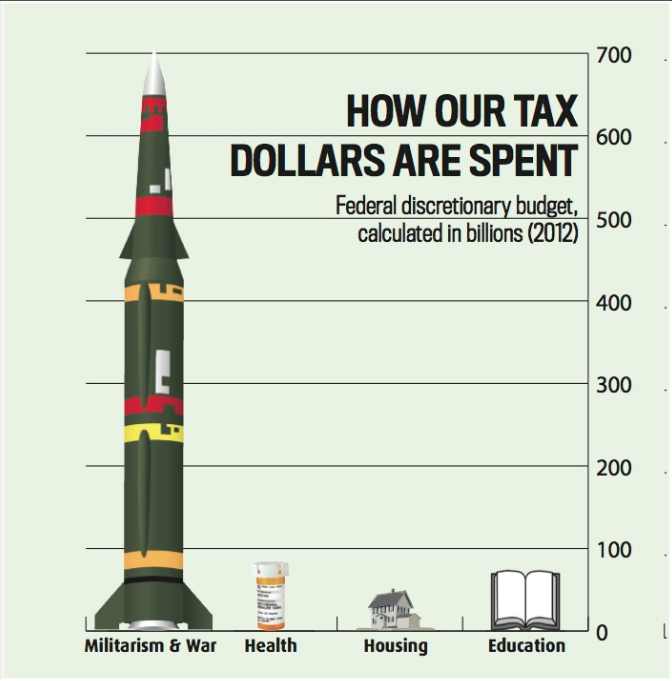


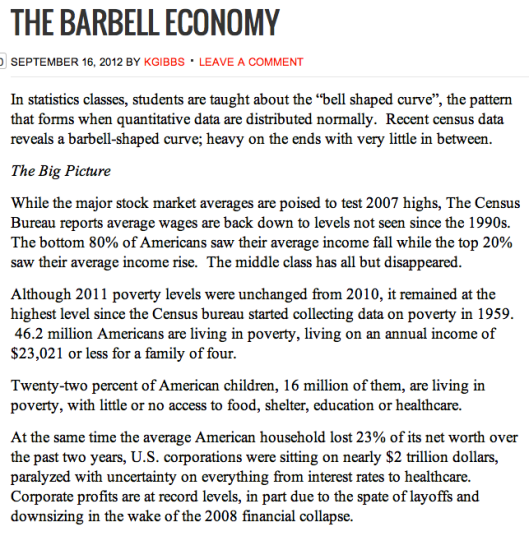

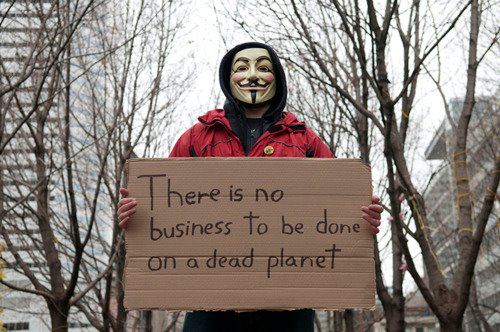




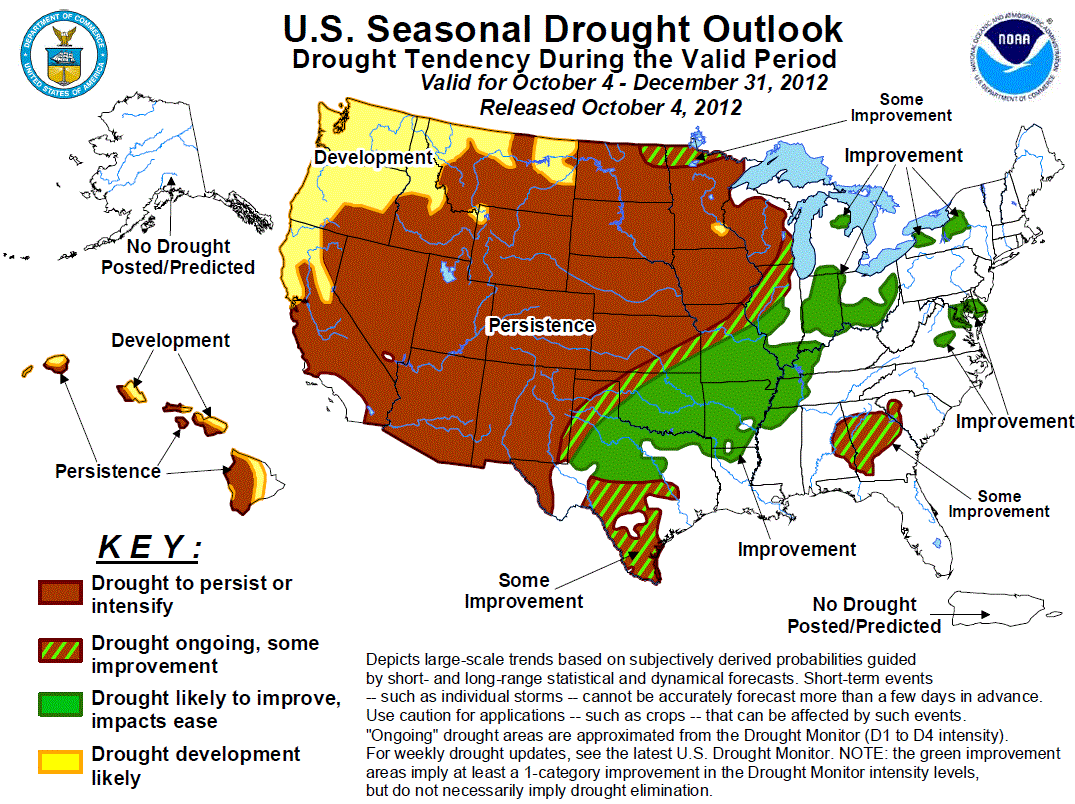







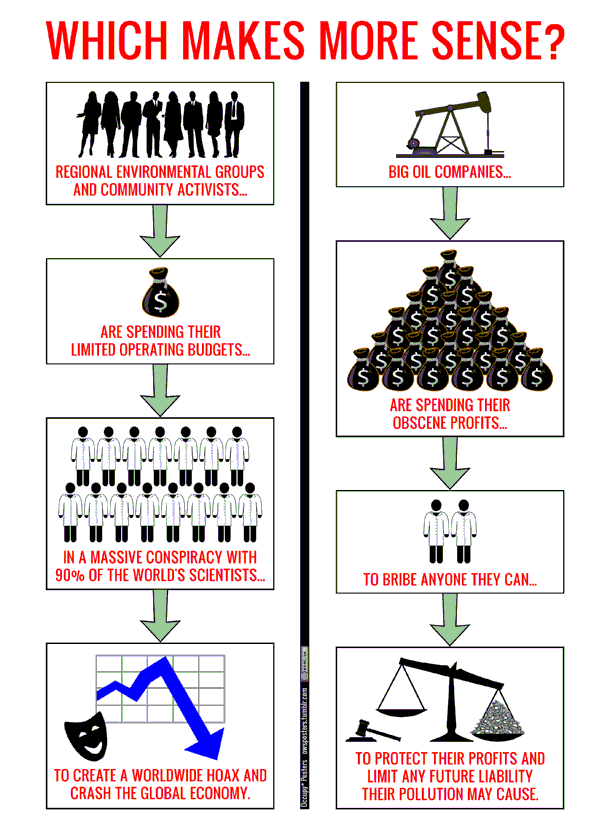



 Collapse of Industrial Civilization