Occam’s razor suggests that the more likely explanation for some phenomenon is the explanation which requires the fewest number of assumptions or required assertions. Even though in science the correct answer is sometimes the more complex one, rationally speaking, the fewer amount of assumptions that we have to make in order to get a theory to work, the better.
For example, think of how many assumptions you have to make to consider the September 11th attacks a government conspiracy. So many claims about time, space, engineering, politics, prior knowledge, flight patterns, etc., must be made to even start bridging the gap. On the other hand, the simpler explanation that requires less assumptions (and indeed has more evidence) is that a group of terrorists hijacked some planes and flew them into the buildings.
By association, Occam’s razor regularly dismantles most conspiracy theories without much effort. Of course, any of the conspiracies could be true, but without evidence the numerous assumptions that need to be made push these theories into irrational confines.
The infographic below takes a similar approach. On the side that accepts anthropogenic (human-caused) global warming, it takes many more assumptions to make the idea that the majority of the world’s climate scientists are in collusion to make a worldwide hoax from which they see no benefit work than it does to think that oil companies are protecting their bottom line. We know that there are huge oil lobbies, oil companies that have scientists in their pockets, and that large corporations are trying to purposefully undermine the science of climate.
Therefore, which makes more sense?
At the root of the Anthropocene Crisis of the 21st century is the unabated expansion of humankind fueled by fossil fuels. We are pushing all other living things off the cliff of extinction, with ourselves soon to follow.
…32 per cent of livestock breeds are under threat of extinction within the next 20 years, the UN Food and Agriculture Organization says. And 75 per cent of the genetic diversity of agricultural crops has been lost since 1900.
“Because we don’t really know the full impacts of climate change down the line, we don’t really know what’s going to happen in terms of growing conditions around the world. It’s just safer for us to have a lot of these other varieties in our pocket,” said David Ainsworth, spokesman of the CBD Secretariat.
Cooper said the pace of extinctions among the planet’s estimated 9 million species – plants, animals from insects to whales but excluding legions of tiny bacteria – was perhaps 100 times the background rate estimated in fossil records.
“If you project the rates into the future, the rest of the century, they are likely to be 100 times larger still,” he said. The rising human population threatens ever more habitats with expanding cities, farms and roads…
The machine of industrial civilization has become the master of our fate. It rolls onward under its own colossal impetus, crushing all in its path. The billions of people in the globalized economy are now mere cogs in its wheel. ‘Economic development and growth’ is the mantra chanted by all. ‘Green’ and ‘sustainable’ are the adjectives used by corporations to whitewash the continued plunder of the environment. Capitalism, an economic system that requires continued expansion and control, is inherently unstable and incompatible with the long-term habitability of the planet. Will the principles of biophysical economics become accepted as truth before we destroy ourselves?
The answer lies in this excerpt from Chris Hedges’ latest essay:
…perhaps the most egregious assault will be carried out by the fossil fuel industry. Obama, who presided over the repudiation of the Kyoto Accords and has done nothing to halt the emission of greenhouse gases, reversed 20 years of federal policy when he permitted the expansion of fracking and offshore drilling. And this acquiescence to big oil and big coal, no doubt useful in bringing in campaign funds, spells disaster for the planet. He has authorized drilling in federally protected lands, along the East Coast, Alaska and four miles off Florida’s Atlantic beaches. Candidate Obama in 2008 stood on the Florida coastline and vowed never to permit drilling there.
You get the point. Obama is not in charge. Romney would not be in charge. Politicians are the public face of corporate power. They are corporate employees. Their personal narratives, their promises, their rhetoric and their idiosyncrasies are meaningless. And that, perhaps, is why the cost of the two presidential campaigns is estimated to reach an obscene $2.5 billion. The corporate state does not produce a product that is different. It produces brands that are different. And brands cost a lot of money to sell…
Sometime next week I’ll post part two of climate tipping elements, but I want to emphasize right now that industrial civilization’s undoing will be its transgression of environmental elements which will cause dramatic and worsening rates of climate change. The delusion that there will be nice, slow and predictable changes from anthropogenic climate change has already been destroyed by the first tipping point of the melting Arctic sea-ice sheet and its multiple, concomitant feedback loops. The Arctic is now irreparably altered, never to recover from the clumsy tinkering and meddling of human hands. Arctic animal species face mass extinction not only from the loss of their habitat but also from hybridization and competition from southern species migrating northward as well as the spread of diseases. Bid adieu to those disappearing glacial Arctic landscapes once designated as World Heritage sites.
Localized ecological systems are known to shift abruptly and irreversibly from one state to another when they are forced across critical thresholds. Here we review evidence that the global ecosystem as a whole can react in the same way and is approaching a planetary-scale critical transition as a result of human influence.
Climates found at present on 10–48% of the planet are projected to disappear within a century, and climates that contemporary organisms have never experienced are likely to cover 12–39% of Earth. The mean global temperature by 2070 (or possibly a few decades earlier) will be higher than it has been since the human species evolved.
At 400ppm CO2, potential climate conditions have reached levels which last existed in the peak Pliocene epoch (5.3-2.6 million years ago). Given an increase in extreme weather events under conditions of +0.8C, an even higher rate of extreme events is expected under conditions of +2.0C currently shielded by industrially emitted sulphur aerosols.
Like 99.999% of the population, I do have to generate a living which means coercive participation in the predominant economy. This forced inclusion in the globalized capitalist model is illustrated quite well in the following article. If you’re in a hole, quit digging. But if you are capitalist carbon man, then you can’t help but keep digging:
KANGERLUSSUAQ, Greenland – President Lee Myung-bak said Sunday Korea wants to help Greenland pursue economic development in an environmentally friendly way, expressing sadness and concern after seeing the Arctic glaciers that are melting due to global warming…
‘Development’ is the code word for supplanting nature with the money-generating schemes of capitalist carbon man.
Lee arrived in Greenland earlier in the day to take a first-hand look at problems resulting from climate change and to hold talks with Premier Kuupik Kleist of the Danish autonomous territory about green growth, resource development and Arctic shipping routes…
There’s that oxymoron again – “green growth”. Development and growth by industrial civilization is neither green nor sustainable. It’s simply another nail in the coffin for the natural world and all other species that don’t have an opposable thumb, walk upright, and trade shares on Wall Street.
Upon arrival at the airport in the small town of Kangerlussuaq, Lee flew on a light plane to Ilulissat, a Unesco World Heritage site known for its famous icefjord, one of the best locations to observe melting Arctic glaciers, icebergs and ice sheets…
Was that “light plane” another product of “green growth” and “sustainable development”? Perhaps it was buoyed in the air by magical green technology.
Premier Kleist and Danish Crown Prince Frederik traveled together with Lee.
“This is a tragic site,” Lee said aboard an icebreaker while touring the ice-floating sea, apparently meaning that global warming, caused by economic development, is having serious impacts on the environment…
…Increasingly warm weather has led to Arctic ice melting dangerously…
No shit, it’s caused by “economic development”! But these twits think attaching the word ‘green’ to the word ‘development’ will make everything all better. Capitalist carbon man is apparently no smarter than yeast in a petri dish. Yeast in a petri dish never choose degrowth over reproducing and consuming ever more.
Melting occurred on about 40 percent of the surface of Greenland’s ice sheets on July 8, but it expanded to 97 percent only four days later. A massive glacier twice the size of Manhattan broke off from Greenland recently, officials said.
Lee’s entourage also included three special members: prominent Korean climber Um Hong-gil, who is the world’s first to scale the globe’s 16 tallest mountains; famous cartoonist Hur Young-man; and Shin Soo-min, a college student chosen for his enthusiasm about green growth.
Carbon dioxide and other heat-trapping gases are blamed for warming the globe.
In an effort to tackle the issue, Lee has championed what is dubbed the “low carbon, green growth” policy, one of Lee’s trademark policies that calls for seeking economic growth through environmentally friendly technologies and industries without releasing greenhouse gases…
Oh, so now we will also attach the words ‘low carbon‘ to the word ‘development’. Sugar and spice and everything fucking nice!!!
Greenland is also rich in oil, rare earth materials and other resources. According to the U.S. Geological Survey, about 17 billion barrels of oil are estimated to be buried along Greenland’s western coast, with another 31.4 billion barrels along the northwestern coast.
Greenland is also believed to be holding the world’s largest reserves of rare earth materials. At least 10 regions have been confirmed to be holding the increasingly important resources, with the southern region holding enough reserves to meet 25 percent of global demand, officials said.
During the flight to Ilulissat, Prince Frederik told Lee that he hopes countries like Korea will help develop Greenland while preserving its environment. Lee said in response that he came to Greenland with “the spirit of green growth.”
Later in the day, Lee held talks with Kleist about ways to boost cooperation in green growth and resources development, saying Korea is willing to work actively together to transform “environmental crisis” into “economic opportunities.”
The two sides also signed four memoranda of understanding calling for cooperation in resources development, geological survey and Arctic science and technology. The agreements are expected to serve as a foothold for Korea’s participation in Greenland’s development.
“South Korea wants to seek economic development in a way that Greenland remains green,” Lee said during the signing ceremony. “I hope Greenland will be preserved as Greenland forever. In this sense, South Korea can be a good partner.
So now the truth comes out from under the cloak of feel-good greenwashing. We just can’t wait to get our hands on all that newly revealed, CO2-polluting carbon energy. How else would we be able to run our fossil fuel-based economies? Oh boy, we really do have more than enough fossil fuels to destroy every living thing on Earth, and like a moth’s fatal attraction to a flame, we just can’t stop ourselves. A few types of heat-loving bacteria will be the last remaining survivors in this brave new world of our own creation.
Coronal Mass Ejection from August 31, 2012. And the associated 4096×4096 (!) video.
What force, more than anything else, has regulated the evolution and expansion of mankind throughout history? A new study with climate models by geneticist Andrea Manica at the University of Cambridge, UK, and his colleagues shows how sensitive the human species has been to climate over the past 120,000 years and continues to be to the present day. The rise and fall of ice sheets and sea levels and the desertification of continents acted as road blocks to control the migration and settlement of humans across the planet.
…To see just how sensitive our species has been to changes in climate over the ages, Manica ran the model several times, varying the strength of climate’s effect on populations.
In parallel, he also modelled the history of human genetic variation, and compared that with real data on the genetic makeup of modern populations. Strikingly, he was only able to reproduce the known timings of migrations, and the real-world genetic data, if the human populations in his model were highly sensitive to the climate.
It’s the first time anyone has been able to explore climate’s power to facilitate human expansion, says Rick Potts of the Smithsonian National Museum of Natural History in Washington DC. “The study fills in many of the links that have only been assumed or guessed at,” he says…
…Stewart has proposed that earlier bouts of climate change helped the many hominin species to evolve, by forcing them into isolated refuges where they evolved separately (Science, doi.org/jcz). If that’s correct, climate has been determining our fate for even longer than Manica’s model suggests.
While agriculture produces more food than hunting and gathering, and so supports more people, ultimately climate’s effect on food production still limits our population. “We are very much governed by climate,” he says.
With the discovery of oil, coal, and other fossil fuels we were able to vastly increase our numbers. Our entire transportation system, industrialized agricultural system, globalized economy of trade, and modern medical system would not exist without fossil fuels. Even so, humanity could have dealt with the painful problem of peak oil by powering down to a less energy intensive way of life, but something much more insidious developed which would throw modern civilization for a loop. Professor Tim Lenton and Hans Joachim Schellnhuber wrote a paper in 2007 identifying 9 specific tipping elements for the Earth’s climate:
Click to Enlarge…
1.) The Arctic sea ice is considered a “highly sensitive” tipping point with low uncertainty and is expected to disappear completely in summer within a decade, leaving behind open and dark waters which will absorb more of the sun’s heat that once was reflected by white ice.
In figure below, global emissions cause warming, especially in the Arctic, where warming is further accelerated by feedbacks, in particular sea ice loss and methane releases, threatening to lead to runaway global warming.
From the following graph, you can see Lenton’s and Schellnhuber’s tipping points (8 of 14) which are sensitive(yellow/red) to just a few degrees of warming:
Several positive feedbacks have been identified within the first tipping point of disappearing Arctic sea ice:
There are at least three positive feedbacks working together to reinforce one another – and now a fourth on salinity:
The albedo flip effect as sea ice is replaced by open water absorbing more sunlight, warming and melting more sea ice.
As the sea ice gets very thin, it is liable to break up easily and get blown into open water where it will melt more easily.
The open warmer water is allowing increased strength of storms, which break up the ice to make for more open water.
The storms are churning up the sea to a depth of 500 metres, producing salinity at the surface that will mean slower ice formation in winter and more open water next year.
These feedbacks are dangerous for methane. AMEG has been warning that, as the sea ice retreats, storms will warm the sea bed, leading to further release of methane. In ESAS, we only need mixing to a depth of 50 metres – so a storm capable of mixing to 500 metres will really stir things up.
Another feedback is the pollution and soot resultant from increased shipping traffic, oil drilling activity, and other exploitive ventures by our ravenous and wrong-headed culture. Like arsonists taking pleasure in their destructive activities, industrial civilization simply throws more fuel into the bonfire of anthropogenic climate chaos. You can see plainly from the current Arctic resource grab that “THE MARKET” is a soulless, nihilistic, and sapient-less entity with a one-track mind of commodification and exploitation.
2.) The Greenland ice sheet is considered a “highly sensitive” tipping point with low uncertainty and a decay time of approximately 300 years as cycles of degradation and regrowth tip toward melting. A rise in sea levels of more than 20 feet is estimated from the melting of the Greenland ice sheet.
The Greenland ice sheet is likely to be more vulnerable to global warming than previously thought. The temperature threshold for melting the ice sheet completely is in the range of 0.8 to 3.2 degrees Celsius of global warming, with a best estimate of 1.6 degrees above pre-industrial levels, shows a new study by scientists from the Potsdam Institute for Climate Impact Research (PIK) and the Universidad Complutense de Madrid. Today, already 0.8 degrees of global warming has been observed. Substantial melting of land ice could contribute to long-term sea-level rise of several meters and therefore it potentially affects the lives of many millions of people.
The time it takes before most of the ice in Greenland is lost strongly depends on the level of warming. “The more we exceed the threshold, the faster it melts,” says Alexander Robinson, lead-author of the study now published in Nature Climate Change. In a business-as-usual scenario of greenhouse-gas emissions, in the long run humanity might be aiming at 8 degrees Celsius of global warming. This would result in one fifth of the ice sheet melting within 500 years and a complete loss in 2000 years, according to the study. “This is not what one would call a rapid collapse,” says Robinson. “However, compared to what has happened in our planet’s history, it is fast. And we might already be approaching the critical threshold.”…
And the surprises just keep on coming(click on pic to go to story):
…and unprecedented ‘Ice Quakes'(click on pic to go to story):
3.) The Boreal Forest, which rings the northern latitudes and provides habitat for migratory bird species and other wildlife, could die back within 50 years as trees succumb to summer heat stress, increased diseases and other threats. This is considered an “intermediately sensitive” tipping point with large uncertainty.
The most noteworthy destruction of boreal forests is the extraction of Canadian tar sands:
-Oil sands mining is licensed to use twice the amount of fresh water that the entire city of Calgary uses in a year.
-At least 90% of the fresh water used in the oil sands ends up in ends up in tailing ponds so toxic that propane cannons are used to keep ducks from landing.
-Processing the oil sands uses enough natural gas in a day to heat 3 million homes.
-The toxic tailing ponds are considered one of the largest human-made structures in the world.
-The ponds span 50 square kilometers and can be seen from space.
-Producing a barrel of oil from the oil sands produces three times more greenhouse gas emissions than a barrel of conventional oil.
As if the hellish blight of tar sands operations was not enough of a sacrifice zone for our unsustainable lifestyles, plans are being laid to duplicate the process for America’s own oil sands project in Utah.
An administrative law judge in Salt Lake City has ruled against two environmental organizations that are trying to block a Canadian company’s plan to open the first large-scale oil sands mine in the United States.
Judge Sandra Allen sided with U.S. Oil Sands and Utah’s Division of Water Quality in deciding that the state rightfully granted the Calgary-based company permission to mine and process oils sands without requiring a pollution permit or water monitoring at the PR Spring mining site in eastern Utah. The judge agreed with the Water Quality Division’s opinion that there is so little ground water within 1,500 feet of the surface of the proposed mine that additional safeguards weren’t needed.
The northern boreal forests comprise almost one third of the Earth’s forest systems, covering 1.5 billion hectares. Along with the temperate forest of the mid-latitudes, and tropical forest near the equator, it is one of the three great forest ecosystems of the world, supporting a rich diversity of wildlife, endangered species, and extremely valuable timber…
…There is general consensus that climatic changes will have the greatest impact on boreal forests; their unique adaptation makes them more sensitive to temperature fluctuations than temperate or even tropical forests. Indeed, fossil pollen and macro fossil records demonstrate that North American boreal forests expanded and receded in response to temperature changes over the past 10,000 years. Even a slight increase in mean annual temperature is enough to affect many species’ growth and regeneration…
…The rate of climate change — and not the change itself — is perhaps the biggest threat to the boreal forest. With rapid change, conditions may become unsuitable for trees to complete their life cycle. Seedlings are especially sensitive to short-term drought, saplings to varying levels of sunlight, and mature trees to soil moisture during the growing season. Thus, in a kind of “arrested development,” healthy-looking tree populations may not ever mature to the point of reproduction. Entire remnant stands of forest may no longer sustain themselves, or their resident animal and plant communities. A temperature rise of only 2 degrees C could, for example, eliminate up to half of the animals currently inhabiting boreal mountain ranges from the Rocky Mountains to the Sierra Nevada…
4.) The West Antarctic Ice Sheet could collapse within 300 years, leading to a sea level rise of as much as 15 feet worldwide. This is considered an “intermediately sensitive” tipping point with large uncertainty.
A new study sheds light on the vulnerability of the Antarctic to climate change(clink on the pic to go to story):
5.) The Amazon rainforest could die back significantly within 50 years due to a combination of deforestation and global warming, which could trigger a 30% decrease in rainfall. This is considered an “intermediately sensitive” tipping point with large uncertainty.
The Amazon Rainforest is expected to be reduced by 40% by 2030 at the current rate of deforestation, despite recent reductions. A current scientific paper states that due to deforestation, the Amazon is becoming a net CO2 emitter rather than a sink for the world’s carbon dioxide. When we take into account the uncertainties of climate change-induced droughts, the prospect of losing one of the earth’s major lungs becomes a near certainty:
…One of the scarier possibilities to emerge from this body of work is worth dwelling on a bit, simply because it would be so devastating if it came to pass: the so-called Amazon dieback scenario. Many scientists were deeply skeptical of the idea when it was first published, but events in the last few years have made them less dismissive.
The scenario emerged most clearly in computer analyses in Britain led by Peter M. Cox of the University of Exeter and published in 2000 as a paper in the journal Nature. Running a large-scale computer simulation in which forests interacted with a changing global climate through the course of the 21st century, the Cox group found that forests would continue to take up carbon until about 2050.
But then, their computer predicted, warmer temperatures and water stress would cause a huge dieback of the Amazon forest, which would stop absorbing carbon and start emitting it as a result.
That was a startling possibility for many reasons, not the least being that the Amazon is the richest single ecosystem left on the planet, and functioning as a major carbon sponge is only one of the critical roles it plays. Might the Amazon really die as a direct consequence of human-induced climate change?…
…[That question] took on a new urgency in 2005, however, when a severe drought hit the Amazon region, killing many large trees. In 2010, there was an even larger drought with potentially worse damage — two “once a century” droughts just five years apart. The 2010 drought is still under study; some evidence suggests that the 2005 drought was linked to high Atlantic Ocean temperatures that may in turn be linked to human emissions of carbon dioxide.
The droughts raise a disturbing question: Could the great dieback predicted for midcentury already be starting?
Scientists do not know. They say the effects of the two droughts are likely to be transient, but only if similar events do not recur anytime soon. Oliver L. Phillips, a researcher at the University of Leeds, led a team that documented a huge loss of carbon in the Amazon because of the 2005 drought. “The most likely outcome is that the forest will gain all that carbon back, and then some,” he said in an interview.
But he and other scientists say that if the Amazon starts experiencing such droughts every few years, all bets are off.
“It’s a worrisome moment for the Amazon,” said Daniel C. Nepstad, an American scientist working at the Amazon Environmental Research Institutein Brazil to understand the pressures on the forest. “This is either just a big coincidence that we had these two severe droughts in close sequence, or it is a sign of things to come.”…
…In Brazil, the enforcement of land-use laws reduced deforestation by 76 percent in eight years, from 10,424 square miles in 2004 – when a swath bigger than Maryland was cleared of jungle – until last year, when the country’s National Institute for Space Research reported that 2,471 square miles had been destroyed.
But more than 40 percent of the Amazon jungle is beyond Brazil’s borders, spread across eight countries in a carpet of green six times the size of California. These countries are poorer and less stable than Brazil, with less capacity to control clear-cutting of trees. Government agencies that regulate land use are spread thin, and some of those countries, including Bolivia, actively promote development in the jungle.
Satellite data and field work by environmental and forestry ministries in the region show that deforestation in the non-Brazilian Amazon rose from an annual average of 1,930 square miles in the 1990s to 2,779 square miles last year.
“There’s more deforestation going on in the Andean Amazon than in the Brazilian Amazon,” said Timothy Killeen, an ecologist and geographer in Bolivia who works with environmental groups and has been studying deforestation in the Amazon for 25 years. “Before, Brazilian deforestation was four times as great as in the Andean Amazon. Now the Andes has more. We’re winning the battle in Brazil but losing the battle in the Amazon.”
Environmentalists say the destruction of the Andean Amazon is particularly worrisome because it affects the lifeblood of the entire Amazon, the rivers flowing down from the Andes.
This post is part one of a three-part series. In the second part I will talk about the other climate change tipping points as described by Professor Tim Lenton.
I imagine a child born today would look at all adults as grotesque monsters. With the world we are leaving them, how could they see us otherwise…
The excerpt ‘On the Threat of Environmental Catastrophe’ at the bottom of this post is from an essay just published a few hours ago entitled ‘A Tale of Two Crashes Part 2‘ from Empirical Magazine. It elaborates a bit more on the coming climate chaos and the destruction of industrial civilization. As has been noted by others, the estimates of the IPCC have been overly conservative:
Read what John Reilly, a senior climate change researcher at Massachusetts Institute of Technology, has to say about future scenarios in ‘On the Threat of Environmental Catastrophe’. Also, take notice of this recent news article:
Climate scientists have long projected that increases in global temperatures will result in higher rainfall and flooding in tropical regions. But now a MIT study has put some numbers to the prediction. Writing in Nature Geoscience in a September 16th letter titled “Sensitivity of tropical precipitation extremes to climate change,” Paul A. O’Gorman, professor of atmospheric science at MIT, said that for every one-degree Celsius increase in global surface temperature, there will be 10 percent heavier rainfall extremes in the tropics.
O’Gorman tells MIT News that “The study includes some populous countries that are vulnerable to climate change, and impacts of changes in rainfall could be important there.” Extreme rainfall in the tropics responds to climate change in distinct ways from that of other regions. He added, “It seems rainfall extremes in tropical regions are more sensitive to global warming. We have yet to understand the mechanism for this higher sensitivity.”
“The influence of private power over human fate is as strong as it has ever been and looks set to have an impact generally on much of life on earth if the reckless and single-minded pursuit of profit so often associated with modern capitalism is not reigned in. The gravity of the problem is almost certainly unrivaled by any threat to the species in recent history since the Second World War or the Cuban missile crisis.
Yet the danger is not posed by the familiar boogeyman of corporate greed per se. The threat is represented by the effects of significant global climate change, presently on course to occur barring some miracle.
An authoritative government report released last year indicated that in only the next decade New York would be under threat from temporary or partial submergence by rising sea levels and increased storm activity similar to Hurricane Irene, causing enormous damage with a massive economic price tag attached to the mess. Yet this scenario, entirely plausible and very worrying, is only a taste of what looks set to be a part of our future.
In November last year the International Energy Agency released a report described as the “most thorough analysis yet of world energy infrastructure,” which indicated that if global fossil-fuel-producing infrastructure (i.e. coal and power stations) is not widely replaced or significantly altered in the next five years, then it would “become impossible to hold global warming to safe levels, and the last chance of combating runaway climate change will be lost for ever.”
Additionally, around the same time as the IEA report was published last year, the US Department of Energy reported that the “biggest jump” in carbon dioxide (a major cause of climate change) outputs ever measured occurred in 2010, indicating that the trajectory of risk from the effects of global environmental cataclysm is rising steeply.
World-leading academics like John Reilly, a senior climate change researcher at Massachusetts Institute of Technology (MIT), have warned that some of the most widely-accepted estimates of the effects of global warming have been far too conservative. Reilly’s team at MIT forecast carbon emissions scenarios, their likelihood, and what the most likely outcomes are in the event they occur. What they discovered recently does not bode well. According to an Associated Press report, a “[UN-organised International Panel on Climate Change, or IPCC, report’s] worst-case scenario was only about in the middle of what MIT calculated are likely scenarios.” It is interesting to note that, to many climate skeptics, the IPCC report was widely derided as being “too alarmist.”
The IPCC estimates foresaw a rise in global temperature of somewhere between 4 and 11 degrees Fahrenheit (2.4-6.4 Celsius), with the most likely outcome being a rise of 7.5 Fahrenheit (4 degrees Celsius). To put this in perspective, the generally-agreed baseline for “safety” in terms of climate change would see an increase in global temperatures by only 2 degrees, in itself a global climate shift that would still have profound consequences.
However, topping the safety line things begin to look really scary. At 3 degrees alone the consequences for humanity are close to nightmarish.
According to British newspaper The Guardian’s science correspondent Alok Jha, who compiled the predictions of researcher Mark Lynas, the World Bank’s “Stern report,” and Britain’s Met Office, at 3 degrees: “Billions of people are forced to move from their traditional agricultural lands, in search of scarcer food and water. Around 30-50% less water is available in Africa and around the Mediterranean.” At 4 degrees “Italy, Spain, Greece and Turkey become deserts and mid-Europe reaches desert temperatures of almost 50 degrees Celsius in summer. Southern England’s summer climate could resemble that of modern southern Morocco.”
At 5 degrees and above, the picture becomes apocalyptic. The results would see “global average temperatures … hotter than for fifty [million] years.” Additionally, Jha said that “most of the tropics, sub-tropics and even lower mid-latitudes are too hot to be inhabitable. The sea level rise is now sufficiently rapid that coastal cities across the world are largely abandoned,” with a risk that at 6 degrees and over, “there would be a danger of “runaway warming,” perhaps spurred by release of oceanic methane hydrates,” risking that the “human population would be drastically reduced.”
That’s quite some bad news. However, at present a 5-6 degree rise is not guaranteed, nor yet confidently forecast. There’s a lot of work to be done however to prevent or mitigate the worst effects of probable temperature rises above 2, 3 or even 4 degrees Celsius. God forbid anything higher.
Yet despite the urgent need for action on this issue, there are those who would try to convince the average citizen that climate change, a problem of planetary significance that Western industry has had an unrivalled role in creating, is merely the product of “liberal propaganda”–a kind of modern-day myth.
Oil companies like Exxon-Mobil are still largely the biggest in the world, and these groups have been proven to have funded climate change skeptics.
As the “carbon bubble” is being readied for bursting by rising emissions, a drop in media coverage of the effects of climate change has been measured by groups monitoring the news, helping to efface the issue from the public mind in an election year, where the aftermath of the economy still rides high among concerns for most people.
Yet regardless of the economic woes that still persist for many people, through little fault of their own, something has to shift in the world if it is to be rescued from the threat of climate change.
A Stark Choice
If this is to be done, a stark choice between submitting to the imperatives of the economy’s endless need for profit or protecting the future of the planet may be required of us. As environmentalist Bill McKibben articulated recently: “If we spew 565 gigatons more carbon into the atmosphere, we’ll quite possibly go right past that reddest of red lines. But the oil companies, private and state-owned, have current reserves on the books equivalent to 2,795 gigatons–five times more than we can ever safely burn. It has to stay in the ground. Put another way, in ecological terms it would be extremely prudent towrite off $20 trillionworth of those reserves. In economic terms, of course, it would be a disaster, first and foremost for shareholders and executives of companies like ExxonMobil … If you run an oil company, this sort of write-off is the disastrous future staring you in the face as soon as climate change is taken as seriously as it should be, and that’s far scarier than drought and flood. It’s why you’ll do anything–including fund an endless campaigns of lies–to avoid coming to terms with its reality.”
“Growth for its own sake,” so the saying goes, “is the ideology of the cancer cell.” Regardless of the cliché of this thoroughly-abused slogan, its message is apt to our present crisis: the interminable desire for gain required by our present way of life may yet so damage the organism from which it derives sustenance (our planet) that it sabotages its own existence. This negative-sum game is given license to continue apace because it is inexpedient for those with real power to challenge it.
Endless clamoring for growth has meant that along with development, massive pollution has shadowed the steps of Western prosperity–yet the effects of this on the climate, now widely accepted as fact, are an “externality” not incorporated into market calculations. Climate change thus remains a total irrelevance to the closed system of global capitalism, regardless of its long-term impacts on the future of the sine qua nonbase that supports the market itself: human beings and their labor, the environment and its resources.
For big business, even when there are devastating economic crashes, somebody always benefits. Goldman Sachs famously reaped massive rewards by betting on the housing crash that they themselves contributed to, helping to consolidate their leading position in the banking world. However shocking this may seem, however such acts stink of grotesque immorality–they are merely consistent with the demands of the system in which they operate, and the rigid logic of the market.
It remains for politicians to act on this issue. But they are not doing enough.
As a result of runaway climate change, losses in the future may be so broadly and profoundly felt, however, that future generations can hardly be expected to accept with equanimity what history may teach them about how the miserable state of the world they have inherited came to be. Explaining to our grandchildren that the Earth was left to go to hell because it was deemed too much for our politicians to reign in corporate and industrial irresponsibility will not be easy, but it won’t stop it from being true–if we do nothing.
It is time to forget what is convenient or ideologically appealing, and address what is real–for our children’s sake…”
Epic ice melt in the Arctic puts on a spectacular demonstration illustrating the consequences of our orgy on fossil fuel consumption, yet the global bureaucrats’ and corporatists’ only reaction is to race northward for further resource plundering.
New Zealand’s Kennedy Graham MP, who has tried to raise such points with his country’s bureaucrats and corporatists, has an interesting article out which questions whether these business suits he deals with are living on the same planet he is:
…A quarter century, actually, since the US Senate and the Brundtland Report put the issue on the international agenda. We’ve had, since then, Rio and Cairo, Kyoto and Marrakesh, Copenhagen and Cancun and Durban, and Rio again.
But the past week has been especially intensive, and this for two reasons. The NZ Parliament is conducting hearings on the Government’s bill to amend the ETS[emissions trading scheme], in response to the Advisory Panel’s report of 2011. And, concurrently and with no strong causal link, the latest scientific findings of climate change are reported in.
So, in the past week, I have asked two questions of the Government on climate change. Taken together, they traverse the range of the issue – the NZ Government’s domestic instrument for combating climate change, and its appreciation of the global reality out there.
The first questioned the Government on what the Green Party critiques as a weak emissions trading scheme, ‘subsidising polluters’ and incurring considerable net fiscal cost to the taxpayer. The second queried whether, in drafting the latest amendments to the ETS, the Government had sufficiently taken into account the latest scientific findings.
In short, the Government’s response was as follows:
– The amendments defer any strengthening of the ETS because we live in fragile economic circumstances and it is ‘not a stellar time’ to increase charges and taxes. The changes did not amount to ‘subsidies’, and indeed New Zealand was on track to more than meet its five-year Kyoto obligations.
– The Government had, indeed, adequately accounted for the latest scientific findings, but it has to take into account a whole range of factors such as the global developments and employment levels in New Zealand.
This is as close as it gets to a meaningful exchange in the NZ Parliament on the future of the planet. I acknowledge that Ministers Groser and Bridges are well-meaning and competent. I count them as friends. Tim Groser, in particular, has huge international experience and reputation.
That does not make them necessarily right in what they are doing. It is possible for such people to be egregiously wrong, fatefully, fatally.
Effectively, the ministers are acknowledging that the amendments weaken the ETS in the sense of deferring sectoral obligations, and seek to explain why – protection of jobs, firms and investment at home against risk competitiveness during tough global economic times.
That is circular logic, and it rests on an erroneous premise. We are entering the Global Ecological Crisis. An ecological crisis means an economic crisis. They are one and the same thing. You do not defer measures to combat an ecological crisis because you are in an economic crisis. You deal with them as one crisis, and seek to resolve ‘it’ immediately.
The latest scientific findings are alarming. They possibly portend a new era for humanity – one where dangerous anthropogenic climate change may arrive within half a decade out, not half a century.
– Arctic ice extent, as measured this month by the US Snow & Ice Data Center, is 49% below the past 30-year average. Between 2007 and ’11 it has dropped from 4.17 m. sq. km to 3.41 m. sq. km., an 18% drop in four years. The different trends in Antarctica, where there is some cooling and ice-accretion, is understood by scientists to be consistent with an increase in average global temperature.
– Russian scientists on the Viktor Buinitsky research vessel have found methane fields in the Laptev Sea of 1 km. in diameter. Methane deposits in the seabed near Spitzbergen are effervescing to the surface.
– This has been described by Cambridge University scientist, Prof. Wadhams, as ‘terrifying news’. It facilitates the release of potent methane gas from land-based tundra and seabed floor, reducing Earth’s albedo effect, risking a positive feedback loop on temperature increase that can breach unpredictable tipping-points. While we must await the IPCC’s 5th assessment report in 2013, the latest specific findings are of far-reaching concern.
I confess I experience my share of surreal moments in the NZ House of Representatives when I ask these questions and receive the answers I do. It is as if we truly are, my National MP colleagues and I, on different planets.
For I am asking questions, in as measured tones as I can, of what appears to me to be about the future of the planet and humanity, and they are answering as if (a) it is just another problem and (b) I am something of an irritant.
No-one will be more relieved than I shall, if the science proves to be wrong or excessively ominous. I shall simply look stupid. That will be my preference, since my grand-children will have a decent future.
Is it still possible to limit climate change to a 2 degree increase? If we don’t take into account the loss of sulfate parasols as a result of our emissions controls and if we close our eyes to the multiple feedback loops that have already been unleashed and which, in and of themselves, could dwarf anthropogenic emissions, then it might be possible in such a theoretical and hypothetical world.
(click to enlarge)
But a theoretical and hypothetical world and a world of brutal reality are two very different things. Humans must ultimately answer to brutal reality which discards all of the fabricated economic theorems and pie-in-the-sky myths about the techno-supremacy of modern man that we delude ourselves with. So the cold and hard reality is “No, we are well and truly fucked!” Despite decades of warnings by scientists, we have kept on burning fossil fuels and continue to do so as I write this post. As a matter of fact, growth in fossil fuel consumption is baked into our economic system as far into the future as we care to fantasize. We have backed ourselves into a corner where the only salvation left is some sort of globally coordinated Manhattan project of geo-engineering. And how likely is that to occur, let alone succeed? As David Roberts reports in his latest essay ‘Freaked-out climate scientists urge other freaked-out climate scientists to speak up, fight Man‘, our current enslavement to an infinite growth economic paradigm precludes such a possibility:
…Can we make the radical changes necessary to meet that challenge? No, say climate scientists Kevin Anderson and Alice Bows in a recent commentary in Nature Climate Change, not “within orthodox political and economic constraints.”
There is no political or economic constraint more orthodox than the primacy of economic growth. No solution to climate change that threatens economic growth can get any traction at all — even the most “alarmist” climate hawks fear to tread there. Which is too bad, Anderson and Bows say, because “climate change commitments are incompatible with short- to medium-term economic growth (in other words, for 10 to 20 years).” What’s worse, “work on adapting to climate change suggests that economic growth cannot be reconciled with the breadth and rate of impacts as the temperature rises towards 4 °C and beyond.” In other words: We either give up economic growth voluntarily for a little while or suffer a climate that will reverse economic growth long-term…
…Anderson and Bows stress that, “within orthodox political and economic constraints,” hitting such a target is wildly unlikely. Absent some pretty revolutionary political and economic changes, it won’t happen. For obvious reasons, scientists shy away from saying this kind of thing in public. They don’t want to depress people or come off as “political.” However, say Anderson and Bows, “away from the microphone and despite claims of ‘green growth’, few if any scientists working on climate change would disagree with the broad thrust of this candid conclusion.”…
The article goes on to explain how our scientific community is hamstrung and browbeaten into reciting and presenting only evidence without expounding upon and revealing what the consequences of those findings will be for humanity:
…scientists remain reticent, often assuming that “the most effective way of engaging is by presenting evidence, without daring to venture, at least explicitly, broader academic judgment.” This kind of just-the-facts reticence, Anderson and Bows say, is neither warranted nor wise given the urgency of current climate circumstances:
[W]e need to be less afraid of making academic judgments. Not unsubstantiated opinions and prejudice, but applying a mix of academic rigour, courage and humility to bring new and interdisciplinary insights into the emerging era. This would be controversial enough in itself. Various social and professional incentives work against academic researchers speaking out beyond their narrow specialties. And there is an entire cottage industry devoted to scolding climate scientists for going “beyond the science” to political analysis or policy advocacy. These latter sins, they are warned, threaten their status as “trusted brokers.” (Because the trusted-broker thing is working so well so far, climate-wise.)
What else can you do, though, when danger of such unthinkable scope and permanence is looming and humanity’s actions in the coming decade will determine the fate of future generations? I mean, it sounds like a sci-fi movie, but it’s real. What can you do if you’re one of the scientists who understands how dire the situation is? These are not ordinary times.
And in conclusion, the article talks of something I have posted about here – the failure and inability of the free market to solve this civilization-ending problem of climate change:
Anyway, as controversial as it is to ask climate researchers to venture broad social and economic judgments, the specific critique that Anderson and Bows offer is even more likely to make some of their straight-laced colleagues wince. It has to do with the “catastrophic and ongoing failure of market economics and the laissez-faire rhetoric accompanying it.” Specifically, market economists (and the politicians and scientists in thrall to them) suffer the “misguided belief that commitments to avoid warming of 2°C can still be realized with incremental adjustments to economic incentives.” They urge their colleagues:
Leave the market economists to fight among themselves over the right price of carbon — let them relive their groundhog day if they wish. The world is moving on and we need to have the audacity to think differently and conceive of alternative futures.
One of the objectives of this blog was to speak truth to power and reveal where the human race is headed. Now that we know our final outcome, our predicament is analogous to being diagnosed with terminal cancer. You people reading this post are an infinitesimal percentage of the global population who are privileged, or perhaps cursed, to be in possession of such depressing knowledge. Where do we go from here? What do we do? How do we live our lives knowing what we know of the dismal future of the world’s youth? The entire edifice of human civilization will become a worldwide ghost city before this century ends. Perhaps the only thing left to do is live each day as if it were our last because there really is no future without some miraculous, radical, and global social change accompanied by unprecedented global cooperation. Those in charge of such matters have chosen temporary preservation of the current system over the long-term survival of our species. Evil and suicidal or foolish and ill-informed… Which is it that best describes the self-destructive choices that have been made?
A truly frightening time-lapse visualization by the NOAA of the Arctic Ice Melt:
I think we can safely shorten that time span to no more than 50 years. Right now I’m with my family, so postings will be light to nonexistent until the beginning of October when I will essentially be in seclusion once again to read more often and study the state of the world. As I write this post, one particular story that stands out is the discovery by Russian scientists of ‘methane fields’ exceeding 1 kilometre escaping from the Laptev Sea, as elaborated upon by Arctic News. In the views of these scientists, methane plumes like the ones they are observing could be catastrophic to this planet’s climate. Other than some obscure website, is anyone talking about the destruction to our food supply that climate change will surely bring about? Make no mistake, this is real news as opposed to the MSM’s three-ring political circus or the perverse reporting of decadent Hollywood parties to toast the christening of a new luxury jaguar car.
Many scientists are saying that the only thing that will save us is global coordinated action and a Manhatten project of geoengineering to halt any further damage from our CO2 emissions and its catastrophic impact on the environment. Others have lamented the total failure of governments to look after the well-being of their people:
Fossil fuel companies are still making profits despite the fact that climate change is so clearly upon us. Our politicians are putting corporate interests above scientific warnings and failing in their duties to the public.”
– link
The Arab Spring and Occupy Wall Street were initially grassroots movements which evolved as a response to the gross social inequalities of neoliberal capitalism. Washington inadvertently created both movements through their push of the aforementioned economic policies which have made a few extremely wealthy at the expense of those country’s populations. In the near future, the issue of corporate profits over the environment will become a driving force for future social unrest and revolt.
In the end, our ill-conceived exchange of fossil fuels for a stable biosphere will be worse than a zero-sum game when you take into account the hell that climate change will wreak. On our present course, we will be left with an uninhabitable planet. We have only seen the beginning inklings of what human-induced disasters such as drought, ocean acidification, deforestation, and mass species extinction will mean to industrial civilization which has become completely delusional about its “victory” over nature:
Let us not, however, flatter ourselves overmuch on account of our human victories over nature. For each such victory nature takes its revenge on us. Each victory, it is true, in the first place brings about the results we expected, but in the second and third places it has quite different, unforeseen effects which only too often cancel the first. The people who, in Mesopotamia, Greece, Asia Minor and elsewhere, destroyed the forests to obtain cultivable land, never dreamed that by removing along with the forests the collecting centres and reservoirs of moisture they were laying the basis for the present forlorn state of those countries. When the Italians of the Alps used up the pine forests on the southern slopes, so carefully cherished on the northern slopes, they had no inkling that by doing so they were cutting at the roots of the dairy industry in their region; they had still less inkling that they were thereby depriving their mountain springs of water for the greater part of the year, and making it possible for them to pour still more furious torrents on the plains during the rainy seasons. Those who spread the potato in Europe were not aware that with these farinaceous tubers they were at the same time spreading scrofula. Thus at every step we are reminded that we by no means rule over nature like a conqueror over a foreign people, like someone standing outside nature — but that we, with flesh, blood and brain, belong to nature, and exist in its midst, and that all our mastery of it consists in the fact that we have the advantage over all other creatures of being able to learn its laws and apply them correctly.” ~ Frederick Engels
The Earth giveth and she taketh away. Short-sightedness, greed, and conceit are traits undeserving of long-term survival on this once generous but now scorned planet.
Speaking on climate change in the video above is Sir Robert Watson, retiring chief scientist at Britian’s Department for Environment Food and Rural Affairs. He is warning that governments cannot afford to do nothing about greenhouse gas emissions, irrespective of the current state of the economy. He says the hope of restricting the average global temperature rise to 2C is “out the window”.
If we continue the way we are, we’ve got a 50-50 shot of a 3 degree [Celcius] world – and I would not rule out a 5 degree [Celcius] world.
~ Dr Bob Watson
Hell on Earth is coming to a reality near you:
Here’s the edition of the Royal Society journal that came out of the conference on 4 degrees C of warming. Read through it and see if you think “hell on earth” is an exaggeration. Desertification, water shortages, agricultural disruptions, rising sea levels, vanishing coral, tropical forest die-offs, mass species extinctions, oh my. Kevin Anderson, one of the lead scientists involved, was moved to say that “a 4 degrees C future is incompatible with an organized global community, is likely to be beyond ‘adaptation’, is devastating to the majority of ecosystems, and has a high probability of not being stable.” ~ Grist
The findings point to a link between rapid sea ice loss and enhanced rate of climate warming, which could penetrate as far as 900 miles inland. In areas where permafrost is already at risk, such as central Alaska, the study suggests that periods of abrupt sea ice loss can lead to rapid soil thaw.
Thawing permafrost may have a range of impacts, including buckled highways and destabilized houses, as well as changes to the delicate balance of life in the Arctic. In addition, scientists estimate that Arctic soils hold at least 30 percent of all the carbon stored in soils worldwide. While scientists are uncertain what will happen if this permafrost thaws, it has the potential to contribute substantial amounts of greenhouse gases to the atmosphere.
Arid regions will become much more dry, and wet regions will experience much more rain due to the warming planet, according to scientists:
A paper in Science today finds rapidly changing ocean salinities as a result of a warming atmosphere have intensified the global water cycle (evaporation and precipitation) by an incredible 4 percent between 1950 and 2000. That’s twice the rate predicted by models.
These same models have long forecast that dry areas of Earth will become drier and wet areas wetter in a warming climate—an intensification of the water cycle driven mostly by the capacity of warmer air to hold and redistribute more moisture in the form of water vapor…
…But the rate of intensification of the global water cycle is happening far faster than imagined: at about 8 percent per degree Celsius of ocean warming since 1950.
At this rate, the authors calculate:
The global water cycle will intensify by a whopping 16 percent in a 2°C warmer world
The global water cycle will intensify by a frightening 24 percent in a 3°C warmer world
…The changes will not be uniform across the globe, but trend toward increased drying of arid areas and increased flooding of wet areas.
And the resulting changes in freshwater availability are likely to be far more destabilizing to human societies and ecosystems than warming alone.
“Changes to the global water cycle and the corresponding redistribution of rainfall will affect food availability, stability, access, and utilization,” says lead author Paul Durack at the University of Tasmania and the Lawrence Livermore National Laboratory.
When dealing with a crisis that threatens the very existence of the human species, a rational society would not put the issues of cost-effectiveness and inconveniences to the economy above all else as the deciding factors for taking action. But that is what we are doing, allowing the “ALMIGHTY MARKET” to decide our fate. As explained in another post, this deference to “THE MARKET” to solve such a seemingly abstract problem like climate change is essentially condemning our children to a horrible fate. Climate change is not going to respect or accommodate ‘THE MARKET’, our lifestyle, and mankind’s hubris; it will just wipe us right off the face of the Earth like the pesky and bothersome vermin we have become.
You only have to look at the following graph(click to enlarge) from the BP Statistical Review of World Energy 2012 to understand how much industrial civilization is locked in to fossil fuels. Do you see that thin dark orange line just below the grey band representing coal? Yeah, that’s renewables.
We are so overly dependent on the high energy density of fossil fuels that the system resists change, with those in charge of it even spending large sums of money to alter public perception on the pernicious effects of burning these CO2-emitting energy sources. The advantages of hydrocarbons, summarized by Tom Murphy, have lured us into drinking an addictive and poisonous elixir:
Fossil fuels are cheap and reliable and are their own storage and allow transportation by car, truck, ship, airplane, and fit seamlessly into our current infrastructure.
Reasons for why carbon emissions will continue their upward trend are described in this article:
• About 80% of the power stations likely to be in use in 2020 are either already built or under construction, the IEA found. Most of these are fossil fuel power stations unlikely to be taken out of service early, so they will continue to pour out carbon – possibly into the mid-century. The emissions from these stations amount to about 11.2Gt, out of a total of 13.7Gt from the electricity sector. These “locked-in” emissions mean savings must be found elsewhere.
“It means the room for manoeuvre is shrinking,” warned Birol.
• Another factor that suggests emissions will continue their climb is the crisis in the nuclear power industry. Following the tsunami damage at Fukushima, Japan and Germany have called a halt to their reactor programmes, and other countries are reconsidering nuclear power.
“People may not like nuclear, but it is one of the major technologies for generating electricity without carbon dioxide,” said Birol. The gap left by scaling back the world’s nuclear ambitions is unlikely to be filled entirely by renewable energy, meaning an increased reliance on fossil fuels.
• Added to that, the United Nations-led negotiations on a new global treaty on climate change have stalled. “The significance of climate change in international policy debates is much less pronounced than it was a few years ago,” said Birol…
…Sir David King, former chief scientific adviser to the UK government, said the global emissions figures showed that the link between rising GDP and rising emissions had not been broken. “The only people who will be surprised by this are people who have not been reading the situation properly,” he said.
In 2009 China consumed 96.9 quads. In 2012 their total is estimated to reach 110.7. That’s a compound annual growth rate of 4.54%. That’s twice as fast as the DOE has predicted going forward.
I’ll remind readers that my estimate for energy consumption in 2035 for China is 247 quads–more than twice what the DOE estimates. Recent growth supports my higher estimates.
Even if China succeeds in building the 150 nuclear plants they aspire to over the next 50 years, they will still be burning more coal in 2035 than the entire world burns now.
The Chinese economy, as I predicted, will start to struggle and even sputter at times between now and then. But if the history of other developing countries is any example, that won’t affect energy consumption nearly as much as one might think. In the United States, that Great Depression? Didn’t affect our energy consumption curve. – link
Lastly, how are we doing on transitioning away from our greenhouse gas emitting, industrial agriculture model of food production? As Stuart Staniford conjectured in his essay ‘Fallacy of Reversibility‘, industrial agriculture has become even more dominant in the age of peak oil, but with adverse effects to the environment:
…The farm bill is not only the centerpiece of United States food and agriculture policy, it is also a de facto climate bill. And in this respect, both the Senate and House versions of the legislation are a disaster waiting to happen…
…The proposed farm bill — Senate- or House-style, take your pick — would make American agriculture’s climate problem worse, in two ways. Not only would the bill accelerate global warming by encouraging more greenhouse gas emissions, it would make the nation’s farms more vulnerable to the impacts of those emissions…
…Except in a technical aside, neither the bill passed by the Senate or by the House Committee on Agriculture even mentions climate change.
Coal and cars are blamed, but agriculture is also a major contributor to global warming: by some estimates, it accounts for roughly a third of emissions globally. The industrialized, meat-heavy food system of the United States takes a heavy toll on the atmosphere; it takes an enormous amount of fossil fuel to run farm equipment and harvest the mountains of corn that fatten livestock. And most fertilizers contain nitrous oxide, a greenhouse gas 298 times more potent than carbon dioxide over a century.
Both of the farm bill proposals would maintain agriculture’s large climate footprint, mainly by continuing to skew subsidies toward a mere handful of commodity crops. The “big five” — wheat, rice, soybeans, cotton and above all corn — have received 84 percent of subsidies since 2004, according to the Environmental Working Group, an advocacy group critical of the practice. Subsidies increase with output, encouraging farmers to run highly mechanized operations that plant “fence row to fence row” and apply oceans of fertilizer and pesticide, all of which boost emissions.
But industrial agriculture’s ability to produce gargantuan amounts of food also makes it exceptionally susceptible to climate change. Relying on vast monocultures — the miles and miles of cornfields one passes when driving in Iowa — captures economies of scale. But that lack of diversity invites trouble. A monoculture’s uniformity means that if temperatures spike or a new pest arrives, the damage is likely to spread throughout the entire planted area. By contrast, the diversified landscapes of organic agriculture — corn planted between, say, other vegetables and chicken pens — tend to limit damage.
Farmers can best boost resilience to climate change, scientists say, by improving their soil’s fertility and capacity to retain moisture. That means cutting back on chemical fertilizers, which kill many of the microorganisms that ventilate soil, and shifting to compost and manure fertilizers and crop rotations.
Instead, leading lobbyists for agribusiness want to retain the current production system but shift the mounting climate risks to the taxpayer. Both versions of the farm bill would expand the $11 billion crop insurance program, a move championed by the National Corn Growers Association. The Senate bill, for instance, would authorize $3.8 billion a year for additional insurance.
But neither version would require farmers to take other measures to reduce their climate vulnerability, like investing in healthier soil. In fact, the draft bills would actually make it harder for farmers to do that because the expanded crop insurance would be paid for by cutting the Conservation Stewardship Program, which helps farmers improve their land’s ecological health…
So it looks like we are going balls out in our race toward oblivion. A technologically advanced civilization, once known for sending spacecrafts to distant planets, looks to be headed toward a bleak existence of huddling in subterranean caves and scavenging for insects to eat.
The following is an excerpt from an article published just yesterday by Vijay Prashad, chair of South Asian history and director of international studies at Trinity College and author of Arab Spring, Libyan Winter. To understand why those on the blunt end of American foreign policy feel compelled to lash out, you should read this:
Western support for Gaddafi not forgotten
…After 9/11, when the West wanted to outsource torture to prisons outside its direct control, Gaddafi (like Mubarak and Syria’s Assad) offered his services. In March 2004, the US opened a diplomatic mission in Tripoli, and the CIA opened up an office there as well. Later that month, Tony Blair came to Libya, the first British prime minister to visit the country since 1943, and he spent considerable time talking about commercial interests (to get Shell its oil concessions) and the “common cause” in fighting terrorism. Blair was excited to meet Gaddafi (the “Leader,” as the British faxes to Tripoli put it) in his tent because “journalists would love it. If this is possible, No. 10 would be grateful.” As quid pro quo, the British organized the “rendition” of LIFG [Libyan Islamic Fighting Group] militants into the hands of the Gaddafi regime. “This was the least we could do for you and for Libya to demonstrate the remarkable relationship we have built over the years,” wrote Sir Mark Allen, head of Britain’s MI6 to Gaddafi’s henchman Moussa Koussa on 18 March 2004. The specific matter here was the “safe arrival of Abu Abdallah Sadiq,” the nom de plume of Abdul Hakim Belhadj, former emir of LIFG and now leader of the al-Watan political party (and a crucial leader of the military part of the 2011 Revolution).
A comprehensive Human Rights Watch report, Delivered into Enemy Hands: US-Led Abuse and Rendition of Opponents to Gaddafi’s Libya, released last week details the stories of a number of the leading figures who were arrested around the world, tortured in US-run prisons in Afghanistan and elsewhere, and then delivered back to Libya. They were handed over to the Libyan authorities with full-awareness that they were going to be tortured or even killed. Belhadj and his wife, Fatima Bouchar (four months pregnant at the time), were picked up in Malaysia and allegedly tortured by the CIA in Bangkok, Thailand. Bouchar told Human Rights Watch, “They knew I was pregnant. It was obvious,” and yet, she, who had no affiliations with any militant groups, was chained up and given no food for five days. The couple were then taken to Libya. In one fax, the CIA thanks the Libyan security service for its “hospitality” and says that its visit was “very productive.” When the couple arrived in Libya, Moussa Koussa chillingly greeted Belhadj, “I’ve been waiting for you.”
In April 2012, Belhadj told the European Parliament, “All we seek is justice. We hope the new Libya, freed from its dictator, will have positive relationships with the West. But this relationship must be built on respect and justice. Only by admitting and apologizing for past mistakes can we move forward together as friends.” People like Belhadj stand for a social section that has had its dignity compromised by Western actions. A longing for dignity drives revolts. It is what compelled the rebellion against Gaddafi’s regime. It is what remains a major catalyst for unrest in the region against Western interests, particularly since there will be no apology for the rendition program or for the close, even servile, collaboration with the Gaddafi regime from, at least, 2003 to 2011. Gaddafi’s henchman, Moussa Koussa was spirited off on a British military plane in March 2011, payback for his services to MI6, and now lives in a comfortable bungalow in Doha, Qatar. Neither he, nor his friend Sir Mark Allen, nor the CIA’s Steve Kappes, will ever have to admit to what they did, apologize for it, or be charged with grave violations of international law.
The humiliations accumulate without outlet.
Libyan rage despite elections
The elections in July heralded an opening for Libya. The results were celebrated in the West, since it seemed that unlike Tunisia and Egypt, the Islamists had not garnered the fruits of the revolts. The neo-liberal sections, led by Mahmoud Jibril’s National Forces Alliance won a majority. Jibril had been the political face of the Libyan Diaspora. After a career in the Gulf, he returned to Libya in the 2000s at the urging of Saif al-Islam Gaddafi, who wanted to convert his country into a “Kuwait on the Mediterranean.” When things did not work out as planned, Jibril got frustrated. He had no political base. When the rebellion broke out, Jibril threw in his lot with it, and thanks to NATO intervention, was able to use his affinity with the West to put himself into a position of political power. His victory in the polls vindicated NATO, which now felt that it had its man in charge – open to sweetheart deals for Western oil companies and eager to push further the neo-liberal agenda that was constrained five years ago…
And in a recent article in the Hindu Times concerning the writings of the above author Vijay Prashad:
Over Libya, Prashad shows just how dirty western conduct has been. Libya, one of Africa’s wealthiest countries, was seriously harmed by U.N. sanctions imposed in 1992 for its alleged involvement in the bombing of a U.S. airliner over the Scottish village of Lockerbie in 1988 (a crime yet to be satisfactorily explained, even according to some of the families who lost loved ones in the attack). The chaos following the illegal invasion of Iraq in 2003, however, revived western fears over access to oil; George W. Bush and Tony Blair renewed links with Qadhafi, who while no saint himself was now easy prey for Libyan neoliberals — including his son Saif al-Islam, the politician Mahmoud Jibril, the oil corporations, and consultants like McKinsey.
Sensing likely exclusion from the spoils, the eastern region of Cyrenaica rebelled. This was the excuse the Atlantic powers wanted; Qadhafi had long alienated Saudi Arabia, which effectively pushed the Arab League into supporting the U.N. no-fly zone over Libya (only 11 of the 23 members attended the vote), and the west totally ignored the African Union’s strong mediation plan. Western officials’ wild claims of genocide and mass rape — still unproven — by government forces helped override Arab leaders’ doubts, and by the time the latter withdrew their support for the no-fly zone it was too late. Mahmoud Jibril emerged as prime minister of the new state. And a dead Qadhafi could tell no tales…
Sociologist Mahdi Darius Nazemroaya explains how the West uses an instrument called “CONTACT GROUPS” in order to facilitate the toppling of governments and secure the interests of multinational corporations and neoliberal capitalism.
Anybody who has studied how the US and NATO worked to topple the Jamahiriya in Libya knows that the US has tried to replicate the same regime-change mechanism in Syria.
The formation of multilateral contact groups supporting proxy oppositions has been a key to this process. What most people do not know is that the Americans’ contact group industry started in Somalia…
…The NTC [National Transitional Council] has privatized Libya’s assets and siphoned off its wealth under the management of Libyan-American neo-liberal economist turned “oil and finance minister” Ali Tarhouni. Libya’s oil is no longer in the hands of Libyans, who are now too busy fighting one another with RPG launchers, armored vests, and light infantry rifles, courtesy of NATO.
In Somalia and Libya what has replaced the ICU [The Islamic Court Union] and Jamahiriya is a never-ending state of “transition” and enclaves of guarded bureaucrats tied to Washington, Brussels, the IMF, and World Bank, who are detached from the violent reality in their countries.
Outside of these bureaucratic offices, the rule of law has crumpled and the streets are run by militias and thugs. The Libyan Islamic Fighting Group (LIFG) took over in Libya and Al-Shaabab ran wild in Somalia, both with the help of foreign fighters.
The word on the street is that all the candidates in the recent Libyan election were proxies of Western imperialism, and the winner appears to be hand-picked:
Libya’s national congress picked Mustafa Abu Shagour as prime minister on Wednesday, the US-trained optical engineer naming improved services and security as his priorities a day after suspected Islamist gunmen killed the US ambassador to Libya.
Abu Shagour defeated wartime rebel premier Mahmoud Jibril in a close second round vote by 96 votes to 94 in a contest that was shown live on national television.
As government chief he will be responsible for the day-to-day running of Libya’s oil-based economy while the national congress elected in July passes laws and helps draft a new constitution for the North African state…
The vote was overshadowed by the killing of the US ambassador to Libya, Christopher Stevens, and three other Americans in an attack on the US consulate and a safe house refuge in Benghazi.
“It makes security high on my priorities,” he said…
I wonder if he’ll follow in the footsteps of Iraq’s Prime Minister Nouri al-Maliki:
First off, I need to make it clear that I do not subscribe to the bizarre conspiracy theories about planned detonations of the twin towers. Did top government officials know something was afoot? Yes, there were ample detailed warnings concerning an impending attack. As the above news story from the NYT describes, intelligence officials were so convinced that an attack was imminent that they wanted to quit their jobs to avoid being blamed for what was coming. What ensued afterward is best described as taking advantage of a crisis or “not letting a good crisis go to waste.” Iraq’s oil resources were already on the minds of the neocons and the oil corporations; a spectacular terrorist attack on America would be the perfect event by which the Western elite could demonize all of the Middle East in order to make one last run on what was left of the world’s depleting hydrocarbons. When the lifeblood of your economy is running out, more extreme and radical options get thrown onto the table. And so the media whipped up the nationalist fervor of the country and false claims of Al Qaeda ties with Iraq and WMD’s were spun into the national consciousness. Much blood and treasure were spent; the coffers of the Arms Dealers swelled; a security and surveillance state blossomed to tamp down domestic social unrest; and a new enemy was born to take the place of disaster capitalism’s old nemesis of communism. The financial elite and the neocons, the American war machine, and Big Oil gloated over their Machiavellian maneuvers. But blowback is always the counterweight to the perceived success of such unscrupulous deeds. What’s in the news today:
Making the world safe for capitalism and empire definitely has its drawbacks, don’t you think? When you support oppressive tyrants, throwing them under the bus when their usefulness has expired, fund and arm radical Islamist rebels, and only give lip service to democracy, reality has a way of raising its ugly head in the end.
The following interview from yesterday dovetails with the above commentary on 9-11 and foresees the future. Eventually, unfettered capitalism consumes entire planets when left to its own devices:
CHRIS HEDGES: Yes, because it was an understanding that unfettered, unregulated, unchecked, unimpeded corporate capitalism knows only one word, and that’s “more.” They commodify everything. Human beings are commodities, the natural world is a commodity, that they exploit until exhaustion or collapse. And we see that with the melting of the summer Arctic ice, 40 percent gone. What is the response of our corporate overlords? It’s to raid those waters for the last fish stocks, mineral, oil, natural gas. It makes Herman Melville’s Moby Dick the most prescient book in American literature. It’s utterly suicidal. These are all Ahabs. There’s a quote. I think Ahab says, you know, “My means and my methods are sane. My object is mad.” It’s utter insanity. And if we do not wrest power back from these corporate forces, if we do not reverse this corporate coup d’état, they will quite literally kill off the ecosystem on which the human species depends for life and force all of us in this downward race to the bottom, so that the conditions of workers in Immokalee, Florida, begin to replicate the conditions of workers everywhere.
We’re caught in capitalism’s feedback loop of self-destruction. The corporate state will make everything cower before the altar of “The Market”. Unfortunately, the ecosystems of the planet will have the final say on such demands.


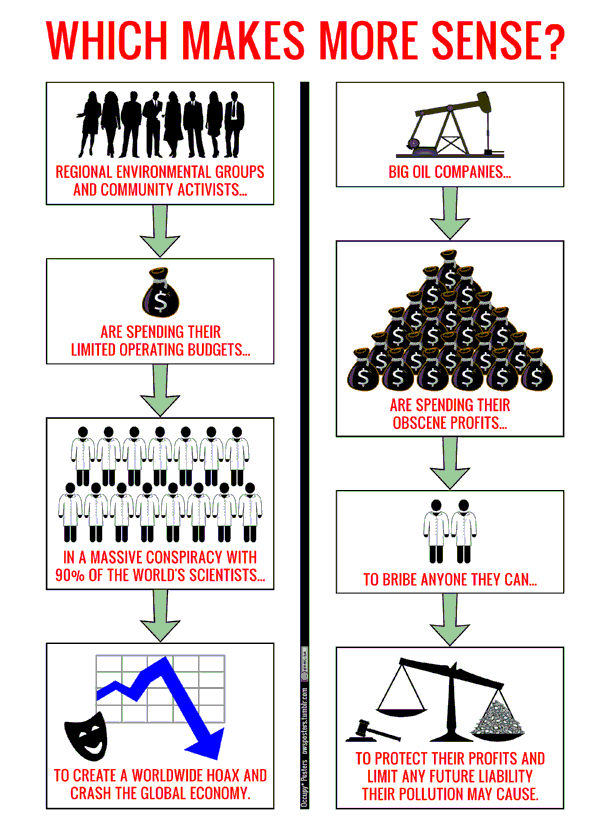


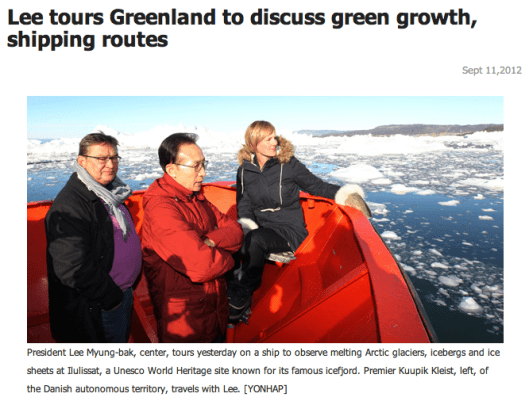

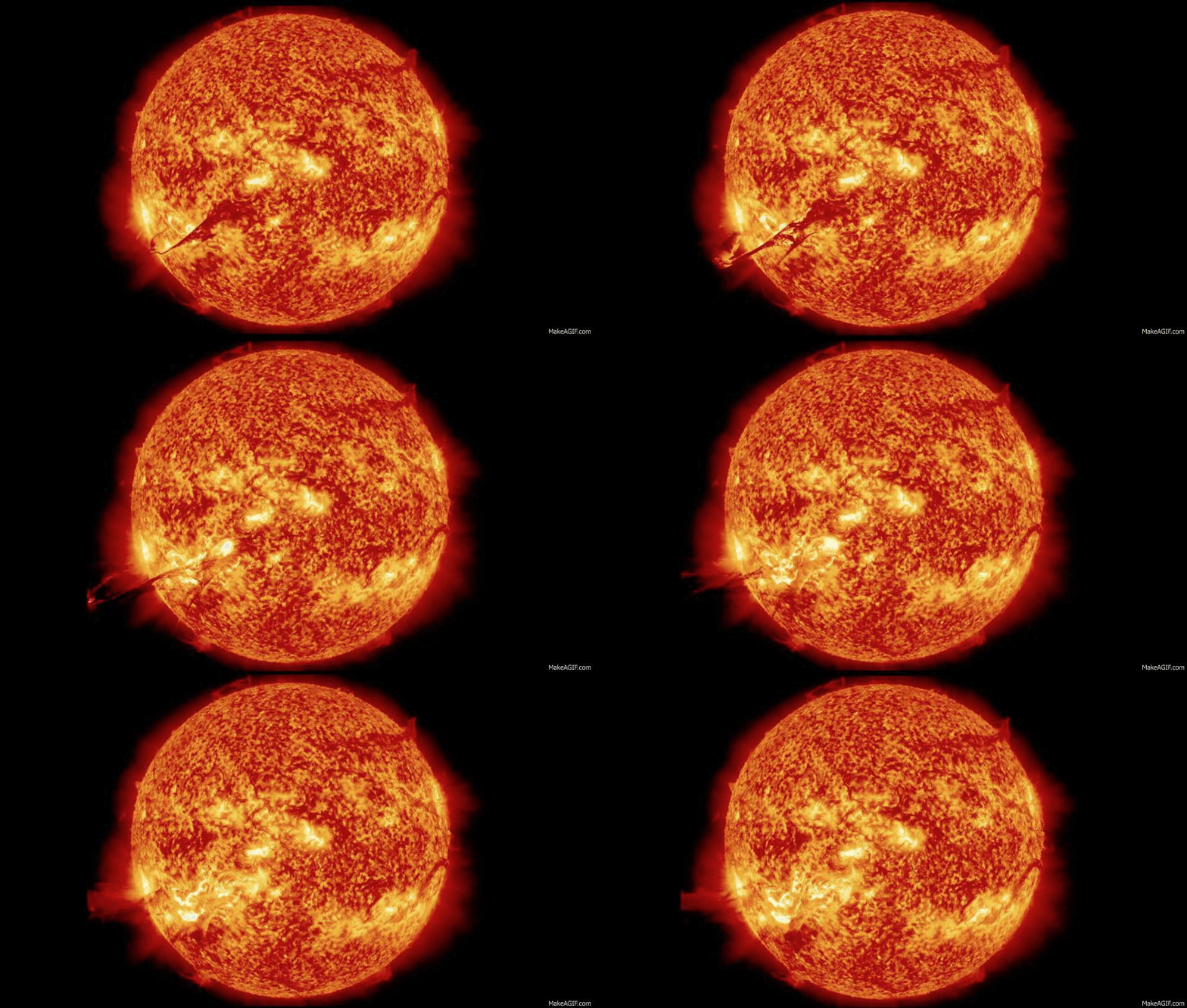


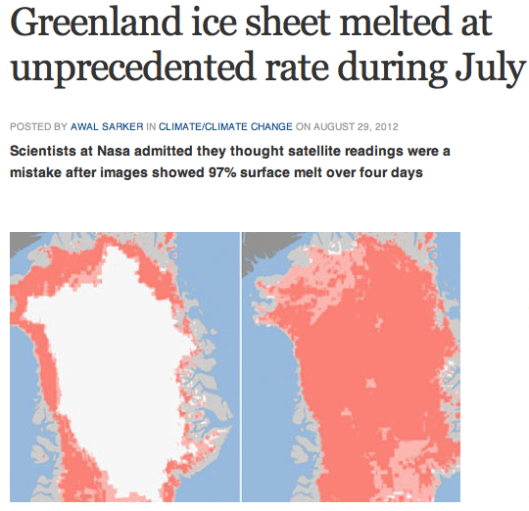


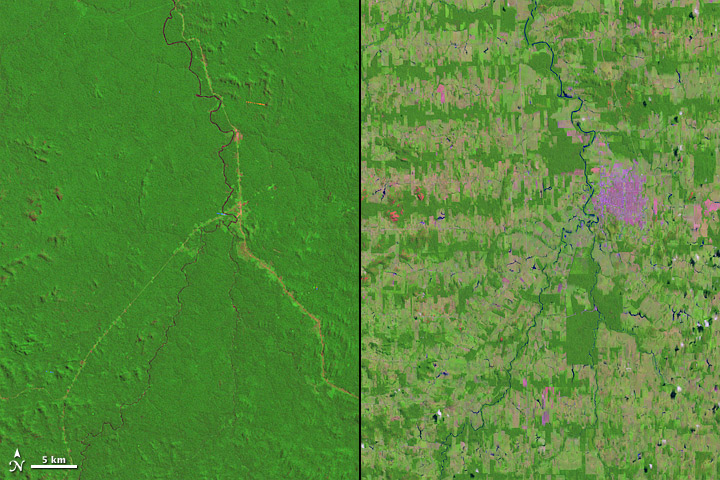





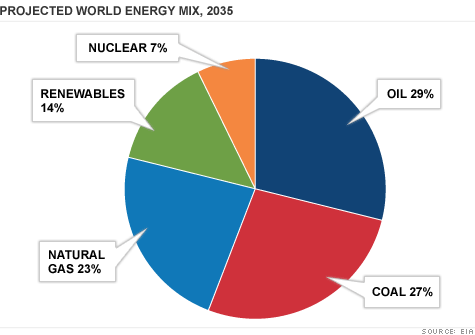




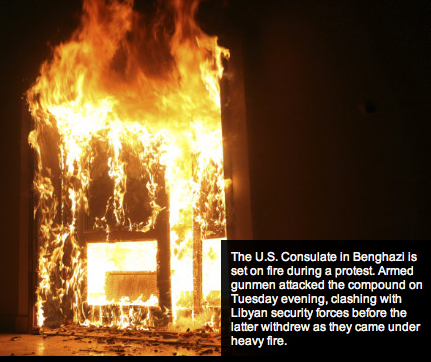
 Collapse of Industrial Civilization