Excellent summary by Jay Hanson(America 2.0) on a new report covering the peak net energy situation in America:
That’s interesting that 2015 is pegged as the time when maximum U.S. production will occur from our present drilling binge. That’s the same year mentioned in this report:
And Nate Hagens mentioned in my previous post that in 2015 Mexico would become an importer of oil due to the precipitous drop in production of their once great Cantrell oil fields.
Craftier, but apparently no wiser than yeast, the human species will follow the same path of other biota in the well-worn process of overshoot and collapse. Gail Tverberg explains:
As far as future scenarios are concerned, I thought the following exchange was telling:
Some believe that a near-term financial crash will prevent the further catastrophic burning of fossil fuels. I think that just the opposite will occur. The financial system will be kept artificially propped up and industrial civilization will indeed burn as much fossil fuels as it can lay its hands on… until climate chaos wreaks havoc on our ability to mass produce food. The money system can be manipulated to keep industrial civilization going until real world biophysical constraints come into play. With higher energy prices, the economy will be cannibalized to keep the whole fetid system chugging along, as it has since 1970 when neoliberal capitalism emerged. Yeast eats itself [autolysis] after using up available sugars, so why would humans behave differently after burning through our keystone resource?
This whole post reminds me of another article I read a few years ago which gave me chills. It’s no longer available at its original source, so I’ve reproduced it here:
We think we have free will and the ability to forge the future, but from a biological systems perspective the human species appears to have no real control over its final fate. As Brutus said, “The future is the future is the future whether we subscribe to it or not.”
The video below is a talk given on Earth Day this year by Nate Hagens at the University of Wisconsin-Oshkosh. It’s entitled “What if the Future is Real?”. This talk is not just about the issue of resource depletion and the multiple crises facing us, but about human behavior, how we perceive the natural world and our responsibilities to future descendants. Nate Hagens [Masters Degree in Finance from the University of Chicago and a PhD in Natural Resources from the University of Vermont] is a former editor of The Oil Drum and worked on Wall Street for a decade before “seeing the light”. I found his talk useful. My notes/summary are below the video.
The extinction event which I talked about in ‘Free Markets, Corporate Profits and Mass Extinctions‘ looks by all unbiased scientific accounts to be happening again. Instead of volcanoes inducing climate change, today it is man’s industrial activities, specifically the burning of stored ancient sunlight, that is bringing about the end of the world as we know it. We will soon breach 400 ppm of atmospheric CO2 levels:
The ratio of carbon dioxide in Earth’s atmosphere is flirting with 400 parts per million, a level last seen about 2.5 million to 5 million years ago, according to the Scripps Institution of Oceanography at UC San Diego….
…The speed at which Earth’s atmosphere has reached that density of carbon dioxide, a known greenhouse gas, has scientists alarmed.
Scientists estimate that average temperatures during the Pliocene rose as much as 18 degrees Fahrenheit. Sea levels during that 2.8-million-year epoch ranged between 16-131 feet higher than current levels, according to Richard Norris, a Scripps geologist.
“I think it is likely that all these ecosystem changes could recur, even though the time scales for the Pliocene warmth are different than the present,” Norris said. Heating the ocean probably will cause sea level rises and change the Ph balance of the ocean, affecting a wide array of marine life, he said. “Our dumping of heat and CO2 into the ocean is like making investments in a pollution bank,” he said…
Let’s go over and update the major tipping points again(covered earlier here and here) which are currently in play:
Jason Box speaks the language of Manhattans. Not the drink—the measuring unit.
As an expert on Greenland who has traveled 23 times to the massive, mile thick northern ice sheet, Box has shown an uncanny ability to predict major melts and breakoffs of Manhattan-sized ice chunks. A few years back, he foretold the release of a “4x Manhattans” piece of ice from Greenland’s Petermann Glacier, one so big that once afloat it was dubbed an “ice island.” In a scientific paper published in February of 2012, Box further predicted “100 % melt area over the ice sheet” within another decade of global warming. As it happened, the ice sheet’s surface almost completely melted just a month later in July—an event that, in Box’s words, “signals the beginning of the end for the ice sheet.”
Box, who will speak at next week’s Climate Desk Live briefing in Washington, D.C., pulls no punches when it comes to attributing all of this to humans and their fossil fuels. “Those who claim it’s all cycles just don’t understand that humans are driving the cycle right now, and for the foreseeable future,” he says. And the coastal consequences of allowing Greenland to continue its melting—and pour 23 feet’s worth of sea level into the ocean over the coming centuries—are just staggering. “If you’re the mayor of Hamburg, or Shanghai, or Philadelphia, I think it’s in your job description that you think forward a century,” says Box. “They’re completely inundated by the year 2200.”…
3.) Unleashing of Tundra methane clathrates and sub-sea methane deposits from (1) and (2):
Courtesy of the work by Sam Carana, the multitude of reinforcing feedback loops from the loss of the Arctic Ice Sheet are listed below:
Albedo feedback: Accelerated warming in the Arctic speeds up the decline of ice and snow cover, further accelerating albedo change.
Methane feedback: Methane releases in the Arctic further add to the acceleration of warming in the Arctic, further contributing to weaken Arctic methane stores and increasing the danger that methane releases will trigger runaway global warming.
Currents feedback: Sea ice loss can cause vertical sea currents to weaken, reducing the cooling effect they had on the seabed. This can thus further cause sediments to warm up that can contain huge amounts of methane in the form of free gas and hydrates.
Storms feedback: Increased frequency and intensity of storms can cause substantially more vertical mixing of the sea water column, causing more warming of the seabed, thus further contributing to the warming of sediments, as above.
Storms feedback: Accelerated warming in the Arctic can result in more storms, causing mixing of cold Arctic air with warmer air from outside the Arctic. The net result is a warmer Arctic.
Storms feedback: More open waters can result in more storms that can push the ice across the Arctic Ocean, and possibly all the way out of the Arctic Ocean.
Storms feedback: Storms also cause more waves that break up the sea ice. Smaller pieces of ice melt quicker than large pieces. A large flat and solid layer of ice is also less susceptible to wind than many lighter and smaller pieces of ice that will stand out above the water and capture the wind like the sails of yachts.
Storms feedback: Storms cause waters to become more wavy. Calm waters can reflect much sunlight back into space, acting as a mirror, especially when the sun shines under a low angle. Wavy waters, on the other hand, absorb more sunlight.
Fires feedback: More extreme weather comes with heatwaves and storms. Thus, this is in part another storms feedback. The combination of storms and fires can be deadly. Heatwaves can spark fires that, when fueled up by storms, turn into firestorms affecting huge areas and causing huge amounts of emissions. Storms can whip up particles that when deposited on ice, snow or the bare soil, can cause more sunlight to be absorbed.
Open doors feedback: Accelerated warming in the Arctic causes the polar vortex and jet stream to weaken, causing more extreme weather and making it easier for warm air to enter the Arctic.
Two papers released last week in the journal Nature Geoscience provide evidence that warming and melt in West Antarctica are occurring at levels that are highly unusual compared to natural variability.
The West Antarctic Ice Sheet contains about 2.2 million cubic kilometers of ice; enough to raise global sea levels by 3 to 4m. What’s making glaciologists nervous is that the ice rests on bedrock which is below sea level; this makes it vulnerable to attack from below by a warming ocean as well as attack from above by increasing air temperatures.
As some of us were heading off for the Easter holiday weekend, the Brazilian government was quietly releasing deforestation trends showing an increase in deforestation for the first time in five years.
These numbers use the DETER rapid response satellite system, a system that provides estimates of deforestation rates every month. Over the time period documented, August 2012 to February 2013, the rates increased an estimated 26.82% and an area of the Amazon larger than the size of the city of London disappeared.
In absolute numbers, that means 1,695 square kilometers (654 square miles) of forest have disappeared. That equals an area the size of 237,000 soccer fields…
…The increase in deforestation rates can be directly attributed to the Brazilian government’s systematic dismantling of the laws and agencies that protect the Amazon…
…President Dilma Rousseff’s approval of a new Forest Code, a law that provides amnesty for crimes committed after 2008 in the Amazon and reduces large areas of protected land, paved the way for the increase in deforestation. The president also structurally weakened government agencies like IBAMA, the federal environmental enforcement agency, so unfortunately it won’t be a surprise if deforestation continues to rise in the Amazon…
After more than a decade, the mountain pine beetle epidemic that surged through British Columbia appears finally to be in remission. Having devastated the province’s lodgepole pine forests, the insect is running out of food.
But forest managers now see new beetle infestations appearing at the edge of the Boreal Forest, in Alberta, and in the Yukon and Northwest Territories — areas well outside the insect’s historical range. As a warming climate lifts the temperature limitations that once kept the beetle in check, scientists fear it may continue its push across the continent, perhaps as far as the Atlantic Coast…
…Without debating the causes of global climate change the effects of forest dieback can be viewed factually. The earth is warming and droughts are increasing in severity and magnitude. Temperature and drought are major contributing factors to forest dieback, so more trees will be dying in the future. As more carbon is released from dead trees, especially in the Amazon and Boreal Forests, more greenhouse gasses are released into the atmosphere. Increased levels of greenhouse gasses increase the temperature of the atmosphere. The negative feedback loop is reinforced and the biological adaptations of the species determine its survival. Projections for dieback vary, but the threat of global climate change only stands to increase the rate of dieback. The issue is complex and models are intricate, so scientists have serious work ahead of them.[8]
Scientists do not know the tipping points of climate change and can only estimate the timescales. When a tipping point, the critical threshold, is reached a small change in human activity can have long-term consequences on the environment. Two of the nine tipping points for major climate changes forcast for the next century are directly related to forest diebacks. Scientists are worried that forest dieback in the Amazon[9] rain forest and the Boreal[10] evergreen forest will trigger a tipping point in the next 50 years.[2]… – source
7.) The Sahara and Sahel in Africa
It is difficult to estimate the overall ability to increase food production, but a recent analysis suggests that human consumption may be approaching the limits of the net primary plant production (NPP) — that is, the maximum photosynthetic production that is possible on the planet.
It is “not whether humans will reach the global NPP boundary but when they will do so.” It seems probable that the developed countries will continue their excessively high levels of consumption. The emerging economies are likely to continue to eat more protein and a larger slice of grain production in countries with an appropriate climate for grain production will be diverted to feeding animals, or ethanol to drive automobiles. A child born in the Sahel today could belong to the first generation to come to maturity in the contemporary world where the ability to feed large numbers of ecological refugees may well diminish. It is also possible that the secondary effects of the collision of population growth and climate change could create what scientists call an “asymmetrical uncertainty.” The possible consequences of this asymmetrical uncertainty on political processes and violence could range from a slow worsening of the current situation to extremely serious conflict over resources and threats to security. Biologically, adverse factors can interact in ways that can cause a rapid downward spiral. For example, as noted above, ambient temperatures over 29°C (84°F) lead to a rapid decline in crop yields.
[At least 95% of the food production in the Sahel is based on rain-fed agriculture. The agricultural sector employs, directly or indirectly, more than half of the Sahel’s population…Global warming will mean that in temperate lands, where much of the global crop production occurs, the most productive regions will migrate away from the equator. While the net aggregate change as a result of climate change at a global level may be slow, the regional effects in the Sahel will be more rapid, significant, and adverse.] – source
8.) The El Nino Southern Oscillation(ENSO):
Climate models appear to be unable to accurately predict ENSO changes. Although scientists can predict some large-scale and long-term effects of anthropogenic global warming, there remains a lot of unknowns about specific regional effects.
The problem may lie in the models’ inability to reproduce the cycling between the ENSO’s El Niño and La Niña phases, especially given that many scientists think that La Niña is the major driver of drought in the southwest. The ENSO “behaves much messier in the real world than in climate models”, says Jessica Tierney, a climate scientist at the Woods Hole Oceanographic Institution in Massachusetts who has investigated the role of the ENSO in East African rainfall variability2. “We’re not sure how it has varied in the past, and we don’t know how it might change in response to climate change. This is really one of the big uncertainties we’re facing.”
In addition to their failure to reproduce El Niño and La Niña, existing models do not fully capture other factors that influence rainfall, such as clouds and vegetation. But Smerdon adds that the atmospheric and oceanic dynamics that inhibit rainfall and favour prolonged drought may be essentially random and so almost unpredictable.
Last week’s findings highlight the broader challenge of predicting how precipitation patterns will change as the global climate warms. Models are often at odds over the very direction of regional changes. For example, different projections prepared for the Colorado Water Conservation Board disagree on whether mean precipitation in the state will increase or decrease by 2050 (ref. 3).
But the uncertainties don’t change the larger picture, scientists say. “Climate models are not perfect, but they do the big things really well,” says Tierney. “We can be pretty confident that the southwest will warm and that water will become scarcer.
…since the 1970s the atmospheric circulation patterns over the Pacific have tended to favor La Nina conditions over El Nino ones. And, they write: “The overall trend towards a stronger, La Niña-like Walker circulation is nearly concurrent with the observed increase in global average temperatures.”
We know from historical data that from these two climatic events – the Medieval Warm Period(the long stable warming period over Europe) and the Little Ice Age(a well-known described historical event) – that the temperature changed, and our big question is, “Does the ocean also respond in this very short time scale?”
And one of the major results and maybe one of the biggest prices is that the ocean and the thermohaline circulation(THC) respond to these thermal drivers within just a decade.
…What we are mostly concerned about is that there is a certain threshold which is then reached, a certain point of no return more or less. So we will have a trend where it’s getting warmer and warmer and warmer, and there will be no return from this warming… and that will change the whole system, the whole flow of the system, and the thermohaline circulation may be changed…
The major threats we see right now to the thermohaline circulation mainly derive from the Arctic region. We see increased melting from the Greenland Ice Sheet. We see a retreat of Arctic See Ice. We see large reorganizations in the Arctic ocean system which accumulate fresh water. All of these things are components which may affect the thermohaline circulation.”
The most important factors affecting changes in the conditions of the thermohaline circulation are:
1.) Global warming itself caused partly by greenhouse gases from human activity.
2.) From AGW, there will be more rainfall in the higher latitudes causing glacial melt.
Density in the water is a key factor for the THC driver mechanisms. Cold surface water temperatures make the water denser and high ocean salinity cause these waters to sink. These are the main engines that run the THC, but now more fresh water is entering the ocean through the melting of the Arctic and Greenland ice sheets.
When this is integrated into the models, a new development of the engines is revealed. In a warmer climate state, the engine of the Labrador Sea seems to simply collapse…
10.) The Indian Summer Monsoon:
…Writing in the journal Environmental Research Letters, researchers at the Potsdam Institute for Climate Impact Research and Potsdam University in Germany said increasing temperatures and a change in strength of a Pacific Ocean circulation pattern known as the Pacific Walker circulation in spring could cause more frequent and severe changes in monsoon rainfall.
The Walker circulation usually brings areas of high pressure to the western Indian Ocean but in El Nino years this pattern gets shifted eastward, bringing high pressure over India and suppressing the monsoon, they said.
Computer simulations show that with future global warming the Walker circulation is likely to bring more high pressure over India even without an increase in El Nino events.
These failures of the monsoon system suggested by the simulation, defined as a 40 percent to 70 percent reduction in rainfall below normal levels, were unprecedented in the researchers’ observational record, taken from the India Meteorological Department dating back to the 1870s.
“Our study points to the possibility of even more severe changes to monsoon rainfall caused by climatic shifts that may take place later this century and beyond,” lead author Jacob Schewe said. – source
Indeed if humans were able to set aside their anthropocentric view of the world, we would be frantically changing our behavior and rearranging our economic and social activities in order to prevent our own demise. But alas, if things aren’t right between one’s ears, then everything else is moot.
(Edit on 3-9-2015: The following video has been made “private”, but it can be viewed in its entirety here.)
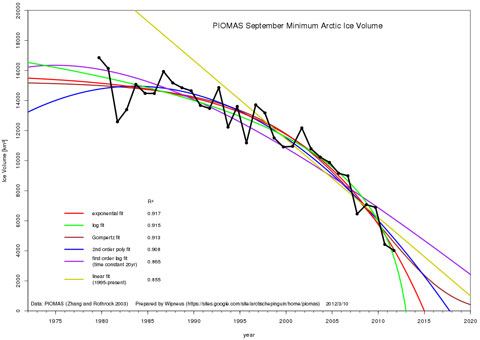
This week, a number of top scientists, experts, DoD and Homeland Security Department notables are convening an emergency meeting warning White House officials that the Arctic Ocean could be ice-free during summertime within two years.
This A-Team (A for Arctic) includes NASA’s chief scientist Gale Allen, National Science Foundation Director Cora Marett, Director of the Oceans Institute of the University of Western Australia marine scientist Prof Carlos Duarte, and nine other top Arctic specialists together with key representatives from the US Department of Homeland Security and the Pentagon.
The Washington meeting is the second major climate emergency meeting of its kind to occur within the past month. Just a few weeks ago, the UK held its own climate meeting in response to severe and unprecedented weather occurring throughout Europe this winter and spring.
Scientists and specialists descending on the White House are now echoing increasingly urgent warnings coming from Arctic…
Paul F. Getty brought to my attention a new essay written by environmentalist Daniel A. Drumright. I featured his writing in a prior post entitled ‘The Day The Whole World Went Away‘. This new one, entitled ‘The irreconcilable acceptance of near-term extinction‘, was a bit long-winded for me, so I have whittled it down to the meat and potatoes and corrected a few typos. It’s worth your time to read it. I cannot find any fault with the machinations of capitalism he describes and his general outline of how things will fall apart, but of course the timing is always up to debate. However, seeing that the disintegration of the Arctic is happening faster than any scientific models had predicted, global famine may come much sooner than most know.
In conjunction with this essay, I would also point you to a recent post by Robert Scribbler – ‘For Central US, Climate Change and a Mangled Jet Stream Means Drought Follows Flood Follows Drought‘ – which should help bring everyone up to speed with some ominous trends in the climate of Earth. Humans are continuing to pump so much CO2 into the atmosphere in such a very short time span, geologically speaking, that a considerable lag time has built up, in terms of human time scales, for the final catastrophic effects to play out over the coming decades and centuries.
As far as how one should live their life from here on out, Daniel says “ethical hedonism” is the choice he has made in the face of NTE[Near Term Extinction]. As for myself, a lot of people are dependant on me, so I cannot take that route.
For anyone else reading this, how will you live henceforth, knowing the end is near?
Most have heard about various studies showing the benefits to human health, both for mind and body, that are gained by contact with the non-city environment. As humans destroy more and more of the natural world, physical and mental illness will inevitably increase. For this reason, industrial civilization could rightly be called a ‘death machine’. Converting what is healthy and life-giving into something that is inanimate and disposable is the height of insanity, but this is how the economy works. All of the planet’s life-support systems are viewed through the prism of profit and loss. Industrial civilization’s sociopathic hierarchy is the result of such a system, rewarding those who can grab as much $profit$ as possible, as fast as possible.
Ironically, many of those who make it to the top of the capitalist hierarchy end up buying large tracts of the natural world, even islands, to escape what is commonly called the rat race, the game of hustling for money or trying to accumulate enough paper tokens to exchange for the necessities of life, the very things which are rapidly being destroyed by industrial civilization – clean water, air, soil, and biodiverse-rich ecosystems. We also strive to acquire “creature comforts” which are defined as “not really needed by humans, but that improve comfort or a sense of being at ease.” Imagine the billions of people who have now bought into this hustler’s game of chasing after the “necessities of life” such as ‘piped-in’ water, central heating/cooling, monocultured food crops, and factory farmed meats, in addition to the “creature comforts” like flat screen TV’s and sundry digital devices, electric appliances, mass-produced furniture, and personal automobiles. More people joining the industrialized mode of living requires the conversion of a living planet into a dead and barren planet.
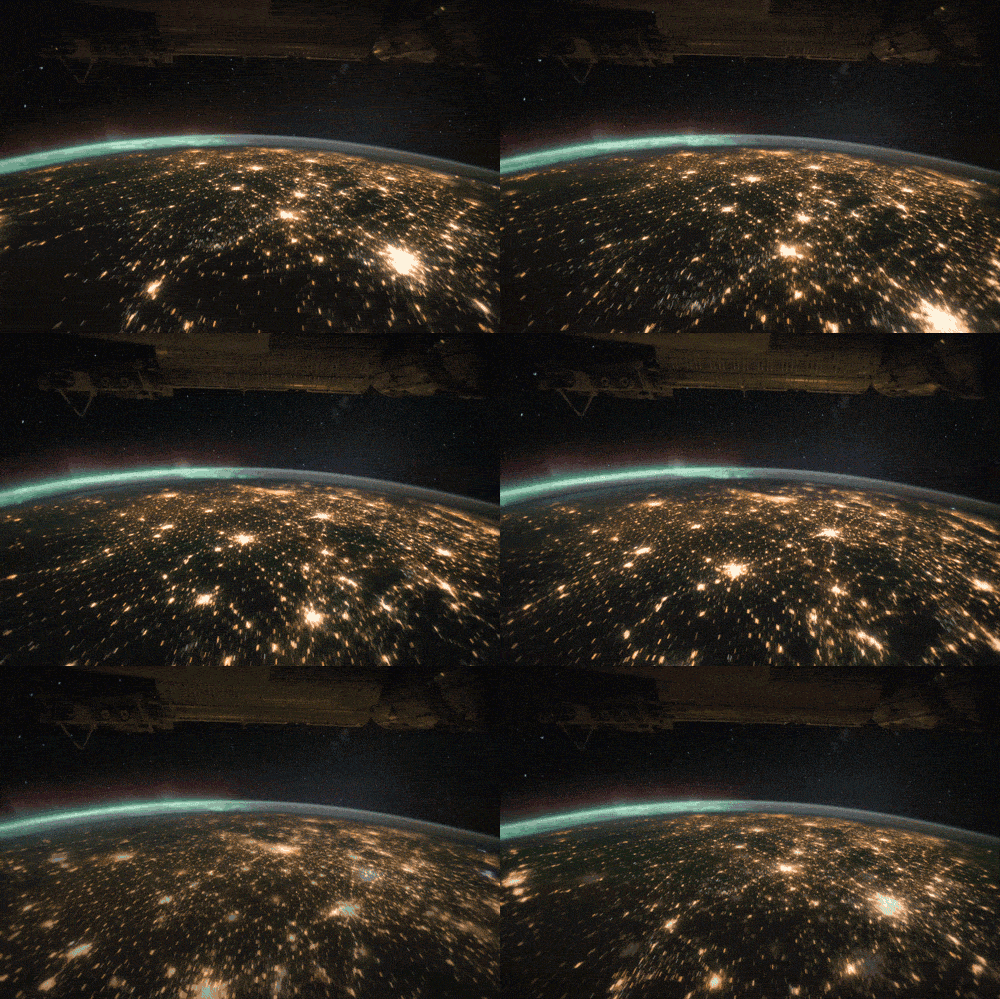
Viewed from the night sky, the circuit board layout of cities glows bright like molten fire. Industrial civilization’s infrastructure scars the horizon with geometric hard lines; gone is the unpredictable mosaic of trees, grass, streams, and rock which are dug up, covered over, and flattened. The meat grinder of industrial capitalism eats up nature and replaces it with a vast grid-like design of asphalt, concrete, and energy-consuming buildings. Nature gets steamrolled over to make way for strip malls, billboards, and the game of hustling for money – what humans call “progress” and “development”. To be blunt, ecologically sustainable cities do not exist:
…the story of unsustainable cities is characterized by a ‘tragedy of the commons’ phenomenon not only in the deployment of urban infrastructure but also in the overuse of the natural capital that sustain the city.
… looking at the story of unsustainable cities from the perspective of a simple general equilibrium urban model, open access to urban land leads to high concentrations of population, huge deployment of urban infrastructure and irreversible degradation of the natural capital creating a ‘tragedy of urban infrastructure’ that undermines the sustainability of cities creating preannounced urban ruins.
Psychotic disorders are the side effect of living in present day mega-cities:
…Previous research has shown that people living in cities have a 21% increased risk of anxiety disorders and a 39% increased risk of mood disorders. In addition, the incidence of schizophrenia is twice as high in those born and brought up in cities…By 2050, almost 70% of people are predicted to be living in urban areas…
The social media cocoons and virtual realities people surround themselves with in our digitized and commodified world must also contribute to this mental sickness. The innate unsustainability of modern cities underlies this unhealthy living arrangement. For instance, Japan adopted the fossil-fuel-powered, high-consumption, industrial way of life and has gone parabolic in its ecologic overshoot:
Japan’s per capita Ecological Footprint is 55 percent higher than the world average, 140 percent higher than BRIICS and 171 percent higher than ASEAN countries. However, Japan’s per capita Footprint is 27 percent less than the average G7 countries’, of which Japan is a member. This is mostly due to the United States’ high per capita Ecological Footprint and its relatively large population size, which drives up the G7 average…
….On average, the shipping distance of food imported into Japan is about 4500 miles, approximately the direct distance between Tokyo and Moscow…
…It takes 1.5 years for the Earth to regenerate the renewable resources that Japanese people use…
For those consumed by the system, the Aokigahara Forest in Japan is the world’s second most popular place to commit suicide; the first is the Golden Gate Bridge in San Francisco.
…if you look beyond the modern, Western schools of psychiatry, you find that in traditional societies among primary people, the people we once used to call primitives, that it is understood that sanity and madness have to be defined always in relationship to the natural habitat; and that indeed to a very large extent, madness is understood to be an imbalance between the individual and the natural environment or between an entire tribe or a people and its natural environment…”
“…What Auschwitz was to its human inmates — an expertly rationalized, efficiently organzied killing ground — our urban/industrial system is fast becoming for the biosphere at large, and, for ourselves, as an inseparable part of the environment… ~ THEODORE ROSZAK
Living in an Age of Madness, the best one can do is to keep from succumbing to the insanity.
A good summation of Chris Hedges’ main points in ‘Death of the Liberal Class’ was found on the blog Law and Disorder. I have edited, corrected and changed the list a bit. As wealth has concentrated and taken over every institution of society, social injustice has sky-rocketed. The ruling elite who are benefitting from the current paradigm are blind to its toxic byproducts. As discussed in my previous post, I see such violent outbursts of antisocial behavior as a result of the current system.
The 19-year-old suspect in the Boston Marathon bombings has told interrogators that the American wars in Iraq and Afghanistan motivated him and his brother to carry out the attack, according to U.S. officials familiar with the interviews.
The following bullet points will explain this belief further:
The pillars of liberal establishment, liberal religious institutions, labor, public education, esp. public universities, culture, the press and finally the Democratic Party, which made incremental or piecemeal reform possible – which watched out for the interests and the grievances of those outside of the narrow power elite – no longer function.
The term neo-liberalism is a reconfiguring of what it means to be a liberal in a democratic society. Neoliberalism is actually an ideology that prizes market fundamentalism and seeks a return to laissez-faire economics, i.e. unfettered capitalism. Community is devalued in favor of unregulated capitalism.
We have figures like Bill Clinton, Barack Obama, Pelosi and others that continue to speak in the values of social liberalism but have betrayed every one of those values.
The subservience to Wall Street, the slavish catering to the permanent war economy, the failure to defend basic civil liberties, including habeas corpus – all of these have ultimately been embraced by the majority of the power elite so that a liberal is indistinguishable from a conservative on the core structural issues.
The liberal class and liberal institutions are traditionally allowed to function in a capitalist democracy because when there is a crisis within the society, they perform as a formal channel or mechanism within the power structure for injustices to be alleviated.
The New Deal: perfect example of how the liberal class functions.
The interests of the financial elite have usurped all of the pillars of the liberal establishment.
What kept the liberal class honest in the past were the populist movements which held fast to moral imperatives.
With the open-ended ‘War on Terror’, a culture of permanent war psychosis has been institutionalized by America’s ruling elite. Under such an atmosphere, social norms have degenerated, opening the door to demagogues.
With this gradual coup, which corporations have carried out in the United States beginning with Reagan and accelerated by Clinton and Bush, and certainly further by Obama, we’re left powerless; we have no mechanism to fight back.
The ruling elite understood that people were not moved to act primarily by fact or reason but could be manipulated through emotion. This is the result – we live in a society utterly saturated with lies.
The liberal class has been reduced to the status of courtiers to the financial elite. The term ‘limousine liberals’ comes from this situation.
The corporate state is rapidly reconfiguring society into a form of neo-feudalism, where you have these speculators on Wall Street earning 900 thousand dollars an hour while at the same time you have families of four barely able to feed and sustain themselves. The ever-looming threat of medical bills is another scythe hanging over their heads.
The elite institutions of education which charge astronomical sums essentially provide education for the elite, while public education is gutted for the masses.
People are trained to work as cogs in the corporate structure. Inner city schools are turned into boot camps for the corporate machine; that’s what charter schools are about, along with the ability to break teachers unions.
Everybody has their place and a caste system is solidified. There’s no hope for escape. We are fed endless stories of the few rare exceptions of people breaking into the top 1%, to somehow make us think that we’re responsible for our own predicament.
The dismantling and co-opting of the liberal class by the financial elite is one of the most vicious things that has been visited upon the working class.
The weakening and dismantling of a true liberal class explains how we can stand by passively as millions of people are forced from their homes through foreclosures by banks, the wealth gap widens to even more grotesque disparities, and the environment is destroyed for short-term economic growth and profit.
As these grievances mount, there is no mechanism within the structures of power or traditional institutions by which these injustices can be ameliorated.
Social grievances become expressed in these very frightening proto-fascist movements, such as the Tea Party or right-wing demagogues and extremist groups who give legitimacy to this anger, rage and sense of betrayal.
While being cleverly deflected away from Wall Street, the anger of the disenfranchised is directed at government and the present-day hollow mirage of a “liberal class”. The hypocrisy of the so-called “liberal class” is readily apparent from those on the low-end of the economic spectrum.
I’ve often wondered why there are so many conspiracy theorists and paranoid thinkers in today’s society:
The Southern Poverty Law Center released a new report on Tuesday finding that “the number of conspiracy-minded antigovernment ‘Patriot’ groups reached an all-time high of 1,360 in 2012″ and that the number of hate groups has remained at “near record levels” of more than 1,000…. – source
If you have a mass media which is nothing more than a mouthpiece for the corporations and Empire, then the truth will be nearly impossible to discern. Such a society which cannot tell fact from propaganda or reality from fabricated illusions will be a breeding ground for conspiracy theorists and believers in the absurd. That’s exactly what we have today.
The horrific bombings which took place recently at the Boston Marathon are the most significant terrorist attack to have occurred on U.S. soil since 9-11. My condolences go out to the innocent victims. Ideologies of any sort can be twisted to justify abhorrent acts. This terrorist act opens up old wounds for an Empire which in the last decade has gone on the offensive, spending vast resources on foreign wars and a security and surveillance state. Even with such Herculean expenditures, the asymmetric nature of terrorism demonstrates there is no foolproof solution for preventing such acts. The perpetrators spent perhaps a few hundred bucks on their homemade bombs, and we spend incalculable multiples of treasure and blood in return. This was really the goal of Osama bin Laden – to draw the Empire into costly wars and expenditures of life and limb. As has been stated by others, the best that can be hoped for from a military standpoint is to keep terrorist groups in a constant degraded and disorganized state. As much as left-leaning individuals as myself like to point out the foreign policy “transgressions”(to put it mildly) of the American Empire, decades of capitalist imperialism will never be put back into the bottle. Such bombings are pretty much daily occurrences in war-ravaged Iraq and Afghanistan as well as other areas of the Middle East. Our incursions into those countries only seem to have fueled the fire.
A law enforcement official had some interesting info on the bombings:
…A preliminary analysis of the bombs, which went off near the race’s finish line on Boylston Street, suggests they are similar to the improvised explosive devices found in war-torn regions like Iraq and Afghanistan, the law enforcement official said.
“The shrapnel, the simplicity of it — it’s something right out of the Iraq War. A basic roadside bomb,” the official said.
That “basic bomb” can be seen in the design of the Boston bombs, the law enforcement official said: pressure cookers stuffed with nails, ball bearings and other projectiles, and hidden in black duffel bags left near the 26.2 mile mark in the race.
What appear to be fragments from a pressure cooker were recovered at the scene, along with BBs, nails and black-nylon fragments possibly from a bag used to house the device, the FBI said.
Black explosive powder and a circuit board believed to have been used to detonate the bombs were also found, the federal official said.
Similar explosives have been used in third-world hot spots from South Asia to the Persian Gulf, and one of the devices used in the botched bombing of Times Square in May 2010 employed a pressure cooker.
The Pakistani Taliban, which claimed blame for the 2010 Times Square attempt, said it had no role in the Boston attack, according to The Associated Press.
A 2010 bulletin issued by the Department of Homeland Security and the FBI warned pressure-cooker bombs are as easy to transport as they are to conceal.
“Terrorists can exploit the innocuous appearance of easily transportable items such as pressure cookers to conceal IED components,” the alert said. “Placed carefully, such devices provide little or no indication of an impending attack.”
That some victims lost limbs in the blast puts the device “into a powerful class,” said John Goodpaster, head of the forensic science program at Indiana University–Purdue University, and former chemist with the federal bureau of Alcohol, Tobacco, Firearms and Explosives.
Goodpaster said the blasts appeared to be from a “high explosive of some kind, military explosive, commercial explosive or improvised explosive.”
…
The sooner the world can get off MENA oil, thereby pulling the plug on the financial network of terrorist groups, the better off we’ll all be, not to mention our indispensable biosphere.
According to Wikipedia resources:
…Saudi Arabia is said to be the world’s largest source of funds for Salafi jihadist terrorist militant groups, such as al-Qaeda, the Afghan Taliban, and Lashkar-e-Taiba in South Asia, and donors in Saudi Arabia constitute the most significant source of funding to Sunni terrorist groups worldwide, according to Hillary Clinton.[1] According to a secret December 2009 paper signed by the US secretary of state, “Saudi Arabia remains a critical financial support base for al-Qaida, the Taliban, LeT and other terrorist groups.”[2]
The violence in Afghanistan and Pakistan is partly bankrolled by wealthy, conservative donors across the Arabian Sea whose governments do little to stop them.[1] Three other Arab countries which are listed as sources of militant money are Qatar, Kuwait, and the United Arab Emirates, all neighbors of Saudi Arabia…
…Actually 70 percent isn’t unheard of for Portugal. For a few hours in 2011, Portugal was entirely run on renewable power. Yet this was the first time so much was sustained for a quarter.
Portugal’s investment in modernizing its electricity grid in 2000 has come in handy. Like in many countries, power companies owned their own transmission lines. What the government did in 2000 was to buy all the lines, creating a publicly owned and traded company to operate them. This was used to create a smart grid that renewable energy producers could connect to (encouraged by government-organized auctions to build new wind and hydro plants)…
Of course planet Earth has an avalanche of environmental problems coming to a head in the near future (all caused by humans, mind you), but it’s good to see some accomplishments in at least one area of human impact – reduction of fossil fuels – even if it may be too little, too late.
…a second Dark Age had fallen on Western civilization, in which denial and self-deception, rooted in an ideological fixation on “free” markets, disabled the world’s powerful nations in the face of tragedy. Moreover, the scientists who best understood the problem were hamstrung by their own cultural practices, which demanded an excessively stringent standard for accepting claims of any kind–even those involving imminent threats. Here, our future historian, living in the Second People’s Republic of China, recounts the events of the Period of the Penumbra (1988–2073) that led to the Great Collapse and Mass Migration (2074)…
The paper starts off with a brief history of industrial civilization’s chemical and material pollutions overloading the Earth’s environmental sinks. The sheer volume of mankind’s activities, from the Ozone Hole created by CFC’s to the resource-depleting diet of industrial cattle-farming, became a force of nature unto itself threatening the very habitability of the planet. The scientific community began to recognize that man’s industrial activities were upending the earth’s life support systems; various organizations and institutions were created to try to ‘protect the environment’, but the interests of free market capitalism with its high-consumption lifestyle created a backlash against any restriction and attempts to recognize the limits of the human economy’s unending growth. The party had to continue no matter how dire the consequences. 1988 is said to have marked the beginning of the “Penumbral Period”, perhaps meaning a time of partial illumination where the threat was seen, but no effective action was taken. Indeed, we dug our grave faster with the building of evermore coal-fired plants and the destruction of the remaining ecosystems in the face of a series of extreme and ominous weather events which had the earmarks of manmade climate change.
By the early 2000s, dangerous anthropogenic interference in the climate system was under way. Fires, floods, hurricanes, and heat waves began to intensify, but these effects were discounted. Those in what we might call active denial insisted that the extreme weather events reflected natural variability, despite a lack of evidence to support that claim. Those in passive denial continued life as they had been living it, unconvinced that a compelling justification existed for broad changes in industry and infrastructure. Scientists became entangled in arcane arguments about the “attribution” of singular events; however, the threat to civilization inhered not in any individual flood, heat wave, or hurricane, but in the overall shifting climate pattern, its impact on the cryosphere, and the increasing acidification of the world ocean…
…what was anomalous in 2021 soon became the new normal. Even then, political, business, and religious leaders refused to accept that the primary cause was the burning of fossil fuels. A shadow of ignorance and denial had fallen over people who considered themselves children of the Enlightenment. For this reason, we now know this era as the Period of the Penumbra.
If you don’t like reality, then withdraw into fantasy and rewrite history; “we’re an empire now, and when we act, we create our own reality,” said Karl Rove.
In the early Penumbral Period, scientists were accused of being “alarmist” in order to increase financial support for their enterprise, gain attention, or improve their social standing. At first, the accusations took the form of public denunciations; later they included threats, thefts, and the subpoena of private correspondence. Then legislation was passed (particularly in the United States) that placed limits on what scientists could study and how they could study it, beginning with the notorious “Sea Level Rise Denial Bill,” passed in 2012 by the government of what was then the U.S. state of North Carolina (now part of the Atlantic Continental Shelf ) and the Government Spending Accountability Act of 2012, which restricted the ability of government scientists to attend conferences to share and analyze the results of their research.
Though ridiculed when first introduced, the Sea Level Rise Denial Bill would become the model for the U.S. National Stability Protection Act of 2022, which led to the conviction and imprisonment of more than three hundred scientists for “endangering the safety and well-being of the general public with unduly alarming threats.” By exaggerating the threat, it was argued, scientists were preventing the economic development essential for coping with climate change. When the scientists appealed, their convictions were upheld by the U.S. Supreme Court under the Clear and Present Danger doctrine, which permitted the government to limit speech deemed to represent an imminent threat.
…robust evidence shows that people systematically overestimate the probability of positive future contingencies, and underestimate the probability of negative ones — only those who are depressed or dysphoric come to accurate assessments…
Diogenes of Sinope must have practiced a sort of philosophical dysphoria.
Another cause for modern man’s downfall was the adoption of an excessively stringent standard for accepting causal links between climate change and human industrial activities:
…Historians have long argued about why this standard was accepted, given that it had no substantive mathematical basis. We have come to understand the 95 percent confidence limit as a social convention rooted in scientists’ desire to demonstrate their disciplinary severity. Just as religious orders of prior centuries had demonstrated moral rigor through extreme practices of asceticism in dress, lodging, behavior, and food–in essence, practices of physical self-denial–so, too, did natural scientists of the twentieth century attempt to demonstrate their intellectual rigor through intellectual self-denial. This practice led scientists to demand an excessively stringent standard for accepting claims of any kind, even those involving imminent threats…
CO2 emissions continued to rise not only in developing countries, but also developed countries as fossil fuel production accelerated with shale gas extraction and Canadian oil-sand processing. The world was firmly in the grasp of the fossil fuel energy trap.
…How did these wealthy nations–rich in the resources that would have enabled an orderly transition to a zero net-carbon infrastructure–justify the deadly expansion of fossil fuel production? Certainly, they fostered the shadow of denial that obscured the link between climate change and fossil fuel production and consumption. They also entertained a second delusion: that natural gas from shale could offer a “bridge to renewables.” Believing that conventional oil and gas resources were running out (which they were, but at a rate insufficient to avoid disruptive climate change), and stressing that natural gas, when combusted, produced only half as much CO2 as coal, political and economic leaders persuaded themselves and their constituents that promoting shale gas was an environmentally and ethically sound approach.
This line of reasoning, however, neglected three crucial factors. First, fugitive methane emissions–CH4 that escaped unburned into the atmosphere–greatly accelerated warming. (Again, scientists had foreseen this phenomenon, but their predictions were buried in specialized journals.) Second, the argument presupposed that net CO2 emissions would fall, which would have required strict restrictions on coal and petroleum use. Third, and most important, the sustained low prices of fossil fuels, supported by continued subsidies and a lack of external cost accounting, undercut efficiency efforts and weakened emerging markets for solar, wind, and biofuels (including crucial liquid biofuels for aviation). Thus, the bridge to a zero-carbon future collapsed before the world had crossed it. The bridge to the future became a bridge to nowhere.
The following scenario seems to me to be our most likely future under the current path of business-as-usual:
…The net result? Fossil fuel production escalated, greenhouse gas emissions increased, and climate disruption accelerated. In 2001, the IPCC had predicted that atmospheric CO2 would double by 2050. In fact, that benchmark had been met by 2042. Scientists had expected a mean global warming of 2 to 3 degrees Celsius; the actual figure was 3.9 degrees. Though originally merely a benchmark for discussion with no particular physical meaning, the doubling of CO2 emissions turned out to be significant: once the corresponding temperature rise reached 4 degrees, rapid changes began to ensue.
By 2040, heat waves and droughts were the norm. Control measures such as water and food rationing and Malthusian drills had been widely implemented. In wealthy countries, hurricane- and tornado-prone regions were depopulating, putting increased social pressure on areas less subject to those hazards. In poor nations, conditions were predictably worse: rural portions of Africa and Asia were already experiencing significant depopulation from out-migration, malnutrition-induced disease and infertility, and starvation. Still, sea level had risen only 9 to 15 centimeters around the globe, and coastal populations were mainly intact.
Then, in the Northern Hemisphere summer of 2041, unprecedented heat waves scorched the planet, destroying food crops around the globe. Panic ensued, with food riots in virtually every major city. Mass migration of under-nourished and dehydrated individuals, coupled with explosive increases in insect populations, led to widespread outbreaks of typhus, cholera, dengue fever, yellow fever, and, strangely, AIDS (although a medical explanation for the latter has never been forthcoming). Surging insect populations also destroyed huge swaths of forests in Canada, Indonesia, and Brazil. As social order broke down, governments were overthrown, particularly in Africa, but also in many parts of Asia and Europe, further decreasing social capacity to deal with increasingly desperate populations. The U.S. government declared martial law to prevent food riots and looting, and the United States and Canada announced that the two countries would form the United States of North America in order to begin resource-sharing and northward population relocation. The European Union announced similar plans for voluntary northward relocation of eligible citizens from its southernmost regions to Scandinavia and the United Kingdom…
World leaders convened to hastily put together a climate geoengineering scheme in an effort to halt the collapse, but unforeseen side effects occurred and the project was immediately stopped, resulting in even more dire consequences. Various feedback loops unleashed a “Venusian death” on planet Earth:
…This massive addition of carbon led to what is known as the Sagan effect (sometimes more dramatically called the Venusian death): a strong positive feedback loop between warming and CH4 release. Planetary temperature increased by an additional 6 degrees Celsius over the 5 degree rise that had already occurred…
The rapid melting of the West Antarctic Ice Sheet and the Greenland Ice Sheet resulted in massive sea level rise and more apocalyptic human and non-human suffering:
…Analysts had predicted that a five-meter sea level rise would dislocate 10 percent of the global population. Alas, their estimates proved low: the reality was closer to 20 percent. Although records for this period are incomplete, it is likely that 1.5 billion people were displaced around the globe, either directly from the impacts of sea level rise or indirectly from other impacts of climate change, including the secondary dislocation of inland peoples whose towns and villages were overrun by eustatic refugees. Dislocation contributed to the Second Black Death, as a new strain of the bacterium Yersinia pestis emerged in Europe and spread to Asia and North America. In the Middle Ages, the Black Death killed as much as half the population of Europe; this second Black Death had similar effects. Disease also spread among stressed nonhuman populations. Although accurate statistics are scant because twentieth-century scientists did not have an inventory of total global species, it is not unrealistic to estimate that 60 to 70 percent of species were driven to extinction…
This doomsday narration then ends with a sort of “happy note” which seems to me to be wishful thinking, an improbable turn of events which saves mankind from total extinction. The last few pages discuss more the pitfalls that mankind fell into leading to such a dire fate: positivism or Baconianism and market fundamentalism.
…power did not reside in the hands of those who understood the climate system, but rather in political, economic, and social institutions that had a strong interest in maintaining the use of fossil fuels. Historians have labeled this system the carbon-combustion complex: a network of powerful industries comprised of primary fossil fuel producers; secondary industries that served fossil fuel companies (drilling and oil held service companies, large construction firms, and manufacturers of plastics and other petrochemicals); tertiary industries whose products relied on inexpensive fossil fuels (especially automobiles and aviation); and financial institutions that serviced their capital demands. Maintaining the carbon-combustion complex was clearly in the self-interest of these groups, so they cloaked this fact behind a network of “think tanks” that issued challenges to scientific knowledge they found threatening…
…When scientists discovered the limits of planetary sinks, they also discovered market failure. The toxic effects of DDT, acid rain, the depletion of the ozone layer, and climate change were serious problems for which markets did not provide a spontaneous remedy. Rather, government intervention was required: to raise the market price of harmful products, to prohibit those products, or to finance the development of their replacements. But because neoliberals were so hostile to centralized government, they had, as Americans used to say, “painted themselves into a corner.” The American people had been persuaded, in the words of President Reagan, that government was “the problem, not the solution.” Thus, citizens slid into passive denial, accepting the contrarian arguments that the science was unsettled. Lacking widespread support, government leaders were unable to shift the world economy to a net carbon-neutral energy base. As the implications for market failure became indisputable, scientists came under attack, blamed for problems they had not caused but merely documented…
Watching the following video, we can see such a future, as describe above, being played out before our very eyes:
Real Time episode with Bill Maher – aired April 5, 2013: Bill Maher led an intense panel discussion on the reliability of science on his show tonight, with Maher, Abby Huntsman, Senator Bernie Sanders, and 19-year-old science education activist Zack Kopplin arguing with Wall Street Journal columnist Steve Moore over scientific consensus on global warming. Moore continually insisted the debate is not over, but Maher repeatedly explained how sound science is not up for debate and that Moore should “have the humility” to defer to actual scientific experts on the issue…
Like a meth addict whose gums are dissolving, muscles deteriorating, skin abscessing, and behavior becoming psychotic, industrial civilization is deteriorating, the social fabric is getting threadbare, and leaders of rogue countries are spouting off nuclear threats. I believe we would all agree that a radical change to society is in the best interest of the long-term survival of Homo sapiens. So to break our current self-destructive path which is not unlike that of cancer cells killing off its host, what obstacles are in our way preventing us from achieving mass consensus. Some call it the ‘wall of propaganda’ which our current economic system has constructed to protect its interests, namely the almighty profit margin, at literally all costs. Media Lens has an excellent article out discussing this ‘wall of deceit’ which corporate capitalism surrounds itself with in order to maintain the unsustainable business-as-usual.
The article starts out:
The systematic propaganda of the corporate media – its deep-rooted antipathy towards upholding proper journalistic standards in the public interest – extends to its coverage of human-induced climate change. The Independent recently delivered a masterpiece of headline obfuscation with:
‘World cools on global warming as green fatigue sets in.’
The news report said:
‘Only 49 per cent of people now consider climate change a very serious issue – far fewer than at the beginning of the worldwide financial crisis in 2009.’
As usual, there was no mention of the role of the corporate media as a leading cause of why ‘green fatigue’ has supposedly set in. No mention of the media’s shameful failure to explore root causes of the climate crisis, not least the elite-serving corporate globalisation that has taken humanity to the brink of disaster. Chris Shaw, a social sciences researcher at the University of Sussex, noted on Twitter that nor was there ‘any mention of the work of the merchants of doubt, paid for and acting on the behalf of corporate interests’.
We’ve discussed this before and it continues to be the case – mass media in the hands of corporations is a pillar of inverted totalitarianism. In addition, the corporations also make use of the state’s security and surveillance apparatus in order to stifle any grassroots movements which threaten the status quo. Thusly, we are enthralled to the corporate state. The article then goes on to quote important rebuttal points made by Joe Romm to the corporate media’s claim of the public suffering from a ‘green fatigue’:
• ‘There is not one single TV show on any network devoted to this subject [climate change], which is, arguably, more consequential than any other preventable issue we face.’ • ‘The public is exposed to constant messages promoting business as usual and indeed idolizing conspicuous consumption…’ • ‘The major energy companies bombard the airwaves with millions and millions of dollars of repetitious pro-fossil-fuel ads. The environmentalists spend far, far less money.’
The popular mantra of keeping the global temperature below a 2ºC increase is another misleading idea put forth and circulated in the mass media:
‘The chances of the world holding temperature rises to 2C – the level of global warming considered “safe” by scientists – appear to be fading fast.’
Here, Vidal uncritically relayed the dangerous and discredited notion of a 2ºC ‘safe limit’ for global temperature rise. Climate change has been hereby reduced to a phenomenon defined by a single global dangerous number. This is a simplistic and damaging view of climate which, in reality, varies widely in time and space with multiple, overlapping impacts and feedbacks including ice melt, sea level rise, increasing storms and devastating droughts. Social scientist Chris Shaw, whom we mentioned above, has studied how this skewed ‘safe limit’ framing of the climate change debate arose, and how it has become a stranglehold on climate policy and even on progressive voices who should know better. Shaw warns that ‘falsely ascribing a scientifically derived dangerous limit to climate change diverts attention away from questions about the political and social order that have given rise to the crisis.’ He notes:
‘The oft quoted quip attributed to Einstein, that the definition of insanity is to keep doing the same thing, even after it has failed, seems particularly apposite for the “dangerous limits” framing of climate policy.’
Rapid and dangerous climate change is already underway, with little chance now of keeping global temperature rise to under 2ºC …
…switch on the television or the radio, or open up a newspaper, and – bar a few items in passing – it’s as if none of this is happening. Instead, the public is being force-fed a diet of celebrity gossip, huge advertising campaigns to consume more and more, and tedious ‘news’ and ‘debates’ that elucidate almost nothing about the real world.
Journalists and editors at all levels of the major news organisations must be aware, to some extent, that the glorious vision of the media ‘holding power to account‘ is more myth than reality. But very few media professionals have the honesty, bravery and decency to speak out. We understand that it is not easy; one’s hopes of a stellar media career or even the prospect of continued employment might be on the line. In the early days of Media Lens, we used to entertain the very slim possibility that – if anyone – the environment editors of the major newspapers might do so. But signs of media sanity from even these quarters are scarce…
The Article then illustrates a few examples of media outlets like the BBC and The Guardian who are cobbled by the corporate need to downplay the catastrophic effects of human-induced climate change. The ever pervasive regime of business interests holds sway over public discourse:
Locked Inside A Box
…Take one report on the BBC News at Ten last month (February 19, 2013), for instance, by John Moylan, the BBC’s employment and industry correspondent. On the flagship television news programme, watched by millions around the country, Boylan spoke of the rising demand for energy and the cost of fuel. He stood in front of impressive high-tech graphics and he eloquently made his points. And he referred, briefly, to EU environmental targets on closing ‘dirty polluting power plants’.
But Moylan did not once mention climate change. In an era when leading scientists are warning of the catastrophic dangers of climate instability under global warming, how could the BBC correspondent possibly justify this omission from his report? We asked him, twice, but did not receive an answer…
…But what about the Guardian? It has long been considered by many greens as a sort of ‘flagship’ newspaper for the environment movement. This has never been an accurate picture. But even more so in recent years when, notes Haaretz columnist Zafrir Rinat, the paper has been avidly:
‘developing business ties with corporations leading to the creation of the websites such as Global Development Professionals, which received financing from the Bill and Melinda Gates Foundation and a host of corporations. The Guardian is also involved in several environmental ventures that are expected to yield profits.’
Rinat spoke with Joe Confino, an executive editor of the Guardian, and the chairman and editorial director of Guardian Sustainable Business. This is a Guardian-corporate partnership which promotes the notion of ‘corporate social responsibility’, a public relations oxymoron that should be exposed repeatedly.
Confino said:
‘We are partners in ventures with businesses that we are convinced are going in the right direction on sustainability. The condition for all cooperation is preserving complete editorial independence.’
But high-ranking newspaper professionals always assert that there is a ‘firewall’ between advertising and editorial content, a claim that does not withstand scrutiny. Moreover, as Haaretz’s Rinat rightly points out:
‘Behind this [Guardian and corporate business] cooperation lies a pretentious worldview that it is possible to convince corporations to operate differently along the entire production chain, from the raw materials stage up through handling the refuse from the final products that are sold.’
Rinat added that ‘the media is still part of the problem because it continues to promote in its reports the culture of consumerism that depletes the planet’s resources.’ He noted that Confino ‘doesn’t deny’ this crucial point but, disappointingly, the Haaretz columnist did not press the Guardian executive about it.
Consider that a major imperative for corporate newspapers like the Guardian, struggling with dwindling advertising revenue, is to boost the numbers of people exposed to online ads by visiting their websites. Chris Elliott, the Guardian readers’ editor, was upfront about this in a recent column when he said that this was ‘essential’ to ‘secure the future’ of the paper.
But there are flickerings of internal dissent:
‘in the last six months three colleagues have written or spoken to me to express concern that the entirely reasonable desire to attract people to the site may be skewing news and features agendas.’
One ‘conflicted colleague’, as Elliott put it somewhat pejoratively, said:
‘There have been occasions recently where stories have been commissioned by editors who have talked about how they hope it will “play well” online – this appears to have been at the very forefront of their mind when commissioning. Certainly this is the prime driver of many online picture galleries. Obviously … we want to be well-read and popular, but it is a slippery slope, and it now appears that in a few cases we are creating stories purely to attract clicks.’
Given that Elliott’s piece was likely a sanitised, for-public-consumption version of the reality, one wonders what Guardian staff are really thinking, and how widespread is the concern, perhaps even direct opposition, inside their plush corporate offices…
Then we get to the crux of the whole matter, a life or death decision that modern society must work out before it is far too late:
…Covering dangerous climate change […] means not just reporting the science of climate change responsibly – a task too far for the Daily Mail and Mail on Sunday. But it also means investigating the systemic reasons for global warming. That must include a critical appraisal of corporate-driven capitalism and unrestrained consumerism. And, finally, it must also mean full and open public debate about alternative ways of organising society to benefit human well-being and the climate stability of the planet.
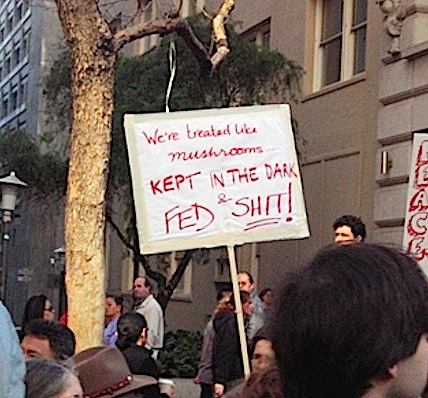
There you have it in that last quoted paragraph. In order to move ahead and avert disaster, we must be given the unvarnished truth rather than be kept in the dark and fed shit. In order to do that, we have to get at the root of the problem – capitalism.











 Collapse of Industrial Civilization