Apocalyptic headlines seem to be daily occurrences now. Here’s just a few headlines that grabbed my attention over the last week(click on them to go to the original article):
Form the article:
Why do we care?,’’ Abdalati, an ice scientist, asked. ‘‘This ice has been an important factor in determining the climate and weather conditions under which modern civilization has evolved.’’
Scientists sometimes call the Arctic the world’s refrigerator and this is like leaving the fridge door open, Scambos said.
‘‘This is kind of a knob on global weather,’’ Wagner said. ‘‘We don’t know the impact yet of fiddling with it.
When people in my house leave the fridge door open, I get pissed and close it. The electric bill goes up due to an overworked fridge trying to cool the food. The Earth, unfortunately, has no ability to shut the door that the human species has permanently torn off its hinges, irreparably destroying the thermostat. On the other hand, the Earth doesn’t really care that we have doomed ourselves to extinction.
Back in 2009, a Lieutenant Vasquez of the U.S. Navy made the following comments which sum up how industrial civilization is perpetuating its own demise:
“It makes me uneasy anyway to think that we’re going to let a trend caused by global warming – the melting of the ice – allow us to explore and exploit more fossil fuels, which led to the warming in the first place.
“That seems wrong-headed to me, but nevertheless it’s likely to happen and there’s already a debate about exactly who’s got the rights to the minerals and the oil that’s there under the Arctic continental shelf, and how to go about exploiting it.
“It’s unfortunate, from a broader view, understanding the science of what the future holds, but I think it’s inevitable because oil and gas are going to be extremely valuable in the coming century as supplies dwindle.”
~~~~~~
From the article:
Tree-ring chronologies from long-term climate records show the western U.S. drought is already the most severe of the past 800 years. It will exceed the 1930s-era Dust Bowl with more consecutive dry years.
Less rainfall is expected in the U.S. West in each of the next 80 years than the annual average level during the drought of 2000 through 2004, the op-ed continues. Schwalm (an earth scientist), Williams (a geographer) and Schaefer (a National Snow and Ice Data Center scientist) analyzed that extreme drought in a new study in the journal Nature Geoscience.
Climatologists say we will experience reduced agricultural productivity, scarcer water resources and carbon sequestration (plants turning carbon into oxygen). The climatologists previously reported in a scientific journal that drought already has halved the amount of carbon dioxide they normally photosynthesize.
OK, that’s enough to scare any of us who studied biology out of our wits. But there’s more.
Major river basins show flow reductions of 5 to 50 percent. Western crop yields are down by 13 percent, with many local cases of crop failure….
Right now we are living in the glory days known as the “wet years”. Our descendants, if there are any, will look back in anger at their forefather’s myopic and self-destructive worship of economic growth and profit at the altar of an economic system they proclaimed to be the greatest the world has ever seen – capitalism. As has been said by a few wise people, “We can either save ourselves, or we can save capitalism.”
…Climate change is projected to increase the frequency, intensity, and duration of droughts, with impacts on many sectors, in particular food, water, health and energy,” WMO secretary general Michel Jarraud said. “We need to move away from a piecemeal, crisis-driven approach and develop integrated risk-based national drought policies.”
Mannava V K Sivakumar, director of WMO’s climate prediction and adaptation branch, says only Australia has a national policy toward drought and the advantage of a policy – rather than a disaster management, which some countries have – is that national action is required no matter who is in political power.
Australia’s government says its 2004 policy is no longer sufficient to deal with climate change, however, and over the past two years it has tried a pilot programme in western parts of the country aimed at shifting from a crisis-oriented approach to risk management.
Sivakumar said the agency is also encouraging more continuing support especially for “the poorest of the poor”, small farmers whose daily wages determine whether they and their families will eat on any given day.
If you’ve been paying attention, our system of transnational capitalism and globalization has ushered in a global land grab which I blogged about here. From where I’m sitting, there appears to be no concern for what’s really sustainable or socially just, but what the monied interests can steal from the weakest and most impoverished living on our planet.
Leading water scientists have issued one of the sternest warnings yet about global food supplies, saying that the world’s population may have to switch almost completely to a vegetarian diet over the next 40 years to avoid catastrophic shortages.
Humans derive about 20% of their protein from animal-based products now, but this may need to drop to just 5% to feed the extra 2 billion people expected to be alive by 2050, according to research by some of the world’s leading water scientists.
“There will not be enough water available on current croplands to produce food for the expected 9 billion population in 2050 if we follow current trends and changes towards diets common in western nations,” the report by Malik Falkenmark and colleagues at the Stockholm International Water Institute (SIWI) said….
…”Nine hundred million people already go hungry and 2 billion people are malnourished in spite of the fact that per capita food production continues to increase,” they said. “With 70% of all available water being in agriculture, growing more food to feed an additional 2 billion people by 2050 will place greater pressure on available water and land.
As George Dvorsky points out: “…it’s not enough for the researchers to suggest that switching to a non-meat based diet is the solution. Agriculture in general takes a tremendous toll on the environment and is a major contributor to the ongoing depletion of water reserves. It’s estimated, for example, that in the US, withdrawn surface water and groundwater use for crop irrigation exceeds that for livestock by about a ratio of 60:1. The issue, therefore, would seem to be one about the production of potable water and the development of more sustainable agricultural techniques…”
But I really don’t think we’ll be able to pack in a few more billion people on this planet at our current rate of destruction. Cannibalism might be how some get their allowance of meat in the future.
~~~~~~
from the article:
Life in the world’s oceans faces far greater change and risk of large-scale extinctions than at any previous time in human history, a team of the world’s leading marine scientists has warned.
The researchers from Australia, the US, Canada, Germany, Panama, Norway and the UK have compared events which drove massive extinctions of sea life in the past with what is observed to be taking place in the seas and oceans globally today.
Three of the five largest extinctions of the past 500 million years were associated with global warming and acidification of the oceans – trends which also apply today, the scientists say in a new article in the journal Trends in Ecology and Evolution.
Other extinctions were driven by loss of oxygen from seawaters, pollution, habitat loss and pressure from human hunting and fishing – or a combination of these factors….
…“It is very useful to look back in time – because if you forget your history, you’re liable to repeat it.”…
…“We need to understand that the oceans aren’t just a big dumping ground for human waste, contaminants and CO2 – a place we can afford to ignore or overexploit. They are closely linked to our own survival, wellbeing and prosperity as well as that of life on Earth in general.
“Even though we cannot easily see what is going on underwater, we need to recognise that the influence of 7 billion humans is now so great it governs the fate of life in the oceans. And we need to start taking responsibility for that.”…
…we need to stop releasing the CO2 that drives these massive extinction events, curb the polluted and nutrient-rich runoff from the land that is causing ocean ‘dead zones’, manage our fisheries more sustainably, and protect their habitat better….
I recall a quote from Philippe Cousteau Jr., the grandson of world-renowned environmentalist Jacques Cousteau:
“I could cut my leg off, I could cut my arm off, I could gouge my eye out, I’d still probably survive, but not very well, and that’s what we’re doing to the ocean.
“It’s the life support system of this planet. We’ve been dumping in it, we’ve been polluting it, we’ve been destroying it for decades, and we’re essentially maiming ourselves… It’s not a question of whether the oceans can take anymore. The ocean can’t take any more. They couldn’t take any more fifty years ago.
”The question is, ‘when are we going to stop?”
Yes, that is the question of the ages. And the answer is that we won’t stop until our economic system collapses.
~~~~~~
…And the above article near my own stomping grounds. You know things are going haywire when flood insurance is needed for a suburban neighborhood located in the desert.
I’m working on adding graphics and trimming down a couple videos made from an extraenvironmentalist podcast of interviews with energy specialists Chris Nelder and Gregor Macdonald; but in the meantime, here is an update on the water-energy-food nexus exacerbated by climate change which I blogged about here. The social consequences are spelled out:
…US farms are already crippled: the Department of Agriculture says the corn (maize) crop is likely to be the worst since 1995. As a result, the Food Price Index (FPI) of the United Nations Food and Agriculture Organization rose 6 per cent in July, to 213.
More unrest is likely in the next year, although we cannot predict where, says Bar-Yam. That depends on how governments respond… – source
…and on the energy and water front:
…Power plants are a hidden casualty of droughts, says Barbara Carney of the National Energy Technology Laboratory (NETL) in Morgantown, West Virginia, because they are completely dependent on water for cooling and make up about half the water usage in the US. That makes them vulnerable in a heat wave. If water levels in the rivers that cool them drop too low, the power plant – already overworked from the heat – won’t be able to draw in enough water. In addition, if the cooling water discharged from a plant raises already-hot river temperatures above certain thresholds, environmental regulations require the plant to shut down.
One nuclear plant in Connecticut recently had to shut down because the sea water used for cooling was too warm. Nationwide, nuclear generation is at its lowest in a decade, with the plants operating at only 93 per cent of capacity.
Nuclear is the thirstiest power source. According to NETL, the average nuclear plant that generates 12.2 million megawatt hours of electricity requires far more water to cool its turbines than other power plants. Nuclear plants need 2725 litres of water per megawatt hour for cooling. Coal or natural gas plants need, on average, only 1890 and 719 litres respectively to produce the same amount of energy….
Bio fuel thirst
Reports of how much energy the US has generated this summer won’t be released for some months, he says. The North American Energy Reliability Corporation’s most recent report (PDF) calls the drought outlook “not optimistic” for energy, but says that most of the US should be able to meet its energy demands this year. The exception is Texas, where resources are expected to be tight.
Utility-scale power isn’t the only energy source being hurt by the drought, however. With corn harvests expected to be as low as 75 per cent of normal yields, biofuel production is also suffering. Compared to other energy sources, biofuel production requires the most water.
…Arjen Hoekstra of the University of Twente in the Netherlands calculates the total water use of different industries – including not just cooling but every step in the supply chain as well. According to his “water footprint calculator”, biofuels require orders of magnitude more water than any other energy source… – source
Some farmers profit from the energy industry’s scramble for water while other farmers are fearful, holding back water for their crops…
…Select Energy sources water for oil companies in drilling hotspots across the country, and some landowners can make between $70,000 and $85,000 over the course of a year and a half by selling the water in their ponds to the company, said Mike Wilson, a regional sales manager at Select Energy.
But many landowners aren’t as willing to give up their water now that supplies have become so scarce.
“Farmers are scared about the water supply, too,” said Jeff Gordon, CEO of Texas Coastal Energy Co., a small oil company that began exploring in Kansas last year. “They are now saying, ‘We need to save our water for our crop and our livestock.’ ”
With two oil wells slated to be drilled in the next month, Texas Coastal is considering drilling its own water well at a cost of between $10,000 and $25,000.
Otherwise, it would have to pay to truck water in from out of state or buy it from local farmers and ranchers. Either method could add 3% to 4% to the overall cost of drilling an oil well. Depending on the size of the well and the amount of water required, that could add up to between $20,000 and $200,000.
To the oil companies, it’s worth it. With oil prices hovering around $90 a barrel and the cost to produce a barrel of oil only around $15, the profits are huge, said Gordon, whose company is still aggressively leasing mineral rights, which gives it rights to drill on certain properties.
If the drought worsens or persists for too much longer, however, it could threaten the oil boom, particularly among the smaller drilling companies that can’t afford the added costs and delays, he said.
“That can cripple a drilling company, as lack of water can basically suspend operations,” he said.
Petro River’s Alba said the drought won’t affect his current drilling plans, but hewill carefully assess water availability before expanding into other areas of Kansas.
Scrambling to get the oil companies to stay: Mike Lanie, the economic development director in Harper County, which is at the center of the oil boom, is determined to keep oil companies from pulling out. – source
The financial drain on the system from the drought…
The U.S. government recently announced it would buy $170 million in various meats to help drought-stricken farmers. Other costs to the taxpayer from this epic drought include payouts from federal crop insurance programs:
Crop insurance losses: Your tax dollars on the hook
The drought of 2012 is also likely to result in record payouts from the federal crop insurance program. This taxpayer-funded program subsidizes insurance for farmers and also partially compensates private insurers, with additional emergency assistance that kicks in during extreme events like the current drought.
I was set to write a post about gross inequality, but I had a dream nightmare last night about the end of the world as we humans know it. Remember the monkey wrench I wrote about recently? If the pervasive mindset amongst our leaders and society at large is that we can continue growing the economy, using the environment as a sink for our waste, and that our burning of the planet’s fossil fuels has no effect on the thin atmospheric skin covering the earth, all other issues of social injustice become meaningless. All the magnificent art, music, scientific breakthroughs, and intellectual writings of our species will be swept away like dust mites before a broom. With the pick of Paul Ryan as VP, you can disregard what King Romney, aka Mr. etch-a-sketch, said about climate change. The interdependence of industrial civilization with fossil fuels is an unbreakable bond that overrides all other human concerns including the very hospitableness of the planet for our species.
Humans are now burning more than 1 million tons of coal, oil, and natural gas every hour.
Copernicus at his blog Brane Space has just posted an essay which should give you pause for what havoc we are unleashing by our insatiable appetite for the carbon energy we dig up and suck out of the Earth. In addition to the references cited by Copernicus, I want to mention an article written a couple of years ago in the online German publication of Die Welt which reported on the discussions at a scientific conference in Aussois, France concerning the planet Venus. They determined that the hellish planet of Venus was much more similar to Earth than previously thought. Their conclusions were based on high-tech measurements and analysis from the European Venus Express, launched in 2005.
Venus in the past may have been very similar to Earth – with oceans – and even life. Then the climate changed, and the planet turned into red-hot desolation.
…it is a prime example of a runaway greenhouse effect that may have started in a way that is feared to be now taking place on Earth.
…
Due to its thick cloud cover, only 20% of the solar energy reaches the planet’s surface. This 20%, however, cannot be radiated back into space because of Venus’s dense atmosphere, and thus leads to enormous heating of the planet.
…The manmade pollution of the Earth’s atmosphere – warns a majority of climatologists – could also lead to a runaway situation whose final result would be what we have on Venus today.
Scientists have been studying other planets like Venus, Mars and Jupiter for some time now and have come to the overall conclusion that huge consequences for a planet’s climate from feedbacks like the greenhouse effect is “not a mere speculative theory. It was an observation of real events.” Man’s hubris and power of self-deception know no bounds. The Earth cannot be shoehorned into man’s fabricated economy of endless growth and infinite money printing. The crutches of religion and technology will quickly wither when we are faced with catastrophic planetary tipping points.
It is clear that learning the object lesson of what happened to our neighbor planet can have mighty consequences to what may befall our own (though admittedly not from the same causes)….Perhaps we need to pay much more attention to our own planet and especially its carbon load and carbon footprint made by each of us, lest we hasten our path to becoming another Venus. Why do good planets go bad? Maybe because natural conditions incite the bad effects in the first place, or…..maybe a resident species aids and abets the natural causes by consuming too much of the wrong form of energy!
I did not waste my time reading King Romney’s 2010 book No Apology; The Case for American Greatness, but someone who did sacrifice some eyesight to it has some interesting observations which I’ll comment on. Romney may be the only Presidential candidate to explicitly acknowledge in writing the fact of peak oil:
Many analysts predict that the world’s production of oil will peak in the next ten to twenty years, but oil expert Matt Simmons, author of Twilight in the Desert: The Coming Saudi Oil Shock and the World Economy, presents a compelling case that Middle Eastern oil production may have already reached its peak. Simmons bases his contention on his investigation into the highly secretive matter of the level of reserves in the Saudi oil fields. But whether the peak is already past or will be reached within a few years, world oil supply willdecline at some point, and no one predicts a corresponding decline in demand. If we want America to remain strong and wish to ensure that future generations have secure and prosperous lives, we must consider our current energy policies in the light of how these policies will affect our grandchildren. (pg 233)
Romney also acknowledges climate change, but then enunciates the contradiction the vast majority of the population cling to, which is the notion that we can limit GHG within our fossil-fuel based industrial civilization while maintaining economic growth and business as usual. This fantasy will never be, even if we were able to magically enlarge the planet and its resource base in order to accommodate more growth. So in the end, Romney is not a true Peak Oiler. His “energy policies” ultimately involve the ubiquitous growth imperative:
“It’s impossible not to take a look at our current energy policies without considering the question of climate change. I believe that climate change is occurring – the reduction in the size of global ice caps is hard to ignore. I also believe that human activity is a contributing factor.” (pg 227)
Romney hedges this statement in the next paragraph by saying he is “uncertain how much of the warming is attributable to man and how much is attributable to factors out of our control.” Three pages later, Mitt concludes his discussion of climate change saying that “Internationally, we should work to limit the increase in emissions in global green house gases, but in doing so, we shouldn’t put ourselves in a disadvantageous economic position that penalizes American jobs and economic growth.” (pg 330)
Isn’t it amazing that a person who may be the next President (even though it is just a PR position for the corporatocracy) can talk about the reality of peak oil while still mouthing the imperatives of economic growth? How long will this cognitive dissonance hold out? I give it no more than a decade, at the most, if our financial system manages to be kept propped up for that long. For to finally come to grips with the finiteness of the earth and its resources and the illusoriness of the economic growth dictate is to admit that the “American way of life” never was “non-negotiable.”
“The end of the human race will be that it will eventually die of civilization.”
~ Ralph Waldo Emerson
The water-energy-food nexus is an interlocking problem. For example, biofuel production takes land and water away from food production. Besides the contamination to water reservoirs, the process of hydrofracking and tar sands utilizes massive amounts of water which could otherwise be saved for farming:
Oil sands extraction uses significant amounts of water (2-4.5 barrels per barrel of oil produced), which ends up in toxic tailings lagoons that have never been successfully reclaimed. An analysis using industry data estimated that these lagoons already leak over a billion gallons of contaminated water into the environment each year. – source
Hydrofracking injects large volumes of water (up to six million gallons of water per gas well) mixed with sand and toxic chemical additives at high pressures to release the gas. Most of the water is then returned to the surface as polluted wastewater – that must be treated by wastewater treatment plants already overburdened and not necessarily designed to remove these chemicals. Industry analysts predict it will cost $3 billion to treat the industrial wastewater associated with Marcellus shale development… Groundwater supplies may become contaminated with these chemicals as they already have in parts of Pennsylvania and other states. Currently, oil and gas companies that use hydraulic fracturing are exempt from regulations under the Safe Drinking Water Act that would require them to disclose the cocktail of chemicals they use.
– source
Scaling back on the production of these unconventional energy sources in order to conserve land and water for food will increase the cost of conventional oil, and thus food prices, since industrial agriculture is dependent on fossil fuels:
Due to the vast size of these [industrial] farms, the farms are operated in a similar manner to that of large industrial factories. And these “factories” require large quantities of synthetic fertilizers, pesticides, and fuel all derived from fossil fuels, which is a limited natural resource on our planet (Hidden Costs of Industrial Agriculture, 2008). “After cars, the food system uses more fossil fuel than any other sector of the economy — 19 percent.” This high dependence on fossil fuels makes industrial agriculture heavily unsustainable. “Twentieth-century industrialization of agriculture has increased the amount of greenhouse gases emitted by the food system by an order of magnitude; chemical fertilizers (made from natural gas), pesticides (made from petroleum), farm machinery, modern food processing and packaging and transportation have together transformed a system that in 1940 produced 2.3 calories of food energy for every calorie of fossil-fuel energy it used into one that now takes 10 calories of fossil-fuel energy to produce a single calorie of modern supermarket food” (Pollan, 2008).
The monkey wrench of climate change is now thrown into the picture…
What happens to the stability of the world when fertile lands become dust bowls, when rainfall no longer follows its traditional seasonal pattern, when crop yield forecasts become less and less reliable as climate change begins to bite? We don’t have to look very far back to see the upheaval caused in countries whose majority population lives on the razor-edge of starvation:
2007–2008 – Food riots in India, Peru, Morocco, Egypt, Bangladesh, Pakistan, Zimbabwe, Mozambique, Namibia,
Uzbekistan, Indonesia, Yemen, Guinea, Cameroon,
Burkina Faso, Mauritania and Senegal. [64][65][66][67][68][69]
And again in 2010-2011:
For those who think that adaption to climate change is feasible, please consider what Kurt Cobb articulates in a recent post:
…costly existing agricultural infrastructure won’t be easily moved or replaced. …soil quality is not uniform from place to place. [Do you] think that as temperatures warm and devastate the American grain belt with recurrent drought, we can simply transfer the growing of much of the world’s export grain crop north to the Canadian Shield which has soil so thin it has never supported agriculture?
The ‘Catch-22’ kicker is that the continued use of fossil fuels, the indispensable elixir of industrial civilization’s existence, is exactly what is causing climate chaos in the first place. And as I showed with one simple chart in a previous post, we are using more of this deadly ingredient than ever before. In his latest article ‘The hunger wars in our future’, Michael Klare warns us about the social disruptions that lie in the future as a result of the insidious water-energy-food nexus that grips our modern-day way of life:
…When we think about climate change (if we think about it at all), we envision rising temperatures, prolonged droughts, freakish storms, hellish wildfires, and rising sea levels. Among other things, this will result in damaged infrastructure and diminished food supplies. These are, of course, manifestations of warming in the physical world, not the social world we all inhabit and rely on for so many aspects of our daily well-being and survival. The purely physical effects of climate change will, no doubt, prove catastrophic. But the social effects including, somewhere down the line, food riots, mass starvation, state collapse, mass migrations, and conflicts of every sort, up to and including full-scale war, could prove even more disruptive and deadly…
At this point, the focus is understandably on the immediate consequences of the still ongoing Great Drought: dying crops, shrunken harvests, and rising food prices. But keep an eye out for the social and political effects that undoubtedly won’t begin to show up here or globally until later this year or 2013. Better than any academic study, these will offer us a hint of what we can expect in the coming decades from a hunger-games world of rising temperatures, persistent droughts, recurring food shortages, and billions of famished, desperate people.
Remember when both Bush, Cheney and Obama famously quipped that “the American way of life was non-negotiable.” Mother Nature and the Grim Reaper have rephrased that self-righteous slogan to read:
“The American way of life is unsustainable, non-redeemable, and a limited-time-only.”
Climate Change is apparently too abstract for the human race at large to wrap their heads around.
“You almost couldn’t design a problem that is a worse fit with our underlying psychology,” says Anthony Leiserowitz, director of the Yale Project on Climate Change Communication.
And so our fate appears to be sealed as long as Humans continue to behave as the punch-drunk creatures they have been since the onset of the Industrial Age and the discovery of fossil fuels, the addiction to which there is no cure. This beast will go down violently. We’re Dodo birds with nukes.
“Environmental degradation proceeds apace as we gleefully trade in living soil for smart phones, clean air for fast computers, potable water for high-definition televisions, healthy food for industrial poison, contentment for exhilaration, decent human communities for hierarchical death camps, and life for death. All the while, we take truth-tellers to task while looking to corrupt governments for leadership. Truth is treason in an empire of lies, so we don’t protest governments that spy on their citizens and then kill them.” ~ Guy McPherson
“…people today have no better grasp of the consequences of their actions than superstitious and unscientific people centuries ago. Modern technological man is just as easily bamboozled by propaganda as ancient man was by superstition and ignorance.” ~ Dr. Paul Craig Roberts
“Evolutionary deadends are much more common in the tree of life than many people realize. Extinction is the most general rule of the game.” ~ George Mobus
I took a look into Direct Democracy for Switzerland at Wikipedia [link], where I found : –
In Switzerland, single majorities are sufficient at the town, city, and canton level, but at the national level, double majorities are required on constitutional matters. The intent of the double majorities is simply to ensure any citizen-made law’s legitimacy (Kobach, 1993).
Double majorities are, first, the approval by a majority of those voting, and, second, a majority of cantons in which a majority of those voting approve the ballot measure. A citizen-proposed law (i.e. initiative) cannot be passed in Switzerland at the national level if a majority of the people approve but a majority of the cantons disapprove (Kobach, 1993). For referendums or propositions in general terms (like the principle of a general revision of the Constitution), the majority of those voting is enough (Swiss constitution, 2005).
In 1890, when the provisions for Swiss national citizen lawmaking were being debated by civil society and government, the Swiss adopted the idea of double majorities from the United States Congess, in which House votes were to represent the people and Senate votes were to represent the states (Kobach, 1993). According to its supporters, this “legitimacy-rich” approach to national citizen lawmaking has been very successful. Kobach claims that Switzerland has had tandem successes both socially and economically which are matched by only a few other nations, and that the United States is not one of them. Kobach states at the end of his book, “Too often, observers deem Switzerland an oddity among political systems. It is more appropriate to regard it as a pioneer.”
Unfortunately, I found the political spin in the states worth giving emphasis from the same wikipedia link above : –
Direct democracy was very much opposed by the framers of the United States Constitution and some signers of the Declaration of Independence. They saw a danger in majorities forcing their will on minorities. As a result, they advocated a representative democracy in the form of a constitutional republic over a direct democracy. For example, James Madison, in Federalist No.10 advocates a constitutional republic over direct democracy precisely to protect the individual from the will of the majority. He says,
“A pure democracy can admit no cure for the mischiefs of faction. A common passion or interest will be felt by a majority, and there is nothing to check the inducements to sacrifice the weaker party. Hence it is, that democracies have ever been found incompatible with personal security or the rights of property; and have, in general, been as short in their lives as they have been violent in their deaths.”
John Witherspoon, one of the signers of the Declaration of Independence said,
“Pure democracy cannot subsist long nor be carried far into the departments of state — it is very subject to caprice and the madness of popular rage.”
Alexander Hamilton said,
“That a pure democracy if it were practicable would be the most perfect government. Experience has proved that no position is more false than this. The ancient democracies in which the people themselves deliberated never possessed one good feature of government. Their very character was tyranny; their figure deformity…”
Interestingly, Edward Bernays, that wonderful spinmeister of double speak – worthy of debate, due to the outcome of much of his folly in the present world – had this to say at the opening of his (1928) book Propaganda [PDF] : –
The conscious and intelligent manipulation of the organized habits and opinions of the masses is an important element in democratic society. Those who manipulate this unseen mechanism of society constitute an invisible government which is the true ruling power of our country.
Our invisible governors are, in many cases, unaware of the identity of their fellow members in the inner cabinet.
They govern us by their qualities of natural leadership, their ability to supply needed ideas and by their key position in the social structure. Whatever attitude one chooses toward this condition, it remains a fact that in almost every act of our daily lives, whether in the sphere of politics or business, in our social conduct or our ethical thinking, we are dominated by the relatively small number of persons-a trifling fraction of our hundred and twenty million-who understand the mental processes and social patterns of the masses. It is they who pull the wires which control the public mind, who harness old social forces and contrive new ways to bind and guide the world.
It is not usually realized how necessary these invisible governors are to the orderly functioning of our group life. In theory, every citizen may vote for whom he pleases. Our Constitution does not envisage political parties as part of the mechanism of government, and its framers seem not to have pictured to themselves the existence in our national politics of anything like the modern political machine. But the American voters soon found that without organization and direction their individual votes, cast, perhaps, for dozens of hundreds of candidates, would produce nothing but confusion. Invisible government, in the shape of rudimentary political parties, arose almost overnight. Ever since then we have agreed, for the sake of simplicity and practicality, that party machines should narrow down the field of choice to two candidates, or at most three or four.
In theory, every citizen makes up his mind on public questions and matters of private conduct. In practice, if all men had to study for themselves the abstruse economic, political, and ethical data involved in every question, they would find it impossible to come to a conclusion without anything. We have voluntarily agreed to let an invisible government sift the data and high-spot the outstanding issue so that our field of choice shall be narrowed to practical proportions. From our leaders and the media they use to reach the public, we accept the evidence and the demarcation of issues bearing upon public question; from some ethical teacher, be it a minister, a favorite essayist, or merely prevailing opinion, we accept a standardized code of social conduct to which we conform most of the time.
We are governed, our minds molded, our tastes formed, our ideas suggested, largely by men we have never heard of. This is a logical result of the way in which our democratic society is organized. Vast numbers of human beings must cooperate in this manner if they are to live together as a smoothly functioning society.
I therefore believe that the kind of oppression that threatens democratic peoples is unlike any the world has seen before. Our contemporaries will find no image of it in their memories. I search in vain for an expression that exactly reproduces my idea of it and captures it fully. The old words “despotism” and “tyranny” will not do. The thing is new, hence I must try to define it, since I cannot give it a name.
I am trying to imagine what new features despotism might have in today’s world: I see an innumerable host of men, all alike and equal, endlessly hastening after petty and vulgar pleasures with which they fill their souls. Each of them, withdrawn into himself, is virtually a stranger to the fate of all the others. For him, his children and personal friends comprise the entire human race. As for the remainder of his fellow citizens, he lives alongside them but does not see them. He touches them but does not feel them. He exists only in himself and for himself, and if he still has a family, he no longer has a country.
Over these men stands an immense tutelary power, which assumes sole responsibility for securing their pleasure and watching over their fate. It is absolute, meticulous, regular, provident, and mild. It would resemble paternal authority if only its purpose were the same, namely, to prepare men for manhood. But on the contrary, it seeks only to keep them in childhood irrevocably. It likes citizens to rejoice, provided they think only of rejoicing. It works willingly for their happiness. It provides for their security, foresees and takes care of their needs, facilitates their pleasures, manages their most important affairs, directs their industry, regulates their successions, and divides their inheritances. Why not relieve them entirely of the trouble of thinking and the difficulty of living?
Every day it thus makes man’s use of his free will rarer and more futile. It circumscribes the action of the will more narrowly, and little by little robs each citizen of the use of his own faculties. ~ Alexis de Tocqueville ~ 1835
I sense that the work is almost complete, since the exportation of most every wealth – with its replacement of exhorbitant debt – complete a nation without appeal to their constitutional rights – has squandered; for want of a stance in sensibility, even what abilities are left remaining to resolve it …
I’m politically agnostic so I don’t really pay too much attention to the machinations of our faux democracy, best described as a “kabuki theater of empty formalisms that disguise the offstage conspiracies of corporate/state elites.” Politics has become like the fake professional wrestling of the WWF: a rigged and meaningless spectacle for the apathetic masses.
The latest titillating maneuver comes from the DNC in the form of a video illustrating King Romney waffling over if/when he’ll disclose his income tax returns. It features Romney’s Olympic-qualified dressage horse named Rafalca and was to be Volume 1 of a series of videos:
But apparently the video cut too close to the bone for the Romney Royalty, and since late Wednesday the DNC has decided to pull the plug on the series:
…At the time, the DNC was billing the video as “the first in a series of digital products highlighting Rafalca.”
But by late Wednesday, the DNC had done a complete 180 and decided it “will longer use the Romney’s Olympic-bound dressage horse to portray Mitt Romney as ‘dancing around the issues’ because it could be seen as offensive to the (Mitt Romney’s) wife Ann,” CNN’s Political Ticker blog reported….
…The catalyst for the DNC’s about-face on the wisdom of “highlighting Rafalca” was an interview, scheduled to air Thursday, in which Ann Romney told Good Morning America’s Robin Roberts, “It makes me laugh. It’s like ‘Really?’ You know, there’s so many people out of work right now, and there’s this guy right here that has the answers for fixing the economy, and all these attacks are going to be — they’re going to try everything. They’re going to throw spaghetti at the wall.”
What’s even more offensive and alarming is that the masses can’t readily see that, for all practical purposes, there is no difference between the two candidates we are being offered when it comes to reality-based issues such as the collapsing middles class, institutionalized criminal behavior on Wall Street, enthrallment to the banks and military industrial complex, and myopic vision on dire environmental issues like climate change which threatens to take us all down, rendering every other issue moot. But let’s humor the idea that humanity will still be here in any sizable numbers by mid-century and take a look at the financial viability of the 99%:
So we have the poverty-stricken plebs choosing between a wealthy elite and an exorbitantly wealthy elite. And many still think that’s a choice they need to make. To what end I don’t know. As some like to say, “Jesus wept!”
David Cameron could be replaced by any number of heads of state. The externalization of costs is intrinsic to capitalism and not something that can be changed without radically altering what we know to be this current economic system. I’ll be on sabbatical for a few weeks, so I won’t be analyzing too much, but Monbiot just put out an essay that deserves some commentary when I get more time.
David Hilfiker is someone I’ve quoted before, but I haven’t revisited his website until recently. I’m glad to find that he’s still producing. His work is licensed under a creative commons, so I’m re-publishing a recent essay of his worth reading:
If we can’t fix something, does it make sense to try?
It’s too late to prevent climate change; it already happening, and much worse is coming. The powerful forces of consumerism, a capitalist economic system, government, the power of the corporations, and the influence of the media create a web that we will not untangle without profound changes in our society. If we can’t actually solve the problems of global warming and climate change, if the results are going to be tragic, where do we find hope? How do we respond? Paradoxically, responses are popping up everywhere. Something new is afoot.
I sometimes teach classes about the environmental crises facing us and the devastation they’ll cause. One of the basic messages of the course is that preventing climate change is no longer possible. It’s already here and much more is inevitable. I explain at the beginning of the course that the forces arrayed against environmental sanity are simply too strong for the usual political or personal fixes to be effective. And until we understand what we’re up against, we can’t react effectively. American consumerism, the structure of our government, the nature of our economic system, the power of the corporations, and the dominance of media are a tightly interwoven web that is virtually invulnerable to human attack. I warn class members that the first two-thirds of our time together will be depressing, but I ask them to hang in there with me until our last sessions when we can begin to talk about what hope might look like.
But they never do hang in there. By the third or fourth session, each class has, in one way or another, resisted or outright refused to continue examining the web and has insisted on asking, sometimes angrily, what we can do about it.
But to ask “What can we do about it?” usually means “What can we do to fix it?” When I respond that there’s nothing we can do to fix it, there’s near rebellion within the class. Where’s the hope, then? What good does it do to understand it if we can’t fix it? Why should we do anything at all?
Every class so far has responded this way. It seems built in, programmed. You may have similar feelings as you read on. What’s going on?
The Positive Outlook as Problem
Our country’s historical optimism and positive outlook are blinding us to the painful future that awaits us. We Americans have an unshakeable faith in progress, in our capacity to overcome obstacles. “Things’ll turn out,” we remind each other. “Look at the bright side,” we say. Even when things clearly won’t work out, even when there is no bright side, it’s rude to say so in mixed company.
This official optimism is thoroughly grounded not only in the Enlightenment thinking that suffuses the West but also in our particular history as a nation. The colonization of the Americas, the taming of the frontier, and the growth of an affluent middle class all required confidence unwarranted by the chances of success. But the eventual success reinforced our native optimism. Until the last fifty years, our experience has been that as a nation we can accomplish whatever we set our minds to.
We’ve been understandably proud of our can-do attitude. We attribute much of our success to our optimism and willingness to forge on against seemingly insuperable odds. We have risen above nature, we believe, and are no longer subject to it. Our intellect and our technology will ultimately solve any problem. Anything less than a positive outlook is considered “defeatist” or “needlessly depressing.” We shouldn’t be “quitters.” Optimism is part of the American creed. It’s official.
So what’s the matter with that?
The circumstances of our history have changed dramatically and our persistent optimism is obscuring reality, shrouding what’s really happening and diverting us from our real work. The United States is the only industrialized country, for instance, where there is no national, politically effective response to our environmental future. The most benign bill to establish a system of cap-and-trade of carbon emissions didn’t stand a chance in Congress. Of the 65 Republicans who agreed to answer the question (most refused an interview), “only five said they believed a ‘significant amount’ of climate change was due to human activity.”[1] As we’ll see, there are political and economic reasons for this stance, but it could not dominate the public discussion except for our official optimism that, really, we can manage anything that happens.
Global Climate Change
The environmental challenges we face are overwhelming, any one of which could rise to the top of our list of concerns under the right circumstances:
climate change
the loss of farmland the size of Nebraska around the world every year
the decimation of ocean fisheries from overfishing
the loss of biological diversity with an estimated rate of species extinction 1000 times the rate of normal loss
the pollution of air and water, the long-term effects of which (cancer, fetal abnormalities, cognitive dysfunction, and so on) often take decades to reveal themselves, and
the loss of freshwater, which will almost certainly lead to 21st century resource wars
Any of these is a profound threat to our civilization, but the most immediate and most on our minds is climate change, so I’ll stick with that. Carbon Emissions, Tipping Points, and Likely Outcomes
Most readers will know a fair amount about global climate change, recognize that it’s primarily the result of carbon dioxide (CO2) emissions from human activity, and accept the scientific consensus of an ominous future if carbon emissions are not controlled. To recapitulate briefly, climate change is the result of a drastic rise greenhouse gases—CO2, methane, nitrous oxide and others—unlike any the Earth has seen in 200,000 years. Sunlight can pass unchanged through this layer of gases, but the warmth produced when it strikes the Earth can’t pass back out. So the Earth has warmed an average of 0.7º Celsius (C) or 1.0º Fahrenheit (F) above the baseline that had been consistent for millennia.
What some are just beginning to acknowledge is that the battle to prevent climate change is already lost. Even some mainstream TV has dropped the conditional. It’s no longer “possible” or “some-scientists-say” climate change or “if” or “when” climate change occurs. With rising oceans; frightening changes in disease distribution; the increasing occurrence of record-setting heat waves and droughts; and record floods, hurricanes and tornados; the climate is changing fast. As environmentalist Bill McKibben writes in his book Eaarth, we live on a new planet … and we won’t get the old one back.
Given the current forty percent increase in the concentration of greenhouse gasses, the unwillingness of major polluters like China and the United States even to consider real changes, and how long it will take to reach sustainable levels of emissions even after major polluters have sincerely committed themselves to radical action, CO2 emissions won’t even begin to decrease anytime soon, and certainly not before further, even more dangerous, destabilization of the climate.
Reports from the UN’s Intergovernmental Panel on Climate Change (IPCC) warn that if we don’t keep the total temperature rise below 2º C, the risks will be too great to accept. Unfortunately, because of CO2’s long half-life in the atmosphere, just the CO2 we’ve already emitted commits us to a rise of 1.5º C.
One must understand, however, that the IPCC’s estimates and predictions are very conservative. Their mandate is to carefully present data that is unassailable, but individually many scientists on the panel are more forthcoming and, in general, deeply pessimistic. For them, the science is bad enough, but the practicalities are worse. We’ll examine those practicalities below.
The End of the Long Summer
There’s a further dark cloud on the horizon that—in keeping with our innate optimism—has been only minimally publicized. The last 11,700 years have been a period of unusual climatic stability, labeled by one author “The Long Summer.”[2] Without this stability, many scientists believe, agriculture and the establishment of our civilizations would have been unlikely. But in the last 120,000 years, no other stable period like this has occurred. The normal has been wild swings in climate with temperature changes of up to 10º C in as little as fifty years, perhaps fewer.
Scientists aren’t yet sure what has given us the long summer, but, given the much more common instability in our history, they fear that even small temperature changes will tip us out of this fragile balance and into almost unimaginable scenarios. The details (when and how bad) are unknown but could include: sea level rises of twenty feet or more that inundate Florida and much of the tip of Manhattan; an uninhabitable tropical belt and American Southwest; the loss of the Amazon rainforest; and the deaths of even billions of people from hunger, thirst, and the resultant political instability.
Unfortunately, this is not science fiction. How could it happen? One reason we can’t make reliable specific predictions is that “positive feedback loops” are one of the big unknowns that science doesn’t yet understand well. The loss of albedo (the fraction of the sun’s rays reflected away from the Earth) that causes the Arctic’s melting ice is well known. Ice reflects most sunlight harmlessly back into space, but the darker, ice-free water absorbs it, warming the sea. As warming shrinks the ice cap, less ice and more open sea causes further warming, melting the ice cap even faster. That’s a positive feedback loop, a destructive spiral.
A potentially more ominous example comes from the massive amounts of methane stored in the arctic permafrost, frozen Siberian peat bogs, and vast deposits under ocean beds. Molecule for molecule methane is twenty times more potent a greenhouse gas than CO2 although its much smaller concentrations in the atmosphere make it, currently, less important than CO2. When the permafrost or peat bogs begin to melt, however, the methane is released, intensifying the greenhouse effect, warming the earth, further melting the permafrost and round we go. There’s so much methane locked in the permafrost and peat bogs that once serious amounts begin to be released, all bets about climate future are off. The even greater amounts of methane under ocean beds are very sensitive to the temperature of the water just above them; even a small change could cause large “burps” of methane release, which are believed to have caused dramatic warming and mass extinctions earlier in Earth’s geological history.
There are many other known positive feedback loops:
Oceans are a major sink for CO2, but as they warm they can’t hold as much CO2.
Rain forests sequester huge amounts of CO2, but as the tropics warm, they dry out and release all that carbon, further warming the Earth.
Ocean plankton, small plants responsible for approximately half of the Earth’s photosynthesis,[3] metabolize CO2, taking the carbon with it when it dies and sinks to the bottom. Warming seas reduce not only the amount of ocean plankton but also its metabolism, decreasing CO2 uptake, increasing the concentration in the atmosphere and creating another vicious feedback loop.
The timing of such feedback loops and the resultant sudden rise in temperature can’t yet be predicted, but their likelihood renders the IPCC’s gradual curve hopelessly conservative. Even more worrisome are the still unknown feedback loops in this complex organism that is Earth.
Such feedback loops will be important in the end of the long summer. Rising temperatures will almost certainly push the climate off the perch it’s balanced on. How soon? According to the geological record, even the current 0.7º C rise has previously been enough to bump the earth off balance. And once that happens, it’s a whole new ballgame. The Earth itself becomes the major player—and the illusion of human control of the environment will dissipate quickly.
No amount of optimism can change the reality that we live on a new planet.
Political and Social Realities That Will Make Change Very Difficult
So far what I’ve said will be not be news to anyone who has made it their business to study these matters. The nation’s response to this frightening reality, however, has been muted. Some individuals have changed their lifestyles considerably to reduce their carbon footprint; some states have followed the leads of California and New England in passing laws to limit CO2 emissions. But the federal government has done virtually nothing.
If we don’t understand the reasons behind this minimal response, we will either continue in our blind optimism or descend into despair. Even most national environmental groups still talk—publicly at least—about avoiding the coming tragedy if we do such and so: if the people were to push hard enough, if politicians could be convinced, if the media were to wake up, and so on. But these environmentalists have apparently not been talking to the political or social scientists, for the “ifs” aren’t going to happen. Few of the writings on climate change (or other environmental crises, for that matter) have taken political and/or economic realities, consumerism, the power of modern media, or the influence of the corporations into account,[4] which is something like ignoring sexual desire when considering overpopulation.
Each of these forces is powerful in itself. But it is their interaction that creates the impenetrable web that will make escalating climate change inevitable.
A small diversion: As a physician I’m in the habit of being precise with my language, and I’m quite aware that, logically, nothing in the future is inevitable. But climate change has already happened and given the physics of CO2 and the time it will take to reduce emissions once the world agrees to reduce them significantly, much more climate change is utterly certain. But I’m saying something more. What I mean is that given this web of forces, calamitous climate change is as certain as human predictions get. There will be no world-wide binding agreement to reduce emissions in the foreseeable future. Only a literal miracle or a momentous breakdown in the social and economic order soon would be enough to open new possibilities.
Given the precarious position of our economy, the dysfunction of our politics, and the coming environmental realities, of course, such a breakdown is likely eventually, say within 50 years, if not sooner. But when it eventually happens and the requisite changes are eventually made, it will be too late to prevent widespread suffering.
The danger is that recognition of the inevitability of this catastrophe can lead to despair and inaction. My purpose is not to snuff out hope but to open our eyes. Gar Alperovitz has written that within human history change is “as common as grass.” And we must prepare ourselves for that moment, ready to take advantage of it to limit the coming catastrophe as much as possible. And until those changes can occur we must find ways of acting that will relieve as much suffering as possible.
Let’s begin to tease the web apart.
Consumerism
Although the majority of Americans recognize the reality of climate change and want governmental action, there has been no sustained popular demand for a change in policy. Why not?
Most Americans are deeply committed to their material lifestyle. The unspoken reality is that any effective challenge to climate change will require a radical transformation of that material lifestyle. Environmentalists and their organizations generally want to avoid this “inconvenient truth,” but the energy for indoor temperatures to our satisfaction, transportation of food, importation of goods from distant lands, personal transportation, manufacturing and much else all guzzle fossil fuels and emit CO2. A sustainable level carbon emissions—ie a level that the natural earth could recycle without rises in atmospheric CO2 levels—would be about two tons of CO2 for each person in the world per year. The average American uses 20 tons. As China, India and other poor countries develop economically, it’s utterly unrealistic—to say nothing of unjust—to expect them to keep to a 2-ton limit unless the Western world reduces its consumption accordingly.
What would 2 tons per year for the average American look like? It’s difficult to imagine, but for starters it would mean:
no air travel (period)
mostly local transportation on foot or bicycle (or the not-yet-existent) adequate public transportation
vegetarian, if not vegan, diets
only locally produced food … even in the winter
no air conditioners … even in the South
elimination of individual ownership of luxuries (and many other things we consider necessary), for instance, TVs, computers or washing machines
reducing the average size of our homes by at least a third, if not a half (or having others share our space)
and so on
Virtually no national environmental group acknowledges publically that a truly sustainable lifestyle will require such drastic changes. In Al Gore’s otherwise excellent and important film, Inconvenient Truth, we are left with the impression that changing to CFL light bulbs, driving a Prius, recycling, and buying carbon offsets would be enough. Well, no, it won’t be enough. In this sense those opposing carbon limitations are absolutely right: our “way of life” will have to change. Polls may show that most Americans are concerned about the environment, but how many will voluntarily vote for such changes until absolutely forced to?
This consumerism is powerfully encouraged by media advertising. Corporations and the US government are powerful purveyors of consumerism. Only economic reality (that is, major declines in personal incomes) will force a possible (though not guaranteed) loosening of the vise-like grip of American consumerism. But consumerism is only one element of the web.
The Capitalist Economic System
Our current economic system has been a direct cause of our environmental crises. Absent government intervention, capitalism’s fundamental theory precludes a significant reduction in carbon emissions. Think about these basic assumptions of capitalism:
Self-interest should be the primary economic motivator.
Monetary profit is the only goal.
The value of everything is measured by money.
Who gets what is determined by how much money they have.
Property is private and—within broad legal limits—owners can do anything they want with their property, regardless of the suffering it may cause others.
I am not exaggerating; these assumptions are recognized in basic economic textbooks. While individual owners and corporations serving a local area may, and fortunately often do, ignore some of the assumptions for the sake of the wider community, large publicly-held corporations adhere to them rigorously. But if we examined these assumptions carefully, most of us would find each one immoral as a basis for our behavior. Who of us, for instance, believes that pure self-interest, defined as monetary profit, should be one’s goal, especially one’s sole goal?
How does capitalism lead inexorably to environmental devastation? First, the problem of “externalities” is well recognized. An externality is a cost of producing a product that is foisted onto someone else in order to sell the product at the cheapest price. Environmental costs, for instance, are usually externalized. When a coal-fueled electric plant discharges CO2 into the air, for instance, the company doesn’t pay for the cost of the resulting damage; the rest of us do. The public thus subsidizes electricity generation from fossil fuels which allows the companies to lower their prices. If companies had to pay the full cost of their production, however, wind and solar power would be more than competitive, and we’d have much more of it.
Competition will force externalization of environmental costs upon even the CEO who is truly concerned about the environment. If the company were to buy the expensive equipment necessary to sequester the CO2, its electricity would be priced out of the market. It’s not necessarily greed (although it sometimes is); it’s not necessarily an unconcerned management (although it sometimes is). The problem is built right into capitalism and wouldn’t change significantly if you or I were the CEO. The morally right decision would too often run a company out of business.
A second, related, built-in characteristic of capitalism is that businesses must grow to survive; growth generally requires higher and higher levels of consumption fueled by powerful advertising that increases consumer desire and the sense that luxury items are actually necessities. Consumer desire increases, creating growth and the increased consumption of natural resources.
Third, the private nature of property legally inhibits the government from many of the regulations that could limit greenhouse gas emissions.
Adam Smith, the first theorist of capitalism, recognized another problem. Extremes of inequality are built into free-market capitalism. Under capitalism, government intervention is required through some kind of redistribution of income, for instance, progressive taxation. Free-market theorists claim that in material terms the market “lifts all boats.” Even if this were true, it’s clear that in practice the freer the market, the greater the inequality. Inequality ultimately destroys democracy because of the power of the wealthy and the powerlessness of the poor. The wealthy not only have massively disproportionate influence on government, they also control the media, which can obscure what’s actually happening politically. This demoralizes the population who consequently won’t become active and work to change policy. This has become especially obvious in the United States over the last thirty years.
The theory of capitalism loudly trumpeted by those in power, constrains government from “interfering in the market,” but that “interference” is, in fact, the only way to control capitalism’s built-in environmental devastation.
Corporations and Their Structure
Their wealth and power give corporations commanding influence over attempts at environmental sanity. Whole communities can be held hostage to a corporate threat to abandon the area, destroying jobs. Corporate political contributions and lobbying provide overwhelming influence over politicians. Their immense size allows them power over the structure of the economy, for instance, over economic agreements among and within countries.
Much of the corporate impact on the environment is exacerbated by the legal structure of the corporation. Small or local businesses tend to moderate capitalism’s underlying assumptions through loyalty to employees, concern about environmental impact on the local community, and rigorously honest behavior. But the “owners” of large corporations are many thousands of investors—whether working-class individuals through their retirement funds, wealthy individuals, or other corporations—who have bought stocks for the sole purpose of financial returns. Management has only one mandate, to maximize profits, which leads to the pure capitalism described above. Regardless of the environmental consciousness of the management, corporate managers are constrained from any other concern except the best interests of the stockholders, the bottom line.
Since the late 1800s, corporations have, notoriously, had most of the legal rights of individuals. Outside narrow legal limits, the right to free speech, for instance, allows the most blatantly exploitative advertising, which pushes the conspicuous consumption at the heart of global climate change. The right to free speech also allows corporations to offer essentially unlimited financial support to advancing a particular political position. The corporate right to privacy prevents routine public examination of the internal records which could hold them accountable for their practices; such accountability could have prevented the operational “shortcuts” that led to the Gulf oil disaster. The corporate right to equal protection before the law makes the efforts of West Virginians to prevent mountain-top removal much more difficult. And so on. We are so used to these individual rights being afforded to corporations that—except when their most egregious behavior leads to disasters—we hardly think about it.
But corporations are not persons.
They are immortal.
They are wealthy beyond imagination and collectively have dominance over the economic lives of millions of voters.
No live person or group of persons has actual legal responsibility for their actions. Shareholders cannot be held accountable for even illegal behavior by the corporation. Corporate managers have no personal responsibility for corporate actions that might hurt, or even kill, others, as long as the action is technically legal. True, the corporation may go bankrupt, but the worst actual persons can suffer is the loss of their investment.
As inanimate “persons” corporations feel no sense of moral responsibility, for instance, to their communities.
The power of corporations has not always been so overwhelming. Those of us of a certain age can remember
when unions were strong enough to successfully stand up to employers,
when CEO salaries were “only” forty times their employees;’ not six hundred,
when their impact upon democracy was not so detrimental, and
when it was possible to get elected without corporate support.
But in the late 1970s—after media became crucial to getting elected and campaign costs skyrocketed—the business community developed new and powerful tactics. Previously, individual companies or industries had lobbied for their own interests, often at cross-purposes with one another. But, as documented by Jacob Hacker and Paul Pierson in Winner-Take-All Politics, in the 1970s, several national business associations (such as the Chamber of Commerce and the Business Roundtable) organized their members to act in concert. Within only two or three years the impact on government had become profound, forcing Democrats—who controlled the presidency and both houses of Congress in the late 1970s—to reduce corporate and capital gains taxes and preventing them from passing labor and consumer-protection legislation. While there have been important exceptions, virtually no one gets elected and no bill gets passed if the corporations are united and strongly opposed. And even when they lose the vote in Congress, the corporate lobbying presence at every step of the way assures their influence in writing the details of the laws, writing the regulations, pressuring the regulatory agencies, and assuring their own impact in enforcing the law. Corporations can lose the election and win the wars. An obvious example is the failure of even the Democrats—despite vast popular support—to agree on minimal tax increases on the wealthy.
Corporations provide the cheap goods and encourage the consumerist culture of more. They own the media and are thus powerful influences on the cultural and political beliefs of the consumer.
Media
Progressives will sometimes respond to these concerns by suggesting that, when economic conditions turn bad enough, the middle class will soon start voting for the 99%. And virtually every progressive essay on either the environment or economic inequality will eventually suggest new legislation or a constitutional amendment that could change things for the better. And there is no shortage of workable ideas: public financing of campaigns, tax rates as progressive as they were thirty or fifty years ago, a Tobin tax that would put a minuscule tax (perhaps ¼ of one percent) on stock transactions, powerful cap-and-trade legislation, and so on. The ideas are endless, and they are all good ones that would indeed improve the situation markedly. What those who suggest these ideas usually ignore or vastly underestimate, however, is the power of advertising and, thus, the media, to influence our thinking.
We are all aware of the power of advertising to keep us addicted to consumerism. We can be sold things we don’t need, don’t really want, and certainly can’t afford … even if they are collectively destroying us. As individuals, however, most of us believe that we are immune to the effects of advertising. But advertisers would not spend over $3 billion a year in the US alone if it were not effective. A hundred years of psychological research has provided the industry the tools to influence us well underneath our conscious radar. Even media content that’s not technically advertising is, for the most part, a powerful advertisement for a consumerist lifestyle as we watch the way that the mostly affluent characters in the dramas live.
Also often missed is the ability of a well-funded advertising campaign to sway voters’ preferences and their understanding of an issue. Polls suggest that less than 5% of people know much about political issues or how politics work. In our ingnorance, it’s not difficult for the media to use the same techniques used to sell us new cars in order to sell us political opinions and policies. A good example is the sophisticated advertising campaign against that majority of Americans who, at the beginning of the campaign, supported required caps on carbon emissions. At the end of the advertising campaign, however, large swaths of the population viewed the bill as damaging to the economy, certain to raise prices, and devastating to employment. The bill, toothless as it was, didn’t stand a chance against the media.
Other than poorly funded public radio and television, the national media are large corporations themselves, almost always owned by other corporations. Like most corporations, media claim to be strongly pro-environment. But their impact on global climate change has been devastating.
Yes, it’s true that American voters could radically change the system to reduce carbon emissions, but they won’t … at least until things get much worse. Against the propaganda, fear techniques, and commitment to consumerism, the likelihood of a majority of the electorate demanding the very painful change necessary is extraordinarily low. And when it does finally happen, it will be far too late to prevent truly catastrophic change.
Government
Only government—when it is functioning as government—can mandate limits on carbon emissions or regulate the many other changes necessary. With a democratic government, a nation’s people decides what the majority wants and creates laws to make it possible.
The government could modify the economic system to force the internalization of environmental costs or alleviate inequality. It could drastically reduce the political power of corporations through public financing of campaigns and limitations on corporate lobbying. Government could control the power of media by breaking up the oligopoly, reinstating the fairness doctrine, mandating balanced coverage of political issues, and requiring a certain percentage of public service programming. It could eliminate economic subsidies for oil companies or corporate farming. And it could use its “bully pulpit” to enlist the support of the population in reducing our material consumption. Needless to say, little of this will happen anytime soon.
Perhaps the most dangerous and successful tactic of the far right over the last forty years has been to convince most of us—liberals and conservatives alike—that the federal government is incompetent at its best and malevolent at its worst. Considering the government a negative force, voters have been willing either to “starve the beast” by supporting tax cuts and reducing government impact or to withdraw from the democratic process completely. As the government becomes weaker, of course, it becomes less capable of providing services effectively, which makes voters even less willing to invest in it, a vicious circle of emasculation. As government loses its public support, however, the corporations and the 1% remain by far the strongest kids on the block.
Like the corporations, government is also firmly committed to economic growth fueled by consumerism. George W Bush’s notorious comment after 9/11, “Go shopping,” is emblematic. What the public learns is that “growth” (ie material growth) is necessary to the American way of life … which is true if increasing material wealth is essential to the American way of life.
The government’s unwillingness to face climate change is typified by President George HW Bush’s statement twenty years ago at the first Earth Summit: “The American way of life is not negotiable.”
Unfortunately, the founders of our country deliberately and explicitly designed the Constitution to prevent radical change. The presidential system (rather than a parliament led by a prime minister) and the two separate houses of Congress (one of which is elected to two-year terms, the other to staggered six-year terms) means that the president often belongs to a different party from the legislature and/or that the legislature itself is divided. Since the consent of both houses of Congress and the president is almost always necessary, controversial change is seriously hampered. An amendment to the Constitution requires two-thirds vote of each house of Congress, plus ratification by 75% of state legislatures. The filibuster—while not established by the Constitution—is a matter of Senate rules. This requirement of a supermajority can hamstring the Senate … as it has, most notably since the last presidential election.
This governmental structure makes blocking change much easier than creating change. With its power to block legislation, the minority can control and paralyze government, as the Republican Party is now doing. While government has the technical capacity to make the needed changes, in fact, it is virtually impotent in the face of the wealthy and the corporations.
The “impossibility” of making change with the usual means
So, that’s the web of forces blocking the way to environmental sanity. The political histories of DDT and tobacco teach us that it can take decades after a scientific consensus is reached to create adequate regulation. And those political struggles were before the corporations developed their extraordinary power. Each strand in the web is supported by each of the others, making any one element virtually impervious to change from below. I’ve taken these many paragraphs outlining these forces because I really do mean that change is not possible within the current social, economic, and political structure of our country. Despite our native optimism, many of us know this: voting, political organizing, running pro-environment candidates, lobbying, recycling campaigns, running for office, or anything else we have imagined have not fundamentally challenged these dominant forces and won’t until other powerful forces confront them.
I’m sure I sound like an utter cynic or nihilist. But I’m not emphasizing the inevitability of tragedy out of cynicism, perverseness or sensationalism. Nor do I have a secret roadmap to a solution that I’m about to reveal. Rather, I think we need to consciously face up to what most of us at some level really know. Only this will allow meaningful hope and appropriate response.
How Do We Respond to the Coming Tragedy?
Despair, grief, even cynicism and apathy are normal responses to the coming tragedy. We must not push them aside but recognize their reality and allow ourselves to grieve. And we must help each other navigate through these painful waters.
But we must also remember that what’s coming makes it even more important to find hope within our grief and act with courage and decisiveness. We can’t make it all better, but we have been given the opportunity to participate in what is perhaps the greatest human struggle in recorded history. We are witness to a time in history like no other, and we can make a difference. Helen Keller once said, “I rejoice to live in such a splendidly disturbing time.” [5]
What can we do? One response is to continue our work to reduce carbon emissions even in the face of the lost opportunity to prevent climate change. One of the great tasks before us is to alleviate as much as possible the human suffering that is coming. Because there will be so much pain, even our seemingly small response—reducing our own consumption, educating others about the realities of what we face, working for (even minimal) political change, or forcing an oil company to slow down (or even back down from) some planned expansion—anything that slows the process down even minutely will still have profound impact on this greatest of all challenges.
Another important task will be to mitigate the impact of the climate change that will occur. Two obvious examples are the Dutch strengthening of their dikes and the prior preparations to relocate residents of South Pacific islands that will soon be inundated. One impact of climate change will be a disruption in the economy. Such disruptions always impact the poor most heavily so any work for justice is also an important response to climate change. Creating structures that will give the best chances for survival in a post-carbon world (local sustainability, learning basic skills, farming and farmers markets, for example) will be important.
Until recently many environmentalists have resisted such work for mitigation for fear of relaxing societal pressure to reduce carbon emissions. It’s a legitimate point, but since complete prevention is no longer an option, mitigation must be part of any response we make.
Such responses may feel puny and insufficient to us who are used to fixing things. We will need each other’s help to work through those feelings of despair and hopelessness.
Localization
As one important kind of reaction, the localization movement is particularly important. Even small responses by individual citizens, small cities, or regions with common interests are crucial to the survival of our civilization. In any ecological niche, diversity and complexity give the needed resilience against threats. But the modern obsession with efficiency has destroyed much of that complexity. In her book The End of the Long Summer, Dianne Dumanoski points out that “the electronics industry has relied on specialized semiconductor chips made by [only] two companies who manufacture them in the same industrial park” in Taiwan.[6] A small earthquake or terrorist strike could wipe them out.
But local initiatives to create, grow or manufacture what is absolutely needed in the immediate area mean that many separate locations within the world are supplying necessities, offering a functional diversity that, like any ecology, offers stability in the face of multiple threats. Protest against local environmental damage can provide an opportunity for social and political change that tends to unite the community. Democracy, too, can be localized through the intimacy of town meetings or individual meetings with elected officials who are more likely to be neighbors than bureaucrats. Jobs that are localized, that is, tied to local needs—in hospitals, schools, garbage collection, and so on—can’t be exported abroad.
This localizing of power, production and social connection is well underway. In his book Blessed Unrest, Paul Hawken describes his lecturing on environmental issues in the mid-1990s. He noticed that, at the end of his talks, people would often come up, describe their (mostly) local environmental or political projects, and hand him their business cards. Soon he had thousands of cards. Wondering what this meant, he started researching such small groups around the world. He estimates that there may be over a million such groups from the massive Sierra Club to individual young people selling local produce in the farmers’ market. If we Include not only the social justice groups, indigenous rights groups and those with no official standing that Hawken recognizes but also the many direct-service nonprofits, there are millions around the world. Hawken points out that the first group formally created to meet the needs of others was the Society for Abolition of the Slave Trade organized in England in 1787. Now they are countless. And their explosive growth continues, spreading inexorably.
These are not, Hawken stresses, an organized movement, with any kind of central leadership. Their goals are often quite different from one another, sometimes working at cross-purposes. They come into existence and may disappear. But they’re part of a spiritual awakening that’s happening around the globe.
The Earth’s Immune System
Hawken likens this loose network to the human immune system, which has usually been characterized in top-down military images, but, in fact … there’s nobody in charge. There are different parts to the immune system that actually work independently, and within each of those parts there are millions of individual elements that do their job with considerable independence. The immune system is only minimally coordinated and comprises diverse, disordered and imprecise entities … and yet without it we’d die in a matter of days.
Like the immune system, these countless organizations in this global web may have little individual power to cure the earth’s sickness, and there’s no guarantee of any individual’s or group’s positive impact. You might think that—given the vast and powerful forces aligned against them—their uncoordinated efforts would have only minor impact. But Hawken’s work suggests that the whole may be much greater than the sum of its parts.
The city of Cleveland, for instance, is experimenting with worker-owned cooperatives that supply laundry to hospitals and educational institutions, creating local jobs that pay reasonable wages and are not going to move away. Hawken has long lists of other examples, for instance, small local banks that have sprung up to meet the financial needs of the community (and have been relatively immune from the 2008 crash, largely because their loans were made on a personal basis); they are a good example of functional redundancy. Volunteer organizations form free clinics, social service organizations, or foot patrols to protect the neighborhood. Credit unions and other co-ops (with about 120 million members across the country), 10,000 worker-owned firms, and community- or customer-owned businesses have all begun to change the face of capitalism.
These millions of organizations may be something like an ant colony. No single ant grasps the big picture or needs to direct the group’s effort, but following a few simple innate principles, the shortest route to the food is located, the anthill is built. Perhaps these few simple principles of the global movement are care for the Earth, care for one another, and care for future generations.
Hawken subtitles his book How the Largest Movement in the World Came into Being and Why No One Saw It Coming.
Its grass-roots origins, minimal ideology and loose coordination give this movement a resilience that no top-down organization could ever have; you can’t kill it by co-opting the leadership … because there isn’t any overall leadership. Its use of modern communications technology give the whole a power never before available to dispersed groups. The “movement” constantly grows and renews itself; one organization may disappear because of whatever, but others take its place. Those that are small with few resources by necessity use their resources efficiently and work with profound dedication. They are familiar with local conditions. They go with whatever works rather than ideology, so they tend to be far less polarizing than national politics. Unlike most larger organizations, they’re much more able to switch their activity in response to the actual conditions on the ground. They can make mistakes, even disappear, without seriously undermining the whole.
The current international order won’t last forever; it never does. As Alperovitz writes, the details are never clear in advance, but fundamental political, economic, and social change is routine in world history. The upheavals of the last decade are only the foreshocks. And we’re right in the middle of that now. What will happen when the current order falters? Could it be that a new order has been developing, unnoticed, right under our nose? The Polish union Solidarity had its political uprising, but after that was crushed, it continued organizing, providing needed services that the government couldn’t handle, developing a powerful base. It became almost a shadow government, so that, when the Polish government collapsed in the 1980s, Solidarity was there to pick up the pieces.
Hope
Do I think that these organizations are going to save the environment? No, I don’t. Do I think that they will topple the current order, bring about justice, and restore human rights? Possibly, but not anytime soon.
Then what about hope? If the future is so bleak, where does one find hope? My response is: Hope for what? What do you want to be able to hope for? Hope that we’ll prevent climate change? Hope that our lifestyle will survive? Hope that our grandchildren will inherit the same Earth we’ve known? I don’t know where to find that kind of hope except in illusion.
But if we hope to ameliorate the worst of climate change, if we hope to prepare ourselves so that the damage is minimized, or if we hope to create new structures that provide for local communities, then there is reason for hope. If, at a personal level, we hope for fulfilling and deeply meaningful work; if we hope for joy in participating with others for the general good; if we hope for community; in fact, if we hope for any of the most important things in life, then there’s hope and a lot of it.
Let me offer one possible scenario. The collapse, whether it comes now or in fifty years, will be painful, one we probably can’t imagine now … not just from the environment but from financial instability, inequality, resource wars and so on. In the rubble of all that, some new order will have to develop. It could be fascist totalitarianism, but it could also be the fundamental rebuilding we are hoping for. After the economic collapse of the Great Depression, Franklin Roosevelt picked up ideas and small projects that had been lying around and working on a small scale. He expanded them into national programs. As our future new order is built, it may also be the ideas lying around, the already existent small structures we’ve created that will be picked up. And they could form the basis for a new society. For that, it’s reasonable to hope.
Given the uncertainty of the future, we can’t know what’s going to be picked up and what will disappear. But we do know that loving others, having compassion for our neighbor, prioritizing the poor, caring for the Earth, and following our deepest yearnings are both needed now and must be the hallmarks of the new society that will survive. Anything based on those values is worth doing.
So we follow the leadings we’re given: OccupyingOurLocalCommunity, personal recycling, getting arrested to stop the XL pipeline, putting pressure on politicians to stop mountaintop removal, teaching adult education, fostering community-supported agriculture, growing our own food, supporting large national organizations, working for a constitutional amendment, lobbying political representatives, running for office, and on and on. It may be that we continue to do the very same things we’re doing now. Those things that are not going to change the immediate future may well be part of the coming new order. If our understanding of reality deepens and is not blinded by optimism, we are less susceptible to being blown away by our failure to fix the crisis or the criticism that what we’re doing won’t make any difference. Perhaps our preparation will ameliorate the future crisis and lessen much suffering. Perhaps our preparations will be taken up as building blocks for a new society. We live under fewer illusions. We cannot hope to get the same Earth back, but we can hope to soften what’s coming. We can find hope in the process, in the community, in our work together. These are hopes we can count on.


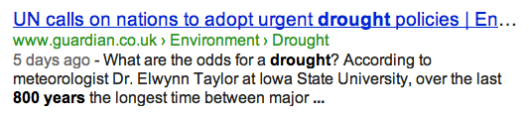



 …And the above article near my own stomping grounds. You know things are going haywire when flood insurance is needed for a suburban neighborhood located in the desert.


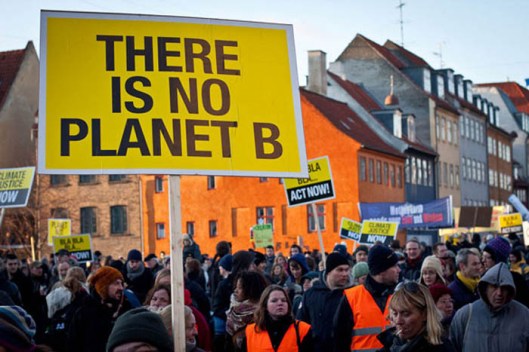
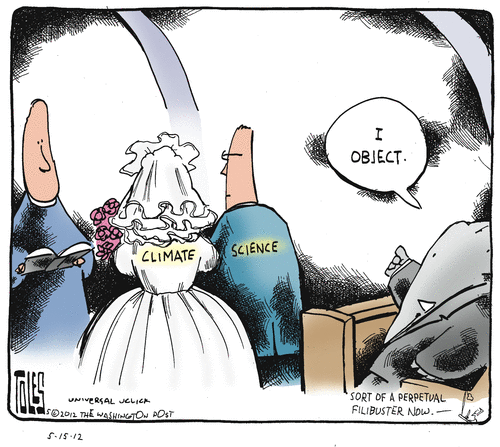


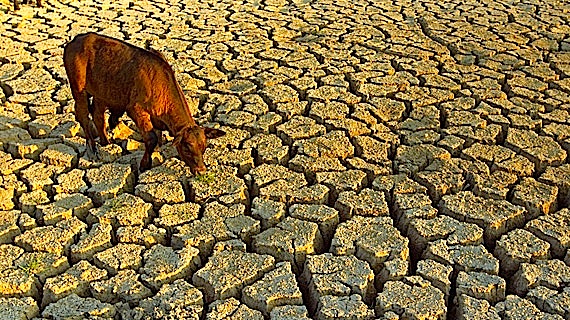


 Collapse of Industrial Civilization